• Skip to primary navigation
  • Skip to main content
  • Skip to primary sidebar

everywomanover29 blog

Food, Mood and Women's Health – Be your healthiest, look and feel great!

  • Blog
  • About
  • Services
  • Store
  • Resources
  • Testimonials
  • The Book
  • Contact
  • Search this site

Alzheimer’s disease

Low lithium questionnaire and how we use lithium orotate with the amino acids

August 19, 2022 By Trudy Scott 44 Comments

low lithium questionnaire

This is the low lithium questionnaire that I use with new clients in order for us to figure out if a trial of low dose lithium, in the form of lithium orotate, may be helpful. The hallmark of low lithium is a rollercoaster of emotions. Keep in mind that this is just one of 12 questionnaires that I have my clients complete. Many of the following symptoms can have multiple causes, the labs may relate to other deficiencies and the conditions have other root causes. This questionnaire simply provides additional evidence that lithium orotate may help.

We typically do a lithium orotate trial, starting with 5 mg once a day, and going up to 10 mg twice a day. We do this after we have started trialing the respective amino acids for low serotonin, low GABA, low endorphins, low catecholamines and low blood sugar. A big clue that lithium orotate may be helpful (when many of the symptoms below are checked off) is when the amino acids for low serotonin (tryptophan or 5-HTP), low GABA (GABA or theanine), low endorphins (DPA or DLPA), low catecholamines (tyrosine or DLPA) and low blood sugar (glutamine) are not as effective as expected (based on the amino acids mood/neurotransmitter questionnaire).

Low lithium questionnaire

Symptoms
Mood swings (a rollercoaster of emotions)
Addictions and/or cravings
Depressed
Low self-esteem
Boredom
Easily distracted
Rebellious, disruptive behavior and/or aggressiveness
Irritability
Restless/internal anxiety (similar to low serotonin worry/ruminating anxiety)
Restless/external anxiety (similar to low GABA physical anxiety)
Anxiety ups and downs (fluctuations)
Melancholic pessimism
Suicidal thoughts
Disorganized with planning difficulties
Focus issues/ADHD
Insomnia
Procrastination and/or no initiative
Jack of all trades, master of none
Impulsive and/or lacking tact
Poor insight
Risky behavior
Cognitive issues
Migraines or cluster headaches

Effectiveness of amino acids
The amino acids for low serotonin, low GABA, low endorphins, low catecholamines and low blood sugar are not as effective as expected (based on the amino acids mood/neurotransmitter questionnaire)

Labs
Low white blood cell count
Low red blood cell count
Anemia
Low platelet count

Conditions
Anorexia nervosa
Heart disease (heart arrhythmias, history of heart attack)
Raised blood sugar or diabetes
Kleptomania
Alcoholism
Alzheimer’s disease
Fibromyalgia
Bipolar II
Gout
Hyperthyroidism
Nearsightedness or glaucoma
Herpes infections (current or prone to them)

If you are new to low dose lithium / lithium orotate

As I share in this blog, Upping my tryptophan and lithium orotate have been absolutely profound for me: I’ve been depression free and anxiety free for over a year, I’ve used lithium orotate with many clients and use it when folks have mood swings and anxiety ups and downs. It’s harder for the amino acids to work when there is a moving goal post and lithium orotate evens things out.

You can read Katrin’s wonderful results: “Upping my tryptophan dose and also including and upping the dose of lithium orotate has been absolutely profound for me. I’m off my SSRI/antidepressant (which I was off and on for a number of years). I’ve been depression/anxiety free for over a year. So fantastic.”

The above blog also includes additional information on the differences between low dose lithium / lithium orotate and prescription lithium carbonate. The latter is used at much higher doses and does have side-effects.

One of the many ways lithium works is via the impact on neurotransmitter production. This paper, Potential Mechanisms of Action of Lithium in Bipolar Disorder, states this: “At a neuronal level, lithium reduces excitatory (dopamine and glutamate) but increases inhibitory (GABA) neurotransmission.” It also increases protective proteins such as BDNF (brain-derived neurotrophic factor), helps reduce oxidative stress and is neuroprotective. This paper is referring to lithium carbonate and not lithium orotate but until we have more research on lithium orotate, I feel comfortable extrapolating, given what I’ve seen clinically with lithium orotate.

I’ve also blogged about low dose or microdose lithium here: Microdose lithium formulation is capable of halting signs of advanced Alzheimer’s and improving cognition. In a study published in 2020, “a team of researchers has shown that, when given in a formulation that facilitates passage to the brain, lithium in doses up to 400 times lower than what is currently being prescribed for mood disorders is capable of both halting signs of advanced Alzheimer’s pathology and of recovering lost cognitive abilities.”  In this study, they used lithium citrate in similar doses as the lithium orotate i.e  3.2 mg to 6.4 mg NP03 based on 70kg of body weight (which is around 154.3 lbs).

Resources if you are new to using the amino acids as supplements (and where to get lithium orotate)

If you are new to using any of the amino acids as supplements, here is the Amino Acids Mood Questionnaire from The Antianxiety Food Solution (you can see all the symptoms of neurotransmitter imbalances).

If you suspect low levels of any of the neurotransmitters and do not yet have my book, The Antianxiety Food Solution – How the Foods You Eat Can Help You Calm Your Anxious Mind, Improve Your Mood, and End Cravings, I highly recommend getting it and reading it before jumping in and using amino acids on your own so you are knowledgeable. And be sure to share it with the practitioner/health team you or your loved one is working with.

There is an entire chapter on the amino acids and they are discussed throughout the book in the sections on gut health, gluten, blood sugar control, sugar cravings, self-medicating with alcohol and more.

The book doesn’t include product names (per the publisher’s request) so this blog, The Antianxiety Food Solution Amino Acid and Pyroluria Supplements, lists the amino acids that I use with my individual clients and those in my group programs.

You can find the amino acid products I use and a number of different lithium orotate products in my online Fullscript store.

If, after reading this blog and my book, you don’t feel comfortable figuring things out on your own (i.e. doing the symptoms questionnaire and respective amino acids trials), a good place to get help is the GABA QuickStart Program (if you have low GABA symptoms). This is a paid online/virtual group program where you get my guidance and community support. There are many moms in the program who are having much success with their kids.

If you are a practitioner, join us in The Balancing Neurotransmitters: the Fundamentals program. This is also a paid online/virtual program with an opportunity to interact with me and other practitioners who are also using the amino acids.

Do you resonate with any of the above and have you used lithium orotate with success?

Was the rollercoaster of emotions and fluctuating anxiety a hallmark for you before using lithium orotate?

If you’re a practitioner, do you use lithium orotate with your clients or patients?

If you have questions please share them here too.
Filed Under: Anxiety, Depression, GABA, Lithium orotate Tagged With: addiction, ADHD, aggressiveness, Alzheimer’s disease, amino acids, anxious, boredom, catecholamines, cognitive, endorphins, GABA, insomnia, irritable, lithium, lithium orotate, low blood sugar, low dose lithium, Low lithium questionnaire, low self-esteem, mood swings, rebellious, rollercoaster of emotions, serotonin, tryptophan

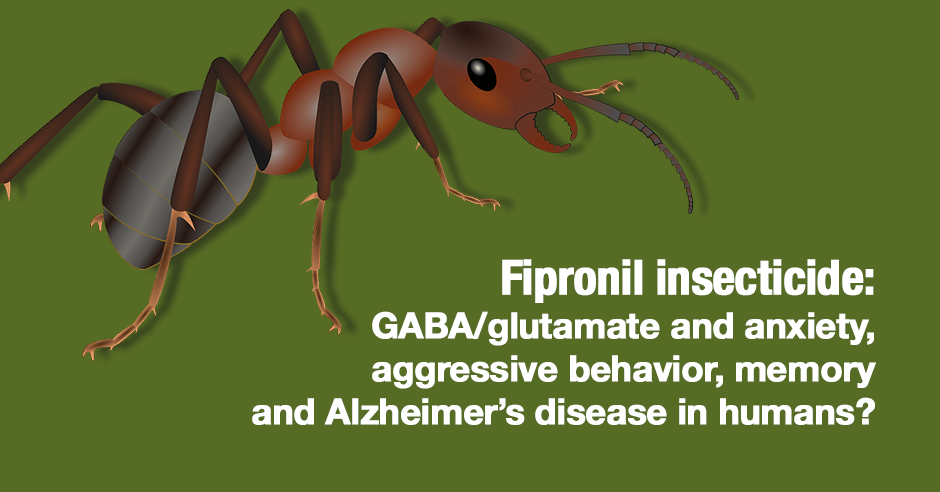
Fipronil insecticide: GABA/glutamate and anxiety, aggressive behavior, memory and Alzheimer’s disease in humans?

October 5, 2018 By Trudy Scott 15 Comments

The insecticide called fipronil has me concerned because there is increasing evidence that it can be toxic to humans and, much to my surprise, I’ve just discovered that the main mechanism of action is by targeting the gamma-aminobutyric acid (GABA) receptor and recent research points to increased anxiety, aggressive behavior, memory problems and even Alzheimer’s disease in animal studies.

Based on a rather surprising conversation I had with someone a few weeks ago (let’s call her Sue), I felt compelled to get more information on fipronil. Before that I was not aware about the specific effects I mention above.

We were in Sue’s front yard and the dog kept sniffing these small white plastic squares in the flower beds. Sue kept pulling the dog away and I asked “why? what are those?” It turns out they were ant-bait devices. Yes, I’m this clueless simply because I’ve never purchased anything like this. I expressed my concerns about toxicity and possible endocrine/hormone effects but didn’t have enough concrete facts, so I went digging through the research. Needless to say I am very concerned with what I found.

What was equally concerning is that Sue had not even considered that it could be harmful. Looking into possible harms was not even on her radar. When pressed, Sue said “it’s only a small amount in each container so I’m sure it’ll be fine” and “the poison is inside the container so none of it will come out – so it’ll be fine.”

This is what went through my mind (which is pretty typical for me – I’m always in questioning mode): What is it and how toxic is it? Does it have impacts on humans and by what mechanism? Could it cause anxiety or increase existing anxiety symptoms? Are there additional concerns about it being in a flower-bed near the front door where you could possibly walk some into the house or breathe it in as you come and go?

Organophosphates and psychological effects

Organophosphates are a commonly used pesticide used on fruits and vegetables and research going as far back as 1994 reports that acute exposure can cause psychological effects because they

act directly on the nervous system by inhibiting the neurotransmitter acetylcholine … [contributing to] … acute psychological and behavioral effects, such as anxiety, depression, and cognitive impairments.

The researchers also suggest that long-term psychological effects of low-level exposure have not been determined satisfactorily.

We hear less about insecticides such as fipronil

We hear less about insecticides such as fipronil and how they work.

According to the National Pesticide Information Center Fipronil is a broad use insecticide that

belongs to the phenylpyrazole chemical family. Fipronil is used to control ants, beetles, cockroaches, fleas, ticks, termites, mole crickets, thrips, rootworms, weevils, and other insects.

Fipronil is used in a wide variety of pesticide products, including granular products for grass, gel baits, spot-on pet care products, liquid termite control products, and products for agriculture.

It can be found in ant-bait and anti-cockroach products as well as Frontline Plus (tick and flea protection) for cats and dogs. You can find a partial list of products here and a fact sheet here.

GABA & glutamate: anxiety, aggressive behavior and neurotoxic effects

Fipronil works to kill insects via the inhibition of glutamate- and GABA-activated chloride channels resulting in uncontrolled neural excitation. It also blocks GABAA receptor function and is typically considered toxic to insects but not humans.

As soon as I read the GABA-glutamate mechanism I started searching for anxiety and neurotoxic connections.

There are no human studies on increased anxiety due to fipronil exposure but research on zebrafish larvae exposed to fipronil at typical environmental levels, finds anxiety-like behavior.   In the paper, A metabolomic study of fipronil for the anxiety-like behavior in zebrafish larvae at environmentally relevant levels, the authors report decreased levels of glycine and serine with higher levels of glutamate saying fipronil may be a potential neurotransmitter disruptor. Here are some of the possible mechanisms they discuss related to this:

  • The decreased metabolite glycine caused by fipronil may contribute to the excitatory swimming performance. Whether the glycinergic reciprocal receptor (GlyR)…inhibitory mechanism is also involved in low level of fipronil [exposure] requires further investigation.
  • Additionally, as one of the most abundant amino acids in microenvironment stress, proline is biosynthetically derived from the amino acid L-glutamine. Low levels of L-proline detected in fipronil-treated group may indicate the accumulation of glutamine. As an excitatory neurotransmitter, high level of glutamine would associate with the excitatory behavior of the fish.

In another study, Prenatal exposure to fipronil disturbs maternal aggressive behavior in rats, the authors suggest fipronil impacts the central nervous system areas that control aggression and increases in maternal aggressive behavior are via impacts on GABA(A) receptors.

This 2016 paper lists a variety of toxic effects to both animals and humans: Fipronil insecticide toxicology: oxidative stress and metabolism:

because of accidental exposure, incorrect use of fipronil or widespread fipronil use leading to the contamination of water and soil, there is increasing evidence that fipronil could cause a variety of toxic effects on animals and humans, such as neurotoxic, hepatotoxic, nephrotoxic, reproductive, and cytotoxic effects

They explore oxidative stress as a possible mechanism as to how fipronil causes these toxic effects.

Does concrete make fipronil more toxic?

One of the questions I asked myself was this: Are there additional concerns about it being in a flower-bed near the front door where you could possibly walk some into the house?

It turns out that this may be a valid concern. In this 2016 paper, Conversion of pesticides to biologically active products on urban hard surfaces, the researchers report that urban landscapes that include concrete can actually convert pesticides to other biologically active and more toxic intermediates, likely caused by the alkalinity and metal oxides in concrete. They report that fipronil:

was quickly transformed to desulfinyl and sulfone derivatives, with the desulfinyl level exceeding that of parent in the runoff water only 1week after treatment. Fipronil derivatives have aquatic toxicity similar or even greater than the parent fipronil.

Impacts on memory and a possible factor in Alzheimer’s disease

This 2016 animal study, Memory impairment due to fipronil pesticide exposure occurs at the GABAA receptor level, in rats concludes that fipronil can

have toxic interactions with the CNS [central nervous system] of mammals and lead to memory impairment by modulating the GABAergic system.

We also have to ask how big a role this insecticide could be playing in Alzheimer’s disease? In a paper published earlier in 2018, Induction of Amyloid-β42 Production by Fipronil and Other Pyrazole Insecticides, they use the term “Alzheimerogens” when writing about insecticides such as fipronil and the metabolite fipronil sulfone:

Focusing on fipronil, we showed that some of its metabolites, in particular the persistent fipronil sulfone, also favor the production of Aβ42/Aβ43 in both cell-based and cell-free systems.

Fipronil administered orally to mice and rats is known to be metabolized rapidly, mostly to fipronil sulfone, which stably accumulates in adipose tissue and brain.

In conclusion several widely used pyrazole insecticides [such as fipronil] enhance the production of toxic, aggregation prone Aβ42/Aβ43 peptides, suggesting the possible existence of environmental “Alzheimerogens” which may contribute to the initiation and propagation of the amyloidogenic process in sporadic AD.

The paper shares that amyloid-β peptides (Aβs), especially increased production of Aβ42/Aβ43 over Aβ40, represent a characteristic feature of Alzheimer’s disease.

Why wait for long-term human studies?

Hopefully you’re like me and don’t buy ant-bait or roach-bait products.

My bigger concern is the wide-spread use of spot-on pet-care products which contain fipronil, exposing our beloved pets to this toxin and all the humans they come into contact with. Pet-groomers are especially cautioned. And I’d also add a caution for children playing with pets where these flea and tick products are used since “the developing brain is particularly vulnerable to the action of insecticides.”

We don’t know for sure how harmful this insecticide is for humans and it’s not clear what the mechanisms are – GABA-glutamate and/or glycine and/or oxidative stress – but why wait for long-term human studies, especially given that chronic and long-term effects are difficult to investigate and based on what we already know about their effects on Parkinson’s disease, amyotrophic lateral sclerosis, and depression.

I have found enough information to be very concerned and to feel justified in continuing to avoid fipronil. I encourage you to avoid fipronil as well.

This is especially the case if you already suffer from long-term anxiety, insomnia or another chronic health condition as it may be one more possible contributory factor.

Given that fipronil blocks GABAA receptor function, I have to wonder if chronic long-term exposure could play a role in difficulties with benzodiazepine tapering.

If this is old news to you feel free to share with family and friends who may not be as informed as you.

If this is news to you, I hoping this gets you thinking and questioning. I’d love to hear your thoughts, concerns and questions.

Filed Under: GABA Tagged With: aggressive behavior, Alzheimer’s disease, anxiety, anxious, benzodiazepine, fipronil, GABA, insecticide, memory, pets

Alzheimer’s disease: address the root cause to reverse symptoms (Microbiome summit)

May 7, 2017 By Trudy Scott 4 Comments

Dr. Jill Carnahan’s interview on the Microbiome Medicine Summit 2 covers cutting edge new information about Alzheimer’s disease, based on the work and research of Dr. Dale Bredesen. They start with the gut-brain connection and Dr. Carnahan shares this:

we used to think of early-onset cognitive decline and dementias and mood disorders as being in their own bucket. And so, we saw psychiatrists or neurological doctors or neurologists to treat those diseases. And now we’re finding as we knew for several years with functional medicine that, obviously, it’s all connected.

And the gut is especially important because this reservoir holds so many of our microbes and possibly pathogens and that speaks to the brain through the vagus nerve and through cytokines and through inflammatory molecules of all types.

And so, this conversation between our gut and our brain is very profound and has a huge impact on things like multiple sclerosis or dementia, Alzheimer’s, or even things like bipolar disorder, schizophrenia, depression, anxiety, and sleep disorders.

So what we’re finding is by addressing the immune system and the gut which are intricately connected, we can often get profound effects on areas in the body that are far from that, like the brain.

Dr. Kellman asks Dr. Carnahan to share a study that will be the slam dunk for really believing in this connection and she mentions a paper titled Microbes and Alzheimer’s Disease. It cites pathogens like herpes simplex virus type 1 (HSV1), Chlamydia pneumoniae, and several types of spirochaete which can affect the brain and play a role in Alzheimer’s disease.

Dr. Carnahan then covers Dr. Dale Bredesen’s subtypes of early-onset dementia which allows you to treat the root cause and actually reverse symptoms. She goes into it in great detail so I’m going to give you the summary version here:

Type #1 is inflammatory

  • This could be from inflammation or infections or other poor dietary habits. And that’s where the microbiome could play into that.
  • You might see elevated CRP, IL-6, TNF-alpha. You might see a low albumin to globulin ratio. You might see high homocysteine, hypothyroid, elevated cortisol

Type #1.5 is glycotoxic

  • The pure pre-diabetic, diabetic
  • That’s kind of the pure elevated insulin, elevated fasting blood sugar, elevated cortisol, low testosterone, high triglycerides, low HDL (and has an element of inflammation)

Type #2 is atrophic: So that’s someone who loses their trophic factor of support like estrogen, testosterone, insulin, and vitamin D3.

And often, these type 1s and type 2s actually have ApoE-4 double mutations which are higher risk for Alzheimer’s.

Type #3 is toxic:

  • Toxic mold exposure, biotoxins from Lyme disease, or heavy metals or other chemicals.
  • Often these chemicals will act on the tight junctions of the gut and increase permeability. And then that permeability leads to massive endotoxemia.
  • Younger onset of symptoms (like 40s and 50s) and reversible once you find and remove the root cause

Type #4 is vascular: inflammation of the blood vessels, high homocysteine

Type #5 is traumatic: wrestlers or boxers or football players that have had multiple head injuries or trauma.

By addressing the various root causes, Dr. Bredesen reports a reduction and in some instances reversal of dementia symptoms.

Of course, we know anxiety is common when it comes to Alzheimer’s and dementia. By addressing many of these above root causes we’re also able to reduce anxiety symptoms at the same time.

It was a fascinating interview and I hope you enjoy it as much as I did. I learned a great deal and find it very useful to group the symptoms into types.

There does seem to be one aspect that Dr. Carnahan didn’t address and I haven’t seen it covered in Dr. Bredesen’s papers: the impact of benzodiazepines on dementia and Alzheimer’s disease.  There is conflicting research on this but I feel there is enough research that does show a correlation – enough for us to be concerned.   Here is a recent paper looking at high-dose benzodiazepine use in Chinese patients , supporting an association.

This 2016 paper – Benzodiazepine Use and Risk of Dementia in the Elderly Population: A Systematic Review and Meta-Analysis states:

Our results suggest that benzodiazepine use is significantly associated with dementia risk. However, observational studies cannot clarify whether the observed epidemiologic association is a causal effect or the result of some unmeasured confounding variable. Therefore, more research is needed.

This may likely fall under type #3 (toxic).  I plan to reach out to them as a follow-up.

UPDATE: May 9, 2017.  I did hear back from Dr. Carnahan and she shared that she always discusses history and physical and lab testing, and history of benzodiazepine use or other neuroactive substances. 

And new research shows that it’s more than the benzodiazepines: SSRIs, SRNIs and atypical antipsychotics increase the risk of dementia in veterans with PTSD and even in those who don’t have PTSD. 

I hope you’ll join the host Dr. Raphael Kellman and all the great speakers on the Microbiome Medicine Summit 2, May 8-15, 2017 to learn more.

If you have questions or comments please feel free to share in the comments.


Filed Under: Alzheimer's disease, Events Tagged With: Alzheimer’s disease, anxiety, benzodiazepines, dementia, Dr. Dale Bredesen, Dr. Jill Carnahan, Dr. Kellman, gut-brain, microbiome, microbiome medicine summit, SRNI, SSRI

Alzheimer’s disease, inflammation, stress and candida: Dr. Rudy Tanzi at IHS 2016

March 4, 2016 By Trudy Scott 17 Comments

ihs-1

I spent last week in New York city at the Integrative Healthcare Symposium Annual Conference listening to some truly brilliant speakers and would like to share some highlights from the wonderful presentation by Rudolph Tanzi, PhD : What Can Alzheimer’s Disease Teach Us About the Brain, Mind, and Self?

Dr. Rudolph Tanzi is the Vice-Chair of Neurology and Director of the Genetics and Aging Research Unit at Massachusetts General Hospital, and serves as the Joseph P. and Rose F. Kennedy Professor of Neurology at Harvard Medical School. 

Dr. Tanzi co-discovered three of the first Alzheimer’s disease genes and has identified several others in the Alzheimer’s Genome Project, which he directs. He also discovered the Wilson’s disease gene and participated in the discovery of several other neurological disease genes.

The focus of his research is in identifying and characterizing the genetic and environmental factors involved in neurodegeneration in Alzheimer’s disease and autism.

Dr. Tanzi shared this fundamental information:

  • the Alzheimer’s disease pathology begins in all of us after the age of 40
  • two thirds of those with Alzheimer’s disease are female
  • and women are especially susceptible after menopause  
  • head injuries increase the risk
  • these genes predispose us to the disease: APP, PSEN1, PSEN2 and APOE

Most of the above apply to me (I know I have the APOE gene) but I’m less concerned about Alzheimer’s disease that I have ever been and this is based on what was shared later in his presentation.

ihs-2

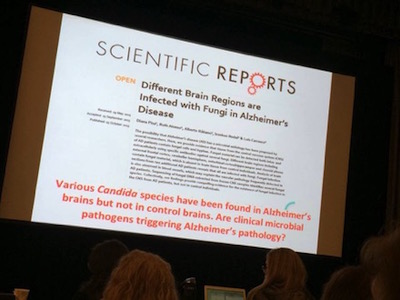
Dr. Tanzi’s whole presentation was fascinating and the section on fungi/candida, although concerning, was promising because we can do something about candida. This is the paper he shared: Different Brain Regions are Infected with Fungi in Alzheimer’s Disease with this question: Are clinical microbial pathogens triggering Alzheimer’s disease?

ihs-3

It was really interesting to hear that

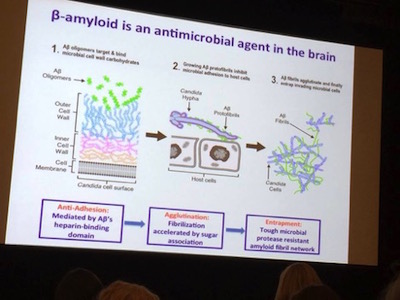
  • the amyloid is an antimicrobial agent in the brain and provides protection against the candida/fungi
  • and that that the amyloid plaques also provide protection against Borellia, periodontal bugs, Herpes Simplex 1 and other infectious agents

What was most encouraging was this:

  • your brain can handle tons of amyloid plaques and tangles and yet not develop Alzheimer’s disease.
  • the big deciding factor seems to be inflammation
  • “resilient brains” had plaques, no inflammation and no Alzheimer’s disease!

So these are some of my thoughts:

  • Tanzi did share that many people with Alzheimer’s disease suffer from depression and agitation. Here is a paper I retrieved; it does state that depression is worse when benzodiazepines have been used and we know benzodiazepines have been found to contribute to dementia so we need to consider this too.
  • We also know anxiety is a factor in Alzheimer’s disease and this study “showed that anxiolytic behavior…is predominantly due to cox-2 mediated neuroinflammation induced neurodegeneration in the brain.”
  • Some of the same underlying causes of anxiety and depression seem to be underlying factors when it comes to Alzheimer’s disease – like candida and inflammation – and there is something we can do about this. We can get rid of the candida and can use natural methods to reduce inflammation starting with eating an anti-inflammatory diet with wild oily fish, no gluten, no sugar and reduced carbs.    

Dr. Tanzi also shared these for preventing Alzheimer’s disease:

  • Social engagement (this is why addressing pyroluria/social anxiety is important – interestingly zinc, vitamin B6 and evening primrose oil are anti-inflammatory)
  • Learning new things
  • Reducing emotional stress and deep sleep (this is where my work with the amino acids comes in – interestingly I found this study that discusses how enhancing GABA signaling can prevent cognitive decline in mice with the apoE4 gene)
  • Exercise (also so beneficial in anxiety and depression)
  • And nutrients like ashwaganda and cat’s claw (to address stress and kill infections/candida)

Clearly I have more reading and researching to do! As you can tell I love putting all the puzzle pieces together.

I’ve also got more to share from Dr. Tanzi’s talk and will do so next week. Stay tuned for more information on his “three- dimensional human stem cell-derived neural culture system that recapitulates Alzheimer’s disease plaque and tangle pathology.”

Feel free to ask questions and share your thoughts in the comments section.


Filed Under: Candida, Events, Inflammation, Stress Tagged With: Alzheimer’s disease, candida, Dr. Rudy Tanzi, Inflammation, integrative healthcare symposium, stress

Primary Sidebar

NEW! GABA QuickStart Homestudy (with special intro pricing)

gaba quickstart homestudy

Free Report

9 Great Questions Women Ask about Food, Mood and their Health

You'll also receive a complimentary subscription to my ezine "Food, Mood and Gal Stuff"


Connect with me

Popular Posts

  • Amino Acids Mood Questionnaire from The Antianxiety Food Solution
  • The Antianxiety Food Solution Amino Acid and Pyroluria Supplements
  • Pyroluria Questionnaire from The Antianxiety Food Solution
  • Collagen and gelatin lower serotonin: does this increase your anxiety and depression?
  • Tryptophan for the worry-in-your-head and ruminating type of anxiety
  • GABA for the physical-tension and stiff-and-tense-muscles type of anxiety
  • The Antianxiety Food Solution by Trudy Scott
  • Seriphos Original Formula is back: the best product for anxiety and insomnia caused by high cortisol
  • Am I an anxious introvert because of low zinc and vitamin B6? My response to Huffington Post blog
  • Vagus nerve rehab with GABA, breathing, humming, gargling and key nutrients

Recent Posts

  • What do I use instead of Seriphos to help lower high cortisol that is affecting my sleep and making me anxious at night?
  • BeSerene™ GABA/theanine cream eases severe muscle tension in her neck/shoulders, prevents her bad headaches and quells her anxiety
  • How the correct approach, dose and sublingual use of GABA can be calming and not cause a flushed and itchy face and neck
  • The amino acid glutamine improves low mood by addressing gut health, and it has calming effects too
  • Flight anxiety with heightened breath, physical tension and also fearing the worst (the role of low GABA and low serotonin)

Categories

  • 5-HTP
  • AB575
  • Addiction
  • ADHD
  • Adrenals
  • Alcohol
  • Allergies
  • Alzheimer's disease
  • Amino Acids
  • Anger
  • Antianxiety
  • Antianxiety Food Solution
  • Antidepressants
  • Anxiety
  • Anxiety and panic
  • Autism
  • Autoimmunity
  • benzodiazapines
  • Bipolar disorder
  • Books
  • Caffeine
  • Cancer
  • Candida
  • Children/Teens
  • Collagen
  • Cooking equipment
  • Coronavirus/COVID-19
  • Cravings
  • Depression
  • Detoxification
  • Diabetes
  • Diet
  • DPA/DLPA
  • Drugs
  • EFT/Tapping
  • EMF
  • EMFs
  • Emotional Eating
  • Endorphins
  • Environment
  • Essential oils
  • Events
  • Exercise
  • Fear
  • Fear of public speaking
  • Fertility and Pregnancy
  • Fish
  • Food
  • Food and mood
  • Functional neurology
  • GABA
  • Gene polymorphisms
  • General Health
  • Giving
  • Giving back
  • Glutamine
  • Gluten
  • GMOs
  • Gratitude
  • Gut health
  • Heart health/hypertension
  • Histamine
  • Hormone
  • Hyperparathyroidism
  • Hypoglycemia
  • Immune system
  • Inflammation
  • Insomnia
  • Inspiration
  • Introversion
  • Joy and happiness
  • Ketogenic diet
  • Lithium orotate
  • Looking awesome
  • Lyme disease and co-infections
  • MCAS/histamine
  • Medication
  • Men's health
  • Mental health
  • Mercury
  • Migraine
  • Mold
  • Movie
  • MTHFR
  • Multiple sclerosis
  • Music
  • NANP
  • Nature
  • Nutritional Psychiatry
  • OCD
  • Osteoporosis
  • Oxalates
  • Oxytocin
  • Pain
  • Paleo
  • Parasites
  • Parkinson’s disease
  • PCOS
  • People
  • PMS
  • Postpartum
  • PTSD/Trauma
  • Pyroluria
  • Questionnaires
  • Real whole food
  • Recipes
  • Research
  • Schizophrenia
  • serotonin
  • SIBO
  • Sleep
  • Special diets
  • Sports nutrition
  • Stress
  • Sugar addiction
  • Sugar and mood
  • Supplements
  • Teens
  • Testimonials
  • Testing
  • The Anxiety Summit
  • The Anxiety Summit 2
  • The Anxiety Summit 3
  • The Anxiety Summit 4
  • The Anxiety Summit 5
  • The Anxiety Summit 6
  • Thyroid
  • Thyroid health
  • Toxins
  • Tryptophan
  • Tyrosine
  • Uncategorized
  • Vegan/vegetarian
  • Women's health
  • Yoga

Archives

  • October 2025
  • September 2025
  • August 2025
  • July 2025
  • June 2025
  • May 2025
  • April 2025
  • March 2025
  • February 2025
  • January 2025
  • November 2024
  • October 2024
  • September 2024
  • August 2024
  • July 2024
  • June 2024
  • May 2024
  • April 2024
  • March 2024
  • February 2024
  • January 2024
  • December 2023
  • November 2023
  • October 2023
  • September 2023
  • August 2023
  • July 2023
  • June 2023
  • May 2023
  • April 2023
  • March 2023
  • February 2023
  • January 2023
  • December 2022
  • November 2022
  • October 2022
  • September 2022
  • August 2022
  • July 2022
  • June 2022
  • May 2022
  • April 2022
  • March 2022
  • February 2022
  • January 2022
  • December 2021
  • November 2021
  • October 2021
  • September 2021
  • August 2021
  • July 2021
  • June 2021
  • May 2021
  • April 2021
  • March 2021
  • February 2021
  • January 2021
  • December 2020
  • November 2020
  • October 2020
  • September 2020
  • August 2020
  • July 2020
  • June 2020
  • May 2020
  • April 2020
  • March 2020
  • February 2020
  • January 2020
  • December 2019
  • November 2019
  • October 2019
  • September 2019
  • August 2019
  • July 2019
  • June 2019
  • May 2019
  • April 2019
  • March 2019
  • February 2019
  • January 2019
  • December 2018
  • November 2018
  • October 2018
  • September 2018
  • August 2018
  • July 2018
  • June 2018
  • May 2018
  • April 2018
  • March 2018
  • February 2018
  • January 2018
  • December 2017
  • November 2017
  • October 2017
  • September 2017
  • August 2017
  • July 2017
  • June 2017
  • May 2017
  • April 2017
  • March 2017
  • February 2017
  • January 2017
  • December 2016
  • November 2016
  • October 2016
  • September 2016
  • August 2016
  • July 2016
  • June 2016
  • May 2016
  • April 2016
  • March 2016
  • February 2016
  • January 2016
  • December 2015
  • November 2015
  • October 2015
  • September 2015
  • August 2015
  • July 2015
  • June 2015
  • May 2015
  • April 2015
  • March 2015
  • February 2015
  • January 2015
  • December 2014
  • November 2014
  • October 2014
  • September 2014
  • August 2014
  • July 2014
  • June 2014
  • May 2014
  • April 2014
  • March 2014
  • February 2014
  • January 2014
  • December 2013
  • November 2013
  • October 2013
  • September 2013
  • August 2013
  • July 2013
  • June 2013
  • May 2013
  • April 2013
  • March 2013
  • February 2013
  • January 2013
  • December 2012
  • November 2012
  • October 2012
  • August 2012
  • July 2012
  • June 2012
  • May 2012
  • April 2012
  • March 2012
  • February 2012
  • January 2012
  • December 2011
  • November 2011
  • October 2011
  • September 2011
  • August 2011
  • July 2011
  • June 2011
  • May 2011
  • April 2011
  • March 2011
  • February 2011
  • January 2011
  • December 2010
  • October 2010
  • September 2010
  • July 2010
  • May 2010
  • April 2010
  • March 2010
  • February 2010
  • January 2010
  • November 2009

Share the knowledge!

The above statements have not been evaluated by the Food and Drug Administration. Products listed in this website are not intended to diagnose, treat, cure or prevent any disease.

The information provided on this site is for informational and educational purposes only and is not intended as a substitute for advice from your physician or other health care professional. You should consult with a healthcare professional before starting or modifying any diet, exercise, or supplementation program, before taking or stopping any medication, or if you have or suspect you may have a health problem.


Copyright © 2026 Trudy Scott. All Rights Reserved. | Privacy | Terms and Conditions | Refund Policy | Medical Disclaimer

Free Report

9 Great Questions Women Ask about Food, Mood and their Health

You’ll also receive a complimentary subscription to my ezine “Food, Mood and Gal Stuff”