• Skip to primary navigation
  • Skip to main content
  • Skip to primary sidebar

everywomanover29 blog

Food, Mood and Women's Health – Be your healthiest, look and feel great!

  • Blog
  • About
  • Services
  • Store
  • Resources
  • Testimonials
  • The Book
  • Contact
  • Search this site

PharmaGABA eases physical anxiety in a young man who has recently given up Adderall, alcohol and nicotine

December 11, 2020 By Trudy Scott 45 Comments

pharmaGABA and physical anxiety

Today’s blog is about a young man diagnosed with ADD (attention deficit disorder) in his early twenties and prescribed Adderal (a stimulant). He was a cigarette smoker and drank alcohol too. His mother shared this encouraging feedback about the recent changes he has made and the benefits he reports with pharmaGABA on a recent blog. She aslo has a question about the GABA timing.

If you’re new to the low GABA type of anxiety, here is a recap: with low GABA the anxiety is the physical anxiety type with stiff and tense muscles and there is often the need to self-medicate with alcohol in order to relax, feel calm and fit in socially. Cigarettes can also be calming for many folks. Anxiety can cause poor focus issues and the inability to focus can drive up anxiety.

Here is her feedback and question:

I have a son that just started GABA after I recommended it from following you all these years. He has given up Adderall, alcohol, and nicotine all this past six months and is feeling so much better than the past ten years of his life. He is 32. He had been diagnosed with ADD in his early twenties.

He has symptoms that fall under low GABA and tried a chewable PharmaGABA 100mg tablet yesterday. He took 2 tablets (200mg total) with his meals three times the past two days and said he felt it work immediately. I told him I thought perhaps on a podcast I heard dosing 30 minutes before meals or an hour after was best?

This was my feedback for this mom about the timing of the pharmaGABA:

  • It’s wonderful to hear that the chewable pharmaGABA worked immediately to ease his low GABA physical anxiety symptoms
  • The amino acid GABA is best used away from protein so, yes, 30 minutes before meals with protein or an hour after is best.
  • Your son will likely find he needs less GABA doing it this way and it’ll be more effective.

I had this encouragement and feedback about quitting and using GABA:

  • Good for him getting off Adderall and quitting alcohol and nicotine. It can be tough when using just will-power alone.
  • The amino acids actually make it easier to quit because of the self-medication aspect and alcohol and nicotine are often used as a way to ease anxiety.
  • Even so, addressing low GABA levels after the fact will make it so much easier for him to stay away from nicotine and alcohol without having to use will-power.
  • There is also research showing that GABA may offer gut protection after alcohol consumption
  • As I mention above, anxiety can cause poor focus issues and the inability to focus can drive up anxiety. GABA can help improve focus and reduce anxiety)

Imbalances of other neurotransmitter (like low serotonin and low endorphins)

If I was working with young man I would also consider imbalances of other neurotransmitter too (like low serotonin and low endorphins) especially because alcohol and nicotine addictions are so often replaced by sugar and carb addictions.

In this randomized, double blind study, The use of a food supplementation with D-phenylalanine (DPA), L-glutamine and L-5-hydroxytriptophan in the alleviation of alcohol withdrawal symptoms, amino acids were “used to replenish a lack in neurotransmitters and alleviate the symptoms of alcohol withdrawal.”

In the study 20 patients were given these amino acids before quitting alcohol and this combination was found to alleviate withdrawal symptoms. Based on my experience even when will-power is used to quit (as in this case), many of these withdrawal symptoms linger.

Another reason to look at all the neurotransmitter imbalances is that low blood sugar and gut damage is often a factor with drinkers so glutamine may also be helpful for blood sugar stability and gut healing.

Finally, poor focus can also be caused by low catecholamines, so looking into this and considering a trial with tyrosine may also be worthwhile. This may also prevent the caffeine addiction we see once someone quits alcohol too.

Addressing his diet and probable nutrient deficiencies would be the next step for him. Also looking into adrenal health, possible candida and gut issues and food sensitivities.

Additional resources when you are new to using GABA and other amino acids as supplements

As always, I use the symptoms questionnaire to figure out if low GABA may be an issue. The low GABA symptoms include: physical tension, overwhelm, fears, anxiousness, stiff and tense muscles, sleep issues, feelings of panic and stress-eating and drinking.

If you suspect low levels of any of the neurotransmitters and do not yet have my book, The Antianxiety Food Solution – How the Foods You Eat Can Help You Calm Your Anxious Mind, Improve Your Mood, and End Cravings, I highly recommend getting it and reading it before jumping in and using amino acids on your own so you are knowledgeable. And be sure to share it with the practitioner/health team you or your loved one is working with.

There is an entire chapter on the amino acids and they are discussed throughout the book in the sections on gut health, gluten, blood sugar control (this is covered in an entire chapter too), sugar cravings, anxiety and mood issues.

The book doesn’t include product names (per the publisher’s request) so this blog, The Antianxiety Food Solution Amino Acid and Pyroluria Supplements, lists the amino acids that I use with my individual clients and those in my group programs.

If, after reading this blog and my book, you don’t feel comfortable figuring things out on your own (i.e. doing the symptoms questionnaire and respective amino acids trials), a good place to get help is the GABA QuickStart Program (if you have low GABA symptoms). This is a paid online/virtual group program where you get my guidance and community support.

If you are a practitioner, join us in The Balancing Neurotransmitters: the Fundamentals program. This is also a paid online/virtual program with an opportunity to interact with me and other practitioners who are also using the amino acids.

Wrapping up and your feedback

I appreciate this mom for sharing and applaud her for telling her son about GABA. I also take my hat off to this young man for making these huge changes in his life and being willing to try GABA.

Have you successfully used GABA or any of the other amino acid to help quit alcohol or cigarettes? Or have you used them after you quit to prevent sygar cravings taking the place of alcohol or cigarettes?

Has GABA or pharmGABA helped ease the physical anxiety you experienced and also helped with focus issues?

Feel free to post your questions here on the blog too.
Filed Under: Anxiety Tagged With: 5-HTP, ADD, alcohol, anxiety, GABA, glutamine, low blood sugar, neurotransmitters, nicotine, pharmaGABA, serotonin

Gelatin triggers Enid’s anxiety in 2 weeks but also lowers her high blood sugar

December 4, 2020 By Trudy Scott 59 Comments

gelatin anxiety blood sugar

Are you aware that collagen and gelatin lower serotonin and may increase your anxiety and depression and worsen sleep? I blogged about this in 2017 and how susceptible individuals who are prone to low serotonin need to be aware of this and use 5-HTP or tryptophan to counter these effects. (You can read that blog here: Collagen and gelatin lower serotonin: does this increase your anxiety and depression?)

I’m sharing an example today from one of the many comments on the above blog as a reminder or in case this is new to you. It’s not well-recognized as being an issue even amongst practitioners and producers of collagen. This is also one of my most commented-on blogs so it’s clearly a big issue. And gelatin and collagen continue to become more and more popular.

As a reminder, gelatin is derived from collagen: when collagen breaks down, it becomes gelatin. Also, collagen and gelatin are an excellent source of these amino acids: proline, glycine, glutamine and arginine, but they do not contain the amino acid tryptophan, so they have the potential to lower serotonin levels.

Tryptophan-depletion studies have been done for years – using a tryptophan-deficient amino acid mixture – as a way to study the relationship between low serotonin and depression.

More recently, collagen and gelatin are being used in these tryptophan-depletion studies because they do not contain the amino acid tryptophan. This paper, Pharmacokinetics of acute tryptophan depletion using a gelatin-based protein in male and female Wistar rats, summarizes what we find in a number of studies that use gelatin for the purpose of lowering serotonin levels (in order to study the relationship between serotonin and mood issues):

The essential amino acid tryptophan is the precursor of the neurotransmitter serotonin. By depleting the body of tryptophan, brain tryptophan and serotonin levels are temporarily reduced.

What does this mean? If you consume gelatin or collagen, you end up depleting the body of tryptophan and serotonin levels are reduced for a short time. This can cause the classic low serotonin symptoms of anxiety, worry, panic attacks, fears, phobias, insomnia, PMS, afternoon and evening carb cravings, TMJ, PMS and even anger issues and obsessions/ruminations.

For Enid, adding gelatin to her weight-loss shake powder triggered the anxiety she used to experience:

I wanted to give you a sincere thanks for all the work you’ve done on this blog and for studying collagen and serotonin. I have been taking quite a bit of gelatin because I started a medically supervised weight-loss program a month ago and was adding the shake powder to gelatin to thicken it. I have a long history of anxiety but it has been better for several years. However, I have been really concerned because my heart hurts with anxiety like I used to have. So your article and the follow up comments have helped me since I would have continued to eat a lot of it But now I will stop. So thank you.

Edid also shared how the gelatin she was consuming lowered her blood sugar in 2 weeks:

What’s interesting is in 2 weeks of being on the diet and eating a lot of gelatin my glucose went from 190 (which is diabetes) to 113 which is perfectly normal. I’ve read that collagen lowers blood sugar. So hopefully it will stay down even after stopping eating gelatin.

I found it very interesting to learn about Enid’s lowered glucose and that it went down so much in just 2 weeks.

So I went looking into the research and found this paper, Therapeutic effects of marine collagen peptides on Chinese patients with type 2 diabetes mellitus and primary hypertension, stating that marine collagen “significantly reduced levels of fasting blood glucose.” The study concluded that marine collagen:

may benefit glucose and lipid metabolism, insulin sensitivity, renal function and hypertension management in Chinese patients with T2DM [type 2 diabetes] and hypertension.

This research is new to me and is a good reason to continue with gelatin or collagen and address why it’s causing her anxiety to ramp again after just 2 weeks.

My message in this blog post – Collagen and gelatin lower serotonin: does this increase your anxiety and depression? – is not to stop gelatin or collagen, but rather help you to figure out if your consumption of collagen or gelatin is causing your anxiety, depression or insomnia (or other low serotonin symptoms), or making it worse.

Once you have made this connection then you need to figure out what the mechanism is. The fact that the consumption of collagen and gelatin lower serotonin is one possible factor for susceptible folks. The easiest way to figure out if it is low serotonin for you is to do a trial of tryptophan or 5-HTP while continuing to consume gelatin or collagen and see if your new symptoms resolve. (You can read more about that here: Tryptophan for the worry-in-your-head and ruminating type of anxiety)

I would love your feedback. Do you use gelatin or collagen regularly i.e. daily or weekly? And why do you use it? How do you use it and what benefits do you notice?

Have you noticed an increase in anxiety or worsening of mood or any of the other low serotonin symptoms? Do you take tryptophan or 5-HTP to offset the fact that gelatin or collagen doesn’t contain any tryptophan and does that help?

Have you done the off/on test with collagen/gelatin and tryptophan or 5-HTP – and what was the outcome?

Have you found collagen or gelatin helped to lower your high glucose levels?

Feel free to post your questions here too.

Filed Under: Anxiety Tagged With: 5-HTP, anxiety, collagen, depression, fasting blood glucose, gelatin, high blood sugar, hypertension, insomnia, serotonin, sleep, tryptophan, type 2 diabetes

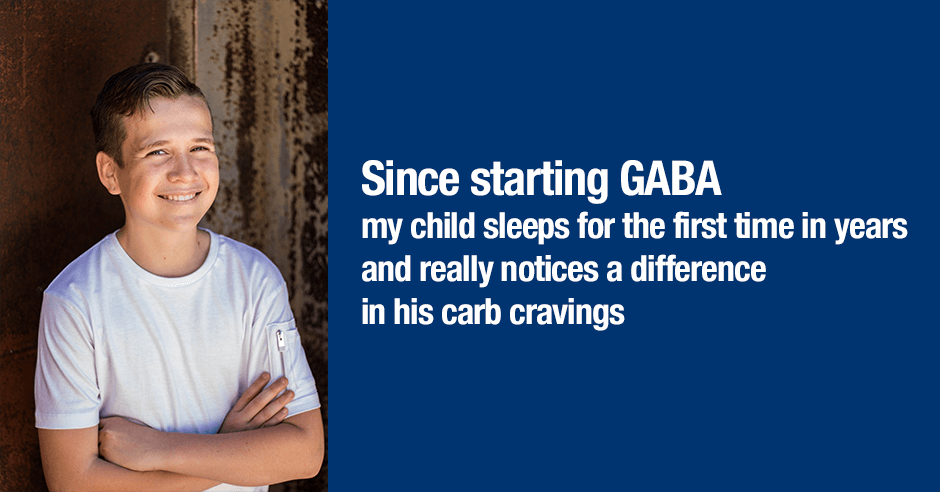
Since starting GABA my child sleeps for the first time in years and really notices a difference in his carb cravings

November 27, 2020 By Trudy Scott 37 Comments

gaba made differences in son

Today I’m sharing a success story where GABA, used as a supplement, helps a teenage boy sleep for the first time in years and also helps reduce his carbohydrate cravings. This boy’s mom, Calle, shared their wonderful story on this blog post – GABA for ending sugar cravings (and anxiety and insomnia):

Got some GABA for our ASD [autism spectrum disorder] child. He has not slept well for years. We had tried all kinds of stuff. I am a healthcare pro and have studied and read and tried so much. But this stuff is a true miracle. For the first time in years my child sleeps. He sang and was all smiles from ear to ear for the first three days.

And then she posted this a few days later (and how shocked they both were!):

Our son has also really noticed a difference in his carb cravings since doing GABA. He went to grandma’s house and was not tempted by 6 pies, tons of cookies, sweet rolls etc. We were both shocked. This is a kid who would mow through tons of cookies, rolls and pastries.

I love getting feedback like this and am so happy for them!

There is no study on the use of GABA as a supplement for helping sleep problems in those individuals with ASD/autism spectrum disorder. Here are two papers for further reading until such a study is done:

  • Sleep in autism: A biomolecular approach to aetiology and treatment

Studies indicate that between 50% and 83% of individuals with ASD have sleep problems or disorders.

This review approaches sleep in autism from several perspectives: Sleep-wake mechanisms and problems, and brain areas and molecules controlling sleep (e.g., GABA and melatonin) and wake maintenance (e.g., serotonin, acetylcholine and glutamate).

  • Tactile hypersensitivity and GABA concentration in the sensorimotor cortex of adults with autism

GABA concentration in the sensorimotor cortex of adults with ASD was lower than in neurotypical adults (decrease by 17%). Interestingly, GABA concentrations were positively correlated with self-reported tactile hypersensitivity in adults with ASD.

If you’re new to the amino acids here is a quick summary about GABA: low levels of GABA, a calming neurotransmitter typically leads to anxiety, fears and panic attacks, with the anxiety showing up as a physical kind of anxiety with muscle tension or muscle spasms. Low GABA levels can also affect sleep especially when there is muscle tension. Folks often describe that they lie awake feeling stiff and tense. And as with all neurotransmitter deficiencies there is also the carb/sugar and/or alcohol (in adults) cravings as a way to self-medicate.

In this instance low GABA only resulted in sleep issues and carb cravings for Calle’s son. No mention was made about anxiety but it’s possible he was not able to articulate that he felt anxious. I don’t know if Calle’s son experienced tactile hypersensitivity (common in ASD) but if he did this may have factored in with his sleep issues.

In her comments Calle also shared this and it’s so true: “Healing is like learning to dance, you stumble, step on toes and learn to trust your body.”

I appreciate Calle for sharing her son’s story and I’m sharing it here so you can see yet another way GABA can address symptoms and improve someone’s life (and improve things for the rest of the family too). If her son can now sleep after years of sleep challenges then anything is possible.

Keep in mind that this blog goes beyond a teenage boy with an ASD diagnosis who has sleep issues and craves carbs. It could be applicable to anyone – male or female, adult or child – who has low GABA levels that contribute to his/her sleep issues and carb cravings (and often physical anxiety symptoms too).

How have you used GABA as part of your own healing journey or for your child or other family member and have you found the journey to be like a dance?

If you’re a practitioner, do share how you have helped your clients/patients by using GABA.

Feel free to post your questions here too.

Filed Under: Anxiety Tagged With: anxiety, anxious, ASD, autism, carb cravings, child, GABA, insomnia, neurotransmitter, sleep, son, tactile hypersensitivity

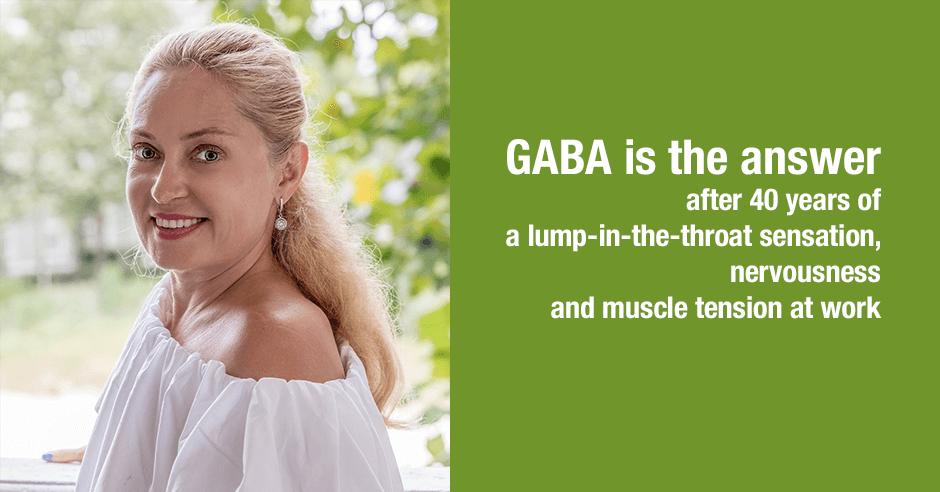
GABA is the answer after 40 years of a lump-in-the-throat sensation, nervousness and muscle tension at work

November 20, 2020 By Trudy Scott 18 Comments

gaba answer to muscle tension

Earlier this year, I published a blog post on the sensation of having a lump in the throat when you feel anxious. It’s called globus pharyngeus which is defined as “the painless sensation of a lump in the throat and may be described as a foreign body sensation, a tightening or choking feeling.”

Globus means globe/sphere and it can actually feel like you have a golf-ball sized object in your throat. It’s very uncomfortable and quite terrifying outside of the anxiety that is often the trigger. I share my lump-in-the-throat story and my success with GABA in this blog: Anxiety and globus pharyngeus (lump in the throat): GABA to the rescue?

Pam recently shared her wonderful success with GABA on the above blog, after having dealt with what she calls “her throat thing” for 40 years!

I have dealt with this throat thing since I was a teenager. I’m now 57. It was only when I saw what you wrote about how yours came back after a scary airplane incident that I made the connection that GABA could help me. I saw that in the summer of 2019, so I spent about 40 years dealing with this until I found the GABA answer!

Mine comes up when speaking in front of others, such as work meetings, or even just one-on-one work discussions, and it was getting consistently worse. I would be swallowing constantly and trying to talk. Absolutely awful. Of course everyone could see it happening.

GABA solved this for me, and I can’t even describe how grateful I am!

How wonderful are these results! I am so happy for her and thanked her for coming back and sharing in the comments.  I also asked some follow-up questions so I can continue to learn and so I can share so you get to learn too:

  • How much GABA helps and how do you take it (when you know you’ll be in this situation or a few times a day to get your levels up)?
  • Did you ever use a prescribed medication or were recommended something?
  • Have you seen any other benefits from using GABA – improved sleep, reduced anxiety in other situations, reduced cravings?
  • Have you made other changes too – like dietary changes such as gluten/sugar/caffeine/alcohol removal?

She shared this about timing and how GABA helps with anxiety-related physical/muscle tension and nervousness:

I take GABA Calm … one upon waking, 1 mid-morning, and 1 mid- afternoon. I take an extra one right at the time of a meeting.

That is the only change I made. I’ve never been on any prescription medication.

Other than the specific throat issue, I notice I’m generally less physically tense, with muscles not getting so knotted up in my face, scalp, neck, shoulders, and back, which is wonderful.

I work at a computer job, which causes lots of muscle tension, but I feel that anxiety-related muscle tension has reduced.

I notice that my muscles have less of that “immediate tightness” upon seeing someone whom I’m nervous to interact with.

This timing and dosage of GABA Calm is typically what I use with clients and what works so it was great to hear that it’s working for her. I was also so pleased to hear the anxiety-related muscle tension and nervousness has reduced too. This is also to be expected.

I did remind her to keep in mind that the amino acids are intended for short-term use. This could be a few weeks up to 6-12 months depending on each person. While using the GABA, I have my clients start to address all the dietary changes, gut health, nutritional deficiencies (zinc and B6 are needed to make neurotransmitters and key with pyroluria), toxin exposure (like BPA, phthalates, pesticides, fluoride etc), infections (like Lyme and co-infections, parasites, PANDAS/PANS) etc. and everything else that may be causing low GABA levels (as we covered in The Anxiety Summit 6).

Vagus nerve support is also key. I cover what I did for my vagus nerve in this blog that Pam referred to: Vagus nerve rehab with GABA, breathing, humming, gargling and key nutrients

Globus pharyngeus or this sensation of the-lump-in-the throat is way more common than most people realize and mainstream medicine seldom has a solution. Medications that are commonly prescribed for globus pharyngeus are benzodiazepines, antidepressants/SSRIs and sometimes PPIs/proton pump inhibitors. Cognitive behavior therapy has some success in some instances but it’s always best to get to the root cause of low GABA and address that with the amino acid GABA. And then figure out why GABA is low and address that too.

If you’re new to the amino acids here is a quick summary about GABA: low levels of GABA, a calming neurotransmitter can lead to anxiety, fears and panic attacks. With low GABA, the anxiety is a physical kind of anxiety with muscle tension or muscle spasms.  I propose that low GABA may be one possible root cause of globus pharyngeus.

I appreciate Pam for sharing her story and I’m sharing it here in order to give you practical solutions and hope. If she can find a solution to her 40-year the-lump-in-the throat and physical tension issues then anything is possible.

Please also share your lump-in-the-throat story and what has helped you.  Or if you’re a practitioner, do share how you have helped your clients/patients who experienced this sensation.

Feel free to post your questions here too.

Filed Under: Anxiety Tagged With: anxiety, choking, foreign body sensation, GABA, GABA Calm, globus pharyngeus, lump in the throat, lump-in-the-throat sensation, muscle tension, nervousness, tension, tightening, vagus nerve

Anxiety Summit 6: Toxins/Meds/Infections – Your Roadmap to Finding Your Solutions

October 8, 2020 By Trudy Scott 16 Comments

anxiety summit 6 roadmap root causes

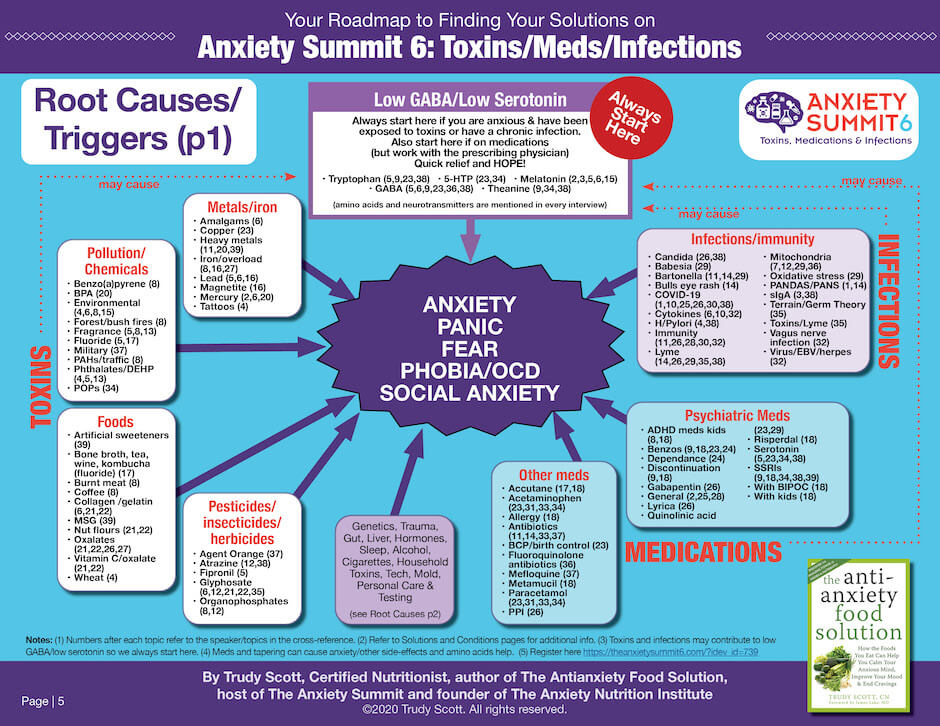
I’ve created this roadmap for The Anxiety Summit 6: Toxins, Meds & Infections because I want to make it easy for you to get the best value from these wonderful interviews. I don’t want you to feel totally overwhelmed and more stressed when you see all these experts and interview topics and wonder “where am I going to start?”

I’m using the map analogy because as a hiker I know I need a map to be able to find where I’m going and because being out in nature is a big part of the healing process.  I’m a visual person and I like to have a clear picture in my mind of the lay of the land BEFORE I set off somewhere new.

It’s for this reason that I’ve created this document with these handy dandy charts that you can refer to at the start of the summit, come back to during the summit and refer to after the summit when you’re re-listening to interviews and reading transcripts. 

I hope you enjoy it and find it easier to navigate the summit with these maps:

  • Root Causes/Triggers – figure out which may be your root causes/triggers
  • Solutions – for you to explore with the summit interviews
  • Conditions – see which ones are relevant for you

The numbers in parentheses refer to the number in the cross-reference table at the end – which then gives you the actual talk/s where this topic is discussed.

Here is an example of one of many possible root causes of your anxiety – in the Foods section on the first root causes/triggers map you’ll see: Bone broth, tea, wine and kombucha (fluoride) (17).

These are all surprising sources of fluoride and we talk about these and much more in the interview with Melissa Gallico: “Fluoride: Neurotoxicity, Anxiety, Acne and Hypothyroidism.”

What you’ll learn –

  • Prenatal fluoride exposure and lower IQ scores in children aged 3 to 4 years
  • How fluoride can be a trigger for cystic acne, depression, anxiety, Tourette’s, migraines, insomnia and hypothyroidism
  • Surprising sources of fluoride and protective nutrients

As you know, anxiety can be related to your daily life experiences BUT it can also be triggered by:

  • foods you eat and what you drink (like wheat, oxalates, alcohol and more)
  • environmental toxins (like fluoride, lead, plastics, fragrances, insecticides, fluoride and more)
  • many types of medications (like the benzos/SSRIs, birth control pill, acne medication, fluoroquinolone antibiotics and more) and/or
  • chronic infections (like Lyme disease, PANDAS, parasites, candida and more).

Once you identify the root causes and understand anxiety’s mechanisms you can support the liver/gallbladder, detox, address infections, implement targeted and supportive solutions, and get relief!

This is my 6th Anxiety Summit, featuring all new topics and the latest research related to anxiety and toxins, medications and infections.

I’d love your feedback in the comments section below

  • Let us know you find this helpful for navigating the summit 
  • Give us suggestions for improving it and let us know which topics we missed and we’ll do our best to create an updated version
  • Tell us which aspects of the roadmaps you loved and topics you’d like to learn more about

Filed Under: The Anxiety Summit 6 Tagged With: acne, anxiety, bone broth, broth, conditions, fluoride, kombucha, Roadmap, root causes, Solutions, tea, The Anxiety Summit 6, triggers, wine

ADHD and psychiatric meds in children/teens on the rise, and benzodiazepine use increases mortality in adults (including suicide)

October 7, 2020 By Trudy Scott Leave a Comment

meds teens children

Registration for my Anxiety Summit 6: Toxins/Meds/Infections is now open and in the spirit of continuing to share valuable snippets leading up to the summit, here goes for today.

(If you’ve already registered I do hope you find these snippets of value and they help you figure out more about which interviews to tune into first. If you’re only hearing about the summit for the first time, you can register here)

Today I want to highlight some aspects from two of the interviews on psychiatric medications.

In the interview Psychiatric Medications in Children and Teens with Dr. Nicole Beurkens, we discuss these results from a 2019 paper:

  • Our study indicates that the rate of presentation to child and adolescent psychiatry outpatient clinics is increasing, and rates of diagnosis and initiation of psychiatry drugs are high among the presented children.
  • The prevalence of ADHD shows an increase in males and females in our country, and psychiatric polypharmacy has reached significant rates.

Polypharmacy means concurrent use of multiple medications by a patient. The fact that psychiatric polypharmacy is increasing in children and adolescents is most concerning. There are safer solutions that address the root causes of ADHD, anxiety and depression.

Here is what we cover in this interview:

  • Increasing ADHD, anti-anxiety, SSRI and antipsychotic meds and discontinuation syndrome
  • Disparities in BIPOC communities;
  • Psychiatric side effects of acne, constipation and asthma medications
  • Nutritional psychiatry/targeted nutrients/gut, sleep, movement, screen time and play

nicole beurkens interview

In the interview SSRIs, Benzodiazepines, Alcohol and Amino acids with Dr. Hyla Cass, she shares how benzodiazepines (a class of antianxiety medications that include Xanax, Ativan, Valium and others) are:

  • strongly associated with all cause mortality, including suicide (even when used for short durations of treatment
  • the cause of many accidents even if taken the previous day

Here is what we cover in this interview:

  • SSRI and benzodiazepine side-effects
  • Discontinuation syndrome, pre-taper protocols and tapering
  • The harmful effects of alcohol and the impacts on sleep
  • The dangers of combining alcohol with benzodiazepines, and the risks of antabuse (commonly used in alcohol addiction treatment plans)
  • GABA, tryptophan, 5-HTP, glutamine, DPA, CBD and key nutrient co-factors for medication taper, alcohol addiction, carb cravings and anxiety

hyla cass interview

Dr. Nicole Beurkens’ interview is focused on children and adolescents, and Dr. Hyla Cass’ interview is focused on adults but both are invaluable resources if you want to learn more about psychiatric medications, discontinuation syndrome, tapering and addressing the root-causes with nutritional other non-medication solutions.

Other related medication interviews of interest would be:

  • GABA and Tryptophan vs Meds for Hormone Balance – one of my 3 interviews (I also cover the birth control pill and more about using the amino acids)
  • Benzodiazepines: Short-Term Benefits, Long-Term Harms – Catherine M. Pittman, PhD, HSPP
  • 5-HTP: Anxiety, Depression, Insomnia and Liver Protection – Michael Murray, ND (he shares studies comparing 5-HTP to SSRIs)
  • Neuropsychiatric Toxicity from Fluoroquinolone Antibiotics – Lisa Bloomquist
  • Your Brain on Food: Anxiety, OCD and PTSD – Uma Naidoo, MD, PCP (she also shares studies comparing psychiatric meds to NAC and inositol)

In case you missed the first few emails about the summit … as you know, anxiety can be related to your daily life experiences BUT it can also be triggered by:

  • foods you eat and what you drink (like wheat, oxalates, alcohol and more)
  • environmental toxins (like lead, plastics, fragrances, insecticides, fluoride and more)
  • many types of medications (like the benzos/SSRIs, birth control pill, acne medication, fluoroquinolone antibiotics and more) and/or
  • chronic infections (like Lyme disease, PANDAS, parasites, candida and more).

Once you identify the root causes and understand anxiety’s mechanisms you can support the liver/gallbladder, detox, address infections, implement targeted and supportive solutions, and get relief!

This is my 6th Anxiety Summit, featuring all new topics and the latest research related to anxiety and toxins, medications and infections.

anxiety summit 6

Over the course of the next 6 weeks you’ll be seeing frequent emails from me with snippets and highlights from various interviews – like this one. I do hope you continue to enjoy them and get excited about the summit! Please do share if you know someone who has anxiety!

You’ve heard me say the Anxiety Summit has been called “a bouquet of hope!”  My wish for you is that this summit is your bouquet of hope!

I hope you’ll join me and these incredible speakers, be enlightened and find YOUR solutions!

Here’s to no more anxiety and you feeling on top of the world again!

If you’re already familiar with some of this information and practice some of this already please share how it’s helped you. That way we can all learn.

If you’d like to ask a question, please post in the comments below.

I’d also love to hear from you once you’ve listened to this interview. Please do come back and comment about some of the highlights of this interview and what changes you plan to make.

Filed Under: The Anxiety Summit 6 Tagged With: ADHD, amino acids, anxiety, benzodiazepine, cbd, children, depression, GABA, Hyla Cass, medications, mortality, Nicole Beurkens, psychiatric meds, SSRI, suicide, teens, The Anxiety Summit 6, tryptophan

  • « Go to Previous Page
  • Page 1
  • Interim pages omitted …
  • Page 30
  • Page 31
  • Page 32
  • Page 33
  • Page 34
  • Interim pages omitted …
  • Page 159
  • Go to Next Page »

Primary Sidebar

NEW! GABA QuickStart Homestudy (with special intro pricing)

gaba quickstart homestudy

Free Report

9 Great Questions Women Ask about Food, Mood and their Health

You'll also receive a complimentary subscription to my ezine "Food, Mood and Gal Stuff"


Connect with me

Popular Posts

  • Amino Acids Mood Questionnaire from The Antianxiety Food Solution
  • The Antianxiety Food Solution Amino Acid and Pyroluria Supplements
  • Pyroluria Questionnaire from The Antianxiety Food Solution
  • Collagen and gelatin lower serotonin: does this increase your anxiety and depression?
  • Tryptophan for the worry-in-your-head and ruminating type of anxiety
  • GABA for the physical-tension and stiff-and-tense-muscles type of anxiety
  • The Antianxiety Food Solution by Trudy Scott
  • Seriphos Original Formula is back: the best product for anxiety and insomnia caused by high cortisol
  • Am I an anxious introvert because of low zinc and vitamin B6? My response to Huffington Post blog
  • Vagus nerve rehab with GABA, breathing, humming, gargling and key nutrients

Recent Posts

  • What do I use instead of Seriphos to help lower high cortisol that is affecting my sleep and making me anxious at night?
  • BeSerene™ GABA/theanine cream eases severe muscle tension in her neck/shoulders, prevents her bad headaches and quells her anxiety
  • How the correct approach, dose and sublingual use of GABA can be calming and not cause a flushed and itchy face and neck
  • The amino acid glutamine improves low mood by addressing gut health, and it has calming effects too
  • Flight anxiety with heightened breath, physical tension and also fearing the worst (the role of low GABA and low serotonin)

Categories

  • 5-HTP
  • AB575
  • Addiction
  • ADHD
  • Adrenals
  • Alcohol
  • Allergies
  • Alzheimer's disease
  • Amino Acids
  • Anger
  • Antianxiety
  • Antianxiety Food Solution
  • Antidepressants
  • Anxiety
  • Anxiety and panic
  • Autism
  • Autoimmunity
  • benzodiazapines
  • Bipolar disorder
  • Books
  • Caffeine
  • Cancer
  • Candida
  • Children/Teens
  • Collagen
  • Cooking equipment
  • Coronavirus/COVID-19
  • Cravings
  • Depression
  • Detoxification
  • Diabetes
  • Diet
  • DPA/DLPA
  • Drugs
  • EFT/Tapping
  • EMF
  • EMFs
  • Emotional Eating
  • Endorphins
  • Environment
  • Essential oils
  • Events
  • Exercise
  • Fear
  • Fear of public speaking
  • Fertility and Pregnancy
  • Fish
  • Food
  • Food and mood
  • Functional neurology
  • GABA
  • Gene polymorphisms
  • General Health
  • Giving
  • Giving back
  • Glutamine
  • Gluten
  • GMOs
  • Gratitude
  • Gut health
  • Heart health/hypertension
  • Histamine
  • Hormone
  • Hyperparathyroidism
  • Hypoglycemia
  • Immune system
  • Inflammation
  • Insomnia
  • Inspiration
  • Introversion
  • Joy and happiness
  • Ketogenic diet
  • Lithium orotate
  • Looking awesome
  • Lyme disease and co-infections
  • MCAS/histamine
  • Medication
  • Men's health
  • Mental health
  • Mercury
  • Migraine
  • Mold
  • Movie
  • MTHFR
  • Multiple sclerosis
  • Music
  • NANP
  • Nature
  • Nutritional Psychiatry
  • OCD
  • Osteoporosis
  • Oxalates
  • Oxytocin
  • Pain
  • Paleo
  • Parasites
  • Parkinson’s disease
  • PCOS
  • People
  • PMS
  • Postpartum
  • PTSD/Trauma
  • Pyroluria
  • Questionnaires
  • Real whole food
  • Recipes
  • Research
  • Schizophrenia
  • serotonin
  • SIBO
  • Sleep
  • Special diets
  • Sports nutrition
  • Stress
  • Sugar addiction
  • Sugar and mood
  • Supplements
  • Teens
  • Testimonials
  • Testing
  • The Anxiety Summit
  • The Anxiety Summit 2
  • The Anxiety Summit 3
  • The Anxiety Summit 4
  • The Anxiety Summit 5
  • The Anxiety Summit 6
  • Thyroid
  • Thyroid health
  • Toxins
  • Tryptophan
  • Tyrosine
  • Uncategorized
  • Vegan/vegetarian
  • Women's health
  • Yoga

Archives

  • October 2025
  • September 2025
  • August 2025
  • July 2025
  • June 2025
  • May 2025
  • April 2025
  • March 2025
  • February 2025
  • January 2025
  • November 2024
  • October 2024
  • September 2024
  • August 2024
  • July 2024
  • June 2024
  • May 2024
  • April 2024
  • March 2024
  • February 2024
  • January 2024
  • December 2023
  • November 2023
  • October 2023
  • September 2023
  • August 2023
  • July 2023
  • June 2023
  • May 2023
  • April 2023
  • March 2023
  • February 2023
  • January 2023
  • December 2022
  • November 2022
  • October 2022
  • September 2022
  • August 2022
  • July 2022
  • June 2022
  • May 2022
  • April 2022
  • March 2022
  • February 2022
  • January 2022
  • December 2021
  • November 2021
  • October 2021
  • September 2021
  • August 2021
  • July 2021
  • June 2021
  • May 2021
  • April 2021
  • March 2021
  • February 2021
  • January 2021
  • December 2020
  • November 2020
  • October 2020
  • September 2020
  • August 2020
  • July 2020
  • June 2020
  • May 2020
  • April 2020
  • March 2020
  • February 2020
  • January 2020
  • December 2019
  • November 2019
  • October 2019
  • September 2019
  • August 2019
  • July 2019
  • June 2019
  • May 2019
  • April 2019
  • March 2019
  • February 2019
  • January 2019
  • December 2018
  • November 2018
  • October 2018
  • September 2018
  • August 2018
  • July 2018
  • June 2018
  • May 2018
  • April 2018
  • March 2018
  • February 2018
  • January 2018
  • December 2017
  • November 2017
  • October 2017
  • September 2017
  • August 2017
  • July 2017
  • June 2017
  • May 2017
  • April 2017
  • March 2017
  • February 2017
  • January 2017
  • December 2016
  • November 2016
  • October 2016
  • September 2016
  • August 2016
  • July 2016
  • June 2016
  • May 2016
  • April 2016
  • March 2016
  • February 2016
  • January 2016
  • December 2015
  • November 2015
  • October 2015
  • September 2015
  • August 2015
  • July 2015
  • June 2015
  • May 2015
  • April 2015
  • March 2015
  • February 2015
  • January 2015
  • December 2014
  • November 2014
  • October 2014
  • September 2014
  • August 2014
  • July 2014
  • June 2014
  • May 2014
  • April 2014
  • March 2014
  • February 2014
  • January 2014
  • December 2013
  • November 2013
  • October 2013
  • September 2013
  • August 2013
  • July 2013
  • June 2013
  • May 2013
  • April 2013
  • March 2013
  • February 2013
  • January 2013
  • December 2012
  • November 2012
  • October 2012
  • August 2012
  • July 2012
  • June 2012
  • May 2012
  • April 2012
  • March 2012
  • February 2012
  • January 2012
  • December 2011
  • November 2011
  • October 2011
  • September 2011
  • August 2011
  • July 2011
  • June 2011
  • May 2011
  • April 2011
  • March 2011
  • February 2011
  • January 2011
  • December 2010
  • October 2010
  • September 2010
  • July 2010
  • May 2010
  • April 2010
  • March 2010
  • February 2010
  • January 2010
  • November 2009

Share the knowledge!

The above statements have not been evaluated by the Food and Drug Administration. Products listed in this website are not intended to diagnose, treat, cure or prevent any disease.

The information provided on this site is for informational and educational purposes only and is not intended as a substitute for advice from your physician or other health care professional. You should consult with a healthcare professional before starting or modifying any diet, exercise, or supplementation program, before taking or stopping any medication, or if you have or suspect you may have a health problem.


Copyright © 2026 Trudy Scott. All Rights Reserved. | Privacy | Terms and Conditions | Refund Policy | Medical Disclaimer

Free Report

9 Great Questions Women Ask about Food, Mood and their Health

You’ll also receive a complimentary subscription to my ezine “Food, Mood and Gal Stuff”