• Skip to primary navigation
  • Skip to main content
  • Skip to primary sidebar

everywomanover29 blog

Food, Mood and Women's Health – Be your healthiest, look and feel great!

  • Blog
  • About
  • Services
  • Store
  • Resources
  • Testimonials
  • The Book
  • Newsletter
  • Contact
  • Search this site

How to figure out what’s causing your depression with Dr. Kharrazian

June 11, 2015 By Trudy Scott 12 Comments

 depressionsessions

The Depression Sessions officially starts on Sunday June 14th.

To give you a taste of what is to come, this week is a pre-summit kick-off with some great interviews airing RIGHT NOW!

TODAY (and the next few days), you can watch Sean Croxton’s excellent interview with Dr. Datis Kharrazian, author of Why Isn’t My Brain Working.

Dr. Kharrazian’s full-length session is available for EARLY BIRD viewing and downloading (video, mp3 and transcript).

Dr. Datis Kharrazian: How to Figure Out What’s Causing Your Depression
dr-k
  • Why there is more to correcting mood disorders than only boosting neurotransmitter levels. A lot more!
  • Why traumatic brain injuries often show up as depression … years down the road. 
  • How chronic gut inflammation can cause brain inflammation, leading to depression.
  • How the “other” symptoms presenting with depression — anxiety, insomnia, brain fog –can help determine its cause.

This free EARLY BIRD viewing will be available until Sunday morning June 14th at 8am PST/11am EST when the Depression Sessions online event officially kicks off.

Here are a few gems from this interview:

  • Depression is decreased frequency of firing of areas the frontal cortex, pre-frontal, orbitofrontal, and the cingulate gyrus. At the end of the day, someone’s clinical depression is that part of their brain not firing. Then our goal as a clinical workup is why? What’s not making that area of the brain fire?
  • Every single case of depression is uniquely different
  • If you have depression and you notice it and you want to change it, that’s a really positive sign. If you have depression and you don’t even care anymore, you don’t even recognize it, that’s when things get really scary for us. That’s where all the neurodegenerative diseases have to be ruled out.

I’m so pleased to hear that Dr Kharrazian is not in favor of urinary neurotransmitter testing and do agree that depression (and anxiety) is often a lot more than only neurotransmitter deficiencies.

I see such incredible results with amino acids that I must say I do disagree with him on this one: “If you take an amino acid, like 5-HTP or tyrosine you do get a boost of brain function that doesn’t last.”

It may just be that he is working with people who have very complex issues like a history of brain injuries and neurodegenerative diseases. The whole discussion on head injuries is so interesting! And the wonderful thing is that there are certain nutrients that can help so much (fish oil, turmeric and others)!

The GABA blood-brain-barrier discussion comes up later (and I get a mention!) so be sure to listen out for that section. I’m still not convinced about the leaky brain GABA information but I am planning to have to look into the Cyrex blood-brain-barrier test Dr. Kharrazian mentions.  I’m also going to look into the Cyrex GAD autoimmunity test he talks about.

My interview on the amino acids (GABA and tryptophan) and pyroluria/social anxiety/introversion airs on Day 1 so be sure to tune in for this one too.  You can see a preview snippet on this blog called: Can Social Anxiety Be Reversed with Nutrition?

If you haven’t yet registered you can simply register here:
https://at105.isrefer.com/go/depreg/trudyscott/

I do hope you enjoy this one and all the others in the Depression Sessions!  

 

Filed Under: Amino Acids, Depression, Events Tagged With: causes of depression, datis kharrazian, depression sessions, GABA, sean croxton, Trudy Scott

Genome Meets Microbiome by Dr. Robert Rountree at IFM

June 5, 2015 By Trudy Scott 10 Comments

microbiota

I’m going to share some gems from one of my favorite talks at the annual IFM conference The Omics Revolution – Nature and Nurture. It was a talk by Dr. Robert Rountree and was called “Genome Meets Microbiome” and he opens with this great slide that paints an incredible picture:

Humans are like mobile warm-blooded coral reefs, home to vast numbers of microbial ecosystems that are rich in biodiversity

Dr. Rountree shared how humans have more than 100 trillion microbiota, outnumbering human cells by 10:1. And he shared this great quote from Dr. Martin J Blaser, MD’s 2014 paper:

It is reasonable to propose that the composition of the microbiome and its activities are involved in most, if not all, of the biological processes that constitute human health and disease  

Here are some other gems from the talk:

  • Disease-specific alterations in the enteric virome in inflammatory bowel disease (such as Crohn’s disease and ulcerative colitis) and how changes in the virome may contribute to intestinal inflammation and dysbiosis
  • Methanogens in human health and disease Evidence has linked overabundance of methanogens to constipation and IBS, influencing intestinal transit and pH. These methanogens ensure more complete fermentation of carbohydrates, leading to higher production and absorption of SCFAs (short chain fatty acids), which may lead to obesity
  • The emerging world of the fungal microbiome or the mycobiome “Early-stage studies show interactions between the mycobiome and other microbes, with host physiology, and in pathogenic and mutualistic phenotypes. Current research portends a vital role for the mycobiome in human health and disease.”

So we have the microbiome, the virome, methanogens and the mycobiome! (and so much more)

He closes with this:

Alteration of the microbiome by our modern lifestyle (diet, stress, excessive hygiene and antibiotics) may be responsible for many chronic diseases [my addition: including anxiety and depression]

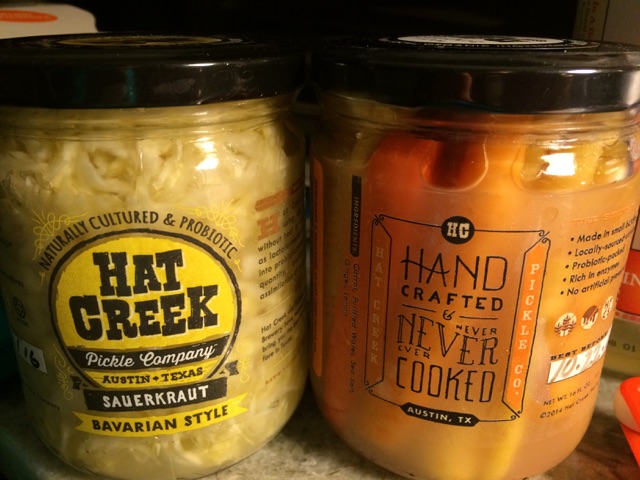
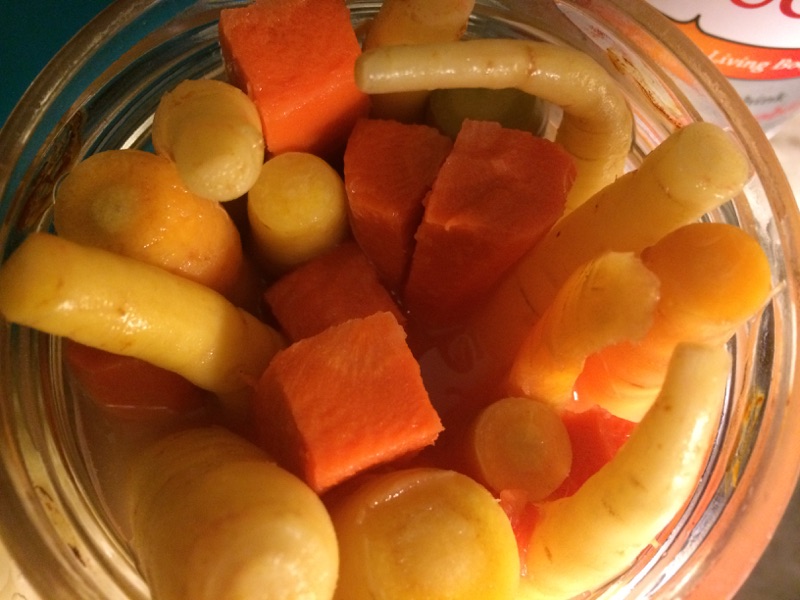
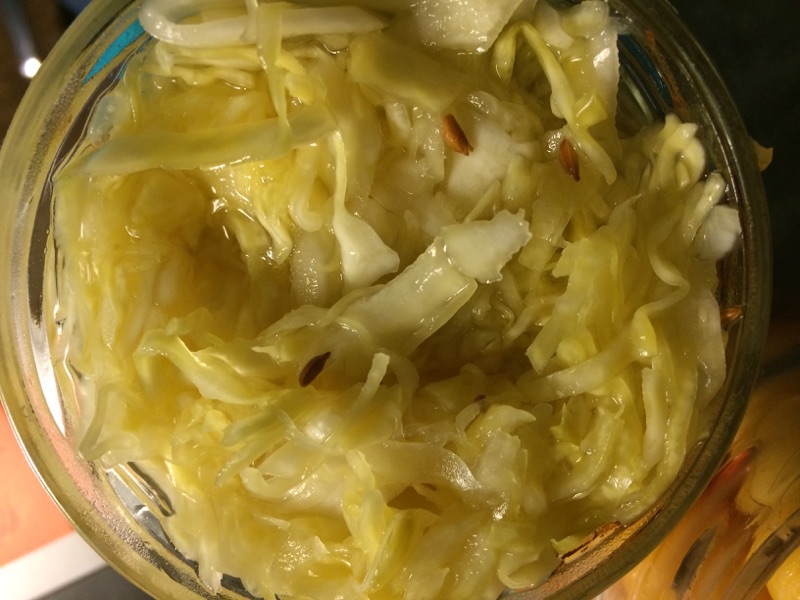
When I arrived in Austin I headed to the local Whole Foods to stock up on travel food (like I always do) and found some probiotic-rich foods that are made right in Austin.  Now I can highly recommend this fabulous sauerkraut and fermented carrots from Hat Creek Pickles. I  munched on this yummy food (and sardines, boiled eggs, grass-fed beef jerky, pemmican and fruit) all weekend! I even brought what was left of the the sauerkraut home!

Raw, local, organic, delish!!!! and oh so pretty too.

sauerkraut and fermented carrots
Sauerkraut and fermented carrots
Fermented carrots
Fermented carrots with a hint of ginger
Sauerkraut
Sauerkraut with caraway seeds (a favorite of mine!)

Happy gut means happy Trudy!  How are you looking after your gut?


Filed Under: Antianxiety, Events, Gut health Tagged With: Dr. Robert Rountree, genome, gut health, IFM conference, microbiome

Can Social Anxiety Be Reversed with Nutrition?

May 29, 2015 By Trudy Scott 62 Comments

underground-wellness-radio

Sean Croxton host of Underground Wellness Radio shares how:

  • he was once prescribed Paxil for social anxiety (and depression)
  • he doesn’t like big crowds
  • he can speak on stage in front of 100s of people with no problem
  • as soon as people come to talk to him afterwards he wants to go!

Can you relate to any of this?

He thinks he has pyroluria, a social anxiety condition where you have a higher need for some key nutrients: zinc, vitamin B6 and evening primrose oil.

We are often surprised when we hear that someone who appears to be outgoing and extroverted (like Sean) actually has social anxiety.

It’s more common than you think and is made worse under stressful situations: life stresses, gluten sensitivities etc.

I share how my social anxiety got really bad in my late thirties (when my PMS was so bad) and how

  • many of us with pyroluria push through and deal with it
  • we just want to stay home
  • we don’t really want to see people

Not everyone needs omega-3 supplements!

We discuss omega-3s and omega-6s and how pyrolurics often don’t need to supplement with omega-3s like fish oils but can extract the omega-3s from the foods they eat: grass-fed red meat, wild fish like salmon, leafy greens and walnuts.

Pyrolurics often do need to supplement with the GLA form of omega-6 that we find in evening primrose oil as GLA is often low, plus the GLA enhances zinc absorption.

(by the way: I said alpha linolenic acid (ALA) but should have said gamma linolenic acid (GLA)

A good copper-free multi is part of the protocol because low zinc often means high copper and this can make you more anxious.

Looking at other sources of copper is a helpful for many pyrolurics: eating too many nuts, baking with nut flours, the copper IUD.

You don’t want to miss this part…Sean asks if you can cure introversion with this pyroluria protocol. If you are an introvert and force yourself in social settings, feel very uncomfortable and anxious being around big groups of people then you’re going to have to watch the end of the video for my answer!

You can watch the whole snippet here

This is part of my interview on the Depression Sessions, an online event hosted by my friend Sean. I’ll also be sharing information about the amazing amino acids – inexpensive, over-the-counter supplements that can lift your mood and end anxiety in minutes!

Sean traveled the country to interview the best of the best experts — medical doctors, naturopaths, nutritionists, and bestselling authors — on what really causes depression and anxiety and what to do about it.

Some of us (like me) flew to San Diego to be interviewed in his home. It was such a thrill to be interviewed by the legendary Sean Croxton and is an honor to be part of this group of experts!

Here are just a few of the amazing experts you’ll hear from:

  • Suzy Cohen, also known as America’s Pharmacist, uncovers specific prescription drugs that rob your body and brain of mood-friendly nutrients.
  • Datis Kharrazian will show you what insomnia, anxiety, and the symptoms that tag along with depression can tell you about what’s causing it.
  • Hyla Cass, a medical doctor and integrative psychiatrist (who has been featured on two prior Anxiety Summits), shares her best tips for transitioning OFF of psychiatric meds while avoiding or minimizing common withdrawal symptoms.
  • Ben Lynch (another Anxiety Summit favorite) reveals the incredibly common genetic mutation known to drive depression (and anxiety) … and the critical nutrients that make such a big difference.


Filed Under: Anxiety and panic, Events, Introversion, Pyroluria Tagged With: introversion, pyroluria, sean croxton, social anxiety, the depression sessions, Trudy Scott, underground wellness radio, zinc

Pyroluria prevalence and associated conditions

May 22, 2015 By Trudy Scott 104 Comments

pyroluria prevalence

Pyroluria is a genetic condition that is frequently associated with a type of anxiety characterized by social anxiety, avoidance of crowds, a feeling of inner tension, and bouts of depression. People with this problem experience varying degrees of anxiety or fear, often starting in childhood, but they usually manage to cover it up and push through. They tend to build their life around one person, become more of a loner over time, have difficulty handling stress or change, and have heightened anxiety symptoms when under more stress.

Addressing low levels of the mineral zinc and vitamin B6, together with some other nutrients and stress management, are key to addressing these symptoms.

You can read more about pyroluria, sometimes called high mauve or pyrrole disorder here

Pyroluria is far more common that we realize and is not considered a real condition in conventional medicine or mainstream mental health.

I’d like to share the prevalence of pyroluria and the many related conditions/syndromes (other than those we have listed on the current Pyroluria Questionnaire from The Antianxiety Food Solution

I discussed some of this in my interview on the Anxiety Summit season 3: Pyroluria, Amino Acids and Anxiety: Troubleshooting when you are not getting results and in my Closing call 60+ Nutritional & Biochemical Causes of Anxiety and Recommended Supplements so here it is all in one place.

This is an excerpt from my book The Antianxiety Food Solution:

Joan Mathews-Larson is someone who I consider an expert on the subject of pyroluria. In her book Depression-Free Naturally, she reports the prevalence as follows: 11 percent of the healthy population, 40 percent of adults with psychiatric disorders, 25 percent of children with psychiatric disorders, 30 percent of people with schizophrenia, and 40 percent of alcoholics.

Abram Hoffer worked primarily with schizophrenic patients, but he found pyroluria was also present in 25 percent of his nonschizophrenic patients, including adults with anxiety, depression, and alcoholism, and children with learning disorders and behavioral disorders.

According to McGinnis, pyroluria is also present in about 46 percent of people with autism spectrum disorders and 71 percent of those with Down syndrome.

I work primarily with adult women who are anxious, depressed, or both and have found that at least 80 percent of my clients with moderate to severe anxiety have a large number of pyroluria symptoms.

I thought it would be useful to summarize the above percentages for some clarity. I used some educated guesses to get some ranges we may expect to see. Keep in mind that the differing percentages are because of the different populations each practitioner works with:

  • the healthy population : 11% (Joan Mathews Larson)
  • adults with psychiatric/mood disorders like anxiety and depression: 40% (Joan Mathews Larson)
  • children with psychiatric/mood disorders like anxiety and depression: 25% (Joan Mathews Larson)
  • children with learning disorders and behavioral disorders: 25% (Abram Hoffer)
  • schizophrenics: 30% (Joan Mathews Larson)
  • alcoholics: 25% (Woody McGinnis and Abram Hoffer) to 40% (Joan Mathews Larson)
  • autism spectrum disorders: 46% (Woody McGinnis)
  • Down Syndrome: 71% (Woody McGinnis)
  • adult women with anxiety and/or depression: up to 80% (Trudy Scott)

There are other related conditions where there have been reports of improvements in both conditions (when on the pyroluria protocol):

  • Introversion – see my blog Am I an anxious introvert because of low zinc and vitamin B6? My response to Huffington Post blog. As of now 100s of people score high on both the pyroluria and introvert questionnaires and report feeling less introverted when on the pyroluria protocol (just read all the comments in this blog).
  • Dystonia – see my blog that shares Jay’s story: Pyroluria and focal musician’s dystonia or musician’s cramp. As of now we have 2 people reporting resolution of dystonia and pyroluria when on the pyroluria protocol.
  • Thin Basement Membrane Disease (an inherited collagen/connective tissue disorder diagnosed via kidney biopsy). Someone contacted me during season 3 of the Anxiety Summit and said she has pyroluria and TBMD. She shared that the pyroluria protocol helped with her TBMD symptoms.

Other factors/conditions to consider:

  • Miscarriage – Carl Pfeiffer observed that pyroluria is more common in girls and that girls in the family often look alike. It seems that boy babies are more frequently miscarried
  • MTHFR defects – I have been hearing that many people with pyroluria also have one or both of the MTHFR polymorphisms. We know that methylation polymorphisms are a factor in miscarriages and it would be interesting to know if more boys are miscarried.
  • Low histamine (histapenia) or high histamine (histadela) – many pyrolurics also have one or the other. I’m not sure of the prevalence but I’m sure Dr. William Walsh has some numbers which I plan to find.
  • Chronic fatigue syndrome/CFS – the common issues with CFS and pyroluria seem to be low zinc and low iron, plus inflammation. You can read more here: Pyroluria and chronic fatigue syndrome: is there a link?
  • Low oxytocin and social anxiety and autism – the common factors seem to be oxytocin receptor gene (OXTR) defects, low serotonin and low zinc

Other conditions that have a social anxiety aspect, a possible neurotransmitter imbalance with a likely pyroluria connection. These came up as questions during season 3 of the Anxiety Summit and I’ll report back as I find out more:

  • Alice in Wonderland Syndrome. I don’t know if there is there a connection between pyroluria and Alice in Wonderland Syndrome (where the person sees large or small objects/people and often has migraines). I had never heard of this condition but my quick search had me wondering about the word “hallucinations.” The original work by Carl Pfeiffer was with schizophrenics who had pyroluria so it’s possible that there is a connection.
  • Selective mutism I also don’t know if there is a connection between pyroluria and selective mutism. We do know that selective mutism often goes hand in hand with anxiety and social anxiety.

Both young girls with the above conditions did score high on the pyroluria questionnaire and it will be wonderful to hear if the pyroluria protocol helps them. I really do hope so!

Update: August 23, 2024

Osteopenia/osteoporosis – I’m exploring a possible connection to pyroluria given the role of zinc and vitamin B6, oxidative stress, anxiety and homocysteine in both.

One example are B vitamins (folate, B6 and B12) which help to reduce homocysteine. Elevated homocysteine increases anxiety/panic attacks and it also increases the risk of fractures. Also, vitamin B6 and the B vitamins are key for pyroluria and for helping to ease anxiety in general.

Another factor may be low zinc leading to low stomach acid production, thereby contributing to poor protein digestion and reduced calcium absorption – both important for bone health.

Other possible links include: celiac disease or non-celiac gluten sensitivity, MTHFR polymorphism, oxalate issues, collagen/joint issues, perimenopause/menopause and liver/gallbladder/bile issues.

I will be publishing an in depth blog with all the supporting research links and some case studies, so stay tuned.

If you’re new to pyroluria

If you’re new to pyroluria you can find the current Pyroluria Questionnaire from The Antianxiety Food Solution here.

There is an entire chapter on pyroluria in my book, The Antianxiety Food Solution, where I cover more of the back story, the exact protocol and nuances (for example using vitamin B6/pyridoxine vs P5P/pyridoxal-5-phosphate), testing and much more.

There are many blog posts on the site that address additional aspects of pyroluria – feel free to use the search feature when on any blog post or use this link to find the posts.

Wrapping up and your feedback

Now I’d love to hear from you – do you have pyroluria (or suspect you have pyroluria) and do you have any of the above conditions or do any of them run in your family?

Has addressing your pyroluria with the pyroluria helped you feel more social and helped any of the related conditions?

If you’re aware of any other conditions related to pyroluria please do share in the comments.

With the newest update on osteopenia/osteoporosis I’m particularly interested in your feedback on this aspect as I gather information for a more in-depth blog post.

If you’re a practitioner working with clients/patients with pyroluria I’d love to hear your insights too.

Feel free to share and ask your questions below.

Filed Under: Anxiety and panic, Pyroluria Tagged With: alice in wornderland syndrome, cfs, dystonia, histamine, introversion, mthfr, oxtr, pyroluria, selective mutism, thin basement membrane disease

60+ Nutritional & Biochemical Causes of Anxiety

May 19, 2015 By Trudy Scott 50 Comments

nutritional causes of anxiety

I shared these 60+ Nutritional & Biochemical Causes of Anxiety on my closing call  of the The Anxiety Summit season 3. Since then I’ve kept this list updated as I find additional research, connections and case studies.  In conjunction with my book “The Antianxiety Food Solution”, interviews and other blogs, I hope this list will help you put the puzzle pieces together to resolve your anxiety. 

Keep in mind it’s not uncommon to have many root causes so if it feels too overwhelming, addressing low serotonin and/or low GABA first, really does help with the overwhelm, fear, anxiety and negativity.

The Foundational Causes from The Antianxiety Food Solution :

  1. Food – real whole food, organic (pesticides may be problematic), quality protein (grass-fed, wild, pastured), healthy fats; avoid junk/processed food with additives/colors/trans fats/GMOs
  2. Sugar – depletes zinc and magnesium and fills us up. We should not feel the need for treats/fruit should satisfy our desire for sweet
  3. Low blood sugar – breakfast/protein/healthy snacks/no coffee
  4. Caffeine/Coffee – even decaf coffee may be an issue. Coffee has high-levels of pesticides, affects blood sugar and affects hormones
  5. Tobacco – depletes key nutrients like zinc, vitamin C
  6. alcohol – depletes key nutrients like zinc, vitamin C
  7. Food sensitivities – gluten (plus glyphosates/roundup affect serotonin/zinc etc), dairy, GAPs, grains
  8. Digestive system – low HCl
  9. Digestive system – Low good bacteria/probiotics
  10. Digestive system – other enzymes are low
  11. Digestive system – candida
  12. Digestive system – parasites
  13. Digestive system – leaky gut
  14. Digestive system – liver/gallbladder issues
  15. Digestive system – SIBO
  16. Brain chemicals/neurotransmitters: low GABA (covered in detail in season 4 of the Anxiety Summit)
  17. Brain chemicals/neurotransmitters: low serotonin
  18. Brain chemicals/neurotransmitters: low endorphins
  19. Brain chemicals/neurotransmitters: low catecholamines (need for coffee/sugar) or high catecholamines. Gut health, what you eat, coffee, gluten all affect the brain chemicals
  20. Pyroluria/social anxiety – zinc, vitamin B6 and EPO (addressing this improves brain chemical imbalances and hormone imbalances)
  21. A need for zinc
  22. A need for vitamin B6
  23. A need for EPO
  24. Toxins/pesticides/plastics/BPA
  25. Medication side-effects/withdrawal (benzos are the worst)
  26. Sex hormones imbalances (especially low progesterone)
  27. Thyroid problems – hyperthyroid/Hashimoto’s thyroiditis can cause anxiety symptoms; low thyroid symptoms – amino acids are not as effective
  28. Adrenals issues: cortisol imbalance can affect how you handle stress, digestion, inflammation; high cortisol can have direct impact on anxiety levels
  29. Low total cholesterol (<150)
  30. Low levels of vitamin D, magnesium, vitamin C
  31. Low levels of vitamin B12
  32. Low levels of folate
  33. Low levels of iron (test ferritin)
  34. Not getting exercise
  35. Not working on stress-reduction (tai chi, meditation, guided imagery, yoga)
  36. Not getting out in nature
  37. Not getting at least 8 hours of sleep
[the above are all covered in great detail in my book  The Antianxiety Food Solution ]

Other possible nutritional/biochemical/physical causes of anxiety/depression

  1. Drug-induced nutrient deficiencies (for example: the birth control pill depletes vitamin B6, folate, magnesium)
  2. MVP (mitral valve prolapse) – it feel like the “heart is skipping a beat” (magnesium may help)
  3. Infections – strep can cause OCD/PANDAS/PANS. Also consider: H/Pylori, Lyme disease, clostridia
  4. Heavy metals like mercury or lead.  We covered mercury in season 2 – Your hidden mercury burden: A likely root cause of the other root causes of anxiety and mercury/lead detox in season 4 with Dr. John Dempster
  5. Anything that increases inflammation in the body (high CRP is a good clue)
  6. Herbicide/Roundup use in the home/garden
  7. Genetic polymorphisms – MTHFR, COMT, MAOA, GAD – Dr. Ben Lynch is an excellent resource and has shared his expertise on season 2 – Anxiety: Biochemical and genetic predispositionsand season 3 – How Methylfolate can make you Feel Worse and even Cause Anxiety
  8. Apolipoprotein E ?4 (ApoE ?4) gene polymorphism
  9. Other possible hormone issues: high prolactin, low oxytocin
  10. Histamine reaction to certain foods (Yasmina covers this in her interview in season 3: Histamine-containing Foods: their Role in Anxiety, Depression and Schizophrenia )
  11. Oxalates reaction (berries, leafy greens, nuts). A good resource is lowoxalateinfo
  12. SIBO and FODMAPs/fructose malabsorption (affects serotonin levels)
  13. Too much of some nutrients: fish oil, a B complex, tyrosine, folate
  14. Low lithium (impacts GABA levels)
  15. Copper toxicity i.e. high copper and low zinc
  16. EMFs, air pollution, noise pollution, cell phone use, smart meters
  17. Marijuana use – used recreationally or as medical marijuana (Dr. Hyla Cass covers this in season 4 of the Anxiety Summit – cognitive issues, anxiety, psychosis, schizophrenia, social anxiety)
  18. Toxic mold exposure (Dr. Jill Carnahan covers this in season 3)
  19. Fluoride exposure
  20. Poor mouth health
  21. Toxoplasma gondii
  22. Metals/chemicals/drugs in the tap water
  23. Low leptin (signals satiety/fullness) and high ghrelin
  24. Over-the counter drugs, inner ear issues/cochlear damage, light sensitivity (Sharon Heller shared Hidden Causes of Anxiety on season 2)
  25. Physical pain (from an injury)
  26. Gas leaks
  27. Plastics/BPA
  28. Accutane, the acne drug can lead to psychiatric disorders in some people

May 14, 2016 updates after Season 4 of the Anxiety Summit:

66. Leptin resistance, obesity, skinny-fat and high body fat % (Mike Mutzel covers this in season 4 – anxiety, inflammation, microbiome, PTSD, cortisol and HPA axis)

67. Fluoroquinolone antibiotics (Lisa Bloomquist covers this in season 4 – anxiety, psychosis, connective tissue damage, mitochondrial impacts)

68. Low histamine/histapenia/overmethylation or high histamine/histadelia/undermethylation – read more here and the season 4 interview with Dr. William Walsh

69. Lack of community and social connection (James Maskell covers this in season 4)

Note: these causes do not include psychological or physical trauma or abuse (both past and current).

If the idea of 60+ causes feels too overwhelming and scary for you start with the basic food changes and look at the Amino Acids Mood Questionnaire from The Antianxiety Food Solution. GABA and serotonin support benefits most of my clients.  You can see how to do a trial here  and find the products I use with my clients here – such as tryptophan and GABA.

Missed this interview or can’t listen live? Or want this and the other great interviews for your learning library? Purchase the MP3s or MP3s + transcripts and listen when it suits you.

You can find your purchasing options here: Anxiety Summit Season 1, Anxiety Summit Season 2, and Anxiety Summit Season 3.

Filed Under: Amino Acids, Antianxiety, Food and mood, Gluten, Real whole food, The Anxiety Summit 3 Tagged With: amino acid questionnaire, anxiety, biochemical, nutritional, real whole food, the anxiety summit, Trudy Scott

The Anxiety Summit – 60+ Nutritional & Biochemical Causes of Anxiety and Recommended Supplements

May 19, 2015 By Trudy Scott 88 Comments


Trudy Scott, host of The Anxiety Summit, Food Mood Expert and Nutritionist, author of The Antianxiety Food Solution presents:

Closing call: 60+ Nutritional & Biochemical Causes of Anxiety and Recommended Supplements

  • 60+ Nutritional/biochemical causes of anxiety and associated solutions
  • 4 degrees/levels of anxiety I see and response to the 60+ causes
  • The unique ability of the body to heal
  • Testing I use with my clients and what tests I’d run if everyone had unlimited funds
  • My recommendations:  supplements
  • My message of hope

I mentioned the speaker blog posts.  You can access them all here: The Anxiety Summit Season 3: All the speakers and topics

I also referred back to speakers and topics from season 1 and 2 so here are those links:

The Anxiety Summit Season 2: All the speakers and topics

The Anxiety Summit: All the speakers and topics (this is summit 1)

If the idea of 60+ causes feels too overwhelming and scary for you here is the Amino Acids Mood Questionnaire from The Antianxiety Food Solution. Serotonin support in the form of tryptophan or 5-HTP may help

As Dr. Peter Bongiorno said in his interview: Serotonin and Anxiety, Happiness, Digestion and our Hormones

There can be multiple factors involved as to why someone has anxiety. How you’re going to work through these factors successfully is going to be very different for each person.

Here is the list of the 60+ Nutritional/biochemical causes of anxiety.  (Just click on this link to see all of them)

Here is the list of supplements: The Antianxiety Food Solution Amino Acid and Pyroluria Supplements (Just click on this link to see all of them)

Here is the: Nutritional testing for figuring out the root cause/s of your anxiety (Just click on this link to see all of them)

If you are not already registered for the Anxiety Summit you can get live access to the speakers of the day here: www.theAnxietySummit.com

Missed this interview or can’t listen live? Or want this and the other great interviews for your learning library? Purchase the MP3s or MP3s + transcripts and listen when it suits you.

You can find your purchasing options here: Anxiety Summit Season 1, Anxiety Summit Season 2, and Anxiety Summit Season 3.

Filed Under: Amino Acids, Antianxiety, Food and mood, Gluten, Real whole food, The Anxiety Summit 3 Tagged With: amino acid questionnaire, anxiety, biochemical, nutritional, real whole food, supplements, the anxiety summit, Trudy Scott

  • « Go to Previous Page
  • Page 1
  • Interim pages omitted …
  • Page 111
  • Page 112
  • Page 113
  • Page 114
  • Page 115
  • Interim pages omitted …
  • Page 160
  • Go to Next Page »

Primary Sidebar

GABA QuickStart Homestudy

gaba quickstart homestudy

Free Report

9 Great Questions Women Ask about Food, Mood and their Health

You'll also receive a complimentary subscription to my ezine "Food, Mood and Gal Stuff"


Connect with me

Popular Posts

  • Amino Acids Mood Questionnaire from The Antianxiety Food Solution
  • The Antianxiety Food Solution Amino Acid and Pyroluria Supplements
  • Pyroluria Questionnaire from The Antianxiety Food Solution
  • Collagen and gelatin lower serotonin: does this increase your anxiety and depression?
  • Tryptophan for the worry-in-your-head and ruminating type of anxiety
  • GABA for the physical-tension and stiff-and-tense-muscles type of anxiety
  • The Antianxiety Food Solution by Trudy Scott
  • Seriphos Original Formula is back: the best product for anxiety and insomnia caused by high cortisol
  • Am I an anxious introvert because of low zinc and vitamin B6? My response to Huffington Post blog
  • Vagus nerve rehab with GABA, breathing, humming, gargling and key nutrients

Recent Posts

  • Her cravings for chips and peanut butter were triggered by stress: GABA ends cravings and reduces physical tension and fear of heights
  • It is truly miraculous to be able to move through life without crippling anxiety and panic
  • GABA and tryptophan combo provide immediate and noticeable relief for tremors and cervical dystonia in just 7 days
  • Red light therapy for back and neck pain, plantar fasciitis and low mood – a complement to the amino acids GABA, DPA and tryptophan
  • What do I use instead of Seriphos to help lower high cortisol that is affecting my sleep and making me anxious at night?

Categories

  • 5-HTP
  • AB575
  • Addiction
  • ADHD
  • Adrenals
  • Alcohol
  • Allergies
  • Alzheimer's disease
  • Amino Acids
  • Anger
  • Antianxiety
  • Antianxiety Food Solution
  • Antidepressants
  • Anxiety
  • Anxiety and panic
  • Autism
  • Autoimmunity
  • benzodiazapines
  • Bipolar disorder
  • Books
  • Caffeine
  • Cancer
  • Candida
  • Children/Teens
  • Collagen
  • Cooking equipment
  • Coronavirus/COVID-19
  • Cravings
  • Depression
  • Detoxification
  • Diabetes
  • Diet
  • DPA/DLPA
  • Drugs
  • EFT/Tapping
  • EMF
  • EMFs
  • Emotional Eating
  • Endorphins
  • Environment
  • Essential oils
  • Events
  • Exercise
  • Fear
  • Fear of public speaking
  • Fertility and Pregnancy
  • Fish
  • Food
  • Food and mood
  • Functional neurology
  • GABA
  • Gene polymorphisms
  • General Health
  • Giving
  • Giving back
  • Glutamine
  • Gluten
  • GMOs
  • Gratitude
  • Gut health
  • Heart health/hypertension
  • Histamine
  • Hormone
  • Hyperparathyroidism
  • Hypoglycemia
  • Immune system
  • Inflammation
  • Insomnia
  • Inspiration
  • Introversion
  • Joy and happiness
  • Ketogenic diet
  • Lithium orotate
  • Looking awesome
  • Lyme disease and co-infections
  • MCAS/histamine
  • Medication
  • Men's health
  • Mental health
  • Mercury
  • Migraine
  • Mold
  • Movie
  • MTHFR
  • Multiple sclerosis
  • Music
  • NANP
  • Nature
  • Nutritional Psychiatry
  • OCD
  • Osteoporosis
  • Oxalates
  • Oxytocin
  • Pain
  • Paleo
  • Parasites
  • Parkinson’s disease
  • PCOS
  • People
  • PMS
  • Postpartum
  • PTSD/Trauma
  • Pyroluria
  • Questionnaires
  • Real whole food
  • Recipes
  • Research
  • Schizophrenia
  • serotonin
  • SIBO
  • Sleep
  • Special diets
  • Sports nutrition
  • Stress
  • Sugar addiction
  • Sugar and mood
  • Supplements
  • Teens
  • Testimonials
  • Testing
  • The Anxiety Summit
  • The Anxiety Summit 2
  • The Anxiety Summit 3
  • The Anxiety Summit 4
  • The Anxiety Summit 5
  • The Anxiety Summit 6
  • Thyroid
  • Thyroid health
  • Toxins
  • Tryptophan
  • Tyrosine
  • Uncategorized
  • Vegan/vegetarian
  • Women's health
  • Yoga

Archives

  • May 2026
  • April 2026
  • October 2025
  • September 2025
  • August 2025
  • July 2025
  • June 2025
  • May 2025
  • April 2025
  • March 2025
  • February 2025
  • January 2025
  • November 2024
  • October 2024
  • September 2024
  • August 2024
  • July 2024
  • June 2024
  • May 2024
  • April 2024
  • March 2024
  • February 2024
  • January 2024
  • December 2023
  • November 2023
  • October 2023
  • September 2023
  • August 2023
  • July 2023
  • June 2023
  • May 2023
  • April 2023
  • March 2023
  • February 2023
  • January 2023
  • December 2022
  • November 2022
  • October 2022
  • September 2022
  • August 2022
  • July 2022
  • June 2022
  • May 2022
  • April 2022
  • March 2022
  • February 2022
  • January 2022
  • December 2021
  • November 2021
  • October 2021
  • September 2021
  • August 2021
  • July 2021
  • June 2021
  • May 2021
  • April 2021
  • March 2021
  • February 2021
  • January 2021
  • December 2020
  • November 2020
  • October 2020
  • September 2020
  • August 2020
  • July 2020
  • June 2020
  • May 2020
  • April 2020
  • March 2020
  • February 2020
  • January 2020
  • December 2019
  • November 2019
  • October 2019
  • September 2019
  • August 2019
  • July 2019
  • June 2019
  • May 2019
  • April 2019
  • March 2019
  • February 2019
  • January 2019
  • December 2018
  • November 2018
  • October 2018
  • September 2018
  • August 2018
  • July 2018
  • June 2018
  • May 2018
  • April 2018
  • March 2018
  • February 2018
  • January 2018
  • December 2017
  • November 2017
  • October 2017
  • September 2017
  • August 2017
  • July 2017
  • June 2017
  • May 2017
  • April 2017
  • March 2017
  • February 2017
  • January 2017
  • December 2016
  • November 2016
  • October 2016
  • September 2016
  • August 2016
  • July 2016
  • June 2016
  • May 2016
  • April 2016
  • March 2016
  • February 2016
  • January 2016
  • December 2015
  • November 2015
  • October 2015
  • September 2015
  • August 2015
  • July 2015
  • June 2015
  • May 2015
  • April 2015
  • March 2015
  • February 2015
  • January 2015
  • December 2014
  • November 2014
  • October 2014
  • September 2014
  • August 2014
  • July 2014
  • June 2014
  • May 2014
  • April 2014
  • March 2014
  • February 2014
  • January 2014
  • December 2013
  • November 2013
  • October 2013
  • September 2013
  • August 2013
  • July 2013
  • June 2013
  • May 2013
  • April 2013
  • March 2013
  • February 2013
  • January 2013
  • December 2012
  • November 2012
  • October 2012
  • August 2012
  • July 2012
  • June 2012
  • May 2012
  • April 2012
  • March 2012
  • February 2012
  • January 2012
  • December 2011
  • November 2011
  • October 2011
  • September 2011
  • August 2011
  • July 2011
  • June 2011
  • May 2011
  • April 2011
  • March 2011
  • February 2011
  • January 2011
  • December 2010
  • October 2010
  • September 2010
  • July 2010
  • May 2010
  • April 2010
  • March 2010
  • February 2010
  • January 2010
  • November 2009

Share the knowledge!

The above statements have not been evaluated by the Food and Drug Administration. Products listed in this website are not intended to diagnose, treat, cure or prevent any disease.

The information provided on this site is for informational and educational purposes only and is not intended as a substitute for advice from your physician or other health care professional. You should consult with a healthcare professional before starting or modifying any diet, exercise, or supplementation program, before taking or stopping any medication, or if you have or suspect you may have a health problem.


Copyright © 2026 Trudy Scott. All Rights Reserved. | Privacy | Terms and Conditions | Refund Policy | Medical Disclaimer

Free Report

9 Great Questions Women Ask about Food, Mood and their Health

You’ll also receive a complimentary subscription to my ezine “Food, Mood and Gal Stuff”