• Skip to primary navigation
  • Skip to main content
  • Skip to primary sidebar

everywomanover29 blog

Food, Mood and Women's Health – Be your healthiest, look and feel great!

  • Blog
  • About
  • Services
  • Store
  • Resources
  • Testimonials
  • The Book
  • Newsletter
  • Contact
  • Search this site

vitamin B6

The role of low serotonin, low vitamin B6 and low iron in anxiety and panic attacks

December 7, 2018 By Trudy Scott 17 Comments

Low serotonin can cause anxiety and panic attacks. Because vitamin B6 and iron are required raw materials for making serotonin, we know that low levels of these two nutrients often contribute to anxiety and panic attacks.

We have some pretty recent research supporting all this: Low serum concentrations of vitamin B6 and iron are related to panic attack and hyperventilation attack

Reduced serotonin level is known as one of the causes of panic attacks and hyperventilation attacks ….

In the serotonin synthesis system of the brain, vitamin B6 is a coenzyme for tryptophan hydroxylase, which is involved in the conversion of tryptophan into 5-hydroxytryptophan and iron serves as a cofactor for aromatic L-amino acid decarboxylase involved in the formation of serotonin from 5-hydroxytryptophan. Therefore, a reduction in vitamin B6 and iron levels can suppress the progression of the serotonin synthesis.

The study authors measured serum levels of vitamins B2, B6, and B12 and iron in 21 premenopausal women who had been admitted to the emergency room with panic attacks.

The results were compared with lab values from 20 volunteers, also premenopausal women, and this is what they reported:

We found that both vitamin B6 and iron levels were significantly lower in the panic attack/hyperventilation attack group than in the volunteer group. There was no significant difference in the serum levels of vitamins B2 or B12.

These results suggest that low serum concentrations of vitamin B6 and iron are involved in panic attacks and hyperventilation attacks.

This certainly confirms what I see with my clients. When I’m working with someone with anxiety, we always assess for low serotonin, low iron and low vitamin B6 levels, and when we address low levels we almost always see improvements – both in the reduction of anxiety and panic attacks. We’ll often see a mood boost too, sleep improvements and a reduction in carb cravings.

Here are some additional factors to consider:

  • Vitamin B6 can be challenging to measure in serum so I like to also use the pyroluria questionnaire and poor dream recall as a clue. The authors mention that serum pyridoxal 5-phosphate (PLP) is often used as an indication of B6 status, however they opted to use pyridoxal (PAL) after conversion from PLP.
  • Supplementing with vitamin B6 can often lead to some improvements in a few weeks with many folks who have pyroluria reporting feeling less anxious and more social within a week.
  • There is the potential for vitamin B6 toxicity. I have yet to see any signs of toxicity in my clients, but I have also not ever recommended more than 500mg/day. However, there are some individuals who have issues with very small amounts of vitamin B6. Unfortunately, I do not know why this happens.
  • Testing ferritin levels are an excellent way to assess iron levels and iron should never be supplemented unless iron is low. Dr. Izabella Wentz, shares in her book Hashimoto’s Protocol and blog that the optimal ferritin level for thyroid function is between 90-110 ng/m. Addressing low iron levels can take awhile to see a shift in labs.
  • Because zinc and magnesium are also cofactors for making serotonin, low levels may also need to be addressed. I would have loved to see these included in this study,
  • As always, we assess for low serotonin levels using the amino acid questionnaire and start on tryptophan or 5-HTP right away, based on doing trials – so we can see anxiety reduction and relief from panic attacks right away, while the other changes are starting to provide the raw materials for serotonin production.

Keep in mind that low serotonin and low iron and/or low vitamin B6 – although very common with anxiety and panic attacks – are not the only root cause and many other factors may also need to be addressed.

We’d love to hear if addressing low iron and/or low vitamin B6 levels have helped you? Did you use tryptophan and/or 5-HTP at the same time?

If you’re a practitioner, are often do you see low iron and/or low vitamin B6 in your anxious clients/patients?
Filed Under: Anxiety Tagged With: 5-HTP, anxiety, ferritin, hyperventilation attacks, iron, magnesium, panic attacks, premenopausal, serotonin, tryptophan, vitamin B6, women, zinc

Why is vitamin B6 toxic for some and why don’t symptoms resolve when vitamin B6 is stopped?

August 17, 2018 By Trudy Scott 366 Comments

In a recent blog post, Vitamin B6 improves dream recall (which can be used to monitor vitamin B6 status), I promised to address concerns about the potential for vitamin B6 toxicity. I have yet to see any signs of toxicity in my clients, but I have also not ever recommended more than 500mg/day.

However, I was recently made aware (thanks to some folks in my community) that there are some individuals who have issues with very small amounts of vitamin B6.  As of this writing I don’t know why this occurs but I’m writing about it in the hope we can start to put some of the puzzle pieces together. If you have experienced any issues with using vitamin B6 supplements please do share in the comments.

I’d like to start with what we know from the research and from experts like Dr. Carl Pfeiffer – since B6 is water soluble, excesses are documented to be excreted via the urine so that toxic levels are never reached.

It is common knowledge that amounts of 50 mg or greater are considered therapeutic and a high dose, and you should reduce your dose if you notice any tingling in your fingers and other extremities. This could be a sign of too much vitamin B6 and is called peripheral neuropathy. Because vitamin B6 is water soluble, this condition is reported to be completely reversible if you stop supplementing with vitamin B6 or reduce your dose. In one case report, some patients were using up to 5000mg/day, and once they stopped the vitamin B6 their symptoms improved.

In his book Mental and Elemental Nutrients, published in 1975, Dr. Pfeiffer stated:

excesses are excreted via the urine so that toxic levels are never reached. Pyridoxic acid occurs in the urine of patients who take any excess of vitamin B6. This is a harmless excretion product.

He had some of his patients with pyroluria use 1000mg twice a day but recommended working with a practitioner if using amounts higher than 500mg. I agree with the latter.

You’ll see varied research papers on what is considered too high a dose. In this paper, How much vitamin B6 is toxic?, the authors report that 1000mg per day or more causes neuropathy. They also share that there

have also been occasional reports of toxicity at intakes of 100-300 mg per day [and that a report of] neurotoxicity in 2 patients who had taken 24 mg and 40 mg of vitamin B6 per day respectively, may be coincidence rather than a true toxic effect of such relatively low doses.

In the USA, per this article on the NIH site, the upper limit is set at 100mg/day. This is the rationale:

several reports show sensory neuropathy occurring at doses lower than 500 mg/day, studies in patients treated with vitamin B6 (average dose of 200 mg/day) for up to 5 years found no evidence of [neurological issues].

Based on limitations in the data on potential harms from long-term use, the FNB halved the dose used in these studies to establish a UL [upper limit] of 100 mg/day for adults. ULs are lower for children and adolescents based on body size.

As I mentioned above, I have yet to see any signs of toxicity in my clients, but I have also not ever recommended more than 500mg/day.

Psychosis that resolves when vitamin B6 is stopped

A colleague shared this about 2 patients developing psychosis as a result of using too much vitamin B6:

I have had 2 patients in the past 3 years who developed psychosis as a result of taking too much vitamin B6. I think it’s a fine line between what is enough for some people, and then what becomes too much. While some may be able to handle large doses of B6, we know that at higher doses it can cause severe problems for other people. It’s a nutrient I dose and monitor carefully for sure.

There is no research on acute psychosis and vitamin B6 toxicity but she shares this:

neuropathy and psychosis (or acute mental health symptoms) often co-occur, so to me it makes sense that a person could experience both together as a result of too much vitamin B6. In both the patients the acute psychotic symptoms resolved once they stopped taking high doses of B6. They were both taking pyridoxine HCL at doses above 500mg daily (one because of information she had read online, and the other because another practitioner had recommended it). My guess is there is some genetic factor and/or mediating factor biologically that makes some people susceptible to a negative response.

Serious issues that are not resolved when vitamin B6 is stopped

Clearly there are some individuals who do have serious issues that are not resolved when they stop taking vitamin B6. In the previous blog, Vitamin B6 improves dream recall (which can be used to monitor vitamin B6 status), Ruth shared this feedback about her experience with vitamin B6 toxicity:

Trudy, I appreciate your evidence-based approach to health issues, but I think you need to be aware that there are dangers in taking too much synthetic vitamin B6. B6 toxicity is not always reversible. Individuals vary in their response to B6, and while many do well on supplementation, others experience toxicity. I was diagnosed with pyroluria, but experienced serious toxicity.

Vitamin B6 toxicity is a very unrecognized but emerging epidemic that can cause widespread neurological damage to the body. It is not commonly recognized by most of the medical community and is often misdiagnosed. B6 toxicity can cause multiple different symptoms that can vary from person to person. Peripheral neuropathy or nerve damage to the feet, legs or hands is one of the most common symptoms of vitamin B6 toxicity. Tingling, shocks/zaps, vibrations, ataxia, burning, numbness of feet, calves and/or hands, and headaches are also commonly reported. Other symptoms are: ocular, sensory, skin, gastrointestinal and psychological.

I appreciate Ruth sharing this and am very concerned that this is happening. And yes, vitamin B6 is synthetic, but I am not yet convinced that this could be the only cause as there are other synthetic/man-made supplements (such as GABA) that don’t cause issues like this.

However, we do need to know why some folks have issues and why these issues continue even when the vitamin B6 supplementation is stopped.

Possible clues as to why vitamin B6 toxicity occurs?

If you have had issues that persist I’d ask these questions which may start to give us clues as to why this occurs:

  • What were/are your symptoms and how quickly did you notice issues?
  • Have you resolved the symptoms and if yes how?
  • Did you make any other changes around the same time i.e. stopping and/or other nutritional support?
  • Was it vitamin B6/pyridoxine or P5P you were taking?
  • And how much did you take and how often?
  • If you have pyroluria were you also taking zinc and how much? (Dr. Pfeiffer recommended taking zinc together with vitamin B6).

It seems like this an emerging issue unless there is just now more awareness because of the web and more ability to share on forums, blogs and social media.

If we are to assume this is a new and emerging issue I would ask what has changed since the 1970s when Dr. Carl Pfeiffer used high doses (as I mentioned above, up to 1000mg twice a day) with no adverse effects?

These factors have wide-reaching adverse effects and may be triggering a toxic reaction in certain susceptible individuals:

  • Past history or current use of certain medications like benzodiazepines, gabapentin, Lyrica, BCP, SSRIs, fluroquinolone antibiotics, PPIs, diabetes medications, statins, blood pressure medications etc.? (If you have not used the above medications have you been exposed to them via drinking water?)
  • Our increased EMF exposure – WiFi, cell phones, cordless phone and smart meters?
  • Our increased exposure to GMOs, glyphosate, plastics/phthalates, pesticides etc.?
  • Interactions with all of the above and/or certain polymorphisms – we know cytochrome P450 polymorphisms make benzodiazepines more toxic and more difficult to taper in about 60% of those prescribed benzodiazepines

Keep in mind that for most individuals, vitamin B6 causes no issues and is an important nutrient for improving the symptoms of pyroluria/social anxiety, reducing inflammation and oxidative stress, easing PMS and hormonal issues and much more. I share links to the research on the many benefits of supplemental vitamin B6 in this blog:  Vitamin B6 improves dream recall (which can be used to monitor vitamin B6 status).

That being said, we need to know why some individuals do have issues when using vitamin B6.

Please share in the comments if you have seen adverse issues with vitamin B6 supplementation

If you have been adversely affected and feel comfortable sharing answers to the following questions in the comments this may help us try and piece the puzzle together:

  1. What were/are your symptoms and how quickly did you notice issues?
  2. Have you resolved the symptoms and if yes how?
  3. Did you make any other changes around the same time i.e. stopping and/or other nutritional support?
  4. Was it vitamin B6/pyridoxine or P5P you were taking?
  5. And how much did you take and how often?
  6. If you have pyroluria were you also taking zinc and how much? (Dr. Pfeiffer recommended taking zinc together with vitamin B6).
  7. Past history or current use of medications like benzodiazepines (such as Ativan, Xanax, valium etc.), gabapentin, Lyrica, BCP / birth control pill, SSRIs /antidepressants (such as Prozac, Celexa, Lexapro, Paxil, Zoloft etc.), fluroquinolone antibiotics (such as ciprofloxacin/Cipro, gemifloxacin/Factive, levofloxacin/Levaquin, moxifloxacin/Avelox, norfloxacin/Noroxin and ofloxacin/Floxin), PPIs (proton pump inhibitors such as Nexium for heart-burn), diabetes medications, statins, blood pressure medications etc.?
  8. What kind of EMF exposure do you have – WiFi in the home and/or at work, how much cell phone use in a day, cordless phones at home and/or work and a smart meter at home?
  9. What kind of  exposure have you had to GMOs and pesticides (i.e. do you only eat organic food), glyphosate (eg. Roundup exposure from lawns, golf courses, parks etc.), plastics/phthalates (do you avoid plastics)?
  10. What polymorphisms do you have: cytochrome P450 polymorphisms (we know some of these make benzodiazepines more toxic and more difficult to taper in about 60% of those prescribed these meds), and/or MTHFR polymorphism (may affect our detox ability if it’s expressing) and others you know about?
  11. Did you take a B complex (or a multivitamin that contains all the B vitamins) with the vitamin B6?
  12. Did you also take magnesium with the vitamin B6 and if yes how much? (Bernie Rimland reported that taking vitamin B6 together with magnesium resulted in an improved behavior of ASD (autism spectrum patients))
  13. Have you observed any correlation with intake of dietary oxalates i.e. worsening symptoms when consuming medium or high oxalate foods (such as spinach, kale, berries, nuts, kiwi fruit, eggplant etc.) or using vitamin C or milk thistle, and less severe symptoms when consuming a low oxalate diet?  (Susan Owens is founder of www.lowoxalate.info and shares that vitamin B6 is the most efficacious vitamin for reducing oxalates and that we also don’t know if the classic signs of vitamin B6 toxicity has anything to do with oxalate dumping symptoms.)
  14. Do you have a thyroid disease? “peripheral diseases frequently include polyneuropathy”
  15. Have you been diagnosed with an autoimmune condition and if yes, which one?

Is there anything else that you have discovered that you suspect may be a factor?

I plan to add to this list of questions as we get feedback and as I learn more.

To be clear, I’m not dismissing the fact that vitamin B6 toxicity is a real issue for certain individuals. I’m simply trying to figure out if there are some common factors that may be making symptoms worse in some individuals or setting someone up to be predisposed to symptoms or even preventing healing/recovery from toxicity.

Filed Under: Anxiety Tagged With: P5P, pyroluria, toxicity, vitamin B6

Vitamin B6 improves dream recall (which can be used to monitor vitamin B6 status)

July 27, 2018 By Trudy Scott 40 Comments

It’s exciting to see new research confirming the connection between vitamin B6 and dream recall. In this new study, Effects of Vitamin B6 (Pyridoxine) and a B Complex Preparation on Dreaming and Sleep (which was randomized, double-blind and placebo-controlled), 100 participants from across Australia were given 240 mg vitamin B6 (pyridoxine hydrochloride) before bed for five consecutive days. Other study participants were given a B complex. This is the outcome of the study:

  • vitamin B6 significantly increased the amount of dream content participants recalled but did not significantly affect dream vividness, bizarreness, or color, nor did it significantly affect other sleep-related variables
  • participants in the B complex group showed significantly lower self-rated sleep quality and significantly higher tiredness on waking

Here are my thoughts on these results:

  • It’s wonderful to read that Vitamin B6 improves dream recall – this is what I see with my clients all the time.
  • With an optimal dose of vitamin B6, I would expect changes in “dream vividness, bizarreness, or color” and this also what I also see with my clients. If they are having horrible/vivid/bizarre dreams, the vitamin B6 changes them to pleasant dreams OR if dreams were not recalled prior to supplementation, they are now remembered and pleasant. The dose of 240 mg was used across the board but based on what we know about biochemical individuality, 240mg may be too much for some folks and not enough for others, so this could have impacted the results.
  • It’s not surprising that the B complex taken at bedtime impacted sleep. It’s known to be stimulating and it’s not something I’d advise any client to do. For this reason, I don’t feel it was the ideal control for this study.

The lead researcher is Dr. Denholm Aspy and his primary research focus is lucid dreaming. On his researcher profile on the University of Adelaide website, he describes lucid dreaming and the potential benefits:

In a lucid dream, the dreamer realizes that they are dreaming and can then explore and even control the dream. Lucid dreaming has a wide range of potential benefits and applications such as creative problem solving, treatment for recurrent nightmares and improvement of motor skills through rehearsal in the dream environment (e.g. for elite athletes or people recovering from physical trauma).

He shares that the purpose of his research is to address exploration of the potential applications of lucid dreaming and to “develop reliable ways to induce lucid dreams.” Looking for potential applications of lucid dreaming is very interesting and new to me.

Vitamin B6/dream recall research and pyroluria (a social anxiety condition)

However, this vitamin B6/dream recall research is of particular interest to me because of my work with pyroluria, a social anxiety condition which responds really well to supplementation with zinc, vitamin B6 or P5P (pyridoxal-5-phosphate) or a combination of both, and a few other key nutrients.  Here is the pyroluria questionnaire.

One of the classic signs of pyroluria is poor dream recall, stressful or bizarre dreams, or nightmares, signs which the late Carl Pfeiffer, MD attributed to low vitamin B6 status. He suggested that your dreams and dream recall serve as a good indicator of your need for vitamin B6. You should dream every night and you should remember your dreams. They should be pleasant—the kind of dreams where you wake up and want to close your eyes and continue dreaming.

Going back to the above discussion of lucid dreaming, in lucid dreams “the dreamer is aware of dreaming and often able to influence the ongoing dream content.” This is exactly how I would describe my dreams when I have good levels of vitamin B6 and my clients say the same.

Keep in mind that if you do have pyroluria, you may need to increase your dose of vitamin B6 in times of stress. Vitamin B6 can also be depleted by oral contraceptives because they cause both low vitamin B6 and zinc, reduce serotonin levels and increase anxiety. Vitamin B6 can also be depleted by antidepressants, diuretics, and cortisone, so if you start or stop taking any of these, you may need to adjust the amount you supplement.

If this intrigues you and you’re new to pyroluria, I write about dreams and vitamin B6 in the pyroluria chapter of my book, The Antianxiety Food Solution. My blog is also a wealth of information on pyroluria:

  • Pyroluria prevalence and associated conditions
  • Joint hypermobility / Ehlers-Danlos Syndrome and pyroluria?
  • Pyroluria and focal musician’s dystonia or musician’s cramp
  • Am I an anxious introvert because of low zinc and vitamin B6? My response to Huffington Post blog

Dream recall and vitamin B6 status is important even if you don’t have pyroluria

Observing your dream recall and hence vitamin B6 status is important even if you don’t have pyroluria. This is because vitamin B6 it has been implicated as a co-factor in more than 140 biochemical reactions in the cell, playing a role making amino acids and neurotransmitters, making fatty acids, and even quenching reactive oxygen species (ROS).

This is partial list showing the importance of vitamin B6 (with both research and clinical evidence) for:

  • carpal tunnel syndrome – I’ve had many clients see major improvements to the extent that surgery is able to be cancelled
  • PMS (together with magnesium) – all the women I work with see the benefits of vitamin B6 for PMS, perimenopause and menopausal symptoms
  • issues with dietary oxalates – vitamin B6 is one of the key nutrients for preventing metabolism of food to oxalate
  • morning sickness/vomiting during pregnancy
  • protective potential against Alzheimer’s disease due to antioxidant properties
  • inflammation and IBD/irritable bowel disease

You may also wonder what the mechanism of action is? How does vitamin B6 impact your dream recall? One hypothesis is that vitamin B6 is a co-factor nutrient used in the conversion of tryptophan to serotonin which is then used to make melatonin. Vitamin B6 is also an antioxidant, is anti-inflammatory, and modulates immunity and gene expression.

If you’re looking for a quality vitamin B6 product, my supplements blog lists a range of vitamin B6 supplements that I use with clients and those in my group program.

Monitoring your dream recall is one very simple way to assess changes in your vitamin B6 status. And we now have new research supporting this. I look forward to follow-on studies by these authors, learning more from them about lucid dreaming and I hope to be able to offer some of my insights from clinical practice.

*** I address some concerns about vitamin B6 toxicity in this blog: Why is vitamin B6 toxic for some and why don’t symptoms resolve when vitamin B6 is stopped? I have yet to see any signs of toxicity in my clients, but I have also not ever recommended more than 500mg/day. However, I was recently made aware (thanks to some folks in my community) that there are some individuals who have issues with very small amounts of vitamin B6.  If you have experienced any issues with using vitamin B6 supplementation please share.

What are your dreams like and do you use your dreams to monitor your vitamin B6 status? What improvements have you noticed by addressing low vitamin B6 levels?

If you’re a practitioner do you use dream recall as an indication of vitamin B6 status?  Have you seen adverse issues with vitamin B6 supplementation and at what doses?

Filed Under: Anxiety, Sleep Tagged With: anxiety, B6, carpel tunnel, dream recall, dreams, PMS, pyridoxine, pyroluria, serotonin, tryptophan, vitamin B6

Help! I’m worried all the time! Soothe with supplements and tame worry with food!

April 20, 2018 By Trudy Scott 3 Comments

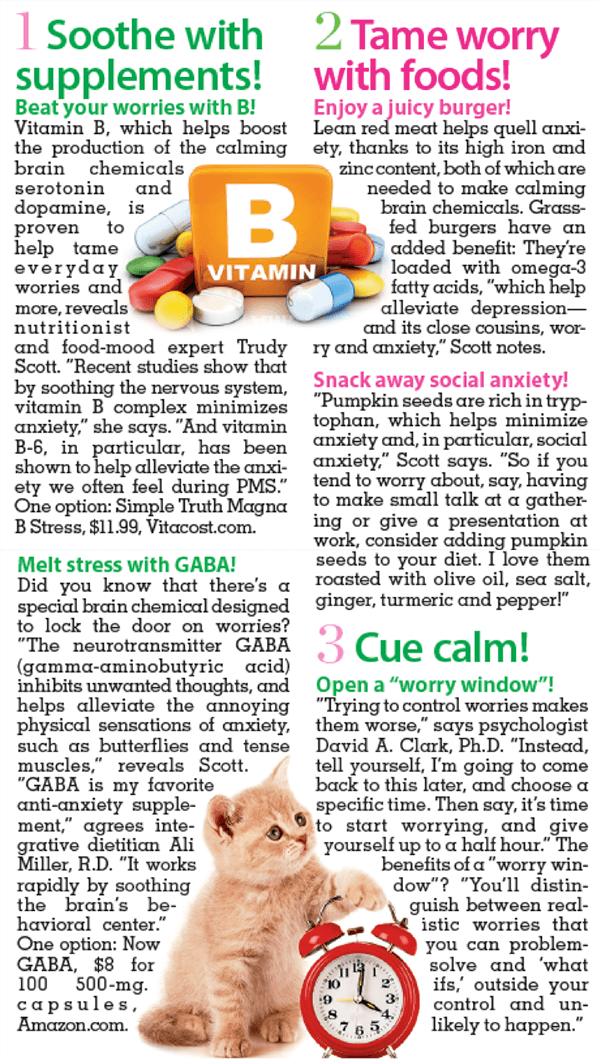
Some of my simple tips for worry were shared in the April edition of Women’s World so here they are for you to enjoy in case you didn’t see them in the magazine. I’m quite chuffed to see it’s for a piece called “Ask America’s Ultimate Experts.”

I share tips about the benefits of a B- complex vitamin (for adrenal support), vitamin B6 (especially for PMS-type anxiety and worry, the calming amino acid called GABA, plus the mood-boosting and calming benefits of a grass-fed burger (loaded with zinc, iron and omega-3s) and pumpkin seeds as a snack (because they’re rich in both tryptophan and zinc)

Here are my tips from the article:

#1 Soothe with supplements

Here are some supporting articles and research for some of the above tips. A good B- complex vitamin for adrenal support has been shown to minimize psychological stress after a natural disaster and vitamin B6 (or pyridoxine) helps with PMS-type anxiety and worry.

A paper titled Pyridoxine in the treatment of premenstrual syndrome: a retrospective survey in 630 patients, reports the following results:

The daily doses of pyridoxine hydrochloride varied from 40 to 100 mg early in the study and from 120 to 200 mg in the later period of the investigations. The response to treatment was recorded as good (no significant residual complaints) in 40 per cent or more of patients taking 100-150 mg pyridoxine daily and in 60 per cent of patients treated with 160-200 mg daily. Together with partial response (useful benefit but still some significant complaints), the positive effect of the treatment increased to 65-68 per cent and 70-88 per cent respectively. No symptoms consistent with a diagnosis of peripheral neuropathy were reported

The calming amino acid called GABA helps with the physical-tension and stiff-and-tense-muscles type of anxiety and helps with worry and inhibition of unwanted thoughts.

#2 Tame worry with foods

Professor Felice Jacka, nutritional psychiatry researcher, discusses the mood-boosting and calming benefits of grass-fed beef (loaded with zinc, iron and omega-3s) on our Anxiety Summit interview: The Research – Food to prevent and treat anxiety and depression?

Pumpkin seeds are rich in tryptophan and zinc and research shows that a functional food made from these seeds actually helps with social anxiety.

Here are a few minor discrepancies in the above sections:

  • In #1 dopamine is not a calming brain chemical but instead it’s stimulating and helps with focus and motivation. The B vitamin mentioned contain folic acid whereas methyl folate is the preferred choice.
  • In #2 the GABA product recommended is 500mg and I find starting much lower is a more effective approach with my clients.

#3 Cue calm – open a worry window

Opening a worry window is a new approach for me and I’d love to hear if it helps you now or has helped you in the past.

Anti-anxiety gummies and low serotonin

Ali Miller, RD, shares a recipe for anti-anxiety gummies (you can see it in the PDF) and I love that it includes coconut water, ginger and turmeric. I’d replace the cup of orange juice (which is high in sugar) with water and use 2 tablespoons instead. Be sure to watch that these gelatin gummies don’t make your anxiety (or depression or sleep worse). It’s a small amount of gelatin but if you’re eating a lot of them and you’re prone to low serotonin, this may be a problem for you. I write about this in a blog post here – Collagen and gelatin lower serotonin: does this increase your anxiety and depression? If it does cause an adverse reaction it doesn’t mean you can’t eat them, instead it simply means you may need to take tryptophan when eating them (if low serotonin is the issue.

If you’d like a PDF of the article you can grab a copy here.

I’d love to hear if any of these approaches have helped you or your clients/patients. Keep in mind that it’s a fun article that is by no means comprehensive in terms of addressing all the possible root causes of anxiety.

Filed Under: Anxiety Tagged With: anxiety, B-complex, food, GABA, grass-fed red meat, omega-3s, pumpkin seeds, supplements, vitamin B6, Women’s World, worry, zinc

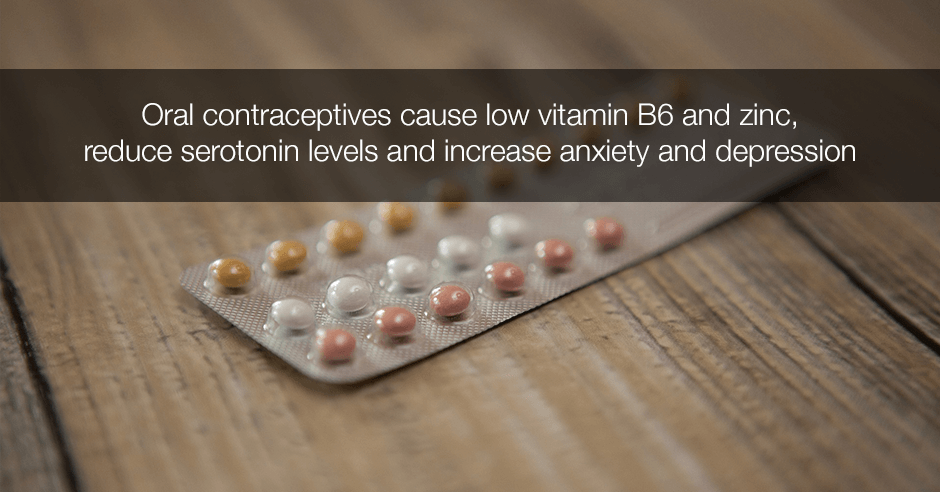
Oral contraceptives cause low vitamin B6 and zinc, reduce serotonin levels and increase anxiety

February 16, 2018 By Trudy Scott 18 Comments

Oral contraceptives i.e. the birth control pill, cause low vitamin B6 and zinc, thereby reducing serotonin levels and can increase anxiety and depression in susceptible women.

Dr. Daniel Amen sees the association between the birth control pill and anxiety/depression in his practice and shared this when I interviewed him during season 3 of the Anxiety Summit.

Unfortunately, they drop serotonin levels. You’ve got to ask yourself why are 23 percent of women between the ages of 20 and 60 taking antidepressants? In large part, it’s the birth-control pills that are changing the hormones in their brain, the neurotransmitters in their brain. All of a sudden they’re more anxious and they’re more depressed.

Oral contraceptives lower serotonin due to various nutrient depletions and can also impact mood due effects on the progesterone/estrogen ratio.

Drug-induced nutrient depletions, especially vitamin B6

Many medications cause drug-induced nutrient depletions and oral contraceptives do this too. In this 2013 paper, Oral contraceptives and changes in nutritional requirements, the authors report:

It has been shown that the key nutrient depletions concern folic acid, vitamins B2, B6, B12, vitamin C and E and the minerals magnesium, selenium and zinc.

Zinc, magnesium, folate, vitamin C and vitamin B6 are all needed for the conversion of tryptophan to serotonin and can therefore impact both anxiety and depression, accentuating or precipitating the development of depression (and presumably anxiety too) in susceptible women.

The World Health Organization (WHO) report, Advances in Fertility Regulation, states that:

It has been shown that about 80% of women taking oral contraceptives have abnormal tryptophan metabolism suggestive of relative B6 deficiency.

Many of these same nutrients have a major impact on how women handle stress:

Magnesium and vitamin B6 may be effective in combination in reducing premenstrual stress, and vitamin B6 alone may reduce anxiety effectively in older women. High-dose sustained-release vitamin C may reduce anxiety and mitigate increased blood pressure in response to stress.

Zinc and copper imbalances occur very quickly

In this paper published in 1980, Serum copper and zinc in hormonal contraceptive users, it is reported that

Use of combined estrogen-progestogen contraceptives resulted in a significant decrease in serum zinc levels within 3 days and an increase in serum copper levels within 10 days.

In users of combined estrogen-progestogen contraceptives the magnitude and time of occurrence of the decrease in zinc levels and the increase in copper levels was unaltered by chemical composition, dosage, route of administration, and duration of use beyond 3 months.

We know zinc plays a role in the serotonergic system, reducing depression and anxiety.

Zinc and vitamin B6 are also key nutrients for alleviating symptoms of the social anxiety condition called pyroluria.

Lowered levels of endogenous estradiol and progesterone

Other mechanisms on how oral contraceptives lower serotonin relate to lowered levels of endogenous estradiol and progesterone (i.e. the estradiol and progesterone our bodies make), as well as out of balance progesterone/estrogen ratios leading to negative moods and emotional changes. The decreased prolactin response mentioned in this paper suggests reduced serotonergic activity.

High clinical relevance

The WHO report mentioned in the 2013 paper (mentioned above), states that this topic of nutrient depletions with oral contraceptives has high clinical relevance and should be receiving the attention it deserves.

Unfortunately, the nutrient-depletion with oral contraceptives conversation is not something many of my clients have ever had with their doctors, despite this being old news. The WHO report was published over 40 years ago, in 1975!

I’m particularly concerned about teens starting on birth control at such a young age and starting down this very slippery slope with no awareness of what they are getting into.

My recommendation is to NOT use oral contraceptives because of this increased risk in depression and anxiety. I write about this and FAM as an alternative here.

However, if you (or your daughter or grand-daughter or sister or friend) chooses to use oral contraceptives we need this awareness and you/they will very likely need to address these nutrient deficiencies. 

This awareness is also needed if you are using oral contraceptives (or have used them in the recent past) and have found you’ve needed to continuing using tryptophan or 5-HTP long-term.

And finally, this awareness is needed if you know you have pyroluria and the pyroluria protocol doesn’t seem to be working for you.

Filed Under: Anxiety Tagged With: anxiety, BCP, birth control pill, depression, Oral contraceptives, pyroluria, serotonin, the pill, vitamin B6, zinc

Nutrition solutions for psychological stress after a natural disaster

September 8, 2017 By Trudy Scott 8 Comments

There is much that can be done nutritionally in support of psychological stress and PTSD (post-traumatic stress disorder) during and after a natural disaster. I’ve written this blog for you if you’ve been impacted by the recent storm and flooding due to Hurricane Harvey in the Houston area (the pictures of people returning home are so sad), and for everyone impacted by Irma and about to be impacted by Irma. This is for you if

  • you had to be rescued and had to evacuate your home, are displaced and/or saw neighbors in trouble, have lost your belongings and home – and anything else that may have happened during this natural disaster
  • you have been involved in on-the-ground rescue efforts or working online helping with rescue efforts and you have working long hours, not getting enough sleep and likely not eating well
  • you had a loved one in trouble and feared for their lives
  • and if you’re on observer feeling distressed by what you have witnessed

You may be feeling on edge and anxious about the future, fearful about losing your job, worried about expenses and the chemical soup of flood waters you were exposed to, exhausted and yet not able to sleep, feeling overly emotional and weepy, having nightmares and flashbacks and feeling frazzled.

I wasn’t even in Texas and my contribution was a very small one, helping online rescue efforts from Australia via a volunteer rescue group created by McCall McPherson, but I felt really burned out after just a few days and quite distressed by some of the rescues we were trying to facilitate. I have had to really walk my talk and implement some of what I’m sharing here even though I would consider myself resilient because my nutrient balance is good.

B-Complex for everyone

My first recommendation is a B complex and if this is all that can be managed it would be my first choice for everyone. In fact, if you live in an area prone to hurricanes, flood, fires etc. I’d recommend being on a B complex all the time.

My colleagues Bonnie Kaplin and Julia Rucklidge published this paper in 2015: A randomised trial of nutrient supplements to minimise psychological stress after a natural disaster. They share that:

After devastating flooding in southern Alberta in June 2013, we attempted to replicate a New Zealand randomised trial that showed that micronutrient (minerals, vitamins) consumption after the earthquakes of 2010-11 resulted in improved mental health. Residents of southern Alberta were invited to participate in a study on the potential benefit of nutrient supplements following a natural disaster.

Fifty-six adults aged 23-66 were randomised to receive one of the following for 6 weeks:

  1. vitamin D as a single nutrient
  2. a B-Complex formula or a
  3. broad-spectrum mineral/vitamin formula

The study participants monitored changes in depression, anxiety and stress via self-reporting. All of the above 3 groups showed substantial decreases on all measures. However, those consuming the B-Complex and the broad-spectrum mineral/vitamin formula showed significantly greater improvement in stress and anxiety compared with those consuming the vitamin D alone, with the results being similar for the group using the B-Complex and the broad-spectrum mineral/vitamin formula.

The authors report that:

The use of nutrient formulas with multiple minerals and/or vitamins to minimise stress associated with natural disasters is now supported by three studies.

Further research should be carried out to evaluate the potential population benefit that might accrue if such formulas were distributed as a post-disaster public health measure.

I would love to see either a B-Complex or broad-spectrum mineral/vitamin formula be given out to everyone as part of relief efforts for all natural disasters.

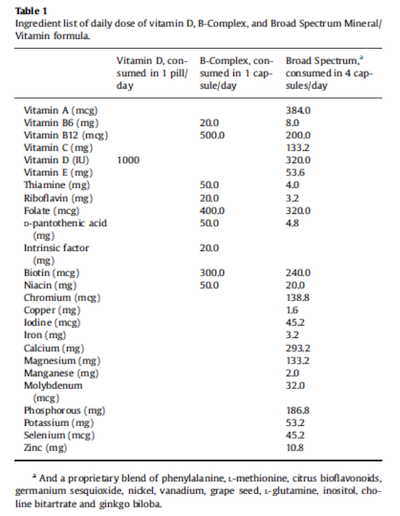
The B-Complex used in the study was made by Douglas labs but other similar B-Complex products would be fine too.  I happen to use Designs for Health B Supreme with my clients.

The broad-spectrum mineral/vitamin formula in the study was EmpowerPlus made by TrueHope.

From: A randomised trial of nutrient supplements to minimise psychological stress after a natural disaster

Vitamin D based on levels

In the above study, some participants in the vitamin D group did see benefits and it’s likely to have been those who were low in vitamin D at the time of the flooding since other research supports a connection between low vitamin D and anxiety and depression. I like to see vitamin D results before recommending supplementation.

Serotonin, GABA and endorphin support based on symptoms and a trial

As well as a B-complex and/or vitamin D, I’d also consider the following neurotransmitter support on a case by case basis, and after doing the amino acid questionnaire and a trial of each amino acid:

  • Serotonin support with Lidtke tryptophan or Lidtke Tryptophan Complete or Lidtke Combat Stress (a tryptophan product formulated for stress support) – especially if you’re feeling sad, worried, resolving to try and feel positive, imagining the worst, feeling fearful and having problem sleeping. I blogged about tryptophan products last week.
  • GABA support for physical tension and an increased need to self-medicate with alcohol in order to stay calm. New research shows that reduced plasma levels of GABA observed in PTSD could be considered as a possible biomarker for PTSD severity. This is not something I typically look at but it’s something I will be considering going forward. I blogged about some specific GABA products earlier this week.
  • Endorphin support with Lidtke DPA if you’re feeling especially emotional and weepy.

Serotonin and GABA play a role in stress resilience and when we have enhanced stress resilience mechanisms we have the ability to adapt more successfully to stressful situations like natural disasters.    

Additional adrenal support if needed

The adrenals are part of the hypothalamic-pituitary axis (HPA) and also need nutritional support after stress and trauma. I recommend a good adrenal support product with rhodiola, Vitamin C, pantothenic acid, eleuthero and ashwagandha. Designs for Health Adrenotone is a good product.

If it’s known that cortisol levels are high then the addition of Seriphos and/or a lactium product (such as Biotics Research De-Stress) helps to lower high cortisol, reduce anxiety and help with insomnia.

Additional pyroluria support if needed

It is well known that pyroluria symptoms are made worse in times of heightened stress. If you are on protocol for pyroluria, additional zinc and vitamin B6/P5P is likely going to be needed short-term too.

Essential oils

Essential oils like lavender and citrus are wonderful for the stress, anxiety and sleepless nights. An animal study reports that passively inhaling orange essential oil could potentially reduce PTSD symptoms in humans


Some other considerations include the following once things start to get back to some kind of normal:

  • trying to eat as well as you can and not skipping meals
  • trying to get enough sleep (the GABA and tryptophan support mentioned above can help in this area)
  • getting outside into nature as soon as it’s possible. If this is impossible right away, simply looking at images of nature can help you feel calmer, less irritable, and more empathetic. I hope you enjoy this flower photograph I took in Australia!   
  • meditating and doing yoga
  • community support and helping others if you’re able to
  • getting a cat or dog (veterans who were given pet dogs showed significant improvement in their PTSD symptoms)

I would recommend a similar approach for any natural disaster or in fact for any other traumatic event, always working individually with each person.  

If you have found some approach to be particularly useful for you please do share it.

And if you have any connections for getting this information into the hands of public health officials and non-profits offering aid please let me know. I feel that protocols similar to this one need to be made available to everyone subjected to a natural disaster.

I wish you and your families much healing and a speedy recovery.

Additional resources

I added these additional resources after September 20, 2017:

  • How to Stay Safe in a Disaster: Emergency Preparedness List by Katie Wells on the Wellness Mama blog. She says this: “The point of putting together an emergency preparedness plan is not to create any undue anxiety, but to help alleviate some of the stress of a disaster in case it hits.”
  • What to Do After a Hurricane: The Dangers Lurking Beyond the Storm by Dr. Jill Carnahan. This blog addresses both mold and bacteria in flood waters, and practical steps on how to deal with these issues.  Mold needs to be taken seriously – I interviewed Dr. Carnahan on the topic of mold toxicity and anxiety during one the Anxiety Summits – Is Toxic Mold the Hidden Cause of Your Anxiety?
  • My Flood Story and What to Do About Mold by Dave Asprey. This blog offers practical solutions on how best to do clean-up after a flood and the dangers of mold. He is also very kindly making his documentary, Moldy available for viewing at no charge.
  • Beyond Meditation: Making Mindfulness Accessible for Everyone by Mira Dessy and Kerry McClure. Mira is a dear friend whose home was flooded by Harvey and went I spoke to her last week she shared how much her meditation practice has been helping her.  I love that she has a book on the topic so that it can be shared far and wide to help those affected.
  • My book The Antianxiety Food Solution: How the Foods You Eat Can Help You Calm Your Anxious Mind, Improve Your Mood and End Cravings, available in major books stores and via online stores like Amazon. You can find out more here.
  • I am also the host of The Anxiety Summit, now in it’s 4th season and called a “bouquet of hope”. It’s a wealth of information on all topics related to anxiety. More on the Anxiety Summit here. 

If you have links to additional useful resources please let me know and I’ll add them.

Filed Under: PTSD/Trauma, Stress Tagged With: essential oils, floods, GABA, Houston, Hurricane Harvey, lactium, natural disaster, nature, nutrition solutions, psychological stress, PTSD, seriphos, stress, tryptophan, vitamin B6, zinc

  • « Go to Previous Page
  • Page 1
  • Page 2
  • Page 3
  • Page 4
  • Page 5
  • Go to Next Page »

Primary Sidebar

GABA QuickStart Homestudy

gaba quickstart homestudy

Free Report

9 Great Questions Women Ask about Food, Mood and their Health

You'll also receive a complimentary subscription to my ezine "Food, Mood and Gal Stuff"


Connect with me

Popular Posts

  • Amino Acids Mood Questionnaire from The Antianxiety Food Solution
  • The Antianxiety Food Solution Amino Acid and Pyroluria Supplements
  • Pyroluria Questionnaire from The Antianxiety Food Solution
  • Collagen and gelatin lower serotonin: does this increase your anxiety and depression?
  • Tryptophan for the worry-in-your-head and ruminating type of anxiety
  • GABA for the physical-tension and stiff-and-tense-muscles type of anxiety
  • The Antianxiety Food Solution by Trudy Scott
  • Seriphos Original Formula is back: the best product for anxiety and insomnia caused by high cortisol
  • Am I an anxious introvert because of low zinc and vitamin B6? My response to Huffington Post blog
  • Vagus nerve rehab with GABA, breathing, humming, gargling and key nutrients

Recent Posts

  • Her cravings for chips and peanut butter were triggered by stress: GABA ends cravings and reduces physical tension and fear of heights
  • It is truly miraculous to be able to move through life without crippling anxiety and panic
  • GABA and tryptophan combo provide immediate and noticeable relief for tremors and cervical dystonia in just 7 days
  • Red light therapy for back and neck pain, plantar fasciitis and low mood – a complement to the amino acids GABA, DPA and tryptophan
  • What do I use instead of Seriphos to help lower high cortisol that is affecting my sleep and making me anxious at night?

Categories

  • 5-HTP
  • AB575
  • Addiction
  • ADHD
  • Adrenals
  • Alcohol
  • Allergies
  • Alzheimer's disease
  • Amino Acids
  • Anger
  • Antianxiety
  • Antianxiety Food Solution
  • Antidepressants
  • Anxiety
  • Anxiety and panic
  • Autism
  • Autoimmunity
  • benzodiazapines
  • Bipolar disorder
  • Books
  • Caffeine
  • Cancer
  • Candida
  • Children/Teens
  • Collagen
  • Cooking equipment
  • Coronavirus/COVID-19
  • Cravings
  • Depression
  • Detoxification
  • Diabetes
  • Diet
  • DPA/DLPA
  • Drugs
  • EFT/Tapping
  • EMF
  • EMFs
  • Emotional Eating
  • Endorphins
  • Environment
  • Essential oils
  • Events
  • Exercise
  • Fear
  • Fear of public speaking
  • Fertility and Pregnancy
  • Fish
  • Food
  • Food and mood
  • Functional neurology
  • GABA
  • Gene polymorphisms
  • General Health
  • Giving
  • Giving back
  • Glutamine
  • Gluten
  • GMOs
  • Gratitude
  • Gut health
  • Heart health/hypertension
  • Histamine
  • Hormone
  • Hyperparathyroidism
  • Hypoglycemia
  • Immune system
  • Inflammation
  • Insomnia
  • Inspiration
  • Introversion
  • Joy and happiness
  • Ketogenic diet
  • Lithium orotate
  • Looking awesome
  • Lyme disease and co-infections
  • MCAS/histamine
  • Medication
  • Men's health
  • Mental health
  • Mercury
  • Migraine
  • Mold
  • Movie
  • MTHFR
  • Multiple sclerosis
  • Music
  • NANP
  • Nature
  • Nutritional Psychiatry
  • OCD
  • Osteoporosis
  • Oxalates
  • Oxytocin
  • Pain
  • Paleo
  • Parasites
  • Parkinson’s disease
  • PCOS
  • People
  • PMS
  • Postpartum
  • PTSD/Trauma
  • Pyroluria
  • Questionnaires
  • Real whole food
  • Recipes
  • Research
  • Schizophrenia
  • serotonin
  • SIBO
  • Sleep
  • Special diets
  • Sports nutrition
  • Stress
  • Sugar addiction
  • Sugar and mood
  • Supplements
  • Teens
  • Testimonials
  • Testing
  • The Anxiety Summit
  • The Anxiety Summit 2
  • The Anxiety Summit 3
  • The Anxiety Summit 4
  • The Anxiety Summit 5
  • The Anxiety Summit 6
  • Thyroid
  • Thyroid health
  • Toxins
  • Tryptophan
  • Tyrosine
  • Uncategorized
  • Vegan/vegetarian
  • Women's health
  • Yoga

Archives

  • May 2026
  • April 2026
  • October 2025
  • September 2025
  • August 2025
  • July 2025
  • June 2025
  • May 2025
  • April 2025
  • March 2025
  • February 2025
  • January 2025
  • November 2024
  • October 2024
  • September 2024
  • August 2024
  • July 2024
  • June 2024
  • May 2024
  • April 2024
  • March 2024
  • February 2024
  • January 2024
  • December 2023
  • November 2023
  • October 2023
  • September 2023
  • August 2023
  • July 2023
  • June 2023
  • May 2023
  • April 2023
  • March 2023
  • February 2023
  • January 2023
  • December 2022
  • November 2022
  • October 2022
  • September 2022
  • August 2022
  • July 2022
  • June 2022
  • May 2022
  • April 2022
  • March 2022
  • February 2022
  • January 2022
  • December 2021
  • November 2021
  • October 2021
  • September 2021
  • August 2021
  • July 2021
  • June 2021
  • May 2021
  • April 2021
  • March 2021
  • February 2021
  • January 2021
  • December 2020
  • November 2020
  • October 2020
  • September 2020
  • August 2020
  • July 2020
  • June 2020
  • May 2020
  • April 2020
  • March 2020
  • February 2020
  • January 2020
  • December 2019
  • November 2019
  • October 2019
  • September 2019
  • August 2019
  • July 2019
  • June 2019
  • May 2019
  • April 2019
  • March 2019
  • February 2019
  • January 2019
  • December 2018
  • November 2018
  • October 2018
  • September 2018
  • August 2018
  • July 2018
  • June 2018
  • May 2018
  • April 2018
  • March 2018
  • February 2018
  • January 2018
  • December 2017
  • November 2017
  • October 2017
  • September 2017
  • August 2017
  • July 2017
  • June 2017
  • May 2017
  • April 2017
  • March 2017
  • February 2017
  • January 2017
  • December 2016
  • November 2016
  • October 2016
  • September 2016
  • August 2016
  • July 2016
  • June 2016
  • May 2016
  • April 2016
  • March 2016
  • February 2016
  • January 2016
  • December 2015
  • November 2015
  • October 2015
  • September 2015
  • August 2015
  • July 2015
  • June 2015
  • May 2015
  • April 2015
  • March 2015
  • February 2015
  • January 2015
  • December 2014
  • November 2014
  • October 2014
  • September 2014
  • August 2014
  • July 2014
  • June 2014
  • May 2014
  • April 2014
  • March 2014
  • February 2014
  • January 2014
  • December 2013
  • November 2013
  • October 2013
  • September 2013
  • August 2013
  • July 2013
  • June 2013
  • May 2013
  • April 2013
  • March 2013
  • February 2013
  • January 2013
  • December 2012
  • November 2012
  • October 2012
  • August 2012
  • July 2012
  • June 2012
  • May 2012
  • April 2012
  • March 2012
  • February 2012
  • January 2012
  • December 2011
  • November 2011
  • October 2011
  • September 2011
  • August 2011
  • July 2011
  • June 2011
  • May 2011
  • April 2011
  • March 2011
  • February 2011
  • January 2011
  • December 2010
  • October 2010
  • September 2010
  • July 2010
  • May 2010
  • April 2010
  • March 2010
  • February 2010
  • January 2010
  • November 2009

Share the knowledge!

The above statements have not been evaluated by the Food and Drug Administration. Products listed in this website are not intended to diagnose, treat, cure or prevent any disease.

The information provided on this site is for informational and educational purposes only and is not intended as a substitute for advice from your physician or other health care professional. You should consult with a healthcare professional before starting or modifying any diet, exercise, or supplementation program, before taking or stopping any medication, or if you have or suspect you may have a health problem.


Copyright © 2026 Trudy Scott. All Rights Reserved. | Privacy | Terms and Conditions | Refund Policy | Medical Disclaimer

Free Report

9 Great Questions Women Ask about Food, Mood and their Health

You’ll also receive a complimentary subscription to my ezine “Food, Mood and Gal Stuff”