• Skip to primary navigation
  • Skip to main content
  • Skip to primary sidebar

everywomanover29 blog

Food, Mood and Women's Health – Be your healthiest, look and feel great!

  • Blog
  • About
  • Services
  • Store
  • Resources
  • Testimonials
  • The Book
  • Contact
  • Search this site

Trudy Scott

The Anxiety Summit – Anxiety and heavy metals: chelation of mercury and lead

June 12, 2016 By Trudy Scott 45 Comments

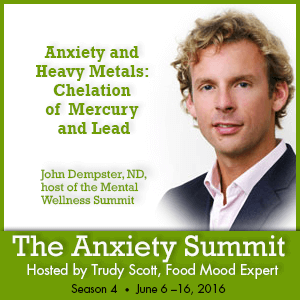
John Dempster_Anxiety4

John Dempster, ND, is interviewed on the Anxiety Summit by host of the Anxiety Summit, Trudy Scott, Food Mood Expert and Nutritionist, author of The Antianxiety Food Solution.

Anxiety and heavy metals: chelation of mercury and lead

  • The connection between toxic metals (mercury and lead) and anxiety
  • How to effectively measure toxic metals with a provoked urine challenge
  • The do’s and don’ts of chelation and watching for mineral depletion
  • A bipolar/anxiety case study

Here are some gems from our interview:

So I kind of want to shed some light on some of these areas and how it can affect anxiety directly.  One of the big areas is mercury itself is a neurotoxin.  So how does that impact our biochemistry and our physiology?  Well what it’s going to do it’s going to start to disrupt on an endocrine and a neurotransmitter level some of our pathways.  And one of the big pathways is actually the glutamate connection and the glutamate pathway.  And glutamate is something that’s known as an excitatory neurotransmitter and this is something that if we have too much of it or it’s not being reuptake properly in our synapses we start to exhibit different types of symptoms of anxiety.  And of course that’s just one possible trigger for anxiety. 

….to speak of mercury specifically amalgams are a source.  Silver amalgam fillings are a source of metal, metal mercury.  But we are also seeing that there are trace amounts in certain vaccinations.  There are trace amounts in certain food groups such as fish.  And this may not come as a surprise to many of you listeners but it is still a problem and we’re still seeing people – high amounts of mercury come into my clinic pretty much every day that are continuing to be exposed to these levels.  And there are a number of other different possible source that are on a smaller scale.  We might actually be breathing it in which is scary but depending on where you live in the world we may be exposed to some industrial sources of mercury as well. But the biggest ones that we can take charge of immediately are what’s in our mouth, what’s in our food and what goes in or on our body.

Blood lead levels and major depressive disorder, panic disorder, and generalized anxiety disorder in U.S. young adults

In this sample of young adults with low levels of lead exposure, higher blood lead was associated with increased odds of major depression and panic disorder. Exposure to lead at levels generally considered safe could result in adverse mental health outcomes.

Dr. Dempster describes the chelator DMSA as a magnet:

DMSA is a very safe but effective way of dragging metals out of the body.  And what we want to do is when we provoke that we actually drag this compound through our tissues.  Not just our bloodstream.  It goes through – it kind of rinses through our tissues and acts as a magnet and it draws these metals out at the other end that we can collect.

Here are some studies on heavy metals and chelation with DMSA:

  • DMSA a non-toxic water soluble treatment for heavy metal toxicity
  • Chelation therapy in intoxications with mercury, lead and copper
  • Efficacy of DMSA Therapy in a Sample of Arab Children with Autistic Spectrum Disorder.

Here is information on the Mental Wellness Summit that Dr. Dempster and Ross McKenzie co-hosted

And Ross McKenzie’s incredible movie Bipolarized

Here is the Wellness Without Limits ebook 

If you are not already registered for the Anxiety Summit you can get live access to the speakers of the day here: www.theAnxietySummit.com

Missed this interview or can’t listen live? Or want this and the other great interviews for your learning library? Purchase the MP3s or MP3s + transcripts and listen when it suits you.

You can find your purchasing options here.: Anxiety Summit Season 1, Anxiety Summit Season 2, Anxiety Summit Season 3, and Anxiety Summit Season 4.
Filed Under: Events, The Anxiety Summit 4 Tagged With: anxiety, anxiety summit, chelation, heavy metals, John Dempster, lead, mercury, Trudy Scott

The Anxiety Summit – Addressing Anxiety in Individuals with Autism

June 12, 2016 By Trudy Scott 15 Comments

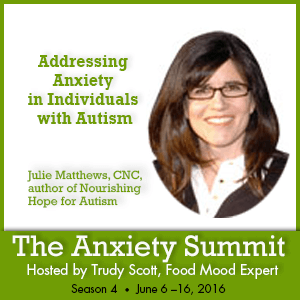
Julie Mathews_Anxiety4

Julie Matthews, CNC, author of Nourishing Hope for Autism, was interviewed on the Anxiety Summit by host of the Anxiety Summit, Trudy Scott, Food Mood Expert and Nutritionist, author of The Antianxiety Food Solution.

Addressing Anxiety in Individuals with Autism

  • How common is anxiety in autism and medications commonly prescribed
  • Autism prevalence and the exponential growth and why this is important beyond those with autism
  • Underlying biochemical factors that contribute to anxiety in autism
  • The microbiome and gut involvement
  • Sensory sensitivity, light and sound sensitivity, weighted blankets and more
  • Foods, food compounds and nutrients like GABA and zinc
  • The far-reaching benefits of a BioInidividual Nutrition approach for autism, anxiety, ADHD and many chronic diseases

This is the first paper we discussed: Treatment of comorbid anxiety and autism spectrum disorders

Clinically significant anxiety occurs frequently among individuals with autism spectrum disorders (ASDs) and is linked to increased psychosocial, familial, behavioral and academic impairment beyond the core autism symptoms when present.

Up to 80% of children with ASDs experience clinically significant anxiety, with high comorbidity rates for social phobia (30%), generalized anxiety disorder (GAD) (35%), obsessive–compulsive disorder (OCD) 37%  and separation anxiety disorder (SAD) 38% having been observed (30, 35, 37 and 38%, respectively).

Patients with ASDs and anxiety are at increased risk for social avoidance, difficulties establishing and maintaining peer relationships, sleep problems, disruptions in family functioning and at school.

SSRIs have NOT been consistently linked to improvements in core ASD symptoms (e.g., communication and social skills deficits, repetitive behaviors and stereotypies) or anxiety and repetitive behaviors in youths

High rates of behavioral activation (e.g., agitation, irritability, aggression and disinhibition) and diminished tolerability have been reported across trials, which may suggest that youths with ASDs are more vulnerable to side effects compared with their typically developing peers.

Here is the initial multisystem study Julie covered at the start – Pathway Network Analyses for Autism Reveal Multisystem Involvement:  Major Overlaps with Other Diseases and Convergence Upon MAPK and Calcium Signaling

Julie covered folate receptor autoantibodies and cerebral folate deficiency (common in autism and now found in anxiety too):

It was a concept that in the autism community was brought forward by Dr. Fry and Dr. Rosignol and Dr. Quadros looking at this particular condition.  And so there’s a condition called cerebral folate deficiency.  And it’s a neurodevelopmental disorder where the baby doesn’t get enough folate to their cerebral spinal fluid in their brain.  And so they don’t get the proper development that they need.  And the reason for that is they looked into what could be causing that and they found that children with autism have a high rate of folate receptor autoantibodies.  And so what happens is the folate receptor is basically taking folate from the bloodstream and puts it into the cerebral spinal fluid.  It gets it to the brain basically.

And these folate receptors are basically what take it across the membrane.  But in children with autism they have these autoantibodies and that blocks their ability to get the folate into the brain.  So they have neurodevelopmental issues and then during their lifetime as well they still don’t have enough folate they need on a daily basis to do the things that they need to do.  So it’s an ongoing challenge for them as well.

Here are the folate receptor autoantibody studies:

  • Cerebral Folate Receptor Autoantibodies in Autism Spectrum Disorder (serum folate receptor autoantibody concentrations as a prevalence of 75 percent of the children with autism)
  • High milk consumers have an increased risk of folate receptor blocking autoantibody production but this does not affect folate status in Spanish men and women.

Most of the research regarding these folate receptor autoantibodies are around autism.  But now it seems like we’ve seen this new animal study that actually mentions anxiety as well – Exposure to Folate Receptor Alpha Antibodies during Gestation and Weaning Leads to Severe Behavioral Deficits in Rats: A Pilot Study 

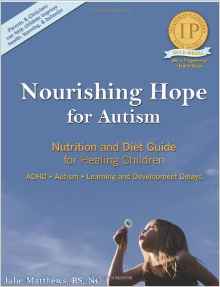
Here is Julie’s wonderful book – Nourishing Hope for Autism: Nutrition and Diet Guide for Healing Our Children  

nourishing hope for autism

Here are the digital gifts from Julie

  • Using Food and Nutrition to Improve ADHD and Autism
  • Integrative Medicine and BioIndividual Nutrition webinar  (for practitioners)

If you are not already registered for the Anxiety Summit you can get live access to the speakers of the day here: www.theAnxietySummit.com

Missed this interview or can’t listen live? Or want this and the other great interviews for your learning library? Purchase the MP3s or MP3s + transcripts and listen when it suits you.

You can find your purchasing options here.: Anxiety Summit Season 1, Anxiety Summit Season 2, Anxiety Summit Season 3, and Anxiety Summit Season 4.
Filed Under: Events, The Anxiety Summit 4 Tagged With: anxiety, anxiety summit, autism, Julie Matthews, Trudy Scott

The Anxiety Summit – Anxiety in children, adolescents and young adults: an integrative psychiatric approach

June 11, 2016 By Trudy Scott 23 Comments

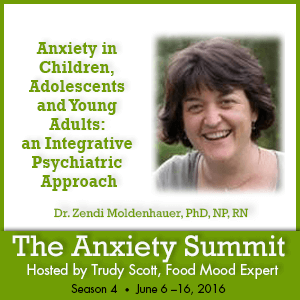
Zendi Moldenhauer_Anxiety4

Dr. Zendi Moldenhauer, PhD, NP, RN, is interviewed on the Anxiety Summit by host of the Anxiety Summit, Trudy Scott, Food Mood Expert and Nutritionist, author of The Antianxiety Food Solution.

Anxiety in children, adolescents and young adults: an integrative psychiatric approach

  • The incidence of anxiety in children: official stats and real life numbers
  • How to identify anxiety in children and the IBS-anxiety connection
  • Medication over-prescribing, hidden side-effects and electroshock
  • Food, toxins, gut health, the adrenals and an integrative approach
  • How to use calming theanine and GABA

Here are some gems from our interview:

…anxiety disorders in children are probably the most common psychiatric disorders that start in childhood.  And depending on studies and depending on how anxiety is defined the rates are anything between 10 to 30 percent.  Less common in younger ones and more common in teenagers.  But really the lifetime prevalence of that is a child or teenager developing anxiety sometime up to age 18 is somewhere between 25 and 30 percent. That means one in three to one in four children or adolescents at some point during that time period which is very high.

…when somebody has an anxiety disorder they’re more like to have more than one anxiety disorder because they could have generalized anxiety disorder or social anxiety disorder or separation anxiety or panic disorder.  So it’s really very common like up to 60 percent of patients with anxiety disorder can have another anxiety disorder or depression or ADHD. 

And that’s just sort of more the mental health disorders.  There’s also an incredibly high association between anxiety and IBS.  In fact nearly half to three-quarters of children with IBS can have anxiety.  So there’s a huge relationship between anxiety and other mental health disorders but anxiety and other physical disorders like gut issues or headaches for example.

Here are some of the studies we discuss related to IBS and anxiety:

  • Relationship between irritable bowel syndrome, worry and stress in adolescent girls
  • Symptom Profiles in Patients With Irritable Bowel Syndrome or Functional Abdominal Pain Compared With Healthy Controls

Dr. Zendi shares that children can’t necessarily identify that they’re anxious: 

Children with anxiety can often not express that they’re anxious.  And if you can imagine a five or six or seven year old they don’t necessarily come to us and say mommy, I feel anxious about whatever is going on in their lives.  So often with children we see it through their behavior.  So children who are either nonverbal at all or haven’t yet developed the emotional language to describe anxiety act out anxiety.  So you might see a child that’s more withdrawn and doesn’t want to participate, doesn’t want to leave the house, doesn’t want to get on the school bus, doesn’t want to go to school, doesn’t want to participate in activities.  There’s a lot of avoidance kind of behavior. 

We discussed this article in Scientific American – The Hidden Harms of Antidepressants: Data about the true risks of suicide and aggression for children and teens taking these drugs have been suppressed

And this one about ECT: American Psychiatric Association Lobbies FDA to Electroshock Children  https://www.cchrint.org/2016/05/05/apa-lobbies-fda-to-electroshockchildren/

We covered organic food and the EWG dirty dozen list for fruits and vegetables

Dr Zendi’s go to nutrient for anxiety and adrenal dysfunction is theanine:

which is an amino acid derivative from green tea and it’s thought to really cross the blood brain barrier and exerts a variety of neurophysiological and even like pharmacological effects on the brain in terms of its anxiolytic and calming effects because it actually upregulates inhibitory neurotransmitters like GABA and possibly modulates serotonin and dopamine in specific areas of the brain.  It actually also increases alpha wave activity.  So children can either sleep better because they’re sleeping at a deeper level or they feel more calm and focused during the day without feeling drowsy so there’s no side effect to L-Theanine which is great. 

Here are two of the theanine papers we discussed:

  • The effects of L-theanine (Suntheanine®) on objective sleep quality in boys with attention deficit hyperactivity disorder (ADHD): a randomized, double-blind, placebo-controlled clinical trial.
  • A randomized targeted amino acid therapy with behaviourally at-risk adopted children

Here is Dr. Zendi’s digital gift: Practical Tips for Parents of Children and Teens with Anxiety and Irritable Bowel Syndrome (IBS) 


If you are not already registered for the Anxiety Summit you can get live access to the speakers of the day here: www.theAnxietySummit.com

Missed this interview or can’t listen live? Or want this and the other great interviews for your learning library? Purchase the MP3s or MP3s + transcripts and listen when it suits you.

You can find your purchasing options here.: Anxiety Summit Season 1, Anxiety Summit Season 2, Anxiety Summit Season 3, and Anxiety Summit Season 4.
Filed Under: Events, The Anxiety Summit 4 Tagged With: adolescents, anxiety, anxiety summit, children, integrative psychiatric approach, Trudy Scott, Zendi Moldenhauer

The Anxiety Summit – Antibiotic Induced Anxiety – How Fluoroquinolone Antibiotics Induce Psychiatric Illness Symptoms

June 10, 2016 By Trudy Scott 60 Comments

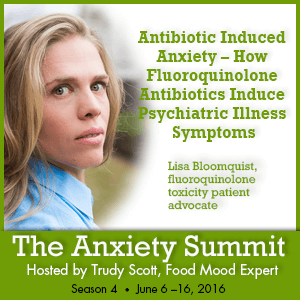
Lisa Bloomquist_Anxiety4

Lisa Bloomquist, fluoroquinolone toxicity patient advocate, is interviewed on the Anxiety Summit by host of the Anxiety Summit, Trudy Scott, Food Mood Expert and Nutritionist, author of The Antianxiety Food Solution.

Antibiotic Induced Anxiety – How Fluoroquinolone Antibiotics Induce Psychiatric Illness Symptoms

  • Fluoroquinolone antibiotics and what they are prescribed for
  • Why fluoroquinolones are more dangerous than other antibiotics
  • How they can cause serious psychiatric problems, including anxiety.
  • Ways fluoroquinolones cause psychiatric problems: GABA inhibition, gut destruction, piperazine molecule, mitochondrial destruction, oxidative stress and magnesium depletion.
  • Fluoroquinolone toxicity and fibromyalgia, ME/CFS, autoimmity and thyroid disease
  • Recovery from fluoroquinolone damage

Lisa describes how she was floxed after taking the Cipro antibiotic:

I felt like a bomb had gone off in my body.  My hands and feet swelled up and became incredibly painful.  I went from doing CrossFit to barely being able to walk.  I had big floater going across my eye.   My mouth was extremely dry.  I stopped sweating.  Massive amount of anxiety, just huge amounts of anxiety.  I had other central nervous system problems as well.  Things like I lost my memory and my reading comprehension.  I felt a very profound sense of weakness and fatigue.  And it was just very bizarre.  Like I had gone from being incredibly healthy.  I was very, very healthy prior to taking the Cipro.  And after I took it I felt like I could barely move, I could barely move and I could barely think.  And it was horrible.  It was a really horrible.  It was a very, very hard time in my life.

This is the 2016 paper we discussed: Fluoroquinolone-related neuropsychiatric and mitochondrial toxicity: a collaborative investigation by scientists and members of a social network.

The 3 fluoroquinolone (FQ) antibiotics – ciprofoxacin, levofoxacin, and moxifoxacin – are commonly administered to oncology patients. Although these oral antibiotics are approved by the US Food and Drug Administration (FDA) for treatment of urinary tract infections, acute bacterial sinusitis, or bacterial infection in patients with chronic obstructive pulmonary disease, they are commonly prescribed off-label to neutropenic cancer patients for the prevention and treatment of infections associated with febrile neutropenia. New serious FQ-associated safety concerns have been identified through novel collaborations between FQ-treated persons who have developed long-term neuropsychiatric (NP) toxicity, pharmacovigilance experts, and basic scientists.

For the survey, 93 of 94 respondents reported FQ-associated events including anxiety, depression, insomnia, panic attacks, clouded thinking, depersonalization, suicidal thoughts, psychosis, nightmares, and impaired memory beginning within days of FQ initiation or days to months of FQ discontinuation

The authors of the paper recommend: revised product labels describing a new serious adverse drug reaction, levofoxacin-associated long-term disability.

Here is the new FDA Drug Safety Communication: FDA advises restricting fluoroquinolone antibiotic use for certain uncomplicated infections; warns about disabling side effects that can occur together

Here are some of the studies we discussed in the interview:

  • Benzodiazepine tolerance, dependency, and withdrawal syndromes and interactions with fluoroquinolone antimicrobials
  • Ciprofloxacin-induced neurotoxicity: evaluation of possible underlying mechanisms

Here are some additional links that Lisa mentioned:

  • the Fluoroquinolone Effects Study
  • the Fluoroquinolone Vigilance Foundation 
  • the Fluoroquinolone Wall of Pain
  • Floxiehope  Lisa’s site (with stories of recovery)
  • Fluoroquinolonethyroid

Here is the link to Hacking Fluoroquinolones – an ebook

And the book Lisa mentioned, written by Kerri Knox: The Fluoroquinolone Toxicity Solution  

If you are not already registered for the Anxiety Summit you can get live access to the speakers of the day here: www.theAnxietySummit.com

Missed this interview or can’t listen live? Or want this and the other great interviews for your learning library? Purchase the MP3s or MP3s + transcripts and listen when it suits you.

You can find your purchasing options here.: Anxiety Summit Season 1, Anxiety Summit Season 2, Anxiety Summit Season 3, and Anxiety Summit Season 4.
Filed Under: Events, The Anxiety Summit 4 Tagged With: antibiotic, anxiety, anxiety summit, fluoroquinolone, Lisa Bloomquist, Trudy Scott

The Anxiety Summit: wise words on MS, oxytocin, red meat, marijuana, mercury

June 10, 2016 By Trudy Scott 10 Comments

fb_red_Anxiety4

We’re in the midst of season 4 of The Anxiety Summit www.theanxietysummit.com and here are wise words of wisdom from some of our amazing speakers on MS, oxytocin, red meat, marijuana, mercury and more.

If you have joined the summit and are loving it, this serves as a nice recap, a reminder if you missed a talk and inspiration to stay tuned in for some of the later interviews. And making sure you know that each speaker has a blog with snippets and many additional resources.

And if you’ve recently joined my community for the summit a VERY big welcome!

If you have not yet signed up I hope these wise words inspire you to join us!

Here are some snippets from some of the interviews.

Multiple sclerosis and anxiety: The Wahls Protocol

Dr. Terry Wahls shares how her MS was a gift:

And it all needs to happen this way Trudy.  I had to get that disabled.  I had to be on the verge of utter catastrophe to begin to feel the effects of cognitive decline to do all this work and then feel the effects of all this healing that happens when you provide a healthy habitat for the human ecosystem and all this repair happens.  If this hadn’t of have happened I’d still be a conventional medicine doc thinking the latest drugs out of the New England Journal of Medicine were the way to go as opposed to seeing the gospel of food and sleep and movement and stress reduction.

The Link Between Low Cholesterol and Low Oxytocin

The Pitocin/synthetic discussion oxytocin with Dr. Kurt Woeller was fascinating:

And there’s a theory … that the Pitocin, which is synthetic oxytocin, which is given to women who are not naturally going into labor, it’s meant to action speed labor up. Pitocin being synthetic oxytocin may short circuit in some susceptible kids the natural production of oxytocin, therefore slowing down or turning off those areas in the brain that are normally being developed at that time, with regards to socialization.

Gluten and anxiety: the testing conundrum solution

Dr. Tom O’Bryan’s explanation of the limited gluten sensitivity testing that most people have done:

what happens when people have one of those peptides that the immune system is fighting that’s not the 33 [alpha-gliadin] and you do a blood test for gluten sensitivity.  If your doctor orders the common blood test for gluten sensitivity and it looks for alpha-gliadin and it comes back negative and your doctors says you’re fine eating wheat.  See, here’s the blood test.  Well you can get a false negative meaning it says there’s no problem when there really is because your body’s fighting other peptides of wheat.

Nutrients that Fuel Brain Power and Reduce Anxiety

Dr. Drew Ramsey talks about zinc and animal protein:

Zinc is a mineral and minerals tend to be more absorbable in animal forms.  I think a lot of people are very confused about meat and seafood and often intimidated and scared.  And then we’ve had this message to go plant based and even vegan which is not a diet that is healthy for the brain.

Dr. Hyla Cass, integrative psychiatrist covers marijuana and anxiety later in the summit:

very often people who have been smoking marijuana for a while – when they go off it they go through serious withdrawal – anxiety, insomnia, feeling really very bad. Very much like we see in movies – we understand what it’s like getting off heroin when people go through withdrawal. Very similar, it really looks similar in appearance. Not everyone does that but common enough.

Dr. John Dempster, co-host of the Mental Wellness Summit discusses mercury as a neurotoxin in his interview later in the summit

So I kind of want to shed some light on some of these areas and how it can affect anxiety directly. One of the big areas is mercury itself is a neurotoxin. So how does that impact our biochemistry and our physiology? Well what it’s going to do it’s going to start to disrupt on an endocrine and a neurotransmitter level some of our pathways. And one of the big pathways is actually the glutamate connection and the glutamate pathway. And glutamate is something that’s known as an excitatory neurotransmitter and this is something that if we have too much of it or it’s not being reuptake properly in our synapses we start to exhibit different types of symptoms of anxiety. And of course that’s just one possible trigger for anxiety.

You can see a list of all the speakers and topics here on the master speaker blog.

You can sign up here: season 4 of The Anxiety Summit www.theanxietysummit.com

If you missed any, not to worry, we’ve decided to do an encore day with ALL the speakers. We don’t want you feeling stressed or anxious about missing out – not on a summit on anxiety!

Filed Under: Events, The Anxiety Summit 4 Tagged With: anxiety, brain health, cholesterol, drew ramsey, gluten, Hyla Cass, John Dempster, Kurt Woeller, marijuana, mercury, multiple sclerosis, oxytocin, terry wahls, the anxiety summit, tom o’bryan, Trudy Scott

The Anxiety Summit – Anxiety and digestion: the microbiome, stomach acid, bile and the vagus nerve

June 10, 2016 By Trudy Scott 50 Comments

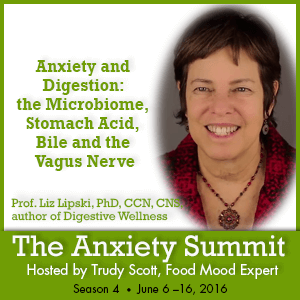
Liz Lipski_Anxiety4

Prof. Liz Lipski, PhD, CCN, CNS, was interviewed on the Anxiety Summit by host of the Anxiety Summit, Trudy Scott, Food Mood Expert and Nutritionist, author of The Antianxiety Food Solution.

Anxiety and digestion: the microbiome, stomach acid, bile and the vagus nerve

  • The microbiome – how these microbes are “us” and not different from us
  • Low stomach acid and the effects on protein/zinc/iron absorption, and candida
  • Low bile production and fat absorption issues
  • The vagus nerve, enteric nervous system and neurotransmitter production

Here are some gems from our interview:

So just to start the microbiome itself is not something separate from us but it’s the most newly recognized organ that we have in the human body.  And it’s comprised of viruses, bacteria and fungi.  And they’re like our rainforest and they live in every epithelial cell surface of our body so they’re on our skin, they’re in your lungs, in your hair, in your nailbeds.  They’re in your genitourinary system, in your digestive system, in your nose.  They’re really everywhere and I think that we’re also going to find that we have these microbes inside of our brain and inside of our liver and I think the more we learn we’re going to find that they’re really everywhere.

The thing that excites me about them is that they really help run our metabolism, help determine whether we’re fat or thin, help determine what our moods are like and how we feel. 

I just love this comment about the microbiome:

And honestly I never know are we just a big bag for carrying around these microbes and they’re really the intelligence in our body or what?  Because they’re kind of like the superstars and we’re really a super organism.  And without them we don’t function at all.

Here is some of what covered in the gut brain connection section:

We make a lot of neurotransmitters in our gut.  In fact we make about 80 to 90 percent of our neurotransmitters like serotonin.  We make most of it in our digestive system and not in our brain at all.  And when you start looking at it, it’s like wow, you look at dopamine and epinephrine and norepinephrine and all of these are made in great abundance in the digestive system itself and again they help modulate again the microbiome.  They help modulate gut motility, so how fast or how slow the food moves through our digestive system. 

Here is a fascinating article that covers much of the new research. The tantalizing links between gut microbes and the brain : Neuroscientists are probing the idea that intestinal microbiota might influence brain development and behaviour.

We cover hydrochloric acid and minerals:

So hydrochloric acid is really important for that.  It also helps us just break down proteins so that our digestive enzymes don’t have to work so hard.  And then it also in the beginning of the small intestine which is called the duodenum -it’s the first 12 to 18 inches – what happens is that the acid is still there before it get neutralized by the pancreas which secretes basically baking soda and neutralizes it because it’s done its job.  But in that first big part of the small intestine, the duodenum, is where we absorb iron and calcium and zinc and to a lesser extent magnesium and copper.  And so when we don’t have enough acid we’re more likely to get mineral insufficient.

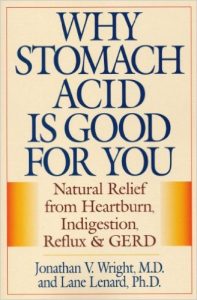
This is the book she mentions in the interview – Why Stomach Acid Is Good for You: Natural Relief from Heartburn, Indigestion, Reflux and GERD by Jonathan Wright

why stomach acid is good for you

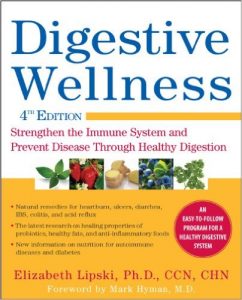
Here is Liz’s fabulous book Digestive Wellness 4th edition

digestive wellness

Here is the Stomach Acid/Hydrochloric Acid Test handout

If you are not already registered for the Anxiety Summit you can get live access to the speakers of the day here: www.theAnxietySummit.com

Missed this interview or can’t listen live? Or want this and the other great interviews for your learning library? Purchase the MP3s or MP3s + transcripts and listen when it suits you.

You can find your purchasing options here.: Anxiety Summit Season 1, Anxiety Summit Season 2, Anxiety Summit Season 3, and Anxiety Summit Season 4.
Filed Under: Events, The Anxiety Summit 4 Tagged With: anxiety, anxiety summit, bile, digestion, Liz Lipski, microbiome, stomach acid, Trudy Scott, vagus nerve

  • « Go to Previous Page
  • Page 1
  • Page 2
  • Page 3
  • Page 4
  • Page 5
  • Page 6
  • Interim pages omitted …
  • Page 24
  • Go to Next Page »

Primary Sidebar

NEW! GABA QuickStart Homestudy (with special intro pricing)

gaba quickstart homestudy

Free Report

9 Great Questions Women Ask about Food, Mood and their Health

You'll also receive a complimentary subscription to my ezine "Food, Mood and Gal Stuff"


Connect with me

Popular Posts

  • Amino Acids Mood Questionnaire from The Antianxiety Food Solution
  • The Antianxiety Food Solution Amino Acid and Pyroluria Supplements
  • Pyroluria Questionnaire from The Antianxiety Food Solution
  • Collagen and gelatin lower serotonin: does this increase your anxiety and depression?
  • Tryptophan for the worry-in-your-head and ruminating type of anxiety
  • GABA for the physical-tension and stiff-and-tense-muscles type of anxiety
  • The Antianxiety Food Solution by Trudy Scott
  • Seriphos Original Formula is back: the best product for anxiety and insomnia caused by high cortisol
  • Am I an anxious introvert because of low zinc and vitamin B6? My response to Huffington Post blog
  • Vagus nerve rehab with GABA, breathing, humming, gargling and key nutrients

Recent Posts

  • What do I use instead of Seriphos to help lower high cortisol that is affecting my sleep and making me anxious at night?
  • BeSerene™ GABA/theanine cream eases severe muscle tension in her neck/shoulders, prevents her bad headaches and quells her anxiety
  • How the correct approach, dose and sublingual use of GABA can be calming and not cause a flushed and itchy face and neck
  • The amino acid glutamine improves low mood by addressing gut health, and it has calming effects too
  • Flight anxiety with heightened breath, physical tension and also fearing the worst (the role of low GABA and low serotonin)

Categories

  • 5-HTP
  • AB575
  • Addiction
  • ADHD
  • Adrenals
  • Alcohol
  • Allergies
  • Alzheimer's disease
  • Amino Acids
  • Anger
  • Antianxiety
  • Antianxiety Food Solution
  • Antidepressants
  • Anxiety
  • Anxiety and panic
  • Autism
  • Autoimmunity
  • benzodiazapines
  • Bipolar disorder
  • Books
  • Caffeine
  • Cancer
  • Candida
  • Children/Teens
  • Collagen
  • Cooking equipment
  • Coronavirus/COVID-19
  • Cravings
  • Depression
  • Detoxification
  • Diabetes
  • Diet
  • DPA/DLPA
  • Drugs
  • EFT/Tapping
  • EMF
  • EMFs
  • Emotional Eating
  • Endorphins
  • Environment
  • Essential oils
  • Events
  • Exercise
  • Fear
  • Fear of public speaking
  • Fertility and Pregnancy
  • Fish
  • Food
  • Food and mood
  • Functional neurology
  • GABA
  • Gene polymorphisms
  • General Health
  • Giving
  • Giving back
  • Glutamine
  • Gluten
  • GMOs
  • Gratitude
  • Gut health
  • Heart health/hypertension
  • Histamine
  • Hormone
  • Hyperparathyroidism
  • Hypoglycemia
  • Immune system
  • Inflammation
  • Insomnia
  • Inspiration
  • Introversion
  • Joy and happiness
  • Ketogenic diet
  • Lithium orotate
  • Looking awesome
  • Lyme disease and co-infections
  • MCAS/histamine
  • Medication
  • Men's health
  • Mental health
  • Mercury
  • Migraine
  • Mold
  • Movie
  • MTHFR
  • Multiple sclerosis
  • Music
  • NANP
  • Nature
  • Nutritional Psychiatry
  • OCD
  • Osteoporosis
  • Oxalates
  • Oxytocin
  • Pain
  • Paleo
  • Parasites
  • Parkinson’s disease
  • PCOS
  • People
  • PMS
  • Postpartum
  • PTSD/Trauma
  • Pyroluria
  • Questionnaires
  • Real whole food
  • Recipes
  • Research
  • Schizophrenia
  • serotonin
  • SIBO
  • Sleep
  • Special diets
  • Sports nutrition
  • Stress
  • Sugar addiction
  • Sugar and mood
  • Supplements
  • Teens
  • Testimonials
  • Testing
  • The Anxiety Summit
  • The Anxiety Summit 2
  • The Anxiety Summit 3
  • The Anxiety Summit 4
  • The Anxiety Summit 5
  • The Anxiety Summit 6
  • Thyroid
  • Thyroid health
  • Toxins
  • Tryptophan
  • Tyrosine
  • Uncategorized
  • Vegan/vegetarian
  • Women's health
  • Yoga

Archives

  • October 2025
  • September 2025
  • August 2025
  • July 2025
  • June 2025
  • May 2025
  • April 2025
  • March 2025
  • February 2025
  • January 2025
  • November 2024
  • October 2024
  • September 2024
  • August 2024
  • July 2024
  • June 2024
  • May 2024
  • April 2024
  • March 2024
  • February 2024
  • January 2024
  • December 2023
  • November 2023
  • October 2023
  • September 2023
  • August 2023
  • July 2023
  • June 2023
  • May 2023
  • April 2023
  • March 2023
  • February 2023
  • January 2023
  • December 2022
  • November 2022
  • October 2022
  • September 2022
  • August 2022
  • July 2022
  • June 2022
  • May 2022
  • April 2022
  • March 2022
  • February 2022
  • January 2022
  • December 2021
  • November 2021
  • October 2021
  • September 2021
  • August 2021
  • July 2021
  • June 2021
  • May 2021
  • April 2021
  • March 2021
  • February 2021
  • January 2021
  • December 2020
  • November 2020
  • October 2020
  • September 2020
  • August 2020
  • July 2020
  • June 2020
  • May 2020
  • April 2020
  • March 2020
  • February 2020
  • January 2020
  • December 2019
  • November 2019
  • October 2019
  • September 2019
  • August 2019
  • July 2019
  • June 2019
  • May 2019
  • April 2019
  • March 2019
  • February 2019
  • January 2019
  • December 2018
  • November 2018
  • October 2018
  • September 2018
  • August 2018
  • July 2018
  • June 2018
  • May 2018
  • April 2018
  • March 2018
  • February 2018
  • January 2018
  • December 2017
  • November 2017
  • October 2017
  • September 2017
  • August 2017
  • July 2017
  • June 2017
  • May 2017
  • April 2017
  • March 2017
  • February 2017
  • January 2017
  • December 2016
  • November 2016
  • October 2016
  • September 2016
  • August 2016
  • July 2016
  • June 2016
  • May 2016
  • April 2016
  • March 2016
  • February 2016
  • January 2016
  • December 2015
  • November 2015
  • October 2015
  • September 2015
  • August 2015
  • July 2015
  • June 2015
  • May 2015
  • April 2015
  • March 2015
  • February 2015
  • January 2015
  • December 2014
  • November 2014
  • October 2014
  • September 2014
  • August 2014
  • July 2014
  • June 2014
  • May 2014
  • April 2014
  • March 2014
  • February 2014
  • January 2014
  • December 2013
  • November 2013
  • October 2013
  • September 2013
  • August 2013
  • July 2013
  • June 2013
  • May 2013
  • April 2013
  • March 2013
  • February 2013
  • January 2013
  • December 2012
  • November 2012
  • October 2012
  • August 2012
  • July 2012
  • June 2012
  • May 2012
  • April 2012
  • March 2012
  • February 2012
  • January 2012
  • December 2011
  • November 2011
  • October 2011
  • September 2011
  • August 2011
  • July 2011
  • June 2011
  • May 2011
  • April 2011
  • March 2011
  • February 2011
  • January 2011
  • December 2010
  • October 2010
  • September 2010
  • July 2010
  • May 2010
  • April 2010
  • March 2010
  • February 2010
  • January 2010
  • November 2009

Share the knowledge!

The above statements have not been evaluated by the Food and Drug Administration. Products listed in this website are not intended to diagnose, treat, cure or prevent any disease.

The information provided on this site is for informational and educational purposes only and is not intended as a substitute for advice from your physician or other health care professional. You should consult with a healthcare professional before starting or modifying any diet, exercise, or supplementation program, before taking or stopping any medication, or if you have or suspect you may have a health problem.


Copyright © 2026 Trudy Scott. All Rights Reserved. | Privacy | Terms and Conditions | Refund Policy | Medical Disclaimer

Free Report

9 Great Questions Women Ask about Food, Mood and their Health

You’ll also receive a complimentary subscription to my ezine “Food, Mood and Gal Stuff”