• Skip to primary navigation
  • Skip to main content
  • Skip to primary sidebar

everywomanover29 blog

Food, Mood and Women's Health – Be your healthiest, look and feel great!

  • Blog
  • About
  • Services
  • Store
  • Resources
  • Testimonials
  • The Book
  • Contact
  • Search this site

trauma

Seriphos lowers high cortisol: prevent waking in the night and nighttime anxiety

October 20, 2023 By Trudy Scott 63 Comments

seriphos and cortisol

Seriphos is my favorite nutrient for lowering high nighttime cortisol in order to reduce night waking and nighttime anxiety. I’ve used it with success in the past and have just needed it again:

After coming back from Hawaii (I was there for just under 2 weeks), I was still waking a few times each night. Sometimes I would be awake for 2-3 hours! I’m a hot mess when I don’t get sleep through the night. With just 1 Seriphos before bed for 9 days I was sleeping through the night again. It was glorious!

High cortisol can be a temporary issue after international travel i.e. caused by jetlag and out of balance circadian rhythm. I will admit that I have a number of confounding factors – like my loss and grief (my darling mom has just passed away), being sprayed with insecticide on landing in Australia (which I suspect caused severe vertigo the day after I got back), and high blood pressure (and likely higher cortisol too) after drinking too much licorice tea for my voice loss. Whatever the causes of my high cortisol, Seriphos really helped me sleep through the night.

I ran out of Seriphos 2 nights ago and I was awake for 3 hours last night. I’ll be adding it back to my nighttime protocol as soon as my order arrives.

Seriphos is made by Interplexus and is a phosphorylated serine product. It is similar to the more recognized phosphatidylserine which is also used and known for lowering high cortisol – clinically and in the research.  However, clinically, I have found Seriphos to be more effective and work more quickly.

UPDATE Feb 2024: I did end up tweaking my Seriphos dose a few times. After a few weeks I decided to trial 2 per night – this worked well. Then a few weeks later I trialed 3 per night – but after a few days I realized that even though it worked well for sleep it made me too tired the next day. For this reason I went back down to 2 Seriphos at bedtime.

UPDATE August 2024: I’m now using just 1 Seriphos at night and have added ox bile supplementation and a bright light panel in the morning because of bile issues. More on this below.

Seriphos for high cortisol due to trauma, loss of beloved cat and more

When I posted this on Facebook, I had a number of folks share how Seriphos has also helped them.

Kathy shared this: “I take two Seriphos at night for high cortisol that causes insomnia. It works well for me and helps me to relax. I have a significant trauma background that keeps me in fight or flight, so Seriphos is a must have at night. I do take a break from time to time if I am going through a less stressful time.”

Hopefully Kathy is also working on the trauma, doing trauma work and even incorporating other nutritional approaches which help so much with recovery – like zinc, vitamin D, a B complex, GABA and tryptophan etc. Taking a break from time to time is a good plan – I share more about this below.

Kim shared this: “Seriphos is a life saver – I started it when I was having cortisol/adrenaline issues a few years ago and have continued using it. I don’t ever want to be without Seriphos. A little over a month ago I unexpectedly lost my youngest cat. She was emaciated when I rescued her over 4 years ago and we turned around health issues. I feel so sad that she was dealt such a bad hand but we got her a loving home. My animals are everything to me and the grief is so difficult. She was a character and I love her so much.”

She uses one capsule in the evening but also uses a capsule during the day if she feels off. Hopefully Kim is also doing trauma work and other nutritional support too.

Janie shared this: “I have used it, years ago when my cortisol was off the charts, morning and at night. I was awake every night until 2am, unable to sleep. Seriphos certainly helped.”

She used 1 Seriphos per day for about 3 months.

Patricia said: “Please remember that there is Original Seriphos and the next gen Seriphos. I was one of thousands of people who had used original Seriphos for sleep and then they changed their formulation without telling us and then so very many of us were wide awake at night until we realized that they had changed the formulation.”

This happened in 2016/2017 and I blogged about that whole fiasco here –  Seriphos Original Formula is back: the best product for anxiety and insomnia caused by high cortisol. You can read many other success stories on the blog and in the comments.

Address the causes of your high cortisol: jetlag, grief, toxins, licorice intake

As you can see from my example there can be a number of causes of high cortisol and you always want to address these causes while using Seriphos so you can eventually stop using it:

  • International travel i.e. caused by jetlag and out of balance circadian rhythm. I’m home so this is no longer a contributing issue.
  • Loss and grief can have physiological effects and high cortisol is one of many effects: “It appears that cortisol remains elevated for at least the first 6 months of bereavement. For some, cortisol elevation may become chronic”. The loss of my darling mom is going to take time but I am making time for grieving and I’m nurturing myself. As I navigate this period in my life I’ll continue to share what has helped me. I suspect I may need Seriphos for longer than the usual 3 months.
  • Being sprayed with insecticide on landing in Australia (which I suspect caused severe vertigo the day after I got back). It’s well-recognized that environmental toxins are hormone disruptors and affect the hypothalamic-pituitary-adrenal (HPA) axis and cortisol. I’m addressing this with active detoxification and my portable infrared sauna.
  • High blood pressure and likely higher cortisol too after drinking too much licorice tea for my voice loss. I have stopped the licorice consumption and my blood pressure is back to normal.

Other possible causes of high cortisol include day to day stresses, food sensitivities such as gluten, high sugar consumption, parasites and so on. Each factor needs to be addressed.

I do recommend Salivary cortisol testing before using Seriphos

Salivary cortisol testing is something I do with all my clients anyway. And I do recommend salivary cortisol testing before using Seriphos and the other cortisol-lowering nutrients mentioned below.

I will admit that I didn’t follow my own recommendation because I’ve had high nighttime cortisol in the past and recognized the symptoms. I had also identified all the above root causes and I desperately needed to sleep. I now have an adrenal saliva test kit on hand and will report back when I get the results.

Seriphos will only work for waking in the night if cortisol is high

One woman shared “I have never slept through the night in years. It would be delightful to get to the morning without waking.” Seriphos will very likely help if her cortisol is high.

Keep in mind there are many causes of not being able to sleep through the night and Seriphos will not help if cortisol is not high. Other root causes for insomnia/waking in the night (and nighttime anxiety) we consider and investigate are:

  • Low GABA and low serotonin (I always start with these while waiting for salivary cortisol results to come back),
  • Low melatonin

The following factors need to be addressed as root causes of sleep issues, anxiety and other symptoms (like gut issues, pain etc.), and also keep in mind that they are very possibly contributing to your high cortisol too:

  • Gluten and other food sensitivities
  • Caffeine and sugar intake
  • Oxalate issues and/or toxins exposure affecting bile production (this affected my sleep last year)
  • EMFs
  • Parasites and other gut issues like IBS/SIBO etc.
  • Disrupted circadian rhythms connected to liver/gallbladder/bile issues – more on that and bright light here. (Research does support a connection between high cortisol and cholestasis i.e. “stagnation, or at least a marked reduction, in bile secretion and flow.”)

A few folks reported they had tried Seriphos without success and it may well be that they don’t have high cortisol. Or they would possibly benefit from another approach to lower their cortisol (more on this below).

What are my options if I have high cortisol at night and Seriphos has the opposite effect?

One person said it had the opposite reaction. Joanne shared this: “Seriphos had the opposite effect on me. [One Seriphos] gave me extreme anxiety, kept me awake all night. Saliva tested consistently high cortisol at night so it should have helped. Been trying to work out why it would and how it might inform how I treat my insomnia.”

I’ve had a few clients do better with less than the recommended 3 per day and one not being able to use it at all. I suspect an allergic reaction or that it’s just too high a dose for some folks. The capsule could be opened and less could be used.

If this doesn’t work, other options for lowering high cortisol include lactium/hydrolyzed casein, Relora® (which contains Magnolia officinalis and Phellodendron amurense), essential oils such as bergamot and some herbal adaptogens. You can also read about some phosphatidylserine products I looked into when the Seriphos product was changed.

Forest bathing also helps to lower high cortisol levels and I recommend it for everyone.

Where does using Seriphos fit into everything else that I’m doing to address my insomnia and/or anxiety?

I typically don’t start with Seriphos right away with clients unless we know cortisol is high. As mentioned above I always start with assessing for low GABA and low serotonin and we do trials of the respective amino acids based on the symptoms questionnaire.

I also assess for low blood sugar and dietary factors like gluten, caffeine, sugar, quality animal protein intake etc. as covered in my book “The Antianxiety Food Solution.” More about my book here.  It does include a chapter on the amino acids and how to use them too.

Then we start to dig deeper and would consider Seriphos or lactium for anxiety caused by high night time or even high morning cortisol or high cortisol at other times of the day.

With many folks all of the above often applies. And we continue with assessing for each of the 60+ nutritional and biochemical root causes of anxiety/waking in the night (which does include liver/gallbladder/bile issues).

Where do I purchase Seriphos and how much do I use? What about taking a break?
seriphos

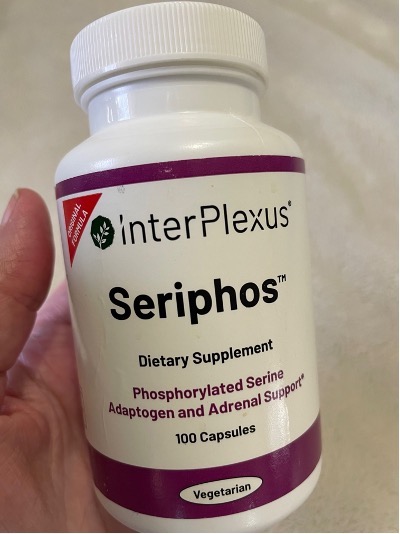
You can purchase Seriphos from my online store (Fullscript – only available to USA customers – use this link to set up an account) and you can also find it on iherb (use this link to save 5%).

The bottle states to use 1 capsule with water 15 minutes before a meal. Clinically, using 1-3 capsules a few hours before the high cortisol seems to be most effective. For 2-4am waking this typically means taking Seriphos right before bed. In some instances, taking 1 on waking in the night can help too (for a maximum of 3).

With high cortisol in the night and on waking, I have clients use Seriphos before bed and lactium on waking.

It is recommended to take a one-month break after 3 months of Seriphos use. Ideally, once the root causes of high cortisol are addressed, you should be able to stop anyway.  Or take a break, retest cortisol and then continue.

I’ll share some research and how Seriphos differs from phosphatidylserine in a follow-up blog if there is enough interest.

I appreciate all the feedback from these women in my community.

Have you used Seriphos (a phosphorylated serine product) to help with high cortisol and waking in the night/nighttime anxiety caused by any of the?

What do you suspect the cause(s) of your high cortisol is or was? And have you confirmed high cortisol with a saliva cortisol test?

Have any of the other products mentioned above helped to reduce high cortisol? If yes, have you compared them with Seriphos?

Let me know if you’re interested in a follow-up blog that includes some research and how Seriphos differs from phosphatidylserine.

Feel free to share and ask your questions below.
Filed Under: Adrenals, Anxiety, Insomnia, Stress, Toxins Tagged With: 000 lux, 10, anxiety, Balancing Neurotransmitters: the Fundamentals program for practitioners, bile liver, bright light, bright light panel, cholestasis, circadian rhythm, cognitive performance, cortisol, daytime sleepiness, disturbed sleep, GABA, GABA Quickstart, grief, high blood pressure, high cortisol, insecticide, Interplexus, jet lag, jetlag, licorice tea for my voice loss, melatonin, mood, nighttime anxiety, phosphatidylserine, phosphorylated serine, primary biliary cholangitis, salivary cortisol testing, seriphos, serotonin, sleep, sleep quality, sleep timing, trauma, tryptophan, vertigo, waking, waking early

Multiple sclerosis: low endorphin research and the amino acid DPA (d-phenylalanine) for pain, depression, comfort and trauma support

April 28, 2023 By Trudy Scott 8 Comments

MS support

The research on the role of low endorphins in multiple sclerosis (MS) is exciting because it creates more awareness about a powerful way to offer pain and mood support if you have been diagnosed with this condition. Typically, I ignore the diagnosis when assessing for low levels of neurotransmitters (via a symptoms questionnaire) and have clients do a trial of the amino acid DPA (d-phenylalanine) if they have physical pain symptoms, experience emotional pain symptoms with excessive weepiness/crying and seek comfort via treats/rewarding foods or the numbing effects of alcohol. However, we now know low endorphins play a role in MS (via the endogenous opioid system). By addressing low levels with DPA, you can find some relief of the above pain/depression symptoms and a need for comfort and numbing. DPA may also offer some trauma support if past trauma is a contributing factor (more on all of this below).

Low endorphins play a role in multiple sclerosis: the research

This 2021 paper, Multiple Sclerosis and the Endogenous Opioid System describes MS and the fact that current therapies have limited efficacy: “Multiple sclerosis (MS) is an autoimmune disease characterized by chronic inflammation, neuronal degeneration and demyelinating lesions within the central nervous system. The mechanisms that underlie the pathogenesis and progression of MS are not fully known and current therapies have limited efficacy.”

What is exciting is the identification of the role of the endogenous opioid system and specific opioid peptides in MS:

Preclinical investigations using the murine experimental autoimmune encephalomyelitis (EAE) model of MS, as well as clinical observations in patients with MS, provide converging lines of evidence implicating the endogenous opioid system in the pathogenesis of this disease.

In recent years, it has become increasingly clear that endogenous opioid peptides, binding μ- (MOR), κ- (KOR) and δ-opioid receptors (DOR), function as immunomodulatory molecules within both the immune and nervous systems.

The endogenous opioid system is also well known to play a role in the development of chronic pain and negative affect [i.e. depression], both of which are common comorbidities in MS. As such, dysregulation of the opioid system may be a mechanism that contributes to the pathogenesis of MS and associated symptoms.

Endogenous means internal i.e natural compounds produced by the body and involved in pain relief and mood improvement. This article, Opioid Peptides, describes peptides as compounds that “produce the same effects as the chemicals known as classic alkaloid opiates, which include morphine and heroin.”

It also mentions three major categories of opioid receptors – mu, delta, and kappa – referred to as MOR, DOR and KOR above.

D-phenylalanine for human “endorphin deficiency diseases”

Unfortunately neither of these papers mentions the amino acid DPA (d-phenylalanine) and the fact that it supports endorphin production (by inhibiting the breakdown of endorphins), reducing pain and improving mood – quickly (as in 5-10 minutes).

The use of DPA is not new information as you can read in this paper from 1982 – D-phenylalanine and other enkephalinase inhibitors as pharmacological agents: implications for some important therapeutic application

A number of compounds have been shown to inhibit the degradation of enkephalins. As expected, these compounds produce naloxone reversible analgesia and potentiate the analgesia produced by enkephalins and by acupuncture.

One of these, D-phenylalanine, is also anti-inflammatory.

D-phenylalanine has proven to be beneficial in many human patients with chronic, intractable pain. It is proposed the enkephalinase inhibitors may be effective in a number of human “endorphin deficiency diseases” such as depression, schizophrenia, convulsive disorders and arthritis.

Such compounds may alleviate other conditions associated with decreased endorphin levels such as opiate withdrawal symptoms.

Prevalence of anxiety/depression and alcohol abuse in MS

As I shared in the recent post addressing low GABA symptoms (anxiety, muscle stiffness, swallowing/voice issues and pain) in multiple sclerosis, anxiety and depression is common in this condition. Alcohol abuse is also high. I shared this paper, The incidence and prevalence of psychiatric disorders in multiple sclerosis: A systematic Review, with the following results:

Among population-based studies, the prevalence of anxiety was 21.9% (and up to 35.0% in some papers), 23.7% for depression …and 14.8% for alcohol abuse.

The above Opioid Peptides paper highlights that the endogenous opioid system may be related to excessive alcohol-drinking behavior. In the work I do with amino acids, I see alcohol used as a way to numb out.

All this supports the fact that the amino acid DPA may help ease symptoms of depression and weepiness seen in MS, and self-medicating with alcohol.

The goal is to use these amino acids instead of needing to use benzodiazepines (covered in the above GABA blog), antidepressants and pain medications.

DPA may help trauma in MS, and the freeze response

This paper, Childhood Trauma in Multiple Sclerosis: A Case-Control Study, suggests an association between childhood trauma and early-life stress and MS:

Although childhood trauma was not associated with the degree of current MS-related disability, patients with MS with histories of physical and/or sexual abuse had significantly higher relapse rates than patients without early-life stress.

DPA may also offer some trauma support if past trauma is a contributing factor. I learned about trauma and the low energy freeze state (a survival mechanism) from Dr. Aimie Apigian, MD, MS, MPH. There is the feeling of numbness and being disconnected when in the freeze state and this eventually becomes the default pattern that the nervous system has been wired into.

Individuals with low endorphins are often in the freeze state and are more emotionally sensitive to everything and because of this they experience much more stress. They also experience a feeling of numbness and feel disconnected. The encouraging news is that the amino acid DPA helps ease the low endorphin symptoms while they are addressing their trauma in other ways, like with somatic work and addressing other biological underpinnings of trauma.

DPA is comforting, helps you feel safe and is often described as feeling like someone just hugged you.

Endorphins and the amino acid DPA (d-phenylalanine) and DLPA (dl-phenylalanine)

If you’re new to endorphins and the amino acid DPA and DLPA here are some blog posts:

  • When using the amino acid DPA (d-phenylalanine) I have more resilience and more buffer in the caregiving work I do, and just the oops’s of life
  • What is the difference between DPA and DLPA (amino acids) and which one do I use for weepiness, heart-ache, pain and energy?
  • Wean off prescription pain medication, improve sleep and reduce emotional eating with DPA (an endorphin-boosting amino acid)
  • DPA for weepiness, pain and comfort and reward eating
  • How best to use the amino acid DPA for easing heart-ache, weepiness, comfort eating and a compulsive desire for food

Low GABA and low serotonin are common in multiple sclerosis too

Low endorphins are just the tip of the iceberg when it comes to the underlying neurotransmitter imbalances in MS. Low GABA and low serotonin are common too.

As mentioned, I recently blogged about the GABA research and applications of GABA when it comes to multiple sclerosis. Here is that link.

When that blog was published I had a number of questions (see the comments in the above link) from folks asking if GABA could help with similar symptoms in Parkinson’s: swallowing and voice problems, pain and hand spasms. I said yes – if GABA is low, the amino acid GABA will help. As important as your diagnosis is, it’s always the questionnaire/symptoms that help you figure out if it’s worth trialing GABA, DPA or one of the other amino acids.

Both GABA and DPA can help pain symptoms via different mechanisms, so it’s a matter of doing a trial of each amino acid, one at a time and monitoring your response.

Tryptophan and/or 5-HTP may help ease some of the low serotonin worry-type of anxiety, fear, panic attacks, obsessing, low mood and MS-specific pain issues and insomnia.

If you do have more than one imbalance (which is not unusual), you need to figure out which imbalance you have and address that with the relevant amino acids, one at a time. I have clients pick the area that is more problematic for them and start there.

I gathered some of this research while preparing for an interview with the wonderful Dr. Terry Wahls, MD and author of “The Wahls Protocol.” We were both pleasantly surprised to see these endorphin/MS and other neurotransmitter connections.

I really look forward to seeing future research on the use of the amino acids DPA, GABA and tryptophan in MS. And I’d love to be involved in some studies if you are associated with a research facility or do research.

Resources if you are new to using amino acids as supplements

If you are new to using amino acids as supplements, here is the Amino Acids Mood Questionnaire from The Antianxiety Food Solution (you can see all the symptoms of neurotransmitter imbalances, including low GABA, low serotonin and low endorphins).

If you suspect low levels of any of the neurotransmitters and do not yet have my book, The Antianxiety Food Solution – How the Foods You Eat Can Help You Calm Your Anxious Mind, Improve Your Mood, and End Cravings, I highly recommend getting it and reading it before jumping in and using amino acids on your own so you are knowledgeable. And be sure to share it with the practitioner/health team you or your loved one is working with.

There is an entire chapter on the amino acids and they are discussed throughout the book in the sections on gut health, gluten, blood sugar control, sugar cravings, anxiety and mood issues.

The book doesn’t include product names (per the publisher’s request) so this blog, The Antianxiety Food Solution Amino Acid and Pyroluria Supplements, lists the amino acids that I use with my individual clients and those in my group programs. You can find them all in my online store.

If, after reading this blog and my book, you don’t feel comfortable figuring things out on your own (i.e. doing the symptoms questionnaire and respective amino acids trials), a good place to get help is the GABA QuickStart Program (if you have low GABA symptoms too). This is a paid online/virtual group program where you get my guidance and community support.

If you are a practitioner, join us in The Balancing Neurotransmitters: the Fundamentals program. This is also a paid online/virtual program with an opportunity to interact with me and other practitioners who are also using the amino acids.

Do you have multiple sclerosis and has the amino acid DPA helped with your low endorphin symptoms: pain, depression, alcohol addiction, comfort and trauma support?

How much has helped and which product do you use?

Do you find opening a capsule of DPA helps more than swallowing the DPA capsule?

Were you surprised that DPA would help so much?

What else has helped your multiple sclerosis symptoms? And have you also addressed low GABA and serotonin with amino acids GABA and tryptophan?

If you have questions and other feedback please share it here too.

Filed Under: Addiction, Amino Acids, DPA/DLPA, Endorphins, Multiple sclerosis Tagged With: alcohol, alcohol addiction, comfort, crying, d-phenylalanine, depression, dl-phenylalanine, DLPA, DPA, emotional pain, endogenous opioid system, endorphin, endorphins, freeze response, GABA, GABA Quickstart online program; Balancing Neurotransmitters: the Fundamentals program for practitioners, multiple sclerosis, numbing, pain, reward, serotonin, trauma, treats, weepiness

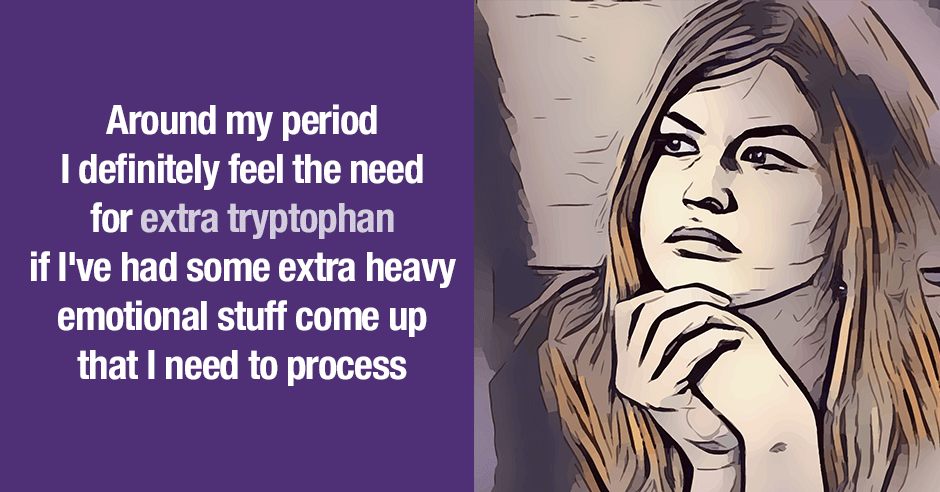
Around my period I definitely feel the need for extra tryptophan if I’ve had some extra heavy emotional stuff come up that I need to process

December 10, 2021 By Trudy Scott 6 Comments

period and extra tryptophan

Many women find that they need additional nutritional support i.e. tryptophan for serotonin support (and often GABA too) around their periods. Today’s case study highlights the hormonal shifts that may lead to a situation where it appears tryptophan doesn’t work, then it does work, and then sometimes it doesn’t work as expected. The variable results and the need to switch between lower and higher doses on an ongoing basis can occur with PMS (premenstrual syndrome) PMDD (premenstrual dysphoric disorder, a severe, sometimes disabling extension of premenstrual syndrome). The variable results can also be more pronounced while recovering from trauma.

This case study is a follow-on from a blog I recently published: Tryptophan doesn’t work, then it does and then it doesn’t: could it be hormonal shifts, dietary factors and/or parasites?

Here is Kimberley’s feedback on the Facebook post that discussed these variable results. She shared how her hormonal shifts led to a need for additional tryptophan and 5-HTP:

Around my period I definitely feel the need for extra tryptophan. My PMDD symptoms have decreased since I started using tryptophan/5-HTP, but sometimes I need a bit more if I’ve had some extra heavy emotional stuff come up that I need to process (since that always happens with my period!).

I thanked her for sharing and said how happy I was for her. I also asked what symptoms have decreased and how much? I also asked how much tryptophan and 5-HTP she uses before her period and then around her period?

I was also curious if she just experimented with different doses until she figured it out or had she heard me talk about the PMDD tryptophan study: A placebo-controlled clinical trial of L-tryptophan in premenstrual dysphoria. In this study tryptophan was found to reduce symptoms of PMS when used in the luteal phase or second half of the cycle (i.e. after ovulation).

Her low serotonin symptoms have decreased as much as 75-80 percent

Kimberley confirmed that she had read the above study and related blog post – Tryptophan for PMS: premenstrual dysphoria, mood swings, tension, and irritability – and more about her symptoms:

I had read the blog you referenced, which is one of the reasons I tried tryptophan in the first place.

I was experiencing a lot of emotional distress, feelings of downright despair that left me miserable both during my period and ovulation (half the month, every month, which was truly awful). Those have definitely decreased, sometimes as much as 75-80 percent, other times they’re worse and I feel like I need more support.

I usually take 1x Lidtke 5-HTP (50mg) mid-afternoon and 1x Lidtke Tryptophan (500mg) at bedtime, but yesterday I increased to 2x Lidtke Tryptophan and do feel an improvement in my mood this morning.

I experimented to get the right dose of both amino acids, initially increasing to the maximum you recommend, and then slowly decreasing to what I’m taking now when I found I didn’t feel well when I took too much.

I just reread the blog you linked above and realized I should be using GABA every day to support progesterone (instead of just as needed for anxiety). Thanks for the reminder!

I love that after reading the blog she was inspired and motivated to experiment with different doses when she is/was feeling so bad. I encouraged her to continue trialing different doses at various times of the month especially in the second half of the month. I also reminded her that some folks do better with tryptophan and some do better with 5-HTP when it comes to low serotonin symptoms. And to continue to look at why serotonin is low and address that. Low GABA (related to low progesterone) can cause increased anxiety at this time and is a common issue with PMS/PMDD.

(You can see the entire list of low serotonin and low GABA symptoms here.)

She plans to continue experimenting with tryptophan and 5-HTP and may also try switching over to just 5-HTP and see if that changes anything. It’s unlikely that she would benefit from much higher doses of either as she shared “I don’t seem to be able to take more than 2 caps of either one without getting uncomfortable symptoms, though.”

Exercise and yoga for her low serotonin and PMDD

She did share how much exercise helps her mood, why she isn’t able to exercise as much:

The biggest thing I know to do to address low serotonin is add more exercise into my life, but this has been hard lately because I’ve had a couple of different viruses recently that left my exercise intolerance worse than it had been. I’m trying to support my mitochondria right now and add light exercise back in slowly.

Exercise is a wonderful way to raise serotonin levels and aerobic exercise has been shown to reduce the symptoms of PMS too. Yoga may be an option while she is recovering. In one study, yoga was found to be beneficial for PMS: “Alpha-brain waves production due to regular yoga practice are directly related with state of peace, creativity, mood elevation, relaxation, and release of serotonin, thus leading yoga practitioners feel more relaxed.”

Trauma: cortisol, serotonin, dopamine and estradiol

Kimberley also shared how how trauma plays into her situation:

I think some of the reasons for my health issues, low neurotransmitters, etc., are trauma related and I’ve been working through Dr. Aimie Apigian’s programs for that. But that’s another story.

I respect Dr. Aimie Apigian’s work in trauma and somatic experiencing and acknowledge this aspect must be addressed too. I love that Dr. Aimie brings this together with a functional medicine approach, looking at biology/biochemistry too. Recent trauma research confirms that there are major biochemical mechanisms involved in PTSD (post-traumatic stress disorder). These can include impacts to cortisol, serotonin and dopamine levels. And women are more vulnerable to these effects.

A 2021 paper, Estradiol, stress reactivity, and daily affective experiences in trauma-exposed women discusses high cortisol and more severe symptoms around their periods when estradiol (one of the estrogens) is low. As I mentioned above, estrogen and serotonin are closely related. The authors state this:“For women who are cycling, it may be useful to understand how the menstrual cycle affects their symptoms. When you can explain what’s happening biologically, it often becomes less threatening.”

Yoga may provide added psychological benefits as she works through her past trauma too.

Kimberly gave me permission to share her story and this is always something I appreciate so others in my community can learn from these types of experiences. If needed, I hope this her story gives you confidence to experiment with different doses and combinations around your period.

She also benefits from the comments from others on Facebook and the comments here on the blog, our back and forth, and this blog post.

She promised to keep me posted on how she goes and I’ll be sure to share when I hear back from her.

Resources if you are new to using tryptophan, 5-HTP and GABA and the amino acids as supplements

If you are new to using the amino acids as supplements, here is the Amino Acids Mood Questionnaire from The Antianxiety Food Solution (you can see the low GABA symptoms here) and a brief overview here, Anxiety and targeted individual amino acid supplements: a summary.

If you suspect low GABA or low levels of any of the neurotransmitters and do not yet have my book, The Antianxiety Food Solution – How the Foods You Eat Can Help You Calm Your Anxious Mind, Improve Your Mood, and End Cravings, I highly recommend getting it and reading it before jumping in and using amino acids so you are knowledgeable. And be sure to share it with the team you or your loved one is working with.

The book doesn’t include product names (per the publisher’s request) so this blog, The Antianxiety Food Solution Amino Acid and Pyroluria Supplements, lists the amino acid products that I use with my individual clients and those in my group programs.

Have you found you need additional tryptophan/5-HTP or GABA around your period? How have you experimented and how does it help you?

If you’re a practitioner, have you seen this with clients or patients?

Do you also feel better with exercise and/or yoga?

And are/were your variable results more pronounced while recovering from trauma?

Feel free to ask your questions here too.

Filed Under: Anxiety, GABA, PMS, PTSD/Trauma, serotonin, Women's health Tagged With: 5-HTP, anxiety, biochemical, cortisol, despair, dopamine, emotional distress, emotional stuff, estradiol, estrogen, exercise, GABA, hormonal shifts, miserable, my period, PMDD, PMS premenstrual syndrome, premenstrual dysphoric disorder, PTSD, serotonin, stress, trauma, tryptophan, yoga

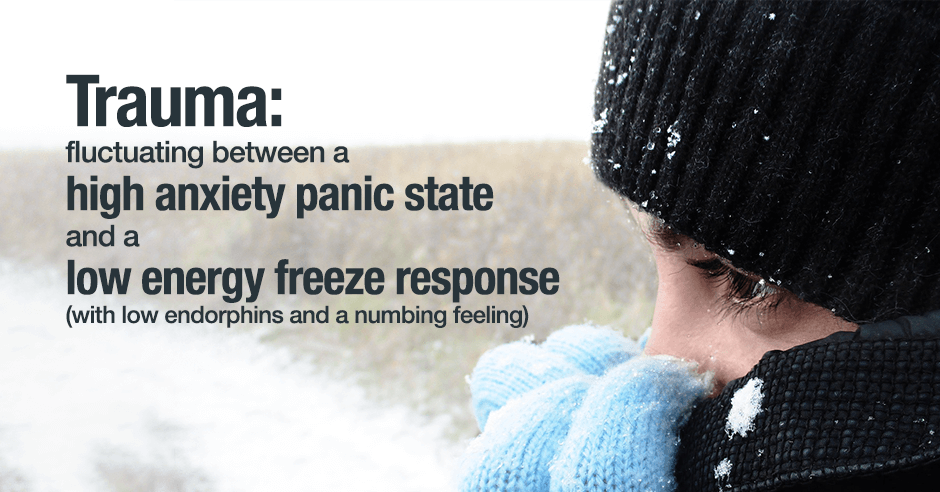
Trauma: fluctuating between a high anxiety panic state and a low energy freeze response (with low endorphins and a numbing feeling)

October 22, 2021 By Trudy Scott 10 Comments

trauma

The freeze response in trauma is not well understood and is a low energy state. When the anxiety has become so high or severe it triggers a low energy or freeze state in order for you to survive. There is also the feeling of numbness and being disconnected when in the freeze state and this eventually becomes the default pattern that the nervous system has been wired into. Healing can start with somatic work and using a functional medicine and nutritional psychiatry approach to address the biological underpinnings of trauma.

Dr. Aimie Apigian, MD, MS, MPH discusses all this and much more in her interview on the Anxiety Summit 5: Gut-Brain Axis.

And then Dr. Aimie interviews me and we discuss how folks with low endorphins are often in the freeze state. These folks are more emotionally sensitive to everything and because of this they experience much more stress. They also experience a feeling of numbness and feel disconnected. The encouraging news is that the amino acid DPA (d-phenylalanine) helps ease the low endorphin symptoms while they are recovering. More on all this below.

The freeze response in trauma is not well understood and is a low energy state

Let’s start with this interview with Dr. Aimie – Biology of Trauma and the Freeze Response. This is what we cover:

  • Identifying the freeze response and symptoms when anxiety is high
  • The role of the microbiome, neurotransmitters, oxidative stress, mitochondria and cortisol
  • Somatic work when in the chronic freeze state: containment hugs and marking your territory

dr aimie

Dr. Aimie explains that the freeze response in trauma is not something that’s been really well understood:

  • When we talk about just trauma and mood, and stress even, it’s like we still lump everything in that fight, flight, or freeze response. And the fight and flight response could not be more different than the freeze response.
  • On a biological level, they are completely different biology states, which means that it is humanly impossible to be in both of those states at the same time. So when we look at this freeze response, okay, so what is it? If it’s not fight or flight, what is it?

She shares how the anxiety has been become so high or severe it triggers a low energy or freeze state in order for you to survive:

  • When we look at what it is, it’s when the anxiety has become so high that the body is not able to sustain that level of both anxiety, but it’s really an energy level.
  • Because anxiety is a high energy state and it triggers this response in the body where it says, “Ooh, this is unsustainable,” and in order to survive, for our best interests, it would be better for us to go into a low energy state.
  • And it feels like giving in, giving up. It feels like giving up the fight because the body just goes into this, I kind of call it like, it shifts down into first gear.
  • You’re no longer zooming along in fifth or sixth gear, you just kind of shift down into first gear and now you’re just going through life.

The feeling of numbness and being disconnected when in the freeze state

In addition to the low energy state, this is where Dr. Aimie talks about the feeling of numbness and being disconnected when in the freeze state:

  • Now you’re just going through your day, you feel a little numb, you feel a little disconnected.
  • But the trigger for that freeze response originally comes from the anxiety level, which really becomes a level of fear, terror, panic.

Dr. Amie also shares how this becomes the default pattern that the nervous system has been wired into:

  • And people can have what I call a strong pull towards the freeze response so that they no longer are even aware of the fear and the terror.
  • They just feel anxiety and boom, they go straight into the freeze response because it has just become that default pattern that the nervous system has been wired into.

The biology of trauma and somatic work

She goes on to discuss the biology of trauma and the role of the microbiome, neurotransmitters, oxidative stress, mitochondria and cortisol in contributing to the freeze response (i.e. making you more susceptible to trauma) and as factors we can address in order to facilitate recovery and healing.

Dr. Aimie also describes the somatic work she does with her patients who are in the chronic freeze state: exercises like containment hugs and marking your territory. She shares that “I want people to experience their nervous system. I want them to know what it feels like, be able to actually recognize which state of the nervous system they are in at any given moment in time, and be able to feel what that feels like in their body, because then that’s how we teach them how to shift that.”

In her work and in this interview, Dr. Amie brings the world of trauma recovery and somatic work to the functional medicine and nutritional psychiatry world. It’s an eye-opening interview you don’t want to miss.

The connection between the trauma freeze response and low endorphins

Also featured in the summit is another interview where Dr. Aimie happens to interview me on this topic: Glutamine, DPA and Tyrosine for Anxiety and Sugar Cravings. We cover the following:

  • Sugar addiction: impacts on the microbiome, tryptophan metabolism, zinc & B vitamins
  • Glutamine for intense sugar cravings, anxiety & support of the microbiome/mucosa
  • DPA for comfort/reward cravings, pain & acute stress; tyrosine for focus & calm energy

It’s during this interview that I make the connection between the trauma freeze response and low endorphins when we are discussing the last bullet above.

As a reminder, these are the mood symptoms of low endorphins:

  • Heightened sensitivity to emotional pain
  • (and also Heightened sensitivity to physical pain)
  • Crying or tearing up easily

And these are the ways sugar cravings often show up when you have low endorphins:

  • Eating to soothe your mood, or comfort eating
  • Really, really loving certain foods, behaviors, drugs, or alcohol
  • Craving a reward or numbing treat

dr aimie

As I share about the endorphins and how I use the amino acids DPA and/or DLPA to boost endorphin levels, I remember how Dr. Aimie discussed the numbing effect when someone is in the freeze state and it made me think about endorphins. So I ask Dr. Amie if she finds that folks with low endorphins are often in the freeze state.

Dr. Amie says most definitely yes and shares that with the low endorphins, people in the freeze state really are more emotionally sensitive to everything and because of this they experience much more stress:

  • From my perspective, working with a lot of the trauma response … they are much closer … to that line of overwhelm.
  • So most definitely, yes. And it’s that comfort, right? It’s that self-soothing, and it’s the numbing effect. The numbing effect of reaching for food when you’re not hungry. It’s just for numbing the emotional sensitivity that you have with low endorphins.
  • Endorphins really affect the stress levels and then mood, and then inflammation? It starts this cascade of changes in their biology because of the low endorphins and the increased amount of stress that they experience with that sensitivity.

This discussion tied in perfectly to the study I had to share: The Role of Beta-endorphin in Stress, Behavior, Neuroinflammation, and Brain Energy Metabolism.

In this 2020 paper, the authors discuss beta-endorphins in the context of reward-centric behaviors, pain, neuroinflammation, immune function and also how endorphins attenuate (or reduce the effects of) the acute stress response. They also share how endorphins exert a regulatory effect on serotonin levels.

I find the latter link to serotonin very interesting and will be digging deeper into this in another blog post.  I’ll also be digging into the low endorphins aspect of the trauma freeze response in the coming months. And I want to learn more about the somatic work that Dr. Aimie uses – to experience some of it myself and to bring to my community i.e you! I do love that I also get to learn so much when I do these interviews.

Use DPA to ease the weepiness and need to numb out with comfort food or behaviors

For now, if you have experienced trauma and recognize being in the freeze state, and you feel numbed out and disconnected, and also relate to the above other low endorphin symptoms, I would do a trial of DPA (the amino acid d-phenylalanine) and see how you do. It will likely help ease some of the low endorphin symptoms while you are recovering.

Keep in mind that you can also have low endorphin symptoms without having experienced trauma. I see this with many of my clients and it’s not uncommon to also have low serotonin worry and low GABA physical anxiety symptoms too..

In both instances, I would do a trial of DPA (I like the Lidtke Endorphigen product) and see how you do. If it is low endorphins you’ll ease the weepiness and need to numb out with comfort food or behaviors (such as endless scrolling on social media). You can expect to see results in 5-10 minutes when the DPA is opened onto the tongue.

To recap, be sure to tune in to these 2 interviews to see how it’s all connected and to hear more about trauma, the biology of trauma and how to use amino acids to balance neurotransmitters:

  • Aimie Apigian, MD, MS, MPH – Biology of Trauma and the Freeze Response
  • Trudy Scott, CN – Glutamine, DPA and Tyrosine for Anxiety and Sugar Cravings

These interviews dove-tail well with this topic of trauma, the freeze response and neurotransmitters:

  • Navaz Habib, DC, AFMCP – Vagus Nerve Activation to Reduce Anxiety (because vagus nerve activation habits speed trauma recovery)
  • My other amino acid interview, Cravings and GABA & Tryptophan: Gut-Anxiety Connections (because the amino acids help to support low serotonin and low GABA which is common with trauma)
  • Evan Brand, CFMP, NTP – Floatation Therapy for Anxiety and PTSD (because floatation therapy is gentle and yet effective)
  • Eric Zielinski, DC – Essential Oils for Anxiety and Digestion (because essential oils are well tolerated and effective)
  • David Jockers, DNM, DC, MS – Fasting for Anxiety and Gut Health (he talks about the effects of fasting on endorphins and serotonin)

I encourage you to tune in if you have:

  • Anxiety & feel overwhelmed & stressed by little things
  • Panic attacks &/or obsessive thoughts or behaviors
  • Social anxiety/pyroluria
  • Phobias or fears (flying, spiders or even driving on a highway)

And also if you suffer from…

  • Food sensitivities, IBS/SIBO, parasites or gallbladder issues
  • Constipation, diarrhea, bloating, gas, pain & other digestive issues
  • Leaky gut, a leaky blood-brain barrier or vagus nerve issues

You’ll also benefit if you are also an emotional eater with intense sugar cravings (and know you suffer from low blood sugar), experience insomnia, low mood, PMS, poor focus and/or low motivation.

This is THE online event to learn about the powerful individual amino acids – GABA, theanine, tryptophan, 5-HTP, glutamine, DPA and tyrosine – to quickly ease anxiety and help with gut symptoms while you are dealing with other root causes which take longer to address. (They also help with cravings as with this example, and sleep and immunity).

With research-based anxiety nutritional solutions and practical steps, you can determine your root causes, ease your anxiety and prevent it from coming back so you can feel on top of the world again!

If you are a practitioner, please join us too and find advanced solutions for your clients or patients too!

You’ve heard me say the Anxiety Summit has been called “a bouquet of hope!”  My wish for you is that this summit is your bouquet of hope!

I hope you’ll join me and these incredible speakers, be enlightened and find YOUR solutions!

Here’s to no more anxiety and you feeling on top of the world again!

Can you relate to the freeze state and fluctuating from a high energy anxiety/panic state?

When you’re in the freeze state do you feel numb and disconnected?

Have you had success with somatic work? And also using a functional medicine approach to healing?

Also let us know if you’ve benefited from using DPA to help ease the low endorphin symptoms?

Feel free to post your questions here too.

Filed Under: Amino Acids, Anxiety, PTSD/Trauma, The Anxiety Summit 5 Tagged With: Aimie Apigian, anxiety, Anxiety Summit 5, biology of trauma, d-phenylalanine, disconnected, DPA, Endorphigen, endorphins, freeze, functional medicine, numb, numbness, nutritional psychiatry, panic, somatic work, stress, trauma, weepiness

Rage, anxiety, cravings & insomnia in 11-year old girl with RAD/reactive attachment disorder: chewable tryptophan turns things around

May 28, 2021 By Trudy Scott 21 Comments

rad and tryptophan

Today I’m sharing the case of an 11-year-old girl who had huge rage issues, was angry much of the time, suffered from terrible anxiety, had crazy sugar cravings (for bread and colored candies) and had dreadful insomnia. Because of the insomnia she was also very fatigued and this likely drove some of her cravings and irritability too. She was adopted and had been diagnosed with RAD (reactive attachment disorder). During our first session, chewable tryptophan turns things around quickly – she smiles and is willing to make changes and quit the sugar and gluten. We also address low iron levels and with these 4 nutritional interventions this child’s behavior improves dramatically.

This book chapter, Reactive Attachment Disorder, states how The Diagnostic and Statistical Manual 5th Edition (DSM-5) classifies reactive attachment disorder as follows:

a trauma- and stressor-related condition of early childhood caused by social neglect or maltreatment. Affected children have difficulty forming emotional attachments to others, show a decreased ability to experience positive emotion, cannot seek or accept physical or emotional closeness, and may react violently when held, cuddled, or comforted. Behaviorally, affected children are unpredictable, difficult to console, and difficult to discipline. Moods fluctuate erratically, and children may seem to live in a “flight, fight, or freeze” mode. Most have a strong desire to control their environment and make their own decisions. Spontaneous changes in the child’s routine, attempts to discipline the child, or even unsolicited invitations of comfort may elicit rage, violence, or self-injurious behavior.

Reactive attachment disorder/RAD and low serotonin

There is no research on tryptophan helping to address RAD symptoms or trauma, but based on her low serotonin symptoms, a trial of tryptophan was the first thing I considered.

There is, however, evidence to indicate the role of low serotonin in RAD, as indicated by a study where antidepressants were successfully used. The authors mention how:

The absence of responsive and consistent caretaking can subject the developing brain to an inordinate amount of physiological stress, leading to increased cortisol production and consequential inefficiencies in the serotonin and the growth-hormone releasing systems.

Although not specific to RAD, another paper looking at trauma states that:

Serotonin and dopamine levels were found to be abnormal in the presence of PTSD.

As the field of nutritional psychiatry grows, I expect to see more and more research supporting the use of tryptophan and other amino acids for those suffering from symptoms like this. Symptoms that are caused by imbalances that are triggered by the trauma in their lives.

We know that therapy, EFT, EMDR and other approaches are crucial for trauma recovery (this family had already done some of this work) but we must start to incorporate nutritional support too.

The case study

Here are the details of this case study and the nutritional interventions. As I mentioned above, because of her severe rage episodes, a trial of tryptophan was the first thing I considered:

She was referred to me by a friend. The family didn’t have much money. And so, we had to really try and figure out a few simple interventions that we could use that were going to be effective.

This young girl had been adopted. She was diagnosed with reactive attachment disorder and her anger issues were just phenomenal. The mom had to physically put her body around her and hold her down when she was having one of her fits because she was worried that she was going to hurt herself and hurt other people.

She also had anxiety, huge cravings for colored candies and insomnia. She was so fatigued because she wasn’t sleeping well.

So sitting in my office with this young girl and her mom, we started to talk about the sweets and the candies and the need to give up the candies. She was fuming with me. She was sitting in a swivel chair. She turned her back on me and didn’t want to talk about having to give up candy at all.

I said, “Look, let’s not even talk about that, but would you take this chewable tryptophan here? And we’ll talk about it in a second.” I gave her 100 mg of the chewable tryptophan and continued discussing things with her mom.  She had no idea what it was going to do or how it would make her feel.

Within five minutes she turned her chair back, looked at me and she said, smilingly, “Yes, let’s do it. I can give up the candy.” She was smiling and she was happy.

So long story short, with this young girl, we started her on [chewable] tryptophan [and it turned things around quickly].

Chewable tryptophan – when I use it and when I don’t

I typically use 500mg Lidtke tryptophan for the adult clients I work with and prefer this company’s product because it is really high quality. It really does work better than many other tryptophan products on the market.

Lidtke also makes a chewable 100mg tryptophan which is also high quality, and the product I used with this young girl. Here are some benefits of this 100mg product:

  • It’s useful for doing the initial trial in order to figure out if tryptophan is going to help with low serotonin symptoms in children – because it’s a lower dose.
  • It’s especially useful for children for ongoing use (typically midafternoon and evening) because it’s a lower dose.
  • It’s also useful for adults who are “pixie dust” folks and do better with a lower dose of supplements in general or respond more severely to medications/alcohol/chemicals. We may start with a trial of the 100mg chewable and increase from there, also typically midafternoon and evening.

I don’t use the chewable 100mg tryptophan under these circumstances:

  • When the child (or adult) finds that 5 x100mg works for them at each time they need it. In this instance it’s best to switch to a 500mg tryptophan. Using it swallowed may work or it may need to be opened onto the tongue.
  • When the child (or adult) starts to consume the chewables like candy. They are sweet and do taste good and I’ve seen this happen. Because you are continually consuming something sweet you may end up over-consuming them if sugar addiction is one of your issues. You may also end up taking too much tryptophan.

If the chewable tryptophan is not available where you live, using a small amount of a powdered tryptophan or opening a capsule of the 500mg tryptophan is an option. Since it tastes bitter it can be mixed with mashed banana or inositol. (You can find all the Lidtke products in my online supplement store. The link is in the resources section below.)

Gluten and candies were also a huge issue, and she had low iron

There was more to her issues than only low serotonin:

Gluten was also a huge issue, so we got her off gluten and the candies. The tryptophan helped with this” (i.e. it made it easy to break the addiction and not feel deprived).

Tryptophan also helped her sleep. And it helped with the severe rage issues.

Obviously the gluten was contributing to the rage issues as well.

Her iron and ferritin levels were really low (possibly as a result of her gluten issues). So we added an iron supplement, and animal protein/red meat.

So with just four interventions – the gluten, the animal protein, getting her iron levels up and the tryptophan – this kid was just a new kid.

Here are some articles that are related to the above:

  • The role of low serotonin, low vitamin B6 and low iron in anxiety and panic attacks
  • Integrative Medicine Approach to Pediatric Obsessive-Compulsive Disorder and Anxiety I write about a study where gluten was found to be the cause of a childhood case of obsessive-compulsive disorder (OCD)
  • Tryptophan for my teenager: she laughs and smiles, her OCD and anxiety has lessened, and she is more goal oriented and focused on school.

Keep in mind there is not a one-size-fits-all and these 4 simple nutritional interventions – tryptophan, gluten removal, adding red meat and addressing low iron – happened to be the combination that worked for this young girl.

Resources if you are new to using tryptophan as a supplement

If you are new to using the amino acid tryptophan as a supplement, here is the Amino Acids Mood Questionnaire from The Antianxiety Food Solution and a brief overview here, Anxiety and targeted individual amino acid supplements: a summary.

If you suspect low serotonin symptoms and do not yet have my book, The Antianxiety Food Solution – How the Foods You Eat Can Help You Calm Your Anxious Mind, Improve Your Mood, and End Cravings, I highly recommend getting it and reading it before jumping in and using amino acids so you are knowledgeable.

The book doesn’t include product names (per the publisher’s request) so this blog, The Antianxiety Food Solution Amino Acid and Pyroluria Supplements, lists Lidtke chewable tryptophan 100mg, Lidtke tryptophan 500mg and other products that I use with my individual clients and those in my group programs.

We use an amino acid like tryptophan for quick relief of symptoms, like I did in this instance. Then we focus on the foundations like diet – like no gluten and red meat in this instance – and address all other imbalances, like her low iron. If cortisol was high we would have addressed that.

This case deserves it’s own blog post

In case you’re wondering, I first shared this case study in my interview, “Calming Anxiety, Aggression and OCD with Amino Acids and Food”, on the ADHD and Autism Summit in May 2021. Due to the interest in this case and the use of chewable tryptophan, I felt it deserved a deeper dive and its own blog post with links to some of the research and some practical information about the chewable tryptophan.

Have you used this chewable tryptophan product with success – personally, with your child or with a patient/client?

Have you found that addressing serotonin with tryptophan (or 5-HTP) helps resolve symptoms in a child diagnosed with RAD or a child with rage issues? What about helping with sleep problems, easing anxiety and stopping cravings too?

Have you addressed low iron levels and seen improvements with the removal of gluten too.

Feel free to post your questions here too.


Filed Under: Anxiety, Children/Teens, PTSD/Trauma, serotonin, Tryptophan Tagged With: adopted low iron, angry, anxiety, behavior, chewable tryptophan, cravings, fatigue, gluten, insomnia, irritability, nutritional interventions, nutritional psychiatry, RAD, rage, reactive attachment disorder, self-injurious behavior, serotonin, sugar, trauma, unpredictable, violence, young girl

The effect of emotional freedom technique on nurses’ stress, anxiety, and burnout levels during the pandemic

February 12, 2021 By Trudy Scott 4 Comments

emotional freedom technique and nurses

Nurses who are working with patients during this pandemic “are particularly vulnerable to emotions such as fear and anxiety, due to fatigue, discomfort, and helplessness related to their high intensity work.” A new paper published Dec 2020, The effect of Emotional Freedom Techniques on nurses’ stress, anxiety, and burnout levels during the COVID-19 pandemic: A randomized controlled trial reports the benefits of just one online session of EFT (emotional freedom technique) or tapping.

As this paper mentions, “The basic principle of EFT is to send activating and deactivating signals to the brain by stimulating points on the skin that have distinctive electrical properties, usually by tapping on them.”

The study participants were shown a picture of the acupressure points and shown how to “gently tap on them using their index and middle fingers. After this demonstration, the participants followed the basic steps of an EFT session, following the researcher’s example:

  1. Identify an anxiety-evoking issue and determine the SUD level [the SUD is a subjective unit of distress ranging from 0 to 10 with 10 being most severe]
  2. Creating a personal acceptance and reminder statement in the general form of “I accept myself despite this ……….”
  3. Tapping seven times on each acupressure point
  4. After tapping these points, the affirmation/reminder statement is repeated.
  5. A sequence of physical movements and vocalizations called “The Nine Gamut Procedure” is carried out.
  6. Steps 3 and 4 are repeated.
  7. Another SUD rating is given [in other words how they felt afterwards on a scale of 0 to 10]

The study conclusion is as follows: “A single online group EFT session reduced stress, anxiety, and burnout levels in nurses treating COVID-19.” You can read the full study here and see the picture of the acupressure points.

This is a powerful intervention for nurses, other healthcare and frontline workers – and anyone dealing with anxiety, stress and burnout!

Tapping leads to psychological and physiological improvements

As well as psychological improvements, tapping also leads to physiological improvements. In a 2019 study, “after a 4-day training workshop on tapping, the researchers reported that happiness increased by 31% and the following declines in psychological symptoms in 203 participants were reported:

  • anxiety (-40%)
  • depression (-35%)
  • posttraumatic stress disorder (-32%)
  • pain (-57%) and
  • cravings (-74%)

I find it fascinating that EFT/tapping leads to physiological improvements too. In this same 2019 study these changes were reported:

  • resting heart rate (-8%)
  • salivary cortisol (-37%)
  • systolic blood pressure (-6%) and diastolic blood pressure (-8%)
  • heart rate variability and heart coherence
  • salivary immunoglobulin A (SigA) (+113%)

You can read more about this study here: Tapping (or EFT) for reducing anxiety, depression, pain and cravings, plus physiological changes in cortisol, heart rate, blood pressure and SigA

Combining tapping with nutritional approaches for easing anxiety

As I mention in the above blog, I have great success with amino acids like GABA, tryptophan and glutamine to provide quick anxiety-relief, end the overwhelm and stop the carb cravings for my clients. So until recently, I hadn’t really felt the need to look into tapping.

However, I believe we need to use everything at our disposal. We also respond differently to different approaches and what may work for one person may not work as well for someone else.

I love that EFT/emotional freedom technique/tapping compliments the dietary/nutritional/biochemical approach I use with my clients for helping to ease anxiety, overwhelm and stress.

Ideally these nurses (and you and anyone who is stressed or anxious) could could use tapping/EFT and combine it with nutritional support for possibly even more benefits:

  • Use targeted amino acids such as tryptophan or 5-HTP for the low serotonin worry-in-your-head anxiety where folks may also experience fears, panic attacks, ruminations, phobias, insomnia, PMS, anger, irritability and cravings; and GABA for the low GABA physical-anxiety that also includes muscle tension, overwhelm, insomnia and the need to self-medicate with alcohol to calm down
  • DPA (d-phenylalanine), also an amino acid, boosts endorphins (in a similar way to acupuncture) and helps my clients who are experiencing weepiness, pain and are big comfort/reward eaters. I blog about this here: DPA for weepiness, pain and comfort and reward eating)

In April last year I blogged about nutritional and lifestyle approaches after reading a very somber and eye-opening article in the New York Times titled: The Psychological Trauma That Awaits Our Doctors and Nurses. You can read about B vitamins, melatonin, nature and more on this blog here.

EFT/tapping resources

If you’re new to EFT/tapping and would like to learn more, the 13th Annual Tapping World Summit airs online starting Feb 22, 2021:

  • This is a great introductory video from summit host Nick Ortner (register to watch it and get access to the summit)
  • Here is the main summit registration page

Nick has also written a best-selling book “The Tapping Solution: A Revolutionary System for Stress-Free Living” (my Amazon link)

Are you a nurse or other frontline worker who has used EFT with success?

Do you use both with success: EFT and the amino acids like GABA, tryptophan, 5-HTP, theanine or glutamine? What about EFT and dietary changes like no gluten, no sugar and no caffeine?

I also want to give a shoutout to all the nurses and other frontline workers who are doing so much during this pandemic. We appreciate you!

Filed Under: Anxiety Tagged With: anxiety, burnout, cortisol, DPA, eft, endorphins, GABA, Nick Ortner, nurses, nutritional, pandemic, physiological, psychological, serotonin, stress, tapping, Tapping Summit, trauma, tryptophan

  • Page 1
  • Page 2
  • Go to Next Page »

Primary Sidebar

NEW! GABA QuickStart Homestudy (with special intro pricing)

gaba quickstart homestudy

Free Report

9 Great Questions Women Ask about Food, Mood and their Health

You'll also receive a complimentary subscription to my ezine "Food, Mood and Gal Stuff"


Connect with me

Popular Posts

  • Amino Acids Mood Questionnaire from The Antianxiety Food Solution
  • The Antianxiety Food Solution Amino Acid and Pyroluria Supplements
  • Pyroluria Questionnaire from The Antianxiety Food Solution
  • Collagen and gelatin lower serotonin: does this increase your anxiety and depression?
  • Tryptophan for the worry-in-your-head and ruminating type of anxiety
  • GABA for the physical-tension and stiff-and-tense-muscles type of anxiety
  • The Antianxiety Food Solution by Trudy Scott
  • Seriphos Original Formula is back: the best product for anxiety and insomnia caused by high cortisol
  • Am I an anxious introvert because of low zinc and vitamin B6? My response to Huffington Post blog
  • Vagus nerve rehab with GABA, breathing, humming, gargling and key nutrients

Recent Posts

  • What do I use instead of Seriphos to help lower high cortisol that is affecting my sleep and making me anxious at night?
  • BeSerene™ GABA/theanine cream eases severe muscle tension in her neck/shoulders, prevents her bad headaches and quells her anxiety
  • How the correct approach, dose and sublingual use of GABA can be calming and not cause a flushed and itchy face and neck
  • The amino acid glutamine improves low mood by addressing gut health, and it has calming effects too
  • Flight anxiety with heightened breath, physical tension and also fearing the worst (the role of low GABA and low serotonin)

Categories

  • 5-HTP
  • AB575
  • Addiction
  • ADHD
  • Adrenals
  • Alcohol
  • Allergies
  • Alzheimer's disease
  • Amino Acids
  • Anger
  • Antianxiety
  • Antianxiety Food Solution
  • Antidepressants
  • Anxiety
  • Anxiety and panic
  • Autism
  • Autoimmunity
  • benzodiazapines
  • Bipolar disorder
  • Books
  • Caffeine
  • Cancer
  • Candida
  • Children/Teens
  • Collagen
  • Cooking equipment
  • Coronavirus/COVID-19
  • Cravings
  • Depression
  • Detoxification
  • Diabetes
  • Diet
  • DPA/DLPA
  • Drugs
  • EFT/Tapping
  • EMF
  • EMFs
  • Emotional Eating
  • Endorphins
  • Environment
  • Essential oils
  • Events
  • Exercise
  • Fear
  • Fear of public speaking
  • Fertility and Pregnancy
  • Fish
  • Food
  • Food and mood
  • Functional neurology
  • GABA
  • Gene polymorphisms
  • General Health
  • Giving
  • Giving back
  • Glutamine
  • Gluten
  • GMOs
  • Gratitude
  • Gut health
  • Heart health/hypertension
  • Histamine
  • Hormone
  • Hyperparathyroidism
  • Hypoglycemia
  • Immune system
  • Inflammation
  • Insomnia
  • Inspiration
  • Introversion
  • Joy and happiness
  • Ketogenic diet
  • Lithium orotate
  • Looking awesome
  • Lyme disease and co-infections
  • MCAS/histamine
  • Medication
  • Men's health
  • Mental health
  • Mercury
  • Migraine
  • Mold
  • Movie
  • MTHFR
  • Multiple sclerosis
  • Music
  • NANP
  • Nature
  • Nutritional Psychiatry
  • OCD
  • Osteoporosis
  • Oxalates
  • Oxytocin
  • Pain
  • Paleo
  • Parasites
  • Parkinson’s disease
  • PCOS
  • People
  • PMS
  • Postpartum
  • PTSD/Trauma
  • Pyroluria
  • Questionnaires
  • Real whole food
  • Recipes
  • Research
  • Schizophrenia
  • serotonin
  • SIBO
  • Sleep
  • Special diets
  • Sports nutrition
  • Stress
  • Sugar addiction
  • Sugar and mood
  • Supplements
  • Teens
  • Testimonials
  • Testing
  • The Anxiety Summit
  • The Anxiety Summit 2
  • The Anxiety Summit 3
  • The Anxiety Summit 4
  • The Anxiety Summit 5
  • The Anxiety Summit 6
  • Thyroid
  • Thyroid health
  • Toxins
  • Tryptophan
  • Tyrosine
  • Uncategorized
  • Vegan/vegetarian
  • Women's health
  • Yoga

Archives

  • October 2025
  • September 2025
  • August 2025
  • July 2025
  • June 2025
  • May 2025
  • April 2025
  • March 2025
  • February 2025
  • January 2025
  • November 2024
  • October 2024
  • September 2024
  • August 2024
  • July 2024
  • June 2024
  • May 2024
  • April 2024
  • March 2024
  • February 2024
  • January 2024
  • December 2023
  • November 2023
  • October 2023
  • September 2023
  • August 2023
  • July 2023
  • June 2023
  • May 2023
  • April 2023
  • March 2023
  • February 2023
  • January 2023
  • December 2022
  • November 2022
  • October 2022
  • September 2022
  • August 2022
  • July 2022
  • June 2022
  • May 2022
  • April 2022
  • March 2022
  • February 2022
  • January 2022
  • December 2021
  • November 2021
  • October 2021
  • September 2021
  • August 2021
  • July 2021
  • June 2021
  • May 2021
  • April 2021
  • March 2021
  • February 2021
  • January 2021
  • December 2020
  • November 2020
  • October 2020
  • September 2020
  • August 2020
  • July 2020
  • June 2020
  • May 2020
  • April 2020
  • March 2020
  • February 2020
  • January 2020
  • December 2019
  • November 2019
  • October 2019
  • September 2019
  • August 2019
  • July 2019
  • June 2019
  • May 2019
  • April 2019
  • March 2019
  • February 2019
  • January 2019
  • December 2018
  • November 2018
  • October 2018
  • September 2018
  • August 2018
  • July 2018
  • June 2018
  • May 2018
  • April 2018
  • March 2018
  • February 2018
  • January 2018
  • December 2017
  • November 2017
  • October 2017
  • September 2017
  • August 2017
  • July 2017
  • June 2017
  • May 2017
  • April 2017
  • March 2017
  • February 2017
  • January 2017
  • December 2016
  • November 2016
  • October 2016
  • September 2016
  • August 2016
  • July 2016
  • June 2016
  • May 2016
  • April 2016
  • March 2016
  • February 2016
  • January 2016
  • December 2015
  • November 2015
  • October 2015
  • September 2015
  • August 2015
  • July 2015
  • June 2015
  • May 2015
  • April 2015
  • March 2015
  • February 2015
  • January 2015
  • December 2014
  • November 2014
  • October 2014
  • September 2014
  • August 2014
  • July 2014
  • June 2014
  • May 2014
  • April 2014
  • March 2014
  • February 2014
  • January 2014
  • December 2013
  • November 2013
  • October 2013
  • September 2013
  • August 2013
  • July 2013
  • June 2013
  • May 2013
  • April 2013
  • March 2013
  • February 2013
  • January 2013
  • December 2012
  • November 2012
  • October 2012
  • August 2012
  • July 2012
  • June 2012
  • May 2012
  • April 2012
  • March 2012
  • February 2012
  • January 2012
  • December 2011
  • November 2011
  • October 2011
  • September 2011
  • August 2011
  • July 2011
  • June 2011
  • May 2011
  • April 2011
  • March 2011
  • February 2011
  • January 2011
  • December 2010
  • October 2010
  • September 2010
  • July 2010
  • May 2010
  • April 2010
  • March 2010
  • February 2010
  • January 2010
  • November 2009

Share the knowledge!

The above statements have not been evaluated by the Food and Drug Administration. Products listed in this website are not intended to diagnose, treat, cure or prevent any disease.

The information provided on this site is for informational and educational purposes only and is not intended as a substitute for advice from your physician or other health care professional. You should consult with a healthcare professional before starting or modifying any diet, exercise, or supplementation program, before taking or stopping any medication, or if you have or suspect you may have a health problem.


Copyright © 2026 Trudy Scott. All Rights Reserved. | Privacy | Terms and Conditions | Refund Policy | Medical Disclaimer

Free Report

9 Great Questions Women Ask about Food, Mood and their Health

You’ll also receive a complimentary subscription to my ezine “Food, Mood and Gal Stuff”