• Skip to primary navigation
  • Skip to main content
  • Skip to primary sidebar

everywomanover29 blog

Food, Mood and Women's Health – Be your healthiest, look and feel great!

  • Blog
  • About
  • Services
  • Store
  • Resources
  • Testimonials
  • The Book
  • Contact
  • Search this site

toxins

“Potion” of tyrosine, Endorphigen, GABA and tryptophan has been nothing less than a miracle for my depression and anxiety – how long can I remain on these?

August 11, 2023 By Trudy Scott 21 Comments

amino acids duration

Amy shares how much her particular “potion” or combination of amino acids has helped her depression and anxiety and wants to know how long she can remain on them:

I currently take 500 mg of l-tyrosine in the morning, 1 Endorphigen 2xday, 1 GABA calm 2x day and 1000 mg of tryptophan before bed with some natural calm & true calm. This “potion” has been nothing less than a miracle. I feel pretty good.

The past few years have been rough, managing depression and anxiety with frequent relapse, and I finally feel ok.

I don’t want to wean off yet and am curious as to how long I can remain on these. Is it dangerous to keep on it too long? Is there a maximum time? I follow your blog and reached out to you last year. Your information has been extremely helpful. Thank you.

I’m glad to hear Amy is doing so well on this miracle combination and finally feels ok. Before stopping the amino acids, the goal is to address diet, gut health, nutritional imbalances, toxins and all the underlying factors that lead to low catecholamines, low endorphins, low GABA and low serotonin.

It’s fine to stop taking them and see how you do and add some or all of them back if you find you still need that neurotransmitter support. This is one of a few approaches I use with clients. But here are times when it’s best to wait and continue using them (like when on the pill and when affected by seasonal depression). I share my insights on this and other ways to cut back below.

How long can you remain on amino acids and when do you consider stopping them?

There is no set time frame for staying on the amino acids. As I mentioned above you can stop taking the individual amino acids and see how you do and then add some or all of them back if you find you still need that neurotransmitter support. This is one of a few approaches I use with clients.

Other approaches include: completely stopping one amino acid at a time and monitoring symptoms or reducing the amount one amino acid at a time, also monitoring symptoms. I prefer the latter especially with someone like Amy who has been “managing depression and anxiety with frequent relapse.”

I can also hear that she has some hesitation about stopping her “potion” and going with your gut is a good thing too. She also has a few confounding factors that make me feel staying on them longer may be in her best interest. One factor is her long-term use of birth control pills.

Long term use of birth control pills and the impact on mood and nutritional status

Amy also shares about her use of the birth control pill and how she suspects it’s a factor in her depression and anxiety:

I should also mention I just went off birth control pills. I have taken them since age 16 only stopping for 3 pregnancies and breastfeeding. I am 46. I’ve been on for painful periods. I made the decision to stop for fear of clots, cardiac issues and most importantly my mental well being. I truly believe they contributed to my depression. I believe I’m in perimenopause and have higher than normal anxiety. I’m extremely worried about my periods if I stop the pill and think my amino acid supplements help these worries and I cope better. That’s why I’m reluctant to stop the supplements but still worried about long term use.

Because Amy has been using the birth control pill for around 25 years I’d have her continue with the amino acids for now and address the effects on her gut health and nutritional status first.

Women taking the pill and other hormonal contraception are more likely to be depressed. A Danish study published in JAMA Psychiatry of more than 1 million women aged 15 to 34, with no prior history of depression, were included in the study and followed for 13 years. The researchers found that those women who used the pill were 23% more likely to be depressed and  use antidepressants.

You can read more about the effects of the birth control pill on this blog and my book review of “Beyond the Pill” by Dr. Jolene Brighten. As you’ll read it causes vitamin, mineral, and antioxidant depletion (such as folate, B12, vitamin B6 and zinc).

She did actually come back and share that she tried and it didn’t work out going off the birth control pill. She was unable to manage the pain. She needs to address all these root causes first.

There is also no reason for her to be worried about long term use of the amino acids when they are clearly addressing her neurotransmitter imbalances.

The seasonal impact on mood and anxiety

I don’t have clients make changes to their amino acids in the Fall or Winter when there can be seasonal impacts on mood and anxiety. She had shared this too:

I’m more prone to depression this time of year. I think with these 2 factors [seasonal mood changes and the pill] I’ll stay on the regime until the spring.

This is a wise decision for Amy.

I would also hold off on making changes if someone is prone to airborne allergies. This is because there can be a higher need for neurotransmitter support when there are allergies.

Amy has already made many diet and lifestyle changes so she is heading in the right direction:

I have given my diet an overhaul. Not perfect but significantly less refined carbs and sugar. Plenty of fresh produce, healthy fats and protein ( especially animal). I also have committed to daily “body movement”: yoga, Pilates, max trainer, light weights or bike.

All of these changes are starting to support her overall nutritional status and resilience.

A recap of the amino acids Amy is using and the rationale for each one

If you’re new to using individual amino acids, here is a quick recap of the amino acids Amy is using and the rationale for each one.

She is using 500 mg of l-tyrosine in the morning. This supports low levels of dopamine/catchecolamines and improves the curl-up-in-bed kind of depression. You can read more about tyrosine here.

She is also using Endorphigen twice a day. This is a Lidtke product called Endorphigen and provides 500 mg  DPA/d-phenylalanine  per capsule. It raises endorphin levels, offering a mood boost, typically helping with weepiness and also emotional eating. You can read more about DPA here.

Amy is also using GABA Calm 2x day.  This is a sublingual/chewable product made by Source Naturals and is a nice low dose of 125mg per chewable. You can read more about GABA here.

And finally, she is using 1000 mg of tryptophan before bed. This supports low serotonin and improves worry-kind of anxiety and depression, ruminating, obsessive tendencies and also sleep issues. You can read more about tryptophan here.

Keep in mind this is what Amy found works for her unique needs and would have done trials of the amino acids one by one to figure out which ones to use and how much of each to use. There is no one size fits all.

It’s not unusual for folks using the amino acids to describe their results as miraculous!

Resources if you are new to using amino acids as supplements

If you are new to using amino acids as supplements, here is the Amino Acids Mood Questionnaire from The Antianxiety Food Solution (you can see all the symptoms of neurotransmitter imbalances, including low GABA, low serotonin, low dopamine, low blood sugar and low endorphins).

If you suspect low levels of any of the neurotransmitters and do not yet have my book, The Antianxiety Food Solution – How the Foods You Eat Can Help You Calm Your Anxious Mind, Improve Your Mood, and End Cravings, I highly recommend getting it and reading it before jumping in and using amino acids on your own so you are knowledgeable. And be sure to share it with the practitioner/health team you or your loved one is working with.

There is an entire chapter on the amino acids and they are discussed throughout the book in the sections on gut health, gluten, blood sugar control, sugar cravings, anxiety and mood issues.

The book doesn’t include product names (per the publisher’s request) so this blog, The Antianxiety Food Solution Amino Acid and Pyroluria Supplements, lists the amino acids that I use with my individual clients and those in my group programs. You can find them all in my online store.

If, after reading this blog and my book, you don’t feel comfortable figuring things out on your own (i.e. doing the symptoms questionnaire and respective amino acids trials), a good place to get help is the GABA QuickStart Program (if you have low GABA symptoms too). This is a paid online/virtual group program where you get my guidance and community support.

If you are a practitioner, join us in The Balancing Neurotransmitters: the Fundamentals program. This is also a paid online/virtual program with an opportunity to interact with me and other practitioners who are also using the amino acids.

Thanks to Amy for sharing her results and asking this question.

Have you seen similar benefits when using individual amino acids? If yes, which ones have helped you?

What approach have you used to stop or reduce your doses?

And have you continued using the amino acids because of the effects of the pill, seasonal mood shifts or seasonal allergies (or some other reason)?

If you have questions and feedback please share them here too.
Filed Under: Amino Acids, Anxiety, Depression, Women's health Tagged With: amino acids, catecholamines, dangerous, depression, diet, DPA, Endorphigen, endorphins, GABA, GABA Calm, GABA Quickstart online program; Balancing Neurotransmitters: the Fundamentals program for practitioners, gut health, how long, miracle, neurotransmitters, nutritional imbalances, seasonal depression, serotonin, the pill, toxins, tryptophan, tyrosine

Pathological Demand Avoidance (PDA) in children with autism – how much is behavioral and how much is due to low serotonin?

June 9, 2023 By Trudy Scott 14 Comments

pda in children with autism

Pathological Demand Avoidance (PDA) is a condition associated with Autism Spectrum Disorder (ASD). It is a rare behavioral phenotype of ASD that is characterized by an overwhelming or obsessional need to resist or avoid demands, which can often lead to sensory overwhelm causing meltdowns and violent outbursts.

Although children in general may often try to avoid demands, children with PDA engage in avoidant behaviors at a greater level.

The key underlying factor is the extreme levels of anxiety associated with a loss of control, which can feel like a panic attack. Because of high levels of anxiety, they will often respond with a “No” even to tasks or activities that they normally enjoy and can spend a great deal of energy trying to gain control of situations and people.

(from an Australian PDA article: What is Pathological Demand Avoidance (PDA) and how can we address it? so I changed the spelling of behavioural and characterised to be American)

This is a typical overview of PDA and the common recommendations (as outlined in the above article) are all behavioral interventions: be an active listener and build trust, depersonalize requests, provide indirect praise, use humor and so on. Many parents find these helpful but the biochemical imbalances that trigger these behaviors are being ignored and/or there is a lack of awareness. I’d like to change this so more children and teens get quick relief.

There may be many different root causes such as low serotonin, low GABA, low blood sugar, gluten sensitivities, low zinc, low vitamin B6, low vitamin D, toxins, infections, phenols, salicylates etc. Today I’m going to discuss low serotonin and my rationale for reaching this conclusion. It’s also one of the quickest root causes to confirm (more on that below).

My rationale for proposing that Pathological Demand Avoidance (PDA) in children with autism is related to low serotonin

If we take the description above, all of these symptoms are classically found when a child (or adult) has low serotonin:

  • Extreme levels of anxiety
  • Can feel like a panic attack
  • Overwhelm
  • Meltdowns and violent outbursts
  • Loss of control
  • Spending a great deal of energy trying to gain control of situations and people (i.e. controlling)
  • Obsessional need to resist (any kind of obsessing is common when serotonin is low)

The second reason I suspect low serotonin with PDA is the timing of these behaviors i.e. later in the day. The article mentions that “A child with PDA can be very calm, cool and compliant at school and behave much worse at home. This is not because of incompetent parenting but because they have reached their tolerance levels and need to release that suppressed anxiety.”

This may well be a factor, however low serotonin symptoms are recognized as being more severe in the afternoon/evening when serotonin levels start to decline. If these children have low serotonin then it makes sense that these symptoms would start to increase once they get home.

My third reason is that low serotonin is common in autism/autism spectrum disorder (ASD).

Low serotonin is common in autism/autism spectrum disorder (ASD)

This paper, Vitamin D hormone regulates serotonin synthesis. Part 1: relevance for autism, summarizes it as follows: “The disruption of the serotonergic system is one of the most consistent observations associated with autism. Serotonin in the brain promotes prosocial behavior and correct assessment of emotional social cues.”  

Their recommendations are vitamin D and tryptophan supplementation which they say “may be a simple method of increasing brain serotonin without negative side effects.”

Testing for low levels of vitamin D and supplementing accordingly is important.

Are there other low serotonin symptoms and using a trial of tryptophan to confirm

As mentioned above, low serotonin is also one of the quickest root causes to confirm. As always, regardless of the diagnosis, we assess for low serotonin by rating symptoms on a scale of 1 to 10 (with 10 being most severe) and do a trial of tryptophan (chewed or a capsule opened on to the tongue). You will have your answer very quickly because we rate improvements in symptoms in the next 5 to 30 minutes.

In addition to the above symptoms we also look for these: worry-in-your-head and ruminating type of anxiety, phobias, lack of confidence, depression, negativity, imposter syndrome, PMS, irritability, insomnia and afternoon/evening cravings for carbs and sugar.

Lidtke is the only brand of tryptophan that I recommend simply because I see it work so well and because of quality issues with tryptophan in the past. Here are the Lidtke tryptophan products I recommend:

  • Lidtke Chewable Tryptophan 100 mg is a good for doing a trial and works when lower doses are needed as with children.
  • Lidtke Tryptophan 500 mg can be used for doing a trial. I open the capsule and use 100mg for a child. Going forward this product is helpful when higher doses are needed, especially at night. When opened it doesn’t taste very good but can be mixed with inositol or even glutamine powder or mashed banana.

You can read more on this blog: Tryptophan for the worry-in-your-head and ruminating type of anxiety, see the full list of low serotonin symptoms here and find the tryptophan products on the supplements blog here.

If you’re new to PDA, the DSM and low serotonin/other biochemical factors

Professor Elizabeth Newson was a developmental psychologist known for her work with children in the autism spectrum. This is her 2003 paper on the topic – Pathological demand avoidance syndrome: a necessary distinction within the pervasive developmental disorders

It’s not part of the DSM-5, the standard classification of mental disorders used by mental health professionals in the United States. This article, A Brief History of Pathological Demand Avoidance, offers a good backstory and shares why families want it to be part of the DSM.

Whether or not it becomes a distinct condition or autism subtype in the DSM, I’d like to see low serotonin (and likely low vitamin D) being recognized as one root cause. And acknowledging that there may be many other biochemical/nutritional approaches that should also be explored.

These symptoms are listed in the above article, in addition to avoidance behaviors, and all could fall into typical low serotonin symptoms:

  • verbal and physical aggression when feeling loss of control
  • self-injurious behavior
  • property destruction
  • refusal to participate in self-care such as bathing or brushing teeth (is this depression?)
  • inability to attend social events (is this fear and social anxiety?)
  • controlling what noises are allowed in a home, such as no music, or only certain music
  • inability to allow parents to have friends visit the home (is this also controlling?)
  • are often combative with siblings
  • issues with food, what to eat, when to eat, who to eat with
  • conflict with siblings

As mentioned above we also look into low GABA and low blood sugar (trials of GABA and glutamine will give quick confirmation too), gluten sensitivity, low zinc, low vitamin B6, toxins, infections, phenols, salicylates and so on. Of course, Nutritional and Dietary Intervention for Autism Spectrum Disorder is crucial.

Some success stories and connecting the dots with low serotonin

These two success stories illustrate how successful tryptophan and GABA can be and also how quickly they offer relief:

  • Rage, anxiety, cravings & insomnia in 11-year old girl with RAD/reactive attachment disorder: chewable tryptophan turns things around
  • Half a crushed GABA Calm for my autistic child: sleep, anxiety and sensorimotor skills (writing, horse riding and swimming) improve

This blog post illustrates similar low serotonin symptoms and end-of-the-day timing in adults with Alzheimer’s – Sundowning in Alzheimer’s and dementia: melatonin/tryptophan for the agitation, restlessness, anxiety, disturbed sleep and aggression. It’s low serotonin that is the cause, regardless of the diagnosis.

This blog illustrates another mechanism for these types of disruptive behaviors: Christmas tree phenols as a trigger for anger, meltdowns, anxiety, hyperactivity, insomnia, aggression, self-injury and autistic symptoms? There is a serotonin connection when there are phenol issues too.

Resources if you are new to using amino acids as supplements

If you are new to using amino acids as supplements, here is the Amino Acids Mood Questionnaire from The Antianxiety Food Solution (you can see all the symptoms of neurotransmitter imbalances, including low GABA, low serotonin and low endorphins).

If you suspect low levels of any of the neurotransmitters and do not yet have my book, The Antianxiety Food Solution – How the Foods You Eat Can Help You Calm Your Anxious Mind, Improve Your Mood, and End Cravings, I highly recommend getting it and reading it before jumping in and using amino acids on your own so you are knowledgeable. And be sure to share it with the practitioner/health team you or your loved one is working with.

There is an entire chapter on the amino acids and they are discussed throughout the book in the sections on gut health, gluten, blood sugar control, sugar cravings, anxiety and mood issues.

The book doesn’t include product names (per the publisher’s request) so this blog, The Antianxiety Food Solution Amino Acid and Pyroluria Supplements, lists the amino acids that I use with my individual clients and those in my group programs. You can find them all in my online store.

If, after reading this blog and my book, you don’t feel comfortable figuring things out on your own (i.e. doing the symptoms questionnaire and respective amino acids trials), if you need serotonin support, the Serotonin QuickStart Program is a good place to start. This is a paid online/virtual group program where you get my guidance on using tryptophan and 5-HTP safely, and community support during 5 LIVE Q&A calls. You can sign up to be notified when the next live launch of this program is happening. We take a deep dive into product options including Lidtke products and others if you’re not able to access Lidtke.

If you also have low GABA symptoms, the next step to get help is the GABA QuickStart Program.This is also a paid online/virtual group program where you get my guidance and community support. Another option is the budget-friendly GABA QuickStart Homestudy program.

If you are a practitioner, join us in The Balancing Neurotransmitters: the Fundamentals program. This is also a paid online/virtual program with an opportunity to interact with me and other practitioners who are also using the amino acids.

Now I’d like to hear from you

Have you been told your child may have Pathological Demand Avoidance (PDA)? Have you only been offered behavioral change tools and how have they helped?

Has low serotonin (and other biochemistry imbalances) been discussed too?

What symptoms does your child have and are things worse later in the day?

Has tryptophan helped reduce the above low serotonin symptoms in your child? How much helps and how quickly?

Or do you find 5-HTP works better? If yes, how much helps and how quickly?

What other biochemical changes have helped?

If you’re a practitioner, are you hearing about increased discussion of Pathological Demand Avoidance (PDA) and do you address low serotonin with your clients/patients?

Feel free to post your feedback and questions here in the comments.

Filed Under: Anger, Anxiety, Autism, Children/Teens, Depression, Tryptophan Tagged With: amino acids, anxiety, ASD, autism, behavioral, behavioural, biochemical imbalances, control, demands, GABA, gluten, infections, low blood sugar, low GABA, low serotonin, meltdowns, neurotransmitters, obsessional, outbursts, overwhelming, panic attack, Pathological Demand Avoidance, PDA, Phenols, salicylates, sensory overwhelm, the GABA Quickstart online program; and Balancing Neurotransmitters: the Fundamentals program for practitioners, toxins, tryptophan, violent, vitamin D

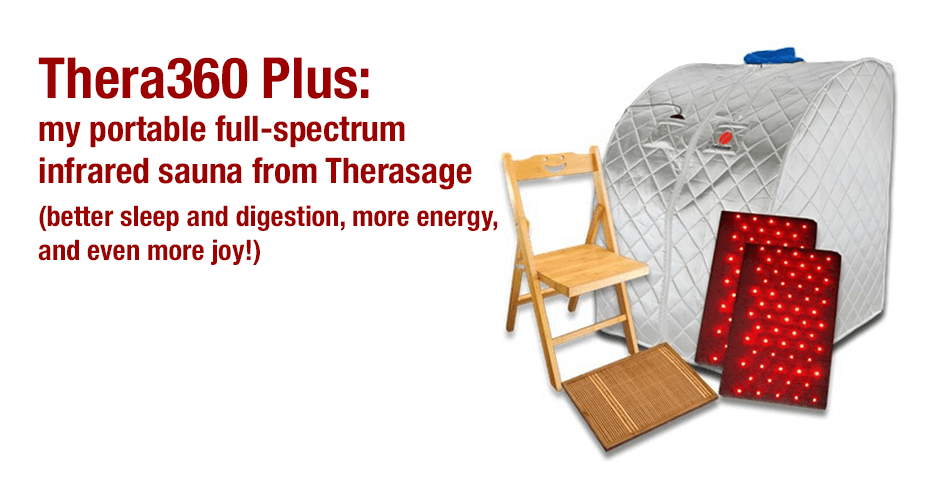
Thera360 Plus: my portable full-spectrum infrared sauna from Therasage (better sleep and digestion, more energy, and even more joy!)

April 29, 2022 By Trudy Scott 39 Comments

thera360 plus

Today I’m sharing why I personally chose the Thera360 Plus, a portable full-spectrum infrared sauna from Therasage. And I also share my feedback on how I feel after using this sauna.  I also have a call to action asking you to share your sauna experiences so the community can benefit from the collective wisdom of everyone who has one or uses one.

I also highlight some of the many health benefits of regular sauna sessions – both mental and physiological.

Mental health benefits: improved well-being, reduced pain, stress reduction and improved sleep

Here are some of the mental health benefits from this paper, Clinical Effects of Regular Dry Sauna Bathing: A Systematic Review):

  • In addition to having profound physiological effects, sauna bathing is reported to have beneficial psychological effects that are reflected in the many reports of improved well-being and pain tolerance.
  • The psychological impact of sauna bathing may be due to a combination of factors that include release of endorphins and other opioid-like peptides such as dynorphins, forced mindfulness, psychological stress reduction, relaxation, improved sleep, time out from busy life schedules, placebo effects, and other aspects of individual psychological and social interactions that likely occur around frequent sauna activity.
  • While it is difficult to distinguish between the different factors that produce positive psychological effects, such effects may enhance other physiological and metabolic benefits as they are likely to promote adherence to regular sauna activity.

Remember, endorphin release leads to feeling joyful.

And this last bullet is an important one to highlight: when you really enjoy doing something you are more likely to continue doing it. This means you’ll continue to see benefits.

There is also research that supports serotonin-boosting effects and cortisol-lowering effects, both of which are important when it comes to anxiety and mood too. (I’ll address this in a future blog on saunas, together with other mechanisms).

Physiological benefits: reduced inflammation, benefits for Alzheimer’s, reducing toxins and improved heart health

Here are a few studies you can read to learn more about some of the many physiological benefits of sauna:

  • Elevating body temperature to reduce low-grade inflammation: a welcome strategy for those unable to exercise?
  • Could Heat Therapy Be an Effective Treatment for Alzheimer’s and Parkinson’s Diseases? A Narrative Review
  • Evaluation of Interventions to Reduce Firefighter Exposures
  • Sauna bathing is associated with reduced cardiovascular mortality and improves risk prediction in men and women: a prospective cohort study
  • Effectiveness of a far-infrared low-temperature sauna program on geriatric syndrome and frailty in community-dwelling older people [improvements were noted]
  • Effects of Waon therapy on chronic fatigue syndrome: a pilot study [Waon therapy is a type of far infrared sauna and improvements were noted]
  • Sauna as a valuable clinical tool for cardiovascular, autoimmune, toxicant- induced and other chronic health problems [they are safe and offer multiple health benefits to regular users].

And this is an excerpt from the Therasage site

The Thera360 Plus sauna enhances mitochondrial health and cellular energy, improves microcirculation and blood oxygenation, enhances the natural production of nitric oxide, offers skin and anti-aging benefits, and the best natural detoxification possible, along with all the amazing health benefits of Full Spectrum Infrared.

The many positive features that helped me pick this sauna

The Thera360 Plus is the sauna I own and endorse. Here are a few of the many positive features that helped me decide to purchase this one (I did a fair amount of research and did look at other units too):

  • It is a full-spectrum (near and far) infrared sauna
  • It comes with red light/photobiomodulation panels (which also help with pain, mood and reducing inflammation).
  • It has the tourmaline gemstones built-in (these generate negative ions so it feels like you’ve been at the beach or a waterfall).
  • The chair and foot base is made of non-toxic bamboo materials. I’m used to having to leave new items outside for days in order to off-gas. I was surprised that this was not needed. Their “No Off-Gassing” message holds true.
  • The bamboo foot base is a grounding mat.
  • It is low EMF and shields not only EMF’s but also ELF’s, RF’s and dirty electricity. Before I purchased my sauna, I met with the owner and am super-impressed by this feature.  It’s a really important factor for me and anyone with anxiety or chronic illness and/or electromagnetic hypersensitivity). As soon as it arrived I set it up (set up is so easy) and got out my meter and measured all the EMFs and sure enough there is no exposure when inside the sauna.
  • The digital temperature controller is simple to use.
  • It’s portable, small and convenient to use.
  • It’s affordable, is made in California and the company ships internationally.

My personal feedback as to how I feel after using this sauna

For me, this infrared sauna (with red light therapy and tourmaline) helps me with sleep, digestion and energy primarily (I have chronic Lyme). I also know it’s helping me with ongoing detoxification, mitochondrial health, stress reduction and mood support, immune function and cardiovascular health.

The good news is that the sauna has anti-inflammatory benefits and provides me with wonderful relief from pain, muscle spasms and other injuries.

Also, I feel a real sense of joy after using it … I can’t stop smiling for hours after a session.  That is the endorphin and serotonin boost I’m getting, plus some of the benefits of negative ions! I love the outdoors and after a session in the sauna, I almost feel like I’ve been for a hike or walk on the beach.

I’ve also positioned my sauna facing a large window that looks onto our covered patio. It has lots of greenery and I can see the blue sky off to the left. This is particularly pleasant on a cold winter’s day and I get some of the benefits of nature.

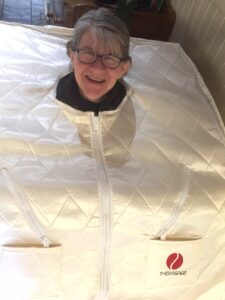
sauna
sauna

I love the bamboo chair that ships with it but it wasn’t providing me with any lower back support (I’m prone to back injuries).  I made a modification with a bamboo garden stake and PVC bracket (with some help from my darling father-in-law). Here are some images in case it’s something you’ve been considering….it works perfectly for the back support I need, keeps my bare back exposed to the heat and the bamboo garden stake slides out if needed.

sauna chair
sauna chair PVC clip

A more in-depth blog post: mechanisms and additional insights

I believe we can all benefit from regular sauna bathing! And I’ll be sharing a more in-depth blog post on additional benefits of infrared sauna, some of the mechanisms, how to interpret the research (since there is so much research on traditional/Finnish saunas which are shorter duration and higher temperatures), how to assess the different saunas that are available, and how to use one and get the most benefits.

I’ll also share my insights on using sauna bathing for benzodiazepine, SSRI, opioid and alcohol detox; why folks with pyroluria may see specific benefits; and using sauna bathing to help reduce the impact of these things that increase anxiety – toxic mold, heavy metals, Lyme disease, pesticides, glyphosate, fluoride, phthalates and much more.

Learn more about the Thera360 Plus sauna here on the Therasage site. If you decide to purchase use coupon code TRUDY10 to save 10%.

I was confused when I started looking into saunas and if you’ve been following me for a while you know I like to share what I learn – hence this blog post. I’m still learning and will continue to share in follow-up posts.

There are many excellent saunas available for purchase and this is just one of them that I landed upon after researching a number of them.

If you have a home sauna, please share:

  • which one you have
  • why you purchased this type/brand (or use this type of sauna)
  • and the benefits you have experienced.

And do feel free to share more about:

  • how you use yours – duration, frequency, temperature
  • what you do before and after (for hydration)
  • if you dry-brush (before or after)
  • if you use certain nutrients (like niacin, charcoal, magnesium and other electrolytes, glutathione, NAC etc)
  • anything else you do as part of your sauna bathing
  • what other detox approaches you use (such as rebounding or castor oil packs etc).

By using the collective wisdom from this community we can all learn and benefit. And giving/contributing gives you a nice endorphin boost too!

If you have questions please share them here too.
Filed Under: Detoxification, Inflammation, Sleep, Toxins Tagged With: alzheimer's, cardiovascular, Clinical Effects of Regular Dry Sauna Bathing, cortisol, digestion, endorphins, energy, full-spectrum infrared sauna, health benefits, heart health, improved well-being, Inflammation, infrared sauna, joy, joyful, mental, mindfulness, physiological, portable sauna, reduced pain, relaxation, sauna, serotonin, sleep, stress reduction, Thera360 Plus, Therasage, toxins

Why Bile is the Key to Anxiety & Hormone Havoc with Ann Louise Gittleman on The Anxiety Summit 5: Gut-Brain Axis

October 4, 2019 By Trudy Scott 9 Comments

bile anxiety hormone

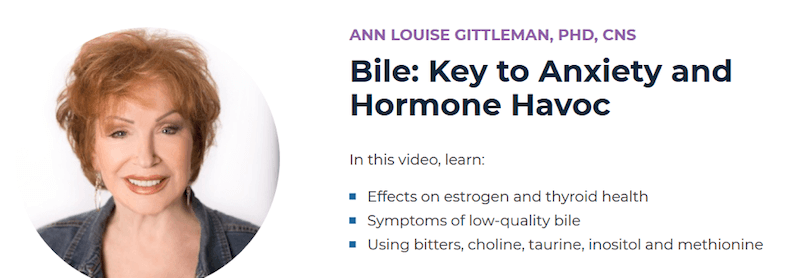
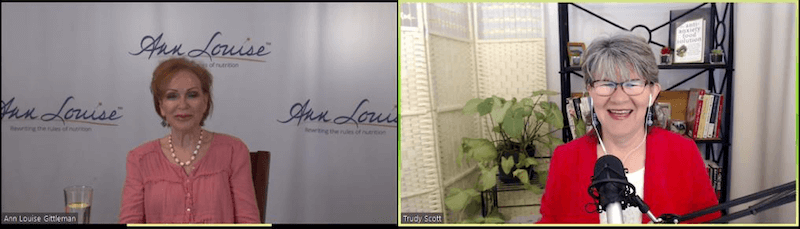
Ann Louise Gittleman is one my guest experts on The Anxiety Summit 5: Gut-Brain Axis and our topic is: Why Bile is the key to Anxiety & Hormone Havoc.

ann louise gittleman on anxiety summit 5

We had such a wonderful interview. She is sharp and funny, and really good with her short catchy phrases like this one: “Let’s make bile as important as probiotics!”

We start with the important role of bile in our bodies:

it emulsifies and digests fat, breaking it down into small particles so that your intestines can absorb them. It also helps escort toxins that your liver has removed out of the body.

We cover some of the many symptoms of low quality bile, such as queasiness, nausea, pale-colored stools, constipation and even motion-sickness.

ann louise gittleman and trudy scott

Here is a snippet from our interview where Ann Louise shares about bitters, bile and the importance of digesting your fats:

I’m all for fat, I’ve written about it for years and have been on the frontlines of essential fatty acids. But if you’re not digesting fats you’re not using them and getting the benefits of your fat soluble vitamins A, D, E and K.

So bile is brilliant! Bring back the importance of bile and we know that bitter is better!

If you can remember all of that you’re on the right track to dealing with your anxiety and hormone havoc.

She covers the role of bile in PMS, estrogen imbalance and thyroid health; how it’s involved in the removal of toxins from the body:

Bile is the dumping ground for hormones like estrogen. It’s the dumping ground for heavy metals that create anxiety like mercury, as well as too much aluminum and lead. And it’s the dumping ground, also, for a bunch of chemicals. So you got to keep the bile flowing. You have to keep it decongested. You have to thin it out.

And simple tools to improve bile production (one of them being the addition of bitter greens to your diet).

You need to keep your bile nice and thinned out so it doesn’t clog up with extra estrogen that it’s not breaking down. And we do that with the bitters. The bitters are going to be the theme throughout. We do that with lemon and water in the morning. We do it with coffee, which is a bitter, believe it or not. And we do it with grapefruit and watercress, which are wonderfully bittered produce, high-end bittered produce. So bitter is very important for this.

We take a deep dive into key  nutrients for bile production and quality: choline, taurine, inositol and methionine:

You want to make sure that you’re taking certain types of lipotropic nutrients. And the magic word here is lipotropic that will help to digest fats. And that would be your methionine, your choline, and your inositol.

Five hundred milligrams of choline, methionine, and inositol three times a day will help your body, particularly your liver, to break down hormones such as estrogen into a non-toxic metabolite like estriol, which is the non-toxic estrogen. And that’s very important. And those three nutrients, my dear friend, are very much deficient in the diet today.

We also go into zinc: copper imbalances and the role this plays in PMS, hormone balance and anxiety. We talk about avocado and almond flour – both are good sources of fats and both need good quality bile to be digested. You may be surprised to hear what Ann Louise shares about these two foods. You’re going to have to tune in to know what I’m talking about. If you’re surprised (or even if you’re not) please let me know in the comments.

You likely know Ann Louise Gittleman as a New York Times Bestselling author of over 30 books on diet, detox, the environment, and women’s health. Beloved by many, she is regarded as a nutritional visionary and health pioneer who has fearlessly stood on the front lines of holistic and integrative medicine.

One of my favorite books of hers is Before the Change: Taking Charge of Your Perimenopause (my Amazon link for the book). This book helped me so much when I was in the midst of my PMS, anxiety and panic attacks in my late 30s. It was this book that taught me about my need for zinc and vitamin B6 and evening primrose oil before I even knew that pyroluria existed. It was one of the many books I read at that time, starting me on my lifelong journey of reading about nutrition, studying to become a nutritionist and attending conferences and summits.

Learn more/purchase now

If you’d like to give feedback or ask a question, please post in the comments section below.

Filed Under: The Anxiety Summit 5 Tagged With: ann louise gittleman, anxiety, anxiety summit, bile, bitters, choline, copper zinc, hormone imbalance, inositol and methionine, taurine, toxins

Thyroid health and anxiety: fluoride, mercury, nitrates, phthalates and other toxins

May 18, 2018 By Trudy Scott 3 Comments

thyroid health and anxiety

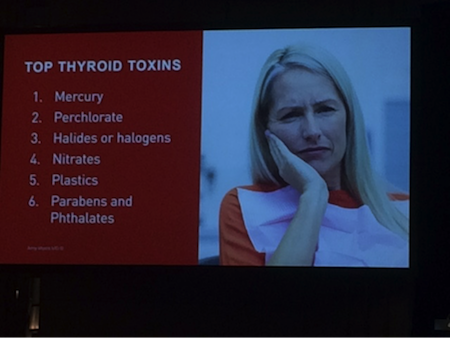
Dr. Amy Myers MD, author of The Autoimmune Solution, The Thyroid Solution and The Autoimmune Solution Cookbook, presented on thyroid health at the recent Bioceuticals Conference on Autoimmunity in Melbourne. I promised to share some highlights from her presentations (she did 4 different ones) and since toxins play such a huge role when it comes to anxiety, I’m sharing some highlights from the toxins presentation and the top thyroid toxins you need to avoid: mercury, perchlorate, halides or halogens, nitrates, plastics and parabens and phthalates. These toxins all also play a role in anxiety too.

We also have a new meta-analysis published earlier this month: Association of Depression and Anxiety Disorders With Autoimmune Thyroiditis – A Systematic Review and Meta-analysis confirming what functional medicine practitioners like Dr. Amy Myers, Dr. Mark Hyman and Dr. Izabella Wentz have been educating about for years:

Patients with AIT [autoimmune thyroiditis] exhibit an increased chance of developing symptoms of depression and anxiety or of receiving a diagnosis of depression and anxiety disorders.

Taming the toxins is one of 4 pillars that Dr. Myers covers in her approach for preventing and reversing autoimmune disease:

Pillar I: Heal your gut.

Pillar II: Get rid of gluten, grains, and legumes.

Pillar III: Tame the toxins.

Pillar IV: Heal your infections and relieve your stress.

Dr. Myers shared the top thyroid toxins you need to avoid:

  1. Mercury
  2. Perchlorate
  3. Halides or halogens
  4. Nitrates
  5. Plastics
  6. Parabens and phthalates

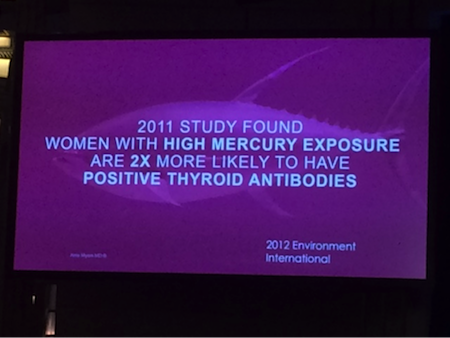
“A 2011 study found that women with high mercury exposure are 2x more likely to have positive thyroid antibodies.” The paper: Mercury and thyroid autoantibodies in U.S. women, NHANES 2007-2008, reports this increase for thyroglobulin autoantibodies.

As far as anxiety is concerned, Kris Homme shares much evidence to support her belief that mercury toxicity is a likely root cause of the other root causes of anxiety in our Anxiety Summit interview.

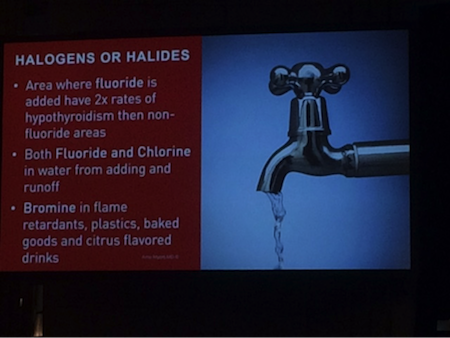
Halogens or halides also have an impact on thyroid health. In areas where fluoride is added to the water there are “2x the rates of hypothyroidism than non-fluoride areas.”

Bromine is also an issue and is found in “flame retardants, plastics, many baked goods and citrus flavored drinks.”

GABA in relation to thyroid health and fluoride was not covered in the presentation but there is research showing that GABA reversed fluoride-induced hypothyroidism in an animal study. I blogged about this research here: GABA protects against hypothyroidism caused by fluoride and reduces anxiety. The fluoride-exposed mice that were subsequently treated with GABA were found to have improved results for T4, T3 and thyroid hormone-binding globulin (TBG levels) and healing of the structural abnormalities in thyroid follicles that were observed after fluoride exposure.

The authors conclude with this statement, reporting that GABA acted as a natural antioxidant:

To the best of our knowledge, this is the first study to establish the therapeutic efficacy of GABA as a natural antioxidant in inducing thyroprotection against fluoride-induced toxicity.

The amino acid GABA  helps with physical-tension and stiff-and-tense-muscles type of anxiety, often in certain settings like public speaking or driving, and the need to self-medicate to calm down, often with alcohol but sometimes with carbs and sugary foods. Insomnia can also be due to low GABA and you’ll experience physical tension (rather than the ruminating thoughts which is the low serotonin type of insomnia – although it’s not uncommon to experience both). GABA also helps ease panic attacks, muscle spasms and pain relief when muscles are tight.

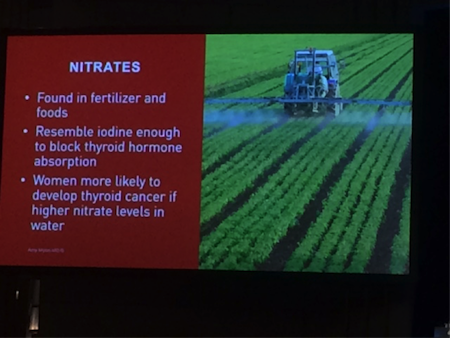
“Nitrates, found in fertilizer and foods, resemble iodine enough to block thyroid hormone absorption.” In one study, Nitrate intake and the risk of thyroid cancer and thyroid disease women were found to be “more likely to develop thyroid cancer with higher nitrate levels in the water.” Research shows similar results with nitrites and children and thyroid cancer.

Since the amino acid taurine offers neuroprotection against ammonia in the central nervous system I suspect GABA may offer some protection against nitrates too.

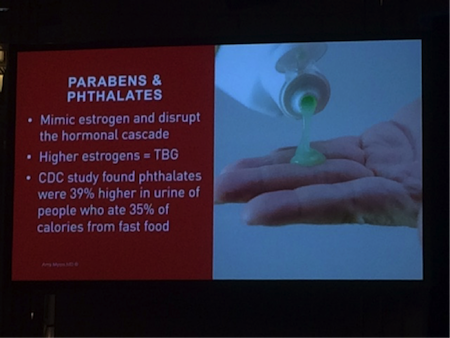
Parabens and phthalates found in many personal care products (and fast-foods) “mimic estrogen and disrupt the hormonal cascade”, with higher estrogens resulting in higher TBG (thyroxine binding globulin).

“A CDC study found phthalates were 39% higher in the urine of individuals who ate 35% of their calories from fast food.” This CNN article: Fast food serves up phthalates, too, study suggests covers many of the hormonal impacts

The American College of Obstetricians and Gynecologists released a report in 2013 stating that high levels of exposure to phthalates could lead to adverse reproductive outcomes in women. Research has linked these chemicals with increased risk of fibroids and endometriosis, which can cause infertility, and reduced IQ and behavioral problems in children exposed in the womb. High phthalate levels have also been linked with diabetes risk in women and adolescents.

There are countless ways that people can be exposed to phthalates. They are found in soaps, perfumes, nail polish, medications, and we can ingest, inhale and absorb them through the skin.

Out of all these routes of exposure, however, diet is emerging as a major one.

Dietary exposure is a major route of exposure of phthalates and this is one of many excellent reasons to cook and eat home-cooked meals. Dr. Myers makes it easy for you in her wonderful new book The Autoimmune Solution Cookbook.

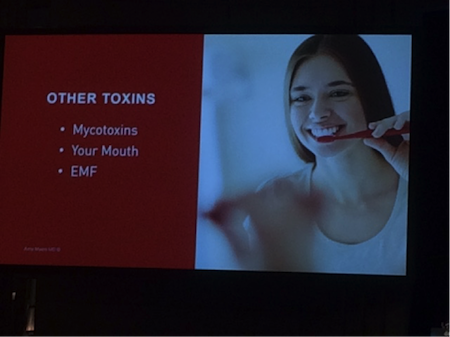
Mycotoxins from mold are also an issue as is poor mouth health. I was pleased to see EMFs mentioned as it is a growing concern and is under-rated as having harmful effects on the thyroid and when it comes to unresolved anxiety, SIBO, oxalate issues and high cortisol.

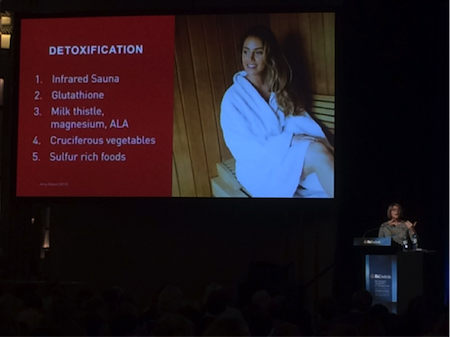
As far as detoxification, Dr Myer’s has these general recommendations:

  1. Infrared sauna
  2. Glutathione, the master antioxidant and detoxifier
  3. Milk thistle, magnesium and alpha-lipoic acid (ALA)
  4. Cruciferous vegetables such as cauliflower, broccoli, cabbage
  5. Sulfur rich foods such as onions, garlic, eggs

In her bestselling book, The Autoimmune Solution (my Amazon link), Dr. Myer’s covers the four pillars in great detail. You can read more about taming the toxins in this blog post.

Have you identified and eliminated exposure to these toxins and seen improved thyroid health and/or reduced anxiety? Is ongoing detoxification a priority for you?

Filed Under: Thyroid, Toxins Tagged With: anxiety, detoxification, Dr. Amy Myers, GABA, The Autoimmune Solution Cookbook, thyroid, toxins

Anxiety and the adrenals: low zinc and high copper

October 31, 2016 By Trudy Scott 23 Comments

two-girls

Anxiety, feelings of constant overwhelm and fatigue, plus insomnia, sugar cravings, the inability to control blood sugar, lack of mental clarity… these symptoms can be due to adrenal issues and this condition is brutally disruptive. And yes, you can suffer from all of the above at once!

In just a few weeks, from November 7-12, my colleague and good friend, NY Times bestselling author Dr. Alan Christianson will be hosting The Adrenal Reset Summit. It’s co-hosted by nutritionist Evan Brand.

I cover the Adrenals and Anxiety in my interview with Dr. Christianson and a few of the aspects we cover are low zinc and high copper.  

Here is a snippet from me about zinc:

zinc is very underrated as being a nutrient that is commonly deficient and certainly when it comes to anxiety, it’s a huge factor. We have the zinc-copper imbalance and when we’ve got very high copper levels and low zinc levels, we may feel more anxious. But zinc is really, really important for so many things. I just mentioned serotonin, it’s really important as a cofactor for making serotonin and the other neurotransmitters like GABA which is a calming neurotransmitter.

It’s really, really important for adrenal function as well. There was actually a really nice paper that was published in December 2015 [Effects of Physical Activity on Trace Elements and Depression Related Biomarkers in Children and Adolescents], looking at children and adolescents and found that children and adolescents with lower levels of zinc also had low serotonin, they had high copper levels, and they also had lower cortisol levels, and sometimes, they had high cortisol levels. So, it varies but they definitely have issues with their cortisol levels and that’s obviously going to be a big factor when it comes to how they’re able to handle stress, what their mood levels are going to be like, what their cognitive function is going to be like, and everything else. So, zinc is a really important thing. It’s not talked about a lot and it’s something that is definitely a big factor.

I didn’t share this specific information during the interview but here are some of the results from the above study:

Older children, especially girls, had higher levels of depression. Participants with moderate and severe depression had significantly lower physical activity, serotonin, and zinc levels, zinc/copper ratios, and significantly higher copper and cortisol levels.

Physically active boys showed significantly lower depressive scores and improvement in cortisol, serotonin, copper, and zinc concentrations compared to girls of sedentary life style.

A little later in the interview Dr. Christianson shares what happened to him when he was inadvertently exposed to high levels of copper:

This is a brief insight I won’t go too far into but there was a period of time I was studying with a Vedic practitioner and there were these various rituals that I had to do. One of them was involving putting liquids in these containers and drinking and doing [some of these] meditations. The historical vessels [that] were used were copper-based and I got pretty toxic at one point. I had these horrible leg cramps. I really lost my capacity for exercise. It was very dramatic. I had a hard time climbing stairs and odd mood changes and odd twitches and what not. I finally realized that was the culprit and yeah, I did mega doses of zinc which I normally would not have tolerated well but I did fine with during that time and recovered from that. So, those are a real thing! (laughs)

adrenal-reset-summit

I hope you can join us for the summit! The line-up is excellent. Here are a few of the many excellent speakers and their topics:

  • Chris Kresser, M.S., L.Ac – Is Adrenal Fatigue Real?
  • Steph Gadreau, CHNP – Perfectionism and Adrenals
  • Aviva Romm, MD – Adrenal Adaptogens
  • Ben Lynch, ND – Adrenals and Methylation
  • Wendy Myers, FDN, CHHC – Heavy Metal Toxicity
  • Dan Kalish, DC – Adrenal Neurotransmitter Connection
  • JJ Virgin, CNS, CHFS – Preventing Adrenal Burnout
  • Julia Ross, MA – Neurotransmitters and the Food Mood Connection

You can register here https://uo178.isrefer.com/go/arsScott/trudyscottcn/

Filed Under: Adrenals, Events Tagged With: anxiety, breast cancer, DCIS, detoxification, endocrine disruptors, estrogen dominance, fear, GABA, glutathione, liver support, Prevention, Thermography, toxins, tryptophan

  • Page 1
  • Page 2
  • Go to Next Page »

Primary Sidebar

NEW! GABA QuickStart Homestudy (with special intro pricing)

gaba quickstart homestudy

Free Report

9 Great Questions Women Ask about Food, Mood and their Health

You'll also receive a complimentary subscription to my ezine "Food, Mood and Gal Stuff"


Connect with me

Popular Posts

  • Amino Acids Mood Questionnaire from The Antianxiety Food Solution
  • The Antianxiety Food Solution Amino Acid and Pyroluria Supplements
  • Pyroluria Questionnaire from The Antianxiety Food Solution
  • Collagen and gelatin lower serotonin: does this increase your anxiety and depression?
  • Tryptophan for the worry-in-your-head and ruminating type of anxiety
  • GABA for the physical-tension and stiff-and-tense-muscles type of anxiety
  • The Antianxiety Food Solution by Trudy Scott
  • Seriphos Original Formula is back: the best product for anxiety and insomnia caused by high cortisol
  • Am I an anxious introvert because of low zinc and vitamin B6? My response to Huffington Post blog
  • Vagus nerve rehab with GABA, breathing, humming, gargling and key nutrients

Recent Posts

  • What do I use instead of Seriphos to help lower high cortisol that is affecting my sleep and making me anxious at night?
  • BeSerene™ GABA/theanine cream eases severe muscle tension in her neck/shoulders, prevents her bad headaches and quells her anxiety
  • How the correct approach, dose and sublingual use of GABA can be calming and not cause a flushed and itchy face and neck
  • The amino acid glutamine improves low mood by addressing gut health, and it has calming effects too
  • Flight anxiety with heightened breath, physical tension and also fearing the worst (the role of low GABA and low serotonin)

Categories

  • 5-HTP
  • AB575
  • Addiction
  • ADHD
  • Adrenals
  • Alcohol
  • Allergies
  • Alzheimer's disease
  • Amino Acids
  • Anger
  • Antianxiety
  • Antianxiety Food Solution
  • Antidepressants
  • Anxiety
  • Anxiety and panic
  • Autism
  • Autoimmunity
  • benzodiazapines
  • Bipolar disorder
  • Books
  • Caffeine
  • Cancer
  • Candida
  • Children/Teens
  • Collagen
  • Cooking equipment
  • Coronavirus/COVID-19
  • Cravings
  • Depression
  • Detoxification
  • Diabetes
  • Diet
  • DPA/DLPA
  • Drugs
  • EFT/Tapping
  • EMF
  • EMFs
  • Emotional Eating
  • Endorphins
  • Environment
  • Essential oils
  • Events
  • Exercise
  • Fear
  • Fear of public speaking
  • Fertility and Pregnancy
  • Fish
  • Food
  • Food and mood
  • Functional neurology
  • GABA
  • Gene polymorphisms
  • General Health
  • Giving
  • Giving back
  • Glutamine
  • Gluten
  • GMOs
  • Gratitude
  • Gut health
  • Heart health/hypertension
  • Histamine
  • Hormone
  • Hyperparathyroidism
  • Hypoglycemia
  • Immune system
  • Inflammation
  • Insomnia
  • Inspiration
  • Introversion
  • Joy and happiness
  • Ketogenic diet
  • Lithium orotate
  • Looking awesome
  • Lyme disease and co-infections
  • MCAS/histamine
  • Medication
  • Men's health
  • Mental health
  • Mercury
  • Migraine
  • Mold
  • Movie
  • MTHFR
  • Multiple sclerosis
  • Music
  • NANP
  • Nature
  • Nutritional Psychiatry
  • OCD
  • Osteoporosis
  • Oxalates
  • Oxytocin
  • Pain
  • Paleo
  • Parasites
  • Parkinson’s disease
  • PCOS
  • People
  • PMS
  • Postpartum
  • PTSD/Trauma
  • Pyroluria
  • Questionnaires
  • Real whole food
  • Recipes
  • Research
  • Schizophrenia
  • serotonin
  • SIBO
  • Sleep
  • Special diets
  • Sports nutrition
  • Stress
  • Sugar addiction
  • Sugar and mood
  • Supplements
  • Teens
  • Testimonials
  • Testing
  • The Anxiety Summit
  • The Anxiety Summit 2
  • The Anxiety Summit 3
  • The Anxiety Summit 4
  • The Anxiety Summit 5
  • The Anxiety Summit 6
  • Thyroid
  • Thyroid health
  • Toxins
  • Tryptophan
  • Tyrosine
  • Uncategorized
  • Vegan/vegetarian
  • Women's health
  • Yoga

Archives

  • October 2025
  • September 2025
  • August 2025
  • July 2025
  • June 2025
  • May 2025
  • April 2025
  • March 2025
  • February 2025
  • January 2025
  • November 2024
  • October 2024
  • September 2024
  • August 2024
  • July 2024
  • June 2024
  • May 2024
  • April 2024
  • March 2024
  • February 2024
  • January 2024
  • December 2023
  • November 2023
  • October 2023
  • September 2023
  • August 2023
  • July 2023
  • June 2023
  • May 2023
  • April 2023
  • March 2023
  • February 2023
  • January 2023
  • December 2022
  • November 2022
  • October 2022
  • September 2022
  • August 2022
  • July 2022
  • June 2022
  • May 2022
  • April 2022
  • March 2022
  • February 2022
  • January 2022
  • December 2021
  • November 2021
  • October 2021
  • September 2021
  • August 2021
  • July 2021
  • June 2021
  • May 2021
  • April 2021
  • March 2021
  • February 2021
  • January 2021
  • December 2020
  • November 2020
  • October 2020
  • September 2020
  • August 2020
  • July 2020
  • June 2020
  • May 2020
  • April 2020
  • March 2020
  • February 2020
  • January 2020
  • December 2019
  • November 2019
  • October 2019
  • September 2019
  • August 2019
  • July 2019
  • June 2019
  • May 2019
  • April 2019
  • March 2019
  • February 2019
  • January 2019
  • December 2018
  • November 2018
  • October 2018
  • September 2018
  • August 2018
  • July 2018
  • June 2018
  • May 2018
  • April 2018
  • March 2018
  • February 2018
  • January 2018
  • December 2017
  • November 2017
  • October 2017
  • September 2017
  • August 2017
  • July 2017
  • June 2017
  • May 2017
  • April 2017
  • March 2017
  • February 2017
  • January 2017
  • December 2016
  • November 2016
  • October 2016
  • September 2016
  • August 2016
  • July 2016
  • June 2016
  • May 2016
  • April 2016
  • March 2016
  • February 2016
  • January 2016
  • December 2015
  • November 2015
  • October 2015
  • September 2015
  • August 2015
  • July 2015
  • June 2015
  • May 2015
  • April 2015
  • March 2015
  • February 2015
  • January 2015
  • December 2014
  • November 2014
  • October 2014
  • September 2014
  • August 2014
  • July 2014
  • June 2014
  • May 2014
  • April 2014
  • March 2014
  • February 2014
  • January 2014
  • December 2013
  • November 2013
  • October 2013
  • September 2013
  • August 2013
  • July 2013
  • June 2013
  • May 2013
  • April 2013
  • March 2013
  • February 2013
  • January 2013
  • December 2012
  • November 2012
  • October 2012
  • August 2012
  • July 2012
  • June 2012
  • May 2012
  • April 2012
  • March 2012
  • February 2012
  • January 2012
  • December 2011
  • November 2011
  • October 2011
  • September 2011
  • August 2011
  • July 2011
  • June 2011
  • May 2011
  • April 2011
  • March 2011
  • February 2011
  • January 2011
  • December 2010
  • October 2010
  • September 2010
  • July 2010
  • May 2010
  • April 2010
  • March 2010
  • February 2010
  • January 2010
  • November 2009

Share the knowledge!

The above statements have not been evaluated by the Food and Drug Administration. Products listed in this website are not intended to diagnose, treat, cure or prevent any disease.

The information provided on this site is for informational and educational purposes only and is not intended as a substitute for advice from your physician or other health care professional. You should consult with a healthcare professional before starting or modifying any diet, exercise, or supplementation program, before taking or stopping any medication, or if you have or suspect you may have a health problem.


Copyright © 2026 Trudy Scott. All Rights Reserved. | Privacy | Terms and Conditions | Refund Policy | Medical Disclaimer

Free Report

9 Great Questions Women Ask about Food, Mood and their Health

You’ll also receive a complimentary subscription to my ezine “Food, Mood and Gal Stuff”