
• Skip to primary navigation
  • Skip to main content
  • Skip to primary sidebar

everywomanover29 blog

Food, Mood and Women's Health – Be your healthiest, look and feel great!

  • Blog
  • About
  • Services
  • Store
  • Resources
  • Testimonials
  • The Book
  • Contact
  • Search this site

the anxiety summit

The Anxiety Summit – The power of music for mood and inspiration

November 13, 2014 By Trudy Scott 7 Comments

AMMA JO, singer/songwriter and entrepreneur was interviewed by host of the Anxiety Summit, Trudy Scott, Food Mood Expert and Nutritionist, author of The Antianxiety Food Solution.

The power of music for mood and inspiration

  • Why music is inspiring and uplifting
  • Coming together to create the ‘Top of the World” song
  • A big food change she made

This is the lovely blog post we mentioned in the interview: Smile, help someone, dance/sing, say positive things

GET UP AND MOVE! Honey, sometimes, when I’m feeling down, I just GET ON UP and DANCE. Let’s not make things complicated. Get up and get moving! Put your favorite song on my friend! Put on some Beyonce or Gaga or U2 or put on some Elvis! Put some MUSIC on and get moving. There’s something about music and something about moving your body that seems to cut through emotions. I know it sounds simple, but try it! Works for me 🙂

We came together to create a special song for you! Here is a video clip of Amma Jo introducing and singing a few lines from the new “Top of the World” song

This is what Amma Jo said about Top of the World:

This TOP OF THE WORLD song is soothing and also empowering. The song is really about adopting a holistic mindset. From the power of good food to feeling great to feeling at peace, this song is a great way to start any day! When you really look at the words, you’ll see that the song itself is actually a positive affirmation set to music! The content was really created using the concepts and messages that Trudy uses in her programs.

Here are some the lyrics to the song  (get all of them from this link) and be sure to get a copy of the actual song from the speaker gift page (under my introduction) – to inspire you and give you hope!  and to simply enjoy!

A new beginning, a brand new day
All of my fears are gone away
I feel so calm, so free, so whole
Right now, I’m feeling on top of the world

Enjoy listening to Amma Jo singing on stage at Ali Brown’s SHINE event (this is where I first heard her sing) – No Stopping Me Now!

Get your own copy of ‘Finally Free’ an amazing and inspiring song about stepping into a brand new season by AMMA JO

If you are not already registered for the Anxiety Summit you can get live access to the speakers of the day here www.theAnxietySummit.com
Filed Under: Antianxiety, Music, The Anxiety Summit 2 Tagged With: Amma Jo, anxiety, calm, fear, the anxiety summit, top of the world, Trudy Scott

The Anxiety Summit – Tapering off psychiatric drugs so they don’t ruin your life

November 13, 2014 By Trudy Scott 53 Comments

Dr. Jonathan ProuskyQuote_Anxiety2

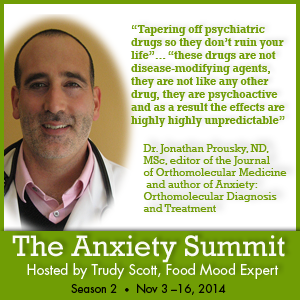
Dr. Jonathan Prousky, MSc, ND, editor of the Journal of Orthomolecular Medicine and author of Anxiety: Orthomolecular Diagnosis and Treatment was interviewed by host of the Anxiety Summit, Trudy Scott, Food Mood Expert and Nutritionist, author of The Antianxiety Food Solution.

Tapering off psychiatric drugs so they don’t ruin your life

  • The process of reducing or discontinuing psychotropic medications
  • Difficulties patients have in overcoming pharmacological dependence
  • Reactions when someone discontinues SSRIs and benzodiazapines
  • Tapering approach, duration and improving outcomes
  • The importance of diet and lifestyle
  • Melatonin and niacinamide during benzodiazepine withdrawal
  • Using Neurapas Balance, rhodiola and GABA during a taper protocol
  • A tapering schedule case report

Here are a few snippets from our interview:

prescribed psychiatric drugs…. They are not like any other medication. These drugs are not disease-modifying agents, so they’re not like taking a drug for diabetes. These drugs are psychoactive.

That’s exactly how they work. They influence, basically, how one thinks, feels and behaves and, of course, physiology and, as a result, their effects are highly, highly unpredictable and what I constantly see in my own practice is how doctors are failing our patients and not really discussing all of what is necessary when prescribing these drugs because these drugs tend to have some significant effects. and I don’t consider any of the effects of these psychoactive drug’s effects and they can be either positive, negative or neutral

I think what’s important for people to realize is there’s no specific clinical manifestation that would be appropriate for all patients that are on SSRI drugs, whether that’s something like Paxil or Prozac or Celexa. It doesn’t matter. There’s no one manifestation that all patients coming off those drugs are going to experience. Essentially, because these drugs have very, I would say, unpredictable psychoactive effects then, when somebody is coming off of them, the effects from tapering are also rather unpredictable. So, people can experience either regression of their symptoms that brought them to a physician in the first place and one of the reasons why they were prescribed the drug in the first place, so patients can certainly regress and start having a return of their previous symptoms. Patients can have incredible sleep issues where they just cannot sleep, and they literally are feeling so concerned and they start worrying about not being able to fall asleep even before they sleep because it becomes such an issue.

Patients can feel very restless and they can get an inner restlessness that sometimes can drive them, literally almost like, as if, they’re going crazy, it’s called agathusia. There’s like this inner restlessness that torments people. Sometimes that can even happen as they taper down. Sometimes people can develop some weird, neurological manifestations whether it’s ticks or just strange or abnormal body movements, which we call dyskinesias. Patients can start having the sweats or feelings of derealization where they don’t feel grounded in reality.

They can have brain zaps where their brain just feels like it’s being zapped or as if someone’s electrocuting them. They can feel their whole body shaking and sort of becoming very jittery or even they can have cold sweats and shiver a lot. Essentially, there’s not a manifestation that you and I couldn’t think of that couldn’t happen to somebody coming off of these drugs because, as I said, they’re so unpredictable.

During the interview we discussed a number of papers written by Dr. Prousky. Here is a link to his publications.

Here is the Harm Reduction Guide to Coming Off Psychiatric Drugs by Will Hall

Dr. Prousky discussed this paper about pharmaGABA: Relaxation and immunity enhancement effects of gamma-aminobutyric acid (GABA) administration in humans.

GABA could work effectively as a natural relaxant and its effects could be seen within 1 hour of its administration to induce relaxation and diminish anxiety.

I talked more about GABA in my interview: Targeted individual amino acids for eliminating anxiety: practical applications

Dr. Prousky shared a case study of an SSRI and rhodiola taken together leading to tachyarrhythmia: Herbal medicine–sets the heart racing!

We report the case of a young previously healthy woman who had a significant tachyarrhythmia whilst taking a combination of escitalopram and the over the counter herbal medicine Rhodiola. Escitalopram, a SSRI, increases serotonin levels in the brain by selectively inhibiting re-uptake of serotonin. It is metabolised by the cytochrome P450 (CYP) isoenzymes CYP2C19, CYP2D6 and CYP3A4. Rhodiola also increases serotonin levels by inhibiting monoamine oxidase. It is a potent inhibitor of CYP3A4 and P-Glycoprotein. Consequently both agents taken by a patient can augment serotonin levels.

Dr. Prousky discussed the risks of SSRIs during pregnancy and shared this paper: The risks of selective serotonin reuptake inhibitor use in infertile women: a review of the impact on fertility, pregnancy, neonatal health and beyond

Antidepressant use during pregnancy is associated with increased risks of miscarriage, birth defects, preterm birth, newborn behavioral syndrome, persistent pulmonary hypertension of the newborn and possible longer term neurobehavioral effects.

Dr. Prousky is the editor of the Journal of Orthomolecular medicine.

The CSOM/Canadian Society for Orthomolecular Medicine holds an annual conference in Toronto and you can learn more here. The 2015 conference will be April 24-26.

If you are not already registered for the Anxiety Summit you can get live access to the speakers of the day here www.theAnxietySummit.com
Filed Under: Anxiety and panic, benzodiazapines, Drugs, The Anxiety Summit 2 Tagged With: anxiety, Dr Jonathan Prousky, GABA, niacin, pharmaGABA, psychiatric drugs, rhodiola, SSRIs, the anxiety summit, Trudy Scott

The Anxiety Summit – Anxiety: Biochemical and genetic predispositions

November 11, 2014 By Trudy Scott 52 Comments

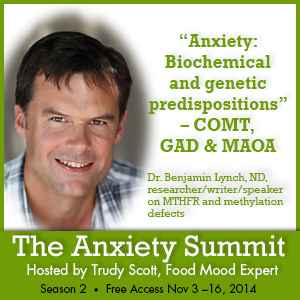
Dr. Benjamin Lynch, ND Researcher/writer/speaker on MTHFR and methylation defects, was interviewed by host of the Anxiety Summit, Trudy Scott, Food Mood Expert and Nutritionist, author of The Antianxiety Food Solution.

Anxiety: Biochemical and genetic predispositions – COMT, GAD & MAOA                                                                                         

  • MTHFR, methylation, SAMe and anxiety (and other health effects)
  • Good forms of folate
  • How too much folate can raise norepinephrine and cause anxiety
  • COMT genetic polymorphisms and anxiety: estrogens, xenoestrogens and sulfur
  • MAOA genetic polymorphisms and anxiety: tyramines and histamine
  • GAD genetic polymorphisms and anxiety: MSG, glutamates and GABA
  • How to test for and interpret these genetic polymorphisms?
  • Three top recommendations to reduce anxiety

Here are a few snippets from our interview:

MTHFR helps produce the body’s most active form of folate. So when you eat your uncooked leafy greens or your steamed leafy greens, you are getting ample amounts of methylfolate, which is great. But if you’re eating your dried cereal, your energy bars, your energy drinks or taking your prenatal vitamins and you think you’re doing a great thing and all of these things have this synthetic folic acid, then that is a big problem, because folic acid is absolutely synthetic and that folic acid has to be transformed into the most active form of folate, which is methylfolate because that’s what your body uses. It doesn’t use folic acid. You think folic acid is actually useful for things like neural tube defects, but it’s not; it actually has to be transformed. And so MTHFR contributes the last most important step for that to happen.

Methylfolate, along with vitamin B12, and the protein that you eat help make one of the most important compounds called SAMe. So when you eat your protein and your methylfolate levels are adequate, then you are able to make your neurotransmitters. And if you are unable to make neurotransmitters or eliminate them, you’re going to have symptoms of anxiety, depression, bipolar disorders, schizophrenic episodes, manic episodes, and so on.

The GAD enzyme helps get rid of glutamate and turns that into our docile calming GABA neurotransmitter. It needs magnesium and vitamin B6 to function.

One gene that’s very common in the population that’s also kind of messed up is COMT. COMT is a gene which does multiple, multiple things, but one of which is helps break down dopamine. The other one, it helps break down estrogen.

Another one for anxiety is MAOA, so that’s monoamine oxidase. Histamine is very related to anxiety, and that’s tied in because of the MAOA enzyme, so reducing your histamine-containing foods is a big one.

We mentioned that we’d share some links to MTHFR blog posts on Dr. Lynch’s site.  Here is one – MTHFR A1298C Mutation: Some Information on A1298C MTHFR Mutations and MTHFR C677T Mutation: Basic Protocol

We didn’t mention specific studies during the interview but here are a few:

  • Are there depression and anxiety genetic markers and mutations? A systematic review.
  • Association of a MAOA gene variant with generalized anxiety disorder, but not with panic disorder or major depression.

Dr. Lynch discussed the 23andme genetic testing and said this:

Genetic testing should be an empowering thing for you. You know it’s access to knowledge that can really be beneficial to you, if it’s utilized properly.

Here are links for 23andme  (my affiliate link) for doing the genetic testing, and Geneticgenie.com  and MTHFRsupport.com for getting the reports.

Here is information about Dr Lynch’s part 1 and part 2 practitioner training (which is very heavily referenced): Methylation & Clinical Nutrigenomics

Dr. Lynch has a free download: folate video presentation along with a pathway planner

If you are not already registered for the Anxiety Summit you can get live access to the speakers of the day here www.theAnxietySummit.com
Filed Under: Antianxiety, Gene polymorphisms, MTHFR, The Anxiety Summit 2 Tagged With: anxiety, Ben Lynch, COMT, Folate, GAD, genetic predispositions, MAOA, mthfr, mutations, polymorphisms, the anxiety summit, Trudy Scott

The Anxiety Summit – Drug induced nutritional deficiencies that contribute to anxiety

November 11, 2014 By Trudy Scott 5 Comments

Dr. Peter OsborneQuote_Anxiety2

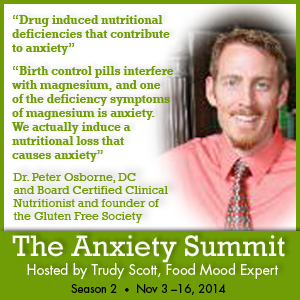
Dr. Peter Osborne, DC and Board Certified Clinical Nutritionist was interviewed by host of the Anxiety Summit, Trudy Scott, Food Mood Expert and Nutritionist, author of The Antianxiety Food Solution.

Drug induced nutritional deficiencies that contribute to anxiety

  • the victim-warrior concept for being empowered
  • what is the meaning of drug-induced nutritional deficiencies
  • drugs that contribute to anxiety through nutrition loss
    • estrogen/ birth control pill and magnesium, folate, vitamin B6
    • antibiotics: good bacteria, B vitamins esp biotin and vitamin B12, vitamin K
    • antacids: protein malnourishment
    • NSAIDs: iron, vitamin C, folate, strips mucosal layer
  • prescription meds in drinking water
  • how to test for these nutritional deficiencies
  • nutritional deficiencies caused by gluten and the Gluten-Free Society

Here are a few snippets from our interview:

Birth control pills interfere with magnesium, and one of the deficiency symptoms of magnesium is anxiety. We actually induce a nutritional loss that causes anxiety.

I think for women, one of the most common problems is actually the estrogen pill, whether they’re being taken as birth control or whether they’re being taken to help with acne or taken to control cycles or hormones. Some doctors still prescribe birth control pills or estrogen pills for bone loss, so just depending on the reason the woman might be taking it, it’s just very clear – I want to be very clear that it’s estrogen that has this impact and this effect. And before I get into it, I will also say this, because a lot of doctors ask me, “Well, what about bioidentical hormones vs. synthetic hormones?” and there is no research that has studied whether there’s a difference between the two. So I’ll just be clear that what we’re referring to, the research that we’re referring to, largely has to do with prescriptive estrogen-based hormone that is not bioidentical, so I don’t think we have any research that would delineate the difference between the two.

One of the most common nutritional side effects of estrogen prescriptive pills is magnesium loss. Now, magnesium is an extremely important mineral. It plays a role in more than 300 chemical reactions in the human body. Of those 300 chemical reactions, several of them have to do with the proper utilization and the proper metabolism of estrogen. In essence, how do women excrete estrogen so that it doesn’t build up in their system and contribute to different forms of cancer? Well, this is done through a particular enzyme system that magnesium drives or runs, and this same enzyme system – it’s actually called COMT, catechol-O-methyltransferase, which is just a fancy way of talking about this enzyme. This enzyme is – again, it’s magnesium driven. This very same enzyme is extremely important for neurochemical production in the brain and neurochemical production in the gut.

Here is a link to Ross Pelton’s book, Drug-Induced Nutrient Depletion Handbook. This is a book I come back to refer to again and again. In the interview we got the titles a bit mixed up. Drug Induced Nutritional Deficiencies is the title of Daphne Roe’s book.

Here are some links to articles about prescription drugs being present in US drinking water:

  • NBC article: 46 million in U.S. have drugs in drinking water
  • An article by the non-profit Clean Water Action
  • An interview and Q and A on NPR

Dr. Osborne founded Gluten Free Society in 2010 to help educate patients and physicians on the far reaching effects of gluten sensitivity. He is the author of Glutenology, a series of books designed to help educate the world about gluten. His gift is a video series called 7 Highly Effective Habits of the Gluten-Free Warrior

If you are not already registered for the Anxiety Summit you can get live access to the speakers of the day here www.theAnxietySummit.com
Filed Under: Antianxiety, Drugs, The Anxiety Summit 2 Tagged With: antacids, antibiotics, anxiety, birth control pill, drinking water, drug, estrogen, NSAIDs, nutritional deficiencies, Peter Osborne Ji, the anxiety summit, Trudy Scott

The Anxiety Summit – Deconstructing medical anxiety & evidence-based natural solutions

November 11, 2014 By Trudy Scott 8 Comments

Sayer Ji_Quote_Anxiety2

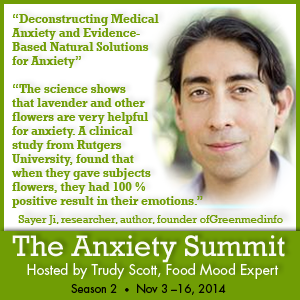
Sayer Ji, researcher, author, founder of Greenmedinfo was interviewed by host of the Anxiety Summit, Trudy Scott, Food Mood Expert and Nutritionist, author of The Antianxiety Food Solution.

Deconstructing medical anxiety and evidence-based natural solutions

  • how modern medical screening and interventions are based on an outdated evidence-base and lead to fear and anxiety
  • the top evidence-based natural interventions for anxiety: lavender, aromatherapy, flowers, plants, forest bathing, probiotics (and the gut-brain axis), magnesium
  • foods that can cause anxiety: gluten/all grains
  • what foods to include: real whole foods, healthy fats, eggs (and issues with statins)
  • ‘alternative’ non-invasive modalities to reduce stress/anxiety – yoga, EFT, music, shiatsu, dancing and aromatherapy

Here are some snippets from our interview

The science shows that lavender and other flowers are very helpful for anxiety. A clinical study from Rutgers University, found that when they gave subjects flowers, they had 100 percent positive result in their emotions.

Lavender has been studied both as an aromatherapeutic agent where you have these small molecules in the volatile fragrance that go right into the olfactory lobe and then start modulating all these different pathways in the brain. Now there are many different ways of looking at this. There’s actually research in the animal model specifically on it being serotonergic, meaning boosting the serotonin levels or preventing their turnover so they last longer, but the reality is there are so many other mechanisms that have been identified. For example, it inhibits what is known as a voltage-dependent calcium channel in a way similar to the drug Pregabalin, also known as Lyrica. And then there’s probably 10 or 20 other different ways in which is likely modulates traditional drug targets in the brain and that’s because the brain is so complex. We’re dealing with hundreds of different biomolecules, many of them classified as neurotransmitters that are making the magic of the chemistry of our brain-produced emotions and feelings so I don’t ever imagine we’ll ever fully understand how it works.

Here is a great blog post from greenmedinfo: Evidence-Based Aromatherapy: Stress Relief And Much More

Here is more information on the Rutgers flowers study, that offered convincing evidence that flowers may be potent mood elevators.  I really love this one!  How did you feel the last time you received flowers?  And when did you last give someone flowers?

I often blog about the joys of nature and getting outdoors and just love this study on forest therapy (also sometimes called forest bathing): Psychological relaxation effect of forest therapy: results of field experiments in 19 forests in Japan involving 228 participants

these results suggest that the forest environments have significant beneficial and relaxing effects on human’s moods compared with the urban environments.

Here is the study that found participants experienced empathy when they smelled the anxiety of another participant: Induction of empathy by the smell of anxiety 

You can get access to Sayer Ji’s  Wisdom of Food eCourse here (use code: cureanxiety)

If you are not already registered for the Anxiety Summit you can get live access to the speakers of the day here www.theAnxietySummit.com

Filed Under: Antianxiety, Anxiety and panic, The Anxiety Summit 2 Tagged With: anxiety, fear, flowers, greenmedinfo, lavender, music, Sayer Ji, the anxiety summit, Trudy Scott, yoga

The Anxiety Summit – Take magnesium and melt your anxiety away

November 11, 2014 By Trudy Scott 36 Comments

Dr. Carolyn DeanQuote_Anxiety2

Dr. Carolyn Dean, MD, ND, author of The Magnesium Miracle was interviewed  by host of the Anxiety Summit, Trudy Scott, Food Mood Expert and Nutritionist, author of The Antianxiety Food Solution.

Take magnesium and melt your anxiety away

  • how important is magnesium: enzymatic processes, mitochondria, heart health, anxiety
  • how important is magnesium compared to calcium; and the vitamin D connection
  • the medication fluoride concern and magnesium impact
  • the symptoms of magnesium deficiency
  • why we are deficient in magnesium
  • dietary sources of magnesium and why diet is often not enough
  • how to test your magnesium level

Here are some snippets from our interview:

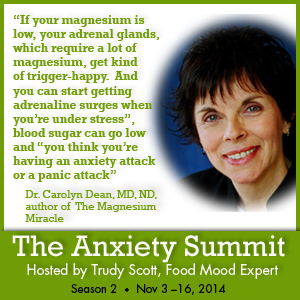
If your magnesium is low, your adrenal glands, which require a lot of magnesium, get kind of trigger-happy. And you can start getting adrenaline surges when you’re under stress, blood sugar can go low and you think you’re having an anxiety attack or a panic attack.

Now, your cholesterol depends on a magnesium enzyme to balance cholesterol. If you have too much, it brings it down; if you have too little, it brings it up. It’s done through the mechanism of magnesium. But the statin drugs kill that particular enzyme! And, as well, they cause more magnesium deficiency because many of the statin drugs actually have a fluoride molecule attached, and that fluoride molecule will bind up more magnesium.

Here is one of the 2014 studies we mentioned: Effect of oral magnesium supplementation on physical performance in healthy elderly women involved in a weekly exercise program: a randomized controlled trial

Daily magnesium oxide supplementation for 12 wk seems to improve physical performance in healthy elderly women. These findings suggest a role for magnesium supplementation in preventing or delaying the age-related decline in physical performance.

Here’s the blog post: When magnesium makes me worse  It also has information about magnesium RBC testing with RequestaTest.com and fluoride in medications.

This is the last study Carolyn mentioned – Magnesium deficiency induces anxiety and HPA axis dysregulation: modulation by therapeutic drug treatment.

Overall, the present findings demonstrate the robustness and validity of the Mg(2+) deficiency model as a mouse model of enhanced anxiety, showing sensitivity to treatment with anxiolytics and antidepressants. It is further suggested that dysregulations in the HPA axis may contribute to the hyper-emotionality in response to dietary induced hypomagnesaemia.

Carolyn’s gift 4 Weeks of 2 Year Wellness Program PLUS Invisible Minerals

If you are not already registered for the Anxiety Summit you can get live access to the speakers of the day here www.theAnxietySummit.com

Filed Under: Antianxiety, The Anxiety Summit 2 Tagged With: anxiety, Carolyn Dean, fluoride, magnesium, the anxiety summit, Trudy Scott, vitamin D

  • « Go to Previous Page
  • Page 1
  • Interim pages omitted …
  • Page 6
  • Page 7
  • Page 8
  • Page 9
  • Page 10
  • Interim pages omitted …
  • Page 14
  • Go to Next Page »

Primary Sidebar

NEW! GABA QuickStart Homestudy (with special intro pricing)

gaba quickstart homestudy

Free Report

9 Great Questions Women Ask about Food, Mood and their Health

You'll also receive a complimentary subscription to my ezine "Food, Mood and Gal Stuff"


Connect with me

Popular Posts

  • Amino Acids Mood Questionnaire from The Antianxiety Food Solution
  • The Antianxiety Food Solution Amino Acid and Pyroluria Supplements
  • Pyroluria Questionnaire from The Antianxiety Food Solution
  • Collagen and gelatin lower serotonin: does this increase your anxiety and depression?
  • Tryptophan for the worry-in-your-head and ruminating type of anxiety
  • GABA for the physical-tension and stiff-and-tense-muscles type of anxiety
  • The Antianxiety Food Solution by Trudy Scott
  • Seriphos Original Formula is back: the best product for anxiety and insomnia caused by high cortisol
  • Am I an anxious introvert because of low zinc and vitamin B6? My response to Huffington Post blog
  • Vagus nerve rehab with GABA, breathing, humming, gargling and key nutrients

Recent Posts

  • What do I use instead of Seriphos to help lower high cortisol that is affecting my sleep and making me anxious at night?
  • BeSerene™ GABA/theanine cream eases severe muscle tension in her neck/shoulders, prevents her bad headaches and quells her anxiety
  • How the correct approach, dose and sublingual use of GABA can be calming and not cause a flushed and itchy face and neck
  • The amino acid glutamine improves low mood by addressing gut health, and it has calming effects too
  • Flight anxiety with heightened breath, physical tension and also fearing the worst (the role of low GABA and low serotonin)

Categories

  • 5-HTP
  • AB575
  • Addiction
  • ADHD
  • Adrenals
  • Alcohol
  • Allergies
  • Alzheimer's disease
  • Amino Acids
  • Anger
  • Antianxiety
  • Antianxiety Food Solution
  • Antidepressants
  • Anxiety
  • Anxiety and panic
  • Autism
  • Autoimmunity
  • benzodiazapines
  • Bipolar disorder
  • Books
  • Caffeine
  • Cancer
  • Candida
  • Children/Teens
  • Collagen
  • Cooking equipment
  • Coronavirus/COVID-19
  • Cravings
  • Depression
  • Detoxification
  • Diabetes
  • Diet
  • DPA/DLPA
  • Drugs
  • EFT/Tapping
  • EMF
  • EMFs
  • Emotional Eating
  • Endorphins
  • Environment
  • Essential oils
  • Events
  • Exercise
  • Fear
  • Fear of public speaking
  • Fertility and Pregnancy
  • Fish
  • Food
  • Food and mood
  • Functional neurology
  • GABA
  • Gene polymorphisms
  • General Health
  • Giving
  • Giving back
  • Glutamine
  • Gluten
  • GMOs
  • Gratitude
  • Gut health
  • Heart health/hypertension
  • Histamine
  • Hormone
  • Hyperparathyroidism
  • Hypoglycemia
  • Immune system
  • Inflammation
  • Insomnia
  • Inspiration
  • Introversion
  • Joy and happiness
  • Ketogenic diet
  • Lithium orotate
  • Looking awesome
  • Lyme disease and co-infections
  • MCAS/histamine
  • Medication
  • Men's health
  • Mental health
  • Mercury
  • Migraine
  • Mold
  • Movie
  • MTHFR
  • Multiple sclerosis
  • Music
  • NANP
  • Nature
  • Nutritional Psychiatry
  • OCD
  • Osteoporosis
  • Oxalates
  • Oxytocin
  • Pain
  • Paleo
  • Parasites
  • Parkinson’s disease
  • PCOS
  • People
  • PMS
  • Postpartum
  • PTSD/Trauma
  • Pyroluria
  • Questionnaires
  • Real whole food
  • Recipes
  • Research
  • Schizophrenia
  • serotonin
  • SIBO
  • Sleep
  • Special diets
  • Sports nutrition
  • Stress
  • Sugar addiction
  • Sugar and mood
  • Supplements
  • Teens
  • Testimonials
  • Testing
  • The Anxiety Summit
  • The Anxiety Summit 2
  • The Anxiety Summit 3
  • The Anxiety Summit 4
  • The Anxiety Summit 5
  • The Anxiety Summit 6
  • Thyroid
  • Thyroid health
  • Toxins
  • Tryptophan
  • Tyrosine
  • Uncategorized
  • Vegan/vegetarian
  • Women's health
  • Yoga

Archives

  • October 2025
  • September 2025
  • August 2025
  • July 2025
  • June 2025
  • May 2025
  • April 2025
  • March 2025
  • February 2025
  • January 2025
  • November 2024
  • October 2024
  • September 2024
  • August 2024
  • July 2024
  • June 2024
  • May 2024
  • April 2024
  • March 2024
  • February 2024
  • January 2024
  • December 2023
  • November 2023
  • October 2023
  • September 2023
  • August 2023
  • July 2023
  • June 2023
  • May 2023
  • April 2023
  • March 2023
  • February 2023
  • January 2023
  • December 2022
  • November 2022
  • October 2022
  • September 2022
  • August 2022
  • July 2022
  • June 2022
  • May 2022
  • April 2022
  • March 2022
  • February 2022
  • January 2022
  • December 2021
  • November 2021
  • October 2021
  • September 2021
  • August 2021
  • July 2021
  • June 2021
  • May 2021
  • April 2021
  • March 2021
  • February 2021
  • January 2021
  • December 2020
  • November 2020
  • October 2020
  • September 2020
  • August 2020
  • July 2020
  • June 2020
  • May 2020
  • April 2020
  • March 2020
  • February 2020
  • January 2020
  • December 2019
  • November 2019
  • October 2019
  • September 2019
  • August 2019
  • July 2019
  • June 2019
  • May 2019
  • April 2019
  • March 2019
  • February 2019
  • January 2019
  • December 2018
  • November 2018
  • October 2018
  • September 2018
  • August 2018
  • July 2018
  • June 2018
  • May 2018
  • April 2018
  • March 2018
  • February 2018
  • January 2018
  • December 2017
  • November 2017
  • October 2017
  • September 2017
  • August 2017
  • July 2017
  • June 2017
  • May 2017
  • April 2017
  • March 2017
  • February 2017
  • January 2017
  • December 2016
  • November 2016
  • October 2016
  • September 2016
  • August 2016
  • July 2016
  • June 2016
  • May 2016
  • April 2016
  • March 2016
  • February 2016
  • January 2016
  • December 2015
  • November 2015
  • October 2015
  • September 2015
  • August 2015
  • July 2015
  • June 2015
  • May 2015
  • April 2015
  • March 2015
  • February 2015
  • January 2015
  • December 2014
  • November 2014
  • October 2014
  • September 2014
  • August 2014
  • July 2014
  • June 2014
  • May 2014
  • April 2014
  • March 2014
  • February 2014
  • January 2014
  • December 2013
  • November 2013
  • October 2013
  • September 2013
  • August 2013
  • July 2013
  • June 2013
  • May 2013
  • April 2013
  • March 2013
  • February 2013
  • January 2013
  • December 2012
  • November 2012
  • October 2012
  • August 2012
  • July 2012
  • June 2012
  • May 2012
  • April 2012
  • March 2012
  • February 2012
  • January 2012
  • December 2011
  • November 2011
  • October 2011
  • September 2011
  • August 2011
  • July 2011
  • June 2011
  • May 2011
  • April 2011
  • March 2011
  • February 2011
  • January 2011
  • December 2010
  • October 2010
  • September 2010
  • July 2010
  • May 2010
  • April 2010
  • March 2010
  • February 2010
  • January 2010
  • November 2009

Share the knowledge!

The above statements have not been evaluated by the Food and Drug Administration. Products listed in this website are not intended to diagnose, treat, cure or prevent any disease.

The information provided on this site is for informational and educational purposes only and is not intended as a substitute for advice from your physician or other health care professional. You should consult with a healthcare professional before starting or modifying any diet, exercise, or supplementation program, before taking or stopping any medication, or if you have or suspect you may have a health problem.


Copyright © 2026 Trudy Scott. All Rights Reserved. | Privacy | Terms and Conditions | Refund Policy | Medical Disclaimer

Free Report

9 Great Questions Women Ask about Food, Mood and their Health

You’ll also receive a complimentary subscription to my ezine “Food, Mood and Gal Stuff”