• Skip to primary navigation
  • Skip to main content
  • Skip to primary sidebar

everywomanover29 blog

Food, Mood and Women's Health – Be your healthiest, look and feel great!

  • Blog
  • About
  • Services
  • Store
  • Resources
  • Testimonials
  • The Book
  • Contact
  • Search this site

pain

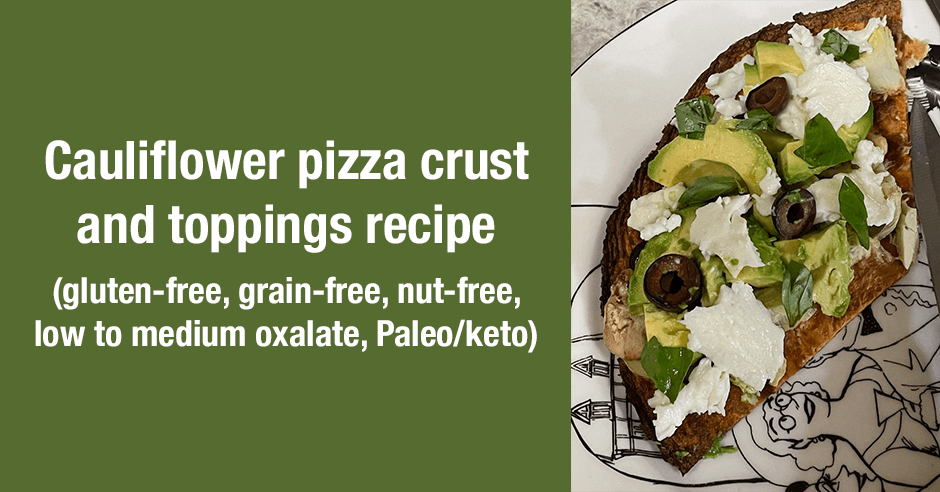
Cauliflower pizza crust and toppings recipe (gluten-free, grain-free, nut-free, low to medium oxalate, Paleo/keto)

July 19, 2024 By Trudy Scott Leave a Comment

cauliflower pizza

Today I’m sharing a really delicious cauliflower pizza crust recipe from Megan Gilmore of Detoxinista (the pizza crust recipe is unchanged and perfect just the way it is), my variations on toppings and some additional information on oxalates.

I do acknowledge, as far as pizza goes, my toppings are rather unconventional but I’ve never really been a big pizza lover (there, I said it!) But I do love cauliflower – it’s my favorite veggie – and I was excited when my sister told me about this recipe and then made it especially for me when I visited her and her family in Hawaii recently! Aren’t I spoiled?!

The fact that the cauliflower pizza crust is low oxalate makes a huge difference: the only ingredients are cauliflower, goats cheese and an egg. I’ve seen other cauliflower pizza crust recipes that include a nut flour such as almond flour. That would be a no-no for me and someone with dietary oxalate issues because almonds are high oxalate.

My topping included: a light smearing of tomato sauce, chunks of chicken (left-overs from the night before), a few halves of tinned artichoke and a few halved olives. I added all this to the prepared cauliflower pizza crust and heated it for 10 minutes.

Once it came out of the oven I loaded it up with freshly cut avocado, pieces of fresh basil and chunks of mozzarella cheese. I don’t like melted cheese and have a hard time digesting it so I prefer to add it afterwards. I think I’ll try feta cheese next time for a change.

I personally have dietary oxalate issues but right now I am doing well with a little tomato sauce, a few artichokes, a few olives and some fresh basil (as long as that is all I’m consuming that day in the way of medium oxalate foods). It’s best to figure out your own needs based on your oxalate issues and what you know you can tolerate.

Read on below for the link to the cauliflower pizza crust recipe and more about dietary oxalates.

The cauliflower pizza crust recipe from detoxinista

Here is the recipe for the perfect cauliflower pizza crust from Megan Gilmore. I have permission to only share the ingredients: cauliflower, egg, goats cheese, oregano, salt, and a pinch of black pepper, and photos from the site but you need to go to her site for the recipe instructions. It’s well worth it to see how it looks at the various stages. I’ve included a few of Megan’s images below.

I will add that my sister doesn’t have a food processor and just cooked the chopped cauliflower and then used a stick blender to get it looking like this.
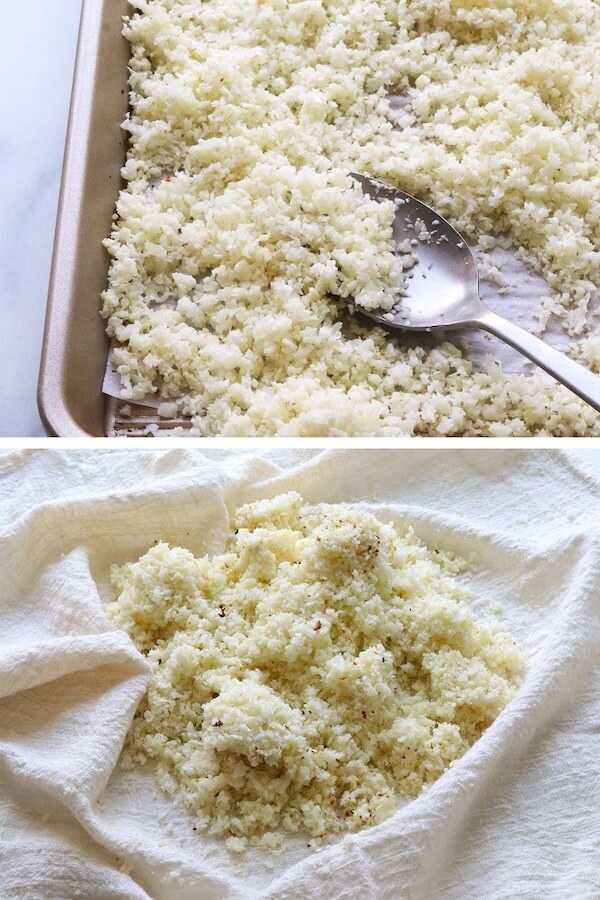
cauliflower pizza
(Images used with permission from detoxinista)

(Images used with permission from detoxinista https://detoxinista.com/the-secret-to-perfect-cauliflower-pizza-crust/)

Once you add the egg and goat cheese it will have a texture and consistency like this. This is done after you have squeezed the liquid out of the cooked cauliflower – a crucial step for a firm and crunchy pizza crust.
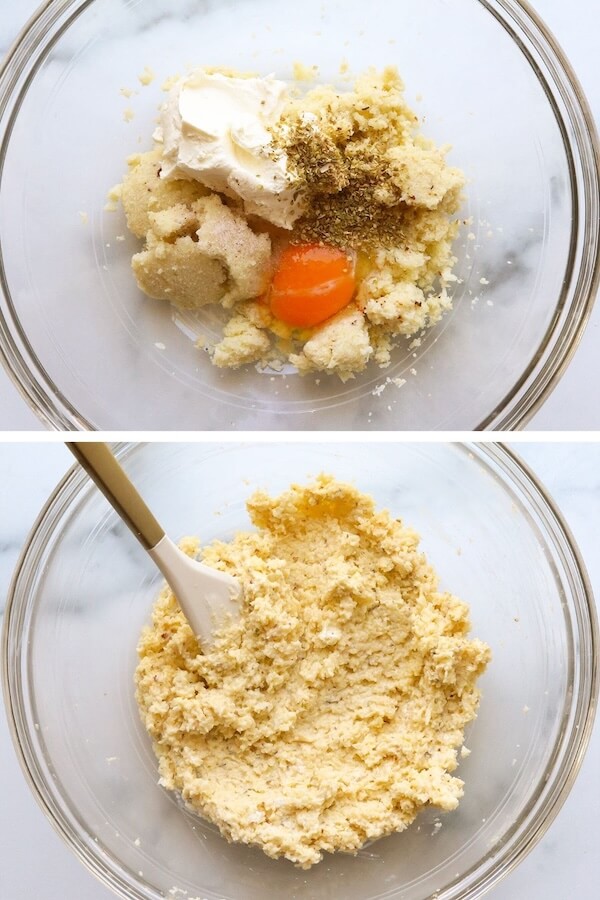
cauliflower recipe
(Images used with permission from detoxinista)

Check out Megan’s site for other useful images, especially to see what the cooked crust looks like. One tip from my sister: once the crust is golden and crisp, flip it over and cook it another 10 minutes.

You’ll see there are also some variations with no goat cheese and no egg. If you try either of these please do share how they turned out.

Enjoying family, nature and a cauliflower crust pizza

After a gorgeous evening with my sister and brother (they were camera-shy!) at Kona on the Big Island, we got back home and ate delicious pizza on this home-made cauliflower pizza crust!

It was all prepared in advance – the crust and all the toppings – so we just put it all together based on our own likes and munched away. And boy did I rave about it – so much so that I said “hey take photos of me eating my pizza and I’ll share my my community”
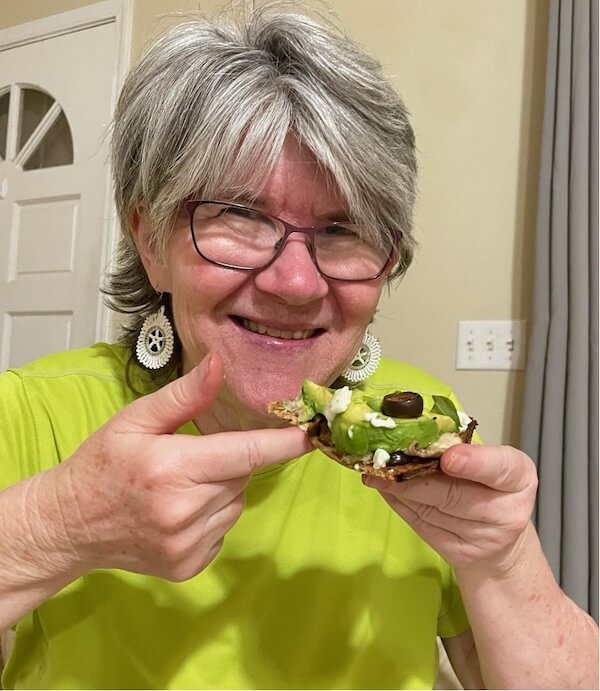
cauliflower pizza

As you can see it’s a pretty firm crust and holds up well with all the toppings I added to mine. And yes my shirt matches the pizza topping – unintentional but still fun!
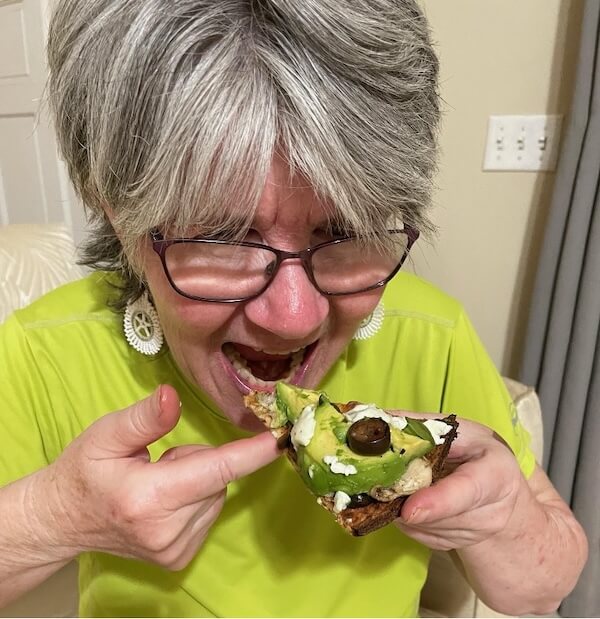
cauliflower pizza

It’s also really nice to eat something crunchy with a pizza-crust-like texture. If you’re gluten-free and grain-free I’m sure you can relate! And it tastes lovely.

Of course you can make it with conventional pizza toppings too. And I think you could use the pizza crust as crackers too. I plan to make a double batch and try this and freeze them.

Dietary oxalates and the problems they can cause

This blog post is a helpful one to start with if you’re new to dietary oxalates and the issues they can cause – Oxalate crystal disease, dietary oxalates and pain: the research & questions.

These are the common medium-oxalate and high-oxalate foods that many folks have problems with: nuts, nut-butters and nut-flour (especially baking with almond flour and something to watch when eating Paleo or GAPS), wheat, chocolate, kiwi fruit (very high – see the raphides image on the above blog), star fruit (also very high), beets, potatoes, sweet potatoes, legumes, raspberries, spinach and soy.

In the above blog post, I share an overview of oxalates, my pain issues with dietary oxalates (severe foot pain and eye pain), and deeper dive into the condition called oxalate crystal disease (with some of my insights and questions).

The big take-aways are that calcium oxalate crystals are sharp and can cause far reaching harm beyond pain – such as unresolved anxious feelings, thyroid issues, neurological symptoms, eye issues, hearing loss, bladder issues, headaches, fatigue, sleep issues, restless legs, autism symptoms and more. You can have issues with dietary oxalates and not have kidney disease/kidney stones, although there is very little research supporting the latter.

I’m finding dietary oxalate issues to be underappreciated especially in menopausal women when symptoms can show up and be more severe. And there is a strong connection with gallbladder issues and problems with fat digestion, which becomes more of an issue in perimenopause and beyond.

You can click on this link to read other blog posts on the topic of oxalates.

A resource if you are looking for a nutritional approach

If you are looking for a nutritional approach for your anxious feelings, mood issues, sleep problems and overall health issues, my book, The Antianxiety Food Solution – How the Foods You Eat Can Help You Calm Your Anxious Mind, Improve Your Mood, and End Cravings, is a great foundation. Be sure to share it with the practitioner/health team you or your loved one is working with.

If diet isn’t enough, there are entire chapters on the amino acids, gut health, blood sugar control and pyroluria. I don’t cover oxalates because I only became aware of them after my book was published (but I’ve published much on the blog since then – simply search this blog for other articles on the topic).

If, after reading this blog and my book, you don’t feel comfortable figuring things out on your own (i.e. doing the amino acids symptoms questionnaire and respective amino acids trials), a good place to get help is the GABA QuickStart Program (if you have low GABA symptoms too). This is a paid online/virtual group program where you get my guidance and community support.

If you are a practitioner, join us in The Balancing Neurotransmitters: the Fundamentals program. This is also a paid online/virtual program with an opportunity to interact with me and other practitioners who are also using the amino acids.

I’d love to hear if you try this recipe and enjoy it (and what modifications you made).

Do you like cauliflower and what is your favorite way to enjoy it?

Feel free to share and ask your questions below.

Filed Under: Oxalates, Recipes Tagged With: anxious, cauliflower, cauliflower pizza crust, dietary oxalate issues, egg, gluten-free, goats cheese, grain-free, Low oxalate, low to medium oxalate, Megan Gilmore, nut-free, pain, Paleo/keto, recipe, sharp crystals, sleep

GABA works wonders for anal cramps (almost instantly) and relieves body aches in the hips and legs of a 75-year-old woman

May 17, 2024 By Trudy Scott 13 Comments

gaba and body aches

Dear Trudy, your recommendation of using GABA for anal cramps has changed my life. I don’t experience them often but when I do they are nasty. A crushed pill or open capsule on the tongue works wonders, almost instantly.

However, I want to add, after hearing your presentation on the Parkinson’s summit and your mention of relief from physical tension, that taking 500mg relieves body ache in hips and legs.

I’m 75, and have recently developed debilitating body aches. Taking one twice/day a.m. and p.m. has made a huge difference. Thank you for your brilliant blog.

Merril shared this wonderful feedback about how the amino acid GABA, used as a supplement helps her with anal cramps and also body aches. I never get tired of hearing feedback like this and as always, I like to share so I can educate further. This helps the person sharing the results and the community as a whole.

Today’s blog highlights more about the role GABA plays in muscle spasms and pain, and more about anal/rectal spasms in case this application is new to you. I also share other considerations when muscle spasms and/or pain are an issue: gluten, oxalates and low endorphins.

GABA works wonders (almost instantly) to eliminate anal cramps

I first blogged about GABA as a solution for agonizing rectal pain and spasms in 2017. I shared how I experienced the awful anal sphincter spasm and pain myself.  The medical term is proctalgia fugax and is described as a condition that leads to rectal/anal spasms and sharp fleeting pain in the lower rectum or anus. In some people it can be more than fleeting and is often described as excruciating and agonizing.

The first time it happened to me I was terrified and beside myself not knowing what it was or what to do. I eventually figured out the solution because of what I knew about GABA helping to ease tense muscles and wanted to shine some light on this very painful condition.

As Merril says GABA “works wonders, almost instantly”  to completely eliminate the pain. Take note that she says a “crushed pill or open capsule on the tongue.”  GABA is most effective when used this way: sublingual GABA or GABA powder or liposomal GABA (and presumably GABA cream too).

GABA can also be used to prevent a full-on spasm if you catch it in advance i.e. when you first feel the twinges of a spasm coming on.

GABA relieves body aches/pain for her and in Parkinson’s patient

I love that GABA has the side benefits of also relieving her body aches in her hips and legs. It’s not unusual to use GABA or one of the other amino acids for a symptom and then discover it’s helping in another area.

And do appreciate that she picked up this tip when tuning into the Parkinson’s summit. I always share new information when I speak at summits and the amino acid and neurotransmitter information typically has varied applications.

During my summit interviews I had shared that working with a few people with Parkinson’s disease, GABA has been very helpful for the stiffness and pain, the physical anxiety, easing some of their tremors and helping with insomnia. I had one client whose husband had anxiety, insomnia, and leg pain and “thrashed around the bed at night.” GABA helped this man tremendously.

I shared this research: Molecular Imaging of the GABAergic System in Parkinson’s Disease and Atypical Parkinsonisms

A growing number of neuroimaging studies have focused on the association with different symptoms of Parkinson’s disease, thereby suggesting a GABAergic role in motor symptoms, gait disturbances, frontal cognition, somatic symptom disorder, and hallucinations.

Other ways GABA helps with pain and muscle stiffness

With regards to my comment above about GABA having many applications, when it comes to aches, pain and spasms, GABA helps with the abdominal pain of colitis, muscle stiffness and pain in those with multiple sclerosis and even bladder pain.

Gluten, sugar, gut health, and oxalates

She didn’t mention what her diet was like so just to be safe, I encouraged her to also check out my book “The Antianxiety Food Solution” to explore all the possible root causes that may be contributing to the anal spasms, pain and body aches – such as gluten (“tingling at 50%, numbness at 27%, pain at 20%, burning at 13% and “buzzing” feeling at 7%”) , gut health and SIBO (small intestinal bacterial overgrowth) and even sugar.

I mentioned that I don’t cover oxalates in my book but with body aches, spasms and pain I’d also explore this aspect. More on oxalates here and here.

Endorphin support with the amino acid DPA helps ease pain

When there is a neurotransmitter imbalance like low GABA levels it’s not uncommon to also have other neurotransmitter imbalances. With pain and aching I’d want to explore the possibility of low endorphins and do a trial with the amino acid DPA (d-phenylalanine) if low endorphin symptoms are present (you can find the symptoms questionnaire here).

DPA supports endorphin production (by inhibiting the breakdown of endorphins), reducing pain quickly, often in 2-10 minutes.

The use of DPA is not new information as you can read in this paper from 1982 – D-phenylalanine and other enkephalinase inhibitors as pharmacological agents: implications for some important therapeutic application

A number of compounds have been shown to inhibit the degradation of enkephalins. As expected, these compounds produce naloxone reversible analgesia [pain-relief] and potentiate the analgesia produced by enkephalins and by acupuncture.

One of these, D-phenylalanine, is also anti-inflammatory.

D-phenylalanine has proven to be beneficial in many human patients with chronic, intractable pain. It is proposed the enkephalinase inhibitors may be effective in a number of human “endorphin deficiency diseases” such as depression, schizophrenia, convulsive disorders and arthritis.

DPA also improves mood, especially when there is weepiness, and provides comfort when there is emotional eating. Here is one of many blogs that address DPAfor pain. Feel free to use the blog search feature to find others if you are new to this amino acid.

A few GABA product options – a sublingual, a powder and a cream

gaba calm
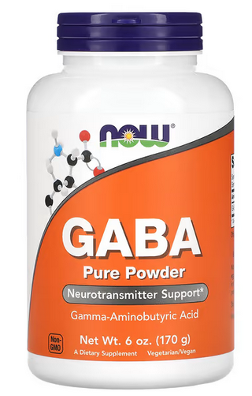
gaba pure poder
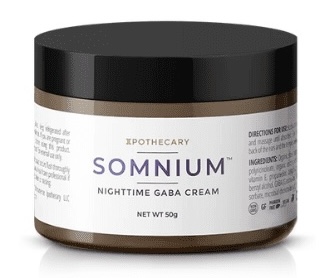
somnium gaba cream

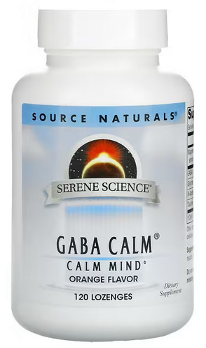
Some of the GABA products I recommend include Source Naturals GABA Calm lozenges and Now GABA Powder.  You can purchase these from my online store (Fullscript – only available to US customers – use this link to set up an account).

If you’re not in the US, Source Naturals GABA Calm lozenges and Now GABA Powder are available via iherb (use this link to save 5%).

Somnium GABA Cream is available with international shipping. Read more about the product and grab my coupon code to save 15%.

Additional resources when you are new to using amino acids as supplements

As always, I use the symptoms questionnaire to figure out if low GABA or other neurotransmitter imbalances may be an issue.

If you suspect low levels of any of the neurotransmitters and do not yet have my book, The Antianxiety Food Solution – How the Foods You Eat Can Help You Calm Your Anxious Mind, Improve Your Mood, and End Cravings, I highly recommend getting it and reading it before jumping in and using amino acids on your own so you are knowledgeable. And be sure to share it with the practitioner/health team you or your loved one is working with.

There is an entire chapter on the amino acids and they are discussed throughout the book in the sections on gut health, gluten, blood sugar control (this is covered in an entire chapter too), sugar cravings, anxiety and mood issues.

The book doesn’t include product names (per the publisher’s request) so this blog, The Antianxiety Food Solution Amino Acid and Pyroluria Supplements, lists the amino acids that I use with my individual clients and those in my group programs.

If, after reading this blog and my book, you don’t feel comfortable figuring things out on your own (i.e. doing the symptoms questionnaire and respective amino acids trials), a good place to get help is the GABA QuickStart Program (if you have low GABA symptoms too). This is a paid online/virtual group program where you get my guidance and community support.

If you are a practitioner, join us in The Balancing Neurotransmitters: the Fundamentals program. This is also a paid online/virtual program with an opportunity to interact with me and other practitioners who are also using the amino acids.

Wrapping up and your feedback

I do always appreciate feedback from the community and being able to share it on the blog. I’m thrilled Merril saw these benefits with GABA. She doesn’t mention if she has also seen benefits for sleep or feeling anxious or stress eating (all signs of low GABA too) – I’m curious to find out!

Now I’d love to hear from you – have you had success with GABA for anal/rectal spasms or other body aches, pains and muscle spasms? How much has helped and which product?

Have dietary changes or DPA also helped?

If you’re a practitioner have you seen GABA help in situations like this?

And please let me know if it’s helpful that I’m now including product recommendations and where to get them.

Feel free to share and ask your questions below.

Filed Under: Anxiety, GABA, Pain, Women's health Tagged With: amino acid, anal cramps, anxious, body aches, DPA, endorphins, GABA, GABA Quickstart; Balancing Neurotransmitters: the Fundamentals program for practitioners, gluten, hips, legs, muscle spasms, on the tongue, oxalates, pain, Parkinson's, physical-tension, rectal cramps

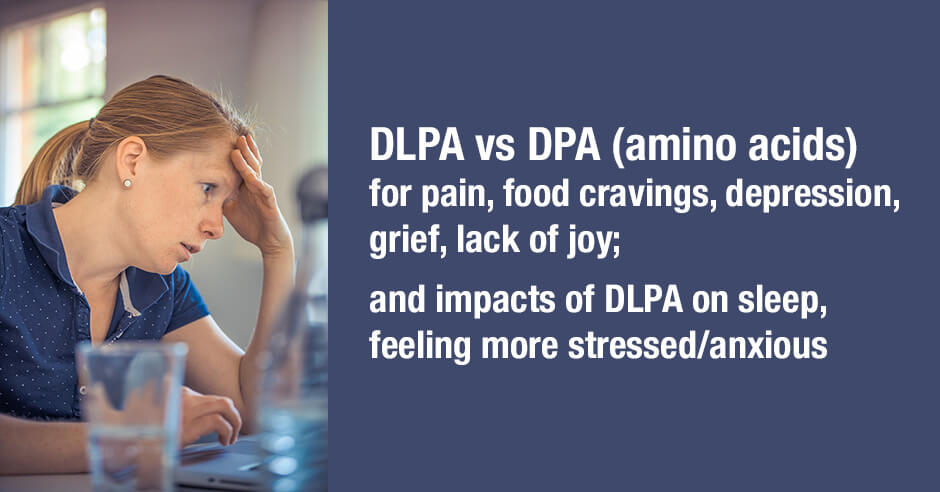
DLPA vs DPA for pain, food cravings, depression, grief, lack of joy; and impacts of DLPA on sleep, and feeling more stressed/anxious

April 5, 2024 By Trudy Scott Leave a Comment

dlpa vs dpa

A very common question I get is from folks asking about the difference between the amino acids DPA (d-phenylalanine) and DLPA (dl-phenylalanine) for endorphin support and endorphin/dopamine support. I dedicate an entire blog to this question explaining the differences and which one I use for weepiness, heart-ache, pain and energy. I also discuss where tyrosine (for dopamine support) fits in. If you missed that or need a recap you can read about this on the blog.

The blog post generated some great questions that I’m sharing today, with my feedback, in case you have similar questions. I discuss a question about DLPA vs DPA for pain and impacts on sleep; a question about DLPA (used by mistake) raising already high dopamine levels and why DPA isn’t working any more for food cravings; a question about using DPA with GABA; and a question about DPA for depression and lack of joy caused by grief.

Here is the question from Gloria who shared this feedback about her use of DLPA (as part of a pain relief product) but says she can’t use it past noon. She also wants to know more about DPA for pain relief:

My experience with DLPA is as part of a supplement called Curamin for pain relief from arthritis that also has curcumin and boswellia. It works quite well in the AM but I can’t tolerate it past noon or it negatively affects my sleep.

Interesting to learn it is similar to tyrosine which I have had sleep problems with in the past.

Does DPA work as well for pain? Is it best to take amino acids on an empty stomach for best absorption? Does that mean an hour before a meal or two hours after? Thank you for your blogs and book!

It’s great that this combination product offers pain relief and it’s good that she has made the connection to poor sleep when it’s used after noon. This is a popular product that I would like to see include the possible impacts on sleep and the other precautions for DLPA . It is a proprietary formulation so you don’t actually know how much DLPA you’re getting. I really don’t like not knowing.

One other concern is that curcumin is high-oxalate and for some this can make pain worse. Otherwise, curcumin and boswellia are excellent for pain relief and reducing inflammation.

DPA is more effective for pain than DLPA because it offers a bigger endorphin boost. If oxalates are not an issue, one option could be to continue with the Curamin before noon and if needed, add standalone DPA in the afternoon and evening, for added pain relief.

Amino acids are more effective on an empty stomach and even more effective when opened on to the tongue. I share more about opening DPA onto the tongue in this blog.

DLPA (used by mistake) raised already high dopamine levels and why isn’t DPA working any more for food cravings?

Rhonda shared how she found out the difference between DPA and DLPA the hard way and wants to go back to DPA:

I certainly found out the difference the hard way. I had used Lidtke Endorphigen for a few years and I think it helped a bit with food cravings. As I am in Australia, I depend on my sister’s visits from US for my supply. When I ran out last year, I bought DLPA by mistake.

After 1 week I was unable to cope with life, totally stressed out about everything, wanting to cry or scream or run away. Zero tolerance towards anyone. After 10 days I realized my mistake and I went back to normal in 24 hrs.

I believe DLPA resulted in very high dopamine as I already have a very slow COMT gene activity for breaking down dopamine.

I now take Endorphigen again but not seeing much effect on sugar cravings this time.

That is quite the reaction she experienced but I’m glad she figured it out so quickly. It’s not uncommon for some folks to react to DLPA like this, feeling more stressed and even anxious. High dopamine, and norepinephrine and epinephrine (so a huge adrenalin rush), related to slow COMT activity could well be the cause.

When Endorphigen (or any of the amino acids) work well initially we continue with trials of higher doses to find the ideal dose. It may also be that a reset is needed after the shift in dopamine.

Rhonda did say she thinks Endorphigen “helped a bit with food cravings.” When it only helps a bit it may be that the dose isn’t high enough or we may need to consider other neurotransmitter imbalances. They can all cause cravings for slightly different reasons: GABA/stress, serotonin/worry or low mood, glutamine/low blood sugar. More on that and the respective amino acids here.

Can GABA be used with DPA?

Ray asks: “Can I use GABA 25mg and also take DPA? Would either/or offset the other?”

My feedback: If someone has low GABA symptoms and GABA helps and they also have low endorphin symptoms and DPA helps then they are absolutely fine to use together and even at the same time. However, I have my clients trial one at a time in order to find the ideal dose and so you know how each one is working

What can I use for my depression and lack of joy, caused by grief?

Vee says she needs something “to get through my grief depression”:

Completely flat, no joy. I always had a calm flat disposition, but now it’s a complete zero. I need my brain to produce some oxytocin so I can like myself, my family and remember all I should be grateful for. I sleep good. I don’t take any meds, and I don’t abuse alcohol. Does tyrosine affect the brain in the way of producing oxytocin?

My feedback: I use DPA/Lidtke Endorphigen for this very purpose. It’s wonderful for grief, depression, lack of joy and the weepiness we see with low endorphins. It also helps with emotional eating that can show up as we try to self-medicate with treats in order to try and feel better.

When the depression also includes being flat, blah and curl-up in bed we use DLPA instead of DPA, or a combination of DPLA/DPA or tyrosine/DPA. Trials of each, one by one, helps you figure out what works best for your unique needs.

And for some folks GABA is helpful as shared by this woman who found GABA allowed her to sit with a feeling of peace and calm most of the time after her mum passed away.

Research does shows a link between dopamine and oxytocin, with oxytocin “emerging as one particular neural substrate that may be influenced by the altered dopamine levels.” Also, for oxytocin support I’d focus on hugs, massage, touch, laughter, making love, yoga, and petting a dog or cat.

DPA and DLPA product options

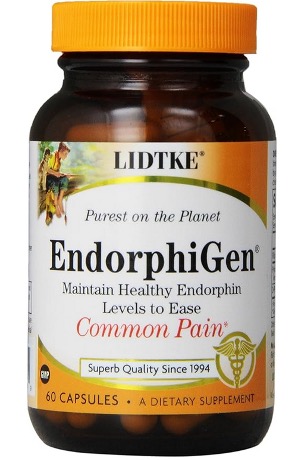
lidke endorphigen
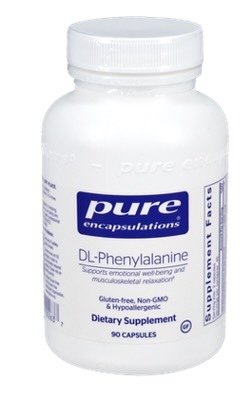
pure dlp

Products I recommend include Lidtke EndorphiGen (which is DPA) and Pure Encapsulations DL-Phenylalanine (DLPA).  You can purchase these from my online store (Fullscript – only available to US customers – use this link to set up an account).

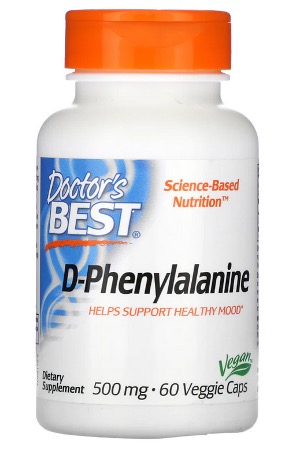
dr's best dpa
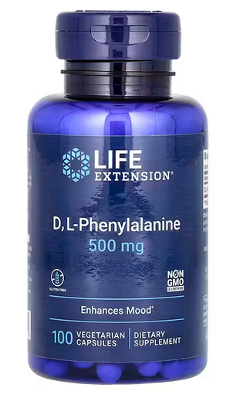
life dlp

If you’re not in the US, these products are available via iherb: Doctor’s Best D-Phenylalanine (or DPA) and Life Extension D, L-Phenylalanine (or DLPA) (use this link to save 5%).

Additional resources when you are new to using DPA and DLPA, and other amino acids as supplements

As always, I use the symptoms questionnaire to figure out if low endorphins or low dopamine or other neurotransmitter imbalances may be an issue for you.

If you suspect low levels of any of the neurotransmitters and do not yet have my book, The Antianxiety Food Solution – How the Foods You Eat Can Help You Calm Your Anxious Mind, Improve Your Mood, and End Cravings, I highly recommend getting it and reading it before jumping in and using amino acids on your own so you are knowledgeable. And be sure to share it with the practitioner/health team you or your loved one is working with.

There is an entire chapter on the amino acids and they are discussed throughout the book in the sections on gut health, gluten, blood sugar control (this is covered in an entire chapter too), sugar cravings, anxiety and mood issues.

The book doesn’t include product names (per the publisher’s request) so this blog, The Antianxiety Food Solution Amino Acid and Pyroluria Supplements, lists the amino acids that I use with my individual clients and those in my group programs (over and above the few I mentioned above).

If, after reading this blog and my book, you don’t feel comfortable figuring things out on your own (i.e. doing the symptoms questionnaire and respective amino acids trials), a good place to get help is the GABA QuickStart Program (if you have low GABA symptoms too). This is a paid online/virtual group program where you get my guidance and community support.

If you are a practitioner, join us in The Balancing Neurotransmitters: the Fundamentals program. This is also a paid online/virtual program with an opportunity to interact with me and other practitioners who are also using the amino acids.

Wrapping up and your feedback

I do always appreciate questions and feedback like this so keep your questions coming. I do hope my sharing these ones have been helpful to you.

How has DPA or DLPA helped your pain, depression, lack of joy, weepiness, and grief? And has DLPA affected your sleep or made you feel more anxious or stressed?

If yes, which products have helped and do you find swallowed or capsule opened is more effective?

If you’re a practitioner do you use DPA and/or DLPA with clients/patients?

And please let me know if it’s helpful that I’m now including product recommendations and where to get them?

Feel free to share and ask your questions below.

Filed Under: Anxiety and panic, Depression, DPA/DLPA, Endorphins, Insomnia, Pain Tagged With: amino acids, anxiety, anxious, cravings, d-phenylalanine, depression, dl-phenylalanine, DLPA, dopamine, DPA, endorphin, energy, GABA Quickstart; Balancing Neurotransmitters: the Fundamentals program for practitioners, grief, heart-ache, insomnia, lack of joy, neurotransmitters, pain, sleep, stressed, tyrosine, weepiness

Ox bile as a supplement: to help counter the effects of dietary oxalates very likely caused by bile issues and poor fat digestion

March 15, 2024 By Trudy Scott 68 Comments

ox bile

I’m using ox bile (as a supplement) to help counter the effects of dietary oxalates very likely caused by my bile issues and poor fat digestion.

I started with 125 mg ox bile with lunch and dinner and now I’m up to 250 mg at lunch and 375 mg at dinner. Many ox bile products are 500 mg but I decided to start low and go slow and also use an ox bile only product rather than ox bile combined with digestive enzymes.

I don’t know exactly what my liver or gallbladder issues are but suspect low bile production and/or sluggish bile flow.

I have an issue with dietary oxalates and using ox bile confirms my suspicions because I can feel it helping further with symptom reduction (foot and eye pain, and restless legs at night). Because of improved fat digestion, I’m encouraged it’s going to help with longer term bone health (I was recently diagnosed with osteoporosis), immunity, hormone balance and heart health too. I expect better absorption of healthy fats like omega-3 fatty acids, evening primrose oil and fat-soluble vitamins A, E, D and K (and D and K are so important for bone health).

Of course, all this means less oxalate absorption and a reduced impact of the sharp damaging crystals found in medium/high oxalate foods. Oxalates also bind to minerals like zinc, magnesium, and calcium so those mineral deficiencies should shift too.

Read on for a background on oxalate crystal disease, the research on conjugated bile acid replacement therapy (or ox bile supplementation) and oxalate/fat digestion mechanisms, and more about signs of bile issues and solutions. I also share what else I do to mitigate oxalate issues and improve fat digestion,  and the ox bile product I am using.

Ox bile increases fat absorption and reduces oxalate absorption

This paper, Conjugated bile acid replacement therapy reduces urinary oxalate excretion in short bowel syndrome, explains that “Soluble oxalate is hyper absorbed by the colon leading to hyperoxaluria and an increased risk for renal calcium oxalate stones and deposits” (and other pain issues – more on that below).

Using ox bile as a supplement (or replacement) with meals “increases fat absorption and thereby decreases calcium fatty acid soap formation and oxalate hyperabsorption.”  What does this mean? When fat absorption is improved with ox bile supplements there is more calcium left to bind to excess oxalates in the gut and get rid of them in the stool i.e. less oxalates are absorbed.

I encourage you to read the above paper for a better understanding of the mechanisms.

I do appreciate this team of researchers who have highlighted this approach to help with oxalate issues. Keep in mind I’m experimenting and extrapolating from this single case study of someone with short bowel syndrome and based on what I already know about bile/fat digestion, my own oxalate issues and symptoms of poor bile production/flow (see below).

I don’t have short bowel syndrome but  there are a few related studies like this one from the same department, so I feel comfortable experimenting and tracking.

Other pain issues and my pain symptoms caused by dietary oxalates

Keep in mind that the increased absorption of oxalates also causes issues like joint and soft tissue pain, anxiety, restless legs, insomnia, bladder issues, vulvodynia, eye-poking (in autism), thyroid problems, osteoporosis, damage to the heart etc. even when there are no kidney stones. This is not recognized in kidney stone research but is seen extensively in clinical practice.

In 2012 I made the connection between oxalate intake and my excruciating foot pain – a combination of hot-burning-coals-pain and shards-of-glass-pain. The pain has always been worse at night and at its worst I was unable to sleep with severe restless legs.  A few years later, I noticed my left eye being affected too, with scratchy discomfort and mild pain. There is also a goopy kind of discharge from the inner part of my eye and burning/redness crystal-like teariness on the outer parts of my eyes.

You can read more about my oxalate story and oxalate crystal disease on this blog – Oxalate crystal disease, dietary oxalates and pain: the research & questions.

It’s more than only ox bile replacement to help with oxalate issues

I say that ox bile helps further because this is a journey I’m on and there are many nutritional approaches that have been helping me over the years. My symptoms have reduced as I do eat mostly low oxalate with some medium oxalate vegetables from time to time, and occasional chocolate or carob (which are high oxalate).

I continue to finesse my use of calcium citrate at bedtime when my symptoms do flare. I am fortunate that I am able to eat cheese so this is another source of calcium for me.

I have pyroluria so I have long used vitamin B6 which is recognized to be helpful for some with oxalate issues. I suspect this may have prevented dumping when I first switched to low oxalate eating.

Signs of low quality bile from Anne Louse Gittleman

These are from her book, The New Fat Flush Plan:

  • Queasiness after a fatty meal (impaired bile flow)
  • Light-colored or floating stools (lack of bile output)
  • Nausea/motion sickness (not enough bile)
  • Dry skin and hair (lack of essential fatty acids)
  • Constipation (inadequate bile for lubrication)
  • Constant feeling of fullness
  • Inability to lose weight
  • Pain under the right rib cage (reflective pain from the gallbladder)
  • Hemorrhoids (congested liver)
  • Varicose veins (pressure from constipation due to thickened bile)
  • Pain between the shoulder blades (reflective pain from the gallbladder)
  • Bloating or gas
  • Headache over the eyes (gallbladder meridian passes over this region)
  • Bitter taste in the mouth after meals (sign of bile regurgitation)
  • History of prescription or recreational drug use (need for more liver and gallbladder support)
  • Sensitivities to chemicals
  • Easily intoxicated (need for more liver and gallbladder support)
  • Fibromyalgia (sign of liver and gallbladder overload)
  • Hypothyroidism (sign of deficient bile to stimulate active thyroid hormone in fat cells)

I’m adding these signs/related issues/conditions:

  • Fatigue
  • Itchy skin
  • SIBO/small intestinal bacterial overgrowth
  • Osteoporosis
  • History of gallbladder attacks or gallstones
  • Oxalate issues

In my Anxiety Summit interview with Anne Louise Gittleman she explains what bile is and why it’s so important (read here if you’re new to this).

What I’ve already done to improve my bile production/quality

Here is a quick summary of the advice Anne Louise Gittleman offers, with a note of what I’ve done. I share this to illustrate that I didn’t jump straight to ox bile supplementation/replacement:

  • Elimination of food allergies (I’ve done this)
  • Addressing low levels of hydrochloric acid or stomach acid (this is not an issue for me)
  • Controlling stress (this is ongoing)
  • Adding bitter greens to the diet (I do this as much as I can, avoiding medium/high oxalate bitter greens)
  • Hot lemon water in the morning (a favorite of the original Fat Flush Plan and something I’ve done for years)
  • Adding non-GMO lecithin from soy and sunflowers to your morning smoothie (I don’t do this)
  • Using a bile building formula that contains choline, taurine, beet root, inositol and methionine, and pancreatic lipase (I use taurine but can’t use beet root because it’s high oxalate; I did a 2 month trial of a lipase only supplement with no changes; I will likely experiment with choline, methionine and inositol in the near future)
  • Using castor oil packs (I plan to do this in the near future)

These are some of the other approaches that can also help:

  • Digestive bitters (it does help me and I continue to use it but it’s not enough)
  • Toxin removal (I’ve experienced the harmful effects of acute environmental toxin exposure and my daily use of taurine helped. I blogged about this here.)
  • Ongoing detox with infrared sauna (I use a Therasage portable sauna)
  • Ox bile supplementation/replacement (I chose to use ox bile to be sure it was a bile issue I was dealing with and I did many other interventions first.)

My observations when using ox bile supplementation

I have not had any severe pain flares and have not needed to use extra calcium citrate in the night. The other profound change was a dramatic increase in energy. A few months ago I thought my Lyme was flaring again as I was so exhausted in the afternoons. This exhaustion has dissipated.

In terms of digestive symptoms, I notice less queasiness after a fatty meal like roast chicken with the skin on or a fatty lamb slow cooker stew. The constant feeling of fullness, gas and bloating has improved too. I suspect ox bile is helping with SIBO because it’s antimicrobial. But I can’t be sure since I started berberine 6 months ago and noticed it reduced methane gas production.

I have yet to test out motion sickness on a boat trip but I haven’t been using wristbands in the car and have been fine. I had been having some unusual/new skin itchiness a few months ago and this has now resolved. I do have sensitivities to chemicals but I haven’t noticed any change yet.

I used my stool color as a gauge to whether the ox bile was working – as I increased the dose I noticed it got darker and I have no more floaters. My bowel movements are much easier (more lubrication) and I feel the urge to go more than before.

It will be interesting to see if longer term this helps with improving my bone density. It makes no sense that I have osteoporosis given I’ve been physically active all my life. I highly suspect my bile issues have been a factor since childhood and then got worse during perimenopause Research shows “Gallbladder emptying time is longer during the perimenopausal period.”  Unfortunately kidney stones and oxalate issues ramp up in menopause so it’s the perfect storm.    I will be discussing all this with my endocrinologist/bone density doctor and ideally do some testing to figure out what the bile issues are (the pancreatic elastase test was fine).

I do track carefully and only make one change at a time so I typically know what improvements I can attribute to what changes.

Ox bile product options

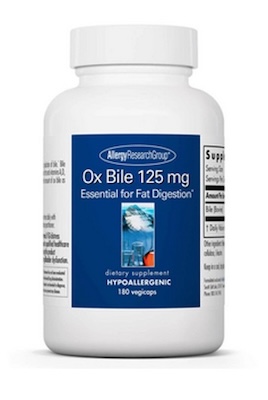
Allergy Research has an Ox Bile 125 mg product and a 500 mg product. You can purchase these from my online store (Fullscript – only available to US customers – use this link to set up an account).

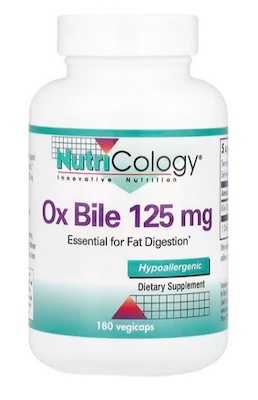
If you’re not in the US, Nutricology has an Ox Bile 125 mg product and a 500 mg product. This is the brand I happen to be using. It can be purchased on iherb (use this link to save 5%).

In conclusion

I’d like to give a shout out to my colleagues… I first learned about oxalates from my dear friend  Julie Matthews. Hearing her present at a conference helped me make the connection to my feet pain issues. She introduced me to Susan Owens, oxalate guru and researcher, and the TLO/Trying Low Oxalate group, and now I communicate regularly with them, the TLO moderators and members. And I met Sally K. Norton a few years ago. She is the author of this excellent book, Toxic Superfoods: How Oxalate Overload Is Making You Sick (my Amazon link).

Unfortunately no-one discusses the use of ox bile replacement/supplementation for those of us with oxalate issues and bile issues, and I suspect it’s an under-appreciated tool for those of us who continue to struggle. Hopefully this research and my results starts a discussion on the topic and further interest.

Sally K. Norton does mention a connection in her book: “The immune system has a method for shielding surrounding tissues from oxalate crystals; entrapping them with extruded DNA called a neutrophil extracellular trap (NET). These NETs forming around oxalates may contribute to gallstones and gallbladder “sludge”. If this is the case in my situation, then my lifelong issues with bile were likely made worse by my intake of medium- and high-oxalate foods.

I do hope that me sharing my personal experiments and healing journey helps you or someone you know. Honestly, I could write a book on oxalates and what I’ve learned over the last few years. There is so much to all this and even though it’s a “pain” to be affected like this it is fascinating. I do feel thankful to have dietary and nutritional “solutions.”

The next step for me is looking into and addressing my endogenous oxalate production i.e. oxalates that are produced internally vs oxalates that are ingested. Stay tuned for an update on this.

Do you have oxalate issues together with gallbladder/bile issues/fat digestion issues and how has ox bile supplementation helped you?

Has ox bile helped you with low bile production or sluggish bile – even if you don’t have oxalate issues?

If you’re a practitioner have you used ox bile with your clients or patients?

Feel free to share and ask your questions below.

Filed Under: Oxalates, Pain, Supplements Tagged With: bile, dietary oxalates, fat digestion, ox bile, oxalate crystal disease, pain, supplement

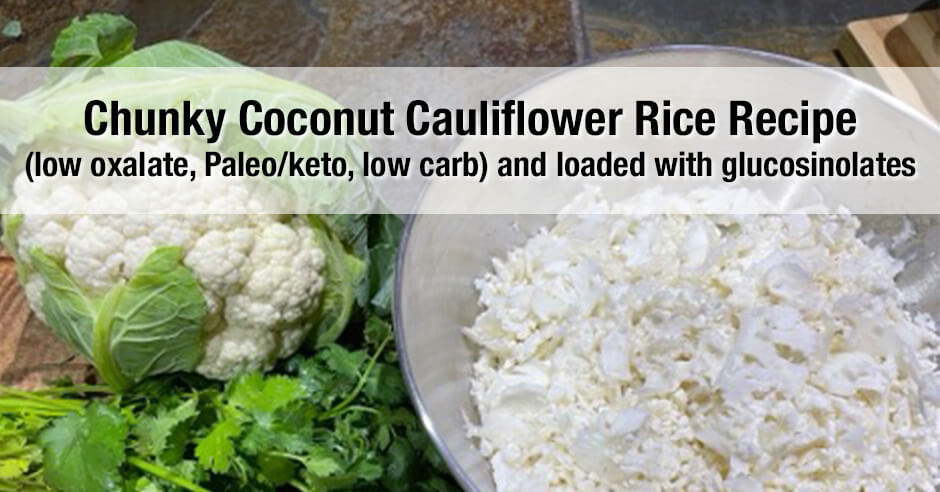
Chunky Coconut Cauliflower Rice Recipe (low oxalate, Paleo/keto, low carb) and loaded with glucosinolates

November 10, 2023 By Trudy Scott Leave a Comment

coconut cauliflower rice

I love cauliflower any which way – like steamed with butter or roasted in coconut oil – and I’m always looking for new ideas to enjoy this healthy, yummy and very versatile cruciferous vegetable. I also like to modify recipes to my own liking and this recipe is a version of a new favorite of mine. You’ll notice it’s quite chunky and not overcooked so it ends up being a little crunchy. The flavors are mild so you can actually taste the cauliflower.

I do love that this is low oxalate, Paleo/keto and low carb, and loaded with glucosinolates. I share more on all this below.

Chunky Coconut Cauliflower Rice Recipe

Ingredients

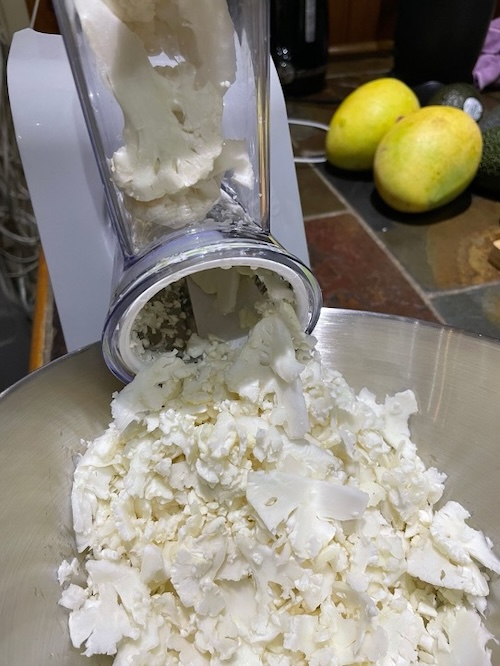
1 organic cauliflower, chopped into chunks and then fed through a food processor using a blade that results in chunky pieces
3-4 Tablespoons coconut oil
2 Tablespoons dried garlic flakes
Half a bunch of fresh cilantro, chopped finely (with the stalks)
Half a cup of full fat coconut milk

Method

Heat the coconut oil in a frying pan on medium heat, add the chunkily chopped cauliflower and garlic flakes. Stir to coat with the coconut oil and continue stirring to cook lightly – for about 6 minutes. Add the finely chopped fresh cilantro and stir to mix it all into the cauliflower. Add the coconut milk and continue to cook for another 2-3 minutes. Serve and enjoy!

Other flavor options could include onion, curry powder or other favorite spices. I like to keep mine simple and add sea salt when it’s served because I love the taste of cauliflower and don’t want to overpower it.

coconut cauliflower rice
I like to use chunky pieces of cauliflower.
coconut cauliflower rice
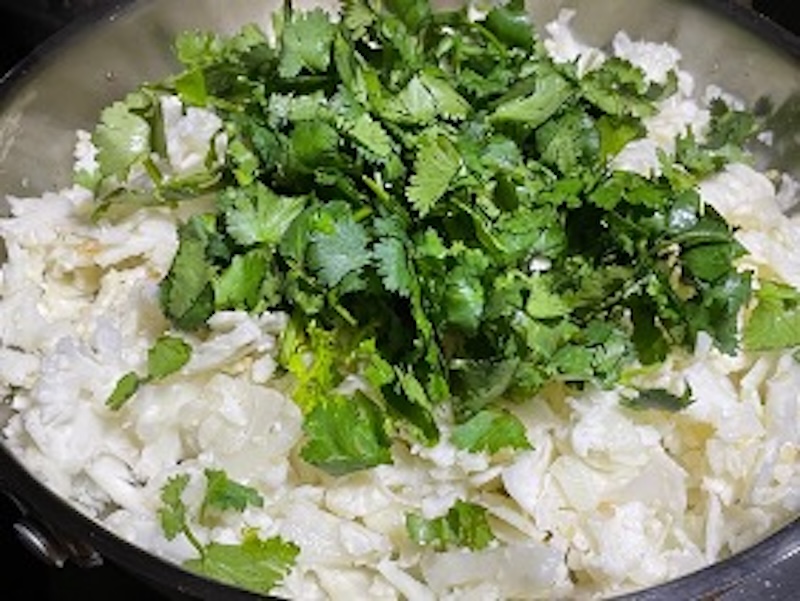
And I keep the stems on the cilantro when I chop it. It’s added once the cauliflower is almost ready and then mixed in.
coconut cauliflower rice
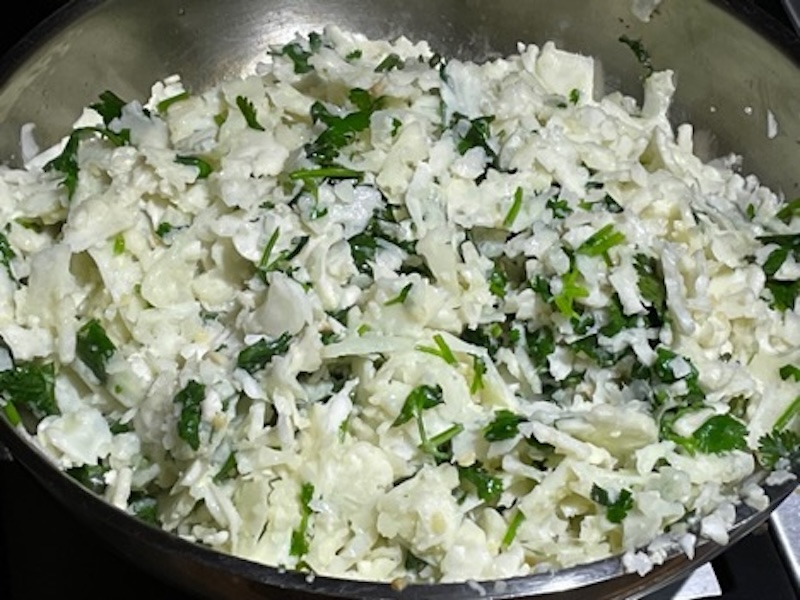
This is the end result – crunchy, tasty and colorful!

This recipe is low oxalate, low carb and satiating

Cauliflower is low oxalate with about 1/10 the oxalates of mashed potato and sweet potato so it’s a great replacement. (If you’re new to oxalates, click on this link to read other blog posts on the topic – and learn how they may contribute to sharp pain, bladder issues, anxiety, vulvodynia and more.)

It’s less of a blood sugar hit and lower calories if you are eating low carb or Paleo or keto. You can read some anxiety and depression success with Paleo and grain free diets here.

It’s also a great way to get your children or husbands or other loved ones to really enjoy cauliflower and come back for seconds when steamed or roasted cauliflower doesn’t grab them.

Because of the coconut oil and coconut milk it’s creamy and tasty and these healthy fats make it very satiating too

This recipe also looks great and can be served at Thanksgiving, Christmas and other special meals. It can be cooked in advance and then heated up as needed and served right from the pan. It’s also delicious the next day, heated up again and also served cold.

Benefits of glucosinolates from cruciferous vegetables

As well as a delicious low oxalate/low carb side order, cauliflower, a cruciferous vegetable, also provides a source of glucosinolates:

As outlined in this paper, Glucosinolates From Cruciferous Vegetables and Their Potential Role in Chronic Disease: Investigating the Preclinical and Clinical Evidence

An increasing body of evidence highlights the strong potential for a diet rich in fruit and vegetables to delay, and often prevent, the onset of chronic diseases, including cardiometabolic, neurological, and musculoskeletal conditions, and certain cancers.

A possible protective component, glucosinolates, which are phytochemicals found almost exclusively in cruciferous vegetables, have been identified from preclinical and clinical studies.

Current research suggests that glucosinolates (and isothiocyanates) act via several mechanisms, ultimately exhibiting anti-inflammatory, antioxidant, and chemo-protective effects. This review summarizes the current knowledge surrounding cruciferous vegetables and their glucosinolates in relation to the specified health conditions.

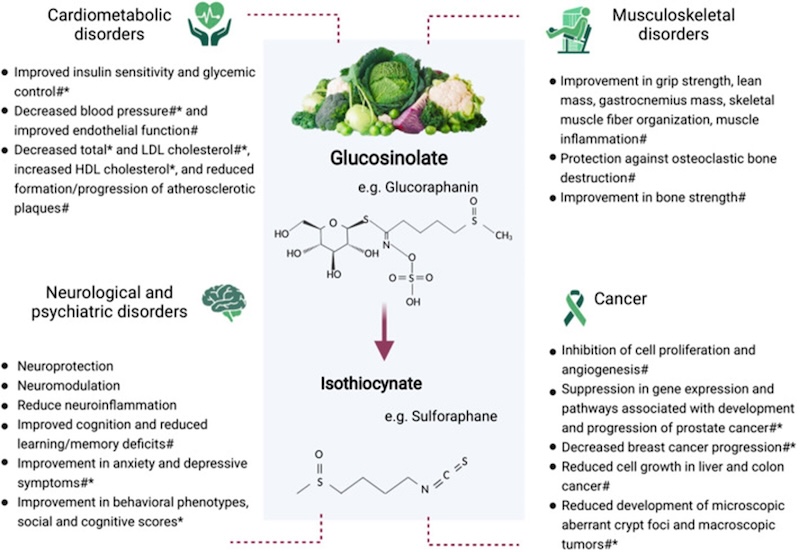
This image from the above paper provides a great visual. As you can see, there are documented improvements for anxiety and depression, as well as neuroprotection and so much more.  I encourage you to read the whole paper (and enjoy more cauliflower).

glucosinolate
(from: Glucosinolates From Cruciferous Vegetables and Their Potential Role in Chronic Disease: Investigating the Preclinical and Clinical Evidence)

A resource if you are looking for a nutritional approach

If you are looking for a nutritional approach for your anxiety, mood issues, insomnia and overall health issues, my book, The Antianxiety Food Solution – How the Foods You Eat Can Help You Calm Your Anxious Mind, Improve Your Mood, and End Cravings, is a great foundation. Be sure to share it with the practitioner/health team you or your loved one is working with.

If nutrition isn’t enough, there are entire chapters on the amino acids, gut health, blood sugar and pyroluria. I don’t cover oxalates (but do search this blog for other articles on the topic) or mention glucosinolates in my book.

If, after reading this blog and my book, you don’t feel comfortable figuring things out on your own (i.e. doing the amino acids symptoms questionnaire and respective amino acids trials), a good place to get help is the GABA QuickStart Program (if you have low GABA symptoms too). This is a paid online/virtual group program where you get my guidance and community support.

If you are a practitioner, join us in The Balancing Neurotransmitters: the Fundamentals program. This is also a paid online/virtual program with an opportunity to interact with me and other practitioners who are also using the amino acids.

I’d love to hear if you try this recipe and enjoy it (and what modifications you made).

Do you like cauliflower and what is your favorite way to enjoy it?

Feel free to share and ask your questions below.
Filed Under: Anxiety, Recipes Tagged With: anxiety; GABA Quickstart; Balancing Neurotransmitters: the Fundamentals program for practitioners, cauliflower, cauliflower rice, Chunky Coconut Cauliflower Rice Recipe, coconut, cruciferous, glucosinolates, keto, low carb, Low oxalate, pain, paleo, recipe

GABA and taurine reduce high blood pressure: the anxiety connection and what do when on blood pressure medication or if blood pressure is already low

September 1, 2023 By Trudy Scott 18 Comments

gaba and taurine

Gamma-amino butyric acid (GABA) is an amino acid that used as a supplement to help ease physical anxiety and help with insomnia, and a host of other symptoms ranging from pain to throat spasms (you can see the most recent list of symptoms here)

Research shows that GABA lowers blood pressure too. This has implications if you have high blood pressure/hypertension and are currently taking blood pressure medication or if you happen to have low blood pressure. The latter is already a precaution I review with my clients i.e. to watch the use of GABA when blood pressure is low. But we do need to add another precaution to cover folks already on blood pressure medications. Read on to learn about these precautions and what they may mean for you, and to read about the GABA (and taurine) hypertension research. And the fact that anxiety is common when you have high blood pressure and can actually be a driving factor.

This paper, United States Pharmacopeia (USP) Safety Review of Gamma-Aminobutyric Acid (GABA), published in 2021, reports the results of a 4-week study that investigated the tolerability of GABA supplementation in mildly hypertensive but otherwise healthy adults:

The authors first established an optimum dose in mildly hypertensive subjects (SBP/systolic blood pressure between 130 and 180 mm Hg) who were randomized to receive oral doses of GABA at 0 (placebo), 20, 40, or 80 mg/day for 4 weeks.

An intake of 80 mg/day of GABA was associated with a significant reduction of the BP in adults with mild hypertension, and no adverse effects were reported.

A subsequent study evaluated long-term effects of GABA at 80 mg daily versus placebo in mildly hypertensive subjects for 8 weeks:

At the end of the 8-week study, SBP [systolic blood pressure i.e. the top number] and DBP [diastolic blood pressure i.e. the bottom number] were on average 5% lower in all the subjects who received 80 mg/day of GABA compared to participants in the placebo group whose blood pressure levels remained above normal.

This is a substantial reduction when 80 mg of GABA a day is considered a very low dose. I typically have my anxious clients start with 125mg GABA and increase from there. They may end up using 125 mg GABA 3 or 4 times a day and sometimes 250 mg a few times a day.

I’m not suggesting using only GABA or taurine (more on this below) when blood pressure is high as there can be many variables and root causes. I would, however, like to see GABA be given more consideration, especially when anxiety is a symptom too.

The existing GABA precautions: a new one if you are taking medication for high blood pressure

If you are currently taking blood pressure medication for high blood pressure and plan to do a trial of GABA, it’s worth monitoring your blood pressure and discussing with your prescribing doctor. GABA may lower your blood pressure enough that your medication can be reduced or possibly stopped.  The above paper states this:

Because some studies showed that GABA was associated with decreases in blood pressure, it is conceivable that concurrent use of GABA with anti-hypertensive medications could increase risk of hypotension [low blood pressure].

I have now added this as a new precaution – High blood pressure and on blood pressure medications: GABA, taurine. You can see it on the Amino Acid Precautions blog.

The existing GABA precautions: watch when you have low blood pressure and don’t use when pregnant or nursing

As you can read in the amino acids chapter of my book and on the above precautions blog, there is already a precaution stating to watch the use of GABA when you have low blood pressure. It’s worth being aware of but is not something I’ve actually seen to be an issue. Occasionally folks reduce their GABA dose because they feel light-headed.

This precaution is already addressed – not to use GABA when pregnant or nursing – but it’s worth repeating here as it’s a frequent question I am asked . The above paper states:

Caution is advised for pregnant and lactating women since GABA can affect neurotransmitters and the endocrine system, i.e., increases in growth hormone and prolactin levels.

Taurine: hypertension, stroke and heart disease

You’ll notice taurine grouped with GABA on the list of precautions. Based on the research, this amino acid also helps reduce blood pressure and is cardio-protective: “Advances in extensive studies on experimental models indicate that taurine is preventive against hypertension, stroke and atherosclerotic arterial diseases.”

This is one of the proposed mechanisms of taurine for lowering blood pressure : “The preventive mechanisms of taurine were ascribed to sympathetic modulation for reducing blood pressure (BP) and anti-inflammatory action.” GABA works in a similar way.

The same precautions would apply: low blood pressure and high blood pressure with blood pressure medication.

As I mentioned above, there is more to hypertension than adding only taurine or GABA. This book by Dr. Mark Houston MD, is an excellent resource – What Your Doctor May Not Tell You About(TM): Hypertension: The Revolutionary Nutrition and Lifestyle Program to Help Fight High Blood Pressure (my Amazon link).

He does mention taurine and recommends 1 to 1.5 g of taurine twice a day for high blood pressure. He does not mention GABA supplementation but does mention how vitamin B6 is important for GABA and serotonin production and improving sympathetic function.

Stress, anxiety and fear affect blood pressure and GABA helps

Dr. Houston shares that “numerous studies have linked stress, anxiety, fear and other negative emotions to an elevation in blood pressure. Conversely, as stress decreases, so does blood pressure. ”

This supports my comments above about giving GABA more consideration when it comes to high blood pressure, especially when anxiety is a symptom too. Here are some cases studies:

  • GABA for the physical-tension and stiff-and-tense-muscles type of anxiety
  • PCOS (polycystic ovarian syndrome): GABA helped ease lifelong anxiety, wean off anxiety medication, ovulate each month and stop PCOS meds
  • Multiple sclerosis: low GABA research and the amino acid GABA for anxiety, muscle stiffness, swallowing/voice issues and pain
  • GABA lessens anxiety, agitation and defiance in 98 year old mother who has been “sundowning” for a couple of years

When GABA is not available taurine is a viable option for anxiety and hypertension.

Resources if you are new to using amino acids as supplements

If you suspect low levels of any of the neurotransmitters and do not yet have my book, The Antianxiety Food Solution – How the Foods You Eat Can Help You Calm Your Anxious Mind, Improve Your Mood, and End Cravings, I highly recommend getting it and reading it before jumping in and using amino acids on your own so you are knowledgeable. And be sure to share it with the practitioner/health team you or your loved one is working with.

There is an entire chapter on the amino acids and they are discussed throughout the book in the sections on gut health, gluten, blood sugar control, sugar cravings, anxiety and mood issues.

The book doesn’t include product names (per the publisher’s request) so this blog, The Antianxiety Food Solution Amino Acid and Pyroluria Supplements, lists the amino acids that I use with my individual clients and those in my group programs. You can find them all in my online store.

If, after reading this blog and my book, you don’t feel comfortable figuring things out on your own (i.e. doing the symptoms questionnaire and respective amino acids trials), a good place to get help is the GABA QuickStart Program (if you have low GABA symptoms too). This is a paid online/virtual group program where you get my guidance and community support.

If you are a practitioner, join us in The Balancing Neurotransmitters: the Fundamentals program. This is also a paid online/virtual program with an opportunity to interact with me and other practitioners who are also using the amino acids.

If you have low blood pressure, has GABA (or taurine) been an issue for you?

Do you have high blood pressure and has GABA (or taurine) lowered it? If yes, how much did you use and how much did your blood pressure improve? And did you have to adjust your blood pressure medication (and which one)?

Has GABA (or taurine) helped ease your physical anxiety and other low GABA symptoms?

If you have questions and other feedback please share in the comments too.

Filed Under: Anxiety, GABA Tagged With: amino acids, anxiety, Balancing Neurotransmitters: the Fundamentals program for practitioners, blood pressure medication, fear, GABA, GABA Quickstart, heart disease, high blood pressure, hypertension, hypertensive, insomnia, low blood pressure, nursing, pain, precaution, pregnant, stress, stroke, systolic blood pressure, taurine, throat spasms

  • « Go to Previous Page
  • Page 1
  • Page 2
  • Page 3
  • Page 4
  • Interim pages omitted …
  • Page 9
  • Go to Next Page »

Primary Sidebar

NEW! GABA QuickStart Homestudy (with special intro pricing)

gaba quickstart homestudy

Free Report

9 Great Questions Women Ask about Food, Mood and their Health

You'll also receive a complimentary subscription to my ezine "Food, Mood and Gal Stuff"


Connect with me

Popular Posts

  • Amino Acids Mood Questionnaire from The Antianxiety Food Solution
  • The Antianxiety Food Solution Amino Acid and Pyroluria Supplements
  • Pyroluria Questionnaire from The Antianxiety Food Solution
  • Collagen and gelatin lower serotonin: does this increase your anxiety and depression?
  • Tryptophan for the worry-in-your-head and ruminating type of anxiety
  • GABA for the physical-tension and stiff-and-tense-muscles type of anxiety
  • The Antianxiety Food Solution by Trudy Scott
  • Seriphos Original Formula is back: the best product for anxiety and insomnia caused by high cortisol
  • Am I an anxious introvert because of low zinc and vitamin B6? My response to Huffington Post blog
  • Vagus nerve rehab with GABA, breathing, humming, gargling and key nutrients

Recent Posts

  • What do I use instead of Seriphos to help lower high cortisol that is affecting my sleep and making me anxious at night?
  • BeSerene™ GABA/theanine cream eases severe muscle tension in her neck/shoulders, prevents her bad headaches and quells her anxiety
  • How the correct approach, dose and sublingual use of GABA can be calming and not cause a flushed and itchy face and neck
  • The amino acid glutamine improves low mood by addressing gut health, and it has calming effects too
  • Flight anxiety with heightened breath, physical tension and also fearing the worst (the role of low GABA and low serotonin)

Categories

  • 5-HTP
  • AB575
  • Addiction
  • ADHD
  • Adrenals
  • Alcohol
  • Allergies
  • Alzheimer's disease
  • Amino Acids
  • Anger
  • Antianxiety
  • Antianxiety Food Solution
  • Antidepressants
  • Anxiety
  • Anxiety and panic
  • Autism
  • Autoimmunity
  • benzodiazapines
  • Bipolar disorder
  • Books
  • Caffeine
  • Cancer
  • Candida
  • Children/Teens
  • Collagen
  • Cooking equipment
  • Coronavirus/COVID-19
  • Cravings
  • Depression
  • Detoxification
  • Diabetes
  • Diet
  • DPA/DLPA
  • Drugs
  • EFT/Tapping
  • EMF
  • EMFs
  • Emotional Eating
  • Endorphins
  • Environment
  • Essential oils
  • Events
  • Exercise
  • Fear
  • Fear of public speaking
  • Fertility and Pregnancy
  • Fish
  • Food
  • Food and mood
  • Functional neurology
  • GABA
  • Gene polymorphisms
  • General Health
  • Giving
  • Giving back
  • Glutamine
  • Gluten
  • GMOs
  • Gratitude
  • Gut health
  • Heart health/hypertension
  • Histamine
  • Hormone
  • Hyperparathyroidism
  • Hypoglycemia
  • Immune system
  • Inflammation
  • Insomnia
  • Inspiration
  • Introversion
  • Joy and happiness
  • Ketogenic diet
  • Lithium orotate
  • Looking awesome
  • Lyme disease and co-infections
  • MCAS/histamine
  • Medication
  • Men's health
  • Mental health
  • Mercury
  • Migraine
  • Mold
  • Movie
  • MTHFR
  • Multiple sclerosis
  • Music
  • NANP
  • Nature
  • Nutritional Psychiatry
  • OCD
  • Osteoporosis
  • Oxalates
  • Oxytocin
  • Pain
  • Paleo
  • Parasites
  • Parkinson’s disease
  • PCOS
  • People
  • PMS
  • Postpartum
  • PTSD/Trauma
  • Pyroluria
  • Questionnaires
  • Real whole food
  • Recipes
  • Research
  • Schizophrenia
  • serotonin
  • SIBO
  • Sleep
  • Special diets
  • Sports nutrition
  • Stress
  • Sugar addiction
  • Sugar and mood
  • Supplements
  • Teens
  • Testimonials
  • Testing
  • The Anxiety Summit
  • The Anxiety Summit 2
  • The Anxiety Summit 3
  • The Anxiety Summit 4
  • The Anxiety Summit 5
  • The Anxiety Summit 6
  • Thyroid
  • Thyroid health
  • Toxins
  • Tryptophan
  • Tyrosine
  • Uncategorized
  • Vegan/vegetarian
  • Women's health
  • Yoga

Archives

  • October 2025
  • September 2025
  • August 2025
  • July 2025
  • June 2025
  • May 2025
  • April 2025
  • March 2025
  • February 2025
  • January 2025
  • November 2024
  • October 2024
  • September 2024
  • August 2024
  • July 2024
  • June 2024
  • May 2024
  • April 2024
  • March 2024
  • February 2024
  • January 2024
  • December 2023
  • November 2023
  • October 2023
  • September 2023
  • August 2023
  • July 2023
  • June 2023
  • May 2023
  • April 2023
  • March 2023
  • February 2023
  • January 2023
  • December 2022
  • November 2022
  • October 2022
  • September 2022
  • August 2022
  • July 2022
  • June 2022
  • May 2022
  • April 2022
  • March 2022
  • February 2022
  • January 2022
  • December 2021
  • November 2021
  • October 2021
  • September 2021
  • August 2021
  • July 2021
  • June 2021
  • May 2021
  • April 2021
  • March 2021
  • February 2021
  • January 2021
  • December 2020
  • November 2020
  • October 2020
  • September 2020
  • August 2020
  • July 2020
  • June 2020
  • May 2020
  • April 2020
  • March 2020
  • February 2020
  • January 2020
  • December 2019
  • November 2019
  • October 2019
  • September 2019
  • August 2019
  • July 2019
  • June 2019
  • May 2019
  • April 2019
  • March 2019
  • February 2019
  • January 2019
  • December 2018
  • November 2018
  • October 2018
  • September 2018
  • August 2018
  • July 2018
  • June 2018
  • May 2018
  • April 2018
  • March 2018
  • February 2018
  • January 2018
  • December 2017
  • November 2017
  • October 2017
  • September 2017
  • August 2017
  • July 2017
  • June 2017
  • May 2017
  • April 2017
  • March 2017
  • February 2017
  • January 2017
  • December 2016
  • November 2016
  • October 2016
  • September 2016
  • August 2016
  • July 2016
  • June 2016
  • May 2016
  • April 2016
  • March 2016
  • February 2016
  • January 2016
  • December 2015
  • November 2015
  • October 2015
  • September 2015
  • August 2015
  • July 2015
  • June 2015
  • May 2015
  • April 2015
  • March 2015
  • February 2015
  • January 2015
  • December 2014
  • November 2014
  • October 2014
  • September 2014
  • August 2014
  • July 2014
  • June 2014
  • May 2014
  • April 2014
  • March 2014
  • February 2014
  • January 2014
  • December 2013
  • November 2013
  • October 2013
  • September 2013
  • August 2013
  • July 2013
  • June 2013
  • May 2013
  • April 2013
  • March 2013
  • February 2013
  • January 2013
  • December 2012
  • November 2012
  • October 2012
  • August 2012
  • July 2012
  • June 2012
  • May 2012
  • April 2012
  • March 2012
  • February 2012
  • January 2012
  • December 2011
  • November 2011
  • October 2011
  • September 2011
  • August 2011
  • July 2011
  • June 2011
  • May 2011
  • April 2011
  • March 2011
  • February 2011
  • January 2011
  • December 2010
  • October 2010
  • September 2010
  • July 2010
  • May 2010
  • April 2010
  • March 2010
  • February 2010
  • January 2010
  • November 2009

Share the knowledge!

The above statements have not been evaluated by the Food and Drug Administration. Products listed in this website are not intended to diagnose, treat, cure or prevent any disease.

The information provided on this site is for informational and educational purposes only and is not intended as a substitute for advice from your physician or other health care professional. You should consult with a healthcare professional before starting or modifying any diet, exercise, or supplementation program, before taking or stopping any medication, or if you have or suspect you may have a health problem.


Copyright © 2026 Trudy Scott. All Rights Reserved. | Privacy | Terms and Conditions | Refund Policy | Medical Disclaimer

Free Report

9 Great Questions Women Ask about Food, Mood and their Health

You’ll also receive a complimentary subscription to my ezine “Food, Mood and Gal Stuff”