• Skip to primary navigation
  • Skip to main content
  • Skip to primary sidebar

everywomanover29 blog

Food, Mood and Women's Health – Be your healthiest, look and feel great!

  • Blog
  • About
  • Services
  • Store
  • Resources
  • Testimonials
  • The Book
  • Contact
  • Search this site

overwhelming

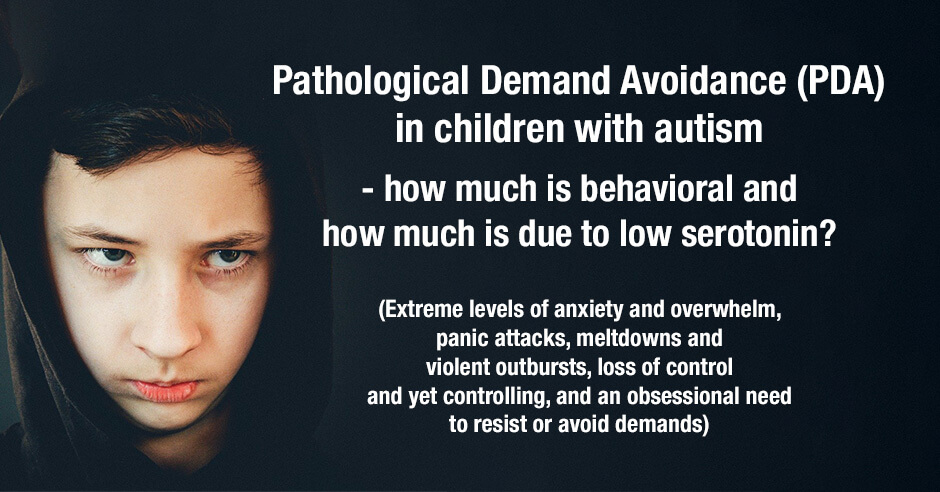
Pathological Demand Avoidance (PDA) in children with autism – how much is behavioral and how much is due to low serotonin?

June 9, 2023 By Trudy Scott 14 Comments

pda in children with autism

Pathological Demand Avoidance (PDA) is a condition associated with Autism Spectrum Disorder (ASD). It is a rare behavioral phenotype of ASD that is characterized by an overwhelming or obsessional need to resist or avoid demands, which can often lead to sensory overwhelm causing meltdowns and violent outbursts.

Although children in general may often try to avoid demands, children with PDA engage in avoidant behaviors at a greater level.

The key underlying factor is the extreme levels of anxiety associated with a loss of control, which can feel like a panic attack. Because of high levels of anxiety, they will often respond with a “No” even to tasks or activities that they normally enjoy and can spend a great deal of energy trying to gain control of situations and people.

(from an Australian PDA article: What is Pathological Demand Avoidance (PDA) and how can we address it? so I changed the spelling of behavioural and characterised to be American)

This is a typical overview of PDA and the common recommendations (as outlined in the above article) are all behavioral interventions: be an active listener and build trust, depersonalize requests, provide indirect praise, use humor and so on. Many parents find these helpful but the biochemical imbalances that trigger these behaviors are being ignored and/or there is a lack of awareness. I’d like to change this so more children and teens get quick relief.

There may be many different root causes such as low serotonin, low GABA, low blood sugar, gluten sensitivities, low zinc, low vitamin B6, low vitamin D, toxins, infections, phenols, salicylates etc. Today I’m going to discuss low serotonin and my rationale for reaching this conclusion. It’s also one of the quickest root causes to confirm (more on that below).

My rationale for proposing that Pathological Demand Avoidance (PDA) in children with autism is related to low serotonin

If we take the description above, all of these symptoms are classically found when a child (or adult) has low serotonin:

  • Extreme levels of anxiety
  • Can feel like a panic attack
  • Overwhelm
  • Meltdowns and violent outbursts
  • Loss of control
  • Spending a great deal of energy trying to gain control of situations and people (i.e. controlling)
  • Obsessional need to resist (any kind of obsessing is common when serotonin is low)

The second reason I suspect low serotonin with PDA is the timing of these behaviors i.e. later in the day. The article mentions that “A child with PDA can be very calm, cool and compliant at school and behave much worse at home. This is not because of incompetent parenting but because they have reached their tolerance levels and need to release that suppressed anxiety.”

This may well be a factor, however low serotonin symptoms are recognized as being more severe in the afternoon/evening when serotonin levels start to decline. If these children have low serotonin then it makes sense that these symptoms would start to increase once they get home.

My third reason is that low serotonin is common in autism/autism spectrum disorder (ASD).

Low serotonin is common in autism/autism spectrum disorder (ASD)

This paper, Vitamin D hormone regulates serotonin synthesis. Part 1: relevance for autism, summarizes it as follows: “The disruption of the serotonergic system is one of the most consistent observations associated with autism. Serotonin in the brain promotes prosocial behavior and correct assessment of emotional social cues.”  

Their recommendations are vitamin D and tryptophan supplementation which they say “may be a simple method of increasing brain serotonin without negative side effects.”

Testing for low levels of vitamin D and supplementing accordingly is important.

Are there other low serotonin symptoms and using a trial of tryptophan to confirm

As mentioned above, low serotonin is also one of the quickest root causes to confirm. As always, regardless of the diagnosis, we assess for low serotonin by rating symptoms on a scale of 1 to 10 (with 10 being most severe) and do a trial of tryptophan (chewed or a capsule opened on to the tongue). You will have your answer very quickly because we rate improvements in symptoms in the next 5 to 30 minutes.

In addition to the above symptoms we also look for these: worry-in-your-head and ruminating type of anxiety, phobias, lack of confidence, depression, negativity, imposter syndrome, PMS, irritability, insomnia and afternoon/evening cravings for carbs and sugar.

Lidtke is the only brand of tryptophan that I recommend simply because I see it work so well and because of quality issues with tryptophan in the past. Here are the Lidtke tryptophan products I recommend:

  • Lidtke Chewable Tryptophan 100 mg is a good for doing a trial and works when lower doses are needed as with children.
  • Lidtke Tryptophan 500 mg can be used for doing a trial. I open the capsule and use 100mg for a child. Going forward this product is helpful when higher doses are needed, especially at night. When opened it doesn’t taste very good but can be mixed with inositol or even glutamine powder or mashed banana.

You can read more on this blog: Tryptophan for the worry-in-your-head and ruminating type of anxiety, see the full list of low serotonin symptoms here and find the tryptophan products on the supplements blog here.

If you’re new to PDA, the DSM and low serotonin/other biochemical factors

Professor Elizabeth Newson was a developmental psychologist known for her work with children in the autism spectrum. This is her 2003 paper on the topic – Pathological demand avoidance syndrome: a necessary distinction within the pervasive developmental disorders

It’s not part of the DSM-5, the standard classification of mental disorders used by mental health professionals in the United States. This article, A Brief History of Pathological Demand Avoidance, offers a good backstory and shares why families want it to be part of the DSM.

Whether or not it becomes a distinct condition or autism subtype in the DSM, I’d like to see low serotonin (and likely low vitamin D) being recognized as one root cause. And acknowledging that there may be many other biochemical/nutritional approaches that should also be explored.

These symptoms are listed in the above article, in addition to avoidance behaviors, and all could fall into typical low serotonin symptoms:

  • verbal and physical aggression when feeling loss of control
  • self-injurious behavior
  • property destruction
  • refusal to participate in self-care such as bathing or brushing teeth (is this depression?)
  • inability to attend social events (is this fear and social anxiety?)
  • controlling what noises are allowed in a home, such as no music, or only certain music
  • inability to allow parents to have friends visit the home (is this also controlling?)
  • are often combative with siblings
  • issues with food, what to eat, when to eat, who to eat with
  • conflict with siblings

As mentioned above we also look into low GABA and low blood sugar (trials of GABA and glutamine will give quick confirmation too), gluten sensitivity, low zinc, low vitamin B6, toxins, infections, phenols, salicylates and so on. Of course, Nutritional and Dietary Intervention for Autism Spectrum Disorder is crucial.

Some success stories and connecting the dots with low serotonin

These two success stories illustrate how successful tryptophan and GABA can be and also how quickly they offer relief:

  • Rage, anxiety, cravings & insomnia in 11-year old girl with RAD/reactive attachment disorder: chewable tryptophan turns things around
  • Half a crushed GABA Calm for my autistic child: sleep, anxiety and sensorimotor skills (writing, horse riding and swimming) improve

This blog post illustrates similar low serotonin symptoms and end-of-the-day timing in adults with Alzheimer’s – Sundowning in Alzheimer’s and dementia: melatonin/tryptophan for the agitation, restlessness, anxiety, disturbed sleep and aggression. It’s low serotonin that is the cause, regardless of the diagnosis.

This blog illustrates another mechanism for these types of disruptive behaviors: Christmas tree phenols as a trigger for anger, meltdowns, anxiety, hyperactivity, insomnia, aggression, self-injury and autistic symptoms? There is a serotonin connection when there are phenol issues too.

Resources if you are new to using amino acids as supplements

If you are new to using amino acids as supplements, here is the Amino Acids Mood Questionnaire from The Antianxiety Food Solution (you can see all the symptoms of neurotransmitter imbalances, including low GABA, low serotonin and low endorphins).

If you suspect low levels of any of the neurotransmitters and do not yet have my book, The Antianxiety Food Solution – How the Foods You Eat Can Help You Calm Your Anxious Mind, Improve Your Mood, and End Cravings, I highly recommend getting it and reading it before jumping in and using amino acids on your own so you are knowledgeable. And be sure to share it with the practitioner/health team you or your loved one is working with.

There is an entire chapter on the amino acids and they are discussed throughout the book in the sections on gut health, gluten, blood sugar control, sugar cravings, anxiety and mood issues.

The book doesn’t include product names (per the publisher’s request) so this blog, The Antianxiety Food Solution Amino Acid and Pyroluria Supplements, lists the amino acids that I use with my individual clients and those in my group programs. You can find them all in my online store.

If, after reading this blog and my book, you don’t feel comfortable figuring things out on your own (i.e. doing the symptoms questionnaire and respective amino acids trials), if you need serotonin support, the Serotonin QuickStart Program is a good place to start. This is a paid online/virtual group program where you get my guidance on using tryptophan and 5-HTP safely, and community support during 5 LIVE Q&A calls. You can sign up to be notified when the next live launch of this program is happening. We take a deep dive into product options including Lidtke products and others if you’re not able to access Lidtke.

If you also have low GABA symptoms, the next step to get help is the GABA QuickStart Program.This is also a paid online/virtual group program where you get my guidance and community support. Another option is the budget-friendly GABA QuickStart Homestudy program.

If you are a practitioner, join us in The Balancing Neurotransmitters: the Fundamentals program. This is also a paid online/virtual program with an opportunity to interact with me and other practitioners who are also using the amino acids.

Now I’d like to hear from you

Have you been told your child may have Pathological Demand Avoidance (PDA)? Have you only been offered behavioral change tools and how have they helped?

Has low serotonin (and other biochemistry imbalances) been discussed too?

What symptoms does your child have and are things worse later in the day?

Has tryptophan helped reduce the above low serotonin symptoms in your child? How much helps and how quickly?

Or do you find 5-HTP works better? If yes, how much helps and how quickly?

What other biochemical changes have helped?

If you’re a practitioner, are you hearing about increased discussion of Pathological Demand Avoidance (PDA) and do you address low serotonin with your clients/patients?

Feel free to post your feedback and questions here in the comments.
Filed Under: Anger, Anxiety, Autism, Children/Teens, Depression, Tryptophan Tagged With: amino acids, anxiety, ASD, autism, behavioral, behavioural, biochemical imbalances, control, demands, GABA, gluten, infections, low blood sugar, low GABA, low serotonin, meltdowns, neurotransmitters, obsessional, outbursts, overwhelming, panic attack, Pathological Demand Avoidance, PDA, Phenols, salicylates, sensory overwhelm, the GABA Quickstart online program; and Balancing Neurotransmitters: the Fundamentals program for practitioners, toxins, tryptophan, violent, vitamin D

Huge rise in anxiety in college students (and other mental health issues): amino acid supplements and nutritional psychiatry as a solution.

May 21, 2021 By Trudy Scott 17 Comments

anxiety in college students

Is your son or daughter finding college/university overwhelming? Is he or she battling with new or worsening anxiety, worrying about results, has fears about success or fitting in, lying awake imagining the worst outcomes or maybe feeling like a perfectionist and getting stuck? Perhaps they have poor self-confidence, feel like an imposter and may even have panic attacks.  These signs and symptoms are all common with the low serotonin-type of worry-in-the-head anxiety, which may also include PMS (premenstrual syndrome), obsessive tendencies and anger issues.

They may also be experiencing the low GABA type of tension-anxiety, where they lie awake at night stiff and tense and self-medicate with too much sugar, carbs, junk food and/or alcohol (and maybe even pot and other drugs). There may be intrusive thoughts too and panic attacks also triggered by low GABA.

What about focus issues/ADHD and low motivation, no ability to follow-through on tasks and projects, procrastination and missing deadlines? These are all classic signs of low catecholamine, which also includes low energy, and feeling depressed/sad/low/flat. Your son or daughter may just want to crawl up in their dorm bed and not do anything or may spend hours doing mindless activities like binge watching Netflix or scrolling mindlessly through social media.

All of these signs and symptoms point to low levels of neurotransmitters or brain chemicals: low serotonin, low GABA and low dopamine. We need the right raw materials to make these neurotransmitters and the majority of college cafeterias are not providing nutrient-dense foods and/or foods that are unique for each person’s biochemistry (more on this below).

The huge rise in anxiety and other mental health issues in college students

It’s no wonder that we are seeing a huge rise in anxiety and other mental health issues in college students. Way too many students are dropping out and so many are struggling unnecessarily.

This 2019 Harvard blog post shares some alarming stats:

Anxiety in college is very common. According to the American College Health Association Fall 2018 National College Health Assessment, 63% of college students in the US felt overwhelming anxiety in the past year. In the same survey, 23% reported being diagnosed or treated by a mental health professional for anxiety in the past year.

This article in Nature earlier this year, The problem is greater than it’s ever been’: US universities urged to invest in mental-health resources, highlights points from US National Academies of Sciences, Engineering, and Medicine report:

  • 68% of university presidents listed student mental health as one of their most pressing issues
  • the dropout rate for students with diagnosed mental-health problems ranges from 43% to as high as 86%
  • The students who said that they had more trouble with anxiety or depression after the lockdown also reported greater alcohol use

It states that faculty members should “receive formal training to address and support student well-being” and “students should learn about mental-health issues as part of their introductory training.” They also say “Hiring more counsellors could be an important step, but counsellors alone can’t turn the tide.” I agree with all this but recommend adding nutritional psychiatry awareness, training and resources too.

Poor diet and nutritional deficiencies are a major contributing factor even though it’s seldom discussed. The good news is that there are relatively simple solutions – amino acids as supplements for quick relief and diet as the foundation – but it does take work.

Using amino acids as supplements for quick relief

Amino acids, used as supplements, are a quick way to offer immediate relief of symptoms:  tryptophan or 5-HTP (for the low serotonin worry-type anxiety), GABA (for the tension-type anxiety) and tyrosine (for the low dopamine poor-focus and low symptoms). Here are some examples:

  • A 23-year-old female college student, adopted and exposed to alcohol while in the womb, has some learning struggles. She doesn’t want to miss a day of taking 5-HTP, because she says that “it keeps her on her toes,” which she says means that it “keeps me focused,” when studying.
  • Tyrosine helped a young man who was learning new software: “Within an hour the stress just melted away!”, alleviating his anxiety and panic attacks and creating a feeling of calm focus.
  • A newly qualified nutritionist shared how she suffered badly from imposter syndrome at the end of her nutrition degree and she felt socially awkward in so many outings and situations. Her anxiety and stress were through the roof and her sleep was poor. She said these wonderful results: “What really tipped the balance was the supplementation of tyrosine, tryptophan & GABA.”

If you are new to the amino acids, here is the Amino Acids Mood Questionnaire from The Antianxiety Food Solution and additional information on Anxiety and targeted individual amino acid supplements: a summary

This lists The Antianxiety Food Solution Amino Acid and Pyroluria Supplements that I use with my individual clients and those in my group programs.

We use the amino acids for quick relief of symptoms and then focus on the foundations like diet and address other imbalances.

Diet as the foundation for students i.e. nutritional psychiatry

I first blogged about nutritional psychiatry in 2015 when the ISNPR position statement was published in World Psychiatry, the official journal of the World Psychiatric Association. This 2019 paper, Nutritional psychiatry: Towards improving mental health by what you eat provides an overview of the emerging field of nutritional psychiatry:

Does it matter what we eat for our mental health? Accumulating data suggests that this may indeed be the case and that diet and nutrition are not only critical for human physiology and body composition, but also have significant effects on mood and mental wellbeing. While the determining factors of mental health are complex, increasing evidence indicates a strong association between a poor diet and the exacerbation of mood disorders, including anxiety and depression, as well as other neuropsychiatric conditions.

The 2017 SMILES Trial is the first randomized controlled diet depression study and ONE THIRD of the dietary intervention group saw improvements in their depression symptoms.  This was just diet alone and switching from processed/junk food to real food with no specific dietary restrictions. Participants also reported improvements in anxiety symptoms. And the authors even addressed the cost factor, stating it was more affordable to eat this way.

Research supports this connection in college students. This is one of a growing number of studies, Eating behavior and relationships with stress, anxiety, depression and insomnia in university students, that concludes that:

unhealthy eating patterns are common in university populations and are related to anxiety, stress, and depression. Educational interventions to reduce unhealthy food consumption in university students can also result in psychological health improvements and/or vice versa.

Unfortunately, as students get more anxious and depressed their food choices get worse (especially for male students) and it becomes a vicious cycle. This paper, Examining the Role of Anxiety and Depression in Dietary Choices among College Students, reports:

Overall, a decrease in total caloric intake and an increase in sugar consumption were found as self-reported symptoms of anxiety and depression increased. In addition, there were sex differences in the relationship between depression and food choices. Men consumed more saturated fat as well as less fruits and vegetables as self-reported symptoms of depression increased. Results suggest symptoms of depression are a greater risk factor for poor nutrition in male college students than females.

It’s time for colleges/universities to recognize all this and teach about nutritional psychiatry. My book, The Antianxiety Food Solution is an excellent starting point for students, parents and educators (together with other blogs on this site).

Checking out cafeterias and cooking options

When looking at colleges are you also looking at what the cafeteria offers and if they cater for special diets (like gluten-free, dairy-free, Paleo etc) and/or offer real whole food, organic vegetables and fruit, grass-fed meat, wild fish and fermented foods?

Can students use a slow cooker, blender, Instant Pot or electric frying pan in their dorms?

Is there a dorm kitchen and can they take their own pots and pans (so non-stick pans can be avoided) and any of the above appliances?

Are there nearby living options that include a kitchen and a store with quality food for purchase?

I feel colleges/universities should be rated on all of the above in addition to everything else.

It all starts at home before they leave for college

Having a good college cafeteria and dorm kitchens is one step in the right direction, but these young adults also need to understand the impact of a breakfast of bagels and coffee or not having breakfast or the fact that gluten may trigger a panic attack and make them sad. They need to know how to shop and cook if there is a shared dorm kitchen or apartment. And they need to make the right choices when they do eat in the cafeteria or nearby restaurants (assuming good options are available). This all starts at home with you before they leave for college.

Katie shares this about her daughter who plans to use the college cafeteria for some meals and also cook in the apartment kitchen on weekends:

My daughter was just saying today how glad she is that she doesn’t have to figure out [the connection between increased anxiety, fatigue, brain fog, sadness and what they are eating] while learning how to live on her own and go to college. I changed how I ate 8 years ago for my PCOS and about 3 years ago she decided to give it a try after feeling so horrible but seeing my change. I’m so proud of her for embracing a healthier lifestyle in her teen years when everyone around her is subsisting off energy drinks and vending machine food. It makes me think that if we offer them a little education, they’ll make good choices for themselves.

This mom can also feel proud that she led by example for her daughter (and I appreciate them for letting me share here).

But I believe the colleges need to play a role in this too. They are providing food and this is a perfect educational opportunity that will serve their students (and future generations), solve the mental health crisis they are struggling with and prevent drop-outs (which is having an impact on their bottom-line).

Do you believe colleges/universities should be rated on all of the above in addition to everything else? What have you done to check out cafeterias and cooking options for your daughter or son?

Has your son or daughter benefited from any of the amino acids or eating real whole food (and according to their own needs?

Do you work in a college and are you seeing this rise in anxiety and depression? If yes, how do we get these changes implemented?

How do we educate students once they are at college (other than making sure campus food is excellent):

  • a lifestyle/diet/anxiety app with resources and tracking?
  • online training with a nutritionist/coach and access to an online forum and live Q&As?
  • one-on-one campus nutrition coaches?
  • make nutritional psychiatry part of the curriculum?
  • produce a documentary following the lives of students on campus and showing the transformation they experience?

Feel free to post your questions and ideas here too.


Filed Under: Anxiety, Diet, GABA, Nutritional Psychiatry, serotonin Tagged With: ADHD, alcohol, amino acid supplements, anxiety, cafeteria, carbs, college, college students, cooking, daughter, fears, focus issues, GABA, imposter, junk food, low motivation, mental health, nutritional psychiatry, overwhelming, panic attacks, perfectionist, procrastination, rise in anxiety, serotonin, son, stuck, sugar, tension, tryptophan, tyrosine, university, worry, worrying

Primary Sidebar

NEW! GABA QuickStart Homestudy (with special intro pricing)

gaba quickstart homestudy

Free Report

9 Great Questions Women Ask about Food, Mood and their Health

You'll also receive a complimentary subscription to my ezine "Food, Mood and Gal Stuff"


Connect with me

Popular Posts

  • Amino Acids Mood Questionnaire from The Antianxiety Food Solution
  • The Antianxiety Food Solution Amino Acid and Pyroluria Supplements
  • Pyroluria Questionnaire from The Antianxiety Food Solution
  • Collagen and gelatin lower serotonin: does this increase your anxiety and depression?
  • Tryptophan for the worry-in-your-head and ruminating type of anxiety
  • GABA for the physical-tension and stiff-and-tense-muscles type of anxiety
  • The Antianxiety Food Solution by Trudy Scott
  • Seriphos Original Formula is back: the best product for anxiety and insomnia caused by high cortisol
  • Am I an anxious introvert because of low zinc and vitamin B6? My response to Huffington Post blog
  • Vagus nerve rehab with GABA, breathing, humming, gargling and key nutrients

Recent Posts

  • What do I use instead of Seriphos to help lower high cortisol that is affecting my sleep and making me anxious at night?
  • BeSerene™ GABA/theanine cream eases severe muscle tension in her neck/shoulders, prevents her bad headaches and quells her anxiety
  • How the correct approach, dose and sublingual use of GABA can be calming and not cause a flushed and itchy face and neck
  • The amino acid glutamine improves low mood by addressing gut health, and it has calming effects too
  • Flight anxiety with heightened breath, physical tension and also fearing the worst (the role of low GABA and low serotonin)

Categories

  • 5-HTP
  • AB575
  • Addiction
  • ADHD
  • Adrenals
  • Alcohol
  • Allergies
  • Alzheimer's disease
  • Amino Acids
  • Anger
  • Antianxiety
  • Antianxiety Food Solution
  • Antidepressants
  • Anxiety
  • Anxiety and panic
  • Autism
  • Autoimmunity
  • benzodiazapines
  • Bipolar disorder
  • Books
  • Caffeine
  • Cancer
  • Candida
  • Children/Teens
  • Collagen
  • Cooking equipment
  • Coronavirus/COVID-19
  • Cravings
  • Depression
  • Detoxification
  • Diabetes
  • Diet
  • DPA/DLPA
  • Drugs
  • EFT/Tapping
  • EMF
  • EMFs
  • Emotional Eating
  • Endorphins
  • Environment
  • Essential oils
  • Events
  • Exercise
  • Fear
  • Fear of public speaking
  • Fertility and Pregnancy
  • Fish
  • Food
  • Food and mood
  • Functional neurology
  • GABA
  • Gene polymorphisms
  • General Health
  • Giving
  • Giving back
  • Glutamine
  • Gluten
  • GMOs
  • Gratitude
  • Gut health
  • Heart health/hypertension
  • Histamine
  • Hormone
  • Hyperparathyroidism
  • Hypoglycemia
  • Immune system
  • Inflammation
  • Insomnia
  • Inspiration
  • Introversion
  • Joy and happiness
  • Ketogenic diet
  • Lithium orotate
  • Looking awesome
  • Lyme disease and co-infections
  • MCAS/histamine
  • Medication
  • Men's health
  • Mental health
  • Mercury
  • Migraine
  • Mold
  • Movie
  • MTHFR
  • Multiple sclerosis
  • Music
  • NANP
  • Nature
  • Nutritional Psychiatry
  • OCD
  • Osteoporosis
  • Oxalates
  • Oxytocin
  • Pain
  • Paleo
  • Parasites
  • Parkinson’s disease
  • PCOS
  • People
  • PMS
  • Postpartum
  • PTSD/Trauma
  • Pyroluria
  • Questionnaires
  • Real whole food
  • Recipes
  • Research
  • Schizophrenia
  • serotonin
  • SIBO
  • Sleep
  • Special diets
  • Sports nutrition
  • Stress
  • Sugar addiction
  • Sugar and mood
  • Supplements
  • Teens
  • Testimonials
  • Testing
  • The Anxiety Summit
  • The Anxiety Summit 2
  • The Anxiety Summit 3
  • The Anxiety Summit 4
  • The Anxiety Summit 5
  • The Anxiety Summit 6
  • Thyroid
  • Thyroid health
  • Toxins
  • Tryptophan
  • Tyrosine
  • Uncategorized
  • Vegan/vegetarian
  • Women's health
  • Yoga

Archives

  • October 2025
  • September 2025
  • August 2025
  • July 2025
  • June 2025
  • May 2025
  • April 2025
  • March 2025
  • February 2025
  • January 2025
  • November 2024
  • October 2024
  • September 2024
  • August 2024
  • July 2024
  • June 2024
  • May 2024
  • April 2024
  • March 2024
  • February 2024
  • January 2024
  • December 2023
  • November 2023
  • October 2023
  • September 2023
  • August 2023
  • July 2023
  • June 2023
  • May 2023
  • April 2023
  • March 2023
  • February 2023
  • January 2023
  • December 2022
  • November 2022
  • October 2022
  • September 2022
  • August 2022
  • July 2022
  • June 2022
  • May 2022
  • April 2022
  • March 2022
  • February 2022
  • January 2022
  • December 2021
  • November 2021
  • October 2021
  • September 2021
  • August 2021
  • July 2021
  • June 2021
  • May 2021
  • April 2021
  • March 2021
  • February 2021
  • January 2021
  • December 2020
  • November 2020
  • October 2020
  • September 2020
  • August 2020
  • July 2020
  • June 2020
  • May 2020
  • April 2020
  • March 2020
  • February 2020
  • January 2020
  • December 2019
  • November 2019
  • October 2019
  • September 2019
  • August 2019
  • July 2019
  • June 2019
  • May 2019
  • April 2019
  • March 2019
  • February 2019
  • January 2019
  • December 2018
  • November 2018
  • October 2018
  • September 2018
  • August 2018
  • July 2018
  • June 2018
  • May 2018
  • April 2018
  • March 2018
  • February 2018
  • January 2018
  • December 2017
  • November 2017
  • October 2017
  • September 2017
  • August 2017
  • July 2017
  • June 2017
  • May 2017
  • April 2017
  • March 2017
  • February 2017
  • January 2017
  • December 2016
  • November 2016
  • October 2016
  • September 2016
  • August 2016
  • July 2016
  • June 2016
  • May 2016
  • April 2016
  • March 2016
  • February 2016
  • January 2016
  • December 2015
  • November 2015
  • October 2015
  • September 2015
  • August 2015
  • July 2015
  • June 2015
  • May 2015
  • April 2015
  • March 2015
  • February 2015
  • January 2015
  • December 2014
  • November 2014
  • October 2014
  • September 2014
  • August 2014
  • July 2014
  • June 2014
  • May 2014
  • April 2014
  • March 2014
  • February 2014
  • January 2014
  • December 2013
  • November 2013
  • October 2013
  • September 2013
  • August 2013
  • July 2013
  • June 2013
  • May 2013
  • April 2013
  • March 2013
  • February 2013
  • January 2013
  • December 2012
  • November 2012
  • October 2012
  • August 2012
  • July 2012
  • June 2012
  • May 2012
  • April 2012
  • March 2012
  • February 2012
  • January 2012
  • December 2011
  • November 2011
  • October 2011
  • September 2011
  • August 2011
  • July 2011
  • June 2011
  • May 2011
  • April 2011
  • March 2011
  • February 2011
  • January 2011
  • December 2010
  • October 2010
  • September 2010
  • July 2010
  • May 2010
  • April 2010
  • March 2010
  • February 2010
  • January 2010
  • November 2009

Share the knowledge!

The above statements have not been evaluated by the Food and Drug Administration. Products listed in this website are not intended to diagnose, treat, cure or prevent any disease.

The information provided on this site is for informational and educational purposes only and is not intended as a substitute for advice from your physician or other health care professional. You should consult with a healthcare professional before starting or modifying any diet, exercise, or supplementation program, before taking or stopping any medication, or if you have or suspect you may have a health problem.


Copyright © 2026 Trudy Scott. All Rights Reserved. | Privacy | Terms and Conditions | Refund Policy | Medical Disclaimer

Free Report

9 Great Questions Women Ask about Food, Mood and their Health

You’ll also receive a complimentary subscription to my ezine “Food, Mood and Gal Stuff”