• Skip to primary navigation
  • Skip to main content
  • Skip to primary sidebar

everywomanover29 blog

Food, Mood and Women's Health – Be your healthiest, look and feel great!

  • Blog
  • About
  • Services
  • Store
  • Resources
  • Testimonials
  • The Book
  • Contact
  • Search this site

autism

OCD, anxiety, PANDAS and PANS: Dr Brandon Brock

June 18, 2017 By Trudy Scott 6 Comments

This is a quick reminder that The Autism, ADHD and Sensory Processing Disorder Summit starts tomorrow.

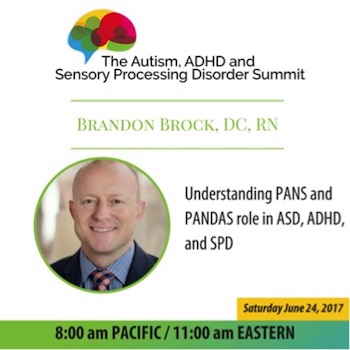
I really enjoyed Dr. Brandon Brock’s interview, Understanding PANS and PANDAS role in ASD, ADHD and SPD, and it is particularly relevant for anxiety and OCD. During the interview he describes what he often finds with these children with PANS (Pediatric Acute-onset Neuropsychiatric Syndrome) and PANDAS (Pediatric Autoimmune Neuropsychiatric Disorders Associated with Streptococcal Infections):

A lot of times the child may come in having nightmares or they just start bed wetting or they’re having fears or a little bit of irritability and they get blamed on all kinds of things. You know they get blamed on maybe a sketchy home environment that’s really not that sketchy, or maybe they just say it’s normal for a child to go through this, or maybe they’re just starting to hit puberty so they’re getting more aggressive. In other words there’s always a reason other than looking at the brain physiology. Why is it changing? Is the brain physiology changing because maybe there is an environmental factor? You know maybe there is some abuse or something. And that does happen.

But on a bigger scale maybe they had some sort of infectious disease, or maybe they had a toxin that got into their body, and it made their immune system react, and it started giving them symptoms like abnormal movements, ticks, especially in the face, lip smacking, hair twirling.

He talks about how these immune reactions to the brain and basal ganglia cause symptoms:

So when you have an immune response against the basal ganglia it’s kind of like pushing the play button over and over and over again. So now we see things like obsessive compulsive disorder, we see tics, we see choreiform movements [repetitive and rapid, jerky, involuntary movement that appears to be well-coordinated], we see nightmares and bizarre thoughts, or the kid does something that we call a perseveration. It is the repetition of a particular response (such as a word, phrase, or gesture), so they say something over and over and over. So there’s a fine line between a kid being a kid and then a kid having something like PANDAS. And really what we call that is auto-immune encephalitis, which just means inflammation of the brain. So the kid’s brain really is kind of like, if you want to say it metaphorically, on fire.

Dr. Brock talks about the 2 strep tests or anti-streptococcal antibody titers that are commercially available and determines whether the child has had a previous strep infection:

  • Antistrepolysin O (ASO) titer,* which rises 3-6 weeks after a strep infection, and
  • Antistreptococcal DNAse B (AntiDNAse-B) titer, which rises 6-8 weeks after a strep infection.]

In addition to the many other labs tests they do, he goes on to discuss another whole set of antibodies that can become positive down the road:

Dopamine antibodies, calcium calmodulin mechanisms, and then all of the intra-cellular structures, like the tubulin structures, the alpha and beta tubulin structures, the micro-tubulin structures, and even the cell wall. So we have an antibody panel that really says it’s either the structure, it’s either the receptor, or it’s the actual pumping mechanism that makes dopamine.

He didn’t mention this but it’s the Cunningham Panel done by Moleculera Labs

Dr. Brock goes on to talk about functional neurology, diet, how to find a good practitioner and much more. It’s a great interview!

The Autism, ADHD and Sensory Processing Disorder Summit, hosted by Tara Hunkin, NTP, runs from June 19-28, 2017.
It will be 10 days of eye opening information into the root causes of your child’s neurological dysfunction. Imagine learning about what may have caused their symptoms and how to address them with nutrition and biomedical approaches and leverage the power of positive neuroplasticity to improve function, health and their lives.

As I mentioned in the prior summit announcement many of the interviews on this summit may be applicable for you even if you don’t have a child with a sensory processing disorder, ADHD and/or autism – many of my clients with anxiety often benefit from the biomedical support that many of these speakers are addressing. Simply replace sensory processing disorder, ADHD and/or autism with anxiety and listen and learn.

And if you’re new to my work, do also tune into my interview: Anxiety’s Role in ASD, ADHD and SPD and how nutrient therapy can help.

Here are a few other speakers and their interesting topics (and I can’t wait to hear them all):

  • David Perlmutter, MD: The role of the microbiome in neurological health.
  • Alex Doman: Using music to heal your child’s brain
  • Derrick MacFabe, MD: The role of propionic acid in the multi-system challenges found in ASD.
  • Sonia McGowin, DC: How to know if biomedical intervention is right for your child.

You can register for The Autism, ADHD and Sensory Processing Disorder Summit here
Filed Under: Autism Tagged With: ADHD, anxiety, autism, Brandon Brock, OCD, PANDAS, PANS, Sensory Processing Disorder, strep, Tara Hunkin

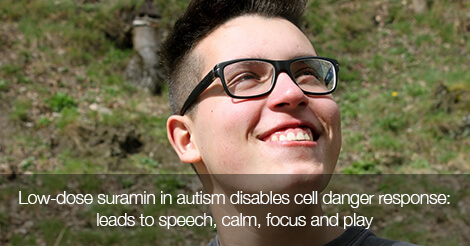
Low-dose suramin in autism disables cell danger response: leads to speech, calm, focus and play

June 9, 2017 By Trudy Scott 10 Comments

I’m fascinated and excited by this new research on cell danger response (CDR): Low-dose suramin in autism spectrum disorder: a small, phase I/II, randomized clinical trial abstract and the ramifications for autism as well as anxiety and other chronic health conditions. This recent study was double-blind, placebo-controlled and involved 10 boys, ages 5 to 14 years, all diagnosed with autism. Five of the 10 boys received a single, intravenous infusion of suramin and the other five boys received a placebo.

As reported in this Science Daily summary: Century-old drug as potential new approach to autism, the results seen in two of the autistic children after a single low dose of the 100 year old medication was profound:

The six-year-old and the 14-year-old who received suramin said the first sentences of their lives about one week after the single suramin infusion.

The most changed behaviors in all of the five boys who received the suramin were: 

social communication and play, speech and language, calm and focus, repetitive behaviors and coping skills.

One of the parents of a 14 year-old who had not spoken a complete sentence in 12 years said this:

We saw improvements in our son after suramin that we have never seen before.

Within an hour after the infusion, he started to make more eye contact with the doctor and nurses in the room. There was a new calmness at times, but also more emotion at other times. He started to show an interest in playing hide-and-seek with his 16-year-old brother. He started practicing making new sounds around the house. He started seeking out his dad more.

We have tried every new treatment out there for over 10 years. Nothing has come close to all the changes in language and social interaction and new interests that we saw after suramin. We saw our son advance almost three years in development in just six weeks.

I can’t even begin to imagine the joy these parents must have felt to see their children respond like this!

Unfortunately the therapeutic benefits of suramin was temporary and the benefits gradually faded after several weeks as the effects of the drug wore off.

Suramin is used for African sleeping sickness and river blindness, which are caused by parasites and does have some very serious side-effects when used at higher doses (in AIDS research in 1987 sixteen patients died while receiving suramin or within three weeks of discontinuation of drug therapy).

In this autism study the children received a single very low dose intravenous infusion which did cause a rash.

The authors do acknowledge that suramin isn’t the solution but rather a way to test the cell danger hypothesis as a “possible unifying theory” that contributes to the cause of autism (and other chronic conditions that don’t resolve).

So what does the cell danger response actually mean? It’s taken me a fair bit of reading to understand it so let me share this explanation from one of the earlier mouse studies done by lead researcher Robert K. Naviaux, MD, PhD:

When cells are exposed to danger in the form of a virus, infection, toxin, or even certain genetic mutations [or traumas], they react defensively, shutting down ordinary activities and erecting barriers against the [real or] perceived threat. One consequence is that communication between cells is reduced which …may interfere with brain development and function, leading to autism [and other chronic conditions]

Even when the danger is no longer there – the infection or toxin or trauma has been removed, the diet has been changed, the nutritional imbalances have been addressed, the inflammation has been reduced etc. – the cells stay in danger mode and are not able to communicate and do what they need to do.

By using suramin the cell danger response/CDR signal is blocked or disabled or switched off so the cells no longer see the perceived danger, allowing cells to restore normal communication and function, and symptoms are reversed.

A simple way to think of it is like this: like a bear, the cells are in hibernation because it’s winter and when summer comes around they stay in hibernation because they still think there is the danger of winter or the lack of food. This is the cell danger response and the cells are stuck. The suramin tells the cells it really is summer, there is plenty of salmon and berries and it’s safe to come out of hibernation.

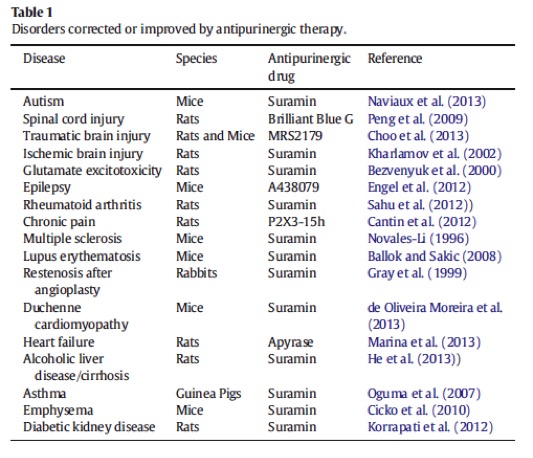
This approach is called antipurinergic therapy or APT and research shows it has applications for a number of conditions. These are disorders corrected or improved by antipurinergic therapy:

(table from Metabolic features of the cell danger response)

I’m excited about the amazing results in these children and about the promise of what this holds. But I do still have so many questions about this research and look forward to learning more and sharing more with you as I do:

  • Why was suramin used and is there a safe drug that could achieve the same results?
  • Or rather, what natural herb and/or nutrient/s can achieve the same or similar results without the side-effects?
  • What is planned for future CDR research for children with autism and for other conditions? (I do know Dr. Naviaux is planning CFS research later this year)
  • What role does vitamin B6 and serotonin play in all this? (the cell danger response yields vitamin B6 deficiency)
  • Could there be applications for anxiety for you if you have tried ALL the nutritional/biochemical approaches and are still not seeing symptom resolution?
  • Could this mechanism help you if you’ve been harmed by benzodiazepines, SSRIs and/or fluoroquinolones and can’t take any supplements?
  • Could this mechanism help when you have a combination of many stresses like past trauma, genetic defects, heavy metals, mold and Lyme, as well as gut issues and nutritional imbalances?

Feel free to share insights and questions in the comment box below.

Filed Under: Autism Tagged With: autism, suramin

Anxiety in autism, ADHD and sensory processing disorders

June 5, 2017 By Trudy Scott 8 Comments

I had the pleasure of being interviewed by Tara Hunkin on the upcoming Autism, ADHD and Sensory Processing Disorder Summit and share my expertise on anxiety since we so often see anxiety in this population. My topic is: Anxiety’s Role in ASD, ADHD and SPD and how nutrient therapy can help.

I start out sharing some of the research on the incidence and connections.

This 2009 paper Sensory Overresponsivity and Anxiety in Children With ADHD in the American Journal of Occupational Therapy, reports that:

Approximately 25% of children with attention deficit hyperactivity disorder (ADHD) have a comorbid anxiety disorder.

The purpose of this particular study was to determine whether sensory overresponsivity (SOR) or sensory processing disorders are related to increased anxiety in children with ADHD. There were twenty-four children between the age of 6 to 10 with ADHD and 24 children without ADHD.

The study concluded that:

Children in the ADHD + SOR [sensory over responsivity] group were significantly more anxious than both the ADHD-only and non-ADHD (control) groups.

Occupational therapists treating children with ADHD and SOR should be aware that these children may also have anxiety and discuss options with families for prevention or treatment.

I would add that anyone working with these children should be aware of the connections: doctors, nutritionists, psychologists and anyone else on the health team.

We also discuss this 2012 paper, also from the American Journal of Occupational Therapy – Sensory Overresponsivity and Anxiety in Typically Developing Children and Children With Autism and Attention Deficit Hyperactivity Disorder: Cause or Coexistence?

Reviews of the coexistence of ASD [autism spectrum disorder] and anxiety disorders have concluded that among children and youth with ASD, anxiety disorders are highly prevalent, clinically significant, and varied as to specific type of anxiety disorder

Approximately 25% of children with attention deficit hyperactivity disorder (ADHD) also have anxiety disorder, a rate that is elevated when ADHD is seen in conjunction with conduct or oppositional defiant disorders

The paper mentions these 3 factors as models worthy of further study in order to understand the relationship between anxiety, sensory overresponsivity, autism and ADHD:

(1) anxiety caused by, or a symptom of, SOR (primary anxiety model);
(2) SOR caused by, or a symptom of, anxiety (primary SOR model); and
(3) the presence of both anxiety and SOR, linked by way of another factor

Based on what I know about anxiety I feel it could be a combination of all of the above.

My interview also covers the following around how to address the anxiety in these children and their moms (who also often have anxiety):

  • Low serotonin anxiety, symptoms, using tryptophan and 5-HTP and precautions with using them with an SSRI
  • A young girl with RAD (reactive attachment disorder) with rage/anger, anxiety, insomnia, and sugar cravings and the successful use of chewable tryptophan, addressing low iron and a gluten-free diet
  • A young boy with OCD and the successful use of both tryptophan and inositol
  • Low GABA anxiety, the use of GABA and not phenibut, and cautions about using too much
  • A young girl with ADHD and irritability and the successful use of GABA
  • Pyroluria incidence and symptoms and how it ties back to neurotransmitter imbalances

Sensory processing disorders, ADHD and autism are not my expertise and I don’t work much with children so I’m really pleased to be bringing you this information via the other amazing speakers AND listening and learning myself!

Here are some speakers and topics I’m particularly interested in

  • Brandon Brock, RN, DC: Understanding PANS and PANDAS role in ASD, ADHD and SPD.
  • Elizabeth Mumper, MD: Mitochondrial Dysfunction: What it is and how to address the underlying causes.
  • Richard Frye, MD, Ph.D.: Cerebral Folate Deficiency: and how it impairs neurological health.
  • Nancy O’Hara, MD: What you need to know about cell danger response in ASD & other neurodevelopmental disorders.
  • John Tjenos, NTP: The importance of the vagus nerve and how to build vagal tone with essential oils.

We have so much to learn from practitioners and researchers working in this area. And children affected by these conditions do recover!

The Autism, ADHD and Sensory Processing Disorder Summit, hosted by Tara Hunkin, NTP, runs from June 19-28, 2017.

It will be 10 days of eye opening information into the root causes of your child’s neurological dysfunction. Imagine learning about what may have caused their symptoms and how to address them with nutrition and biomedical approaches and leverage the power of positive neuroplasticity to improve function, health and their lives.

Do also keep in mind that these topics may have relevance for you even if you don’t have a child with a sensory processing disorder, ADHD and/or autism. These children are the canaries in the coal mine and many of my clients with anxiety can benefit from the biomedical support that many of these speakers are addressing. Simply replace sensory processing disorder, ADHD and/or autism with anxiety and listen and learn.

You can register for The Autism, ADHD and Sensory Processing Disorder Summit here
Feel free to ask questions or provide feedback and your experiences in the comment section below.

Filed Under: Autism, Events Tagged With: ADHD, anxiety, autism, Brandon Brock, Elizabeth Mumper, GABA, inositol, Nancy O’Hara, sensory overresponsivity, Sensory Processing Disorder, serotonin, Tara Hunkin, tryptophan

Autism, anxiety and the gut: Microbiota transfer therapy or fecal microbiota transplant

April 17, 2017 By Trudy Scott 8 Comments

We know that one of your greatest ally in health is your microbiome – the trillions of bacteria that are the control center of your health! But sometimes your microbiome can actually cause problems. One way to improve the microbiome is via microbiota transfer therapy (MTT), also called fecal microbiota transplant (FMT).  

I was recently interviewed by Dr. Raphael Kellman for the Microbiome Medicine Summit 2 (it starts May 8) and shared newly published research on this approach – Microbiota Transfer Therapy alters gut ecosystem and improves gastrointestinal and autism symptoms: an open-label study

Here are some of the details of this very promising research:

  • It was a small study on children 6 to 7 years old
  • They were given antibiotics for 2 weeks
  • They were given a bowel cleanse
  • They were given an extended fecal microbiota transplant. This was a high initial dose followed by daily and lower maintenance doses for 7–8 weeks.
  • By the end of treatment and 80% reduction of gastrointestinal symptoms were seen. This included: constipation, diarrhea, indigestion, and abdominal pain.
  • These gastrointestinal symptoms improvements persisted for 8 weeks after treatment.
  • They also saw behavioral autism spectrum disorder symptoms improve significantly and remain improved 8 weeks after treatment ended. These symptoms included irritability, hyperactivity, lethargy and socialization

During the interview Dr. Kellman asked what bacterial changes were observed and I didn’t have the study on hand. I looked it up after the interview and this is what they report

Specifically, overall bacterial diversity and the abundance of Bifidobacterium, Prevotella, and Desulfovibrio among other taxa increased following MTT, and these changes persisted after treatment stopped (followed for 8 weeks).

Also

following MTT, the relative abundance of Bifidobacterium significantly increased fourfold and became comparable to its relative abundance in neurotypical children

They conclude that the MTT

shifted gut microbiota of children with ASD toward that of neurotypical children … consistent with the hypothesis that gut microbiota may be at least partially responsible for GI and ASD symptoms

Research just published last month reports similar results with digestive issues and anxiety. Germ-free mice were given the fecal microbiota from healthy control individuals or IBS patients with diarrhea, with or without anxiety. They found that the microbiota profiles in the mice matched the microbiota profiles of the human donors, affecting their digestive function and anxiety levels! I’ll share more on this study in a future blog post.

I hope you’ll join us on the Microbiome Medicine Summit 2, May 8-15, 2017 to learn more

Your host, Dr. Raphael Kellman, has seen the profound healing power of microbiome medicine and how it can address many diseases.

Learn the lessons and methodologies of microbiome medicine – it could improve your health, longevity, vitality and assist with unresolved problems!

It can enhance your brain function, improve mood, reduce anxiety and depression; and address gastrointestinal illnesses, including IBS, Crohn’s and colitis; counter newly identified GI/brain syndromes; and address autism and autoimmune diseases at the root cause!

I thoroughly enjoyed my interview with Dr. Kellman and look forward to hearing all the other great interviews. You can find details and registration here

I hope you can join us!

Filed Under: Autism, Events Tagged With: anxiety, autism, Dr. Kellman, fecal microbiota transplant, microbiome medicine summit, Microbiota transfer therapy

Zinc deficiency alters chick gut bacteria makeup and function

September 2, 2016 By Trudy Scott 11 Comments

chick-gut-mulfunction

A press release published by Cornell University shares research that has found that zinc deficiency alters gut bacteria makeup and function:

The researchers used broiler chickens in the study, partly due to their omnivorous appetites – which allowed the researchers to feed them purified diets – and because of their fatty acids and genetic similarities to humans.

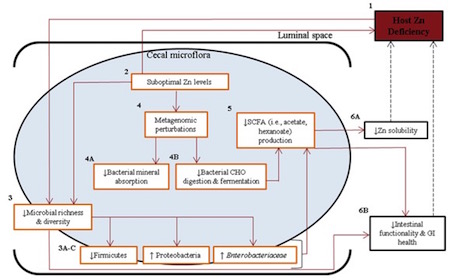
There is a great diagram in the actual study: Chronic Zinc Deficiency Alters Chick Gut Microbiota Composition and Function. It explains the proposed mechanisms by which a zinc-deficient gut microbiome may perpetuate a zinc-deficient state.

zinc-chick-diagram

Figure 8. Schematic diagram depicting proposed mechanisms by which a Zn [zinc] deficient gut microbiome may worsen a Zn deficient phenotype. Zn deficiency (1), caused by insufficient dietary Zn (2), induces a decrease in gut microbial diversity (3), and an outgrowth of bacteria particularly suited to low Zn conditions, leading to dysbiosis [3A–C]. Lack of dietary Zn also leads to alterations in the functional capacity of the microflora (4), causing multiple effects including decreased expression of pathways related to mineral (i.e., Zn) absorption (4A) and carbohydrate digestion and fermentation (4B). A decrease in the latter pathway may also cause a depression in the production of SCFAs [short chain fatty acids] (5), compounds responsible for improving the bioavailability of Zn. Altogether, these microbial effects may decrease Zn absorbability (6A) and disturb GI health (6B), thereby perpetuating a Zn deficient state. Red arrows and orange–lined boxes denote observations of this study, and dashed arrows and black–lined boxes describe published findings.

The above is shared here under the Creative Commons Attribution License and can be found here: Reed, S.; Neuman, H.; Moscovich, S.; Glahn, R.P.; Koren, O.; Tako, E. Chronic Zinc Deficiency Alters Chick Gut Microbiota Composition and Function. Nutrients 2015, 7, 9768-9784.

Zinc status is notoriously difficult to assess so I am fascinated by the findings of this Cornell University study suggesting

a simple new way to test for zinc deficiency by analyzing a patient’s fecal sample and seeing if the profile of gut bacteria matches the makeup one would expect in a zinc-deficient individual.

The authors suggest that with additional research this zinc stool test could become a noninvasive biomarker for zinc deficiency.

Zinc deficiency is common, affecting 25 percent of the world’s population, especially in the developing world.

Zinc deficiency plays a major role in anxiety and depression. Here is a recent paper on the connection between low serum zinc, high CRP (a marker of inflammation) and pre- and post-natal anxiety and depression: Lower Serum Zinc and Higher CRP Strongly Predict Prenatal Depression and Physio-somatic Symptoms, Which All Together Predict Postnatal Depressive Symptoms.

New research, soon to be published by the Journal of Neuroscience by researchers at the University of Auckland, shows the importance of zinc in autism. The study looks at how zinc can affect brain cell communication that is altered at the cellular level.

The researchers suggest this research may have applications for psychiatric disorders such as schizophrenia (and presumably anxiety and depression too).

I feel that we have an under-recognized opportunity to have a bigger impact on mental and physical health if we take zinc deficiency more seriously.

Have you had your zinc status assessed and do you supplement accordingly?

If you’re a practitioner, do you regularly check the zinc status of all your patients/clients?

Filed Under: Gut health Tagged With: anxiety, autism, depression, gut, Gut bacteria, microbiome, zinc, Zinc stool test

The Anxiety Summit – Addressing Anxiety in Individuals with Autism

June 12, 2016 By Trudy Scott 15 Comments

Julie Mathews_Anxiety4

Julie Matthews, CNC, author of Nourishing Hope for Autism, was interviewed on the Anxiety Summit by host of the Anxiety Summit, Trudy Scott, Food Mood Expert and Nutritionist, author of The Antianxiety Food Solution.

Addressing Anxiety in Individuals with Autism

  • How common is anxiety in autism and medications commonly prescribed
  • Autism prevalence and the exponential growth and why this is important beyond those with autism
  • Underlying biochemical factors that contribute to anxiety in autism
  • The microbiome and gut involvement
  • Sensory sensitivity, light and sound sensitivity, weighted blankets and more
  • Foods, food compounds and nutrients like GABA and zinc
  • The far-reaching benefits of a BioInidividual Nutrition approach for autism, anxiety, ADHD and many chronic diseases

This is the first paper we discussed: Treatment of comorbid anxiety and autism spectrum disorders

Clinically significant anxiety occurs frequently among individuals with autism spectrum disorders (ASDs) and is linked to increased psychosocial, familial, behavioral and academic impairment beyond the core autism symptoms when present.

Up to 80% of children with ASDs experience clinically significant anxiety, with high comorbidity rates for social phobia (30%), generalized anxiety disorder (GAD) (35%), obsessive–compulsive disorder (OCD) 37%  and separation anxiety disorder (SAD) 38% having been observed (30, 35, 37 and 38%, respectively).

Patients with ASDs and anxiety are at increased risk for social avoidance, difficulties establishing and maintaining peer relationships, sleep problems, disruptions in family functioning and at school.

SSRIs have NOT been consistently linked to improvements in core ASD symptoms (e.g., communication and social skills deficits, repetitive behaviors and stereotypies) or anxiety and repetitive behaviors in youths

High rates of behavioral activation (e.g., agitation, irritability, aggression and disinhibition) and diminished tolerability have been reported across trials, which may suggest that youths with ASDs are more vulnerable to side effects compared with their typically developing peers.

Here is the initial multisystem study Julie covered at the start – Pathway Network Analyses for Autism Reveal Multisystem Involvement:  Major Overlaps with Other Diseases and Convergence Upon MAPK and Calcium Signaling

Julie covered folate receptor autoantibodies and cerebral folate deficiency (common in autism and now found in anxiety too):

It was a concept that in the autism community was brought forward by Dr. Fry and Dr. Rosignol and Dr. Quadros looking at this particular condition.  And so there’s a condition called cerebral folate deficiency.  And it’s a neurodevelopmental disorder where the baby doesn’t get enough folate to their cerebral spinal fluid in their brain.  And so they don’t get the proper development that they need.  And the reason for that is they looked into what could be causing that and they found that children with autism have a high rate of folate receptor autoantibodies.  And so what happens is the folate receptor is basically taking folate from the bloodstream and puts it into the cerebral spinal fluid.  It gets it to the brain basically.

And these folate receptors are basically what take it across the membrane.  But in children with autism they have these autoantibodies and that blocks their ability to get the folate into the brain.  So they have neurodevelopmental issues and then during their lifetime as well they still don’t have enough folate they need on a daily basis to do the things that they need to do.  So it’s an ongoing challenge for them as well.

Here are the folate receptor autoantibody studies:

  • Cerebral Folate Receptor Autoantibodies in Autism Spectrum Disorder (serum folate receptor autoantibody concentrations as a prevalence of 75 percent of the children with autism)
  • High milk consumers have an increased risk of folate receptor blocking autoantibody production but this does not affect folate status in Spanish men and women.

Most of the research regarding these folate receptor autoantibodies are around autism.  But now it seems like we’ve seen this new animal study that actually mentions anxiety as well – Exposure to Folate Receptor Alpha Antibodies during Gestation and Weaning Leads to Severe Behavioral Deficits in Rats: A Pilot Study 

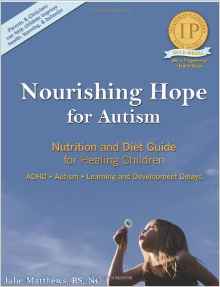
Here is Julie’s wonderful book – Nourishing Hope for Autism: Nutrition and Diet Guide for Healing Our Children  

nourishing hope for autism

Here are the digital gifts from Julie

  • Using Food and Nutrition to Improve ADHD and Autism
  • Integrative Medicine and BioIndividual Nutrition webinar  (for practitioners)

If you are not already registered for the Anxiety Summit you can get live access to the speakers of the day here: www.theAnxietySummit.com

Missed this interview or can’t listen live? Or want this and the other great interviews for your learning library? Purchase the MP3s or MP3s + transcripts and listen when it suits you.

You can find your purchasing options here.: Anxiety Summit Season 1, Anxiety Summit Season 2, Anxiety Summit Season 3, and Anxiety Summit Season 4.

Filed Under: Events, The Anxiety Summit 4 Tagged With: anxiety, anxiety summit, autism, Julie Matthews, Trudy Scott

  • « Go to Previous Page
  • Page 1
  • Interim pages omitted …
  • Page 3
  • Page 4
  • Page 5
  • Page 6
  • Go to Next Page »

Primary Sidebar

NEW! GABA QuickStart Homestudy (with special intro pricing)

gaba quickstart homestudy

Free Report

9 Great Questions Women Ask about Food, Mood and their Health

You'll also receive a complimentary subscription to my ezine "Food, Mood and Gal Stuff"


Connect with me

Popular Posts

  • Amino Acids Mood Questionnaire from The Antianxiety Food Solution
  • The Antianxiety Food Solution Amino Acid and Pyroluria Supplements
  • Pyroluria Questionnaire from The Antianxiety Food Solution
  • Collagen and gelatin lower serotonin: does this increase your anxiety and depression?
  • Tryptophan for the worry-in-your-head and ruminating type of anxiety
  • GABA for the physical-tension and stiff-and-tense-muscles type of anxiety
  • The Antianxiety Food Solution by Trudy Scott
  • Seriphos Original Formula is back: the best product for anxiety and insomnia caused by high cortisol
  • Am I an anxious introvert because of low zinc and vitamin B6? My response to Huffington Post blog
  • Vagus nerve rehab with GABA, breathing, humming, gargling and key nutrients

Recent Posts

  • What do I use instead of Seriphos to help lower high cortisol that is affecting my sleep and making me anxious at night?
  • BeSerene™ GABA/theanine cream eases severe muscle tension in her neck/shoulders, prevents her bad headaches and quells her anxiety
  • How the correct approach, dose and sublingual use of GABA can be calming and not cause a flushed and itchy face and neck
  • The amino acid glutamine improves low mood by addressing gut health, and it has calming effects too
  • Flight anxiety with heightened breath, physical tension and also fearing the worst (the role of low GABA and low serotonin)

Categories

  • 5-HTP
  • AB575
  • Addiction
  • ADHD
  • Adrenals
  • Alcohol
  • Allergies
  • Alzheimer's disease
  • Amino Acids
  • Anger
  • Antianxiety
  • Antianxiety Food Solution
  • Antidepressants
  • Anxiety
  • Anxiety and panic
  • Autism
  • Autoimmunity
  • benzodiazapines
  • Bipolar disorder
  • Books
  • Caffeine
  • Cancer
  • Candida
  • Children/Teens
  • Collagen
  • Cooking equipment
  • Coronavirus/COVID-19
  • Cravings
  • Depression
  • Detoxification
  • Diabetes
  • Diet
  • DPA/DLPA
  • Drugs
  • EFT/Tapping
  • EMF
  • EMFs
  • Emotional Eating
  • Endorphins
  • Environment
  • Essential oils
  • Events
  • Exercise
  • Fear
  • Fear of public speaking
  • Fertility and Pregnancy
  • Fish
  • Food
  • Food and mood
  • Functional neurology
  • GABA
  • Gene polymorphisms
  • General Health
  • Giving
  • Giving back
  • Glutamine
  • Gluten
  • GMOs
  • Gratitude
  • Gut health
  • Heart health/hypertension
  • Histamine
  • Hormone
  • Hyperparathyroidism
  • Hypoglycemia
  • Immune system
  • Inflammation
  • Insomnia
  • Inspiration
  • Introversion
  • Joy and happiness
  • Ketogenic diet
  • Lithium orotate
  • Looking awesome
  • Lyme disease and co-infections
  • MCAS/histamine
  • Medication
  • Men's health
  • Mental health
  • Mercury
  • Migraine
  • Mold
  • Movie
  • MTHFR
  • Multiple sclerosis
  • Music
  • NANP
  • Nature
  • Nutritional Psychiatry
  • OCD
  • Osteoporosis
  • Oxalates
  • Oxytocin
  • Pain
  • Paleo
  • Parasites
  • Parkinson’s disease
  • PCOS
  • People
  • PMS
  • Postpartum
  • PTSD/Trauma
  • Pyroluria
  • Questionnaires
  • Real whole food
  • Recipes
  • Research
  • Schizophrenia
  • serotonin
  • SIBO
  • Sleep
  • Special diets
  • Sports nutrition
  • Stress
  • Sugar addiction
  • Sugar and mood
  • Supplements
  • Teens
  • Testimonials
  • Testing
  • The Anxiety Summit
  • The Anxiety Summit 2
  • The Anxiety Summit 3
  • The Anxiety Summit 4
  • The Anxiety Summit 5
  • The Anxiety Summit 6
  • Thyroid
  • Thyroid health
  • Toxins
  • Tryptophan
  • Tyrosine
  • Uncategorized
  • Vegan/vegetarian
  • Women's health
  • Yoga

Archives

  • October 2025
  • September 2025
  • August 2025
  • July 2025
  • June 2025
  • May 2025
  • April 2025
  • March 2025
  • February 2025
  • January 2025
  • November 2024
  • October 2024
  • September 2024
  • August 2024
  • July 2024
  • June 2024
  • May 2024
  • April 2024
  • March 2024
  • February 2024
  • January 2024
  • December 2023
  • November 2023
  • October 2023
  • September 2023
  • August 2023
  • July 2023
  • June 2023
  • May 2023
  • April 2023
  • March 2023
  • February 2023
  • January 2023
  • December 2022
  • November 2022
  • October 2022
  • September 2022
  • August 2022
  • July 2022
  • June 2022
  • May 2022
  • April 2022
  • March 2022
  • February 2022
  • January 2022
  • December 2021
  • November 2021
  • October 2021
  • September 2021
  • August 2021
  • July 2021
  • June 2021
  • May 2021
  • April 2021
  • March 2021
  • February 2021
  • January 2021
  • December 2020
  • November 2020
  • October 2020
  • September 2020
  • August 2020
  • July 2020
  • June 2020
  • May 2020
  • April 2020
  • March 2020
  • February 2020
  • January 2020
  • December 2019
  • November 2019
  • October 2019
  • September 2019
  • August 2019
  • July 2019
  • June 2019
  • May 2019
  • April 2019
  • March 2019
  • February 2019
  • January 2019
  • December 2018
  • November 2018
  • October 2018
  • September 2018
  • August 2018
  • July 2018
  • June 2018
  • May 2018
  • April 2018
  • March 2018
  • February 2018
  • January 2018
  • December 2017
  • November 2017
  • October 2017
  • September 2017
  • August 2017
  • July 2017
  • June 2017
  • May 2017
  • April 2017
  • March 2017
  • February 2017
  • January 2017
  • December 2016
  • November 2016
  • October 2016
  • September 2016
  • August 2016
  • July 2016
  • June 2016
  • May 2016
  • April 2016
  • March 2016
  • February 2016
  • January 2016
  • December 2015
  • November 2015
  • October 2015
  • September 2015
  • August 2015
  • July 2015
  • June 2015
  • May 2015
  • April 2015
  • March 2015
  • February 2015
  • January 2015
  • December 2014
  • November 2014
  • October 2014
  • September 2014
  • August 2014
  • July 2014
  • June 2014
  • May 2014
  • April 2014
  • March 2014
  • February 2014
  • January 2014
  • December 2013
  • November 2013
  • October 2013
  • September 2013
  • August 2013
  • July 2013
  • June 2013
  • May 2013
  • April 2013
  • March 2013
  • February 2013
  • January 2013
  • December 2012
  • November 2012
  • October 2012
  • August 2012
  • July 2012
  • June 2012
  • May 2012
  • April 2012
  • March 2012
  • February 2012
  • January 2012
  • December 2011
  • November 2011
  • October 2011
  • September 2011
  • August 2011
  • July 2011
  • June 2011
  • May 2011
  • April 2011
  • March 2011
  • February 2011
  • January 2011
  • December 2010
  • October 2010
  • September 2010
  • July 2010
  • May 2010
  • April 2010
  • March 2010
  • February 2010
  • January 2010
  • November 2009

Share the knowledge!

The above statements have not been evaluated by the Food and Drug Administration. Products listed in this website are not intended to diagnose, treat, cure or prevent any disease.

The information provided on this site is for informational and educational purposes only and is not intended as a substitute for advice from your physician or other health care professional. You should consult with a healthcare professional before starting or modifying any diet, exercise, or supplementation program, before taking or stopping any medication, or if you have or suspect you may have a health problem.


Copyright © 2026 Trudy Scott. All Rights Reserved. | Privacy | Terms and Conditions | Refund Policy | Medical Disclaimer

Free Report

9 Great Questions Women Ask about Food, Mood and their Health

You’ll also receive a complimentary subscription to my ezine “Food, Mood and Gal Stuff”