• Skip to primary navigation
  • Skip to main content
  • Skip to primary sidebar

everywomanover29 blog

Food, Mood and Women's Health – Be your healthiest, look and feel great!

  • Blog
  • About
  • Services
  • Store
  • Resources
  • Testimonials
  • The Book
  • Newsletter
  • Contact
  • Search this site

OCD, anxiety, PANDAS and PANS: Dr Brandon Brock

June 18, 2017 By Trudy Scott 6 Comments

This is a quick reminder that The Autism, ADHD and Sensory Processing Disorder Summit starts tomorrow.

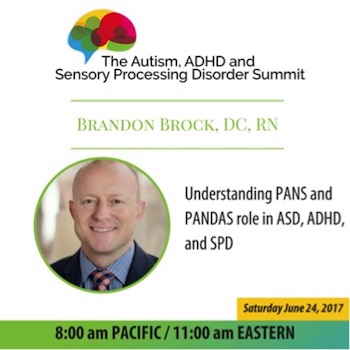
I really enjoyed Dr. Brandon Brock’s interview, Understanding PANS and PANDAS role in ASD, ADHD and SPD, and it is particularly relevant for anxiety and OCD. During the interview he describes what he often finds with these children with PANS (Pediatric Acute-onset Neuropsychiatric Syndrome) and PANDAS (Pediatric Autoimmune Neuropsychiatric Disorders Associated with Streptococcal Infections):

A lot of times the child may come in having nightmares or they just start bed wetting or they’re having fears or a little bit of irritability and they get blamed on all kinds of things. You know they get blamed on maybe a sketchy home environment that’s really not that sketchy, or maybe they just say it’s normal for a child to go through this, or maybe they’re just starting to hit puberty so they’re getting more aggressive. In other words there’s always a reason other than looking at the brain physiology. Why is it changing? Is the brain physiology changing because maybe there is an environmental factor? You know maybe there is some abuse or something. And that does happen.

But on a bigger scale maybe they had some sort of infectious disease, or maybe they had a toxin that got into their body, and it made their immune system react, and it started giving them symptoms like abnormal movements, ticks, especially in the face, lip smacking, hair twirling.

He talks about how these immune reactions to the brain and basal ganglia cause symptoms:

So when you have an immune response against the basal ganglia it’s kind of like pushing the play button over and over and over again. So now we see things like obsessive compulsive disorder, we see tics, we see choreiform movements [repetitive and rapid, jerky, involuntary movement that appears to be well-coordinated], we see nightmares and bizarre thoughts, or the kid does something that we call a perseveration. It is the repetition of a particular response (such as a word, phrase, or gesture), so they say something over and over and over. So there’s a fine line between a kid being a kid and then a kid having something like PANDAS. And really what we call that is auto-immune encephalitis, which just means inflammation of the brain. So the kid’s brain really is kind of like, if you want to say it metaphorically, on fire.

Dr. Brock talks about the 2 strep tests or anti-streptococcal antibody titers that are commercially available and determines whether the child has had a previous strep infection:

  • Antistrepolysin O (ASO) titer,* which rises 3-6 weeks after a strep infection, and
  • Antistreptococcal DNAse B (AntiDNAse-B) titer, which rises 6-8 weeks after a strep infection.]

In addition to the many other labs tests they do, he goes on to discuss another whole set of antibodies that can become positive down the road:

Dopamine antibodies, calcium calmodulin mechanisms, and then all of the intra-cellular structures, like the tubulin structures, the alpha and beta tubulin structures, the micro-tubulin structures, and even the cell wall. So we have an antibody panel that really says it’s either the structure, it’s either the receptor, or it’s the actual pumping mechanism that makes dopamine.

He didn’t mention this but it’s the Cunningham Panel done by Moleculera Labs

Dr. Brock goes on to talk about functional neurology, diet, how to find a good practitioner and much more. It’s a great interview!

The Autism, ADHD and Sensory Processing Disorder Summit, hosted by Tara Hunkin, NTP, runs from June 19-28, 2017.
It will be 10 days of eye opening information into the root causes of your child’s neurological dysfunction. Imagine learning about what may have caused their symptoms and how to address them with nutrition and biomedical approaches and leverage the power of positive neuroplasticity to improve function, health and their lives.

As I mentioned in the prior summit announcement many of the interviews on this summit may be applicable for you even if you don’t have a child with a sensory processing disorder, ADHD and/or autism – many of my clients with anxiety often benefit from the biomedical support that many of these speakers are addressing. Simply replace sensory processing disorder, ADHD and/or autism with anxiety and listen and learn.

And if you’re new to my work, do also tune into my interview: Anxiety’s Role in ASD, ADHD and SPD and how nutrient therapy can help.

Here are a few other speakers and their interesting topics (and I can’t wait to hear them all):

  • David Perlmutter, MD: The role of the microbiome in neurological health.
  • Alex Doman: Using music to heal your child’s brain
  • Derrick MacFabe, MD: The role of propionic acid in the multi-system challenges found in ASD.
  • Sonia McGowin, DC: How to know if biomedical intervention is right for your child.

You can register for The Autism, ADHD and Sensory Processing Disorder Summit here
Filed Under: Autism Tagged With: ADHD, anxiety, autism, Brandon Brock, OCD, PANDAS, PANS, Sensory Processing Disorder, strep, Tara Hunkin

Bouldering envisioned as new treatment for depression and anxiety

June 16, 2017 By Trudy Scott 2 Comments

Climbing was my main sport for 15 years and I absolutely loved it. Bouldering, a type of climbing where you don’t use ropes, is really fun and exciting, as well as a great form of exercise. So you can imagine my delight when I read about new research that suggests it may also be used to effectively treat symptoms of depression and anxiety. I’ve added anxiety because we see similar underlying causes and solutions, and many individuals with depression also suffer from anxiety.

Here are the details from the University of Arizona (UA) press release

A growing body of research suggests that bouldering, a form of rock climbing, can help build muscle and endurance while reducing stress — and a new study co-led by a University of Arizona doctoral student of psychology suggests that the activity also may be used to effectively treat symptoms of depression.

UA researcher Eva-Maria Stelzer and Katharina Luttenberger of the University of Erlangen-Nuremberg led a team that involved more than 100 individuals in a bouldering intervention in Germany, where some hospitals have begun to use climbing as a therapeutic treatment.

The participants were randomly split into two groups. One immediately began the intervention, while the other group had to wait to start bouldering, which involves climbing rocks or walls to a moderate height without ropes or a harness. Each participant bouldered for three hours a week over the course of eight weeks.

Depression symptoms improved from moderate depression to mild depression over 8 weeks:

The team’s major finding was that, during the therapy, the immediate intervention group’s Beck’s Depression scores improved by 6.27 points, but for the same time period the group that was initially wait-listed improved by only 1.4 points. This drop in score reflects an improvement of one severity grade from moderate to mild depression levels.

“Bouldering, in many ways, is a positive physical activity,” said Stelzer, who began researching the benefits of bouldering while completing her master’s in psychology at the University of Erlangen-Nuremberg in Germany and is now completing her doctorate at the UA. “There are different routes for your physical activity level, and there’s a social aspect along with the feeling of an immediate accomplishment when bouldering.”

Stelzer presented the study and findings during the 29th annual Association for Psychological Science Convention, recently held in Boston.

Like me, the study authors, Stelzer, Luttenberger and Schopper have experienced bouldering first hand:

Invested in improving interventions to aid with such conditions, Stelzer, Luttenberger and Schopper, who have offered bouldering sessions for patients at a care center in Germany, drew on their own experiences as avid rock climbers and boulderers to investigate the benefits the sport could provide to those dealing with anxiety, depression, social isolation and self-esteem issues.

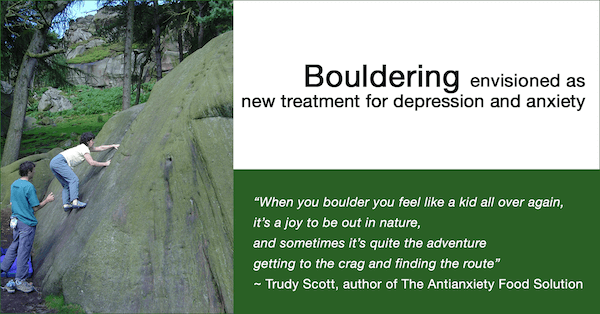
This is how I describe bouldering: you feel like a kid all over again, it’s a joy to be out in nature, sometimes it’s quite the adventure getting to the crag and finding the routes, and the sense of accomplishment when you succeed at a difficult route is quite amazing. It’s very meditative and your focus has to be spot on. There is also problem-solving involved as you figure out the moves.

The social aspect is also great – encouraging and supporting your fellow-climbers/friends and then being encouraged by them when it’s your turn. There is also a big trust aspect as you “spot” each other, making sure you each land safely on the bouldering mat should you fall off the climb or decide to jump off because it’s too challenging.

There is of course the exercise aspect too. After the hike in to the rocks or crags, bouldering builds strength and stamina, and improved balance and flexibility.

Here are some pictures of us bouldering in the UK with friends Marc and Cath a few years ago.

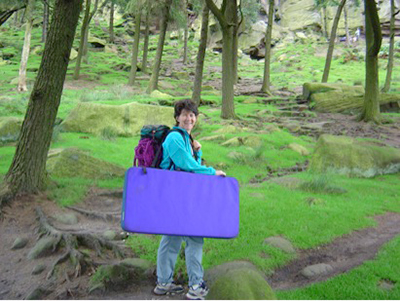
Hiking in to the crags in an almost “fairy-glen-like” setting. The big blue thing I am carrying is a bouldering mat for helping with a soft and safe landing.
Marc “spots” me as a I climb a fun and easy route. The left is me at the start of the bouldering route and the right is me topping out.
Brad “spots” Marc on a more difficult bouldering route (notice the bouldering mat below)

I highly recommend bouldering if you ever get the opportunity. There are also indoor climbing gyms with bouldering walls if you don’t have a rock-climbing area near where you live, or if you’d like to give it a go there first before venturing out to the crags.

Luttenberger’s message is the same one I have for my clients:

I’d always encourage patients to do the sport they like — may it be climbing or something else — as sport is a wonderful possibility to prevent all possible sorts of illnesses, mental and physical.

Given the positive results, the team believes that bouldering may be used to complement traditional care for clinical depression:

Team members are now working to develop a manual that could be adopted for an eight-week program integrating bouldering and psychotherapeutic interventions for groups.

I really look forward to recommending a program like this for my clients, in conjunction with dietary changes and supportive nutrients!

Have you tried climbing or bouldering? Would you be open to an 8-week recommended supervised bouldering program?

If you haven’t tried climbing or bouldering and this isn’t your thing I’d love to hear what exercise you love to do in nature?

Filed Under: Exercise Tagged With: bouldering

Migraines, Anxiety and Antiphospholipid Syndrome: on the Chronic Headache & Migraine Summit

June 12, 2017 By Trudy Scott 39 Comments

The autoimmune condition called Antiphospholipid Syndrome (APS) is one of many possible contributing factors for both migraines and anxiety. I came across this condition when researching the links between migraine and anxiety in preparation for my interview with Erin Knight, one of the hosts of The Chronic Headache & Migraine Summit. This is one of the reasons I love presenting because I get to learn so much too!

Antiphospholipid syndrome occurs when your immune system attacks some of the normal proteins in your blood. It can cause blood clots in your arteries or veins. And it can cause pregnancy complications, such as miscarriage and stillbirth. (Source: Mayo Clinic)

I share some highlights from a 2015 paper: Antiphospholipid antibodies as biomarkers in psychiatry

  • Antiphospholipid syndrome (APS) has been implicated in a range of neuropsychiatric presentations
  • The link between depression, stroke, and cardiovascular disease could be explained in at least some patients by the presence of aPL antibodies
  • Approximately one in five (20%) strokes in individuals under the age of 45 years are associated with APS
  • Migraine is one of the most commonly observed symptoms in patients with APS
  • aPL antibodies are often found to show low or moderately positive levels which makes this syndrome a diagnostic dilemma in psychiatry. The St. Thomas ‘alternative criteria’ for APS may be a useful clinical tool for psychiatrists. These criteria include cognitive impairment, affective disorders [like depression and anxiety], headaches [or migraines], and livedo reticularis, with improvement after aspirin treatment

In case you are not familiar with livedo reticularis, it is a mottled purplish discoloration of the skin. Having this skin condition does not mean you have APS because livedo reticularis can be a normal condition that is simply more obvious when you are exposed to the cold. It can also be an indicator of impaired circulation.

Phospholipids are a class of lipids that are a major component of all cell membranes and also facilitate neurotransmitters communication so this condition affects serotonin, dopamine, glutamate and GABA levels.

Working with my client’s doctor, I would recommend an autoimmune dietary approach and trials of the respective amino acids to support low serotonin, low GABA (anxiety is common with migraine sufferers) and low dopamine.

We also discuss how effective gluten removal can be for my clients with anxiety and migraines and find it to be a common underlying factor (whether it’s celiac disease or gluten sensitivity). Since gluten is always an important factor for autoimmunity it should always be explored if APS has been diagnosed or is suspected.

We also cover low serotonin as one possible cause of migraines and the how to do a trial of tryptophan (instead of SSRIs). Using tryptophan also addresses the low serotonin that often occurs with APS and is one possible contributing cause of the anxiety, depression, insomnia and migraines.

Hosts of The Chronic Headache & Migraine Summit, Erin Knight, Corey Schuler and Marta Taylor, are familiar with headache pain and migraines; they’ve all experienced severe headache problems. They found functional medicine solutions, which they now share in their health practices each day.

Filed Under: Anxiety and panic, Depression, Events, Migraine Tagged With: antiphospholipid syndrome, anxiety, gluten, headache, livedo reticularis, migraine, serotonin, stroke

Low-dose suramin in autism disables cell danger response: leads to speech, calm, focus and play

June 9, 2017 By Trudy Scott 10 Comments

I’m fascinated and excited by this new research on cell danger response (CDR): Low-dose suramin in autism spectrum disorder: a small, phase I/II, randomized clinical trial abstract and the ramifications for autism as well as anxiety and other chronic health conditions. This recent study was double-blind, placebo-controlled and involved 10 boys, ages 5 to 14 years, all diagnosed with autism. Five of the 10 boys received a single, intravenous infusion of suramin and the other five boys received a placebo.

As reported in this Science Daily summary: Century-old drug as potential new approach to autism, the results seen in two of the autistic children after a single low dose of the 100 year old medication was profound:

The six-year-old and the 14-year-old who received suramin said the first sentences of their lives about one week after the single suramin infusion.

The most changed behaviors in all of the five boys who received the suramin were: 

social communication and play, speech and language, calm and focus, repetitive behaviors and coping skills.

One of the parents of a 14 year-old who had not spoken a complete sentence in 12 years said this:

We saw improvements in our son after suramin that we have never seen before.

Within an hour after the infusion, he started to make more eye contact with the doctor and nurses in the room. There was a new calmness at times, but also more emotion at other times. He started to show an interest in playing hide-and-seek with his 16-year-old brother. He started practicing making new sounds around the house. He started seeking out his dad more.

We have tried every new treatment out there for over 10 years. Nothing has come close to all the changes in language and social interaction and new interests that we saw after suramin. We saw our son advance almost three years in development in just six weeks.

I can’t even begin to imagine the joy these parents must have felt to see their children respond like this!

Unfortunately the therapeutic benefits of suramin was temporary and the benefits gradually faded after several weeks as the effects of the drug wore off.

Suramin is used for African sleeping sickness and river blindness, which are caused by parasites and does have some very serious side-effects when used at higher doses (in AIDS research in 1987 sixteen patients died while receiving suramin or within three weeks of discontinuation of drug therapy).

In this autism study the children received a single very low dose intravenous infusion which did cause a rash.

The authors do acknowledge that suramin isn’t the solution but rather a way to test the cell danger hypothesis as a “possible unifying theory” that contributes to the cause of autism (and other chronic conditions that don’t resolve).

So what does the cell danger response actually mean? It’s taken me a fair bit of reading to understand it so let me share this explanation from one of the earlier mouse studies done by lead researcher Robert K. Naviaux, MD, PhD:

When cells are exposed to danger in the form of a virus, infection, toxin, or even certain genetic mutations [or traumas], they react defensively, shutting down ordinary activities and erecting barriers against the [real or] perceived threat. One consequence is that communication between cells is reduced which …may interfere with brain development and function, leading to autism [and other chronic conditions]

Even when the danger is no longer there – the infection or toxin or trauma has been removed, the diet has been changed, the nutritional imbalances have been addressed, the inflammation has been reduced etc. – the cells stay in danger mode and are not able to communicate and do what they need to do.

By using suramin the cell danger response/CDR signal is blocked or disabled or switched off so the cells no longer see the perceived danger, allowing cells to restore normal communication and function, and symptoms are reversed.

A simple way to think of it is like this: like a bear, the cells are in hibernation because it’s winter and when summer comes around they stay in hibernation because they still think there is the danger of winter or the lack of food. This is the cell danger response and the cells are stuck. The suramin tells the cells it really is summer, there is plenty of salmon and berries and it’s safe to come out of hibernation.

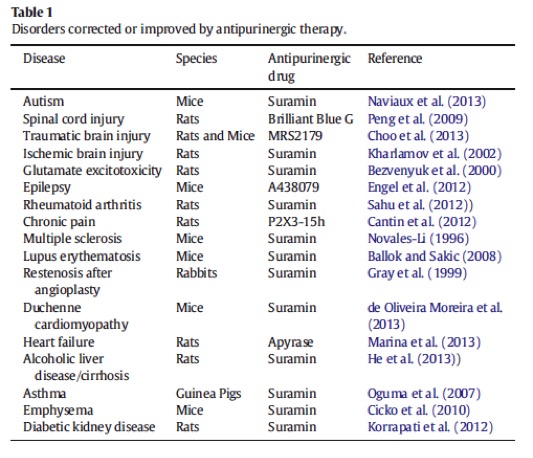
This approach is called antipurinergic therapy or APT and research shows it has applications for a number of conditions. These are disorders corrected or improved by antipurinergic therapy:

(table from Metabolic features of the cell danger response)

I’m excited about the amazing results in these children and about the promise of what this holds. But I do still have so many questions about this research and look forward to learning more and sharing more with you as I do:

  • Why was suramin used and is there a safe drug that could achieve the same results?
  • Or rather, what natural herb and/or nutrient/s can achieve the same or similar results without the side-effects?
  • What is planned for future CDR research for children with autism and for other conditions? (I do know Dr. Naviaux is planning CFS research later this year)
  • What role does vitamin B6 and serotonin play in all this? (the cell danger response yields vitamin B6 deficiency)
  • Could there be applications for anxiety for you if you have tried ALL the nutritional/biochemical approaches and are still not seeing symptom resolution?
  • Could this mechanism help you if you’ve been harmed by benzodiazepines, SSRIs and/or fluoroquinolones and can’t take any supplements?
  • Could this mechanism help when you have a combination of many stresses like past trauma, genetic defects, heavy metals, mold and Lyme, as well as gut issues and nutritional imbalances?

Feel free to share insights and questions in the comment box below.

Filed Under: Autism Tagged With: autism, suramin

I suffer from severe anxiety, have social anxiety and am afraid of everything

June 8, 2017 By Trudy Scott 16 Comments

For the first time I have come across your blogs about amino acids and anxiety. I’ve suffered from severe anxiety since 2011, and have tried the SSRIs and hate them. I refused to take them, as they caused me to gain so much weight and [have] withdrawals. I’ve also read how bad they are for you.

In order to work, I am relying heavily on 0.5mg of Clonazepam up to 3-4 times a day. It makes me so drowsy in the mornings. I try for the most part to make sure to get 7-8 hours of sleep because I can tell how when not having enough rest can trigger my anxiety. But I’m in desperate need of a solution. Not sure if the clonazepam is something I can continue to take long term, as I also know it’s bad for you.

I suffer from social anxiety (on a level 1-10, I would be 20!) and also some agoraphobia symptoms [an abnormal fear of being in crowds, public places, or open areas, sometimes accompanied by anxiety attacks.]. I am not able to go to stores alone, and I am afraid of everything.

I suffer at work the most, because I’m constantly busy and stressed and dealing with customers all day. Please help

The above question was recently posted on my blog and I’m sharing my response to her in case you are new to using the amino acids for neurotransmitter imbalances and may be able to relate to any of the above. This is my response to her:

Welcome to the community! I use the amino acids with clients and do a trial to find out if they are needed and how much to use. This blog post Anxiety and the amino acids: an overview has links to the amino acid questionnaire, the precautions and how to do a trial. When someone has fear and phobias I immediately think we need to be looking at low serotonin and a trial of tryptophan. It’s not uncommon to also see low GABA and blood sugar imbalances being an issue too.

Once you address low GABA, low serotonin and low blood sugar I would expect the work stresses to feel less overwhelming. In an ideal world it would be wonderful to be able to remove this stress so I encourage you to consider this too.

For social anxiety I start with the pyroluria questionnaire. The great aspect of this is the nutrients for pyroluria – zinc, vitamin B6 and evening primrose oil – help the social anxiety and help to make the neurotransmitters. They also happen to help with PMS and other hormonal imbalances too.

Keep in mind it’s a comprehensive nutritional approach that I use with clients so we are also looking at diet, blood sugar control, the gut, adrenals and thyroid health, quitting sugar and caffeine and so much more. My book The Antianxiety Food Solution (on Amazon here) covers everything in detail, including the amino acids and pyroluria.

I’m sure you’re aware that Clonazepam (or Klonopin) is a benzodiazepine and should be prescribed a maximum of 2 weeks and even then they can be problematic. It may likely be contributing to your anxiety. Here is one blog post to get you started with some information about benzodiazepines: World Benzodiazepine Awareness Day – say NO to Benzodiazepines for anxiety! It covers tolerance issues and resources for tapering. I encourage you to search the blog to find plenty of additional information about the benzodiazepines.

Be very careful with the morning drowsiness as there is an increased risk of being involved in a road accident as driver when on a benzodiazepine prescription.

I speak on selected online summits that I know will be of value to my community so do keep reading the newsletter. The summits are a great way to start learning about my work and other nutritional and functional medicine approaches for anxiety and other chronic health conditions so be sure to sign up and tune in. There is also a wealth of information on this blog.

Filed Under: Anxiety and panic Tagged With: anxiety, GABA, pyroluria, social anxiety

New testing approach for Lyme disease: ultrasound and PCR urine testing

June 7, 2017 By Trudy Scott 16 Comments

Dr. Dietrich Klinghardt’s interview with Dr Jay Davidson, host The Chronic Lyme Disease Summit 2 is one of the most interesting and encouraging Lyme disease interviews I’ve heard for a long time! He covers the Latest on Lyme Testing and Treatments. The reason it’s so encouraging is that chronic Lyme disease is notoriously difficult to test for.

Dr. Klinghardt starts by sharing why Lyme disease goes undiagnosed in many instances:

Lyme is highly compartmentalized. That means it sets up sanctuaries in different body compartments, and chronic Lyme is not living in the blood. Lyme may be in the blood in acute Lyme but not in chronic Lyme.

In chronic Lyme it may be in the right hippocampus but not in the entire brain, maybe in the brain stem but not the liver. It may be in your disk of L4-L5 but not in other disks and so on and so forth.

It lives in biofilm. We know that. It lives in the cell, but it doesn’t stray.

He goes on to share that the common immune system-based Lyme disease tests that use blood testing are misleading because with chronic Lyme

the blood or the white blood cells are not in contact with the actual microbes and you do not get the immune activation…So many cases go undiagnosed.

Dr. Klinghardt shares a wonderful technique that he and one of the world’s most renowned ultrasound radiologists, Dr. Marco Ruggiero, have developed for both testing and to improve treatment:

We know that when you put ultrasound …on a group of cells, it squeezes and relaxes the cells at a very high speed and squeezes out things from the cell that shouldn’t be in there. And so, we had the theory if you apply ultrasound to an area where we suspect Lyme spirochetes or Bartonella or Babesia or Ehrlichia, then those microbes are forced into the connective tissue. And some of them will stray from there into the blood, and some of them will be excreted through the kidneys into the urine.

With that principle, we found an incredible increase in our findings that most of the people that were suspected of having chronic Lyme disease didn’t just have Borrelia burgdorferi, but they had also Borrelia miyamotoi. They had Babesia duncani, Babesia microti. They had Bartonella henselae.

So what we do, we have set up a certain sequence of using ultrasound on the brain, on the thymus, on the spleen, on the vagus nerve, and on the brain stem. We drive out the microbes, and then we collect the urine and find the microbes. This is by far the best test we use – the PCR testing – looking for whole strands of DNA of the bugs in the urine.

That testing has been the most rewarding test in my whole lifetime. We are publishing a paper that comes out later this month in the American Journal of Immunology where we lay out the details of this technique. That’s what we do at the Sophia Health Institute.

The whole treatment takes less than 10 minutes, and then it’s the first urine that naturally occurs after that that’s collected. And then we send it to the lab for PCR testing, and insurance pays if you do it with Lab Corp. There’s other labs that offer this test now. And it can cost up to $500 to test for 14 of the coinfections.

Here is the title of that paper: The Ruggiero-Klinghardt (RK) Protocol for the Diagnosis and Treatment of Chronic Conditions with Particular Focus on Lyme Disease and the lab DNA Connexions is mentioned in this paper. 

He goes on to explain how they also use the therapeutic ultrasound as an instrument to optimize drug uptake and utilization in specific areas of the body order to eliminate the bacteria.

Later on in the interview Dr. Klinghardt makes this bold and rather concerning statement:

Most of my patients with severe, persistent Lyme disease have never had a tick bite. They had a spider bite or a flea bite or a bite from a stinging fly. So these are insect-borne diseases but not tick-borne diseases.

Dr. Klinghardt has been at the forefront of Lyme disease treatment for years and now bringing even further wisdom to this very challenging condition. I really look forward to learning more about all this from this amazing practitioner.

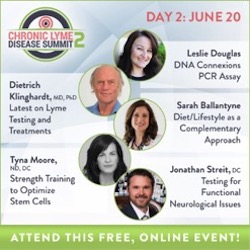
The Chronic Lyme Disease Summit 2 runs June 19-26, 2017 and Dr. Klinghardt’s interview airs on day 2 of the summit.

Be sure to also listen to:

  • Leslie Douglas: DNA Connexions PCR Assay (the testing Dr. Klinghardt uses) and
  • Jonathan Streit: Testing for Functional Neurological Issues

This summit will help you understand symptoms (common and rare), diagnosis and testing, practical at-home health tips, healing protocol explanations and more!

And it will hopefully give you some insights to any ongoing health issues you may have that may actually be due to Lyme disease (even if you have not yet been diagnosed). It’s something I consider with all my clients that are not seeing symptom resolution.

Register here for The Chronic Lyme Disease Summit 2

Last year I was interviewed on Lyme anxiety and how to use GABA and other amino acids to ease the anxiety while you are working on addressing the Lyme disease. I’m not speaking this year but that interview and some of my other Lyme anxiety resources are available to summit purchasers. I actually mention Dr Klinghardt in that interview because he finds that his Lyme patients don’t get well until they have addressed pyroluria.

If you live in Sydney, Australia, you can hear Dr. Kinghardt present live this weekend during his 1 day event: Core Protocols for Chronic Illness. If you’re not a practitioner be sure to let your healthcare provider know about this event.

Feel free to post questions or feedback below.

Filed Under: Events, Lyme disease and co-infections Tagged With: anxiety, Chronic Lyme Summit, Dr. Jay Davidson, Dr. Klinghardt, GABA, Lyme Disease, pyroluria, ultrasound

  • « Go to Previous Page
  • Page 1
  • Interim pages omitted …
  • Page 72
  • Page 73
  • Page 74
  • Page 75
  • Page 76
  • Interim pages omitted …
  • Page 160
  • Go to Next Page »

Primary Sidebar

GABA QuickStart Homestudy

gaba quickstart homestudy

Free Report

9 Great Questions Women Ask about Food, Mood and their Health

You'll also receive a complimentary subscription to my ezine "Food, Mood and Gal Stuff"


Connect with me

Popular Posts

  • Amino Acids Mood Questionnaire from The Antianxiety Food Solution
  • The Antianxiety Food Solution Amino Acid and Pyroluria Supplements
  • Pyroluria Questionnaire from The Antianxiety Food Solution
  • Collagen and gelatin lower serotonin: does this increase your anxiety and depression?
  • Tryptophan for the worry-in-your-head and ruminating type of anxiety
  • GABA for the physical-tension and stiff-and-tense-muscles type of anxiety
  • The Antianxiety Food Solution by Trudy Scott
  • Seriphos Original Formula is back: the best product for anxiety and insomnia caused by high cortisol
  • Am I an anxious introvert because of low zinc and vitamin B6? My response to Huffington Post blog
  • Vagus nerve rehab with GABA, breathing, humming, gargling and key nutrients

Recent Posts

  • Her cravings for chips and peanut butter were triggered by stress: GABA ends cravings and reduces physical tension and fear of heights
  • It is truly miraculous to be able to move through life without crippling anxiety and panic
  • GABA and tryptophan combo provide immediate and noticeable relief for tremors and cervical dystonia in just 7 days
  • Red light therapy for back and neck pain, plantar fasciitis and low mood – a complement to the amino acids GABA, DPA and tryptophan
  • What do I use instead of Seriphos to help lower high cortisol that is affecting my sleep and making me anxious at night?

Categories

  • 5-HTP
  • AB575
  • Addiction
  • ADHD
  • Adrenals
  • Alcohol
  • Allergies
  • Alzheimer's disease
  • Amino Acids
  • Anger
  • Antianxiety
  • Antianxiety Food Solution
  • Antidepressants
  • Anxiety
  • Anxiety and panic
  • Autism
  • Autoimmunity
  • benzodiazapines
  • Bipolar disorder
  • Books
  • Caffeine
  • Cancer
  • Candida
  • Children/Teens
  • Collagen
  • Cooking equipment
  • Coronavirus/COVID-19
  • Cravings
  • Depression
  • Detoxification
  • Diabetes
  • Diet
  • DPA/DLPA
  • Drugs
  • EFT/Tapping
  • EMF
  • EMFs
  • Emotional Eating
  • Endorphins
  • Environment
  • Essential oils
  • Events
  • Exercise
  • Fear
  • Fear of public speaking
  • Fertility and Pregnancy
  • Fish
  • Food
  • Food and mood
  • Functional neurology
  • GABA
  • Gene polymorphisms
  • General Health
  • Giving
  • Giving back
  • Glutamine
  • Gluten
  • GMOs
  • Gratitude
  • Gut health
  • Heart health/hypertension
  • Histamine
  • Hormone
  • Hyperparathyroidism
  • Hypoglycemia
  • Immune system
  • Inflammation
  • Insomnia
  • Inspiration
  • Introversion
  • Joy and happiness
  • Ketogenic diet
  • Lithium orotate
  • Looking awesome
  • Lyme disease and co-infections
  • MCAS/histamine
  • Medication
  • Men's health
  • Mental health
  • Mercury
  • Migraine
  • Mold
  • Movie
  • MTHFR
  • Multiple sclerosis
  • Music
  • NANP
  • Nature
  • Nutritional Psychiatry
  • OCD
  • Osteoporosis
  • Oxalates
  • Oxytocin
  • Pain
  • Paleo
  • Parasites
  • Parkinson’s disease
  • PCOS
  • People
  • PMS
  • Postpartum
  • PTSD/Trauma
  • Pyroluria
  • Questionnaires
  • Real whole food
  • Recipes
  • Research
  • Schizophrenia
  • serotonin
  • SIBO
  • Sleep
  • Special diets
  • Sports nutrition
  • Stress
  • Sugar addiction
  • Sugar and mood
  • Supplements
  • Teens
  • Testimonials
  • Testing
  • The Anxiety Summit
  • The Anxiety Summit 2
  • The Anxiety Summit 3
  • The Anxiety Summit 4
  • The Anxiety Summit 5
  • The Anxiety Summit 6
  • Thyroid
  • Thyroid health
  • Toxins
  • Tryptophan
  • Tyrosine
  • Uncategorized
  • Vegan/vegetarian
  • Women's health
  • Yoga

Archives

  • May 2026
  • April 2026
  • October 2025
  • September 2025
  • August 2025
  • July 2025
  • June 2025
  • May 2025
  • April 2025
  • March 2025
  • February 2025
  • January 2025
  • November 2024
  • October 2024
  • September 2024
  • August 2024
  • July 2024
  • June 2024
  • May 2024
  • April 2024
  • March 2024
  • February 2024
  • January 2024
  • December 2023
  • November 2023
  • October 2023
  • September 2023
  • August 2023
  • July 2023
  • June 2023
  • May 2023
  • April 2023
  • March 2023
  • February 2023
  • January 2023
  • December 2022
  • November 2022
  • October 2022
  • September 2022
  • August 2022
  • July 2022
  • June 2022
  • May 2022
  • April 2022
  • March 2022
  • February 2022
  • January 2022
  • December 2021
  • November 2021
  • October 2021
  • September 2021
  • August 2021
  • July 2021
  • June 2021
  • May 2021
  • April 2021
  • March 2021
  • February 2021
  • January 2021
  • December 2020
  • November 2020
  • October 2020
  • September 2020
  • August 2020
  • July 2020
  • June 2020
  • May 2020
  • April 2020
  • March 2020
  • February 2020
  • January 2020
  • December 2019
  • November 2019
  • October 2019
  • September 2019
  • August 2019
  • July 2019
  • June 2019
  • May 2019
  • April 2019
  • March 2019
  • February 2019
  • January 2019
  • December 2018
  • November 2018
  • October 2018
  • September 2018
  • August 2018
  • July 2018
  • June 2018
  • May 2018
  • April 2018
  • March 2018
  • February 2018
  • January 2018
  • December 2017
  • November 2017
  • October 2017
  • September 2017
  • August 2017
  • July 2017
  • June 2017
  • May 2017
  • April 2017
  • March 2017
  • February 2017
  • January 2017
  • December 2016
  • November 2016
  • October 2016
  • September 2016
  • August 2016
  • July 2016
  • June 2016
  • May 2016
  • April 2016
  • March 2016
  • February 2016
  • January 2016
  • December 2015
  • November 2015
  • October 2015
  • September 2015
  • August 2015
  • July 2015
  • June 2015
  • May 2015
  • April 2015
  • March 2015
  • February 2015
  • January 2015
  • December 2014
  • November 2014
  • October 2014
  • September 2014
  • August 2014
  • July 2014
  • June 2014
  • May 2014
  • April 2014
  • March 2014
  • February 2014
  • January 2014
  • December 2013
  • November 2013
  • October 2013
  • September 2013
  • August 2013
  • July 2013
  • June 2013
  • May 2013
  • April 2013
  • March 2013
  • February 2013
  • January 2013
  • December 2012
  • November 2012
  • October 2012
  • August 2012
  • July 2012
  • June 2012
  • May 2012
  • April 2012
  • March 2012
  • February 2012
  • January 2012
  • December 2011
  • November 2011
  • October 2011
  • September 2011
  • August 2011
  • July 2011
  • June 2011
  • May 2011
  • April 2011
  • March 2011
  • February 2011
  • January 2011
  • December 2010
  • October 2010
  • September 2010
  • July 2010
  • May 2010
  • April 2010
  • March 2010
  • February 2010
  • January 2010
  • November 2009

Share the knowledge!

The above statements have not been evaluated by the Food and Drug Administration. Products listed in this website are not intended to diagnose, treat, cure or prevent any disease.

The information provided on this site is for informational and educational purposes only and is not intended as a substitute for advice from your physician or other health care professional. You should consult with a healthcare professional before starting or modifying any diet, exercise, or supplementation program, before taking or stopping any medication, or if you have or suspect you may have a health problem.


Copyright © 2026 Trudy Scott. All Rights Reserved. | Privacy | Terms and Conditions | Refund Policy | Medical Disclaimer

Free Report

9 Great Questions Women Ask about Food, Mood and their Health

You’ll also receive a complimentary subscription to my ezine “Food, Mood and Gal Stuff”