• Skip to primary navigation
  • Skip to main content
  • Skip to primary sidebar

everywomanover29 blog

Food, Mood and Women's Health – Be your healthiest, look and feel great!

  • Blog
  • About
  • Services
  • Store
  • Resources
  • Testimonials
  • The Book
  • Newsletter
  • Contact
  • Search this site

Trudy’s favorites: new books and golden oldies for your reading pleasure and as gift ideas

December 15, 2017 By Trudy Scott 6 Comments

With the holiday’s almost upon us and an opportunity to curl up with a cup of herbal tea and a good book, and also as gifts ideas, here are some of my favorite new books and a few older ones too – mostly related to anxiety, mood and emotional eating/cravings and functional medicine and biochemical imbalances.
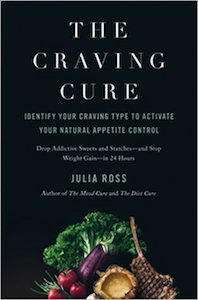
The Craving Cure: Identify Your Craving Type to Activate Your Natural Appetite Control by Julia Ross (Author)

Julia Ross, best-selling author and expert in nutrition and overeating, exposes the real reason so many of us can’t stick to a healthy diet: our favorite foods are engineered to be addictive. At her clinic in California, Julia Ross and her colleagues treat food addiction where it starts – in the brain – by triggering our natural appetite-regulating neurotransmitters with nutrients called amino acids. It turns out that these protein concentrates boost our neurotransmitters, which broadcast sensations of satisfaction that no food, including chocolate, can override. Thousands of Julia Ross’ clients have abolished their cravings for high-calorie confections using this simple nutritional strategy.

With The Craving Cure, Julia Ross grants all of us access to this revolutionary approach. The process begins with a five-part questionnaire that helps you identify your unique craving profile and specifies the amino acid supplements you need to curb your specific cravings. Julia Ross’ clear explanations of why and how to use the aminos empower you to reclaim your natural appetite control, and her anti-craving eating guidelines will permanently strengthen your dietary defenses. A well-researched and clinically-tested rejection of low-calorie, low-saturated fat, and low-protein diets, The Craving Cure reveals how we can effortlessly and permanently eradicate our cravings to lose weight, rediscover our nutritional heritage, and regain optimal mood, energy, and health.

Drop Addictive Sweets and Starches – and Stop Weight Gain – in 24 Hours

Julia is a pioneer in the use of amino acids for cravings and mood and I had the wonderful opportunity of learning from her while working in her clinic for 2 years. It’s thanks to her that I developed my foundational knowledge of amino acids – which I have now expanded on for their powerful effects for anxiety. With this new book, Julia takes a deep dive into using amino acids for the cravings aspect that goes hand-in-hand with anxiety and depression i.e. the emotional eating component.

Get your copy of The Craving Cure on Amazon here (this one just released this week)

 

The Non-Tinfoil Guide to EMFs: How to Fix Our Stupid Use of Technology by Nicolas Pineault

Can you really feel years younger & make unexplained symptoms vanish with the click of a button — the “Airplane Mode” on your cell phone?

Investigative Health Journalist Nicolas Pineault used to think this all sounded like something only crazy people wearing tinfoil hats would say.

But the overwhelming amount of independent scientific evidence linking electromagnetic fields (EMFs) from wireless technologies with increased risks of cancer, infertility, insomnia, and depression sure has the uncanny ability to change a man’s mind.

The Non-Tinfoil Guide to EMFs is a simple and unconventional book that will teach you exactly how to reduce your exposure to this brand new 21st-century pollution without going back to the Stone Age.

You will learn:

  • What your smartphone, your wifi router and your microwave oven have in common (page 9)
  • Why policy makers and scientists all worldwide don’t agree about whether EMFs are dangerous or not (page 21)
  • Is Electro-Hypersensitivity as popularized in the TV show “Better Call Saul” real? Or is it all psychological? (page 62)
  • Why carrying a cell phone in your pocket can harm your fertility (201 studies prove it) (page 72)
  • The 1-click fix to reduce cellphone EMFs by 84% (page 142)
  • What is safer? Speakerphone, earbuds or a Bluetooth ear piece? (page 155)
  • The #1 worst source of EMF radiation at home (page 160)
  • Why baby monitors are worse than smartphones, and better alternatives (page 208)

It’s true. The jury is still out about whether cellphone radiation is the new smoking or just a temporary scare. But why take chances?

Instead, read The Non-Tinfoil Guide to EMFs — the technological seat belt you might just need to use your new gadgets safely.

This is the most comprehensive and balanced book I have read on the topic of EMFs. It covers the risks (supported by research) and also offers a myriad of practical solutions. I had the wonderful opportunity to see Nicolas present on this topic earlier this year and he is clearly passionate about getting this message out. I am thrilled he’s now published a book on the subject because I believe EMFs are one of the most under-reported factors when it comes to anxiety and many other chronic health conditions.  

Get your copy of The Non-Tinfoil Guide to EMFs on Amazon here (this is a new book that published in November).
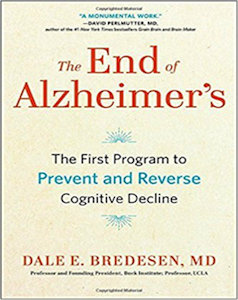
 

The End of Alzheimer’s – The First Program to Prevent and Reverse Cognitive Decline by Dale Bredesen, MD

A groundbreaking plan to prevent and reverse Alzheimer’s Disease that fundamentally changes how we understand cognitive decline.
 
Everyone knows someone who has survived cancer, but until now no one knows anyone who has survived Alzheimer’s Disease. 
 
In this paradigm shifting book, Dale Bredesen, MD, offers real hope to anyone looking to prevent and even reverse Alzheimer’s Disease and cognitive decline.  Revealing that AD is not one condition, as it is currently treated, but three, The End of Alzheimer’s outlines 36 metabolic factors (micronutrients, hormone levels, sleep) that can trigger “downsizing” in the brain. The protocol shows us how to rebalance these factors using lifestyle modifications like taking B12, eliminating gluten, or improving oral hygiene.
 
The results are impressive. Of the first ten patients on the protocol, nine displayed significant improvement with 3-6 months; since then the protocol has yielded similar results with hundreds more. Now, The End of Alzheimer’s brings new hope to a broad audience of patients, caregivers, physicians, and treatment centers with a fascinating look inside the science and a complete step-by-step plan that fundamentally changes how we treat and even think about AD.

I am familiar with the powerful results of his research and had been waiting in anticipation for the launch of this groundbreaking book.

Here is the Amazon link to the book: The End of Alzheimer’s (this book released in August)
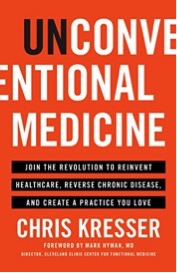
 

Unconventional Medicine: Join the Revolution to Reinvent Healthcare, Reverse Chronic Disease, and Create a Practice You Love by Chris Kresser

The world is facing the greatest healthcare crisis it has ever seen. Chronic disease is shortening our lifespan, destroying our quality of life, bankrupting governments, and threatening the health of future generations. Sadly, conventional medicine, with its focus on managing symptoms, has failed to address this challenge. The result is burned-out physicians, a sicker population, and a broken healthcare system.

In Unconventional Medicine, Chris Kresser presents a plan to reverse this dangerous trend. He shows how the combination of a genetically aligned diet and lifestyle, functional medicine, and a lean, collaborative practice model can create a system that better serves the needs of both patients and practitioners.

The epidemic of chronic illness can be stopped, if patients and practitioners can adapt.

This is a book that has been written primarily for practitioners but if you are a health enthusiast/health advocate who want to understand functional medicine you will enjoy it too.

I really enjoy the discussion about a collaborative practice model where there is a place for doctors, nutritionists, health coaches, and other allied health practitioners.

The only section in book I don’t agree with is where Chris states that: “Research suggests that depression is not actually caused by low serotonin.” Based on my experience, depression/anxiety is not always caused by low serotonin – it can be one of many causes. I am so vocal about this that I know you would will call me out on it if I don’t mention it!

Get your copy of Unconventional Medicine here on Amazon (newly published last month)
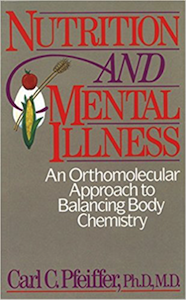
 

Nutrition and Mental Illness: An Orthomolecular Approach to Balancing Body Chemistry by Carl C. Pfeiffer Ph.D. M.D.

This book is a quick read and is one of my favorite older books on the subject of mental health and biochemical imbalances.

Believing that drugs and psychoanalysis were not always the best course of treatment for a variety of mental illnesses, Dr. Carl Pfeiffer began an extensive program of research into the causes and treatment of mental illness, and in 1973 opened the Brain Bio Center in Princeton, New Jersey. Here, with a team of scientists, he found that many psychological problems can be traced to biochemical imbalances in the body. With these patients, he achieved unprecedented success in treating a wide range of mental problems by adjusting diet and providing specific nutritional supplements for those conditions where deficiences exist. This book documents his approach.

Each year, thousands of people are diagnosed as schizophrenic; many more suffer from depression, anxiety, and phobias.

Dr. Pfeiffer’s methods of treatment presented in Nutrition and Mental Illness are a valuable adjunct to traditional therapies, and can bring hope of real wellness to many of those who suffer.

Get your copy of Nutrition and Mental Illness on Amazon here (this book was published in 1988)
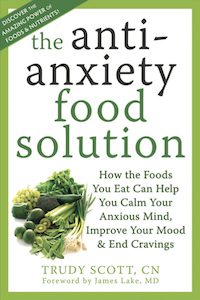
 

antianxiety food solution

The Antianxiety Food Solution: How the Foods You Eat Can Help You Calm Your Anxious Mind, Improve Your Mood, and End Cravings by Trudy Scott

I’m sharing my book in case you don’t yet have a copy or as a reminder to share it with a loved one or friend if it helped you!

It’s remarkable how much the foods we eat can impact our brain chemistry and emotions. What and when we eat can make the difference between feeling anxious and staying calm and in control. But most of us don’t realize how much our diets influence our moods, thoughts, and feelings until we make a change.

In The Antianxiety Food Solution, you’ll find four unique antianxiety diets designed to help you address nutritional deficiencies that may be at the root of your anxiety and enjoy the many foods that foster increased emotional balance. This helpful guide allows you to choose the best plan for you and incorporates effective anxiety-busting foods and nutrients. You’ll soon be on the path to freeing yourself from anxiety—and enjoying an improved overall mood, better sleep, fewer cravings, and optimal health—the natural way! The book also includes an easy-to-use index.

In The Antianxiety Food Solution, you’ll discover:

  • How to assess your diet for anxiety-causing and anxiety-calming foods and nutrients
  • Foods and nutrients that balance your brain chemistry
  • Which anxiety-triggering foods and drinks you may need to avoid
  • Easy lifestyle changes that reduce anxiety and increase happiness

There are also complete chapters on the amino acids (with questionnaires and protocols for low serotonin/tryptophan, low GABA/GABA, low endorphins/DPA, low blood sugar/glutamine and low catecholamines/tyrosine) and the social anxiety condition called pyroluria (with the questionnaire and protocols for zinc, vitamin B6, GLA and other factors to consider).

Grab your copy of The Antianxiety Food Solution from Amazon here (published in 2011 but still very relevant)

Feel free to share some of the favorite nutritional books you are reading now or are planning to read….


Filed Under: Antianxiety Food Solution, Anxiety, Books, EMFs, Emotional Eating Tagged With: anxiety, cravings, EMFs, functional medicine

Pyroluria can feel pretty exhausting

December 10, 2017 By Trudy Scott 26 Comments

If you’re new to pyroluria, it is a social anxiety condition, where physical and emotional symptoms are caused by deficiencies of vitamin B6 and zinc. As well as feeling anxious, shy, or fearful or experiencing inner tension since childhood (and often hiding these feelings from others), digestive symptoms are common and we cover these in my interview Low zinc, social anxiety/pyroluria and the gut on the virtual conference called Better Belly Project 2.0, hosted by Summer Bock, one of the leading gut health experts.

What you’ll learn:

  • How to figure out if you have the social anxiety called pyroluria and what key nutrients are missing in these cases
  • The zinc connection to the microbiome, digestion and social anxiety
  • Digestion symptoms we see in pyroluria
  • Is introversion a personality trait or a biochemical imbalance?
  • Can collagen and gelatin make you more depressed and anxious?

I talk about how you can feel when you have pyroluria and how I can relate to all this:

You may feel uncomfortable in group sittings, you may feel uncomfortable with interacting with large crowds of people. A lot of people will say, “I’m really good at speaking on stage, but don’t make me mingle with the people after I presented on stage because then I’ve got to interact with a lot of people.” You’ve got this inner tension where you deal with it, and you cover it up, and you push through.

I can totally relate because I have pyroluria myself. This is why I’m so passionate about sharing this topic because I grew up pushing through and dealing with it. I remember the first day of school, wanting to walk to school on my own. I didn’t want my mom to take me into school. I was always this person who kind of pushed through and forced myself to do things.

We get through life like that, but it can get pretty exhausting. With my whole anxiety that started in my late 30s, which was a result of this perfect storm, it was gluten sensitivity, and adrenal issues, and low serotonin, and low GABA. And part of my perfect storm was this pyroluria that I discovered. I find that a lot of my clients will push through, and they’ll deal with this, for many, many years.

But, as things start to shift, as they’re starting to go into perimenopause, and the hormones are getting disrupted, and they’re becoming more stressed, and they’ve got adrenal issues going on, and they discover they’ve got food sensitivities. This all conspires together to make their symptoms much worse. Then, they find they can’t socialize, or when they are socializing, they just feel so anxious, it’s just debilitating, and they can’t actually function.

There are overlaps with the pyroluria questionnaire and an introverts questionnaire I came across on the Huffington post. Based on feedback from 100s in my community I’m proposing that introversion is not a personality trait, or maybe it’s not all personality, but there’s this biochemical component.

We also have a great discussion about collagen and gelatin, which can help to heal the gut, but may also be depleting serotonin levels and increasing anxiety/depression in some susceptible individuals:

I actually did a mini-survey with the people in my Facebook community, and I said, “Anyone using collagen or gelatin, have you noticed an increase in anxiety, an increase in depression, agitation, heart palpitations, insomnia?” I got very varied response. Half of the people said yes, they felt worse, more anxious, more depressed. Another 40% said no, they feel great. Then, interestingly enough, there was a few people that said they use collagen and gelatin to actually lower their serotonin levels.

If you aren’t yet signed up you can see the event schedule and register here for Better Belly Project 2.0. It runs through December 14th and Summer is interviewing 49 experts who are leaders in the field of digestive health.

Here are some topics you may also enjoy:

  • What To Do If Your Gut Isn’t Getting Better: Jennifer Fugo (also today)
  • Leaky Gut and Your Child: Dr. Elisa Song (also today)
  • 17 Right and Wrong Ways to Eat Ferments: Summer Bock (also today)
  • Treatment Options for Chronic Yeast Issues. What is the evidence?: Dr. Jessica Drummond (coming up tomorrow)
  • Metals That Impact Gut Function: Wendy Myers (coming up in a few days)

I hope you enjoy my interview and these other expert interviews!

Do you have pyroluria and can you relate to any of this? Feel free to leave your comments and questions and comments below.

Filed Under: Events, Pyroluria Tagged With: better belly project, pyroluria, summer bock

How much GABA should I use and which GABA product is best?

December 8, 2017 By Trudy Scott 61 Comments

The most common question I get about GABA (gamma-amino butyric acid) is the one about the blood-brain barrier and does it even work (it certainly does – read here for information on this one).

The next most common question I get about GABA is this one:

How much GABA should I use and which GABA product is best?

This exact question was actually asked of me a number of times last week after I published: Herbal therapy is equivalent to rifaximin for the treatment of small intestinal bacterial overgrowth (SIBO). In this blog I share about my trials of using sublingual GABA for the visceral pain and muscle tension in my gut caused by the bloating symptoms of SIBO.

There is no simple answer! It requires a blog post to provide a good answer because we are all unique, have different needs and these needs can even differ at different times depending on the issue and what is going on in our lives at the moment.

Let’s first do a quick recap of GABA (gamma-amino butyric acid) in case this is new to you. GABA is a calming amino acid that can be used as a supplement to raise GABA levels (GABA is also a neurotransmitter. It’s one of the amino acids I use most frequently with my anxious clients (together with tryptophan). GABA helps with the physical anxiety and tension, as well as panic attacks. New research shows it also helps with inhibition of unwanted thoughts and may also offer gut protection after alcohol consumption. It also helps with stiff and tense muscles and muscle pain and spasms.

How I have benefited from GABA

Here is a quick summary of how I’ve benefited from GABA supplements. I use this information to inform my use of GABA to help with the visceral pain I now experience due to my SIBO (more on that below).

If you have never used GABA or if you’ve used it once or twice, reading this should give you a clue as to why there is no one answer and how we need to use a trial approach to figure out what is best for each situation.

This also illustrates that there is no one size fits all for everyone and even for the same person under different situations.

  1. The anxiety and panic attacks I experienced 15 years ago:
    1. I used 1-2 GABA Calm three times a day and a combination GABA product at night. GABA Calm contains 125mg GABA and the GABA product contains 200mg GABA. My anxiety eased and my panic attacks stopped in a few days, giving me immediate relief and hope while I started to address all the other root causes like gluten sensitivity, adrenal issues, low zinc, gut health, low vitamin B6 and more
    2. The doses of GABA I used for my anxiety and panic attacks are typical amounts my clients benefit from and I would not have someone start on 500mg.
    3. If someone is a “pixie-dust” person and very sensitive I’d have them start with a pinch/dab or ¼ of 125 mg GABA Calm.
  1. The “ice-pick” headaches on the top of the skull that I discovered were caused by neck spasms:
    1. Physical therapy, high doses of GABA and high doses of magnesium were essential.
    2. Because of the low doses of GABA I had used for my anxiety years before this, I started with low doses of GABA increasing slowly from 200mg up to 1000mg GABA. This higher amount worked for me at this time for this injury.
  1. Throat spasms and the loss of my voice due to vagus nerve issues caused by a terrifying plane ride:
    1. Based on my prior ice-pick headache experience I now knew I could tolerate higher doses and started with 500mg GABA and used more as needed.
    2. I must have been really low in GABA because I was actually able to use upwards of 5 (and sometime more) doses of 500mg a day and not feel too wiped out, even during the day.
    3. That’s a lot of GABA for me – as I mentioned above 125mg to 250mg used to be enough for the anxiety I experienced 15 years ago.
    4. I write more about all this here: Vagus nerve rehab with GABA, breathing, humming, gargling and key nutrients (with videos to demonstrate immediate effects when using GABA sublingually)
  1. Rectal spasms/proctalgia fugax. These seem to be related to SIBO/IBS and I still experience these from time to time.
    1. I have found that 250mg to 500mg GABA opened onto my tongue works best for me for this particular muscle spasm.
    2. Again, it eases the spasms and pain in a few minutes. I write more about this here: How GABA eases agonizing rectal pain and spasms in under 2 minutes
  1. A back injury in August causing severe muscle spasms and pain.
    1. Again, based on my previous experiences using GABA, right after my fall I started taking 1000mg of GABA powder every few hours (held in my mouth for 1-2 minutes) and then reduced it to 2 or 3 times a day as needed.
    2. I share more in this blog: Acupuncture boosts GABA to reduce back pain and oral GABA further reduces the pain
    3. In the above blog you can also read some research about the mechanism of how GABA supplements ease inflammation and tracheal spasms associated with asthma.
  1. Visceral pain caused by SIBO.
    1. My SIBO is really well-controlled with diet but I’ve been having pain, bloating and insomnia while doing this herbal SIBO protocol. I suspect the cellulose in one of the herbal products is causing this bloating and pain after dinner. It was getting so bad it was keeping me awake (this is typical when I am accidently exposed to problematic foods and get a flare-up).
    2. SIBO patients can have visceral hypersensitivity where their pain can be due to the pressure of the gas that is produced and the muscles in the digestive system actually contracting against this pressure.
    3. It got me thinking about how effective GABA is for relieving muscle tension and how much it’s helped me in the past. I also use GABA with my clients all the time for relief of their physical anxiety and stiff and tense muscles. There are GABA receptors all over the gut and I recently discovered that GABA is important for motility.
    4. Over the last 2 weeks I’ve trialed 300mg GABA (opened on to the tongue) a few times to ease the pain and pressure and it’s been amazing at how much it’s helped and how quickly it’s eased the pain. I’ve used it as soon as I notice the bloating starting and it GABA helps me sleep too (as does the tryptophan I’ve also added). I suspect I could safely double this dose in the evening and may do this if the lower dose isn’t enough some evenings. I’ve also used it some days the next morning when I wake with the bloated ache in my belly.

How much should I use and which GABA product is best?

I have a blog post listing the products I use with clients: The Antianxiety Food Solution Amino Acid and Pyroluria Supplements

Always read the precautions (there is a link on the above blog) and do the amino acid questionnaire (the link is also on the above blog) before starting a trial. I also recommend reading the amino acids chapter in my book The Antianxiety Food Solution so you are a well-informed savvy consumer.

If you’re doing a trial for anxiety and panic attacks:

  • If you can use tyrosine the Source Naturals GABA Calm product is the one I use with most of my anxious clients.
  • The other GABA products listed on the supplements blog need to be opened onto the tongue and started with a low dose (100-200mg is a good starting dose) and increase based on symptom relief. More can often be used at night, especially if sleep is also an issue – sometimes up to 500mg.

If you have SIBO/IBS and are doing a trial for visceral pain:

  • I’d suggest NOT starting with the Source Naturals GABA Calm because the sugar alcohols can be problematic for some individuals. Or if you do, be aware that it may not help and may make things worse in the short-term. Personally, I have not found this product to be an issue with my SIBO and I have very few clients report an issue.
  • The other GABA products listed on the supplements blog need to be opened onto the tongue and started with a low dose and increased based on symptom relief.
  • For a client totally new to GABA I’d start with 100-200mg in the evening and also increase slowly over a few weeks based on symptom relief, up to 500-1000mg.
  • For early morning belly pain I’d start a client on 100-200mg because too much in the day can make you feel tired.    

If you have other pain issues:

  • For a client totally new to GABA I’d start with 100-200mg in the evening and increase slowly over a few weeks based on symptom relief, up to 500-1000mg.  Depending on the pain more may often be needed and higher doses can often be tolerated during the day.
  • Keep in mind that pain can have any many root causes and it may be more than low just GABA or may not be due to low GABA at all. Other factors to consider include but are not limited to: low serotonin, low magnesium, low endorphins, inflammation, structural damage, low omega-3s, gluten issues, Lyme disease etc.  Physical therapy and acupuncture are wonderful approaches to include too.

As you can see from my experiences above it’s a matter of doing trials to find the ideal amount for you for your particular situation.  

If you’ve used GABA supplements for anxiety, visceral pain or other muscles spasms I’d love to hear from you.

This GABA-pain connection is not well recognized and I’d love to have more people know about this as a possible option. The more we share our experiences the more we all learn.

If you plan a trial similar to any of the above I’d also love to hear your questions and feedback.

Filed Under: GABA, Pain, SIBO Tagged With: anxiety, back spasms, GABA, IBS, muscle, pain, SIBO, tryptophan, vagus nerve, visceral pain

Functional Medicine Certified Health Coach program

December 6, 2017 By Trudy Scott Leave a Comment

Are you interested in learning more about being a health coach? Do you have a passion for helping others and a love of learning about health and wellness and are looking for formal training?

Do you want to integrate your previous healthcare training with functional medicine and positive psychology so that you can enter this exciting field of health coaching?

Do you want to learn more about health coaching in order to bring a health coach onto your growing team to better support your clients/patients?

The Functional Medicine Coaching Academy (FMCA) is hosting a webinar on Thu Dec 7 at 7pm CT/8pm ET that will help you figure out if this is right for you. You can register for the webinar here

Here is some information about functional medicine from FMCA and what it means to be a Functional Medicine Certified Health Coach:

  • The Functional Medicine movement is gaining momentum because it applies a holistic approach to health, finds the root causes of disease, and uses diet and lifestyle change to create wellness.
  • The Functional Medicine model is an individualized, patient-centered, science-based approach that empowers patients and practitioners to work together to address the underlying causes of disease and promote optimal wellness.
  • FMCA built their curriculum to cover everything a Functional Medicine Certified Health Coach needs to know to effectively support both the clients with whom they work and the doctors [or nutritionists or other practitioners] with whom they partner.

The 12-month online program grounds coaches in the principles of Functional Medicine and functional nutrition, mind/body medicine, positive psychology, and the art of coaching. Here is an overview of the curriculum

MONTH 1: Coaching Fundamentals and Creating Positive Coaching Relationships: Build a strong foundation with the basics of Positive Psychology techniques and Coaching skills you’ll use to connect with clients and inspire them to make lasting lifestyle changes.

MONTH 2: The Power of the Personal Narrative: Learn about character strengths—both how to work with clients to incorporate their character strengths into the goals they set and the changes they make, as well as how to identify and leverage your own character strengths to strengthen your coaching skills.

MONTH 3: Facilitating Values-Based Lifestyle Change: Help clients through their digestive issues with learning digestion basics and how to balance the microbiome to achieve better health.

MONTH 4: Supporting Digestion and Reducing Inflammation: Understand emotional eating and how stress can cause inflammation; learn how to use the Functional Medicine elimination diet to identify foods that heal and foods that inflame on a case by case basis.

MONTH 5: Improving Communication and Hormone Balance: Recognize and interpret the types of nonverbal communication clients may display, and discover the impact of hormone fluctuations on emotional eating, stress, and blood sugar regulation, so you can help your clients work through these challenges.

MONTH 6: Creating Energy and Resiliency: Learn how implementing specific food and exercise plans with clients can address their unique needs, and learn about energy—from cellular energy production to how the foods we choose affect our energy to using mindfulness meditation to develop resiliency.

MONTH 7: Integrating Detoxification into Your Practice: Learn how toxins relate to illness to ensure safe and appropriate food choices during detox; we cover how to shed toxic thoughts, so you can support clients through safe whole-body detoxification.

MONTH 8: Coaching Strategies for Challenging Gastrointestinal and Immune Compromised Conditions: Understand the science of celiac disease and gluten sensitivity, and learn about gut-related challenges—specifically, the gut-brain-obesity link and choosing gut-healing foods.

MONTH 9: Coaching Strategies for Working Through Emotional Content: Learn about cooking for a healthy mind, and how emotions can influence the way we feel and act; help clients manage the cravings that sometimes accompany their emotions.

MONTH 10: Running Group Wellness and Body Composition Programs: Learn the basic metabolic and hormonal aspects of resistant weight loss, discover how to incorporate food plans and your clients’ character strengths to help them manage their weight, and get the blueprint for both virtual and clinic-based group detox programs.

MONTH 11: Overcoming Challenges with Chronically Ill Clients and Families: Learn about the role of the Health Coach as part of a Functional Medicine collaborative care team, understand how to apply the Positive Psychology model to address complicated client challenges, and keep coaching simple to avoid overwhelming clients.

MONTH 12: Consolidating Learning, Tracking Progress, Preparing to Move On: Become familiar with the ethical guidelines and core competencies you’ll need to know in order to earn your Health Coaching certification, and discuss the business side of coaching as you prepare to move into your next phase.

If you’re ready to deepen your career helping others through your passion for health, or make a career transition (or bring a health coach onto your team), now is the time. You can learn more about this unique program by joining the webinar here. The webinar will be recorded so if you can’t make it live, register anyway and you’ll get the recording sent to you.

Here is the link to the application if you already know this is for you.

I know FMCA’s founders, Dr. Sandra Scheinbaum and Elyse Wagner, and I love that they are on this mission to transform healthcare by making Health Coaches the new face of wellness medicine.

Here is a picture of me with Sandra at a recent event in Los Angeles.  It was great to catch up and we were both thrilled to meet “Food Babe” activist Vani Hari.

If you are already a health coach or have teamed up with a health coach I’d love to hear your feedback on how this is working for you.

If you have any comments or questions please post them in the comments below.

Filed Under: Events Tagged With: Elyse Wagner, functional medicine, Functional Medicine Coaching Academy, health coach, Sandra Scheinbaum

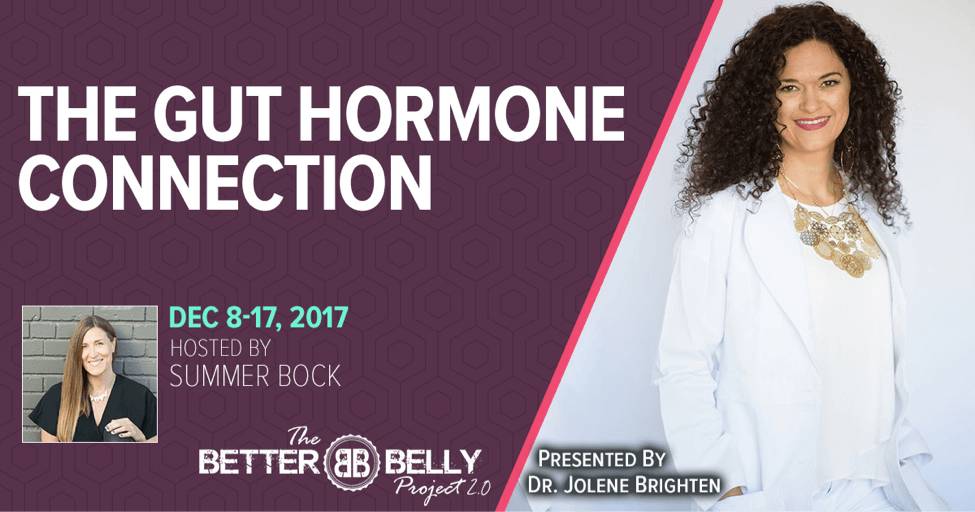
Gut Hormone Connection with Dr. Jolene Brighten: Better Belly Project 2.0

December 4, 2017 By Trudy Scott 2 Comments


Dr. Jolene Brighten is one of my favorite women’s health experts and her Gut Hormone Connection interview with Summer Bock on the Better Belly Project 2.0: is fascinating. Here are a few snippets for you to enjoy about the connection between your thyroid, digestion and SIBO (small intestinal bacterial overgrowth) specifically:

In the case with hypothyroidism, this is something that’s a really interesting phenomenon. Your thyroid can be functioning perfectly well, but you can still be hypothyroid because it’s not about just the thyroid function but the conversion of T4 to T3. T3 helps your mood, it’s what helps your menstrual cycle, it’s your metabolism. It does so many wonderful things. Every single cell needs that active T3.

Well, your gut and your liver are major sites of activating that T3. If they are unhealthy they’re not going to convert your T4 to T3. Then, you get into a loop because if you don’t have enough T3, now, you don’t stimulate hydrochloric acid. If you don’t stimulate hydrochloric acid production, then, none of the other gastrointestinal organs are going to work as well. Your gallbladder is not going to contract. You’re not going to have pancreatic enzymes, which sets up a perfect environment for SIBO.

She goes on to share how T3 also affects motility, which is a major factor when it comes to SIBO.

Adrenal issues and high cortisol issues are common with the clients I work and Jolene shares more on this topic too, and how this can play a role in anxiety (and insomnia):

If the gut is inflamed, so if you’ve got gut infections going on, then, those adrenal glands are going to kick into hyperdrive. We can see they’ll try to secrete cortisol so that we can drop that inflammation. In addition to that, they’ll start spiking epinephrine and norepinephrine over time, which when those hit the brain, we’re going to feel anxious and panicked.

She also covers orgasms, and so much about birth control pill concerns like the impacts on the microbiome and an increased risk of Crohn’s disease. It’s an interview that is not to be missed!

Summer Bock, one of the leading gut health experts, is interviewing 49 experts who are leaders in the field of digestion, nutrition, and health in this huge, week-long virtual conference called Better Belly Project 2.0: Crushing the Critters, Plugging the Leaks, & Balancing the Biome for Your Best Body Ever

Summer’s goal is to create a great resource with a few different tracks to make it easier for you to navigate the information:

  1. Gut Health Basics
  2. Gut-Brain Axis (my interview “Low zinc, social anxiety/pyroluria and the gut” is in this track)
  3. Wellness Professional
  4. Fermentation
  5. Microbiome & Probiotics

This online event will provide exceptional value, knowledge, and truly life-changing insights from authors, professors, scientists, fermented foods experts, and wellness practitioners who have an understanding on how you can improve your digestive health amidst all the processed foods, antibiotics, stress and lack of probiotic-rich foods in the diet.

The dates are December 8-14th and there’s no charge to attend when you register in time for the live event. You can see the event schedule and register here for Better Belly Project 2.0

I hope you enjoy it and get as much out of it as I plan too! I learn new information at all these online events too!

Do you have thyroid issues and digestive symptoms? Feel free to leave your questions and comments below.

Filed Under: Events, Gut health, Hormone Tagged With: better belly project, hormone, jolene brighten, summer bock

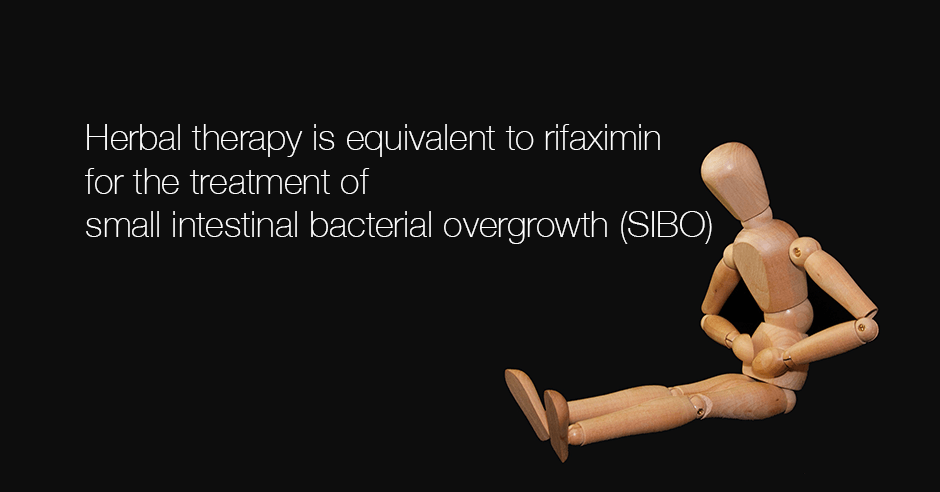
Herbal therapy is equivalent to rifaximin for the treatment of small intestinal bacterial overgrowth (SIBO)

December 1, 2017 By Trudy Scott 15 Comments

Despite the fact that this paper was published in 2014, it’s still very relevant and I’m just behind in sharing it via a blog post: Herbal therapy is equivalent to rifaximin for the treatment of small intestinal bacterial overgrowth

Patients with small intestine bacterial overgrowth (SIBO) have chronic intestinal and extraintestinal symptomatology which adversely affects their quality of life. Present treatment of SIBO is limited to oral antibiotics with variable success. A growing number of patients are interested in using complementary and alternative therapies for their gastrointestinal health. The objective was to determine the remission rate of SIBO using either the antibiotic rifaximin or herbals in a tertiary care referral gastroenterology practice.

I’ve also decided to post this study now because I’ve been dealing with chronic SIBO for some time and am in the middle of doing the Metagenics herbal protocol (more information on that below).

SIBO symptoms and conditions

Here is a summary of some of the chronic intestinal symptoms: Abdominal bloating (gas), belching, flatulence, abdominal pain, cramps, constipation and/or diarrhea, heartburn (reflux or GERD), nausea and food sensitivities.

Here is a summary of some of the extraintestinal (outside the intestinal system) symptoms and conditions that have been linked to SIBO and/or dysbiosis: disorders of mood and behavior (including anxiety), diabetes, obesity, cardiovascular disease, rosacea, restless legs syndrome, pain, anemia, interstitial cystitis, and other pelvic conditions such as vulvodynia and proctalgia fugax (rectal spasms), chronic prostatitis and polyneuropathy.

During season 3 of The Anxiety Summit, I interviewed Dr. Allison Siebecker on Small Intestinal Bacterial Overgrowth and Anxiety. We talked about the SIBO Questionnaire I use with my clients and she gave me permission to share my modified version. You can find this SIBO questionnaire here. Please check out Dr. Siebecker’s site siboinfo.com for a wealth of information about SIBO.

The herbal treatments in this study

In this study, one hundred and four patients who tested positive for newly diagnosed SIBO by lactulose breath testing were offered either 1200mg rifaximin a day or one of two herbal treatments for 4 weeks. Lactulose breath testing was done again at the end of the treatment.

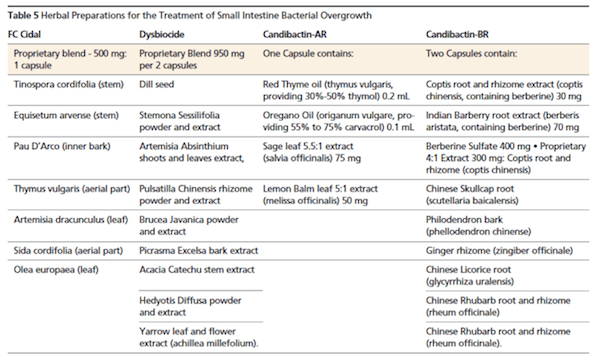
These are the two herbal treatments that were offered:  

Dysbiocide and FC Cidal (both by Biotics Research): take 2 capsules twice daily of each of these products

or

Candibactin-AR and Candibactin-BR (both by Metagenics): take 2 capsules twice daily of each of these products

The ingredients in each of the products
(from the paper: Herbal therapy is equivalent to rifaximin for the treatment of small intestinal bacterial overgrowth)

Study conclusion

The study concluded that these herbal therapies are at least as effective as rifaximin for resolution of SIBO. It also states that the herbal products also appear to be as effective as triple antibiotic therapy in patients who don’t respond to rifaximin.

Adverse effects

With regards to adverse effects, they were reported as follows: in the rifaximin treated patients there was 1 case of anaphylaxis, 2 cases of hives, 2 cases of diarrhea and 1 case of Clostridium difficile; in the herbal group only one case of diarrhea was reported.

A comment about bioindividuality

You’ll notice that the only herb that is in both sets of herbal protocols is Red Thyme Oil or thymus vulgaris and yet both herbal protocols offer a solution. I’ve heard Dr. Siebecker share that of all the different approaches for SIBO (including the elemental diet), at least one approach works for everyone. So, if you’ve tried an approach and it hasn’t worked, don’t give up and move on to the next approach. This points to bioindividuality, and there being no one size fits all approach.

Dr. Siebecker lists the above combination herbal protocols together with the herbal protocol her and team use on her site, which, again, is different from the above: 1-3 of the following herbs x 4 weeks per course, at highest levels suggested on product labels.

  • Allicin from Garlic (the highest potency formula is Allimed)
  • Oregano
  • Berberine- found in Goldenseal, Oregon Grape, Barberry, Coptis, Phellodendron
  • Neem
  • Cinnamon

My protocol and experience

As I mention above, I also decided to post this study because I’ve been dealing with chronic SIBO for some time and am in the middle of doing the Metagenics herbal protocol. I’m 14 days into a 28-day protocol.

I’m actually doing 1 capsule of Candibactin-AR, 3 times a day away from food and 2 capsules of Candibactin-BR, twice a day, and about 10 minutes before food. I landed on this protocol, so I would have enough of each for a 4-week protocol.

When I started on the products I immediately observed the typical SIBO bloating and almost quit but quickly figured out it was from the microcrystalline cellulose and hypromellose in the Candibactin-BR.

It turns out that these are soluble fibers (dispersible in water) and are more easily fermented than insoluble fibers. This fermentation in the small intestine can trigger IBS/SIBO symptoms. Adding 2 capsules of a product with cellulase (an enzyme that breaks down cellulose) has helped.

Pain, gas and GABA

I also remembered that Dr. Siebecker shared on the SIBO SOS I summit about how SIBO patients can have visceral hypersensitivity where their pain can be due to the pressure of the gas that is produced and the muscles in the digestive system actually contracting against this pressure. It got me thinking about how effective GABA is for relieving muscle tension. I use GABA with my clients all the time for relief of their physical anxiety and stiff and tense muscles. And GABA helps me and many others with proctalgia fugax (rectal spasms)  which seems to be related to IBS/SIBO.

Over the last week I’ve tried sublingual GABA a few times to ease the pain and pressure and it’s been amazing. I’ve used it as soon as I notice the bloating starting AND even the next morning when I wake with the bloated ache in my belly.  I’ve been using the NFH GABA-T SAP opened on to my tongue. This product contains 300mg GABA and 150mg of theanine.  

I’m going to keep this in mind in case of a future flare up of my IBS/SIBO if I’m accidentally exposed to a food I can’t tolerate – assuming this protocol doesn’t clear it up for me. I suspect, as Dr. Siebecker reports, and based on the fact that I have chronic SIBO, that I’ll need a few more rounds anyway.

There is research supporting why this works: there are GABA receptors all over the gut and GABA is important for motility. (Stay tuned for a detailed blog post on this topic).

As well as the initial bloating and pain, I’ve also experienced some die-off symptoms like brain-fog and feeling blah, together with some sleep issues a few nights. The GABA helps with this and so does the tryptophan that I’ve also added.

If you’ve used GABA for this purpose or medications like Gabapentin or others to achieve similar results, I’d love to hear from you.

I’ll share more as I progress through the protocol. I’m also going to be speaking on SIBO SOS summit (the 3rd one) hosted by Dr. Allison Siebecker and Shivan Sarno. I will share more about my SIBO journey then, as well as all my results with this herbal protocol and any other challenges I face along the way.

Please also share if you’ve had success with any of the above herbal protocols or other approaches for your SIBO.

And feel free to post any questions below.

Filed Under: GABA, Gut health, SIBO Tagged With: anxiety, Candibactin-AR, Candibactin-BR, Dysbiocide, FC Cidal, GABA, herbal, IBS, rifaximin, SIBO, tryptophan

  • « Go to Previous Page
  • Page 1
  • Interim pages omitted …
  • Page 62
  • Page 63
  • Page 64
  • Page 65
  • Page 66
  • Interim pages omitted …
  • Page 160
  • Go to Next Page »

Primary Sidebar

GABA QuickStart Homestudy

gaba quickstart homestudy

Free Report

9 Great Questions Women Ask about Food, Mood and their Health

You'll also receive a complimentary subscription to my ezine "Food, Mood and Gal Stuff"


Connect with me

Popular Posts

  • Amino Acids Mood Questionnaire from The Antianxiety Food Solution
  • The Antianxiety Food Solution Amino Acid and Pyroluria Supplements
  • Pyroluria Questionnaire from The Antianxiety Food Solution
  • Collagen and gelatin lower serotonin: does this increase your anxiety and depression?
  • Tryptophan for the worry-in-your-head and ruminating type of anxiety
  • GABA for the physical-tension and stiff-and-tense-muscles type of anxiety
  • The Antianxiety Food Solution by Trudy Scott
  • Seriphos Original Formula is back: the best product for anxiety and insomnia caused by high cortisol
  • Am I an anxious introvert because of low zinc and vitamin B6? My response to Huffington Post blog
  • Vagus nerve rehab with GABA, breathing, humming, gargling and key nutrients

Recent Posts

  • Her cravings for chips and peanut butter were triggered by stress: GABA ends cravings and reduces physical tension and fear of heights
  • It is truly miraculous to be able to move through life without crippling anxiety and panic
  • GABA and tryptophan combo provide immediate and noticeable relief for tremors and cervical dystonia in just 7 days
  • Red light therapy for back and neck pain, plantar fasciitis and low mood – a complement to the amino acids GABA, DPA and tryptophan
  • What do I use instead of Seriphos to help lower high cortisol that is affecting my sleep and making me anxious at night?

Categories

  • 5-HTP
  • AB575
  • Addiction
  • ADHD
  • Adrenals
  • Alcohol
  • Allergies
  • Alzheimer's disease
  • Amino Acids
  • Anger
  • Antianxiety
  • Antianxiety Food Solution
  • Antidepressants
  • Anxiety
  • Anxiety and panic
  • Autism
  • Autoimmunity
  • benzodiazapines
  • Bipolar disorder
  • Books
  • Caffeine
  • Cancer
  • Candida
  • Children/Teens
  • Collagen
  • Cooking equipment
  • Coronavirus/COVID-19
  • Cravings
  • Depression
  • Detoxification
  • Diabetes
  • Diet
  • DPA/DLPA
  • Drugs
  • EFT/Tapping
  • EMF
  • EMFs
  • Emotional Eating
  • Endorphins
  • Environment
  • Essential oils
  • Events
  • Exercise
  • Fear
  • Fear of public speaking
  • Fertility and Pregnancy
  • Fish
  • Food
  • Food and mood
  • Functional neurology
  • GABA
  • Gene polymorphisms
  • General Health
  • Giving
  • Giving back
  • Glutamine
  • Gluten
  • GMOs
  • Gratitude
  • Gut health
  • Heart health/hypertension
  • Histamine
  • Hormone
  • Hyperparathyroidism
  • Hypoglycemia
  • Immune system
  • Inflammation
  • Insomnia
  • Inspiration
  • Introversion
  • Joy and happiness
  • Ketogenic diet
  • Lithium orotate
  • Looking awesome
  • Lyme disease and co-infections
  • MCAS/histamine
  • Medication
  • Men's health
  • Mental health
  • Mercury
  • Migraine
  • Mold
  • Movie
  • MTHFR
  • Multiple sclerosis
  • Music
  • NANP
  • Nature
  • Nutritional Psychiatry
  • OCD
  • Osteoporosis
  • Oxalates
  • Oxytocin
  • Pain
  • Paleo
  • Parasites
  • Parkinson’s disease
  • PCOS
  • People
  • PMS
  • Postpartum
  • PTSD/Trauma
  • Pyroluria
  • Questionnaires
  • Real whole food
  • Recipes
  • Research
  • Schizophrenia
  • serotonin
  • SIBO
  • Sleep
  • Special diets
  • Sports nutrition
  • Stress
  • Sugar addiction
  • Sugar and mood
  • Supplements
  • Teens
  • Testimonials
  • Testing
  • The Anxiety Summit
  • The Anxiety Summit 2
  • The Anxiety Summit 3
  • The Anxiety Summit 4
  • The Anxiety Summit 5
  • The Anxiety Summit 6
  • Thyroid
  • Thyroid health
  • Toxins
  • Tryptophan
  • Tyrosine
  • Uncategorized
  • Vegan/vegetarian
  • Women's health
  • Yoga

Archives

  • May 2026
  • April 2026
  • October 2025
  • September 2025
  • August 2025
  • July 2025
  • June 2025
  • May 2025
  • April 2025
  • March 2025
  • February 2025
  • January 2025
  • November 2024
  • October 2024
  • September 2024
  • August 2024
  • July 2024
  • June 2024
  • May 2024
  • April 2024
  • March 2024
  • February 2024
  • January 2024
  • December 2023
  • November 2023
  • October 2023
  • September 2023
  • August 2023
  • July 2023
  • June 2023
  • May 2023
  • April 2023
  • March 2023
  • February 2023
  • January 2023
  • December 2022
  • November 2022
  • October 2022
  • September 2022
  • August 2022
  • July 2022
  • June 2022
  • May 2022
  • April 2022
  • March 2022
  • February 2022
  • January 2022
  • December 2021
  • November 2021
  • October 2021
  • September 2021
  • August 2021
  • July 2021
  • June 2021
  • May 2021
  • April 2021
  • March 2021
  • February 2021
  • January 2021
  • December 2020
  • November 2020
  • October 2020
  • September 2020
  • August 2020
  • July 2020
  • June 2020
  • May 2020
  • April 2020
  • March 2020
  • February 2020
  • January 2020
  • December 2019
  • November 2019
  • October 2019
  • September 2019
  • August 2019
  • July 2019
  • June 2019
  • May 2019
  • April 2019
  • March 2019
  • February 2019
  • January 2019
  • December 2018
  • November 2018
  • October 2018
  • September 2018
  • August 2018
  • July 2018
  • June 2018
  • May 2018
  • April 2018
  • March 2018
  • February 2018
  • January 2018
  • December 2017
  • November 2017
  • October 2017
  • September 2017
  • August 2017
  • July 2017
  • June 2017
  • May 2017
  • April 2017
  • March 2017
  • February 2017
  • January 2017
  • December 2016
  • November 2016
  • October 2016
  • September 2016
  • August 2016
  • July 2016
  • June 2016
  • May 2016
  • April 2016
  • March 2016
  • February 2016
  • January 2016
  • December 2015
  • November 2015
  • October 2015
  • September 2015
  • August 2015
  • July 2015
  • June 2015
  • May 2015
  • April 2015
  • March 2015
  • February 2015
  • January 2015
  • December 2014
  • November 2014
  • October 2014
  • September 2014
  • August 2014
  • July 2014
  • June 2014
  • May 2014
  • April 2014
  • March 2014
  • February 2014
  • January 2014
  • December 2013
  • November 2013
  • October 2013
  • September 2013
  • August 2013
  • July 2013
  • June 2013
  • May 2013
  • April 2013
  • March 2013
  • February 2013
  • January 2013
  • December 2012
  • November 2012
  • October 2012
  • August 2012
  • July 2012
  • June 2012
  • May 2012
  • April 2012
  • March 2012
  • February 2012
  • January 2012
  • December 2011
  • November 2011
  • October 2011
  • September 2011
  • August 2011
  • July 2011
  • June 2011
  • May 2011
  • April 2011
  • March 2011
  • February 2011
  • January 2011
  • December 2010
  • October 2010
  • September 2010
  • July 2010
  • May 2010
  • April 2010
  • March 2010
  • February 2010
  • January 2010
  • November 2009

Share the knowledge!

The above statements have not been evaluated by the Food and Drug Administration. Products listed in this website are not intended to diagnose, treat, cure or prevent any disease.

The information provided on this site is for informational and educational purposes only and is not intended as a substitute for advice from your physician or other health care professional. You should consult with a healthcare professional before starting or modifying any diet, exercise, or supplementation program, before taking or stopping any medication, or if you have or suspect you may have a health problem.


Copyright © 2026 Trudy Scott. All Rights Reserved. | Privacy | Terms and Conditions | Refund Policy | Medical Disclaimer

Free Report

9 Great Questions Women Ask about Food, Mood and their Health

You’ll also receive a complimentary subscription to my ezine “Food, Mood and Gal Stuff”