• Skip to primary navigation
  • Skip to main content
  • Skip to primary sidebar

everywomanover29 blog

Food, Mood and Women's Health – Be your healthiest, look and feel great!

  • Blog
  • About
  • Services
  • Store
  • Resources
  • Testimonials
  • The Book
  • Newsletter
  • Contact
  • Search this site

The Truth about *PET* Cancer docu-series – save the lives of your precious pets

March 22, 2018 By Trudy Scott 4 Comments

Cancer is ruthless and this disease is stealing the lives our beloved animals. It’s sad but true. Each year, over 6 million dogs and 6 million cats are diagnosed with cancer. And millions die as a devastating result.

The experts at The Truth about *PET* Cancer share this:

The rate of cancer in pets is exploding! Just 50 years ago, 1 in 100 dogs got cancer. Today it is a staggering 1 in 1.65 dogs. Dogs have the highest rate of cancer of any mammal on the planet, and cats aren’t far behind, with 1 in every 3 receiving a cancer diagnosis.

I was shocked by these rates so I reached out to the hosts and they kindly sent me an article by Carol Beuchat PhD, Scientific Director of the Institute of Canine Biology: Do dogs have more cancer than other mammals?:

We can truthfully say that cancer in pets is at the epidemic stage right now, and just like most oncologists, the vast majority of vets don’t know about the countless natural therapies and protocols available to heal and prevent pet cancer.

Cancer is a problem not just in a few dog breeds but in many. Cancer rates of 20% or 30% are taken as “normal” because they are so much lower than the levels in breeds that are notorious for cancer – the ones up at 50% and 60%. Clearly, however, what is considered normal for dogs is much higher than what we see in mammals in general, and cancer rates that are “abnormally high” in dogs are actually off the charts.

She also compares cancer in dogs with other mammals and the Tasmanian Devil:

rates of cancer in dogs are higher- spectacularly so, in fact – compared to those for mammals in general. Cancer rates in other mammals are largely less than 20%, while in dogs there are only a handful of breeds in that range, and there are none at all lower than about 15%, where most of the mammals are. In fact, the Tasmanian Devil with its contagious cancer [and 50% rate] is matched by the Flatcoated Retriever and even outdone by the Irish Water Spaniel, with a half dozen more breeds almost as high.

What if your dogs and cats are tragically dying from cancer, simply because you haven’t heard about treatments that can truly heal them? In this groundbreaking 7-episode docu-series, 30 world-renowned pet health experts will reveal better, safer and more affordable cancer healing treatment. And you’ll discover simple prevention therapies (your vet probably doesn’t even know about) that can save the lives of your precious pets.

Here is one cancer prevention topic that will be covered by one of the experts Rodney Habib: Are there potatoes in your bag of pet food or in your pet’s diet?

Alas, the conventional potato tests positive for 35 different pesticides — more pesticides by weight than any other vegetable, according to EWG [Environmental Working Group] 2014 Dirty Dozen List

Unless you are feeding organic potatoes to your family and pets, you may want to give this information some serious consideration seeing that today’s cancer and disease rates are soaring at an all-time high! It is estimated that 5% of cancer is genetic and 95% is a result of lifestyle and environmental factors. The fewer toxins we have in our systems, the fewer problems we have. Period.

The experts will talk about topics from the pet food industry, diets and specific treatment protocols to reverse cancer, water intake, vaccinations (needed vs. those that are likely to cause cancer), essential oil recipes in place of flea/tick collars and overall homeopathy for pets.

I’ve seen natural health work wonders with anxious pets – such as theanine, a gluten-free diet and Thunder shirts – so let’s use natural approaches for cancer prevention and treatment too! You’ll find out everything you need to know in this cutting-edge series that starts in a few weeks.  

You’ll also discover that many of these natural approaches help with both pet cancer and pet anxiety too – such as a gluten-free diet, organic food, essential oils, nutrients like curcumin, vitamin D and much more.

If you want to protect your family pet from cancer… or heal your pet’s cancer when the vet says there’s nothing more to be done… or you want to give your pet the healthiest food and environment possible so they will live a long and happy life, then I encourage you to register for The Truth About PET Cancer docu-series now.

CLICK HERE to watch the video trailer and then register to watch this special event.

And check out this quiz: Do you know your pet’s risk for cancer?


Keywords
 

Filed Under: Cancer, Events Tagged With: anxiety, anxious, cancer, cat, dog, pets, potatoes, Prevention, treatment, Truth about pet cancer

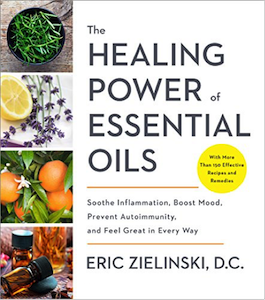
New book: The Healing Power of Essential Oils

March 19, 2018 By Trudy Scott Leave a Comment

The Healing Power of Essential Oils: Soothe Inflammation, Boost Mood, Prevent Autoimmunity, and Feel Great in Every Way by Eric Zielinski, launched last week and I promised you a book review so here goes. I have always loved Dr. Z’s research-based approach and practical how-tos when it comes to essential oils and was so excited for this book. Well, all I can say is that this is one of the best books I’ve read this year! I read it cover-to-cover in one sitting and I have lists of things I want to try!

It’s perfect for you if you’re:

  • a total newbie to essential oils and have been hearing how great they are and want to learn the basics (and the science)
  • someone like me who does has been using essential oils for a few years but could really take things up notch in terms of therapeutic use and how to use blends
  • someone who is well versed in using essential oils therapeutically, making your own cleaning products and self-care products and wants the science behind each essential oil
  • looking for a great resource to give a loved one like your sister or mom, or to a friend, and if you’re a practitioner, as a resource for your clients and patients, so they too can benefit by what you already know
  • looking for a non-branded resource (Dr. Z has no brand loyalty but does teach you how to find quality brands of essential oils)

Here are some of the many reasons I love this book:

  • Dr. Z emphasizes biochemical individuality – just like with food and nutrients there is no one size fits all with essential oils and you have to find what works for you. He teaches you how to figure that out in the recipes sections
  • He addresses the ‘overwhelmed and where do I start’ aspect – he calls it “paralysis by analysis”. One way he does this in a few ways: 7 steps to start using them, a daily morning and/or evening practice and the tops oils everyone should start with. Here’s another idea (from me): start with a calming essential oil like lavender or neroli!
  • The background information is excellent: the source of the essential oil (for example cinnamon bark vs the leaf); why knowing the chemotype is important in terms of their different therapeutic effects; shelf life; how to find quality oils; why plants native to an area are better; dilution rules; inhalation, topical use and ingestion of oils
  • The research is comprehensive and best of all he refers to studies where the essential oil has been shown to provide therapeutic value, rather than referencing studies on various constituents
  • There is extensive coverage on carrier oils (like jojoba, coconut oil, fractionated coconut oil etc.) and emulsifiers (like Castile soap and aloe vera oil). He also shares that liquid stevia is a solubilizer (this one intrigues me)
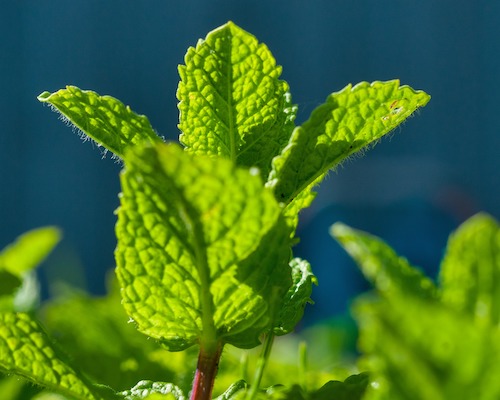
  • All the wonderful recipes – from home cleaning to personal care products to many products for addressing specific health conditions like aching muscles, wounds, candida, dandruff and much more. Here are a few ways he shares how peppermint essential oil, one of my favorites, can help: as a digestive aid (I use it topically in coconut oil, together with lavender at night and love it!), to ease muscle tension, to clear sinuses, as a potential solution to antibiotic-resistant infections (I’ve used lavender and lemongrass when I had a boil but wasn’t aware peppermint had similar properties), to give you focus and provide an energy pick-up and much more.  Here is one application for your hair/scalp:

A few drops of peppermint essential oil included in your shampoo and conditioner will tingle your scalp and wake your senses. As a bonus, peppermint’s antiseptic properties can also help prevent or remove both lice and dandruff.


  • Here is a safe and effective bathroom cleaner recipe from the book – and it smells wonderful! I love the added bonus of getting a mood boost while cleaning!

    Tea Tree Citrus Bathroom Cleaner

    The star of this blend is orange essential oil, which is a known mood booster. You’ll be happier even though you’re stuck cleaning the bathroom!

    1 tablespoons Dr. Bronner’s liquid castile soap

    2 tablespoons baking soda

    20 drops tea tree essential oil

    15 drops orange or lemon essential oil (or 7 drops of each)

    15 drops lemon eucalyptus or lemon myrtle essential oil

    2 cups distilled water

    Supplies: 32 oz spray bottle, preferably glass

    1. Combine the liquid soap, baking soda and essential oils in the spray bottle and mix well.
    2. Pour in the water and shake well
    3. Use as you would any other bathroom cleaner. Shake before use.

    Elsewhere in the book, Dr. Z writes about how eucalyptus is highly antimicrobial, helping to clear surfaces of potential germs (and says you can use regular eucalyptus in the above recipe too).

  • There is a big focus on women’s health and anxiety and depression, so it’s perfect for you. The recipes for PMS, perimenopause and menopause are fabulous – with help for anxiety, depression, insomnia, vaginal dryness and much more. Here is one where clary sage helped with depression (anxiety was not assessed but we know high cortisol and low serotonin impacts both anxiety and depression)

Clary sage offers antidepressant effects as described in a 2014 study that was conducted on twenty-two women in Korea. The trial measured neurotransmitter levels found in blood samples of menopausal women and discovered that, by simply inhaling clary sage oil, levels of the stress hormone cortisol dropped considerably and serotonin levels were elevated. The result was an overall improvement in depression symptoms.

  • There is an entire chapter on essential oils for fertility, pregnancy and postpartum
  • Photosensitivity is explained and he lists all the oils that fall into this category (such as bergamot and expressed lemon)

Some essential oils can increase the photosensitivity of your skin. For example, chemicals in the citrus family such as bergapten are notable for their phototoxic effects. When bergapten is left on the skin and then exposed to the sun, it can amplify the effect of UV rays, potentially causing sunburn and leading to sunspots. Some people just decide not to use any bergapten-heavy oils topically, but simply avoiding the sun after use (for example, by applying them at night) is sufficient.

  • He addresses the concerns about lavender and tea tree being estrogenic and explaining why they are not (I get this question a lot!)
  • Plenty of oils and recipes for digestive support like a SIBO blend of a 1:1:1 ratio of caraway, lavender and neroli (which I am very interested in exploring further)

As you can see, this book is comprehensive, research-based, practical and I would even say pretty exciting and fun! Here is the official blurb about the book:

Eric Zielinski, D.C., host of the Essential Oils Revolution summits, offers a soup-to-nuts guide to mastering essential oils for vibrant health and well-being, featuring dozens of recipes and formulations for restful sleep, reduced inflammation, balanced hormones, and more.

Achieving true health is not an easy task. For many people, it might be easier to pop a pill or push aside lingering discomfort in favor of finishing everything on your to-do list. In The Healing Power of Essential Oils, Eric Zielinski, D.C. shows readers how to make their health a priority with the life-changing benefits of essential oils. Essential oils are the natural solution to everything from anxiety and depression to deep-seated inflammation.

For beginners, Dr. Z teaches everything you need to know to get started, including the top seven oils you should stock from Day 1 and the commonly used techniques and tools. He illustrates daily practices you can follow to enjoy the properties of essential oils, including a five-minute devotional using frankincense and neroli to set you up for a productive and stress-free day, and a simple bedtime routine harnessing the soporific effects of lavender.

Backed by extensive research, Dr. Z also supplies essential oil blends that promote hormone balance, reduced inflammation, improved digestion, increased immunity, and so much more. You’ll be armed with over 150 recipes for every health need, and a special section on women’s health includes dozens of formulations for PMS, fertility, pregnancy, candida, and menopause. Even those well-versed in essential oils will benefit from this thorough approach. With your newfound knowledge, you can begin tailoring an essential oils practice to your unique pain points and lifestyle right away – and start experiencing amazing results.

Grab a copy from your nearest bookstore or online store such as Amazon (this is my amazon affiliate link)

Be sure to grab the bonus gifts here after you’ve purchased the book

And let us know what you think and some of your favorite recipes and how they have helped you!

Filed Under: Books, Essential oils Tagged With: anxiety, clary sage, cortisol, depression, Dr. Z, eric zielinski, essential oils, lavender, menopause, The Healing Power of Essential Oils

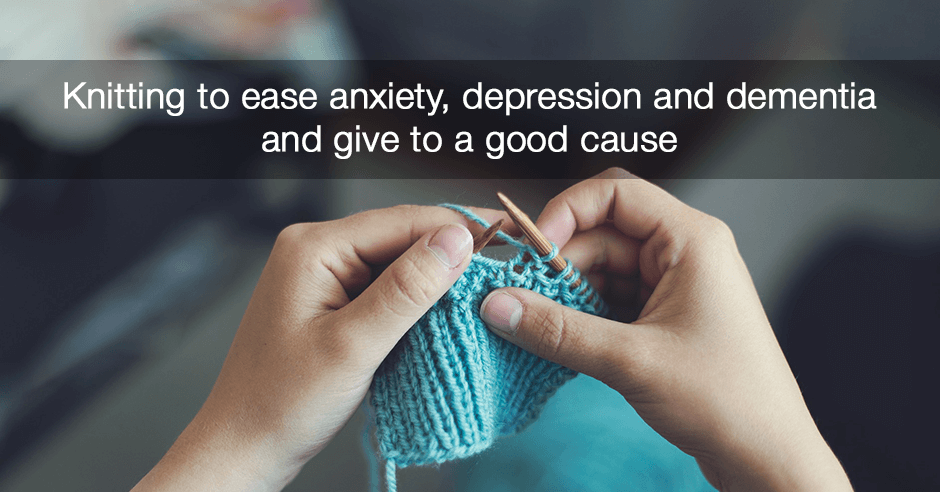
Knitting to ease anxiety, depression and dementia and give to a good cause

March 16, 2018 By Trudy Scott 3 Comments

Knit for Peace, a UK based charity that “matches knitters with good causes” has published an extensive review of studies that reports the many physical and mental benefits of knitting, including easing anxiety and depression, benefiting those with dementia, helping with chronic pain, promoting a sense of community and improving sociability.

There is evidence-based research that shows that knitting does the following:

  • Lowers blood pressure
  • Reduces depression and anxiety
  • Slows the onset of dementia
  • Is as relaxing as yoga
  • Distracts from chronic pain
  • Provides an opportunity for creativity (at a time of reducing capacity)
  • Increases sense of wellbeing
  • Reduces loneliness and isolation
  • Increases sense of usefulness and inclusion in society

Knitting for those in need is a volunteering activity that can carry on into extreme old age and can be undertaken by those whose sight, hearing and mobility are severely limited. It provides an activity that gives a sense of purpose. Knitting for charity makes people feel more useful and worthwhile. Self-worth is important post retirement, especially with physical decline.

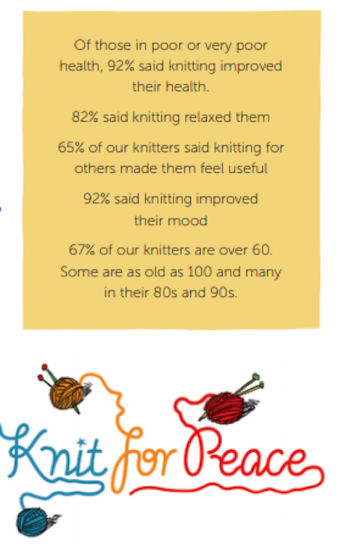
They also surveyed their members about their knitting experiences. Here is some of the feedback they received:

You can read a summary of that report here and request the entire digital report here.

You’ll be able to read some of the heartwarming backstory of Knit for Peace in the above summary… how they “started as an income generation project for Hutu and Tutsi widows, victims of the Rwandan genocide and civil war” and grew to a similar project in India “bringing together Hindu and Muslim women in the slums of Delhi” and then “Knit for Peace groups were set up in Pakistan, Bangladesh, Nepal and Afghanistan.” … And then “when people in the UK heard about this project they asked if they could knit for the children of Afghanistan.” “Through word of mouth the idea spread, and we were soon receiving a positive tsunami of knitted goods.”

Positive feedback about knitting

I asked my community on Facebook if they knit and how it makes them feel.

Diane shared this: I noticed that knitting lowers my blood pressure but interesting to note that crochet lowers it even more. Maybe because the crochet is an easier pattern?

Catriona shared this: I did some knitting when I had horrible anxiety and depressive symptoms. Really helped keep me focused on the present, which made it hard to ruminate and worry while doing it. Like mindfulness. And you end up with a nice gift at the end of it.

Maria shared this: I don’t knit but I crochet a lot. Very therapeutic 

Knitting is not for everyone

Knitting certainly isn’t for everyone. Bonnie shared this:  Knitting did not lower my stress level at all. First of all, I don’t like to sit or stand still that much, it bothered my wrists and was not easy to pick up. I think I was more stressed from doing it. Mountain biking is my stress reliever!

Aminda shared this: Knitting leads me to want to poke out eyes with knitting needles lol. I’ll stick to my crossword puzzles. I’m super tired of being told I just have to try it and being treated like something is wrong with me because I find crafts the opposite of de-stress. I’m glad people love knitting… I’m just not one of them and I only got happier when I stopped trying to fit onto the mold.

If knitting isn’t for you don’t worry about it, rather find something that you love to do.

Knitting is for kids too

I was very fortunate to have my granny teach me when I was about 8 years old. We had such fun time together, making scarves, gloves, baby clothes for my dolls and then my baby sister and eventually jerseys/jumpers for myself. It was a very special bonding time and it’s a skill I’ll always have. My granny was fearful of storms and I’d like to think knitting helped ease some of her anxieties.

I feel we should be encouraging kids to knit too. Many anxious kids could benefit from anxiety relief and contribute to a worthy cause by giving away their finished items.

Christina shared this on the Huffington Post blog: I’m an elementary teacher and I have a knitting group at lunch on Wednesday’s! The kids love it! It promotes patience, concentration and perseverance! I have about 25 students ages 10-12, both girls and boys!

Some of the research

In this Norwegian study, Knitters in a Day Center: The Significance of Social Participation for People With Mild to Moderate Dementia, the main activity of elderly women with mild dementia was knitting. It was found that

the social activity of knitting facilitated conversations about different topics, required various forms of memory and problem solving, and involved different participant statuses. Being part of the knitting group appeared to help the participants maintain their skills and facilitated sociability.

In this study, Managing anxiety in eating disorders with knitting, 38 women with anorexia reported these benefits of knitting:

  • it lessened the intensity of their fears and thoughts and cleared their minds of eating disorder preoccupations (74%)
  • it had a calming and therapeuticeffect (74%)
  • it provided satisfaction, pride and a sense of accomplishment (53%)

Where do you start if you don’t know how to knit?

If you didn’t learn to knit as a kid and want to learn now or possibly want your child or grandchild to learn, knitting is inexpensive and easily learned. Here are some resources for you:

  • The Complete Beginner’s Guide to Knitting (DVD). “Beautiful and clear demonstrations can get you started knitting in just 30 minutes.” You’ll learn all the basic stitches, get a booklet with scarf patterns and other bonus goodies.
  • A good starter yarn such as Lion Brand’s Wool Ease is recommended. Avoid dark colors when you are first learning to knit.
  • Wooden needles like Brittany 10-inch long Single Point Birch Knitting Needles are also suggested, US Size 10, 10.5 or 11. They say to avoid the more slippery metal needles (although I used these and they were fine), and the “grippy” plastics. (All these links are my Amazon affiliate links)

Knit as part of a group and give to someone in need

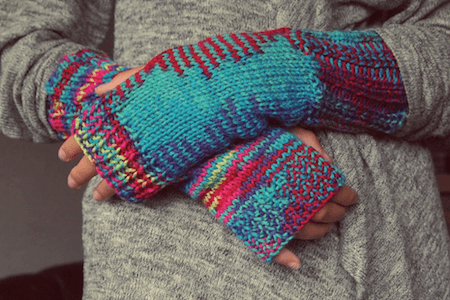
Whether or not you’re new to knitting, consider getting a knitting group together for that wonderful community aspect and once you’ve knitted enough goodies for family and friends, start to send knitted goods to a charity such as Knit for Peace or take them to a local shelter.

If you work in a nursing home or long-term care facility, in a school or after-school program, or are part of a church group, I encourage you to get a group knitting program together. Or you could even get together with friends and start knitting.

Notice the calmness you feel when you knit and the joy of giving your finished product to someone in need.

We’d love to hear if you knit and when you learned? And how do you feel when you knit? Are you part of a community knitting group and who do you knit for?

Filed Under: Antianxiety Tagged With: anxiety, calming, dementia, depression, fears, give, knit for peace, knitting, memory, sociability

Infected root canal teeth, heart attacks, brain aneurysms, anxiety and depression

March 11, 2018 By Trudy Scott 33 Comments

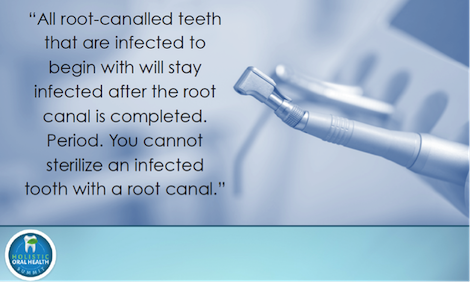
Robert Kulacz, DDS shares this in his interview – Medical Alert: Root Canal Procedures – on the Holistic Oral Health Summit, hosted by Jonathan Landsman:

all root-canalled teeth that are infected to begin with will stay infected after the root canal is completed. Period. You cannot sterilize an infected tooth with a root canal….

Certainly, it’s very difficult to say definitively that the patient’s disease process [be it anxiety, depression, insomnia, heart disease, cancer etc.] is caused by a root canalled tooth. But we can say that these root canal teeth are toxic. They release potent exotoxins. They release bad bacteria into the body. And certainly, they may be the main cause or a contributing factor in a host of various diseases.

Do you have one or more root canals and have you ever been told they could be a factor in your unresolved health issues and even ongoing anxiety? It’s a controversial topic and Dr. Kulacz wants his patients to have the information in order to make a choice on whether or not to have a root canal, as well as being able to decide whether or not to have a root canal extracted. This is some of what he shares about myocardial infarction (commonly known as a heart attack):

in 2013, a study [Bacterial signatures in thrombus aspirates of patients with myocardial infarction] came out where bacterial signatures in thrombus aspirates of patients with myocardial infarction, and the conclusion was,“Dental infections and oral bacteria, especially viridans streptococci may be associated with the development of acute coronary thrombosis. Bacterial DNA, typical for endodontic infection,” that’s root canals, “mainly oral viridian streptococci, was measured in the thrombi. And periodontal pathogens from the gum was also a contributing factor.”

So these bacteria from these root canalled teeth, these bacteria from the gum tissues, travel from the mouth, go to the heart, go to the arterial plaques inside the coronary arteries—and that could be a major contributing factor to the development and progression of coronary artery disease—and also to the inflammation that causes that plaque to rupture and causing a heart attack.

So, we have a smoking gun here. It used to be said, “Oh, it’s correlation that oral infection can cause heart disease.” This is more a direct causation. We’re seeing the same bacteria in these root canalled teeth in the gum tissues in the plaques and coronary arteries.

He shares this about cerebral aneurysms, also called brain aneurysms which can leak or rupture, causing bleeding into the brain or a hemorrhagic stroke:

in the Journal of Neurology….published back in 2013, The Connection Between Ruptured Cerebral Aneurysms and Odontogenic Bacteria. Conclusion -“This is the first report showing evidence that dental infection could be part of the pathophysiology of intracranial aneurysm disease.”

So these bacteria go everywhere. There are going anywhere. So they can affect your heart. They can affect the blood vessels in your brain. They can affect your kidneys. They can affect your lungs. They can affect your brain.

I just wish the American Dental Association would just say, “Hey, listen! We have to look at this seriously. Now, we can no longer bury our head in the sand and say these root-canalled teeth can pose no health threat whatsoever.” That’s their position, that the bacteria found in these root-canalled teeth do not travel to other parts of the body and that these bacteria and toxins do not cause any other disease. And that simply is not true.

Here is my contribution to the above discussion and my connection to anxiety and mood….

There is so much research on the gut brain connection and we now know that the bacteria in our gut can impact our levels of anxiety (and depression), but what if the bacteria in our mouth can also contribute to our anxiety?

  • this 2017 paper, Exploring the Association between Alzheimer’s Disease, Oral Health, Microbial Endocrinology and Nutrition, make some of these connections, mentioning both anxiety and insomnia as well as Alzheimer’s disease and poor oral health.
  • this 2016 paper, Depression and Inflammatory Periodontal Disease Considerations—An Interdisciplinary Approach reports that periodontal disease may contribute to the onset of depression via inflammation, activation of cell-mediated immunity and increased oxidative stress

For many people the anxiety nutrition solution is an easy one but if you have been struggling for years to find your root cause and have root canals, periodontal disease and poor mouth health, this must be addressed.

Also, we see poorer dental health in those who have pyroluria (the social anxiety condition) and low histamine levels (also called histapenia or overmethylation). This topic isn’t covered on the summit but it’s been documented since the early work of Carl Pfeiffer, MD. So, addressing diet and nutritional imbalances can start to address both the anxiety and poor mouth health.

Be sure to register for the Holistic Oral Health Summit here. Here are a few other great reasons to tune in:

  • Oral health is the most overlooked health issue in conventional AND integrative medicine!
  • 80% of disease symptoms are caused by problems in the mouth.
  • Millions are exposed to disease-promoting dental procedures every day!
  • Autoimmune disorders CAN be resolved by getting rid of toxic dental materials
  • Reversing gum disease CAN help you get rid of digestive problems
  • Root canal procedures – as mentioned above – increase your risk of cancer and other degenerative diseases (and very possibly anxiety and depression too)
  • Heavy metals like mercury in silver dental fillings can contribute to anxiety and depression, damaging to your brain and nervous system, and affecting your digestion

This amazing event brings together some of the top doctors, dentists, scientists and health experts, giving you unprecedented access to oral health information that could transform your health!

Be in charge of your mouth health when you register for The Holistic Oral Health Summit airing from March 12-19, 2018!

We’d love to hear from you. Do you have root canals and unresolved health issues? Have you had your root canals extracted and experienced better health?

Filed Under: Events Tagged With: oral health, root canal

Happiness is driven by biological factors like diet, the microbiome and serotonin, plus epigenetics

March 9, 2018 By Trudy Scott 5 Comments

As a food mood expert and nutritionist, I believe one very overlooked way we can address the lack of happiness or joy is the biochemical aspect.

One classic root cause of depression or unhappiness is low serotonin and this low serotonin can also lead to fear, worry, anxiety, self-doubt, lack of confidence, ruminations, insomnia and imposter syndrome, all of which are classic signs of low serotonin.  

A poor diet or a diet that is not right for you is a big factor in serotonin production and therefore happiness and a sense of calm.

The biological or biochemical connections to lack of happiness

This paper, Happiness & Health: The Biological Factors – Systematic Review Article, supports the biological or biochemical connections to lack of happiness (and the other signs of low serotonin), listing endogenic (or internal) as well as exogenic (or external) factors :

Happiness underlying factors are considerable from two dimensions:

  • endogenic factors (biological, cognitive, personality and ethical sub-factors) and
  • exogenic factors (behavioral, social/cultural, economical, geographical, life events and aesthetics sub-factors).

Among all endogenic [or internal] factors, biological sub-factors are the significant predictors of happiness.

The external factors are the ones we’re most familiar with i.e. things that are going on in our lives like relationships, income, where we live and life events. It’s the internal factors that we don’t discuss.

This study looked at biological factors (one of the internal factors) that underlie happiness and optimism. Five sub-groups of biological factors were found:

  1. brain and neurotransmitters (dopamine, serotonin and endorphins playing a role in happiness)
  2. endocrinology and hormones (cortisol and oxytocin playing a role in happiness)
  3. physical health
  4. physical attractiveness
  5. genetic (this accounted for 35-50% of happiness)

Nutritional psychiatry and the first 4 sub-groups

The work of nutritional psychiatry, a new and growing field, shows that food and nutrients have a direct impact on the first 4 groups: brain and neurotransmitters, on endocrinology and hormones and on physical health (and thereby physical attractiveness too):

The International Society for Nutritional Psychiatry Research hosted their first international conference in August last year in Bethesda, MD, and I had the pleasure of attending.

The new SMILES trial was presented at the conference: the first randomized controlled diet depression study where ONE THIRD of the dietary intervention group saw improvements in their depression and anxiety symptoms by switching from processed/junk food to real food with no specific dietary restrictions.

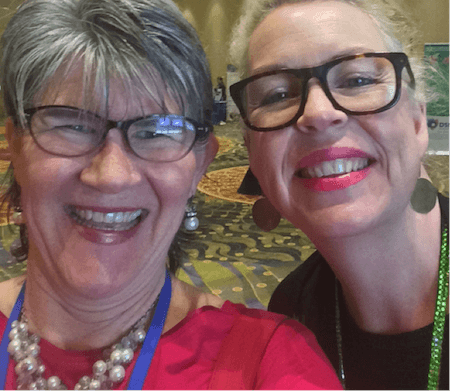
Here I am with world-renowned nutritional psychiatry researcher, Professor Felice Jacka

I participated in the rapid fire presentation session at the conference. In my talk, Applications of the Paleo diet and Gluten-free diet for Anxiety, I shared how Paleo and grain-free diets can increase happiness and reduce anxiety.

This November 2017 review, Nutritional psychiatry: the present state of the evidence, mentions the SMILES trial and provides the latest overview of the evidence in nutritional psychiatry:

Potential biological pathways related to mental disorders include inflammation, oxidative stress, the gut microbiome, epigenetic modifications and neuroplasticity. Consistent epidemiological evidence, particularly for depression, suggests an association between measures of diet quality and mental health, across multiple populations and age groups; these do not appear to be explained by other demographic, lifestyle factors or reverse causality.

Genetics (the last sub-group), epigenetics, diet and the microbiome

It saddens me when I hear someone say: “depression runs in my family – my grandmother suffered, I suffer with depression and I don’t know what kind of life my daughter is going to have.”

Even though genetics (the last sub-group) is reported to accounted for 35-50% of happiness, we now know that “our genes are not our destiny” and we can actually switch on good genes and switch off bad genes when we change our diet and environment.

This paper, Microbiome, inflammation, epigenetic alterations, and mental diseases, sums it up perfectly, reporting that recent findings show that the onset and development of mental diseases such as autism, bipolar disorder, schizophrenia, and depression cannot be well described by the one-gene/one-disease approach:

Even though the involvement of many genes are likely, up regulating and activation or down regulation and silencing of these genes by the environmental factors play a crucial role in contributing to their pathogenesis. Much of this interplay may be moderated by epigenetic changes.

Environmental factors such as diet, gut microbiota, and infections have significant role in these epigenetic modifications.

The authors conclude that the potential interactions of diet, gastrointestinal microbiome, and inflammation can all contribute to epigenetic alterations in psychiatric disorders.

If the term epigenetic is new to you, here is a helpful explanation:

The word “epigenetic” literally means “in addition to changes in genetic sequence.” The term has evolved to include any process that alters gene activity without changing the DNA sequence, and leads to modifications that can be transmitted to daughter cells.

What this means is that you can change your destiny in a positive way – by changing your diet – even if you have bad genes passed on from your grandmother and mother or other family members.

And don’t forget the environmental factors (as stated in the above paper) that can change your genes in a negative way: heavy metals, pesticides, diesel exhaust, tobacco smoke, polycyclic aromatic hydrocarbons (environmental pollutants from coal, oil, petrol, and wood), radioactivity, viruses and bacteria.

The take-aways are to eat quality real whole food, avoid sugar, caffeine and gluten, address the microbiome and nutritional deficiencies, avoid toxins/chemicals, detox if needed, address infections and the adrenals. This is exactly what my book The Antianxiety Food Solution covers so if you don’t yet have a copy, grab one from your nearest bookstore or from Amazon here (my affiliate link).

For a deeper dive into the epigenetics aspect and detoxification, I recommend Dr. Ben Lynch’s new book called Dirty Genes (my Amazon link).

Are you ready to find the biological root causes of your lack of happiness and anxiety?

Or are you already there and have seen the benefits already?

Filed Under: Food and mood Tagged With: anxiety, biochemical, biological, depression, epigenetics, food, genes, happiness, microbiome

GABA oral rinse reduces burning mouth pain

March 2, 2018 By Trudy Scott 47 Comments

Burning Mouth Syndrome (BMS) is a chronic pain condition characterized by persistent burning in the mouth. It affects mostly females, especially postmenopausal women, and conventional approaches are often not very successful. You’ll often see articles and papers with the terms ‘refractory’ and ‘unknown etiology’/unknown causes.

Medications like SRNIs and benzodiazepines

Some studies report limited success with medications like venlafaxine/Effexor, an SRNI and topical and oral use of benzodiazepines such as clonazepam/Klonopin. In this paper, Refractory burning mouth syndrome: clinical and paraclinical evaluation, comorbidities, treatment and outcome, 8 participants saw their pain diminish by half within 3 months.

Another paper, The Effect of Clonazepam Mouthwash on the Symptomatology of Burning Mouth Syndrome: An Open Pilot Study, reports success with a benzodiazepine mouthwash in half the participants.

Other than the poor quality of life and having to continue to live with pain, the bigger concern is the side-effects of medications like these, plus concerns with tolerance and then issues with withdrawal.

New oral GABA research for burning mouth

It’s for this reason that I’m excited about the recent research, γ-Aminobutyric acid (GABA) oral rinse reduces capsaicin-induced burning mouth pain sensation: An experimental quantitative sensory testing study in healthy subjects, that finds that both and men and women experienced immediate benefits when using GABA for burning mouth pain.

The burning mouth pain was caused by the application of capsaicin to the tongues of thirty healthy males and females. Capsaicin is the compound that makes chili peppers hot. (I find it interesting that capsaicin was the compound used to cause the burning mouth sensation because this same compound is used in topical creams and patches to ease pain.)

The study concludes as follows:

Capsaicin-induced burning tongue pain and decreases in WDT (warm detection) and HPT (heat pain) can be ameliorated by rinsing the mouth with lidocaine and GABA solutions.

Rinsing the mouth with an oral GABA containing solution ameliorated burning pain and increased heat sensitivity produced by application of capsaicin to the tongue. This finding suggests that GABA can act as a local analgesic agent in the oral cavity.

Lidocaine, a numbing medication, was part of the GABA solution in this study, but because it has side-effects that may include anxiety, I recommend a trial of a GABA-only solution to ease the burning mouth pain.

Using a GABA-only oral solution

Using a GABA-only oral solution makes sense given that the likely mechanism of action of topical benzodiazepines in burning mouth pain is via local action on peripheral GABAA receptors found in the nerve fibers of the tongue.

This is also very feasible based on how effective GABA is for other pain such as proctalgia fugax/rectal spasms, and the visceral pain and muscle tension in your gut caused by the bloating symptoms of SIBO (small intestinal bacterial overgrowth) and muscular back pain after a fall.

How much GABA will help?

As with any use of GABA and the other amino acids, how much will help depends on each person’s unique biochemistry and needs at the time. In the same way I do a trial of GABA with my anxiety clients to determine how much would help, I do the same with burning mouth pain (and other pain situations).

I recommend a trial of a GABA-only product and starting low with 100 to 200mg of GABA swished held in the mouth with some water for a few minutes. This can be used three or four times a day in between meals and with the mg increased slowly based on results.  You can find the GABA supplements I recommend here.

GABA is an amino acid that is recognized for calming physical anxiety and tension and since anxiety (and depression) is very common in those with burning mouth pain, the GABA is going to provide calming benefits too.

As with any health condition, finding the underlying root causes using a comprehensive functional medicine approach is key. One such root cause may be low GABA and using oral GABA is going to address this one and provide some relief while other root causes are identified and addressed.

These other root causes can be very varied as explained in the paper Burning Mouth Syndrome. They can include: age-related reduction in estrogen and progesterone levels, lower cortisol, diabetes mellitus and hypothyroidism, allergic reactions to foods, additives and even metals in the mouth, autoimmune connective tissue disorders, nutritional deficiencies (B1, B2, B6, B12. folate, and/or zinc), smoking and candida, and medication side-effects as mentioned above.

Have you experienced burning mouth pain and seen relief with GABA or other nutritional approaches?

If you’re a practitioner, is burning mouth pain common in your postmenopausal clients or patients and what approaches have you found most successful? Have you found GABA to be helpful?

If you are still suffering with burning mouth please share the following when you comment:

  • Your age (it seems to be more prevalent in women 59 and older)
  • If you have anxiety and/or depression now and have been prone to either in the past
  • How you score on the low GABA questionnaire and which symptoms you relate to? This will provide a clue that low GABA may be an issue and the oral GABA rinse is more likely to help
  • How you score on the low serotonin questionnaire (same link as GABA questionnaire above) and which symptoms you relate to? SSRIs have been shown to help in some cases and we know tryptophan/5-HTP help with pain so serotonin support may help too. Perhaps a tryptophan or 5-HTP rinse is worth a trial too?
  • How long it’s been an issue, what approaches you’ve tried and which approaches have helped (even if they only helped a short while or helped the pain a little)
  • Current and past medications (burning mouth is caused by certain medications)

I’d love to gather a list of all this so we can help you and more women who suffer with these awful symptoms.

Filed Under: Amino Acids, Anxiety, benzodiazapines, GABA, Pain Tagged With: anxiety, benzodiazepines, burning mouth, burning mouth pain, burning mouth syndrome, depression, GABA, Klonopin, pain

  • « Go to Previous Page
  • Page 1
  • Interim pages omitted …
  • Page 57
  • Page 58
  • Page 59
  • Page 60
  • Page 61
  • Interim pages omitted …
  • Page 160
  • Go to Next Page »

Primary Sidebar

GABA QuickStart Homestudy

gaba quickstart homestudy

Free Report

9 Great Questions Women Ask about Food, Mood and their Health

You'll also receive a complimentary subscription to my ezine "Food, Mood and Gal Stuff"


Connect with me

Popular Posts

  • Amino Acids Mood Questionnaire from The Antianxiety Food Solution
  • The Antianxiety Food Solution Amino Acid and Pyroluria Supplements
  • Pyroluria Questionnaire from The Antianxiety Food Solution
  • Collagen and gelatin lower serotonin: does this increase your anxiety and depression?
  • Tryptophan for the worry-in-your-head and ruminating type of anxiety
  • GABA for the physical-tension and stiff-and-tense-muscles type of anxiety
  • The Antianxiety Food Solution by Trudy Scott
  • Seriphos Original Formula is back: the best product for anxiety and insomnia caused by high cortisol
  • Am I an anxious introvert because of low zinc and vitamin B6? My response to Huffington Post blog
  • Vagus nerve rehab with GABA, breathing, humming, gargling and key nutrients

Recent Posts

  • Her cravings for chips and peanut butter were triggered by stress: GABA ends cravings and reduces physical tension and fear of heights
  • It is truly miraculous to be able to move through life without crippling anxiety and panic
  • GABA and tryptophan combo provide immediate and noticeable relief for tremors and cervical dystonia in just 7 days
  • Red light therapy for back and neck pain, plantar fasciitis and low mood – a complement to the amino acids GABA, DPA and tryptophan
  • What do I use instead of Seriphos to help lower high cortisol that is affecting my sleep and making me anxious at night?

Categories

  • 5-HTP
  • AB575
  • Addiction
  • ADHD
  • Adrenals
  • Alcohol
  • Allergies
  • Alzheimer's disease
  • Amino Acids
  • Anger
  • Antianxiety
  • Antianxiety Food Solution
  • Antidepressants
  • Anxiety
  • Anxiety and panic
  • Autism
  • Autoimmunity
  • benzodiazapines
  • Bipolar disorder
  • Books
  • Caffeine
  • Cancer
  • Candida
  • Children/Teens
  • Collagen
  • Cooking equipment
  • Coronavirus/COVID-19
  • Cravings
  • Depression
  • Detoxification
  • Diabetes
  • Diet
  • DPA/DLPA
  • Drugs
  • EFT/Tapping
  • EMF
  • EMFs
  • Emotional Eating
  • Endorphins
  • Environment
  • Essential oils
  • Events
  • Exercise
  • Fear
  • Fear of public speaking
  • Fertility and Pregnancy
  • Fish
  • Food
  • Food and mood
  • Functional neurology
  • GABA
  • Gene polymorphisms
  • General Health
  • Giving
  • Giving back
  • Glutamine
  • Gluten
  • GMOs
  • Gratitude
  • Gut health
  • Heart health/hypertension
  • Histamine
  • Hormone
  • Hyperparathyroidism
  • Hypoglycemia
  • Immune system
  • Inflammation
  • Insomnia
  • Inspiration
  • Introversion
  • Joy and happiness
  • Ketogenic diet
  • Lithium orotate
  • Looking awesome
  • Lyme disease and co-infections
  • MCAS/histamine
  • Medication
  • Men's health
  • Mental health
  • Mercury
  • Migraine
  • Mold
  • Movie
  • MTHFR
  • Multiple sclerosis
  • Music
  • NANP
  • Nature
  • Nutritional Psychiatry
  • OCD
  • Osteoporosis
  • Oxalates
  • Oxytocin
  • Pain
  • Paleo
  • Parasites
  • Parkinson’s disease
  • PCOS
  • People
  • PMS
  • Postpartum
  • PTSD/Trauma
  • Pyroluria
  • Questionnaires
  • Real whole food
  • Recipes
  • Research
  • Schizophrenia
  • serotonin
  • SIBO
  • Sleep
  • Special diets
  • Sports nutrition
  • Stress
  • Sugar addiction
  • Sugar and mood
  • Supplements
  • Teens
  • Testimonials
  • Testing
  • The Anxiety Summit
  • The Anxiety Summit 2
  • The Anxiety Summit 3
  • The Anxiety Summit 4
  • The Anxiety Summit 5
  • The Anxiety Summit 6
  • Thyroid
  • Thyroid health
  • Toxins
  • Tryptophan
  • Tyrosine
  • Uncategorized
  • Vegan/vegetarian
  • Women's health
  • Yoga

Archives

  • May 2026
  • April 2026
  • October 2025
  • September 2025
  • August 2025
  • July 2025
  • June 2025
  • May 2025
  • April 2025
  • March 2025
  • February 2025
  • January 2025
  • November 2024
  • October 2024
  • September 2024
  • August 2024
  • July 2024
  • June 2024
  • May 2024
  • April 2024
  • March 2024
  • February 2024
  • January 2024
  • December 2023
  • November 2023
  • October 2023
  • September 2023
  • August 2023
  • July 2023
  • June 2023
  • May 2023
  • April 2023
  • March 2023
  • February 2023
  • January 2023
  • December 2022
  • November 2022
  • October 2022
  • September 2022
  • August 2022
  • July 2022
  • June 2022
  • May 2022
  • April 2022
  • March 2022
  • February 2022
  • January 2022
  • December 2021
  • November 2021
  • October 2021
  • September 2021
  • August 2021
  • July 2021
  • June 2021
  • May 2021
  • April 2021
  • March 2021
  • February 2021
  • January 2021
  • December 2020
  • November 2020
  • October 2020
  • September 2020
  • August 2020
  • July 2020
  • June 2020
  • May 2020
  • April 2020
  • March 2020
  • February 2020
  • January 2020
  • December 2019
  • November 2019
  • October 2019
  • September 2019
  • August 2019
  • July 2019
  • June 2019
  • May 2019
  • April 2019
  • March 2019
  • February 2019
  • January 2019
  • December 2018
  • November 2018
  • October 2018
  • September 2018
  • August 2018
  • July 2018
  • June 2018
  • May 2018
  • April 2018
  • March 2018
  • February 2018
  • January 2018
  • December 2017
  • November 2017
  • October 2017
  • September 2017
  • August 2017
  • July 2017
  • June 2017
  • May 2017
  • April 2017
  • March 2017
  • February 2017
  • January 2017
  • December 2016
  • November 2016
  • October 2016
  • September 2016
  • August 2016
  • July 2016
  • June 2016
  • May 2016
  • April 2016
  • March 2016
  • February 2016
  • January 2016
  • December 2015
  • November 2015
  • October 2015
  • September 2015
  • August 2015
  • July 2015
  • June 2015
  • May 2015
  • April 2015
  • March 2015
  • February 2015
  • January 2015
  • December 2014
  • November 2014
  • October 2014
  • September 2014
  • August 2014
  • July 2014
  • June 2014
  • May 2014
  • April 2014
  • March 2014
  • February 2014
  • January 2014
  • December 2013
  • November 2013
  • October 2013
  • September 2013
  • August 2013
  • July 2013
  • June 2013
  • May 2013
  • April 2013
  • March 2013
  • February 2013
  • January 2013
  • December 2012
  • November 2012
  • October 2012
  • August 2012
  • July 2012
  • June 2012
  • May 2012
  • April 2012
  • March 2012
  • February 2012
  • January 2012
  • December 2011
  • November 2011
  • October 2011
  • September 2011
  • August 2011
  • July 2011
  • June 2011
  • May 2011
  • April 2011
  • March 2011
  • February 2011
  • January 2011
  • December 2010
  • October 2010
  • September 2010
  • July 2010
  • May 2010
  • April 2010
  • March 2010
  • February 2010
  • January 2010
  • November 2009

Share the knowledge!

The above statements have not been evaluated by the Food and Drug Administration. Products listed in this website are not intended to diagnose, treat, cure or prevent any disease.

The information provided on this site is for informational and educational purposes only and is not intended as a substitute for advice from your physician or other health care professional. You should consult with a healthcare professional before starting or modifying any diet, exercise, or supplementation program, before taking or stopping any medication, or if you have or suspect you may have a health problem.


Copyright © 2026 Trudy Scott. All Rights Reserved. | Privacy | Terms and Conditions | Refund Policy | Medical Disclaimer

Free Report

9 Great Questions Women Ask about Food, Mood and their Health

You’ll also receive a complimentary subscription to my ezine “Food, Mood and Gal Stuff”