• Skip to primary navigation
  • Skip to main content
  • Skip to primary sidebar

everywomanover29 blog

Food, Mood and Women's Health – Be your healthiest, look and feel great!

  • Blog
  • About
  • Services
  • Store
  • Resources
  • Testimonials
  • The Book
  • Contact
  • Search this site

Smile and laugh to de-stress, calm down and boost your mood

June 14, 2013 By Trudy Scott 15 Comments

 laughter

My biggest stress-relief and mood-boosting tip is to smile and laugh! It is one of the many things I encourage my clients to do! And I personally love a good comedy and opportunity to smile and laugh! I almost feel like I need my “fix” of laughter by the end of the day. It really relaxes me, boosts my mood and helps me sleep better.

I was further inspired to make a commitment to laugh each day when I read all the research supporting the many and varied health benefits. Many days I’ll just take a break and engage in spontaneous laughter for no reason at all – just the act of laughing leaves me feeling SO good. I do food-mood presentations around the country and typically end my talks with a laugher session with the audience! It’s a great hit and they leave my talk feeling great!

A 2012 research paper in Physiological Science actually showed that if you smile, you feel less stressed. Also in a 1999 study, “Personality traits such as warmth, calmness, extroversion, and low anxiety were closely related to an attractive smile.”

Laughter falls into a similar category as smiling and is wonderful for improving mood and reducing anxiety and stress and pain. This 2012 paper. showed that laughter “is associated with feelings of wellbeing” and improved mood, likely related to “the release of endorphins.” The release of endorphins also reduced pain levels.

Recent research also shows that the “combination of a laughter and exercise program might have physiological and psychological health benefits for the elderly”. Laughter may also “be an effective strategy to motivate the elderly to participate in physical activity.”

Laughter is actually good for the heart as indicated by the title of a 2009 paper: “The effect of mirthful laughter on the human cardiovascular system.”

Here are some things to make you chuckle: a fun post I did awhile ago about a wonderfully funny and romantic blog called The Musings of a Romantic Comedy Girl and a video of a laughing baby. Enjoy!

And of course, the added bonus: if you eat foods that raise serotonin (like grass-fed read meat and wild fish like salmon), you’ll be happier and more inclined to smile too – and feel even less anxious and less stressed. Tryptophan or 5-HTP will help boost your serotonin levels and are wonderful if you do have low serotonin. You can check for low serotonin levels using this Amino Acids Mood Questionnaire from The Antianxiety Food Solution. 
Filed Under: Antianxiety Food Solution, Anxiety and panic, Depression, Food and mood, Joy and happiness, Pain, Stress Tagged With: Antianxiety Food Solution, anxiety, calm, de-stress, happy, laughter, pain, smiling, stress

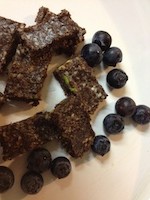
Carob Coconut Avocado bites

May 24, 2013 By Trudy Scott 15 Comments

carob-coconut-bites

¼ cup coconut oil
1 ripe avocado
1 T maple syrup
½ cup carob powder
Pinch sea salt
¾ cup coconut flakes (unsweetened)
¼ cup sesame seeds

Melt the coconut oil on the stove. Remove avocado and mash. Mix in coconut oil and all the ingredients and stir well. Spoon into a glass pan and press flat. Put in the fridge until set and then cut into small bites or squares and serve with fresh blueberries. Yummy!

This recipe was inspired by a recipe of something served at the annual conference of the National Association of Nutrition Professionals. I replaced the cocoa and nibs with carob for those with caffeine issues (some people with anxiety are super-sensitive to the effects of caffeine, even that found in cocoa and chocolate). I also omitted the stevia because it spoils the taste of everything. And I added coconut flakes for crunch and sesame seeds for calcium. 

Funny thing….I love avocado! It’s possibly one of my favorite foods (together with eggs, Brussels sprouts, lamb, coconut and paw paw) and I was excited to try it out in this recipe. But it’s totally lost – no hint of avocado! It seems rather a waste! Do let me know what you think.

Filed Under: Food and mood, Real whole food, Recipes Tagged With: anxiety, avocado, carob, coconut, depression

Amino Acids Mood Questionnaire from The Antianxiety Food Solution

May 24, 2013 By Trudy Scott 362 Comments

The targeted use of individual amino acid supplements will balance brain chemistry to alleviate anxiety, fear, worry, panic attacks, and feeling stressed or overwhelmed. They can also be helpful in addressing other problems that contribute to or exacerbate anxiety, such as sugar cravings and addictions. In addition, they can help with depression and insomnia, which often co-occur with anxiety. When you balance your brain chemistry, not only will you alleviate symptoms of anxiety, you’ll also have a great mood, eliminate cravings, sleep well, and have good energy and mental focus.

Worry and anxiety can be a result of low GABA and also low serotonin, so you may check off anxiety in both sections. Low GABA tends to result in a more physical anxiety, while low serotonin tends to result in more anxiety in the head, ruminating thoughts etc.

Low GABA

  • Physical tension/anxiety
  • Feeling worried or fearful
  • Panic attacks
  • Unable to relax or loosen up
  • Stiff or tense muscles
  • Feeling stressed and burned-out
  • Craving carbs for relaxation and calming
  • Craving alcohol for relaxation and calming
  • Craving drugs for relaxation and calming
  • Insomnia * (Aug 2019: GABA/theanine research)
  • Inability to prioritize planned actions * (Sept 2015: research and child ADHD case)
  • Poor focus/ADHD and spinning * (as above)
  • Have intrusive thoughts, perseverate or have an overactive brain (with unwanted thoughts about unpleasant memories, images or worries * (Nov 2017: research and case)
  • Acrophobia (fear of heights) * (Sep 2018: pharmaGABA research)
  • Rectal spasms (proctalgia fugax) * (Dec 2021: case studies)
  • Burning mouth * (Mar 2018: research)
  • Visceral pain/belly pain with IBS * (Aug 2018: research and case)
  • Bladder pain/interstitial cystitis and urgency * (Jan 2021: research)
  • Lyme-induced anxiety * (Jan 2022: neuropsychiatric Lyme disease and a case study)
  • Globus pharyngeus (lump in the throat) * (July 2022: research and case)
  • PCOS/polycystic ovarian syndrome * (Jan 2021: research and a case study)
  • Tourette’s syndrome (tics) * (Jan 2022: research and case)
  • Laryngospasm, “choking” episodes and swallowing problems * (Mar 2022: research and case)
  • Poor sensorimotor skills * (Dec 2022: research in autism, child with autism case study and adult case study)
  • Asthma* (Dec 2022: research and case)
  • Sound and tactile hypersensitivity * (Feb 2023: research and adult case study)
  • MS/multiple sclerosis * (April 2023: anxiety, muscle stiffness/spasms, swallowing issues and pain in MS)
  • Anger, rage and agitation * (June 2023: glutamate research and case studies and sundowning in Alzheimer’s disease)
  • High blood pressure * (Sept 2023: research)

Low Serotonin

  • Anxiety
  • Panic attacks or phobias
  • Feeling worried or fearful
  • Obsessive thoughts or behaviors
  • Perfectionism or being overly controlling
  • Irritability
  • Anxiety that’s worse in winter
  • Winter blues or seasonal affective disorder
  • Negativity or depression
  • Suicidal thoughts
  • Excessive self-criticism
  • Low self-esteem and poor self-confidence
  • PMS (premenstrual syndrome) or menopausal mood swings
  • Sensitivity to hot weather
  • Hyperactivity
  • Anger or rage
  • Digestive issues
  • Fibromyalgia, temporomandibular joint syndrome, or other pain syndromes
  • Difficulty getting to sleep
  • Insomnia or disturbed sleep
  • Afternoon or evening cravings for carbs, alcohol or drugs

Low Catecholamines

  • Depression and apathy
  • Easily bored
  • Lack of energy
  • Lack of focus
  • Lack of drive and low motivation
  • Attention deficit disorder
  • Procrastination and indecisiveness
  • Craving carbs, alcohol, caffeine, or drugs for energy

Low Endorphins

  • Heightened sensitivity to emotional pain
  • Heightened sensitivity to physical pain
  • Crying or tearing up easily
  • Eating to soothe your mood, or comfort eating
  • Really, really loving certain foods, behaviors, drugs, or alcohol
  • Craving a reward or numbing treat
  • PMS (premenstrual syndrome) or PMDD (premenstrual dysphoric disorder) * (Mar 2022: research published in 1989)

Low Blood Sugar

  • Crave sugar, starch or alcohol any time during the day
  • Irritable, shaky, headachey – especially if too long between meals
  • Intense cravings for sweets
  • Lightheaded if meals are missed
  • Eating relieves fatigue
  • Agitated, easily upset, nervous
  • Waking in the night or early hours with a jolt of anxiety/shakiness * (Feb 2024: case studies)
  • Binge eating and/or food addiction * (Feb 2024: research and a case study)

(* New additions that are not in my book. I’ve linked to some case studies above but there are many more on the blog so be sure to use the search feature)

Each of the above sections on specific neurotransmitter or brain chemical imbalances are found in The Antianxiety Food Solution: How the Foods You Eat Can Help You Calm Your Anxious Mind, Improve Your Mood and End Cravings. They were reprinted from The Mood Cure (2004) with permission from Julia Ross. They do contain some of my own modifications based on my experience with working with many clients, and the new additions as mentioned above.

Individual amino acids are used based on the above questionnaires and the results are profound and often felt within a few minutes:

  • check out this blog post on glutamine for low blood sugar and calming effects and watch how glutamine helped Nicole within 5 minutes.
  • check out how DPA was a miracle for Angie and her sugar cravings which were as a result of low endorphins.

Resources if you are new to using amino acids as supplements

If you suspect low levels of any of the neurotransmitters and do not yet have my book, The Antianxiety Food Solution – How the Foods You Eat Can Help You Calm Your Anxious Mind, Improve Your Mood, and End Cravings, (as I mentioned above) I highly recommend getting it and reading it before jumping in and using amino acids on your own so you are knowledgeable. And be sure to share it with the practitioner/health team you or your loved one is working with.

There is an entire chapter on the amino acids and they are discussed throughout the book in the sections on gut health, gluten, blood sugar control, sugar cravings, anxiety and mood issues.

The book doesn’t include product names (per the publisher’s request) so this blog, The Antianxiety Food Solution Amino Acid and Pyroluria Supplements, lists the amino acids that I use with my individual clients and those in my group programs. You can find them all in my online store.

If, after reading this blog and my book, you don’t feel comfortable figuring things out on your own (i.e. doing the symptoms questionnaire and respective amino acids trials), a good place to get help is the GABA QuickStart Program (if you have low GABA symptoms too). This is a paid online/virtual group program where you get my guidance and community support.

If you are a practitioner, join us in The Balancing Neurotransmitters: the Fundamentals program. This is also a paid online/virtual program with an opportunity to interact with me and other practitioners who are also using the amino acids.

Do you resonate with symptoms in more than one area? This is not unusual.

Do you resonate with some of the more recent additions to the low GABA section?

Feel free to share how the amino acids have helped you and if you found this symptoms questionnaire helpful for figuring out where to start.

If you have questions and other feedback please share here too.

Filed Under: Antianxiety Food Solution, Anxiety and panic, Questionnaires, Sugar addiction Tagged With: amino acids, Antianxiety Food Solution, anxiety, craving, Mood Questionnaire, panic

Amazing Amino Acids for Ending Emotional Eating – No Willpower Required! Really!!

May 13, 2013 By Trudy Scott 7 Comments

MP900387871

We start Monday with this live course where I am going to share the five brain chemical imbalances and respective amazing amino acids that can end cravings and emotional eating.

If you have these symptoms, then amino acids may help:

  • LOVING a certain food (do you just LOVE pizza or really LOVE cookies as a reward or to numb!?)
  • wanting caffeine or sugar for a pick me up in the afternoon
  • afternoon or night time cravings for carbs
  • poor sleep
  • feeling anxious and irritable (and wanting sugar/starches/alcohol to calm you down)
  • depression and low self-esteem (and wanting sugar/starch/alcohol for soothing)

Yep, all of those can be caused by a lack of some key amino acids that we either don’t get in our food or don’t get enough of.  I have amazing results with my clients!

I recently participated in the incredible Loving Food Loving Life Emotional Eating telesumit hosted by Aimee Serafini. The participants were so wowed by this new information that Aimee asked me to create a group program that would be affordable AND where participants could all support each other.

I’m going to share exactly what and how much to take and what brands based on your own brain chemical imbalances.  Plus we’ll also talk about diet, breakfast, getting enough protein, meal timing, your adrenals and thyroid, food intolerances and much more!

Here is the complete overview of the course:

  • Five Live Classes covering each of the 5 neurotransmitter deficiency categories (low serotonin, low GABA, low catecholamines, low endorphins and low blood sugar) and recordings for your library after the calls (live class dates are 5pm PT / 8pm ET: Mondays May 13 & 20, Tuesday May 28 (due to holiday), and Mondays June 3 & 10)
  • Bonus Live Q&A call after course to answer questions (Monday, June 17)
  • If you cannot attend the live classes, you will get the recordings to download so you can listen when you have time and refer to them later, plus you can ask questions on Facebook. Please do not let scheduling affect your being able to start getting relief now
  • Amino Acid Precautions questionnaire (to address contraindications)
  • Amino Acid Deficiency questionnaire
  • Food Mood Log – to figure out how food affects you and how you are feeling prior to eating
  • Supplement Sheet for amino acid timings
  • Membership in a private Facebook Group for peer support.  Support is super important and hearing the experiences and questions of other participants will surely be of great benefit
  • A Bonus audio interview with Mira Dessy, Nutrition Educator and Whole Food Advocate: The Pantry Principle, How to Read the label and Know What’s Really in Your Food 

If you’re still on the fence

  • check out this blog post on glutamine for low blood sugar and calming effects and watch how glutamine helped Nicole within 5 minutes

  • check out how DPA was a miracle for Angie and her sugar cravings

Are you in or out? 

Aimee and I hope to have you join us (Aimee enrolled for this class too!)  If you would like to enroll in this 6 week live virtual class you can still register here 

[7/8/13 update: this event has concluded and this program is now available as a 6 week homestudy program: The Amazing Amino Acids for Ending Emotional Eating – No Willpower Required! Really!! (Home Study Program – with or without Live Q&A calls) ]


Filed Under: Emotional Eating, Events, Sugar addiction, Sugar and mood Tagged With: amino acids, cravings, emotional eating, Trudy Scott

Gluten, leaky gut, LPS, anxiety and Dr. Tom O’Bryan at NANP

May 12, 2013 By Trudy Scott 12 Comments

Spaghetti and Elbow Macaroni

I’m just back from a great few days at THE best nutrition conference – the annual conference of the National Association of Nutrition Professionals http://www.nanp.org/conference/speakers-sessions/

Dr. Tom O’ Bryan, DC, an expert on gluten, presented the following in his very interesting talk:

  • “One particularly detrimental consequence of increased intestinal permeability” (or leaky gut) caused by gluten sensitivity or celiac disease “is the translocation of bacteria (e.g., E. Coli) and bacterial products (lipopolysaccharides or LPS) also known as endotoxin which creates a proinflammatory environment and increases the oxidative stress burden in the enteric nervous system”
  • “Even minute doses of microbes within the gastrointestinal tract, levels that do not trigger an immune response, are capable of influencing neurotransmission in the paraventricular hypothalamus, the central nucleus of the amygdala and the bed nucleus of the stria terminalis. All three of these regions are involved in the processing of emotions related to anxiety and mood.”
  • “It is suggested that patients with” depression “should be checked for leaky gut by means of the IgM and IgA panel used in the present study and accordingly should be treated for leaky gut”.

In summary, gluten sensitivity or celiac disease can lead to leaky gut which can in turn allow endotoxins called lipopolysaccharides/LPS to relocate into the blood stream. This causes inflammation, oxidative damage, neurotransmitter deficiencies and depression and anxiety.

The study above, refers to depression, however, research also shows that LPS plays a role in stress and anxiety too.

Dr. O’Bryan also discussed the role that LPS plays in rheumatoid arthritis and other autoimmune and musculoskeletal disorders.

Dr. O’Bryan recommends IgG food intolerance testing to identify leaky gut (if you show up with food intolerances to many foods then leaky gut may be an issue) and then to first heal the gut.

These foods will need to be eliminated for at least 3 months and then added back slowly and one at a time.  Many people are surprised to find out that they have issues with seemingly healthy foods like salmon, green beans, peas, strawberries, almonds etc.  Of course, eliminating gluten goes without saying. This is the approach that I use with my clients and is part of the holistic approach that must be used when someone has any mood or physical health problem.

He also talked about LPS antibody testing from Cyrex labs and I look forward to learning more about this.

It was a really great conference, with locally sourced gluten-free meals included in registration! I am gluten-sensitive and it was such a pleasant change to be able to attend a conference and know that what I’m eating won’t affect me!

All the presentations were recorded and will be available for purchase from NANP next month.

Filed Under: Anxiety and panic, Depression, Events, Food and mood, General Health, Pain

Glutamine for low blood sugar and calming effects

April 29, 2013 By Trudy Scott 85 Comments

Nicole is an NTP (Nutritional Therapy Practitioner) and fire-fighter paramedic and has problems with blood sugar control. Diabetes runs in her family. We met at the recent 2013 NTA (Nutritional Therapy Association conference) where I had a booth to promote my services and book The Antianxiety Food Solution. I also presented on the Role of Inflammation in Anxiety, Stress and Depression – which covered amongst other factors, the amino acids.

Nicole came by my booth after my presentation and she wanted to try the glutamine because of low blood sugar symptoms. The results she experienced were great!

You can watch this video to hear how powerful glutamine was for Nicole – she saw results in around 5 minutes. I really like to get testimonials like this because when I talk about the profound and quick effects of the amazing amino acids it almost sounds too good to be true! But in this case (and the majority of cases), it really is true!

Nicole says “I get irritable, I get shaky and I get to the point that if I don’t get food NOW I think I’m going to hurt something!”

She tried the glutamine and in under 5 minutes she went from that feeling to: “I’m ok. I feel happy, I feel calm, I feel I can make it longer without needing food right away.”

She finished up by saying “I’m impressed at how well that worked for me” and she plans to share the benefits of this amino acid with her clients who may have blood sugar issues and the associated symptoms of shakiness between meals, irritability, a frantic need for something to eat and often an intense desire for something sweet.

Signs of low blood sugar include:

  • Irritability, agitation, nervousness
  • Shaky between meals or when you skip a meal
  • Poor memory, focus and fatigue
  • Intense sweet craving at various times of the day
  • Feeling stressed & overwhelmed
  • Waking in the night (low blood sugar is one of many causes of insomnia)

When you have stable blood sugar, you will feel grounded, experience less overwhelm and stress and have no cravings – if your cravings are blood sugar related. Cravings can also be due to low serotonin, low endorphins, low catecholamines and low GABA, and even as a result of candida or yeast overgrowth. For many of my clients it may even be a combination of the above.

Naturally, making food changes can help a great deal as you can read in this blog post on low blood sugar and anxiety.

Filed Under: Antianxiety Food Solution, Books, Food and mood, General Health, Real whole food, Recipes Tagged With: Antianxiety Food Solution, cravings, glutamine, low blood sugar, Trudy Scott

  • « Go to Previous Page
  • Page 1
  • Interim pages omitted …
  • Page 137
  • Page 138
  • Page 139
  • Page 140
  • Page 141
  • Interim pages omitted …
  • Page 159
  • Go to Next Page »

Primary Sidebar

NEW! GABA QuickStart Homestudy (with special intro pricing)

gaba quickstart homestudy

Free Report

9 Great Questions Women Ask about Food, Mood and their Health

You'll also receive a complimentary subscription to my ezine "Food, Mood and Gal Stuff"


Connect with me

Popular Posts

  • Amino Acids Mood Questionnaire from The Antianxiety Food Solution
  • The Antianxiety Food Solution Amino Acid and Pyroluria Supplements
  • Pyroluria Questionnaire from The Antianxiety Food Solution
  • Collagen and gelatin lower serotonin: does this increase your anxiety and depression?
  • Tryptophan for the worry-in-your-head and ruminating type of anxiety
  • GABA for the physical-tension and stiff-and-tense-muscles type of anxiety
  • The Antianxiety Food Solution by Trudy Scott
  • Seriphos Original Formula is back: the best product for anxiety and insomnia caused by high cortisol
  • Am I an anxious introvert because of low zinc and vitamin B6? My response to Huffington Post blog
  • Vagus nerve rehab with GABA, breathing, humming, gargling and key nutrients

Recent Posts

  • What do I use instead of Seriphos to help lower high cortisol that is affecting my sleep and making me anxious at night?
  • BeSerene™ GABA/theanine cream eases severe muscle tension in her neck/shoulders, prevents her bad headaches and quells her anxiety
  • How the correct approach, dose and sublingual use of GABA can be calming and not cause a flushed and itchy face and neck
  • The amino acid glutamine improves low mood by addressing gut health, and it has calming effects too
  • Flight anxiety with heightened breath, physical tension and also fearing the worst (the role of low GABA and low serotonin)

Categories

  • 5-HTP
  • AB575
  • Addiction
  • ADHD
  • Adrenals
  • Alcohol
  • Allergies
  • Alzheimer's disease
  • Amino Acids
  • Anger
  • Antianxiety
  • Antianxiety Food Solution
  • Antidepressants
  • Anxiety
  • Anxiety and panic
  • Autism
  • Autoimmunity
  • benzodiazapines
  • Bipolar disorder
  • Books
  • Caffeine
  • Cancer
  • Candida
  • Children/Teens
  • Collagen
  • Cooking equipment
  • Coronavirus/COVID-19
  • Cravings
  • Depression
  • Detoxification
  • Diabetes
  • Diet
  • DPA/DLPA
  • Drugs
  • EFT/Tapping
  • EMF
  • EMFs
  • Emotional Eating
  • Endorphins
  • Environment
  • Essential oils
  • Events
  • Exercise
  • Fear
  • Fear of public speaking
  • Fertility and Pregnancy
  • Fish
  • Food
  • Food and mood
  • Functional neurology
  • GABA
  • Gene polymorphisms
  • General Health
  • Giving
  • Giving back
  • Glutamine
  • Gluten
  • GMOs
  • Gratitude
  • Gut health
  • Heart health/hypertension
  • Histamine
  • Hormone
  • Hyperparathyroidism
  • Hypoglycemia
  • Immune system
  • Inflammation
  • Insomnia
  • Inspiration
  • Introversion
  • Joy and happiness
  • Ketogenic diet
  • Lithium orotate
  • Looking awesome
  • Lyme disease and co-infections
  • MCAS/histamine
  • Medication
  • Men's health
  • Mental health
  • Mercury
  • Migraine
  • Mold
  • Movie
  • MTHFR
  • Multiple sclerosis
  • Music
  • NANP
  • Nature
  • Nutritional Psychiatry
  • OCD
  • Osteoporosis
  • Oxalates
  • Oxytocin
  • Pain
  • Paleo
  • Parasites
  • Parkinson’s disease
  • PCOS
  • People
  • PMS
  • Postpartum
  • PTSD/Trauma
  • Pyroluria
  • Questionnaires
  • Real whole food
  • Recipes
  • Research
  • Schizophrenia
  • serotonin
  • SIBO
  • Sleep
  • Special diets
  • Sports nutrition
  • Stress
  • Sugar addiction
  • Sugar and mood
  • Supplements
  • Teens
  • Testimonials
  • Testing
  • The Anxiety Summit
  • The Anxiety Summit 2
  • The Anxiety Summit 3
  • The Anxiety Summit 4
  • The Anxiety Summit 5
  • The Anxiety Summit 6
  • Thyroid
  • Thyroid health
  • Toxins
  • Tryptophan
  • Tyrosine
  • Uncategorized
  • Vegan/vegetarian
  • Women's health
  • Yoga

Archives

  • October 2025
  • September 2025
  • August 2025
  • July 2025
  • June 2025
  • May 2025
  • April 2025
  • March 2025
  • February 2025
  • January 2025
  • November 2024
  • October 2024
  • September 2024
  • August 2024
  • July 2024
  • June 2024
  • May 2024
  • April 2024
  • March 2024
  • February 2024
  • January 2024
  • December 2023
  • November 2023
  • October 2023
  • September 2023
  • August 2023
  • July 2023
  • June 2023
  • May 2023
  • April 2023
  • March 2023
  • February 2023
  • January 2023
  • December 2022
  • November 2022
  • October 2022
  • September 2022
  • August 2022
  • July 2022
  • June 2022
  • May 2022
  • April 2022
  • March 2022
  • February 2022
  • January 2022
  • December 2021
  • November 2021
  • October 2021
  • September 2021
  • August 2021
  • July 2021
  • June 2021
  • May 2021
  • April 2021
  • March 2021
  • February 2021
  • January 2021
  • December 2020
  • November 2020
  • October 2020
  • September 2020
  • August 2020
  • July 2020
  • June 2020
  • May 2020
  • April 2020
  • March 2020
  • February 2020
  • January 2020
  • December 2019
  • November 2019
  • October 2019
  • September 2019
  • August 2019
  • July 2019
  • June 2019
  • May 2019
  • April 2019
  • March 2019
  • February 2019
  • January 2019
  • December 2018
  • November 2018
  • October 2018
  • September 2018
  • August 2018
  • July 2018
  • June 2018
  • May 2018
  • April 2018
  • March 2018
  • February 2018
  • January 2018
  • December 2017
  • November 2017
  • October 2017
  • September 2017
  • August 2017
  • July 2017
  • June 2017
  • May 2017
  • April 2017
  • March 2017
  • February 2017
  • January 2017
  • December 2016
  • November 2016
  • October 2016
  • September 2016
  • August 2016
  • July 2016
  • June 2016
  • May 2016
  • April 2016
  • March 2016
  • February 2016
  • January 2016
  • December 2015
  • November 2015
  • October 2015
  • September 2015
  • August 2015
  • July 2015
  • June 2015
  • May 2015
  • April 2015
  • March 2015
  • February 2015
  • January 2015
  • December 2014
  • November 2014
  • October 2014
  • September 2014
  • August 2014
  • July 2014
  • June 2014
  • May 2014
  • April 2014
  • March 2014
  • February 2014
  • January 2014
  • December 2013
  • November 2013
  • October 2013
  • September 2013
  • August 2013
  • July 2013
  • June 2013
  • May 2013
  • April 2013
  • March 2013
  • February 2013
  • January 2013
  • December 2012
  • November 2012
  • October 2012
  • August 2012
  • July 2012
  • June 2012
  • May 2012
  • April 2012
  • March 2012
  • February 2012
  • January 2012
  • December 2011
  • November 2011
  • October 2011
  • September 2011
  • August 2011
  • July 2011
  • June 2011
  • May 2011
  • April 2011
  • March 2011
  • February 2011
  • January 2011
  • December 2010
  • October 2010
  • September 2010
  • July 2010
  • May 2010
  • April 2010
  • March 2010
  • February 2010
  • January 2010
  • November 2009

Share the knowledge!

The above statements have not been evaluated by the Food and Drug Administration. Products listed in this website are not intended to diagnose, treat, cure or prevent any disease.

The information provided on this site is for informational and educational purposes only and is not intended as a substitute for advice from your physician or other health care professional. You should consult with a healthcare professional before starting or modifying any diet, exercise, or supplementation program, before taking or stopping any medication, or if you have or suspect you may have a health problem.


Copyright © 2026 Trudy Scott. All Rights Reserved. | Privacy | Terms and Conditions | Refund Policy | Medical Disclaimer

Free Report

9 Great Questions Women Ask about Food, Mood and their Health

You’ll also receive a complimentary subscription to my ezine “Food, Mood and Gal Stuff”