• Skip to primary navigation
  • Skip to main content
  • Skip to primary sidebar

everywomanover29 blog

Food, Mood and Women's Health – Be your healthiest, look and feel great!

  • Blog
  • About
  • Services
  • Store
  • Resources
  • Testimonials
  • The Book
  • Newsletter
  • Contact
  • Search this site

Sugar addiction

Sweet Freedom Summit: industry manipulation, mouth feel and vanishing caloric density

April 8, 2017 By Trudy Scott 4 Comments

The Sweet Freedom Summit runs April 10-17. I like to do a sneak preview of some of the interviews so I can share some highlights with you and I was blown away by some of what I learned from Damon Gameau, Australian actor and producer of That Sugar Film.

His interview: The Real Dope on Added Sugars. We know this goes on but every time I hear it I feel mad (and a bit sad) that it happens and that it’s actually allowed to happen! And that so few people even know about this! Here goes:

Nestlé, for example, have about seven hundred PhD scientists just working on their foods and understanding what the mouth feel of the food is that makes us really like them or how it triggers certain parts of our brain and releases dopamine that makes us want more.

People often talk about, “It’s freedom of choice. People should be able to decide what they want.” But that’s fair enough if you understand the playing field and it’s a very one-sided playing field because these foods are being engineered to get you liking and wanting more and more of them. So, it is very hard for some people to say no to things.

This term was new to me: vanishing caloric density!

There is a great term I learned for those kind of—we have them in Australia—they are called Cheetos or Puffs where you have them and they feel like they turn to air in your mouth very quickly. It’s called vanishing caloric density. It means that you don’t feel like you are eating much. So, you can just sit there and watch TV and demolish an entire bag because it’s tricking your brain into thinking that you are actually not eating very much because they are disappearing in your mouth. So these have been designed this way, very carefully so that they’ll sell more of those products.

Damon is shocked by the manipulation and so should we all be!

That probably shocked me in terms of the manipulation there. And just to start to understand the level of rigging of science, the paid scientists, the PR companies that are pushing the food industry’s brand, how they attack certain groups in social media; just the sort of orchestration that these companies use to make sure that there is ambiguity and doubt in the public mind.

Damon’s interview airs on day 1 and not to be missed. Be sure to listen to the entire interview! You won’t believe what he did to himself in That Sugar Film! (hint: he embarked on a unique experiment to document the effects of a high sugar diet on a healthy body, consuming only foods that are commonly perceived, or promoted to be ‘healthy’.)

On day 1 you can also hear Jonathan Landsman (what sugar does in your body), JJ Virgin (sugar’s full impact) and Ty Bollinger (sugar-cancer connection).

The first step is awareness and knowing where sugar is found – this is covered extensively during the summit.

The next step is switching to a real whole foods diet with quality animal protein (I’m not a fan of a vegetarian diet – covered by one of the speakers) and healthy fats, organic produce and no sugar.

This is easier said than done for many people. You may know you need to quit sugar but willpower gets the better of you. If this sounds like you be sure to tune in to my interview.

In case you missed it, a few weeks ago I shared some snippets from my brain chemical/neurotransmitter imbalance interview with Sherry – addressing sugar cravings as well as anxiety and depression. I talk about the BIG connection between stress eating, comfort eating, emotional eating and low levels of the brain chemicals serotonin, GABA and endorphins.

Sherry loved our interview so much she’s decided to offer it as a gift to EVERYONE who signs up for the summit! So you can enjoy it from day 1 or tune in and comment when it airs.

The Sweet Freedom Summit runs April 10-17 and when you register you’ll get immediate access to my interview and some other cool sign up gifs.

Please share with family and friends who you know can benefit from this information!

Got questions or feedback? Please share them in the blog comments below.

Filed Under: Events, Sugar addiction Tagged With: addiction, anxiety, Damon Gameau, industry manipulation, mouth feel, Sherry Strong, sugar, sweet freedom summit, That Sugar Film, vanishing caloric density

Low serotonin anxiety and sugar addiction: my interview on the Sweet Freedom Summit

March 20, 2017 By Trudy Scott 36 Comments

It’s not common knowledge that brain chemical or neurotransmitter imbalances can cause sugar cravings as well as anxiety and depression. But there certainly is a big connection between stress eating, comfort eating, emotional eating and low levels of the brain chemicals serotonin, GABA and endorphins. There is a growing body of research supporting this connection.

Sharing this sugar craving-brain chemical connection and bringing it back to my expertise in anxiety and stress is something I don’t get to do often enough. So when I heard about the Sweet Freedom Summit that Sherry Strong was hosting, I immediately reached out to her and shared this brain chemical imbalance/addiction/mood topic in the hope she’d invite me to speak.

I was thrilled when she said she’d love to interview me and then doubly thrilled when she said our interview was SO good (I really enjoyed it too!) she’s decided to offer it as a gift to EVERYONE who signs up for the summit! Wow!

The Sweet Freedom Summit runs April 10-17 and I’m giving you a sneak peek to some of my interview today.

Sherry starts the sugar cravings/emotional eating/addiction discussion by asking what the connection is to brain chemistry imbalances and what evidence do we have that this is happening? Here are a few snippets from my response:

Say we’ve got a brain chemical deficiency of low serotonin, we are going to crave sugar and carbs in the afternoon and evening. And we will also have the low serotonin symptoms which are depression, the worry type of anxiety, the ruminating thoughts, the worry, the fear (these are the symptoms I experienced in my late 30s – I was also a chocoholic)

So you have this emotional aspect and the sugar cravings aspect when you’ve got these brain chemical imbalances.

And I just want to share something with you. This is a study done in 2002. And I’m going to just read a quote from this. The title is Evidence that Intermittent, Excessive Sugar Intake Causes Endogenous Opioid Dependence.

They’re saying that sugar can be as addicting as opioids and drugs. The goal of the study was to determine whether withdrawal from sugar can cause symptoms similar to opioid dependence. We’ve been hearing in the news how opioid drugs like OxyContin can cause dependence and we can have severe withdrawal symptoms.  

What they’re saying is palatable food stimulates systems in the body that are implicated in drug addiction. And they felt that intermittent, excessive sugar intake might create a dependency and you get these withdrawal signs.

So they are saying that withdrawal from sugar is very similar to withdrawal from something like morphine or nicotine. And this is interesting because we know how addicting drugs can be. And we don’t realize that sugar can be as addicting.

Sherry had me repeat this statement to really bring the message home: 

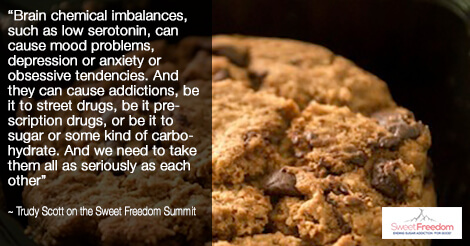
Brain chemical imbalances, such as low serotonin, can cause mood problems, depression or anxiety or obsessive tendencies. And they can cause addictions, be it to street drugs, be it prescription drugs, or be it to sugar or some kind of carbohydrate. And we need to take them all as seriously as each other.

Do you resonate with any of the above? Maybe the example I shared will be closer to reality for you:

Just think about the obsessive nature we have when we’re craving something. We’ll binge eat a box of cookies. And then we may even rush out and buy a second box to replace the box that we binge-ate to replace it before someone sees that we’ve eaten the first box. That sounds like the behavior of a drug addict to me!

We also cover the low GABA type of stress eating that we see with anxiety and low endorphins comfort/reward eating where you really LOVE certain foods (think a big bowl of ice-cream) – and which targeted individual amino acids to use for each brain chemical imbalance. This all means NO willpower is required and zero feelings of deprivation! Really! (and you get a mood boost too)

I hope you can join us at the online no-cost event – simply click here to register today. It runs April 10-17 and when you register you’ll get immediate access to my interview and some other cool sign up gifs. Please share with family and friends who you know can benefit from this information!

Two decades ago, your host, Sherry Strong, was completely addicted to sugar. She was obese, sick and depressed to the point of wanting to die. All of that changed when she removed sugar from her diet.

If you are struggling to give up sugar, are an emotional eater or stress-eater or even if you simply indulge periodically – whether a health professional, busy mom, athlete or career-driven person – this event can help you, finally, improve your health, your life, your mood and end those sugar cravings and addictions!

Got questions or feedback? Please share them in the blog comments below.
 

Filed Under: Sugar addiction, Sugar and mood Tagged With: serotonin, Sugar addiction, sweet freedom summit

GABA for ending sugar cravings (and anxiety and insomnia)

January 8, 2016 By Trudy Scott 50 Comments

In a recent blog post I shared some feedback from people who have tried various GABA products with success: GABA, the calming amino acid: products and results

Taken orally it works to relax, calm, ease anxiety and social anxiety, quiet the mind, help with insomnia and sleeping better, reduces neck tension, removes uneasiness and worry, and gives hope (as you can read in the above blog post).

What I didn’t mention is that GABA can also reduce and often eliminate cravings totally.

Melissa discovered this was a wonderful side-benefit (we like side-benefits vs side-effects!) when she recently added Source Naturals GABA Calm in anticipation of holiday travel and holiday gatherings.   She recently posted this comment on the above blog:

I’m glad I saw the post about GABA on your FB page a couple weeks ago, which led me to this article. I bought Source Naturals GABA Calm and have been taking 1-3 per day for two weeks. I’m glad I bought it before travelling home for Christmas – I was cool as a cucumber at the airport and was much calmer when visiting family and friends compared to last year! The true test of its efficacy will be in two weeks when the semester starts. For now, I notice a general calmness and am sleeping well.

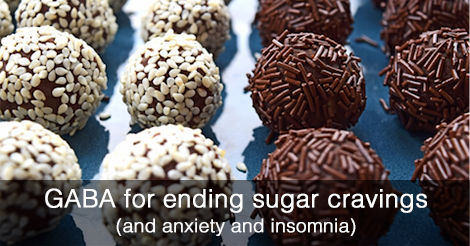
An unexpected result was that I stopped craving sweets after about a week of taking it! I didn’t even realize this until I was grocery shopping and out of habit walked towards the ice cream – I stopped and realized I didn’t want ice cream. So I walked toward the chocolate – same reaction. For once in my life, I was not craving sweets. I made truffles for a NYE party and only ate two. But what is really shocking is that the leftovers are still in my refrigerator two days later and I haven’t touched them. I don’t understand what is going on! Can this be the GABA Calm (active ingredients: magnesium, GABA, Glycine, L-Tyrosine, Taurine)? I don’t think it’s the small amount of magnesium because I already do magnesium oil foot baths, so I suspect it’s one of the other ingredients.

Thanks so much for this article on GABA and recommendations

I love that she was calm during her travels, was much calmer when visiting family and friends compared to last year and is even sleeping better.   And she is clearly delighted about the lack of sugar cravings!

By addressing low GABA levels we can end stress-eating

Here are my answers to her question about those sugar cravings:

  • we can crave for many reasons and one reason can be due to low GABA levels
  • we stress eat (or drink more wine or other alcoholic beverages) when our GABA levels are low
  • by addressing the low GABA levels sugar cravings can disappear completely as in Melissa’s case (ice-cream, chocolates and truffles)
  • the GABA, glycine and taurine actively boost GABA, the magnesium is a co-factor for making GABA and the small amount of tyrosine counters the GABA so you don’t feel too relaxed

Often we also need to address other neurotransmitter imbalances and candida/gut health too

In many cases GABA can help partially and you may also need to address low serotonin (you’ll have afternoon/evening cravings), low dopamine (you crave sugar for focus and energy), low blood sugar (you are cranky and have an intense desire for something sweet) or low endorphins (you crave to self-soothe or comfort). Here is the amino acid questionnaire so you can figure out if you may have low levels of any of the above brain chemicals. If you are low, using the correlating amino acids can address both mood issues and cravings.

You may also need to address candida, dysbiosis or parasites as these factors can also cause sugar cravings since many “bugs” feed off sugar.

Common questions about GABA: the BBB question, phenibut, best forms and more

Update Dec 2016: I’ve written a number of blog posts on GABA since this was published. These hopefully address all the “how does GABA work? it can’t get through the blood brain barrier!” questions I am so often asked, and cover some of the research behind how effective this amino acid can be if your cravings, anxiety and insomnia have low GABA as a root cause:

  • Why I recommend GABA for anxiety instead of phenibut
  • GABA the calming amino acid: common questions I get asked
  • The Anxiety Summit – GABA: Blood brain barrier controversy, concerns, best forms and how to do a trial for eliminating anxiety
  • Sleep promoting effects of combined GABA and 5-HTP: new research
  • GABA rapidly absorbed and tolerated – benefits for anxiety and diabetes

Additional resources when you are new to using GABA and other amino acids as supplements

As always, I use the symptoms questionnaire to figure out if low GABA or other neurotransmitter imbalances may be an issue.

If you suspect low levels of any of the neurotransmitters and do not yet have my book, The Antianxiety Food Solution – How the Foods You Eat Can Help You Calm Your Anxious Mind, Improve Your Mood, and End Cravings, I highly recommend getting it and reading it before jumping in and using amino acids on your own so you are knowledgeable. And be sure to share it with the practitioner/health team you or your loved one is working with.

There is an entire chapter on the amino acids and they are discussed throughout the book in the sections on gut health, gluten, blood sugar control (this is covered in an entire chapter too), sugar cravings, anxiety and mood issues.

The book doesn’t include product names (per the publisher’s request) so this blog, The Antianxiety Food Solution Amino Acid and Pyroluria Supplements, lists the amino acids that I use with my individual clients and those in my group programs.

If, after reading this blog and my book, you don’t feel comfortable figuring things out on your own (i.e. doing the symptoms questionnaire and respective amino acids trials), a good place to get help is the GABA QuickStart Program (if you have low GABA symptoms). This is a paid online/virtual group program where you get my guidance and community support. Another option is the budget-friendly GABA QuickStart Homestudy program.

If you also need serotonin support, the Serotonin QuickStart Program is a good place to get help. This is also a paid online/virtual group program where you get my guidance on using tryptophan and 5-HTP safely, and community support during 5 LIVE Q&A calls. You can sign up to be notified when the next live launch of this program is happening.

If you are a practitioner, join us in The Balancing Neurotransmitters: the Fundamentals program. This is also a paid online/virtual program with an opportunity to interact with me and other practitioners who are also using the amino acids.

Wrapping up and your feedback

I always love to get feedback like this, so thanks to Melissa for sharing! It warms my heart to hear the impact that an amazing amino acid like GABA can have and because I get to share stories like this to give others like you hope!

Do you have a GABA story to share? Has using GABA helped you?

Or have one of the other amino acids helped you ease your sugar cravings and anxiety?

Filed Under: Antianxiety, GABA, Sugar addiction Tagged With: sugar cravings

Glutamine for blood sugar stability, calming and gut healing

October 30, 2015 By Trudy Scott 31 Comments

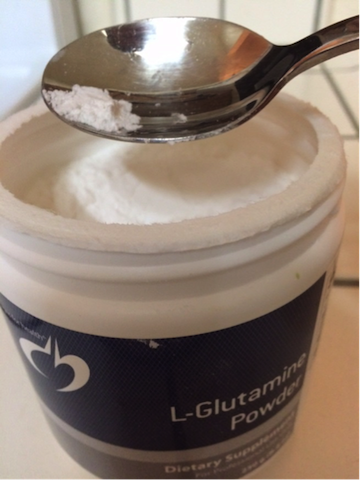
Glutamine powder by DFH: 3/4 of a teaspoon = 3g, so 1/6 of a teaspoon = 500mg

If you’ve been following me for awhile, worked with me, read my book The Antianxiety Food Solution, or listened in on The Anxiety Summit, you’ll be aware that I use glutamine with clients to help with blood sugar control while we’re figuring out diet/breakfast/adrenal health and the carbohydrate/sugar cravings associated with low blood sugar. Opened on to the tongue or taken in powder form glutamine is super-effective for stopping that intense desire for something sweet if it’s related to low blood sugar.

Integrative psychiatrist Dr. Hyla Cass and Julia Ross, MA both recommend glutamine for addiction and carb cravings, as well as for blood sugar control. During a past Anxiety Summit, Dr. Cass shared how to break free of addictions. And Julia Ross, a pioneer in the use of individual amino acids talked about glutamine and other amino acids for eliminating anxiety.

My clients also find benefits as far as healing the leaky gut and glutamine is recommended by many respected integrative practitioners for this purpose: Dr. Josh Axe, Dr. Amy Myers, author of The Autoimmune Solution , and Dr. David Perlmutter, author Grain Brain during his interview with Dr Tom O’ Bryan on The Gluten Summit.  Steven Wright also writes about leaky gut and glutamine on the SCD lifestyle blog, as does fermentationist Summer Bock.

With all these benefits, my clients love this amino acid!

Here is very encouraging feedback from one of the participants in the Amazing Aminos for Anxiety group program:

I started the glutamine trial low and slow. I have been taking 500mg three times a day AM AFT & BED for the past 4 days. I am celiac and have irritable bowel as well. The 2-3x a day diarrhea I have been experiencing has completely stopped! Blood sugar feels stable – not hungry and not craving. Psychologically, I’m feeling more resilient i.e., calmer and more positive on a daily basis. I am surprised that glutamine has helped so much 🙂  My gut is healing and my mental health has improved markedly through this trial.

She confirmed that adding the glutamine was the only change she made. She is already gluten-free and her diet doesn’t include any grains, legumes or lactose etc. She also avoids other foods to which she has had reactions.

I was so thrilled with these fabulous results and this was my feedback:

These are fabulous results – so happy for you! If you feel you could get added benefits i.e. if these symptoms (low blood sugar, hunger, craving, resilience) are not all 0s (with 10 being the worst on a scale of 1 to 10) then I’d consider bumping up the glutamine to 1000mg 3 x day to see if you get added benefits. If you don’t see added benefits then you can go back down.

It’s very common to get good results like this so I’d like to share another example. I met Nicole at the NTA conference and she shared how she suffers from low blood sugar issues:

I get irritable, I get shaky and I get to the point that if I don’t get food NOW I think I’m going to hurt something!

She did a trial of 500mg glutamine and in under 5 minutes she went from that frantic feeling to a very calm feeling:

I’m ok. I feel happy, I feel calm, I feel I can make it longer without needing food right away. I’m impressed at how well that worked for me.

You can read more about low blood sugar and watch Nicole’s video feedback here.

Of course there is research supporting the many benefits that glutamine has for gut health. Here are some excerpts from the abstract of a 2015 paper titled: Glutamine and intestinal barrier function.

glutamine has been reported to enhance intestinal and whole-body growth, to promote enterocyte proliferation and survival, and to regulate intestinal barrier function in injury, infection, weaning stress, and other catabolic conditions

glutamine stimulates growth of the small intestinal mucosa in young animals and also enhances ion transport by the gut in neonates and adults

as a functional amino acid with multiple key physiological roles, glutamine holds great promise in protecting the gut from atrophy and injury under various stress conditions in mammals and other animals.

And this 2015 paper titled: Oral supplementation with L-glutamine alters gut microbiota of obese and overweight adults found that adults supplemented with 30g of glutamine a day for just 14 days had a change in gut bacteria:

Oral supplementation with [glutamine], for a short time, altered the composition of the gut microbiota in overweight and obese humans reducing the Firmicutes to Bacteroidetes ratio, which resembled weight loss programs already seen in the literature.

In a randomized, double-blind, placebo-controlled trial that was conducted in children aged two months to nine years from the urban shanty compound community of Fortaleza, Brazil, it was found that:

Glutamine and all combined nutrients (glutamine, vitamin A, and zinc) improved the intestinal barrier function in these children

When it comes to cravings, addiction and appetite we have this research supporting the use of glutamine:

  • Glutamine and glutamatergic metabolism is a factor in cravings and alcohol dependence
  • A combination of tyrosine, lecithin, glutamine and 5-HTP helped withdrawal syndromes and mental symptoms in detoxified heroin addicts
  • Glutamine has been shown to decrease secretion of ghrelin, the hormone that impacts appetite regulation. High levels of ghrelin appear to make high-calorie foods look more appealing.

I do want to end by saying there are some possible concerns with cancer supplementation and be sure to check with your oncologist if you are currently undergoing treatment. I write about these concerns here – Glutamine supplementation: cancer concerns and benefits.

Have you successfully used glutamine for helping with low blood sugar control, reducing carb or other cravings/addictions, and healing your leaky gut?


Filed Under: Amino Acids, Antianxiety, Emotional Eating, Sugar addiction, Sugar and mood Tagged With: glutamine

The Anxiety Summit – Sugar Impact Diet with JJ Virgin

November 3, 2014 By Trudy Scott 12 Comments

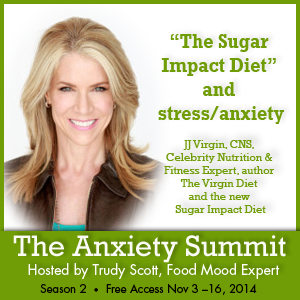
JJ Virgin, CNS Celebrity Nutrition & Fitness Expert, author The Virgin Diet and the new Sugar Impact Diet  was interviewed on the Anxiety Summit by host of the Anxiety Summit, Trudy Scott, Food Mood Expert and Nutritionist, author of The Antianxiety Food Solution.

“The Sugar Impact Diet” and stress/anxiety
– The role stress and anxiety play in sugar addiction
– Why sugar is a drug and what it’s doing to our health and mood
– Why all sugar is not created equal and where it hides
– Why fructose is worse than glucose
– Can we eat natural sugars, fruit, honey and agave
– The dangers of artificial sweeteners
– Signs of high sugar impact and how the sugar impact diet works
– Why snacking may not be a good thing

Here is a snippet from our interview:

When you look at it, sugar is as addictive as cocaine. It’s more addictive than morphine. Connecticut College did a study where they looked at morphine and Oreos with rats and they both lit up the same pleasure centers/reward centers in the brain. The only difference was when the rats were given a choice between morphine and Oreos; they picked the Oreos because they were more pleasurable. Maybe it’s because with the Oreos you got a little trifecta because when you look at it what’s the worst thing? So sugar lights up the reward center and then you’ve got gluten and dairy, opiates, you know, caseomorphins and gluteomorphins and so just an opiate load to you when you look at something like cereal and milk, right, with all the sugar, gluten and dairy. So clearly you’ve got a drug and the more of it you eat the more of it you want.

stress and anxiety make you crave more sugar, you’re hungrier overall and then tired so you want things that are quick, energetic pick-me-ups and have unstable blood sugar. It’s like this trifecta of bad for setting you up for going after sugar

Here is one of the sugar-is-like-a-drug studies from 2013 – Sugar addiction: pushing the drug-sugar analogy to the limit.

research has revealed that sugar and sweet reward can not only substitute to addictive drugs, like cocaine, but can even be more rewarding and attractive.

The biological robustness in the neural substrates of sugar and sweet reward may be sufficient to explain why many people can have difficultly to control the consumption of foods high in sugar when continuously exposed to them.

And the rat oreo study/faculty research concluded with this:

Even though we associate significant health hazards in taking drugs like cocaine and morphine, high-fat/ high-sugar foods may present even more of a danger because of their accessibility and affordability

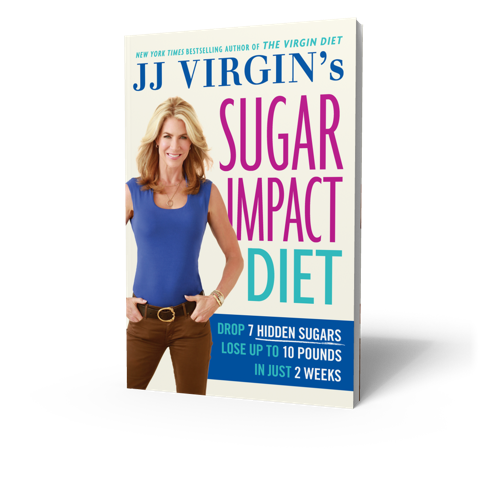
sugar impactJJ’s new book Sugar Impact Diet launches November 4th – be sure to grab your copy to learn how you can lower your sugar impact today!

If you are not already registered for the Anxiety Summit you can get live access to the speakers of the day here www.theAnxietySummit.com

Filed Under: Addiction, Anxiety and panic, Stress, Sugar addiction, Sugar and mood, The Anxiety Summit 2 Tagged With: anxiety, JJ Virgin, stress, sugar, sugar impact, the anxiety summit, Trudy Scott

The Anxiety Summit: The Addicted Brain and How to Break Free

June 22, 2014 By Trudy Scott 4 Comments

HylaCass2

[REPLAY on Monday 6/23 – ENJOY!]

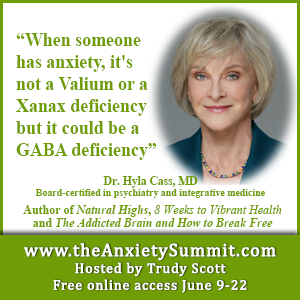
This is day 6 of the Anxiety Summit.  Dr. Hyla Cass, M.D. board-certified in psychiatry and integrative medicine and the author of Natural Highs and The Addicted Brain and How to Break Free, is interviewed by host of the Anxiety Summit, Trudy Scott, Food Mood Expert and Nutritionist, author of The Antianxiety Food Solution.

The Addicted Brain and How to Break Free

  • how to recognize the signs of addiction
  • why do we become addicted and what is the connection to anxiety
  • food/carbs/sugar, caffeine, alcohol and drug addictions
  • how can we end addiction without suffering/withdrawal

Here are some great gems from my interview with Hyla:

in order to make neurotransmitters/brain chemicals that send messages around in our brain, we need the right raw materials

I think the personality becomes addictive because of this imbalanced neurochemistry

I’ve had people sent to me, for example, with anxiety, and it turned out that what was really going on was they were consuming aspartame in their soft drinks

If someone has anxiety, it’s not a Valium or a Xanax deficiency. It could be a GABA deficiency

Low serotonin leads to increased appetite, really craving carbs, feeling depressed, anxious and irritable, and having trouble sleeping

the food industry feeds off us as we’re feeding off of all that junk

This whole idea of a pill for every pill is just wrong

Hyla shared how Dr. Davidson, a conventional psychiatrist from Duke University, discovered that with atypical depression, there were people who were totally unresponsive to the drugs i.e. – nothing worked. He found that those patients did really well with chromium. Here is an article on the Psychology Today blog on chromium for depression.

And here is Hyla’s Huffpo blog post on Is it drugs not guns

Here are two of Hyla’s great books:

Natural Highs: Supplements, Nutrition, and Mind-Body Techniques to Help You Feel Good All the Time

Eight Weeks to Vibrant Health: A Take Charge Plan for Women to Correct Imbalances, Reclaim Energy and Restore Well-Being

Get your free gifts from Dr. Hyla Cass: “Outsmart Your Addiction Quiz” and “Reclaim Your Brain” e-report

If you are not already registered for the Anxiety Summit you can get live access to the speakers of the day here www.theAnxietySummit.com

UPDATE: the summit concluded on Tues 6/24 – season 2 of The Anxiety Summit will be in November 2014. If you’d like to be on the notification list just sign up here www.theAnxietySummit.com

Missed this interview or can’t listen live? Or want this and the other great interviews for your learning library? Purchase the MP3s or MP3s + transcripts + interview highlights and listen when it suits you

Filed Under: Addiction, Amino Acids, Anxiety and panic, Sugar addiction, The Anxiety Summit Tagged With: addiction, amino acids, Antianxiety Food Solution, anxiety, GABA, Hyla Cass, the anxiety summit, Trudy Scott

  • « Go to Previous Page
  • Page 1
  • Page 2
  • Page 3
  • Page 4
  • Interim pages omitted …
  • Page 6
  • Go to Next Page »

Primary Sidebar

GABA QuickStart Homestudy

gaba quickstart homestudy

Free Report

9 Great Questions Women Ask about Food, Mood and their Health

You'll also receive a complimentary subscription to my ezine "Food, Mood and Gal Stuff"


Connect with me

Popular Posts

  • Amino Acids Mood Questionnaire from The Antianxiety Food Solution
  • The Antianxiety Food Solution Amino Acid and Pyroluria Supplements
  • Pyroluria Questionnaire from The Antianxiety Food Solution
  • Collagen and gelatin lower serotonin: does this increase your anxiety and depression?
  • Tryptophan for the worry-in-your-head and ruminating type of anxiety
  • GABA for the physical-tension and stiff-and-tense-muscles type of anxiety
  • The Antianxiety Food Solution by Trudy Scott
  • Seriphos Original Formula is back: the best product for anxiety and insomnia caused by high cortisol
  • Am I an anxious introvert because of low zinc and vitamin B6? My response to Huffington Post blog
  • Vagus nerve rehab with GABA, breathing, humming, gargling and key nutrients

Recent Posts

  • Her cravings for chips and peanut butter were triggered by stress: GABA ends cravings and reduces physical tension and fear of heights
  • It is truly miraculous to be able to move through life without crippling anxiety and panic
  • GABA and tryptophan combo provide immediate and noticeable relief for tremors and cervical dystonia in just 7 days
  • Red light therapy for back and neck pain, plantar fasciitis and low mood – a complement to the amino acids GABA, DPA and tryptophan
  • What do I use instead of Seriphos to help lower high cortisol that is affecting my sleep and making me anxious at night?

Categories

  • 5-HTP
  • AB575
  • Addiction
  • ADHD
  • Adrenals
  • Alcohol
  • Allergies
  • Alzheimer's disease
  • Amino Acids
  • Anger
  • Antianxiety
  • Antianxiety Food Solution
  • Antidepressants
  • Anxiety
  • Anxiety and panic
  • Autism
  • Autoimmunity
  • benzodiazapines
  • Bipolar disorder
  • Books
  • Caffeine
  • Cancer
  • Candida
  • Children/Teens
  • Collagen
  • Cooking equipment
  • Coronavirus/COVID-19
  • Cravings
  • Depression
  • Detoxification
  • Diabetes
  • Diet
  • DPA/DLPA
  • Drugs
  • EFT/Tapping
  • EMF
  • EMFs
  • Emotional Eating
  • Endorphins
  • Environment
  • Essential oils
  • Events
  • Exercise
  • Fear
  • Fear of public speaking
  • Fertility and Pregnancy
  • Fish
  • Food
  • Food and mood
  • Functional neurology
  • GABA
  • Gene polymorphisms
  • General Health
  • Giving
  • Giving back
  • Glutamine
  • Gluten
  • GMOs
  • Gratitude
  • Gut health
  • Heart health/hypertension
  • Histamine
  • Hormone
  • Hyperparathyroidism
  • Hypoglycemia
  • Immune system
  • Inflammation
  • Insomnia
  • Inspiration
  • Introversion
  • Joy and happiness
  • Ketogenic diet
  • Lithium orotate
  • Looking awesome
  • Lyme disease and co-infections
  • MCAS/histamine
  • Medication
  • Men's health
  • Mental health
  • Mercury
  • Migraine
  • Mold
  • Movie
  • MTHFR
  • Multiple sclerosis
  • Music
  • NANP
  • Nature
  • Nutritional Psychiatry
  • OCD
  • Osteoporosis
  • Oxalates
  • Oxytocin
  • Pain
  • Paleo
  • Parasites
  • Parkinson’s disease
  • PCOS
  • People
  • PMS
  • Postpartum
  • PTSD/Trauma
  • Pyroluria
  • Questionnaires
  • Real whole food
  • Recipes
  • Research
  • Schizophrenia
  • serotonin
  • SIBO
  • Sleep
  • Special diets
  • Sports nutrition
  • Stress
  • Sugar addiction
  • Sugar and mood
  • Supplements
  • Teens
  • Testimonials
  • Testing
  • The Anxiety Summit
  • The Anxiety Summit 2
  • The Anxiety Summit 3
  • The Anxiety Summit 4
  • The Anxiety Summit 5
  • The Anxiety Summit 6
  • Thyroid
  • Thyroid health
  • Toxins
  • Tryptophan
  • Tyrosine
  • Uncategorized
  • Vegan/vegetarian
  • Women's health
  • Yoga

Archives

  • May 2026
  • April 2026
  • October 2025
  • September 2025
  • August 2025
  • July 2025
  • June 2025
  • May 2025
  • April 2025
  • March 2025
  • February 2025
  • January 2025
  • November 2024
  • October 2024
  • September 2024
  • August 2024
  • July 2024
  • June 2024
  • May 2024
  • April 2024
  • March 2024
  • February 2024
  • January 2024
  • December 2023
  • November 2023
  • October 2023
  • September 2023
  • August 2023
  • July 2023
  • June 2023
  • May 2023
  • April 2023
  • March 2023
  • February 2023
  • January 2023
  • December 2022
  • November 2022
  • October 2022
  • September 2022
  • August 2022
  • July 2022
  • June 2022
  • May 2022
  • April 2022
  • March 2022
  • February 2022
  • January 2022
  • December 2021
  • November 2021
  • October 2021
  • September 2021
  • August 2021
  • July 2021
  • June 2021
  • May 2021
  • April 2021
  • March 2021
  • February 2021
  • January 2021
  • December 2020
  • November 2020
  • October 2020
  • September 2020
  • August 2020
  • July 2020
  • June 2020
  • May 2020
  • April 2020
  • March 2020
  • February 2020
  • January 2020
  • December 2019
  • November 2019
  • October 2019
  • September 2019
  • August 2019
  • July 2019
  • June 2019
  • May 2019
  • April 2019
  • March 2019
  • February 2019
  • January 2019
  • December 2018
  • November 2018
  • October 2018
  • September 2018
  • August 2018
  • July 2018
  • June 2018
  • May 2018
  • April 2018
  • March 2018
  • February 2018
  • January 2018
  • December 2017
  • November 2017
  • October 2017
  • September 2017
  • August 2017
  • July 2017
  • June 2017
  • May 2017
  • April 2017
  • March 2017
  • February 2017
  • January 2017
  • December 2016
  • November 2016
  • October 2016
  • September 2016
  • August 2016
  • July 2016
  • June 2016
  • May 2016
  • April 2016
  • March 2016
  • February 2016
  • January 2016
  • December 2015
  • November 2015
  • October 2015
  • September 2015
  • August 2015
  • July 2015
  • June 2015
  • May 2015
  • April 2015
  • March 2015
  • February 2015
  • January 2015
  • December 2014
  • November 2014
  • October 2014
  • September 2014
  • August 2014
  • July 2014
  • June 2014
  • May 2014
  • April 2014
  • March 2014
  • February 2014
  • January 2014
  • December 2013
  • November 2013
  • October 2013
  • September 2013
  • August 2013
  • July 2013
  • June 2013
  • May 2013
  • April 2013
  • March 2013
  • February 2013
  • January 2013
  • December 2012
  • November 2012
  • October 2012
  • August 2012
  • July 2012
  • June 2012
  • May 2012
  • April 2012
  • March 2012
  • February 2012
  • January 2012
  • December 2011
  • November 2011
  • October 2011
  • September 2011
  • August 2011
  • July 2011
  • June 2011
  • May 2011
  • April 2011
  • March 2011
  • February 2011
  • January 2011
  • December 2010
  • October 2010
  • September 2010
  • July 2010
  • May 2010
  • April 2010
  • March 2010
  • February 2010
  • January 2010
  • November 2009

Share the knowledge!

The above statements have not been evaluated by the Food and Drug Administration. Products listed in this website are not intended to diagnose, treat, cure or prevent any disease.

The information provided on this site is for informational and educational purposes only and is not intended as a substitute for advice from your physician or other health care professional. You should consult with a healthcare professional before starting or modifying any diet, exercise, or supplementation program, before taking or stopping any medication, or if you have or suspect you may have a health problem.


Copyright © 2026 Trudy Scott. All Rights Reserved. | Privacy | Terms and Conditions | Refund Policy | Medical Disclaimer

Free Report

9 Great Questions Women Ask about Food, Mood and their Health

You’ll also receive a complimentary subscription to my ezine “Food, Mood and Gal Stuff”