• Skip to primary navigation
  • Skip to main content
  • Skip to primary sidebar

everywomanover29 blog

Food, Mood and Women's Health – Be your healthiest, look and feel great!

  • Blog
  • About
  • Services
  • Store
  • Resources
  • Testimonials
  • The Book
  • Newsletter
  • Contact
  • Search this site

Mental health

Time magazine: ketamine is NOT the solution for treatment resistant depression!

August 11, 2017 By Trudy Scott 25 Comments

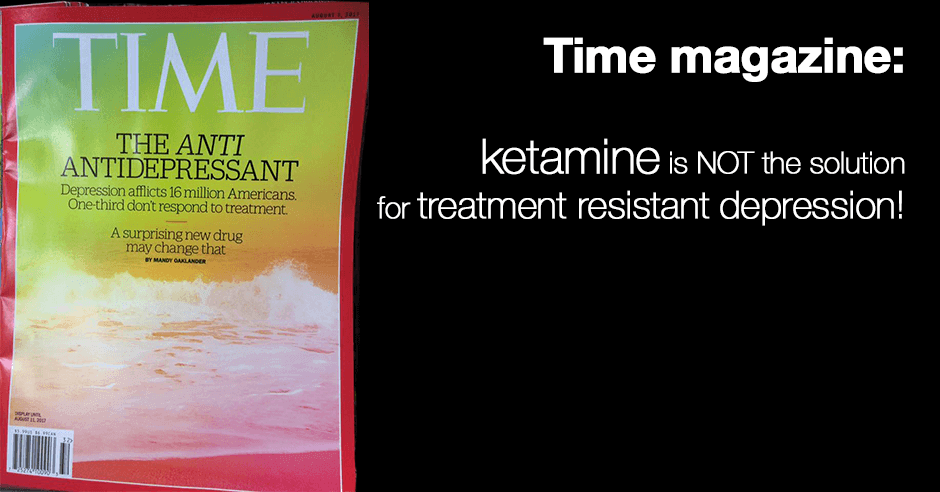
Seen at LAX airport en route back to Australia – this cover of Time magazine:

The Anti Antidepressant. Depression affects 16 million Americans. One third don’t respond to treatment. A surprising new drug may change that.

It’s scary to think that ketamine and ketamine-like drugs are being considered the solution to “treatment resistant depression”. I’ve never liked this term and in my opinion, what it really means is that the root cause of the depression has not been found. To me it looks like the mainstream medical mental health community is desperate!

It really is time to get all the well-researched nutritional psychiatry approaches to the forefront! They do work! The timing of this article is even more interesting since I was returning from the first international meeting of the International Society for Nutritional Psychiatry Research in Bethesda, MD.

Lead food mood researcher Professor Felice Jacka presented her SMILES paper where dietary changes from a junk food diet to a real whole foods diet reduced depression in 30% of the participants.

Microbiome researcher Professor John Cryan discussed the gut brain connection. This paper: Recent developments in understanding the role of the gut microbiota in brain health and disease, was published just last week:

recent preclinical and clinical evidence suggest that targeting the microbiota through prebiotic, probiotic, or dietary interventions may be an effective “psychobiotic” strategy for treating symptoms in mood, neurodevelopmental disorders, and neurodegenerative diseases

And research on sulforaphane for psychosis, and depression and anxiety was presented: Sulforaphane produces antidepressant- and anxiolytic-like effects in adult mice

these findings demonstrated that SFN [sulforaphane] has antidepressant- and anxiolytic-like activities in stressed mice model of depression, which likely occurs by inhibiting the hypothalamic-pituitary-adrenal (HPA) axis and inflammatory response to stress. These data support further exploration for developing SFN [sulforaphane] as a novel agent to treat depression and anxiety disorders.

I presented on the benefits of a gluten-free/grain free/Paleo diet for certain individuals for depression and anxiety, and did a poster presentation on GABA for eliminating anxiety. 

As you can see from the TIME Magazine article the only approaches that have been considered (and have failed) are medications in various different combinations:

Every week, when Ian Hanley sits down with his therapist, he goes through a list of depression treatments he’s been researching online. The best-known treatments at the top of the list–half a dozen antidepressants and known combinations of those drugs–are all crossed out….

Most diagnoses do not come with 20-plus medicines approved by the Food and Drug Administration to treat it–and yet with depression, more options don’t always mean better outcomes. Ever since the first antidepressants were introduced 60 years ago, doctors have had patients like Hanley–people who don’t seem to get better even after they’ve worked their way through the lengthy list of available drugs. About 30% of all people with depression don’t respond adequately to the available treatments. That’s a dismal failure rate for a class of drugs designed to improve a person’s basic ability to function.

According to this article in Time magazine:

The biggest development has been the rediscovery of a promising, yet fraught, drug called ketamine. It’s best known as a psychedelic club drug that makes people hallucinate, but it may also have the ability to ease depression–and fast. In a race to shape the next generation of antidepressants, Johnson & Johnson and Allergan are fast-tracking new medicines inspired by ketamine.

I encourage you to read the entire article and take note of the following: the side-effects seen with medications over the years and the fact that doctors “don’t know the consequences and potential side effects of taking tiny doses of ketamine over and over again”; “she tried nearly everything” (you’ll read this in all the articles advocating for ketamine but unfortunately they are only referring to medications); the ketamine effects are temporary and cost $15,000 per year (and are not covered by insurance); and ketamine “is thought to stimulate an opioid receptor in the brain” and is already known to be addictive.  

When I shared this image and article on my Facebook page I discovered that is a pretty divided topic with a number of people feeling really strongly about the fact that this approach needs to be researched further and considered.  I acknowledge their concern for the individuals who have not found a solution for their depression. BUT my question is this: have all the dietary and nutritional approaches been considered and looked into with these people who have not responded to antidepressants? 

I strongly believe that ketamine is NOT the solution and that nutritional psychiatry is!

Have you used this ketamine approach personally or with patients?

Would you consider using ketamine personally if the antidepressants didn’t work for you? Or would you be more willing to work with a functional medicine or functional nutrition practitioner to find your true root causes and address them with diet, nutrients and a functional medicine approach?


Filed Under: Depression, Food and mood, Mental health, Nutritional Psychiatry, Real whole food Tagged With: anxiety, depression, GABA, gluten, ketamine, nutritional psychiatry, sulforaphane, time magazine, treatment resistant

Depression as a black dog that comes in and lays down beside you at night

May 26, 2017 By Trudy Scott 18 Comments

Trevor King’s interview about his journey with depression – on That Vitamin Summit – is not to be missed if you are depressed, have ever suffered with depression or if you have a loved one or friend with depression. He shares how he feels a sense of complete hopelessness at times:

It descends like a black cloud that makes me almost sort of retreat into myself. And my eyes will know and I don’t want to take the world in. I don’t want to get out of bed at times. Actually, that’s one of the things that … one of the only things that actually helps me, is going to bed and lying down.

Winston Churchill famously described it as this black dog who’d come in and lay beside him at night.

“From the moment my eyes opened in the morning, I am engaged in a battle. I must protect myself with armor against ongoing, negative, intrusive thoughts that flood into my brain, while sending my prefrontal cortex, which is the home of logical thought, the green light to make decisions and take charge of my brain’s limbic system. That is, before the fear center completely spazzes out. I spend more time and energy chasing and maintaining good health than I do in any other aspect of my life. My marriage, family or work. Because I know that everything meaningful and good around me depends on a stable base. And I hope and pray that one day, I don’t have to fight so hard for my sanity.”

He talks about how he is affected by sugar and low blood sugar, and how he’s found some benefits with niacin, chromium, magnesium and tryptophan (when he’s consistent with taking them!).

Trevor actually talks about the GABA interview I did with him a few days earlier and how he’s very interested in what he learned. He is planning to do a trial of GABA to see if it can help him further.

Here is a snippet from my interview on GABA (so do tune in to this interview if you’re new to my work and the targeted amino acids):

GABA is really quite profound. When I had my anxiety, GABA was my lifesaver. It completely turned my life around. Within three days of using GABA, the panic attacks stopped and the anxiety started to go down, and then I had to look for all the other root causes. It worked immediately so I’m a complete believer, just because I’ve experienced it myself. You’ll hear a lot of people say GABA won’t work. It doesn’t cross the blood/brain barrier so it’s not going to have an impact.

We’ve now got research showing that there may be ways that it crosses the blood/brain barrier. We’ve also got research showing that we have GABA receptors in various parts of our body. We’ve got a lot in our muscles, and with low GABA symptoms you’ll have physical tension.

The beautiful thing is it works. It works quickly, and if you have these low GABA symptoms, which is the physical anxiety, which could be panic attacks. It could be stress eating, it could be drinking to calm down. If you are the kind of person who needs wine to wind down at the end of the day, that’s a big sign that you may need GABA. You take the GABA and you just feel this physical tension release from you, you know you’re onto something good.

I just wish I’d known about his struggles with depression at the time of our interview – I would have talked more about tyrosine for dopamine support (for curl up in bed depression) and DPA for endorphin boosting (for low endorphins weepy depression). 

I did discuss gluten and would consider this especially since his daughter has issues with it. I talked about low serotonin and mentioned Lidtke tryptophan.  If someone doesn’t do well on another brand I’d have them trial the Lidtke brand.  I’d also look into SIBO – I have SIBO and rice and grains make me feel flat and low and I see this often with clients.  Finally I’d look into lithium orotate for keeping an even mood. 

Trevor shares these wise words at the end of his interview:

You do find that when you actually bite the bullet and share it with people,

people are very, very understanding. And actually, you’re amazed that many people have been there themselves.

I could not agree more which is why I’ve always shared my journey with anxiety. I appreciate him for being willing to share his story with depression!

If you’re not already registered here is the registration link for That Vitamin Summit

Feel free to post questions or feedback below – and share your story with anxiety or depression if you feel drawn to do so

Filed Under: Bipolar disorder, Depression, Events, GABA, Mental health, People Tagged With: anxiety, depression, GABA, low blood sugar, niacin, sugar, That Vitamin Summit, Trevor King, tryptophan

Genes, lithium, Kundalini yoga, coffee enemas, GABA, dairy: IMMH highlights part 1

December 12, 2016 By Trudy Scott 17 Comments

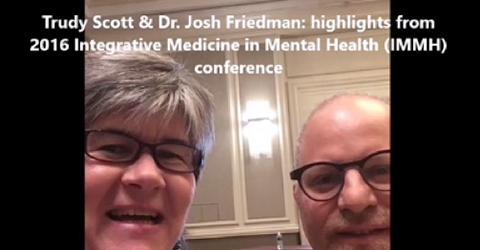
Here are some highlights from the recent Integrative Medicine for Mental Health conference. We did it live on Facebook, holding my iphone, as the conference was ending. I’m with my colleague Dr. Josh Friedman and this is the video and transcript of our discussion – we cover the following:

  • Methygenetic Testing to fine tune your gene results
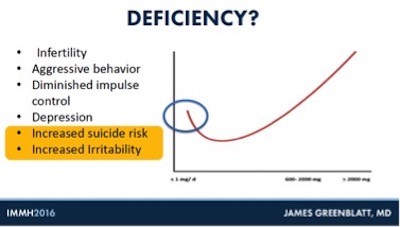
  • Low dose lithium for irritability and alcoholism
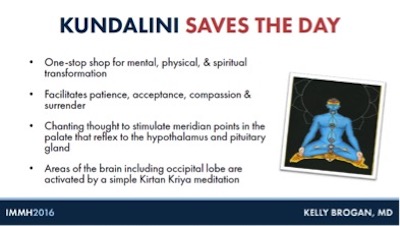
  • Kundalini yoga if you have a hard time meditating
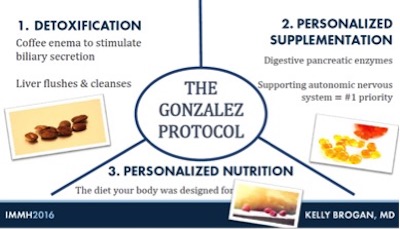
  • Coffee enemas for medication detox
  • Working as a detective to find your root cause
  • Simple changes like adding GABA or 5-HTP or removing gluten and/or dairy

Ok we are live… Trudy Scott, certified nutritionist and author of The Antianxiety Food Solution and Dr. Josh Friedman, a psychologist interested in integrative medicine approaches to depression.  

Josh: I have a new website integrativedepressionsolutions.com and we are at the IMMH conference and it has just wrapped up – there was a huge amount of information, tons to learn, it was wonderful. What were your take aways Trudy?

Trudy:   One of the things that I thought was absolutely fascinating was this booth called Methyl Genetic Testing. You can enter your 23andme data and then what you can also do is – while they are running their analysis on that – enter blood work, enter results of organic acid tests and results of stool. They actually show you if your genes are expressing and causing problems. Because you may have a MTHFR methylation genetic defect showing up on your SNP but maybe it is not causing you a problem. So this way you can actually determine if it is causing you a problem. You had shared with me that you have done the training?

Josh:   The training was really amazing. Functional medicine looks at how the biochemical pathways of the body are working. This provides you with another layer – which is how are the   genes that are programming those enzymes support those pathways – and it can provide you with an awful lot of information. And then they have a very simple program you plug your genes into and it gives you a guide as to what kind of supplements might help.

Trudy:   Amazing! So it is really fine tuning the functional medicine and fine tuning what might actually be going on with each individual.

Josh:   It gives you the next amount of information because the functional medicine actually shows you what is happening whereas the genetic testing shows you what potentiality there might be. So you might have a folic acid defect or your folate could be fine – so that was pretty interesting.

Trudy:   What else did you like?

Josh:   I went to a lecture on the use of low dose lithium for all kinds of things.   It is something that I’ve known about – obviously pharmaceutical use [of lithium] for bipolar disorder.   Low dose lithium can also be used for bipolar disorder, but the two things new I learnt is that it is incredibly helpful for irritability. So I am dealing with [clients with] depression and it is something that I have often not thought about for irritability. It is also helpful for situations if you have a parent or family history or a past history of substance abuse or alcoholism. So that was something that I’ll take home to my office.

Trudy:   And it is something that I currently use in my practice and [I learned it from] Dr. James Greenblatt. He actually presented on a similar topic last year and I heard it then. So low dose lithium is the lithium orotate, we want to be clear about that – 5 to 10 mg twice a day is kind of what we are thinking about. I’ve had great results with women with insomnia.   It helps to stabilize the mood and when you are using the amino acids you need a stable mood – you can’t have these ups and downs – so the low dose lithium is really good for that. I would like to hear how it goes when you are using it.

Josh:   I have used it with some people with a history of alcoholism and it has provided stability in their mood which is really good. What else have you got?

Trudy: I loved Dr. Kelly Brogan, we always love her, don’t we?   She is just really fabulous. She talked about the issues with all the medication and how she does not prescribe anymore. And she talked about a good Paleo diet and getting off gluten and all that good stuff.   New things that I heard from her was how she loves Kundalini yoga and how she loves it because she can’t meditate. I find a lot of my clients have a problem with meditating so I always say if that does not work find something that is going to work. And she has found that this Kundalini yoga works for her. So tell me a little about what you know about it?

Josh: I think Kundalini yoga is quick movements with very quick breathing so it easily occupies the mind. So for someone who would have a hard time sitting and meditating that kind of movement would be helpful.   Other kinds of movements and other types of yoga are Tai Chi or qigong.   Movement or walking meditation can be easier practices for stress management if sitting completely still is hard.

Trudy: So we are doing Facebook live here for those of you who are just joining now.   We are at Integrative Medicine for Mental Health conference and it is Trudy Scott and Josh Friedman.

And I want to pass the phone to Josh to hold because my arm is sore and killing me. Maybe he will do a better job than me.

The other thing that I heard from Kelly Brogan that I really enjoyed is that she is using coffee enemas. I have quite a lot of experience with them because the first practitioner that I worked with when I was an intern used coffee enemas for detox for cancer and had really good results.   Dr. Brogan was saying how effective it is for phase 1 and phase 2 detox. It also helps with bile production and the part that I really like is that it helps with medication detox. So this is something that I’m going to be looking into a little bit more and I’ll come back and share more as I learn more.

Josh: That’s pretty cool. One take away I had is that functional medicine can often be like a very complex process of delving into the root underlying cause of symptoms – so things like detox pathways or different kinds of infections. Trudy here gave a talk – and her talk was on amino acids and dietary change and blood sugar stabilization and stress management. One of the things I heard running through the entire workshop was sometimes it is simple things that can make a huge difference. And so with using amino acids for mood issues it can be incredibly quick.

I don’t remember what her name was, but there was a psychiatrist who presented at the end, she talked about how she got into functional medicine and she was talking about the radical changes she had in her health status from simple dietary changes. So stopping gluten and dairy was a huge change for her.

Trudy: That’s important. We want to realize that these dietary changes and nutrients can have profound effects. I was talking to Dr. Nicole Beurkens earlier [about zinc and GABA for anxiety] and saying a lot of my clients will say “my anxiety and my depression is so severe I have to have medication, there is no way that diet and nutrients can make a difference”.   But they really can.   It can completely transform your life.   I remember you shared a story of someone who got off gluten?

Josh:   Yes, I see those powerful changes every day – where someone with a dietary change or a supplement like 5-HTP or GABA just changes everything. It is the one change that might move things along. It is quite amazing.  

Trudy: And it is just a matter of finding what that root cause is for your anxiety and your depression – it may be low serotonin, and it may be gluten or you might need lithium support, it may be that you have an infection. We have heard about Clostridia this weekend, we’ve heard about Toxoplasma gondii, we’ve heard about Lyme disease – they can manifest in many different ways, [including anxiety and depression] – so finding that root cause is important.

Josh: So what people were talking about was being a clinical detective. So working collaboratively with your clients and just saying “it is going to be a process, we will find a solution, but it is going to take some time to figure it out.”   Then there is a lot of detective work that can be done with pencil and paper: measures, asking questions, a clinical interview and it is putting the person’s story together to get to the bottom of what is going on. And so sometimes we can do that without testing. There are a lot of clinicians here, there are doctors here but neither of us are physicians and a lot of the work we both do is working with clients to try to figure out what that missing piece is.

And so, sometimes the missing piece can be quite small. I had a patient who had debilitating depression, had been hospitalized three or four times and we did one test, and the test was an IgG food allergy test.   He was a weight lifter and he was doing 5 whey protein shakes a day, and it came up that he was severely allergic to dairy.   He stopped dairy and within two days his mood was back to normal. I spoke to him recently and he has been stable and happy since his mood lifted.


What a wonderful outcome for his client!

And what an excellent conference! This is part 1 of our discussion. Stay tuned for part 2.

Feel free to post questions or comments below. And let us know if any of the above resonate with you?

Filed Under: Mental health Tagged With: coffee enemas, dairy, GABA, genetics, IMMH, Integrative Medicine for Mental Health, Josh Friedman, Kundalini yoga, lithium

Mental Health Month: anxiety, nutrition, gluten, GABA, leptin and fluoroquinolones

May 13, 2016 By Trudy Scott 21 Comments

egg-asparagus-salad

Since 1949, Mental Health America and affiliates across the country have led the observance of May is Mental Health Month by reaching millions of people both online and locally. They share this:

This year’s theme for Mental Health Month is – Life with a Mental Illness – and calls on individuals to share what life with a mental illness feels like for them in words, pictures and video by tagging their social media posts with #mentalillnessfeelslike (or submitting to MHA anonymously). Posts are being collected and displayed at mentalhealthamerica.net/feelslike.

I love that they say that spreading the word that mental health issues like anxiety, depression, bipolar and other disorders is something everyone should care about.

I’d love to educate and inspire many of those individuals who have already posted on social media using #mentalillnessfeelslike and have yet to find a solution. There are so many of them and it’s heart-breaking. You can go to mentalhealthamerica.net/feelslike now and see what is being said.

Here are a few examples:

Severe anxiety feels like you are lost in a big city where no one else can speak your language and you are trying to get home.. #mentalillnessfeelslike

#anxietyfeelslike #mentalillnessfeelslike a never ending battle to keep worry from creeping in to your every thought. Trying to be present

Anxiety Attack #mentalillnessfeelslike: I’m swirling in a cyclone while also being constructed by a Boa

#MentalIllnessFeelsLike Worrying About Passing This Semester Causing Your Anxiety To Mess Up More Although Your Anxiety Put You Here

And this profound quote by MentallyAbnormallyNormal (you can find her here on Facebook)

mentally-abnormally-normal-meme

I encourage you to participate if it feels ok to you. I’d especially love you to share how nutrition and nutrients like GABA, tryptophan, zinc, vitamin B12, and/or vitamin D have helped you. You can also respond directly to the posts others have made.

Here are some links to my prior blog posts on some of the many nutritional (and biomedical) approaches so feel free to also share some of this information and use it if you’re still on your healing journey to overcome anxiety, panic attacks, OCD, insomnia and other mood problems:

  • Nutritional medicine in modern psychiatry: position statement by ISNPR
  • Integrative Medicine Approach to Pediatric Obsessive-Compulsive Disorder and Anxiety
  • GABA, the calming amino acid: products and results
  • Tryptophan for anxiety, sleep and mood: in Put Anxiety Behind You
  • Sleep promoting effects of combined GABA and 5-HTP: new research
  • Neuropsychiatric Lyme Disease by Dr. Suruchi Chandra
  • 60+ Nutritional & Biochemical Causes of Anxiety

I’ll be adding to this last blog during season 4 of The Anxiety Summit which runs June 6th – 16th. As I continue to interview experts I learn more about the myriad of possible underlying causes of anxiety:

  • Mike Mutzel will be covering how leptin resistance affects the HPA axis contributing to cortisol imbalances and how we handle stress, inflammation, immune imbalances and obesity – all playing a role in anxiety, schizophrenia and depression, and OCD and even PTSD.
  • Lisa Bloomquist will be covering fluoroquinolone related neuropsychiatric toxicity and how to recover from fluoroquinolone toxicity. Fluoroquinolones are commonly prescribed antibiotics (ciprofoxacin, levofoxacin, and moxifoxacin) and can be a major factor in anxiety and depression. She shares how this toxicity can be as bad for some individuals as benzodiazepine tolerance and withdrawal.

For some of my clients, eliminating anxiety (and other mood disorders) can be as simple as switching to a real whole foods diet, eating to balance blood sugar, quitting sugar/gluten/caffeine and adding some key nutrients like zinc and vitamin D. Many benefit immensely when using targeted individual amino acids like GABA and tryptophan. And some need to dig deeper to find the root cause of the anxiety.

But let’s always keep looking for that root cause or causes – find YOUR root cause/s – and address it/them.

My heart goes out to you if you are still suffering and still seeking a solution (and to everyone tagging themselves with #mentalillnessfeelslike and #anxietyfeelslike).

I say let’s aims to change this to the past tense so instead of #mentalillnessfeelslike let’s get to #mentalillnessfeltlike. Or how about #anxietyfeltlike or even #nutritionfixedmyanxiety ?

It truly is possible with food and nutrients! Do you agree? What has worked for you? Feel free to share in the comments and tag yourself on social media.

And do join us on The Anxiety Summit next month and share this during the Mental Health Month of May.


Filed Under: Events, Mental health Tagged With: anxiety, depression, fluoroquinolone, GABA, Leptin resistance, Mental Health Month, nutrition, OCD, PTSD, schizophrenia, the anxiety summit, tryptophan

Western diet is associated with a smaller left hippocampus and anxiety

October 23, 2015 By Trudy Scott Leave a Comment

western-diet

A new food and mental health study has been published in the international BMC Medicine journal: Western diet is associated with a smaller hippocampus: a longitudinal investigation. The lead author is Associate Professor Felice Jacka from Deacon University in Australia.

Here is the conclusion of the study: 

Lower intakes of nutrient-dense foods and higher intakes of unhealthy foods are each independently associated with smaller left hippocampal volume. To our knowledge, this is the first human study to demonstrate associations between diet and hippocampal volume concordant with data previously observed in animal models.

Study participants were Australian adults aged 60-64.   The results of the study, show that an unhealthy “Western” diet is associated with a smaller left hippocampus and a healthier “prudent”, nutrient-dense diet is associated with a larger left hippocampus.

The unhealthy “Western” diet was:

characterized by the consumption of roast meat, sausages, hamburgers, steak, chips, crisps and soft drinks

and the healthy “prudent”, nutrient-dense diet was:

characterized by the consumption of fresh vegetables, salad, fruit and grilled fish

This study has importance for cognition and mental health, both depression and very possibly anxiety too:

extensive evidence from animal studies points to the importance of the hippocampus in the association between diet and mental and cognitive health

The hippocampus is a brain structure associated with both learning and memory, as well as mood regulation, and is specifically implicated in depression

The study does group high sugar and high saturated fat together, and unfortunately the healthy diet excludes good quality red meat which is surprising considering previous research and conversations with Dr. Jacka about the benefits of good quality red meat and mental health:

In our study, out of every single dietary food grouping that I looked at including vegetables, fruits, salads, beans, etc the strongest correlate of mental health was red meat intake [grass-fed red meat of course]

Consistently, women who have less than the recommended intake of red meat seem to be in an increased risk for common mental disorders [like anxiety and depression] and bipolar disorder.

It will be wonderful to see follow-up research looking at the effect of quality grass-fed red meat on hippocampus size.  

Drew Ramsey, MD, an assistant clinical professor of psychiatry at Columbia University College of Physicians and Surgeons in New York City, described the study as “exciting” in an interview on Medscape Medical News:

It’s the first time that a dietary pattern has been linked to specific changes in the brain. We’ve known for a long time that there’s a correlation between dietary pattern and the risk of a number of brain illnesses, like depression and dementia, and the mechanism behind this, we believe, involves neuroplastic processes of how food affects brain growth. This is the first study that’s really shown that quite conclusively.

Dr. Ramsey is the author of The Happiness Diet, and co-founder of National Kale Day. His mission is to educate America on eating healthier and I’ll second what he said about this study:

nutrition should be incorporated into mental health clinical practice.

How wonderful is it to hear a statement like this from a psychiatrist!?

You can read the complete study here.

What does all this mean for you? Eat real whole nutrient-dense food and ditch the junk food and processed food. Your brain will be happy and so will you be!

If you’re a mental health practitioner, start talking to your clients and patients about what they’re eating, ask them what they had for breakfast and share this research.


Filed Under: Antianxiety Food Solution, Depression, Food and mood, Mental health, Real whole food, Research Tagged With: anxiety, depression, drew ramsey, felice jacka, healthy diet, hippocampal, red meat, western diet

Microbiome: A New Frontier in Mental Health with Dr. David Perlmutter

August 3, 2015 By Trudy Scott 2 Comments

microbiome 

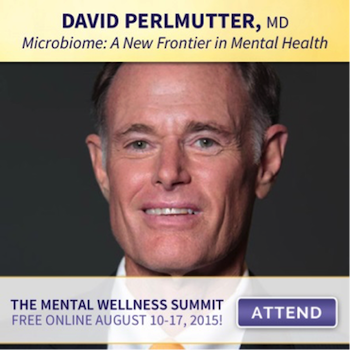
Dr. David Perlmutter, MD, is author of the cutting-edge new book Brain Maker and one of the many excellent speakers on the upcoming Mental Wellness Summit

Here are some snippets from Dr. John Dempster’s excellent interview with Dr. David Perlmutter, MD – Microbiome: A New Frontier in Mental Health

  • with respect to brain health there’s not a heck of a lot that mainstream medicine can offer you once you’ve been given one of these diagnoses, whether it’s Alzheimer’s or even a child with autism [my addition: or anxiety or depression]. There’s no treatment. And I think we’re just beginning to gain some real understanding that the answers to these questions may not be in the brain. It may very well be in the gut.
  • this is very exciting and very cutting edge information that this microbiome, this collection of living organisms, bacteria, viruses, fungi, that live on us and within us are playing such a huge role in terms of our day-today health, our long-term risk for disease, and even functionality moment to moment, and especially incredibly as it deals with the brain
  • 99% of the DNA in your body is bacteria. We have to pay attention to that big time because …we also fully understand now that the bacteria living within this are also changing the expression of our DNA of the DNA that we inherit from our mom and dad
  • nonsteroidal anti-inflammatory drugs like ibuprofen, which is the generic name for many of the products on the market, also found in many cold preparations, for example, are specifically quite toxic to the microbiome and set the stage for troubles in the body with things like inflammation

Dr. Perlmutter also shares fascinating information about C-sections, leaky gut and LPS/lipopolysaccharides, autism and fecal microbial transplants (and a heart-warming success story!), autoimmunity, clostridium difficile/ C-diff and diarrhea, fermented foods and prebiotic foods, and much more

And he has great advice for classically trained doctor/practitioners:

  • Don’t be down on what you’re not up on. And what I mean by that is these concepts that we’re talking about today are very, very new. And we didn’t learn about this stuff in medical school. We were taught to fear bacteria

Join The Mental Wellness Summit, online, August 10-17, 2015, to hear the full interview and other functional and integrative approaches to root cause resolution of anxiety and depression.

mental-wellness-summit-sq

This online event is educational and empowering, covering today’s powerful treatment options, including: specialized diet and improved nutrition, targeted supplementation, integrative medicine, naturopathy and functional medicine, somatic therapy, chiropractic care, acupuncture, yoga and meditation, to name a few, are available but rarely considered for treating mental health.

Let’s go beyond just psychiatry and drugs, and explore the best options for wellness in this evolving and very exciting field.

Here are a few of the many other interesting topics that will be covered at The Mental Wellness Summit:

  • Kelly Brogan, MD: Holistic Medicine and Root-Cause Resolution
  • Robert Whitaker, PhD: The Perils of Big Pharma
  • Chris Kresser, MS, LAC: About the Brain-Gut Connection
  • Ross McKenzie Co-founder of Mental Wellness Summit, Filmmaker of Bipolarized : Journey Beyond Meds
  • John Dempster, ND, Co-founder of Mental Wellness Summit: Heavy Metal Detoxification and Functional Medicine
  • Trudy Scott, CN: Anxiety, Pyroluria and Amino Acid Therapy (my interview airs on August 15th if you haven’t yet heard me speak on this topic)
  • Mansoor Mohammed, MD: Methylation, Genomics and Mood Disorders (you can read snippets from his interview here)

Register for FREE now at the following link: https://vt239.isrefer.com/go/summitreg/trudyscottcn/


Filed Under: Events, Mental health Tagged With: David Perlmutter, mental health summit

  • « Go to Previous Page
  • Page 1
  • Page 2
  • Page 3
  • Go to Next Page »

Primary Sidebar

GABA QuickStart Homestudy

gaba quickstart homestudy

Free Report

9 Great Questions Women Ask about Food, Mood and their Health

You'll also receive a complimentary subscription to my ezine "Food, Mood and Gal Stuff"


Connect with me

Popular Posts

  • Amino Acids Mood Questionnaire from The Antianxiety Food Solution
  • The Antianxiety Food Solution Amino Acid and Pyroluria Supplements
  • Pyroluria Questionnaire from The Antianxiety Food Solution
  • Collagen and gelatin lower serotonin: does this increase your anxiety and depression?
  • Tryptophan for the worry-in-your-head and ruminating type of anxiety
  • GABA for the physical-tension and stiff-and-tense-muscles type of anxiety
  • The Antianxiety Food Solution by Trudy Scott
  • Seriphos Original Formula is back: the best product for anxiety and insomnia caused by high cortisol
  • Am I an anxious introvert because of low zinc and vitamin B6? My response to Huffington Post blog
  • Vagus nerve rehab with GABA, breathing, humming, gargling and key nutrients

Recent Posts

  • Her cravings for chips and peanut butter were triggered by stress: GABA ends cravings and reduces physical tension and fear of heights
  • It is truly miraculous to be able to move through life without crippling anxiety and panic
  • GABA and tryptophan combo provide immediate and noticeable relief for tremors and cervical dystonia in just 7 days
  • Red light therapy for back and neck pain, plantar fasciitis and low mood – a complement to the amino acids GABA, DPA and tryptophan
  • What do I use instead of Seriphos to help lower high cortisol that is affecting my sleep and making me anxious at night?

Categories

  • 5-HTP
  • AB575
  • Addiction
  • ADHD
  • Adrenals
  • Alcohol
  • Allergies
  • Alzheimer's disease
  • Amino Acids
  • Anger
  • Antianxiety
  • Antianxiety Food Solution
  • Antidepressants
  • Anxiety
  • Anxiety and panic
  • Autism
  • Autoimmunity
  • benzodiazapines
  • Bipolar disorder
  • Books
  • Caffeine
  • Cancer
  • Candida
  • Children/Teens
  • Collagen
  • Cooking equipment
  • Coronavirus/COVID-19
  • Cravings
  • Depression
  • Detoxification
  • Diabetes
  • Diet
  • DPA/DLPA
  • Drugs
  • EFT/Tapping
  • EMF
  • EMFs
  • Emotional Eating
  • Endorphins
  • Environment
  • Essential oils
  • Events
  • Exercise
  • Fear
  • Fear of public speaking
  • Fertility and Pregnancy
  • Fish
  • Food
  • Food and mood
  • Functional neurology
  • GABA
  • Gene polymorphisms
  • General Health
  • Giving
  • Giving back
  • Glutamine
  • Gluten
  • GMOs
  • Gratitude
  • Gut health
  • Heart health/hypertension
  • Histamine
  • Hormone
  • Hyperparathyroidism
  • Hypoglycemia
  • Immune system
  • Inflammation
  • Insomnia
  • Inspiration
  • Introversion
  • Joy and happiness
  • Ketogenic diet
  • Lithium orotate
  • Looking awesome
  • Lyme disease and co-infections
  • MCAS/histamine
  • Medication
  • Men's health
  • Mental health
  • Mercury
  • Migraine
  • Mold
  • Movie
  • MTHFR
  • Multiple sclerosis
  • Music
  • NANP
  • Nature
  • Nutritional Psychiatry
  • OCD
  • Osteoporosis
  • Oxalates
  • Oxytocin
  • Pain
  • Paleo
  • Parasites
  • Parkinson’s disease
  • PCOS
  • People
  • PMS
  • Postpartum
  • PTSD/Trauma
  • Pyroluria
  • Questionnaires
  • Real whole food
  • Recipes
  • Research
  • Schizophrenia
  • serotonin
  • SIBO
  • Sleep
  • Special diets
  • Sports nutrition
  • Stress
  • Sugar addiction
  • Sugar and mood
  • Supplements
  • Teens
  • Testimonials
  • Testing
  • The Anxiety Summit
  • The Anxiety Summit 2
  • The Anxiety Summit 3
  • The Anxiety Summit 4
  • The Anxiety Summit 5
  • The Anxiety Summit 6
  • Thyroid
  • Thyroid health
  • Toxins
  • Tryptophan
  • Tyrosine
  • Uncategorized
  • Vegan/vegetarian
  • Women's health
  • Yoga

Archives

  • May 2026
  • April 2026
  • October 2025
  • September 2025
  • August 2025
  • July 2025
  • June 2025
  • May 2025
  • April 2025
  • March 2025
  • February 2025
  • January 2025
  • November 2024
  • October 2024
  • September 2024
  • August 2024
  • July 2024
  • June 2024
  • May 2024
  • April 2024
  • March 2024
  • February 2024
  • January 2024
  • December 2023
  • November 2023
  • October 2023
  • September 2023
  • August 2023
  • July 2023
  • June 2023
  • May 2023
  • April 2023
  • March 2023
  • February 2023
  • January 2023
  • December 2022
  • November 2022
  • October 2022
  • September 2022
  • August 2022
  • July 2022
  • June 2022
  • May 2022
  • April 2022
  • March 2022
  • February 2022
  • January 2022
  • December 2021
  • November 2021
  • October 2021
  • September 2021
  • August 2021
  • July 2021
  • June 2021
  • May 2021
  • April 2021
  • March 2021
  • February 2021
  • January 2021
  • December 2020
  • November 2020
  • October 2020
  • September 2020
  • August 2020
  • July 2020
  • June 2020
  • May 2020
  • April 2020
  • March 2020
  • February 2020
  • January 2020
  • December 2019
  • November 2019
  • October 2019
  • September 2019
  • August 2019
  • July 2019
  • June 2019
  • May 2019
  • April 2019
  • March 2019
  • February 2019
  • January 2019
  • December 2018
  • November 2018
  • October 2018
  • September 2018
  • August 2018
  • July 2018
  • June 2018
  • May 2018
  • April 2018
  • March 2018
  • February 2018
  • January 2018
  • December 2017
  • November 2017
  • October 2017
  • September 2017
  • August 2017
  • July 2017
  • June 2017
  • May 2017
  • April 2017
  • March 2017
  • February 2017
  • January 2017
  • December 2016
  • November 2016
  • October 2016
  • September 2016
  • August 2016
  • July 2016
  • June 2016
  • May 2016
  • April 2016
  • March 2016
  • February 2016
  • January 2016
  • December 2015
  • November 2015
  • October 2015
  • September 2015
  • August 2015
  • July 2015
  • June 2015
  • May 2015
  • April 2015
  • March 2015
  • February 2015
  • January 2015
  • December 2014
  • November 2014
  • October 2014
  • September 2014
  • August 2014
  • July 2014
  • June 2014
  • May 2014
  • April 2014
  • March 2014
  • February 2014
  • January 2014
  • December 2013
  • November 2013
  • October 2013
  • September 2013
  • August 2013
  • July 2013
  • June 2013
  • May 2013
  • April 2013
  • March 2013
  • February 2013
  • January 2013
  • December 2012
  • November 2012
  • October 2012
  • August 2012
  • July 2012
  • June 2012
  • May 2012
  • April 2012
  • March 2012
  • February 2012
  • January 2012
  • December 2011
  • November 2011
  • October 2011
  • September 2011
  • August 2011
  • July 2011
  • June 2011
  • May 2011
  • April 2011
  • March 2011
  • February 2011
  • January 2011
  • December 2010
  • October 2010
  • September 2010
  • July 2010
  • May 2010
  • April 2010
  • March 2010
  • February 2010
  • January 2010
  • November 2009

Share the knowledge!

The above statements have not been evaluated by the Food and Drug Administration. Products listed in this website are not intended to diagnose, treat, cure or prevent any disease.

The information provided on this site is for informational and educational purposes only and is not intended as a substitute for advice from your physician or other health care professional. You should consult with a healthcare professional before starting or modifying any diet, exercise, or supplementation program, before taking or stopping any medication, or if you have or suspect you may have a health problem.


Copyright © 2026 Trudy Scott. All Rights Reserved. | Privacy | Terms and Conditions | Refund Policy | Medical Disclaimer

Free Report

9 Great Questions Women Ask about Food, Mood and their Health

You’ll also receive a complimentary subscription to my ezine “Food, Mood and Gal Stuff”