• Skip to primary navigation
  • Skip to main content
  • Skip to primary sidebar

everywomanover29 blog

Food, Mood and Women's Health – Be your healthiest, look and feel great!

  • Blog
  • About
  • Services
  • Store
  • Resources
  • Testimonials
  • The Book
  • Newsletter
  • Contact
  • Search this site

Mental health

Mindful Eating World Summit: Stop dieting and START LIVING

March 10, 2015 By Trudy Scott 12 Comments

This is just a reminder that the Mindful Eating World Summit: Stop dieting and START LIVING! online event runs March 16th – 26th for 11 days.

mindful-eating

I’m very excited to be a part of Dr. Kellee Rutley’s virtual event. She’s brought together over 28 amazing POWERHOUSE experts to help you remove the guilt, shame and confusion around weight issues and TRUE health, and disocver powerful ideas that work to EMPOWER you!

We are Doctors, Educators, Scientists, Zen Masters, Psychologists, Naturopaths and Holistic Chefs! New York Times and Hay House authors, World Renowned Master Trainers, Coaches and Nutritionists. Many of us have had our own issues with poor health, unhealthy weight rollercoasters, emotional eating, anxiety and depression – and our personal stories reflect that.   Had my own issues with anxiety and panic and at one stage was such a choco-holic!

Together, we’ll share ways to help you reach optimal health, vitality and happiness!

I was given a sneak peek at some of the interviews and would love to share some gems from the wonderful interview with Dr. Michael Finkelstein….

Dr. Michael Finkelstein, The Slow Medicine Doctor, has been featured in top media outlets including The New York Times and CNN; has presented at leading venues including GE Corporation and Omega Institute; and blogs on the topic of Slow Medicine for The Huffington Post.

  • Dr. Finkelstein opened with this powerful message: “The promise of science let us down…the reality was that it doesn’t work for everything. Procedures and medicines often cause side-effects and problems, and 80% of people going to the doctor these days have a chronic problem (often contributed in part by their treatments). My patients would say to me (after 15 years of writing prescriptions): ‘isn’t there something else?’   I didn’t have the answer. When my blood pressure started to rise, I went to my physician who said you said to me ‘you need to be on medication’ and I said: ‘isn’t there something else?’ I had to go back to school to study integrative medicine to find the answer and I learned about other tools to augment my tool box. Instead of a pen and a scalpel I had so much more”
  • He suggests putting flowers and candles on the table when we’re eating – to improve our mood and overall eating experience
  • I really love when he talked about how “activity with meaning” or “movement with purpose” and how it is way more than simply exercising (like being on a treadmill). He suggests things like building a community garden, hiking with friends and gardening. “Do something you love and then you’ll do it!”
  • He loves to garden, his office is located in a garden and he shared the importance of nature, air, natural light, rain, getting your hands in the dirt, and probiotics and the microbiome and how it changes when you garden. I loved hearing him say so many of us suffer from nature-deficit-disorder! It’s so true!
  • His best quick fix for your health is Slow Medicine…when you change how you are living, you’ll feel in alignment and your anxiety will go down because your expectations are reasonable.

Dr. Finkelstein also shared how if we aren’t living a life that’s meaningful with purpose, we’re going to be very hungry and our craving will lead us to food because it’s readily available. Sometimes our hunger is emotional and with food we are feeding our bodies, and our minds and spirits.  He talks about finding your purpose and finding the treasure in your pain (for example, your anxiety or emotional eating) and looking for one key to the treasure.   Beautiful!

If you haven’t already heard me speak on amino acids and emotional eating my topic is: 5 Powerful Amino Acids that Banish Emotional Eating and Balance Your Brain Chemistry – No Willpower Required!  

The amino acids may be one of the keys to finding your treasure i.e. the freedom from your anxiety and/or or emotional eating.  

I’ll be offering $50 off my homestudy 6-week digital delivery program called The Amazing Amino Acids for Ending Emotional Eating – No Willpower Required! Really!!

Mark the date and sign up here http://mindfuleatingworldsummit.com?affiliates=33

Enjoy all these great speakers and topics!

 

Filed Under: Amino Acids, Emotional Eating, Events, Looking awesome, Mental health Tagged With: amino acids, anxiety, emotional eating, Kellee Rutley, mindful eating

The 5 Love Languages for fabulous mental and physical health

February 13, 2015 By Trudy Scott 10 Comments

lovelanguagebook

Without loving relationships, humans fail to flourish, even if all of their other basic needs are met.

Love is deeply biological.

It pervades every aspect of our lives and has inspired countless works of art.

Love also has a profound effect on our mental and physical state

The above are from The biochemistry of love: an oxytocin hypothesis published by The European Molecular Biology Organization.

With Valentine’s day coming up I’d like to share a wonderful resource for you to improve your loving relationships so you can truly flourish and see improvements in your mental and physical states.

It’s a book called The 5 Love Languages: The Secret to Love That Lasts by Gary Chapman, director of Marriage and Family Consultants.

This fabulous book will help you

single out your primary love language, what it means, and how you can use it to connect with your loved one with intimacy and fulfillment

And the great thing is that when you have your partner (and loved ones) do it too it will

benefit your partner [and loved ones] to know your primary love language in order to best express affection for you in ways that you interpret as love.

When I first heard what the 5 love languages were – Physical Touch, Quality Time, Words of Affirmation, Acts of Service and Receiving Gifts – I intuitively knew what my top ones would be. But it was still so helpful to do the 5 love languages online profile and read the book to get a really good understanding of it all! (If you’d prefer not to do the online quiz there is also one in the book itself)

As it says on the site:

The 5 Love Languages profile will give you a thorough analysis of your emotional communication preference.

The payoff of speaking each other’s love language is a greater sense of connection. This translates into better communication, increased understanding, and, ultimately, improved romance.

And, if I may add, fabulous mental and physical health!

In case you’re wondering about me, my top two are Physical Touch and Quality Time with Words of Affirmation a close third. Receiving Gifts was a zero for me!

I have to admit that learning that some people also don’t like Receiving Gifts was quite a relief to me. I’ve never been a gift person and always felt like it was kind of weird. Everyone likes getting gifts! Why don’t I? But now I know! I’ll take (and give) a big hug or spend quality time with Brad or my mom or sister before a gift!

Gary Chapman has written a number of books on the same topic but aimed at different audiences: for children, teens and even a one for the workplace. The book for the workplace is called The 5 Languages of Appreciation in the Workplace. I received a copy of this book at a recent business event and we all did the quiz. I was so impressed that I plan to use the quiz with folks that I work with so I can to show appreciation to my colleagues/team in ways that are meaningful to them.

Do let us know your love languages from highest to lowest ranking. And have your partner and loved ones do it too.


Filed Under: Joy and happiness, Mental health Tagged With: love languages, Valentine’s day

Nutritional medicine as mainstream in psychiatry

January 30, 2015 By Trudy Scott 31 Comments

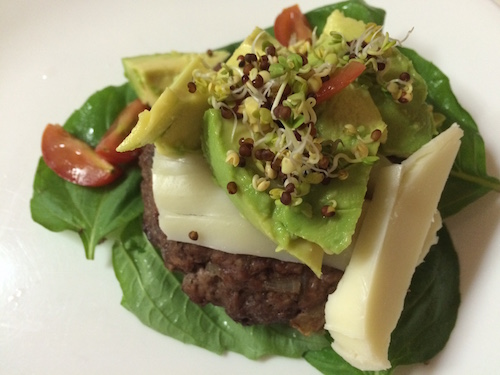
Home-made grass-fed burger, greens/basil, avocado, sprouts and cheese

Psychiatry is at an important juncture, with the current pharmacologically focused model having achieved modest benefits in addressing the burden of poor mental health worldwide. Although the determinants of mental health are complex, the emerging and compelling evidence for nutrition as a crucial factor in the high prevalence and incidence of mental disorders suggests that diet is as important to psychiatry as it is to cardiology, endocrinology, and gastroenterology. Evidence is steadily growing for the relation between dietary quality (and potential nutritional deficiencies) and mental health, and for the select use of nutrient-based supplements to address deficiencies, or as monotherapies or augmentation therapies.

I’m excited to share this groundbreaking publication, “Nutritional medicine as mainstream in psychiatry” which was published just last week in the mainstream journal Lancet. We have members of The International Society for Nutritional Psychiatry Research, also known as ISNPR to thank: Jerome Sarris, PhD, Alan C Logan, BA, Tasnime N Akbaraly, PhD, G Paul Amminger, MD, Vicent Balanzá-Martínez, MD, Marlene P Freeman, MD, Joseph Hibbeln, MD, Yutaka Matsuoka, MD, David Mischoulon, MD, Tetsuya Mizoue, MD, Akiko Nanri, MD, Daisuke Nishi, MD, Drew Ramsey, MD, Julia J Rucklidge, PhD, Almudena Sanchez-Villegas, PhD, Andrew Scholey, PhD, Kuan-Pin Su, MD, Felice N Jacka, PhD.

The abstract concludes as follows:

We present a viewpoint from an international collaboration of academics (members of the International Society for Nutritional Psychiatry Research), in which we provide a context and overview of the current evidence in this emerging field of research, and discuss the future direction. We advocate recognition of diet and nutrition as central determinants of both physical and mental health.

You may recognize some of these people from my prior writings and interviews.

  • Felice Jacka was interviewed in season 1 of the Anxiety Summit. Our topic was The Research: Food to prevent and treat anxiety and depression? She has been and still is very active in the nutrition/mental health/anxiety/depression research community
  • Julia Rucklidge recently did a fabulous TEDx talk called The surprisingly dramatic role of nutrition in mental health. She is also a very prolific researcher.

Dr. Marlene Freeman is also the author of an editorial, Nutrition and Psychiatry, published in the American Journal of Psychiatry in 2010.

It is both compelling and daunting to consider that dietary intervention at an individual or population level could reduce rates of psychiatric disorders. There are exciting implications for clinical care, public health, and research.

This is one of my favorite quotes! If you’ve ever heard me present I’m sure you’ll recognize it! This was in 2010 so we are making progress with getting nutrition recognized in the mainstream mental health world and I couldn’t be happier.

Here are a few select quotes from the new paper (which will shortly be released as an open-source document).

Mental disorders in general, and major depression and anxiety disorders in particular, account for a large burden of disability worldwide. Rapid urbanisation, and an overall transition from traditional lifestyles (concerning diet, physical activity, and social structures), which are some of the most pressing global and environmental issues of our time, have both been linked to increases in depression and other mental disorders

The mechanisms by which nutrition might affect mental health are, at least superficially, quite obvious: the human brain operates at a very high metabolic rate, and uses a substantial proportion of total energy and nutrient intake; in both structure and function (including intracellular and intercellular communication), it is reliant on amino acids, fats, vitamins, and minerals or trace elements.

The purpose of this Personal View is to provide a platform for robust debate in the specialty, particularly regarding the need to move towards a new integrated framework in psychiatry, whereby consideration of nutritional factors should be standard practice.

Diet and nutrition offer key modifiable targets for the prevention of mental disorders, having a fundamental role in the promotion of mental health. Now is time for the recognition of the importance of nutrition and nutrient supplementation in psychiatry. Nutritional medicine should now be considered as a mainstream element of psychiatric practice, with research, education, policy, and health promotion supporting this new framework.

This is so powerful! I commend the efforts of these authors and thank the researchers for all the groundwork which has led to where were are today…recognizing the very powerful connection between what we eat and how we feel. It’s exciting to be part of this movement!


Filed Under: Mental health Tagged With: anxiety, depression, diet, Jacka, Lancet, nutrition, nutritional, psychiatry

  • « Go to Previous Page
  • Page 1
  • Page 2
  • Page 3

Primary Sidebar

GABA QuickStart Homestudy

gaba quickstart homestudy

Free Report

9 Great Questions Women Ask about Food, Mood and their Health

You'll also receive a complimentary subscription to my ezine "Food, Mood and Gal Stuff"


Connect with me

Popular Posts

  • Amino Acids Mood Questionnaire from The Antianxiety Food Solution
  • The Antianxiety Food Solution Amino Acid and Pyroluria Supplements
  • Pyroluria Questionnaire from The Antianxiety Food Solution
  • Collagen and gelatin lower serotonin: does this increase your anxiety and depression?
  • Tryptophan for the worry-in-your-head and ruminating type of anxiety
  • GABA for the physical-tension and stiff-and-tense-muscles type of anxiety
  • The Antianxiety Food Solution by Trudy Scott
  • Seriphos Original Formula is back: the best product for anxiety and insomnia caused by high cortisol
  • Am I an anxious introvert because of low zinc and vitamin B6? My response to Huffington Post blog
  • Vagus nerve rehab with GABA, breathing, humming, gargling and key nutrients

Recent Posts

  • Her cravings for chips and peanut butter were triggered by stress: GABA ends cravings and reduces physical tension and fear of heights
  • It is truly miraculous to be able to move through life without crippling anxiety and panic
  • GABA and tryptophan combo provide immediate and noticeable relief for tremors and cervical dystonia in just 7 days
  • Red light therapy for back and neck pain, plantar fasciitis and low mood – a complement to the amino acids GABA, DPA and tryptophan
  • What do I use instead of Seriphos to help lower high cortisol that is affecting my sleep and making me anxious at night?

Categories

  • 5-HTP
  • AB575
  • Addiction
  • ADHD
  • Adrenals
  • Alcohol
  • Allergies
  • Alzheimer's disease
  • Amino Acids
  • Anger
  • Antianxiety
  • Antianxiety Food Solution
  • Antidepressants
  • Anxiety
  • Anxiety and panic
  • Autism
  • Autoimmunity
  • benzodiazapines
  • Bipolar disorder
  • Books
  • Caffeine
  • Cancer
  • Candida
  • Children/Teens
  • Collagen
  • Cooking equipment
  • Coronavirus/COVID-19
  • Cravings
  • Depression
  • Detoxification
  • Diabetes
  • Diet
  • DPA/DLPA
  • Drugs
  • EFT/Tapping
  • EMF
  • EMFs
  • Emotional Eating
  • Endorphins
  • Environment
  • Essential oils
  • Events
  • Exercise
  • Fear
  • Fear of public speaking
  • Fertility and Pregnancy
  • Fish
  • Food
  • Food and mood
  • Functional neurology
  • GABA
  • Gene polymorphisms
  • General Health
  • Giving
  • Giving back
  • Glutamine
  • Gluten
  • GMOs
  • Gratitude
  • Gut health
  • Heart health/hypertension
  • Histamine
  • Hormone
  • Hyperparathyroidism
  • Hypoglycemia
  • Immune system
  • Inflammation
  • Insomnia
  • Inspiration
  • Introversion
  • Joy and happiness
  • Ketogenic diet
  • Lithium orotate
  • Looking awesome
  • Lyme disease and co-infections
  • MCAS/histamine
  • Medication
  • Men's health
  • Mental health
  • Mercury
  • Migraine
  • Mold
  • Movie
  • MTHFR
  • Multiple sclerosis
  • Music
  • NANP
  • Nature
  • Nutritional Psychiatry
  • OCD
  • Osteoporosis
  • Oxalates
  • Oxytocin
  • Pain
  • Paleo
  • Parasites
  • Parkinson’s disease
  • PCOS
  • People
  • PMS
  • Postpartum
  • PTSD/Trauma
  • Pyroluria
  • Questionnaires
  • Real whole food
  • Recipes
  • Research
  • Schizophrenia
  • serotonin
  • SIBO
  • Sleep
  • Special diets
  • Sports nutrition
  • Stress
  • Sugar addiction
  • Sugar and mood
  • Supplements
  • Teens
  • Testimonials
  • Testing
  • The Anxiety Summit
  • The Anxiety Summit 2
  • The Anxiety Summit 3
  • The Anxiety Summit 4
  • The Anxiety Summit 5
  • The Anxiety Summit 6
  • Thyroid
  • Thyroid health
  • Toxins
  • Tryptophan
  • Tyrosine
  • Uncategorized
  • Vegan/vegetarian
  • Women's health
  • Yoga

Archives

  • May 2026
  • April 2026
  • October 2025
  • September 2025
  • August 2025
  • July 2025
  • June 2025
  • May 2025
  • April 2025
  • March 2025
  • February 2025
  • January 2025
  • November 2024
  • October 2024
  • September 2024
  • August 2024
  • July 2024
  • June 2024
  • May 2024
  • April 2024
  • March 2024
  • February 2024
  • January 2024
  • December 2023
  • November 2023
  • October 2023
  • September 2023
  • August 2023
  • July 2023
  • June 2023
  • May 2023
  • April 2023
  • March 2023
  • February 2023
  • January 2023
  • December 2022
  • November 2022
  • October 2022
  • September 2022
  • August 2022
  • July 2022
  • June 2022
  • May 2022
  • April 2022
  • March 2022
  • February 2022
  • January 2022
  • December 2021
  • November 2021
  • October 2021
  • September 2021
  • August 2021
  • July 2021
  • June 2021
  • May 2021
  • April 2021
  • March 2021
  • February 2021
  • January 2021
  • December 2020
  • November 2020
  • October 2020
  • September 2020
  • August 2020
  • July 2020
  • June 2020
  • May 2020
  • April 2020
  • March 2020
  • February 2020
  • January 2020
  • December 2019
  • November 2019
  • October 2019
  • September 2019
  • August 2019
  • July 2019
  • June 2019
  • May 2019
  • April 2019
  • March 2019
  • February 2019
  • January 2019
  • December 2018
  • November 2018
  • October 2018
  • September 2018
  • August 2018
  • July 2018
  • June 2018
  • May 2018
  • April 2018
  • March 2018
  • February 2018
  • January 2018
  • December 2017
  • November 2017
  • October 2017
  • September 2017
  • August 2017
  • July 2017
  • June 2017
  • May 2017
  • April 2017
  • March 2017
  • February 2017
  • January 2017
  • December 2016
  • November 2016
  • October 2016
  • September 2016
  • August 2016
  • July 2016
  • June 2016
  • May 2016
  • April 2016
  • March 2016
  • February 2016
  • January 2016
  • December 2015
  • November 2015
  • October 2015
  • September 2015
  • August 2015
  • July 2015
  • June 2015
  • May 2015
  • April 2015
  • March 2015
  • February 2015
  • January 2015
  • December 2014
  • November 2014
  • October 2014
  • September 2014
  • August 2014
  • July 2014
  • June 2014
  • May 2014
  • April 2014
  • March 2014
  • February 2014
  • January 2014
  • December 2013
  • November 2013
  • October 2013
  • September 2013
  • August 2013
  • July 2013
  • June 2013
  • May 2013
  • April 2013
  • March 2013
  • February 2013
  • January 2013
  • December 2012
  • November 2012
  • October 2012
  • August 2012
  • July 2012
  • June 2012
  • May 2012
  • April 2012
  • March 2012
  • February 2012
  • January 2012
  • December 2011
  • November 2011
  • October 2011
  • September 2011
  • August 2011
  • July 2011
  • June 2011
  • May 2011
  • April 2011
  • March 2011
  • February 2011
  • January 2011
  • December 2010
  • October 2010
  • September 2010
  • July 2010
  • May 2010
  • April 2010
  • March 2010
  • February 2010
  • January 2010
  • November 2009

Share the knowledge!

The above statements have not been evaluated by the Food and Drug Administration. Products listed in this website are not intended to diagnose, treat, cure or prevent any disease.

The information provided on this site is for informational and educational purposes only and is not intended as a substitute for advice from your physician or other health care professional. You should consult with a healthcare professional before starting or modifying any diet, exercise, or supplementation program, before taking or stopping any medication, or if you have or suspect you may have a health problem.


Copyright © 2026 Trudy Scott. All Rights Reserved. | Privacy | Terms and Conditions | Refund Policy | Medical Disclaimer

Free Report

9 Great Questions Women Ask about Food, Mood and their Health

You’ll also receive a complimentary subscription to my ezine “Food, Mood and Gal Stuff”