• Skip to primary navigation
  • Skip to main content
  • Skip to primary sidebar

everywomanover29 blog

Food, Mood and Women's Health – Be your healthiest, look and feel great!

  • Blog
  • About
  • Services
  • Store
  • Resources
  • Testimonials
  • The Book
  • Newsletter
  • Contact
  • Search this site

Archives for July 2017

Vitamin C, autoimmunity, food sensitivities & visual processing: Chronic Headache & Migraine Summit

July 9, 2017 By Trudy Scott 5 Comments

Guest post by Erin Knight, FDN-P

Did you know that nearly 60% of migraineurs report suffering from anxiety as well? I didn’t. That was one of many surprising things I discovered interviewing functional medicine experts and clinicians with decades of experience helping people overcome their headaches and migraines at the root cause for the Chronic Headache and Migraine Summit.

As much as the high correlation between migraines and anxiety surprised me, I could quickly see some reasons for the connection. People with frequent headaches report that managing life around headaches and missing out on things places an incredible strain on relationships and career that is nearly as bad as the physical pain. In other words, the mental agony of being sidelined by severe headaches is worse than the pain itself and contributes to the stress we carry around each day. But I don’t have to tell you that.

Is this meal going to cause a headache today? Am I going to be able to make it to my daughter’s choir concert? Is my boss going to pass me up for that project because I’ve been out with migraines so many days this year? If you are like me, these questions are always top of mind – creating a vicious circle between worrying – headaches – and more stress.

While it may seem quite obvious that there is this worrying and fear that migraineurs carry around with them each day, you may be surprised to learn from the experts speaking on the summit that there are many underlying root causes that can lead to both anxiety and headaches at a biological level. Some of these include:

  • Poor absorption of nutrients such as magnesium
  • Leaky gut and inflammation in the digestive tract that impacts the production of neurotransmitters like serotonin and hormones like estrogen
  • Emotional trauma in childhood (which is linked to a staggering increase in chronic conditions such migraines, autoimmune diseases, obesity and chronic fatigue

The good news is that there are real solutions to improve your health at a foundational level that can drastically improve or even resolve both headaches/migraines and anxiety at the root cause.

The experts in the Chronic Headache and Migraine Summit talk both about what has helped their clients recover their health as well as natural, simple ways to reduce the pain and intensity of headaches quickly and at home so you can go on with your life.

If you know you experience headaches due to weather changes, sinus stuffiness, neck tension, classic migraine or monthly hormonal changes – there are different relief techniques to employ for each. For example, Jay Davidson  highlights 3 tricks for clearing pressure out of your head when you feel a thunderstorm headache coming on – and they work in minutes! My favorite is to dab frankincense essential oil with your fingertips along the hairline in your neck. I can feel drainage start immediately with this simple technique!

If you think you’ve tried it all and been through the gamut of herbal and homeopathic remedies – I promise you will learn something that surprises you and makes a difference in your journey.

5 things I learned about hosting the Chronic Headache and Migraine Summit that might surprise you too:

  • There are many superstar supplements that can help people with different types of migraines beyond the typical riboflavin and magnesium citrate – for example, Vitamin C, different forms of magnesium, 5-HTP or tryptophan, and glutathione.
  • Migraines are being reclassified as an autoimmune disease. One autoimmune disease that frequently leads to migraines (and anxiety and miscarriages) is the clotting disease called Antiphospholipid Syndrome (featured on day 7 in Trudy Scott’s interview)
  • Food sensitivities may be more important than avoiding trigger foods
  • There is a visual processing disorder that affects 15% of the population and is simple to correct.
  • Toxicity from air and water pollution causes different types of chronic headaches and can be easily identified and reversed.

We are so thrilled to be able to offer this first-of-its-kind resource for people who want to stop managing their headaches, stop watching life pass them by from the sidelines and find natural relief options that really work.

Feel free to share something that surprises YOU from the above in the comments below.
Filed Under: Events, Migraine Tagged With: 5-HTP, antiphospholipid syndrome, anxiety, Autoimmunity, Erin Knight, food sensitivities, headache, migraine, tryptophan, visual processing, vitamin C

How to address rectal spasms with GABA, pelvic floor work, gluten removal and squats

July 7, 2017 By Trudy Scott 43 Comments

Last week I wrote about proctalgia fugax, a condition that leads to rectal spasms and sharp fleeting pain in the lower rectum or anus, often described as excruciating and agonizing. Proctalgia fugax actually means anal pain of unknown cause but I am seriously questioning this definition because as you’ll see below there are a number of possible root causes!

I have experienced this horrible pain and was not willing to use medications. Instead, because I could find no other solutions, I experimented with sublingual GABA during an episode and then figured out how to prevent a spasm at the first hint of pain.  You can read all the details on this blog: How GABA eases agonizing rectal pain and spasms in under 2 minutes

I promised to share part 2 with some root causes and other solutions but this article has grown because of all the wonderful feedback on the above blog. I’ve gathered some of it here as additional resources.

What is the pain like?

Here are some additional descriptions of the pain (sharing here so others can relate and feel comforted that this is not something weird):

  • horrible, shooting pain up the lower rectum/spine area
  • I have had this issue since I was about 45 (I’m now 60) at least a few times per year. It lasts usually 15 to 30 minutes and is extremely painful.
  • I have had this pretty much all my life. More common with my period and the spasm lasts for close to 1/2 hour or so. Very deep aching pain.
  • It stops me in my tracks. The pain is so bad sometimes I can’t breathe. It’s scary.

For some people the fear of having a spasm when out and about is extremely traumatic:

It seems no one in the mainstream medical field is concerned about it. It may be physically harmless but I know many people on other forums who live in constant fear of an attack – especially publicly. It is far from psychologically harmless.

I loved all the feedback: pleased to find out there is a name for it and feel comforted to know you’re not alone. Many have been worried and embarrassed to ask for help. And across the board you are all very interested in experimenting with GABA (or theanine or taurine) to see if it helps reduce or eliminate the spasms in the moment.

This GABA approach is a good one because it helps ease the pain and spasms and because stress is a common underlying factor.

Positive feedback about GABA helping

I am pleased to get some positive feedback that GABA is helping:

I used to get these right before my period – hormonally related for me. Interestingly, I have been taking Pharmagaba to help me sleep better and to help me relax…noticed that I haven’t had one of these “butt cramps” as I call them, in months.

And this wonderful result from someone else:

There were times I literally had to sleep in the tub for 5 hours at a time and keep refilling it hot water. Most excruciating pain I’ve ever had and I’ve birthed a child naturally! I’m taking GABA for other reasons and after reading this (facebook post), I realize I haven’t had this since!

Concerns about using GABA

A few of you had concerns about using GABA – for example: GABA causes palpitations for me but I will seriously consider trying it.

I wouldn’t use GABA if it causes palpitations or I would at least experiment with super small amounts. I mentioned I’ve used up to 500mg – for many people this is too much and even 100mg may help. Taurine may be an option too. If you can’t tolerate GABA or taurine the next section covers some other options and how to address some of the possible root causes.

And someone shared that when she took GABA in the past for anxiety it really seemed to make her more anxious:

Since I did not have the expected result for anxiety, I wonder if it would not be the best choice for me in this situation either . . . I would like to use something which works quickly, so the sublingual option would have been appealing. I have used l-theanine with good results (for anxiety) and have never tried taurine before.

I would not recommend GABA for someone who gets more anxious with it. When something does work, like theanine, I’d go with that approach. Or I would consider a very small dose of GABA and build up slowly.

There are some common patterns

When looking at common patterns many who responded on the GABA blog:

  • Have had a hysterectomy, vaginal prolapsing and/or abdominal surgeries like repair of a large umbilical hernia (but not everyone)
  • Have IBS and digestive issues, as well as food sensitivities
  • Identify with stress being a factor and relate to feeling “irritable, perfectionistic, meticulous, obsessional, tense, and anxious.” As I mentioned above, GABA addresses the spasms and also relieves some of the stress and tension. And by addressing low serotonin with tryptophan this eases the worry, irritability and perfectionism
  • Observe spasms during ovulation and/or when menstruating. GABA and tryptophan help with hormone balancing too

Medications for relief

Many find relief with medications but side-effects always need to be considered and it makes the most sense to get to the root causes and address them. Here are some mentioned:

  • Benzodiazepines: I would dissolve a tab under my tongue and it would help the pain within a few minutes. As I would expect benzodiazepines to help but open up another whole can of worms – with tolerance (and needing higher doses), addiction and withdrawal).
  • Naproxen (an NSAID) has side-effects as does a medication like Cyclobenzaprine (a muscle relaxer)

Addressing tight pelvic floor muscles and stress

We always want to get to the root causes of an issue and that is the most logical step. I reached out to the practitioners in my community to ask them how they help their clients and patients with this and what approaches they have used to end the spasm and pain. My colleague, Jessica Drummond, nutritionist and physical therapist, and an expert on female pelvic pain and women’s health, shares this advice:

For women with proctalgia fugax, the acute rectal spasm can come at any time unexpectedly. Usually, this is a sign that your pelvic floor muscles are tight and need to be relaxed. Avoid doing Kegel exercises, and see a physical therapist who is a pelvic floor specialist in order to release the muscles of your pelvic floor.

Additionally, it’s important to be sure that you’re finding time each day to fully relax, breathe deeply, and receive support from your family or friends. Often women with pelvic floor muscle spasm feel stressed or a lack of safety in their lives and bodies. So, working with a skilled professional to address your stress is key.

Lorraine shared these wonderful results with her pelvic floor therapy (on the GABA blog) and how much it’s been helping her:

Anxiety or stressful times was a huge trigger (I am still pretty type A) and I finally learned one reason among many that stress triggers it. My naturopathic doctor sent me to see the ‘guru’ in pelvic floor therapy–Caroline Allen in Ottawa. I suffered for years with anxiety and did not realize that I was still constantly holding my tummy in as an old habit to stress even now that I have overcome my anxiety disorder. She taught me how to relax the core which was a challenge at first and required much conscious thought–those muscles had many years of training to stay tight. I was also breathing incorrectly and she showed me that when our breathing is incorrect, our diaphragm is tight and then it pulls up and tightens the entire pelvic floor. I can often prevent or significantly decrease the severity of an attack by reminding myself to relax certain key muscles and breathing into the pelvic floor.

Gluten sensitivity, other food sensitivities and functional imbalances

Jessica also shares what can worsen pelvic floor function:

You may have nutrient deficiencies or [gluten or other] food sensitivities that can worsen your pelvic floor muscle function. And, if you have IBS or constipation that should be addressed by a nutrition professional who specializes in digestive or pelvic health.

Here is some of the feedback I received on the GABA blog, observing links to gluten sensitivity, other food sensitivities and functional imbalances:

  • Gluten sensitivity
    • I found that once I eliminated gluten from my diet, this almost eliminated the problem.
  • Other food sensitivities – keeping a food-stress-spasm log will help you figure this out
    • We have found a sensitivity to corn, coconut, and nightshades and eating these brings on an attack. I suspect gluten as well but don’t always get an attack the way corn will
    • Food too high in phytic acid is a huge trigger for me…I avoid nuts like the plague
    • I do have gluten intolerance, and have been gluten free since 2009. I also stay away from dairy, all grains, and eggs. Recently I went off of all nightshades and on a lectin free diet. I haven’t seen any difference yet, and it has been over a month, but then again I haven’t had a spasm lately either. Not sure if that is a coincidence or not.
    • I have discovered that the following foods bring it on the next day: gluten, onions, citrus, especially orange juice, and black tea. Staying away from these foods has made a huge difference, but I still get episodes, which makes me think there’s another trigger I haven’t discovered
  • Any functional imbalance
    • I’ve recently been seeing a new naturopathic doctor who addressed SIBO, hormone imbalance as well as a stubborn parasite. My attacks most often occurred in correlation with constipation, digestive upset and ovulation pain (I had low zinc and low progesterone). Addressing all three factors has helped.

Other possible factors that should be considered: low magnesium, low potassium, low serotonin, low vitamin D, low zinc and dehydration, and look at drug-induced nutrient depletions from the BCP, fluroquinolones and proton pump inhibitors.

Jessica provides a comprehensive overview in this article: Physical Therapy and Nutrition: A Powerful Combination To Heal Pelvic Pain. It’s written for health professionals but is an excellent overview for anyone.

Some other possible solutions

I received so much wonderful feedback on the GABA blog that I’ve gathered these other possible solutions into a list:

  • Skullcap and valerian for mild symptoms
  • Designs for Health Gastromend, a product that is healing for entire GI tract helps in 15 minutes. Drinking Aloe juice may be helping
  • Sitting on the toilet and pushing down like with a bowel movement [this doesn’t feel good when I do it] or sitting on my foot to apply upward pressure before the spasm gets to deep will generally shorten the duration. I have found that stretching and holding the stretch for a few minutes will ease the intensity and duration of the spasm.
  • Nothing seems to help me except for a really hot heating pad. It usually takes about 20 minutes or a little longer for the spasms to go away

Squats, reflexology and downward dog for immediate relief

I also received these solutions that provide immediate relief while you’re figuring out and addressing the bigger root causes:

  • My gastroenterogist recommended going into a deep squat when the spasm starts. I tried and it worked!
  • I rub the inner ankle area (above the bone) in an upward motion – both sides. I rub as hard as I can. It takes a few minutes of rubbing but the pain reduces almost immediately. I went to a foot reflexologist and she said that this area relates to the rectum.
  • Downward dog yoga pose

I appreciate all the wonderful feedback on the GABA blog and the opportunity to share this so more of us get answers more quickly! Too often we think it’s just us but I encourage seeking solutions no matter what weird quirks we think we have!

I have one more article to share on the topic so stay tuned for part 3 with an exercise that strengthens the pelvic area and reverses rectal spasms.

Feel free to share what’s worked for you, what your possible triggers are and if GABA or any of these approaches resonate with you.

Filed Under: GABA Tagged With: anal, anus, anxiety, cramp, food senistivities, GABA, gluten, menstruation, pain, pelvic floor, Proctalgia fugax, rectal spasm, stress, taurine

Astragalus reduces anxiety, lowers cortisol, boosts immunity and provides neuroprotection

July 5, 2017 By Trudy Scott 19 Comments

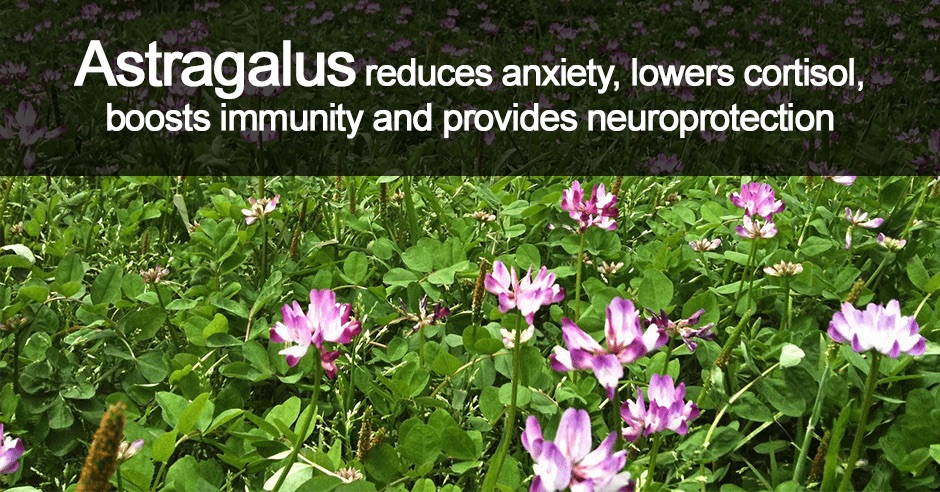
Astragalus is a herb that is well recognized for it’s immune boosting benefits and David Christopher, one of the experts on Immune Defense Summit, shares that it’s his favorite herb for protecting the immune system.

We know the immune system plays a role in anxiety and depression. I’m sure you’ve heard the term psychoneuroimmunology: the study of the interaction between psychological processes and the nervous and immune systems of the human body. So I went searching to see if this herb has any evidence for reducing anxiety and I wasn’t disappointed

It was encouraging to discover very recent research that supports that it has benefits for reducing anxiety and that it offers neuroprotection.

In an animal Alzheimer’s disease study published in 2016, Neuroprotection and anxiety like behavior reduction of Allium hirtifolium and Astragalus hamosus in the Aβ-injected rat it was shown that oral administration of both Allium hirtifolium and Astragalus hamosus decreased anxiety-like behavior.

The results of this study also revealed

potential neuroprotective properties of Allium hirtifolium and Astragalus hamosus as herbal remedies that could play a role in fostering healthy aging and be considered as useful candidates in decreasing Alzheimer’s disease related symptoms.

David doesn’t cover the above this in his interview so I’m sharing this here to provide you with some context on the importance of supporting the immune system beyond colds and flu.

This is what David does say about astragalus in his interview with Immune Defense Summit host Jonathan Landsman:

I think it is the number one herb for protecting the immune system. And the nice thing about astragalus is it’s a tonic. And tonics are substances that will go either way – if you’ve got over-functioning or if you’ve got under-functioning – it will go whatever the body needs. They also call them adaptogens.

Because astragalus is an adaptogen, it is one of many herbs that can be used to support the HPA axis, thereby helping to reduce high cortisol, and hence anxiety via another mechanism. This paper, Effect of hypothalamic-pituitary-adrenal axis alterations on glucose and lipid metabolism in diabetic rats, reports that astragalus may improve HPA axis functioning and aid in the treatment of diabetes by lowering blood sugar and high levels of corticosterone (the rat version of cortisol).

David goes on to share that astragalus does a lot of things for the immune system:

It actually increases the interferon which is the chemical message that the immune system uses to communicate between the cells.

One of the things that astragalus does is it stimulates the production of and activity of the macrophage, the part of the immune system that gobbles up impurities, so it’s nonspecific. And it tends to last for a long, long period of time. They’ve done the studies showing that when you take astragalus, it immediately affects your immune system (within six hours). And it’ll last 72 hours. So it’s fast-working and it’ll last a long time.

I can’t think of anything in the medical profession that has as many benefits as astragalus has. Nothing. Astragalus is my favorite herb for the immune system.

David shares more about astragalus and other immune boosting herbs like echinacea (which also happens to help with reducing anxiety) on the Immune Defense Summit which runs July 24-31.

I do hope you can join us to hear from many experts on various topics related to immunity, many of which have a direct connection to anxiety, mood and overall health.

Click here to register

Have you used astragalus with good results? For stress and anxiety? To help lower high cortisol? For immune-boosting? For cognition?

Filed Under: Events Tagged With: anxiety, astragalus, high cortisol, Immune Defense Summit, immune-boosting, immunity, neuroprotection, stress

  • « Go to Previous Page
  • Page 1
  • Page 2

Primary Sidebar

GABA QuickStart Homestudy

gaba quickstart homestudy

Free Report

9 Great Questions Women Ask about Food, Mood and their Health

You'll also receive a complimentary subscription to my ezine "Food, Mood and Gal Stuff"


Connect with me

Popular Posts

  • Amino Acids Mood Questionnaire from The Antianxiety Food Solution
  • The Antianxiety Food Solution Amino Acid and Pyroluria Supplements
  • Pyroluria Questionnaire from The Antianxiety Food Solution
  • Collagen and gelatin lower serotonin: does this increase your anxiety and depression?
  • Tryptophan for the worry-in-your-head and ruminating type of anxiety
  • GABA for the physical-tension and stiff-and-tense-muscles type of anxiety
  • The Antianxiety Food Solution by Trudy Scott
  • Seriphos Original Formula is back: the best product for anxiety and insomnia caused by high cortisol
  • Am I an anxious introvert because of low zinc and vitamin B6? My response to Huffington Post blog
  • Vagus nerve rehab with GABA, breathing, humming, gargling and key nutrients

Recent Posts

  • Her cravings for chips and peanut butter were triggered by stress: GABA ends cravings and reduces physical tension and fear of heights
  • It is truly miraculous to be able to move through life without crippling anxiety and panic
  • GABA and tryptophan combo provide immediate and noticeable relief for tremors and cervical dystonia in just 7 days
  • Red light therapy for back and neck pain, plantar fasciitis and low mood – a complement to the amino acids GABA, DPA and tryptophan
  • What do I use instead of Seriphos to help lower high cortisol that is affecting my sleep and making me anxious at night?

Categories

  • 5-HTP
  • AB575
  • Addiction
  • ADHD
  • Adrenals
  • Alcohol
  • Allergies
  • Alzheimer's disease
  • Amino Acids
  • Anger
  • Antianxiety
  • Antianxiety Food Solution
  • Antidepressants
  • Anxiety
  • Anxiety and panic
  • Autism
  • Autoimmunity
  • benzodiazapines
  • Bipolar disorder
  • Books
  • Caffeine
  • Cancer
  • Candida
  • Children/Teens
  • Collagen
  • Cooking equipment
  • Coronavirus/COVID-19
  • Cravings
  • Depression
  • Detoxification
  • Diabetes
  • Diet
  • DPA/DLPA
  • Drugs
  • EFT/Tapping
  • EMF
  • EMFs
  • Emotional Eating
  • Endorphins
  • Environment
  • Essential oils
  • Events
  • Exercise
  • Fear
  • Fear of public speaking
  • Fertility and Pregnancy
  • Fish
  • Food
  • Food and mood
  • Functional neurology
  • GABA
  • Gene polymorphisms
  • General Health
  • Giving
  • Giving back
  • Glutamine
  • Gluten
  • GMOs
  • Gratitude
  • Gut health
  • Heart health/hypertension
  • Histamine
  • Hormone
  • Hyperparathyroidism
  • Hypoglycemia
  • Immune system
  • Inflammation
  • Insomnia
  • Inspiration
  • Introversion
  • Joy and happiness
  • Ketogenic diet
  • Lithium orotate
  • Looking awesome
  • Lyme disease and co-infections
  • MCAS/histamine
  • Medication
  • Men's health
  • Mental health
  • Mercury
  • Migraine
  • Mold
  • Movie
  • MTHFR
  • Multiple sclerosis
  • Music
  • NANP
  • Nature
  • Nutritional Psychiatry
  • OCD
  • Osteoporosis
  • Oxalates
  • Oxytocin
  • Pain
  • Paleo
  • Parasites
  • Parkinson’s disease
  • PCOS
  • People
  • PMS
  • Postpartum
  • PTSD/Trauma
  • Pyroluria
  • Questionnaires
  • Real whole food
  • Recipes
  • Research
  • Schizophrenia
  • serotonin
  • SIBO
  • Sleep
  • Special diets
  • Sports nutrition
  • Stress
  • Sugar addiction
  • Sugar and mood
  • Supplements
  • Teens
  • Testimonials
  • Testing
  • The Anxiety Summit
  • The Anxiety Summit 2
  • The Anxiety Summit 3
  • The Anxiety Summit 4
  • The Anxiety Summit 5
  • The Anxiety Summit 6
  • Thyroid
  • Thyroid health
  • Toxins
  • Tryptophan
  • Tyrosine
  • Uncategorized
  • Vegan/vegetarian
  • Women's health
  • Yoga

Archives

  • May 2026
  • April 2026
  • October 2025
  • September 2025
  • August 2025
  • July 2025
  • June 2025
  • May 2025
  • April 2025
  • March 2025
  • February 2025
  • January 2025
  • November 2024
  • October 2024
  • September 2024
  • August 2024
  • July 2024
  • June 2024
  • May 2024
  • April 2024
  • March 2024
  • February 2024
  • January 2024
  • December 2023
  • November 2023
  • October 2023
  • September 2023
  • August 2023
  • July 2023
  • June 2023
  • May 2023
  • April 2023
  • March 2023
  • February 2023
  • January 2023
  • December 2022
  • November 2022
  • October 2022
  • September 2022
  • August 2022
  • July 2022
  • June 2022
  • May 2022
  • April 2022
  • March 2022
  • February 2022
  • January 2022
  • December 2021
  • November 2021
  • October 2021
  • September 2021
  • August 2021
  • July 2021
  • June 2021
  • May 2021
  • April 2021
  • March 2021
  • February 2021
  • January 2021
  • December 2020
  • November 2020
  • October 2020
  • September 2020
  • August 2020
  • July 2020
  • June 2020
  • May 2020
  • April 2020
  • March 2020
  • February 2020
  • January 2020
  • December 2019
  • November 2019
  • October 2019
  • September 2019
  • August 2019
  • July 2019
  • June 2019
  • May 2019
  • April 2019
  • March 2019
  • February 2019
  • January 2019
  • December 2018
  • November 2018
  • October 2018
  • September 2018
  • August 2018
  • July 2018
  • June 2018
  • May 2018
  • April 2018
  • March 2018
  • February 2018
  • January 2018
  • December 2017
  • November 2017
  • October 2017
  • September 2017
  • August 2017
  • July 2017
  • June 2017
  • May 2017
  • April 2017
  • March 2017
  • February 2017
  • January 2017
  • December 2016
  • November 2016
  • October 2016
  • September 2016
  • August 2016
  • July 2016
  • June 2016
  • May 2016
  • April 2016
  • March 2016
  • February 2016
  • January 2016
  • December 2015
  • November 2015
  • October 2015
  • September 2015
  • August 2015
  • July 2015
  • June 2015
  • May 2015
  • April 2015
  • March 2015
  • February 2015
  • January 2015
  • December 2014
  • November 2014
  • October 2014
  • September 2014
  • August 2014
  • July 2014
  • June 2014
  • May 2014
  • April 2014
  • March 2014
  • February 2014
  • January 2014
  • December 2013
  • November 2013
  • October 2013
  • September 2013
  • August 2013
  • July 2013
  • June 2013
  • May 2013
  • April 2013
  • March 2013
  • February 2013
  • January 2013
  • December 2012
  • November 2012
  • October 2012
  • August 2012
  • July 2012
  • June 2012
  • May 2012
  • April 2012
  • March 2012
  • February 2012
  • January 2012
  • December 2011
  • November 2011
  • October 2011
  • September 2011
  • August 2011
  • July 2011
  • June 2011
  • May 2011
  • April 2011
  • March 2011
  • February 2011
  • January 2011
  • December 2010
  • October 2010
  • September 2010
  • July 2010
  • May 2010
  • April 2010
  • March 2010
  • February 2010
  • January 2010
  • November 2009

Share the knowledge!

The above statements have not been evaluated by the Food and Drug Administration. Products listed in this website are not intended to diagnose, treat, cure or prevent any disease.

The information provided on this site is for informational and educational purposes only and is not intended as a substitute for advice from your physician or other health care professional. You should consult with a healthcare professional before starting or modifying any diet, exercise, or supplementation program, before taking or stopping any medication, or if you have or suspect you may have a health problem.


Copyright © 2026 Trudy Scott. All Rights Reserved. | Privacy | Terms and Conditions | Refund Policy | Medical Disclaimer

Free Report

9 Great Questions Women Ask about Food, Mood and their Health

You’ll also receive a complimentary subscription to my ezine “Food, Mood and Gal Stuff”