• Skip to primary navigation
  • Skip to main content
  • Skip to primary sidebar

everywomanover29 blog

Food, Mood and Women's Health – Be your healthiest, look and feel great!

  • Blog
  • About
  • Services
  • Store
  • Resources
  • Testimonials
  • The Book
  • Contact
  • Search this site

zinc

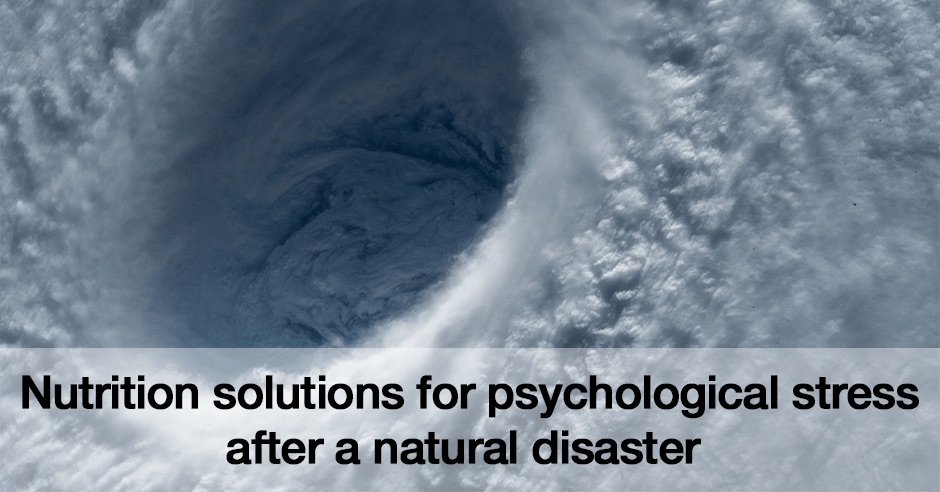
Nutrition solutions for psychological stress after a natural disaster

September 8, 2017 By Trudy Scott 8 Comments

There is much that can be done nutritionally in support of psychological stress and PTSD (post-traumatic stress disorder) during and after a natural disaster. I’ve written this blog for you if you’ve been impacted by the recent storm and flooding due to Hurricane Harvey in the Houston area (the pictures of people returning home are so sad), and for everyone impacted by Irma and about to be impacted by Irma. This is for you if

  • you had to be rescued and had to evacuate your home, are displaced and/or saw neighbors in trouble, have lost your belongings and home – and anything else that may have happened during this natural disaster
  • you have been involved in on-the-ground rescue efforts or working online helping with rescue efforts and you have working long hours, not getting enough sleep and likely not eating well
  • you had a loved one in trouble and feared for their lives
  • and if you’re on observer feeling distressed by what you have witnessed

You may be feeling on edge and anxious about the future, fearful about losing your job, worried about expenses and the chemical soup of flood waters you were exposed to, exhausted and yet not able to sleep, feeling overly emotional and weepy, having nightmares and flashbacks and feeling frazzled.

I wasn’t even in Texas and my contribution was a very small one, helping online rescue efforts from Australia via a volunteer rescue group created by McCall McPherson, but I felt really burned out after just a few days and quite distressed by some of the rescues we were trying to facilitate. I have had to really walk my talk and implement some of what I’m sharing here even though I would consider myself resilient because my nutrient balance is good.

B-Complex for everyone

My first recommendation is a B complex and if this is all that can be managed it would be my first choice for everyone. In fact, if you live in an area prone to hurricanes, flood, fires etc. I’d recommend being on a B complex all the time.

My colleagues Bonnie Kaplin and Julia Rucklidge published this paper in 2015: A randomised trial of nutrient supplements to minimise psychological stress after a natural disaster. They share that:

After devastating flooding in southern Alberta in June 2013, we attempted to replicate a New Zealand randomised trial that showed that micronutrient (minerals, vitamins) consumption after the earthquakes of 2010-11 resulted in improved mental health. Residents of southern Alberta were invited to participate in a study on the potential benefit of nutrient supplements following a natural disaster.

Fifty-six adults aged 23-66 were randomised to receive one of the following for 6 weeks:

  1. vitamin D as a single nutrient
  2. a B-Complex formula or a
  3. broad-spectrum mineral/vitamin formula

The study participants monitored changes in depression, anxiety and stress via self-reporting. All of the above 3 groups showed substantial decreases on all measures. However, those consuming the B-Complex and the broad-spectrum mineral/vitamin formula showed significantly greater improvement in stress and anxiety compared with those consuming the vitamin D alone, with the results being similar for the group using the B-Complex and the broad-spectrum mineral/vitamin formula.

The authors report that:

The use of nutrient formulas with multiple minerals and/or vitamins to minimise stress associated with natural disasters is now supported by three studies.

Further research should be carried out to evaluate the potential population benefit that might accrue if such formulas were distributed as a post-disaster public health measure.

I would love to see either a B-Complex or broad-spectrum mineral/vitamin formula be given out to everyone as part of relief efforts for all natural disasters.

The B-Complex used in the study was made by Douglas labs but other similar B-Complex products would be fine too.  I happen to use Designs for Health B Supreme with my clients.

The broad-spectrum mineral/vitamin formula in the study was EmpowerPlus made by TrueHope.
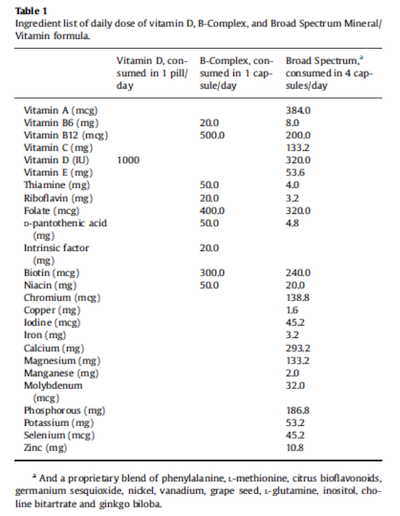
From: A randomised trial of nutrient supplements to minimise psychological stress after a natural disaster

Vitamin D based on levels

In the above study, some participants in the vitamin D group did see benefits and it’s likely to have been those who were low in vitamin D at the time of the flooding since other research supports a connection between low vitamin D and anxiety and depression. I like to see vitamin D results before recommending supplementation.

Serotonin, GABA and endorphin support based on symptoms and a trial

As well as a B-complex and/or vitamin D, I’d also consider the following neurotransmitter support on a case by case basis, and after doing the amino acid questionnaire and a trial of each amino acid:

  • Serotonin support with Lidtke tryptophan or Lidtke Tryptophan Complete or Lidtke Combat Stress (a tryptophan product formulated for stress support) – especially if you’re feeling sad, worried, resolving to try and feel positive, imagining the worst, feeling fearful and having problem sleeping. I blogged about tryptophan products last week.
  • GABA support for physical tension and an increased need to self-medicate with alcohol in order to stay calm. New research shows that reduced plasma levels of GABA observed in PTSD could be considered as a possible biomarker for PTSD severity. This is not something I typically look at but it’s something I will be considering going forward. I blogged about some specific GABA products earlier this week.
  • Endorphin support with Lidtke DPA if you’re feeling especially emotional and weepy.

Serotonin and GABA play a role in stress resilience and when we have enhanced stress resilience mechanisms we have the ability to adapt more successfully to stressful situations like natural disasters.    

Additional adrenal support if needed

The adrenals are part of the hypothalamic-pituitary axis (HPA) and also need nutritional support after stress and trauma. I recommend a good adrenal support product with rhodiola, Vitamin C, pantothenic acid, eleuthero and ashwagandha. Designs for Health Adrenotone is a good product.

If it’s known that cortisol levels are high then the addition of Seriphos and/or a lactium product (such as Biotics Research De-Stress) helps to lower high cortisol, reduce anxiety and help with insomnia.

Additional pyroluria support if needed

It is well known that pyroluria symptoms are made worse in times of heightened stress. If you are on protocol for pyroluria, additional zinc and vitamin B6/P5P is likely going to be needed short-term too.

Essential oils

Essential oils like lavender and citrus are wonderful for the stress, anxiety and sleepless nights. An animal study reports that passively inhaling orange essential oil could potentially reduce PTSD symptoms in humans

 

Some other considerations include the following once things start to get back to some kind of normal:

  • trying to eat as well as you can and not skipping meals
  • trying to get enough sleep (the GABA and tryptophan support mentioned above can help in this area)
  • getting outside into nature as soon as it’s possible. If this is impossible right away, simply looking at images of nature can help you feel calmer, less irritable, and more empathetic. I hope you enjoy this flower photograph I took in Australia!   
  • meditating and doing yoga
  • community support and helping others if you’re able to
  • getting a cat or dog (veterans who were given pet dogs showed significant improvement in their PTSD symptoms)

I would recommend a similar approach for any natural disaster or in fact for any other traumatic event, always working individually with each person.  

If you have found some approach to be particularly useful for you please do share it.

And if you have any connections for getting this information into the hands of public health officials and non-profits offering aid please let me know. I feel that protocols similar to this one need to be made available to everyone subjected to a natural disaster.

I wish you and your families much healing and a speedy recovery.

Additional resources

I added these additional resources after September 20, 2017:

  • How to Stay Safe in a Disaster: Emergency Preparedness List by Katie Wells on the Wellness Mama blog. She says this: “The point of putting together an emergency preparedness plan is not to create any undue anxiety, but to help alleviate some of the stress of a disaster in case it hits.”
  • What to Do After a Hurricane: The Dangers Lurking Beyond the Storm by Dr. Jill Carnahan. This blog addresses both mold and bacteria in flood waters, and practical steps on how to deal with these issues.  Mold needs to be taken seriously – I interviewed Dr. Carnahan on the topic of mold toxicity and anxiety during one the Anxiety Summits – Is Toxic Mold the Hidden Cause of Your Anxiety?
  • My Flood Story and What to Do About Mold by Dave Asprey. This blog offers practical solutions on how best to do clean-up after a flood and the dangers of mold. He is also very kindly making his documentary, Moldy available for viewing at no charge.
  • Beyond Meditation: Making Mindfulness Accessible for Everyone by Mira Dessy and Kerry McClure. Mira is a dear friend whose home was flooded by Harvey and went I spoke to her last week she shared how much her meditation practice has been helping her.  I love that she has a book on the topic so that it can be shared far and wide to help those affected.
  • My book The Antianxiety Food Solution: How the Foods You Eat Can Help You Calm Your Anxious Mind, Improve Your Mood and End Cravings, available in major books stores and via online stores like Amazon. You can find out more here.
  • I am also the host of The Anxiety Summit, now in it’s 4th season and called a “bouquet of hope”. It’s a wealth of information on all topics related to anxiety. More on the Anxiety Summit here. 

If you have links to additional useful resources please let me know and I’ll add them.
Filed Under: PTSD/Trauma, Stress Tagged With: essential oils, floods, GABA, Houston, Hurricane Harvey, lactium, natural disaster, nature, nutrition solutions, psychological stress, PTSD, seriphos, stress, tryptophan, vitamin B6, zinc

Low zinc and low GABA contributing to anxiety in children and women

October 7, 2016 By Trudy Scott 18 Comments

low-zinc-gaba-video

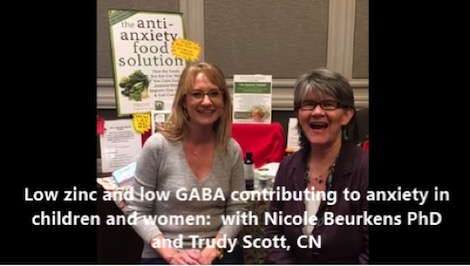
Dr. Nicole Beurkens and I sit down together at the end of the recent Integrative Medicine for Mental Health conference to talk about anxiety and the impact of both low zinc and low GABA. Nicole shares her perspectives on working with children and I share what I see with the adult women I work with. We don’t specifically talk about older adults or men but it’s applicable to everyone.

Dr. Nicole Beurkens PhD, a special educator, clinical psychologist and nutritionist, is author of the new book Life Will Get Better: Simple Solutions for Parents of Children with Attention, Anxiety, Mood and Behavior Challenges

In case you’re new to my community, this is my book: The Antianxiety Food Solution: How the Foods You Eat Can Help You Calm Your Anxious Mind, Improve Your Mood, and End Cravings

Here are some of the highlights from our conversation about zinc:

  • Zinc is a very common deficiency and can be a contributing factor in both anxiety and ADHD
  • Zinc is depleted by sugar consumption, stress and exercise
  • Zinc sulfate used as a zinc challenge is one way to determine your zinc status
  • Nicole’s response to the zinc challenge: fuzzy, strong yukky taste – which means good zinc levels
  • Most people coming to the booth had very little reaction to the zinc challenge – which means low zinc levels
  • Level 1, 2, 3 and 4 are used to figure out your zinc status (you can read about the zinc taste test here)
  • My response to the zinc challenge: metallic, gross, horrible and I got goosebumps – – which means good zinc levels
  • Nicole shares that most of kids and young adults at her clinic have level 1 or level 2 zinc status, and it’s an easy test to do with kids
  • Many people at the conference were on zinc and were surprised they were not tasting the zinc sulfate. Other than sugar consumption, stress and exercise, low HCl (stomach acid) can affect your absorption. I also found that many of these folks were on a gluten-free or Paleo or GAPs diet and eating a lot of nuts or using nut flours. Nuts are high in copper and this can counteract the zinc.
  • We talk about the importance of good quality zinc supplements and finding a zinc product and multi that is copper-free. Here are the products I recommend.

Then we talk about GABA Calm, a calming amino acid that we both love! Here are some of the highlights from this section:

  • It’s a lozenge/sublingual, is easy to take and helps in situations where the anxiety can quickly escalate into panic attacks. Nicole likes the peppermint flavor and finds many of the children and young adults she works with prefer the orange flavor. Personally I also prefer the orange flavor.
  • For adults, if you use wine at the end of the day to de-stress, you may be low in GABA and self-medicating, and using something like GABA-Calm often helps.
  • Moms will take their GABA Calm with them and use as needed and give to their kids if needed too.  
  • I share how effective it is for Lyme anxiety and how it can be used instead of benzodiazepines (I interviewed Trish about this on the recent Anxiety Summit)
  • GABA Calm can help when you’re on a benzodiazepine and even very severe anxiety or depression can be alleviated with diet and nutrients.
  • Nicole shares how common benzodiazepine prescriptions are in teens and young adults; and the issues with dependence and wanting to quit but not being able to. It can sometimes take years to reduce the medications.
  • I share about the first World Benzo Awareness Day on July 11 – so many people are in trouble and are not cautioned.

We were both so encouraged being at this conference and seeing so many physicians, psychiatrists, psychotherapists, psychiatric nurse practitioners and others practitioners who are really interested in learning more about these approaches. They are seeing the same issues we see with some of the medications (and not getting to the root cause of anxiety) and they are excited to expand their knowledge base. It’s just so exciting to see the pendulum swinging!

We both really appreciate the Integrative Medicine for Mental Health conference. If you’re a practitioner and haven’t attended it’s a must-attend event. If you were there you know what I mean. It was also super to meet so many of you after my talk and at my booth. If you’re not a practitioner do tell your doctor about it. Save the date for 2017: September 28 – October 1 in Orange County, California.

We did this as a live video feed on Facebook hence the references to posting questions and Facebook. It was also the end of the event and the people next to us were packing boxes and using a lot of tape so apologies for the weird noises.  

Feel free to share your results with zinc and GABA Calm and any questions you may have.

Filed Under: GABA Tagged With: anxiety, benzodiazepines, children, GABA, GABA Calm, Integrative Medicine for Mental Health conference, Nicole Beurkens, Trudy Scott, women, zinc

Zinc deficiency alters chick gut bacteria makeup and function

September 2, 2016 By Trudy Scott 11 Comments

chick-gut-mulfunction

A press release published by Cornell University shares research that has found that zinc deficiency alters gut bacteria makeup and function:

The researchers used broiler chickens in the study, partly due to their omnivorous appetites – which allowed the researchers to feed them purified diets – and because of their fatty acids and genetic similarities to humans.

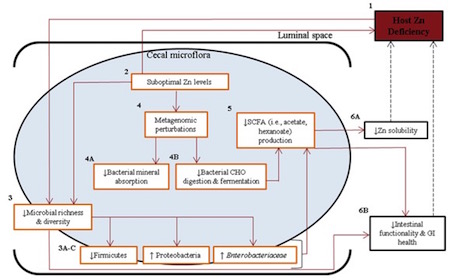
There is a great diagram in the actual study: Chronic Zinc Deficiency Alters Chick Gut Microbiota Composition and Function. It explains the proposed mechanisms by which a zinc-deficient gut microbiome may perpetuate a zinc-deficient state.

zinc-chick-diagram

Figure 8. Schematic diagram depicting proposed mechanisms by which a Zn [zinc] deficient gut microbiome may worsen a Zn deficient phenotype. Zn deficiency (1), caused by insufficient dietary Zn (2), induces a decrease in gut microbial diversity (3), and an outgrowth of bacteria particularly suited to low Zn conditions, leading to dysbiosis [3A–C]. Lack of dietary Zn also leads to alterations in the functional capacity of the microflora (4), causing multiple effects including decreased expression of pathways related to mineral (i.e., Zn) absorption (4A) and carbohydrate digestion and fermentation (4B). A decrease in the latter pathway may also cause a depression in the production of SCFAs [short chain fatty acids] (5), compounds responsible for improving the bioavailability of Zn. Altogether, these microbial effects may decrease Zn absorbability (6A) and disturb GI health (6B), thereby perpetuating a Zn deficient state. Red arrows and orange–lined boxes denote observations of this study, and dashed arrows and black–lined boxes describe published findings.

The above is shared here under the Creative Commons Attribution License and can be found here: Reed, S.; Neuman, H.; Moscovich, S.; Glahn, R.P.; Koren, O.; Tako, E. Chronic Zinc Deficiency Alters Chick Gut Microbiota Composition and Function. Nutrients 2015, 7, 9768-9784.

Zinc status is notoriously difficult to assess so I am fascinated by the findings of this Cornell University study suggesting

a simple new way to test for zinc deficiency by analyzing a patient’s fecal sample and seeing if the profile of gut bacteria matches the makeup one would expect in a zinc-deficient individual.

The authors suggest that with additional research this zinc stool test could become a noninvasive biomarker for zinc deficiency.

Zinc deficiency is common, affecting 25 percent of the world’s population, especially in the developing world.

Zinc deficiency plays a major role in anxiety and depression. Here is a recent paper on the connection between low serum zinc, high CRP (a marker of inflammation) and pre- and post-natal anxiety and depression: Lower Serum Zinc and Higher CRP Strongly Predict Prenatal Depression and Physio-somatic Symptoms, Which All Together Predict Postnatal Depressive Symptoms.

New research, soon to be published by the Journal of Neuroscience by researchers at the University of Auckland, shows the importance of zinc in autism. The study looks at how zinc can affect brain cell communication that is altered at the cellular level.

The researchers suggest this research may have applications for psychiatric disorders such as schizophrenia (and presumably anxiety and depression too).

I feel that we have an under-recognized opportunity to have a bigger impact on mental and physical health if we take zinc deficiency more seriously.

Have you had your zinc status assessed and do you supplement accordingly?

If you’re a practitioner, do you regularly check the zinc status of all your patients/clients?

Filed Under: Gut health Tagged With: anxiety, autism, depression, gut, Gut bacteria, microbiome, zinc, Zinc stool test

Tryptophan, red meat and baby steps for anxiety: the Brain Summit

May 1, 2016 By Trudy Scott 18 Comments

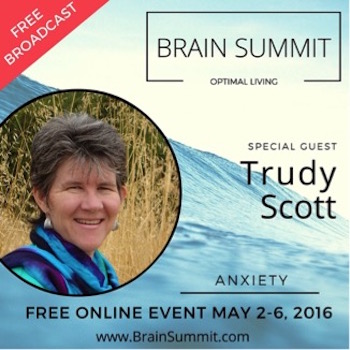
Just a quick reminder that the Brain Summit starts tomorrow, Monday, May 2nd.

brainsummit-trudy

Here are some snippets from my anxiety interview with host Erin Matlock. We started out talking about diet and grass-fed red meat and why it’s so beneficial if you have anxiety (and other mood problems):

…there’s a lot of research showing now that [a Western diet] diet is not good for so many conditions, and mental health is now coming into the research. And we know this, but to see it in the research is really beneficial. Dr. Felice Jacka did a great study in Australia that was one of the first studies that looked at anxiety and depression in women and found that the Western diet was associated with a higher risk for anxiety and depression. And this whole foods, traditional diet, that actually included grass-fed red meat, was more beneficial for anxiety and depression. And in her thesis, they actually looked at red meat thinking that they would find that red meat was actually detrimental. And, lo and behold, they found that grass-fed red meat was one of the most important predictors for good mental health. So a lot of people say, “I don’t eat red meat any more. I’m being healthy.” And in actual fact, not eating it is doing them harm.

So red meat is wonderful! And it needs to be grass fed because then you’re getting the good levels of the Omega-3s. The Omega-3 three profile of grass fed red meat is very similar to what you would find in salmon. Obviously, fish is great, so while fish like salmon or sardines are great as well, the reason I like the red meat is it’s something that most people enjoy eating. And as well as the Omega-3s, we’re getting the iron, and iron is a co-factor for making serotonin and making GABA, and it’s needed for energy and so many other functions in the body.

It’s also got zinc, and zinc is a common deficiency, way more common than we realize. And when you are anxious, you may have high copper level, and low zinc level. So getting those zinc levels up will push the copper down, and that can help with your anxiety, as well.

We also had a long discussion on serotonin and tryptophan/5-HTP:

…we often associate serotonin with depression. And a lot of people don’t realize that it’s very closely tied to anxiety, as well.  So we’ve got two types of anxiety when it comes to the brain chemicals. One is the low-serotonin type, and this is the anxiety in the head, where you’ve got the ruminating thoughts, and the busy mind, and the negative self-talk, and just this monkey mind that you can’t switch off — this worry, and sort of reprocessing things. And then we have the low-GABA kind of anxiety, where it’s in your physical body and you’re feeling stiff and tense, and you can feel it in your body, and you may feel it in your gut….

I have people do a questionnaire, and depending on how you score on that questionnaire, that’s a clue as to whether serotonin may be a factor. So all of those symptoms I’ve just mentioned, you would rate yourself on a scale of one to ten.  And then I use individual, targeted amino acids. So it’s a supplement, and the other things that obviously have an impact are food, and diet, and everything we just talked about. Getting exercise, getting outside in the light, all of those are factors.

But for quick, immediate results, and pretty profound results – people just say to me, “Could this really be happening so quickly?” that’s how quickly we get results, you know, within 30 seconds to two minutes they’re getting results – is to use these individual amino acids as supplements. And the reason they’re called “targeted” is because it’s targeted to your unique needs. Like when you do the questionnaire and it says, yes, you need some serotonin support, and then you would use either tryptophan or 5-HTP as a supplement. And again, targeted, because you need it, but also targeted to your unique biochemistry.

There’s a standard starting dose for tryptophan, which is 500 mg, while 5-HTP is 50 mg.

Be sure to tune into the interview with Debbie Hampton. She is the survivor of an acquired brain injury (from a pill overdose when trying to commit suicide) and the author of the upcoming book, Sex, Suicide, and Serotonin.  Her story and resilience is inspiring!  Here is Debbie’s wonderful answer to Erin’s question: “What advice would you give to someone who feels like it’s too late to do what they want to do? I’m already so deep in, there’s no way that I could possibly have the life that I wanted or do the work that I really wanted to do.”

debbie-hampton

It’s never too late. And those limitations, you’re putting on yourself. Those limitations are in your mind. If you think you can’t, and you think it’s too late, then it is. You’ve got to change your mind first and if your mind thinks you can, you’re halfway there.

My advice would be to start small … I’m not big on long-term plans. I’m big on a long-term bigger goal. But what you’ve got to do is you’ve got to take a little step in the right direction towards that goal, and when you get there, you look around and you say, “Okay, what is my next best step?” And when you get to that next step, there may be opportunities that you can see that you couldn’t even see back here.

So you’ve got to take it one step at a time and get there and assess your opportunities. And then figure out the next best step, and then get there and figure out the next one. And it may be a zigzag path, and you may even have to go back sometimes, regress, but as long as you just keep moving forward and keep positive momentum and positive thoughts and be your own cheerleader, and encourager, and supporter— be your own friend—that is the most important thing.

I could not agree more – there is an answer, you can do whatever you set out to do and just take baby steps!

You can register for the Brain Summit here:
http://www.brainsummit.com?orid=45505&opid=12


Filed Under: Amino Acids, Events, Food and mood, Real whole food, Tryptophan Tagged With: 5-HTP, anxiety, brain summit, Erin Matlock, iron, red meat, serotonin, Trudy Scott, tryptophan, zinc

Zinc/copper balance in autism/pyroluria: Dr. Usman

January 14, 2016 By Trudy Scott 23 Comments

This is such a great segment on zinc/copper balance in pyroluria and autism so I really want to share it. Dr. Usman was one of many excellent speakers on the Autism Intensive online event.

An excerpt from Dr. Usman’s interview: Optimizing Metabolic-Immune Communication and Function

Dr. Usman: …. In the 70s, they were breaking down individuals with schizophrenia into three phenotypes: low histamine, high histamine and pyrolurics. At the time this phenotype of pyroluria in schizophrenia was manifest as a B6, zinc deficiency and when they were given high doses of B6 or zinc, their schizophrenia improved.

Dr. Schwartz: So that was kind of your first exposure to nutritional vitamins.

Dr. Usman: Yeah. I was treating patients with depression, bipolar disorder, schizophrenia, mental illness with these various protocols that Carl Pfeiffer had developed. I started doing research in copper/zinc imbalances. We had over 500 patients with autism involved in a study that we look at there. We look at plasma zinc and serum copper ratios. When you ratio plasma zinc to serum copper what you’re looking for is a ratio of 1 to 1.

Dr. Schwartz: Balance is more important than the absolute number.

Dr. Usman: Correct.

Dr. Schwartz: Another concept that takes us outside the traditional lab values?

Dr. Usman: Exactly. You’re not looking at a lab number, but you’re looking at a ratio.

Dr. Schwartz: So both zinc and copper could be in the normal range, but the ratio can be way off. That’s something I’ve certainly seen in my patients.

Dr. Usman: Correct. When the ratio of copper and zinc is off, we want that ratio to be one-to-one. And patients with inflammatory issues and patients with various autoimmune issues and sick patients in general, their ratio ends up being disturbed. We found out in the autistic population was that 99% of them, which is a very low P value in statistics.

Dr. Schwartz: Zero, zero, zero, zero.

Dr. Usman: Zero, zero, zero, zero. 99% of them had low zinc, high copper and they had a high ratio of copper to zinc – of over 1.2.

Dr. Schwartz: So very dramatic.

Dr. Usman: Yeah. Then Dr. Walsh, who headed the Pfeiffer treatment center, had a theory that this was due to defect in a protein called metallothionein. Metallothionein is a protein that, in a way, transports copper and zinc through the body.


Filed Under: Autism, Events, Pyroluria Tagged With: autism intensive, copper, Dr. Usman, zinc

The Antianxiety Food Solution Amino Acid and Pyroluria Supplements

June 26, 2015 By Trudy Scott 674 Comments

antianxiety food solution and amino acids

Here are my amino acid and pyroluria supplement recommendations. These are the products I use with my one-one clients and those doing my online group programs.

You can find most of these products in my online store at Fullscript – you’ll find details here on how to set up and account (you just need to do this once) and make your purchase.

Purchase products through our Fullscript virtual dispensary.

Questionnaires and information

My publisher would not allow me to make specific product recommendations in my book so this list is a courtesy to those of you who have purchased the book.

If you do not have my book I highly recommend getting it and reading it before jumping in to taking supplements: The Antianxiety Food Solution – How the Foods You Eat Can Help You Calm Your Anxious Mind, Improve Your Mood, and End Cravings

There is a complete chapter on the amino acids and one for pyroluria, plus information on real whole food, sugar and blood sugar, gluten, digestion and much more.

Once you have read it you can use these blogs as summaries (they do contain some information that is not in my book).

Here is the Amino Acids Mood Questionnaire from The Antianxiety Food Solution and additional information on Anxiety and targeted individual amino acid supplements: a summary

Please read and follow these Amino Acid Precautions

Here is the Pyroluria Questionnaire from The Antianxiety Food Solution and additional information on Pyroluria, social anxiety, introversion: a summary

Here is a useful post: Pyroluria/social anxiety protocol: why aren’t I getting results? (trouble-shooting checklist)

Supplements for Low Blood Sugar (anxious, shaky between meals and intense sugar cravings)

Glutamine helps with low blood sugar, may help eliminate the strong desire for something sweet when opened on to the tongue, and is very healing for the digestive system

  • Pure Encapsulations L-Glutamine 500mg:  L-glutamine (free-form) 500 mg, vitamin C (as ascorbyl palmitate) 5 mg. The capsules can be swallowed or the capsule can be opened on to the tongue
  • Designs for Health Glutamine Powder: This is a powdered glutamine that you can use right on your tongue or even mixed in water. The taste is quite pleasant.

Supplements for low GABA (stiff and tense muscles, anxious, panic attacks, use sugar/wine to relax)

GABA helps to raise GABA levels.  I find GABA to be most effective when taken sublingually or opened on to the tongue. I find GABA to be more effective than pharmaGABA for most of my clients. I don’t ever use Phenibut (which the FDA recently removed from non-prescription use).  Here are some GABA products that I like and use with clients.

Source Naturals GABA Calm (lozenges): This is a pleasant-tasting sublingual product that is my most popular and the most effective form of GABA I use with my clients. It is a lozenge that contains 125mg GABA, 5mg magnesium, 50mg glycine, 25mg tyrosine and 20 mg taurine. [AS OF NOV 24, 2021 THIS PRODUCT IS IN SHORT SUPPLY AGAIN]

[Note: this product is a lozenge with 125mg GABA and is not to be confused with the Source Naturals, GABA Calm Mind, 750 mg tablets]

Nutritional Fundamentals for Health GABA-T SAP: gamma-Aminobutyric acid (GABA) 300 mg, l-Theanine 150 mg. This is pleasant-tasting when opened on to the tongue and works very well when GABA Calm can’t be used.  I find best results when it is used opened on to the tongue.

Thorne PharmaGABA-100:  the label says Gamma-Aminobutyric Acid (GABA) 100 mg but it also states that the product uses Pharma Foods International’s Gamma-Aminobutyric Acid (PharmaGABA®).  This is also pleasant-tasting when opened on to the tongue and is most effective when used this way. [AS OF NOV 24, 2021 THIS MAY BE UNAVAILABLE]

Thorne PharmaGABA-250: as above but contains 250mg of PharmaGABA®.  This is also pleasant-tasting when opened on to the tongue and is most effective when used this way. [AS OF NOV 24, 2021 THIS MAY BE UNAVAILABLE]

Designs for Health PharmaGABA Chewables: gamma-amino butyric acid (pharmaGABA) 200 mg in 2 chewable tablets.  It’s quick-acting and convenient like GABA-Calm because it’s chewable. This does contain xylitol, natural flavors, stevia and some other ingredients so taste may be a factor and xylitol can cause gas, bloating and diarrhea when too much is consumed.

Natural Factors PharmaGABA: gamma-amino butyric acid (pharmaGABA) 200 mg in 2 chewable tablets. It’s quick-acting and convenient like GABA-Calm because it’s chewable. However it also contains organic cane sugar and natural fruit flavors so it’s a little too candy-like for my preference, especially if you have low GABA-related sugar cravings. Also 2 chewable tablets – 4g of carbs which is almost 1 teaspoon of sugar!

[January 22, 2021/November 24, 2021: I’ve included this as a stand-by option for occasional use when Source Naturals GABA Calm is in short supply or if Designs for Health PharmaGABA Chewables are not available.]


Now Foods GABA Powder: 1/4 Level Teaspoon (500mg). This is pleasant-tasting when opened on to the tongue and is most effective when used this way.  The only challenge with powder like this is making sure you don’t use too much by mistake. And it’s especially challenging when you only need 100mg.  A mini measuring spoon set like this one (my Amazon link) is so easy and convenient to use and allows for accurate dosing.

Quicksilver Scientific Liposomal GABA with L-Theanine: 2ml (4 Pumps) provides (Gamma Amino Butyric Acid) 240mg, L-Theanine 100mg and Phosphatidylcholine 120mg (from purified sunflower seed lecithin). Spray and hold 30 seconds before swallowing. It does contain ethanol so would not be suitable for alcoholics or young children.

GABA-Pro Calming Effect Chewable: This is a chewable that contains 100 mg of pharmaGABA in 1 tablet. It is pharmaGABA even though the product says GABA-Pro on the front and the label states Gamma Amino Butyric Acid (GABA). It does contain natural flavors and xylitol. [This product is a reasonable replacement for Source Naturals GABA Calm when it’s not available (Nov 24, 2021)]

GABA-Pro Calming Effect: This contains 100 mg of pharmaGABA in 1 tablet. It is pharmaGABA even though the product says GABA-Pro on the front and the label states Gamma Amino Butyric Acid (GABA). This capsule can be opened onto the tongue.  It does contain rice flour which can be an issue if you have a rice allergy/sensitivity and/or SIBO.

Designs for Health Stress Arrest: Niacin (niacinamide) 100 mg, Vitamin B6 (pyridoxine HCL) 10 mg, Pantothenic acid (d-calcium pantothenate) 100 mg, GABA 300 mg, Glycine 200 mg

Supplements for low serotonin (worry, rumination, negativity, afternoon and evening cravings and insomnia)

Tryptophan and/or 5-HTP can help to raise low serotonin. I typically recommend starting with tryptophan and don’t recommend 5-HTP if you have high cortisol as it can raise cortisol. Some people do better on tryptophan and some do better on 5-HTP.

Lidtke l-tryptophan 500mg:  I only recommend the Lidtke brand for tryptophan as quality is a big consideration when it comes to this amino acid. This can be opened and/or chewed but doesn’t taste good. It can be mixed with inositol powder to make it more pleasant (see below) or with mashed banana. NOTE: This is not the same as the Lidtke Tryptophan Complete which has ingredients other than tryptophan making it more difficult to titrate up.

Lidtke l-Tryptophan Chewable: tablets contain 200mg L-Tryptophan per 2 tablets. This chewable form is both good and bad. It’s good because it’s a nice 100mg of tryptophan per tablet, is chewable, tastes good and is suitable for kids and “pixie dust” individuals (who need a very small amount). The bad aspect is that it does contain sugar and is quite sweet. Because you are continually consuming something sweet you may end up over-consuming them if sugar addiction is your issue.

Pure Encapsulations 5-HTP 50mg:  Some of my clients do better on 5-HTP and some find taking this during the day and tryptophan at night works well for them.

Designs for Health Inositol: is fabulous for obsessive thoughts/behaviors that the tryptophan isn’t quite enough for. It’s also been shown to be very helpful for OCD itself. The powder has a slightly sweet taste and I recommend taking it in the powdered form. You can take up to 18g a day but I suggest starting with 2g a day and building up as needed. I think it  makes a great addition for mixing into the nasty tasting tryptophan – I suggest starting with 2g inositol per 500mg tryptophan.

Douglas Labs 1mg melatonin sublingual: If the tryptophan isn’t enough for sleep issues, adding this often helps if you can’t fall asleep (and if it’s a low serotonin/low melatonin issue). Start with one and increase to 3 as needed

Douglas Labs 3mg melatonin prolonged release: If the tryptophan isn’t enough for sleep, adding this often helps if you wake in the night and if it’s a low serotonin/low melatonin issue. Start with one and increase to 2 as needed.

Supplement for low endorphins (comfort and reward eating, weepy, pain issues)

DPA or D-Phenylalanine is the amino acid that helps to raise endorphins and eliminates the comfort/reward eating and the feelings of “I deserve this” and LOVING certain foods

Lidtke Endorphigen 500mg: Riboflavin 5mg, Pyridoxal 5-phosphate 5mg (enzymatic form of vitamin B6), D-Phenylalanine 500mg. This is also one of my top products that I recommend. I used to recommend simply chewing the capsule to get the quickest and best effects and this worked well when it was produced in a gelatin capsule. Now it’s made with a cellulose capsule and chewing doesn’t work at all well so opening the capsule (or just biting off the top) and tipping the powder into your mouth works well. It does taste quite pleasant – some of my clients think it has a dark chocolate-like taste. A few people don’t like the taste at all but even then, it can be very effective when low endorphins are an issue.

Supplement for low catecholamines (tired, coffee-drinking, blahs, poor focus, low motivation)

Tyrosine is the amino acid that helps to raise low catecholamines and can often help you quit coffee if you “self-medicate” due to low catecholamines.

Progressive Labs tyrosine 500mg: 500mg l-tyrosine.  This is the last amino acid I trial with my anxious clients because it can make you more anxious (although with one client it reduced her anxiety because she was able to focus better at work).

Vitamin C for negating the effects of any amino acid

Vitamin C 1000mg is used to negate the effects of any amino acid. I used to use EmergenC but this still contains folic acid, so here are some good alternate vitamin C recommendations:

Designs for Health C + Biofizz: Vitamin C 2569 mg (as Ascorbic Acid, Calcium Ascorbate, Magnesium Ascorbate) Quercetin 20 mg Hesperidin 20 mg Rutin 10 mg. This one mixes nicely in water and can also be added to a smoothie but tastes quite sweet for many people. I personally prefer less of a sweet taste.

Designs for Health Buffered Vitamin C: Vitamin C (as ascorbic acid) 2000 mg, Calcium (as calcium ascorbate) 80 mg, Magnesium (as magnesium ascorbate) 160 mg, Potassium (as potassium bicarbonate) 200 mg. This one doesn’t mix very well in water and can also be added to a smoothie. The taste is not very pleasant.

The supplements for pyroluria

Zinc, vitamin B6, evening primrose oil and a good copper-free multivitamin are what I use for my clients with pyroluria or for those who score above 15 on the questionnaire:

Solaray OptiZinc 30mg. Zinc (as Zinc Monomethionine [OptiZinc®] 30 mg, Vitamin B6 (as Pyridoxine HCl) 20 mg. The zinc in this form seems to be well absorbed by many of my clients and is available over the counter. This also does not contain copper. Be aware as there are other OptiZinc products on the market that do contain copper (Source Naturals is one example)

Douglas Labs Opti-Zinc: Zinc (from 150 mg Zinc Monomethionine) 30 mg. The zinc in this form seems to be well absorbed by many of my clients. This also does not contain copper.

Metagenics Zinc Drink:  Zinc sulphate monohydrate in a base of distilled water. Each 2 tsp provides Zinc sulfate monohydrate 8 mg. Use this for testing your zinc status as described here: Zinc deficiency is common: using liquid zinc status test as an assessment tool

Here are a selection of 100 mg Vitamin B6/pyridoxine products. Use dream recall as a way to monitor if it’s working, plus social anxiety and mood improvements. If this doesn’t work you may need to use the activated form in conjunction with or instead of this one (see below)

Progressive Labs 100mg Vitamin B6 (contains rice flour)

NOW 100mg Vitamin B6 (contains rice flour)

Vital Nutrients 100mg Vitamin B6  (Only B6 and glycine)

Klaire Labs 250mg Vitamin B6 (Use this one if you find you do better with more i.e. 250mg)

Pure Encapsulations P5P 50 (activated B-6): pyridoxal 5 phosphate (activated B6) 50 mg, vitamin C (as ascorbyl palmitate) 3 mg. This activated form of B6 may be needed if the 100-500 mg B6/pyridoxine doesn’t work or may be needed in addition to vitamin B6/pyridoxine. Use dream recall as a way to monitor if it’s working, plus social anxiety and mood improvements.

Designs For Health P5P 50mg: another good product with pyridoxal 5 phosphate (activated B6) 50 mg

Now Foods Super Primrose 1300mg: Evening Primrose Oil (Oenothera blennis) (Seed) 1.3 g (1300 mg) – 120 count. GLA is often low in pyroluria and EPO helps with zinc absorption and PMS symptoms.

Designs for Health Twice Daily Multi: This is a good copper-free multi. It also contains Folates (NatureFolate™ blend) 400 mcg instead of folic acid (no DFH products contain folic acid).

Free form amino acids and magnesium

Pure Encapsulations Amino Replete: A free form amino acid powder blend that does contain tryptophan. It does contain fructose, flavors and luo han guo

Allergy Research Free Aminos: A free form amino acid blend in capsules. It contains 5-HTP and not tryptophan. I’d prefer it if it had tryptophan.

Designs for Health Amino Acid Supreme: A free form amino acid blend powder that does contain tryptophan. It is sweetened with stevia and contains natural flavors.

Designs for Health Magnesium Malate 360mg

Liquid and powder options for children

Here are some liquid and powder options for children (or for adults, if you have a hard time swallowing pills):

Carlson 100mg B6: Use dream recall (and no more nightmares) as a way to monitor if it’s working, plus improvements in social anxiety and mood.

Designs for Health 50mg P5P (with a little zinc and magnesium): This is the activated form of B6. Use dream recall (and no more nightmares) as a way to monitor if it’s working, plus improvements in social anxiety and mood.

Pure Encapsulations 15mg Zinc gluconate: A liquid zinc option.

Metagenics 15mg Zinc (as zinc sulfate): A liquid zinc option.

Designs for Health Zinc Challenge: Zinc sulphate monohydrate in a base of distilled water. Each 2 tsp provides Zinc sulfate monohydrate 8 mg. I use this for testing zinc status but it could be used as a supplement too.

BodyBio evening primrose oil: Gamma Linolenic Acid/GLA (omega-6) 473 mg. GLA is often low in pyroluria and EPO helps with zinc absorption, eczema and PMS symptoms.

Klaire Labs Vitaspectrum multivitamin/mineral: This is a great copper-free, iron-free powdered multi for kids. You can mix the powder directly into room temperature or cold foods or beverages just before serving.

Pure Encapsulations Amino Replete: A free form amino acid powder blend that does contain tryptophan. It does contain fructose, flavors and luo han guo.

Pure Encapsulations Magnesium Citrate 250mg powder

Designs for Health Magnesium Bisglycinate Chelate 300 mg powder: This one does have stevia and natural flavors

Also see chewable tryptophan, GABA Calm and inositol powder, plus powdered Vitamin C (all listed above).

Purchase products through our Fullscript virtual dispensary.


What about international orders?

Unfortunately, Fullscript does not ship internationally.

So we suggest folks try an intermediary shipping service like www.shipito.com (we haven’t used them as of yet, so do your own research, and if they or someone else does work out please let us know in the comments below).

An alternative is to use iHerb to get similar products, as they ship worldwide and may even have a branch in your country for free shipping.

Here is the link for iHerb and to get 5% off, and if you are interested in iHerb’s exclusive brands to get 10% off here.


Filed Under: Amino Acids, Antianxiety, Anxiety and panic, Pyroluria, Supplements Tagged With: amin acids, anxiety, GABA, pyroluria, the antianxiety food solution, Trudy Scott, tryptophan, vitamin B6, zinc

  • « Go to Previous Page
  • Page 1
  • Interim pages omitted …
  • Page 4
  • Page 5
  • Page 6
  • Page 7
  • Page 8
  • Go to Next Page »

Primary Sidebar

NEW! GABA QuickStart Homestudy (with special intro pricing)

gaba quickstart homestudy

Free Report

9 Great Questions Women Ask about Food, Mood and their Health

You'll also receive a complimentary subscription to my ezine "Food, Mood and Gal Stuff"


Connect with me

Popular Posts

  • Amino Acids Mood Questionnaire from The Antianxiety Food Solution
  • The Antianxiety Food Solution Amino Acid and Pyroluria Supplements
  • Pyroluria Questionnaire from The Antianxiety Food Solution
  • Collagen and gelatin lower serotonin: does this increase your anxiety and depression?
  • Tryptophan for the worry-in-your-head and ruminating type of anxiety
  • GABA for the physical-tension and stiff-and-tense-muscles type of anxiety
  • The Antianxiety Food Solution by Trudy Scott
  • Seriphos Original Formula is back: the best product for anxiety and insomnia caused by high cortisol
  • Am I an anxious introvert because of low zinc and vitamin B6? My response to Huffington Post blog
  • Vagus nerve rehab with GABA, breathing, humming, gargling and key nutrients

Recent Posts

  • What do I use instead of Seriphos to help lower high cortisol that is affecting my sleep and making me anxious at night?
  • BeSerene™ GABA/theanine cream eases severe muscle tension in her neck/shoulders, prevents her bad headaches and quells her anxiety
  • How the correct approach, dose and sublingual use of GABA can be calming and not cause a flushed and itchy face and neck
  • The amino acid glutamine improves low mood by addressing gut health, and it has calming effects too
  • Flight anxiety with heightened breath, physical tension and also fearing the worst (the role of low GABA and low serotonin)

Categories

  • 5-HTP
  • AB575
  • Addiction
  • ADHD
  • Adrenals
  • Alcohol
  • Allergies
  • Alzheimer's disease
  • Amino Acids
  • Anger
  • Antianxiety
  • Antianxiety Food Solution
  • Antidepressants
  • Anxiety
  • Anxiety and panic
  • Autism
  • Autoimmunity
  • benzodiazapines
  • Bipolar disorder
  • Books
  • Caffeine
  • Cancer
  • Candida
  • Children/Teens
  • Collagen
  • Cooking equipment
  • Coronavirus/COVID-19
  • Cravings
  • Depression
  • Detoxification
  • Diabetes
  • Diet
  • DPA/DLPA
  • Drugs
  • EFT/Tapping
  • EMF
  • EMFs
  • Emotional Eating
  • Endorphins
  • Environment
  • Essential oils
  • Events
  • Exercise
  • Fear
  • Fear of public speaking
  • Fertility and Pregnancy
  • Fish
  • Food
  • Food and mood
  • Functional neurology
  • GABA
  • Gene polymorphisms
  • General Health
  • Giving
  • Giving back
  • Glutamine
  • Gluten
  • GMOs
  • Gratitude
  • Gut health
  • Heart health/hypertension
  • Histamine
  • Hormone
  • Hyperparathyroidism
  • Hypoglycemia
  • Immune system
  • Inflammation
  • Insomnia
  • Inspiration
  • Introversion
  • Joy and happiness
  • Ketogenic diet
  • Lithium orotate
  • Looking awesome
  • Lyme disease and co-infections
  • MCAS/histamine
  • Medication
  • Men's health
  • Mental health
  • Mercury
  • Migraine
  • Mold
  • Movie
  • MTHFR
  • Multiple sclerosis
  • Music
  • NANP
  • Nature
  • Nutritional Psychiatry
  • OCD
  • Osteoporosis
  • Oxalates
  • Oxytocin
  • Pain
  • Paleo
  • Parasites
  • Parkinson’s disease
  • PCOS
  • People
  • PMS
  • Postpartum
  • PTSD/Trauma
  • Pyroluria
  • Questionnaires
  • Real whole food
  • Recipes
  • Research
  • Schizophrenia
  • serotonin
  • SIBO
  • Sleep
  • Special diets
  • Sports nutrition
  • Stress
  • Sugar addiction
  • Sugar and mood
  • Supplements
  • Teens
  • Testimonials
  • Testing
  • The Anxiety Summit
  • The Anxiety Summit 2
  • The Anxiety Summit 3
  • The Anxiety Summit 4
  • The Anxiety Summit 5
  • The Anxiety Summit 6
  • Thyroid
  • Thyroid health
  • Toxins
  • Tryptophan
  • Tyrosine
  • Uncategorized
  • Vegan/vegetarian
  • Women's health
  • Yoga

Archives

  • October 2025
  • September 2025
  • August 2025
  • July 2025
  • June 2025
  • May 2025
  • April 2025
  • March 2025
  • February 2025
  • January 2025
  • November 2024
  • October 2024
  • September 2024
  • August 2024
  • July 2024
  • June 2024
  • May 2024
  • April 2024
  • March 2024
  • February 2024
  • January 2024
  • December 2023
  • November 2023
  • October 2023
  • September 2023
  • August 2023
  • July 2023
  • June 2023
  • May 2023
  • April 2023
  • March 2023
  • February 2023
  • January 2023
  • December 2022
  • November 2022
  • October 2022
  • September 2022
  • August 2022
  • July 2022
  • June 2022
  • May 2022
  • April 2022
  • March 2022
  • February 2022
  • January 2022
  • December 2021
  • November 2021
  • October 2021
  • September 2021
  • August 2021
  • July 2021
  • June 2021
  • May 2021
  • April 2021
  • March 2021
  • February 2021
  • January 2021
  • December 2020
  • November 2020
  • October 2020
  • September 2020
  • August 2020
  • July 2020
  • June 2020
  • May 2020
  • April 2020
  • March 2020
  • February 2020
  • January 2020
  • December 2019
  • November 2019
  • October 2019
  • September 2019
  • August 2019
  • July 2019
  • June 2019
  • May 2019
  • April 2019
  • March 2019
  • February 2019
  • January 2019
  • December 2018
  • November 2018
  • October 2018
  • September 2018
  • August 2018
  • July 2018
  • June 2018
  • May 2018
  • April 2018
  • March 2018
  • February 2018
  • January 2018
  • December 2017
  • November 2017
  • October 2017
  • September 2017
  • August 2017
  • July 2017
  • June 2017
  • May 2017
  • April 2017
  • March 2017
  • February 2017
  • January 2017
  • December 2016
  • November 2016
  • October 2016
  • September 2016
  • August 2016
  • July 2016
  • June 2016
  • May 2016
  • April 2016
  • March 2016
  • February 2016
  • January 2016
  • December 2015
  • November 2015
  • October 2015
  • September 2015
  • August 2015
  • July 2015
  • June 2015
  • May 2015
  • April 2015
  • March 2015
  • February 2015
  • January 2015
  • December 2014
  • November 2014
  • October 2014
  • September 2014
  • August 2014
  • July 2014
  • June 2014
  • May 2014
  • April 2014
  • March 2014
  • February 2014
  • January 2014
  • December 2013
  • November 2013
  • October 2013
  • September 2013
  • August 2013
  • July 2013
  • June 2013
  • May 2013
  • April 2013
  • March 2013
  • February 2013
  • January 2013
  • December 2012
  • November 2012
  • October 2012
  • August 2012
  • July 2012
  • June 2012
  • May 2012
  • April 2012
  • March 2012
  • February 2012
  • January 2012
  • December 2011
  • November 2011
  • October 2011
  • September 2011
  • August 2011
  • July 2011
  • June 2011
  • May 2011
  • April 2011
  • March 2011
  • February 2011
  • January 2011
  • December 2010
  • October 2010
  • September 2010
  • July 2010
  • May 2010
  • April 2010
  • March 2010
  • February 2010
  • January 2010
  • November 2009

Share the knowledge!

The above statements have not been evaluated by the Food and Drug Administration. Products listed in this website are not intended to diagnose, treat, cure or prevent any disease.

The information provided on this site is for informational and educational purposes only and is not intended as a substitute for advice from your physician or other health care professional. You should consult with a healthcare professional before starting or modifying any diet, exercise, or supplementation program, before taking or stopping any medication, or if you have or suspect you may have a health problem.


Copyright © 2026 Trudy Scott. All Rights Reserved. | Privacy | Terms and Conditions | Refund Policy | Medical Disclaimer

Free Report

9 Great Questions Women Ask about Food, Mood and their Health

You’ll also receive a complimentary subscription to my ezine “Food, Mood and Gal Stuff”