• Skip to primary navigation
  • Skip to main content
  • Skip to primary sidebar

everywomanover29 blog

Food, Mood and Women's Health – Be your healthiest, look and feel great!

  • Blog
  • About
  • Services
  • Store
  • Resources
  • Testimonials
  • The Book
  • Contact
  • Search this site

pyroluria

The Anxiety Summit – Pyroluria, Amino Acids and Anxiety: Real Cases, Real Solutions

May 16, 2015 By Trudy Scott 22 Comments


Karla A Maree CNC, Neuronutrient Therapy Specialist, is interviewed by host of the Anxiety Summit, Trudy Scott, Food Mood Expert and Nutritionist, author of The Antianxiety Food Solution.

Pyroluria, Amino Acids and Anxiety: Real Cases, Real Solutions

  • How pyroluria affects mood and anxiety and introversion
  • Amino acids GABA and tryptophan: how they can help you feel less anxious and happier in as little as 5 minutes
  • What is a pixie dust person
  • Gina, case study 1: social anxiety/pyroluria, birth control pill, vegetarian, low GABA, low serotonin and low iron
  • Mark, case study 2: social anxiety, pyroluria, claustrophobia, low serotonin, very sensitive to noise, gluten sensitivity

Here are some snippets from our interview:

When we do a trail of an amino acid, you open the capsule into water and hold this in your mouth for 30 seconds to 2 minutes. It bypasses the digestive system and you can expect results in 5 minutes or less

“Pixie dust” people are very sensitive to the environment or vitamins and we have them do finger touches of the opened capsule [of an amino acid] and that small amount can literally shift their brain chemistry

Here is the Amino Acids Mood Questionnaire from The Antianxiety Food Solution. I encourage you to do it and see which sections may be an issue for you.  And as Karla mentioned re-do it frequently to see how much you’ve improved if you’ve been using amino acids.

We discussed why Urinary neurotransmitter testing falls short and why we use the above questionnaire instead.

Here is the Pyroluria Questionnaire from The Antianxiety Food Solution.   Karla has pyroluria and having it helps her identify with her clients.  She also used to be an introvert but when she is on the pyroluria protocol she can easily walk up to people and talk to them. 

[please stay tuned for the Dalai Lama vegetarian article]

If you are not already registered for the Anxiety Summit you can get live access to the speakers of the day here: www.theAnxietySummit.com

Missed this interview or can’t listen live? Or want this and the other great interviews for your learning library? Purchase the MP3s or MP3s + transcripts and listen when it suits you.

You can find your purchasing options here: Anxiety Summit Season 1, Anxiety Summit Season 2, and Anxiety Summit Season 3.

Filed Under: Amino Acids, Antianxiety, Pyroluria, The Anxiety Summit 3 Tagged With: amino acids, GABA, Karla Maree, pyroluria, the anxiety summit, Trudy Scott, tryptophan

The Anxiety Summit – Pyroluria, Amino Acids and Anxiety: Troubleshooting when you are not getting results

May 16, 2015 By Trudy Scott 101 Comments


Trudy Scott, Food Mood Expert and Nutritionist, author of The Antianxiety Food Solution. presents during the Anxiety Summit Season 3.

Pyroluria, Amino Acids and Anxiety: Troubleshooting when you are not getting results

  • Pyroluria and the effects of leaky gut, oxalates and low oxytocin levels
  • CFS, ADHD, autism, alcoholism, Lyme disease: the pyroluria connection
  • Introversion and musician’s dystonia: an update on the pyroluria connection
  • Troubleshooting the pyroluria protocol and mistakes I see
  • Testing for pyroluria, zinc, vitamin B6 and fatty acids
  • The 8 factors that make the targeted individual amino acids more effective
  • What to do when the amino acids are not working
  • Concerns about quinolinic acid and tryptophan?

Pyroluria/social anxiety/introversion protocol: trouble-shooting

This is the blog I mentioned that summarizes a number of prior blog posts on the topic: Pyroluria, social anxiety, introversion: a summary

We discussed factors to consider when you are not getting results on the pyroluria protocol. Here is the blog with the 21 we talked about during the interview plus additional factors that I’ve added.

Pyroluria protocol: why aren’t I getting results – trouble-shooting checklist

Here are the oxytocin blogs that discuss social anxiety, testing, the oxytocin receptor gene and connections to autism and depression:

Oxytocin, social anxiety, pyroluria and autism

Dr. Woeller shares how helpful oxytocin is for social anxiety, facial recognition and voice recognition in individuals with autism and Asperger’s syndrome

Oxytocin and social anxiety, pyroluria and depression?

Genetic variation in the oxytocin receptor gene (OXTR) has been implicated in anxiety, depression and related stress phenotypes

I mentioned my aminos and pyroluria interview with Sean Croxton on the upcoming Depression Sessions (an online video series) in June. He is an introvert and is fascinated with pyroluria-introversion connection. I said I’d share a link to the Depression Sessions but the site isn’t quite ready so please stay tuned. I’ll share it in a few days. This one is not to be missed.


Targeted individual amino acid supplements for anxiety: trouble-shooting

This is the blog I mentioned that summarizes a number of prior blog posts on the topic: Anxiety and targeted individual amino acid supplements: a summary

Here are the categories I discussed, together with the associated amino acid/s

  • low blood sugar: glutamine
  • low GABA: GABA (I prefer GABA to Phenibut or pharmaGABA)
  • low serotonin: tryptophan or 5-HTP
  • low endorphins: DPA (d-phenylalanine)
  • low catecholamines: tyrosine

Here is the Amino Acids Mood Questionnaire from The Antianxiety Food Solution. I encourage you to do and see which sections may be an issue for you (or see how much you’ve improved if you’ve been using amino acids)

I discussed why Urinary neurotransmitter testing falls short and why I use the above questionnaire instead

There are some precautions to be aware of when taking supplemental amino acids. Here are the Amino Acid Precautions

The 8 factors that make the amino acids more effective:

  1. addressing blood sugar issues and eating real whole food
  2. the brand and quality
  3. timing i.e. between meals and away from protein
  4. your unique amount for your own need
  5. addressing bipolar or bipolar-type symptoms
  6. using the pyroluria protocol at the same time (if needed)
  7. addressing thyroid health and hormonal health
  8. taking the amino acids opened up

Thanks to Dr. Josh Friedman, Integrative Psychotherapist, for the interview. As I mentioned, I interviewed him on season 1 of the Anxiety summit on: “Integrative Psychotherapy: My Journey from Psychoanalysis to Whole Person Mental Health.” If you missed it, I highly recommend it. Dr. Friedman is dear friend, colleague and integrative psychotherapist who uses amino acids and other nutritional approaches in his practice. During our season 1 interview I asked him if he uses GABA with his patients and I love his answer:

it is definitely something I use. I am not a biochemist, so I actually don’t really know whether it crosses the blood/brain barrier, nor do I care actually. the first question should be, is it harmful? Are any of these things going to cause harm? And the answer with all the amino acids are no, they’re not going to cause harm, especially when compared to psychiatric medicines. The second question is, does it work? Is it helpful for our patients that we see in our practice?

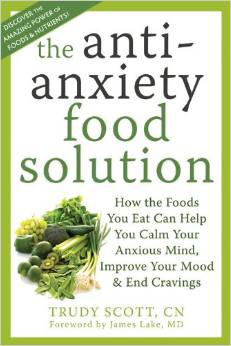
Here is a link to my book: The Antianxiety Food Solution: How the Foods You Eat Can Help You Calm Your Anxious Mind, Improve Your Mood, and End Cravings

As we mentioned, it has the amino acid questionnaire, pyroluria questionnaire and all the protocols BUT does not contain the 21+ pyroluria touble-shooting checklist (see the separate blog post for this)

trudy scott the antianxiety food solution

If you are not already registered for the Anxiety Summit you can get live access to the speakers of the day here: www.theAnxietySummit.com

Missed this interview or can’t listen live? Or want this and the other great interviews for your learning library? Purchase the MP3s or MP3s + transcripts and listen when it suits you.

You can find your purchasing options here: Anxiety Summit Season 1, Anxiety Summit Season 2, and Anxiety Summit Season 3.
Filed Under: Amino Acids, Antianxiety, Introversion, Pyroluria, The Anxiety Summit 3 Tagged With: amino acids, anxiety, dystonia, introversion, pyroluria, social anxiety, the antianxiety food solution, the anxiety summit, Trudy Scott

The Anxiety Summit Season 3 speakers and topics

April 17, 2015 By Trudy Scott 33 Comments

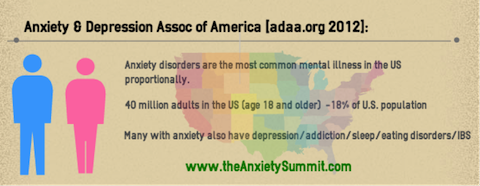
adaa-stats

20+ of the World’s Experts and Opinion Leaders Share Powerful Nutritional Solutions for Your Anxiety, So You Can Feel Calm, Joyful and On Top Of The World Again!
Join Food Mood Expert and Certified Nutritionist Trudy Scott as She Interviews Researchers, Doctors, Psychiatrists, Nutritionists, Consumer Advocates, Psychologists.
Discover the Very Powerful Connection Between Food and Mood!
Hear the Science and Learn Practical Tools You Can Start to Use NOW!
Be Empowered, Take Charge and Feel Hopeful!
Practitioners… Get Solutions to Help Your Clients and Patients.

There will be a speaker blog for each speaker with links to studies, snippets from the interview, related articles and blogs, videos if they are available and a speaker gift. This will be a place for you to comment and ask your questions during the summit.

Here is the complete speaker line-up and some snippets from a few speakers.

Wednesday, May 6th
Trudy Scott CN, “New 2015 Food/Nutrient Research on Anxiety and Speaker Highlights”
Dr. Daniel Amen MD, “The Brain Warriors Way to Attacking Anxiety, Depression and Aging”

Here are a few snippets from my wonderful interview with Dr. Daniel Amen, THE brain doctor!

  • women’s brains are more active and we make less serotonin
  • testosterone boosts GABA and sugar consumption can drop your testosterone by 20%
  • benzodiazapines reduce blood flow to the brain (and we know that they can cause pseudo-dementia
  • Amen proposed that the BCP (birth control pill) is likely the reason that 23% of women 28-60 are taking anti-depressants
  • eat real food, plenty of organic produce, healthy fats and grass-fed red meat

Thursday, May 7th
Julia Rucklidge PhD, “What if… Nutrition could Treat Anxiety and Depression?”
Rebecca Katz MS, “Your Brain on Food: The Science and Alchemy of Yum for Alleviating Anxiety!”

Here are a few snippets from my interview with Rebecca Katz, the queen of yum!

  • Pumpkin seeds are “nature’s smallest antidepressant next to a snowflake”
  • Pumpkin seeds are a source of iron which has been shown to boost cognitive performance, especially in women of childbearing years. Iron is also a co-factor for making our neurotransmitters
  • Parlsey and mint are so accessible and eating them “is like eating oxygen” (I recently shared the delicious pomegranate olive mint salsa recipe from Rebecca’s new Healthy Mind Cookbook

Friday, May 8th
Summer Bock, “Sauerkraut for Gut Healing and Reducing Anxiety”
Dr. Peter Osborne DC, “Grainflammation – How Grain Consumption Contributes to Anxiety and other Mood Disorders”

Saturday, May 9th
Lierre Keith, “Anxiety, Depression, and the Vegetarian Diet”
Kaayla T. Daniel PhD, “Real Food for Anxiety: Butter, Broth and Beyond”

Sunday, May 10th
Dr. Allison Siebecker ND, “Small Intestinal Bacterial Overgrowth and Anxiety”
Ann Louise Gittleman PhD, CNS, “The Parasite/Anxiety Connection”

Here are a few snippets from my interview with the legendary Ann Louise Gittleman PhD, CNS, grande dame of nutrition!

  • Parasitic infections in the USA are far more common than you would expect – in fact the estimates are that 1 in every 3 people have parasite/s
  • Parasites can contribute to or cause anxiety and fear by altering “hormonal and neurotransmitter communication and/or direct interference with the neurons and brain regions that mediate behavioural expression”
  • According to folklore, parasites are more active around the full moon, so testing and treating around this time may yield better results

Monday, May 11th
Dr. Eva Selhub MD, “How to Heal Anxiety with Nature and the Body, not just with the Mind”
Dr. Jill Carnahan MD, “Is Toxic Mold the Hidden Cause of Your Anxiety?”

Tuesday, May 12th
Joe Tatta DPT, “Nutritional Influences on Anxiety and Musculoskeletal Pain”
Magdalena Wszelaki, “Foods to balance your hormones and ease anxiety – part 1”

Wednesday, May 13th
Dr. Benjamin Lynch ND, “How Methylfolate can make you Feel Worse and even Cause Anxiety, and What to do about it”
Magdalena Wszelaki, “Foods to balance your hormones and ease anxiety – part 2”

Thursday, May 14th
Mira Calton CN and Jayson Calton PhD, “Micronutrients for Eliminating Anxiety”
Yasmina Ykelenstam, “Histamine-containing Foods: their Role in Anxiety, Depression and Schizophrenia – part 1”

Friday, May 15th
Dr. Peter Bongiorno ND, “Serotonin and Anxiety, Happiness, Digestion and our Hormones”
Yasmina Ykelenstam, “Histamine-containing Foods: their Role in Anxiety, Depression and Schizophrenia – part 1”

Saturday, May 16th
Karla A Maree CNC, “Pyroluria, Amino Acids and Anxiety: Real Cases, Real Solutions”
Trudy Scott CN, “Pyroluria, Amino Acids and Anxiety: Troubleshooting when you are not getting results”

Sunday, May 17th
Dr. Kim D’Eramo DO, “How to use MindBody Medicine to Reverse Anxiety in 3 Minutes or Less”
Lebby Salinas, The Fooducator®, “How Gluten Elimination Healed Me and Eliminated my Anxiety”

Monday, May 18th – you’ll vote for your favorites to be replayed

Tuesday, May 19th
Dan Stratford, “My Anxiety-Zinc Story and the Message of Hope We Offer”
Trudy Scott CN, “Closing call: 30+ Nutritional & Biochemical Causes/Solutions and Recommended Supplements”

Wednesday, May 20th  you’ll vote for your favorites to be replayed

I have not yet interviewed Dr. Ben Lynch ND, on “How too much methyfolate may actually make you more anxious”. [4/24/15 interview has now been done]

Nor have I interviewed Dr. Peter Bongiorno ND, on “Serotonin and Anxiety, Happiness, Digestion and our Hormones” [4/24/15 interview has now been done]

Let me know if you have questions you’d like me to ask these doctors.

I hope you can join us! And do let us know which speakers and topics are of particular interest in the comment section below.

The Anxiety Summit site has officially launched! Yay! You can now see all the incredible speakers and topics at www.theanxietysummit.com

I am just so excited to kick this off Wednesday May 6 at 9am PST. It will run thru May 20 with 2 speakers per day available for viewing at no charge.

You will, of course, have the option to upgrade and purchase digital audios or digital audios/transcripts. And now for the first time we’re offering physical CDs with audios/transcripts.

This will be over 25 hours of top-notch anxiety nutritional solutions from people I have hand-picked! Plus 3 talks I will be doing on new research, amino acid and pyroluria troubleshooting, 60+ nutritional causes of anxiety and the supplements I recommend.

If you signed up for either season 1 or season 2, or pre-registered for season 3 there is no need to sign up again – you will get the season 3 daily emails announcing speakers, gifts, fun drawings and special offers.  If you’re not sure if you are signed up, you can sign up again no problem. If you use the same email address you won’t get duplicate emails.

Register here www.theanxietysummit.com 


Filed Under: Events, The Anxiety Summit Tagged With: amino acids, anxiety, pyroluria, the anxiety summit, Trudy Scott

Oxytocin and social anxiety, pyroluria and depression?

March 27, 2015 By Trudy Scott 66 Comments

A 2014 paper published in the Journal of Psychiatric Research looked at how variations in the oxytocin receptor gene is associated with increased risk for anxiety, stress and depression in individuals with a history of exposure to early life stress. Here are some excerpts from this paper:
Oxytocin is a neuropeptide that is involved in the regulation of mood, anxiety and social biology.

Genetic variation in the oxytocin receptor gene (OXTR) has been implicated in anxiety, depression and related stress phenotypes.

In this study, we examined genotypes in 653 individuals and tested whether SNP variation in OXTR correlates with severity of features of self-reported experience on the Depression Anxiety and Stress Scale (DASS), and whether this correlation is enhanced when early life trauma is taken into account.

The study found a significant effect of several oxytocin receptor genes (OXTR genotypes) on anxiety, stress and depression scores. They concluded that:

These results support the hypothesis that the oxytocin system plays a role in the pathophysiology of mood and anxiety disorders.

In this 2015 paper published in Neuropsychopharmacology, they looked at “Oxytocin modulation of amygdala functional connectivity to fearful faces in generalized social anxiety disorder” and found that oxytocin lessened anxiety by dampening amygdala reactivity to threat in individuals with generalized social anxiety disorder.

Results indicated that in individuals with generalized social anxiety disorder:

Oxytocin enhanced functional connectivity between the amygdala and the bilateral insula and middle cingulate/dorsal anterior cingulate gyrus during the processing of fearful faces

These findings suggest that [oxytocin] may have broad pro-social implications such as enhancing the integration and modulation of social responses.

We know that low serotonin can cause anxiety, worry and depression and research shows there are interactions between oxytocin and serotonin levels. So if you don’t respond to serotonin support (tryptophan or 5-HTP or light therapy), maybe boosting oxytocin is a possible solution?  Or maybe supporting serotonin will boost oxytocin? 

What is also really interesting to me is that zinc is needed for binding oxytocin to its receptor so I wonder about the oxytocin connection to pyroluria, a social anxiety condition where higher amounts of zinc and vitamin B6 are needed. I wonder if adding oxytocin to the mix or boosting it would help even more?  Or if optimizing zinc use and absorption would help promote oxytocin?

Have you had your oxytocin levels tested? Have you used oxytocin with good results and did it help your social anxiety/pyroluria and/or depression?  Have you done anything else to boost your oxytocin levels?


Filed Under: Amino Acids, Antianxiety, Depression, Pyroluria Tagged With: depression, oxytocin, pyroluria, serotonin, social anxiety, zinc

Pyroluria and focal musician’s dystonia or musician’s cramp

February 6, 2015 By Trudy Scott 50 Comments

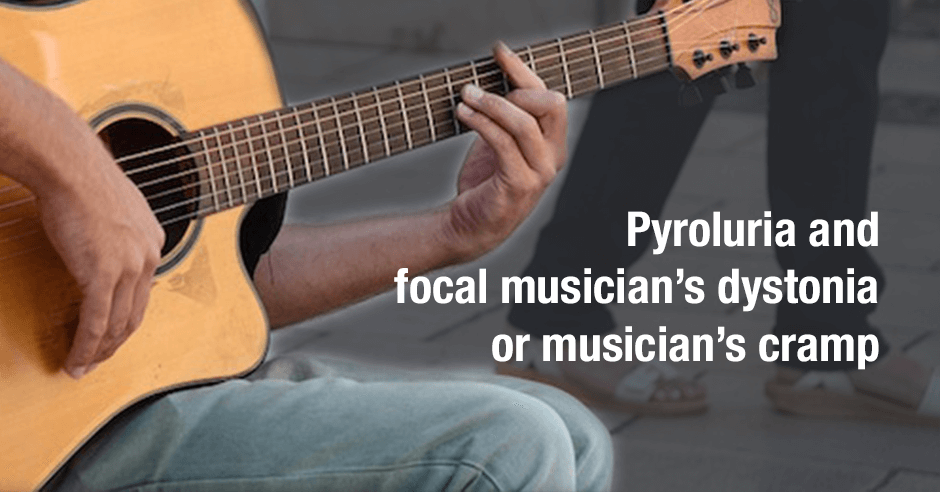
Pyroluria and focal musician’s dystonia

In May 2014 a gentleman named Jay asked this question on my Pyroluria Questionnaire blog: “have you come across a connection between pyroluria and focal musician’s dystonia (musician’s cramp)?

I responded saying “I have not and until I looked it up I was not aware of this condition. I’m curious why you’re asking? Do you or someone you know have symptoms of pyroluria and focal musician’s dystonia?”

I’m a very curious person and always turn to the research and like to look for connections. I started to dig and came across the The Dystonia Society, a UK based organization that provides support, advocacy and information for anyone affected by the neurological movement condition known as dystonia. They have this definition on the About Dystonia page:

Dystonia is a neurological movement disorder. Faulty signals from the brain cause muscles to spasm and pull on the body incorrectly. This forces the body into twisting, repetitive movements or abnormal postures.

The various types of dystonia are listed and they discuss managing symptoms and say:

Remission from symptoms does sometimes occur but is rare – occurring in around 5-10% of cases.

I posted some feedback, starting a dialogue (both in the comments and via email) that led to me learning a whole lot more about dystonia and the finding out there does seem to be a connection to pyroluria, a social anxiety condition that is not well-recognized in the medical or mental health community. Symptoms include inner tension and discomfort in big groups. Many introverts relate to the symptoms of pyroluria too.

In the process Jay saw wonderful results, we heard from Dave and his success. And we’re getting to share this information in the hope of helping others like him and Dave.

Much of the information is buried in comments on various blogs so I’ve decided it needs a separate blog post – with the connections and research I discovered and some of the inspiring feedback from Jay and Dave.

Dystonia and possible connections with pyroluria

This is most of what I originally posted (with a few slight revisions).

I do see some overlaps with dystonia and mood so it’s possible there is a connection between pyroluria and musician’s dystonia:

(1) The Dystonia Society is a wealth of information and has this on their mental health page: “it is now thought that people affected by dystonia are more likely to experience mental health conditions such as depression, anxiety and OCD even before the physical symptoms of dystonia appear. It is not known why this is – but it appears that whatever causes dystonia may also affect mood and behaviour in some way.”  Now I wonder how common social anxiety is for those with dystonia?

(2) “An additional relation between dystonia and mental health conditions is that some drugs used to treat psychoses can cause tardive dystonia / dyskinesia. With the new generation of these drugs (called dopamine receptor blockers) this is much less likely than it used to be – but unfortunately a small risk remains.” (this is also from the above dystonia page)

(3) The drug treatments they recommend are also often used for anxiety and depression. I’d suggest assessing for low GABA, low serotonin and low catecholamines first (using the amino acid questionnaire and determining if targeted individual amino acids may give the same relief. I would avoid benzodiazapines – Dr. Catherine Pittman shared the many side-effects and withdrawal effects during the Anxiety Summit.

(4) If you have pyroluria, you’ll also have low levels of zinc and vitamin B6, key co-factors in making serotonin and GABA and other neurotransmitters which affect anxiety and depression.

(5) Depression, anxiety, pyroluria and dystonia have a possible autoimmune/gluten/diet connection. This paper “Movement disorders in autoimmune diseases” discusses how “Tremors, dystonia, chorea, ballism, myoclonus, parkinsonism, and ataxia may be the initial and even the only presentation of these autoimmune diseases.” And here is a case study where the dystonia resolved on a gluten-free diet: “She had complete resolution of her neurological symptoms with introduction of a gluten-free diet.” We know gluten can damage the gut and lead to low levels of nutrients such as zinc and also cause low serotonin.

(6) Wilson’s disease (a serious condition of high copper/low zinc) can have symptoms of dystonia. This 2012 paper states: “The clinical manifestations of neurologic Wilson’s disease include variable combinations of dysarthria, dystonia, tremor, parkinsonism, ataxia, and choreoathetosis.”

I’m so pleased Jay asked this question. I learned a lot by looking in to this initially and since then have learned a great deal more.

Jay and Dave: their results implementing the pyroluria protocol

And take a look at the fabulous results Jay and Dave saw when they implemented only the pyroluria protocol (the starting dose I use with clients is 100mg vitamin B6 and 30mg zinc and 1300mg Evening Primrose Oil):

From Jay in June 2014

I started taking B6 (Pyridoxine Hydrochloride) 120mg and Zinc USP 60mg 2 weeks ago and do find some relief already. As you may have guessed, I have had dystonia for a long time and had to put a professional musician’s career on hold, and when I read your site, I found that I have a large number of symptoms from your list – I am hopeful.

From Jay in September 2014

I think it is, at this point, safe to say that the pyroluria treatment is, at least in my case, the cure for pyroluria and dystonia. 90%+ of my symptoms have disappeared, I am working extensively on repertoire and I am thinking about getting back into performing.

Dave in September 2014

just writing here to say that i too have battled focal dystonia over the past 8+ years.  actually started as writer’s cramp and then worked it’s way into my guitar playing.  about  3 years ago i noticed symptoms lessened based on different things i ate and shortly after came across pyroluria.  in all questionairs i answer yes to most if not all questions.  

anyway,  for the past 2 years i’ve been on zinc and b6 and have had vast improvements.  for me, the muscle disorders don’t go away without retraining, but the b6 and especially zinc make retraining much more successful.   however, sometimes i do hit the jackpot and my hands work almost normal without the efforts of retraining.  my dose fluctuates between 25-60 mg zinc and 50-100 mg b6 which i seem to have more trouble taking.  i also experimented with methyl b12 but that led to a very painful rash.

the funny thing about all of this is that i feel nowadays that focal dystonia was only the canary in the coal mine for other symptoms that paid little or no attention to because i was only focused on being a musician.  as a result of taking supplements most of those other symptoms are much better and i’m soooooo close now to having proper movement in my fingers.

it’s really great to see what you and jay have posted here because it really validates what i’ve been doing.  i too believe there are many that can be helped by this.

Jay in October 2014

I am so happy to read this dystonia related success story! After my own experience, I still say an experience akin to rebirth as a musician and also as a person, this was the reason for me to post on this blog – to help get this out to musicians who are victims of dystonia and inadequate medical treatment.

Low GABA levels in focal and cervical dystonia

Update: Dec 6, 2024

I’m adding this section on a GABA connection to dystonia because cervical dystonia came up as a question in the GABA Quickstart 2.0 program this week. The research finds that there seems to be a low GABA connection to many different types of dystonia.

This 2002 paper, Impaired brain GABA in focal dystonia, reports on patients with writer’s cramp, a task specific dystonia, revealing “that brain GABA levels are decreased in specific brain regions of the focal dystonia patients compared to normal controls” and concludes that the “reduction of brain GABA in dystonia patients may explain the clinical symptomatology of focal dystonia.”

Cervical dystonia, “also called spasmodic torticollis, is a painful condition in which your neck muscles contract involuntarily, causing your head to twist or turn to one side. Cervical dystonia can also cause your head to uncontrollably tilt forward or backward.”

The objective of this 2021 paper, Cervical Dystonia Is Associated With Aberrant Inhibitory Signaling Within the Thalamus, was “to investigate whether alterations in the neurotransmission of gamma-aminobutyric acid (GABA) in the thalamus are present in patients with cervical dystonia compared to healthy controls.”

The authors report that “aberrant inhibitory signaling within the thalamus contributes to the pathophysiology of cervical dystonia. Additionally, these results suggest that an inadequate ability to compensate for the loss of GABA through upregulation of GABAA receptors may underlie more severe symptoms.”

Keep in mind that zinc and vitamin B6 are cofactor nutrients that are needed to make GABA. It’s common for someone with low GABA symptoms to also be on the pyroluria protocol.

I would be exploring low GABA in addition to low zinc and low vitamin B6 (and possibly pyroluria if someone has any type of dystonia.

Additional resources when you are new to using GABA and other amino acids as supplements

As always, I use the symptoms questionnaire to figure out if low GABA or other neurotransmitter imbalances may be an issue.

If you suspect low levels of any of the neurotransmitters and do not yet have my book, The Antianxiety Food Solution – How the Foods You Eat Can Help You Calm Your Anxious Mind, Improve Your Mood, and End Cravings, I highly recommend getting it and reading it before jumping in and using amino acids on your own so you are knowledgeable. And be sure to share it with the practitioner/health team you or your loved one is working with.

There is an entire chapter on the amino acids and they are discussed throughout the book in the sections on gut health, gluten, blood sugar control (this is covered in an entire chapter too), sugar cravings, anxiety and mood issues.

The book doesn’t include product names (per the publisher’s request) so this blog, The Antianxiety Food Solution Amino Acid and Pyroluria Supplements, lists the amino acids that I use with my individual clients and those in my group programs.

If, after reading this blog and my book, you don’t feel comfortable figuring things out on your own (i.e. doing the symptoms questionnaire and respective amino acids trials), a good place to get help is the GABA QuickStart Program (if you have low GABA symptoms). This is a paid online/virtual group program where you get my guidance and community support.

If you are a practitioner, join us in The Balancing Neurotransmitters: the Fundamentals program. This is also a paid online/virtual program with an opportunity to interact with me and other practitioners who are also using the amino acids.

Wrapping up and your feedback

I appreciate Jay and Dave for sharing their dystonia success stories. I am curious if using GABA too would have helped them see results more quickly.

We’re hoping we can generate some interest from various dystonia organizations/groups/forums and help more musicians find symptom resolution – certainly more than the 5-10% the Dystonia Society reports. The more people reporting success, the more likely approaches like this will be studied, accepted by the mainstream medical community and included on sites like the Dystonia Society.

If you relate to any of this please do comment and let us know what your results have been.

If you know someone with musician’s dystonia (or another form of dystonia) and pyroluria/social anxiety please do share this with them.

Filed Under: Introversion, Music, Pyroluria Tagged With: anxiety, depression, dystonia, gluten, introverts, musiciaian's dystonia, pyroluria, vitamin B6

Pyroluria and chronic fatigue syndrome: is there a link?

January 16, 2015 By Trudy Scott 21 Comments

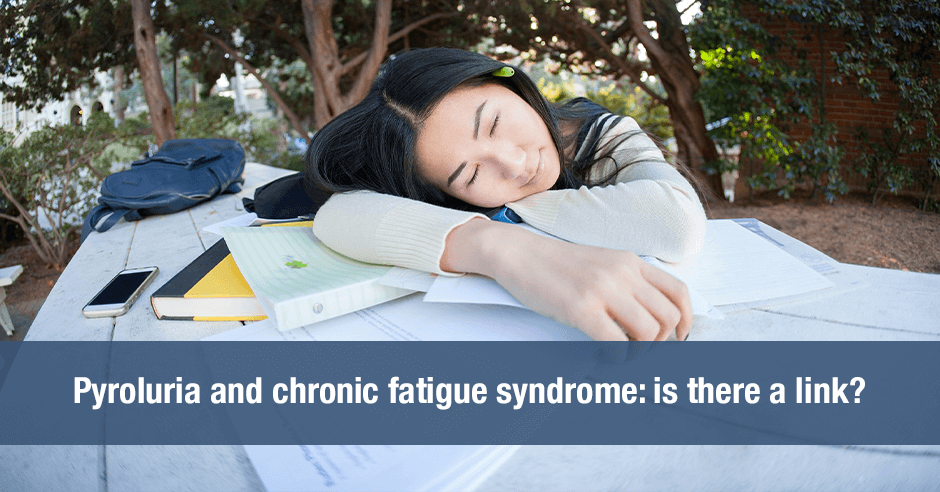
pyroluria and chronic fatigue

Last week I blogged about the social anxiety condition called pyroluria (Pyroluria, high mauve, pyrrole disorder, malvaria, elevated kryptopyrroles and social anxiety) and received some great comments on this and the other pyroluria blogs.

One question on this blog: The Anxiety Summit: How zinc and vitamin B6 prevent pyroluria and social anxiety was related to Chronic Fatigue Syndrome/CFS so I’ve decided to share this and some additional information I was able to find.

Hi Trudy, I’m calling from Melbourne Australia, I was wondering if you have had any of your clients present with Chronic Fatigue Syndrome as well as pyroluria. I have just recently been diagnosed with CFS, I also have ADHD. Someone on a CFS forum that I belong to told me about pyroluria and said it is common in ADHD and CFS sufferers. While the link between ADHD and pyroluria is well documented, I haven’t been able to find any information regarding a connection between Chronic Fatigue Syndrome and pyroluria. I notice that there is an overlap of symptoms in the two conditions. I have all of the symptoms of CFS and many of the symptoms of pyroluria. I’m very interested in hearing your views about CFS and how it relates to pyroluria if at all. — Tom

I was not aware of a CFS/pyroluria connection until now but see there is some research showing how CFS and mood disorders/anxiety can have related causes and one of them is inflammation:

An intriguing and hitherto unexplained co-occurrence: Depression and chronic fatigue syndrome are manifestations of shared inflammatory, oxidative and nitrosative (IO&NS) pathways

Low zinc is a factor in pyroluria and depression and of course we may also see low zinc in CFS:

Lower serum zinc in Chronic Fatigue Syndrome (CFS): relationships to immune dysfunctions and relevance for the oxidative stress status in CFS

I find this paper very interesting since many of these same nutrients are commonly low in folks with anxiety and depression: Nutritional strategies for treating chronic fatigue syndrome

A detailed review of the literature suggests a number of marginal nutritional deficiencies may have etiologic relevance. These include deficiencies of various B vitamins, vitamin C, magnesium, sodium, zinc, L-tryptophan, L-carnitine, coenzyme Q10, and essential fatty acids.

I’m surprised the above paper didn’t mention iron anemia.  This is very common with pyroluria.  This paper: Iron insufficiency and hypovitaminosis D in adolescents with chronic fatigue and orthostatic intolerance found this

In patients presenting with chronic fatigue and/or orthostatic intolerance, low ferritin levels and hypovitaminosis D are common

These are just a few of the links I found by doing a very quick pubmed search. There are likely many more.

Everything is so connected and inter-related! And it’s interesting how certain deficiencies can manifest in certain ways – one person may find themselves with a CFS diagnosis, someone else with arthritis and yet someone else with heart disease. I think we need to be thinking about addressing nutrient deficiencies, balancing biochemistry and getting healthy, perhaps more just than addressing a diagnosis.

If you score high on the Pyroluria Questionnaire I would suggest simply addressing the pyroluria which may have some ripple down effects and actually improve the symptoms of CFS.

Now the next post will have to dig into the link between ADHD and pyroluria. Stay tuned.

In the meantime, I’d love to see your comments/questions if you can relate to any of this. Also, please do share in the comments if you know you have pyroluria and find the nutrients have eliminated your social anxiety and inner tension symptoms, and have also helped your CFS.


Filed Under: Depression, Pyroluria, Stress Tagged With: ADHD, anxiety, fatigue, Inflammation, iron, pyroluria, zinc

  • « Go to Previous Page
  • Page 1
  • Interim pages omitted …
  • Page 7
  • Page 8
  • Page 9
  • Page 10
  • Page 11
  • Go to Next Page »

Primary Sidebar

NEW! GABA QuickStart Homestudy (with special intro pricing)

gaba quickstart homestudy

Free Report

9 Great Questions Women Ask about Food, Mood and their Health

You'll also receive a complimentary subscription to my ezine "Food, Mood and Gal Stuff"


Connect with me

Popular Posts

  • Amino Acids Mood Questionnaire from The Antianxiety Food Solution
  • The Antianxiety Food Solution Amino Acid and Pyroluria Supplements
  • Pyroluria Questionnaire from The Antianxiety Food Solution
  • Collagen and gelatin lower serotonin: does this increase your anxiety and depression?
  • Tryptophan for the worry-in-your-head and ruminating type of anxiety
  • GABA for the physical-tension and stiff-and-tense-muscles type of anxiety
  • The Antianxiety Food Solution by Trudy Scott
  • Seriphos Original Formula is back: the best product for anxiety and insomnia caused by high cortisol
  • Am I an anxious introvert because of low zinc and vitamin B6? My response to Huffington Post blog
  • Vagus nerve rehab with GABA, breathing, humming, gargling and key nutrients

Recent Posts

  • What do I use instead of Seriphos to help lower high cortisol that is affecting my sleep and making me anxious at night?
  • BeSerene™ GABA/theanine cream eases severe muscle tension in her neck/shoulders, prevents her bad headaches and quells her anxiety
  • How the correct approach, dose and sublingual use of GABA can be calming and not cause a flushed and itchy face and neck
  • The amino acid glutamine improves low mood by addressing gut health, and it has calming effects too
  • Flight anxiety with heightened breath, physical tension and also fearing the worst (the role of low GABA and low serotonin)

Categories

  • 5-HTP
  • AB575
  • Addiction
  • ADHD
  • Adrenals
  • Alcohol
  • Allergies
  • Alzheimer's disease
  • Amino Acids
  • Anger
  • Antianxiety
  • Antianxiety Food Solution
  • Antidepressants
  • Anxiety
  • Anxiety and panic
  • Autism
  • Autoimmunity
  • benzodiazapines
  • Bipolar disorder
  • Books
  • Caffeine
  • Cancer
  • Candida
  • Children/Teens
  • Collagen
  • Cooking equipment
  • Coronavirus/COVID-19
  • Cravings
  • Depression
  • Detoxification
  • Diabetes
  • Diet
  • DPA/DLPA
  • Drugs
  • EFT/Tapping
  • EMF
  • EMFs
  • Emotional Eating
  • Endorphins
  • Environment
  • Essential oils
  • Events
  • Exercise
  • Fear
  • Fear of public speaking
  • Fertility and Pregnancy
  • Fish
  • Food
  • Food and mood
  • Functional neurology
  • GABA
  • Gene polymorphisms
  • General Health
  • Giving
  • Giving back
  • Glutamine
  • Gluten
  • GMOs
  • Gratitude
  • Gut health
  • Heart health/hypertension
  • Histamine
  • Hormone
  • Hyperparathyroidism
  • Hypoglycemia
  • Immune system
  • Inflammation
  • Insomnia
  • Inspiration
  • Introversion
  • Joy and happiness
  • Ketogenic diet
  • Lithium orotate
  • Looking awesome
  • Lyme disease and co-infections
  • MCAS/histamine
  • Medication
  • Men's health
  • Mental health
  • Mercury
  • Migraine
  • Mold
  • Movie
  • MTHFR
  • Multiple sclerosis
  • Music
  • NANP
  • Nature
  • Nutritional Psychiatry
  • OCD
  • Osteoporosis
  • Oxalates
  • Oxytocin
  • Pain
  • Paleo
  • Parasites
  • Parkinson’s disease
  • PCOS
  • People
  • PMS
  • Postpartum
  • PTSD/Trauma
  • Pyroluria
  • Questionnaires
  • Real whole food
  • Recipes
  • Research
  • Schizophrenia
  • serotonin
  • SIBO
  • Sleep
  • Special diets
  • Sports nutrition
  • Stress
  • Sugar addiction
  • Sugar and mood
  • Supplements
  • Teens
  • Testimonials
  • Testing
  • The Anxiety Summit
  • The Anxiety Summit 2
  • The Anxiety Summit 3
  • The Anxiety Summit 4
  • The Anxiety Summit 5
  • The Anxiety Summit 6
  • Thyroid
  • Thyroid health
  • Toxins
  • Tryptophan
  • Tyrosine
  • Uncategorized
  • Vegan/vegetarian
  • Women's health
  • Yoga

Archives

  • October 2025
  • September 2025
  • August 2025
  • July 2025
  • June 2025
  • May 2025
  • April 2025
  • March 2025
  • February 2025
  • January 2025
  • November 2024
  • October 2024
  • September 2024
  • August 2024
  • July 2024
  • June 2024
  • May 2024
  • April 2024
  • March 2024
  • February 2024
  • January 2024
  • December 2023
  • November 2023
  • October 2023
  • September 2023
  • August 2023
  • July 2023
  • June 2023
  • May 2023
  • April 2023
  • March 2023
  • February 2023
  • January 2023
  • December 2022
  • November 2022
  • October 2022
  • September 2022
  • August 2022
  • July 2022
  • June 2022
  • May 2022
  • April 2022
  • March 2022
  • February 2022
  • January 2022
  • December 2021
  • November 2021
  • October 2021
  • September 2021
  • August 2021
  • July 2021
  • June 2021
  • May 2021
  • April 2021
  • March 2021
  • February 2021
  • January 2021
  • December 2020
  • November 2020
  • October 2020
  • September 2020
  • August 2020
  • July 2020
  • June 2020
  • May 2020
  • April 2020
  • March 2020
  • February 2020
  • January 2020
  • December 2019
  • November 2019
  • October 2019
  • September 2019
  • August 2019
  • July 2019
  • June 2019
  • May 2019
  • April 2019
  • March 2019
  • February 2019
  • January 2019
  • December 2018
  • November 2018
  • October 2018
  • September 2018
  • August 2018
  • July 2018
  • June 2018
  • May 2018
  • April 2018
  • March 2018
  • February 2018
  • January 2018
  • December 2017
  • November 2017
  • October 2017
  • September 2017
  • August 2017
  • July 2017
  • June 2017
  • May 2017
  • April 2017
  • March 2017
  • February 2017
  • January 2017
  • December 2016
  • November 2016
  • October 2016
  • September 2016
  • August 2016
  • July 2016
  • June 2016
  • May 2016
  • April 2016
  • March 2016
  • February 2016
  • January 2016
  • December 2015
  • November 2015
  • October 2015
  • September 2015
  • August 2015
  • July 2015
  • June 2015
  • May 2015
  • April 2015
  • March 2015
  • February 2015
  • January 2015
  • December 2014
  • November 2014
  • October 2014
  • September 2014
  • August 2014
  • July 2014
  • June 2014
  • May 2014
  • April 2014
  • March 2014
  • February 2014
  • January 2014
  • December 2013
  • November 2013
  • October 2013
  • September 2013
  • August 2013
  • July 2013
  • June 2013
  • May 2013
  • April 2013
  • March 2013
  • February 2013
  • January 2013
  • December 2012
  • November 2012
  • October 2012
  • August 2012
  • July 2012
  • June 2012
  • May 2012
  • April 2012
  • March 2012
  • February 2012
  • January 2012
  • December 2011
  • November 2011
  • October 2011
  • September 2011
  • August 2011
  • July 2011
  • June 2011
  • May 2011
  • April 2011
  • March 2011
  • February 2011
  • January 2011
  • December 2010
  • October 2010
  • September 2010
  • July 2010
  • May 2010
  • April 2010
  • March 2010
  • February 2010
  • January 2010
  • November 2009

Share the knowledge!

The above statements have not been evaluated by the Food and Drug Administration. Products listed in this website are not intended to diagnose, treat, cure or prevent any disease.

The information provided on this site is for informational and educational purposes only and is not intended as a substitute for advice from your physician or other health care professional. You should consult with a healthcare professional before starting or modifying any diet, exercise, or supplementation program, before taking or stopping any medication, or if you have or suspect you may have a health problem.


Copyright © 2026 Trudy Scott. All Rights Reserved. | Privacy | Terms and Conditions | Refund Policy | Medical Disclaimer

Free Report

9 Great Questions Women Ask about Food, Mood and their Health

You’ll also receive a complimentary subscription to my ezine “Food, Mood and Gal Stuff”