• Skip to primary navigation
  • Skip to main content
  • Skip to primary sidebar

everywomanover29 blog

Food, Mood and Women's Health – Be your healthiest, look and feel great!

  • Blog
  • About
  • Services
  • Store
  • Resources
  • Testimonials
  • The Book
  • Contact
  • Search this site

pyroluria

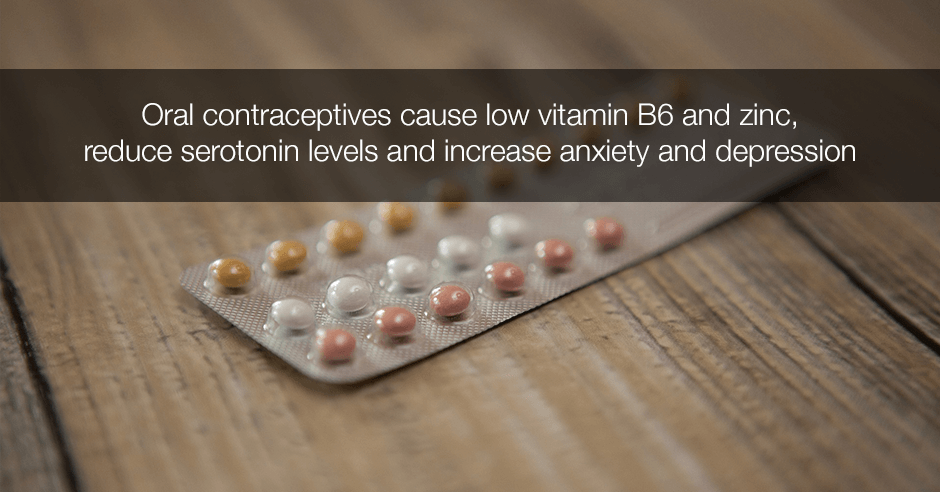
Oral contraceptives cause low vitamin B6 and zinc, reduce serotonin levels and increase anxiety

February 16, 2018 By Trudy Scott 18 Comments

Oral contraceptives i.e. the birth control pill, cause low vitamin B6 and zinc, thereby reducing serotonin levels and can increase anxiety and depression in susceptible women.

Dr. Daniel Amen sees the association between the birth control pill and anxiety/depression in his practice and shared this when I interviewed him during season 3 of the Anxiety Summit.

Unfortunately, they drop serotonin levels. You’ve got to ask yourself why are 23 percent of women between the ages of 20 and 60 taking antidepressants? In large part, it’s the birth-control pills that are changing the hormones in their brain, the neurotransmitters in their brain. All of a sudden they’re more anxious and they’re more depressed.

Oral contraceptives lower serotonin due to various nutrient depletions and can also impact mood due effects on the progesterone/estrogen ratio.

Drug-induced nutrient depletions, especially vitamin B6

Many medications cause drug-induced nutrient depletions and oral contraceptives do this too. In this 2013 paper, Oral contraceptives and changes in nutritional requirements, the authors report:

It has been shown that the key nutrient depletions concern folic acid, vitamins B2, B6, B12, vitamin C and E and the minerals magnesium, selenium and zinc.

Zinc, magnesium, folate, vitamin C and vitamin B6 are all needed for the conversion of tryptophan to serotonin and can therefore impact both anxiety and depression, accentuating or precipitating the development of depression (and presumably anxiety too) in susceptible women.

The World Health Organization (WHO) report, Advances in Fertility Regulation, states that:

It has been shown that about 80% of women taking oral contraceptives have abnormal tryptophan metabolism suggestive of relative B6 deficiency.

Many of these same nutrients have a major impact on how women handle stress:

Magnesium and vitamin B6 may be effective in combination in reducing premenstrual stress, and vitamin B6 alone may reduce anxiety effectively in older women. High-dose sustained-release vitamin C may reduce anxiety and mitigate increased blood pressure in response to stress.

Zinc and copper imbalances occur very quickly

In this paper published in 1980, Serum copper and zinc in hormonal contraceptive users, it is reported that

Use of combined estrogen-progestogen contraceptives resulted in a significant decrease in serum zinc levels within 3 days and an increase in serum copper levels within 10 days.

In users of combined estrogen-progestogen contraceptives the magnitude and time of occurrence of the decrease in zinc levels and the increase in copper levels was unaltered by chemical composition, dosage, route of administration, and duration of use beyond 3 months.

We know zinc plays a role in the serotonergic system, reducing depression and anxiety.

Zinc and vitamin B6 are also key nutrients for alleviating symptoms of the social anxiety condition called pyroluria.

Lowered levels of endogenous estradiol and progesterone

Other mechanisms on how oral contraceptives lower serotonin relate to lowered levels of endogenous estradiol and progesterone (i.e. the estradiol and progesterone our bodies make), as well as out of balance progesterone/estrogen ratios leading to negative moods and emotional changes. The decreased prolactin response mentioned in this paper suggests reduced serotonergic activity.

High clinical relevance

The WHO report mentioned in the 2013 paper (mentioned above), states that this topic of nutrient depletions with oral contraceptives has high clinical relevance and should be receiving the attention it deserves.

Unfortunately, the nutrient-depletion with oral contraceptives conversation is not something many of my clients have ever had with their doctors, despite this being old news. The WHO report was published over 40 years ago, in 1975!

I’m particularly concerned about teens starting on birth control at such a young age and starting down this very slippery slope with no awareness of what they are getting into.

My recommendation is to NOT use oral contraceptives because of this increased risk in depression and anxiety. I write about this and FAM as an alternative here.

However, if you (or your daughter or grand-daughter or sister or friend) chooses to use oral contraceptives we need this awareness and you/they will very likely need to address these nutrient deficiencies. 

This awareness is also needed if you are using oral contraceptives (or have used them in the recent past) and have found you’ve needed to continuing using tryptophan or 5-HTP long-term.

And finally, this awareness is needed if you know you have pyroluria and the pyroluria protocol doesn’t seem to be working for you.


Filed Under: Anxiety Tagged With: anxiety, BCP, birth control pill, depression, Oral contraceptives, pyroluria, serotonin, the pill, vitamin B6, zinc

Pyroluria can feel pretty exhausting

December 10, 2017 By Trudy Scott 26 Comments

If you’re new to pyroluria, it is a social anxiety condition, where physical and emotional symptoms are caused by deficiencies of vitamin B6 and zinc. As well as feeling anxious, shy, or fearful or experiencing inner tension since childhood (and often hiding these feelings from others), digestive symptoms are common and we cover these in my interview Low zinc, social anxiety/pyroluria and the gut on the virtual conference called Better Belly Project 2.0, hosted by Summer Bock, one of the leading gut health experts.

What you’ll learn:

  • How to figure out if you have the social anxiety called pyroluria and what key nutrients are missing in these cases
  • The zinc connection to the microbiome, digestion and social anxiety
  • Digestion symptoms we see in pyroluria
  • Is introversion a personality trait or a biochemical imbalance?
  • Can collagen and gelatin make you more depressed and anxious?

I talk about how you can feel when you have pyroluria and how I can relate to all this:

You may feel uncomfortable in group sittings, you may feel uncomfortable with interacting with large crowds of people. A lot of people will say, “I’m really good at speaking on stage, but don’t make me mingle with the people after I presented on stage because then I’ve got to interact with a lot of people.” You’ve got this inner tension where you deal with it, and you cover it up, and you push through.

I can totally relate because I have pyroluria myself. This is why I’m so passionate about sharing this topic because I grew up pushing through and dealing with it. I remember the first day of school, wanting to walk to school on my own. I didn’t want my mom to take me into school. I was always this person who kind of pushed through and forced myself to do things.

We get through life like that, but it can get pretty exhausting. With my whole anxiety that started in my late 30s, which was a result of this perfect storm, it was gluten sensitivity, and adrenal issues, and low serotonin, and low GABA. And part of my perfect storm was this pyroluria that I discovered. I find that a lot of my clients will push through, and they’ll deal with this, for many, many years.

But, as things start to shift, as they’re starting to go into perimenopause, and the hormones are getting disrupted, and they’re becoming more stressed, and they’ve got adrenal issues going on, and they discover they’ve got food sensitivities. This all conspires together to make their symptoms much worse. Then, they find they can’t socialize, or when they are socializing, they just feel so anxious, it’s just debilitating, and they can’t actually function.

There are overlaps with the pyroluria questionnaire and an introverts questionnaire I came across on the Huffington post. Based on feedback from 100s in my community I’m proposing that introversion is not a personality trait, or maybe it’s not all personality, but there’s this biochemical component.

We also have a great discussion about collagen and gelatin, which can help to heal the gut, but may also be depleting serotonin levels and increasing anxiety/depression in some susceptible individuals:

I actually did a mini-survey with the people in my Facebook community, and I said, “Anyone using collagen or gelatin, have you noticed an increase in anxiety, an increase in depression, agitation, heart palpitations, insomnia?” I got very varied response. Half of the people said yes, they felt worse, more anxious, more depressed. Another 40% said no, they feel great. Then, interestingly enough, there was a few people that said they use collagen and gelatin to actually lower their serotonin levels.

If you aren’t yet signed up you can see the event schedule and register here for Better Belly Project 2.0. It runs through December 14th and Summer is interviewing 49 experts who are leaders in the field of digestive health.

Here are some topics you may also enjoy:

  • What To Do If Your Gut Isn’t Getting Better: Jennifer Fugo (also today)
  • Leaky Gut and Your Child: Dr. Elisa Song (also today)
  • 17 Right and Wrong Ways to Eat Ferments: Summer Bock (also today)
  • Treatment Options for Chronic Yeast Issues. What is the evidence?: Dr. Jessica Drummond (coming up tomorrow)
  • Metals That Impact Gut Function: Wendy Myers (coming up in a few days)

I hope you enjoy my interview and these other expert interviews!

Do you have pyroluria and can you relate to any of this? Feel free to leave your comments and questions and comments below.

Filed Under: Events, Pyroluria Tagged With: better belly project, pyroluria, summer bock

30 Experts Share Their Best Advice for Brain Health by Jordan Fallis

November 24, 2017 By Trudy Scott 4 Comments

Jordan Fallis of Optimal Living Dynamics reached out to some of his favorite cutting-edge health practitioners and researchers and asked them one question:

What is the one piece of advice you would offer to people who want to improve and optimize their brain health?

I was thrilled to be one of the people he reached out to. This is my response:

This a tough question and I can think of many things such as eating sardines or other oily fish for the omega-3 benefits; eating pumpkin seeds as a great source of zinc and tryptophan (both great for anxiety and depression); dumping the bread and cookies due to the inflammatory effects of gluten on the brain and body; and eating grass-fed red meat as a great source of zinc, omega-3s and iron, all of which are needed for brain health. 

But if I had to pick only one piece of advice, I would say to optimize gut health because of the very strong gut-brain connection. This means healing a leaky gut with an amino acid like glutamine; improving the microbiome by eating fermented foods like sauerkraut; improving protein digestion with enzymes; cooking and eating quality food at home; chewing our food slowly, and addressing issues like candida, parasites, small intestinal bacterial overgrowth and dysbiosis.

In addition to the above, I always trial the use of targeted individual amino acids such as calming GABA, mood-boosting tryptophan and DPA, and addressing nutritional deficiencies with nutrients like zinc, vitamin B6, iron, magnesium and so on. You may need to also address Lyme disease, mold, heavy metals and many of the other possible biochemical causes of anxiety and depression.

Here are some snippets from a few of my favorite quotes:

  • Kelly Brogan: the brain “does not understand modern chemicals, processed foods, and industrial pollutants. It also doesn’t understand chronic stress, poor sleep, minimal movement, and indoor living”
  • Hyla Cass: “don’t follow a low-fat diet! Make sure to get sufficient fats and protein. Avoid trans fats, but eat healthy fats like omega 3’s found in fatty fish, and medium chain triglycerides from coconut oil”
  • Sayer Ji: “Turmeric is one of the most remarkable neuroprotective and neurorestorative agents yet identified”
  • Max Lugavere: “…there’s simply nothing like exercise for the brain.”
  • Gwen Olson: “Do your own due diligence before taking any pharmaceuticals. Put the name of the drug into a search engine followed by the words ‘controversy’ and ‘side effects’”
  • James Greenblatt: “As vitamins and minerals serve as co-factors in almost every enzymatic reaction in the brain, it is important to assess for adequate nutrient levels regularly to ensure that you are optimizing brain health”

You can read all the inspiring and valuable responses on Jordan’s blog: 30 Experts Share Their Best Advice for Brain Health. You’ll see some common themes: stress, the gut, exercise, real food, sleep and nutrients.

When I asked Jordan how he knew of me and my work he shared this:

I found you through Sean Croxton’s Depression Sessions. When that first came out, I was in the middle of my journey, trying to restore my own mental health. It was great timing. So I immediately purchased it and watched all the videos for more solutions.

I already knew about pyroluria, as I had read Dr. William Walsh’s book Nutrient Power at that time. But it was great to see you talk about it and bring it to light! And I believe I was taking just regular B6 before your talk. So then I switched to P-5-P. I continue to take P-5-P and zinc picolinate regularly.

I’m so thankful I’m feeling better and have my life back, so I’m going to work really hard to share everything that helped me. I just feel like I need to do that 🙂

I really appreciate that Jordan wants to share everything that has helped him and this article is a perfect way to do this.

Here are some additional resources for you on pyroluria, the social anxiety condition he mentions above:

  • Pyroluria prevalence and associated conditions
  • A snippet from the interview I did with Sean: Can Social Anxiety Be Reversed with Nutrition?
  • Some information from my interview with Dr. William Walsh on a prior Anxiety Summit: Is My Anxiety and Depression from a Methylation, Pyrrole, or Copper-Zinc Imbalance?

I hope you enjoy these resources from me, Jordan and all the experts he reached out to!

I’d love to hear what you have found to be the best brain advice you have received and implemented?  


Filed Under: Pyroluria Tagged With: anxiety, brain, brain health, copper, GABA, Jord, pyroluria, social anxiety, tryptophan, zinc

I suffer from severe anxiety, have social anxiety and am afraid of everything

June 8, 2017 By Trudy Scott 16 Comments

For the first time I have come across your blogs about amino acids and anxiety. I’ve suffered from severe anxiety since 2011, and have tried the SSRIs and hate them. I refused to take them, as they caused me to gain so much weight and [have] withdrawals. I’ve also read how bad they are for you.

In order to work, I am relying heavily on 0.5mg of Clonazepam up to 3-4 times a day. It makes me so drowsy in the mornings. I try for the most part to make sure to get 7-8 hours of sleep because I can tell how when not having enough rest can trigger my anxiety. But I’m in desperate need of a solution. Not sure if the clonazepam is something I can continue to take long term, as I also know it’s bad for you.

I suffer from social anxiety (on a level 1-10, I would be 20!) and also some agoraphobia symptoms [an abnormal fear of being in crowds, public places, or open areas, sometimes accompanied by anxiety attacks.]. I am not able to go to stores alone, and I am afraid of everything.

I suffer at work the most, because I’m constantly busy and stressed and dealing with customers all day. Please help

The above question was recently posted on my blog and I’m sharing my response to her in case you are new to using the amino acids for neurotransmitter imbalances and may be able to relate to any of the above. This is my response to her:

Welcome to the community! I use the amino acids with clients and do a trial to find out if they are needed and how much to use. This blog post Anxiety and the amino acids: an overview has links to the amino acid questionnaire, the precautions and how to do a trial. When someone has fear and phobias I immediately think we need to be looking at low serotonin and a trial of tryptophan. It’s not uncommon to also see low GABA and blood sugar imbalances being an issue too.

Once you address low GABA, low serotonin and low blood sugar I would expect the work stresses to feel less overwhelming. In an ideal world it would be wonderful to be able to remove this stress so I encourage you to consider this too.

For social anxiety I start with the pyroluria questionnaire. The great aspect of this is the nutrients for pyroluria – zinc, vitamin B6 and evening primrose oil – help the social anxiety and help to make the neurotransmitters. They also happen to help with PMS and other hormonal imbalances too.

Keep in mind it’s a comprehensive nutritional approach that I use with clients so we are also looking at diet, blood sugar control, the gut, adrenals and thyroid health, quitting sugar and caffeine and so much more. My book The Antianxiety Food Solution (on Amazon here) covers everything in detail, including the amino acids and pyroluria.

I’m sure you’re aware that Clonazepam (or Klonopin) is a benzodiazepine and should be prescribed a maximum of 2 weeks and even then they can be problematic. It may likely be contributing to your anxiety. Here is one blog post to get you started with some information about benzodiazepines: World Benzodiazepine Awareness Day – say NO to Benzodiazepines for anxiety! It covers tolerance issues and resources for tapering. I encourage you to search the blog to find plenty of additional information about the benzodiazepines.

Be very careful with the morning drowsiness as there is an increased risk of being involved in a road accident as driver when on a benzodiazepine prescription.

I speak on selected online summits that I know will be of value to my community so do keep reading the newsletter. The summits are a great way to start learning about my work and other nutritional and functional medicine approaches for anxiety and other chronic health conditions so be sure to sign up and tune in. There is also a wealth of information on this blog.

Filed Under: Anxiety and panic Tagged With: anxiety, GABA, pyroluria, social anxiety

New testing approach for Lyme disease: ultrasound and PCR urine testing

June 7, 2017 By Trudy Scott 16 Comments

Dr. Dietrich Klinghardt’s interview with Dr Jay Davidson, host The Chronic Lyme Disease Summit 2 is one of the most interesting and encouraging Lyme disease interviews I’ve heard for a long time! He covers the Latest on Lyme Testing and Treatments. The reason it’s so encouraging is that chronic Lyme disease is notoriously difficult to test for.

Dr. Klinghardt starts by sharing why Lyme disease goes undiagnosed in many instances:

Lyme is highly compartmentalized. That means it sets up sanctuaries in different body compartments, and chronic Lyme is not living in the blood. Lyme may be in the blood in acute Lyme but not in chronic Lyme.

In chronic Lyme it may be in the right hippocampus but not in the entire brain, maybe in the brain stem but not the liver. It may be in your disk of L4-L5 but not in other disks and so on and so forth.

It lives in biofilm. We know that. It lives in the cell, but it doesn’t stray.

He goes on to share that the common immune system-based Lyme disease tests that use blood testing are misleading because with chronic Lyme

the blood or the white blood cells are not in contact with the actual microbes and you do not get the immune activation…So many cases go undiagnosed.

Dr. Klinghardt shares a wonderful technique that he and one of the world’s most renowned ultrasound radiologists, Dr. Marco Ruggiero, have developed for both testing and to improve treatment:

We know that when you put ultrasound …on a group of cells, it squeezes and relaxes the cells at a very high speed and squeezes out things from the cell that shouldn’t be in there. And so, we had the theory if you apply ultrasound to an area where we suspect Lyme spirochetes or Bartonella or Babesia or Ehrlichia, then those microbes are forced into the connective tissue. And some of them will stray from there into the blood, and some of them will be excreted through the kidneys into the urine.

With that principle, we found an incredible increase in our findings that most of the people that were suspected of having chronic Lyme disease didn’t just have Borrelia burgdorferi, but they had also Borrelia miyamotoi. They had Babesia duncani, Babesia microti. They had Bartonella henselae.

So what we do, we have set up a certain sequence of using ultrasound on the brain, on the thymus, on the spleen, on the vagus nerve, and on the brain stem. We drive out the microbes, and then we collect the urine and find the microbes. This is by far the best test we use – the PCR testing – looking for whole strands of DNA of the bugs in the urine.

That testing has been the most rewarding test in my whole lifetime. We are publishing a paper that comes out later this month in the American Journal of Immunology where we lay out the details of this technique. That’s what we do at the Sophia Health Institute.

The whole treatment takes less than 10 minutes, and then it’s the first urine that naturally occurs after that that’s collected. And then we send it to the lab for PCR testing, and insurance pays if you do it with Lab Corp. There’s other labs that offer this test now. And it can cost up to $500 to test for 14 of the coinfections.

Here is the title of that paper: The Ruggiero-Klinghardt (RK) Protocol for the Diagnosis and Treatment of Chronic Conditions with Particular Focus on Lyme Disease and the lab DNA Connexions is mentioned in this paper. 

He goes on to explain how they also use the therapeutic ultrasound as an instrument to optimize drug uptake and utilization in specific areas of the body order to eliminate the bacteria.

Later on in the interview Dr. Klinghardt makes this bold and rather concerning statement:

Most of my patients with severe, persistent Lyme disease have never had a tick bite. They had a spider bite or a flea bite or a bite from a stinging fly. So these are insect-borne diseases but not tick-borne diseases.

Dr. Klinghardt has been at the forefront of Lyme disease treatment for years and now bringing even further wisdom to this very challenging condition. I really look forward to learning more about all this from this amazing practitioner.

The Chronic Lyme Disease Summit 2 runs June 19-26, 2017 and Dr. Klinghardt’s interview airs on day 2 of the summit.

Be sure to also listen to:

  • Leslie Douglas: DNA Connexions PCR Assay (the testing Dr. Klinghardt uses) and
  • Jonathan Streit: Testing for Functional Neurological Issues

This summit will help you understand symptoms (common and rare), diagnosis and testing, practical at-home health tips, healing protocol explanations and more!

And it will hopefully give you some insights to any ongoing health issues you may have that may actually be due to Lyme disease (even if you have not yet been diagnosed). It’s something I consider with all my clients that are not seeing symptom resolution.

Register here for The Chronic Lyme Disease Summit 2

Last year I was interviewed on Lyme anxiety and how to use GABA and other amino acids to ease the anxiety while you are working on addressing the Lyme disease. I’m not speaking this year but that interview and some of my other Lyme anxiety resources are available to summit purchasers. I actually mention Dr Klinghardt in that interview because he finds that his Lyme patients don’t get well until they have addressed pyroluria.

If you live in Sydney, Australia, you can hear Dr. Kinghardt present live this weekend during his 1 day event: Core Protocols for Chronic Illness. If you’re not a practitioner be sure to let your healthcare provider know about this event.

Feel free to post questions or feedback below.

Filed Under: Events, Lyme disease and co-infections Tagged With: anxiety, Chronic Lyme Summit, Dr. Jay Davidson, Dr. Klinghardt, GABA, Lyme Disease, pyroluria, ultrasound

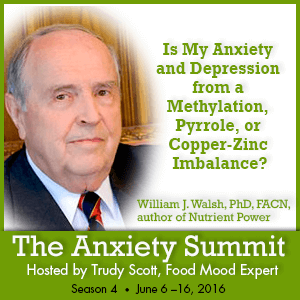
The Anxiety Summit – Is My Anxiety and Depression from a Methylation, Pyrrole, or Copper-Zinc Imbalance?

June 14, 2016 By Trudy Scott 142 Comments

William J. Walsh_Anxiety4

William J. Walsh, PhD, FACN, author of Nutrient Power, was interviewed on the Anxiety Summit by host of the Anxiety Summit, Trudy Scott, Food Mood Expert and Nutritionist, author of The Antianxiety Food Solution.

Is My Anxiety and Depression from a Methylation, Pyrrole, or Copper-Zinc Imbalance?

  • Neurotransmitters: how they are synthesized, transported and broken down.
  • Biochemical individuality and incidences of imbalances of copper, B6 and zinc.
  • Biotypes of depression, methylation disorders and whole blood histamine, and pyrrole disorder (pyroluria)
  • Copper-zinc imbalance and post-partum depression
  • Testing in blood and urine

Here are some gems from our interview:

Copper and estrogen are related and I’ve seen probably 400 cases of postpartum depression.  Virtually all of them have a copper overload.  These are people who might have been on SSRI antidepressants and with nothing really happening not making them better or worse.  But if we are able to simply normalize their copper most of them become completely okay and you can throw away their medications. They’re the easiest people to help. 

Well with respect to the females if a person has an anxiety disorder or a depression disorder and we find out that the onset was at puberty we kind of expect that the lab results are going to show this is a copper problem because at hormonal events copper levels tend to go awry if you’re not able to regulate your copper.  So it can happen at puberty. It can happen at childbirth.  And it can happen at menopause.  During the nine months of a pregnancy a women’s copper level more than doubles.  And this is necessary for that growing fetus.  It’s necessary for something called angiogenesis to promote the rapid development of blood vessels that that little growing baby needs.  And at the end of a pregnancy a woman’s copper level is usually more than double what it normally is.  A woman normally would be around 100 micrograms per deciliter in her blood.  Maybe it would be 220 at the end of a pregnancy. 

Well right after the baby’s born that copper level is supposed to start heading right back down to normal.  Well people with postpartum depression don’t have that ability and this can completely disrupt two of the major neurotransmitters and misery sometimes for the rest of their lives.  But the way we would bring it down, you have to do it carefully because they’re already suffering from too much copper levels in their brain and in their bloodstream so we have to remove the copper gently and gradually.  And one way to do that is to give them small doses of zinc initially and then just gradually build up the doses to the full dose it takes to normalize their zinc which will then automatically get the natural metallothionein system working.  And it takes about six to eight weeks usually.  But it can be done and it can be done without any discomfort for the patient if it’s done slowly.

I enjoyed hearing how Dr. Walsh got to work with one of the great pioneers in orthomolecular mental health, Dr. Carl Pfeiffer, author of Nutrition and Mental Illness:  An Orthomolecular Approach to Balancing Body Chemistry, and creator of the first pyroluria questionnaire.  I based my pyroluria questionnaire off this one.  Dr. Walsh has done the same thing.

Towards the end of the interview we discussed undermethylation and overmethylation and the confusion about MTHFR and terminology. I made reference to this blog post from a prior summit – Methylation and anxiety: histadelia and histapenia  and the interview with Dr. Ben Lynch – How Methylfolate can make you Feel Worse and even Cause Anxiety, and What to do about it

The takeaway from this discussion is this:

If a person had undermethylated depression they have low serotonin activity.  If you gave these people methylfolate their methylation would improve and the patient would get worse.

So basically I agree completely with Dr. Lynch on the best way to improve methylation and all I’m saying is that for some people, people who have problems of neurotransmission of serotonin you can’t give them folates because they’ll get worse.  So that’s an exception to the general rule. 

So it is these people who are the undermethylators (and using the original terminology, those with high histamine or histadelia) that do worse on folate.

Dr. Walsh agreed that the terminology undermethylation and overmethyation is confusing.

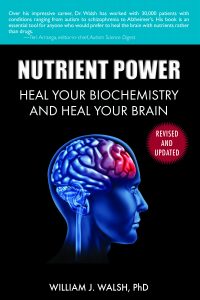
Connect with Dr. Walsh and save on his book Nutrient Power: Heal Your Biochemistry, Heal Your Brain (use discount code: ANXIETY)

Nutrient Power


You can find information about the Walsh practitioner training here 

If you are not already registered for the Anxiety Summit you can get live access to the speakers of the day here: www.theAnxietySummit.com

Missed this interview or can’t listen live? Or want this and the other great interviews for your learning library? Purchase the MP3s or MP3s + transcripts and listen when it suits you.

You can find your purchasing options here.: Anxiety Summit Season 1, Anxiety Summit Season 2, Anxiety Summit Season 3, and Anxiety Summit Season 4.

Filed Under: Events, The Anxiety Summit 4 Tagged With: anxiety, anxiety summit, copper-zinc imbalance, Methylation, pyroluria, pyrrole, Trudy Scott, William J. Walsh

  • « Go to Previous Page
  • Page 1
  • Interim pages omitted …
  • Page 5
  • Page 6
  • Page 7
  • Page 8
  • Page 9
  • Interim pages omitted …
  • Page 11
  • Go to Next Page »

Primary Sidebar

NEW! GABA QuickStart Homestudy (with special intro pricing)

gaba quickstart homestudy

Free Report

9 Great Questions Women Ask about Food, Mood and their Health

You'll also receive a complimentary subscription to my ezine "Food, Mood and Gal Stuff"


Connect with me

Popular Posts

  • Amino Acids Mood Questionnaire from The Antianxiety Food Solution
  • The Antianxiety Food Solution Amino Acid and Pyroluria Supplements
  • Pyroluria Questionnaire from The Antianxiety Food Solution
  • Collagen and gelatin lower serotonin: does this increase your anxiety and depression?
  • Tryptophan for the worry-in-your-head and ruminating type of anxiety
  • GABA for the physical-tension and stiff-and-tense-muscles type of anxiety
  • The Antianxiety Food Solution by Trudy Scott
  • Seriphos Original Formula is back: the best product for anxiety and insomnia caused by high cortisol
  • Am I an anxious introvert because of low zinc and vitamin B6? My response to Huffington Post blog
  • Vagus nerve rehab with GABA, breathing, humming, gargling and key nutrients

Recent Posts

  • What do I use instead of Seriphos to help lower high cortisol that is affecting my sleep and making me anxious at night?
  • BeSerene™ GABA/theanine cream eases severe muscle tension in her neck/shoulders, prevents her bad headaches and quells her anxiety
  • How the correct approach, dose and sublingual use of GABA can be calming and not cause a flushed and itchy face and neck
  • The amino acid glutamine improves low mood by addressing gut health, and it has calming effects too
  • Flight anxiety with heightened breath, physical tension and also fearing the worst (the role of low GABA and low serotonin)

Categories

  • 5-HTP
  • AB575
  • Addiction
  • ADHD
  • Adrenals
  • Alcohol
  • Allergies
  • Alzheimer's disease
  • Amino Acids
  • Anger
  • Antianxiety
  • Antianxiety Food Solution
  • Antidepressants
  • Anxiety
  • Anxiety and panic
  • Autism
  • Autoimmunity
  • benzodiazapines
  • Bipolar disorder
  • Books
  • Caffeine
  • Cancer
  • Candida
  • Children/Teens
  • Collagen
  • Cooking equipment
  • Coronavirus/COVID-19
  • Cravings
  • Depression
  • Detoxification
  • Diabetes
  • Diet
  • DPA/DLPA
  • Drugs
  • EFT/Tapping
  • EMF
  • EMFs
  • Emotional Eating
  • Endorphins
  • Environment
  • Essential oils
  • Events
  • Exercise
  • Fear
  • Fear of public speaking
  • Fertility and Pregnancy
  • Fish
  • Food
  • Food and mood
  • Functional neurology
  • GABA
  • Gene polymorphisms
  • General Health
  • Giving
  • Giving back
  • Glutamine
  • Gluten
  • GMOs
  • Gratitude
  • Gut health
  • Heart health/hypertension
  • Histamine
  • Hormone
  • Hyperparathyroidism
  • Hypoglycemia
  • Immune system
  • Inflammation
  • Insomnia
  • Inspiration
  • Introversion
  • Joy and happiness
  • Ketogenic diet
  • Lithium orotate
  • Looking awesome
  • Lyme disease and co-infections
  • MCAS/histamine
  • Medication
  • Men's health
  • Mental health
  • Mercury
  • Migraine
  • Mold
  • Movie
  • MTHFR
  • Multiple sclerosis
  • Music
  • NANP
  • Nature
  • Nutritional Psychiatry
  • OCD
  • Osteoporosis
  • Oxalates
  • Oxytocin
  • Pain
  • Paleo
  • Parasites
  • Parkinson’s disease
  • PCOS
  • People
  • PMS
  • Postpartum
  • PTSD/Trauma
  • Pyroluria
  • Questionnaires
  • Real whole food
  • Recipes
  • Research
  • Schizophrenia
  • serotonin
  • SIBO
  • Sleep
  • Special diets
  • Sports nutrition
  • Stress
  • Sugar addiction
  • Sugar and mood
  • Supplements
  • Teens
  • Testimonials
  • Testing
  • The Anxiety Summit
  • The Anxiety Summit 2
  • The Anxiety Summit 3
  • The Anxiety Summit 4
  • The Anxiety Summit 5
  • The Anxiety Summit 6
  • Thyroid
  • Thyroid health
  • Toxins
  • Tryptophan
  • Tyrosine
  • Uncategorized
  • Vegan/vegetarian
  • Women's health
  • Yoga

Archives

  • October 2025
  • September 2025
  • August 2025
  • July 2025
  • June 2025
  • May 2025
  • April 2025
  • March 2025
  • February 2025
  • January 2025
  • November 2024
  • October 2024
  • September 2024
  • August 2024
  • July 2024
  • June 2024
  • May 2024
  • April 2024
  • March 2024
  • February 2024
  • January 2024
  • December 2023
  • November 2023
  • October 2023
  • September 2023
  • August 2023
  • July 2023
  • June 2023
  • May 2023
  • April 2023
  • March 2023
  • February 2023
  • January 2023
  • December 2022
  • November 2022
  • October 2022
  • September 2022
  • August 2022
  • July 2022
  • June 2022
  • May 2022
  • April 2022
  • March 2022
  • February 2022
  • January 2022
  • December 2021
  • November 2021
  • October 2021
  • September 2021
  • August 2021
  • July 2021
  • June 2021
  • May 2021
  • April 2021
  • March 2021
  • February 2021
  • January 2021
  • December 2020
  • November 2020
  • October 2020
  • September 2020
  • August 2020
  • July 2020
  • June 2020
  • May 2020
  • April 2020
  • March 2020
  • February 2020
  • January 2020
  • December 2019
  • November 2019
  • October 2019
  • September 2019
  • August 2019
  • July 2019
  • June 2019
  • May 2019
  • April 2019
  • March 2019
  • February 2019
  • January 2019
  • December 2018
  • November 2018
  • October 2018
  • September 2018
  • August 2018
  • July 2018
  • June 2018
  • May 2018
  • April 2018
  • March 2018
  • February 2018
  • January 2018
  • December 2017
  • November 2017
  • October 2017
  • September 2017
  • August 2017
  • July 2017
  • June 2017
  • May 2017
  • April 2017
  • March 2017
  • February 2017
  • January 2017
  • December 2016
  • November 2016
  • October 2016
  • September 2016
  • August 2016
  • July 2016
  • June 2016
  • May 2016
  • April 2016
  • March 2016
  • February 2016
  • January 2016
  • December 2015
  • November 2015
  • October 2015
  • September 2015
  • August 2015
  • July 2015
  • June 2015
  • May 2015
  • April 2015
  • March 2015
  • February 2015
  • January 2015
  • December 2014
  • November 2014
  • October 2014
  • September 2014
  • August 2014
  • July 2014
  • June 2014
  • May 2014
  • April 2014
  • March 2014
  • February 2014
  • January 2014
  • December 2013
  • November 2013
  • October 2013
  • September 2013
  • August 2013
  • July 2013
  • June 2013
  • May 2013
  • April 2013
  • March 2013
  • February 2013
  • January 2013
  • December 2012
  • November 2012
  • October 2012
  • August 2012
  • July 2012
  • June 2012
  • May 2012
  • April 2012
  • March 2012
  • February 2012
  • January 2012
  • December 2011
  • November 2011
  • October 2011
  • September 2011
  • August 2011
  • July 2011
  • June 2011
  • May 2011
  • April 2011
  • March 2011
  • February 2011
  • January 2011
  • December 2010
  • October 2010
  • September 2010
  • July 2010
  • May 2010
  • April 2010
  • March 2010
  • February 2010
  • January 2010
  • November 2009

Share the knowledge!

The above statements have not been evaluated by the Food and Drug Administration. Products listed in this website are not intended to diagnose, treat, cure or prevent any disease.

The information provided on this site is for informational and educational purposes only and is not intended as a substitute for advice from your physician or other health care professional. You should consult with a healthcare professional before starting or modifying any diet, exercise, or supplementation program, before taking or stopping any medication, or if you have or suspect you may have a health problem.


Copyright © 2026 Trudy Scott. All Rights Reserved. | Privacy | Terms and Conditions | Refund Policy | Medical Disclaimer

Free Report

9 Great Questions Women Ask about Food, Mood and their Health

You’ll also receive a complimentary subscription to my ezine “Food, Mood and Gal Stuff”