• Skip to primary navigation
  • Skip to main content
  • Skip to primary sidebar

everywomanover29 blog

Food, Mood and Women's Health – Be your healthiest, look and feel great!

  • Blog
  • About
  • Services
  • Store
  • Resources
  • Testimonials
  • The Book
  • Contact
  • Search this site

pyroluria

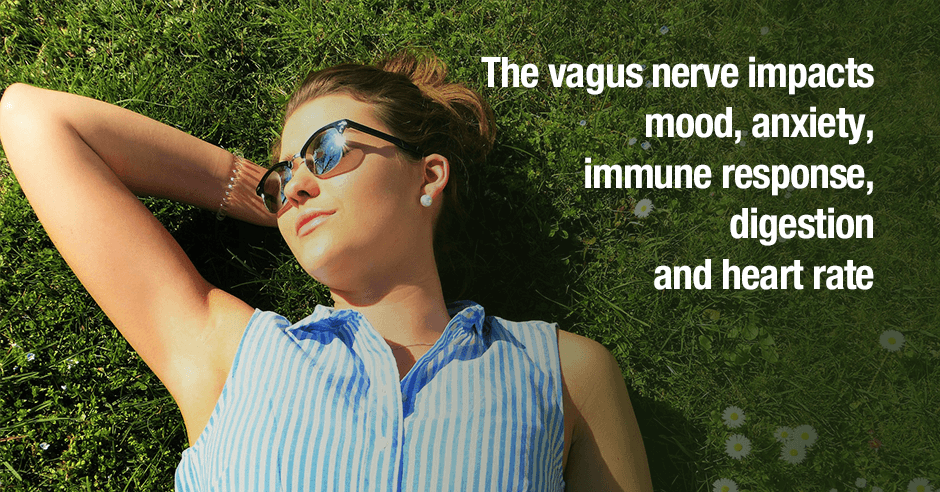
The vagus nerve impacts mood, anxiety, immune response, digestion and heart rate

May 4, 2020 By Trudy Scott 12 Comments

vagus nerve impacts

The vagus nerve forms a bi-directional “super-highway” between your brain and the majority of your internal organs. Unless your vagus nerve is in good shape and activates readily when it is supposed to, the communication between your brain and the body will be disrupted.

This modern world can lead to overstimulation of the nervous system and you can become desensitized to chronic stress. Over time, this can lead to low vagal tone, which has been linked to a variety of mental and physical health issues, including chronic inflammation, poor gut function, neurodegeneration, autoimmunity and cancer.

And we know this to be true: you cannot FULLY heal leaky gut, microbiome function or brain issues WITHOUT optimizing your vagus function.

Host of the Mind, Body & The Vagus Nerve Connection Summit, Eva Detko, PhD, MSc, BA (Hons), mIAHT, shares the above wisdom about the vagus nerve. I’ll add this: overstimulation of the nervous system is especially high right now during the coronavirus pandemic.

In my interview, Balancing Neurotransmitters to Optimize Vagus Function, we start with a review paper that reports how the vagus nerve is intricately connected with anxiety and mood (and immunity).

I share from Vagus Nerve as Modulator of the Brain–Gut Axis in Psychiatric and Inflammatory Disorders:

  • The vagus nerve represents the main component of the parasympathetic nervous system, which oversees a vast array of crucial bodily functions, including control of mood, immune response, digestion, and heart rate.
  • It establishes one of the connections between the brain and the gastrointestinal tract and sends information about the state of the inner organs to the brain via afferent fibers.

The review article goes on to state how the vagus nerve is an attractive tool for treating psychiatric and gastrointestinal disorders: “There is preliminary evidence that vagus nerve stimulation is a promising add-on treatment for treatment-refractory depression, posttraumatic stress disorder, and inflammatory bowel disease.”

And as we all know when we hear the term treatment-refractory depression, it means we haven’t got to the root cause of it. It just means that medications haven’t worked for it.

So this allows us to extrapolate and say, well, there’s other lifestyle and dietary, and nutritional approaches that we could use. But they’re saying that stimulating the vagus nerve, activating it, can actually help in this area. And with my work in anxiety, whenever I see depression, I feel like I can replace that with anxiety (because of similar underlying causes). The other thing that they say is that there’s this impact on inflammation: “Treatments that target the vagus nerve increase the vagal tone and inhibit cytokine production.”

And we know that when we’ve got inflammation going on in the body, that’s going to contribute to mood disorders: “Stimulation of vagal efferent fibers in the gut influences neurotransmitters (like serotonin and dopamine, and GABA) that play a crucial role in major psychiatric disorders.”

So the conclusion is that vagal tone is correlated with the capacity to regulate stress responses and can be influenced by breathing. Its increase through meditation and yoga is likely to contribute to resilience, and the mitigation of mood and anxiety symptoms. And we know from other research, and we know from just doing it, that using meditation and yoga is going to affect anxiety levels. We’ve seen research showing that yoga and meditation raises GABA levels, which is one of the neurotransmitters that helps us feel calm.  But now we’re also seeing from the research that good vagal tone has an impact as well.

So it’s really exciting to see that there’s many different ways that we can use to approach someone who does have anxiety issues.

I also talk about a very interesting study that brings the connections between GABA and the vagus nerve together very nicely. As I’m talking I see Eva nodding in agreement as I cover this. I wanted to share this study to add another mechanism as to how GABA may work, given so many people don’t believe it can because of the blood brain barrier.

This was an animal study done in 2011 and it’s titled: Ingestion of Lactobacillus Strain Regulates Emotional Behavior and Central GABA Receptor Expression in a Mouse via the Vagus Nerve. You may have had other people in the summit talking about this. I can see you nodding there. Let me just bring it back to this discussion because I’ve got something to add about this. But what they found is this – Lactobacillus rhamnosus increased GABA in the hippocampus. It reduced cortisol levels, which was caused by the increased stress, and it reduced anxiety and the depression in the animals.

When they severed the vagus nerve in some of the mice in the study they found that these neurochemical and behavioral effects were not found. So as soon as the vagus nerve was severed, the effects of the Lactobacillus rhamnosus, which was increasing GABA levels, was not reducing the anxiety and it was not reducing those cortisone levels.

The biggest question that I get about GABA is: “How could GABA possibly work if it can’t cross the blood brain barrier?”  Maybe this is one way that is having an impact on anxiety. We know that we’ve got a lot of GABA receptors in our peripheral tissue. We’ve got GABA receptors in our muscles, which probably is the reason why we feel it when we’ve got this physical tension, or we’ve got the spasms. We’ve got GABA receptors in our pancreas. We’ve got GABA receptors in our endocrine system.

But maybe this vagus nerve connection and the fact that when it’s severed we’re not getting those effects, maybe this is another way that GABA is having an impact on anxiety.

Making the vagus nerve connection to serotonin, I share some interesting new research on SSRIs/antidepressants and the vagus nerve: Oral Selective Serotonin Reuptake Inhibitors Activate Vagus Nerve Dependent Gut-brain Signalling.

SSRIs like Zoloft or Paxil or Prozac are often prescribed for anxiety, depression, autism and dementia. And there’s a whole host of issues that we have with SSRIs where you’ll have serious withdrawal symptoms in some people.

In the study, the researchers proposed that SSRIs were having an effect on serotonin and it was the vagus nerve that was now communicating to the brain leading to increased serotonin levels. Similar to the GABA study, when they severed the vagus nerve of the mice, they did not see the same benefits from the SSRI.

My thinking is this: could we possibly extrapolate and say the amino acid tryptophan may have similar effects?

We won’t hold our breath for a similar tryptophan study but we can learn from this paper and possible mechanisms.

I also share how I use GABA and tryptophan with clients so if you’re new to using targeted individual amino acids you’ll learn more about this too.

As you know, my work is primarily using the neurotransmitters precursors (such as the amino acids) and using dietary changes, but we don’t want to forget about other approaches like vagus nerve support.

If we can improve vagus function, then we’re going to get even better benefits.

I share some of my favorite vagus nerve exercises. One of them – social interaction – has been challenging lately but cold showers are very do-able.

Let me share some aspects on the importance of social interaction for improving vagal tone.

Research shows that the more social interactions you have, the more it improves vagal tone. And then that improved vagal tone, improves your mood and makes you more social (and has ramifications for so many other areas as you’ll learn on the summit).

However if you have a condition called pyroluria (social anxiety, preferring one-to-one connections rather than being in large groups, not liking small talk, early morning nausea, not really big on animal protein – I go into it in depth during the interview if it’s new to you), getting out and being social can be very challenging when you are forcing yourself and putting on a brave face:

It’s a very stressful situation in doing that, and then it makes your pyroluria worse so your social anxiety gets worse. So when you have pyroluria and you have a stressful situation, you end up dumping high levels of zinc and B6. So it makes things worse.

If you do go out, it’s either very stressful or you just don’t even do it. So my contribution to the discussion is: let’s address pyroluria and that’s going to in turn allow people to get out and socialize without feeling uncomfortable, without feeling awkward, without having to stress, without feeling absolutely exhausted afterwards, and it’s going to help improve vagal tone.

Eva sums up with this important aspect:

What people need to know is that social connection is good for your vagus nerve only if it’s perceived positively by you internally. So if you’re in a situation where you’re forcing yourself to interact with other people, you’re actually not going to have a positive knock-on effect on your vagus nerve because it’s going to be the opposite. You’re going to stimulate the sympathetic nervous system response because you’re there, as you described, completely uncomfortable and basically stress out. So those social connections need to be positive.

Here are some interviews I look forward to tuning into:

  • Niki Gratrix, BA, Dip ION: Connecting the Vagus Nerve, Emotions and Gut Function
  • Ben Lynch, ND: Epigenetics of Chronic Stress
  • Bridgit Danner, LAc, FDNP: How Mold Toxicity Damages Your Nervous System
  • Jay Davidson, DC, PScD: Impact of Infections on Mitochondrial and Vagus Function
  • Kimm Sun, CNM: Impact of Birth Trauma Across Lifetime
  • Eva Detko, PhD, MSc, BA (Hons): Impact of Perfectionism on Heart Rate Variability
  • Misa Hopkins: Vagus Nerve Session of the Day – Vagus Nerve Sound Healing

I don’t go into the immune connection in my interview because it was recorded before the coronavirus pandemic started but keep this in mind as you tune in: you cannot have a well-functioning immune system without a healthy nervous system, and vice-versa!
Filed Under: Events Tagged With: anxiety, B6, depression, digestion, Eva Detko, GABA, heart rate, immune response, immunity, lactobacillus rhamnosis, mood, neurotransmitters, pyroluria, serotonin, social interaction, SSRI, stress response, tryptophan, vagal tone, vagus nerve, zinc

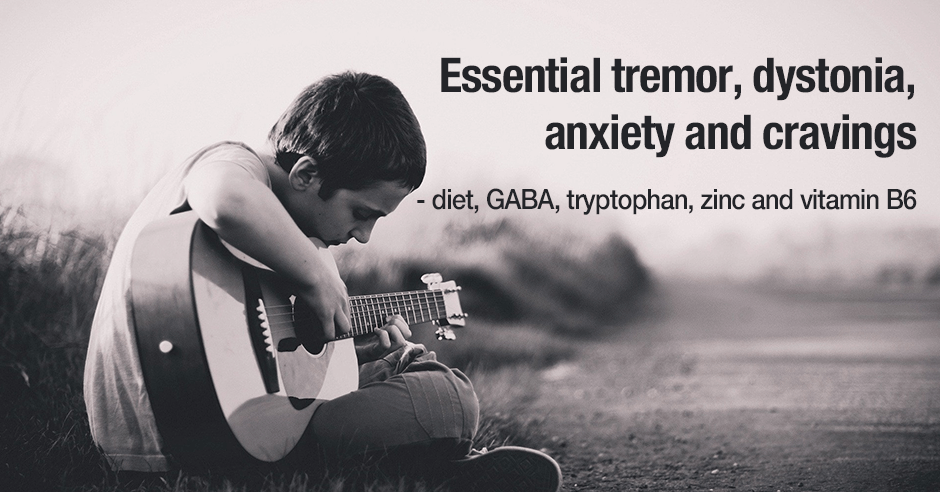
Essential tremor, dystonia, anxiety and cravings – diet, GABA, tryptophan, zinc and vitamin B6

January 17, 2020 By Trudy Scott 83 Comments

Essential tremor, dystonia, anxiety and cravings

Today I’m sharing how diet, GABA, tryptophan, zinc, vitamin B6 and other B vitamins can resolve essential tremor and sugar cravings in 2 months, and also resolve musician’s dystonia and social anxiety within 4 months.

According to Medical News Today essential tremor is a movement disorder that can cause hand tremors and “is among the most common movement disorders.” … “The tremor usually affects both sides of the body, but it may be more noticeable in the dominant hand. It tends to occur when the person is moving as well as when standing still. Genetics may be responsible for around half of the cases of essential tremor.”

Essential tremor – diet, GABA, tryptophan and B vitamins

This Croatian paper, Treatment of Essential Tremor with Multi-Modal Nutritional Therapy in a Teenage Patient, reports the “case of a 13-year-old boy with [essential tremor] causing severe functional impairment” over the previous 2 years.

“A multi-modal nutritional therapy approach” was used to target three possible areas that could be contributing to the tremors: a poor diet that was high in sugar, low GABA levels and low serotonin. These changes were implemented:

(i) diet (specifically adopting a Mediterranean diet)

(ii) GABA (through oral supplementation) and

(iii) L-tryptophan/vitamin B pathways (Triptobel oral supplement).

The papers states: “After two months of therapy, his tremor decreased significantly and he regained normal function.”

Once the essential tremor resolved, this teen was able to resume his plans to pursue a musical career as a guitar player (which had been put on hold due to the tremor and his inability to play). What wonderful results!

I’m thrilled to see tryptophan and GABA being used for this condition and am really pleased to read this case report.  Here is my commentary on the supplements and doses he used for anyone wishing to try and replicate this nutritional approach (keeping in mind there is no one-size-fits-all).

  • He used 150 mg of the Triptobel supplement three times daily at 8 am, 1 pm, and 6 pm. One capsule of  the Triptobel contains 150mg L-tryptophan and a B vitamin complex of thiamine (vitamin B1), riboflavin (vitamin B2), niacin (vitamin B3), pantothenic acid (vitamin B5), vitamin B6, folic acid (vitamin B9), and cyanocobalamin (vitamin B12).  The total tryptophan dose was 450mg per day. A typical starting dose for someone with anxiety is 500mg 2 x day so his dose was on the low-end.  The Triptobel was also used at mealtimes and according to the label “on a full stomach after a light meal, preferably without protein.” I like to use tryptophan between meals (away from protein) and a B complex with meals so I’m intrigued by this application (but wonder when protein was consumed).
  • He also used 750mg GABA twice daily at 10 am and 4 pm. This is considered a high starting dose for the majority of my clients with anxiety and I start low and build up to this amount.

Anxiety and low mood was not mentioned so I don’t know if they were factors.

It appears sugar and carb cravings were very likely a factor given that his normal daily diet contained “large amounts of refined sugars (chocolate, cake, biscuits, ice cream, etc).” The amino acids would have helped him with those cravings.

With regards to his diet, given how common movement disorders are with gluten issues, I would also consider I gluten-free diet which has been shown to have an adverse impact on neurotransmitter levels and B vitamins. Could gluten have triggered these nutritional deficiencies and the tremors?

And now to share a very similar case in an adult male … with a different and yet related approach.

Dystonia and hand tremors – and the pyroluria connection

This same Medical News Today article also describes dystonic tremor/dystonia as a movement disorder that can also cause hand tremors, stating that “the brain sends incorrect messages, resulting in overactive muscles, abnormal postures, and sustained undesired movements. Young adults and those in middle age are most likely to develop dystonic tremors, which can occur in any muscle.”

If you’ve been reading my recent articles on pyroluria (the pyroluria-vagus nerve connection and the introversion-pyroluria-loneliness connection) I’m sure you’ll be be interested to learn that there appears to be a strong link between pyroluria and focal musician’s dystonia (or musician’s cramp) in some individuals.

As you read in the blog above, Jay, also a guitar player, had to put his professional music career on hold due to musician’s dystonia. He also happened to have social anxiety and he started to notice improvements in his anxiety and tremors within the first 2 weeks. At the end of 4 months of being on the pyroluria protocol, he shared this:

I think it is, at this point, safe to say that the pyroluria treatment [120mg vitamin B6 and  60mg zinc) is, at least in my case, the cure for pyroluria and dystonia. 90%+ of my symptoms have disappeared, I am working extensively on repertoire and I am thinking about getting back into performing.

He says his experience was “akin to rebirth as a musician and also as a person.” How wonderful is that to read. Jay’s musician’s dystonia resolved and so did his social anxiety.

The outcome for the teen and Jay were similar and yet the approaches used were seemingly very different. This isn’t actually the case since zinc and vitamin B6 are co-factors that are needed to make GABA and serotonin.

Do you experience tremors, or have you been diagnosed with essential tremor or dystonia (or know someone who has)? And have you considered a nutritional approach?

Do share if you’ve seen success with either of the above approaches, and also experienced reduced anxiety or felt more social?

Filed Under: Pyroluria Tagged With: anxiety, cravings, diet, dystonia, Essential tremor, GABA, pyroluria, serotonin, social anxiety, tremor, tryptophan, vitamin B6, zinc

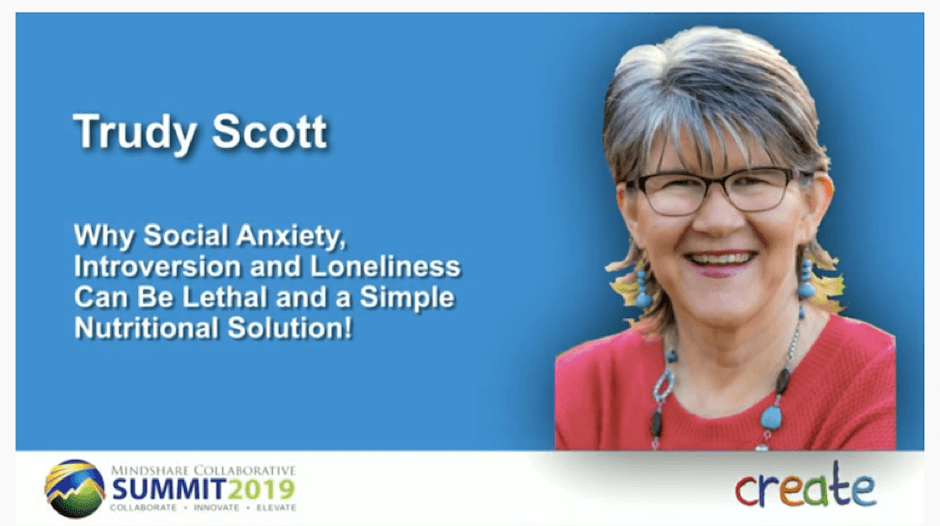
Why social anxiety, introversion and loneliness can be lethal and a simple nutritional solution

January 10, 2020 By Trudy Scott 40 Comments

trudy scott mindshare

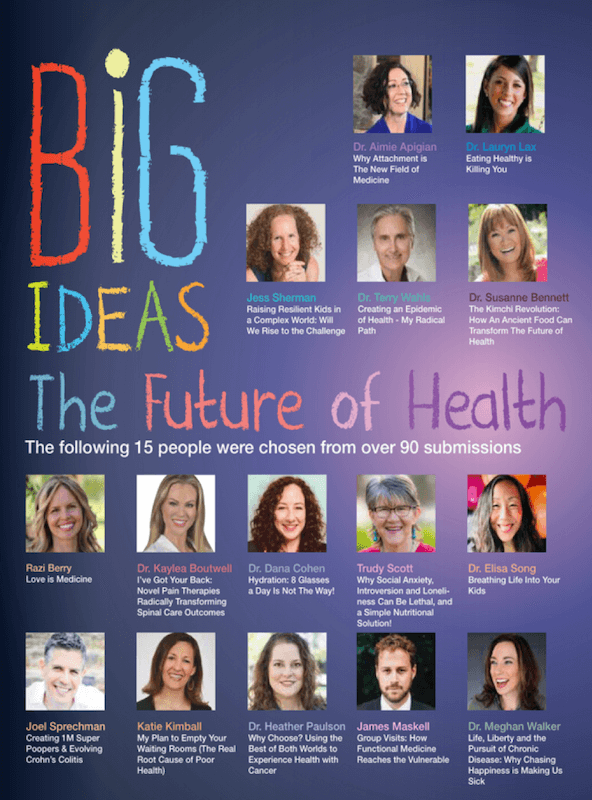
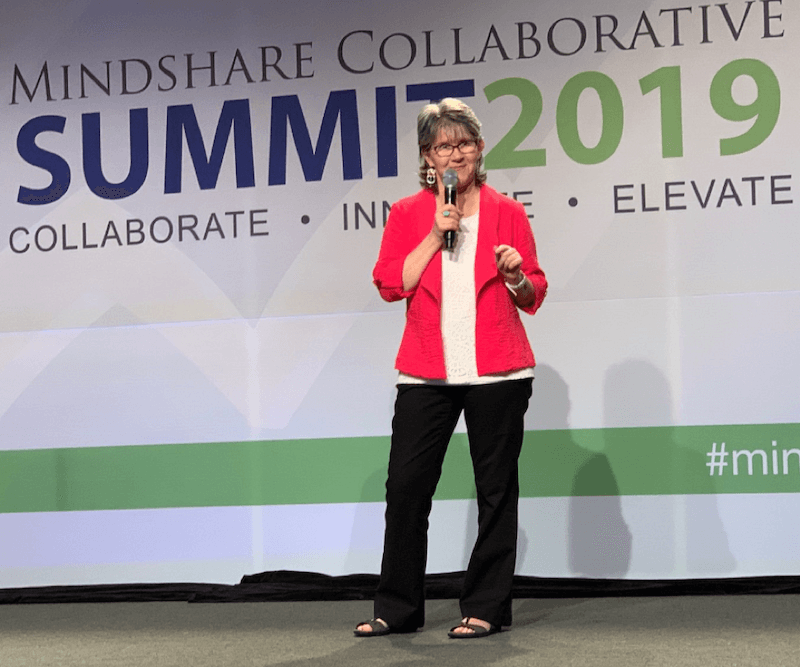
It was an honor to be selected as one of fifteen participants for The Future of Health presentations at Mindshare in August 2019. I presented this to my peers in the integrative health and nutrition space but it’s applicable to everyone and I’d like to share it with you today.

Here is my video presentation: Why social anxiety, introversion and loneliness can be lethal and a simple nutritional solution  (click below to watch the video)

Here are some additional reading resources on much of what I cover in my 5 minute presentation:

  • Pyroluria is a social anxiety condition that is not well recognized in the medical community. It responds really well to a few key nutrients, with zinc and vitamin B6 forming the foundation. I cover this in this blog post: Pyroluria, high mauve, pyrrole disorder, malvaria, elevated kryptopyrroles and social anxiety.
  • Here is a link to the Pyroluria Questionnaire from my book The Antianxiety Food Solution (which has an entire chapter on the topic). I created this questionnaire using the work of Carl Pfeiffer and Joan Mathews-Larson, modifying it based on feedback I receive from my clients.
  • I discuss how I first discovered the pyroluria-introversion connection here – Am I an anxious introvert because of low zinc and vitamin B6? My response to Huffington Post blog. I wrote this in response to the Huffington Post article, “23 Signs You’re Secretly An Introvert”, by Carolyn Gregoire.
  • Here is the webmd loneliness article with this quote: “Loneliness has the same impact on mortality as smoking 15 cigarettes a day, making it even more dangerous than obesity” ~ Douglas Nemecek, MD, chief medical officer for behavioral health, Cigna
  • And this loneliness paper, Loneliness and Social Isolation as Risk Factors for Mortality: A Meta-Analytic Review
  • In this blog I write about how Increased sociability improves vagus nerve function: the role of social anxiety, pyroluria and low zinc

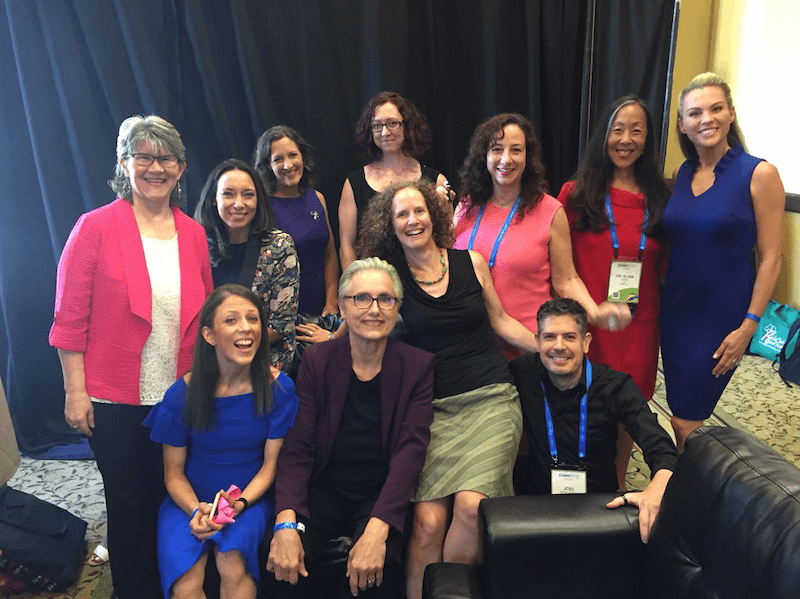
This is the the amazing and inspiring group of speakers who I shared the stage with:

  • Amie Apigan – Why Attachment is the New Field of Medicine
  • Lauryn Lax – Eating Healthy is Killing You
  • Jess Sherman – Raising Resilient Kids in a Complex World: Will we Rise to the Challenge
  • Terry Wahls – Creating an Epidemic of Health – My Radical Path
  • Susanne Bennett – The Kimchi Revolution: How an Ancient Food Can Transform the Future of Health
  • Razi Berry – Love is Medicine
  • Kaylea Boutwell – I’ve Got Your Back: Novel Pain Therapies Transforming Spinal Care Outcomes
  • Dana Cohen – Hydration: 8 Glasses a Day is not the Way!
  • Elisa Song – Breathing Life into Your Kids
  • Joel Sprechman – Creating 1M Super Poopers & Evolving Crohn’s Colitis
  • Katy Kimball – My Plan to Empty Your Waiting Rooms (the Real Root Cause of Poor Health)
  • Heather Paulson – Why Choose? Using the Best of Both Worlds to Experience Health with Cancer
  • James Maskell – Group Visits: How Functional Medicine Reaches the Vulnerable
  • Mehgan Walker – Life, Liberty and the Pursuit of Chronic Disease: Why Chasing Happiness is Making us Sick

(do let me know if you’d like me to share any of these presentations in the follow-up blog)

mindshare speakers
Mindshare 2019 green room
Here are some of us in the backstage “green room” and getting ready to go on stage!

We each had a maximum of 5 minutes to present and were not allowed slides or notes. The last time I had memorized my talks and had them timed was 15 years ago when I was in Toastmasters. Before that it was when I was in school. I wasn’t even sure if I could do it when I entered my proposal to speak. When practicing the day before I was still unsure I could manage. Because of my Lyme disease, my memory and word recall isn’t as great as it used to be.

If you pay close attention and you’ll notice the spot where I almost freeze – everything just went out of my head! I simply breathed in calmly, made an attempt to look like I had paused and was fortunate that most of the ending came back to me! Whew!

trudy scott mindshare 2019


I’d love to hear what you think of my message and if it resonates with you or a loved one. Feel free to share your pyroluria score and how you score on the introvert questionnaire.

Please also share if you’ve seen the benefits of no social anxiety, introversion and/or loneliness (or much less) when on the pyroluria protocol.

Filed Under: Anxiety, Introversion, Pyroluria Tagged With: anxiety, Future of Health, introversion, loneliness, mindshare, pyroluria, sociability, social anxiety, social isolation, vagus nerve, vitamin B6, zinc

Increased sociability improves vagus nerve function: the role of social anxiety, pyroluria and low zinc

December 13, 2019 By Trudy Scott 43 Comments

increased sociability and vagus nerve

With the objective of taking a deeper dive into some of the favorite topics of the recent Anxiety Summit: Gut-Brain Axis, today’s blog is about the vagus nerve since Dr. Navaz Habib’s interview, Vagus Nerve Activation to Reduce Anxiety, was voted one of the favorites. I’m focusing on one tool that improves vagus nerve function that we didn’t have time to get into in great detail – and that is how increased sociability helps.  It’s all good and well to recommend getting out and hanging out with more people but if you have the social anxiety condition called pyroluria it’s really challenging, hard work and very stressful. Added stress makes pyroluria worse so it becomes a vicious cycle.

Let’s start with the research that supports the connection between the vagus nerve and increased anxiety and mood problems.  In the interview with Dr Navaz, we discussed this paper: Vagus Nerve as Modulator of the Brain–Gut Axis in Psychiatric and Inflammatory Disorders which states that “vagus nerve stimulation is a promising add-on treatment for treatment-refractory depression, posttraumatic stress disorder, and inflammatory bowel disease” and how stimulation of vagal fibers that go from the gut to the brain (afferent fibers) influences neurotransmitter production and “play crucial roles in major psychiatric conditions, such as mood and anxiety disorders.”  The gut bacteria play a major role too, “partly by affecting the activity of the vagus nerve.”

In our interview we end with very practical ways to activate your vagus nerve

  • Deep breathing exercises (mentioned in the above paper, together with yoga and meditation) and cold showers (which makes you breathe harder)
  • Gargling and using the gag reflex
  • Humming, chanting and singing (I used these approaches for my vagus nerve issue after my terrifying plane ride. GABA also helped with the voice/throat spasms I experienced – more here on that)
  • Auricular acupuncture (which is also very effective for addictions)
  • And finally, social interaction or increased sociability, which I want to cover today

The research on the vagus nerve and being more social

Let’s look at the research on the vagus nerve or vagal tone and being more social.  This paper, Upward spirals of the heart: autonomic flexibility, as indexed by vagal tone, reciprocally and prospectively predicts positive emotions and social connectedness, reports that that vagal tone and connectedness or being more social is a two-way street i.e. it’s reciprocal

  • “…increases in connectedness and positive emotions predicted increases in vagal tone” and
  • “Adults who possessed higher initial levels of vagal tone increased in connectedness and positive emotions more rapidly than others”

In summary, the more social and happy you are, the healthier your vagus nerve is and a healthier vagus nerve leads to feeling more connected and happy.

This study was done with adults in a community-dwelling setting over 9 weeks: “adults were asked to monitor and report their positive emotions and the degree to which they felt socially connected each day.”

Address pyroluria in those who have social anxiety

Pyroluria, the social anxiety condition, was not part of the study because it’s under-recognized as a factor in anxiety.  I’d like to propose that we address pyroluria in those who have social anxiety in order to further improve social connectedness and their vagus nerve function.

Many folks with pyroluria put on a brave face in social settings and even “extrovert” which is extremely stressful. The added stress makes pyroluria worse (zinc and vitamin B6 are dumped in much higher amounts) so it becomes a vicious cycle.

Others, who are not willing to even show up because of their severe social anxiety, are not getting that social interaction and connectedness that is so crucial for improved vagus nerve function and better overall health.

Here is the pyroluria questionnaire and the pyroluria/introvert connection.

Connecting the dots further we have

  • research that reports that vagus nerve stimulation has potential in autism treatment and we know pyroluria and social issues are common in autism
  • one of the key nutrients for pyroluria, zinc, plays a role in vagus nerve function
  • another key nutrient in pyroluria is vitamin B6 and it plays a role in reducing inflammation
  • according to the vagus nerve study above, the vagus nerve “plays important roles in the relationship between the gut, the brain, and inflammation”
  • both zinc and vitamin B6 are needed for neurotransmitter production, so increasing both GABA and serotonin will further improve mood and reduce anxiety
  • and finally, the more social and happy you are, the healthier your vagus nerve is and a healthier vagus nerve leads to feeling more connected and happy

By addressing the social anxiety called pyroluria with a foundation of zinc and vitamin B6, we can increase sociability and thereby improve vagus nerve function.

UPDATE 5/7/2020:

Social isolation during the coronavirus pandemic – other vagus nerve exercises

This blog is very applicable now during the coronavirus pandemic. I’ve made an update because I feel we need to start thinking about the longer-term adverse impacts of social isolation and work on other ways to improve vagus nerve function during isolation or quarantine.

This can include any or all of the ways mentioned above: deep breathing exercises, yoga, meditation, cold showers, gargling/gag reflex, humming/chanting/singing and/or auricular acupuncture.

Do you find you have better vagus nerve function when you are more sociable? What of these vagus nerve exercises have you been doing and found helpful during isolation? Do you have any other favorite approaches like using essential oils or anything else?

Vagus nerve stimulation to treat respiratory symptoms associated with COVID-19

This paper reports benefits in 2 patients with coronavirus – Use of non-invasive vagus nerve stimulation to treat respiratory symptoms associated with COVID-19: A theoretical hypothesis and early clinical experience

  • Both patients reported clinically meaningful benefits from nVNS therapy [non-invasive vagus nerve stimulation].
  • In Case 1, the patient used nVNS to expedite symptomatic recovery at home after hospital discharge and was able to discontinue use of opioid and cough suppressant medications.
  • In Case 2, the patient experienced immediate and consistent relief from symptoms of chest tightness and shortness of breath, as well as an improved ability to clear his lungs.

The authors also share that “vagus nerve stimulation has been demonstrated to block production of cytokines in sepsis and other medical conditions.”

With this virus being novel and with everyone learning we are still appreciative of small case reports like this and hope to see bigger studies done. Until then there is other evidence of the overall importance of the vagus nerve in helping to regulate lung infection and immunity.

The nVNS therapy mentioned in the COVID-19 paper is an external device that delivers “a proprietary signal through the skin to either the right or the left branches of the vagus nerve in the neck.” It’s not something I’ve used personally or had clients use so please share if you’ve had success with this device or a similar device.

Loving social isolation and thriving during coronavirus

On the flip side we also need to consider that there are some individuals who are loving social isolation and thriving emotionally. I share some feedback from folks in my community:

  • Elissa: “As an introvert, my mental health has never been better ☺️. Loving isolation life.”
  • Drew: “Loving it in many ways. Dreading the hedonism starting up again…”
  • Tiffany: “My anxiety levels have decreased and I have decreased my anxiety meds! I think it’s because the demand to produce has decreased. I can actually move at my own speed in this world. I’m fortunate, though. My heart goes out to those people in medical fields. I really miss some things, like time with my dad, but we have made some adjustments, like driveway picnics.”
  • Katie: “I was praying for relief from the busyness. Definitely didn’t have this in mind and my heart hurts for those who are impacted. It has been a beautiful time of rest and restoration for my body and soul.”
  • Wendy: “My life is usually slow paced and introverted. Now it’s more so and I’m finding the less I do in a day, the better I sleep. I’m actually dreading getting back to “normal” with all the pressures put on us by extroverts. Yes I have sympathy for people suffering mentally by isolation, but for the first time I feel like my type of lifestyle is socially acceptable. I’m tired of life expectations being dictated by the extrovert half of the population.”

I appreciate these folks for sharing their valuable perspectives about thriving in these times. It reinforces how unique we all are.

If you’re struggling with social isolation…

  • How are you feeling and what are you most looking forward to doing once social isolation recommendations are relaxed?
  • I’m guessing you don’t have pyroluria but please share if you do?

If you are thriving in social isolation…

  • Would you consider yourself an introvert /a contented introvert?
  • Have you got pyroluria and has addressing it nutritionally in the past allowed you to be more sociable or at least less anxious when you are in crowds?
  • How are you feeling during social isolation and what do you love the most right now?
  • What are you not looking forward to once social isolation recommendations are relaxed?
  • And how do you plan to go back to the old “normal” or don’t you?

Please comment below and let us know where you are with social isolation during this pandemic – struggling or thriving? And what vagus nerve exercises are you using right now? Have you used an external device with success?

Filed Under: Coronavirus/COVID-19, Pyroluria Tagged With: anxiety, anxiety summit, autism, Coronavirus, COVID-19, depression, GABA, Habib Navaz, infection, Inflammation, lung, non-invasive vagus nerve stimulation, posttraumatic stress disorder, pyroluria, sociability, social anxiety, spasms, stress, struggling, thriving, vagal tone, vagus nerve, vitamin B6, voice, zinc

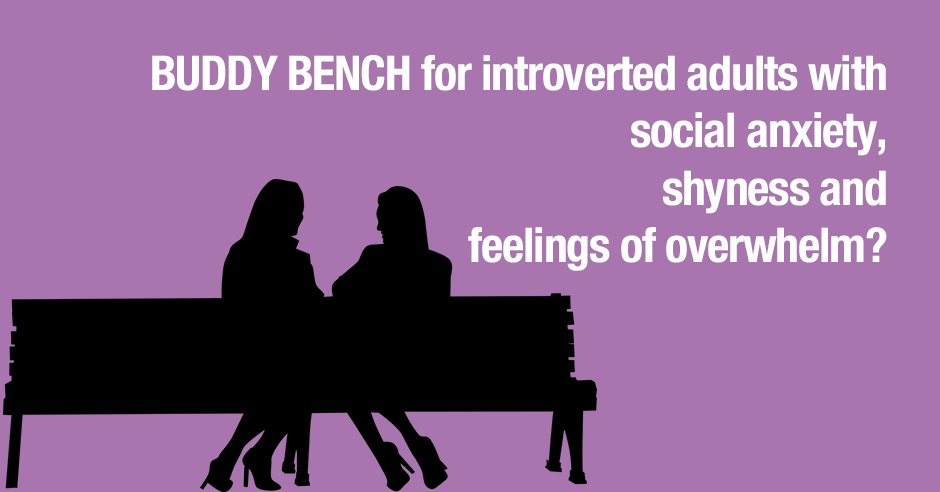
Buddy Bench for introverted adults with social anxiety, shyness and feelings of overwhelm?

July 26, 2019 By Trudy Scott 6 Comments

buddy-bench

Buddy Benches or Friendship Benches are being used in many countries around the world in schools to help children who feel lonely or are shy or anxious. I propose we do something similar for introverted adults with social anxiety, shyness and feelings of overwhelm or intimidation when they attend conferences.

This BBC article, How ‘Buddy Benches’ are making playtime less lonely shares this about how they are helping children fit in more:

The school playground can be a lonely place for a child if they haven’t got anyone to play with. But a special type of bench is helping pupils make friends.

The idea is simple – if a child feels lonely, they can go to the bench as a signal that they need someone to play with. Another child will see them, go and talk to them and include them in their games.

Also from the BBC article, we learn that Buddy Bench Ireland is taking it a step further and trying to do something different with them, using the bench to engender empathy and as

a reminder for children of things like communication, mutual support and opening up about feelings

Other objectives of these Buddy Benches in schools is:

  • reducing social isolation
  • improving mental wellbeing
  • end bullying

I propose we take these Buddy Benches – that work so well with children – to another level and set them up at conferences for adults too. I believe they could work very well for introverts (who make up around 50% of the population) with social anxiety and/or anyone feeling overwhelmed and/or intimidated and/or shy.

I get kickback when I talk about introverts feeling socially anxious but it’s common as you can see by these comments from introverted individuals

  • It isn’t always a comfortable place to be when I must be in a crowd.
  • The hardest aspect of living life as in introvert is we all live in an extroverted world. School pushes kids to do group projects, that are just awkward and when you don’t do well in it you’re doing something wrong or something is wrong with you. The moment I step out of the door I am no longer me, I am a character that has to put on a show in order to succeed in the work place.
  • Sometimes I can communicate with friends well and sometimes I fake it really badly. I always wonder if people can see past my half smile and fake laugh. It’s painful to be honest. But there are times when I don’t mind so much.

One big question is this: would adults use one or would they feel more self-conscious than children? Would they worry more about what others will think if they sit down at an empty bench waiting for someone to join them, essentially saying “I’m shy” or “I’m anxious” or “I’m an introvert” or “I feel intimidated”?

In the BBC article they address this stigma and worry aspect:

But do children actually use the bench? And are they worried about how it makes them look?

“They don’t see it as stigmatised,” says Sinead McGilloway, director of the Centre for Mental Health and Community Research at Maynooth University, who led a study of 117 pupils at three schools which have benches.

Forty per cent of the children she questioned said they had used the bench, and 90% said if they saw someone else sitting on it they would talk to them.

I have these questions for you about using a Buddy Bench at a business or health conference:

1) How likely are you to use a Buddy Bench as an adult diagnosed with social anxiety and/or know you have the social anxiety condition called pyroluria and you’re working to address your symptoms with nutrients but are not quite there yet.

2) How likely are you to use a Buddy Bench as an adult who identifies with being an introvert and are easily overwhelmed at the networking and mingling aspects that comes when you attend a conference?

3) How likely are you to use a Buddy Bench as an adult who feels shy and/or easily overwhelmed and/or intimidated in new settings with large groups of people you don’t know?

4) How likely are you to be the “Big Buddy” (I just made this term up because it makes me think of Big Brother or Big Sister) and go up to someone sitting on a designated Buddy Bench in order to offer moral support, conversation, connection, encouragement and kindness?

Of course, I love the idea of these Buddy Benches and would have used one for support and connection in the past. I have pyroluria and used to have dreadful social anxiety (and considered myself an introvert). But now that I’m on the pyroluria protocol I feel like a social butterfly and I am very relaxed at big group events. I would definitely go and buddy-up with someone looking for support.

And let’s not forget that Buddy Benches are just one part of the solution – for both children and adults – and we don’t want to forget food, nutrients and functional medicine:

  • While you’re figuring out the role of diet, gut health, adrenal/thyroid health, toxin exposure etc, a good place to start is to assess for and address low GABA and low serotonin with the amino acids GABA and tryptophan. This  provides quick nutritional support for worry, fear, anxiety, tension, overwhelm, lack of confidence and feelings of intimidation.
  • My next step would be to assess for and address pyroluria with zinc and B6 (and other key nutrients) to help ease and often eliminate the social anxiety completely.  Believe it or not, there is a strong connection between pyroluria and introversion and many of my clients and folks in my community no longer feel introverted when they address their pyroluria. I write about this in another blog: Am I an anxious introvert because of low zinc and vitamin B6? 

Feel free to comment and let us know what you think about Buddy Benches for adults. Do you have other ideas as to where these adult Buddy Benches could be used?

Let us know if you’ve seen these Buddy Benches work successfully with children and what ideas we could take away to get similar results for adults using them.

And do share if a nutritional approach or if addressing pyroluria has eased your social anxiety, and maybe got you wondering if you are an introvert after all.

Feel free to post your questions too.


Filed Under: Mental health Tagged With: adults, anxious, Buddy Benches, children, intimidated, introverts, lonely, mental health, overwhelmed, pyroluria, shy, social anxiety

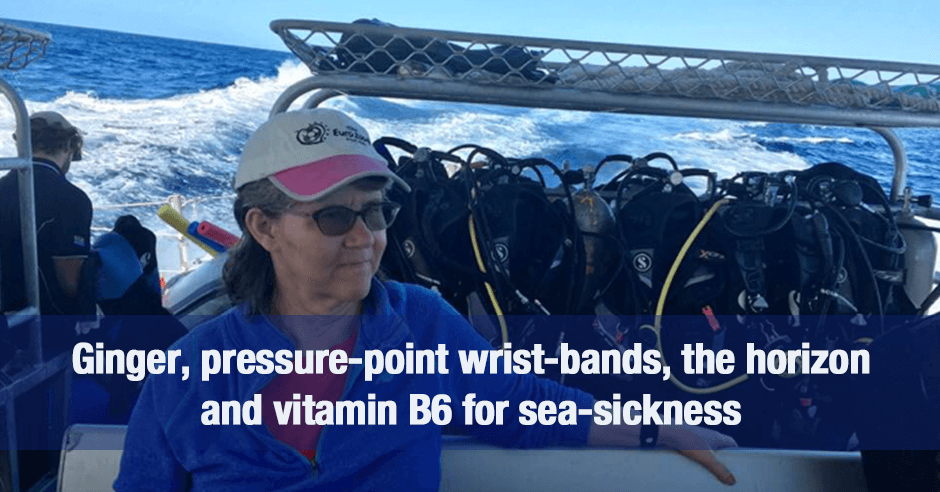
Ginger, pressure-point wrist-bands, the horizon and vitamin B6 for sea-sickness

July 5, 2019 By Trudy Scott 18 Comments

sea sickness tips

We had an amazing day snorkeling on the Great Barrier Reef earlier this week. As you know, I always like to keep it real. I was not very happy on the 2.5 hour boat trip to the Great Barrier Reef. It was supposedly calm, but it felt very rough to me (look at the horizon behind the boat!)

I’ve always suffered from various degrees of motion sickness and this day was no exception. However, I was able to keep it together and not throw up by using pressure point wrist bands, ginger tea and ginger tablets, sitting where I could feel the sea air blowing on me and by looking at the horizon pretty much the entire time. As someone with pyroluria, my vitamin B6 status is good too and this always helps with nausea prevention.

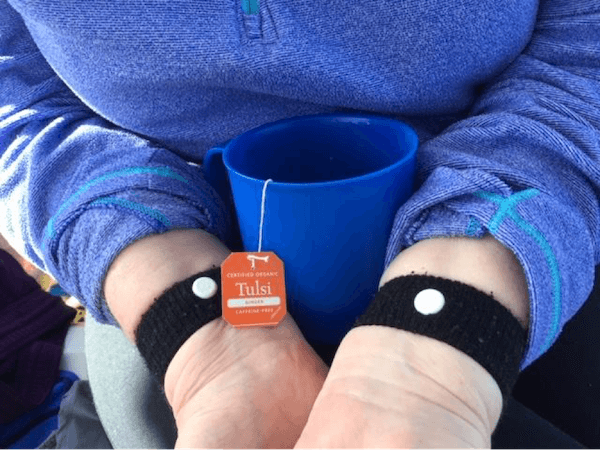
pressure point wrist band
Here is a close-up picture of the pressure-point wrist bands, with the pressure “button” placed two finger widths from the wrist joint. It’s important to put these on before the motion starts.
pressure point wrist band
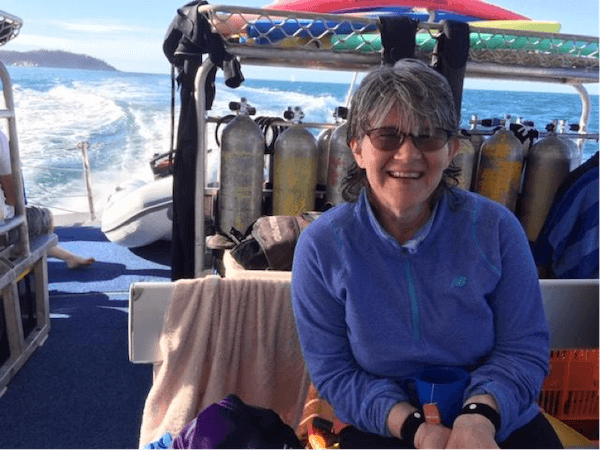
I was only feeling good enough to demonstrate the wrist-bands about 10 mins before arriving back in Townsville.
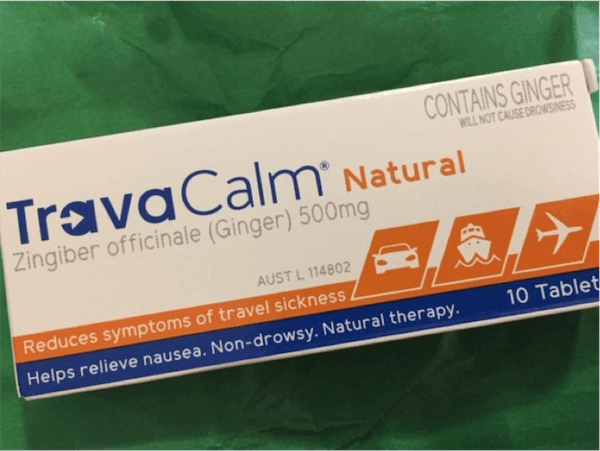
TravaCalm
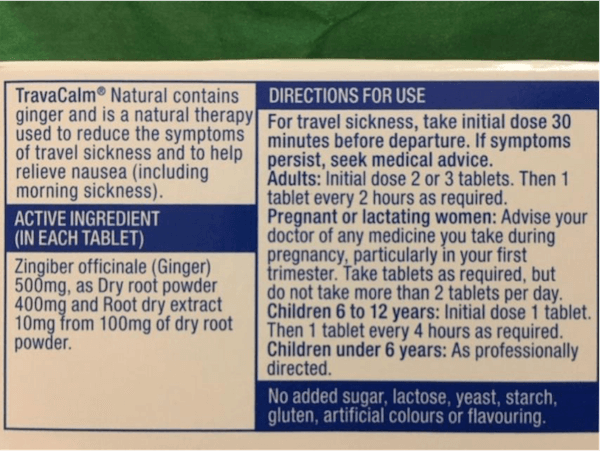
The tour company, Adrenalin Dive, offered these excellent TravaCalm Natural ginger tablets to everyone. These were new to me and I took 2 shortly after we left Townsville.
travacalm
They are simply ginger and have no nasty fillers, and they are gluten-free. It was only after I got back that I learned it’s best to take 2-3 tablets 30 minutes before leaving, then take 1 tablet every hour as required. If I’d done this I would probably have felt more human!
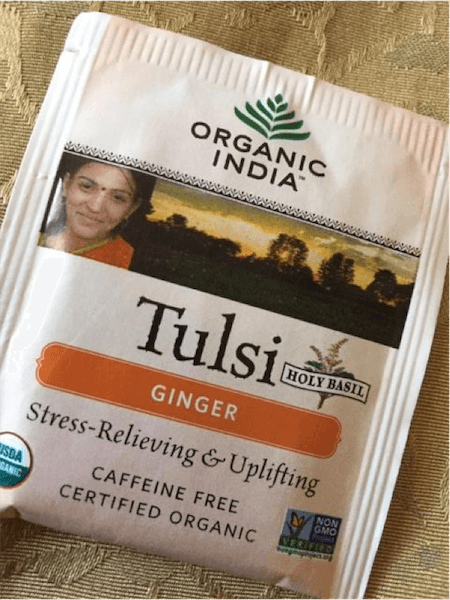
tulsi tea
I also sipped Organic India Tulsi Ginger tea for the entire journey, in both directions. I always carry ginger tea with me.

Next for me is vestibular neuro-rehab with a functional neurologist to hopefully sort out this motion sickness thing once and for all!

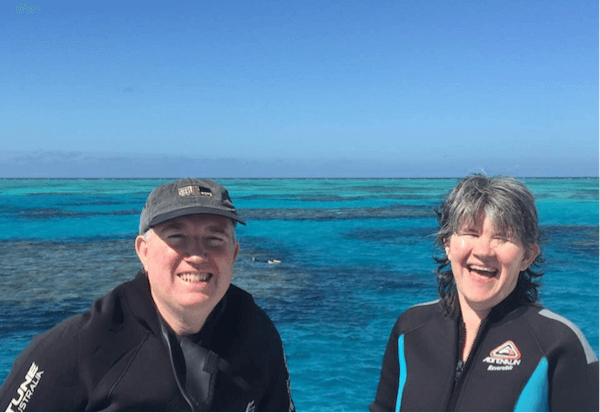
The good news is that it was so much calmer once we got to the reef and I felt 100% when snorkeling. I’m in awe of the beauty of this place: the amazing blues, the colorful coral and fish, together with spending hours in the ocean!

snorkeling great barrier reef

I think we need a new term similar to forest bathing called “reef bathing” as I’m sure the physiological benefits are similar – a combination of calming, lowered blood pressure and heart rate, lowered cortisol and even boosting serotonin (we could not stop smiling!) and endorphins (the feeling of pure joy is still with us).

Since I’m on holiday, I’ll share more with the supporting research about vitamin B6, ginger and pressure point wrist-bands in an updated version of this blog.

Until then feel free to share what works for you if you’re prone to motion sickness.

Filed Under: Supplements Tagged With: ginger, ginger tea, horizon, motion sickness, pyroluria, sea-sickness, vitamin B6

  • « Go to Previous Page
  • Page 1
  • Interim pages omitted …
  • Page 3
  • Page 4
  • Page 5
  • Page 6
  • Page 7
  • Interim pages omitted …
  • Page 11
  • Go to Next Page »

Primary Sidebar

NEW! GABA QuickStart Homestudy (with special intro pricing)

gaba quickstart homestudy

Free Report

9 Great Questions Women Ask about Food, Mood and their Health

You'll also receive a complimentary subscription to my ezine "Food, Mood and Gal Stuff"


Connect with me

Popular Posts

  • Amino Acids Mood Questionnaire from The Antianxiety Food Solution
  • The Antianxiety Food Solution Amino Acid and Pyroluria Supplements
  • Pyroluria Questionnaire from The Antianxiety Food Solution
  • Collagen and gelatin lower serotonin: does this increase your anxiety and depression?
  • Tryptophan for the worry-in-your-head and ruminating type of anxiety
  • GABA for the physical-tension and stiff-and-tense-muscles type of anxiety
  • The Antianxiety Food Solution by Trudy Scott
  • Seriphos Original Formula is back: the best product for anxiety and insomnia caused by high cortisol
  • Am I an anxious introvert because of low zinc and vitamin B6? My response to Huffington Post blog
  • Vagus nerve rehab with GABA, breathing, humming, gargling and key nutrients

Recent Posts

  • What do I use instead of Seriphos to help lower high cortisol that is affecting my sleep and making me anxious at night?
  • BeSerene™ GABA/theanine cream eases severe muscle tension in her neck/shoulders, prevents her bad headaches and quells her anxiety
  • How the correct approach, dose and sublingual use of GABA can be calming and not cause a flushed and itchy face and neck
  • The amino acid glutamine improves low mood by addressing gut health, and it has calming effects too
  • Flight anxiety with heightened breath, physical tension and also fearing the worst (the role of low GABA and low serotonin)

Categories

  • 5-HTP
  • AB575
  • Addiction
  • ADHD
  • Adrenals
  • Alcohol
  • Allergies
  • Alzheimer's disease
  • Amino Acids
  • Anger
  • Antianxiety
  • Antianxiety Food Solution
  • Antidepressants
  • Anxiety
  • Anxiety and panic
  • Autism
  • Autoimmunity
  • benzodiazapines
  • Bipolar disorder
  • Books
  • Caffeine
  • Cancer
  • Candida
  • Children/Teens
  • Collagen
  • Cooking equipment
  • Coronavirus/COVID-19
  • Cravings
  • Depression
  • Detoxification
  • Diabetes
  • Diet
  • DPA/DLPA
  • Drugs
  • EFT/Tapping
  • EMF
  • EMFs
  • Emotional Eating
  • Endorphins
  • Environment
  • Essential oils
  • Events
  • Exercise
  • Fear
  • Fear of public speaking
  • Fertility and Pregnancy
  • Fish
  • Food
  • Food and mood
  • Functional neurology
  • GABA
  • Gene polymorphisms
  • General Health
  • Giving
  • Giving back
  • Glutamine
  • Gluten
  • GMOs
  • Gratitude
  • Gut health
  • Heart health/hypertension
  • Histamine
  • Hormone
  • Hyperparathyroidism
  • Hypoglycemia
  • Immune system
  • Inflammation
  • Insomnia
  • Inspiration
  • Introversion
  • Joy and happiness
  • Ketogenic diet
  • Lithium orotate
  • Looking awesome
  • Lyme disease and co-infections
  • MCAS/histamine
  • Medication
  • Men's health
  • Mental health
  • Mercury
  • Migraine
  • Mold
  • Movie
  • MTHFR
  • Multiple sclerosis
  • Music
  • NANP
  • Nature
  • Nutritional Psychiatry
  • OCD
  • Osteoporosis
  • Oxalates
  • Oxytocin
  • Pain
  • Paleo
  • Parasites
  • Parkinson’s disease
  • PCOS
  • People
  • PMS
  • Postpartum
  • PTSD/Trauma
  • Pyroluria
  • Questionnaires
  • Real whole food
  • Recipes
  • Research
  • Schizophrenia
  • serotonin
  • SIBO
  • Sleep
  • Special diets
  • Sports nutrition
  • Stress
  • Sugar addiction
  • Sugar and mood
  • Supplements
  • Teens
  • Testimonials
  • Testing
  • The Anxiety Summit
  • The Anxiety Summit 2
  • The Anxiety Summit 3
  • The Anxiety Summit 4
  • The Anxiety Summit 5
  • The Anxiety Summit 6
  • Thyroid
  • Thyroid health
  • Toxins
  • Tryptophan
  • Tyrosine
  • Uncategorized
  • Vegan/vegetarian
  • Women's health
  • Yoga

Archives

  • October 2025
  • September 2025
  • August 2025
  • July 2025
  • June 2025
  • May 2025
  • April 2025
  • March 2025
  • February 2025
  • January 2025
  • November 2024
  • October 2024
  • September 2024
  • August 2024
  • July 2024
  • June 2024
  • May 2024
  • April 2024
  • March 2024
  • February 2024
  • January 2024
  • December 2023
  • November 2023
  • October 2023
  • September 2023
  • August 2023
  • July 2023
  • June 2023
  • May 2023
  • April 2023
  • March 2023
  • February 2023
  • January 2023
  • December 2022
  • November 2022
  • October 2022
  • September 2022
  • August 2022
  • July 2022
  • June 2022
  • May 2022
  • April 2022
  • March 2022
  • February 2022
  • January 2022
  • December 2021
  • November 2021
  • October 2021
  • September 2021
  • August 2021
  • July 2021
  • June 2021
  • May 2021
  • April 2021
  • March 2021
  • February 2021
  • January 2021
  • December 2020
  • November 2020
  • October 2020
  • September 2020
  • August 2020
  • July 2020
  • June 2020
  • May 2020
  • April 2020
  • March 2020
  • February 2020
  • January 2020
  • December 2019
  • November 2019
  • October 2019
  • September 2019
  • August 2019
  • July 2019
  • June 2019
  • May 2019
  • April 2019
  • March 2019
  • February 2019
  • January 2019
  • December 2018
  • November 2018
  • October 2018
  • September 2018
  • August 2018
  • July 2018
  • June 2018
  • May 2018
  • April 2018
  • March 2018
  • February 2018
  • January 2018
  • December 2017
  • November 2017
  • October 2017
  • September 2017
  • August 2017
  • July 2017
  • June 2017
  • May 2017
  • April 2017
  • March 2017
  • February 2017
  • January 2017
  • December 2016
  • November 2016
  • October 2016
  • September 2016
  • August 2016
  • July 2016
  • June 2016
  • May 2016
  • April 2016
  • March 2016
  • February 2016
  • January 2016
  • December 2015
  • November 2015
  • October 2015
  • September 2015
  • August 2015
  • July 2015
  • June 2015
  • May 2015
  • April 2015
  • March 2015
  • February 2015
  • January 2015
  • December 2014
  • November 2014
  • October 2014
  • September 2014
  • August 2014
  • July 2014
  • June 2014
  • May 2014
  • April 2014
  • March 2014
  • February 2014
  • January 2014
  • December 2013
  • November 2013
  • October 2013
  • September 2013
  • August 2013
  • July 2013
  • June 2013
  • May 2013
  • April 2013
  • March 2013
  • February 2013
  • January 2013
  • December 2012
  • November 2012
  • October 2012
  • August 2012
  • July 2012
  • June 2012
  • May 2012
  • April 2012
  • March 2012
  • February 2012
  • January 2012
  • December 2011
  • November 2011
  • October 2011
  • September 2011
  • August 2011
  • July 2011
  • June 2011
  • May 2011
  • April 2011
  • March 2011
  • February 2011
  • January 2011
  • December 2010
  • October 2010
  • September 2010
  • July 2010
  • May 2010
  • April 2010
  • March 2010
  • February 2010
  • January 2010
  • November 2009

Share the knowledge!

The above statements have not been evaluated by the Food and Drug Administration. Products listed in this website are not intended to diagnose, treat, cure or prevent any disease.

The information provided on this site is for informational and educational purposes only and is not intended as a substitute for advice from your physician or other health care professional. You should consult with a healthcare professional before starting or modifying any diet, exercise, or supplementation program, before taking or stopping any medication, or if you have or suspect you may have a health problem.


Copyright © 2026 Trudy Scott. All Rights Reserved. | Privacy | Terms and Conditions | Refund Policy | Medical Disclaimer

Free Report

9 Great Questions Women Ask about Food, Mood and their Health

You’ll also receive a complimentary subscription to my ezine “Food, Mood and Gal Stuff”