• Skip to primary navigation
  • Skip to main content
  • Skip to primary sidebar

everywomanover29 blog

Food, Mood and Women's Health – Be your healthiest, look and feel great!

  • Blog
  • About
  • Services
  • Store
  • Resources
  • Testimonials
  • The Book
  • Contact
  • Search this site

physical-tension

Understanding the function of the GABAergic system and its potential role in rheumatoid arthritis (for pain, anxiety, sleep issues and more)

January 3, 2025 By Trudy Scott 2 Comments

GABAergic system and its potential role in rheumatoid arthritis

This is a great question posed by a woman in my GABA/anxiety online group program:

Can GABA be good for rheumatoid arthritis, and in its early stages? If so, in what ways would someone see signs of improvement with GABA?

When I looked into some of the recent research on GABA and rheumatoid arthritis I was fascinated. A 2023 review paper, Understanding the function of the GABAergic system and its potential role in rheumatoid arthritis, discusses the relationship between rheumatoid arthritis (RA), an autoimmune condition, and GABA (gamma-amino butyric acid), a calming neurotransmitter.

The authors discuss “a new mechanism of action in RA” and the fact that “bidirectional communication occurs between the brain and immune system…and neuroinflammatory responses in the brain.”

The paper discusses GABA and neurosignalling, immunomodulatory effects and inflammation, stating that the:

GABAergic system may modulate the abnormal pain response in RA patients.

So to answer her question, if she has low GABA levels we would expect to see some reduction in her RA pain.

As always, we look for the signs and symptoms of low GABA regardless of the diagnosis or possible diagnosis. So if someone has low GABA symptoms of physical tension, overwhelm, fears, anxiousness, stiff and tense muscles, focus issues, pain, stress eating or drinking to calm down, and poor sleep, we consider a trial of the amino acid GABA, and could expect improvements in all or some of the above symptoms.

I would also recommend that she tracks markers of inflammation (like hs CRP, IL-6, IL-1β, and TNF-α) and RA markers to see if they shift in a positive direction with her use of GABA too.

I share more below about the incidence of anxiety and sleep issues in rheumatoid arthritis and some of the mechanisms covered in the review paper. Also, there are lab tests to track and there are other nutritional approaches for supporting an autoimmune condition such as RA.

Some of the mechanisms covered in the review paper

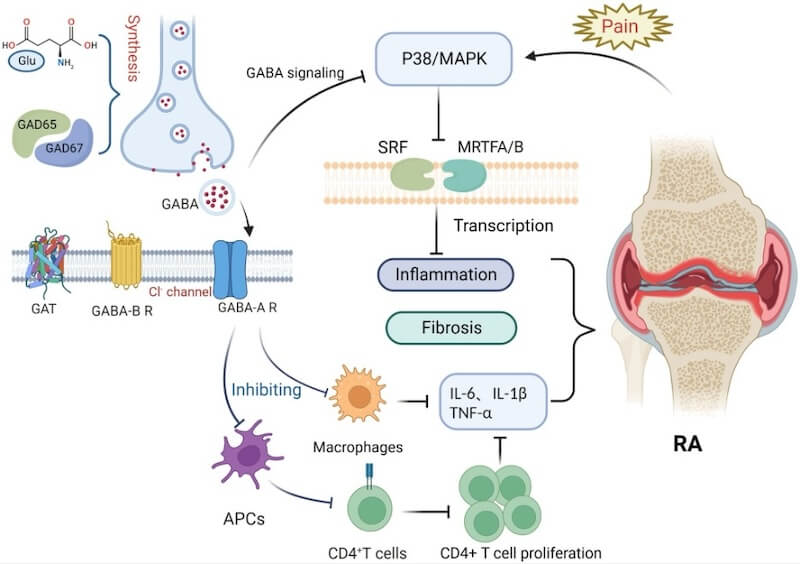
This image from the paper and the explanation provides some insights on the mechanisms at play.

  • Glutamate interacts with glutamate decarboxylase (GAD65 and GAD67) to produce gamma-aminobutyric acid (GABA).
  • Binding of GABA to GABA-A receptors inhibits macrophage activation and decreases the release of inflammatory factors such as IL-6, IL-1β, and TNF-α. Antigen presentation by antigen-presenting cells, however, is impaired, inhibiting CD4+ T cell proliferation and differentiation and reducing the expression of inflammatory factors such as IL-6, IL-1β, and TNF-α.
  • Pain signaling activates the P38/MAPK pathway, whereas GABA binding to GABA-A receptors inhibits P38/MAPK. The P38/MAPK signaling pathway contributes to inflammation and is involved in the activation of myocardin-related transcription factor A (MRTFA), myocardin-related transcription factor B (MRTFB), and serum response factor (SRF) that played key roles in fibroblast activation.
gaba and rheumatoid arthritis
Figure 1. Understanding the function of the GABAergic system and its potential role in rheumatoid arthritis

The authors don’t mention the use of the amino acid GABA as a supplement for RA but do list a number of clinical trials (mostly diabetes patients) where GABA has been used with success. It’s a start and I look forward to future research in this area.

Anxiety, depression, insomnia, cognitive issues and stress-eating in RA

This paper, Psychiatric aspects of rheumatoid arthritis: Review of literature, reports that

Among the major psychiatric disorders found in RA, the anxiety and depressive disorders are prevalent (13 to 48% of patients), as well as suicide, insomnia and tiredness. The impairment of quality of life is markedly after age 65.

This paper, A 30-Day Adjunct Wellness Intervention for the Management of Extra-Articular Symptoms of Rheumatoid Arthritis: A Formative Study, also mentions “cognitive and physical dysfunction” and “stress-related eating” in addition to anxiety, depression and insomnia in RA patients.

Doing a trial of GABA (and other amino acids such as tryptophan and d-phenylalanine/ DPA), will confirm which symptoms are related to which neurotransmitter deficiencies. It’s exciting to consider a very possible role of GABA and other amino acids given the fact that “individuals with rheumatoid arthritis (RA) continually fall short of treatment targets using standard drug therapies alone”

Looking further than GABA and other amino acids: a gluten-free diet and other root causes

With RA we obviously want to address more than just GABA (and other amino acids). Gluten removal is recommended but I do want to mention that the research is surprisingly mixed. This paper, Efficacy of gluten-free diet in patients with rheumatoid arthritis states that

Gluten seems to be a glycoprotein with a clinically relevant inflammatory effect. Several observational studies and anecdotal cases reported a correlation between gluten and various diseases, including autoimmune diseases, such as rheumatoid arthritis. This study aimed to evaluate whether gluten-free diet could be effective in controlling inflammation and ongoing rheumatoid arthritis symptoms.

We report 4 cases of patients with long-standing rheumatoid arthritis with no response to several conventional and biotechnological drugs, treated with a gluten-free diet concurrently with the drug therapy. Our patients presented different degrees of response to the diet, in terms of disease remission and improvement of symptoms. Our cases confirm that a gluten-free diet may improve symptoms of rheumatoid arthritis, even in patients resistant to conventional drug therapies.

Many other papers dismiss the role of gluten and inflammatory diets. This one is an example of a number of similar papers.

The benefits of addressing neurotransmitter imbalances with GABA and other amino acids means the addiction is stopped and quitting bread and cookies now no longer requires willpower,

Here are some autoimmune recipe resources:

  • The Autoimmune Solution Cookbook by Amy Myers MD
  • The Autoimmune Fix by Dr. Tom O’Bryan: gluteomorphins, casomorphins and withdrawal
  • Hashimoto’s Food Pharmacology, a new recipe book by Dr. Izabella Wentz

In addition to dietary changes, a full functional medicine approach is warranted as there is much research supporting the benefits of the following for RA: omega-3 fatty acids, olive oil, low vitamin B6, addressing heavy metals such as mercury and much much more.

I cover 60+ root causes of anxiety here – I’d be carefully assessing each of these root causes for RA too.

Additional resources when you are new to using GABA and other amino acids as supplements

As always, I use the symptoms questionnaire to figure out if low serotonin or low GABA or other neurotransmitter imbalances may be an issue.

If you suspect low levels of any of the neurotransmitters and do not yet have my book, The Antianxiety Food Solution – How the Foods You Eat Can Help You Calm Your Anxious Mind, Improve Your Mood, and End Cravings, I highly recommend getting it and reading it before jumping in and using amino acids on your own so you are knowledgeable. And be sure to share it with the practitioner/health team you or your loved one is working with.

There is an entire chapter on the amino acids and they are discussed throughout the book in the sections on gut health, gluten, blood sugar control (this is covered in an entire chapter too), sugar cravings, anxiety and mood issues.

The book doesn’t include product names (per the publisher’s request) so this blog, The Antianxiety Food Solution Amino Acid and Pyroluria Supplements, lists the amino acids that I use with my individual clients and those in my group programs.

If, after reading this blog and my book, you don’t feel comfortable figuring things out on your own (i.e. doing the symptoms questionnaire and respective amino acids trials), a good place to get help is the GABA QuickStart Program (if you have low GABA symptoms). This is a paid online/virtual group program where you get my guidance and community support, and is where this question was asked of me during one of the live Q&A calls.

If you are a practitioner, join us in The Balancing Neurotransmitters: the Fundamentals program. This is also a paid online/virtual program with an opportunity to interact with me and other practitioners who are also using the amino acids.

Wrapping up and your feedback

Do you have rheumatoid arthritis (RA) or another autoimmune condition and has GABA helped?

Were you aware of these possible connections?

What about dietary and nutritional approaches?

Feel free to share your feedback and ask your questions below.

Filed Under: Anxiety, GABA, Pain Tagged With: amino acids, anxiety, anxious, anxiousness, autoimmune, calming, drinking, fears, focus, GABA, GABA Quickstart, GABAergic system, Inflammation, neurotransmitter, overwhelm, pain, physical-tension, rheumatoid arthritis, sleep issues, stiff and tense muscles, stress-eating

GABA works wonders for anal cramps (almost instantly) and relieves body aches in the hips and legs of a 75-year-old woman

May 17, 2024 By Trudy Scott 13 Comments

gaba and body aches

Dear Trudy, your recommendation of using GABA for anal cramps has changed my life. I don’t experience them often but when I do they are nasty. A crushed pill or open capsule on the tongue works wonders, almost instantly.

However, I want to add, after hearing your presentation on the Parkinson’s summit and your mention of relief from physical tension, that taking 500mg relieves body ache in hips and legs.

I’m 75, and have recently developed debilitating body aches. Taking one twice/day a.m. and p.m. has made a huge difference. Thank you for your brilliant blog.

Merril shared this wonderful feedback about how the amino acid GABA, used as a supplement helps her with anal cramps and also body aches. I never get tired of hearing feedback like this and as always, I like to share so I can educate further. This helps the person sharing the results and the community as a whole.

Today’s blog highlights more about the role GABA plays in muscle spasms and pain, and more about anal/rectal spasms in case this application is new to you. I also share other considerations when muscle spasms and/or pain are an issue: gluten, oxalates and low endorphins.

GABA works wonders (almost instantly) to eliminate anal cramps

I first blogged about GABA as a solution for agonizing rectal pain and spasms in 2017. I shared how I experienced the awful anal sphincter spasm and pain myself.  The medical term is proctalgia fugax and is described as a condition that leads to rectal/anal spasms and sharp fleeting pain in the lower rectum or anus. In some people it can be more than fleeting and is often described as excruciating and agonizing.

The first time it happened to me I was terrified and beside myself not knowing what it was or what to do. I eventually figured out the solution because of what I knew about GABA helping to ease tense muscles and wanted to shine some light on this very painful condition.

As Merril says GABA “works wonders, almost instantly”  to completely eliminate the pain. Take note that she says a “crushed pill or open capsule on the tongue.”  GABA is most effective when used this way: sublingual GABA or GABA powder or liposomal GABA (and presumably GABA cream too).

GABA can also be used to prevent a full-on spasm if you catch it in advance i.e. when you first feel the twinges of a spasm coming on.

GABA relieves body aches/pain for her and in Parkinson’s patient

I love that GABA has the side benefits of also relieving her body aches in her hips and legs. It’s not unusual to use GABA or one of the other amino acids for a symptom and then discover it’s helping in another area.

And do appreciate that she picked up this tip when tuning into the Parkinson’s summit. I always share new information when I speak at summits and the amino acid and neurotransmitter information typically has varied applications.

During my summit interviews I had shared that working with a few people with Parkinson’s disease, GABA has been very helpful for the stiffness and pain, the physical anxiety, easing some of their tremors and helping with insomnia. I had one client whose husband had anxiety, insomnia, and leg pain and “thrashed around the bed at night.” GABA helped this man tremendously.

I shared this research: Molecular Imaging of the GABAergic System in Parkinson’s Disease and Atypical Parkinsonisms

A growing number of neuroimaging studies have focused on the association with different symptoms of Parkinson’s disease, thereby suggesting a GABAergic role in motor symptoms, gait disturbances, frontal cognition, somatic symptom disorder, and hallucinations.

Other ways GABA helps with pain and muscle stiffness

With regards to my comment above about GABA having many applications, when it comes to aches, pain and spasms, GABA helps with the abdominal pain of colitis, muscle stiffness and pain in those with multiple sclerosis and even bladder pain.

Gluten, sugar, gut health, and oxalates

She didn’t mention what her diet was like so just to be safe, I encouraged her to also check out my book “The Antianxiety Food Solution” to explore all the possible root causes that may be contributing to the anal spasms, pain and body aches – such as gluten (“tingling at 50%, numbness at 27%, pain at 20%, burning at 13% and “buzzing” feeling at 7%”) , gut health and SIBO (small intestinal bacterial overgrowth) and even sugar.

I mentioned that I don’t cover oxalates in my book but with body aches, spasms and pain I’d also explore this aspect. More on oxalates here and here.

Endorphin support with the amino acid DPA helps ease pain

When there is a neurotransmitter imbalance like low GABA levels it’s not uncommon to also have other neurotransmitter imbalances. With pain and aching I’d want to explore the possibility of low endorphins and do a trial with the amino acid DPA (d-phenylalanine) if low endorphin symptoms are present (you can find the symptoms questionnaire here).

DPA supports endorphin production (by inhibiting the breakdown of endorphins), reducing pain quickly, often in 2-10 minutes.

The use of DPA is not new information as you can read in this paper from 1982 – D-phenylalanine and other enkephalinase inhibitors as pharmacological agents: implications for some important therapeutic application

A number of compounds have been shown to inhibit the degradation of enkephalins. As expected, these compounds produce naloxone reversible analgesia [pain-relief] and potentiate the analgesia produced by enkephalins and by acupuncture.

One of these, D-phenylalanine, is also anti-inflammatory.

D-phenylalanine has proven to be beneficial in many human patients with chronic, intractable pain. It is proposed the enkephalinase inhibitors may be effective in a number of human “endorphin deficiency diseases” such as depression, schizophrenia, convulsive disorders and arthritis.

DPA also improves mood, especially when there is weepiness, and provides comfort when there is emotional eating. Here is one of many blogs that address DPAfor pain. Feel free to use the blog search feature to find others if you are new to this amino acid.

A few GABA product options – a sublingual, a powder and a cream

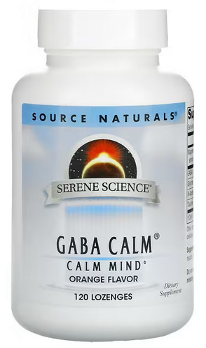
gaba calm
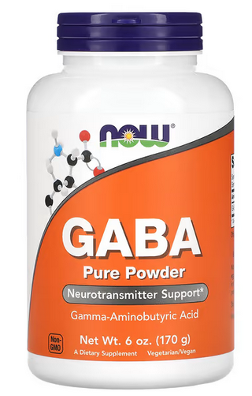
gaba pure poder
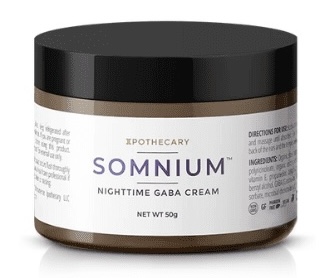
somnium gaba cream

Some of the GABA products I recommend include Source Naturals GABA Calm lozenges and Now GABA Powder.  You can purchase these from my online store (Fullscript – only available to US customers – use this link to set up an account).

If you’re not in the US, Source Naturals GABA Calm lozenges and Now GABA Powder are available via iherb (use this link to save 5%).

Somnium GABA Cream is available with international shipping. Read more about the product and grab my coupon code to save 15%.

Additional resources when you are new to using amino acids as supplements

As always, I use the symptoms questionnaire to figure out if low GABA or other neurotransmitter imbalances may be an issue.

If you suspect low levels of any of the neurotransmitters and do not yet have my book, The Antianxiety Food Solution – How the Foods You Eat Can Help You Calm Your Anxious Mind, Improve Your Mood, and End Cravings, I highly recommend getting it and reading it before jumping in and using amino acids on your own so you are knowledgeable. And be sure to share it with the practitioner/health team you or your loved one is working with.

There is an entire chapter on the amino acids and they are discussed throughout the book in the sections on gut health, gluten, blood sugar control (this is covered in an entire chapter too), sugar cravings, anxiety and mood issues.

The book doesn’t include product names (per the publisher’s request) so this blog, The Antianxiety Food Solution Amino Acid and Pyroluria Supplements, lists the amino acids that I use with my individual clients and those in my group programs.

If, after reading this blog and my book, you don’t feel comfortable figuring things out on your own (i.e. doing the symptoms questionnaire and respective amino acids trials), a good place to get help is the GABA QuickStart Program (if you have low GABA symptoms too). This is a paid online/virtual group program where you get my guidance and community support.

If you are a practitioner, join us in The Balancing Neurotransmitters: the Fundamentals program. This is also a paid online/virtual program with an opportunity to interact with me and other practitioners who are also using the amino acids.

Wrapping up and your feedback

I do always appreciate feedback from the community and being able to share it on the blog. I’m thrilled Merril saw these benefits with GABA. She doesn’t mention if she has also seen benefits for sleep or feeling anxious or stress eating (all signs of low GABA too) – I’m curious to find out!

Now I’d love to hear from you – have you had success with GABA for anal/rectal spasms or other body aches, pains and muscle spasms? How much has helped and which product?

Have dietary changes or DPA also helped?

If you’re a practitioner have you seen GABA help in situations like this?

And please let me know if it’s helpful that I’m now including product recommendations and where to get them.

Feel free to share and ask your questions below.
Filed Under: Anxiety, GABA, Pain, Women's health Tagged With: amino acid, anal cramps, anxious, body aches, DPA, endorphins, GABA, GABA Quickstart; Balancing Neurotransmitters: the Fundamentals program for practitioners, gluten, hips, legs, muscle spasms, on the tongue, oxalates, pain, Parkinson's, physical-tension, rectal cramps

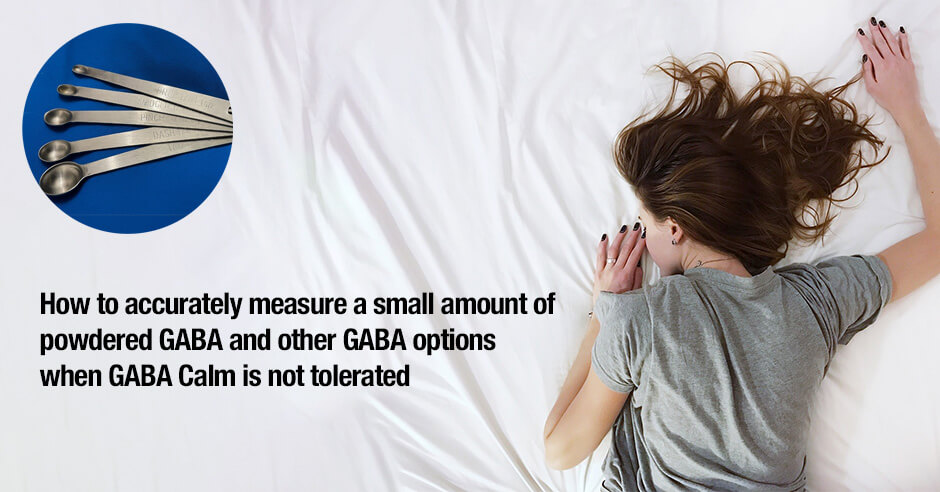
How to accurately measure a small amount of powdered GABA and other GABA options when GABA Calm is not tolerated

April 26, 2024 By Trudy Scott 18 Comments

measuring gaba powder

Brenda finds one GABA Calm helps her sleep but more than one affects her sleep and she suspects the sugar alcohols in the product. She’d like advice on using an alternative and how to accurately measure a small amount of powdered GABA. Here is her question in her own words:    

I have been on the FODMAP diet for a while and it is helping but I just realized that when I take GABA Calm I am ingesting sorbitol and mannitol. I take a bit more than one of those tablets each night to help me sleep and am very aware that if I take too much it can keep me awake.

Now that I have realized about the sorbitol and mannitol, I am looking for an alternative source of GABA. I see that you are now recommending the Now GABA Pure Powder product. I was about to purchase this to avoid the sorbitol and mannitol but then realized that I would have to take 1/16th teaspoon of the powder to equate to 150mg. I can’t see me ever getting that measurement correct.

So my question is, can you recommend another source of GABA that would enable me to take 150mg plus a little bit with a fair degree of accuracy and without those added FODMAPs? Thank you very much. I am very grateful for your work.

Brenda has likely been diagnosed with SIBO (small intestinal bacterial overgrowth) or IBS (irritable bowel syndrome) even though she doesn’t mention it. In some folks with SIBO or IBS, sugar alcohols such as xylitol, sorbitol and mannitol can cause digestive upset. Not everyone with SIBO or IBS has issues with GABA Calm. In fact, it’s typically very well tolerated and GABA Calm is a product I have been recommending for many years. However, some folks do have issues and it’s wise to look for an alternative and not push through.

In this blog I share more about sugar alcohols, how to accurately measure out 1/16 teaspoon of the GABA powder to equate to close to 150 mg, how I use my mini measuring spoon, a GABA/theanine product that is low dose and can be opened, and another option she could consider.

Sugar alcohols in GABA Calm and other GABA chewable products

Many of the chewable or sublingual forms of GABA, including GABA Calm contain sugar alcohols which can be problematic and cause digestive upset and often explosive diarrhea. The digestive upset alone could impact sleep.

Sugar alcohols include xylitol, sorbitol, mannitol and erythritol. Your reaction will depend on the amount of sugar alcohols used, how many chewable/sublingual tablets you use and how accustomed you are to sugar alcohols. You may get used to them and eventually be fine with consuming small amounts and yet for others the tiniest amount is an issue.

I share more about sugar alcohols on this blog: Why does chewable GABA make me run to the bathroom and what GABA do I use instead?

Using a mini measuring spoon set and GABA powder

It’s wonderful that GABA Calm is helping Brenda with her sleep issues and when we start to get benefits we do want to increase the amount to see if we can get further benefits.

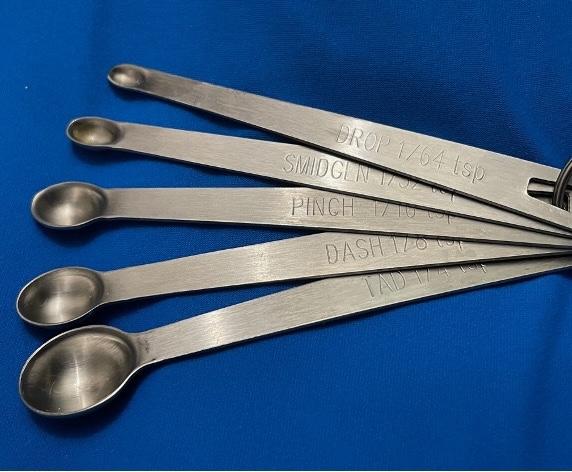
She has a few options and one is to use the NOW GABA powder (or another GABA powder) with a mini measuring spoon set like this one (my Amazon link). This is mine and it is very easy to use, convenient and accurate.

measuring spoons

As you can see it comes in various sizes: 1/4 teaspoon, 1/8 teaspoon, 1/16 teaspoon, 1/32 teaspoon and 1/64 teaspoon.

It is important to look at the product and work out how much you need to measure out. For example, the NOW GABA powder states 1/4 teaspoon is equivalent to 500 mg GABA. This means 1/16 is equivalent to 125 mg GABA. So if Barbara wants to take 150 mg she would use a little more than what would be in the 1/16 spoon (maths is coming in handy after all!)

Keep in mind that product equivalents do differ. For example tryptophan is typically lighter and fluffier than GABA. My tryptophan states 1 teaspoon is 1000 mg tryptophan so a typical starting dose of 500 mg tryptophan would be 2 x 1/4 teaspoon since each 1/4 is 250mg.

I love my mini measuring spoon and use mine on a daily basis for theanine in the day, calcium citrate after dinner (for my oxalate issues), and for GABA and tryptophan at bed time.

Combined GABA and theanine: GABA-T SAP as one option

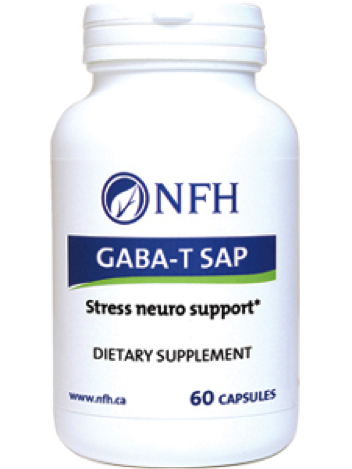
Another option is using a lower mg GABA/theanine product and opening it. Nutritional Fundamentals for Health GABA-T SAP is another favorite of mine. This product is pleasant-tasting when opened on to the tongue and works very well when GABA Calm can’t be used. It contains 300 mg GABA and 150 mg theanine, so can easily be halved to provide the 150 mg GABA she is looking for.

Research shows that the combination of GABA and theanine may improve sleep: GABA and l-theanine mixture decreases sleep latency and improves NREM sleep. The authors share the sleep and anxiety benefits of both GABA and theanine:

γ-Aminobutyric acid (GABA) is the main inhibitory neurotransmitter and it is well established that activation of GABAA receptors favours sleep.

l-Theanine, a naturally occurring amino acid first discovered in green tea, is a well-known anti-anxiety supplement with proven relaxation benefits.

But Barabra is going to have to do a trial to see if this combination works for her.

Mixing and matching as an other option

And finally, if she was also taking GABA Calm in the day for stress and overwhelm, she could  do a trial of using this during the day (for the convenience factor) and then at night use the GABA powder or opened GABA/theanine capsule (because it’s a bit more finicky). This way she’s consuming less sugar alcohols overall.

Both GABA products, the mini measuring spoon set and where to find them

gaba pure poder

Today I mentioned the Now GABA Powder and NFH GABA-T SAP.  You can purchase these from my online store (Fullscript – only available to US customers – use this link to set up an account).

gaba pure poder
zenmind

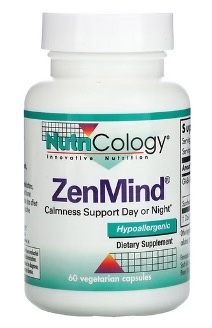
If you’re not in the US, the Now GABA Powder and Nutricology ZenMind (a GABA/theanine combination comparable to GABA-T SAP) is available via iherb (use this link to save 5%).

And the mini measuring spoon set can be found here (my Amazon link)

Additional resources when you are new to using GABA and other amino acids as supplements

As a reminder, low GABA can cause physical tension, anxious feelings, feelings of panic and problems sleeping, as well as self–medicating with alcohol or carbs to relax or fit in. As always, I use the symptoms questionnaire to figure out if low GABA or other neurotransmitter imbalances may be an issue.

If you suspect low levels of any of the neurotransmitters and do not yet have my book, The Antianxiety Food Solution – How the Foods You Eat Can Help You Calm Your Anxious Mind, Improve Your Mood, and End Cravings, I highly recommend getting it and reading it before jumping in and using amino acids on your own so you are knowledgeable. And be sure to share it with the practitioner/health team you or your loved one is working with.

There is an entire chapter on the amino acids and they are discussed throughout the book in the sections on gut health, gluten, blood sugar control (this is covered in an entire chapter too), sugar cravings, anxiety and mood issues.

The book doesn’t include product names (per the publisher’s request) so this blog, The Antianxiety Food Solution Amino Acid and Pyroluria Supplements, lists the amino acids that I use with my individual clients and those in my group programs (over and above the GABA products I mentioned above).

If, after reading this blog and my book, you don’t feel comfortable figuring things out on your own (i.e. doing the symptoms questionnaire and respective amino acids trials), a good place to get help is the GABA QuickStart Program (if you have low GABA symptoms too). This is a paid online/virtual group program where you get my guidance and community support.

If you are a practitioner, join us in The Balancing Neurotransmitters: the Fundamentals program. This is also a paid online/virtual program with an opportunity to interact with me and other practitioners who are also using the amino acids.

Wrapping up and your feedback

I do always appreciate questions like this so keep them coming so I can share and educate further.

Now I’d love to hear from you – do you have issues with the sugar alcohols in GABA Calm or another chewable GABA product? (if yes which one?)

Did you move to a GABA powder and do you use a min spoon set? Or does another GABA product work for you?

Please share how GABA helps and how much helps you?

If you’re a practitioner do you use GABA powder and mini spoons with your clients/patients?

And please let me know if it’s helpful that I’m now including product recommendations and where to get them.

Feel free to share and ask your questions below.
Filed Under: Anxiety, GABA, Insomnia Tagged With: amino acid, cravings, GABA, GABA Calm, GABA powder, GABA Quickstart; Balancing Neurotransmitters: the Fundamentals program for practitioners, GABA-T SAP, IBS, insomnia, measure, mini measuring spoon set, physical-tension, SIBO, sleep, sugar alcohols, theanine

Phthalates (found in soft plastics and fragrances) are the new BPA and cause anxiety. Is this why the amino acid GABA is so often needed long-term?

June 10, 2022 By Trudy Scott 11 Comments

phthalates and gaba

Using the amino acid GABA (as a supplement) for anxiety (the physical tension type of anxiety) should ideally be short-term to address your low levels of GABA (gamma-amino butyric acid). Why then do many folks only find relief when using GABA long-term? What is depleting their GABA levels on an ongoing basis? One reason is that anxiety is caused with ongoing exposure to phthalates (found in soft plastics and fragrances). Ongoing exposure can continue to deplete GABA levels so supplementation is needed long-term. This blog reviews sources of phthalates and the supporting (and growing) research. And also the fact that we’re being told that phthalates are safe.

The awareness and concern about BPA (bisphenol A), an industrial chemical found in hard plastics (and a contributing factor when it comes to anxiety), is being surpassed by an awareness and concern about phthalates (pronounced “thalates”).

I believe “Phthalates are the new BPA!” and “Fragrance is the new smoking!” and I suspect we’ll be seeing more and more research on the adverse health impacts (including anxiety and other conditions – more on that below) and hopefully more and more awareness too.

Here is a brief summary:

  • They act as binding agents and make plastics flexible….and are found in plastics in the kitchen, vinyl toys (it makes them soft), shower curtains, paint and nail polish.
  • They are also found in anything with a fragrance – like air-fresheners and most commercial house-cleaning products, and cosmetics such as shampoos, moisturizers, sun cream and of course perfumes, deodorants and after-shave products. I cringe every time I see the beautiful perfume ads on TV and when I walk past someone with loads of after-shave wafting behind them

My assumption is that you’ve heard of phthalates and know they are harmful. They are well-recognized as being an endocrine disruptor but less is known about the effects on GABA levels and increasing anxiety (more on that below).

If you are new to phthalates, the organization called Safer Chemicals Healthy Family, has an excellent overview. They share that

Food is the leading source of exposure. Phthalates have been found in dairy products, meats, fish, oils & fats, baked goods, infant formula, processed foods, and fast foods. Phthalates are not intentionally added ingredients but rather “indirect” food additives. They easily escape from food processing equipment, food packaging, and food preparation materials, and contaminate food at points all along the supply chain.

They list the many health impacts (with links to studies): Endocrine disruption (i.e. affecting your hormones); abnormalities in the male reproductive system; reduced testosterone levels and altered thyroid hormone production; neurodevelopmental effects in infants or children (ADHD-like behaviors, aggression, depression, a lower IQ, and autism); liver and kidney toxicity; cancer; and asthma.

This article also addresses the fact that we’re being told that phthalates are safe when they are not.

Phthalates are associated with emotional symptoms (depression, anxiety and stress) in male and female students

In addition to the above health impacts, phthalates play a role in causing anxiety too. This 2020 paper, Association of Urinary Phthalates Metabolites Concentration With Emotional Symptoms in Chinese University Students, reports the results of a school-based cross-sectional survey that was carried out among 990 university students aged 17-24 years:

  • the concentration of six phthalate metabolites in urine was measured (with a detection rate of 79.6% to 99.7%)
  • The positive rates of depressive symptoms, anxiety symptoms, and stress were 17.4%, 24.8%, and 9.5%, respectively
  • One type of phthalates affected the males more severely and another type affected the females more

The authors concluded that:

Our study demonstrates that Chinese university students are widely exposed to phthalates; and high- and low-molecular weight phthalates are associated with emotional symptoms in males and females, respectively.

It’s seldom one cause that is contributing to anxiety and emotional symptoms, as illustrated by this study: Association Between Screen Time, Fast Foods, Sugar-Sweetened Beverages and Depressive Symptoms in Chinese Adolescents. We need to address all factors. And here it’s a combination of screen time, as well as junk food and sugar, and the plastic containers and soda bottles that are a source of phthalates.

As you can see, fast foods are a huge source – Phthalate and novel plasticizer concentrations in food items from U.S. fast food chains: a preliminary analysis. This paper was published in May 2022 and already we’re seeing “certain ortho-phthalates (i.e., di-n-butyl phthalate (DnBP) and di(2-ethylhexyl) phthalate (DEHP)) have been phased out and replaced with other plasticizers (e.g., dioctyl terephthalate (DEHT))”. This mirrors what we saw with BPA being replaced with BPS and BPF, which are concerning.

The anxiety-inducing effects caused by phthalates could be alleviated by GABA

What is very encouraging is the fact that the amino acid GABA can alleviate the anxiety caused by phthalates. In this 2018 animal study, Intervention Effect of Gamma Aminobutyric Acid on Anxiety Behavior Induced by Phthalate (2-ethylhexyl Ester) in Rats. This is the conclusion:

  • DEHP [phthalate] exposure induced anxiety in rats, which may be achieved through elevating nitric oxide and nitric oxide synthase levels in the prefrontal cortex of rats.
  • The [anxiety-inducing] effects caused by DEHP could be alleviated by GABA.

This study was looking at Di(2-ethylhexyl) phthalate (DEHP), and the authors shared that “it is one of the most widely used phthalate esters.” As you can see from the 2022 paper I shared above, it’s now being replaced with other plasticizers.

This 2019 paper, Effect of di(2-ethylhexyl) phthalate on the neuroendocrine regulation of reproduction in adult male rats and its relationship to anxiogenic behavior: Participation of GABAergic system didn’t use the amino acid GABA but do report a “decrease in hypothalamic gamma-aminobutyric acid (GABA) concentration” and the authors “suggest that GABA could participate in the modulation of reproductive and behavioral DEHP effects.”

Long-term use of GABA because of phthalates: using GABA should ideally be short-term

We clearly need human studies to confirm all this but until then we can use what we know about GABA and supplement with the amino acid GABA (as a supplement) when there are low GABA symptoms of physical anxiety, tension, stiff and tense muscles, intrusive thoughts, insomnia, and self-medicating with alcohol or sugar.

As mentioned above, using GABA should ideally be short-term – 3 to 12 months – to address your low levels of GABA. I propose that many folks only find relief when using GABA long-term and it’s partly due to phthalates (and other chemicals) depleting their GABA levels on an ongoing basis.

I’m in favor of long-term use of GABA supplementation as long as GABA levels continue to be low and GABA supplementation offers relief.

But you also need to be addressing your exposure to these chemicals and doing ongoing detoxification. And also addressing diet, gut-health, infections, low zinc, low vitamin B6, low serotonin etc. (on an as-needed basis).

Addressing exposure and ongoing detoxification

As far as addressing our exposure to these chemicals, reduction and ideally avoidance is ideal. The Safer Chemicals Healthy Family overview includes plenty of practical steps.

As far as ongoing detoxification and nutritional support I encourage regular infrared sauna (my personal favorite is the portable Therasage sauna), rebounding, dry skin brushing, optimizing lymph drainage and exercise.

The research on NAC alone and a combination of zinc and NAC is encouraging even if it’s not specific to anxiety. Also, research shows that rosmarinic acid, a natural polyphenol “confers protection against DEHP-induced thyroid inflammation.”

You can read about other more general detox approaches on this pesticide spill blog: rooibos tea, castor oil packs, vitamin D (it’s often lower in those exposed to phthalates), epsom salts baths, apple cider vinegar and broccoli sprouts (as a source of sulforaphane).

Resources if you are new to using GABA as a supplement

If you are new to using GABA as a supplement, here is the Amino Acids Mood Questionnaire from The Antianxiety Food Solution (you can see all the low GABA symptoms).

If you suspect low levels of GABA or any of the neurotransmitters and do not yet have my book, The Antianxiety Food Solution – How the Foods You Eat Can Help You Calm Your Anxious Mind, Improve Your Mood, and End Cravings, I highly recommend getting it and reading it before jumping in and using amino acids on your own so you are knowledgeable. And be sure to share it with the team you or your loved one is working with.

There is an entire chapter on the amino acids and they are discussed throughout the book in the sections on gut health, blood sugar control, sugar cravings, self-medicating with alcohol and more.

The book doesn’t include product names (per the publisher’s request) so this blog, The Antianxiety Food Solution Amino Acid and Pyroluria Supplements, lists the amino acids that I use with my individual clients and those in my group programs.

If, after reading this blog and my book, you don’t feel comfortable figuring things out on your own (i.e. doing the symptoms questionnaire and respective amino acids trials), a good place to get help is the GABA Quickstart Program. This is a paid online/virtual group program where you get my guidance and community support. There are many moms in the program who are having much success with their kids.

If you are a practitioner, join us in The Balancing Neurotransmitters: the Fundamentals program. This is also a paid online/virtual program with an opportunity to interact with me and other practitioners who are also using the amino acids.

Have you been using GABA for longer than 3-12 months? (please share how long and how it’s helping)

Do you think phthalates could be a factor in keeping your GABA levels low?

What have you done to reduce or eliminate phthalates from your life? (please share which sources and how)

If you have questions please share them here too.

Filed Under: Anxiety, Detoxification, GABA, Toxins Tagged With: anxiety, Balancing Neurotransmitters: the Fundamentals. NAC, BPA, depression, detoxification, emotional symptoms, endocrine disruptor, fast foods, fragrances, GABA, GABA Quickstart program, long-term, phthalates, physical-tension, rosmarinic acid, sauna, short-term, soda, soft plastics, sulforaphane, vitamin D, zinc

GABA mixed in water and swished in his mouth before a meal prevents esophageal spasms /choking/vomiting, and allows him to swallow

April 1, 2022 By Trudy Scott 24 Comments

gaba in water

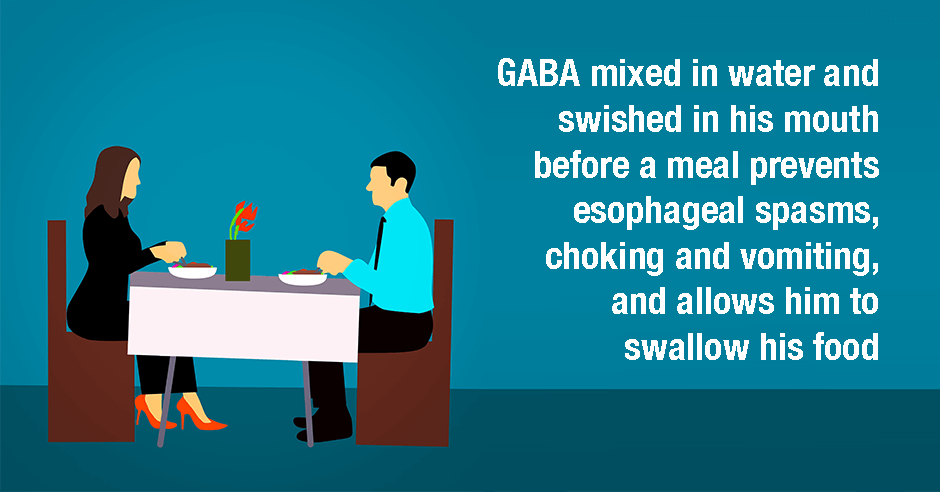
GABA mixed in water and swished in the mouth of an adult male, before a meal, prevents his esophageal spasms, and stops his frequent choking and vomiting, and allows him to swallow his food. A colleague shared her husband’s swallowing issues after she read my blog post about using GABA powder inside the check for laryngospasms. 

This is what she shared:

That [blog] made me think that [GABA] might be useful for my husband‘s esophageal spasms. He frequently can’t get food down during a meal because of them.

So he started mixing 500 mg GABA in a little water and swishing it around his mouth and then swallowing it at the beginning of each meal. Since he started doing that he has not had one spasm, or vomiting episode.

It’s wonderful to hear about her husband’s success with GABA and this unique application of swishing around GABA powder (mixed in water) in his mouth before a meal (I’ll share more on this aspect below).

I asked if they know what the causes of his esophageal spasms are but they don’t yet know:

We can’t figure it out. It appears to be all food. I would expect there to be a trigger-food, but we can’t find it.

The GABA has completely stopped it. Last night we went out to dinner and he forgot to bring GABA with him and immediately started choking. So he went to the nearest vitamin store, (of which there is only one)! Fortunately it was open. As soon as he got back to the restaurant and took his GABA, he was fine.

GABA does work so well for him and offers him some relief while they continue to search for other underlying root cause/s. Until these are found, GABA is supporting overall low GABA levels, associated with physical tension-type anxiety, intrusive thoughts, stiff and tense muscles in other areas of the body and also stress-eating and self-medicating with alcohol in order to relax. More on low GABA symptoms here.

My input on his dosing and swishing

Regarding the dosing and swishing method I have this input:

  • 500 mg GABA is the ideal dose for his needs but this is considered a high dose to start. For low GABA tension-type anxiety, I have clients start with a trial of 125 mg GABA and go up from there. I’d recommend the same approach for someone with issues like this gentleman experiences.
  • GABA is most effective when used sublingually or by opening a capsule on to the tongue or by using GABA powder on the inside of a cheek, rather than swallowing a GABA capsule. For this reason, his method of swishing GABA mixed in water is excellent for achieving the spasm-reducing and relaxing benefits quickly. For some folks doing this 30 minutes before a meal may be more effective than doing it right before eating.

The diagnosis can vary from person to person

The diagnosis can vary from person to person. But as long as there are spasms that are affecting swallowing, doing a trial of GABA is worthwhile in order to determine if it will help.

One example is eosinophilic esophagitis where

Clinical manifestations in infants and toddlers generally include vomiting, food refusal, choking with meals and, less commonly, failure to thrive. Predominant symptoms in school-aged children and adolescents include dysphagia (difficulty swallowing), food impactions, and choking/gagging with meals, particularly when comprised of foods with coarse textures. Other symptoms in this patient population include abdominal/chest pain, vomiting, and regurgitation.

The predominant symptom in adults is dysphagia [difficulty swallowing]; however, intractable heartburn and food avoidance may also be present.

One paper, Esophageal microbiome in active eosinophilic esophagitis and changes induced by different therapies discusses the role of the microbiome and how “an increase in levels of gamma-aminobutyric acid (GABA) …is known to exert a role in esophageal motor function.”

Finding the other root causes (other than low GABA)

Regarding finding the root causes, other than low GABA, this is an important aspect that does need to be pursued. Here are some of the many factors worth considering:

  • Finding food triggers. This can be challenging but an obvious one is gluten which can play a role in eosinophilic esophagitis. Dairy and environmental irritants can be issues too.
  • GERD/reflux needs to be ruled out or addressed. Food sensitivities are often a factor here too.
  • Vagus nerve issues can play a role in digestive issues like this. GABA and vagus nerve exercises helped my cough and voice issues. I recorded all my exercises on video and you can find these here. Fortunately I didn’t have any swallowing or choking episodes at that time but have had a choking episode more recently (GABA did help) so I know how scary this can be.
  • Pyroluria, a social anxiety condition needs to be ruled out or addressed too. This is because nausea, gagging and choking are common symptoms for some individuals.
  • I’d also consider a tongue tie. I just finished reading Tongue Tied: How a Tiny String Under the Tongue Impacts Nursing, Speech, Feeding, and More (my Amazon link) by Richard Baxter, DMD, MS. The focus on babies and children but adults can also benefit from addressing tongue tie issues later in life.
  • Addressing gut health and the microbiome may be one of the keys, as outlined in the paper above.

This is not a comprehensive list and a full functional workup will help to identify all possible root causes.

Related blogs: young boy with choking episodes, lump-in-the throat sensation, anxiety and globus pharyngeus

Here are some related blogs that you may find useful

  • Paroxysmal laryngospasm with low GABA physical-tension-type-anxiety: Is GABA powder rubbed on the inside of the cheek a solution? (this is the blog that inspired my colleague to have her husband do the GABA mouth swishing)
  • GABA helps a stressed young boy with episodes of “choking” or tightening in his throat
  • GABA is the answer after 40 years of a lump-in-the-throat sensation, nervousness and muscle tension at work
  • Anxiety and globus pharyngeus (lump in the throat): GABA to the rescue?

Resources if you are new to using GABA as a supplement

If you are new to using the the amino acid GABA as a supplement, here is the Amino Acids Mood Questionnaire from The Antianxiety Food Solution (you can see the low GABA and other low neurotransmitter symptoms).

If you suspect low levels of GABA or low serotonin and do not yet have my book, The Antianxiety Food Solution – How the Foods You Eat Can Help You Calm Your Anxious Mind, Improve Your Mood, and End Cravings, I highly recommend getting it and reading it before jumping in and using amino acids on your own so you are knowledgeable. And be sure to share it with the team you or your loved one is working with.

The book doesn’t include product names (per the publisher’s request) so this blog, The Antianxiety Food Solution Amino Acid and Pyroluria Supplements, lists the GABA products that I use with my individual clients and those in my group programs.

If you don’t feel comfortable reading my book, doing the low GABA symptoms questionnaire and doing trials of GABA on your own, you can get guidance from me in the GABA Quickstart Program (online/virtual).

If you are a practitioner, join us in The Balancing Neurotransmitters: the Fundamentals program. It’s an opportunity to interact with me and other practitioners who are also using the amino acids.

Have you experienced throat or esophageal spasms and difficulty swallowing with choking and/or vomiting.

And do you have the low GABA physical-tension-type-anxiety symptoms?  What else is a trigger for you and do you have a diagnosis?

If you’ve already been using GABA with success for easing your anxiety, have you noticed a reduction in your swallowing issues?

Have you ever used GABA in this way to help your swallowing issues?

If you’re a practitioner please share what you have seen?

Feel free to ask your questions here too.

Filed Under: Amino Acids, Anxiety, GABA, Gluten Tagged With: anxiety, can’t get food down, choking, choking sensation, eosinophilic esophagitis, esophageal spasms, GABA, GABA Quickstart, globus pharyngeus, gluten, gut health, laryngospasms, lump in the throat, physical-tension, pyroluria, swallow, swallowing issues, swished, tongue tie, trigger-food, vomiting

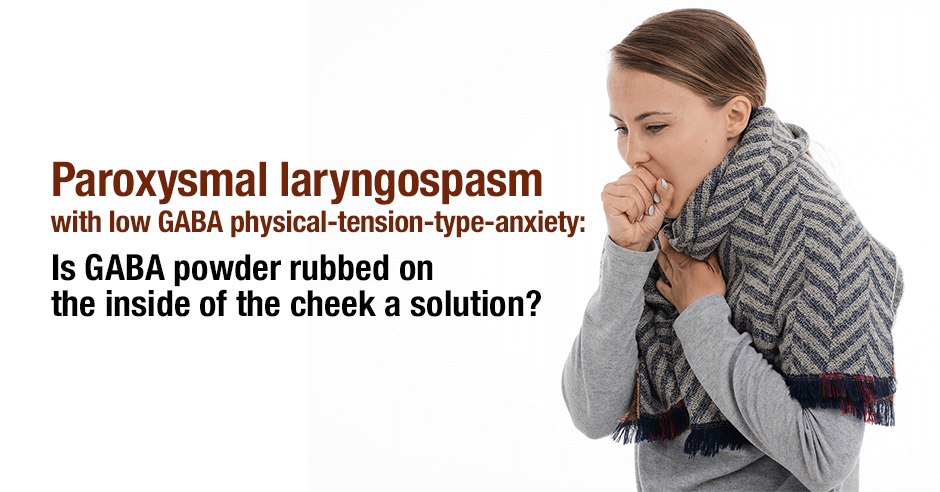
Paroxysmal laryngospasm with low GABA physical-tension-type-anxiety: Is GABA powder rubbed on the inside of the cheek a solution?

March 4, 2022 By Trudy Scott 42 Comments

Paroxysmal laryngospasm and GABA

One type of reactive airway obstruction is paroxysmal laryngospasm, which is a rare laryngeal disease in adults. In this condition, the throat is completely closed due to some form of hypersensitivity or a protective laryngeal reflex causing a transient, complete inability to breathe. Paroxysmal laryngospasm onset in patients is often characterized by a sudden and complete inability to breathe, along with voice loss or hoarseness and stridor. Paroxysmal laryngospasm usually lasts from several seconds to several minutes and may be accompanied by obvious causes such as upper respiratory tract infection, emotional agitation or tension, and/or severe coughing.

I shared something similar on Facebook and the fact that this had just happened to me when drinking lemon water and starting to talk too quickly after my last sip. I choked on the lemon water and my vocal cords went into a spasm. I could not breathe and I had a violent coughing fit. It was a terrifying experience! A few dabs of GABA powder inside my cheek helped relax my vocal cords – which are muscles –  immediately. I could breathe right away.

I’ve been researching this condition for some time now because I figured out this same solution for a family member who has had this happen about 6 times in the last few years.

The response on Facebook was surprisingly high and I now wonder how common this condition is with those who experience low GABA physical-tension-type-anxiety and if oral GABA powder is a viable solution for more individuals.

The 2020 paper on paroxysmal laryngospasm

The above description comes from this 2020 paper – Paroxysmal Laryngospasm: A Rare Condition That Respiratory Physicians Must Distinguish from Other Diseases with a Chief Complaint of Dyspnea

Let’s review a few terms from the paper:

  • According to Merriam-Webster, a paroxysm is a fit or attack.
  • Laryngospasm “(luh-RING-go-spaz-um) is a transient and reversible spasm of the vocal cords that temporarily makes it difficult to speak or breathe”, according to Mayo Clinic
  • Mayo Clinic describes dyspnea as follows: “Shortness of breath – known medically as dyspnea – is often described as an intense tightening in the chest, air hunger, difficulty breathing, breathlessness or a feeling of suffocation.”
  • According to Medscape, stridor is “an abnormal high-pitched sound produced by turbulent airflow through a partially obstructed airway.”) It’s particularly distressing to hear.

So essentially the title of this paper could be translated to something like this: An attack of temporary spasms of the vocal cord that causes difficulty breathing (0ften with a distressing sound of suffocating).  I would go as far to say: A terrifying attack ….

One of the objectives of the paper is to create more awareness on “how to identify and address paroxysmal laryngospasm from the perspective of respiratory physicians.” The  authors share that otolaryngologists (head and neck surgeons) and anesthesiologists (it happens frequently when undergoing anesthesia) are experts in managing paroxysmal laryngospasm.

They also state it’s rare and generally happens when an individual has gastroesophageal reflux disease (GERD), and share how antireflux therapy i.e. PPIs (proton pump inhibitors) are frequently an effective treatment. My input on this: if it is caused by GERD, address why the GERD is happening and avoid PPIs if possible since they contribute to nutritional deficiencies and osteoporosis.

Hysterical stridor in adult females who are anxious and/or depressed

There is no mention of GABA or addressing spasms in the vocal cords and other muscles in this paper. However, the authors do discuss hysterical stridor as being different from paroxysmal laryngospasm, stating “it has a strong demographic pattern of occurring in young adult females, lasting for minutes to hours, frequently requiring sedation or anxiolytics for treatment, and persisting for years.”

They also share this about hysterical stridor:

Psychological assessment usually reveals multiple sources of life stress, compulsive personality traits, depression, anxiety, maladjustment, or a history of psychosomatic comorbidity. Other psychotherapy interventions, such as antianxiety therapy, depression therapy, sedation therapy, speech therapy, and behavioral therapy, are usually effective.

(note: I’m not thrilled by the term hysterical stridor. The diagnosis of hysteria goes back to the 1880s.)

I’m proposing oral GABA powder be researched as another viable option to address the low GABA anxiety symptoms, the hysterical stridor and the paroxysmal laryngospasm.

Is paroxysmal laryngospasm/hysterical stridor really that rare?

I do wonder if these conditions are really that rare. When I shared my experience on Facebook I had a reasonably big response from people saying it’s happened to them a few times, with some saying it has been happening all their lives. Here are a few of the many examples:

  • Anita shared this: “I have experienced laryngospasm. The experience is a spasmodic tightening of the airway triggered by ‘swallowing wrong’ for me. I have never experienced laryngospasm aside from that. I do have low GABA symptoms of physical tension and have had intrusive thoughts in the past, stress eating, but have never used ‘wine to relax’ as I am a ‘teetotaler.’ The episodes I’ve experienced have always resolved on their own within a minute or so. Scary feeling – that is for sure! I plan to keep GABA powder on hand now just in case of a future episode.”
  • Megan shared this: “I have Laryngospasm. I have total throat closure. It feels like forever but I suppose it’s up to 50 seconds. I’ve had it since I was a child and my mum has it too. Food is probably my main trigger, crumbly or syrup type things, a bad cold or even just swallowing wrong. I had a look at the list and I have quite a lot of the low GABA symptoms. I have generalized anxiety, feeling worried/fearful, panic attacks (but they are under control with Zoloft), tense stiff muscles, feeling stressed and burnt out, intrusive and unwanted thoughts and acrophobia.”

One woman felt she had experienced paroxysmal laryngospasm and she had been told it was a panic attack. A few people mentioned a similar condition called vocal cord disorder (often exercised- induced). Many said they had received no diagnosis or help from their doctor.

Interestingly, there are not many papers on “paroxysmal laryngospasm” or “hysterical stridor” so the research and presumably awareness too, seems to be lacking.

Why did I consider GABA for paroxysmal laryngospasm?

You may wonder why I considered GABA when this happened to me. I’ve personally used GABA with success over the years for spasms in my back muscles, rectal muscle spasms/proctalgia fugax, and vagus nerve and coughing/throat spasm episodes. With the additional knowledge I’ve now gained I suspect the latter was a form of laryngospasm.

I’ve also shared how GABA helps ease globus pharyngeus (a lump-in-the-throat sensation that is associated with anxiety and something I experienced in my late 30s).

I’m prone to low GABA physical-tension-type anxiety and have always done really well with oral sublingual GABA.

And of course, when you look at the low GABA symptoms all this makes perfect sense. GABA  helps with muscle spasms and provides pain relief when muscles are tight. The vocal cords are muscles and the larynx itself contains many muscles.

In case you’re new to GABA, it is a calming amino acid, used as a supplement, to ease low GABA levels. With low GABA you’ll experience physical-tension and stiff-and-tense-muscles type of anxiety, panic attacks and insomnia. You may feel the need to self-medicate to calm down, often with alcohol but sometimes with carbs and sugary foods.

What GABA did I use and how did I use it?

I dumped some GABA powder on the palm of my hand (with the help of a family member who rushed to my aid). I wet my finger with saliva, dabbed it in the GABA powder and rubbed it on the inside of my cheek. I did this a few times.

I don’t know exactly how much I used in total but estimate it to be around 200 mg GABA. I stopped rubbing it on the inside of my cheek as soon as I felt the muscles relaxing and I was able to breathe easily again. It felt like forever but it probably only lasted 30-60 seconds. I’d assume a more intense paroxysmal laryngospasm may require more GABA.

It was really encouraging how quickly GABA relaxed the muscles and stopped the laryngospasm. It’s also taken away the fear about it happening again.

Resources if you are new to using GABA as a supplement

If you are new to using the the amino acid GABA as a supplement, here is the Amino Acids Mood Questionnaire from The Antianxiety Food Solution (you can see the low GABA and other low neurotransmitter symptoms)

If you suspect low levels of GABA or low serotonin and do not yet have my book, The Antianxiety Food Solution – How the Foods You Eat Can Help You Calm Your Anxious Mind, Improve Your Mood, and End Cravings, I highly recommend getting it and reading it before jumping in and using amino acids on your own so you are knowledgeable. And be sure to share it with the team you or your loved one is working with.

The book doesn’t include product names (per the publisher’s request) so this blog, The Antianxiety Food Solution Amino Acid and Pyroluria Supplements, lists the GABA products that I use with my individual clients and those in my group programs.

If you don’t feel comfortable reading my book, doing the low GABA symptoms questionnaire and doing trials of GABA on your own, you can get guidance from me in the GABA Quickstart Program.

If you are a practitioner, join us in The Balancing Neurotransmitters: the Fundamentals program. It’s an opportunity to interact with me and other practitioners who are also using the amino acids.

Have you experienced paroxysmal laryngospasm? And do you have the low GABA physical-tension-type-anxiety symptoms?  What else is a trigger for you?

If you’ve already been using GABA with success, have you noticed a reduction in the paroxysmal laryngospasm episodes?

Have you ever used GABA in the way I did to stop an episode quickly?

Have you received a diagnosis and if yes, what diagnosis?

If you’re a practitioner please share what you have seen?

Feel free to ask your questions here too.

Filed Under: Anxiety, GABA, Women's health Tagged With: anxiety, cheek, closed, coughing, could not breathe, emotional, fear, females, GABA, GABA powder, GABA Quickstart program, hysterical stridor, inability to breathe, insomnia, laryngospasm, panic attacks, paroxysmal laryngospasm, physical-tension, spasm, stridor, throat, vocal cords, voice loss

  • « Go to Previous Page
  • Page 1
  • Page 2
  • Page 3
  • Go to Next Page »

Primary Sidebar

NEW! GABA QuickStart Homestudy (with special intro pricing)

gaba quickstart homestudy

Free Report

9 Great Questions Women Ask about Food, Mood and their Health

You'll also receive a complimentary subscription to my ezine "Food, Mood and Gal Stuff"


Connect with me

Popular Posts

  • Amino Acids Mood Questionnaire from The Antianxiety Food Solution
  • The Antianxiety Food Solution Amino Acid and Pyroluria Supplements
  • Pyroluria Questionnaire from The Antianxiety Food Solution
  • Collagen and gelatin lower serotonin: does this increase your anxiety and depression?
  • Tryptophan for the worry-in-your-head and ruminating type of anxiety
  • GABA for the physical-tension and stiff-and-tense-muscles type of anxiety
  • The Antianxiety Food Solution by Trudy Scott
  • Seriphos Original Formula is back: the best product for anxiety and insomnia caused by high cortisol
  • Am I an anxious introvert because of low zinc and vitamin B6? My response to Huffington Post blog
  • Vagus nerve rehab with GABA, breathing, humming, gargling and key nutrients

Recent Posts

  • What do I use instead of Seriphos to help lower high cortisol that is affecting my sleep and making me anxious at night?
  • BeSerene™ GABA/theanine cream eases severe muscle tension in her neck/shoulders, prevents her bad headaches and quells her anxiety
  • How the correct approach, dose and sublingual use of GABA can be calming and not cause a flushed and itchy face and neck
  • The amino acid glutamine improves low mood by addressing gut health, and it has calming effects too
  • Flight anxiety with heightened breath, physical tension and also fearing the worst (the role of low GABA and low serotonin)

Categories

  • 5-HTP
  • AB575
  • Addiction
  • ADHD
  • Adrenals
  • Alcohol
  • Allergies
  • Alzheimer's disease
  • Amino Acids
  • Anger
  • Antianxiety
  • Antianxiety Food Solution
  • Antidepressants
  • Anxiety
  • Anxiety and panic
  • Autism
  • Autoimmunity
  • benzodiazapines
  • Bipolar disorder
  • Books
  • Caffeine
  • Cancer
  • Candida
  • Children/Teens
  • Collagen
  • Cooking equipment
  • Coronavirus/COVID-19
  • Cravings
  • Depression
  • Detoxification
  • Diabetes
  • Diet
  • DPA/DLPA
  • Drugs
  • EFT/Tapping
  • EMF
  • EMFs
  • Emotional Eating
  • Endorphins
  • Environment
  • Essential oils
  • Events
  • Exercise
  • Fear
  • Fear of public speaking
  • Fertility and Pregnancy
  • Fish
  • Food
  • Food and mood
  • Functional neurology
  • GABA
  • Gene polymorphisms
  • General Health
  • Giving
  • Giving back
  • Glutamine
  • Gluten
  • GMOs
  • Gratitude
  • Gut health
  • Heart health/hypertension
  • Histamine
  • Hormone
  • Hyperparathyroidism
  • Hypoglycemia
  • Immune system
  • Inflammation
  • Insomnia
  • Inspiration
  • Introversion
  • Joy and happiness
  • Ketogenic diet
  • Lithium orotate
  • Looking awesome
  • Lyme disease and co-infections
  • MCAS/histamine
  • Medication
  • Men's health
  • Mental health
  • Mercury
  • Migraine
  • Mold
  • Movie
  • MTHFR
  • Multiple sclerosis
  • Music
  • NANP
  • Nature
  • Nutritional Psychiatry
  • OCD
  • Osteoporosis
  • Oxalates
  • Oxytocin
  • Pain
  • Paleo
  • Parasites
  • Parkinson’s disease
  • PCOS
  • People
  • PMS
  • Postpartum
  • PTSD/Trauma
  • Pyroluria
  • Questionnaires
  • Real whole food
  • Recipes
  • Research
  • Schizophrenia
  • serotonin
  • SIBO
  • Sleep
  • Special diets
  • Sports nutrition
  • Stress
  • Sugar addiction
  • Sugar and mood
  • Supplements
  • Teens
  • Testimonials
  • Testing
  • The Anxiety Summit
  • The Anxiety Summit 2
  • The Anxiety Summit 3
  • The Anxiety Summit 4
  • The Anxiety Summit 5
  • The Anxiety Summit 6
  • Thyroid
  • Thyroid health
  • Toxins
  • Tryptophan
  • Tyrosine
  • Uncategorized
  • Vegan/vegetarian
  • Women's health
  • Yoga

Archives

  • October 2025
  • September 2025
  • August 2025
  • July 2025
  • June 2025
  • May 2025
  • April 2025
  • March 2025
  • February 2025
  • January 2025
  • November 2024
  • October 2024
  • September 2024
  • August 2024
  • July 2024
  • June 2024
  • May 2024
  • April 2024
  • March 2024
  • February 2024
  • January 2024
  • December 2023
  • November 2023
  • October 2023
  • September 2023
  • August 2023
  • July 2023
  • June 2023
  • May 2023
  • April 2023
  • March 2023
  • February 2023
  • January 2023
  • December 2022
  • November 2022
  • October 2022
  • September 2022
  • August 2022
  • July 2022
  • June 2022
  • May 2022
  • April 2022
  • March 2022
  • February 2022
  • January 2022
  • December 2021
  • November 2021
  • October 2021
  • September 2021
  • August 2021
  • July 2021
  • June 2021
  • May 2021
  • April 2021
  • March 2021
  • February 2021
  • January 2021
  • December 2020
  • November 2020
  • October 2020
  • September 2020
  • August 2020
  • July 2020
  • June 2020
  • May 2020
  • April 2020
  • March 2020
  • February 2020
  • January 2020
  • December 2019
  • November 2019
  • October 2019
  • September 2019
  • August 2019
  • July 2019
  • June 2019
  • May 2019
  • April 2019
  • March 2019
  • February 2019
  • January 2019
  • December 2018
  • November 2018
  • October 2018
  • September 2018
  • August 2018
  • July 2018
  • June 2018
  • May 2018
  • April 2018
  • March 2018
  • February 2018
  • January 2018
  • December 2017
  • November 2017
  • October 2017
  • September 2017
  • August 2017
  • July 2017
  • June 2017
  • May 2017
  • April 2017
  • March 2017
  • February 2017
  • January 2017
  • December 2016
  • November 2016
  • October 2016
  • September 2016
  • August 2016
  • July 2016
  • June 2016
  • May 2016
  • April 2016
  • March 2016
  • February 2016
  • January 2016
  • December 2015
  • November 2015
  • October 2015
  • September 2015
  • August 2015
  • July 2015
  • June 2015
  • May 2015
  • April 2015
  • March 2015
  • February 2015
  • January 2015
  • December 2014
  • November 2014
  • October 2014
  • September 2014
  • August 2014
  • July 2014
  • June 2014
  • May 2014
  • April 2014
  • March 2014
  • February 2014
  • January 2014
  • December 2013
  • November 2013
  • October 2013
  • September 2013
  • August 2013
  • July 2013
  • June 2013
  • May 2013
  • April 2013
  • March 2013
  • February 2013
  • January 2013
  • December 2012
  • November 2012
  • October 2012
  • August 2012
  • July 2012
  • June 2012
  • May 2012
  • April 2012
  • March 2012
  • February 2012
  • January 2012
  • December 2011
  • November 2011
  • October 2011
  • September 2011
  • August 2011
  • July 2011
  • June 2011
  • May 2011
  • April 2011
  • March 2011
  • February 2011
  • January 2011
  • December 2010
  • October 2010
  • September 2010
  • July 2010
  • May 2010
  • April 2010
  • March 2010
  • February 2010
  • January 2010
  • November 2009

Share the knowledge!

The above statements have not been evaluated by the Food and Drug Administration. Products listed in this website are not intended to diagnose, treat, cure or prevent any disease.

The information provided on this site is for informational and educational purposes only and is not intended as a substitute for advice from your physician or other health care professional. You should consult with a healthcare professional before starting or modifying any diet, exercise, or supplementation program, before taking or stopping any medication, or if you have or suspect you may have a health problem.


Copyright © 2026 Trudy Scott. All Rights Reserved. | Privacy | Terms and Conditions | Refund Policy | Medical Disclaimer

Free Report

9 Great Questions Women Ask about Food, Mood and their Health

You’ll also receive a complimentary subscription to my ezine “Food, Mood and Gal Stuff”