• Skip to primary navigation
  • Skip to main content
  • Skip to primary sidebar

everywomanover29 blog

Food, Mood and Women's Health – Be your healthiest, look and feel great!

  • Blog
  • About
  • Services
  • Store
  • Resources
  • Testimonials
  • The Book
  • Contact
  • Search this site

PCOS

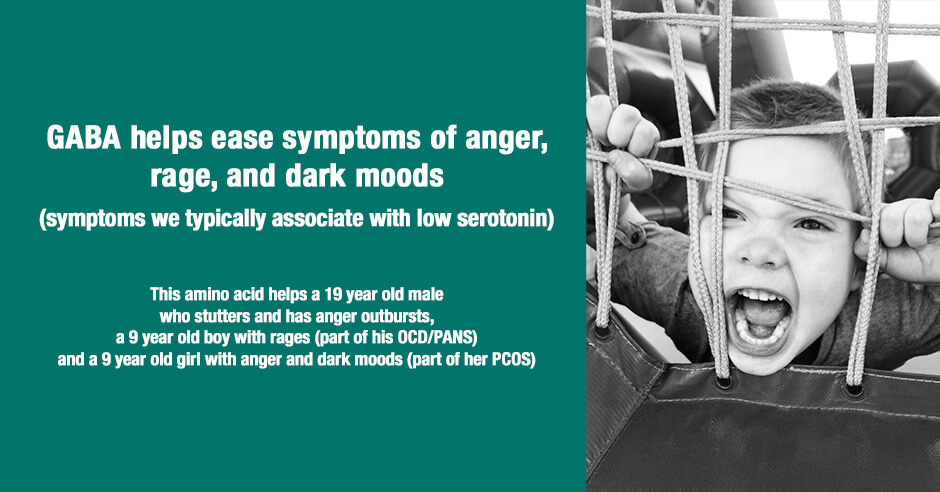
GABA helps ease symptoms of anger, rage, and dark moods (symptoms we typically associate with low serotonin)

June 30, 2023 By Trudy Scott 23 Comments

gaba eases anger

As a result of this wonderful feedback from a mom in the online GABA QuickStart program, I’ve been looking into GABA-anger connections. I’ve been trying to understand how GABA could offer similar benefits to tryptophan/5-HTP for anger, rage and dark moods, which we typically associate with low serotonin. She shares this:

My son who is 19 and on the autism spectrum was having issues with outbursts of anger and stuttering.  These issues seemed to worsen during his senior year of high school. Since starting GABA and tailoring his dosage from Trudy’s instruction and feedback, we have seen a 90% reduction in stuttering and 80% reduction in anger and outbursts.  We have done many supplemental protocols over the years and this is one of the few we have seen have an impact.

I am so happy for this young man and his family, and was also very intrigued. I’ve seen GABA help with stuttering. I have not noticed that GABA helps very much with anger/rage in clients but possibly because they are making other changes at the same time. Since they were in the program and he also had anxiety, we decided to continue with GABA.

I worked with them in the program over a few months and know he only changed one thing – GABA, starting low and increasing to find his ideal dose (with my guidance).

So I started to dig into the research, search through prior blog posts and ask on Facebook and the feedback is robust – folks are seeing GABA help with symptoms of anger and rage.

I share a few case studies below: how PharmaGABA helps a 9 year old boy with rages (part of his OCD/PANS), how GABA helps a young boy with Lyme-induced anger and how GABA helps a 9 year old girl with anger and dark moods (part of her PCOS).

I also share my insights with each case. And some possible mechanisms because we always want to understand why.

PharmaGABA helps 9 year old with rages that are part of his OCD/PANS

Kathy shares how pharmaGABA helped her son (on a pharmaGABA blog):

My 9 year old son had a lot of benefits from PharmaGABA. He used to have rages as part of his OCD/PANS. PharmaGaba 3 times a day was a miracle to get him through that period.

PANS is a neuropsychiatric disorder that falls under the same umbrella as PANDAS but is triggered by an infection other than strep.

If you’re new to PANS/PANDAS, I share the definition of PANDAS, from the PANDAS Network, in this blog: “PANDAS (Pediatric Autoimmune Neuropsychiatric Disorders Associated with Streptococcal Infections) occurs when strep triggers a misdirected immune response that results in inflammation on a child’s brain. In turn, the child quickly begins to exhibit life changing symptoms such as OCD/obsessive compulsive order, anxiety, tics, personality changes, decline in math and handwriting abilities, sensory sensitivities, restrictive eating, and more.”

Both PANS and PANDAS trigger OCD/obsessive compulsive disorder. OCD is typically supported with tryptophan and/or inositol i.e. these obsessive thinking and behaviors are typically related to low serotonin even when there is an infection involved. The infection needs to be addressed but the tryptophan and/or inositol help to ease the obsessive symptoms.

Rage is a common symptom when serotonin is low. Tryptophan addresses low serotonin and can have a huge impact as I share in this blog – Rage, anxiety, cravings & insomnia in 11-year old girl with RAD/reactive attachment disorder: chewable tryptophan turns things around.

However, in this instance, pharmaGABA worked for the rages Kathy’s son experienced.

PharmaGABA is one form of GABA that has been shown to help with relaxation and anxiety.

GABA helps a young boy with Lyme-induced anger

Another mom shared this on a Lyme disease post on Facebook:

One kid has developed fits of anger that come out of nowhere but the GABA seems to be able to help him to play longer periods.

Lyme disease can also have a neuropsychiatric aspect, as shared by Dr. Suruchi Chandra MD. I’ve had the pleasure of interviewing Dr. Chandra on one of the Anxiety Summits and hear her present at integrative mental health conferences.

In one conference presentation she shared this: “Lyme disease is one of the fastest growing infectious diseases in the United States. It can remain dormant for years and then later mimic a number of psychiatric illnesses, including anxiety disorders, mood disturbances, psychosis, and autism-like behaviors. It can be further complicated by the presence of co-infections.”

Anger and rage are also common symptoms. In one study, “Lyme rage” is described as an anger episode that “had a very abrupt onset and was extremely intense and often with minimal cognitive control.”

Yet again, we often see GABA help ease some of the anxiety symptoms, as I share here – GABA helps with Lyme anxiety (while addressing the underlying disease).

However in this instance, GABA helped with her son’s anger symptoms induced by the Lyme bacteria.

GABA helps a 9 year old girl with anger and dark moods (part of her PCOS)

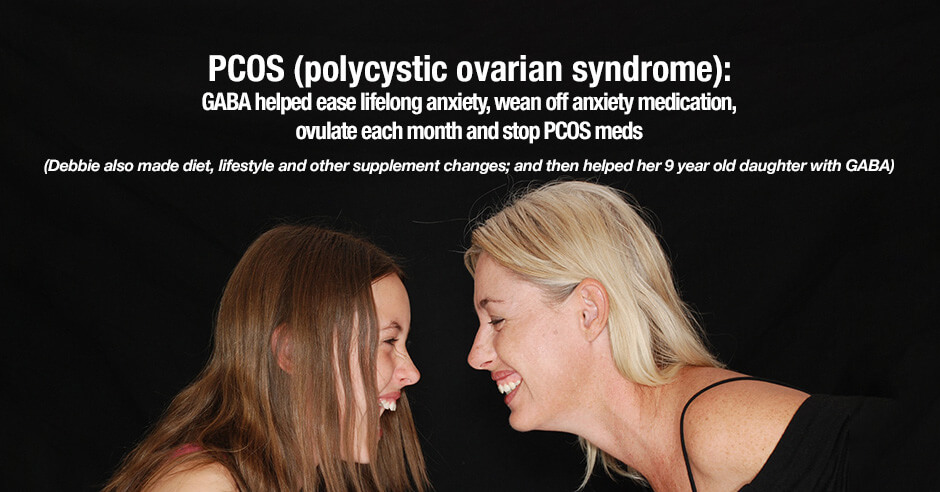
Debbie was diagnosed with PCOS (polycystic ovarian syndrome) and GABA helped ease her lifelong anxiety, wean off anxiety medication, ovulate each month and stop her PCOS medications. She was thrilled that GABA helps her daughter too. She shared how her oldest daughter who is 9 has been showing early signs of developing PCOS and other issues similar to hers:

When her mood started changing and she was getting angry out of nowhere and very dark and moody, I started her on a small dose of GABA. Immediately both of us saw the difference in her mood. She now asks for her “happy pills” daily because she doesn’t want to feel those dark feelings anymore. I wish this information was around when I was young. It could’ve helped so much of what I had to struggle with for years.

I typically think of tryptophan or 5-HTP as “happy pills”, and anger and a dark mood as symptoms of low serotonin.

However, yet again, GABA resolves these symptoms in Debbie’s daughter.

These are just a few of the many recent success stories I’ve heard about GABA and anger/rage.

Does low GABA anger/rage look different from low serotonin anger-rage?

This is all new to me so I honestly don’t know. We do know that low GABA leads to more of a physical kind of anxiety (i.e. felt in the body) and it’s different from low serotonin worry-type anxiety (i.e. it’s felt in the head).

Therefore, it’s possible that low GABA anger and rage has more of a physical aspect too.

I have yet to explore this aspect but feel it may be helpful to figure out if there is a difference in order to effectively use the neurotransmitter symptoms questionnaire. This questionnaire is used to decide whether to trial GABA or tryptophan/5-HTP and the low GABA section will be updated with anger/rage once I’ve gone a bit deeper with all this.

The kind of anger symptoms may well look the same and then we’ll use the clustering of either low GABA or low serotonin symptoms to base our decision for doing an amino acid trial.

Research: GABA may be critical in the neurochemical control of aggressive behavior and rage

There is no research that I am aware of where the amino acid GABA has been used to ease rage, anger or dark moods.

However, this letter, Tiagabine for Rage, Aggression, and Anxiety published in the Journal of Neuropsychiatry and Clinical Neuroscicnes in 2015 offers some round-about support to this GABA-rage observation. They are discussing patients with treatment-resistant rage and aggression and they propose that:

Gamma-aminobutyric acid (GABA), the primary inhibitory neurotransmitter, may be critical in the neurochemical control of aggressive behavior.

They share that the prescription medication called Tiagabine, a selective GABA reuptake inhibitor (SGRI), increases synaptic GABA availability.

And that 20 out of 36 patients aged 15-54 years (69%)

with symptoms of rage, aggression, or anxiety in association with one or more of the following disorders: bipolar, intermittent explosive, major depression, panic disorder, attention deficit hyperactivity disorder, or substance abuse …demonstrated a good or excellent response to tiagabine, with reduction or elimination of the symptoms of rage, aggression, or anxiety.

This and the few studies on anger and glutamate (like this one) offer the most plausible explanations for the quick results we expect when using GABA and other amino acids i.e. quick as in results in 1-30 minutes.

Other than this there is not much direct evidence supporting this GABA-rage connection. GABA likely also helps quickly because of reduced anxiety, improved sleep, and being easil able to quit or eat less sugar (and in adults quit alcohol).

Based on some research I’ve found and my experience with GABA, I suspect GABA may also help in these ways over a longer period: countering a histamine reaction, reducing inflammation and impacting cytokines, improving progesterone levels, beneficial impacts on the microbiome, supporting the liver and toxin removal (such as fluorides), gut healing and reducing high blood pressure. I am still digging into the research.

I thank these families for sharing their stories so we all benefit.

I also really appreciate this opportunity to learn from you – my community – and I will always strive to keep an open mind.

Resources if you are new to using amino acids as supplements

If you are new to using amino acids as supplements, here is the Amino Acids Mood Questionnaire from The Antianxiety Food Solution (you can see all the symptoms of neurotransmitter imbalances, including low GABA and low serotonin).

If you suspect low levels of any of the neurotransmitters and do not yet have my book, The Antianxiety Food Solution – How the Foods You Eat Can Help You Calm Your Anxious Mind, Improve Your Mood, and End Cravings, I highly recommend getting it and reading it before jumping in and using amino acids on your own so you are knowledgeable. And be sure to share it with the practitioner/health team you or your loved one is working with.

There is an entire chapter on the amino acids and they are discussed throughout the book in the sections on gut health, gluten, blood sugar control, sugar cravings, anxiety and mood issues.

The book doesn’t include product names (per the publisher’s request) so this blog, The Antianxiety Food Solution Amino Acid and Pyroluria Supplements, lists the amino acids that I use with my individual clients and those in my group programs. You can find them all in my online store.

If, after reading this blog and my book, you don’t feel comfortable figuring things out on your own (i.e. doing the symptoms questionnaire and respective amino acids trials), a good place to get help is the GABA QuickStart Program (if you have low GABA symptoms). This is a paid online/virtual group program where you get my guidance and community support. Another option is the budget-friendly GABA QuickStart Homestudy program.

[The 19 year old young man/his mother were part of an earlier version of the GABA Quickstart program].

If you also need serotonin support, the Serotonin QuickStart Program is a good place to get help. This is also a paid online/virtual group program where you get my guidance on using tryptophan and 5-HTP safely, and community support during 5 LIVE Q&A calls. You can sign up to be notified when the next live launch of this program is happening.

If you are a practitioner, join us in The Balancing Neurotransmitters: the Fundamentals program. This is also a paid online/virtual program with an opportunity to interact with me and other practitioners who are also using the amino acids.

Now I’d love to hear from you ….

Has GABA helped you or your child with symptoms of anger, rage or a dark mood? And if yes, how did it help, how much helped and which product helped?

Can you be sure GABA helped i.e. is this the only change you made?

Has serotonin support with tryptophan or 5-HTP also helped? And if yes how would you describe the low serotonin anger symptoms vs the low GABA anger symptoms? Are they different?

If you are a practitioner, have you observed any of the above?

Feel free to post your feedback and questions here in the comments.
Filed Under: Anger, Anxiety, GABA Tagged With: 5-HTP, aggressive, amino acids, anger, anxiety, autism spectrum, dark moods, GABA, low serotonin, lyme, neurochemical, OCD, outbursts, PANDAS, PANS, PCOS, pharmaGABA, rage, resources if you are new to the amino acids; the GABA Quickstart online program; and Balancing Neurotransmitters: the Fundamentals program for practitioners, stuttering, Tiagabine, tryptophan

PCOS (polycystic ovarian syndrome): GABA helped ease lifelong anxiety, wean off anxiety medication, ovulate each month and stop PCOS meds

May 19, 2023 By Trudy Scott 19 Comments

PCOS and GABA

I was diagnosed with PCOS (polycystic ovarian syndrome) when I was 27. (I’m currently 43 now). When diagnosed they immediately put me on birth control and metformin.

I also eventually went on anti-anxiety medication. I’ve been anxious my whole life, even as a kid, but my anxiety increased through my late 20s and peaked in my late 30s when panic attacks started taking over, even with anti-anxiety medication(Lexapro). It was debilitating.

I first heard about GABA/amino acids and how they can help with anxiety from a podcast you did with Wellness Mama about 3 years ago. I started to wean off my anxiety medication and I started taking GABA and noticed a huge difference [in my anxiety].

I eventually got off birth control and all medication for my PCOS and started regulating my cycle with diet, lifestyle changes and supplements, all while still taking GABA. Now I ovulate every month! Which I could never do on my own before.

Debbie shared this wonderful feedback on this blog: GABA eases anxiety and is protective against metabolic and reproductive disturbances in polycystic ovarian syndrome (PCOS)?

I love that GABA helped her so much with her anxiety and allowed her to get off her anxiety meds. And that GABA helped her resolve her PCOS, together with making diet, lifestyle changes and using other supplements too.

As you can read on the above blog, the study reports some very specific benefits of GABA being protective against metabolic and reproductive disturbances in PCOS. It’s an animal study but the results are profound: “the effects observed with GABA were comparable to that with metformin” with none of the side-effects (which can actually include anxiety, a racing heart, shakiness and depression).

If you’re new to PCOS, I share this in the above blog:

Research suggests that 5% to 10% of females 18 to 44 years of age are affected by PCOS, making it the most common endocrine abnormality among women of reproductive age in the U.S. Women seeking help from health care professionals to resolve issues of obesity, acne, amenorrhea, excessive hair growth, and infertility often receive a diagnosis of PCOS.

If you’re interested, here is the podcast where Debbie first learned about GABA – 105: Trudy Scott on How to Beat Anxiety & Resolve Panic Attacks

I commend her for taking control and making changes and then for seeking answers when her panic attacks returned.

Debbie started having panic attacks again – this time it was collagen causing low serotonin

Then about three and a half years ago, Debbie started having panic attacks again out of nowhere! She was very surprised and shared this:

I couldn’t understand why [I started having panic attacks again]. I wasn’t stressed. One attack even landed me in the ER (again). I was disappointed to be on this road again. Then I came across your interview talking about collagen and how it can lower your serotonin. I also have the MTHFR gene variant so I run low on serotonin already. I had started taking some collagen supplements not knowing that it was probably setting me into a panic attack mode.

As soon as I stopped taking collagen (and switched all my supplements that were in gelatin caps to veggie caps) I never had another episode again. Or if I felt one coming on, I know now to take Tryptophan to help counteract it.

Here is the interview she is referring to – Collagen Can Cause Anxiety and Insomnia with Trudy Scott: The Anxiety Summit 5

And here is the blog where I first wrote about this topic – Collagen and gelatin lower serotonin: does this increase your anxiety and depression?

Debbie mentions the MTHFR polymorphism and it’s impact on serotonin but another aspect is a predisposition to low serotonin in PCOS. This review paper, Neuroendocrine Determinants of Polycystic Ovary Syndrome, states that “different neurotransmitters (gamma-aminobutyric acid (GABA), glutamate, serotonin, dopamine, and acetylcholine) can also be involved in neuroendocrine etiopathogenesis [i.e. cause and development] of PCOS.” 

As you’ll read in the latter collagen blog, collagen affects a subset of susceptible individuals in this way. We can now add PCOS to that list.

Different root causes of anxiety (low GABA and then low serotonin) and different solutions

Debbie’s story illustrates that things can change and we need to figure out the root cause and course-correct if anxiety and panic attacks show up again. Earlier on, her anxiety and panic attacks were caused by low GABA, which also contributed to her PCOS symptoms.

Then later, the addition of collagen lowered her serotonin levels, because as someone with PCOS she was susceptible. What helped her was stopping the collagen and using tryptophan as needed. This was smart of her to connect the dots with her panic attacks and collagen, and use tryptophan as needed.

I will add that another option would have been to continue using collagen and use tryptophan at the same time. I’m also not sure how big an impact gelatin capsules would have been but switching them clearly gave her peace of mind.

Debbie’s oldest daughter asks for GABA, her “happy pills”

She also shared this lovely feedback when she commented on the blog:

My oldest daughter who is 9 has been showing early signs of developing PCOS and other of my issues. When her mood started changing and she was getting angry out of nowhere and very dark and moody, I started her on a small dose of GABA. Immediately both of us saw the difference in her mood. She now asks for her “happy pills” daily because she doesn’t want to feel those dark feelings anymore. I wish this information was around when I was young. It could’ve helped so much of what I had to struggle with for years.

What an amazing healing journey Debbie has had and she gets to help her daughter too!

She thanked Katie Wells and myself saying: “I want to thank you so much for both of those podcasts/interviews that I feel literally helped save my life.”

I never get tired of hearing this and thanked her for the kind words. I also appreciate her for sharing her wonderful results and said I’d share it as a blog post so you get to learn, be inspired and have hope.

And finally, all this illustrates that there is no one-size-fits-all and we often get unexpected side-benefits when using amino acids.

Resources if you are new to using amino acids as supplements

If you are new to using amino acids as supplements, here is the Amino Acids Mood Questionnaire from The Antianxiety Food Solution (you can see all the symptoms of neurotransmitter imbalances, including low GABA, low serotonin and low endorphins).

If you suspect low levels of any of the neurotransmitters and do not yet have my book, The Antianxiety Food Solution – How the Foods You Eat Can Help You Calm Your Anxious Mind, Improve Your Mood, and End Cravings, I highly recommend getting it and reading it before jumping in and using amino acids on your own so you are knowledgeable. And be sure to share it with the practitioner/health team you or your loved one is working with.

There is an entire chapter on the amino acids and they are discussed throughout the book in the sections on gut health, gluten, blood sugar control, sugar cravings, anxiety and mood issues.

The book doesn’t include product names (per the publisher’s request) so this blog, The Antianxiety Food Solution Amino Acid and Pyroluria Supplements, lists the amino acids that I use with my individual clients and those in my group programs. You can find them all in my online store.

If, after reading this blog and my book, you don’t feel comfortable figuring things out on your own (i.e. doing the symptoms questionnaire and respective amino acids trials), a good place to get help is the GABA QuickStart Program (if you have low GABA symptoms too). This is a paid online/virtual group program where you get my guidance and community support.

If you are a practitioner, join us in The Balancing Neurotransmitters: the Fundamentals program. This is also a paid online/virtual program with an opportunity to interact with me and other practitioners who are also using the amino acids.

Do you have PCOS and has GABA helped you or your loved one in any of these ways – easing anxiety and being able to quit anxiety meds, birth control and PCOS medications?

What other approaches have helped your PCOS?

Has collagen lowered your serotonin and does tryptophan or 5-HTP help?

What about low GABA and dark moods/anger – has GABA helped you or a loved one?

If you have questions and other feedback please share it here too.

Filed Under: Anxiety, GABA, PCOS, Women's health Tagged With: amino acids, anger, anxiety, anxiety medication, anxious, birth control, collagen serotonin, dark mood, diet, GABA, lifestyle, metabolic, metformin, ovulate, panic attacks, PCOS, polycystic ovarian syndrome, reproductive, tryptophan, “happy pills”; the GABA Quickstart online program; and Balancing Neurotransmitters: the Fundamentals program for practitioners

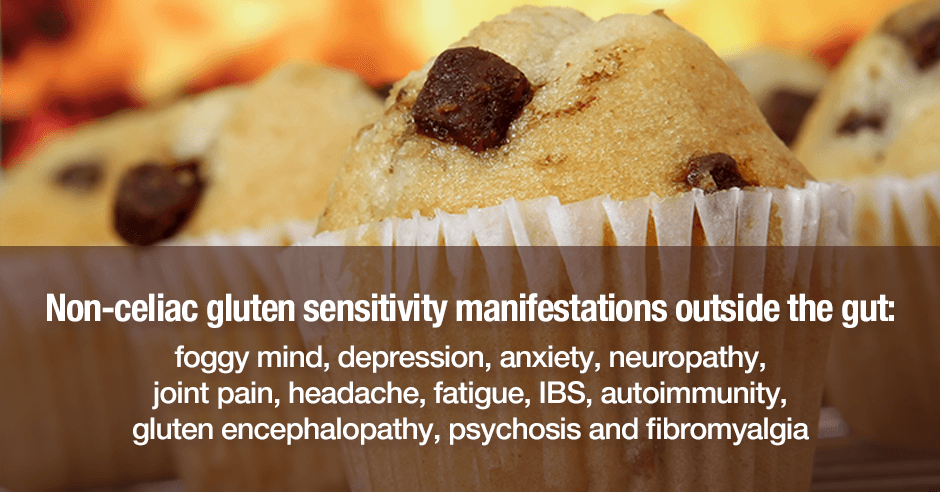
Non-celiac gluten sensitivity manifestations outside the gut: foggy mind, depression, anxiety, neuropathy, joint pain, headache, fatigue and IBS

July 1, 2022 By Trudy Scott 2 Comments

non-celiac gluten sensitivity

Celiac disease is “a digestive and autoimmune disorder that can damage your small intestine. People with celiac disease might experience symptoms like diarrhea, bloating, gas, anemia and growth issues. Celiac disease can be triggered by a protein called gluten. Gluten is found in grains, like wheat, barley and rye” (and oats that are contaminated with gluten). This description by the Cleveland Clinic is well-understood and recognized.

However, what is less recognized and understood, is extra-intestinal (or outside the gut) manifestations of non-celiac gluten sensitivity.  A paper published in 2018, Extra-intestinal manifestations of non-celiac gluten sensitivity: An expanding paradigm lists a number of symptoms and conditions that gluten consumption may cause and/or contribute to, even when you do not have celiac disease.

These can include: ‘foggy mind’; psychiatric diseases such as depression, anxiety and even psychosis; gluten ataxia, gluten neuropathy and gluten encephalopathy (causing memory and cognitive problems); joint and muscle pain, and leg or arm numbness; headache and fatigue;  irritable bowel syndrome (IBS); autoimmune disorders; and and fibromyalgia.

This blog post highlights excerpts from the 2018 non-celiac gluten sensitivity paper and stories from real people who have experienced relief when removing gluten from their diets. And resources if you find you need neurotransmitter support to help break the addiction and not feel deprived.

This is from the abstract of the above paper:

Non celiac gluten sensitivity (NCGS) is a syndrome characterized by a cohort of symptoms related to the ingestion of gluten-containing food in subjects who are not affected by celiac disease (CD) or wheat allergy. The possibility of systemic manifestations in this condition has been suggested by some reports.

  • In most cases they are characterized by vague symptoms such as ‘foggy mind’, headache, fatigue, joint and muscle pain, leg or arm numbness even if more specific complaints have been described.
  • NCGS has an immune-related background. Indeed there is strong evidence that a selective activation of innate immunity may be the trigger for NCGS inflammatory response. The most common autoimmune disorders associated with NCGS are Hashimoto thyroiditis, dermatitis herpetiformis, psoriasis and rheumatologic diseases.
  • A possible neurological involvement has been underlined by NCGS association with gluten ataxia, gluten neuropathy and gluten encephalopathy.
  • NCGS patients may show even psychiatric diseases such as depression, anxiety and psychosis.
  • Finally, a link with functional disorders (irritable bowel syndrome and fibromyalgia) is a topic under discussion.

We see all this clinically so it’s wonderful to see this being addressed in the research. However, the authors are saying we need more research and better studies:

the novelty of this matter has generated an expansion of literature data with the unavoidable consequence that some reports are often based on low levels of evidence. Therefore, only studies performed on large samples with the inclusion of control groups will be able to clearly establish whether the large information from the literature regarding extra-intestinal NCGS manifestations could be supported by evidence-based agreements.

Until then we use what we know works clinically: a gluten-free diet and observation of symptom resolution. We also use amino acids to balance brain chemicals so we break the addiction and don’t feel deprived (more on that below). Nutritional deficiencies caused by damage to the gut/leaky gut also need to be addressed, as well as healing the leaky gut and dysbiosis.

I shared the study abstract on Facebook asking for feedback and the response was so overwhelming that I can only share some of the feedback. I will do follow-up posts sharing more detailed information from their healing journeys.

Caroline had bloating, pain and chronic sadness, and discovered  “joie de vivre”

Caroline confirmed that she has gluten sensitivity saying she stopped eating wheat in 2011:

Within a few months, my chronic sadness disappeared and I discovered the “joie de vivre”. It also allowed me to get rid of my swelling belly (bloating). Every evening I looked like a woman 2-3 months pregnant. [this likely falls into the irritable bowel syndrome category mentioned in the paper]

The pain in my joints also ended up disappearing.

I read so much about gluten once I started to realize it had changed my life to quit eating that stuff that now I’m convinced grains shouldn’t be part of human food, and I mean all grains (botanically speaking).

I think grains should at least be taken off all the menus in all hospitals, especially the psychiatric ones.

I adore her “joie de vivre” feedback and am so happy for her! I had this same feeling of pure joy when I went gluten-free. And I get so much feedback like this from clients who had no idea life could be so much better.

I also agree with her sentiment about gluten and grains being an issue too, especially in psychiatric settings.

Daphne was emotionally dysregulated with negative feelings and a pressure headache

Daphne shared what she calls an odd effect that she gets soon after eating bread: roiling emotions:

I get emotionally dysregulated. Negative feelings surface in various degrees, for me primarily anger and the reviewing of the incidents that caused it (aka ruminating thoughts?); less often sadness, disappointment, and overwhelm (that usually surfaces on its own anyway).

I also get what I call ‘bread head.’ I get a pressure headache from between my eyebrows, up the center of my head to my crown.

An additional effect: ‘the hangover’. Overnight the pressure headache subsides and the next day my whole head feels heavy and I am slower physically and mentally, and my hands in particular are achy

Also, I have had chicken bumps on my skin my whole life, until I stopped eating bread. I still have some, maybe from rice, potato and corn reactions. Starch is not my friend.

As I mentioned above, many folks are surprised at the emotional changes they see when eating gluten. Daphne called it an odd effect but her response is a very typical extra-intestinal (outside the gut) psychiatric response. And yes starches and grains are an issue for many folks.

Other feedback: fibromyalgia pain, brain fog, depression, cystic acne, anxiety, body aches, fatigue, PCOS and hypothyroidism

Here is some feedback from a few other women. As you can see the symptoms can vary per person:

  • “Removal of gluten and all grains has improved my fibromyalgia pain symptoms … The difference in pain was so dramatic that it was worth it.”
  • “It makes such a difference with my brain fog and depression! And cystic acne. If I have gluten, I have cystic acne for about 2 weeks.”
  • “My joint pain, anxiety, and depression are much improved when I avoid gluten (and corn.)”
  • “Yes! Within 15 min of ingesting gluten containing food I get all over body aches, fatigue and brain fog. It’s very unpleasant. I cut gluten out of my diet simply because I can’t function properly while eating it. I also have had episodes of reactive hypoglycemia from it too.”
  • “Removing gluten has cured my hypothyroidism. Also has improved my PCOS, anxiety and depression.”

Stay tuned for a follow-up blog with more from their healing journeys and additional insights from me.

Using the amino acids to help break the gluten addiction and feel less deprived

Sometimes it’s difficult to figure out why you crave or are addicted to gluten. It can be challenging to determine which part of your brain chemistry it’s affecting, and you may not associate cravings with mood issues.

Your drug-of-choice is something you self-medicate with and it is something that makes you feel good or “normal.” It could be starchy gluten-containing foods like bread or pasta or cookies. It could also be candy, chocolate, ice-cream, coffee, sodas, wine/beer, cigarettes, marijuana, a prescription medication like Prozac, street drugs, or even shopping or exercise.

Cravings for these substances (or behaviors) typically indicate a brain chemistry imbalance, so it’s very helpful to identify how the substances you crave affect you. This will help you determine which amino acids you might supplement to address the imbalance.

Use your “drug-of-choice” from your gluten or grain list (perhaps you love bread or chocolate chip muffins) and the chart below to help you determine what brain chemistry imbalance may be affecting you and which amino acid you may benefit from.

How you feel before How you feel after Brain chemistry imbalance Amino acid to supplement
Anxious or stressed Calm or relaxed Low GABA GABA
Depressed or anxious Happy or content Low serotonin Tryptophan or 5-HTP
Tired or unfocused Energetic, alert, or focused Low catecholamines Tyrosine
Wanting a reward or sad Rewarded or comforted Low endorphins DPA (d-phenylalanine)
Irritable and shaky Grounded or stable Low blood sugar Glutamine

Once you address that brain chemical imbalance, it’s easy to quit and you won’t feel deprived.

You can read more about why you crave on this blog post

Resources if you are new to using the amino acids as supplements

If you are new to using any of the amino acids as supplements, here is the Amino Acids Mood Questionnaire from The Antianxiety Food Solution (you can see all the symptoms of neurotransmitter imbalances).

If you suspect low levels of any of the neurotransmitters and do not yet have my book, The Antianxiety Food Solution – How the Foods You Eat Can Help You Calm Your Anxious Mind, Improve Your Mood, and End Cravings, I highly recommend getting it and reading it before jumping in and using amino acids on your own so you are knowledgeable. And be sure to share it with the practitioner/health team you or your loved one is working with.

There is an entire chapter on the amino acids and they are discussed throughout the book in the sections on gut health, gluten, blood sugar control, sugar cravings, self-medicating with alcohol and more. There is also an entire chapter on gluten and grains if this is new to you.

The book doesn’t include product names (per the publisher’s request) so this blog, The Antianxiety Food Solution Amino Acid and Pyroluria Supplements, lists the amino acids that I use with my individual clients and those in my group programs.

If, after reading this blog and my book, you don’t feel comfortable figuring things out on your own (i.e. doing the symptoms questionnaire and respective amino acids trials), a good place to get help is the GABA Quickstart Program (if you have low GABA symptoms). This is a paid online/virtual group program where you get my guidance and community support. There are many moms in the program who are having much success with their kids.

If you are a practitioner, join us in The Balancing Neurotransmitters: the Fundamentals program. This is also a paid online/virtual program with an opportunity to interact with me and other practitioners who are also using the amino acids.

With much appreciation for these women for sharing their stories. I’d love to get some of these published as case studies to further add to the evidence.

Do you have (or suspect you may have) non celiac gluten sensitivity (NCGS)?

And has gluten removal resolved any of the above issues? And have you seen an improvement in gut issues too?

Have you observed other improvements since eating gluten and/or grain-free?

Did you find the amino acids helped you break your addiction and feel less deprived?

Or are you stuck and still eating gluten and have no idea where to start on quitting? If this is you, would a webinar series help?

If you have questions please share them here too.

Filed Under: Anxiety, Endorphins, GABA, Gluten, Pain, serotonin Tagged With: "joie de vivre", addiction, amino acids, anxiety, Autoimmunity, bloating, body aches, brain fog, celiac, cystic acne, depression, deprived, emotionally dysregulated, extra-intestinal, fatigue, Fibromyalgia, foggy mind, GABA, GABA Quickstart program, gluten, gluten encephalopathy, headache, hypothyroidism, IBS, joint pain, NCGS, negative feelings, neuropathy, Non-celiac gluten sensitivity, outside the gut, PCOS, psychosis, sadness, wheat

Tryptophan calms comfort eating, eases self-doubt, reduces uncontrollable late night snacking and results in a lot more peace around food.

March 26, 2021 By Trudy Scott 26 Comments

tryptophan calms

Zoe shares her life long story about comfort eating, her insecurities and self-doubt in her teens, the comfort-foods that allowed her to “escape” and how addressing low serotonin at 41 years of age led to her feeling a lot more peace around food. The effects of one chewable tryptophan were instant! Here is her story in her own words, some insights from me and possible next steps for Zoe to consider.

Historically I had comfort eaten and felt insecure and had lots of self-doubt. This led to trying alcohol and cocaine in my early 20s, plus I’m a vegetarian so I think I blew through all my natural serotonin by the time I tried tryptophan at 41!

I think [low] serotonin was huge for me and tryptophan helped calm my comfort eating.

My comfort eating started at secondary school, around 14, an escape from my feelings when I got home from school. I would eat mashed potatoes with loads of butter or a Sara Lee Chocolate gateau.

Thinking about it now, I realize I was craving carbohydrates and I would eat till I felt sick. I craved feeling really full and sadly was bulimic for a few years there as a teenager. I think my feelings of not feeling good enough/unloved drove me to comfort eating and not feeling understood. I would eat, be sick then do an exercise video before my parents even got home! It may also have been hormonal as I get PMS. I also have PCOS (polycystic ovarian syndrome).

Good news is I tried tryptophan last summer and the effects were instant.

I hadn’t read the instructions properly so ate a Lidtke chewable tryptophan tablet with my meal and instantly felt the effect. I stopped eating and feeling hungry instantly. I took the chewables for a couple of months then went onto Lidtke 500mg for another few months.

I do still have a tendency to snack late at night but it’s gone from totally uncontrollable 8 or 9 out of 10 to a 3 or 4 out of 10. I don’t crave food anywhere near as much as I used to and I have a lot more peace around food now.

Thank you for being the one to introduce me to them, you are a super star.

A few thoughts from me

This is a wonderful outcome and I’m thrilled for her transformation! I also appreciate Zoe giving me permission to share here so you can be inspired and have hope!

A few thoughts from me:

  • PMS/dysphoria is common with low serotonin levels and research shows that tryptophan can help ease symptoms in a few cycles
  • Low levels of serotonin and endorphins can lead to alcohol consumption and experimenting with drugs as a means of self-medication. This can often be replaced with sugar addiction and cravings which are also a way to self-medicate.
  • Low serotonin is a factor with bulimia, although it’s typically an under-recognized factor when it comes to eating disorders.

I share where I’d start if we were working together and possible next steps below.

How did she use tryptophan and which products did she use?

Zoe initially used the Lidtke chewable (each one is 100mg) for a few months: ”I used the Lidtke chewable as I don’t need much to feel the effects of aminos!”

Then she switched to the Lidtke 500mg: “I was taking 500mg mixed with banana on an empty stomach every day for about 6 months.”

This amount of tryptophan would be considered low for most folks. 500mg is a typical starting dose often used 1-2 mid-afternoon and 1-2 in the evening.

You may see all her low serotonin symptoms and think she has a lot going on and will likely need large doses of tryptophan for serotonin support. But you never know how much tryptophan will work until you do a trial.

Low endorphins and DPA for eliminating comfort eating

Zoe actually posted much of the above in response to a question I posted on Facebook about eliminating comfort eating and the amino acid called DPA (d-phenylalanine). DPA typically helps the kind of eating where you feel “I deserve this or this is my reward or this is my treat.” Until you address low endorphins with DPA, you may also feel eating these foods are numbing – as in numbing or blocking emotional pain.

She shared “Yes I’ve tried DPLA and it had a very nice effect.” But as you’ve read above, low serotonin was a bigger issue for Zoe and it was the tryptophan that really helped calm her comfort eating.

DLPA or DPA?

I reminded her that DPLA (dl-phenylalanine) is quite different from DPA (d-phenylalanine). DLPA works on boosting low catecholamines (improving low motivation, poor focus and fatigue and stay-in-bed kind of depression) and to a small extent also low endorphins. DPA works purely on boosting low endorphins.

But Zoe did see benefits from DLPA:

DPLA made me feel very content with my life. I felt very happy where I was all of a sudden, instead of feeling the need to chase something better all the time. I’ve never had just straight DPA, I’ve found it hard to find.

It’s not uncommon to see low serotonin and low endorphins in situations like this.

Tryptophan is no longer helping: my feedback and other ideas

Zoe did also share this about the 500mg tryptophan no longer helping like it used to:

The tryptophan doesn’t seem to have the same effect on me anymore sadly but that maybe because I’m ‘topped up’ but I did wonder if I had ruined the quality of my tryptophan by storing it on top of my microwave (so they were heating up).

I’ll try the [Lidtke] Tryptophan Complete this time and hope they work as I do still get a bit of PMS which seemed to go away for a while.

I did hear about mixing it with inositol being a possible solution too?

Here is my feedback on some of this, where I’d start if we were working together and possible next steps:

  • My favorite DPA product is also made by Lidtke and it’s called Endorphigen. It may help with the last remaining snacking
  • However, timing wise late-night snacks for carbs tends to be low serotonin. I would try again with Lidtke 500mg (the microwave heat may have been an issue), considering a trial of 1000mg, trialing the Lidtke Tryptophan Complete (as she may be missing the cofactors to make serotonin) and even consider going back to the chewable Lidtke tryptophan which worked so well initially.
  • I would also look at other factors that may be lowering serotonin levels: has gluten snuck back in or is there any accidental exposure? Has she started consuming collagen and/or gelatin which can lower serotonin in susceptible folks?
  • I would consider trialing inositol if there is an obsessive tendency to the snacking. It does help with PCOS too.
  • She had said “I thought GABA would be amazing for me but it wasn’t.” Since GABA helps with PCOS and PMS, I would revisit GABA trials using different forms, higher doses and making sure trials are sublingual. Progesterone or herbs that support progesterone is another option.
  • I agree with Zoe’s comments about being a vegetarian. Low levels of neurotransmitters are common and we cover the benefits of grass-fed red meat for women in my interview with Dr. Felice Jacka on the first Anxiety Summit. I’d encourage adding some quality animal protein if she’s open to it.
  • For vegetarians, we often also add a free form amino acid blend with tryptophan, especially if adding animal protein is a no-no.
  • I would also consider pyroluria (the social anxiety condition) too as PMS is common, pyrolurics are often vegetarians, and the pyroluria protocol provides necessary cofactors for making serotonin. Zinc is often low in vegetarians too.
  • I would also assess for low iron and low B12 (also often low in vegetarians) and needed for serotonin production; and look into the BCP (birth control pill) or other meds that may be lowering serotonin.
  • I would have her doctor check thyroid health as low thyroid can reduce the effectiveness of the amino acids

As with everyone, a full functional workup looking at diet, nutritional deficiencies, digestion, all hormones, toxins and infections (and so on) is key to address all possible root causes.

Have you found that tryptophan calmed your comfort eating, reduced your self-doubt and late night carb snacking and led to feelings of peace around food? Did it also reduce PMS and other low serotonin symptoms?

If you’re a practitioner working with women who comfort-eat and have typical low serotonin symptoms, have you found tryptophan to help?

Feel free to post your questions and feedback in the comments below.

Filed Under: Cravings, serotonin, Tryptophan Tagged With: alcohol, bulimia, cocaine, comfort eating, craving, GABA, insecure, PCOS, peace, peace around food, PMS, pyroluria, self-doubt, self-medication, serotonin, snacking, thyroid, tryptophan, unloved, vegetarian

GABA eases anxiety and is protective against metabolic and reproductive disturbances in polycystic ovarian syndrome (PCOS)?

January 8, 2021 By Trudy Scott 40 Comments

gaba pcos

This question was recently asked in my online GABA Quickstart group program: What are your thoughts about using GABA with somebody who has polycystic ovarian syndrome (PCOS)? Are there any contraindications? My approach is always the same regardless of your diagnosis – if you have the low GABA symptoms of physical anxiety then it’s worth doing a trial to determine if supplementing with the calming amino acid GABA will help.

What is very interesting is that this rat study, Protective effects of GABA against metabolic and reproductive disturbances in letrozole induced polycystic ovarian syndrome in rats, reports some very specific benefits of GABA being protective against metabolic and reproductive disturbances in PCOS.

Letrozole or Femara, a non-steroidal aromatase inhibitor (i.e. it lowers estrogen production) is used to treat breast cancer in postmenopausal women and it induced PCOS in the rats.

The following benefits were found when GABA was used in the rats with PCOS:

  • reduced body weight
  • reduced body mass index
  • reduced testosterone
  • a favourable lipid profile
  • normal glucose tolerance
  • a decreased number of cystic follicles in the ovaries

These results are profound. But wait for it …”the effects observed with GABA were comparable to that with metformin” with none of the side-effects (which can actually include anxiety, a racing heart, shakiness and depression).

The authors conclude as follows:

The results suggest that GABA treatment has shown protective effects in PCOS and provides beneficial effects either by reducing insulin resistance or by inducing antioxidant defence mechanisms.

The above paper didn’t measure anxiety levels but it’s very common with PCOS. According to this paper, Polycystic Ovary Syndrome: A Review of Treatment Options With a Focus on Pharmacological Approaches

after PCOS is diagnosed, studies show that more than 50% of patients develop prediabetes or diabetes, and there is an increased risk of myocardial infarction (MI), dyslipidemia, hypertension, anxiety, depression, endometrial cancer, and sleep apnea.

So it makes sense that using GABA will also help to ease any anxiety symptoms that are present. As always, look at the low GABA symptoms and if they exist rate them on a scale of 1-10 (with 10 being most severe), do a trial with GABA, and rate your symptoms afterwards, adjusting up or down as needed based on symptom relief.

A quick recap if you are new to GABA, these are the symptoms of low GABA:

  • Unable to relax or loosen up
  • Stiff or tense muscles
  • Feeling stressed and burned-out
  • Feeling worried or fearful
  • Panic attacks
  • Craving carbs for relaxation and calming
  • Craving alcohol for relaxation and calming
  • Craving drugs for relaxation and calming
  • Insomnia *
  • Have intrusive thoughts, perseverate or have an overactive brain
    Or have unwanted thoughts – thoughts about unpleasant memories, images or worries (Updated Nov 17, 2017: new GABA research on intrusive thoughts) *
  • Inability to prioritize planned actions *
  • Acrophobia (fear of heights) * – possibly other phobias too
  • Poor focus *
  • Rectal spasms *
  • Burning mouth *
  • Visceral pain/belly pain with IBS *

(* New additions that are not in my book “The Antianxiety Food Solution”)

Keep in mind that the above PCOS GABA paper was an animal study and GABA was not listed as a treatment option in the second paper above so my approach would be to use GABA for easing the physical anxiety symptoms. At the same time, share this blog and study with your prescribing physician and request if they will work with you to adjust your Metformin as they monitor your testosterone, lipids, glucose, insulin and cystic follicles in the ovaries, as well as weight and body mass index.

I look forward to human GABA PCOS studies in the near future. I also look forward to hearing back from you if you have PCOS and are using GABA for easing your anxiety symptoms AND are also seeing some of the above metabolic and reproductive improvements.

Given the prevalence of PCOS it’s important we use everything at our disposal to help:

Research suggests that 5% to 10% of females 18 to 44 years of age are affected by PCOS, making it the most common endocrine abnormality among women of reproductive age in the U.S. Women seeking help from health care professionals to resolve issues of obesity, acne, amenorrhea, excessive hair growth, and infertility often receive a diagnosis of PCOS.

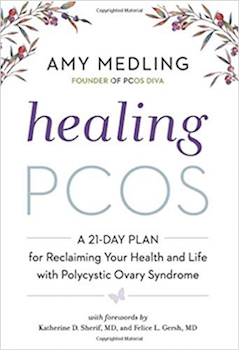
We must always use a comprehensive approach and this book by my friend and colleague, Amy Medling is wonderful: Healing PCOS.

Do you have PCOS and anxiety and has GABA helped? Have you also observed some of the above metabolic and reproductive improvements?

If you’re a practitioner working with women with PCOS, have you made any of these observations?

I’d also be curious to hear if you see changes in acne severity, amenorrhea (missed periods), excessive hair growth or infertility?

Please do share in the comments below.

Filed Under: Anxiety, Fertility and Pregnancy, GABA, Hormone, Women's health Tagged With: acne, amenorrhea, anxiety, cystic follicles, excessive hair growth, GABA, glucose tolerance, infertility, lipid profile, metabolic, obesity, ovaries, PCOS, polycystic ovarian syndrome, reduced body mass index, reduced body weight, reduced testosterone, reproductive

Healing PCOS: a new book by Amy Medling

May 4, 2018 By Trudy Scott Leave a Comment

Big congrats to my friend and colleague Amy Medling on the launch of her book this week: “Healing PCOS: A 21-Day Plan for Reclaiming Your Health and Life with Polycystic Ovary Syndrome.” This is a proven 21-day diet and lifestyle plan to help women with polycystic ovary syndrome (PCOS) take back control of their health and resolve their symptoms from a certified health coach and founder of the large PCOS Diva online community.

I’m excited to share this book as a PCOS resource for you because anxiety and depression are common symptoms with PCOS – as a result of insulin resistance, low blood sugar and high cortisol:

  • In the short term, insulin resistance is at the heart of most PCOS symptoms, including infertility, obesity, hirsutism [male-pattern hair growth in women], hyperandrogenism (elevated androgen levels), chronic fatigue syndrome, immune system defects, eating disorders, hypoglycemia [low blood sugar], gastrointestinal disorders, depression, and anxiety
  • many women with PCOS may naturally have higher cortisol levels. Being overweight also increases cortisol production. Raised levels of cortisol change the way your body manages other critical hormones, putting you at risk for insulin resistance, anxiety, depression, and thyroid dysfunction.

Anxiety symptoms can also be due to low progesterone, estrogen dominance, thyroid issues, and overall inflammation.

She shares so many gems: how it’s so important to begin your healing journey by establishing your PCOS Diva mindset and practicing mindfulness; that the best movement for women with PCOS is whatever you enjoy; that the best way to overcome gym anxiety is to think like a PCOS Diva i.e. don’t wait until you have lost weight and then go; the importance of the vagus nerve and improving vagal tone.

The sections on the difficulties of getting a diagnosis, testing and medications are invaluable.

The section describing the different types of inositol when it comes to PCOS is also excellent. She writes that research suggests that women with PCOS may not be able to efficiently convert other inositols to D-chiro-inositol (DCI).

When I shared the new book announcement on Facebook, Katie Moon Bodily posted this:

I love the opening paragraph that defines what a PCOS Diva is. She is full of hope, chooses to thrive, takes charge, advocates for herself, and looks beyond physical management and also cares for her mind and spirit. I love that Amy starts with retraining the mind before she dives in to making physical changes—unless you change the way you think, the changes won’t last. Her words are full of hope and encouragement. She holds your hand through the changes so that you do t get overwhelmed and start to feel like “hey, I CAN do this!” Everything she does impresses me, and it’s so exciting to see it all compiled into one book!

I have to agree! As well as being a fabulous practical PCOS resource, it is a wonderfully hopeful and encouraging book and you can feel her warm support with you throughout the book. I really love the opening pages where Amy says this:

I deserve to be a PCOS Diva. I need to be a PCOS Diva.

A PCOS Diva is a woman with hope. She has taken charge of her health and happiness and takes steps every day to enhance both. She chooses to thrive with PCOS and is empowered by the knowledge she gathers as she educates herself about PCOS.

Here is the official blurb:

“PCOS is one of the most common hormonal disorders, and the most common cause of female infertility, affecting roughly five million American women. Because it’s symptoms are widespread—including stubborn weight gain, acne, mood swings, abnormal hair loss or growth, and irregular menstrual cycles—women suffering from PCOS are often misdiagnosed and treated with “Band-Aid” pharmaceuticals with uncomfortable side effects that only mask PCOS’s root causes. While there is no cure for PCOS, women can learn to control their symptoms naturally. In this welcome guide, Amy Medling shows how to combine an anti-inflammatory and hormone-balancing diet, daily movement, and stress-reducing self-care to successfully treat their PCOS.

Grounded in the latest medical research and filled with the knowledge she’s acquired dealing with PCOS herself and working with thousands of women, Healing PCOS offers women small, manageable steps that help alleviate their symptoms and control the inflammation, hormonal imbalance, and insulin resistance that underlie the condition. Amy’s revolutionary program consists of:

  • A 21-day anti-inflammatory, hormone-balancing and gluten-free meal plan, including meal prep and plan-ahead tips to make eating this way simple and fast
  • 85 delicious recipes—half fan favorites and half new dishes
  • Daily self-care exercises, including meditation and journaling prompts

Amy has helped tens of thousands of women with PCOS take back control of their health and their lives through lasting, healing, and sustainable lifestyle change. Whether you’re newly diagnosed or have struggled with PCOS, her revolutionary program can now work for you.”

Get access to chapter 1 of Healing PCOS here

Grab your copy of Healing PCOS on Amazon (my link)

Feel free to post questions below and do let us know which steps have helped you (or your patients/clients).


Filed Under: Books, Hormone Tagged With: Amy Medling, anti-inflammatory, diet and lifestyle, PCOS, polycystic ovary syndrome, recipes, Self-care, stress-reducing

  • Page 1
  • Page 2
  • Go to Next Page »

Primary Sidebar

NEW! GABA QuickStart Homestudy (with special intro pricing)

gaba quickstart homestudy

Free Report

9 Great Questions Women Ask about Food, Mood and their Health

You'll also receive a complimentary subscription to my ezine "Food, Mood and Gal Stuff"


Connect with me

Popular Posts

  • Amino Acids Mood Questionnaire from The Antianxiety Food Solution
  • The Antianxiety Food Solution Amino Acid and Pyroluria Supplements
  • Pyroluria Questionnaire from The Antianxiety Food Solution
  • Collagen and gelatin lower serotonin: does this increase your anxiety and depression?
  • Tryptophan for the worry-in-your-head and ruminating type of anxiety
  • GABA for the physical-tension and stiff-and-tense-muscles type of anxiety
  • The Antianxiety Food Solution by Trudy Scott
  • Seriphos Original Formula is back: the best product for anxiety and insomnia caused by high cortisol
  • Am I an anxious introvert because of low zinc and vitamin B6? My response to Huffington Post blog
  • Vagus nerve rehab with GABA, breathing, humming, gargling and key nutrients

Recent Posts

  • What do I use instead of Seriphos to help lower high cortisol that is affecting my sleep and making me anxious at night?
  • BeSerene™ GABA/theanine cream eases severe muscle tension in her neck/shoulders, prevents her bad headaches and quells her anxiety
  • How the correct approach, dose and sublingual use of GABA can be calming and not cause a flushed and itchy face and neck
  • The amino acid glutamine improves low mood by addressing gut health, and it has calming effects too
  • Flight anxiety with heightened breath, physical tension and also fearing the worst (the role of low GABA and low serotonin)

Categories

  • 5-HTP
  • AB575
  • Addiction
  • ADHD
  • Adrenals
  • Alcohol
  • Allergies
  • Alzheimer's disease
  • Amino Acids
  • Anger
  • Antianxiety
  • Antianxiety Food Solution
  • Antidepressants
  • Anxiety
  • Anxiety and panic
  • Autism
  • Autoimmunity
  • benzodiazapines
  • Bipolar disorder
  • Books
  • Caffeine
  • Cancer
  • Candida
  • Children/Teens
  • Collagen
  • Cooking equipment
  • Coronavirus/COVID-19
  • Cravings
  • Depression
  • Detoxification
  • Diabetes
  • Diet
  • DPA/DLPA
  • Drugs
  • EFT/Tapping
  • EMF
  • EMFs
  • Emotional Eating
  • Endorphins
  • Environment
  • Essential oils
  • Events
  • Exercise
  • Fear
  • Fear of public speaking
  • Fertility and Pregnancy
  • Fish
  • Food
  • Food and mood
  • Functional neurology
  • GABA
  • Gene polymorphisms
  • General Health
  • Giving
  • Giving back
  • Glutamine
  • Gluten
  • GMOs
  • Gratitude
  • Gut health
  • Heart health/hypertension
  • Histamine
  • Hormone
  • Hyperparathyroidism
  • Hypoglycemia
  • Immune system
  • Inflammation
  • Insomnia
  • Inspiration
  • Introversion
  • Joy and happiness
  • Ketogenic diet
  • Lithium orotate
  • Looking awesome
  • Lyme disease and co-infections
  • MCAS/histamine
  • Medication
  • Men's health
  • Mental health
  • Mercury
  • Migraine
  • Mold
  • Movie
  • MTHFR
  • Multiple sclerosis
  • Music
  • NANP
  • Nature
  • Nutritional Psychiatry
  • OCD
  • Osteoporosis
  • Oxalates
  • Oxytocin
  • Pain
  • Paleo
  • Parasites
  • Parkinson’s disease
  • PCOS
  • People
  • PMS
  • Postpartum
  • PTSD/Trauma
  • Pyroluria
  • Questionnaires
  • Real whole food
  • Recipes
  • Research
  • Schizophrenia
  • serotonin
  • SIBO
  • Sleep
  • Special diets
  • Sports nutrition
  • Stress
  • Sugar addiction
  • Sugar and mood
  • Supplements
  • Teens
  • Testimonials
  • Testing
  • The Anxiety Summit
  • The Anxiety Summit 2
  • The Anxiety Summit 3
  • The Anxiety Summit 4
  • The Anxiety Summit 5
  • The Anxiety Summit 6
  • Thyroid
  • Thyroid health
  • Toxins
  • Tryptophan
  • Tyrosine
  • Uncategorized
  • Vegan/vegetarian
  • Women's health
  • Yoga

Archives

  • October 2025
  • September 2025
  • August 2025
  • July 2025
  • June 2025
  • May 2025
  • April 2025
  • March 2025
  • February 2025
  • January 2025
  • November 2024
  • October 2024
  • September 2024
  • August 2024
  • July 2024
  • June 2024
  • May 2024
  • April 2024
  • March 2024
  • February 2024
  • January 2024
  • December 2023
  • November 2023
  • October 2023
  • September 2023
  • August 2023
  • July 2023
  • June 2023
  • May 2023
  • April 2023
  • March 2023
  • February 2023
  • January 2023
  • December 2022
  • November 2022
  • October 2022
  • September 2022
  • August 2022
  • July 2022
  • June 2022
  • May 2022
  • April 2022
  • March 2022
  • February 2022
  • January 2022
  • December 2021
  • November 2021
  • October 2021
  • September 2021
  • August 2021
  • July 2021
  • June 2021
  • May 2021
  • April 2021
  • March 2021
  • February 2021
  • January 2021
  • December 2020
  • November 2020
  • October 2020
  • September 2020
  • August 2020
  • July 2020
  • June 2020
  • May 2020
  • April 2020
  • March 2020
  • February 2020
  • January 2020
  • December 2019
  • November 2019
  • October 2019
  • September 2019
  • August 2019
  • July 2019
  • June 2019
  • May 2019
  • April 2019
  • March 2019
  • February 2019
  • January 2019
  • December 2018
  • November 2018
  • October 2018
  • September 2018
  • August 2018
  • July 2018
  • June 2018
  • May 2018
  • April 2018
  • March 2018
  • February 2018
  • January 2018
  • December 2017
  • November 2017
  • October 2017
  • September 2017
  • August 2017
  • July 2017
  • June 2017
  • May 2017
  • April 2017
  • March 2017
  • February 2017
  • January 2017
  • December 2016
  • November 2016
  • October 2016
  • September 2016
  • August 2016
  • July 2016
  • June 2016
  • May 2016
  • April 2016
  • March 2016
  • February 2016
  • January 2016
  • December 2015
  • November 2015
  • October 2015
  • September 2015
  • August 2015
  • July 2015
  • June 2015
  • May 2015
  • April 2015
  • March 2015
  • February 2015
  • January 2015
  • December 2014
  • November 2014
  • October 2014
  • September 2014
  • August 2014
  • July 2014
  • June 2014
  • May 2014
  • April 2014
  • March 2014
  • February 2014
  • January 2014
  • December 2013
  • November 2013
  • October 2013
  • September 2013
  • August 2013
  • July 2013
  • June 2013
  • May 2013
  • April 2013
  • March 2013
  • February 2013
  • January 2013
  • December 2012
  • November 2012
  • October 2012
  • August 2012
  • July 2012
  • June 2012
  • May 2012
  • April 2012
  • March 2012
  • February 2012
  • January 2012
  • December 2011
  • November 2011
  • October 2011
  • September 2011
  • August 2011
  • July 2011
  • June 2011
  • May 2011
  • April 2011
  • March 2011
  • February 2011
  • January 2011
  • December 2010
  • October 2010
  • September 2010
  • July 2010
  • May 2010
  • April 2010
  • March 2010
  • February 2010
  • January 2010
  • November 2009

Share the knowledge!

The above statements have not been evaluated by the Food and Drug Administration. Products listed in this website are not intended to diagnose, treat, cure or prevent any disease.

The information provided on this site is for informational and educational purposes only and is not intended as a substitute for advice from your physician or other health care professional. You should consult with a healthcare professional before starting or modifying any diet, exercise, or supplementation program, before taking or stopping any medication, or if you have or suspect you may have a health problem.


Copyright © 2026 Trudy Scott. All Rights Reserved. | Privacy | Terms and Conditions | Refund Policy | Medical Disclaimer

Free Report

9 Great Questions Women Ask about Food, Mood and their Health

You’ll also receive a complimentary subscription to my ezine “Food, Mood and Gal Stuff”