• Skip to primary navigation
  • Skip to main content
  • Skip to primary sidebar

everywomanover29 blog

Food, Mood and Women's Health – Be your healthiest, look and feel great!

  • Blog
  • About
  • Services
  • Store
  • Resources
  • Testimonials
  • The Book
  • Newsletter
  • Contact
  • Search this site

Julie Matthews

Butyrate, oxalates, sleep and the health of the microbiome

May 14, 2017 By Trudy Scott 11 Comments

Butyrate, oxalates and sleep are all closely tied to the health of the microbiome. Here are a few snippets from some of my favorite interviews on the Microbiome Medicine Summit 2:

Healthy Messages from Body to Brain: Dr. David Perlmutter
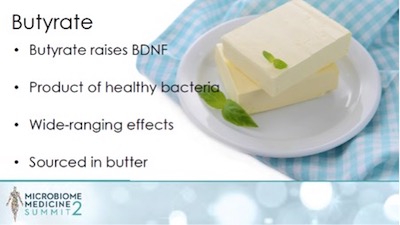
Butyrate is one of the 3 very important short chain fatty acids that are made in the gut: butyrate, propionate, and acetic acid are the products of the healthy bacteria.

And it turns out that butyrate has some far reaching effects in the body. It acts as a fuel for the cells that line the gut. It acts as a modulator of our gene expression, a fancy term called histone deacetylase inhibitor, but it changes the expression of our DNA.

It regulates the leakiness of the gut lining. It regulates the leakiness of the blood brain barrier, and it also simulates specific receptors on immune cells called G protein receptors that code for things like the formation of inflammatory chemicals, so it has wide-ranging effects.

We can increase our butyrate by having healthier gut bacteria. We can eat butyrate in certain foods. It comes from the word butter; butter is probably nature’s richest source of butyrate.

Special Diets & the Microbiome: Julie Matthews

What’s interesting about oxalates is they can affect and actually damage mitochondria. Mitochondria, those little powerhouses in the cell, there are millions and millions of those going on every second that supply our entire body, every cell, every organ of our body with energy at every second.

Issues with mitochondria are very common not only on autism but variety of conditions including fibromyalgia and all sorts of pain-related condition. And we often see when people have mitochondrial issues that they have issues with three or more systems. So if they’ve got issues with their gut and maybe something in their central nervous system or their immune system.

And interestingly, there is a microbiome connection with oxalates as well. And what that is, is that oxalates have to be broken down by good bacteria, particularly there is a bacteria called Oxalobacter formigenes and its job is to break down oxalates. There are other bacteria. There are Lactobacillus bacteria that can help break down oxalates, as well. Oxalobacter is particularly sensitive to antibiotics. Even a single round of antibiotics can really damage this population, sometimes not only for the short-term but sometimes for the longer term, particularly when someone has had multiple rounds.

Cleansing the Microbiome: Donna Gates

People probably don’t have this picture of the microbiome in their mind. But it’s very dynamic. It changes all the time. If you change your diet, your microbiome is going to change. If you travel, it’s going to change because you’re eating different foods and so on.

It’s also very cyclical. So, what happens at night when we go to sleep—the microbiome changes. There are certain microbes that become dormant—become quiet. And they don’t do anything much. And other ones become very active at night when we’re sleeping.

What happens if you have sleep disorders—like sleep apnea, for example, where you’re not breathing well at night—that’s going to change the diversity of the microbes in your gut. So, you want to correct sleep disorders.

You may not realize that when you don’t sleep, you’re harming the microbes in your gut. And you’re allowing the pathogenic crypts to have a heyday down in the gut. So, sleep is very important, very much connected to the microbiome.

I hope you’ll join the host Dr. Raphael Kellman and all the great speakers on the last few days of The Microbiome Medicine Summit 2.
Filed Under: Events Tagged With: Butyrate, Donna Gates, Dr. Kellman, Dr. Perlmutter, Julie Matthews, microbiome, microbiome medicine summit, oxalates, sleep

Oxalates and leaky gut for Anxiety: Webinar replay

December 30, 2016 By Trudy Scott 21 Comments

Just a quick reminder in case you missed this over the New year weekend. You can still listen to the webinar replay from last week: Live Case studies, Q & A, and Special Diet Strategies for Anxiety – with myself and Julie Matthews

Tune in to hear live case studies on how we use special therapeutic diets and bioindividual nutrition strategies with complex clients who have anxiety, other mood issues and various related health problems.

I was my own case study and shared my own oxalate issue in detail (for the very first time) so you can learn in detail about this special diet and how these healthy foods that are high in oxalates caused me excruciating foot pain.

Here is the summary:

  • In 2013 I was on my feet speaking often 3 full days in a row at conferences
  • Exhibiting at conferences like American Public Health
  • Terrible foot pain (+ sharp hip pain in that same year)
    • burning pain (like hot coals) and sharp (like shards of glass)
    • standing on them and while lying in bed
    • one event: had to crawl back to bed from the bathroom
  • My travel food was all high oxalate foods:
    • Smoothies with berries (I took a blender when I travelled)
    • Nuts to snack on
    • Kale chips

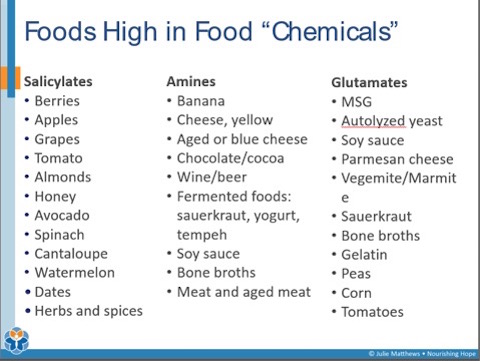
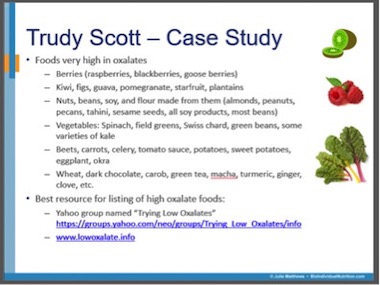
Here is are the high oxalate foods:

And this is how I figured out the issue and what I did about it (with a few dietary changes):

  • Heard Julie present at WAPF conference
  • Light bulb: pain and oxalates!
  • Picked Julie’s brain about my feet pain and oxalates
  • Consult with Julie – I went salicylate free and oxalate free
  • It was the oxalates – I knew in 2 weeks!
  • Pyroluria connection – I have pyroluria and low vitamin B6 is a factor with oxalates
  • My oxalate results on OAT – nothing showed up
  • If I am exposed by mistake
    • I feel irritable
    • A sense of growing pain in my feet (in about 30 minutes)
  • I always have calcium citrate on hand – sorts me out in a few minutes
  • Concerns about everyone consuming green smoothies and baking with nut flours (oxalates and copper issues)
  • Decided to do the Bioindividual Nutrition Program to really learn about these special therapeutic diets
  • Julie is THE person to teach this!

During the webinar Julie shared her expertise on low oxalate diets and the lab testing, and shared a new powerful case study from her practice – Luka’s story is just heartwarming!

Julie also discusses the science behind these cutting edge therapeutic diet approaches which also include low phenol, low amine, low glutamate and low FODMAPs – and how so much of this can be applied to anxiety, depression and other chronic health conditions.

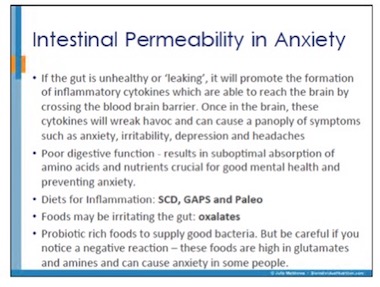
Here is a slide that covers leaky gut or intestinal permeability and anxiety – and special diets to consider:

The Q&A was excellent (thanks to all of you who attended live and asked questions).

You can register here for access to the replay (this is geared towards practitioners is open for all to listen in and learn + would be great to share with your practitioner if you’re not one)

Julie shared more about the BioIndividual Nutrition Training winter enrollment for practitioners. If you are a practitioner and already know you want to do the BioIndividual Nutrition Training training here is that link to check it out and register.

I highly recommend the training! As I mentioned, it helped me personally and now I use this information with the anxious women I work with and their families. I have also found the connection and sharing amongst the community of practitioners to be an invaluable aspect of joining the program.


PS. Even if you’re not a practitioner, many non-practitioners choose to listen in to these types of calls in order to learn. Feel free to do the same or to pass on to your practitioner so they can learn and then further help you. I also like to share this type of call with my entire community because I know many of you are aspiring health coaches, nutritionists and nutritional psychologists.

PPS. Julie also offers a version of this training to mom’s who want to learn for themselves and their families. Feel free to reach out to them at info [at] bioindividualnutrition.com if you’re interested.

Filed Under: Events Tagged With: bioindividual nutrition, Julie Matthews, leaky gut, oxalates, therapeutic diets

Reminder – therapeutic/special diets webinar

July 5, 2016 By Trudy Scott 12 Comments

[SEE BELOW FOR REPLAY INFORMATION + MOM’S GROUP]

Here is a quick reminder about the webinar tomorrow July 6th at 1pm PDT: Customizing Therapeutic Diets to Improve Clinical Success with Anxiety, Autism and Beyond.

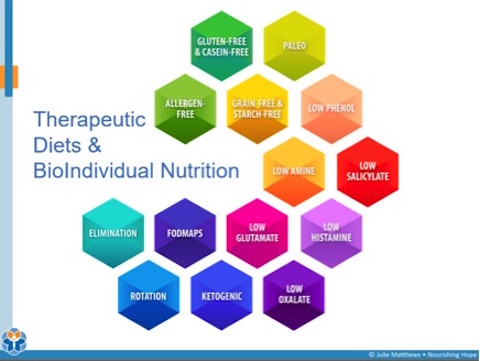
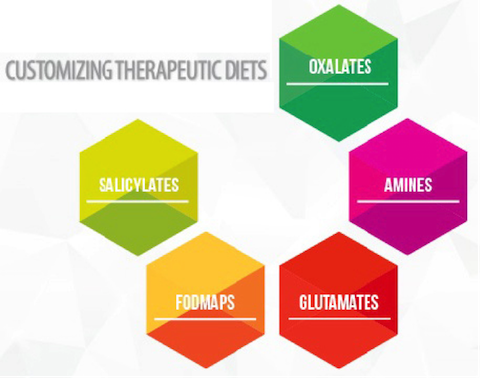
therapeutic-diets-1

We all agree that Food is Medicine, however, there is no one dietary strategy that is right for everyone. Diet recommendations must consider varied biochemical and physiological factors, so they are personalized to suite the individual needs of your client – can they tolerate phenols, salicylates, high histamine foods, amines, oxalates, and FODMAPS? Knowing about these special diets and customizing dietary recommendations can increase your success with complex cases, especially your clients with anxiety and those that seem to have food reactions to “everything.” Understanding these advanced diets and principles have been critical to furthering my success in working with clients with anxiety.

Tomorrow I will be conducting a webinar with Julie Matthews on this topic. She is a good friend and nutrition colleague and we’ll be sharing valuable tips and clinical advice from our combined 25 years in practice. Julie is the founder of the Bioindividual Nutrition Institute and will cover:

  • How personalizing food and nutrition strategy helps improve patient/client outcomes
  • Which foods may negatively affect mood and anxiety, as well as co-morbid conditions
  • How to make your preferred diet strategy even more effective by individualizing over a dozen additional dietary factors
  • The most advantageous special diets for healing: including: GFCF, SCD, GAPS Diet, Paleo diet, low phenol diets, low oxalate, and low FODMAPs

We’ll discuss some clinical case studies from both of our practices and Julie will share more about the study group forming for the BioIndividual Nutrition Institute practitioner training program.

If diet and nutrition is a strong part of your practice, be sure to join us.

Here is a sampling of what we’ll cover:

therapeutic-diets-2

therapeutic-diets-3

Hope you can join us!

PS. This is webinar is for practitioners but anyone can tune in and listen and learn. Register at:
https://az184.isrefer.com/go/ctdaa/TrudyScott/

PPS. I’m actually camping at Tahoe this week so we recorded this before I left! But Julie will be live on the call after the recording so if you have questions join live to get them answered. If you can’t make it live sign up and you’ll get the recording + the questions she addressed

UPDATE July 8, 2016 – REPLAY INFORMATION + MOM’S GROUP

In order to listen to the replay of the webinar simply register at the same link and you’ll receive an email with the replay
https://az184.isrefer.com/go/ctdaa/TrudyScott/

Also, because many of you that are not clinicians expressed interest in the BioIndividual Nutrition training, Julie has re-opened the Nourishing Hope Moms program and scholarship to TEN new individuals. Inquire and apply here https://az184.isrefer.com/go/nhmoms/TrudyScott/


Filed Under: Events Tagged With: fodmaps, Julie Matthews, therapeutic diets

The Anxiety Summit – Addressing Anxiety in Individuals with Autism

June 12, 2016 By Trudy Scott 15 Comments

Julie Mathews_Anxiety4

Julie Matthews, CNC, author of Nourishing Hope for Autism, was interviewed on the Anxiety Summit by host of the Anxiety Summit, Trudy Scott, Food Mood Expert and Nutritionist, author of The Antianxiety Food Solution.

Addressing Anxiety in Individuals with Autism

  • How common is anxiety in autism and medications commonly prescribed
  • Autism prevalence and the exponential growth and why this is important beyond those with autism
  • Underlying biochemical factors that contribute to anxiety in autism
  • The microbiome and gut involvement
  • Sensory sensitivity, light and sound sensitivity, weighted blankets and more
  • Foods, food compounds and nutrients like GABA and zinc
  • The far-reaching benefits of a BioInidividual Nutrition approach for autism, anxiety, ADHD and many chronic diseases

This is the first paper we discussed: Treatment of comorbid anxiety and autism spectrum disorders

Clinically significant anxiety occurs frequently among individuals with autism spectrum disorders (ASDs) and is linked to increased psychosocial, familial, behavioral and academic impairment beyond the core autism symptoms when present.

Up to 80% of children with ASDs experience clinically significant anxiety, with high comorbidity rates for social phobia (30%), generalized anxiety disorder (GAD) (35%), obsessive–compulsive disorder (OCD) 37%  and separation anxiety disorder (SAD) 38% having been observed (30, 35, 37 and 38%, respectively).

Patients with ASDs and anxiety are at increased risk for social avoidance, difficulties establishing and maintaining peer relationships, sleep problems, disruptions in family functioning and at school.

SSRIs have NOT been consistently linked to improvements in core ASD symptoms (e.g., communication and social skills deficits, repetitive behaviors and stereotypies) or anxiety and repetitive behaviors in youths

High rates of behavioral activation (e.g., agitation, irritability, aggression and disinhibition) and diminished tolerability have been reported across trials, which may suggest that youths with ASDs are more vulnerable to side effects compared with their typically developing peers.

Here is the initial multisystem study Julie covered at the start – Pathway Network Analyses for Autism Reveal Multisystem Involvement:  Major Overlaps with Other Diseases and Convergence Upon MAPK and Calcium Signaling

Julie covered folate receptor autoantibodies and cerebral folate deficiency (common in autism and now found in anxiety too):

It was a concept that in the autism community was brought forward by Dr. Fry and Dr. Rosignol and Dr. Quadros looking at this particular condition.  And so there’s a condition called cerebral folate deficiency.  And it’s a neurodevelopmental disorder where the baby doesn’t get enough folate to their cerebral spinal fluid in their brain.  And so they don’t get the proper development that they need.  And the reason for that is they looked into what could be causing that and they found that children with autism have a high rate of folate receptor autoantibodies.  And so what happens is the folate receptor is basically taking folate from the bloodstream and puts it into the cerebral spinal fluid.  It gets it to the brain basically.

And these folate receptors are basically what take it across the membrane.  But in children with autism they have these autoantibodies and that blocks their ability to get the folate into the brain.  So they have neurodevelopmental issues and then during their lifetime as well they still don’t have enough folate they need on a daily basis to do the things that they need to do.  So it’s an ongoing challenge for them as well.

Here are the folate receptor autoantibody studies:

  • Cerebral Folate Receptor Autoantibodies in Autism Spectrum Disorder (serum folate receptor autoantibody concentrations as a prevalence of 75 percent of the children with autism)
  • High milk consumers have an increased risk of folate receptor blocking autoantibody production but this does not affect folate status in Spanish men and women.

Most of the research regarding these folate receptor autoantibodies are around autism.  But now it seems like we’ve seen this new animal study that actually mentions anxiety as well – Exposure to Folate Receptor Alpha Antibodies during Gestation and Weaning Leads to Severe Behavioral Deficits in Rats: A Pilot Study 

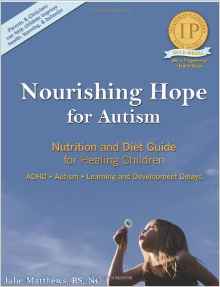
Here is Julie’s wonderful book – Nourishing Hope for Autism: Nutrition and Diet Guide for Healing Our Children  

nourishing hope for autism

Here are the digital gifts from Julie

  • Using Food and Nutrition to Improve ADHD and Autism
  • Integrative Medicine and BioIndividual Nutrition webinar  (for practitioners)

If you are not already registered for the Anxiety Summit you can get live access to the speakers of the day here: www.theAnxietySummit.com

Missed this interview or can’t listen live? Or want this and the other great interviews for your learning library? Purchase the MP3s or MP3s + transcripts and listen when it suits you.

You can find your purchasing options here.: Anxiety Summit Season 1, Anxiety Summit Season 2, Anxiety Summit Season 3, and Anxiety Summit Season 4.

Filed Under: Events, The Anxiety Summit 4 Tagged With: anxiety, anxiety summit, autism, Julie Matthews, Trudy Scott

Customizing special diets with Julie Matthews and Dr. Kurt Woeller

August 5, 2015 By Trudy Scott 9 Comments

customizing-therapeutic-diet

We can all agree how the food we eat has such an impact on how we feel and that “food is medicine.”

We know we all have specific needs, unique biochemistry and very different genes so that is there NO “one-size-fits-all diet. We need to eat according to our own unique biochemistry and this is where BioIndividual Nutrition comes in to the picture.

Customizing your diet and nutrition strategy is essential to an integrative approach.

Julie has spent the past 14 years researching and applying specialized diets and is now teaching this BioIndividual Nutrition approach to advanced clinicians.

I know Julie personally, have read her book, have heard her present at many conferences (and even supported her at a few!) and have done her training. I can assure you that her knowledge in this area takes things to the next level! She is an expert on special diets, teaching about oxalates, salicylates, amines, glutamates, FODMAPs, gluten-free, GFCF (gluten-free-casein-free), GAPS and much more!  

I’m sure you remember her from our prior interviews. Here are a few reminders:

She shared this during season 1 of the Anxiety Summit: BioIndividual Nutrition and Special Diets

My book is called Nourishing Hope for Autism, but a lot of people that have other conditions get my book, particularly because I call kids with autism the canaries in the coalmine. They’re the ones that are telling us that our world is too toxic, there’s too many stressors, it’s too deficient in nutrients, and we need to change our ways by adding more nutrition, more absorbable forms of supplements, getting supplements in general, eating good foods that are nutrient dense. These principles are principles that apply, in my experience, to almost all healing. So we learn a lot from the kids with autism on how it might apply to anxiety and other conditions.

And this during season 2 of the Anxiety Summit: Fermented foods and probiotics for anxiety and depression

There was a study done by a researcher named Tillisch and published in 2013 in Gastroenterology. We know a lot about how the brain sends signals to the gut, but she explained that in the study they learned that the gut also sends signals to the brain. The researchers found that with yogurt, they found positive effects on the brain, including sensory processing and those areas associated with emotion and mood.

And earlier this year I interviewed Julie on: Customizing a Low FODMAPS Diet for a Client with Anxiety and/or Depression and we covered

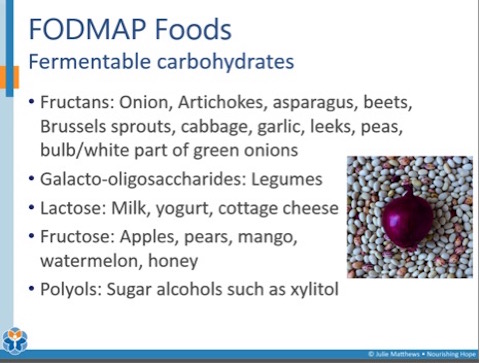
  • The scientific rationale for recommending a Low FODMAPS (an acronym, deriving from “Fermentable, Oligo-, Di-, Mono-saccharides And Polyols) Diet for someone with anxiety/depression
  • Defining oligosaccharides (fructans and galacto-oligosaccharides); disaccharides (lactose); monosaccharides (fructose) and polyols (sugar alcohols and more)
  • What are high free fructose foods and the fructose malabsorption/anxiety and depression connection

As you can see, Julie is up-to-date on the latest research and is very hands-on and super detailed when it comes to teaching and implementing special diets.

In this FREE BioIndividual Nutrition webinar on August 10, Julie Matthews and Dr. Kurt Woeller are teaming up to share what every integrative practitioner or nutrition professional would love to know and should know about customizing special diets to individual needs:

  • How personalizing food and nutrition strategies help improve patient/client outcomes
  • Which foods may negatively affect mood, learning, and behavior (Kurt and Julie will share wisdom from their experiences with autism)
  • The most advantageous special diets for healing: including: GFCF, SCD, GAPS Diet, Paleo diet, low phenol diets, low oxalate, and low FODMAPs
  • How to AVOID the 3 most common mistakes when making dietary recommendations
  • How to join the upcoming September “Study Group” at the BioIndividual Nutriton Institute, with Julie Matthews and Dr. Kurt Woeller

If you’re an integrative practitioner or nutrition professional and if you’re making diet and nutrition recommendations to your patients or clients, I highly recommend this upcoming webinar on customizing special diets.

You can register here for this educational webinar on August 10th at 1pm PST:
https://az184.isrefer.com/go/imweb/TrudyScott

If you can’t make it live, register anyway to get a copy of the recording.

Have you benefited from being on a special diet? Do you currently use special diets with your clients/patients and see symptom reduction/resolution? Please do share in the comments.


Filed Under: Events Tagged With: bioindividual nutrition, Julie Matthews, Kurt Woeller

Customizing a Low FODMAPS Diet for a Client with Anxiety and/or Depression

January 19, 2015 By Trudy Scott 10 Comments

fodmaps-image

Here is an excerpt from a Dec 2014 paper called Review article: the aetiology, diagnosis, mechanisms and clinical evidence for food intolerance:

There have been significant advances in understanding the scientific basis of gastrointestinal food intolerance due to short-chain fermentable carbohydrates (FODMAPs). The most helpful diagnostic test for food intolerance is food exclusion to achieve symptom improvement followed by gradual food reintroduction. A low FODMAP diet is effective, however, it affects the gastrointestinal microbiota and FODMAP reintroduction to tolerance is part of the management strategy.

We’re seeing plenty of people with digestive issues like IBS (Irritable Bowel Syndrome) and SIBO (Small Intestinal Bacterial Overgrowth),  often with accompanying anxiety and depression, and a low FODMAPS diet may need to be considered. How do we know if we should consider it and how do we help out clients make this change?

This webinar is a way for you to learn more about FODMAPS for your clients and it’s a way for me to showcase the valuable work my friend Julie Matthews is doing in her BioIndividual Nutrition™ program. And for us to share the very cool new Victus software. I’ve actually signed up for the next training and I’m just super-excited to get the word out…which is another reason for the webinar! When I learn, I like to share what I learn!

Customizing a Low FODMAPS Diet for a Client with Anxiety and/or Depression

A webinar for health practitioners 
Food Mood Expert Trudy Scott interviews Julie Matthews, co-founder of BioIndividual Nutrition Institute

In this webinar, aimed at health practitioners, we will discuss:

  • The scientific rationale for recommending a Low FODMAPS (an acronym, deriving from “Fermentable, Oligo-, Di-, Mono-saccharides And Polyols) Diet for someone with anxiety/depression
  • Defining oligosaccharides (fructans and galacto-oligosaccharides); disaccharides (lactose); monosaccharides (fructose) and polyols (sugar alcohols and more)
  • What are high free fructose foods and the fructose malabsorption/anxiety and depression connection
  • How to do a low FODMAPs diet elimination/provocation
  • Why would you combine Low FODMAPS and SCD (Specific Carbohydrate Diet) for SIBO (Small Intestinal Bacterial Overgrowth)
  • How the Victus software helps you create a diet/recipes for the Low FODMAPs Diet
  • How to learn more about Julie Matthews’ Bioindividual Nutrition program (for practitioners), other special diets and the upcoming study group

Julie Matthews is a Certified Nutrition Consultant specializing in autism spectrum disorders, ADHD, and nutrition for pregnancy.  Her approached is based on the BioIndividual Nutrition™ needs of each person. She provides dietary guidance backed by scientific research and applied clinical experience. Her award winning book, Nourishing Hope for Autism, has helped people around the world to make food and nutrition choices that aid the health, learning, and behavior of those with autism, ADHD, and other developmental delays. She presents at leading autism conferences in the US and abroad, and is the Nutrition Editor of the Autism File magazine. She is on the scientific advisory board for USAAA (U.S. Autism & Asperger Association) and the Autism Nutrition Research Center. She is the co-founder of Nourishing Hope and BioIndividual Nutrition Institute. Julie has a private nutrition practice in San Francisco, California, and supports families and clinicians from around the world with her nutrition learning tools and professional training courses.

Here is the link to register for the webinar. If you can’t make it at this time, register anyway to get a copy of the notes and audio:

Update: this event is over (it was done Wednesday January 21st, 2015.)  Sorry you missed it!


Filed Under: Antianxiety, Anxiety and panic, Events Tagged With: anxiety, BioIndividual Nutrition Institute, depression, fodmaps, IBS, Julie Matthews, SIBO, Trudy Scott

  • « Go to Previous Page
  • Page 1
  • Page 2
  • Page 3
  • Go to Next Page »

Primary Sidebar

GABA QuickStart Homestudy

gaba quickstart homestudy

Free Report

9 Great Questions Women Ask about Food, Mood and their Health

You'll also receive a complimentary subscription to my ezine "Food, Mood and Gal Stuff"


Connect with me

Popular Posts

  • Amino Acids Mood Questionnaire from The Antianxiety Food Solution
  • The Antianxiety Food Solution Amino Acid and Pyroluria Supplements
  • Pyroluria Questionnaire from The Antianxiety Food Solution
  • Collagen and gelatin lower serotonin: does this increase your anxiety and depression?
  • Tryptophan for the worry-in-your-head and ruminating type of anxiety
  • GABA for the physical-tension and stiff-and-tense-muscles type of anxiety
  • The Antianxiety Food Solution by Trudy Scott
  • Seriphos Original Formula is back: the best product for anxiety and insomnia caused by high cortisol
  • Am I an anxious introvert because of low zinc and vitamin B6? My response to Huffington Post blog
  • Vagus nerve rehab with GABA, breathing, humming, gargling and key nutrients

Recent Posts

  • Her cravings for chips and peanut butter were triggered by stress: GABA ends cravings and reduces physical tension and fear of heights
  • It is truly miraculous to be able to move through life without crippling anxiety and panic
  • GABA and tryptophan combo provide immediate and noticeable relief for tremors and cervical dystonia in just 7 days
  • Red light therapy for back and neck pain, plantar fasciitis and low mood – a complement to the amino acids GABA, DPA and tryptophan
  • What do I use instead of Seriphos to help lower high cortisol that is affecting my sleep and making me anxious at night?

Categories

  • 5-HTP
  • AB575
  • Addiction
  • ADHD
  • Adrenals
  • Alcohol
  • Allergies
  • Alzheimer's disease
  • Amino Acids
  • Anger
  • Antianxiety
  • Antianxiety Food Solution
  • Antidepressants
  • Anxiety
  • Anxiety and panic
  • Autism
  • Autoimmunity
  • benzodiazapines
  • Bipolar disorder
  • Books
  • Caffeine
  • Cancer
  • Candida
  • Children/Teens
  • Collagen
  • Cooking equipment
  • Coronavirus/COVID-19
  • Cravings
  • Depression
  • Detoxification
  • Diabetes
  • Diet
  • DPA/DLPA
  • Drugs
  • EFT/Tapping
  • EMF
  • EMFs
  • Emotional Eating
  • Endorphins
  • Environment
  • Essential oils
  • Events
  • Exercise
  • Fear
  • Fear of public speaking
  • Fertility and Pregnancy
  • Fish
  • Food
  • Food and mood
  • Functional neurology
  • GABA
  • Gene polymorphisms
  • General Health
  • Giving
  • Giving back
  • Glutamine
  • Gluten
  • GMOs
  • Gratitude
  • Gut health
  • Heart health/hypertension
  • Histamine
  • Hormone
  • Hyperparathyroidism
  • Hypoglycemia
  • Immune system
  • Inflammation
  • Insomnia
  • Inspiration
  • Introversion
  • Joy and happiness
  • Ketogenic diet
  • Lithium orotate
  • Looking awesome
  • Lyme disease and co-infections
  • MCAS/histamine
  • Medication
  • Men's health
  • Mental health
  • Mercury
  • Migraine
  • Mold
  • Movie
  • MTHFR
  • Multiple sclerosis
  • Music
  • NANP
  • Nature
  • Nutritional Psychiatry
  • OCD
  • Osteoporosis
  • Oxalates
  • Oxytocin
  • Pain
  • Paleo
  • Parasites
  • Parkinson’s disease
  • PCOS
  • People
  • PMS
  • Postpartum
  • PTSD/Trauma
  • Pyroluria
  • Questionnaires
  • Real whole food
  • Recipes
  • Research
  • Schizophrenia
  • serotonin
  • SIBO
  • Sleep
  • Special diets
  • Sports nutrition
  • Stress
  • Sugar addiction
  • Sugar and mood
  • Supplements
  • Teens
  • Testimonials
  • Testing
  • The Anxiety Summit
  • The Anxiety Summit 2
  • The Anxiety Summit 3
  • The Anxiety Summit 4
  • The Anxiety Summit 5
  • The Anxiety Summit 6
  • Thyroid
  • Thyroid health
  • Toxins
  • Tryptophan
  • Tyrosine
  • Uncategorized
  • Vegan/vegetarian
  • Women's health
  • Yoga

Archives

  • May 2026
  • April 2026
  • October 2025
  • September 2025
  • August 2025
  • July 2025
  • June 2025
  • May 2025
  • April 2025
  • March 2025
  • February 2025
  • January 2025
  • November 2024
  • October 2024
  • September 2024
  • August 2024
  • July 2024
  • June 2024
  • May 2024
  • April 2024
  • March 2024
  • February 2024
  • January 2024
  • December 2023
  • November 2023
  • October 2023
  • September 2023
  • August 2023
  • July 2023
  • June 2023
  • May 2023
  • April 2023
  • March 2023
  • February 2023
  • January 2023
  • December 2022
  • November 2022
  • October 2022
  • September 2022
  • August 2022
  • July 2022
  • June 2022
  • May 2022
  • April 2022
  • March 2022
  • February 2022
  • January 2022
  • December 2021
  • November 2021
  • October 2021
  • September 2021
  • August 2021
  • July 2021
  • June 2021
  • May 2021
  • April 2021
  • March 2021
  • February 2021
  • January 2021
  • December 2020
  • November 2020
  • October 2020
  • September 2020
  • August 2020
  • July 2020
  • June 2020
  • May 2020
  • April 2020
  • March 2020
  • February 2020
  • January 2020
  • December 2019
  • November 2019
  • October 2019
  • September 2019
  • August 2019
  • July 2019
  • June 2019
  • May 2019
  • April 2019
  • March 2019
  • February 2019
  • January 2019
  • December 2018
  • November 2018
  • October 2018
  • September 2018
  • August 2018
  • July 2018
  • June 2018
  • May 2018
  • April 2018
  • March 2018
  • February 2018
  • January 2018
  • December 2017
  • November 2017
  • October 2017
  • September 2017
  • August 2017
  • July 2017
  • June 2017
  • May 2017
  • April 2017
  • March 2017
  • February 2017
  • January 2017
  • December 2016
  • November 2016
  • October 2016
  • September 2016
  • August 2016
  • July 2016
  • June 2016
  • May 2016
  • April 2016
  • March 2016
  • February 2016
  • January 2016
  • December 2015
  • November 2015
  • October 2015
  • September 2015
  • August 2015
  • July 2015
  • June 2015
  • May 2015
  • April 2015
  • March 2015
  • February 2015
  • January 2015
  • December 2014
  • November 2014
  • October 2014
  • September 2014
  • August 2014
  • July 2014
  • June 2014
  • May 2014
  • April 2014
  • March 2014
  • February 2014
  • January 2014
  • December 2013
  • November 2013
  • October 2013
  • September 2013
  • August 2013
  • July 2013
  • June 2013
  • May 2013
  • April 2013
  • March 2013
  • February 2013
  • January 2013
  • December 2012
  • November 2012
  • October 2012
  • August 2012
  • July 2012
  • June 2012
  • May 2012
  • April 2012
  • March 2012
  • February 2012
  • January 2012
  • December 2011
  • November 2011
  • October 2011
  • September 2011
  • August 2011
  • July 2011
  • June 2011
  • May 2011
  • April 2011
  • March 2011
  • February 2011
  • January 2011
  • December 2010
  • October 2010
  • September 2010
  • July 2010
  • May 2010
  • April 2010
  • March 2010
  • February 2010
  • January 2010
  • November 2009

Share the knowledge!

The above statements have not been evaluated by the Food and Drug Administration. Products listed in this website are not intended to diagnose, treat, cure or prevent any disease.

The information provided on this site is for informational and educational purposes only and is not intended as a substitute for advice from your physician or other health care professional. You should consult with a healthcare professional before starting or modifying any diet, exercise, or supplementation program, before taking or stopping any medication, or if you have or suspect you may have a health problem.


Copyright © 2026 Trudy Scott. All Rights Reserved. | Privacy | Terms and Conditions | Refund Policy | Medical Disclaimer

Free Report

9 Great Questions Women Ask about Food, Mood and their Health

You’ll also receive a complimentary subscription to my ezine “Food, Mood and Gal Stuff”