• Skip to primary navigation
  • Skip to main content
  • Skip to primary sidebar

everywomanover29 blog

Food, Mood and Women's Health – Be your healthiest, look and feel great!

  • Blog
  • About
  • Services
  • Store
  • Resources
  • Testimonials
  • The Book
  • Contact
  • Search this site

irritability

Vitamin B6 and magnesium on neurobehavioral status of autism spectrum disorder with hyperactivity and irritability (research)

May 24, 2024 By Trudy Scott 7 Comments

vitamin b6 magnesium and autism

Today I’m sharing new research that supports some of the original findings about vitamin B6 and magnesium published by autism biomedical pioneer Bernie Rimland.

Despite the small population size, this study demonstrated neurobehavioural improvement among children with ASD [autism spectrum disorder] with hyperactivity and irritability. Consequently, it can be expected that future studies conducted on a larger scale might help to establish the beneficial role of Vitamin B6 and Magnesium as a complementary treatment for autism with hyperactivity and irritability.

The above comes from the conclusion of  this 2021 paper, Vitamin B6 and Magnesium on Neurobehavioral Status of Autism Spectrum Disorder: A Randomized, Double-Blind, Placebo Controlled Study.

There were 50 children in the study, with a random assignment of 27 to the study group (vitamin B6 and magnesium) and 23 to the control group (placebo). All the children were autism patients from a pediatric autism and neurodevelopmental disorder outpatient clinic in India.

One of the primary aims over the 3 month study period was to investigate “any improvement among the six domains of ASD: general observation, cognition, emotion, social behavior, communication, and sensory deficits.”

Read on for learning more about the study outcomes, and dosing and forms of magnesium and vitamin B6 (and how this compares to P5P). I also share more about autism biomedical pioneer Bernie Rimland’s earlier research and the autism/B6/pyroluria connections. And end with some of the many possible mechanisms, GABA and vitamin B6, and other applications for vitamin B6.

More about the study outcomes

  • The improvement observed in the study/intervention group was 81% compared to only 47% in the placebo group.
  • Both the study group and control group had a mixture of patients rated as having mild, low moderate, high moderate and severe symptoms of ASD. At the conclusion of the study, there were fewer patients in high moderate and severe categories.
  • There was “an overall improvement in the symptoms of autism along with improvements in specific domains e.g. Emotion and Cognition.” The Emotion domain includes hyperactivity, aggressiveness, emotional lability (or instability) and stress.

Dosing varied by age and forms of magnesium and vitamin B6

The dosage of magnesium and vitamin B6 for the 27 children in the intervention/study group was pre-determined by the age of the subjects: “Patients aged 2-3 years received 50 mg Magnesium and 25mg Vitamin B6 daily, aged 4-8 years received 100 mg Magnesium and 50mg Vitamin B6 daily, and patients aged 9-12 years were given 200 mg Magnesium and 100mg Vitamin B6 daily.”

Patients in both groups received Risperidone for hyperactivity and irritability.

The form of magnesium used in the study was glycinate and the form of vitamin B6 was pyridoxine.

Vitamin B6 and magnesium research by autism biomedical pioneer Bernie Rimland

The authors share that of the many autism studies with nutrients, studies using vitamin B6 and magnesium “given by parents to ASD children have been observed to produce improvement for about 30 years.”

As I mentioned above, this new research builds on some of the original findings about vitamin B6 and magnesium published by autism biomedical pioneer Bernie Rimland. The study authors share this: “Rimland found significant improvement with the use of high doses of pyridoxine, however high doses of pyridoxine showed side effects which could be negated by co-administering magnesium.”

This 1988 paper by B. Rimland is referenced: Controversies in the treatment of autistic children: vitamin and drug therapy, and states that “Among the biomedical treatments, the use of high-dosage vitamin B6 and magnesium received the highest ratings”

Also referenced is this vitamin B6 paper, co-authored by B. Rimland and published 46 years ago: The effect of high doses of vitamin B6 on autistic children: a double-blind crossover study. It states that “Behavior was rated as deteriorating significantly during the B6 withdrawal.”

Vitamin B6, autism and pyroluria

My experience when it comes to vitamin B6 and P5P is primarily with the many individuals in my community who have pyroluria or suspect they do based on their symptoms (here is the pyroluria symptoms questionnaire). This is about 80% of the anxious folks in my community.

I share this because pyroluria is common in autism spectrum disorder:

  • children with learning disorders and behavioral disorders: 25% (Abram Hoffer)
  • autism spectrum disorders: 46% (Woody McGinnis)

(more on prevalence and associated conditions here)

And this study found emotional instability – a key aspect of pyroluria and autism – improved with vitamin B6 and magnesium.

For adults with pyroluria, vitamin B6 is used in the range of 100 mg  to 500 mg, starting low and increasing as needed. We use dream recall and increased ability to socialize without feeling anxious as a clue that the correct dose is being used.

Keep in mind that 25 mg P5P (pyridoxal-5-phosphate) or the active form of vitamin B6 is approximately equivalent to 100 mg pyridoxine.

I have found that some folks do better on one form of vitamin B6 than the other i.e. not everyone needs P5P and some folks do better with a combination of P5P and pyridoxine. As with all supplements there is no one–size fits all and so the protocol and form of vitamin B6 used in this study group really only serves as a guideline.

The possible mechanisms

The authors mention this as one possible mechanism under these circumstances:  “Magnesium inhibits the excitatory channel glutamate N-methyl-D-aspartate (NMDA) and reduces hyperactivity – a part of the emotional domain.” They also mention the fact that “magnesium increases presynaptic releases” enhancing “both short term and long term synaptic facilitation and long-term potentiation, improving learning and other memory functions.”

I’m adding these as possible mechanisms to consider too:

  • Vitamin B6 is a potent anti inflammatory compound
  • Vitamin B6 and magnesium are co-factors needed to make serotonin (which is calming and helps with emotional stability) and dopamine (which helps with focus and motivation)
  • “GABA is formed from glutamate via the addition of glutamate decarboxylase and vitamin B6”
  • Vitamin B6 offers neuroprotection in situations of excess glutamate release (together with vitamin B12 and B2)
  • Vitamin B6 is key (together with zinc, evening primrose oil and others) for addressing social anxiety/pyroluria which is common in autism (as mentioned above)
  • Vitamin B6 and magnesium improve hormonal health
  • Oxalate issues are common in autism, leading to depleted levels of vitamin B6 and magnesium. Supplementation can help counter some of the adverse effects.

Also vitamin B6 (and other B vitamins) and magnesium are depleted by sugar, stress, dysbiosis, food allergies, certain medications and caffeine. And it’s common to find deficiencies of both.

A comprehensive dietary and functional medicine / biomedical approach, targeted individual amino acids such as GABA and tryptophan, in addition to vitamin B6 and magnesium is imperative in ASD.

Many other applications for vitamin B6

It’s wonderful to be able to share yet another application for vitamin B6, which, in some circles, is receiving an unfavorable reputation about causing toxicity.

Here are a few other related vitamin B6 blog posts that may be of interest:

  • The role of low serotonin, low vitamin B6 and low iron in anxiety and panic attacks
  • Oral contraceptives cause low vitamin B6 and zinc, reduce serotonin levels and increase anxiety
  • Am I an anxious introvert because of low zinc and vitamin B6? My response to Huffington Post blog
  • Side stitch when running or exercising: the anxiety/stress connection (and the pyroluria protocol of zinc and vitamin B6 as a solution?)

Because of the role of vitamin B6 when it comes to calming GABA, it’s worth sharing this blog too  – Half a crushed GABA Calm for my autistic child: sleep, anxiety and sensorimotor skills (writing, horse riding and swimming) improve. Both vitamin B6 and GABA are commonly beneficial.

And sometimes, vitamin B6 on it’s own provides results – Anxiety and vomit phobia in an 8-year-old: within a week of starting vitamin B6 she made a complete turnaround.

Additional resources when you are new to using amino acids as supplements

As always, I use the symptoms questionnaire to figure out if low GABA or other neurotransmitter imbalances may be an issue.

If you suspect low levels of any of the neurotransmitters and do not yet have my book, The Antianxiety Food Solution – How the Foods You Eat Can Help You Calm Your Anxious Mind, Improve Your Mood, and End Cravings, I highly recommend getting it and reading it before jumping in and using amino acids on your own so you are knowledgeable. And be sure to share it with the practitioner/health team you or your loved one is working with.

There is an entire chapter on the amino acids and they are discussed throughout the book in the sections on gut health, gluten, blood sugar control (this is covered in an entire chapter too), sugar cravings, anxiety and mood issues.

There is also an entire chapter on pyroluria and in-depth sections on vitamin B6 and zinc.

The book doesn’t include product names (per the publisher’s request) so this blog, The Antianxiety Food Solution Amino Acid and Pyroluria Supplements, lists the amino acids that I use with my individual clients and those in my group programs.

If, after reading this blog and my book, you don’t feel comfortable figuring things out on your own (i.e. doing the symptoms questionnaire and respective amino acids trials), a good place to get help is the GABA QuickStart Program (if you have low GABA symptoms too). This is a paid online/virtual group program where you get my guidance and community support.

If you are a practitioner, join us in The Balancing Neurotransmitters: the Fundamentals program. This is also a paid online/virtual program with an opportunity to interact with me and other practitioners who are also using the amino acids.

Wrapping up and your feedback

I’d love to hear from you – have you had success with vitamin B6 and magnesium – personally or with your child? How much has helped and which products? (feel free to share the diagnosis and what symptoms have improved)

Have dietary changes and/or addressing pyroluria helped too?

If you’re a practitioner have you seen these nutrients to help in situations like this?

I’m also curious to hear if you’re familiar with the vitamin B6 and magnesium research and work done by Bernie Rimland?

Feel free to share and ask your questions below.
Filed Under: ADHD, Anxiety, Children/Teens, GABA Tagged With: ADHD, amino acids; GABA Quickstart; Balancing Neurotransmitters: the Fundamentals program for practitioners, anxious, ASD, autism, autism spectrum disorder, B6, Bernie Rimland, cognition, emotion, GABA, glutamic acid, hyperactivity, irritability, magnesium, neurobehavioral, P5P, pyroluria, vitamin B6

Seasonal PMDD/PMS and hormonal binge eating, wine drinking and anxiety – symptoms ramp up from October

November 17, 2023 By Trudy Scott 3 Comments

seasonal PMDD/PMS

Someone in the community asked for help for the seasonal aspect of her PMDD symptoms i.e. more severe symptoms in winter  …

My PMDD symptoms massively increase around the beginning of October right through to March. Would love some advice.

The binge eating and wine drinking is becoming habitual

She specifically mentions binge eating and wine drinking but I assume her other PMDD symptoms – such as anxiety, tension, anger, irritability, depression, sadness, hopelessness, insomnia, overwhelm, low energy, breast tenderness, headaches, pain, bloating, and/ or weight gain –  are more severe at this time too.

As you can see, her symptoms are much more severe from October through March (winter in the Northern Hemisphere). If you live in the Southern Hemisphere you could expect more severe symptoms from May through September (or thereabouts).

There is a seasonal aspect to PMDD (premenstrual dysphoric disorder) and PMS (premenstrual syndrome and other hormonal imbalances.  It’s not well recognized despite the fact that it’s documented in the research and seen clinically.

My feedback for her is to look into and address low serotonin, low GABA and/or low endorphins with the respective amino acids (adjusting up and down based on the season and symptoms), using recognized SAD (seasonal affective disorder) approaches and addressing pyroluria if needed (the nutrients are cofactors for neurotransmitter production.) I share more about each of these approaches and the research below.

The research: patients with PMDD have substantial seasonal patterns in mood and premenstrual symptoms

Premenstrual dysphoric disorder (PMDD) “accounts for the most severe form of PMS with the greatest impairment of women’s functioning and perceived quality of life, often prompting them to seek treatment.”

This older paper from 1997, Seasonality of symptoms in women with late luteal phase dysphoric disorder

  • Out of 100 patients treated in a subspecialty clinic in a university teaching hospital, “a significantly higher rate of seasonal affective disorder (38% versus 8%) as determined by Seasonal Pattern Assessment Questionnaire criteria.”
  • Also, 25% of the patients with seasonal variations in their premenstrual symptoms, consider them marked or a severe problem

The authors conclude that:

These results suggest that patients with LLPDD [or PMDD] have substantial seasonal patterns in mood and premenstrual symptoms. These seasonal patterns have implications for the clinical assessment and treatment of LLPDD [or PMDD]. For example, light therapy may be beneficial for women with seasonal worsening of LLPDD [or PMDD].

As you look at the research keep in mind the fact that late luteal dysphoric disorder (LLDD),“is now known as premenstrual dysphoric disorder (PMDD)”, as mentioned in the above paper and other older studies.

Seasonal variations in serotonin and GABA

Seasonal variations in serotonin have long been documented with much research on the winter blues. This paper, The chronobiology and neurobiology of winter seasonal affective disorder describes winter seasonal affective disorder (SAD) as “a mood disorder characterized by the predictable onset of depression in the fall/winter months, with spontaneous remissions in the spring/summer period.” They also state that “The typical patient with SAD is a premenopausal woman who experiences carbohydrate craving, hypersomnia, and prominent fatigue during winter depressive episodes.”

There is less awareness about GABA seasonality but GABA levels may also be lower in the winter months. In this animal study, Effect of the pineal gland on 5-hydroxytryptamine and γ-aminobutyric acid secretion in the hippocampus of male rats during the summer and winter, it is reported that: “GABA secretion in the hippocampus of rats had a seasonal rhythm consisting of increased secretion in summer and decreased secretion in the winter.”  I share more about this and the seasonality of GABA here.

It makes sense that supporting these lower levels in winter is going to help with the more severe PMDD symptoms that correlate with each neurotransmitter imbalance.

One solution: address low levels of neurotransmitters with amino acids

As you can see the PMDD symptoms mentioned above could fall into the categories of low GABA, low serotonin and/or low endorphins (and possibly low dopamine/catecholamines and low blood sugar too: binge eating, wine drinking, anxiety, tension, anger, irritability, depression, sadness, hopelessness, insomnia, overwhelm, low energy, breast tenderness, headaches, pain, bloating, and/ or weight gain.

(You can read this StatPearls ebook for the full description of the above symptoms: Premenstrual Dysphoric Disorder)

It’s for this reason I always have clients with PMDD (and other hormonal issues) do the Amino Acids Mood Questionnaire and trials of the respective amino acids.

Using a food mood log and tracking what time of day you binge eat and drink wine (and  all the other symptoms) is a clue as to which amino acids may help most. I would expect tryptophan, GABA and DPA would be at the top of the list, and possibly tyrosine and glutamine too.

Because of the seasonality aspect, a higher dose is likely to be needed in the winter time so if you’re just starting your amino acid trails keep this in mind. If you are already using amino acids with success in summer, then bumping up the amounts during winter is going to help further. And then be sure to reduce amounts once winter is over.

Hopefully you’ve also been working on diet, gut health, liver health, adrenal function, toxin removal and other factors to reduce or eliminate PMDD/PMS so the amino acids are not needed long term.

How targeted individual amino acids may help – some examples

As you can see from one study, tryptophan can help with premenstrual dysphoria/sadness, mood swings, tension, and irritability.

Low endorphins and low dopamine may also be a factor. I share more on this blog: DLPA (DL-Phenylalanine) eases PMDD/PMS symptoms in women who experience declining endorphin levels in the second half of their cycles

Here are some specific amino acid cases around binge eating/cravings and excessive wine drinking:

  • Would using 5-HTP or tryptophan help when you crave sugar (as a sort of antidepressant) late afternoon/evening?
  • Tryptophan had the added benefit of turning me completely off alcohol when I took it to improve mood and sleep during perimenopause
  • GABA for ending sugar cravings (and anxiety and insomnia)

None of the above are specific to seasonal changes in symptoms but illustrate the use of amino acids.

Supportive solutions: a SAD lamp when serotonin is low and addressing pyroluria

The late luteal phase dysphoric disorder paper above doesn’t mention amino acids (which is unfortunate but not surprising)  but it does mention light therapy. I do recommend the use of a SAD lamp (full spectrum light) when there are low serotonin symptoms that get more severe in the winter.

With PMDD/PMS and other hormonal imbalances, we also always consider pyroluria and the use of higher amounts of zinc, vitamin B6 and evening primrose oil. The “stress” of winter and increased sugar consumption can deplete zinc and vitamin B6 for everyone but more so if you have pyroluria. These nutrients are also key for hormonal imbalances.

Additional resources when you are new to using amino acids as supplements

We use the symptoms questionnaire to figure out if low GABA or low serotonin or low endorphins or low dopamine or low blood sugar may be an issue with your seasonal PMDD/PMS.

If you suspect low levels of any of the neurotransmitters and do not yet have my book, The Antianxiety Food Solution – How the Foods You Eat Can Help You Calm Your Anxious Mind, Improve Your Mood, and End Cravings, I highly recommend getting it and reading it before jumping in and using amino acids on your own so you are knowledgeable. And be sure to share it with the practitioner/health team you or your loved one is working with.

There is an entire chapter on the amino acids and they are discussed throughout the book in the sections on gut health, gluten, blood sugar control, sugar cravings, anxiety and mood issues.

The book doesn’t include product names (per the publisher’s request) so this blog, The Antianxiety Food Solution Amino Acid and Pyroluria Supplements, lists the amino acids that I use with my individual clients and those in my group programs. You can find them all in my online store.

If, after reading this blog and my book, you don’t feel comfortable figuring things out on your own (i.e. doing the symptoms questionnaire and respective amino acids trials), a good place to get help is the GABA QuickStart Program (if you have low GABA symptoms too). This is a paid online/virtual group program where you get my guidance and community support.

Another option is the budget-friendly GABA QuickStart Homestudy program.

If you also need serotonin support, the Serotonin QuickStart Program is a good place to get help. This is also a paid online/virtual group program where you get my guidance on using tryptophan and 5-HTP safely, and community support during 5 LIVE Q&A calls. You can sign up to be notified when the next live launch of this program is happening.

If you are a practitioner, join us in The Balancing Neurotransmitters: the Fundamentals program. This is also a paid online/virtual program with an opportunity to interact with me and other practitioners who are also using the amino acids.

Now I’d like to hear from you

Does any of this resonate with you? If yes, has any of the above helped with the seasonal aspect of your PMDD, PMS or other hormonal issues?

Feel free to share and ask your questions below.
Filed Under: Anxiety, Cravings, GABA, Tryptophan, Women's health Tagged With: amino acids, anger, anxiety, Balancing Neurotransmitters: the Fundamentals program for practitioners, binge eating, depression, endorphins, GABA, GABA Quickstart, hopelessness, hormonal, insomnia, irritability, PMDD, PMS, premenstrual dysphoric disorder, premenstrual syndrome, sadness, seasonal affective disorder, seasonal PMDD, seasonal PMS, serotonin, tension, wine drinking, winter, winter blues

Glutamine for hypoglycemia/low blood sugar: “500mg mixed in water works in 15 minutes and keeps me going for 2 – 3 hours”

November 3, 2023 By Trudy Scott 27 Comments

glutamine and hypoglycemia

Cat shared this feedback about how effective just 500mg of glutamine is for her low blood sugar and how quickly it helps:

I recently followed one of your posts on GABA down the rabbit hole to a linked blog post and then to another post where I found a mention of using glutamine for hypoglycemia. This is the only reference that I have read on this in 35 years of research on the subject. I follow a low carb, higher protein, healthy fat diet, but still suffer low blood sugar issues consistently at one particular time of the day. After so many years of eating a second breakfast to prevent the lows, I was ready to give any other healthy option a try.

It works!!! I found a powder that I mix approximately 500 mg of with water. It works within about 15 minutes and keeps me going for about 2 – 3 hours — long enough to reach a reasonable time for lunch.

I’m thrilled to have this option as anytime that I travel, low blood sugar becomes a huge issue as I suffer from ketotic hypoglycemia and end up with massive headaches and vomiting for 6-8 hours.

You have freed me from a huge weight! Thank you and hugs!

(And thank you for researching and sharing the tremendously helpful information in your books, webinar presentations and blogs.)

Thank you Cat for sharing your success and you are most welcome! I’m sharing this as a blog post because you may also be new to this.

Glutamine dosing, using powder vs capsules and using it on the tongue

Cat finds 500 mg glutamine works well for her unique needs. This is a good starting dose. I see many folks start too high, like 5000 mg / 5 g and up multiple times a day, and it’s not necessary. However, we increase based on individual needs and you may find you do need to use 500 mg -1000 mg two to three times a day.

Using a glutamine powder is a great way to use it especially if you find you do need more than 500 mg each time.

One thing I mentioned to Cat is when you use glutamine powder directly on to the tongue (rather than mixed in water), the benefits are seen more quickly i.e. right away rather than having to wait 15 minutes.

If you do start with glutamine capsules, be sure to open the capsule on the tongue too, But watch for fillers which can be irritating to some folks. Powders are typically glutamine-only and don’t taste bad at all. But when traveling, capsules may be a better option (at least when on a plane).

Ketotic hypoglycemia, adrenal dysfunction and breakfast

Ketotic Hypoglycemia International defines ketotic hypoglycemia as “a condition characterized by low blood sugar (glucose) and elevated ketones, typically occurring after fasting, like sleeping overnight. Ketotic hypoglycemia (KH) is not a disease itself but rather a symptom or a clinical presentation that can occur as a result of various underlying conditions.” I’ve asked Cat if she is aware as to what is causing her ketotic hypoglycemia and I’ll report back.

I have also asked if she has had salivary cortisol testing done as adrenal dysfunction plays a role in all types of low blood sugar and will need to be addressed. This can take awhile to test and figure out nutritional support. Until then, glutamine is wonderful for preventing low blood sugar episodes.

I’m also curious what her breakfasts look like and will update the blog when I find out. Cat does mention that she follows “a low carb, higher protein, healthy fat diet” so I assume her first breakfast is a good one. But it’s always something to confirm.  As you can see on this blog, Anxiety and Hypoglycemia Symptoms Improve with Diet Modification, a healthy breakfast is key for blood sugar stability and preventing anxiety.

Low blood sugar symptoms and all the ways glutamine may help

This is the blog she commented on: Glutamine for calming, intense sugar cravings, gut healing and low blood sugar

I share all the symptoms we see with low blood sugar:

  • Crave sugar, starch or alcohol any time during the day
  • Irritable, shaky, headachey – especially if going too long between meals
  • Intense cravings for sweets
  • Lightheaded if meals are missed
  • Eating relieves fatigue
  • Agitated, easily upset
  • Nervous, anxious, panic attacks

As you can see, in addition to helping with low blood sugar symptoms, glutamine has calming properties (low blood sugar can also cause anxiety and panic attacks), helps reduce intense sugar cravings (sometimes described as a demonic urge to eat all things sweet and also helps with healing a leaky gut. Be sure to read these two blogs I’ve linked to above.

Glutamine has also been researched to help with addiction recovery. In this blog, An amino acid supplement with DLPA, glutamine and 5-HTP eases alcohol withdrawal symptoms at an inpatient detoxification program, glutamine is paired with two other amino acids.

Resources if you are new to using glutamine and other amino acids as supplements

We use the symptoms questionnaire to figure out if low blood sugar may be an issue for you.

If you suspect blood sugar or low levels of any of the neurotransmitters and do not yet have my book, The Antianxiety Food Solution – How the Foods You Eat Can Help You Calm Your Anxious Mind, Improve Your Mood, and End Cravings, I highly recommend getting it and reading it before jumping in and using amino acids on your own so you are knowledgeable. And be sure to share it with the practitioner/health team you or your loved one is working with.

There is an entire chapter on the amino acids and they are discussed throughout the book in the sections on gut health, gluten, blood sugar control (this topic has an entire chapter), sugar cravings, anxiety and mood issues.

The book doesn’t include product names (per the publisher’s request) so this blog, The Antianxiety Food Solution Amino Acid and Pyroluria Supplements, lists the amino acids that I use with my individual clients and those in my group programs. You can find them all in my online store.

If, after reading this blog and my book, you don’t feel comfortable figuring things out on your own (i.e. doing the symptoms questionnaire and respective amino acids trials), a good place to get help is the GABA QuickStart Program (if you have low GABA symptoms too). This is a paid online/virtual group program where you get my guidance and community support.

If you are a practitioner, join us in The Balancing Neurotransmitters: the Fundamentals program. This is also a paid online/virtual program with an opportunity to interact with me and other practitioners who are also using the amino acids.

I really appreciate Cat for sharing her story and giving me permission to share as a blog.

Has glutamine helped you with low blood sugar/hypoglycemia? If yes, in what way has it helped – reduced anxiety, less sugar cravings (or other addictions), and not as irritable and cranky/angry?

And how much helps and how quickly? Are you using it on the tongue?

Has glutamine  also helped with leaky gut?

If you’re a practitioner are you using glutamine this way with your clients/patients?

Feel free to share and ask your questions below.
Filed Under: Anger, Anxiety, Cravings, Glutamine, Hypoglycemia Tagged With: addictions, adrenal dysfunction, amino acids, anxiety, breakfast, capsules, cravings, GABA, GABA Quickstart; Balancing Neurotransmitters: the Fundamentals program for practitioners, glutamine, Headaches, Hypoglycemia, irritability, ketotic hypoglycemia, leaky gut, low blood sugar, low carb, on the tongue, powder, vomiting

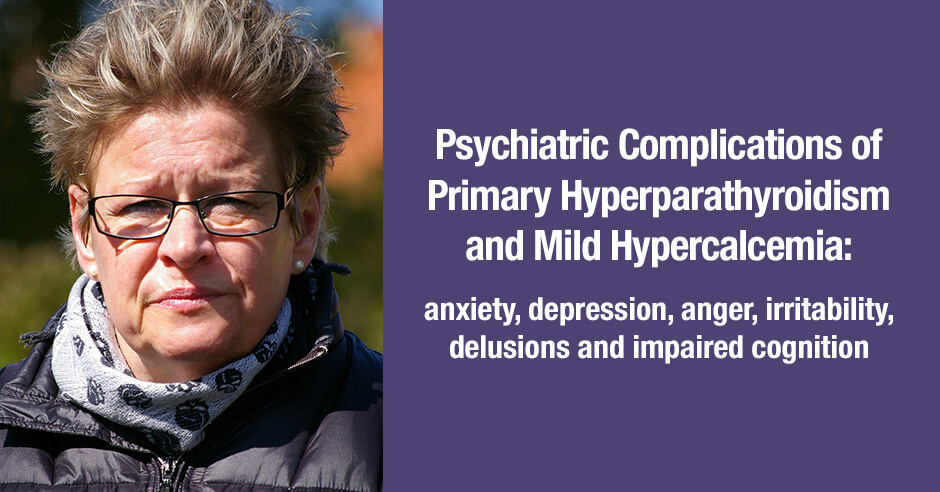
Psychiatric Complications of Primary Hyperparathyroidism and Mild Hypercalcemia: anxiety, depression, anger, irritability, delusions and impaired cognition

July 7, 2023 By Trudy Scott 38 Comments

primary hyperparathyroidism

In samples of patients undergoing parathyroidectomy for primary hyperparathyroidism (PHPT), these disturbances have been identified at a rate of 43.1%–53.0% for anxiety, 33.0%–62.1% for depression, 22.0% for thoughts of death or suicide, 51.9% for anger and irritability, 5.0%–20.0% for hallucinations and delusions, and 37.3%–46.5% for impaired cognition.

In fact, it has been noted that there are more neuropsychiatric phenomena in PHPT than is often recognized and that these symptoms are easily missed, particularly in the elderly population.

This excerpt is from, Psychiatric Complications of Primary Hyperparathyroidism and Mild Hypercalcemia, published in Psychiatry Online.

I’ve recently been reading as much as I can about this condition, for personal and professional reasons. As soon as I learn about something new I go digging to see if there is an anxiety connection. And I must say I was very surprised to read these stats. It’s not something I’ve heard discussed or taught at mental health conferences.

The authors also state this about the condition:

The incidence of primary hyperparathyroidism (PHPT) is about 21 cases per 100,000 person-years, and the disorder is usually caused by a solitary parathyroid adenoma. PHPT has traditionally been recognized by its characteristic symptoms, including urolithiasis (“stones”); osteopenia and osteoporosis (“bones”); abdominal cramping, nausea, and peptic ulceration (“moans”); and depression, anxiety, cognitive dysfunction, insomnia, confusion, and personality changes (“psychiatric overtones”).

How do changes in serum calcium levels contribute to mental health and cognitive symptoms?

It’s always helpful to understand the mechanism and it was the first thought that went through my mind – how does hyperparathyroidism and changes in serum calcium levels cause these mental health and cognitive symptoms? The authors share this:

Although the pathogenesis [or cause] of psychiatric symptoms in primary hyperparathyroidism remains unclear, calcium is thought to figure prominently in determining changes in monoamine metabolism in the central nervous system(CNS), thereby modifying neurotransmission and resulting in alterations in mood and cognition.

I went digging and found this paper – Acute psychosis secondary to suspected hyperparathyroidism: A case report and literature review.

The authors also state that the mechanism isn’t known for certain. And although they are referring specifically to psychosis, the explanation could be applied to other symptoms too: “It is thought that the changes in serum calcium level slow down nerve function and neurotransmission rate, inducing psychosis (and other symptoms like anxiety, depression, anger, irritability and suicidal thoughts).

Understanding this possible mechanism helps us find a temporary solution for these symptoms until the hyperparathyroidism is addressed with surgery i.e. using amino acids as supplements.

Using amino acids to ease symptoms while you are seeking the root cause/s

If you’ve been following my work and have read my book The Antianxiety Food Solution, you’ll be familiar with using targeted amino acids as supplements to support low levels of neurotransmitters. These provide quick relief of symptoms (in a day or less) while you are seeking the root cause.

If we look at the above symptoms:

  • Anxiety can be a sign of low serotonin (worry type of anxiety) and/or low GABA (physical type of anxiety) – and tryptophan/5-HTP and/or GABA help ease symptoms.
  • Depression can be a sign of low serotonin (negativity), low dopamine (curl-up-in-bed depression) an/or low endorphins (weepy depression) – and tryptophan/5-HTP, tyrosine and/or DPA help ease symptoms.
  • Irritability and anger are common with low serotonin – and tryptophan/5-HTP helps to ease symptoms.
  • Low GABA can also be involved with anger and rage
  • Cognitive issues can be caused by low dopamine and low GABA – and tyrosine and/or GABA help ease symptoms

(You can find the symptoms questionnaire here. As always, amino acids are used based on symptom clusters and dosed according to your unique needs.)

If you find you have been using the amino acids long term and have explored all the possible root causes described in my book and summarized here, it may be worth investigating primary hyperthyroidism especially if you’re menopausal.

Case: “I had to have a parathyroid gland removed a few years ago… I literally felt better from the moment I came round from the surgery”

We always want to find the root cause when we have various symptoms. With this condition, it’s common to observe very quick resolution of symptoms after parathyroid surgery to remove the adenoma/s. Someone in our community shared this:

I had to have a parathyroid gland removed a few years ago … I literally felt better from the moment I came round from the surgery. It’s a miserable disease. I thought I was going to die! Lots of people get so low that they don’t feel like they can go on.

Bone pain was awful. Fatigue, depression etc.

I had had some dental issues around that time. One of my teeth crumbled. My Vitamin D went down to 9 so I am sure that was a large part of the puzzle.

I was actually diagnosed fairly quickly but was retested many times. I self-referred to a surgeon that was in-network in the end as my insurance wouldn’t cover various surgeons that my doctor wanted me to go too.

I had had breast cancer a few years ago and so had had weekly blood tests and, when I went back and looked, my calcium had been high for years. So important to read our own results.

The surgery was so easy.

What an amazing outcome for this woman and I appreciate her for sharing so we all get to learn and benefit from her journey. And yes, I agree, we need to advocate for ourselves and ask for and keep copies of all our labs. And get educated and ask questions. It’s really unfortunate that high calcium and hyperparathyroidism is so often missed.

Not everyone has all the listed symptoms of primary hyperparathyroidism. This woman did experience fatigue, depression and bone pain. She did not experience anxiety and didn’t have kidney stones. I do suspect dietary oxalate issues (without kidney stones) can be an issue for some folks because of the calcium disruption.

Some reasons why hyperparathyroidism is underdiagnosed

In the last few months I have learned that primary hyperparathyroidism is underdiagnosed. PTH (parathyroid hormone) is not routinely tested and I believe that it should be. Also, as you read above, elevated calcium levels are often ignored or brushed off as being a non-issue. And to complicate things further calcium is not always elevated. Hyperparathyroidism is also underdiagnosed and undertreated in the elderly.

For many women (and men) the discovery happens after they are diagnosed with osteoporosis and then calcium and PTH are tested, and/or past elevated calcium levels are “discovered.” If the hyperparathyroidism diagnosis happens first then osteoporosis screening is not always done and I believe it should be. And don’t get me started on when I believe osteoporosis screening should start (at 45 and not 65 or 70 years old) and issues with DEXA screening (more to come on this).

The good news is that primary hyperparathyroidism is a well-established cause of secondary osteoporosis which starts to resolve after the surgery too.

I’m still very much in learning mode

Primary hyperparathyroidism only recently appeared on my radar as a result of the 2023 osteoporosis summit, hosted by my friend and colleague, Margie Bissinger, Physical Therapist and osteoporosis coach. Dr. Deva Boone was a speaker on this condition on the summit and her site is a wealth of information. I appreciate them both.

As I mentioned above, I am also amazed it’s not something I’ve heard about at mental health or integrative health conferences and when doing continuing education.

I will admit I’m no expert and I’m still very much in learning mode – for myself and for you and this community. But, as you know, I like to share what I learn. As I continue to learn, I plan to share additional perspectives and the osteoporosis/menopause and oxalate links.

I am also in the process of creating a hyperparathyroidism questionnaire to use with my clients. Not everyone has all the above symptoms and not all the papers and resources list all the symptoms covered here today. For example, fatigue is listed on many sites but not in the above two papers and very few sites emphasize the mental health symptoms.

I’m also learning there are clues to look for – like forearm results on the DEXA scan and a good TBS/trabecular bone score has some significance. Stay tuned.

Resources if you are new to using amino acids as supplements

If you are new to using amino acids as supplements, here is the Amino Acids Mood Questionnaire from The Antianxiety Food Solution (you can see all the symptoms of neurotransmitter imbalances, including low GABA, low serotonin, low dopamine and low endorphins).

If you suspect low levels of any of the neurotransmitters and do not yet have my book, The Antianxiety Food Solution – How the Foods You Eat Can Help You Calm Your Anxious Mind, Improve Your Mood, and End Cravings, I highly recommend getting it and reading it before jumping in and using amino acids on your own so you are knowledgeable. And be sure to share it with the practitioner/health team you or your loved one is working with.

There is an entire chapter on the amino acids and they are discussed throughout the book in the sections on gut health, gluten, blood sugar control, sugar cravings, anxiety and mood issues.

The book doesn’t include product names (per the publisher’s request) so this blog, The Antianxiety Food Solution Amino Acid and Pyroluria Supplements, lists the amino acids that I use with my individual clients and those in my group programs. You can find them all in my online store.

If, after reading this blog and my book, you don’t feel comfortable figuring things out on your own (i.e. doing the symptoms questionnaire and respective amino acids trials), a good place to get help is the GABA QuickStart Program (if you have low GABA symptoms too). This is a paid online/virtual group program where you get my guidance and community support.

If you are a practitioner, join us in The Balancing Neurotransmitters: the Fundamentals program. This is also a paid online/virtual program with an opportunity to interact with me and other practitioners who are also using the amino acids.

If you’ve been diagnosed with hyperparathyroidism (or a family member has been) you can likely relate to much of this. Please share your/their journey. I’d love to hear how long it took for a diagnosis and treatment and what symptoms resolved after surgery, and how quickly.

Did you find the amino acids helped anxiety, mood and cognition symptoms in the short term, and then were no longer needed after surgery?

If you’re new to hyperparathyroidism, feel free to ask your questions and share what you’d like to hear more about in the follow-up blog.

If you are a practitioner, is primary hyperparathyroidism on your radar and do you recommend PTH testing in addition to calcium testing? Have you found the amino acids to be a good short-term solution for your clients/patients?

And if hyperparathyroidism is your area of expertise, feel free to add to the discussion.

Feel free to post your feedback here in the comments.

Filed Under: Anger, Anxiety, Depression, Hyperparathyroidism, Osteoporosis Tagged With: abdominal cramping, amino acids, anger, anxiety, cognition, delusions, depression, dopamine, GABA, hallucinations, Hypercalcemia, insomnia, irritability, neuropsychiatric, osteopenia, osteoporosis, parathyroid adenoma. Urolithiasis, Primary Hyperparathyroidism, psychiatric, psychosis, resources if you are new to the amino acids; the GABA Quickstart online program; and Balancing Neurotransmitters: the Fundamentals program for practitioners, serotonin, serum calcium, tryptophan, tyrosine

“I’m In An Abusive Relationship That I Will Never Walk Away From”: tryptophan, a gluten-free diet, lithium and other nutritional solutions

March 10, 2023 By Trudy Scott 16 Comments

abusive relationship - nutrition solutions

This mom’s story really struck a nerve for me… “I’m in an abusive relationship that I will never walk away from.” She shares this …

I can’t exactly pinpoint when I first felt the shift between our dynamic. One minute, things were as they always were. Before I could blink, though, I found myself engrossed in an alternate reality that resembled less and less of life as I knew it with each passing week. Trickles of rage and anger bubbled to the surface, threatening to break through until they could no longer be harnessed. I’ve been riding the waves ever since.

I currently exist in a heightened state of fear and anxiety, unsure of what each day will bring. When I wake each morning, I silently hope that today will be a “good” day; that he won’t be angry. That he won’t hurt me. Sometimes I’m lucky, and I get my person back. Other times, it feels like I’m living in a battle ground.

Her story really struck a nerve for me because of what she is going through but also because NO solutions are provided for her son. Stories like this help create awareness, make you feel less alone, create empathy and better understanding – which is important – but we want to offer nutritional solutions to families who are dealing with this.

(You can read her entire story on the ScaryMommy blog.)

Functional medicine and nutritional psychiatry as a solution

My heart goes out to this mom, this young man and the rest of the family. My hope is that this mom and all mom’s in similar situations are open to functional medicine, nutritional psychiatry and the power of food and nutrients to dramatically reduce and in many cases reverse behavioral issues like this in the child.

Sugar, caffeine and junk food must go and a gluten-free diet will very possibly make a difference. Having her son eat for blood sugar control is key too. It may also mean switching to a low-salicylate and/or, low-oxalate and low histamine diet. And addressing low lithium, low zinc, low vitamin D, low vitamin B12, high copper, low magnesium and/or low vitamin B6. Low serotonin and low GABA are common and this is where I would start with this young man (more on this below). They may also need to address his gut health/parasites, infections (like Lyme), PANS/PANDAS, mold toxicity, metals and environmental toxins etc.

I’ll highlight many of these in this blog and share links for further reading, plus the approaches I may consider. The important thing to recognize is that there is not one-size-fits-all.

Address low serotonin and low GABA

For a mom in the midst of all this, it can seem overwhelming and very daunting but when you start by addressing low serotonin and low GABA it becomes so much easier. Her son gets some relief very quickly and all the root causes can be figured out and addressed one by one. It also gives mom and the family a much-needed glimmer of hope. As I mentioned above, this is where I would start.

These are clues from her story as to why we’d want to look into and address low serotonin: her son’s explosive anger and rage, the physical and mental abuse, threats to hurt himself (self-harm) and his mother and siblings, and being argumentative.

You can see how the above fits into the list of low serotonin symptoms here. The amino acid that addresses low serotonin is tryptophan or 5-HTP and you can expect to see results in a few days.

I worked with an 11 year old girl with explosive rage issues (and anxiety, cravings & insomnia)  and chewable tryptophan started to turn things around very quickly. You can read more about this here.

If he has low GABA symptoms of physical tension and anxiety, we’d do a trial of GABA next.

A gluten-free diet and eating for blood sugar control

The next change I’d make is to have him start to make dietary changes, starting to switch to gluten-free eating and real whole food. As you can see from the above blog, a gluten-free diet and getting the 11 year old off the sugar made a big difference too. Tryptophan helped with this process, making it easy to break the addiction and not feel deprived.

Gluten issues (celiac disease and gluten sensitivity) are typically associated with gut issues but the psychiatric symptoms are less recognized. This 2023 paper, Psychiatric and Neurological Manifestations of Celiac Disease in Adults states that “Celiac disease is associated with mood disorders, such as manic-depressive disease, schizophrenia, and bipolar disorder, as well as other disorders such as depression and anxiety.”

In this blog I share how gluten was found to be the cause of a childhood case of obsessive-compulsive disorder. Symptoms resolved on a gluten-free diet.

Having him starting to eat for blood sugar stability may help with the irritability and mood swings, and may also help with his rageful outbursts.

Low dose lithium orotate for the rollercoaster of emotions

Next I’d likely explore the possibility of low dose lithium orotate as something that may help this young man too. The hallmark of low lithium is a rollercoaster of emotions and this mom shares how there are really good times amongst the really tough times.  I use this lithium questionnaire with clients. In addition to the ups and downs, these are clues that he may benefit: he’s rebellious, exhibits disruptive behavior and aggressiveness, is irritable, restless and engages in risky behavior.

Next steps: explore all the possible root causes and do nutritional testing

We’d want to explore all possible root causes and next steps would be decided based on his specific situation. Here is a list of 60+ root causes that I work through and the nutritional/functional testing that I do with my clients. You can replace anxiety with anger/rage in the blogs – for some people their symptoms show up as rage and for others it’s anxiety.

And here are some links for further reading:

  • Bartonella infection in mom and both sons: anxiety, panic attacks, insomnia, inconsolable crying, irritability, ADHD, rage and pain
  • Christmas tree phenols as a trigger for anger, meltdowns, anxiety, hyperactivity, insomnia, aggression, self-injury and autistic symptoms? (dietary salicylates – a type of phenol – can cause similar issues)
  • Sex and Aggression Characteristics in a Cohort of Patients with Pediatric Acute-Onset Neuropsychiatric Syndrome “Among patients with PANS, males exhibit more aggressive behavior when compared with females” (typically the clue it may be PANDAS/PANS is sudden onset of symptoms, although it’s not the case in all instances)
  • Neuropsychiatric Lyme Disease by Dr. Suruchi Chandra Lyme disease “can remain dormant for years and then later mimic a number of psychiatric illnesses, including anxiety disorders, mood disturbances, psychosis, and autism-like behaviors.”

This is not a conclusive list but a good start for seeing what the possibilities may be. Feel free to search the blog for more on some of the above and some of the other factors mentioned above and in the 60+ root causes blog.

As you can see above, we start with the simple changes – amino acids and a few simple dietary changes (all covered in my book) and lithium orotate – and then continue to dig deeper.

Mom and the other children need nutritional/trauma support too

This mom and the other children need support too – from family and community, from a therapist who specializes in trauma – and with GABA/tryptophan, adrenal support and B vitamins. You can read more about nutritional solutions for psychological stress here.

Resources if you are new to using tryptophan or GABA as supplements

If you are new to using tryptophan or GABA as supplements, here is the Amino Acids Mood Questionnaire from The Antianxiety Food Solution (you can see all the symptoms of neurotransmitter imbalances, including low GABA and low serotonin).

If you suspect low levels of any of the neurotransmitters and do not yet have my book, The Antianxiety Food Solution – How the Foods You Eat Can Help You Calm Your Anxious Mind, Improve Your Mood, and End Cravings, I highly recommend getting it and reading it before jumping in and using amino acids on your own so you are knowledgeable. And be sure to share it with the practitioner/health team you or your loved one is working with.

There is an entire chapter on the amino acids and they are discussed throughout the book in the sections on gut health, gluten, blood sugar control, sugar cravings, anxiety and mood issues (which include rage/anger/irritability/self-harm).

The book doesn’t include product names (per the publisher’s request) so this blog, The Antianxiety Food Solution Amino Acid and Pyroluria Supplements, lists the amino acids that I use with my individual clients and those in my group programs. You can find them all in my online store. The above oral lavender products are available in my online store too.

If, after reading this blog and my book, you don’t feel comfortable figuring things out on your own (i.e. doing the symptoms questionnaire and respective amino acids trials), a good place to get help is the GABA QuickStart Program (if you have low GABA symptoms). This is a paid online/virtual group program where you get my guidance and community support.

If you are a practitioner, join us in The Balancing Neurotransmitters: the Fundamentals program. This is also a paid online/virtual program with an opportunity to interact with me and other practitioners who are also using the amino acids.

Have you found tryptophan, GABA and/or lithium orotate to help in a situation like this?

What about a gluten-free diet and eating for blood sugar control?

What bigger root causes were found to be contributing factors too?

If you have questions and other feedback please share it here too.

Filed Under: Gluten, Lithium orotate, Nutritional Psychiatry, serotonin, Teens, Tryptophan Tagged With: abuse, abusive relationship, amino acids, anger, angry, anxiety, bartonella, blood sugar, emotions, fear, functional medicine, GABA Quickstart online program; and Balancing Neurotransmitters: the Fundamentals program for practitioners, gluten-free, irritability, lithium orotate, low GABA, low serotonin, Lyme Disease, nutritional psychiatry, nutritional solutions, PANS, Phenols, rage, rollercoaster, self-harm, Solutions, tryptophan

A case of enterobiasis presenting as post-traumatic-stress-disorder / PTSD (i.e. a common and parasitic pinworm infection)

February 3, 2023 By Trudy Scott 11 Comments

case of enterobiasis

Enterobiasis (oxyuriasis) is a common infection in humans caused by Enterobius vermicularis (E. vermicularis), a human intestinal helminth. Because of the easy way of its transmission among people, it has an extremely high prevalence in overcrowded conditions, such as nurseries and primary schools. Oxyuriasis’s symptoms are extremely diverse in children, ranging from nausea, diarrhea, insomnia, irritability, recurrent cellulitis, loss of appetite, nightmares and endometritis.

Here we report a curious case of oxyuriasis in the settings of a refugee camp in Greece. The patient was a 10-year old Syrian female, who presented with unusual and vague symptoms like insomnia and irritability. Given the violent background of the Syrian warzone that the patient had escaped, she was firstly diagnosed with post traumatic stress disorder (PTSD) before eventually getting correctly diagnosed with enterobiasis.

This infection is the first documented case of enterobiasis in the settings of a refugee camp and can highlight the unsanitary living conditions that refugees have to endure in those camps.

The above is the abstract from a 2017 paper: A case of enterobiasis presenting as post-traumatic-stress-disorder (PTSD): a curious case of the infection with predominant mental health symptoms, presenting for the first time in the settings of a refugee camp

In addition to her symptoms of insomnia and irritability, she had a decreased appetite and mild abdominal (tummy) pain. She was also experiencing nausea and vomiting and had a slightly raised body temperature (subfebrile). She was severely malnourished and had lost 3kg/6.6lbs in 5 days.

Because of the violent nature of her situation she was initially seen by a psychologist but her symptoms worsened in a few days. When this young girl complained about itching in the perianal area (around her anus), the clinic reassessed her and scars around the anal area from the scratches.

They then confirmed enterobiasis/pinworm after using a piece of clear adhesive tape “to collect a specimen from the perianal surface of the girl, for three consecutive mornings … A microscopic examination showed the presence of oval shaped eggs, which is typical for the specific helminth [parasitic worm].”

She was treated with “two doses of albendazole, with each dose two weeks apart, in order to avoid reinfection …. And after a 3 month follow-up period, the patient remains asymptomatic without any signs of recurrence.”

An overview of pinworm infections, symptoms, tape test and treatment approaches

This WebMD article offers an overview of pinworm infections, the symptoms, the tape test and treatment approaches.

As you’ll read it’s not only a problem in refugee camps – it’s “very common in elementary school-aged children” and it’s the most common kind of worm infection in the United States. “Most of the time, pinworm infections don’t cause serious problems.” However, when one child (or adult) gets a pinworm infection it can easily be spread to the entire family.  The Syrian refugee paper mentions the whole family was tested.

Systemic infection: female health issues and gut health

The WebMD authors also state, “in rare cases, and especially if you have a lot of them, the pinworms can travel from the anal area up the vagina to the uterus, fallopian tubes, and around the pelvic organs. This can cause inflammation of the vagina (vulvovaginitis).”

I first learned about these serious systemic issues in women from naturopathic doctor Rachel Arthur at a conference in Australia. Contrary to the WedMD article, she believes this is not rare and more common than you’d expect, contributing to hormonal imbalances and even infertility.

The research confirms the impacts of pinworm on the gut, with reports of pinworm associated with appendicitis, pinworm in the liver, pinworms contributing to dysbiosis and pinworm being a factor in inflammatory bowel disease.

The WebMD article doesn’t mention the mental health symptoms and mechanisms but you can read more about that (and my interview with Dr. Jay Davidson) below.

Annual deworming and concerns about drug resistance?

I’m not going to get into anti-parasitic medications and herbal alternatives in this blog post – Dr. Jay talks about mimosa pudica seeds and Dr. Rachel recommends chondroitin sulfate – but do I want to mention that there are many public policy papers calling for annual deworming procedures for everyone. It’s also mentioned in the above Syrian refugee paper, as is hand-washing for prevention.

And many folks recall annual deworming concoctions as a child and did/do the same with their children.

There is, however, the concern about antiparasitic drug resistance similar to what is being seen with antibiotics and antiviral drugs.

If you are new to parasites and their impacts on mood issues, anxiety and insomnia and more

If you are new to parasites, here are some insights from an interview I did with Dr. Jay Davidson on The Anxiety Summit 5: Gut Brain Axis. The topic of our interview is – Parasites, Anxiety and TUDCA for Your Liver. He shares this:

The Greek meaning of parasite is one that sits at another’s table. So essentially think of a parasite as it’s taking things from you. It’s taking nutrients, it’s taking key things that your body needs and literally off of you, not to the point that it’s killing you because then you’re not a good host to give a good environment. So it’s basically just kind of sucking you dry.

We discussed symptoms individuals may experience: mood issues, anxiety and insomnia (especially around full moon). He shared that with insomnia “the big issue that I see is restless sleep where you toss, you turn, you wake often. You can’t just be relaxed when you sleep. Parasites get active when you go to bed. The more active they are within your body and the more you’re trying to calm down, the more your body is getting stressed out. This is where teeth grinding happens when you sleep.

This is very typical and likely the kinds of insomnia symptoms this young refugee girl experienced too. Pinworm is more active at night so the itching around her anus and the need to scratch would have affected her sleep too. This is a classic sign of pinworm.

With regards to anxiety and mood issues and possible mechanisms, Dr. Jay shares how parasites contribute to neurotransmitter imbalances:

Parasites will eat the protein you eat and not allow your body to break down that protein into amino acids. That’s why amino acid therapy can be so beneficial symptomatically and change people’s lives, because they’re getting these amino acids that they’re not getting when they have parasites.

When we digest protein, the amino acids are needed to help us make neurotransmitters. With his amino acid comments, he is making reference to my work with the amino acid tryptophan to support your low serotonin worry-type of anxiety symptoms and the amino acid GABA to support your low GABA physical-anxiety type symptoms. They are wonderful for quick relief of anxiety and mood symptoms, and even help sleep problems too. But as he says “you always want to make sure to go to the underlying cause to remove the parasitic infection.”

Other symptoms of parasitic infection that we discuss at length: restless legs and calf cramping, diarrhea, bowel urgency, SIBO (small intestinal bacterial overgrowth), vertical wrinkles above your mouth, nail-biting, food sensitivities, bed-wetting and night sweats. These are all symptoms that we need to look for and then consider stool testing and/or the sticky tape test/clear adhesive tape test for pinworm (as mentioned in the Syrian refugee paper and WebMD article above).

If you missed this interview and/or summit, you can find the purchase link on the above blog and here.

Tryptophan is not working (possibly because of parasites) and toxoplasma gondii (and GABA/anxiety)

Here is some additional reading on parasites on my site and in the literature:

  • Tryptophan doesn’t work, then it does and then it doesn’t: could it be hormonal shifts, dietary factors and/or parasites? As I share here, if you have a very pronounced shift in symptoms for 4-5 days around a full moon each month – more severe insomnia, more anxious, more depressed – I would want to check for parasites (as well as hormonal impacts and everything else covered on this blog).
  • Toxoplasma gondii: schizophrenia, bipolar disorder, OCD and unresolved anxiety? As I share in this blog, toxoplasma gondii is a microscopic parasite that infects cats and can be found in the soil – research shows it may be a factor in schizophrenia, bipolar disorder and OCD in susceptible individuals. Could toxoplasma gondii could be one of the root causes of unresolved anxiety? I believe so and feel it’s under-rated.
  • In this study, Toxoplasma gondii Infections Alter GABAergic Synapses and Signaling in the Central Nervous System, the authors share that “toxoplasma interferes with GABA signaling in the brain …playing a role in seizures and other neurological complications seen in Toxoplasma-infected individuals.” This particular parasite disrupts the workings of the glutamic acid decarboxylase 67 enzyme (GAD67), used to make GABA from glutamate, and very likely contributes to increased anxiety symptoms too.

Resources if you are new to using tryptophan, GABA and other amino acids as supplements

If you are new to using tryptophan, GABA or any of the other amino acids as supplements, here is the Amino Acids Mood Questionnaire from The Antianxiety Food Solution (you can see all the symptoms of neurotransmitter imbalances, including low GABA and low serotonin).

If you suspect low levels of any of the neurotransmitters and do not yet have my book, The Antianxiety Food Solution – How the Foods You Eat Can Help You Calm Your Anxious Mind, Improve Your Mood, and End Cravings, I highly recommend getting it and reading it before jumping in and using amino acids on your own so you are knowledgeable. And be sure to share it with the practitioner/health team you or your loved one is working with.

There is an entire chapter on the amino acids and they are discussed throughout the book in the sections on gut health, gluten, blood sugar control, sugar cravings, self-medicating with alcohol and more.

The book doesn’t include product names (per the publisher’s request) so this blog, The Antianxiety Food Solution Amino Acid and Pyroluria Supplements, lists the amino acids that I use with my individual clients and those in my group programs. You can find them all in my online store.

If, after reading this blog and my book, you don’t feel comfortable figuring things out on your own (i.e. doing the symptoms questionnaire and respective amino acids trials), a good place to get help is the GABA QuickStart Program (if you have low GABA symptoms). This is a paid online/virtual group program where you get my guidance and community support.

If you are a practitioner, join us in The Balancing Neurotransmitters: the Fundamentals program. This is also a paid online/virtual program with an opportunity to interact with me and other practitioners who are also using the amino acids.

If you or a family member have had a pinworm infection, what symptoms did you experience and was the entire family affected?

Have you had hormonal and/or pelvic issues and/or gut issues as a result of systemic infection with pinworm?

How have other parasitic infections impacted your health?

How familiar are you with the fact that pinworm and other parasites can affect your mood, anxiety and sleep, as well as cause gut issues?

If you’re interested in learning more about testing and herbal protocols please let me know. If you’d like to share what has worked for you please do share too.

If you have other questions and feedback please share them here too.

Filed Under: Anxiety, Gut health, Insomnia, Parasites, PTSD/Trauma Tagged With: amino acids, anxiety, diarrhea, Enterobiasis, female health, GABA, insomnia, irritability, itching anal area, loss of appetite, mental health, mood, nausea, Nightmares, parasite, parasitic, pinworm, post-traumatic-stress-disorder, PTSD, Syrian, tape, the GABA Quickstart online program; and Balancing Neurotransmitters: the Fundamentals program for practitioners, toxoplasma gondii, tryptophan

  • Page 1
  • Page 2
  • Page 3
  • Go to Next Page »

Primary Sidebar

NEW! GABA QuickStart Homestudy (with special intro pricing)

gaba quickstart homestudy

Free Report

9 Great Questions Women Ask about Food, Mood and their Health

You'll also receive a complimentary subscription to my ezine "Food, Mood and Gal Stuff"


Connect with me

Popular Posts

  • Amino Acids Mood Questionnaire from The Antianxiety Food Solution
  • The Antianxiety Food Solution Amino Acid and Pyroluria Supplements
  • Pyroluria Questionnaire from The Antianxiety Food Solution
  • Collagen and gelatin lower serotonin: does this increase your anxiety and depression?
  • Tryptophan for the worry-in-your-head and ruminating type of anxiety
  • GABA for the physical-tension and stiff-and-tense-muscles type of anxiety
  • The Antianxiety Food Solution by Trudy Scott
  • Seriphos Original Formula is back: the best product for anxiety and insomnia caused by high cortisol
  • Am I an anxious introvert because of low zinc and vitamin B6? My response to Huffington Post blog
  • Vagus nerve rehab with GABA, breathing, humming, gargling and key nutrients

Recent Posts

  • What do I use instead of Seriphos to help lower high cortisol that is affecting my sleep and making me anxious at night?
  • BeSerene™ GABA/theanine cream eases severe muscle tension in her neck/shoulders, prevents her bad headaches and quells her anxiety
  • How the correct approach, dose and sublingual use of GABA can be calming and not cause a flushed and itchy face and neck
  • The amino acid glutamine improves low mood by addressing gut health, and it has calming effects too
  • Flight anxiety with heightened breath, physical tension and also fearing the worst (the role of low GABA and low serotonin)

Categories

  • 5-HTP
  • AB575
  • Addiction
  • ADHD
  • Adrenals
  • Alcohol
  • Allergies
  • Alzheimer's disease
  • Amino Acids
  • Anger
  • Antianxiety
  • Antianxiety Food Solution
  • Antidepressants
  • Anxiety
  • Anxiety and panic
  • Autism
  • Autoimmunity
  • benzodiazapines
  • Bipolar disorder
  • Books
  • Caffeine
  • Cancer
  • Candida
  • Children/Teens
  • Collagen
  • Cooking equipment
  • Coronavirus/COVID-19
  • Cravings
  • Depression
  • Detoxification
  • Diabetes
  • Diet
  • DPA/DLPA
  • Drugs
  • EFT/Tapping
  • EMF
  • EMFs
  • Emotional Eating
  • Endorphins
  • Environment
  • Essential oils
  • Events
  • Exercise
  • Fear
  • Fear of public speaking
  • Fertility and Pregnancy
  • Fish
  • Food
  • Food and mood
  • Functional neurology
  • GABA
  • Gene polymorphisms
  • General Health
  • Giving
  • Giving back
  • Glutamine
  • Gluten
  • GMOs
  • Gratitude
  • Gut health
  • Heart health/hypertension
  • Histamine
  • Hormone
  • Hyperparathyroidism
  • Hypoglycemia
  • Immune system
  • Inflammation
  • Insomnia
  • Inspiration
  • Introversion
  • Joy and happiness
  • Ketogenic diet
  • Lithium orotate
  • Looking awesome
  • Lyme disease and co-infections
  • MCAS/histamine
  • Medication
  • Men's health
  • Mental health
  • Mercury
  • Migraine
  • Mold
  • Movie
  • MTHFR
  • Multiple sclerosis
  • Music
  • NANP
  • Nature
  • Nutritional Psychiatry
  • OCD
  • Osteoporosis
  • Oxalates
  • Oxytocin
  • Pain
  • Paleo
  • Parasites
  • Parkinson’s disease
  • PCOS
  • People
  • PMS
  • Postpartum
  • PTSD/Trauma
  • Pyroluria
  • Questionnaires
  • Real whole food
  • Recipes
  • Research
  • Schizophrenia
  • serotonin
  • SIBO
  • Sleep
  • Special diets
  • Sports nutrition
  • Stress
  • Sugar addiction
  • Sugar and mood
  • Supplements
  • Teens
  • Testimonials
  • Testing
  • The Anxiety Summit
  • The Anxiety Summit 2
  • The Anxiety Summit 3
  • The Anxiety Summit 4
  • The Anxiety Summit 5
  • The Anxiety Summit 6
  • Thyroid
  • Thyroid health
  • Toxins
  • Tryptophan
  • Tyrosine
  • Uncategorized
  • Vegan/vegetarian
  • Women's health
  • Yoga

Archives

  • October 2025
  • September 2025
  • August 2025
  • July 2025
  • June 2025
  • May 2025
  • April 2025
  • March 2025
  • February 2025
  • January 2025
  • November 2024
  • October 2024
  • September 2024
  • August 2024
  • July 2024
  • June 2024
  • May 2024
  • April 2024
  • March 2024
  • February 2024
  • January 2024
  • December 2023
  • November 2023
  • October 2023
  • September 2023
  • August 2023
  • July 2023
  • June 2023
  • May 2023
  • April 2023
  • March 2023
  • February 2023
  • January 2023
  • December 2022
  • November 2022
  • October 2022
  • September 2022
  • August 2022
  • July 2022
  • June 2022
  • May 2022
  • April 2022
  • March 2022
  • February 2022
  • January 2022
  • December 2021
  • November 2021
  • October 2021
  • September 2021
  • August 2021
  • July 2021
  • June 2021
  • May 2021
  • April 2021
  • March 2021
  • February 2021
  • January 2021
  • December 2020
  • November 2020
  • October 2020
  • September 2020
  • August 2020
  • July 2020
  • June 2020
  • May 2020
  • April 2020
  • March 2020
  • February 2020
  • January 2020
  • December 2019
  • November 2019
  • October 2019
  • September 2019
  • August 2019
  • July 2019
  • June 2019
  • May 2019
  • April 2019
  • March 2019
  • February 2019
  • January 2019
  • December 2018
  • November 2018
  • October 2018
  • September 2018
  • August 2018
  • July 2018
  • June 2018
  • May 2018
  • April 2018
  • March 2018
  • February 2018
  • January 2018
  • December 2017
  • November 2017
  • October 2017
  • September 2017
  • August 2017
  • July 2017
  • June 2017
  • May 2017
  • April 2017
  • March 2017
  • February 2017
  • January 2017
  • December 2016
  • November 2016
  • October 2016
  • September 2016
  • August 2016
  • July 2016
  • June 2016
  • May 2016
  • April 2016
  • March 2016
  • February 2016
  • January 2016
  • December 2015
  • November 2015
  • October 2015
  • September 2015
  • August 2015
  • July 2015
  • June 2015
  • May 2015
  • April 2015
  • March 2015
  • February 2015
  • January 2015
  • December 2014
  • November 2014
  • October 2014
  • September 2014
  • August 2014
  • July 2014
  • June 2014
  • May 2014
  • April 2014
  • March 2014
  • February 2014
  • January 2014
  • December 2013
  • November 2013
  • October 2013
  • September 2013
  • August 2013
  • July 2013
  • June 2013
  • May 2013
  • April 2013
  • March 2013
  • February 2013
  • January 2013
  • December 2012
  • November 2012
  • October 2012
  • August 2012
  • July 2012
  • June 2012
  • May 2012
  • April 2012
  • March 2012
  • February 2012
  • January 2012
  • December 2011
  • November 2011
  • October 2011
  • September 2011
  • August 2011
  • July 2011
  • June 2011
  • May 2011
  • April 2011
  • March 2011
  • February 2011
  • January 2011
  • December 2010
  • October 2010
  • September 2010
  • July 2010
  • May 2010
  • April 2010
  • March 2010
  • February 2010
  • January 2010
  • November 2009

Share the knowledge!

The above statements have not been evaluated by the Food and Drug Administration. Products listed in this website are not intended to diagnose, treat, cure or prevent any disease.

The information provided on this site is for informational and educational purposes only and is not intended as a substitute for advice from your physician or other health care professional. You should consult with a healthcare professional before starting or modifying any diet, exercise, or supplementation program, before taking or stopping any medication, or if you have or suspect you may have a health problem.


Copyright © 2026 Trudy Scott. All Rights Reserved. | Privacy | Terms and Conditions | Refund Policy | Medical Disclaimer

Free Report

9 Great Questions Women Ask about Food, Mood and their Health

You’ll also receive a complimentary subscription to my ezine “Food, Mood and Gal Stuff”