• Skip to primary navigation
  • Skip to main content
  • Skip to primary sidebar

everywomanover29 blog

Food, Mood and Women's Health – Be your healthiest, look and feel great!

  • Blog
  • About
  • Services
  • Store
  • Resources
  • Testimonials
  • The Book
  • Contact
  • Search this site

Inflammation

Alzheimer’s disease, inflammation, stress and candida: Dr. Rudy Tanzi at IHS 2016

March 4, 2016 By Trudy Scott 17 Comments

ihs-1

I spent last week in New York city at the Integrative Healthcare Symposium Annual Conference listening to some truly brilliant speakers and would like to share some highlights from the wonderful presentation by Rudolph Tanzi, PhD : What Can Alzheimer’s Disease Teach Us About the Brain, Mind, and Self?

Dr. Rudolph Tanzi is the Vice-Chair of Neurology and Director of the Genetics and Aging Research Unit at Massachusetts General Hospital, and serves as the Joseph P. and Rose F. Kennedy Professor of Neurology at Harvard Medical School. 

Dr. Tanzi co-discovered three of the first Alzheimer’s disease genes and has identified several others in the Alzheimer’s Genome Project, which he directs. He also discovered the Wilson’s disease gene and participated in the discovery of several other neurological disease genes.

The focus of his research is in identifying and characterizing the genetic and environmental factors involved in neurodegeneration in Alzheimer’s disease and autism.

Dr. Tanzi shared this fundamental information:

  • the Alzheimer’s disease pathology begins in all of us after the age of 40
  • two thirds of those with Alzheimer’s disease are female
  • and women are especially susceptible after menopause  
  • head injuries increase the risk
  • these genes predispose us to the disease: APP, PSEN1, PSEN2 and APOE

Most of the above apply to me (I know I have the APOE gene) but I’m less concerned about Alzheimer’s disease that I have ever been and this is based on what was shared later in his presentation.
ihs-2

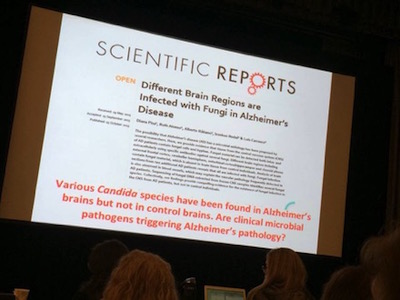
Dr. Tanzi’s whole presentation was fascinating and the section on fungi/candida, although concerning, was promising because we can do something about candida. This is the paper he shared: Different Brain Regions are Infected with Fungi in Alzheimer’s Disease with this question: Are clinical microbial pathogens triggering Alzheimer’s disease?
ihs-3

It was really interesting to hear that

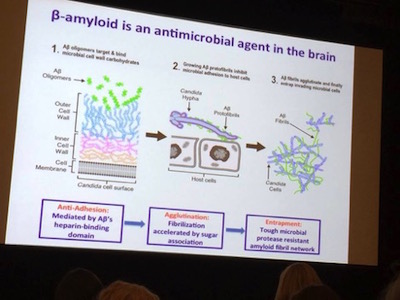
  • the amyloid is an antimicrobial agent in the brain and provides protection against the candida/fungi
  • and that that the amyloid plaques also provide protection against Borellia, periodontal bugs, Herpes Simplex 1 and other infectious agents

What was most encouraging was this:

  • your brain can handle tons of amyloid plaques and tangles and yet not develop Alzheimer’s disease.
  • the big deciding factor seems to be inflammation
  • “resilient brains” had plaques, no inflammation and no Alzheimer’s disease!

So these are some of my thoughts:

  • Tanzi did share that many people with Alzheimer’s disease suffer from depression and agitation. Here is a paper I retrieved; it does state that depression is worse when benzodiazepines have been used and we know benzodiazepines have been found to contribute to dementia so we need to consider this too.
  • We also know anxiety is a factor in Alzheimer’s disease and this study “showed that anxiolytic behavior…is predominantly due to cox-2 mediated neuroinflammation induced neurodegeneration in the brain.”
  • Some of the same underlying causes of anxiety and depression seem to be underlying factors when it comes to Alzheimer’s disease – like candida and inflammation – and there is something we can do about this. We can get rid of the candida and can use natural methods to reduce inflammation starting with eating an anti-inflammatory diet with wild oily fish, no gluten, no sugar and reduced carbs.    

Dr. Tanzi also shared these for preventing Alzheimer’s disease:

  • Social engagement (this is why addressing pyroluria/social anxiety is important – interestingly zinc, vitamin B6 and evening primrose oil are anti-inflammatory)
  • Learning new things
  • Reducing emotional stress and deep sleep (this is where my work with the amino acids comes in – interestingly I found this study that discusses how enhancing GABA signaling can prevent cognitive decline in mice with the apoE4 gene)
  • Exercise (also so beneficial in anxiety and depression)
  • And nutrients like ashwaganda and cat’s claw (to address stress and kill infections/candida)

Clearly I have more reading and researching to do! As you can tell I love putting all the puzzle pieces together.

I’ve also got more to share from Dr. Tanzi’s talk and will do so next week. Stay tuned for more information on his “three- dimensional human stem cell-derived neural culture system that recapitulates Alzheimer’s disease plaque and tangle pathology.”

Feel free to ask questions and share your thoughts in the comments section.
 

Filed Under: Candida, Events, Inflammation, Stress Tagged With: Alzheimer’s disease, candida, Dr. Rudy Tanzi, Inflammation, integrative healthcare symposium, stress

Pyroluria and chronic fatigue syndrome: is there a link?

January 16, 2015 By Trudy Scott 21 Comments

pyroluria and chronic fatigue

Last week I blogged about the social anxiety condition called pyroluria (Pyroluria, high mauve, pyrrole disorder, malvaria, elevated kryptopyrroles and social anxiety) and received some great comments on this and the other pyroluria blogs.

One question on this blog: The Anxiety Summit: How zinc and vitamin B6 prevent pyroluria and social anxiety was related to Chronic Fatigue Syndrome/CFS so I’ve decided to share this and some additional information I was able to find.

Hi Trudy, I’m calling from Melbourne Australia, I was wondering if you have had any of your clients present with Chronic Fatigue Syndrome as well as pyroluria. I have just recently been diagnosed with CFS, I also have ADHD. Someone on a CFS forum that I belong to told me about pyroluria and said it is common in ADHD and CFS sufferers. While the link between ADHD and pyroluria is well documented, I haven’t been able to find any information regarding a connection between Chronic Fatigue Syndrome and pyroluria. I notice that there is an overlap of symptoms in the two conditions. I have all of the symptoms of CFS and many of the symptoms of pyroluria. I’m very interested in hearing your views about CFS and how it relates to pyroluria if at all. — Tom

I was not aware of a CFS/pyroluria connection until now but see there is some research showing how CFS and mood disorders/anxiety can have related causes and one of them is inflammation:

An intriguing and hitherto unexplained co-occurrence: Depression and chronic fatigue syndrome are manifestations of shared inflammatory, oxidative and nitrosative (IO&NS) pathways

Low zinc is a factor in pyroluria and depression and of course we may also see low zinc in CFS:

Lower serum zinc in Chronic Fatigue Syndrome (CFS): relationships to immune dysfunctions and relevance for the oxidative stress status in CFS

I find this paper very interesting since many of these same nutrients are commonly low in folks with anxiety and depression: Nutritional strategies for treating chronic fatigue syndrome

A detailed review of the literature suggests a number of marginal nutritional deficiencies may have etiologic relevance. These include deficiencies of various B vitamins, vitamin C, magnesium, sodium, zinc, L-tryptophan, L-carnitine, coenzyme Q10, and essential fatty acids.

I’m surprised the above paper didn’t mention iron anemia.  This is very common with pyroluria.  This paper: Iron insufficiency and hypovitaminosis D in adolescents with chronic fatigue and orthostatic intolerance found this

In patients presenting with chronic fatigue and/or orthostatic intolerance, low ferritin levels and hypovitaminosis D are common

These are just a few of the links I found by doing a very quick pubmed search. There are likely many more.

Everything is so connected and inter-related! And it’s interesting how certain deficiencies can manifest in certain ways – one person may find themselves with a CFS diagnosis, someone else with arthritis and yet someone else with heart disease. I think we need to be thinking about addressing nutrient deficiencies, balancing biochemistry and getting healthy, perhaps more just than addressing a diagnosis.

If you score high on the Pyroluria Questionnaire I would suggest simply addressing the pyroluria which may have some ripple down effects and actually improve the symptoms of CFS.

Now the next post will have to dig into the link between ADHD and pyroluria. Stay tuned.

In the meantime, I’d love to see your comments/questions if you can relate to any of this. Also, please do share in the comments if you know you have pyroluria and find the nutrients have eliminated your social anxiety and inner tension symptoms, and have also helped your CFS.


Filed Under: Depression, Pyroluria, Stress Tagged With: ADHD, anxiety, fatigue, Inflammation, iron, pyroluria, zinc

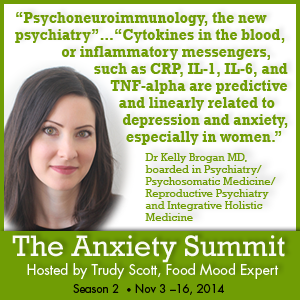
The Anxiety Summit – Psychoneuroimmunology, the new psychiatry

November 5, 2014 By Trudy Scott 9 Comments

Kelly Brogan

Dr. Kelly Brogan, MD. Holistic women’s health psychiatry was interviewed by host of the Anxiety Summit, Trudy Scott, Food Mood Expert and Nutritionist, author of The Antianxiety Food Solution.

Psychoneuroimmunology, the new psychiatry

  • The role of inflammation in anxiety and depression
  • Hormones and where the endocrine system fits in
  • Where inflammation comes from
  • What a healthy microbiome looks like
  • Natural lifestyle interventions to reverse symptoms and favorite nutraceuticals
  • Why psychiatrists don’t know about this

Here are some snippets from our interview:

What psychoneuroimmunology refers to is essentially the inherent inter-connectedness between multiple systems. So, it’s about no longer looking at psychiatry as a head up phenomenon, which at best can result in limited outcomes and at worst, can be quite dangerous. And what psychoneuroimmunology implies is that there is a relationship between neurology – so, between brain science – and the immune system. It is sometimes called psychoneuroendocrinology – it also sort of ropes in the gut and the endocrine system with the implication being that you cannot treat one without knowledge about the others. So, I think it’s very exciting and really is a term that embodies functional medicine, or naturopathy at its best.

What many are speaking about is something called the cytokine model, which has been around since 1991, the first paper hypothesizing about this model. So, it’s been a growing literature for some time. And what it refers to is essentially it looks at depression or anxiety, for example, as this non-specific sort of fever that tells us actually very little about what’s causing the body to react, but tells us that there’s is an expression of imbalance and that the body is working to recalibrate. So, there’s some sort of stressor or triggers or assault and the compensatory response on the part of the body is what we are seeing as these psychiatric symptoms.

Cytokines in the blood, or inflammatory messengers, such as CRP, IL-1, IL-6, and TNF-alpha are predictive and linearly related to depression and anxiety, especially in women.

Here is Dr. Brogan’s wonderful blog post on the topic of Psychoneuroimmunology, the new Psychiatry

What is driving this inflammation? How does it get kicked off? And how does it induce depression? With the limited clinical applications and revelations that came with the completion of the Human Genome Project in 2002, we have begun to focus on where we have outsourced our physiologic functions.

The microbiome has become an important consideration, and particularly, the gut, which houses at least 10 times as many human cells as there are in our bodies, and 150 times as many genes as are in our genome. These microbes control many vital operations and are responsible for synthesis of neuroactive and nutritional compounds, for immune modulation, and for inflammatory signaling.

Here is one of the studies on how traditional diets can impact the microbiome: Intestinal microbiota, probiotics and mental health: from Metchnikoff to modern advances: Part II – contemporary contextual research

researchers reported less potentially pathogenic bacteria, yet a far greater degree of biodiversity and microbial richness in rural Africans living a traditional lifestyle and consuming traditional high fiber foods

If you are not already registered for the Anxiety Summit you can get live access to the speakers of the day here www.theAnxietySummit.com

Filed Under: Anxiety and panic, Depression, Food and mood, Inflammation, The Anxiety Summit 2 Tagged With: anxiety, cytokines, depression, Inflammation, Kelly Brogan, Psychoneuroimmunology, the anxiety summit, Trudy Scott

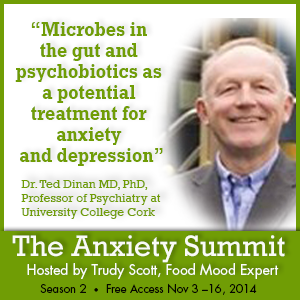
The Anxiety Summit – Microbes in the gut and psychobiotics as a potential treatment for anxiety and depression

November 5, 2014 By Trudy Scott 20 Comments

Dr_Ted_Dinan_Anxiety2

Dr. Ted Dinan, MD, PhD. Professor of Psychiatry at University College Cork was interviewed  by host of the Anxiety Summit, Trudy Scott, Food Mood Expert and Nutritionist, author of The Antianxiety Food Solution.

Microbes in the gut and psychobiotics as a potential treatment for anxiety and depression

  • Varied ways in which anxiety presents
  • Anxiety as a co-morbid condition e.g. irritable bowel syndrome
  • Microbes in the gut and the influence on emotional activity
  • Non-pharmacological approaches to treating anxiety
  • Psychobiotics as a potential treatment and the newest research in this area

Here are some snippets from our interview

Now the brain-gut axis is an axis that we learned more about over the decade or 2, how does the brain communicate with the gut, how does the gut communicate with the brain, and the view of irritable bowel syndrome is that it is as I say a brain axis disorder, an exceedingly common disorder, up to at least 50 percent and some studies suggest much higher rates in terms of the presence of psychiatric symptoms in patients with irritable bowel syndrome. The general view is that at least 50 percent of patients with irritable bowel syndrome have a coexistent or comorbid depression or anxiety.

We’re gradually I think learning more about the pathology underlying irritable bowel syndrome and we and others have published a number of studies show that for instance patients with irritable bowel syndrome have high levels of cytokines. Now cytokines are chemicals that are produced by the immune system and there are certain cytokines that are caused pro-inflammatory. They give rise to inflammation or are the product of inflammation. And certainly there is now good evidence that many patients with irritable bowel syndrome do have very high levels of these pro-inflammatory molecules in their blood stream. The molecules would be molecules like interleukin 6 and CNF-alpha.

Here is the quote from Dr. Dinan’s article that was co-written with Dr. John Cryan and called Psychobiotics: How Gut Bacteria Mess with Your Mind

In the 20th century the major focus of microbiological research was on finding ways to kill microbes by antibiotics. This century the focus has changed somewhat with the recognition of the health benefits of bacteria, not just from an immunity perspective but from a mental health one.

Here is some of Dr. Dinan’s research:

Do interactions between stress and immune responses lead to symptom exacerbations in irritable bowel syndrome?

co-morbidity with mood disorders such as depression and anxiety is common in IBS

Psychobiotics: a novel class of psychotropic.

Here, we define a psychobiotic as a live organism that, when ingested in adequate amounts, produces a health benefit in patients suffering from psychiatric illness. As a class of probiotic, these bacteria are capable of producing and delivering neuroactive substances such as gamma-aminobutyric acid and serotonin, which act on the brain-gut axis. Preclinical evaluation in rodents suggests that certain psychobiotics possess antidepressant or anxiolytic activity. Effects may be mediated via the vagus nerve, spinal cord, or neuroendocrine systems. So far, psychobiotics have been most extensively studied in a liaison psychiatric setting in patients with irritable bowel syndrome, where positive benefits have been reported for a number of organisms including Bifidobacterium infantis. Evidence is emerging of benefits in alleviating symptoms of depression and in chronic fatigue syndrome. Such benefits may be related to the anti-inflammatory actions of certain psychobiotics and a capacity to reduce hypothalamic-pituitary-adrenal axis activity. Results from large scale placebo-controlled studies are awaited.

This is the recent resistance training anxiety study I mentioned: The anxiolytic effects of resistance exercise

This research has shown that resistance training at a low-to-moderate intensity (<70% 1 repetition maximum) produces the most reliable and robust decreases in anxiety.

If you are not already registered for the Anxiety Summit you can get live access to the speakers of the day here www.theAnxietySummit.com

Filed Under: Anxiety and panic, The Anxiety Summit 2 Tagged With: anxiety, depression, IBS, Inflammation, microbes, psychobiotics, the anxiety summit, Trudy Scott

The Anxiety Summit – Gluten’s impact on the inflamed brain: reducing anxiety and depression

November 4, 2014 By Trudy Scott 32 Comments

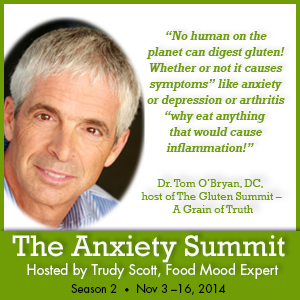
Tom

Dr. Tom O’Bryan, DC host of ‘The Gluten Summit – A Grain of Truth’ is interviewed  by host of the Anxiety Summit, Trudy Scott, Food Mood Expert and Nutritionist, author of The Antianxiety Food Solution.

Gluten’s impact on the inflamed brain: reducing anxiety and depression

  • Terminology and why it’s not called gluten intolerance but sensitivity
  • Is gluten sensitivity just a fad and the recent FODMAPs research
  • The multitude of diseases and symptoms caused by gluten sensitivity
  • Gluten sensitivity as a contributing factor to psychiatric manifestations/anxiety/depression and new 2014 research from Italy
  • Suicide rates in kids with celiac disease (even when they quit gluten), and kids celiac camps
  • The conundrum with testing
  • Doing an elimination and then challenge?
  • Can anyone eat wheat or should we all be gluten-free

One of my favorite quotes in my anxiety food talks is this one from a 2012 paper by Jackson and Fasano called Neurologic and psychiatric manifestations of celiac disease and gluten sensitivity

gluten sensitivity remains undertreated and underrecognized as a contributing factor to psychiatric and neurologic manifestations.

Here are some snippets from our interview:

73% of kids with celiac disease have social phobia, 63% still have social phobia on a gluten-free diet. You have to also heal the gut and address nutritional deficiencies

No human on the planet can digest gluten! Whether or not it causes symptoms like anxiety or depression or arthritis why eat anything that would cause inflammation!

He shares recent research published in BMC Medicine. The study looking at Italians with non-celiac gluten sensitivity, found that 68% of participants felt “a lack of well-being” and 39% experienced anxiety. In the large majority of patients, the time lapse between gluten ingestion and the appearance of symptoms varied from a few hours to 1 day.

No human on the planet can digest gluten! Whether or not it causes symptoms” like anxiety or depression or arthritis “why eat anything that would cause inflammation”

The gluten-FODMAPs discussion and non-celiac gluten sensitivity is a fad:

  • No effects of gluten in patients with self-reported non-celiac gluten sensitivity after dietary reduction of fermentable, poorly absorbed, short-chain carbohydrates.
  • The article in Forbes : Gluten Intolerance May Not Exist
  • Randomised clinical trial: gluten may cause depression in subjects with non-coeliac gluten sensitivity – an exploratory clinical study.

Dr. O’Bryan summed it up like this:

it took two studies to do this but it appears to be the FODMAPs in the wheat that cause the GI complaints (the bloating, the gas, the abdominal pain) but it’s the proteins that cause symptoms in the brain and other parts of the body

I write about gluten often. Here are some additional links for you:

  • I was interviewed on Gaiam TV and discussed the gluten-mood connection
  • I presented a poster called Gluten and the serious effects on mental health at the 2013 annual conference of the Anxiety and Depression Association of America/ADAA
  • and here part 1 of a 2 part blog on gluten and mood

Last year Dr. O’Bryan hosted the fantastic Gluten Summit and you can grab a copy of one of the interviews here: Dr. Marsh’s Gluten Summit interview: Why the Early Stages of Celiac Disease Must be Taken Seriously

If you are not already registered for the Anxiety Summit you can get live access to the speakers of the day here www.theAnxietySummit.com

Filed Under: Antianxiety, Gluten, The Anxiety Summit 2 Tagged With: anxiety, celiac, depression, gluten, Inflammation, suicide, the anxiety summit, tom o’bryan, Trudy Scott

The Role of Inflammation in Stress, Anxiety and Depression

March 8, 2013 By Trudy Scott 10 Comments

NTA-Conference-2013

“Inflammation: The Fire Within” is the theme of the annual conference of the Nutritional Therapy Association. It will be held in Vancouver, WA on March 15, 16, 17. I’m thrilled to presenting on Friday from 10-11:30am and my topic is “The Role of Inflammation in Stress, Anxiety and Depression.”

This presentation will provide health and nutrition professionals with current, evidence-based information the role of inflammation in stress, and on anxiety and mood disorders. It will explain:

  • the negative impact of pro-inflammatory junk food, trans fats, feed-lot meat, pesticides, gluten, fructose and caffeine on stress, anxiety and depression
  • the recent research supporting the anti-inflammatory benefits of real whole food, the Mediterranean diet (for both reducing inflammation and reducing and preventing depression, fish and fish oils (with some exceptions), dark chocolate (with some caveats), probiotics, zinc and vitamin B6
  • the links between social stress and inflammation
  • the effects of maternal inflammation on anxiety and social behavior of offspring
  • the links between pyroluria (see the pyroluria questionnaire here), social anxiety and oxidative stress
  • how inflammation leads to low serotonin and mood issues

It’s quite incredible how much of an impact inflammation has on mood disorders and how simply taking steps to lower inflammation can have a positive impact. What is equally fascinating is that so many of the foods and nutrients that eliminate anxiety and depression also lower inflammation! The body is quite amazing in its ability to heal when provided with the correct nutrients!

I will also be exhibiting and will have delicious 100% certified Organic Tulsi Teas donated by Organic India and great for stress-relief and you guessed it… inflammation! Do come and try some yummy lemon-ginger or licorice or find some in your local grocery store. We’ll also do zinc status testing because zinc is key for alleviating anxiety, stress and depression. I’ll also have DVD sets and copies of my book The Antianxiety Food Solution for sale. And I’ll also be offering Lidtke samples of the amazing amino acids tryptophan (for low serotonin) and DPA/Endorphigen (for low endorphins and comfort eating). These amino acids also help with inflammation!

And I’m thrilled that my friend and colleague Mira Dessy will be joining me at my booth. She is a Nutrition Educator, Real Food Advocate and author of the fabulous new book The Pantry Principle: How to read the label and understand what’s really in your food (find her here and on facebook here).

The event has many great speakers and will be a content-rich educational three days. You can learn more and register here:
http://nutritionaltherapy.com/events-resources/nta-conferences

The sessions will be recorded and available for purchase from Nutritional Therapy Association if you can’t make it to the live event.

Filed Under: Antianxiety Food Solution, Events, Food and mood, Joy and happiness, Real whole food Tagged With: Antianxiety Food Solution, anxiety, depression, Inflammation, pyroluria, stress, Trudy Scott

  • « Go to Previous Page
  • Page 1
  • Page 2
  • Page 3
  • Page 4

Primary Sidebar

NEW! GABA QuickStart Homestudy (with special intro pricing)

gaba quickstart homestudy

Free Report

9 Great Questions Women Ask about Food, Mood and their Health

You'll also receive a complimentary subscription to my ezine "Food, Mood and Gal Stuff"


Connect with me

Popular Posts

  • Amino Acids Mood Questionnaire from The Antianxiety Food Solution
  • The Antianxiety Food Solution Amino Acid and Pyroluria Supplements
  • Pyroluria Questionnaire from The Antianxiety Food Solution
  • Collagen and gelatin lower serotonin: does this increase your anxiety and depression?
  • Tryptophan for the worry-in-your-head and ruminating type of anxiety
  • GABA for the physical-tension and stiff-and-tense-muscles type of anxiety
  • The Antianxiety Food Solution by Trudy Scott
  • Seriphos Original Formula is back: the best product for anxiety and insomnia caused by high cortisol
  • Am I an anxious introvert because of low zinc and vitamin B6? My response to Huffington Post blog
  • Vagus nerve rehab with GABA, breathing, humming, gargling and key nutrients

Recent Posts

  • What do I use instead of Seriphos to help lower high cortisol that is affecting my sleep and making me anxious at night?
  • BeSerene™ GABA/theanine cream eases severe muscle tension in her neck/shoulders, prevents her bad headaches and quells her anxiety
  • How the correct approach, dose and sublingual use of GABA can be calming and not cause a flushed and itchy face and neck
  • The amino acid glutamine improves low mood by addressing gut health, and it has calming effects too
  • Flight anxiety with heightened breath, physical tension and also fearing the worst (the role of low GABA and low serotonin)

Categories

  • 5-HTP
  • AB575
  • Addiction
  • ADHD
  • Adrenals
  • Alcohol
  • Allergies
  • Alzheimer's disease
  • Amino Acids
  • Anger
  • Antianxiety
  • Antianxiety Food Solution
  • Antidepressants
  • Anxiety
  • Anxiety and panic
  • Autism
  • Autoimmunity
  • benzodiazapines
  • Bipolar disorder
  • Books
  • Caffeine
  • Cancer
  • Candida
  • Children/Teens
  • Collagen
  • Cooking equipment
  • Coronavirus/COVID-19
  • Cravings
  • Depression
  • Detoxification
  • Diabetes
  • Diet
  • DPA/DLPA
  • Drugs
  • EFT/Tapping
  • EMF
  • EMFs
  • Emotional Eating
  • Endorphins
  • Environment
  • Essential oils
  • Events
  • Exercise
  • Fear
  • Fear of public speaking
  • Fertility and Pregnancy
  • Fish
  • Food
  • Food and mood
  • Functional neurology
  • GABA
  • Gene polymorphisms
  • General Health
  • Giving
  • Giving back
  • Glutamine
  • Gluten
  • GMOs
  • Gratitude
  • Gut health
  • Heart health/hypertension
  • Histamine
  • Hormone
  • Hyperparathyroidism
  • Hypoglycemia
  • Immune system
  • Inflammation
  • Insomnia
  • Inspiration
  • Introversion
  • Joy and happiness
  • Ketogenic diet
  • Lithium orotate
  • Looking awesome
  • Lyme disease and co-infections
  • MCAS/histamine
  • Medication
  • Men's health
  • Mental health
  • Mercury
  • Migraine
  • Mold
  • Movie
  • MTHFR
  • Multiple sclerosis
  • Music
  • NANP
  • Nature
  • Nutritional Psychiatry
  • OCD
  • Osteoporosis
  • Oxalates
  • Oxytocin
  • Pain
  • Paleo
  • Parasites
  • Parkinson’s disease
  • PCOS
  • People
  • PMS
  • Postpartum
  • PTSD/Trauma
  • Pyroluria
  • Questionnaires
  • Real whole food
  • Recipes
  • Research
  • Schizophrenia
  • serotonin
  • SIBO
  • Sleep
  • Special diets
  • Sports nutrition
  • Stress
  • Sugar addiction
  • Sugar and mood
  • Supplements
  • Teens
  • Testimonials
  • Testing
  • The Anxiety Summit
  • The Anxiety Summit 2
  • The Anxiety Summit 3
  • The Anxiety Summit 4
  • The Anxiety Summit 5
  • The Anxiety Summit 6
  • Thyroid
  • Thyroid health
  • Toxins
  • Tryptophan
  • Tyrosine
  • Uncategorized
  • Vegan/vegetarian
  • Women's health
  • Yoga

Archives

  • October 2025
  • September 2025
  • August 2025
  • July 2025
  • June 2025
  • May 2025
  • April 2025
  • March 2025
  • February 2025
  • January 2025
  • November 2024
  • October 2024
  • September 2024
  • August 2024
  • July 2024
  • June 2024
  • May 2024
  • April 2024
  • March 2024
  • February 2024
  • January 2024
  • December 2023
  • November 2023
  • October 2023
  • September 2023
  • August 2023
  • July 2023
  • June 2023
  • May 2023
  • April 2023
  • March 2023
  • February 2023
  • January 2023
  • December 2022
  • November 2022
  • October 2022
  • September 2022
  • August 2022
  • July 2022
  • June 2022
  • May 2022
  • April 2022
  • March 2022
  • February 2022
  • January 2022
  • December 2021
  • November 2021
  • October 2021
  • September 2021
  • August 2021
  • July 2021
  • June 2021
  • May 2021
  • April 2021
  • March 2021
  • February 2021
  • January 2021
  • December 2020
  • November 2020
  • October 2020
  • September 2020
  • August 2020
  • July 2020
  • June 2020
  • May 2020
  • April 2020
  • March 2020
  • February 2020
  • January 2020
  • December 2019
  • November 2019
  • October 2019
  • September 2019
  • August 2019
  • July 2019
  • June 2019
  • May 2019
  • April 2019
  • March 2019
  • February 2019
  • January 2019
  • December 2018
  • November 2018
  • October 2018
  • September 2018
  • August 2018
  • July 2018
  • June 2018
  • May 2018
  • April 2018
  • March 2018
  • February 2018
  • January 2018
  • December 2017
  • November 2017
  • October 2017
  • September 2017
  • August 2017
  • July 2017
  • June 2017
  • May 2017
  • April 2017
  • March 2017
  • February 2017
  • January 2017
  • December 2016
  • November 2016
  • October 2016
  • September 2016
  • August 2016
  • July 2016
  • June 2016
  • May 2016
  • April 2016
  • March 2016
  • February 2016
  • January 2016
  • December 2015
  • November 2015
  • October 2015
  • September 2015
  • August 2015
  • July 2015
  • June 2015
  • May 2015
  • April 2015
  • March 2015
  • February 2015
  • January 2015
  • December 2014
  • November 2014
  • October 2014
  • September 2014
  • August 2014
  • July 2014
  • June 2014
  • May 2014
  • April 2014
  • March 2014
  • February 2014
  • January 2014
  • December 2013
  • November 2013
  • October 2013
  • September 2013
  • August 2013
  • July 2013
  • June 2013
  • May 2013
  • April 2013
  • March 2013
  • February 2013
  • January 2013
  • December 2012
  • November 2012
  • October 2012
  • August 2012
  • July 2012
  • June 2012
  • May 2012
  • April 2012
  • March 2012
  • February 2012
  • January 2012
  • December 2011
  • November 2011
  • October 2011
  • September 2011
  • August 2011
  • July 2011
  • June 2011
  • May 2011
  • April 2011
  • March 2011
  • February 2011
  • January 2011
  • December 2010
  • October 2010
  • September 2010
  • July 2010
  • May 2010
  • April 2010
  • March 2010
  • February 2010
  • January 2010
  • November 2009

Share the knowledge!

The above statements have not been evaluated by the Food and Drug Administration. Products listed in this website are not intended to diagnose, treat, cure or prevent any disease.

The information provided on this site is for informational and educational purposes only and is not intended as a substitute for advice from your physician or other health care professional. You should consult with a healthcare professional before starting or modifying any diet, exercise, or supplementation program, before taking or stopping any medication, or if you have or suspect you may have a health problem.


Copyright © 2026 Trudy Scott. All Rights Reserved. | Privacy | Terms and Conditions | Refund Policy | Medical Disclaimer

Free Report

9 Great Questions Women Ask about Food, Mood and their Health

You’ll also receive a complimentary subscription to my ezine “Food, Mood and Gal Stuff”