• Skip to primary navigation
  • Skip to main content
  • Skip to primary sidebar

everywomanover29 blog

Food, Mood and Women's Health – Be your healthiest, look and feel great!

  • Blog
  • About
  • Services
  • Store
  • Resources
  • Testimonials
  • The Book
  • Contact
  • Search this site

gluten

“Betrayal” Episode 1 – teenagers with time on their hands!

November 15, 2016 By Trudy Scott Leave a Comment

“Betrayal – the Autoimmune Disease Solution They’re Not Telling You” is hosted by Dr. Tom O’Bryan, author of the bestselling new book The Autoimmune Fix.


Overview of Episode 1

  • What really is auto-immune disease? 
  • The true impact of auto-immune disease in US and other countries. What is functional medicine and how is it different from conventional medicine? 
  • The facts behind why medication is not the core solution. Inspirational personal case studies of patients being healed by the functional medicine protocols. 
  • Who is Dr. Tom O’Bryan and what’s his purpose with the ‘Betrayal’ documentary series?

At the turn of the 20th century, autoimmune diseases were found in about 1 in 10,000 individuals. And now as many as 1 in 4 are on the autoimmune spectrum!

That’s an unbelievable change in a remarkably short period of time. It’s not because our genes have changed much over that short period of time. That’s why it is a modern epidemic. And it’s mostly accrued in the last 30 years.

In this first episode, you’ll actually learn how your body is trying to protect you, and modern therapies and medications are designed to block your immune system, instead of work with it.
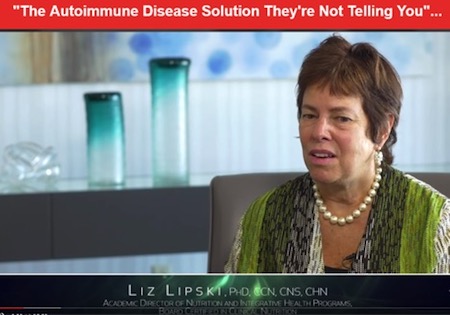
Here is a snippet from the brilliant Liz Lipski, PhD, CCN, CNS, CHN about autoimmunity:

In my eyes it’s a misfire between what our immune wants to be doing and what it should be doing. When we lived in a more pristine, more traditional culture, here we lived close to the earth and where we had parasites, where we ate food that was fresh and we didn’t have refrigerators and foods spoiled, the immune system had a lot of really good things to do. And now our immune system in this modern age seems a lot to me like a group of teenagers with time on their hands, and so they get into mischief because they don’t have their old jobs to do.

We’re exposed to toxins, we eat foods that are unusual, we’re stressed out, we have molds, we have all kinds of unusual situations that are different from even 150 years ago, and the immune system just sort of overreacts. They say it’s like it’s your birthday and everyone is singing happy birthday and you have the cake and the candles are lit and everyone is just expecting you to blow out the candles and you rip out your fire extinguisher. That’s an autoimmune disease – it’s an overreaction of the immune system to a normal event

In my last email about this event I mentioned that there are 159 diseases that are on the autoimmune spectrum? I had no idea!

Some of the commonly recognized ones are Hashimoto’s Thyroiditis, lupus, MS, rheumatoid arthritis, celiac and Graves’ disease. Less well-recognized is the role of autoimmunity in CFS, Alzheimer’s disease, fibromyalgia, Lyme disease, lichen planus, interstitial cystitis, endometriosis and other conditions.

And of course, we can see anxiety and depression with any of the above conditions so this series is very relevant to us all!

Here are some of the positive feedback from viewers who have watched Episode 1:

  • Brought tears to my eyes to know that there are clinicians out there that REALLY care.
  • I cannot thank you enough Dr. Tom for this series. I have been in the exercise and nutrition industry for many years and have believed the true path to healing is with food, supplements, exercise, down-time, sleep, etc. I was told that the vitamins and diet I chose to follow would kill me at an early age. Well, that did not happen. I have felt lost in our diseased world and I am so excited to get all this information. It may be overload, but it is empowering me to move forward with this cause.
  • Dear Tom, At last I’ve found people who know what they are talking about – I’ve been searching for so long. I’ve felt abandoned by allopathic medience and have been searching for alternatives and have tried various different system. From listening to your overview I note that I have already started to do some of the things you suggset Tom and I am now looking forward to tomorrow’s session and to gaining a healthier furture. You have given me something very important – you have given me hope. THANK YOU, Mary
  • This information is fantastic. I have been following the Institute of Functional Medicine for the past couple of years. I am not a practitioner but I believe in this type of medicine and was moved by James’ testimonial at the end of EP1. I am at the same place in my life, “how do I want to spend my time from here on out”. Fullfilment and purpose in life can also improve health. There is such a connection between the mind, spirit and the body. Integrative psychiatry is also a part of functional medicine. Right now we need more functional medicine doctors and psychiatrists.


Here’s each of the breath-taking episodes you’ll have the opportunity to watch each evening:

Episode 1- The Autoimmune Epidemic: Root Causes and Solutions
Episode 2- Intestinal Permeability: The Gateway to Autoimmunity
Episode 3- The Microbiome: Where Health and Disease Begin and End
Episode 4- Autoimmune Diseases of the Gut: The Role of Food and Digestion
Episode 5- Environmental Toxins: The Hidden Drivers of Disease
Episode 6- Autoimmune Diseases of the Brain: A New Approach to Neurology
Episode 7- Case Studies: Bringing it All Together

You can register here and watch episode 1.

I can’t recommend it highly enough and feel we should ALL watch this series!
 

Filed Under: Events Tagged With: autoimmune disease, gluten, Liz Lipski, tom o’bryan

The Autoimmune Fix by Dr. Tom O’Bryan: gluteomorphins, casomorphins and withdrawal

September 23, 2016 By Trudy Scott 4 Comments


autoimmune-fix

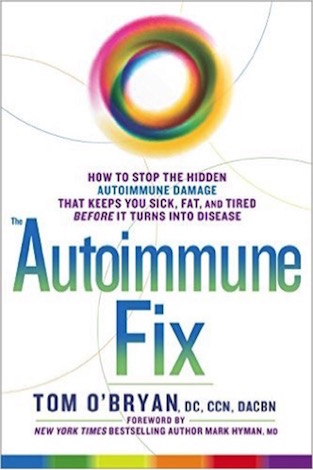
Alzheimer’s disease, multiple sclerosis, Type 1 diabetes, Hashimoto’s Thyroiditis, celiac disease, osteoporosis, and lupus are all autoimmune diseases and can be reversed because 70% of them are found in the gut. In Dr. Tom O’Bryan’s new book, The Autoimmune Fix: How to Stop the Hidden Autoimmune Damage That Keeps You Sick, Fat, and Tired Before It Turns Into Disease he provides a practical and much-needed guide to navigating autoimmune diseases to help you feel better and develop a plan that works for you.

A big factor with many autoimmune diseases and conditions is going gluten-free and often going dairy-free too. As Dr. O’ Bryan states:

This does not mean that everyone with a systemic autoimmune disease has a sensitivity to gluten, but it does show the very high correlation.

He also shares that Marios Hadjivassiliou MD believes that

gluten sensitivity is associated with autoimmune disease and that celiac is just one manifestation of it.

Here is a wonderful success story from the book – a gluten-free and dairy-free diet, and the nutrition to heal her intestinal permeability (or leaky gut):

Nancy never left the house without a packet of tissues. She suffered from chronic allergies but could never figure out exactly what she was allergic to. She was also constantly battling her depression, and although she didn’t think of herself as someone who had digestive problems, she always felt bloated. The comforting allure of a box of doughnuts, a pint of ice cream, a bowl of noodles, or, when things were really bad, a roll of raw cookie dough was often too hard to resist and seemed to calm down her anxiety. She dressed to hide her weight gain in public, hoping to pass invisibly through life. She didn’t even consider dating. She had lost interest in men anyway, despite being only 28 years old.

To the average doctor, Nancy was a classic depressed patient who needed a prescription for antidepressants, perhaps some antianxiety medication, and a good weight-loss and exercise program. But here’s what most doctors miss with people like Nancy: Her depression, anxiety, and weight gain were actually the result of immune responses that were causing chronic inflammation. Nancy, like so many women, had a constellation of symptoms that all pointed to one culprit: a systemic inflammatory cascade.

When Nancy came to my office, I ran an antibody test to determine the cause of her problems. I discovered that the culprits for her immune reaction were a sensitivity to gluten and dairy and elevated levels of LPS [lipopolysaccharides] in her blood. These molecules were activating her immune system. But how did these molecules enter her bloodstream? The answer was the third factor: intestinal permeability. With the proper testing and treatment, a gluten- and dairy-free diet, and the nutrition to heal her intestinal permeability, Nancy’s antibody load to LPS reduced within 6 months. She stopped throwing gasoline on the fire (by removing gluten and dairy), and her symptoms began lifting within the first 2 weeks as her inflammation subsided. Within 6 months, she was down two dress sizes and came back to see me, vibrant with life.

It really can be as successful as this and I see these kind of results with so many of my clients who make these few simple changes.

However, for some people, it can be more challenging and you may experience withdrawal symptoms when you give up wheat and dairy, and feel tired, depressed (or anxious) or nauseated:

Some don’t want to exercise, and some have headaches (just like with coffee withdrawal). This is especially true of those who in their blood tests have elevated levels of the peptide in wheat called gluteomorphin or elevated levels of the peptide in dairy called casomorphin.

These poorly digested peptides can stimulate the opiate receptors in the gut and brain. Opiate receptors trigger the production of hormones called endorphins and enkephalins that produce that feel-good response. Remember the last time you laughed out loud in a movie or with your friends? Perhaps you even had belly laughter—when you laugh so hard your belly hurts? Remember how good you felt after that? It’s because your opiate receptors were stimulated and you now have a little more endorphins circulating in your bloodstream. Well, gluten and dairy can mildly stimulate these same receptors. And just as an addict may have withdrawal symptoms when they stop their drug of choice, such may be the case with gluten and dairy withdrawal. My friend William Davis, MD, author of Wheat Belly, even came up with a name for it: wheat withdrawal. The same may be true for removing dairy or sugar.

If this happens to you, don’t be surprised. First of all, this may be the first time you had to give up some of your favorite comfort foods cold turkey. And these favorite foods become comfort foods for a reason: Sugar-laden foods, especially refined carbohydrates, are highly addictive. Your body is actually going through a gliadin-casein-sugar–derived opiate withdrawal.

You may ask how common is it to have these withdrawal symptoms? This can be different for each individual and can differ from one practice to the next:

Dr. Davis [author of Wheat Belly] believes that wheat withdrawal can be quite unpleasant for close to 40 percent of the population. That has not been my clinical experience. Our number has been closer to 10 percent, which is still a substantial number. You may have a friend or family member who has tried to go gluten-free and has told you, “My body must need wheat. It’s been 3 days since I’ve had anything made of wheat, and I feel awful!” This response can be scary. But remember, it’s not that the body needs wheat; it craves it. This is just the body craving a toxic substance that it has gotten accustomed to. Don’t worry: The symptoms will disappear quickly. And best of all, the cravings for sugar and wheat will subside, and then you feel wonderful!

It is interesting to read that Dr. O’Bryan finds that only 10% of his patients have unpleasant withdrawal symptoms. I’d like to add to the discussion and share that with the anxious women that I work with, it’s even higher than the 40% that Dr. Davis reports. It’s in these instances that I find the targeted amino acids so helpful to break the addiction, prevent the need for having to use willpower and provide instant mood and anxiety relief at the same time: tryptophan (if it’s afternoon/evening cravings), GABA (if you stress-eat), DPA (if you comfort-eat) or glutamine (if you crave due to low blood sugar).

Dr. O’Bryan does recommend glutamine for gut healing, together with vitamin D, fish oil, probiotics, zinc carnosine and colostrum. I suspect he doesn’t recommend the amino acids I mentioned above because he doesn’t see as many unpleasant or difficult withdrawal symptoms.

Some of my other favorite sections from this new book include:

  • his brilliant description of the immune system and how antibodies are created, and how inflammation is the primary tool in our immune system’s arsenal that keeps us healthy
  • the differences between autoimmune diseases and the many autoimmune conditions (he lists 159 that are on the autoimmune spectrum!)  
  • the differences between celiac disease and gluten sensitivity
  • the leaky gut and lipopolysaccharides discussion, and the section on the microbiome and dysbiosis (and the big connection to stress)
  • the connection of a disproportionally large forehead to celiac disease (fascinating!)
  • testing and measuring autoantibodies (I love that he calls them “messengers from the future”) and the chart that shows the likelihood as to whether you will develop a particular disease
  • the extensive lists of the hidden sources of gluten in supplements, cosmetics (this is surprisingly long) and even household products
  • the connection between gum disease, mouth bacteria and leaky gut
  • his food and nutrient recommendations
  • the long list of references and study summaries – if you’ve have the wonderful opportunity to have heard Dr. O’Bryan speak live or on summits (he’s a popular speaker on prior Anxiety Summits) you’ll recognize and love this style of his right away

If any of this is new to you and you suspect you may have an autoimmune disease or condition, then this book, The Autoimmune Fix is a must-read. It launched earlier this week and as you would expect from Dr. O’Bryan, it’s brilliant! You can order your copy here on Amazon. This is groundbreaking information we all need to know!

Let us know if you have an autoimmune disease or condition and if going gluten-free and/or dairy-free has helped you? Was it an easy change for you to make or did you experience withdrawal symptoms? Did you power through or did you successfully use amino acids to help? Have you done any of the testing he discusses or addressed dysbiosis? Healed your leaky gut?

If you have already purchased and read the book, please share some of your favorite sections and what has helped you.

Filed Under: Books Tagged With: amino acids, anxiety, Autoimmunity, casomorphin, celiac disease, depression, Dr. O’Bryan, gluten, gluteomorphin, The Autoimmune Fix, tom o’bryan, withdrawal

The Anxiety Summit: wise words on MS, oxytocin, red meat, marijuana, mercury

June 10, 2016 By Trudy Scott 10 Comments

fb_red_Anxiety4

We’re in the midst of season 4 of The Anxiety Summit www.theanxietysummit.com and here are wise words of wisdom from some of our amazing speakers on MS, oxytocin, red meat, marijuana, mercury and more.

If you have joined the summit and are loving it, this serves as a nice recap, a reminder if you missed a talk and inspiration to stay tuned in for some of the later interviews. And making sure you know that each speaker has a blog with snippets and many additional resources.

And if you’ve recently joined my community for the summit a VERY big welcome!

If you have not yet signed up I hope these wise words inspire you to join us!

Here are some snippets from some of the interviews.

Multiple sclerosis and anxiety: The Wahls Protocol

Dr. Terry Wahls shares how her MS was a gift:

And it all needs to happen this way Trudy.  I had to get that disabled.  I had to be on the verge of utter catastrophe to begin to feel the effects of cognitive decline to do all this work and then feel the effects of all this healing that happens when you provide a healthy habitat for the human ecosystem and all this repair happens.  If this hadn’t of have happened I’d still be a conventional medicine doc thinking the latest drugs out of the New England Journal of Medicine were the way to go as opposed to seeing the gospel of food and sleep and movement and stress reduction.

The Link Between Low Cholesterol and Low Oxytocin

The Pitocin/synthetic discussion oxytocin with Dr. Kurt Woeller was fascinating:

And there’s a theory … that the Pitocin, which is synthetic oxytocin, which is given to women who are not naturally going into labor, it’s meant to action speed labor up. Pitocin being synthetic oxytocin may short circuit in some susceptible kids the natural production of oxytocin, therefore slowing down or turning off those areas in the brain that are normally being developed at that time, with regards to socialization.

Gluten and anxiety: the testing conundrum solution

Dr. Tom O’Bryan’s explanation of the limited gluten sensitivity testing that most people have done:

what happens when people have one of those peptides that the immune system is fighting that’s not the 33 [alpha-gliadin] and you do a blood test for gluten sensitivity.  If your doctor orders the common blood test for gluten sensitivity and it looks for alpha-gliadin and it comes back negative and your doctors says you’re fine eating wheat.  See, here’s the blood test.  Well you can get a false negative meaning it says there’s no problem when there really is because your body’s fighting other peptides of wheat.

Nutrients that Fuel Brain Power and Reduce Anxiety

Dr. Drew Ramsey talks about zinc and animal protein:

Zinc is a mineral and minerals tend to be more absorbable in animal forms.  I think a lot of people are very confused about meat and seafood and often intimidated and scared.  And then we’ve had this message to go plant based and even vegan which is not a diet that is healthy for the brain.

Dr. Hyla Cass, integrative psychiatrist covers marijuana and anxiety later in the summit:

very often people who have been smoking marijuana for a while – when they go off it they go through serious withdrawal – anxiety, insomnia, feeling really very bad. Very much like we see in movies – we understand what it’s like getting off heroin when people go through withdrawal. Very similar, it really looks similar in appearance. Not everyone does that but common enough.

Dr. John Dempster, co-host of the Mental Wellness Summit discusses mercury as a neurotoxin in his interview later in the summit

So I kind of want to shed some light on some of these areas and how it can affect anxiety directly. One of the big areas is mercury itself is a neurotoxin. So how does that impact our biochemistry and our physiology? Well what it’s going to do it’s going to start to disrupt on an endocrine and a neurotransmitter level some of our pathways. And one of the big pathways is actually the glutamate connection and the glutamate pathway. And glutamate is something that’s known as an excitatory neurotransmitter and this is something that if we have too much of it or it’s not being reuptake properly in our synapses we start to exhibit different types of symptoms of anxiety. And of course that’s just one possible trigger for anxiety.

You can see a list of all the speakers and topics here on the master speaker blog.

You can sign up here: season 4 of The Anxiety Summit www.theanxietysummit.com

If you missed any, not to worry, we’ve decided to do an encore day with ALL the speakers. We don’t want you feeling stressed or anxious about missing out – not on a summit on anxiety!

Filed Under: Events, The Anxiety Summit 4 Tagged With: anxiety, brain health, cholesterol, drew ramsey, gluten, Hyla Cass, John Dempster, Kurt Woeller, marijuana, mercury, multiple sclerosis, oxytocin, terry wahls, the anxiety summit, tom o’bryan, Trudy Scott

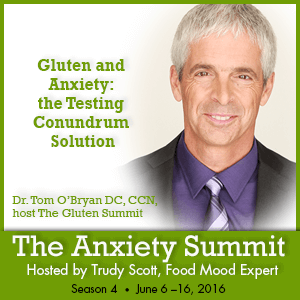
The Anxiety Summit – Gluten and anxiety: the testing conundrum solution

June 8, 2016 By Trudy Scott 26 Comments

Tom O’Bryan_Anxiety4

Dr. Tom O’Bryan DC, CCN, DACBN was interviewed on the Anxiety Summit by host of the Anxiety Summit, Trudy Scott, Food Mood Expert and Nutritionist, author of The Antianxiety Food Solution.

Gluten and anxiety: the testing conundrum solution

  • How gluten damages the gut lining and why gut healing is key for brain health
  • Alpha-gliadin and the limitations with current testing
  • Cyrex array 3: 10 peptides and 3 types of transglutaminase
  • Transglutaminase-6 and the brain on fire
  • Cyrex array 5: cerebellum, myelin and other brain antibodies
  • Cross-reactive foods: spinach, milk, coffee, chocolate
  • Autism: testing kids and their moms

In season 2, Dr. O’Bryan presented on this topic: Gluten’s impact on the inflamed brain: reducing anxiety and depression

  • “No human on the planet can digest gluten”
  • Terminology and why it’s not called gluten intolerance but sensitivity
  • Is gluten sensitivity just a fad and the recent FODMAPs research
  • The multitude of diseases and symptoms caused by gluten sensitivity
  • Gluten sensitivity as a contributing factor to psychiatric manifestations/anxiety/depression and new 2014 research from Italy
  • Suicide rates in kids with celiac disease (even when they quit gluten
  • We touched on the conundrum with testing

This interview goes deeper into testing and offers a solution to the conundrum. 

Here are some gems from our interview:

The most common peptide from poorly digested wheat is 33 pearls long.  It’s called alpha-gliadin, 33 pearls.  It’s a big peptide.  And 50 percent of people with celiac disease have alpha-gliadin elevated but the others don’t.  But wait a minute.  We know that celiac disease is a sensitivity to wheat.  How come these other people don’t have elevated antibodies to the 33 pearl peptide?  It’s because the immune system is fighting other peptides of wheat, not the 33.  It might be the 17.  It might be the 9. It might be the 11.  It might be the 22.  There are over 60 different peptides of wheat that have been identified to cause or trigger an immune response, over 60.  And every lab in the country is only testing one called alpha-gliadin, the 33 pearl.  Now that’s an important one to test but it’s not the only one to test.

So what happens when people have one of those peptides that the immune system is fighting that’s not the 33 and you do a blood test for gluten sensitivity.  If your doctor orders the common blood test for gluten sensitivity and it looks for alpha-gliadin and it comes back negative and your doctors says you’re fine eating wheat.  See, here’s the blood test.  Well you can get a false negative meaning it says there’s no problem when there really is because your body’s fighting other peptides of wheat.

Here are the arrays that Cyrex offers.  We covered parts of arrays 3, 4 and 5.

Gluten Summit gifts – register here and get these audio interviews:

  • Natasha Campbell-McBride: The Critical Nature of Gut Health and its Impact on Children’s Brains 
  • David Perlmutter: Eliminating Gluten as the 1st Step in Preventing Brain Conditions.   

Here is the link to the Certified Gluten-free Practitioner training  we discussed

If you are not already registered for the Anxiety Summit you can get live access to the speakers of the day here: www.theAnxietySummit.com

Missed this interview or can’t listen live? Or want this and the other great interviews for your learning library? Purchase the MP3s or MP3s + transcripts and listen when it suits you.

You can find your purchasing options here.: Anxiety Summit Season 1, Anxiety Summit Season 2, Anxiety Summit Season 3, and Anxiety Summit Season 4.

Filed Under: Events, The Anxiety Summit 4 Tagged With: anxiety, anxiety summit, gluten, testing, tom o’bryan, Trudy Scott

The Anxiety Summit – How Gluten Elimination Healed Me and Eliminated my Anxiety

May 16, 2015 By Trudy Scott 16 Comments


Lebby Salinas, The Fooducator®, certified health & wellness coach, is interviewed  by host of the Anxiety Summit, Trudy Scott, Food Mood Expert and Nutritionist, author of The Antianxiety Food Solution.

How Gluten Elimination Healed Me and Eliminated my Anxiety

  • Lebby’s gluten story and how she nearly died
  • The gluten testing she did and what she learned
  • The C.R.A.P diet
  • Community work and the Fooducation® Movie Series
  • Buying local produce

Lebby Salinas suffered from many food allergies and illnesses that conventional medicine couldn’t diagnose or cure; at one point, becoming very ill and needing to be hospitalized. After many years and many thousands of dollars, she took her health into her own hands.

Lebby took Hippocrates at his word and began to “Let food be thy medicine and medicine be thy food.” She discovered that it was more about what was wrong with the foods she was eating, not what was wrong with her body.

She shared how her healing journey is a continual journey shared this:

When you have anxiety you are told to just think positive and just change your thoughts and I like to say just change your food!

Most of her life she had been eating what is referred to as the S.A.D. diet (Standard American Diet) consisting of a lot of what she calls C.R.A.P. 

C= carbonated and sugared drinks

R= refined sugar

A= artificial flavors and dyes and

P = processed foods

The first time someone suggested a connection between food and mood and anxiety she found the idea so foreign.   It was only later that she figured out how bad gluten was for her health and how it made her so sick and caused anxiety and panic attacks.

Dr. Charles Parker, holistic psychiatrist, was the first doctor who recommended that she eliminate gluten and dairy, rather than prescribe her antidepressants. This was based on IgG food sensitivity testing.

Later the doctors at another hospital said she didn’t have celiac disease, could eat gluten, looked at her like she was “a bit crazy” and prescribed Xanax to calm her down. She was sent home and her husband was told to get her things in order.

Lebby shared how she was then referred to Dr. Tom O’Bryan, he did the Cyrex test and said she needed to do the elimination diet and heal her gut or she would likely die.

She shared that doing the Cyrex testing and working with Dr. Tom “literally saved my life!” And that he is going to write up a paper on her illness and great results.

You may recall my great interview with Dr. Tom on season 2 of the Anxiety Summit: Gluten’s impact on the inflamed brain: reducing anxiety and depression

Here is one of the great statements Dr. Tom made during our interview:

No human on the planet can digest gluten! Whether or not it causes symptoms like anxiety or depression or arthritis why eat anything that would cause inflammation!

Dr. Tom also talked about his new product during our interview: 

Glutenza™ is a gluten pulverizing formula uniquely designed with powerful enzymes, prebiotics and probiotics to break down gluten proteins by targeting both internal and external peptide bonds. Glutenza™ goes beyond the traditional DPPIV enzyme, offering superior degradation of gluten proteins by breaking down unhydrolyzed gluten peptides.

Dr. Tom is host of the well-known summit called ‘The Gluten Summit – A Grain of Truth’  (the interviews are excellent and are highly recommended if you want to learn more about gluten issues).

The training that Lebby did once she had recovered was through Dr. Tom’s office and is called the Certified Gluten-free Practitioner training.

I love that Lebby has taken what she learned and now helps others in their healing journeys, as The Fooducator®,  and a certified health & wellness coach. The more she studied health, food, and nutrition, the more passionate she became about sharing with others the power of holistic health and the power that “real food” has in nourishing and healing our bodies, minds and spirits.

One thing she has started is community effort to help improve the health and wellness of communities via the Fooducation® Movie Series that works towards “Changing lives one movie at a time.”™ 

Here are some of her “Fooducator approved movies you absolutely have to watch”: Fat Sick and Nearly Dead, The Future of Food and Ingredients.   You can watch some trailers on her site GetFooducated

lebby salinas getfooducated

If you are not already registered for the Anxiety Summit you can get live access to the speakers of the day here: www.theAnxietySummit.com

Missed this interview or can’t listen live? Or want this and the other great interviews for your learning library? Purchase the MP3s or MP3s + transcripts and listen when it suits you.

You can find your purchasing options here: Anxiety Summit Season 1, Anxiety Summit Season 2, and Anxiety Summit Season 3.

Filed Under: Antianxiety, Gluten, The Anxiety Summit 3 Tagged With: anxiety, Dr Tom O'Bryan, gluten, Glutenza, Lebby Salinas, panic attacks, the anxiety summit, The Fooducator, Trudy Scott

The Anxiety Summit – Grainflammation – How Grain Consumption Contributes to Anxiety and other Mood Disorders

April 30, 2015 By Trudy Scott 68 Comments


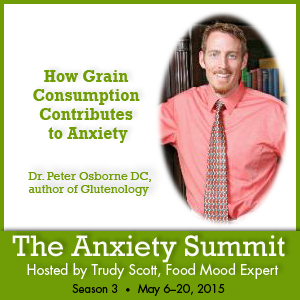
Dr. Peter Osborne DC, author of Glutenology, was interviewed on the Anxiety Summit by host of the Anxiety Summit, Trudy Scott, Food Mood Expert and Nutritionist, author of The Antianxiety Food Solution.

Grainflammation – How Grain Consumption Contributes to Anxiety and other Mood Disorders

  • Gluten and autoimmunity
  • Schizophrenia and “bread madness”
  • How gluten and all grain consumption can lead to chemical changes in the brain
  • How the gluten in corn can impact the mind and mood
  • Concerns with seeds and grains
  • DNA testing for celiac and non-celiac gluten sensitivity

Here are some snippets from our interview:

Gluten is notorious for damaging the gastrointestinal tract.  I know iron, in the literature,  has always been reported as the most common most deficiency in gluten sensitivity. In my 15 years of practice, measuring both ferritin as well as iron panels and vitamin B12 levels, I see B12 being much, much more common as a deficiency in those with gluten sensitivity. The most common side effect of B12 deficiency, beyond fatigue, is actually anxiety.

We discussed the work of Dr Alessio Fasano, world-renowned pediatric gastroenterologist, research scientist and entreprenuer,  chief of Pediatric Gastroenterology and Nutrition at MassGeneral Hospital for Children (MGHfC).

The second barrier is called the right junction, which we know gluten can cause a disruption in tight junctions. This was discovered by Alessio Fasano at Harvard. He actually discovered it while he was at University of Maryland Celiac Research Facility. He discovered these tight junctions were disrupted and dismantled as a result of gluten exposure.

We also know bacterial infections can disrupt these barriers. We also have some evidence that show that glyphosate in Roundup and other chemical artificial pesticides and herbicides can disrupt this gastrointestinal barrier.

We discussed lipopolysaccharides (LPS) and how they

can create a lot of inflammatory reaction, and they can contribute to a breakdown in the blood brain barrier

Here is a recent paper on LPS and anxiety and depression: Early prenatal exposure to LPS results in anxiety- and depression-related behaviors in adulthood

We found that mice exposed to LPS show anxiety- and depression-related behaviors

In addition, LPS mice had reduced serotonin and noradrenaline levels in the hippocampus

Here is the blood brain barrier paper discussed – The blood-brain barrier in neuroimmunology: Tales of separation and assimilation

The corn zein discussion was fascinating and concerning because so many people are eating gluten-free products that contain corn (another reason to pass on the processed gluten-free products and just eat real whole food!)

Here are two papers that discuss this (corn is called maize in South Africa)

  • Maize prolamins resistant to peptic-tryptic digestion maintain immune-recognition by IgA from some celiac disease patients
  • Maize prolamins could induce a gluten-like cellular immune response in some celiac disease patients.

Here is Dr. Osborne’s gift: 7 Habits of the Highly Effective Gluten-Free Warrior (3 videos)

Here is the information about Genetic Testing For Gluten Sensitivity and Celiac Disease

If you are not already registered for the Anxiety Summit you can get live access to the speakers of the day here: www.theAnxietySummit.com

Missed this interview or can’t listen live? Or want this and the other great interviews for your learning library? Purchase the MP3s or MP3s + transcripts and listen when it suits you.

You can find your purchasing options here: Anxiety Summit Season 1, Anxiety Summit Season 2, and Anxiety Summit Season 3.

Filed Under: Antianxiety, Gluten, The Anxiety Summit 3 Tagged With: corn, gluten, grainflammation, grains, LPS, peter osborne, the anxiety summit, Trudy Scott

  • « Go to Previous Page
  • Page 1
  • Interim pages omitted …
  • Page 3
  • Page 4
  • Page 5
  • Page 6
  • Page 7
  • Go to Next Page »

Primary Sidebar

NEW! GABA QuickStart Homestudy (with special intro pricing)

gaba quickstart homestudy

Free Report

9 Great Questions Women Ask about Food, Mood and their Health

You'll also receive a complimentary subscription to my ezine "Food, Mood and Gal Stuff"


Connect with me

Popular Posts

  • Amino Acids Mood Questionnaire from The Antianxiety Food Solution
  • The Antianxiety Food Solution Amino Acid and Pyroluria Supplements
  • Pyroluria Questionnaire from The Antianxiety Food Solution
  • Collagen and gelatin lower serotonin: does this increase your anxiety and depression?
  • Tryptophan for the worry-in-your-head and ruminating type of anxiety
  • GABA for the physical-tension and stiff-and-tense-muscles type of anxiety
  • The Antianxiety Food Solution by Trudy Scott
  • Seriphos Original Formula is back: the best product for anxiety and insomnia caused by high cortisol
  • Am I an anxious introvert because of low zinc and vitamin B6? My response to Huffington Post blog
  • Vagus nerve rehab with GABA, breathing, humming, gargling and key nutrients

Recent Posts

  • What do I use instead of Seriphos to help lower high cortisol that is affecting my sleep and making me anxious at night?
  • BeSerene™ GABA/theanine cream eases severe muscle tension in her neck/shoulders, prevents her bad headaches and quells her anxiety
  • How the correct approach, dose and sublingual use of GABA can be calming and not cause a flushed and itchy face and neck
  • The amino acid glutamine improves low mood by addressing gut health, and it has calming effects too
  • Flight anxiety with heightened breath, physical tension and also fearing the worst (the role of low GABA and low serotonin)

Categories

  • 5-HTP
  • AB575
  • Addiction
  • ADHD
  • Adrenals
  • Alcohol
  • Allergies
  • Alzheimer's disease
  • Amino Acids
  • Anger
  • Antianxiety
  • Antianxiety Food Solution
  • Antidepressants
  • Anxiety
  • Anxiety and panic
  • Autism
  • Autoimmunity
  • benzodiazapines
  • Bipolar disorder
  • Books
  • Caffeine
  • Cancer
  • Candida
  • Children/Teens
  • Collagen
  • Cooking equipment
  • Coronavirus/COVID-19
  • Cravings
  • Depression
  • Detoxification
  • Diabetes
  • Diet
  • DPA/DLPA
  • Drugs
  • EFT/Tapping
  • EMF
  • EMFs
  • Emotional Eating
  • Endorphins
  • Environment
  • Essential oils
  • Events
  • Exercise
  • Fear
  • Fear of public speaking
  • Fertility and Pregnancy
  • Fish
  • Food
  • Food and mood
  • Functional neurology
  • GABA
  • Gene polymorphisms
  • General Health
  • Giving
  • Giving back
  • Glutamine
  • Gluten
  • GMOs
  • Gratitude
  • Gut health
  • Heart health/hypertension
  • Histamine
  • Hormone
  • Hyperparathyroidism
  • Hypoglycemia
  • Immune system
  • Inflammation
  • Insomnia
  • Inspiration
  • Introversion
  • Joy and happiness
  • Ketogenic diet
  • Lithium orotate
  • Looking awesome
  • Lyme disease and co-infections
  • MCAS/histamine
  • Medication
  • Men's health
  • Mental health
  • Mercury
  • Migraine
  • Mold
  • Movie
  • MTHFR
  • Multiple sclerosis
  • Music
  • NANP
  • Nature
  • Nutritional Psychiatry
  • OCD
  • Osteoporosis
  • Oxalates
  • Oxytocin
  • Pain
  • Paleo
  • Parasites
  • Parkinson’s disease
  • PCOS
  • People
  • PMS
  • Postpartum
  • PTSD/Trauma
  • Pyroluria
  • Questionnaires
  • Real whole food
  • Recipes
  • Research
  • Schizophrenia
  • serotonin
  • SIBO
  • Sleep
  • Special diets
  • Sports nutrition
  • Stress
  • Sugar addiction
  • Sugar and mood
  • Supplements
  • Teens
  • Testimonials
  • Testing
  • The Anxiety Summit
  • The Anxiety Summit 2
  • The Anxiety Summit 3
  • The Anxiety Summit 4
  • The Anxiety Summit 5
  • The Anxiety Summit 6
  • Thyroid
  • Thyroid health
  • Toxins
  • Tryptophan
  • Tyrosine
  • Uncategorized
  • Vegan/vegetarian
  • Women's health
  • Yoga

Archives

  • October 2025
  • September 2025
  • August 2025
  • July 2025
  • June 2025
  • May 2025
  • April 2025
  • March 2025
  • February 2025
  • January 2025
  • November 2024
  • October 2024
  • September 2024
  • August 2024
  • July 2024
  • June 2024
  • May 2024
  • April 2024
  • March 2024
  • February 2024
  • January 2024
  • December 2023
  • November 2023
  • October 2023
  • September 2023
  • August 2023
  • July 2023
  • June 2023
  • May 2023
  • April 2023
  • March 2023
  • February 2023
  • January 2023
  • December 2022
  • November 2022
  • October 2022
  • September 2022
  • August 2022
  • July 2022
  • June 2022
  • May 2022
  • April 2022
  • March 2022
  • February 2022
  • January 2022
  • December 2021
  • November 2021
  • October 2021
  • September 2021
  • August 2021
  • July 2021
  • June 2021
  • May 2021
  • April 2021
  • March 2021
  • February 2021
  • January 2021
  • December 2020
  • November 2020
  • October 2020
  • September 2020
  • August 2020
  • July 2020
  • June 2020
  • May 2020
  • April 2020
  • March 2020
  • February 2020
  • January 2020
  • December 2019
  • November 2019
  • October 2019
  • September 2019
  • August 2019
  • July 2019
  • June 2019
  • May 2019
  • April 2019
  • March 2019
  • February 2019
  • January 2019
  • December 2018
  • November 2018
  • October 2018
  • September 2018
  • August 2018
  • July 2018
  • June 2018
  • May 2018
  • April 2018
  • March 2018
  • February 2018
  • January 2018
  • December 2017
  • November 2017
  • October 2017
  • September 2017
  • August 2017
  • July 2017
  • June 2017
  • May 2017
  • April 2017
  • March 2017
  • February 2017
  • January 2017
  • December 2016
  • November 2016
  • October 2016
  • September 2016
  • August 2016
  • July 2016
  • June 2016
  • May 2016
  • April 2016
  • March 2016
  • February 2016
  • January 2016
  • December 2015
  • November 2015
  • October 2015
  • September 2015
  • August 2015
  • July 2015
  • June 2015
  • May 2015
  • April 2015
  • March 2015
  • February 2015
  • January 2015
  • December 2014
  • November 2014
  • October 2014
  • September 2014
  • August 2014
  • July 2014
  • June 2014
  • May 2014
  • April 2014
  • March 2014
  • February 2014
  • January 2014
  • December 2013
  • November 2013
  • October 2013
  • September 2013
  • August 2013
  • July 2013
  • June 2013
  • May 2013
  • April 2013
  • March 2013
  • February 2013
  • January 2013
  • December 2012
  • November 2012
  • October 2012
  • August 2012
  • July 2012
  • June 2012
  • May 2012
  • April 2012
  • March 2012
  • February 2012
  • January 2012
  • December 2011
  • November 2011
  • October 2011
  • September 2011
  • August 2011
  • July 2011
  • June 2011
  • May 2011
  • April 2011
  • March 2011
  • February 2011
  • January 2011
  • December 2010
  • October 2010
  • September 2010
  • July 2010
  • May 2010
  • April 2010
  • March 2010
  • February 2010
  • January 2010
  • November 2009

Share the knowledge!

The above statements have not been evaluated by the Food and Drug Administration. Products listed in this website are not intended to diagnose, treat, cure or prevent any disease.

The information provided on this site is for informational and educational purposes only and is not intended as a substitute for advice from your physician or other health care professional. You should consult with a healthcare professional before starting or modifying any diet, exercise, or supplementation program, before taking or stopping any medication, or if you have or suspect you may have a health problem.


Copyright © 2026 Trudy Scott. All Rights Reserved. | Privacy | Terms and Conditions | Refund Policy | Medical Disclaimer

Free Report

9 Great Questions Women Ask about Food, Mood and their Health

You’ll also receive a complimentary subscription to my ezine “Food, Mood and Gal Stuff”