• Skip to primary navigation
  • Skip to main content
  • Skip to primary sidebar

everywomanover29 blog

Food, Mood and Women's Health – Be your healthiest, look and feel great!

  • Blog
  • About
  • Services
  • Store
  • Resources
  • Testimonials
  • The Book
  • Contact
  • Search this site

functional medicine

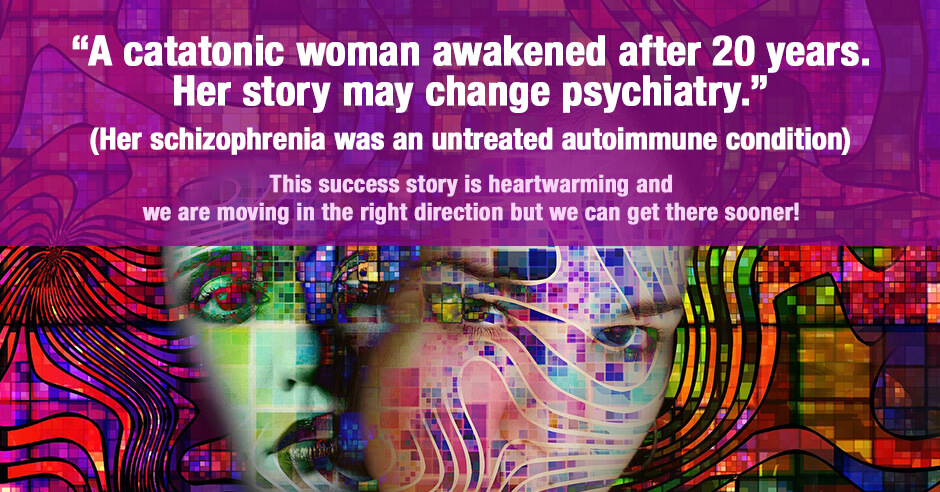
“A catatonic woman awakened after 20 years. Her story may change psychiatry.” (Her schizophrenia was an untreated autoimmune disease)

June 16, 2023 By Trudy Scott 8 Comments

catatonic woman

Today I’m sharing some highlights from a recent eye-opening article in the Washington Post: A catatonic woman awakened after 20 years. Her story may change psychiatry

Before she became a patient, April had been an outgoing, straight-A student majoring in accounting at the University of Maryland Eastern Shore. But after a traumatic event when she was 21, April suddenly developed psychosis and became lost in a constant state of visual and auditory hallucinations. The former high school valedictorian could no longer communicate, bathe or take care of herself.

April was diagnosed with a severe form of schizophrenia

April was hospitalized, medicated and eventually institutionalized. It got to the point where she no longer recognized her family and she became catatonic, “unmoving, unblinking and unknowing of where or who she was.”

Twenty years after April’s original diagnosis it was discovered that she has an autoimmune condition. Dr. Sander Markx is director of precision psychiatry at Columbia University and I have so much admiration for his dedication to the field and the fact that he facilitated this testing and discovery so long after meeting April, when he was a student:

Markx and his colleagues discovered that although April’s illness was clinically indistinguishable from schizophrenia, she also had lupus, an underlying and treatable autoimmune condition that was attacking her brain.

After months of targeted treatments – and more than two decades trapped in her mind – April woke up.

April’s transformation is truly heartwarming and it’s wonderful that the doctors plan to do similar testing and offer similar treatments for others living with schizophrenia who are in mental health institutions in New York State.

Researchers in other countries are making similar connections and it’s really exciting to read that they are recognizing that “underlying autoimmune and inflammatory processes may be more common in patients with a variety of psychiatric syndromes than previously believed.”

We can and should be doing better when looking for root causes

I believe we can and should be doing better when it comes to looking for root causes. Many individuals may have an autoimmune/inflammatory condition and many may have other root cause/s. If I was on an advisory panel these would be my recommendations:

  • Use this powerful outcome to really turn psychiatry on its head and screen for lupus and other autoimmune conditions in every single person with schizophrenia. Dr. Markx “believes highly sensitive and inexpensive blood tests to detect different antibodies should become part of the standard screening protocol for psychosis.”
  • Do the same for every single person with mental illnesses and illnesses with a behavioral aspect – including anxiety, depression, bipolar, OCD/obsessive compulsive disorder. ADD/ADHD, autism/ASD (autism spectrum disorders), developmental disorders and neurological disorders.
  • Go beyond autoimmune screening and do a comprehensive functional medicine and nutritional deficiency assessment for every single person, including low serotonin, low GABA, low vitamin D, low zinc, low vitamin B6, hormone imbalances (sex hormones, adrenals, thyroid health), gut health, liver health etc. This includes testing for infections (such as Lyme and strep), looking at toxin exposure (phthalates, mold, heavy metals) and medication side effects.

If you’re new to the concept of root causes and functional medicine/nutritional testing these two blogs will be helpful. They are specific to anxiety because I work with anxious individuals but much of it can also be applied to other mental health and even physical health conditions (like rheumatoid arthritis and say multiple sclerosis):

  • Nutritional testing for figuring out the root cause/s of your anxiety
  • 60+ Nutritional & Biochemical Causes of Anxiety

Functional medicine and nutrition for maintaining symptom resolution in the long term

As you read in the article, April received “short, but powerful “pulses” of intravenous steroids for five days, plus a single dose of cyclophosphamide, a heavy-duty immunosuppressive drug typically used in chemotherapy and borrowed from the field of oncology. She was also treated with rituximab, a drug initially developed for lymphoma.”

Incredibly, she recovered completely and was eventually discharged from the psychiatric hospital and has been living in a rehab center for 3 years. Unfortunately “she has recently regressed because she was not receiving adequate maintenance care.”

I see the next step for April and others like her, is maintaining resolution of symptoms in the long term. This is where functional medicine and nutrition shines.

The ISNPR shared this about Nutritional psychiatry in 2015 in a letter published in World Psychiatry, the official journal of the World Psychiatric Association:

In addition to dietary modification, we recognize that nutrient-based (nutraceutical) prescription has the potential to assist in the management of mental disorders at the individual and population level.

In other words, diet and nutrient-based approaches need to be included for mental health treatment and for prevention. One of many examples is the ketogenic diet which has been shown to reduce auditory hallucinations and delusions in those with schizophrenia. Another is the low carb diet helping to reduce bizarre intrusive thoughts. And the SMILES trial was the first randomized controlled trial to show that dietary improvement can actually treat depression.

Specific nutrients can be very powerful too. One example is a case where a woman in my community experienced a drastic reduction in intrusive thoughts, anxiety and fears (and better sleep) with GABA, tryptophan, 5-HTP and the pyroluria protocol (zinc, vitamin B6 and evening primrose oil). More on the blog. Intrusive thoughts can be alleviated with a similar combination of nutrients and by addressing hormonal imbalances too.

These blogs/research illustrate a few of the many root causes of schizophrenia and psychosis other than lupus:

  • Case Study: Bartonella and Sudden-Onset Adolescent Schizophrenia
  • Toxoplasma gondii: schizophrenia, bipolar disorder, OCD and unresolved anxiety?
  • Gluten sensitivity and relationship to psychiatric symptoms in people with schizophrenia

  • Late-Onset Psychotic Symptoms Associated With Vitamin B12 Deficiency in a Patient With Celiac Disease

When it comes to autoimmunity in general I refer you to the work of Dr. Tom O’Bryan, Dr. Izabella Wentz, Dr. Terry Wahls, Dr. Amy Myers and others who teach about using functional medicine and diet for reversing a number of different autoimmune conditions.

The above approaches can all be explored and used when individuals are initially diagnosed too. But keep in mind that there is no one size fits all and it’s a matter of finding the root causes for each person.

We are moving in the right direction and there is hope but…

We are moving in this direction, awareness is growing and there is hope. But I know we can get there sooner.

What Dr. Markx and his colleagues have discovered and shared with the world will hopefully help us get there much more quickly.

(You can read the whole story here and a similar transformation experienced by Devine Cruz.)

I’m thrilled for April and Devine and their families, and appreciate them sharing these stories with the world. Let’s hope their stories do change psychiatry!

Resources if you are new to using amino acids as supplements

If you are new to using amino acids as supplements, here is the Amino Acids Mood Questionnaire from The Antianxiety Food Solution (you can see all the symptoms of neurotransmitter imbalances, including low GABA, low serotonin and low endorphins).

If you suspect low levels of any of the neurotransmitters and do not yet have my book, The Antianxiety Food Solution – How the Foods You Eat Can Help You Calm Your Anxious Mind, Improve Your Mood, and End Cravings, I highly recommend getting it and reading it before jumping in and using amino acids on your own so you are knowledgeable. And be sure to share it with the practitioner/health team you or your loved one is working with.

There is an entire chapter on the amino acids and they are discussed throughout the book in the sections on gut health, gluten, blood sugar control, sugar cravings, anxiety and mood issues.

The book doesn’t include product names (per the publisher’s request) so this blog, The Antianxiety Food Solution Amino Acid and Pyroluria Supplements, lists the amino acids that I use with my individual clients and those in my group programs. You can find them all in my online store.

If, after reading this blog and my book, you don’t feel comfortable figuring things out on your own (i.e. doing the symptoms questionnaire and respective amino acids trials), a good place to get help is the GABA QuickStart Program (if you have low GABA symptoms too). This is a paid online/virtual group program where you get my guidance and community support.

If you are a practitioner, join us in The Balancing Neurotransmitters: the Fundamentals program. This is also a paid online/virtual program with an opportunity to interact with me and other practitioners who are also using the amino acids.

Does this heartwarming story give you hope for psychiatry?

What do you feel we should be doing to advance nutritional psychiatry even more quickly?

Can you or a family member relate to this and what did you discover in terms of testing and nutritional support/functional medicine?

Feel free to post your feedback and questions here in the comments.
Filed Under: Anxiety, Autism, Autoimmunity, Depression, Nutritional Psychiatry, Schizophrenia Tagged With: amino acids, auditory hallucinations, autoimmune disease, brain, catatonic, functional medicine, GABA, intrusive thoughts, lupus, nutrition, nutritional psychiatry, psychiatry, psychosis, root causes, schizophrenia, the GABA Quickstart online program; and Balancing Neurotransmitters: the Fundamentals program for practitioners, tryptophan, visual hallucinations, vitamin B6, zinc

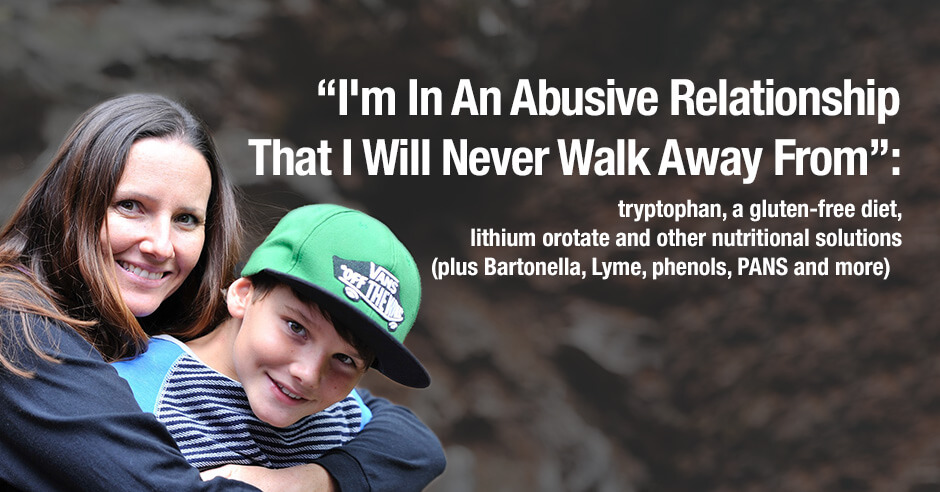
“I’m In An Abusive Relationship That I Will Never Walk Away From”: tryptophan, a gluten-free diet, lithium and other nutritional solutions

March 10, 2023 By Trudy Scott 16 Comments

abusive relationship - nutrition solutions

This mom’s story really struck a nerve for me… “I’m in an abusive relationship that I will never walk away from.” She shares this …

I can’t exactly pinpoint when I first felt the shift between our dynamic. One minute, things were as they always were. Before I could blink, though, I found myself engrossed in an alternate reality that resembled less and less of life as I knew it with each passing week. Trickles of rage and anger bubbled to the surface, threatening to break through until they could no longer be harnessed. I’ve been riding the waves ever since.

I currently exist in a heightened state of fear and anxiety, unsure of what each day will bring. When I wake each morning, I silently hope that today will be a “good” day; that he won’t be angry. That he won’t hurt me. Sometimes I’m lucky, and I get my person back. Other times, it feels like I’m living in a battle ground.

Her story really struck a nerve for me because of what she is going through but also because NO solutions are provided for her son. Stories like this help create awareness, make you feel less alone, create empathy and better understanding – which is important – but we want to offer nutritional solutions to families who are dealing with this.

(You can read her entire story on the ScaryMommy blog.)

Functional medicine and nutritional psychiatry as a solution

My heart goes out to this mom, this young man and the rest of the family. My hope is that this mom and all mom’s in similar situations are open to functional medicine, nutritional psychiatry and the power of food and nutrients to dramatically reduce and in many cases reverse behavioral issues like this in the child.

Sugar, caffeine and junk food must go and a gluten-free diet will very possibly make a difference. Having her son eat for blood sugar control is key too. It may also mean switching to a low-salicylate and/or, low-oxalate and low histamine diet. And addressing low lithium, low zinc, low vitamin D, low vitamin B12, high copper, low magnesium and/or low vitamin B6. Low serotonin and low GABA are common and this is where I would start with this young man (more on this below). They may also need to address his gut health/parasites, infections (like Lyme), PANS/PANDAS, mold toxicity, metals and environmental toxins etc.

I’ll highlight many of these in this blog and share links for further reading, plus the approaches I may consider. The important thing to recognize is that there is not one-size-fits-all.

Address low serotonin and low GABA

For a mom in the midst of all this, it can seem overwhelming and very daunting but when you start by addressing low serotonin and low GABA it becomes so much easier. Her son gets some relief very quickly and all the root causes can be figured out and addressed one by one. It also gives mom and the family a much-needed glimmer of hope. As I mentioned above, this is where I would start.

These are clues from her story as to why we’d want to look into and address low serotonin: her son’s explosive anger and rage, the physical and mental abuse, threats to hurt himself (self-harm) and his mother and siblings, and being argumentative.

You can see how the above fits into the list of low serotonin symptoms here. The amino acid that addresses low serotonin is tryptophan or 5-HTP and you can expect to see results in a few days.

I worked with an 11 year old girl with explosive rage issues (and anxiety, cravings & insomnia)  and chewable tryptophan started to turn things around very quickly. You can read more about this here.

If he has low GABA symptoms of physical tension and anxiety, we’d do a trial of GABA next.

A gluten-free diet and eating for blood sugar control

The next change I’d make is to have him start to make dietary changes, starting to switch to gluten-free eating and real whole food. As you can see from the above blog, a gluten-free diet and getting the 11 year old off the sugar made a big difference too. Tryptophan helped with this process, making it easy to break the addiction and not feel deprived.

Gluten issues (celiac disease and gluten sensitivity) are typically associated with gut issues but the psychiatric symptoms are less recognized. This 2023 paper, Psychiatric and Neurological Manifestations of Celiac Disease in Adults states that “Celiac disease is associated with mood disorders, such as manic-depressive disease, schizophrenia, and bipolar disorder, as well as other disorders such as depression and anxiety.”

In this blog I share how gluten was found to be the cause of a childhood case of obsessive-compulsive disorder. Symptoms resolved on a gluten-free diet.

Having him starting to eat for blood sugar stability may help with the irritability and mood swings, and may also help with his rageful outbursts.

Low dose lithium orotate for the rollercoaster of emotions

Next I’d likely explore the possibility of low dose lithium orotate as something that may help this young man too. The hallmark of low lithium is a rollercoaster of emotions and this mom shares how there are really good times amongst the really tough times.  I use this lithium questionnaire with clients. In addition to the ups and downs, these are clues that he may benefit: he’s rebellious, exhibits disruptive behavior and aggressiveness, is irritable, restless and engages in risky behavior.

Next steps: explore all the possible root causes and do nutritional testing

We’d want to explore all possible root causes and next steps would be decided based on his specific situation. Here is a list of 60+ root causes that I work through and the nutritional/functional testing that I do with my clients. You can replace anxiety with anger/rage in the blogs – for some people their symptoms show up as rage and for others it’s anxiety.

And here are some links for further reading:

  • Bartonella infection in mom and both sons: anxiety, panic attacks, insomnia, inconsolable crying, irritability, ADHD, rage and pain
  • Christmas tree phenols as a trigger for anger, meltdowns, anxiety, hyperactivity, insomnia, aggression, self-injury and autistic symptoms? (dietary salicylates – a type of phenol – can cause similar issues)
  • Sex and Aggression Characteristics in a Cohort of Patients with Pediatric Acute-Onset Neuropsychiatric Syndrome “Among patients with PANS, males exhibit more aggressive behavior when compared with females” (typically the clue it may be PANDAS/PANS is sudden onset of symptoms, although it’s not the case in all instances)
  • Neuropsychiatric Lyme Disease by Dr. Suruchi Chandra Lyme disease “can remain dormant for years and then later mimic a number of psychiatric illnesses, including anxiety disorders, mood disturbances, psychosis, and autism-like behaviors.”

This is not a conclusive list but a good start for seeing what the possibilities may be. Feel free to search the blog for more on some of the above and some of the other factors mentioned above and in the 60+ root causes blog.

As you can see above, we start with the simple changes – amino acids and a few simple dietary changes (all covered in my book) and lithium orotate – and then continue to dig deeper.

Mom and the other children need nutritional/trauma support too

This mom and the other children need support too – from family and community, from a therapist who specializes in trauma – and with GABA/tryptophan, adrenal support and B vitamins. You can read more about nutritional solutions for psychological stress here.

Resources if you are new to using tryptophan or GABA as supplements

If you are new to using tryptophan or GABA as supplements, here is the Amino Acids Mood Questionnaire from The Antianxiety Food Solution (you can see all the symptoms of neurotransmitter imbalances, including low GABA and low serotonin).

If you suspect low levels of any of the neurotransmitters and do not yet have my book, The Antianxiety Food Solution – How the Foods You Eat Can Help You Calm Your Anxious Mind, Improve Your Mood, and End Cravings, I highly recommend getting it and reading it before jumping in and using amino acids on your own so you are knowledgeable. And be sure to share it with the practitioner/health team you or your loved one is working with.

There is an entire chapter on the amino acids and they are discussed throughout the book in the sections on gut health, gluten, blood sugar control, sugar cravings, anxiety and mood issues (which include rage/anger/irritability/self-harm).

The book doesn’t include product names (per the publisher’s request) so this blog, The Antianxiety Food Solution Amino Acid and Pyroluria Supplements, lists the amino acids that I use with my individual clients and those in my group programs. You can find them all in my online store. The above oral lavender products are available in my online store too.

If, after reading this blog and my book, you don’t feel comfortable figuring things out on your own (i.e. doing the symptoms questionnaire and respective amino acids trials), a good place to get help is the GABA QuickStart Program (if you have low GABA symptoms). This is a paid online/virtual group program where you get my guidance and community support.

If you are a practitioner, join us in The Balancing Neurotransmitters: the Fundamentals program. This is also a paid online/virtual program with an opportunity to interact with me and other practitioners who are also using the amino acids.

Have you found tryptophan, GABA and/or lithium orotate to help in a situation like this?

What about a gluten-free diet and eating for blood sugar control?

What bigger root causes were found to be contributing factors too?

If you have questions and other feedback please share it here too.

Filed Under: Gluten, Lithium orotate, Nutritional Psychiatry, serotonin, Teens, Tryptophan Tagged With: abuse, abusive relationship, amino acids, anger, angry, anxiety, bartonella, blood sugar, emotions, fear, functional medicine, GABA Quickstart online program; and Balancing Neurotransmitters: the Fundamentals program for practitioners, gluten-free, irritability, lithium orotate, low GABA, low serotonin, Lyme Disease, nutritional psychiatry, nutritional solutions, PANS, Phenols, rage, rollercoaster, self-harm, Solutions, tryptophan

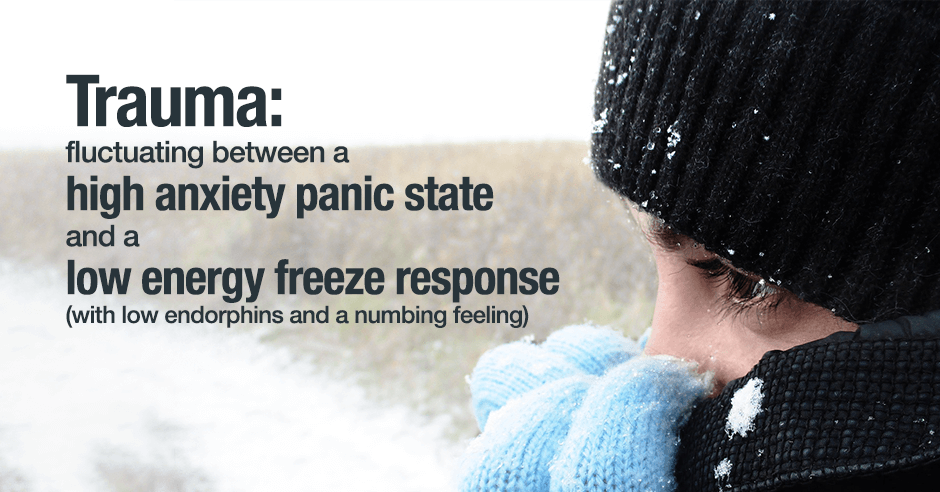
Trauma: fluctuating between a high anxiety panic state and a low energy freeze response (with low endorphins and a numbing feeling)

October 22, 2021 By Trudy Scott 10 Comments

trauma

The freeze response in trauma is not well understood and is a low energy state. When the anxiety has become so high or severe it triggers a low energy or freeze state in order for you to survive. There is also the feeling of numbness and being disconnected when in the freeze state and this eventually becomes the default pattern that the nervous system has been wired into. Healing can start with somatic work and using a functional medicine and nutritional psychiatry approach to address the biological underpinnings of trauma.

Dr. Aimie Apigian, MD, MS, MPH discusses all this and much more in her interview on the Anxiety Summit 5: Gut-Brain Axis.

And then Dr. Aimie interviews me and we discuss how folks with low endorphins are often in the freeze state. These folks are more emotionally sensitive to everything and because of this they experience much more stress. They also experience a feeling of numbness and feel disconnected. The encouraging news is that the amino acid DPA (d-phenylalanine) helps ease the low endorphin symptoms while they are recovering. More on all this below.

The freeze response in trauma is not well understood and is a low energy state

Let’s start with this interview with Dr. Aimie – Biology of Trauma and the Freeze Response. This is what we cover:

  • Identifying the freeze response and symptoms when anxiety is high
  • The role of the microbiome, neurotransmitters, oxidative stress, mitochondria and cortisol
  • Somatic work when in the chronic freeze state: containment hugs and marking your territory

dr aimie

Dr. Aimie explains that the freeze response in trauma is not something that’s been really well understood:

  • When we talk about just trauma and mood, and stress even, it’s like we still lump everything in that fight, flight, or freeze response. And the fight and flight response could not be more different than the freeze response.
  • On a biological level, they are completely different biology states, which means that it is humanly impossible to be in both of those states at the same time. So when we look at this freeze response, okay, so what is it? If it’s not fight or flight, what is it?

She shares how the anxiety has been become so high or severe it triggers a low energy or freeze state in order for you to survive:

  • When we look at what it is, it’s when the anxiety has become so high that the body is not able to sustain that level of both anxiety, but it’s really an energy level.
  • Because anxiety is a high energy state and it triggers this response in the body where it says, “Ooh, this is unsustainable,” and in order to survive, for our best interests, it would be better for us to go into a low energy state.
  • And it feels like giving in, giving up. It feels like giving up the fight because the body just goes into this, I kind of call it like, it shifts down into first gear.
  • You’re no longer zooming along in fifth or sixth gear, you just kind of shift down into first gear and now you’re just going through life.

The feeling of numbness and being disconnected when in the freeze state

In addition to the low energy state, this is where Dr. Aimie talks about the feeling of numbness and being disconnected when in the freeze state:

  • Now you’re just going through your day, you feel a little numb, you feel a little disconnected.
  • But the trigger for that freeze response originally comes from the anxiety level, which really becomes a level of fear, terror, panic.

Dr. Amie also shares how this becomes the default pattern that the nervous system has been wired into:

  • And people can have what I call a strong pull towards the freeze response so that they no longer are even aware of the fear and the terror.
  • They just feel anxiety and boom, they go straight into the freeze response because it has just become that default pattern that the nervous system has been wired into.

The biology of trauma and somatic work

She goes on to discuss the biology of trauma and the role of the microbiome, neurotransmitters, oxidative stress, mitochondria and cortisol in contributing to the freeze response (i.e. making you more susceptible to trauma) and as factors we can address in order to facilitate recovery and healing.

Dr. Aimie also describes the somatic work she does with her patients who are in the chronic freeze state: exercises like containment hugs and marking your territory. She shares that “I want people to experience their nervous system. I want them to know what it feels like, be able to actually recognize which state of the nervous system they are in at any given moment in time, and be able to feel what that feels like in their body, because then that’s how we teach them how to shift that.”

In her work and in this interview, Dr. Amie brings the world of trauma recovery and somatic work to the functional medicine and nutritional psychiatry world. It’s an eye-opening interview you don’t want to miss.

The connection between the trauma freeze response and low endorphins

Also featured in the summit is another interview where Dr. Aimie happens to interview me on this topic: Glutamine, DPA and Tyrosine for Anxiety and Sugar Cravings. We cover the following:

  • Sugar addiction: impacts on the microbiome, tryptophan metabolism, zinc & B vitamins
  • Glutamine for intense sugar cravings, anxiety & support of the microbiome/mucosa
  • DPA for comfort/reward cravings, pain & acute stress; tyrosine for focus & calm energy

It’s during this interview that I make the connection between the trauma freeze response and low endorphins when we are discussing the last bullet above.

As a reminder, these are the mood symptoms of low endorphins:

  • Heightened sensitivity to emotional pain
  • (and also Heightened sensitivity to physical pain)
  • Crying or tearing up easily

And these are the ways sugar cravings often show up when you have low endorphins:

  • Eating to soothe your mood, or comfort eating
  • Really, really loving certain foods, behaviors, drugs, or alcohol
  • Craving a reward or numbing treat

dr aimie

As I share about the endorphins and how I use the amino acids DPA and/or DLPA to boost endorphin levels, I remember how Dr. Aimie discussed the numbing effect when someone is in the freeze state and it made me think about endorphins. So I ask Dr. Amie if she finds that folks with low endorphins are often in the freeze state.

Dr. Amie says most definitely yes and shares that with the low endorphins, people in the freeze state really are more emotionally sensitive to everything and because of this they experience much more stress:

  • From my perspective, working with a lot of the trauma response … they are much closer … to that line of overwhelm.
  • So most definitely, yes. And it’s that comfort, right? It’s that self-soothing, and it’s the numbing effect. The numbing effect of reaching for food when you’re not hungry. It’s just for numbing the emotional sensitivity that you have with low endorphins.
  • Endorphins really affect the stress levels and then mood, and then inflammation? It starts this cascade of changes in their biology because of the low endorphins and the increased amount of stress that they experience with that sensitivity.

This discussion tied in perfectly to the study I had to share: The Role of Beta-endorphin in Stress, Behavior, Neuroinflammation, and Brain Energy Metabolism.

In this 2020 paper, the authors discuss beta-endorphins in the context of reward-centric behaviors, pain, neuroinflammation, immune function and also how endorphins attenuate (or reduce the effects of) the acute stress response. They also share how endorphins exert a regulatory effect on serotonin levels.

I find the latter link to serotonin very interesting and will be digging deeper into this in another blog post.  I’ll also be digging into the low endorphins aspect of the trauma freeze response in the coming months. And I want to learn more about the somatic work that Dr. Aimie uses – to experience some of it myself and to bring to my community i.e you! I do love that I also get to learn so much when I do these interviews.

Use DPA to ease the weepiness and need to numb out with comfort food or behaviors

For now, if you have experienced trauma and recognize being in the freeze state, and you feel numbed out and disconnected, and also relate to the above other low endorphin symptoms, I would do a trial of DPA (the amino acid d-phenylalanine) and see how you do. It will likely help ease some of the low endorphin symptoms while you are recovering.

Keep in mind that you can also have low endorphin symptoms without having experienced trauma. I see this with many of my clients and it’s not uncommon to also have low serotonin worry and low GABA physical anxiety symptoms too..

In both instances, I would do a trial of DPA (I like the Lidtke Endorphigen product) and see how you do. If it is low endorphins you’ll ease the weepiness and need to numb out with comfort food or behaviors (such as endless scrolling on social media). You can expect to see results in 5-10 minutes when the DPA is opened onto the tongue.

To recap, be sure to tune in to these 2 interviews to see how it’s all connected and to hear more about trauma, the biology of trauma and how to use amino acids to balance neurotransmitters:

  • Aimie Apigian, MD, MS, MPH – Biology of Trauma and the Freeze Response
  • Trudy Scott, CN – Glutamine, DPA and Tyrosine for Anxiety and Sugar Cravings

These interviews dove-tail well with this topic of trauma, the freeze response and neurotransmitters:

  • Navaz Habib, DC, AFMCP – Vagus Nerve Activation to Reduce Anxiety (because vagus nerve activation habits speed trauma recovery)
  • My other amino acid interview, Cravings and GABA & Tryptophan: Gut-Anxiety Connections (because the amino acids help to support low serotonin and low GABA which is common with trauma)
  • Evan Brand, CFMP, NTP – Floatation Therapy for Anxiety and PTSD (because floatation therapy is gentle and yet effective)
  • Eric Zielinski, DC – Essential Oils for Anxiety and Digestion (because essential oils are well tolerated and effective)
  • David Jockers, DNM, DC, MS – Fasting for Anxiety and Gut Health (he talks about the effects of fasting on endorphins and serotonin)

I encourage you to tune in if you have:

  • Anxiety & feel overwhelmed & stressed by little things
  • Panic attacks &/or obsessive thoughts or behaviors
  • Social anxiety/pyroluria
  • Phobias or fears (flying, spiders or even driving on a highway)

And also if you suffer from…

  • Food sensitivities, IBS/SIBO, parasites or gallbladder issues
  • Constipation, diarrhea, bloating, gas, pain & other digestive issues
  • Leaky gut, a leaky blood-brain barrier or vagus nerve issues

You’ll also benefit if you are also an emotional eater with intense sugar cravings (and know you suffer from low blood sugar), experience insomnia, low mood, PMS, poor focus and/or low motivation.

This is THE online event to learn about the powerful individual amino acids – GABA, theanine, tryptophan, 5-HTP, glutamine, DPA and tyrosine – to quickly ease anxiety and help with gut symptoms while you are dealing with other root causes which take longer to address. (They also help with cravings as with this example, and sleep and immunity).

With research-based anxiety nutritional solutions and practical steps, you can determine your root causes, ease your anxiety and prevent it from coming back so you can feel on top of the world again!

If you are a practitioner, please join us too and find advanced solutions for your clients or patients too!

You’ve heard me say the Anxiety Summit has been called “a bouquet of hope!”  My wish for you is that this summit is your bouquet of hope!

I hope you’ll join me and these incredible speakers, be enlightened and find YOUR solutions!

Here’s to no more anxiety and you feeling on top of the world again!

Can you relate to the freeze state and fluctuating from a high energy anxiety/panic state?

When you’re in the freeze state do you feel numb and disconnected?

Have you had success with somatic work? And also using a functional medicine approach to healing?

Also let us know if you’ve benefited from using DPA to help ease the low endorphin symptoms?

Feel free to post your questions here too.

Filed Under: Amino Acids, Anxiety, PTSD/Trauma, The Anxiety Summit 5 Tagged With: Aimie Apigian, anxiety, Anxiety Summit 5, biology of trauma, d-phenylalanine, disconnected, DPA, Endorphigen, endorphins, freeze, functional medicine, numb, numbness, nutritional psychiatry, panic, somatic work, stress, trauma, weepiness

SSRI/antidepressant impact on the microbiome, discontinuation syndrome and safe tapering

October 16, 2021 By Trudy Scott 2 Comments


Antidepressants can have an antibiotic effect, causing dysbiosis and impacting serotonin, GABA and dopamine production. This can cause psychiatric symptoms and even suicidal thoughts or behaviors. Various SSRI (selective serotonin reuptake inhibitors) and SNRI (serotonin norepinephrine reuptake inhibitors) have more of an effect than others. And the top known side effects for SSRIs are gut symptoms: nausea, diarrhea and vomiting.

These medications are seldom prescribed with informed consent and can cause severe psychological, cognitive, physical and neurological withdrawal side effects (also known as discontinuation syndrome). A functional medicine and nutritional approach using 5-HTP, GABA, theanine and glycine can often be used to smooth the taper process.

Dr. Achina Stein addresses all this in her interview, SSRI Impact on the Microbiome and Safe SSRI Tapering, on The Anxiety Summit 5: Gut-Brain Axis.

achina stein and trudy scott

We cover the following:

  • Antibiotic effect of antidepressants: dysbiosis and impacts on serotonin/GABA/dopamine
  • Withdrawal/discontinuation syndrome symptoms of SSRIs and benzodiazepines
  • 5-HTP, GABA, theanine and glycine to smooth the taper process

Here are a few snippets from our interview.

We start with a discussion on the antibiotic effect of antidepressants and a review of this paper – Serotonin Reuptake Inhibitors and the Gut Microbiome: Significance of the Gut Microbiome in Relation to Mechanism of Action, Treatment Response, Side Effects, and Tachyphylaxis.

Dr. Stein comments on this study sharing how SSRIs affect the gut and microbiome in many different ways:

  • “This paper is important. It’s one of several papers that talk about how the SSRIs or serotonin reuptake inhibitors affect the gastrointestinal tract. And as you know, the gastrointestinal tract is really full of serotonin.
  • SSRIs, as well as other psychotropic medications, actually exert an antibiotic effect, which can have a direct consequence in disrupting the integrity and stability of the gut microbiome.
  • And the ones that are most likely to do that are Sertraline, fluoxetine, and paroxetine in that order. And it’s followed by fluvoxamine, escitalopram, and citalopram, having the least impact.
  • What they’re noticing is that this antibiotic effect actually results in dysbiosis.
  • The top known side effects for SSRIs are gut symptoms: nausea, diarrhea, vomiting.
  • We know that the gut microbiome has a significant effect on emotions, behaviors, and metabolic changes.
  • And it’s involved in the metabolism of drugs, and this combination is what really causes psychiatric symptoms and even suicidal thoughts or behaviors.”

She also talks about the bidirectional gut-brain connection/communication, the microbiome and short-chain fatty acids (which are a common theme you’ll hear throughout the summit):

  • “There is this huge connection between the gut microbiome and the brain.
  • And there’s also other indirect communication pathways because we’ve always wondered, well, how does this happen that the gut is connected to the brain?
  • So the other pathways which are more indirect are the hypothalamic-pituitary-adrenal axis.
  • And there’s also an immune-mediated connection where there’s a communication between short-chain fatty acids and microglia in the brain.
  • So short-chain fatty acids are the main metabolites produced by the microbiota in the large intestine through bacterial fermentation of indigestible polysaccharides, which are dietary fiber and resistant starch. And they possess neuroactive properties. So they influence the communication between these short-chain fatty acids between the gut and the microglia of the brain.
  • And it’s a bidirectional communication too.”

And we talk about tachyphylaxis or the poop-out effect of antidepressants.

The discussion on the SSRI (selective serotonin reuptake inhibitors) and SNRI (serotonin norepinephrine reuptake inhibitors) discontinuation syndrome (or withdrawal symptoms) is eye-opening and sobering, Here are just a few of the many psychological symptoms that she says patients may experience when tapering:

I’m just going to read them off because I think it’s important for people to know: mood swings, unstable moods, hypomania, hyperarousal, anxiety, medication-induced agitation – which is described as being caffeinated – impulsive behavior, aggression, irritability, crying spells, lowered mood or depression.

Dr. Stein also shares the many cognitive, physical and neurological side effects, and how she works with her patients with a functional medicine and nutritional approach to try and mitigate the side effects. She likes to use 5-HTP, GABA, theanine and glycine to smooth the taper process.

We also have a lengthy discussion about informed consent and the fact that it’s not happening and should be.

We do a deep dive into all this and much more.

The interviews that dove-tail well with this topic are as follows:

  • My interviews, GABA & Tryptophan: Gut-Anxiety Connections and Glutamine, DPA and Tyrosine for Anxiety and Sugar Cravings. The amino acids help during the  tapering process and help you make the dietary changes.
  • Thiamine Deficiency in Anxiety and Gut Health (Part 1 and 2) with Chandler Marrs. She talks about how medications can deplete thiamine. Could this contribute to some of the severe discontinuation syndrome symptoms we see?
  • Anxiety, Gut-Brain Communication and Diet with David Perlmutter, MD, FACN, ABIHM. This one gives you an excellent overview of the gut-brain communication and fermented foods, short-chain fatty acids and histone deacetylases (HDACs).
  • Gut-Brain Axis and Mental Health with Peter Bongiorno, ND, LAc. This is also a great overview on the mental health impacts of the microbiome. He goes deep into serotonin and GABA production mechanisms.

I encourage you to tune in if you have:

  • Anxiety & feel overwhelmed & stressed by little things
  • Panic attacks &/or obsessive thoughts or behaviors
  • Social anxiety/pyroluria
  • Phobias or fears (flying, spiders or even driving on a highway)

And also if you suffer from…

  • Food sensitivities, IBS/SIBO, parasites or gallbladder issues
  • Constipation, diarrhea, bloating, gas, pain & other digestive issues
  • Leaky gut, a leaky blood-brain barrier or vagus nerve issues

Join us if you are also an emotional eater with intense sugar cravings (and know you suffer from low blood sugar), experience insomnia, low mood, PMS, poor focus and/or low motivation.

This is THE online event to learn about the powerful individual amino acids – GABA, theanine, tryptophan, 5-HTP, glutamine, DPA and tyrosine – to quickly ease anxiety and help with gut symptoms while you are dealing with other root causes which take longer to address. (They also help with cravings as with this example, and sleep and immunity).

With research-based anxiety nutritional solutions and practical steps, you can determine your root causes, ease your anxiety and prevent it from coming back so you can feel on top of the world again!

If you are a practitioner, please join us too and find advanced solutions for your clients or patients too!

You’ve heard me say the Anxiety Summit has been called “a bouquet of hope!”  My wish for you is that this summit is your bouquet of hope!

I hope you’ll join me and these incredible speakers, be enlightened and find YOUR solutions!

Here’s to no more anxiety and you feeling on top of the world again!

Learn more/purchase now


How have antidepressants impacted your gut and digestion?

Have you experienced discontinuation syndrome when tapering from an SSRI or SNRI or benzodiazepines? And have diet and the amino acids helped smooth the taper process?

Feel free to post your questions here too.

Filed Under: Antidepressants, Anxiety, Depression, The Anxiety Summit 5 Tagged With: 5-HTP, antibiotic, antidepressant, anxiety summit, cognitive, discontinuation syndrome, dopamine, Dr. Achina Stein, dysbiosis, functional medicine, GABA, glycine, gut-brain, informed consent, microbiome, neurological, nutritional, physical, psychiatric symptoms, psychological, safe tapering, serotonin, SNRI, SSRI, Suicidal, taper, theanine, withdrawal side effects

Dr. Mark Hyman’s Broken Brain 2: mold toxicity, the heart-brain connection, genetics, inspiration and more

April 1, 2019 By Trudy Scott 6 Comments

Dr. Mark Hyman has done it again with a powerful all-new online docuseries called Broken Brain 2: The Body-Mind Connection as a follow-up to his very popular earlier online docuseries. Some of the big topics that are covered mycotoxins and mold toxicity, the heart-brain connection, the role of genetics and your environment and of course diet and lifestyle.

In the first episode, Dr. Hyman shares his own and very recent personal story with mold toxicity,  how it damaged his brain and how he recovered:

My mold toxicity started off as a cough I just couldn’t kick. After seeing several doctors (something even a doctor has to do sometimes!) I was advised that it could be mold. My house was the prime suspect and my hunch was right, and so began the process of healing my body and gutting my home. I was at one point so sick I couldn’t get out of bed; my mind and body felt like they were failing me and I was desperate to feel like myself again.

In a later episode, Dr. Hyman also shares how the connection between the heart and brain is a great example of the body’s interconnectedness at work:

People often think the brain is the one sending signals to the heart, instructing it to pump blood throughout the body. But there is much more to the story. The heart actually sends MORE signals to the brain than the other way around. The rhythm of the heart is extremely influential—it can signal a state of calm or one of stress, which the nervous system and brain register and share with the rest of the body.

That means your emotional and physical experiences all tie back to the rhythm of the heart. When we’re in a chronic state of stress, that disordered heart rate becomes our norm, and the amygdala gets familiar with it; the brain actually gets comfortable with it and sees it as our baseline.

For this reason, heart rate variability, or HRV, can be used as a dynamic tool to reset our heart-brain connection. We want to strive for a state of coherence—a smooth wave pattern in heart rate variability over time. This coherence is a reflection of a balance between the parasympathetic or relaxation nervous system and our sympathetic nervous system, which is the fight or flight system.

Coherence is the natural state of feeling good and it sends the most beneficial signals to the brain; it actually means we are able to send more information through the vagus nerve to the brain and when we’re in this state frequently it sets a new baseline, one that keeps the body relaxed, enhances cognition, and keeps our physiology balanced.

The powerful evidence behind the heart-brain connection has given birth to a concept called HeartMath, a methodology that assesses HRV and encourages self-regulation practices to promote heart-brain coherence for optimal health.

Dr Hyman and the experts will be doing a deep dive into HeartMath and the importance of the heart-brain connection in Broken Brain 2: The Body-Mind Connection. 

Here are some gems and inspiration from a few of the 70 health experts you can expect to learn from in the docuseries.

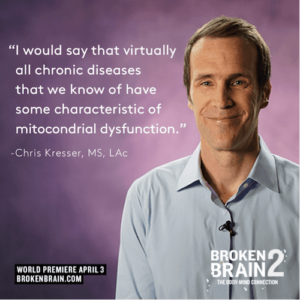
Dr. Chris Kresser on mitochondrial dysfunction and chronic disease….

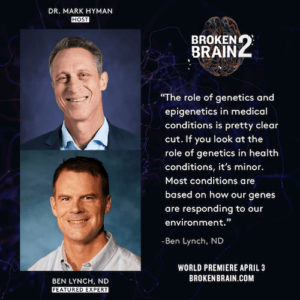
Dr. Ben Lynch on our genes and the environment …

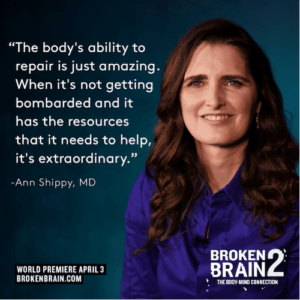
And some inspiration from Dr. Ann Shippy during her discussion on mold toxicity and brain health …

I am privileged and honored to have a very small cameo section in the docuseries!

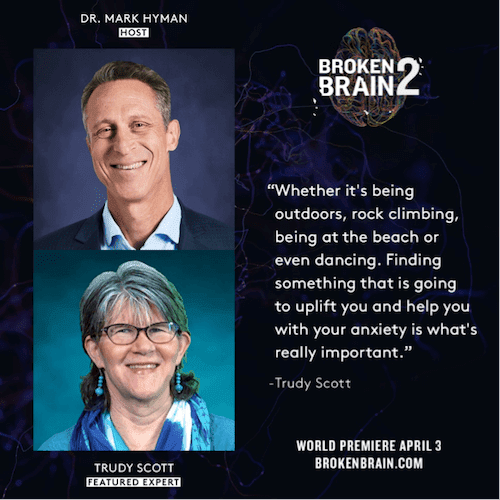
Here is some of my advice to find something you love to do and have fun…

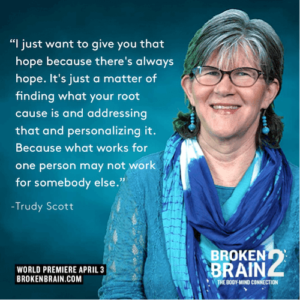
And my closing words of wisdom about hope and finding your unique root cause …

» Click here to Reserve your SPOT to see Broken Brain 2

In Broken Brain 2, you’ll hear from me and leading health experts AND hear inspiring stories from recovering patients. You’ll discover:

  • Unique ways to protect your brain from the multitude of toxins inside your home…
  • The odd way in which your heart rhythm can shape your brain function…
  • Easy methods to heal yourself from destructive beliefs and traumas that impact your mind and body…
  • How to use your personal genetics to improve your brain and overall health…
  • The little-known link between your brain health and your eyes, teeth, and gums…
  • A simple morning routine for more success and better brain health…
  • And much, much more…

In Broken Brain 2, you’ll learn all about the functional medicine approaches available for overcoming a variety of toxic environmental exposures, including mold, as well as how to heal from toxic beliefs, support the heart-brain connection, understand immunity in the brain, and so much more.

Over the course of 8 full-length episodes, you’ll learn cutting-edge strategies to help you heal your own mind, brain, and body. Here are all 8 episodes and when they will air:

  1. April 3: Dr. Hyman’s Story: The Power of the Body-Mind Connection
  2. April 4: Protecting Your Brain from a Toxic World
  3. April 5: Rising Above and Healing from Toxic Beliefs and Trauma
  4. April 6: The Secrets Behind the Heart-Brain Connection
  5. April 7: Cooling the Fire Within: The Immune-Brain Connection
  6. April 8: How to Personalize Your Diet and Understand Your Genetics
  7. April 9: Optimizing Your Brain Health and Innovative Therapies
  8. April 10: The Step-by-Step Brain Reset

» Click here to register for Broken Brain 2

This was truly a “labor of love” for Dr. Hyman and all of us participants and we hope you’ll join.

Please help us spread the word by sharing this with your friends and loved ones who may benefit from this information.

Let us know if you can relate to any of this and feel free to post your questions here.

Filed Under: Events Tagged With: Ben Lynch, Broken Brain 2, Dr. Ann Shippy, Dr. Mark Hyman, functional medicine, genes, heart, Heartmath, mold toxicity

The Broken Brain highlights: Trudy Scott interviews Dr. Mark Hyman

January 3, 2018 By Trudy Scott 6 Comments

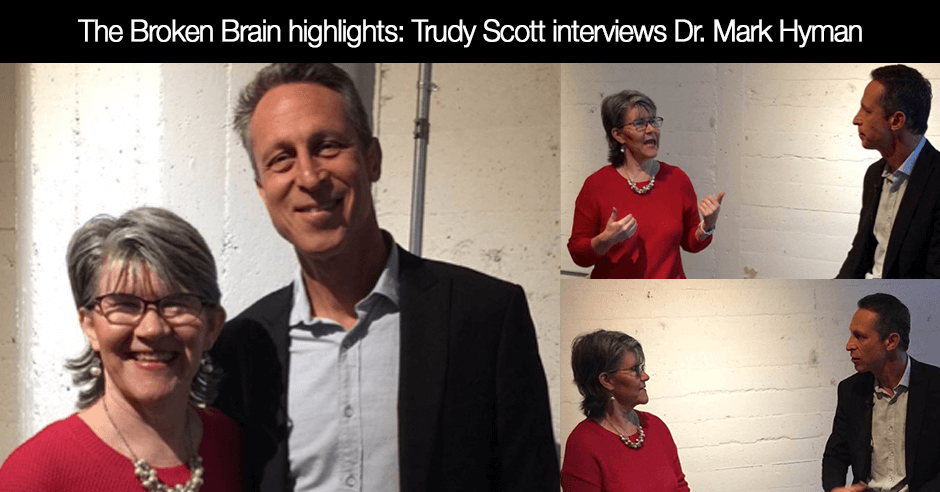
I’m really excited to share my in-person video interview with Dr. Mark Hyman, MD. It’s an interview I arranged because I’m so excited about his Broken Brain docu-series which will start airing on January 17th. You may have seen it when they recently did a test launch but if you haven’t yet seen the series it is well-worth watching and is highly recommended! (Registration link here)

In this interview with Dr. Hyman we talk about root causes of anxiety, depression, dementia, Alzheimer’s disease and ADHD: medication side-effects, diet, the microbiome, nutritional deficiencies, brain chemical imbalances, heavy metal toxicities and more; he shares his personal mercury toxicity story and the why behind the Broken Brain series; we cover off-label medications, trauma, labels and functional medicine.

I love the term he uses to describe body-mind medicine (which is different from mind-body medicine): somatopsychic = mental symptoms caused by bodily illness i.e. all of the above root causes.

One of the big reasons I’m supporting The Broken Brain docu-sersies is that it offers solutions and plenty of hope!

Here is the interview and transcript.

(there are captions on the video – if you don’t see them be sure to click the CC on the bottom right)

Trudy: – Welcome, it’s Trudy Scott here, food mood expert, certified nutritionist, author of The Antianxiety Food Solution, host of The Anxiety Summit, and today I’ve got the pleasure of interviewing Dr. Mark Hyman, who is the creator and host of the new Broken Brain series, and I’m just really excited to be here. I’ve been such a fan of yours for so many years. I know my community knows who you are, and they’re really excited about the Broken Brain series. I wanted to get together with you, and give some highlights, and talk about firstly why you created the Broken Brain series, and you’ve got a story behind your passion about it.

Dr. Mark Hyman: – I do. I do. Thank you for having me. Yeah, so about 20 years ago, I went from being a very healthy young doctor to having a broken brain, and a broken body, and it turned out it was from mercury poisoning that I got when I was in China, and I just developed severe chronic fatigue, where I couldn’t focus, I couldn’t remember, I couldn’t think, I couldn’t pay attention, I was depressed, I couldn’t sleep, I felt just completely not myself, and through that journey, was able to discover this world of functional medicine, which I thought was fairly developed at the time, but was really just in its infancy, and through discovering functional medicine, I was able to repair my own system, and fix my broken brain. I began to apply this with patients, seeing all kinds of things, without really knowing what I was doing, I was just treating people’s physical systems, fixing their gut, helping their immune system, cleaning up their diet, optimizing their nutritional status, balancing their hormones, and all their mental problems would get better. Their anxiety would get better, their depression would get better, and I wasn’t actually treating the depression or anxiety. Autism, ADD, memory issues, dementia, all these things would start to get better, and I began to realize that the body was driving a lot of this brain dysfunction, and that if you fix the body, a lot of the brain disorders would get better, that it wasn’t a primarily a mental problem, but it was a physical problem. Just as there’s a mind body effect, which is real, there’s also a body mind effect and that hadn’t been really talked about, so I wrote a book called The UltraMind Solution 10 years ago, which outlined this model, and then really this has been an incredible 10 years of brain research that I felt needed updating, and so we created a documentary series online looking at the new research, and how this applies, and the things that I noticed 10, 15, 20 years ago are now becoming more and more accepted and understood as real, and so we’re able to actually work with people in a very specific and direct way to help heal their broken brains, and to help people recover from things that we thought were really irreversible, not just anxiety, depression, but ADD, autism, dementia, Parkinson’s, all sort of issues that affect the brain that have a very different approach that can be used to repair and heal.

Trudy: – That’s so powerful, and I love that you talk about this effect that the body has on the brain, because we know about mind body medicine, you talk about that in the series, about how we can use our mind to affect our health, but you use this term. Tell me what the term is that you use that talks about how physical issues in our body, nutritional deficiencies, imbalances, can actually affect the brain.

Dr. Mark Hyman: – You mean the body mind effect?

Trudy: – Yes.

Dr. Mark Hyman – Yeah.

Trudy: – You’ve give it a term, and it was called?

Dr. Mark Hyman: – Oh, somatopsychic.

Trudy: – Somatopsychic, yes.

Dr. Mark Hyman: – We think of psychosomatic, but there’s also a somatopsychic phenomena. I would say if you have mercury poisoning, or you have a thyroid problem, or you have abnormal gut flora, or you’re vitamin D deficient, or B12 deficient, it’s very hard to have a proper functioning brain. You can’t just say someone’s got depression, that’s what’s causing their hopelessness, and helplessness, and sadness, and maybe many other things, it could be psychological, it could be a trauma, but it also could be so many other factors, and they often are overlooked and ignored, and when I start peeling back the layers of what’s happening with these people, and looking underneath the hood, and looking through the functional medicine lens at the body as a system, and correcting the imbalances, it’s shocking to me what happens. I always remember when I start applying this, I was like, wow, you got better? I can’t believe it. You shouldn’t really get better, according to Western medicine.

Trudy: – Amazing, and you mention trauma. Even if someone has experienced trauma, if their nutritional status is good, they’re able to deal with it better.

Dr. Mark Hyman: – Right.

Trudy: – And maybe have less symptoms of post-traumatic stress.

Dr. Mark Hyman: – That’s right.

Trudy: – If they have a good nutritional status, and there’s a lot of good research supporting that.

Dr. Mark Hyman: – Absolutely.

Trudy: – You talk about that in the series as well.

Dr. Mark Hyman: – Yeah, absolutely. Your brain has the ability to be resilient, but if you’re nutritionally depleted, and if you’re having all sorts of inflammatory problems, if you’re eating foods you’re reacting to, or allergic to, your brain can’t work properly, so your baseline is going be much lower, but if you fix all those things, then your capacity to deal with your psychological issues, it’s not that they don’t exist, it’s that your ability to cope with them, to work through them, to heal and repair the more difficult things, which are early life traumas, or abuse, or addiction, these are much easier to deal with once you fix the basic constitution of the person.

Trudy: – Right. Now one thing that you talk about a lot in the Broken Brain series, which I really appreciate, is the fact that there’s so much over-medication.

Dr. Mark Hyman: – Yeah.

Trudy: – Can you talk a little about it today? And I know with your story, you also had anxiety, depression, and you were prescribed medications as well.

Dr. Mark Hyman: – Yeah.

Trudy: – So this is common.

Dr. Mark Hyman: – Yeah.

Trudy: – You talk about antipsychotics. You shared some pretty scary stats on the increase that we see.

Dr. Mark Hyman: – When you look at it, it kind of goes up and down, but psychiatric medication as a whole, is the number two or three most prescribed category of drugs in America, and increasing across the globe, and it’s being used instead of dealing with the real issues, and they don’t really even work that well. I mean, anxiety medications can work, but antidepressants have been shown really not to work that well for mild to moderate depression. For severe depression, they can be helpful, and they can be life saving for some people, but they’re not a panacea, and when I was a kid, there was that one kid in the class, Patty Ainsworth, who was a troublemaker. Now it’s like 10% of the class is on ADD medication. That’s a problem.

Trudy: – It is.

Dr. Mark Hyman: – And when we see one in four people have depression in their lifetime, and if the knee jerk reaction is medication, it just sort of gives people a sense of numbness, but it doesn’t really deal with the issue. So I think we are way over-medicated, and on top of that, there’s pushing of medications for off-label use, which means that they’re not approved for those indications. So they’re doing this for kids with antipsychotics, and they’re actually been sued. So the pharma companies have been held liable for promoting these drugs for off-label uses, which they’re not allowed to do, for kids. They get fined billions of dollars, but they don’t care because they’ve made umpteen more billions, and they just see it as a marketing expense. So it’s really discouraging to see what happens to the pharmaceutical use in this space, because even for example, ADD is so fixable by dealing with the root causes, and most of us not are not even trained how to think that way.

Trudy: – That’s why I love the Broken Brian series, because it offers a message of hope, offers some practical solutions, and it empowers the person who’s suffering from the brain disorder, whatever it is, anxiety, depression, dementia, you name it, empowers them with solutions, and I think the other thing is it’s going to give curious practitioners who are not on board with this functional medicine approach some insights into what the future may hold, which I think is very promising.

Dr. Mark Hyman: – Yeah. It’s very powerful. I remember this guy who read my book, The UltraMind Solution, which is really what the Broken Brain series is based on, and he was a doctor, and he had a kid with autism, and he said, “We’re so desperate. Our kids was five, he wasn’t talking. We just started with the diet. We just got him off gluten, casein, and a few days later, all of a sudden, he started talking in full sentences,” and this is a skeptical physician who witnessed this, and I see this all the time. Patients, for example, have Alzheimer’s, or dementia, or diagnosed with dementia, and it turns out they have other issues. They have heavy metal poisoning, or they might have Lyme disease in the brain, or they might have severe nutritional deficiencies, or they might be insulin resistant with high levels of sugar in their diet that are affecting their brain, and you can fix those things. There may still be issues left over, but it’s going to be much easier to deal with those after.

Trudy: – Get to the root cause, and address those root causes.

Dr. Mark Hyman: – That’s right. That’s the purpose of functional medicine, which is a medicine of why, not what, and we have all these labels, but you know, if someone comes into my office, and they’re hopeless, and helpless, have no interest in life, can’t focus, can’t sleep, don’t want to have sex, I know what’s wrong with you. Depression, but depression isn’t the cause of those symptoms, it’s the name of the symptoms. It doesn’t tell you what’s really wrong with that person. It’s could be a host of things, from low thyroid, to gluten, to mercury poisoning, to vitamin D deficiency, to B12 deficiency, to insulin resistance. All these factors can lead to depression. Same syndrome, but different causes. So I’m much more interested in addressing the causes, then you don’t have to use the medication.

Trudy: – And some people have an issue with gluten, and have autism symptoms, and someone else can have depression or anxiety or dementia.

Dr. Mark Hyman: – That’s right.

Trudy: – So it can affect different people in a different way.

Dr. Mark Hyman: – That’s a very good point. So in functional medicine, we see that one disease can have many causes, but on the other hand, one causative factor can create many diseases. For example, heavy metals may cause dementia, or autism, or depression, or anxiety, or insomnia, or gut issues can cause all these various things that are not one disease, or for example gluten, like you mentioned, can cause autoimmune disease, can cause cancer, can cause diabetes, can cause osteoporosis, can cause anemia, can cause depression, can cause even dementia. So how do you begin to think about it? Our current naming of diseases doesn’t make any sense. So all the labeling, if you look at the diagnostic criteria, we have something called the DSM-5, which is the diagnostic and statistical manual that categorizes and catalogs all the psychiatric disorders, and they’re all categorized by symptoms. So it’s all descriptive. It’s says if you have these five symptoms, you have this, but it doesn’t tell you why, and it doesn’t really help you, other than giving you a label, which doesn’t mean anything about helping you understand what’s really going on.

Trudy: – And then you’re on a medication that’s going to give you side effects, and not actually get to the root cause of the problem.

Dr. Mark Hyman: – Right.

Trudy: – And yeah, just make some nutritional changes, addressing the thyroid, getting off gluten, addressing the gut – big session in the Broken Brain series.

Dr. Mark Hyman: – Yeah, it’s huge.

Trudy: – The gut brain connection.

Dr. Mark Hyman: – I mean, we’re just learning about this. For example, for years one of the main ways I treated the brain was fixing the gut, and that means optimizing the flora, getting rid of bad bugs, helping heal leaky gut, and we just did it, we didn’t really have a deep understanding other than we knew the microbiome was important, but now we know, for example, that there are more bacterial molecules in your blood than your own molecules, that you have 10 times as many bacterial cells in you as your own cells, 100 times as much bacterial DNA, and that DNA is all producing proteins, and all those proteins, you have 20,000 genes, there’s two million genes of bacteria in you, and they’re all producing molecules that are entering your blood stream, and driving all sorts of biological reactions, that aren’t even human molecules. So we have to begin to sort of how do those affect the brain and what’s going on? And it’s very powerful.

Trudy: – And so much research in this area, it’s just growing and growing.

Dr. Mark Hyman: – Yeah.

Trudy: – So you mentioned earlier that you wanted to do this because of all the new research. There is so much research on the gut brain connection, nutritional psychiatry. Dr. Drew Ramsey talks about this recent study on depression, and just getting people onto a real whole foods diet, and how 30% saw remission of symptoms, just changing their diet.

Dr. Mark Hyman: – Of course.

Trudy: – Not even going gluten free. So it’s powerful. These small changes can have powerful effects.

Dr. Mark Hyman: – Profound, profound effects

Trudy: – Well, thank you so much.

Dr. Mark Hyman – Thank you.

Trudy: – For your wonderful work that you do. And for making time today. I highly recommend the Broken Brain series with Dr. Mark Hyman, all the wonderful experts.

Dr. Mark Hyman: – Oh, so many. We’ve got 57 experts.

Trudy: – Amazing, some of our favorite functional medicine practitioners.

Dr. Mark Hyman: – Yeah.

Trudy: – Thank you.

Dr. Mark Hyman: – Thank you.

(I’m a tad disappointed that there is the background noise of people talking – and apologize – but I am hoping the great content overrides this and it’s not too distracting.)

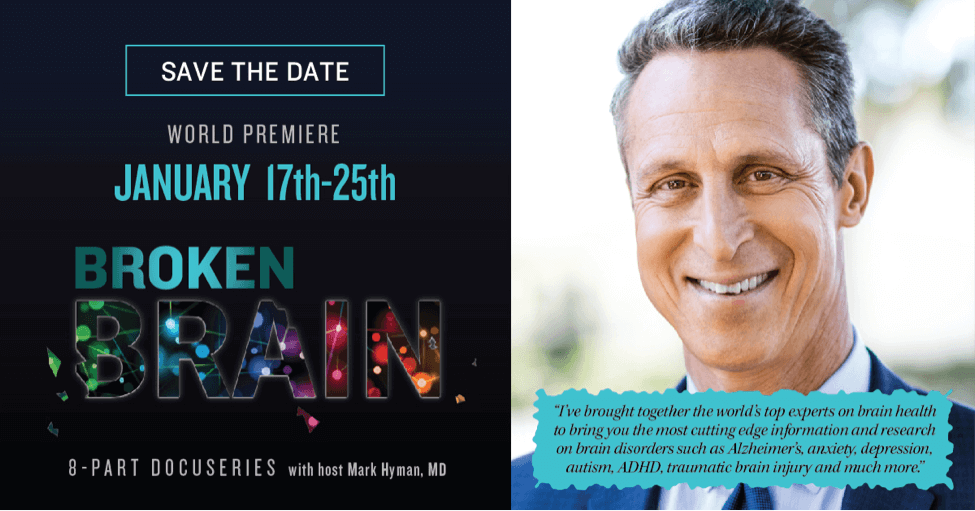
Save the date for the 8 -part Broken Brain docusersies, hosted by Dr. Mark Hyman – and register here. It airs January 17-25th

Here’s a list of ALL the episodes, to showcase just some of what you will have access to. Each episode will be available for 24 hours, at no-cost!

  1. The Broken Brain Epidemic / My Story (January 17)
  2. Gut Brain Connection: Getting to The Root of a Broken Brain (January 18)
  3. Losing Your Mind (Alzheimer’s, Dementia, MS, and More) (January 19)
  4. ADHD and Autism (January 20)
  5. Depression & Anxiety (January 21)
  6. Traumatic Brain Injury: Accidents, Sports, and More (January 22)
  7. 7 Steps to An UltraMind (Part 1) (January 23)
  8. 7 Steps to An UltraMind (Part 2) (January 24)

I hope you enjoy it and get as much out of it as I did!

I actually flew from Sydney to LA for this opportunity to meet and interview him, and share more about the Broken Brain series, and I’m so glad I did! It was the first time I’d met Dr. Hyman in person and it truly was an honor to be in the company of this great man who is doing so much in the functional medicine world! Again, here is that link to register

Please share if any of this resonates with you – what solutions you have found have helped you and/or what you are working on addressing now?

AN UPDATE: there has been some feedback on the term “broken brain” being too negative and even scary so I gathered some feedback and share it in this blog: Is the term ‘broken brain’ hopeful and real or too negative and scary? I really want to hear your thoughts if you are offended by the term broken brain.  I also want to share Dr. Hyman’s apology.

Filed Under: Anxiety, Depression, Events, Gut health, Mental health, Mercury Tagged With: ADHD, alzheimer's, anxiety, broken brain, depression, functional medicine, mark hyman, Trudy Scott

  • Page 1
  • Page 2
  • Go to Next Page »

Primary Sidebar

NEW! GABA QuickStart Homestudy (with special intro pricing)

gaba quickstart homestudy

Free Report

9 Great Questions Women Ask about Food, Mood and their Health

You'll also receive a complimentary subscription to my ezine "Food, Mood and Gal Stuff"


Connect with me

Popular Posts

  • Amino Acids Mood Questionnaire from The Antianxiety Food Solution
  • The Antianxiety Food Solution Amino Acid and Pyroluria Supplements
  • Pyroluria Questionnaire from The Antianxiety Food Solution
  • Collagen and gelatin lower serotonin: does this increase your anxiety and depression?
  • Tryptophan for the worry-in-your-head and ruminating type of anxiety
  • GABA for the physical-tension and stiff-and-tense-muscles type of anxiety
  • The Antianxiety Food Solution by Trudy Scott
  • Seriphos Original Formula is back: the best product for anxiety and insomnia caused by high cortisol
  • Am I an anxious introvert because of low zinc and vitamin B6? My response to Huffington Post blog
  • Vagus nerve rehab with GABA, breathing, humming, gargling and key nutrients

Recent Posts

  • What do I use instead of Seriphos to help lower high cortisol that is affecting my sleep and making me anxious at night?
  • BeSerene™ GABA/theanine cream eases severe muscle tension in her neck/shoulders, prevents her bad headaches and quells her anxiety
  • How the correct approach, dose and sublingual use of GABA can be calming and not cause a flushed and itchy face and neck
  • The amino acid glutamine improves low mood by addressing gut health, and it has calming effects too
  • Flight anxiety with heightened breath, physical tension and also fearing the worst (the role of low GABA and low serotonin)

Categories

  • 5-HTP
  • AB575
  • Addiction
  • ADHD
  • Adrenals
  • Alcohol
  • Allergies
  • Alzheimer's disease
  • Amino Acids
  • Anger
  • Antianxiety
  • Antianxiety Food Solution
  • Antidepressants
  • Anxiety
  • Anxiety and panic
  • Autism
  • Autoimmunity
  • benzodiazapines
  • Bipolar disorder
  • Books
  • Caffeine
  • Cancer
  • Candida
  • Children/Teens
  • Collagen
  • Cooking equipment
  • Coronavirus/COVID-19
  • Cravings
  • Depression
  • Detoxification
  • Diabetes
  • Diet
  • DPA/DLPA
  • Drugs
  • EFT/Tapping
  • EMF
  • EMFs
  • Emotional Eating
  • Endorphins
  • Environment
  • Essential oils
  • Events
  • Exercise
  • Fear
  • Fear of public speaking
  • Fertility and Pregnancy
  • Fish
  • Food
  • Food and mood
  • Functional neurology
  • GABA
  • Gene polymorphisms
  • General Health
  • Giving
  • Giving back
  • Glutamine
  • Gluten
  • GMOs
  • Gratitude
  • Gut health
  • Heart health/hypertension
  • Histamine
  • Hormone
  • Hyperparathyroidism
  • Hypoglycemia
  • Immune system
  • Inflammation
  • Insomnia
  • Inspiration
  • Introversion
  • Joy and happiness
  • Ketogenic diet
  • Lithium orotate
  • Looking awesome
  • Lyme disease and co-infections
  • MCAS/histamine
  • Medication
  • Men's health
  • Mental health
  • Mercury
  • Migraine
  • Mold
  • Movie
  • MTHFR
  • Multiple sclerosis
  • Music
  • NANP
  • Nature
  • Nutritional Psychiatry
  • OCD
  • Osteoporosis
  • Oxalates
  • Oxytocin
  • Pain
  • Paleo
  • Parasites
  • Parkinson’s disease
  • PCOS
  • People
  • PMS
  • Postpartum
  • PTSD/Trauma
  • Pyroluria
  • Questionnaires
  • Real whole food
  • Recipes
  • Research
  • Schizophrenia
  • serotonin
  • SIBO
  • Sleep
  • Special diets
  • Sports nutrition
  • Stress
  • Sugar addiction
  • Sugar and mood
  • Supplements
  • Teens
  • Testimonials
  • Testing
  • The Anxiety Summit
  • The Anxiety Summit 2
  • The Anxiety Summit 3
  • The Anxiety Summit 4
  • The Anxiety Summit 5
  • The Anxiety Summit 6
  • Thyroid
  • Thyroid health
  • Toxins
  • Tryptophan
  • Tyrosine
  • Uncategorized
  • Vegan/vegetarian
  • Women's health
  • Yoga

Archives

  • October 2025
  • September 2025
  • August 2025
  • July 2025
  • June 2025
  • May 2025
  • April 2025
  • March 2025
  • February 2025
  • January 2025
  • November 2024
  • October 2024
  • September 2024
  • August 2024
  • July 2024
  • June 2024
  • May 2024
  • April 2024
  • March 2024
  • February 2024
  • January 2024
  • December 2023
  • November 2023
  • October 2023
  • September 2023
  • August 2023
  • July 2023
  • June 2023
  • May 2023
  • April 2023
  • March 2023
  • February 2023
  • January 2023
  • December 2022
  • November 2022
  • October 2022
  • September 2022
  • August 2022
  • July 2022
  • June 2022
  • May 2022
  • April 2022
  • March 2022
  • February 2022
  • January 2022
  • December 2021
  • November 2021
  • October 2021
  • September 2021
  • August 2021
  • July 2021
  • June 2021
  • May 2021
  • April 2021
  • March 2021
  • February 2021
  • January 2021
  • December 2020
  • November 2020
  • October 2020
  • September 2020
  • August 2020
  • July 2020
  • June 2020
  • May 2020
  • April 2020
  • March 2020
  • February 2020
  • January 2020
  • December 2019
  • November 2019
  • October 2019
  • September 2019
  • August 2019
  • July 2019
  • June 2019
  • May 2019
  • April 2019
  • March 2019
  • February 2019
  • January 2019
  • December 2018
  • November 2018
  • October 2018
  • September 2018
  • August 2018
  • July 2018
  • June 2018
  • May 2018
  • April 2018
  • March 2018
  • February 2018
  • January 2018
  • December 2017
  • November 2017
  • October 2017
  • September 2017
  • August 2017
  • July 2017
  • June 2017
  • May 2017
  • April 2017
  • March 2017
  • February 2017
  • January 2017
  • December 2016
  • November 2016
  • October 2016
  • September 2016
  • August 2016
  • July 2016
  • June 2016
  • May 2016
  • April 2016
  • March 2016
  • February 2016
  • January 2016
  • December 2015
  • November 2015
  • October 2015
  • September 2015
  • August 2015
  • July 2015
  • June 2015
  • May 2015
  • April 2015
  • March 2015
  • February 2015
  • January 2015
  • December 2014
  • November 2014
  • October 2014
  • September 2014
  • August 2014
  • July 2014
  • June 2014
  • May 2014
  • April 2014
  • March 2014
  • February 2014
  • January 2014
  • December 2013
  • November 2013
  • October 2013
  • September 2013
  • August 2013
  • July 2013
  • June 2013
  • May 2013
  • April 2013
  • March 2013
  • February 2013
  • January 2013
  • December 2012
  • November 2012
  • October 2012
  • August 2012
  • July 2012
  • June 2012
  • May 2012
  • April 2012
  • March 2012
  • February 2012
  • January 2012
  • December 2011
  • November 2011
  • October 2011
  • September 2011
  • August 2011
  • July 2011
  • June 2011
  • May 2011
  • April 2011
  • March 2011
  • February 2011
  • January 2011
  • December 2010
  • October 2010
  • September 2010
  • July 2010
  • May 2010
  • April 2010
  • March 2010
  • February 2010
  • January 2010
  • November 2009

Share the knowledge!

The above statements have not been evaluated by the Food and Drug Administration. Products listed in this website are not intended to diagnose, treat, cure or prevent any disease.

The information provided on this site is for informational and educational purposes only and is not intended as a substitute for advice from your physician or other health care professional. You should consult with a healthcare professional before starting or modifying any diet, exercise, or supplementation program, before taking or stopping any medication, or if you have or suspect you may have a health problem.


Copyright © 2026 Trudy Scott. All Rights Reserved. | Privacy | Terms and Conditions | Refund Policy | Medical Disclaimer

Free Report

9 Great Questions Women Ask about Food, Mood and their Health

You’ll also receive a complimentary subscription to my ezine “Food, Mood and Gal Stuff”