• Skip to primary navigation
  • Skip to main content
  • Skip to primary sidebar

everywomanover29 blog

Food, Mood and Women's Health – Be your healthiest, look and feel great!

  • Blog
  • About
  • Services
  • Store
  • Resources
  • Testimonials
  • The Book
  • Contact
  • Search this site

diabetes

Tulsi or holy basil: adaptogenic herb for adrenal support, anxiety and anti-stress effects

March 1, 2019 By Trudy Scott 16 Comments

One very effective approach for supporting the adrenals, reducing anxiety and providing general anti-stress support is using a herbal adaptogen. One of my favorite herbal adaptogens and one that I have found to be very effective and well tolerated by my clients is tulsi, also known as holy basil or the “Elixir of Life” in Ayurveda. I also really like rhodiola. ashwagandha and licorice root but we’ll cover these in another blog.

As stated in this 2017 paper, The Clinical Efficacy and Safety of Tulsi in Humans: A Systematic Review of the Literature

Tulsi, also known as holy basil, is indigenous to the Indian continent and highly revered for its medicinal uses within the Ayurvedic and Siddha medical systems. Many in vitro, animal and human studies attest to tulsi having multiple therapeutic actions including adaptogenic, antimicrobial, anti-inflammatory, cardioprotective, and immunomodulatory effects.

The above paper is a review of the literature and the 24 studies that were included, reported favorable therapeutic effects of tulsi for humans and no significant adverse effects. Only one clinical trial reported mild nausea that lasted a short while.

The authors conclude that the outcome of this review

reinforces traditional uses and suggests tulsi is an effective treatment for lifestyle-related chronic diseases including diabetes, metabolic syndrome, and psychological stress.

With regards to psychological stress, three of the clinical studies reviewed

reported significant reduction in anxiety and stress levels with higher doses of tulsi given over a longer time period.

The positive effect of tulsi on mood was demonstrated … with two studies reporting reductions of 31.6%–39% in overall stress-related symptoms in patients with psychosomatic problems compared to a control group.

In two of these stress studies the dosage ranged from 300mg to 400mg 3 x day and was taken either before or after a meal. In one stress study, 3g (3,000mg) twice a day was used. In all the stress/anxiety studies improvements were observed in 4-12 weeks.

The review also looked at studies on metabolic disorders i.e. type 2 diabetes with “measures of blood glucose, lipids, and blood pressure” and studies on immunity, all showing benefits. In one of the immunity studies, the participants were given 10g (10,000mg) /day for viral hepatitis and symptoms all improved within 2 weeks. I’m sharing this so you can see that the dosage varies depending on the condition and severity of symptoms.

Adrenal support, anxiety, depression and radiation-protection

Here are some additional animal studies that support the use of holy basil or tulsi for adrenal support, for easing anxiety and even depression, and for the anti-stress effect it offers:

  • Anti-stress Activity of Ocimum sanctum: Possible Effects on Hypothalamic-Pituitary-Adrenal Axis

found to be effective in the management of stress effects, and anti-stress activity could be due to inhibition of cortisol release

  • Effects of Ocimum sanctum and Camellia sinensis on stress-induced anxiety and depression in male albino Rattus norvegicus

With all the WiFi we are exposed to and the fact that research is now showing that EMFs (electromagnetic frequencies) are likely playing a role in anxiety, depression and ADHD, I’m really pleased to see there are also some animal studies on tulsi being protective against radiation.

Consuming tulsi tea on a daily basis

The review paper above mentions

the Ayurvedic tradition of consuming tulsi on a daily basis

and an easy and delicious way to do this is to drink it as a herbal tea.

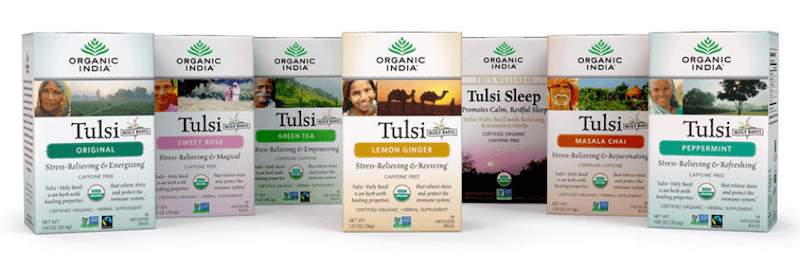
Next time you’re ordering your amino acids and pyroluria supplements from my online store with Fullscript, be sure to add a few boxes of Organic India tulsi tea to your shopping cart. This way you can enjoy the healing and anti-stress benefits of tulsi together with the many other herbs included in their teas.

The Lemon Ginger Tulsi has been a long-time favorite of mine and is wonderful when flying to counter motion sickness. Based on the radiation research I uncovered when writing this blog. I’m thrilled I’ll be getting those benefits when flying too. I also enjoy the Peppermint Tulsi early in the day and have recently found a new favorite, the Tumeric Ginger Tulsi (not pictured below). Just so you know, you can also find the herbal teas in most health shops and natural food markets.
The adaptogenic Tulsi-Holy Basil product

Organic India also carries the wonderful adaptogenic Tulsi-Holy Basil product which is taken as a supplement. This is an option if you’re not a herbal tea drinker and/or you need some additional support.
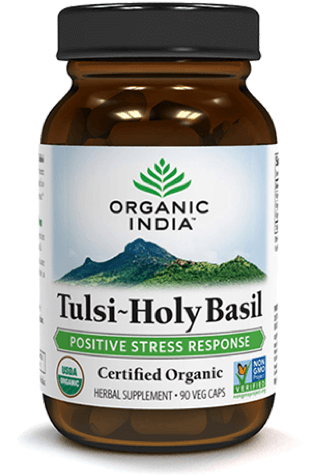
If you’re interested in purchasing the tea or Tulsi-Holy Basil product, you can go to my online store with Fullscript, and simply search for “tulsi”.

How do I use tulsi with my anxious clients?

Where does recommending the tulsi herbal teas and/or the Tulsi-Holy Basil supplements fit in with the dietary and nutritional protocols of my anxious clients?

  • If you have stress in your life (and who doesn’t?!), drinking the tulsi herbal tea on a daily basis is beneficial. You can mix-and-match with other naturally caffeine-free and healing herbal teas such as rooibos
  • If you have done adrenal testing and cortisol results are outside of the reference ranges (either high or low) drink the herbal tea and use an adaptogenic herbal supplement such as tulsi (or rhodiola, licorice or ashwagandha), together with a B-Complex, extra vitamin C and extra pantothenic acid
  • Assess for low serotonin and low GABA anxiety with the questionnaire and do trials of amino acids for the low GABA physical anxiety and/or tryptophan for the worry-in-the-head anxiety
  • If you are tapering from a benzodiazepine and are not able to initially tolerate high doses of GABA, tulsi is often gentle enough to provide some additional healing support. Research shows the immune modulating effects of tulsi may be mediated by GABAergic pathways).
  • Make all the dietary changes and address gut health, blood sugar control, low levels of various nutrients like low zinc, reduce stress etc.

Organic India’s ethic and mission

I really love that Organic India works “with thousands of small family farmers in India to cultivate tens of thousands of acres of sustainable organic farmland”, the fact that their “farmers and tribal wildcrafters are educated in organic and regenerative agricultural practices”, and that they have global wellness as part of their bigger mission.

I would like to disclose that Organic India has sponsored me on a number of occasions, providing samples of herbal tea for me to share at conferences such as IMMH. I’ve blogged about this in the past thanking Organic India and other companies.

I do also want to mention that the review paper discloses that one of the authors, Professor Marc M. Cohen, “receives remuneration as a consultant and advisor to Organic India Pty. Ltd., which is a company that manufactures and distributes tulsi products. This article is the independent work of the authors and Organic India did not have input into the article’s content or the decision to publish it.” I appreciate this disclosure.

Do you drink tulsi tea on a regular basis and have you seen the anti-stress and calming benefits? If you drink Organic India tea, which one is your favorite one?

Have you used tulsi or holy basil in supplement form as an adaptogenic herb and what benefits have you observed? Have you used it while tapering from a benzodiazepine?

If you’re a practitioner do you use tulsi with clients/patients or recommend tulsi tea?

Feel free to post questions here too.

Filed Under: Supplements Tagged With: adaptogenic, adrenal, adrenals, anti-stress effects, anxiety, benzodiazepine, cortisol, depression, diabetes, GABA, holy basil, immunity, Organic India, radiation, serotonin, stress, tulsi, viral hepatitis

Anxiety, phenibut, toxins and cold showers for detoxification

March 19, 2017 By Trudy Scott 10 Comments

Anxiety, phenibut, toxins, cold showers for detox and more. All of this and more is being covered on the upcoming online Diabetes Summit.

Starting Monday March 20th

I’m really pleased to be a speaker on this summit this year. I cover the anxiety diabetes connection. Anxiety is very common in diabetes – some research shows it’s as high as 25%, and women with diabetes are twice as likely to be affected with anxiety and depression. I also cover how and how GABA helps reduce physical anxiety AND how new research shows GABA is also a promising treatment for diabetes!

Dr. Mowll asked me about using phenibut instead of GABA:

I’ve seen a number of papers that talk about tolerance. I’ve talked to practitioners who’ve said they’ll rotate. They’ll have people be on Phenibut for five days, two days off. And I’ve seen some really scary drug forums where people are using Phenibut as a sort of mood enhancing and performance enhancing drug. They are using very high doses and there are protocols on how to safely taper off Phenibut.

So when I see things like that it concerns me. I’ve had a handful of people, who’ve had some pretty bad side effects from Phenibut. So with someone who’s going through anxiety I just don’t want to add anything else into the mix that may cause problems.

The concern is it does seem to work really well for anxiety and sleep, so that’s why I think a lot of practitioners are drawn to using it. And it may be that they’re not recommending the GABA/ Gamma Amino Butyric Acid sublingually. And they may not be doing a trial to find the optimal dose [so that’s why they are not seeing the results they’d hope to see]. So I would steer clear of phenibut.

We also cover the following (all relevant if you have diabetes AND if you don’t have diabetes):

  • doing a GABA trial and the blood brain barrier controversy
  • benzodiazepine tapers and nutritional support during a taper
  • rooibos tea for metabolic support and adrenal health

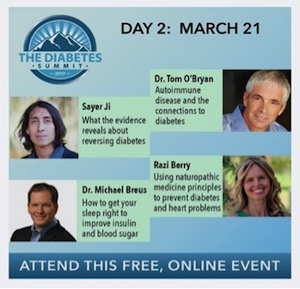
On day 2 of the summit, Razi Berry shares this about the toxins in our environment and the impacts they have on our health:

Out of the 80,000 chemicals that we have in our world, we have barely studied any of them. A couple presidents ago, the Environment Protection Agency was supposed to study the first 300 of these 80,000 chemicals. And so far they’ve only studied one, which is BPA. And BPA is all around us

She had to get rid of the toxins in her environment to help her fibromyalgia and chronic fatigue.

I had to stop using the body sprays that I love from Bath and Body, and the perfumes

I got rid of everything fragrant. And I didn’t use essential oils at first either because you still want to use them judiciously and in the right way. So I switched to everything unscented. And I found a lot about beeswax candles. Beeswax candles are so not only beautiful, and they have this honey like scent to them, but they actually neutralize odors and toxins in the air. They don’t just cover it up. So you actually can clean the air by burning beeswax candles. For centuries churches could not burn tallow or paraffin. They could only burn beeswax.

She covers tons of other everyday toxins we are exposed to and how we can safely avoid them. And then importantly, how we can detoxify from these toxins. One approach she covers is hot and cold showers or hydrotherapy (very powerful and very easy to do at home):

Hydrotherapy is a really old technique. It became really popular in the last turn of the century, the late 1800s, early 1900s. And it’s this use of water and/or temperature to help prime your body to get rid of toxins.

So one of the ways that you can do hydrotherapy at home is through what’s called a constitutional hydrotherapy shower. And it’s basically taking a hot and cold shower where you alternate. You start with the water as hot as you possibly can handle it. And you do that for like 12 seconds. Then you turn it to as cold as you can take it.

And the first switch from hot to cold is the most important because it really creates this pump in your lymphatic system, the hot, cold, hot, cold, and really helps to move toxins through your body so it can be eliminated by your kidneys, by your liver, through your respiration.

As you can see there’s plenty to learn from these experts!

Here are just a few of the topics being covered (general topics and applicable if you have diabetes):

  • How food allergens can trigger blood sugar problems, and how to detoxify the body safely
  • Understanding the stress continuum and how children trauma, adverse life events, and daily stressors can lead to diabetes (all of this is applicable to any health condition)
  • Natural strategies to balance blood sugar including new supplement recommendations, essential oils, and using food as medicine
  • Breaking down various eating strategies including the ketogenic diet (vegan diets and raw food diets are also addressed but I must add that I don’t endorse this way of eating if you do have anxiety)
  • Menopause and blood sugar issues (insulin, cortisol and oxytocin)
  • How to get your sleep right to balance insulin and blood sugar

And some topics taking a deeper diver into very specific diabetes areas (if you have type 1 or type 2 diabetes):

  • Developing a deeper understanding of peripheral neuropathy – how to test for it and how to treat it, naturally and effectively
  • Important strategies for those dealing with type 1 diabetes in themselves or a child 
  • Autoimmunity and diabetes

I hope you’ll join us to learn from these experts on the online Diabetes Summit.  My friend and diabetes expert, Dr. Brian Mowll, is hosting this life-changing event for the fourth year, and this year’s event looks amazing.

You can register for this online event here.

Feel free to ask questions in the comments below.


Filed Under: Events Tagged With: Brian Mowll, diabetes, Diabetes Summit, GABA, Razi Berry

Diabetes, anxiety and GABA

February 24, 2017 By Trudy Scott 21 Comments


Anxiety and depression are common in patients with diabetes. In this 2016 paper: Prevalence and predictors of depression and anxiety in patients of diabetes mellitus in a tertiary care center, it was found that a significantly larger proportion of diabetic patients had

  • Anxiety: 27.6% vs. 12.7% as compared to healthy controls and
  • Depression: 26.3% vs. 11.2% as compared to healthy controls
  • Both depression andanxiety: 21.0% vs. 7.3% as compared to healthy controls

The paper also reports that diabetic women had higher rates of anxiety than men (17.6% vs. 10.0%) and higher rates of depression than men (17.1% vs. 9.3%).

GABA is one of the calming amino acids I used with much success with my clients who have the physical type of anxiety (with stiff and tense muscles). As well as addressing this type of anxiety it also helps them to end their sugar addiction, reducing cravings dramatically. Melissa shares her results after using GABA on this blog: GABA for ending sugar cravings (and anxiety and insomnia)

I was cool as a cucumber at the airport and was much calmer when visiting family and friends compared to last year! The true test of its efficacy will be in two weeks when the semester starts. For now, I notice a general calmness and am sleeping well.

An unexpected result was that I stopped craving sweets after about a week of taking it! I didn’t even realize this until I was grocery shopping and out of habit walked towards the ice cream – I stopped and realized I didn’t want ice cream. So I walked toward the chocolate – same reaction. For once in my life, I was not craving sweets.

Now there is some interesting recent research showing how GABA may play a role in diabetes treatment too.

This February 2015 paper, GABAergic system in the endocrine pancreas: a new target for diabetes treatment explains the role of GABA in regulating islet-cell secretion and that it exerts β-cell regenerative effects:

Excessive loss of functional pancreatic β-cell mass, mainly due to apoptosis, is a major factor in the development of hyperglycemia in both type 1 and type 2 diabetes (T1D and T2D).

In T1D, β-cells are destroyed by immunological mechanisms. In T2D, while metabolic factors are known to contribute to β-cell failure and subsequent apoptosis, mounting evidence suggests that islet inflammation also plays an important role in the loss of β-cell mass. Therefore, it is of great importance for clinical intervention to develop new therapies.

γ-Aminobutyric acid (GABA), a major neurotransmitter, is also produced by islet β-cells, where it functions as an important intraislet transmitter in regulating islet-cell secretion and function. Importantly, recent studies performed in rodents, including in vivo studies of xenotransplanted human islets, reveal that GABA exerts β-cell regenerative effects. Moreover, it protects β-cells against apoptosis induced by cytokines, drugs, and other stresses, and has anti-inflammatory and immunoregulatory activities. It ameliorates the manifestations of diabetes in preclinical models, suggesting potential applications for the treatment of diabetic patients.

This paper published in November 2015: Study of GABA in Healthy Volunteers: Pharmacokinetics and Pharmacodynamics also reports potential therapeutic benefits for those with diabetes:

Our data show that GABA is rapidly absorbed and tolerated in human beings; its endocrine effects, exemplified by increasing islet hormonal secretion, suggest potential therapeutic benefits for diabetes.

You can read more about this in the blog post: GABA rapidly absorbed and tolerated – benefits for anxiety and diabetes

A paper published in December 2016 on GABA and diabetes: Long-Term GABA Administration Induces Alpha Cell-Mediated Beta-like Cell Neogenesis states that

This newly discovered GABA-induced α cell-mediated β-like cell neogenesis [or the regeneration of tissue] could therefore represent an unprecedented hope toward improved therapies for diabetes.

So here we have the amino amazing acid GABA that when used as a targeted supplement:

  • we know reduces and often eliminates sugar cravings completely
  • calms the anxious mind and reduces physical tension and stress within 5 to 30 minutes
  • has much potential in offering therapeutic benefits for diabetes

I’m proposing oral GABA as a much better option for diabetic patients with anxiety – better than benzodiazepines which have been shown to contribute to cognitive impairment. Using GABA sublingually seems to be most effective.

Do you have diabetes and has GABA helped you with your cravings and anxiety? And enabled you to reduce your diabetes medication?

If you’re a practitioner I’m curious if you commonly see anxiety and depression in your diabetes patients/clients? And do you currently use GABA (and other amino acids like tryptophan and glutamine) to help reduce their anxiety and sugar cravings? And reduce their diabetes medication?


Filed Under: Diabetes, GABA Tagged With: anxiety, Brian Mowll, diabetes, Diabetes Summit, GABA, tryptophan

GABA rapidly absorbed and tolerated – benefits for anxiety and diabetes

January 15, 2016 By Trudy Scott 13 Comments

gaba-diabetes

New research published in November 2015: Study of GABA in Healthy Volunteers: Pharmacokinetics and Pharmacodynamics shows potential benefits for diabetes:

Our data show that GABA is rapidly absorbed and tolerated in human beings; its endocrine effects, exemplified by increasing islet hormonal secretion, suggest potential therapeutic benefits for diabetes.

This is very interesting because they conclude that GABA is rapidly absorbed and tolerated in human beings. This is very encouraging because we often hear that taking oral GABA will have no impact.

Here are additional details about the study:

Twelve subjects were subjected to an open-labeled, three-period trial involving sequential oral administration of placebo, 2g GABA once, and 2g GABA three times/day for 7 days, with a 7-day washout between each period.

Based on my work with anxious clients, even using 2g of GABA once a day is considered a high dose, especially if they don’t have low GABA levels. Because of this I’m not surprised at some of the side-effects:

Subjects with repeated dosing showed an elevated incidence of minor adverse events in comparison to placebo or the single dosing period, most notably transient discomforts such as dizziness and sore throat.

I have my anxious clients do a GABA trial in order to figure out their ideal dose. I recommend starting with around 125 mg GABA a few times a day.

In this 2012 study: Oral intake of γ-aminobutyric acid affects mood and activities of central nervous system during stressed condition induced by mental tasks study participants used only 100mg of GABA and saw mental stress reduction effects within 30 minutes.

Anxiety is more prevalent in diabetes than we realize and it’s something I seldom hear discussed:

  • More than 25% of the diabetic women in this 2015 study done in India reported high levels of anxiety
  • This 2015 study found that severe anxiety in early pregnancy is more frequent in Brazilian women with diabetes
  • In this 2015 Australian study half of the women with diabetes experienced an anxiety disorder    

Diabetes is a growing and serious health issue. As Dr. Mark Hyman, author of The Blood Sugar Solution shares in this valuable blog post on 7 Steps to Reverse Obesity and Diabetes

What disease affects EVERY other American and one in four kids? Type 2 diabetes or pre-diabetes. Type 2 diabetes in America has tripled since the 1980s, and researchers estimate one in three Americans will have diabetes by mid-century. More than one-third of American adults are obese.

I’d like to highlight two of his 7 excellent steps: Pull the Sugar and Control Stress Levels.

GABA is an amino acid that makes both of these steps much easier to achieve! GABA stops sugar cravings so you don’t need to use willpower. And GABA ends physical anxiety so you don’t have to manage it. Make the food changes, take the nutrients and do the yoga Dr. Hyman recommends, but why not add GABA too?

You can read more about Melissa’s success with GABA in this blog: GABA for ending sugar cravings (and anxiety and insomnia)

So here we have the amino amazing acid GABA that:

  • we know reduces and often eliminates sugar cravings completely
  • calms the anxious mind and reduces stress within 5 to 30 minutes
  • has the potential of offering therapeutic benefits for diabetes

Pretty powerful!

Be sure to check out the other 5 tips that Dr. Hyman offers and do share if you have seen benefits from GABA – for anxiety/stress and sugar cravings. Do let us know if you also have/had diabetes and noticed any improvements in your blood sugar labs.

If you’re a practitioner and use GABA with your patients/clients with diabetes, please share too.

Filed Under: GABA Tagged With: diabetes, GABA

The Diabetes World Summit and the anxiety-diabetes connection

March 16, 2015 By Trudy Scott Leave a Comment

diabetes-summit

The Diabetes World Summit (ONLINE) from March 23-30, 2015!

The mission of The Diabetes World Summit is to change lives. This incredible, online event has the potential to improve the health of tens of thousands with diabetes or pre-diabetes!

387 million people in the world have diabetes, and nearly half of them don’t know it. In the United States alone, type 2 diabetes is the 7th leading cause of death. The statistics are alarming, especially when we’ve proven that type 2 can be prevented and reversed!

Dr. Brian Mowll, The Diabetes Coach™, created The Diabetes World Summit to share the expertise of the world’s leaders in natural diabetes care to help you regain blood sugar control, live the highest quality life and even reverse type 2 and pre-diabetes. The 40 powerful, expert sessions at The Diabetes World Summit will benefit anyone with type 1 or type 2 diabetes, pre-diabetes, metabolic syndrome, as well as those who want to avoid blood sugar problems and achieve optimal health.

You may wonder: what is the connection between anxiety/depression and diabetes? In this study: Frequency of depression and anxiety in patients attending a diabetes clinic, they found “almost 50% of patients were found to have anxiety and depression.” The study concludes with this: “There is a high incidence of depression and anxiety in patients with chronic type-2 diabetes and clinicians must screen regularly for better care of these patients.”

Register now at the following link: https://vj173.isrefer.com/go/summitreg/trudyscottcn/


Filed Under: Anxiety and panic, Depression Tagged With: Brian Mowll, diabetes, The Diabetes World Summit

Rooibos tea with a chocolate twist

January 2, 2015 By Trudy Scott 23 Comments

chocolate-rooibos

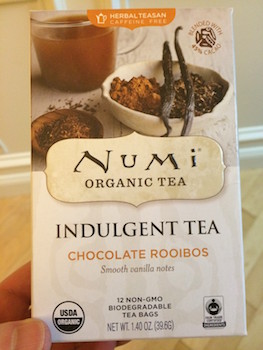
I’ve discovered a new rooibos tea and love it and want to share it with you! It’s rooibos tea with a chocolate twist: Numi Organic Tea – Chocolate Rooibos with smooth vanilla notes.

When I shared this image on facebook here are two comments I got:

  • I drink Numi’s Rooibos everyday, but I didn’t know they made CHOCOLATE!
  • CHOCOLATE…I’ll have to find that one!

Notice that both people wrote CHOCOLATE in upper case! I have no doubt that the word “chocolate” will get many more people trying this healthy herbal tea. But I must give you an advance warning – the chocolate taste is very subtle. And if you’re sensitive to the caffeine in chocolate like I am you may find you can tolerate this – I certainly can.

You may recall my interview with rooibos researcher, Dr. Amanda Swart, in season 1 of the Anxiety Summit: A Functional Food in the Management of Stress. We discussed the role rooibos plays in the maintenance of normal cortisol levels, the influence of rooibos on cytochrome P450 enzymes, and the amazing array of polyphenols and flavonoids found in rooibos. Wow, a simple beverage that can help reduce stress and anxiety! And so much more!

Here is some new rooibos research:

  • For diabetes: Antidiabetic effect of green rooibos (Aspalathus linearis) extract in cultured cells and type 2 diabetic model KK-Ay mice.
  • For bone growth: Rooibos flavonoids, orientin and luteolin, stimulate mineralization in human osteoblasts through the Wnt pathway.
  • For inflammation: Aspalathin and Nothofagin from Rooibos (Aspalathus linearis) Inhibits High Glucose-Induced Inflammation In Vitro and In Vivo.

chocolate-rooibos-description

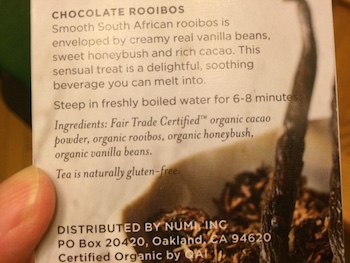
Just read the description on the back of the box and see if you can resist it:

Smooth South African rooibos is enveloped by creamy vanilla beans, sweet honeybush and rich cacao. This sensual treat is a delightful, soothing beverage you can melt into.

The vanilla gives it a naturally sweet taste which you may need if you don’t enjoy straight rooibos (an acquired taste for some)

Let me give you a few more reasons why I recommend this product – other than the delicious taste and wonderful health benefits:

  • It’s organic
  • It uses fair trade ingredients
  • It uses non-GMO biodegradable tea bags
  • It’s a herbal tea so is caffeine-free
  • It doesn’t have any artificial or even natural flavors

I’m a skier and Brad snowboards and I like to be prepared with “padkos” (South African for food-for-the-road) and one nice treat is hot herbal tea for the drive up and for the drive home. For the trip up to the ski resort, I make it in a large stainless steel mug with lid and we sip it as we drive. I take an extra teabag and a thermos flask of boiling water and make a new batch to sip on the trip home. It’s so yummy and so warming, plus it keeps us well-hydrated which is important with all that exercise. 

Check out the Numi site. I love this company and their vision: “Numi inspires well-being of mind, body and spirit through the simple art of tea. Our company is rooted in the principle of creating a healthful product that nurtures people and honors the planet. In all of our company initiatives, we strive to foster a healthy, thriving global community while bringing you the purest, best-tasting organic tea.”


Filed Under: Antianxiety, Caffeine, Food and mood, Real whole food, Stress Tagged With: anxiety, diabetes, NUMI, rooibos, stress

  • Page 1
  • Page 2
  • Go to Next Page »

Primary Sidebar

NEW! GABA QuickStart Homestudy (with special intro pricing)

gaba quickstart homestudy

Free Report

9 Great Questions Women Ask about Food, Mood and their Health

You'll also receive a complimentary subscription to my ezine "Food, Mood and Gal Stuff"


Connect with me

Popular Posts

  • Amino Acids Mood Questionnaire from The Antianxiety Food Solution
  • The Antianxiety Food Solution Amino Acid and Pyroluria Supplements
  • Pyroluria Questionnaire from The Antianxiety Food Solution
  • Collagen and gelatin lower serotonin: does this increase your anxiety and depression?
  • Tryptophan for the worry-in-your-head and ruminating type of anxiety
  • GABA for the physical-tension and stiff-and-tense-muscles type of anxiety
  • The Antianxiety Food Solution by Trudy Scott
  • Seriphos Original Formula is back: the best product for anxiety and insomnia caused by high cortisol
  • Am I an anxious introvert because of low zinc and vitamin B6? My response to Huffington Post blog
  • Vagus nerve rehab with GABA, breathing, humming, gargling and key nutrients

Recent Posts

  • What do I use instead of Seriphos to help lower high cortisol that is affecting my sleep and making me anxious at night?
  • BeSerene™ GABA/theanine cream eases severe muscle tension in her neck/shoulders, prevents her bad headaches and quells her anxiety
  • How the correct approach, dose and sublingual use of GABA can be calming and not cause a flushed and itchy face and neck
  • The amino acid glutamine improves low mood by addressing gut health, and it has calming effects too
  • Flight anxiety with heightened breath, physical tension and also fearing the worst (the role of low GABA and low serotonin)

Categories

  • 5-HTP
  • AB575
  • Addiction
  • ADHD
  • Adrenals
  • Alcohol
  • Allergies
  • Alzheimer's disease
  • Amino Acids
  • Anger
  • Antianxiety
  • Antianxiety Food Solution
  • Antidepressants
  • Anxiety
  • Anxiety and panic
  • Autism
  • Autoimmunity
  • benzodiazapines
  • Bipolar disorder
  • Books
  • Caffeine
  • Cancer
  • Candida
  • Children/Teens
  • Collagen
  • Cooking equipment
  • Coronavirus/COVID-19
  • Cravings
  • Depression
  • Detoxification
  • Diabetes
  • Diet
  • DPA/DLPA
  • Drugs
  • EFT/Tapping
  • EMF
  • EMFs
  • Emotional Eating
  • Endorphins
  • Environment
  • Essential oils
  • Events
  • Exercise
  • Fear
  • Fear of public speaking
  • Fertility and Pregnancy
  • Fish
  • Food
  • Food and mood
  • Functional neurology
  • GABA
  • Gene polymorphisms
  • General Health
  • Giving
  • Giving back
  • Glutamine
  • Gluten
  • GMOs
  • Gratitude
  • Gut health
  • Heart health/hypertension
  • Histamine
  • Hormone
  • Hyperparathyroidism
  • Hypoglycemia
  • Immune system
  • Inflammation
  • Insomnia
  • Inspiration
  • Introversion
  • Joy and happiness
  • Ketogenic diet
  • Lithium orotate
  • Looking awesome
  • Lyme disease and co-infections
  • MCAS/histamine
  • Medication
  • Men's health
  • Mental health
  • Mercury
  • Migraine
  • Mold
  • Movie
  • MTHFR
  • Multiple sclerosis
  • Music
  • NANP
  • Nature
  • Nutritional Psychiatry
  • OCD
  • Osteoporosis
  • Oxalates
  • Oxytocin
  • Pain
  • Paleo
  • Parasites
  • Parkinson’s disease
  • PCOS
  • People
  • PMS
  • Postpartum
  • PTSD/Trauma
  • Pyroluria
  • Questionnaires
  • Real whole food
  • Recipes
  • Research
  • Schizophrenia
  • serotonin
  • SIBO
  • Sleep
  • Special diets
  • Sports nutrition
  • Stress
  • Sugar addiction
  • Sugar and mood
  • Supplements
  • Teens
  • Testimonials
  • Testing
  • The Anxiety Summit
  • The Anxiety Summit 2
  • The Anxiety Summit 3
  • The Anxiety Summit 4
  • The Anxiety Summit 5
  • The Anxiety Summit 6
  • Thyroid
  • Thyroid health
  • Toxins
  • Tryptophan
  • Tyrosine
  • Uncategorized
  • Vegan/vegetarian
  • Women's health
  • Yoga

Archives

  • October 2025
  • September 2025
  • August 2025
  • July 2025
  • June 2025
  • May 2025
  • April 2025
  • March 2025
  • February 2025
  • January 2025
  • November 2024
  • October 2024
  • September 2024
  • August 2024
  • July 2024
  • June 2024
  • May 2024
  • April 2024
  • March 2024
  • February 2024
  • January 2024
  • December 2023
  • November 2023
  • October 2023
  • September 2023
  • August 2023
  • July 2023
  • June 2023
  • May 2023
  • April 2023
  • March 2023
  • February 2023
  • January 2023
  • December 2022
  • November 2022
  • October 2022
  • September 2022
  • August 2022
  • July 2022
  • June 2022
  • May 2022
  • April 2022
  • March 2022
  • February 2022
  • January 2022
  • December 2021
  • November 2021
  • October 2021
  • September 2021
  • August 2021
  • July 2021
  • June 2021
  • May 2021
  • April 2021
  • March 2021
  • February 2021
  • January 2021
  • December 2020
  • November 2020
  • October 2020
  • September 2020
  • August 2020
  • July 2020
  • June 2020
  • May 2020
  • April 2020
  • March 2020
  • February 2020
  • January 2020
  • December 2019
  • November 2019
  • October 2019
  • September 2019
  • August 2019
  • July 2019
  • June 2019
  • May 2019
  • April 2019
  • March 2019
  • February 2019
  • January 2019
  • December 2018
  • November 2018
  • October 2018
  • September 2018
  • August 2018
  • July 2018
  • June 2018
  • May 2018
  • April 2018
  • March 2018
  • February 2018
  • January 2018
  • December 2017
  • November 2017
  • October 2017
  • September 2017
  • August 2017
  • July 2017
  • June 2017
  • May 2017
  • April 2017
  • March 2017
  • February 2017
  • January 2017
  • December 2016
  • November 2016
  • October 2016
  • September 2016
  • August 2016
  • July 2016
  • June 2016
  • May 2016
  • April 2016
  • March 2016
  • February 2016
  • January 2016
  • December 2015
  • November 2015
  • October 2015
  • September 2015
  • August 2015
  • July 2015
  • June 2015
  • May 2015
  • April 2015
  • March 2015
  • February 2015
  • January 2015
  • December 2014
  • November 2014
  • October 2014
  • September 2014
  • August 2014
  • July 2014
  • June 2014
  • May 2014
  • April 2014
  • March 2014
  • February 2014
  • January 2014
  • December 2013
  • November 2013
  • October 2013
  • September 2013
  • August 2013
  • July 2013
  • June 2013
  • May 2013
  • April 2013
  • March 2013
  • February 2013
  • January 2013
  • December 2012
  • November 2012
  • October 2012
  • August 2012
  • July 2012
  • June 2012
  • May 2012
  • April 2012
  • March 2012
  • February 2012
  • January 2012
  • December 2011
  • November 2011
  • October 2011
  • September 2011
  • August 2011
  • July 2011
  • June 2011
  • May 2011
  • April 2011
  • March 2011
  • February 2011
  • January 2011
  • December 2010
  • October 2010
  • September 2010
  • July 2010
  • May 2010
  • April 2010
  • March 2010
  • February 2010
  • January 2010
  • November 2009

Share the knowledge!

The above statements have not been evaluated by the Food and Drug Administration. Products listed in this website are not intended to diagnose, treat, cure or prevent any disease.

The information provided on this site is for informational and educational purposes only and is not intended as a substitute for advice from your physician or other health care professional. You should consult with a healthcare professional before starting or modifying any diet, exercise, or supplementation program, before taking or stopping any medication, or if you have or suspect you may have a health problem.


Copyright © 2026 Trudy Scott. All Rights Reserved. | Privacy | Terms and Conditions | Refund Policy | Medical Disclaimer

Free Report

9 Great Questions Women Ask about Food, Mood and their Health

You’ll also receive a complimentary subscription to my ezine “Food, Mood and Gal Stuff”