• Skip to primary navigation
  • Skip to main content
  • Skip to primary sidebar

everywomanover29 blog

Food, Mood and Women's Health – Be your healthiest, look and feel great!

  • Blog
  • About
  • Services
  • Store
  • Resources
  • Testimonials
  • The Book
  • Contact
  • Search this site

copper

Gingerbread Coconut Muffins (a gluten-free/low oxalate recipe)

July 28, 2023 By Trudy Scott 12 Comments

gingerbread coconut muffins

If you have gluten sensitivity or celiac disease and/or dietary oxalate issues (pain, anxiety, insomnia, restless legs, hearing loss, eye issues, unresolved thyroid issues, bladder issues and more) and yet really miss the occasional muffin this Gingerbread Coconut Muffins recipe is a delicious gluten-free and low oxalate option. I see way too many so-called healthy gluten-free recipes using almond flour.  This is concerning given that almonds are high in oxalates. Keep in mind that wheat is also high oxalate.

I’m finding dietary oxalate issues to be underappreciated especially in menopausal women when symptoms can show up and be more severe. If you’re new to the dietary oxalate issues you can read more below.

I have also found that using almond flour and other nut flours in baking affects your zinc/copper balance, increasing copper and hence causing more anxiety and even panic attacks.

If you don’t have dietary oxalate issues, you can certainly enjoy this recipe too. But watch the overindulging and binge-eating (more on that and using amino acids below).

Gingerbread Coconut Muffins (a low oxalate recipe)

Ingredients

6 eggs
1/3 cup melted butter
1/4 teaspoon salt
1/2 cup molasses
1/2 cup coconut sugar
2-3 teaspoons ginger powder (or liquid ginger extract)
3/4 cup sifted coconut flour
1 tablespoon ground flax seeds

Method

Melt the butter over low heat and add the coconut sugar and molasses. Once it’s cooled add the eggs and mix well. Stir in the coconut flour, salt, ground flax seeds and ginger powder.

Spoon the mixture into two greased mini muffin pans. Bake at 400 degrees F/ 205 degrees C for 12 – 14 minutes. The muffins will rise nicely and will start to turn dark brown. Remove and cool on a cooking rack. Makes 24 mini muffins.

Eat warm or when cooled. Serve with butter and/or cream and/or coconut butter. For a little added sweetness a small amount of raw honey can be spread on a muffin too.

My adaptation from a gingerbread cookies recipe

I adapted this recipe from a Gingerbread Cookies recipe in Cooking with Coconut Flour by Bruce Fife ND. I pretty much always do this when I cook – adapt recipes to my needs and likes – and always reduce the sugar. In this instance, I halved the sugar and used coconut sugar instead.

I also increased the ginger because I love all things ginger. I upped it from 1 teaspoon ground ginger to 2 teaspoons and will actually try 3 teaspoons next time I make them. Ginger can be an issue if you have oxalate issues so you’d want to see how much you can tolerate – so far so good for me. If you do have issues with ground ginger you could always use a liquid ginger extract which is low oxalate.

I omitted the cinnamon and cloves to emphasize the ginger taste. I also added ground flax seeds for added fiber.

I decided to cook them in mini muffin pans instead of making cookies on a baking tray but you could always try this option. Use the same temperature and cooking time per the original recipe.

The blackstrap molasses makes them so flavorful too and takes me back to my childhood. Molasses is nutrient dense too, providing calcium, magnesium, potassium, manganese, iron, vitamin B6, and selenium. Just be sure to use molasses made from sugar cane and not sugar beets (which are high in oxalates).

They were surprisingly soft and moist and eating them with butter and/or cream made them even more delicious. I always like to include some healthy fats. If dairy isn’t tolerated, coconut cream could be substituted. I suspect coconut oil could be substituted for the melted butter but have not tried this yet.
cooking with coconut flour

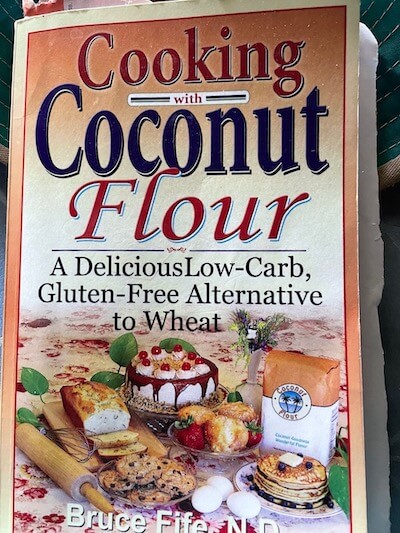
Here is Cooking with Coconut Flour by Bruce Fife ND. You can find it on Amazon here (my link). I’ve baked a number of recipes from this book and I’m impressed. I really appreciate that it’s all coconut flour recipes with no almond flour or other gluten-free flours used.

If you do battle with sugar cravings and binge eating – use amino acids

It’s ideal to keep baked goods – especially the ones shown on the cover of this book – to a minimum. But for an occasional treat this recipe book is excellent.

If you do battle with sugar cravings and binge eating, don’t forget how useful the amino acids are for stopping your cravings with no willpower and no feelings of deprivation. You can learn more about this here: The individual amino acids glutamine, GABA, tryptophan (or 5-HTP), DPA and tyrosine are powerful for eliminating sugar cravings, often within 5 minutes.

I discuss cravings/emotional eating and how to use amino acids in my book, The Antianxiety Food Solution – How the Foods You Eat Can Help You Calm Your Anxious Mind, Improve Your Mood and End Cravings. More here. I also cover how low blood sugar can lead to both anxiety and cravings and how to prevent this by use glutamine and eating for blood sugar stability.

If you’re new to dietary oxalates as a possible health issue

This blog post is a helpful one to start with if you’re new to dietary oxalates and the issues they can cause: Oxalate crystal disease, dietary oxalates and pain: the research & questions

These are the common medium-oxalate and high-oxalate foods that many folks have problems with: nuts, nut-butters and nut-flour (especially baking with almond flour and something to watch when eating Paleo or GAPS), wheat, chocolate, kiwi fruit (very high – see the raphides image on the above blog), star fruit (also very high), beets, potatoes, sweet potatoes, legumes, raspberries, spinach and soy.

In the above blog post, I share an overview of oxalates, my pain issues with dietary oxalates (severe foot pain and eye pain), and deeper dive into the condition called oxalate crystal disease (with some of my insights and questions).

The big take-aways are that calcium oxalate crystals are sharp and can cause far reaching harm beyond pain – such as unresolved anxiety, thyroid issues, neurological symptoms, eye issues, hearing loss, bladder issues, headaches, fatigue, insomnia, restless legs, autism symptoms and more. You can have issues with dietary oxalates and not have kidney disease/kidney stones, although there is very little research supporting the latter.

You may find these oxalate blogs helpful too:

  • Increased kidney stones in postmenopausal women with lower estradiol levels. What about increased dietary oxalate issues too?
  • Waking in the night due to environmental toxins: impacts on the liver, gallbladder and fat digestion (making oxalate issues worse)
  • Butternut Bake recipe (a low oxalate alternative to Potato Bake)
  • Coconut Macaroon Mini Muffin recipe (low oxalate)

What dietary oxalates issues have you experienced and has a low oxalate diet helped you?

If you have dietary oxalates issues can you handle ginger?

Do let us know if you make this recipe and enjoy it.

Feel free to share a favorite recipe of something you’ve adapted to be low or even medium oxalate.

If you have questions and feedback please share them here too.
Filed Under: Amino Acids, Anxiety, Recipes Tagged With: almond flour, anxiety, blackstrap molasses, bladder issues, celiac disease, coconut flour, copper, cravings. amino acids, dietary oxalate issues, eye issues, Gingerbread, gluten sensitivity, gluten-free, hearing loss, insomnia, Low oxalate, menopause, muffin, pain, recipe, restless legs, unresolved thyroid issues

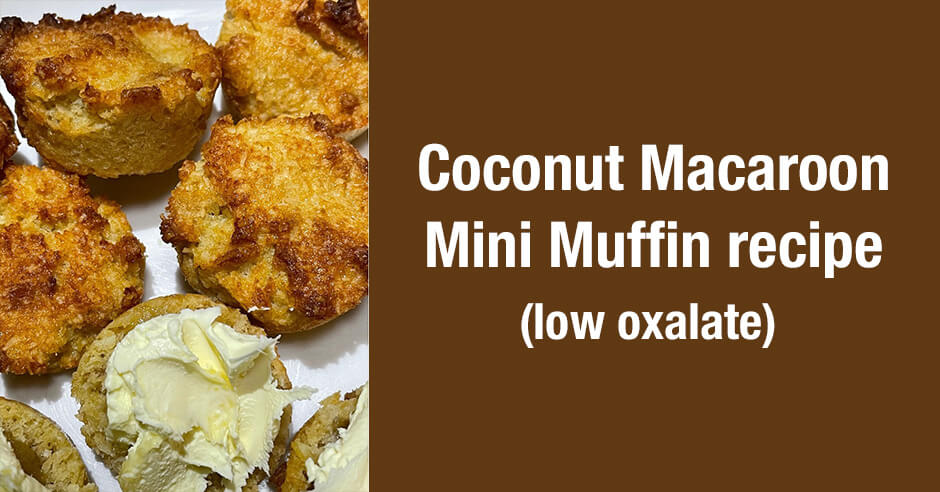
Coconut Macaroon Mini Muffin recipe (low oxalate)

January 20, 2023 By Trudy Scott 18 Comments

coconut macaroon mini muffin

If you have dietary oxalate issues (pain, anxiety, insomnia, restless legs, hearing loss, eye issues, unresolved thyroid issues, bladder issues and more) and yet really miss the occasional muffin this Coconut Macaroon Mini Muffin recipe is a delicious low oxalate option. I see way too many so-called healthy gluten-free recipes that use almond flour and it’s concerning given that almonds are high oxalate foods. If you’re new to the dietary oxalate issues you can read more about this below. I’m finding it to be underappreciated as an issue especially in menopausal women when symptoms seem to be more severe in susceptible individuals. I have also found that using almond flour in baking affects your zinc/copper balance, increasing copper and hence causing more anxiety and even panic attacks.

If you don’t have dietary oxalate issues, you can certainly enjoy this recipe too. The addition of flaked coconut does make it similar to macaroons.

Coconut Macaroon Mini Muffin recipe (a low oxalate option)

Ingredients

1/2 cup melted butter
1/2 cup coconut sugar
4 eggs
1/2 teaspoon vanilla
1/2 cup sifted coconut flour
2 cups coconut flakes

Method

Melt the butter over low heat and add the coconut sugar. Once it’s cooled add the eggs and vanilla. Stir in the coconut flour and coconut flakes.

Spoon the mixture into a greased mini muffin pan. Bake at 375 degrees F/ 190 degrees C for 18 – 20 minutes. The muffins don’t rise at all but will start to turn golden brown. Remove and cool on a cooking rack. Makes 12 mini muffins.

Eat warm or when cooled. Serve with butter and/or cream and/or coconut butter. For a little added sweetness a small amount of raw honey can be spread on a muffin too.

coconut macaroon muffins

I adapted this recipe from the Coconut Butter Cookies recipe in “Cooking with Coconut Flour” by Bruce Fife ND. I pretty much always do this when I cook – adapt recipes to my needs and likes – and always reduce the sugar. In this instance, I halved the sugar and used coconut sugar.

The original recipe does have a reduced sugar option suggesting using ½ cup of sugar and adding ¼ teaspoon stevia. I’d find this too sweet.

I decided to cook them in mini muffin pans instead of making cookies on a baking tray but you could always try this option. Use the same temperature and cooking time per the original recipe.

They were a little dry (next time I’ll use a little extra butter in the recipe) but eating them with butter and/or cream made them delicious. I tried both – I always like to include some healthy fats. If dairy isn’t tolerated, coconut cream could be substituted. I suspect coconut oil could be substituted for the melted butter but have not tried it.

cooking with coconut flour

Here is “Cooking with Coconut Flour” by Bruce Fife ND. You can find it on Amazon here (my link). I’ve baked a number of recipes from this book and I’m impressed. I really appreciate that it’s all coconut flour recipes with no almond flour or other gluten-free flours used.

It’s ideal to keep baked goods – especially the ones shown on the cover of this book – to a minimum. But for an occasional treat this recipe book is excellent.

If you’re new to dietary oxalates as a possible issue

This blog post is a helpful one to start with if you’re new to dietary oxalates and the issues they can cause: Oxalate crystal disease, dietary oxalates and pain: the research & questions

These are the common medium-oxalate and high-oxalate foods that many folks have problems with: nuts, nut-butters and nut-flour (especially baking with almond flour and something to watch when eating Paleo or GAPS), wheat, chocolate, kiwi fruit (very high – see the raphides image on the above blog), star fruit (also very high), beets, potatoes, sweet potatoes, legumes, raspberries, spinach and soy.

In the above blog post, I share an overview of oxalates, my pain issues with dietary oxalates (severe foot pain and eye pain), and deeper dive into the condition called oxalate crystal disease (with some of my insights and questions).

The big take-aways are that calcium oxalate crystals are sharp and can cause far reaching harm beyond pain – such as unresolved anxiety, thyroid issues, neurological symptoms, eye issues, hearing loss, bladder issues, headaches, fatigue, insomnia, restless legs, autism symptoms and more. You can have issues with dietary oxalates and not have kidney disease/kidney stones, although there is very little research supporting the latter.

You may find these oxalate blogs helpful too:

  • Increased kidney stones in postmenopausal women with lower estradiol levels. What about increased dietary oxalate issues too?
  • Waking in the night due to environmental toxins: impacts on the liver, gallbladder and fat digestion (making oxalate issues worse)
  • Butternut Bake recipe (a low oxalate alternative to Potato Bake)

What dietary oxalates issues have you experienced and has a low oxalate diet helped you?

Do let us know if you make this recipe and enjoy it.

Feel free to share a favorite recipe of something you’ve adapted to be low or even medium oxalate.

If you have questions and feedback please share them here too.

Filed Under: Anxiety, Oxalates, Recipes Tagged With: almond flour, anxiety, bladder issues, coconut, coconut flour, Coconut Macaroon Mini Muffin recipe, copper, dietary oxalate issues, eye issues, gluten-free recipes, hearing loss, insomnia, Low oxalate, menopausal, oxalate, pain, panic attacks, restless legs, unresolved thyroid issues, zinc

Smart pills: sensors, copper, silicon and EMFs in medications?

January 19, 2018 By Trudy Scott 1 Comment

Can you discuss the new copper and silicon microchip they are starting to use in Abilify and other bipolar and schizophrenia medications? This subject has been in the news.

The above question was posted on a recent blog – Copper toxicity: anxiety, phobias, ADHD on the Heavy Metals Summit

This was new to me and at first glance I didn’t like the sound of copper and a microchip in a medication, so I went looking for information.

Before I share my findings, here is a quick overview of Abilify/Aripiprazole and the FDA-Approved and Off-Label Uses: originally approved for schizophrenia and then approved for bipolar disorder, approved ‘as adjunctive treatment for major depressive disorder’ and also approved for irritability in autism spectrum disorders.

The above article also lists off-label use of Abilify which includes the following: generalized anxiety disorder, social phobia, ADHD, dementia, insomnia, OCD, PTSD, substance abuse and Tourette’s syndrome.

Dr. Mark Hyman actually mentions off-label use of antipsychotics like Abilify in the Broken Brain docuseries. He discusses their use in children:

there’s pushing of medications for off-label use, which means that they’re not approved for those indications. They’re doing this for kids with antipsychotics, and they’re actually being sued. The pharma companies have been held liable for promoting these drugs for off-label uses for kids, which they’re not allowed to do. They get fined billions of dollars, but they don’t care because they’ve made umpteen more billions, and they just see it as a marketing expense.

What are these ‘smart pills’?

This article, ‘smart pill’ can help patients remember their meds explains more about these new smart pills:

Chicago’s Rush University Medical Center has become one of the few health care providers in the United States to use a grain-of-sand-sized sensor that, after being swallowed, can alert patients when they’ve forgotten to take medication.

Developed by Proteus Digital Health, the FDA-approved sensor is made from microscopic quantities of copper and magnesium. Powered by the human body (no batteries or antennas required), the tiny sensor turns on after reaching patients’ stomachs, where it begins sending signals to a Band-Aid-like, Bluetooth-enabled patch worn on the torso. The patch then decodes those signals into meaningful health information and sends it to users and physicians in an app.

Here is the press release about these ‘smart pills’- Otsuka and Proteus® Announce the First U.S. FDA Approval of a Digital Medicine System: Abilify MyCite® (aripiprazole tablets with sensor)

This was approved by the FDA for use in U.S. in 2012. The microchip is actually made of copper, magnesium and silicon, and reacts with stomach juices when swallowed along with the medication. According to the above article:

Once the microchip has done its job, it dissolves and passes out of the body along with other digested food.

However, another article on the introduction of these smart pills into the UK doesn’t seem to reach the same conclusion:

What’s not clear is how long the microchip operates inside the body, and what happens to it once it dies. Is it digested, or is it flushed out into the sewer system wholly intact? And if it’s flushed, what happens to all those millions of chips that wind up in sewage treatment facilities?

Some of my concerns

I have no idea what the long-term implications of this ‘smart pill’ technology will be and would hope patients are being informed now, will be informed in the future, and will have a choice as to whether or not they want to use ‘smart’ medications like this.

Here are some of my initial concerns I’d like to share:

  • the adverse effects of added copper in the body (implications for dementia and Alzheimer’s disease, and anxiety and autism)
  • the adverse health effects of Bluetooth/EMFs for the person ingesting a ‘smart pill’ and for those around them (the new book The Non-Tinfoil Guide to EMFs by Nicolas Pineault is the most current resource for all things related to EMFs)
  • the adverse effects of silicon in the body
  • the harmful environmental impacts once these get into the sewer system
  • the added costs of these medications
  • how quickly we’ll start to see this technology used in more and more medications
  • lack of awareness for the consumer in terms of adverse health impacts and privacy concerns

Without going into the myriad of issues with off-label use of atypical antipsychotics and all the functional medicine and nutritional approaches that can be used to address anxiety (such as tryptophan), social phobia (such as low zinc and low vitamin B6), ADHD (such as gardening or low iron), OCD (such as a gluten-free diet or inositol), insomnia (such as GABA and 5-HTP) and PTSD, we now have the added concerns of what problems these ‘smart pills’ may contribute to.

I say let’s be smart about this and rethink these ‘smart pills’ and ideally look for functional medicine and nutritional solutions instead of using antipsychotics off-label.

And even if we look at some of the approved uses of antipsychotic medications, case studies report a nutritional psychiatry approach for this. Dr. Georgia Ede, MD, shares two schizoaffective cases in her article: Low-Carbohydrate Diet Superior to Antipsychotic Medications. These were patients of Dr. Chris Palmer, a psychiatrist from Harvard’s McLean Hospital in Belmont, Massachusetts. They both tried a ketogenic diet for weight loss. Here are the results the woman patient experienced:

After four weeks on the diet, her delusions had resolved and she’d lost ten pounds. At four months’ time, she’d lost 30 pounds and her score on a clinical questionnaire called the PANSS (Positive and Negative Symptom Scale), which ranks symptoms on a scale from 30 (best) to 210 (worst), had come down from 107 to 70. 

The male patient experienced similar results with “dramatic” reductions in auditory hallucinations and delusions, as well as better mood and energy. He also lost weight, losing 104 pounds over the course of a year.  As Dr. Ede writes:

These outcomes are truly remarkable: improvement by dozens of points on the PANSS, significant weight loss, and better quality of life. There simply is no psychiatric medication available with the power to accomplish those results.  

And in this instance and others like them we won’t have the ‘smart pill’ issues.

Have you ever been prescribed Abilify or one of the other antipsychotics? And for what symptoms?

Has your doctor ever offered you the ‘smart pill’ option?

Have you worked with clients or patients who have been prescribed these medications?

Filed Under: Antianxiety Tagged With: Abilify, antipsychotics, anxiety, autism, copper, depression, EMFs, off-label, smart pill, smart pills, social phobia

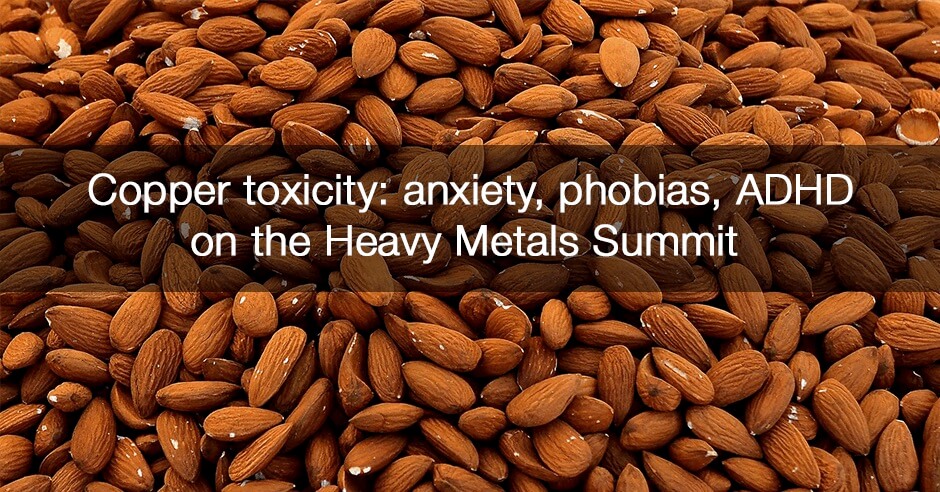
Copper toxicity: anxiety, phobias, ADHD on the Heavy Metals Summit

December 23, 2017 By Trudy Scott 32 Comments

One of my favorite functional medicine practitioners, Ann Louise Gittleman covers the issue of excess copper on the Heavy Metals Summit, which airs online Jan 29 to Feb 5, 2018.

The topic is – Copper: The Double-Edged Sword – and she shares how copper is probably the most insidious of the toxic metals:

I think what lead was to the ancient Romans, copper is to modern day Americans. And I think it may be the fundamental cause of many of our orphan illnesses, our mystery illnesses, and debilitating and aging biochemical imbalances.

She shares some of the sources of copper that are most prevalent in contributing to excess copper levels and toxicity:

I think first and foremost we have to look at copper plumbing, copper cookware, which is all the rage in this day and time. There’s naturally occurring copper in water. Birth control pills can be a source of copper, because of excessive amounts of estrogen and estrogen is connected to copper the way zinc is connected to progesterone.

There are copper IUDs that are very popular amongst so many of our young women. Even dental amalgams, if they are put in your mouth post 1976 can have a very high copper amalgam percentage. And then, of course, there are fungicides for swimming pools and foods. So that’s just the beginning.

Then there’s the copper that you’re getting in common foods. Whether it’s soy; whether it’s GMO soy or not. You’re getting that in tempeh, tofu, soy protein powders. Nuts and seeds, like cashew nuts and sesame seeds. Avocados; a very healthy fat, but high in copper nevertheless. And some of our shellfish. Then you’ve got your regular tea, your green tea, your white tea, your black tea, your bran, and even your brewer’s yeast.

One of the biggest factors that I see contributing to high copper in my clients who have low zinc and anxiety, is all the baking being done with nuts flours such as almond flour! The next two areas I see as being most problematic for women, is the birth control pill and copper IUDs.  

Ann Louise talks about how excess copper can affect you: hyperactivity and ADD, thyroid issues, tooth decay, dementia, urinary tract infections, candida and functional hypoglycemia.

She also covers the following anxiety symptoms, which I commonly see in my clients and community: nervousness, phobias and unresolved fears, depression and even stuttering.

Here are my contributions to this important discussion:

  • High copper and low zinc (because these two balance each other out), is one of the most common imbalances I see in my community of anxious individuals, and especially in women because of the hormonal influence.
  • Other than removing the source of the copper, one way to address this is via zinc supplementation. If anxiety is a factor, addressing low serotonin and low GABA with amino acids like tryptophan and GABA helps until zinc increases and copper decreases.
  • Good levels of zinc are also needed to make the neurotransmitters so once levels rise (as we get rid of excess copper) we can start to make our own.

Wendy Myers, Christine Schaffner, ND, and Dietrich Klinghardt, MD, PhD, have spent the last few months gathering the right experts, information and protocols to help you understand the danger of heavy metals like copper, mercury, lead, cadmium and others, and what to do about them.

Every day, they help their patients regain health, in some part through heavy metal detoxification. People with incorrect diagnoses of multiple sclerosis, fibromyalgia, anxiety and depression, insomnia, or thyroid issues, just to name a few, have found relief through innovative and individualized protocols to reduce the burden of heavy metals.

Register here to join us on The Heavy Metals Summit January 29 – February 5, 2018. See you on the summit! I know I’m going to learn a lot too!

Have you had issues with high copper and low zinc?

Feel free to comment or post a question below.

Filed Under: Events, Toxins Tagged With: ADHD, anxiety, copper, fear, heavy metals summit, nervousness, phobias, toxicity, zinc

30 Experts Share Their Best Advice for Brain Health by Jordan Fallis

November 24, 2017 By Trudy Scott 4 Comments

Jordan Fallis of Optimal Living Dynamics reached out to some of his favorite cutting-edge health practitioners and researchers and asked them one question:

What is the one piece of advice you would offer to people who want to improve and optimize their brain health?

I was thrilled to be one of the people he reached out to. This is my response:

This a tough question and I can think of many things such as eating sardines or other oily fish for the omega-3 benefits; eating pumpkin seeds as a great source of zinc and tryptophan (both great for anxiety and depression); dumping the bread and cookies due to the inflammatory effects of gluten on the brain and body; and eating grass-fed red meat as a great source of zinc, omega-3s and iron, all of which are needed for brain health. 

But if I had to pick only one piece of advice, I would say to optimize gut health because of the very strong gut-brain connection. This means healing a leaky gut with an amino acid like glutamine; improving the microbiome by eating fermented foods like sauerkraut; improving protein digestion with enzymes; cooking and eating quality food at home; chewing our food slowly, and addressing issues like candida, parasites, small intestinal bacterial overgrowth and dysbiosis.

In addition to the above, I always trial the use of targeted individual amino acids such as calming GABA, mood-boosting tryptophan and DPA, and addressing nutritional deficiencies with nutrients like zinc, vitamin B6, iron, magnesium and so on. You may need to also address Lyme disease, mold, heavy metals and many of the other possible biochemical causes of anxiety and depression.

Here are some snippets from a few of my favorite quotes:

  • Kelly Brogan: the brain “does not understand modern chemicals, processed foods, and industrial pollutants. It also doesn’t understand chronic stress, poor sleep, minimal movement, and indoor living”
  • Hyla Cass: “don’t follow a low-fat diet! Make sure to get sufficient fats and protein. Avoid trans fats, but eat healthy fats like omega 3’s found in fatty fish, and medium chain triglycerides from coconut oil”
  • Sayer Ji: “Turmeric is one of the most remarkable neuroprotective and neurorestorative agents yet identified”
  • Max Lugavere: “…there’s simply nothing like exercise for the brain.”
  • Gwen Olson: “Do your own due diligence before taking any pharmaceuticals. Put the name of the drug into a search engine followed by the words ‘controversy’ and ‘side effects’”
  • James Greenblatt: “As vitamins and minerals serve as co-factors in almost every enzymatic reaction in the brain, it is important to assess for adequate nutrient levels regularly to ensure that you are optimizing brain health”

You can read all the inspiring and valuable responses on Jordan’s blog: 30 Experts Share Their Best Advice for Brain Health. You’ll see some common themes: stress, the gut, exercise, real food, sleep and nutrients.

When I asked Jordan how he knew of me and my work he shared this:

I found you through Sean Croxton’s Depression Sessions. When that first came out, I was in the middle of my journey, trying to restore my own mental health. It was great timing. So I immediately purchased it and watched all the videos for more solutions.

I already knew about pyroluria, as I had read Dr. William Walsh’s book Nutrient Power at that time. But it was great to see you talk about it and bring it to light! And I believe I was taking just regular B6 before your talk. So then I switched to P-5-P. I continue to take P-5-P and zinc picolinate regularly.

I’m so thankful I’m feeling better and have my life back, so I’m going to work really hard to share everything that helped me. I just feel like I need to do that 🙂

I really appreciate that Jordan wants to share everything that has helped him and this article is a perfect way to do this.

Here are some additional resources for you on pyroluria, the social anxiety condition he mentions above:

  • Pyroluria prevalence and associated conditions
  • A snippet from the interview I did with Sean: Can Social Anxiety Be Reversed with Nutrition?
  • Some information from my interview with Dr. William Walsh on a prior Anxiety Summit: Is My Anxiety and Depression from a Methylation, Pyrrole, or Copper-Zinc Imbalance?

I hope you enjoy these resources from me, Jordan and all the experts he reached out to!

I’d love to hear what you have found to be the best brain advice you have received and implemented?  


Filed Under: Pyroluria Tagged With: anxiety, brain, brain health, copper, GABA, Jord, pyroluria, social anxiety, tryptophan, zinc

Zinc/copper balance in autism/pyroluria: Dr. Usman

January 14, 2016 By Trudy Scott 23 Comments

This is such a great segment on zinc/copper balance in pyroluria and autism so I really want to share it. Dr. Usman was one of many excellent speakers on the Autism Intensive online event.

An excerpt from Dr. Usman’s interview: Optimizing Metabolic-Immune Communication and Function

Dr. Usman: …. In the 70s, they were breaking down individuals with schizophrenia into three phenotypes: low histamine, high histamine and pyrolurics. At the time this phenotype of pyroluria in schizophrenia was manifest as a B6, zinc deficiency and when they were given high doses of B6 or zinc, their schizophrenia improved.

Dr. Schwartz: So that was kind of your first exposure to nutritional vitamins.

Dr. Usman: Yeah. I was treating patients with depression, bipolar disorder, schizophrenia, mental illness with these various protocols that Carl Pfeiffer had developed. I started doing research in copper/zinc imbalances. We had over 500 patients with autism involved in a study that we look at there. We look at plasma zinc and serum copper ratios. When you ratio plasma zinc to serum copper what you’re looking for is a ratio of 1 to 1.

Dr. Schwartz: Balance is more important than the absolute number.

Dr. Usman: Correct.

Dr. Schwartz: Another concept that takes us outside the traditional lab values?

Dr. Usman: Exactly. You’re not looking at a lab number, but you’re looking at a ratio.

Dr. Schwartz: So both zinc and copper could be in the normal range, but the ratio can be way off. That’s something I’ve certainly seen in my patients.

Dr. Usman: Correct. When the ratio of copper and zinc is off, we want that ratio to be one-to-one. And patients with inflammatory issues and patients with various autoimmune issues and sick patients in general, their ratio ends up being disturbed. We found out in the autistic population was that 99% of them, which is a very low P value in statistics.

Dr. Schwartz: Zero, zero, zero, zero.

Dr. Usman: Zero, zero, zero, zero. 99% of them had low zinc, high copper and they had a high ratio of copper to zinc – of over 1.2.

Dr. Schwartz: So very dramatic.

Dr. Usman: Yeah. Then Dr. Walsh, who headed the Pfeiffer treatment center, had a theory that this was due to defect in a protein called metallothionein. Metallothionein is a protein that, in a way, transports copper and zinc through the body.


Filed Under: Autism, Events, Pyroluria Tagged With: autism intensive, copper, Dr. Usman, zinc

Primary Sidebar

NEW! GABA QuickStart Homestudy (with special intro pricing)

gaba quickstart homestudy

Free Report

9 Great Questions Women Ask about Food, Mood and their Health

You'll also receive a complimentary subscription to my ezine "Food, Mood and Gal Stuff"


Connect with me

Popular Posts

  • Amino Acids Mood Questionnaire from The Antianxiety Food Solution
  • The Antianxiety Food Solution Amino Acid and Pyroluria Supplements
  • Pyroluria Questionnaire from The Antianxiety Food Solution
  • Collagen and gelatin lower serotonin: does this increase your anxiety and depression?
  • Tryptophan for the worry-in-your-head and ruminating type of anxiety
  • GABA for the physical-tension and stiff-and-tense-muscles type of anxiety
  • The Antianxiety Food Solution by Trudy Scott
  • Seriphos Original Formula is back: the best product for anxiety and insomnia caused by high cortisol
  • Am I an anxious introvert because of low zinc and vitamin B6? My response to Huffington Post blog
  • Vagus nerve rehab with GABA, breathing, humming, gargling and key nutrients

Recent Posts

  • What do I use instead of Seriphos to help lower high cortisol that is affecting my sleep and making me anxious at night?
  • BeSerene™ GABA/theanine cream eases severe muscle tension in her neck/shoulders, prevents her bad headaches and quells her anxiety
  • How the correct approach, dose and sublingual use of GABA can be calming and not cause a flushed and itchy face and neck
  • The amino acid glutamine improves low mood by addressing gut health, and it has calming effects too
  • Flight anxiety with heightened breath, physical tension and also fearing the worst (the role of low GABA and low serotonin)

Categories

  • 5-HTP
  • AB575
  • Addiction
  • ADHD
  • Adrenals
  • Alcohol
  • Allergies
  • Alzheimer's disease
  • Amino Acids
  • Anger
  • Antianxiety
  • Antianxiety Food Solution
  • Antidepressants
  • Anxiety
  • Anxiety and panic
  • Autism
  • Autoimmunity
  • benzodiazapines
  • Bipolar disorder
  • Books
  • Caffeine
  • Cancer
  • Candida
  • Children/Teens
  • Collagen
  • Cooking equipment
  • Coronavirus/COVID-19
  • Cravings
  • Depression
  • Detoxification
  • Diabetes
  • Diet
  • DPA/DLPA
  • Drugs
  • EFT/Tapping
  • EMF
  • EMFs
  • Emotional Eating
  • Endorphins
  • Environment
  • Essential oils
  • Events
  • Exercise
  • Fear
  • Fear of public speaking
  • Fertility and Pregnancy
  • Fish
  • Food
  • Food and mood
  • Functional neurology
  • GABA
  • Gene polymorphisms
  • General Health
  • Giving
  • Giving back
  • Glutamine
  • Gluten
  • GMOs
  • Gratitude
  • Gut health
  • Heart health/hypertension
  • Histamine
  • Hormone
  • Hyperparathyroidism
  • Hypoglycemia
  • Immune system
  • Inflammation
  • Insomnia
  • Inspiration
  • Introversion
  • Joy and happiness
  • Ketogenic diet
  • Lithium orotate
  • Looking awesome
  • Lyme disease and co-infections
  • MCAS/histamine
  • Medication
  • Men's health
  • Mental health
  • Mercury
  • Migraine
  • Mold
  • Movie
  • MTHFR
  • Multiple sclerosis
  • Music
  • NANP
  • Nature
  • Nutritional Psychiatry
  • OCD
  • Osteoporosis
  • Oxalates
  • Oxytocin
  • Pain
  • Paleo
  • Parasites
  • Parkinson’s disease
  • PCOS
  • People
  • PMS
  • Postpartum
  • PTSD/Trauma
  • Pyroluria
  • Questionnaires
  • Real whole food
  • Recipes
  • Research
  • Schizophrenia
  • serotonin
  • SIBO
  • Sleep
  • Special diets
  • Sports nutrition
  • Stress
  • Sugar addiction
  • Sugar and mood
  • Supplements
  • Teens
  • Testimonials
  • Testing
  • The Anxiety Summit
  • The Anxiety Summit 2
  • The Anxiety Summit 3
  • The Anxiety Summit 4
  • The Anxiety Summit 5
  • The Anxiety Summit 6
  • Thyroid
  • Thyroid health
  • Toxins
  • Tryptophan
  • Tyrosine
  • Uncategorized
  • Vegan/vegetarian
  • Women's health
  • Yoga

Archives

  • October 2025
  • September 2025
  • August 2025
  • July 2025
  • June 2025
  • May 2025
  • April 2025
  • March 2025
  • February 2025
  • January 2025
  • November 2024
  • October 2024
  • September 2024
  • August 2024
  • July 2024
  • June 2024
  • May 2024
  • April 2024
  • March 2024
  • February 2024
  • January 2024
  • December 2023
  • November 2023
  • October 2023
  • September 2023
  • August 2023
  • July 2023
  • June 2023
  • May 2023
  • April 2023
  • March 2023
  • February 2023
  • January 2023
  • December 2022
  • November 2022
  • October 2022
  • September 2022
  • August 2022
  • July 2022
  • June 2022
  • May 2022
  • April 2022
  • March 2022
  • February 2022
  • January 2022
  • December 2021
  • November 2021
  • October 2021
  • September 2021
  • August 2021
  • July 2021
  • June 2021
  • May 2021
  • April 2021
  • March 2021
  • February 2021
  • January 2021
  • December 2020
  • November 2020
  • October 2020
  • September 2020
  • August 2020
  • July 2020
  • June 2020
  • May 2020
  • April 2020
  • March 2020
  • February 2020
  • January 2020
  • December 2019
  • November 2019
  • October 2019
  • September 2019
  • August 2019
  • July 2019
  • June 2019
  • May 2019
  • April 2019
  • March 2019
  • February 2019
  • January 2019
  • December 2018
  • November 2018
  • October 2018
  • September 2018
  • August 2018
  • July 2018
  • June 2018
  • May 2018
  • April 2018
  • March 2018
  • February 2018
  • January 2018
  • December 2017
  • November 2017
  • October 2017
  • September 2017
  • August 2017
  • July 2017
  • June 2017
  • May 2017
  • April 2017
  • March 2017
  • February 2017
  • January 2017
  • December 2016
  • November 2016
  • October 2016
  • September 2016
  • August 2016
  • July 2016
  • June 2016
  • May 2016
  • April 2016
  • March 2016
  • February 2016
  • January 2016
  • December 2015
  • November 2015
  • October 2015
  • September 2015
  • August 2015
  • July 2015
  • June 2015
  • May 2015
  • April 2015
  • March 2015
  • February 2015
  • January 2015
  • December 2014
  • November 2014
  • October 2014
  • September 2014
  • August 2014
  • July 2014
  • June 2014
  • May 2014
  • April 2014
  • March 2014
  • February 2014
  • January 2014
  • December 2013
  • November 2013
  • October 2013
  • September 2013
  • August 2013
  • July 2013
  • June 2013
  • May 2013
  • April 2013
  • March 2013
  • February 2013
  • January 2013
  • December 2012
  • November 2012
  • October 2012
  • August 2012
  • July 2012
  • June 2012
  • May 2012
  • April 2012
  • March 2012
  • February 2012
  • January 2012
  • December 2011
  • November 2011
  • October 2011
  • September 2011
  • August 2011
  • July 2011
  • June 2011
  • May 2011
  • April 2011
  • March 2011
  • February 2011
  • January 2011
  • December 2010
  • October 2010
  • September 2010
  • July 2010
  • May 2010
  • April 2010
  • March 2010
  • February 2010
  • January 2010
  • November 2009

Share the knowledge!

The above statements have not been evaluated by the Food and Drug Administration. Products listed in this website are not intended to diagnose, treat, cure or prevent any disease.

The information provided on this site is for informational and educational purposes only and is not intended as a substitute for advice from your physician or other health care professional. You should consult with a healthcare professional before starting or modifying any diet, exercise, or supplementation program, before taking or stopping any medication, or if you have or suspect you may have a health problem.


Copyright © 2026 Trudy Scott. All Rights Reserved. | Privacy | Terms and Conditions | Refund Policy | Medical Disclaimer

Free Report

9 Great Questions Women Ask about Food, Mood and their Health

You’ll also receive a complimentary subscription to my ezine “Food, Mood and Gal Stuff”