• Skip to primary navigation
  • Skip to main content
  • Skip to primary sidebar

everywomanover29 blog

Food, Mood and Women's Health – Be your healthiest, look and feel great!

  • Blog
  • About
  • Services
  • Store
  • Resources
  • Testimonials
  • The Book
  • Contact
  • Search this site

children

The marketing of Risperdal and how atypical antipsychotics became a multi-billion-dollar industry – a shockingly eye-opening article!

August 22, 2025 By Trudy Scott 2 Comments

marketing of risperdal

Even though I’m very aware this happens, this shockingly eye-opening article by Lydia Green is  the best explanation I’ve heard….

I didn’t set out to shape the field of psychiatry. I was just a copywriter working in pharmaceutical advertising. But over time, I found myself at the center of a campaign that would help transform how mental illness—and its treatment—are understood in the U.S. This is the story of how we marketed one drug, Risperdal, and how that effort helped turn atypical antipsychotics into a multi-billion-dollar industry.

If you’ve ever wondered how this powerful class of drugs ended up being prescribed for everything from adolescent mood swings to agitated nursing home patients, you’re not alone. The rise of atypical antipsychotics was a business and marketing phenomenon—driven in part by a wave of pharmaceutical mergers in the 1990s. First introduced for schizophrenia, atypical antipsychotics were promoted as more effective and safer than older drugs like Haldol or Thorazine.

While journalists and regulators have addressed this issue, I want to share my memories of marketing Risperdal—the first widely prescribed atypical antipsychotic. This is the story of how we promoted Risperdal not just as a medication, but as a revolution in psychiatric care. It’s also the story of how we redefined schizophrenia, rewrote the safety narrative of antipsychotics, and helped drive one of the most successful (and concerning) pharmaceutical launches in history.

It was also my first realization of the immense power marketers have to shape their version of the truth—and how I eventually came to question the very system I helped build.

This is an excerpt from the excellent article recently published on the Mad in America site.  We all need to be aware what happened with this medication and is still happening. It’s so wrong and is just heart-breaking to think how individuals and their families were manipulated and impacted. Unfortunately it’s very likely also happening with many other block-buster medications too – like Ozempic (for weight-loss),  Evenity (for osteoporosis) and more.

In this blog, I share stories from social workers and psychologists who were working in the field at time, the overprescribing of atypical antipsychotics to children and teens in the mid-1990s and now, and the powerful effects of tryptophan, GABA, other nutrients and diet for anxiety, agitation, rage and sleep issues in autism, dementia and ADHD.

You can read the full article here – Confessions of an Ad Writer: How I Helped Turn Atypical Antipsychotics into a Billion-Dollar Industry.

Be sure to read some of the many comments from individuals and families who bore the brunt of this. It’s heartbreaking.

Stories from individuals who were working in the trenches at the time

I shared this article on Facebook and here is some of the feedback I received from the community. Laura Ann’s response:

Thank you for sharing this article. I can remember when I was fresh out of my grad social work program and was working in child psychiatry at the University of Maryland, our docs were pushing this drug for young children with ADHD and conduct disorder. Unbelievable! These companies and their executives should be criminally prosecuted.

We tend to think of these scandals as something that happened but aren’t currently happening. I think we will be reading similar articles about GLP-1’s.

I appreciate her for sharing what she was seeing as a social worker at the time. This is so sad and so wrong. I agree that these companies should be prosecuted. Instead they pay massive fines which are part of their marketing and just-doing-business budget, and continue as before.

Unfortunately Laura Ann is spot on, as much of this continues with Risperdal and other psychiatric meds and it’s already happening with GLP-1s. I share more on this below.

Elizabeth Mary’s response:

Just reading your post gave me chills and made my stomach turn. I worked with folks with developmental disabilities during this time period, I had for years! I watched as the antipsychotics and various psych meds infiltrated the group homes and joined a team of co-workers to fight it. We lost. It was disgusting. And I had no idea all this was happening in the background

My heart breaks for these individuals and their families. Bravo to her for trying to fight it and I appreciate her for sharing what she saw happening.

And this feedback from someone else in the community:

This drug was pushed on individuals with ASD (autism spectrum disorder)! Probably still is! Very sad!

I am a retired psychologist who worked primarily with individuals with developmental disabilities. I saw it all the time. The “medical model” was used a lot, meaning many saw psychiatrists and/or PCPs (primary care providers) who prescribed these meds. It has a long history.

Overprescribing of atypical antipsychotics and other psychiatric medications to children and teens – then and now

As mentioned above, I’ve been aware for some time that there is overprescribing of psychiatric medications to children and teens. In one of my interviews on an Anxiety Summit, “Psychiatric Medications in Children and Teens” with Dr. Nicole Beurkens, we discuss these results from this 2019 paper, Current Pattern of Psychiatric Comorbidity and Psychotropic Drug Prescription in Child and Adolescent Patients:

  • Our study indicates that the rate of presentation to child and adolescent psychiatry outpatient clinics is increasing, and rates of diagnosis and initiation of psychiatry drugs are high among the presented children.
  • The prevalence of ADHD shows an increase in males and females in our country, and psychiatric polypharmacy (multiple medications) has reached significant rates.

Keep in mind that Lydia Green shared her marketing work began in the mid-1990s, about 25 years before the above paper was published.

Unfortunately not much has changed. This 2025 paper from Swedish authors reports that the “number of prescriptions to children aged 5-17 years has increased” and that “most prescribed drugs were risperidone [Risperdal] and aripiprazole.”

This 2025 paper report that in a group of Australian children with intellectual disability, autism spectrum disorder and cerebral palsy, “risperidone was the most prescribed antipsychotic medication” and it was often prescribed off-label.

Similar increases in antipsychotic prescriptions are also reported in children and teens in Israel in 2025. The list of papers goes on and on and there are similar papers for dementia and other conditions.

There are versions of this story about a lot of diseases: osteoporosis is another one

Melissa’s response to the Risperdal article was this: “Makes you wonder about therapies they are pushing today.” It’s creating awareness which is what we need and she is asking a great question. Yes – there are many versions of this story about other medications.

Here is a perfect quote from this 2009 article: How A Bone Disease Grew To Fit The Prescription

There’s a powerful economic incentive for pharmaceutical firms to expand the boundaries of the use of different therapies. So whether you consider treatments for osteoporosis or treatments for depression or treatments for high cholesterol — in all of these settings — pharmaceutical firms stand to benefit if the therapies for these diseases are broadly used, even if they’re used among people who have very mild forms of these diseases.

In this same article, Caleb Alexander, a pharmaco-epidemiologist at the University of Chicago, is writing about the marketing of osteoporosis medications and says “the dynamic is well understood.” But all this applies equally to the marketing of all medications i.e. “There are versions of this story about a lot of diseases.”

Dubious marketing by the makers of Ozempic and Wegovy (GLP-1s for weight loss)

This is happening right now for GLP-1s. There were already reports in 2023 about dubious marketing by Novo Nordisk, the makers of Ozempic and Wegovy:

In Great Britain, the company has paid within three years a total of around 21.7 million pounds (24.7 million euros) to experts and organisations including important opinion leaders who have since touted semaglutide as a “game changer” in obesity in a campaign described as an “orchestrated PR campaign.

Sadly I expect their marketing campaigns to run unchecked and get more and more sophisticated, with unsuspecting consumers being taken advantage of and harmed.

Families are not aware of the powerful effects of tryptophan, GABA, other nutrients and diet

My goal is to try and change this lack of awareness so families and individuals can explore other options when they are faced with decisions about some of these medications.

Instead of using antipsychotics for a family member with dementia or Alzheimer’s who is experiencing agitation, aggression and anxiety, consider tryptophan and melatonin, and GABA:

  • Sundowning in Alzheimer’s and dementia: melatonin/tryptophan for the agitation, restlessness, anxiety, disturbed sleep and aggression
  • GABA lessens anxiety, agitation and defiance in 98 year old mother who has been “sundowning” for a couple of years

Instead of using antipsychotics, explore the use of 5-HTP/tryptophan and/or GABA for kids with ADHD:

  • ADHD: 5-HTP melts have been a miracle for one of my adopted kids
  • GABA for children: ADHD, focus issues, irritability, anxiety and tantrums

Instead of antipsychotics and other psychotropic medications in autism, explore tryptophan and GABA:

  • Pathological Demand Avoidance (PDA) in children with autism – how much is behavioral and how much is due to low serotonin?
  • Half a crushed GABA Calm for my autistic child: sleep, anxiety and sensorimotor skills (writing, horse riding and swimming) improve

This is by no means a conclusive approach to addressing these symptoms in dementia/Alzheimer’s, ADHD and autism. We also need to consider and address diet, other nutritional imbalances, infections, gut health, toxins and much more.

Additional resources when you are new to using GABA and tryptophan as supplements

As always, I use the symptoms questionnaire to figure out if low GABA or low serotonin or other neurotransmitter imbalances may be an issue.

If you suspect low levels of any of the neurotransmitters and do not yet have my book, The Antianxiety Food Solution – How the Foods You Eat Can Help You Calm Your Anxious Mind, Improve Your Mood, and End Cravings, I highly recommend getting it and reading it before jumping in and using amino acids on your own so you are knowledgeable. And be sure to share it with the practitioner/health team you or your loved one is working with.

There is an entire chapter on the amino acids and they are discussed throughout the book in the sections on gut health, gluten, blood sugar control (this is covered in an entire chapter too), sugar cravings, anxiety and mood issues.

The book doesn’t include product names (per the publisher’s request) so this blog, The Antianxiety Food Solution Amino Acid and Pyroluria Supplements, lists the amino acids that I use with my individual clients and those in my group programs.

If, after reading this blog and my book, you don’t feel comfortable figuring things out on your own (i.e. doing the symptoms questionnaire and respective amino acids trials), a good place to get help is the GABA QuickStart Program (if you have low GABA symptoms). This is a paid online/virtual group program where you get my guidance and community support. You can sign up to be notified when the next live launch is happening.

If you need serotonin support, the Serotonin QuickStart Program is a good place to get help. This is also a paid online/virtual group program where you get my guidance on using tryptophan and 5-HTP safely, and community support during 5 LIVE Q&A calls. You can sign up to be notified when the next live launch of this program is happening.

If you are a practitioner, join us in The Balancing Neurotransmitters: the Fundamentals program. This is also a paid online/virtual program with an opportunity to interact with me and other practitioners who are also using the amino acids.

Wrapping up and your feedback

I appreciate Lydia for sharing this and enlightening us, and Mad in Arica for inviting her to do the article. And I appreciate community members for sharing and allowing me to share on this blog

Have you or a family member been the victim of the overprescribing of atypical antipsychotics ?

Have you seen this overprescribing of atypical antipsychotics happening in the work you do as a social worker, psychologist, doctor or other health professional?

Are you surprised to learn about similar strategies being used for marketing osteoporosis and GLP-1 medications?

Feel free to share and ask your questions below.
Filed Under: ADHD, Alzheimer's disease, Autism, GABA, Medication, serotonin Tagged With: ADHD, agitation, anxiety, atypical antipsychotics, autism, children, dementia, diet, Evenity, GABA, Lydia Green, marketing, mood swings, multi-billion-dollar industry, osteoporosis, overprescribing, Ozempic, pharmaceutical, psychiatry, rage, risperdal, sleep, teens, tryptophan, weight-loss

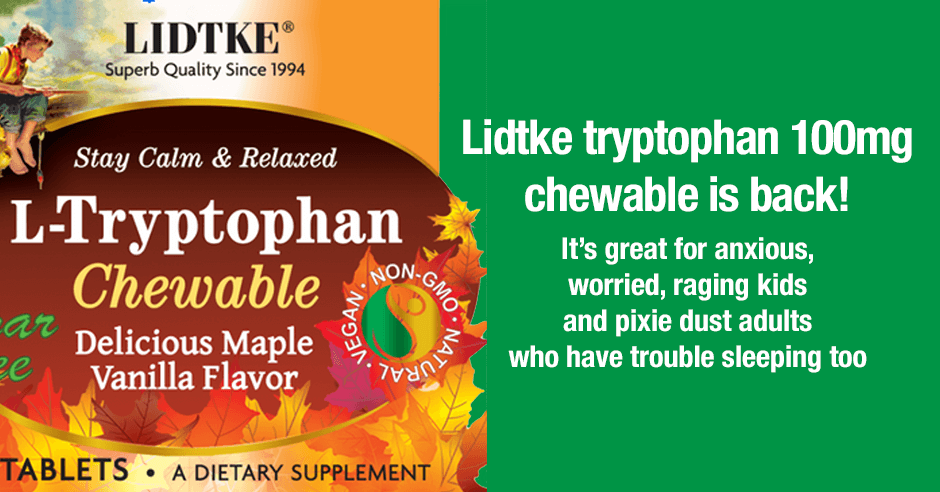
Lidtke tryptophan 100mg chewable is back! It’s great for anxious, worried, raging kids and pixie dust adults who have trouble sleeping too

June 6, 2025 By Trudy Scott 26 Comments

Lidtke tryptophan 100mg chewable

The Lidtke tryptophan 100mg chewable product has been out of stock for close to a year and it’s now back, hence this blog post. This product has been a firm favorite of mine for many years and I’ve used it successfully with children and adults with signs of low serotonin. If you’re new to tryptophan, it’s an amino acid that is a precursor or raw material for the production of your feel-good neurotransmitter called serotonin.

I’ve used this product in the past with children who are anxious, worried, raging, having problems sleeping and craving sugar and carbs. I’ve also used it with “pixie dust” clients who do well with a small dose and prefer a chewable form of tryptophan. And I often recommend clients use it to do the initial one-off trial to figure out if low serotonin is the issue (and before moving on to a typical starting dose of 500mg tryptophan twice a day).

In this blog you’ll see the label of the newly formulated tryptophan 100mg chewable and some of the many advantages of tryptophan as a low-dose chewable. You’ll also see some feedback on the previous formulation, a success story with a young girl and my personal experience too.

The newly formulated Lidtke L-Tryptophan Chewable

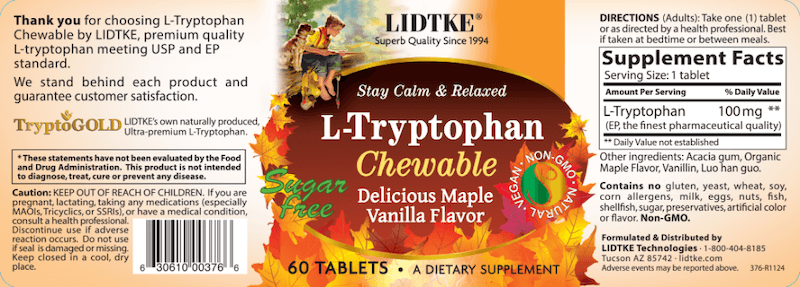
Here is the new label for the Lidtke L-Tryptophan 100mg Chewable. This product has been a firm favorite of mine for many years and the formulation has shifted over the years.

lidtke tryptophan chewable label

This formulation still contains 100mg tryptophan and a different sweetener – luo han guo, also known as monk fruit. It’s a zero-calorie natural sweetener that does not affect blood sugar. Monk fruit does belong to the gourd family and would need to be avoided if there are allergies to these foods (such as cucumbers, melons, zucchini etc).  Also, some individuals do not like the aftertaste of monk fruit.

It does contain flavors – maple and vanillin – which may be problematic for sensitive individuals. Acacia gum (or gum arabic) is low FODMAP and typically well tolerated, but may cause bloating for some.

The chewable has not been available for about a year so this is very welcome news.

Chewable tryptophan for a young girl with anxiety, rage, sleep issues and strong cravings

As I mentioned I’ve been using chewable tryptophan with success for many years. I often share the success story of a young girl with anxiety, rage, sleep issues and strong cravings for candies in documentaries and summit interviews and – and how addressing low serotonin with a chewable tryptophan quickly helped:

So sitting in my office with this young girl and her mom, we started to talk about the sweets and the candies and the need to give up the candies. She was fuming with me. She was sitting in a swivel chair. She turned her back on me and didn’t want to talk about having to give up candy at all.

I said, “Look, let’s not even talk about that, but would you take this chewable tryptophan here? And we’ll talk about it in a second.” I gave her 100 mg of the chewable tryptophan and continued discussing things with her mom.  She had no idea what it was going to do or how it would make her feel.

Within five minutes she turned her chair back, looked at me and she said, smilingly, “Yes, let’s do it. I can give up the candy.” She was smiling and she was happy.

So long story short, with this young girl, we started her on [chewable] tryptophan [and it turned things around quickly].

You can read her entire story here on the blog –  Rage, anxiety, cravings & insomnia in 11-year old girl with RAD/reactive attachment disorder: chewable tryptophan turns things around (she also went gluten-free and addressed low iron levels and the change was transformative.)

Some of the many advantages of tryptophan as a low-dose chewable

Here are some of the many advantages of tryptophan as a low-dose chewable:

  • The low dose is suitable for sensitive adults and pixie-dust folks (i.e. a small amount goes a long way)
  • It can be easily broken apart if an even lower dose works well
  • It’s pleasant tasting
  • It’s easy to have available to use on the go when traveling or out and about
  • The dose dose and taste is suitable for children and kids who are picky eaters
  • The dose dose and taste is suitable for older adults with dementia or Alzheimer’s, adults with special needs or Parkinson’s
  • One less capsule to swallow and more pleasant that tryptophan powder on the tongue
  • A good tool for doing the initial one-off trial to confirm low serotonin symptoms before embarking on titrating up to a higher dose of tryptophan

My personal experience with chewable tryptophan

Personally, I have used tryptophan over the years with much success. It’s helped me with sleep issues, the worry type of ruminating anxiety and PMS symptoms.

I also used it when I was grieving after my mom passed away and found it particularly helpful a few months after her passing when I’d start to feel more sad after dinner and go searching for sugar as a pick-up. It worked well because serotonin takes a dip later afternoon/evening.

Most of the time I’ve used 500mg and above – capsules opened and powder.

However I like to try what I recommend (if possible) so I have tried a few bottles of the previous formulation of the chewable tryptophan. It worked well and the taste and texture was pleasant. But because I do better on a higher dose I was needing to chew too many!

I have yet to try this new formulation myself but will report back as soon as I have had a chance to do so – on the taste, the texture and the effectiveness.

Positive feedback on the previous chewable tryptophan product

Until I get feedback on the new formulation, here is some general feedback from individuals in the community.

Jean is a practitioner who uses it herself and with patients:

It works within 15 minutes to stop looping thoughts/anxiety and the dose isn’t too sedating during the day. I never find it too sweet and wouldn’t let the taste keep me from such rapid relief.

I like the 100 mg chewable because it only has tryptophan and I didn’t want the other ingredients in the [Lidtke tryptophan] Complete for my needs.

I’ve had patients do well with tryptophan with the 100 mg chewable and others with the higher dose capsule.

Kelly likes the low 100mg dose compared to the 500mg capsules:

I purchased the adult pills and they were too strong. I was groggy in the morning.

Erin is also a practitioner and mom:

I have used this [the chewable tryptophan 100mg] with my 8 year old when he’s in a rage or showing signs of excessive worry and it works great! So glad it’s coming back. I recommend it to clients all the time.

Ali is also happy the chewable is coming back:

Great news!! I love the chewable and I prefer 100 mg early evening for anxiety and sleep. Sometimes 200mg but not often.

I appreciate them all sharing and hope to get updates from them when they try the new formulation.

Negative feedback on the new tryptophan chewable formulation

Update: June 14, 2025

Unfortunately, since publishing this blog and sharing on Facebook, the negative feedback has been coming in fast and furiously. Here is some of what people are sharing:

  • Melissa: “Love this company. I like that it’s chewable but it’s a large tablet and flavor is awful. Tastes like when you put maple syrup on a burnt pancake to try and cover up the burnt . I will finish the bottle though. I wish there were other chewable options, like GABA calm’s orange flavor.“
  • PS: “Revolting. Aftertaste like artificial sweetener. Smoother texture, last longer. Made me suspicious they were fake and I spat it out.“
  • Tamar: “I recently bought a few bottles of the maple sugar chewable. Taste is quite sweet and artificial, IMO. I don’t like chewing them because the product gets jammed in my teeth and stays there. I’ve been letting them dissolve, which takes a very long time.”

And these are comments from this blog:

  • Erin: “I was so excited to get this back, especially for my 8 year old son who has symptoms of ADHD rage. However, the new flavor is bitter and gets stuck in our teeth and now I can’t get him to take it!”
  • Nikki: “I got these about two weeks ago…. Truthfully I think it tastes horrible but that’s just me. Just unpleasant. Kind of sour and stale. They smell amazing but you get one in your mouth and it’s so hard to chew and swallow.” 
  • Tara: “The new formulation of the Lidtke does taste horrible. Initially I thought oh this smells lovely, tried to have my daughter take it and she said ick mom. So I said ok let me try it and ICK was right, the sweetener was gross and it did have a stale taste. So unfortunate as I had hope for this to help my daughter dealing with a lot of fears, worry, upset stomach and negative self talk at 9 yo and rage and sugar cravings.”

As of now I am NOT recommending this product.

The good news is that Nikki emailed Lidtke and shared this: “I just got an email back from Lidtke. Her name was Jessica and she stated: So, I’ve talked to the owner and let him know how many people are complaining about this new formula. He told me he was not aware it was changed and we are having a new batch made using the old formula that everyone loves. Going to take a month maybe a little more but we are definitely having this fixed.”

I appreciate her for emailing them and sharing this update. I’ve been communicating with someone else at the company and was told they have no plans to make any changes so if this is true it’s really good news!

Stay tuned for further updates and please share your own feedback in the comments below.

Additional resources when you are new to using tryptophan and other amino acids as supplements

As always, I use the symptoms questionnaire to figure out if low serotonin or other neurotransmitter imbalances may be an issue.

If you suspect low levels of any of the neurotransmitters and do not yet have my book, The Antianxiety Food Solution – How the Foods You Eat Can Help You Calm Your Anxious Mind, Improve Your Mood, and End Cravings, I highly recommend getting it and reading it before jumping in and using amino acids on your own so you are knowledgeable. And be sure to share it with the practitioner/health team you or your loved one is working with.

There is an entire chapter on the amino acids and they are discussed throughout the book in the sections on gut health, gluten, blood sugar control (this is covered in an entire chapter too), sugar cravings, anxiety and mood issues.

The book doesn’t include product names (per the publisher’s request) so this blog, The Antianxiety Food Solution Amino Acid and Pyroluria Supplements, lists the amino acids that I use with my individual clients and those in my group programs.

If, after reading this blog and my book, you don’t feel comfortable figuring things out on your own (i.e. doing the symptoms questionnaire and respective amino acids trials), a good place to get help is the GABA QuickStart Program (if you have low GABA symptoms). This is a paid online/virtual group program where you get my guidance and community support.

We are also offering the Serotonin Quickstart Program, a paid online/virtual group program where you get my guidance and community support during 5 LIVE Q&A calls.

If you are a practitioner, join us in The Balancing Neurotransmitters: the Fundamentals program. This is also a paid online/virtual program with an opportunity to interact with me and other practitioners who are also using the amino acids.

Wrapping up and your feedback

Now I’d love to hear from you – have you used the chewable tryptophan with success in the past? And how has it helped you or a loved one?

(once you try the new formulation I’d love to hear your feedback on taste, texture and effectiveness)

If you’d like to get on the notification list for the next Serotonin Quickstart Program (a paid online/virtual group program where you get my guidance and community support during 5 LIVE Q&A calls), please do so here.

If you’re a practitioner have you used chewable tryptophan with your clients/patients?

Feel free to share and ask your questions below.
Filed Under: Anxiety, Cravings, serotonin, Tryptophan Tagged With: 100mg chewable, 500mg tryptophan, adults, anxious, carbs, chewable tryptophan, children, craving, grief, kids, Lidtke tryptophan, neurotransmitter, one-off trial, pixie dust, rage, raging, sensitive, serotonin, Serotonin Quickstart, sleep, sugar, tryptophan, worried

GABA Calm and 5-HTP twice a day, after struggling with ADD-like symptoms, have made our day-to-day life so much better!

June 14, 2024 By Trudy Scott 14 Comments

gaba calm and add-like symptoms

Kimberly is a mom in the community and shared this wonderful feedback about her 8-year old son who is using just two amino acids:

I started my son on Gaba Calm and Serotrex (5-htp) twice a day after struggling with ADD-like symptoms for about 9 months. I’m not sure if he really has ADD or if his gut problems are to blame, but the amino acids have made our day-to-day life so much better!

I think we may need to do some work with his nervous system and on helping him learn to regulate his emotions, but he’s much less mouthy and argumentative than he was before. We still have hard days, but the supplements have helped pull me out of being exhausted and discouraged all the time from fighting with him constantly over everything.

I never get tired of hearing feedback like this and it’s not uncommon for young children (and adults) to see benefits like this very quickly.

She doesn’t know if he has ADD (attention deficit disorder) but she used the amino acids based on his symptoms (low GABA and low serotonin). We know it was the right choice because of his results. Could his symptoms improve even further? Absolutely! We typically increase one amino acid at a time watching for further improvement and stop when we reach the ideal dose.

Because she says “we still have hard days” I’d want to see her increase the GABA and 5-HTP (as mentioned above) and also consider a trial of DPA/d-phenylalanine (for low endorphin emotional symptoms) and possibly tyrosine (for low dopamine focus and attention issues). Low blood sugar can also cause an emotional rollercoaster and eating for blood sugar stability and glutamine helps so much.

When I hear “mouthy” and “argumentative” I immediately consider low serotonin but low blood sugar comes to mind too.

These additional amino acid trials would also be done one at a time with careful tracking of symptoms and adjustments up and down as needed.

If you’re not familiar with the symptoms of low serotonin, low GABA, low endorphins, low dopamine and low blood sugar you can see them all here.

Kimberly acknowledges that they may need to do work in other areas too – like learning to regulate his emotions and addressing gut issues. This is good as it’s seldom just one approach that is going to shift things.

Kimberly has also seen benefits with 5-HTP

I also love this feedback from Kimberly because she is less exhausted and no longer discouraged because her son is doing so much better.

By the way, this mom also experiences benefits from amino acids. 5-HTP helps her with sugar cravings. I shared her feedback in a blog post last year: Would using 5-HTP or tryptophan help when you crave sugar (as a sort of antidepressant) late afternoon/evening?

I was taking a break from tryptophan/5-HTP and realized after reading this post that that might be a mistake! So I added 5-HTP back in mid-afternoon and my sugar cravings are almost completely gone.

And 5-HTP also helped her late afternoon sadness and despair:

I took a 50 mg 5-HTP along with my mid-afternoon Endorphigen capsule, and within just a few minutes I felt the sadness and despair that I often feel in the late afternoon, start to lift. I was astonished at how quickly it worked!

I just love it when the amino acids work for mom and then mom helps her child.

It goes without saying that dietary changes are foundational in situations like this – often for the entire family. This means eating real whole foods, quality animal protein (especially at breakfast to help with blood sugar stability), organic veggies and fruit, fermented foods, healthy fats and no sugar/gluten/caffeine (all covered in detail in my book).

Assessing for and addressing nutritional deficiencies (like low zinc, low vitamin B6, low omega-3s, low iron etc.), removing toxins, addressing the gut (more on this below) and addressing infections are all important too. It’s always a comprehensive approach. But the good news is that you start to get results right away with amino acid supplementation, while you are figuring out everything else.

Gut issues and 5-HTP/serotonin and GABA

As mentioned above Kimberly also suspects possible gut problems with her son. These could include dysbiosis (microbiome imbalance), food sensitivities, leaky gut, parasites, candida and or digestive enzyme issues etc.  These always need to be investigated and addressed – because they can all contribute to low GABA and low serotonin – but until the issues are resolved, you can start to see some symptom resolution with the amino acids.

The amino acids he is taking offer an added gut benefit too. In an animal study, Effects of Serotonin and Slow-Release 5-Hydroxytryptophan on Gastrointestinal Motility in a Mouse Model of Depression, 5-HTP was shown to normalize gut motility and growth of the enteric epithelium. The paper concludes that slow release 5-HTP “might be used to treat patients with intestinal dysfunction associated with low levels of serotonin.”

Interestingly, an in-vitro (test-tube) study found that: “Serotonin showed antifungal activity towards all isolates of candida.” This was for certain strains, such as albicans, glabrata, tropicalis, and a few others).

This review article published earlier this year, Gamma-aminobutyric acid as a potential postbiotic mediator in the gut-brain axis discusses the role GABA plays in “psychological disorders, including anxiety, depression, and stress” and also attention deficit hyperactivity disorder. The authors also share that GABA has an impact on “gut microbiota composition” and confirms what has been reported in other research and what we see clinically: the “possibility that GABA may be a potent mediator of the gut-brain axis.”

Additional resources when you are new to using amino acids as supplements

As always, I use the symptoms questionnaire to figure out if low GABA or low serotonin or other neurotransmitter imbalances may be an issue.

If you suspect low levels of any of the neurotransmitters and do not yet have my book, The Antianxiety Food Solution – How the Foods You Eat Can Help You Calm Your Anxious Mind, Improve Your Mood, and End Cravings, I highly recommend getting it and reading it before jumping in and using amino acids on your own so you are knowledgeable. And be sure to share it with the practitioner/health team you or your loved one is working with.

There is an entire chapter on the amino acids and they are discussed throughout the book in the sections on gut health, gluten, blood sugar control (this is covered in an entire chapter too), sugar cravings, anxiety and mood issues.

The book doesn’t include product names (per the publisher’s request) so this blog, The Antianxiety Food Solution Amino Acid and Pyroluria Supplements, lists the amino acids that I use with my individual clients and those in my group programs.

If, after reading this blog and my book, you don’t feel comfortable figuring things out on your own (i.e. doing the symptoms questionnaire and respective amino acids trials), a good place to get help is the GABA QuickStart Program (if you have low GABA symptoms too). This is a paid online/virtual group program where you get my guidance and community support.

If you are a practitioner, join us in The Balancing Neurotransmitters: the Fundamentals program. This is also a paid online/virtual program with an opportunity to interact with me and other practitioners who are also using the amino acids.

Wrapping up and your feedback

I’m thrilled Kimberly saw these benefits with 5-HTP and then helped her son with 5-HTP and GABA. I asked if I could share here to inspire other moms and give them hope and she said yes. I do always appreciate feedback from the community and being able to share it on the blog.

Now I’d love to hear from you – Does any of this resonate with you? If yes, which amino acid has helped you and your child and how has it helped?

If you’re a practitioner have you seen GABA and 5-HTP help in situations like this?

Filed Under: 5-HTP, ADHD, Anxiety, Children/Teens, GABA Tagged With: 5-HTP, ADD, amino acids, argumentative, attention deficit disorder, children, discouraged, dopamine, DPA endorphin, emotional symptoms, emotions, exhausted, focus, GABA, GABA Calm, glutamine, gut health; GABA Quickstart; Balancing Neurotransmitters: the Fundamentals program for practitioners, low blood sugar, mouthy, serotonin, Serotrex, tyrosine

GABA Calm is a game changer for husband’s sound and tactile hypersensitivity, significant coordination problems and his anxiety

February 10, 2023 By Trudy Scott 20 Comments

gaba calm

My husband is low in GABA and he had significant coordination problems and sensory sensitivity ….. until GABA Calm. 3 tablets per day work great. If he has none, he gets hyper sensitive again and starts tripping over things in the house.

He has always struggled with anxiety and sound / tactile hypersensitivity. Alongside that he often tripped over things. He made great progress when he started using The Listening Program. I wonder if this sound therapy raises GABA and that was why it helped him (although it only partially helped with anxiety)?

When he stopped The Listening Program then his symptoms came back.

He started taking GABA Calm as I saw it in your blogs years ago. Then he found that he didn’t need to do the Listening Program any more.

GABA Calm is a game changer for him.

Denise shared this feedback about her husband’s great results on a blog post about GABA Calm helping with anxiety and sensorimotor skills in an autistic child.

I thanked her for sharing these wonderful results her husband is experiencing.  I am inspired to share this feedback as a blog to give others hope. And also because this illustrates the diversity of how GABA can help i.e. it works for adults and children, males and females, and there is different dosing according to each person’s unique needs.

Music therapy: calming effect and GABA mechanisms

This study, Emotional Inhibitory Effect of Music Therapy on Anxiety Neurosis Based on Neural Content Analysis in Hippocampus, reports that music therapy has a calming effect by adjusting the glutamate/GABA balance. This is likely why Denise’s husband found The Listening Program to be helpful in certain ways – glutamate is the main excitatory neurotransmitter and GABA is the main calming neurotransmitter.

GABA, the GABA Calm supplement, hypersensitivity and sensorimotor difficulties (research)

GABA (gamma-aminobutyric acid) is your main inhibitory neurotransmitter and the amino acid GABA can be used as a supplement to raise GABA levels and ease physical anxiety symptoms, help with insomnia, stress eating, intrusive thoughts and stiff/tense muscles.

GABA Calm is one of many different GABA supplements that I recommend to my clients. This particular one is a sublingual/chewable offered as a 125mg dose, which is where I have most of my clients start. Denise’s husband finds that 3 GABA Calm used throughout the day are enough for his needs. These alleviate his anxiety and also stop his sound and tactile hypersensitivity, and significant coordination problems such as tripping.

This paper reports that“Sensory over-responsivity (SOR), extreme sensitivity to or avoidance of sensory stimuli (e.g., scratchy fabrics, loud sounds)… is present in 5–15% of the general population and is even more common (rates over 50%) in individuals with both genetic and environmentally-based psychiatric and neurodevelopmental disorders such as anxiety, attention deficit hyperactivity disorder, early life adversity, and autism spectrum disorder (ASD).”

The authors discuss altered thalamic sensory gating and an excitatory (glutamate) / inhibitory (GABA) neurochemical imbalance in ASD youth. Most of the research on sensory issues and GABA has been done in ASD children but it clearly applies to adults with anxiety too.

I highlight the motor issues with GABA/glutamate imbalances in the above GABA sensorimotor skills blog. This research is also looking at ASD populations but these mechanisms may account for her husband’s significant coordination problems/tripping.

You can read the current list of low GABA symptoms here. This list will be updated with sound and tactile hypersensitivity, and coordination problems/tripping (and a few others like asthma and laryngospasm).

An occupational therapist who is training as a nutritional therapist

Denise is an occupational therapist (OT) who is training as a nutritional therapist so she can recommend supplements for the kids she works with, alongside the other therapies she uses as an OT.   I love this. I’m a big believer in using everything we have at our disposal and am a huge advocate of OT.  I would love to see more OTs and other practitioners using the amino acids and nutritional therapy.

Denise shared that she actually started her journey in nutritional therapy 20 years ago due to the impact she was seeing in diet and autism. She took a very long break and had her own children and has now restarted her training. She shared this:

I plan to integrate nutritional advice into my work with families. As I am currently a NT student I haven’t been able to advise families even regarding the GABA Oolong tea [more on that below]. I am excited to qualify as I see various sensory, motor and attention issues that can be easily treated through nutritional adjustments and supplements.

Denise is already using the amino acids personally and with her family, sharing: “I love using aminos e.g. 5-HTP and L-theanine for myself and my daughters and GABA for my husband, tyrosine occasionally for my son.”

She has my book “The Antianxiety Food Solution”, a great resource that is practical and fully referenced, for both consumers and practitioners.

I encouraged her to also look into the amino acid training I offer for practitioners once she has completed her training as a nutritional therapist, so she can confidently use them with her clients too.

Having her in the program is also an opportunity for me and others in the group to learn from Denise about her expertise on integrating amino acids, nutrition and OT.

Her feedback on GABA oolong tea or GABA Calm for children with autism?

She also commented that she loved reading the GABA Oolong research – GABA Oolong tea in children with autism: improvements in sensorimotor skills, autism profiles, anxiety and sleep (new research)

I asked for her feedback and if she has kids in her practice, see any benefits when drinking this GABA Oolong tea. And what their responses are to the taste. Since she is still a student she can’t yet advise families regarding the GABA Oolong tea but she did say this:

To be honest I think the Source Naturals GABA Calm sublingual will be easier to tolerate for lots of children compared with tea.

As fascinating as the GABA Oolong tea research is, I feel the same way and  I really appreciate this feedback from an OT. I have actually received similar feedback from a number of other practitioners too. Stay tuned as I continue to gather feedback.

Autism: diet, GABA and working with an OT

It’s amazing that 20 years ago Denise was seeing the impact of diet in kids with autism. If you would like to learn more, this blog – Nutritional and Dietary Intervention for Autism Spectrum Disorder – summarizes a 2018 study and offers many insights into to the progress since then.

As I mentioned above, her husband’s success with 3 GABA Calm illustrates the diversity of how GABA can help i.e. adults and children, males and females, and different dosing according to each person’s unique needs.

This is the blog Denise commented on – Half a crushed GABA Calm for my autistic child: sleep, anxiety and sensorimotor skills (writing, horse riding and swimming) improve.

In the above blog, I share Vic’s feedback about just half a GABA Calm improving her daughter’s sleep, social skills and sensorimotor skills such as pen and pencil use, horse riding and swimming. Her daughter is also working with an OT and getting those added benefits too.

Resources if you are new to using GABA and other amino acids as supplements

If you are new to using tryptophan, GABA or any of the other amino acids as supplements, here is the Amino Acids Mood Questionnaire from The Antianxiety Food Solution (you can see all the symptoms of neurotransmitter imbalances, including low GABA and low serotonin).

If you suspect low levels of any of the neurotransmitters and do not yet have my book, The Antianxiety Food Solution – How the Foods You Eat Can Help You Calm Your Anxious Mind, Improve Your Mood, and End Cravings, I highly recommend getting it and reading it before jumping in and using amino acids on your own so you are knowledgeable. And be sure to share it with the practitioner/health team you or your loved one is working with.

There is an entire chapter on the amino acids and they are discussed throughout the book in the sections on gut health, gluten, blood sugar control, sugar cravings, self-medicating with alcohol and more.

The book doesn’t include product names (per the publisher’s request) so this blog, The Antianxiety Food Solution Amino Acid and Pyroluria Supplements, lists the amino acids that I use with my individual clients and those in my group programs. You can find them all in my online store.

If, after reading this blog and my book, you don’t feel comfortable figuring things out on your own (i.e. doing the symptoms questionnaire and respective amino acids trials), a good place to get help is the GABA QuickStart Program (if you have low GABA symptoms). This is a paid online/virtual group program where you get my guidance and community support.

If you are a practitioner, join us in The Balancing Neurotransmitters: the Fundamentals program. This is also a paid online/virtual program with an opportunity to interact with me and other practitioners who are also using the amino acids.

Have you or a family member had GABA help with sound and tactile hypersensitivity, coordination problems and anxiety?

Which GABA product and how much?

And is the GABA product used sublingually or the capsule opened?

Are you an OT using amino acids and nutritional approaches with your clients, in addition to other approaches?

Do you find music therapy to be calming, in a similar way to the calming effects of GABA?

If you have other questions and feedback please share them here too.

Filed Under: Anxiety, GABA, Men's health Tagged With: adults, amino acids, anxiety, autism, children, coordination problems, diet, female, GABA, GABA Calm, GABA Oolong tea, husband, hypersensitivity, male, music, occupational therapist, sensorimotor, sensory sensitivity, sound, sound and tactile hypersensitivity, tactile, the GABA Quickstart online program; and Balancing Neurotransmitters: the Fundamentals program for practitioners, The Listening Program, tripping

GABA supplementation may offer a new approach for the prevention and treatment of asthma (and it helps anxiety, ADHD and insomnia)

December 16, 2022 By Trudy Scott 12 Comments

gaba and asthma

If you’re already taking the amino acid GABA for physical anxiety, have you noticed if it’s also helping to ease your asthma symptoms too? This may sound surprising but research shows GABA may reduce inflammation and spasms and help with asthma symptoms via these mechanisms. What’s encouraging is the fact that GABA supplementation also helps with anxiety, obesity, ADHD and insomnia which commonly occur with asthma and can be associated with inflammation too. It’s so important to be addressing the root causes of asthma because of the many neuropsychiatric side-effects of  asthma medications. This blog addresses all of these topics.

We’ll start with the research first. In this study, Effect of gamma-aminobutyric acid treatment on plasma substance P and calcitonin gene-related peptide levels in children with asthma, of 75 children with asthma, 36 children were in the GABA treatment group and received oral GABA (25-30 mg/kg per day) in addition to standard asthma medications.

The authors propose that airway inflammation may be a factor in asthma and GABA helps because it reduces SP (substance P) and CGRP (calcitonin gene-related peptide), easing neurogenic inflammation and tracheal spasms.

The conclusion of the study is that oral GABA:

can significantly decrease plasma levels of SP and CGRP in children suffering from acute asthma.

It may offer a new approach for the prevention and treatment of asthma.

(this is my best translation from the Chinese paper).

Dosing of GABA for asthma

The children in the study group received oral GABA of  25-30 mg/kg per day. For a 100 lb /45 kg child this would equate to 1125 mg -1350 mg of GABA per day.

As I always share, I don’t recommend using GABA based on the weight of the person and I consider this a high dose. For adults, 125 mg GABA is a good starting dose with 125 mg often used 2-4 times a day. For a child, ¼ to ⅓ this dose is typically good to start with. All that said, many adults and children with asthma and anxiety need higher doses than what they initially start with.

It’s also worth noting that the oral dose of GABA was swallowed so it’s possible (and very likely) that more was needed than if it was used sublingually or with the capsule opened or a powder or a liposomal form.

GABA is seldom recommended for asthma – more recent research supports this approach

This is not new research – the paper was published in 2013 – but I seldom see it discussed or hear about practitioners recommending GABA for asthma.

A more recent paper, Neuroimmune Pathophysiology in Asthma (published in 2021) supports this and discusses the role of neurotransmitters (including GABA and serotonin) and neuropeptides (including SP, CGRP and others) in asthma. The authors suggest “that regulating the effects of neurotransmitters and neuropeptides represents a potential novel approach for the treatment of asthma.”

Why we need to consider GABA – the neuropsychiatric side effects of asthma medications

Exploring the use of GABA and these approaches is especially important given the neuropsychiatric side effects of asthma medications. In this study (published in March this year), Neuropsychiatric adverse drug reactions induced by montelukast impair the quality of life in children with asthma

Neuropsychiatric ADRs (adverse drug reactions) were reported in 78 (62.4%) of 125 patients, who recovered when the drug was discontinued.

These were children of 3-18 years taking montelukast for the first time. The good news is that they recovered when the drug was stopped.

The bad news is there is no information on how many kids who have been prescribed this class of medication are subsequently prescribed psychiatric medications.

This concern needs to be considered for all asthma medications: there are similar adverse effects with antihistamine and inhaled corticosteroid medications.

GABA helps with other conditions where spasms are common

The study results are very encouraging and support what I see clinically with asthma and other conditions where spasms are common. These include

  • proctalgia fugax/rectal spasms
  • laryngospasms
  • vagus nerve issues with a chronic cough and throat spasms and
  • globus pharyngeus/ lump-in-the-throat

GABA helps with all of the above and the non-allergic comorbidities seen with asthma.

Asthma in children and non-allergic comorbidities (obesity, depression and anxiety, ADHD and insomnia)

As stated in this paper, Paediatric asthma and non-allergic comorbidities: A review of current risk and proposed mechanisms “It is increasingly recognized that children with asthma are at a higher risk of other non-allergic concurrent diseases than the non-asthma population.” These include obesity, depression and anxiety, neurodevelopmental disorders (such as ADHD), sleep disorders and autoimmune diseases.

This paper looks at mechanisms and inflammation is a common theme except when it comes to anxiety and depression. Given that this paper was published this year and all that we now know  about nutritional psychiatry and neuroinflammation and anxiety, it’s clearly lacking in this aspect.

Clinically, we see how GABA can help with obesity (and cravings or stress-eating), depression and anxiety, ADHD and insomnia, as illustrated by these case studies:

  • GABA for ending sugar cravings (and anxiety and insomnia)
  • GABA for easing physical anxiety and tension: some questions and answers
  • The seasonality of GABA: worsening anxiety, insomnia and intrusive thoughts in winter (and the need for increased GABA supplementation)
  • GABA for children: ADHD, focus issues, irritability, anxiety and tantrums

I see similar comorbidities (the occurrence of more than one disorder at the same time) in adults and GABA can be used safely with adults and children.

Asthma from a functional medicine approach

There is clearly more to asthma than only GABA. This this article on natural remedies for asthma covers diet (eat real good quality food and avoid junk food), nutrients like vitamin D, zinc and others, and allergens – and all this needs to be investigated and addressed with a functional medicine approach.

Dr. Axe does mention stress and anxiety being a trigger: “It’s well-known that stress increases the severity and frequency of asthmatic attacks because it hinders immune function and raises inflammation.” He mentions stress-reduction techniques and breathing. I say let’s add GABA to the mix too.

Resources if you are new to using GABA and other amino acids as supplements

If you are new to using GABA or any of the other amino acids as supplements, here is the Amino Acids Mood Questionnaire from The Antianxiety Food Solution (you can see all the symptoms of neurotransmitter imbalances, including low GABA and low serotonin).

If you suspect low levels of any of the neurotransmitters and do not yet have my book, The Antianxiety Food Solution – How the Foods You Eat Can Help You Calm Your Anxious Mind, Improve Your Mood, and End Cravings, I highly recommend getting it and reading it before jumping in and using amino acids on your own so you are knowledgeable. And be sure to share it with the practitioner/health team you or your loved one is working with.

There is an entire chapter on the amino acids and they are discussed throughout the book in the sections on gut health, gluten, blood sugar control, sugar cravings, self-medicating with alcohol and more.

The book doesn’t include product names (per the publisher’s request) so this blog, The Antianxiety Food Solution Amino Acid and Pyroluria Supplements, lists the amino acids that I use with my individual clients and those in my group programs. You can find them all in my online store.

If, after reading this blog and my book, you don’t feel comfortable figuring things out on your own (i.e. doing the symptoms questionnaire and respective amino acids trials), a good place to get help is the GABA QuickStart Program (if you have low GABA symptoms). This is a paid online/virtual group program where you get my guidance and community support.

If you are a practitioner, join us in The Balancing Neurotransmitters: the Fundamentals program. This is also a paid online/virtual program with an opportunity to interact with me and other practitioners who are also using the amino acids.

Has GABA helped ease your physical anxiety and asthma symptoms too?

What about obesity/cravings, ADHD and insomnia as well?

Have you or one of your children been adversely impacted by asthma medications? If yes please share which medications and what symptoms were experienced.

What functional medicine and nutritional approaches have helped your asthma symptoms?

Feel free to post your questions and feedback in the comments below.

Filed Under: ADHD, Anxiety, Cravings, GABA, Insomnia Tagged With: ADHD, ADHD and insomnia; GABA Quickstart online program; Balancing Neurotransmitters: the Fundamentals program for practitioners, anxiety, asthma, asthma medications, calcitonin gene-related peptide, children, cravings, depression, GABA, Inflammation, insomnia, neurogenic inflammation, neuropsychiatric, obesity, physical anxiety, side-effects, spasms, substance P, tracheal spasms

GABA Oolong tea in children with autism: improvements in sensorimotor skills, autism profiles, anxiety and sleep (new research)

December 2, 2022 By Trudy Scott 14 Comments

gaba woolong tea and autism

A small feasibility study, A double-blind, placebo-controlled, randomised-designed GABA tea study in children diagnosed with autism spectrum conditions, explored the effect of drinking GABA Oolong tea on sensorimotor skills, autism profiles, anxieties and sleep of children with autism.

It was a very small study with nine children (5 male and 4 female) but the results were very promising… “significant improvement in manual dexterity and some large individual improvements in balance, sensory responsivity, DSM-5 criteria and cortisol levels with GABA tea.”

In addition to reducing anxiety (in all but one participant – more on that below), the paper lists the following additional information related to sensory issues, cortisol levels and sleep:

  • Results also demonstrated that sensory responsivity improved in two-thirds of the participants and autism symptomology decreased in over half, with four of these individuals being positively re-classified on the DSM-5 scale
  • Differences between evening and morning cortisol levels, deemed the ‘carryover’ effect and cortisol awakening levels were also decreased in over two thirds of the participants, which we attribute to a reduction in stress response which may have helped to reduce sensorimotor responsivity in individuals with autism.
  • Contrary to our hypotheses, GABA Oolong tea did not appear to impact sleep, with no discernible differences noted in a range of sleep parameters compared with the placebo, despite parents’ subjective reports that their children appeared to sleep more deeply.

They conclude as follows … “These results suggest that sensorimotor abilities, anxiety levels and DSM-5 symptomology of children with autism can benefit from the administration of GABA in the form of Oolong tea.”

What is GABA Oolong tea?

When I shared this study and results on Facebook, I had a few people ask if they could simply add the amino acid GABA to their Oolong tea: “Is it just brewed tea with GABA powder added? Or does someone make a specific tea? I can totally add some GABA to my daily tea.”

It’s not regular oolong tea with GABA added, instead it’s specially fermented to increase GABA levels naturally. Amber GABA Oolong tea by Meileaf is the actual tea used in the study and they share this on the product page.

The farmers achieve this by alternating the leaves between air and a nitrogen rich environment (with no air) during the oxidation phase. This is done over a matter of hours and naturally increases the GABA levels in the tea leaves.

They also share this: “In order to be called GABA tea, the leaves must contain at least 150 mg of GABA per 100g (normal oolong has about 6 mg so that is 25 times higher).”

GABA Oolong tea does also contain theanine, caffeine and epigallocatechin gallate. There is a large part of the study dedicated to theanine so feel free to read that at your leisure.

How much GABA was ingested by study participants?

It was a surprisingly low dose of GABA! They were given 4 cups a day of the GABA Oolong tea and this provided a total of 39.2mg GABA for the day. The authors share this about the amount of daily GABA the study participants received:

With the GABA Oolong tea the dose would be approximately 280 mg per 100 g tea. Based on using 3.5 g per tea portion this equates to 9.8 mg of GABA; multiplied by 4 throughout the day, being 39.2 mg of GABA.

I’ve reached out to confirm which tea was used in the study since Meileaf mentions that this tea contains 205 mg of GABA per 100 g whereas the study states there was 280 mg GABA per 100 g tea. I see consistency with assessing GABA levels accurately being a possible issue (more on that below).

One of the first questions I had was how could such a small amount – 39.2 mg GABA for the day –  be so effective? I typically have clients start with 125 mg GABA and they may end up using this dose 3 or 4 x day (so 375 to 500 mg GABA total for the day.)

That said, we are all unique and as I’ve shared, there can be an extremely large variation in dosing.  In this blog I share how Syd gets sleep and body anxiety benefits with just 1.5 mg to 3 mg GABA and yet Christina’s agoraphobic client was able to leave the house with 3000 mg GABA.

My other questions: the placebo, caffeine, a histamine reaction, low cortisol and B1 depletion

With new research there are always many factors to consider and I have a number of other questions I’d love to see addressed:

  • Why did the placebo tea also contain GABA? It had 22.2 mg per day of GABA – about half that found in the GABA Oolong tea.
  • GABA Oolong tea does contain small amounts of caffeine and how would this affect susceptible individuals? One child was more anxious – was it due to caffeine or was it too much GABA for his needs or a histamine reaction due to the fermentation process (or something else)?
  • Do we need to be concerned about long term use and depletion of vitamin B1/thiamine which happens with regular tea.
  • And what about the effects if someone already has low cortisol levels?
  • Will there be standard levels and accurate measures of GABA in the various GABA Oolong teas that we can rely on? This applies to consumers and practitioners wanting to try this approach and for ongoing research.
  • How much of the effect was also due to addressing dehydration and helping with dietary oxalate issues which are known to be common in autism?

Hopefully new ongoing research with more participants will shed light on some of these questions.

I’d also love to see head to head research comparing GABA Oolong tea with supplementation of the amino acid GABA, and a study where both are used for possible synergistic effects.

I do appreciate that the authors attempt to address the GABA blood brain barrier (BBB) debate and how GABA could work, focusing on a permeable blood brain barrier in epilepsy and increased epilepsy in autism. This angle is new to me. I’ve addressed the leaky BBB at length here in my interview with Dr. Kharrazian (it’s a theory) and one of my interviews on a prior Anxiety Summit (there are many possible mechanisms and the peripheral effects).

If you’re new to symptoms of low GABA (and cases highlighting the calming effects of the amino acid GABA used as as a supplement)

GABA (gamma aminobutyric acid) is a calming neurotransmitter and the calming amino acid GABA used as a supplement can raise GABA levels. With low GABA levels you’ll feel a physical-tension and stiff-and-tense-muscles type of anxiety.

The other symptoms we see with low GABA are panic attacks, physical tension in certain settings like public speaking or driving, and the need to self-medicate to calm down, often with alcohol but sometimes with carbs and sugary foods. Insomnia can also be due to low GABA and you’ll experience physical tension (rather than the ruminating thoughts which is the low serotonin type of insomnia – although it’s not uncommon to experience both). GABA also helps with muscle spasms and pain relief when muscles are tight.

Here are are some case studies where you can read about the calming effects (and other benefits) of the amino acid GABA used as as a supplement:

  • GABA is a life saver for anxiety, theanine helps at night (insomnia) and 5-HTP makes a significant difference in lessening daily pain
  • Drastic reduction in intrusive thoughts, anxiety and fears (and better sleep) with GABA, tryptophan, 5-HTP and the pyroluria protocol
  • GABA, Heartmath and EFT ease Micki’s mold-induced anxiety and panic attacks
  • GABA, Rescue Remedy & essential oils for eliminating dental anxiety
  • GABA for children: ADHD, focus issues, irritability, anxiety and tantrums

Resources if you are new to using GABA and other amino acids as supplements

If you are new to using GABA or any of the other amino acids as supplements, here is the Amino Acids Mood Questionnaire from The Antianxiety Food Solution (you can see all the symptoms of neurotransmitter imbalances, including low GABA and low serotonin).

If you suspect low levels of any of the neurotransmitters and do not yet have my book, The Antianxiety Food Solution – How the Foods You Eat Can Help You Calm Your Anxious Mind, Improve Your Mood, and End Cravings, I highly recommend getting it and reading it before jumping in and using amino acids on your own so you are knowledgeable. And be sure to share it with the practitioner/health team you or your loved one is working with.

There is an entire chapter on the amino acids and they are discussed throughout the book in the sections on gut health, gluten, blood sugar control, sugar cravings, self-medicating with alcohol and more.

The book doesn’t include product names (per the publisher’s request) so this blog, The Antianxiety Food Solution Amino Acid and Pyroluria Supplements, lists the amino acids that I use with my individual clients and those in my group programs. You can find them all in my online store.

If, after reading this blog and my book, you don’t feel comfortable figuring things out on your own (i.e. doing the symptoms questionnaire and respective amino acids trials), a good place to get help is the GABA QuickStart Program (if you have low GABA symptoms). This is a paid online/virtual group program where you get my guidance and community support.

If you are a practitioner, join us in The Balancing Neurotransmitters: the Fundamentals program. This is also a paid online/virtual program with an opportunity to interact with me and other practitioners who are also using the amino acids.

Have you used GABA Oolong tea with clients/patients or personally? How much and what benefits have you seen?  Which product have you used?

If you’ve also used the amino acid GABA sublingually and with success, I’d love to hear how much (and which product) and how it compares with GABA Oolong tea for anxiety, insomnia, sensorimotor skills and/or autism symptoms (as applicable to you, your child or other family member and/or your client/patient)?

If you have questions please share them here too.

Filed Under: Anxiety, Autism, GABA, Insomnia Tagged With: amino acid, anxiety, autism, autism profiles, B1 depletion, balance, BBB, blood brain barrier, caffeine, calming, children, cortisol, GABA, GABA Oolong tea, GABA Quickstart online program; Balancing Neurotransmitters: the Fundamentals program for practitioners, histamine, insomnia, manual dexterity, research, sensorimotor skills, sensory responsivity, sleep, study

  • Page 1
  • Page 2
  • Page 3
  • Go to Next Page »

Primary Sidebar

NEW! GABA QuickStart Homestudy (with special intro pricing)

gaba quickstart homestudy

Free Report

9 Great Questions Women Ask about Food, Mood and their Health

You'll also receive a complimentary subscription to my ezine "Food, Mood and Gal Stuff"


Connect with me

Popular Posts

  • Amino Acids Mood Questionnaire from The Antianxiety Food Solution
  • The Antianxiety Food Solution Amino Acid and Pyroluria Supplements
  • Pyroluria Questionnaire from The Antianxiety Food Solution
  • Collagen and gelatin lower serotonin: does this increase your anxiety and depression?
  • Tryptophan for the worry-in-your-head and ruminating type of anxiety
  • GABA for the physical-tension and stiff-and-tense-muscles type of anxiety
  • The Antianxiety Food Solution by Trudy Scott
  • Seriphos Original Formula is back: the best product for anxiety and insomnia caused by high cortisol
  • Am I an anxious introvert because of low zinc and vitamin B6? My response to Huffington Post blog
  • Vagus nerve rehab with GABA, breathing, humming, gargling and key nutrients

Recent Posts

  • What do I use instead of Seriphos to help lower high cortisol that is affecting my sleep and making me anxious at night?
  • BeSerene™ GABA/theanine cream eases severe muscle tension in her neck/shoulders, prevents her bad headaches and quells her anxiety
  • How the correct approach, dose and sublingual use of GABA can be calming and not cause a flushed and itchy face and neck
  • The amino acid glutamine improves low mood by addressing gut health, and it has calming effects too
  • Flight anxiety with heightened breath, physical tension and also fearing the worst (the role of low GABA and low serotonin)

Categories

  • 5-HTP
  • AB575
  • Addiction
  • ADHD
  • Adrenals
  • Alcohol
  • Allergies
  • Alzheimer's disease
  • Amino Acids
  • Anger
  • Antianxiety
  • Antianxiety Food Solution
  • Antidepressants
  • Anxiety
  • Anxiety and panic
  • Autism
  • Autoimmunity
  • benzodiazapines
  • Bipolar disorder
  • Books
  • Caffeine
  • Cancer
  • Candida
  • Children/Teens
  • Collagen
  • Cooking equipment
  • Coronavirus/COVID-19
  • Cravings
  • Depression
  • Detoxification
  • Diabetes
  • Diet
  • DPA/DLPA
  • Drugs
  • EFT/Tapping
  • EMF
  • EMFs
  • Emotional Eating
  • Endorphins
  • Environment
  • Essential oils
  • Events
  • Exercise
  • Fear
  • Fear of public speaking
  • Fertility and Pregnancy
  • Fish
  • Food
  • Food and mood
  • Functional neurology
  • GABA
  • Gene polymorphisms
  • General Health
  • Giving
  • Giving back
  • Glutamine
  • Gluten
  • GMOs
  • Gratitude
  • Gut health
  • Heart health/hypertension
  • Histamine
  • Hormone
  • Hyperparathyroidism
  • Hypoglycemia
  • Immune system
  • Inflammation
  • Insomnia
  • Inspiration
  • Introversion
  • Joy and happiness
  • Ketogenic diet
  • Lithium orotate
  • Looking awesome
  • Lyme disease and co-infections
  • MCAS/histamine
  • Medication
  • Men's health
  • Mental health
  • Mercury
  • Migraine
  • Mold
  • Movie
  • MTHFR
  • Multiple sclerosis
  • Music
  • NANP
  • Nature
  • Nutritional Psychiatry
  • OCD
  • Osteoporosis
  • Oxalates
  • Oxytocin
  • Pain
  • Paleo
  • Parasites
  • Parkinson’s disease
  • PCOS
  • People
  • PMS
  • Postpartum
  • PTSD/Trauma
  • Pyroluria
  • Questionnaires
  • Real whole food
  • Recipes
  • Research
  • Schizophrenia
  • serotonin
  • SIBO
  • Sleep
  • Special diets
  • Sports nutrition
  • Stress
  • Sugar addiction
  • Sugar and mood
  • Supplements
  • Teens
  • Testimonials
  • Testing
  • The Anxiety Summit
  • The Anxiety Summit 2
  • The Anxiety Summit 3
  • The Anxiety Summit 4
  • The Anxiety Summit 5
  • The Anxiety Summit 6
  • Thyroid
  • Thyroid health
  • Toxins
  • Tryptophan
  • Tyrosine
  • Uncategorized
  • Vegan/vegetarian
  • Women's health
  • Yoga

Archives

  • October 2025
  • September 2025
  • August 2025
  • July 2025
  • June 2025
  • May 2025
  • April 2025
  • March 2025
  • February 2025
  • January 2025
  • November 2024
  • October 2024
  • September 2024
  • August 2024
  • July 2024
  • June 2024
  • May 2024
  • April 2024
  • March 2024
  • February 2024
  • January 2024
  • December 2023
  • November 2023
  • October 2023
  • September 2023
  • August 2023
  • July 2023
  • June 2023
  • May 2023
  • April 2023
  • March 2023
  • February 2023
  • January 2023
  • December 2022
  • November 2022
  • October 2022
  • September 2022
  • August 2022
  • July 2022
  • June 2022
  • May 2022
  • April 2022
  • March 2022
  • February 2022
  • January 2022
  • December 2021
  • November 2021
  • October 2021
  • September 2021
  • August 2021
  • July 2021
  • June 2021
  • May 2021
  • April 2021
  • March 2021
  • February 2021
  • January 2021
  • December 2020
  • November 2020
  • October 2020
  • September 2020
  • August 2020
  • July 2020
  • June 2020
  • May 2020
  • April 2020
  • March 2020
  • February 2020
  • January 2020
  • December 2019
  • November 2019
  • October 2019
  • September 2019
  • August 2019
  • July 2019
  • June 2019
  • May 2019
  • April 2019
  • March 2019
  • February 2019
  • January 2019
  • December 2018
  • November 2018
  • October 2018
  • September 2018
  • August 2018
  • July 2018
  • June 2018
  • May 2018
  • April 2018
  • March 2018
  • February 2018
  • January 2018
  • December 2017
  • November 2017
  • October 2017
  • September 2017
  • August 2017
  • July 2017
  • June 2017
  • May 2017
  • April 2017
  • March 2017
  • February 2017
  • January 2017
  • December 2016
  • November 2016
  • October 2016
  • September 2016
  • August 2016
  • July 2016
  • June 2016
  • May 2016
  • April 2016
  • March 2016
  • February 2016
  • January 2016
  • December 2015
  • November 2015
  • October 2015
  • September 2015
  • August 2015
  • July 2015
  • June 2015
  • May 2015
  • April 2015
  • March 2015
  • February 2015
  • January 2015
  • December 2014
  • November 2014
  • October 2014
  • September 2014
  • August 2014
  • July 2014
  • June 2014
  • May 2014
  • April 2014
  • March 2014
  • February 2014
  • January 2014
  • December 2013
  • November 2013
  • October 2013
  • September 2013
  • August 2013
  • July 2013
  • June 2013
  • May 2013
  • April 2013
  • March 2013
  • February 2013
  • January 2013
  • December 2012
  • November 2012
  • October 2012
  • August 2012
  • July 2012
  • June 2012
  • May 2012
  • April 2012
  • March 2012
  • February 2012
  • January 2012
  • December 2011
  • November 2011
  • October 2011
  • September 2011
  • August 2011
  • July 2011
  • June 2011
  • May 2011
  • April 2011
  • March 2011
  • February 2011
  • January 2011
  • December 2010
  • October 2010
  • September 2010
  • July 2010
  • May 2010
  • April 2010
  • March 2010
  • February 2010
  • January 2010
  • November 2009

Share the knowledge!

The above statements have not been evaluated by the Food and Drug Administration. Products listed in this website are not intended to diagnose, treat, cure or prevent any disease.

The information provided on this site is for informational and educational purposes only and is not intended as a substitute for advice from your physician or other health care professional. You should consult with a healthcare professional before starting or modifying any diet, exercise, or supplementation program, before taking or stopping any medication, or if you have or suspect you may have a health problem.


Copyright © 2026 Trudy Scott. All Rights Reserved. | Privacy | Terms and Conditions | Refund Policy | Medical Disclaimer

Free Report

9 Great Questions Women Ask about Food, Mood and their Health

You’ll also receive a complimentary subscription to my ezine “Food, Mood and Gal Stuff”