• Skip to primary navigation
  • Skip to main content
  • Skip to primary sidebar

everywomanover29 blog

Food, Mood and Women's Health – Be your healthiest, look and feel great!

  • Blog
  • About
  • Services
  • Store
  • Resources
  • Testimonials
  • The Book
  • Contact
  • Search this site

carbs

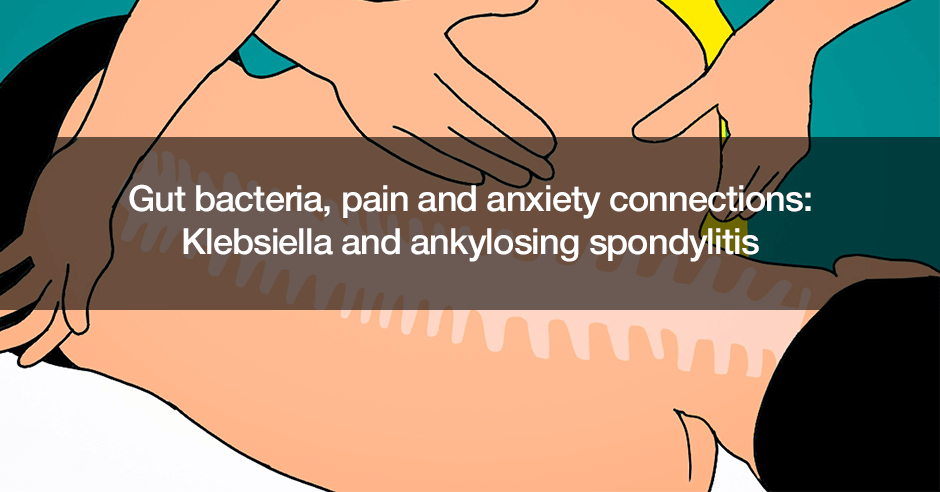
Gut bacteria, pain and anxiety connections: Klebsiella and ankylosing spondylitis

December 28, 2018 By Trudy Scott 21 Comments

We know about the gut-brain connection where the health of our microbiome impacts how anxious or depressed we feel, but we often forget that there is a gut-pain connection too and how addressing dysbiosis and bad bacteria in the gut can have far-reaching benefits.

An old work friend recently reached out asking for help for her husband who had been diagnosed with ankylosing spondylitis, ulcerative colitis and gluten sensitivity, and was not seeing results with conventional treatment. I did some digging for them and a colleague mentioned that they had addressed Klebsiella when they discovered that her husband had genes predisposing him to ankylosing spondylitis. Read on to see what I’ve learned.

Klebsiella as a precursor to ankylosing spondylitis

The paper shared with me: The relationship between Klebsiella infection and ankylosing spondylitis, discusses the HLA-B27 gene and the Klebsiella connection:

Klebsiella-reactive arthritis is the precursor stage occurring in the early and active phases of ankylosing spondylitis.

Let’s learn more about Klebsiella, ankylosing spondylitis, the anxiety connection and prevalence, the role of neuro-inflammation and genes, the problems of a high carb diet and the role the amino acids GABA, tryptophan and DPA play in pain and anxiety relief and being able to quit the carbs easily, plus provide sleep support.

In case you’re not familiar with Klebsiella, this excellent FX Medicine article describes it as follows:

Klebsiella pneumoniae (KP) is a type of gram-negative rod-shaped bacteria that can cause different types of infections ranging from pneumonia (lung), blood infections (septicaemia), wound or surgical infections, urinary tract infections, small intestinal bowel overgrowth (SIBO), ankylosing spondylitis, Crohn’s disease, ulcerative colitis and meningitis (brain).

Ankylosing spondylitis is an inflammatory disease of the spine

In case you’re not familiar with the condition ankylosing spondylitis (pronounced like this) the Mayo Clinic site provides this summary:

Ankylosing spondylitis is an inflammatory disease that, over time, can cause some of the vertebrae in your spine to fuse. This fusing makes the spine less flexible and can result in a hunched-forward posture. If ribs are affected, it can be difficult to breathe deeply.

Ankylosing spondylitis affects men more often than women. Signs and symptoms typically begin in early adulthood. Inflammation also can occur in other parts of your body – most commonly, your eyes.

They say there is no cure and the treatments include pain medications and physical therapy to ease symptoms (and surgery in some cases).

I’m all for physical therapy but you’ll notice there is no mention of gut health or Klebsiella. This is why we have to keep searching for root causes – and work with a functional medicine practitioner – no matter what the health condition, be it ankylosing spondylitis or anything else.

Prevalence of anxiety in ankylosing spondylitis

As with most physical conditions there is a connection with anxiety. This paper: Prevalence of psychological disorders, sleep disturbance and stressful life events and their relationships with disease parameters in Chinese patients with ankylosing spondylitis reports that

AS [ankylosing spondylitis] patients had more severe psychological disorders, sleep disturbance, and stressful life events.

Prevalence of anxiety, depression, and sleep disturbance was 31.6%, 59.3%, and 31.0% respectively.

We have to ask ourselves if we have anxiety, depression and insomnia because of the pain being experienced or because of one or more of the root causes that contribute to both pain and anxiety.

Microbiota disturbance, neuro-inflammation, and anxiety

Often the research focuses on the former but we know that there is Evidence for interplay among antibacterial-induced gut microbiota disturbance, neuro-inflammation, and anxiety in mice. In this 2018 animal study treatment with lactobacilli suppresses this neuro-inflammation.

Ankylosing spondylitis, Crohn’s disease, genes and a high carb diet

The above FX Medicine article shares the connection between ankylosing spondylitis, Crohn’s disease and ulcerative colitis, as well as the genetic susceptibility, together with the problems of a high carb diet:

Genetically susceptible people, such as those who have the HLA-B27 allelotypes and consume a high starch/carbohydrate diet, can trigger a growth in Klebsiella in the bowel, the starch becoming a main food supply for the Klebsiella.

The amino acids for pain, carb addition, anxiety and insomnia

The amino acids come into the picture again, helping to ease the pain, provide precursors for neurotransmitter production until the microbiome is balanced, and eliminate carbohydrate cravings so they can be given up without willpower.

As always figuring out your own imbalance and doing an amino acid trial is key. Here is a summary of how they may help in this instance, assuming you have low levels of GABA, serotonin and/or endorphins:

  • GABA helps with stress eating of carbs, eases physical anxiety, eases some pain.
  • Tryptophan helps with afternoon and evening carb cravings, eases mental worry-type anxiety and depression, and also eases some pain. Both GABA and tryptophan help with insomnia.
  • DPA boosts endorphins providing acupuncture-like pain relief and provides the emotional comfort that starchy treats often do.

The FX Medicine article has treatment and prevention tips for you to share with your functional medicine doctor, who will be able to run a functional stool test such as the GI-MAP offered by Diagnostic Solutions Lab.

Just because there are these gut bacteria, pain, anxiety, Klebsiella and ankylosing spondylitis connections, it doesn’t necessarily mean everyone with ankylosing spondylitis has Klebsiella or that everyone who has Klebsiella will go on to develop ankylosing spondylitis (as stated above) or even that everyone with ankylosing spondylitis will have anxiety. I’m simply connecting some dots so you can start to think outside the box.

I’d love to hear what has worked for you or a loved one with ankylosing spondylitis and/or if you’ve seen elevated Klebsiella on your stool test or have the genetic predisposition?

Have the amino acids and a low-carb diet helped the healing process and eased some of your anxiety while addressing the underlying Klebsiella infection?

Filed Under: Gut health Tagged With: amino acids, ankylosing spondylitis, anxiety, back pain, carbs, cravings, DPA, endorphins, GABA, GI MAP, insomnia, Klebsiella, microbiome, pain, serotonin, tryptophan

The Anxiety Summit – Anxiety: the SCD diet, carbs, adrenals and leaky gut

June 7, 2016 By Trudy Scott 25 Comments

Steven Wright_Anxiety4

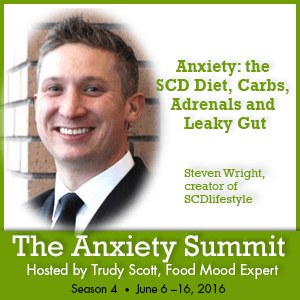
Steven Wright, creator of SCDlifestyle, was interviewed on the Anxiety Summit by host of the Anxiety Summit, Trudy Scott, Food Mood Expert and Nutritionist, author of The Antianxiety Food Solution.

Anxiety: the SCD diet, carbs, adrenals and leaky gut

  • The Specific Carbohydrate Diet /SCD: the history and the basics
  • The GAPs diet – the similarities and differences
  • Stressful times and panic attacks and recovering
  • Adrenal health and restricting carbs too much
  • Leaky gut and glutamine

Here are some gems from our interview (I really enjoy Steve’s common-sense advice, especially when you are feeling overwhelmed):

And so if you can adopt the mindset of hey, you know what, this is just an exploration of food.  I’m just going to throw out all my beliefs for six months and I’m going to try buying that weird fruit at the grocery store; I’m going to buy a new pan; I’m going to burn some things and just try to make it an exploration, like try to mess it up.  If you can do that, if you can get some sort of mindset shift there where it becomes a fun little game, what I would do is I would have a spice of the week and I would put that spice on everything.  I don’t care what they say in cookbooks or chef schools, I’ve never been to chef school actually.  I would like love to go maybe sometime.  But I would just take like oregano and I would put oregano on everything.  I’d put it on my vegetables; I’d put it on my fish; I’d put it on the beef; I’d put it on the chicken I cooked just to see what it tasted like.  Like somebody says you should never put rosemary on your whatever you’re cooking.  Well how do they know?  Why don’t you make up the choice for yourself?  

We cover leaky gut, autoimmunity and anxiety:

So your immune system is concentrated in your gut.  It’s remarkable to think of that, but the reason why is in case these different molecules of the wrong size or the wrong type get into your gut then they gum in and they just kind of like start to attack it and it creates a war.  And so if your gut is chronically leaky, like it is for essentially anyone with an autoimmune condition, because that’s per Dr. Fasano’s theory, that’s essentially the way in which you become autoimmune, you’re going to have a war raging in your bloodstream, in your body, in your gut for all day all night.  And so that consumes a lot of resources; it creates a lot of inflammatory cytokines; it also regulates some other pathways, which can be circulated, end up in the brain and end up causing anxiety and depression.  And so I do believe that there is a subset of people who have anxiety who have either leaky gut as one of their main causes or at least it’s contributing to it.  And so digestive health is really important for anxiety in my opinion.  

This article:  Diet and Inflammatory Bowel Disease, discusses the diets commonly recommended to IBD patients and reviews the supporting data for the low-fermentable oligosaccharide, disaccharide, monosaccharide, and polyol diet; the specific carbohydrate diet; the anti-inflammatory diet; and the Paleolithic diet.  The authors of this paper do say that the role of dietary interventions in the management of IBD still needs to be tested vigorously in patients.

Here is the SCD Quick Start Guide

And for health practitioners wanting to learn how to get their message out in a bigger way and help more people: The Practitioner Liberation Project

If you are not already registered for the Anxiety Summit you can get live access to the speakers of the day here: www.theAnxietySummit.com

Missed this interview or can’t listen live? Or want this and the other great interviews for your learning library? Purchase the MP3s or MP3s + transcripts and listen when it suits you.

You can find your purchasing options here.: Anxiety Summit Season 1, Anxiety Summit Season 2, Anxiety Summit Season 3, and Anxiety Summit Season 4.

Filed Under: Events, The Anxiety Summit 4 Tagged With: adrenals, anxiety, anxiety summit, carbs, leaky gut, scd, Steven Wright, Trudy Scott

No sugar or sugar in moderation? I say NO sugar!

January 10, 2014 By Trudy Scott 23 Comments

Delicious Chocolate Cake

More and more research is supporting the fact that sugar and carbs are as addicting as drugs and as difficult to quit for some people. I came across this quote the other day: “Stressed spelled backwards is desserts. Coincidence? I think not!” and it’s perfect. We crave sugar because we are stressed, sad, looking for pleasure and for energy and motivation. And we self-medicate with it in the same way as drugs, caffeine and tobacco.

This paper called Obesity: The emerging neurobiology of calorie addiction was published just a few days ago:

“The increased availability and consumption of highly palatable foods is the major factor behind the rise of obesity and type 2 diabetes in developed countries.”

“Progress has been made in recent years in understanding the neurobiological underpinnings for this preference” for sucrose: “sucrose activates dopamine neurons in a region of the brain called the striatum, and the resulting release of dopamine is associated with pleasure.”

“Moreover, the repeated consumption of high levels of sucrose can create a cycle of continued overconsumption—even compulsive eating—in order to recapture the initial feelings of pleasure. This is similar in many ways to drug abuse or addiction, and also involves some of the same signalling pathways within the body”

This dopamine/pleasure mechanism is just one way that leads to sugar addiction. This Oct 2013 paper in Nutrition, Neurobiologic basis of craving for carbohydrates says this:

“There is a relationship between emotional disorders, obesity, and craving for carbohydrates”

“Research on the basis of carbohydrate craving is varied, but may be grouped into five main areas: the serotonergic system, palatability and hedonic response [i.e. pleasure], the motivational system, stress response systems, and gene-environment interaction”

Last week I posed this question on my facebook page: “no sugar or sugar in moderation? what’s your vote? I say NO sugar! Do you think that’s too harsh and too unrealistic?” I was referring to ANY sweetener other than fresh fruit.

Here are some of the comments my tribe offered:

  • I’d say in moderation. However I’m trying to reduce my view of moderation over time.”
  • I was totally sweetener-free for a long time so I know how that feels for me. I’ve been experimenting with raw honey I seem to do fine with it “in moderation” (i.e. even a little bit each day is fine – although I don’t make baked goods so I’m not using large quantities.)
  • I seem at present to be incapable of moderation with sugar. So for me none at all might be the way I need to go. Humans developed over many thousands of years with just the sweetness of unprocessed fruits and maybe some honey now and then. Our culture’s idea of what “moderate” even means in regards to processed sugars is highly skewed.
  • Zero is way too hard for me but everyone is different
  • I say: a little bit of everything is just perfect!
  • Zero sugar is too rigid for me…I don’t think any of my clients say no to sugar 100%…I do avoid white and brown processed sugar ~95% of the time but will eat it when at someone’s home made with love. Every day, I use maple syrup to sweeten teas and in baked goods.
  • I don’t think a little bit of natural sugar is bad at all; but only just a little bit.
  • I’d say it’s ok for someone else [the zero sugar]! For me, I have to have a little here and there – just like bread. However, it’s a fraction of what it used to be. Maybe at some point I can whittle down from there.

Very few agreed with me about zero sugar. Here is what they said:

  • I’m with you! it is realistic as I have given up sugar and all artificial sweeteners.
  • NO sugar – Dr so astounded that I’ve brought my numbers down so much after wanting to give me meds for years. She said no meds would’ve brought my numbers down as much as I’ve done with diet and especially NO sugar or carbs.

Here are some of my thoughts: “Moderation” has quite a big range for some people and I see it going out of the window when it comes to baked goods. I see many recipes calling for pretty large amounts of maple syrup of honey. I recently heard Tana Amen, BSN, RN and author of The Omni Diet speak about sugar and crack cocaine in the same sentence and she said: “they are both addicting. We’d never do crack in moderation so why do sugar in moderation!?” I agree!

A friend and I were at a recent celiac function that had tons of gluten-free treats – all loaded with carbs and sugar and not healthy at all even though they were gluten-free. We had no desire to have any of the treats. That’s how we should feel! Zero sugar should be easy!

You won’t crave sugar or even feel the need for a little bit or an occasional treat if you have balanced biochemistry and are not stressed, no nutritional deficiencies (low zinc can be a factor) and are eating to control blood sugar.

You won’t be defensive when asked about it and you won’t feel deprived when you do go without it. You won’t feel that you need just a little. You also won’t have to white-knuckle it and use willpower.

Where do you stand? No sugar or sugar in moderation? And do you think that zero sugar is too harsh and too unrealistic? Do you think addiction plays a role? Are you white-knuckling it or can you take it or leave it?

Do you need help to get to zero sugar consumption? Here are some resources for you.

  1. Check out these chapters in my book “The Antianxiety Food Solution: How the Foods You Eat Can Help You Calm Your Anxious Mind, Improve Your Mood, and End Cravings”: eat real food, blood sugar balancing and the amazing amino acids.
  2. Stay tuned for the upcoming release of my homestudy program “Amazing Amino Acids for Emotional Eating.” Listen to me present on upcoming calls and tele-summits as I share some of the highlights of this wonderful 6 week program. 

Filed Under: Antianxiety Food Solution, Joy and happiness, Sugar addiction, Sugar and mood Tagged With: addiction, Antianxiety Food Solution, carbs, craving, emotional eating, sugar

  • « Go to Previous Page
  • Page 1
  • Page 2

Primary Sidebar

NEW! GABA QuickStart Homestudy (with special intro pricing)

gaba quickstart homestudy

Free Report

9 Great Questions Women Ask about Food, Mood and their Health

You'll also receive a complimentary subscription to my ezine "Food, Mood and Gal Stuff"


Connect with me

Popular Posts

  • Amino Acids Mood Questionnaire from The Antianxiety Food Solution
  • The Antianxiety Food Solution Amino Acid and Pyroluria Supplements
  • Pyroluria Questionnaire from The Antianxiety Food Solution
  • Collagen and gelatin lower serotonin: does this increase your anxiety and depression?
  • Tryptophan for the worry-in-your-head and ruminating type of anxiety
  • GABA for the physical-tension and stiff-and-tense-muscles type of anxiety
  • The Antianxiety Food Solution by Trudy Scott
  • Seriphos Original Formula is back: the best product for anxiety and insomnia caused by high cortisol
  • Am I an anxious introvert because of low zinc and vitamin B6? My response to Huffington Post blog
  • Vagus nerve rehab with GABA, breathing, humming, gargling and key nutrients

Recent Posts

  • What do I use instead of Seriphos to help lower high cortisol that is affecting my sleep and making me anxious at night?
  • BeSerene™ GABA/theanine cream eases severe muscle tension in her neck/shoulders, prevents her bad headaches and quells her anxiety
  • How the correct approach, dose and sublingual use of GABA can be calming and not cause a flushed and itchy face and neck
  • The amino acid glutamine improves low mood by addressing gut health, and it has calming effects too
  • Flight anxiety with heightened breath, physical tension and also fearing the worst (the role of low GABA and low serotonin)

Categories

  • 5-HTP
  • AB575
  • Addiction
  • ADHD
  • Adrenals
  • Alcohol
  • Allergies
  • Alzheimer's disease
  • Amino Acids
  • Anger
  • Antianxiety
  • Antianxiety Food Solution
  • Antidepressants
  • Anxiety
  • Anxiety and panic
  • Autism
  • Autoimmunity
  • benzodiazapines
  • Bipolar disorder
  • Books
  • Caffeine
  • Cancer
  • Candida
  • Children/Teens
  • Collagen
  • Cooking equipment
  • Coronavirus/COVID-19
  • Cravings
  • Depression
  • Detoxification
  • Diabetes
  • Diet
  • DPA/DLPA
  • Drugs
  • EFT/Tapping
  • EMF
  • EMFs
  • Emotional Eating
  • Endorphins
  • Environment
  • Essential oils
  • Events
  • Exercise
  • Fear
  • Fear of public speaking
  • Fertility and Pregnancy
  • Fish
  • Food
  • Food and mood
  • Functional neurology
  • GABA
  • Gene polymorphisms
  • General Health
  • Giving
  • Giving back
  • Glutamine
  • Gluten
  • GMOs
  • Gratitude
  • Gut health
  • Heart health/hypertension
  • Histamine
  • Hormone
  • Hyperparathyroidism
  • Hypoglycemia
  • Immune system
  • Inflammation
  • Insomnia
  • Inspiration
  • Introversion
  • Joy and happiness
  • Ketogenic diet
  • Lithium orotate
  • Looking awesome
  • Lyme disease and co-infections
  • MCAS/histamine
  • Medication
  • Men's health
  • Mental health
  • Mercury
  • Migraine
  • Mold
  • Movie
  • MTHFR
  • Multiple sclerosis
  • Music
  • NANP
  • Nature
  • Nutritional Psychiatry
  • OCD
  • Osteoporosis
  • Oxalates
  • Oxytocin
  • Pain
  • Paleo
  • Parasites
  • Parkinson’s disease
  • PCOS
  • People
  • PMS
  • Postpartum
  • PTSD/Trauma
  • Pyroluria
  • Questionnaires
  • Real whole food
  • Recipes
  • Research
  • Schizophrenia
  • serotonin
  • SIBO
  • Sleep
  • Special diets
  • Sports nutrition
  • Stress
  • Sugar addiction
  • Sugar and mood
  • Supplements
  • Teens
  • Testimonials
  • Testing
  • The Anxiety Summit
  • The Anxiety Summit 2
  • The Anxiety Summit 3
  • The Anxiety Summit 4
  • The Anxiety Summit 5
  • The Anxiety Summit 6
  • Thyroid
  • Thyroid health
  • Toxins
  • Tryptophan
  • Tyrosine
  • Uncategorized
  • Vegan/vegetarian
  • Women's health
  • Yoga

Archives

  • October 2025
  • September 2025
  • August 2025
  • July 2025
  • June 2025
  • May 2025
  • April 2025
  • March 2025
  • February 2025
  • January 2025
  • November 2024
  • October 2024
  • September 2024
  • August 2024
  • July 2024
  • June 2024
  • May 2024
  • April 2024
  • March 2024
  • February 2024
  • January 2024
  • December 2023
  • November 2023
  • October 2023
  • September 2023
  • August 2023
  • July 2023
  • June 2023
  • May 2023
  • April 2023
  • March 2023
  • February 2023
  • January 2023
  • December 2022
  • November 2022
  • October 2022
  • September 2022
  • August 2022
  • July 2022
  • June 2022
  • May 2022
  • April 2022
  • March 2022
  • February 2022
  • January 2022
  • December 2021
  • November 2021
  • October 2021
  • September 2021
  • August 2021
  • July 2021
  • June 2021
  • May 2021
  • April 2021
  • March 2021
  • February 2021
  • January 2021
  • December 2020
  • November 2020
  • October 2020
  • September 2020
  • August 2020
  • July 2020
  • June 2020
  • May 2020
  • April 2020
  • March 2020
  • February 2020
  • January 2020
  • December 2019
  • November 2019
  • October 2019
  • September 2019
  • August 2019
  • July 2019
  • June 2019
  • May 2019
  • April 2019
  • March 2019
  • February 2019
  • January 2019
  • December 2018
  • November 2018
  • October 2018
  • September 2018
  • August 2018
  • July 2018
  • June 2018
  • May 2018
  • April 2018
  • March 2018
  • February 2018
  • January 2018
  • December 2017
  • November 2017
  • October 2017
  • September 2017
  • August 2017
  • July 2017
  • June 2017
  • May 2017
  • April 2017
  • March 2017
  • February 2017
  • January 2017
  • December 2016
  • November 2016
  • October 2016
  • September 2016
  • August 2016
  • July 2016
  • June 2016
  • May 2016
  • April 2016
  • March 2016
  • February 2016
  • January 2016
  • December 2015
  • November 2015
  • October 2015
  • September 2015
  • August 2015
  • July 2015
  • June 2015
  • May 2015
  • April 2015
  • March 2015
  • February 2015
  • January 2015
  • December 2014
  • November 2014
  • October 2014
  • September 2014
  • August 2014
  • July 2014
  • June 2014
  • May 2014
  • April 2014
  • March 2014
  • February 2014
  • January 2014
  • December 2013
  • November 2013
  • October 2013
  • September 2013
  • August 2013
  • July 2013
  • June 2013
  • May 2013
  • April 2013
  • March 2013
  • February 2013
  • January 2013
  • December 2012
  • November 2012
  • October 2012
  • August 2012
  • July 2012
  • June 2012
  • May 2012
  • April 2012
  • March 2012
  • February 2012
  • January 2012
  • December 2011
  • November 2011
  • October 2011
  • September 2011
  • August 2011
  • July 2011
  • June 2011
  • May 2011
  • April 2011
  • March 2011
  • February 2011
  • January 2011
  • December 2010
  • October 2010
  • September 2010
  • July 2010
  • May 2010
  • April 2010
  • March 2010
  • February 2010
  • January 2010
  • November 2009

Share the knowledge!

The above statements have not been evaluated by the Food and Drug Administration. Products listed in this website are not intended to diagnose, treat, cure or prevent any disease.

The information provided on this site is for informational and educational purposes only and is not intended as a substitute for advice from your physician or other health care professional. You should consult with a healthcare professional before starting or modifying any diet, exercise, or supplementation program, before taking or stopping any medication, or if you have or suspect you may have a health problem.


Copyright © 2026 Trudy Scott. All Rights Reserved. | Privacy | Terms and Conditions | Refund Policy | Medical Disclaimer

Free Report

9 Great Questions Women Ask about Food, Mood and their Health

You’ll also receive a complimentary subscription to my ezine “Food, Mood and Gal Stuff”