• Skip to primary navigation
  • Skip to main content
  • Skip to primary sidebar

everywomanover29 blog

Food, Mood and Women's Health – Be your healthiest, look and feel great!

  • Blog
  • About
  • Services
  • Store
  • Resources
  • Testimonials
  • The Book
  • Contact
  • Search this site

cancer

Transgenerational transmission of aspartame-induced anxiety and changes in glutamate-GABA signaling: a new study and solutions

January 13, 2023 By Trudy Scott 9 Comments

gaba to break addiction

Do you drink diet sodas or use other sugar free products that contain aspartame? Or did you when you were younger? New research has found aspartame induces anxiety and fear via changes in glutamate-GABA signaling. What is even more concerning is that these effects are transgenerational, meaning you could be living with the anxiety-provoking effects of aspartame via the diet soda habits from your father and his father/your grandfather. This study found it impacts 2 generations via the paternal line but I suspect ongoing research may yet find impacts via your mother and grandmother too. Also, keep in mind, your current or prior use of aspartame is very likely going to impact your children and grandchildren. It’s an animal study but we don’t want to ignore yet another issue with artificial sweeteners.

The good news is that we can use the amino acid GABA to help counter the high glutamate and low GABA, and ease this physical anxiety this imbalance causes. And we can use GABA and glutamine and other amino acids to break the addiction to aspartame and other artificial sweeteners.

Here is the abstract of the paper – Transgenerational transmission of aspartame-induced anxiety and changes in glutamate-GABA signaling and gene expression in the amygdala

We report the effects of aspartame on anxiety-like behavior, neurotransmitter signaling and gene expression in the amygdala, a brain region associated with the regulation of anxiety and fear responses. C57BL/6 mice consumed drinking water containing 0.015% or 0.03% aspartame, a dose equivalent of 8 to 15% of the FDA recommended maximum human daily intake, or plain drinking water. Robust anxiety-like behavior (evaluated using open field test and elevated zero maze) was observed in male and female mice consuming the aspartame-containing water. Diazepam, an allosteric modulator of the GABA-A receptor, alleviated the anxiety-like behavior. RNA sequencing of the amygdala followed by KEGG biological pathway analysis of differentially expressed genes showed glutamatergic and GABAergic synapse pathways as significantly enriched. Quantitative PCR showed upregulation of mRNA for the glutamate NMDA receptor subunit 2D (Grin2d) and metabotropic receptor 4 (Grm4) and downregulation of the GABA-A receptor associated protein (Gabarap) mRNA. Thus, taken together, our diazepam and gene expression data show that aspartame consumption shifted the excitation-inhibition equilibrium in the amygdala toward excitation. Even more strikingly, the anxiety-like behavior, its response to diazepam, and changes in amygdala gene expression were transmitted to male and female offspring in two generations descending from the aspartame-exposed males. Extrapolation of the findings to humans suggests that aspartame consumption at doses below the FDA recommended maximum daily intake may produce neurobehavioral changes in aspartame-consuming individuals and their descendants. Thus, human population at risk of aspartame’s potential mental health effects may be larger than current expectations, which only include aspartame-consuming individuals.

A few notes to highlight:

  • Aspartame caused anxiety in both male and female mice but the intergenerational effects were along the paternal line i.e.“the anxiety phenotype, its response to diazepam, and changes in amygdala gene expression were transmitted from the aspartame-exposed male founders to their descendants.”
  • These effects were caused by the equivalent to 2–4 small /8 oz/ 240 ml cans of aspartame-sweetened diet soda.
  • The anxiety-inducing effects of aspartame in humans are potentially far more widespread than what is currently known

There is still no consensus on adverse effects

The paper also highlights a very concerning aspect: there is still no consensus on aspartame’s effects on brain monoamine content (serotonin and the catecholamines dopamine, adrenaline, and noradrenaline) or behaviors such as memory, depression and anxiety. Despite much research, consensus is also still lacking on aspartame’s carcinogenic or cancer-causing effects and the impacts on weight-gain and obesity, and the bad effects on the microbiome.

In fact, “the US government policy and publications indicate that aspartame is safe when consumed within FDA recommended maximum daily intake value of 50 mg/kg.” In this study it was much less than the maximum i.e. the equivalence of just “8 to 15% of the FDA recommended maximum human daily intake” caused the above anxiety and intergenerational effects.

This paper is adding to the body of knowledge but if you’re still consuming aspartame it is time to make your own decisions and quit. This is often easier said than done and I address this below.

GABA and other amino acids as a solution for your diet soda addiction

I address the addictive nature of diet soda in this blog: I need help with my Diet Coke addiction – when I stop, my fatigue, brain fog, anxiety/depression increase big time!

I need help with my Diet Coke addiction. I have been using it for 35 years and I am too appalled to tell you how much I drink.

I have tried to quit many times and ended up in utter failure. When I stop, my fatigue, brain fog, anxiety/depression increase big time. I know this drink is literally killing my health and I am desperate for some answers, suggestions….or a miracle.

Kevin shares this in the comments: “I was VERY addicted to diet coke and Pepsi. I found oxycontin and morphine easier to quit.” And Karen shares this: “I can relate to a Coke/Pepsi (diet and/or regular) addiction because I drank 3 every day, Monday-Friday for years. For me, that first sip in the morning was my “hit” in the morning for this teetotaler.”

When it comes to using amino acids to help break the addiction, pretty much everything I write about in relation to sugar addiction or cravings would also apply to quitting Diet Coke or other diet sodas. You need to figure out what emotions are driving your addiction and use the respective amino acid supplement/s (one or more of them) to help break the addiction and improve your anxiety and mood symptoms at the same time.

This could be glutamine if you drink it when your blood sugar is low and crave the sweet taste, GABA if you drink it when stressed, tryptophan or 5-HTP if you drink it later in the day in order to feel happy, DPA if it’s your reward and tyrosine if it gives you a mood and energy boost. It’s all explained in the above blog post.

The amino acids ease alcohol withdrawal symptoms too. I share a study in this blog – An amino acid supplement with DLPA, glutamine and 5-HTP eases alcohol withdrawal symptoms at an inpatient detoxification program – and practical solutions using these amino acids. Read this and simply substitute alcohol with diet soda. And keep in mind it’s always an individualized approach based on each person’s needs, for endorphin and dopamine support (from the DLPA), blood sugar support (from glutamine) and serotonin support (from 5-HTP).

GABA as a solution for the physical anxiety symptoms

In this study the mice responded well to diazepam, a benzodiazepine prescribed for anxiety. However, given the many issues with long-term benzo use, the amino acid GABA, used as a supplement is a safer choice. It also addresses the root cause of low GABA and high glutamate.

The FDA approved aspartame as a nutritive sweetener in 1981 and for use in carbonated beverages in 1983 so I don’t have the intergenerational impacts. I drank Tab in my early 20s and it contained aspartame for a short time. It was very likely part of the perfect storm of factors that contributed to my anxiety. GABA was a life-saver for me.

Here are a few blog posts on using GABA for easing physical anxiety and fears:

  • GABA is a life saver for anxiety, theanine helps at night (insomnia) and 5-HTP makes a significant difference in lessening daily pain
  • Drastic reduction in intrusive thoughts, anxiety and fears (and better sleep) with GABA, tryptophan, 5-HTP and the pyroluria protocol
  • GABA, Heartmath and EFT ease Micki’s mold-induced anxiety and panic attacks

Be sure to use the search feature to find other similar articles on the blog.

Resources if you are new to using amino acids as supplements

If you are new to using GABA or any of the other amino acids as supplements, here is the Amino Acids Mood Questionnaire from The Antianxiety Food Solution (you can see all the symptoms of neurotransmitter imbalances, including low GABA and low serotonin).

If you suspect low levels of any of the neurotransmitters and do not yet have my book, The Antianxiety Food Solution – How the Foods You Eat Can Help You Calm Your Anxious Mind, Improve Your Mood, and End Cravings, I highly recommend getting it and reading it before jumping in and using amino acids on your own so you are knowledgeable. And be sure to share it with the practitioner/health team you or your loved one is working with.

There is an entire chapter on the amino acids and they are discussed throughout the book in the sections on gut health, gluten, blood sugar control, sugar cravings, self-medicating with alcohol and more.

The book doesn’t include product names (per the publisher’s request) so this blog, The Antianxiety Food Solution Amino Acid and Pyroluria Supplements, lists the amino acids that I use with my individual clients and those in my group programs. You can find them all in my online store.

If, after reading this blog and my book, you don’t feel comfortable figuring things out on your own (i.e. doing the symptoms questionnaire and respective amino acids trials), a good place to get help is the GABA QuickStart Program (if you have low GABA symptoms). This is a paid online/virtual group program where you get my guidance and community support.

If you are a practitioner, join us in The Balancing Neurotransmitters: the Fundamentals program. This is also a paid online/virtual program with an opportunity to interact with me and other practitioners who are also using the amino acids.

Did you drink diet sodas in the past or do you still consume them or other products that contain aspartame?

Do you suspect they may be one root cause of your anxiety? And has stopping helped?

Did GABA help ease your anxiety and fear? And help with breaking the addiction and quitting? What about other amino acids like tyrosine, glutamine, tryptophan/5-HTP or DPA (d-phenylalanine)?

What about suspected intergenerational impacts from your parents and grandparents?

Feel free to post your questions and feedback in the comments below.
Filed Under: Addiction, Anxiety, Diet, GABA Tagged With: addiction, amino acids, amygdala diazepam, anxiety, artificial sweeteners, aspartame, aspartame-induced anxiety, cancer, cognition, diet soda, endorphins, fear, GABA, GABA Quickstart online program; and Balancing Neurotransmitters: the Fundamentals program for practitioners, generations, glutamate, glutamate-GABA, glutamine, obesity, paternal, sugar free, Transgenerational, tryptophan, tyrosine

The benzodiazepine valium blocks DAO and impacts histamine levels: wisdom from Yasmina Ykelenstam and a tribute to her brilliance

September 14, 2018 By Trudy Scott 72 Comments

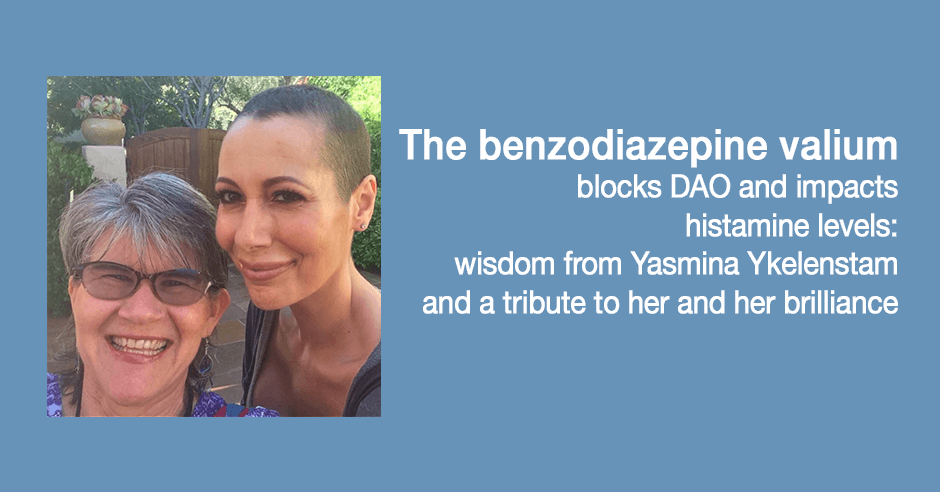
The benzodiazepine valium blocks DAO and impacts histamine levels and may actually increase anxiety via this mechanism. I learned all this in an interview I conducted with my amazing colleague Yasmina Ykelenstam.

Sadly Yasmina lost her battle to a rare and aggressive type of breast cancer this week. She had triple negative breast cancer which has a minimal survival rate of no longer than just a few months. She lived with it for over 2 years, outliving all odds. She had just turned 43.

It is with great sadness and reflection that I write this post as tribute to Yasmina who was as bold as she was brilliant.

Yasmina is well known as the Low Histamine Chef and for an abundance of histamine intolerance resources and recipes on Healing Histamine.

We only met in person on one occasion in 2017 and spent an evening and wonderful lunch together. Her warmth, passion and caring shone through and I felt I already knew this kind and smart woman. I had been following her work online after an interview with Dr. Ben Lynch on season 2 of the Anxiety Summit – Biochemical and genetic predispositions: COMT, GAD & MAOA – where he raved about her work.

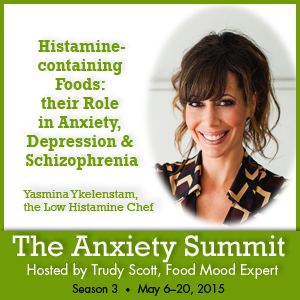
I reached out to Yasmina and was so thrilled to have the opportunity to interview her for season 3 of the Anxiety Summit – Histamine-containing Foods: their Role in Anxiety, Depression and Schizophrenia

As a tribute to Yasmina and so her brilliance continues to shine I’m sharing some of the highlights from our interview, where she shared that:

  • Histamine is the gluten of the intolerance world
  • Histamine is a neurotransmitter and plays a role in mood disorders
  • Histamine can cause symptoms of anxiety: Increased heart rate and blood pressure, shortness of breath and gasping for air, pounding heart, dizziness and feeling faint

In case you’re new to histamine intolerance this paper provides a quick overview: Histamine and histamine intolerance

Histamine intolerance results from a disequilibrium of accumulated histamine and the capacity for histamine degradation. Histamine is a biogenic amine that occurs to various degrees in many foods. In healthy persons, dietary histamine can be rapidly detoxified by amine oxidases, whereas persons with low amine oxidase activity are at risk of histamine toxicity. Diamine oxidase (DAO) is the main enzyme for the metabolism of ingested histamine.

This new research shows how a low histamine diet has benefits: Histamine-reduced diet and increase of serum diamine oxidase correlating to diet compliance in histamine intolerance

In our interview we had a lengthy discussion on benzodiazapines and the histamine connection. It was both fascinating and very concerning:

Many people doing a benzodiazepine taper are often switched to Valium which is a DAO [diamine oxidase blocker (or histamine liberator)] and this further prevents histamine from being removed from the body.

Dye are also triggers…the pink Xanax can be problematic 

Here is the transcript from the benzodiazepine section of our interview, with a few tweaks to give it context. I start by asking Yasmina to talk about histamine interactions with psychiatric medications.

* * * * * * * * * * * * * * * * * * *

Yasmina Ykelenstam: Well, I recommend that people go to a wonderful website and it is called histaminintoleranz.ch. It’s German, but it’s translated into English. That’s H‑I‑S‑T‑A‑M‑I‑N‑I‑N‑T‑O‑L‑E‑R‑A‑N‑Z.ch. And they have a very, very long list of medications on there that interact with diamine oxidase or histamine liberators. The one that I just wanted to mention very quickly because it’s relevant to anxiety – and that one is diazepam [you can find this listed on the above site on this page.]

Diazepam (or Valium) is a medicine, as I said, that I used when I was a child – for a couple of days. And it’s a tranquilizer, a benzodiazepine. One of the most commonly prescribed benzodiazepines in the world is Valium.

I don’t know if it still is, but when the UN would send out emergency packs to people, Valium was included in there. That’s how widespread its use is. It’s a diamine oxidase blocker. So it blocks the enzyme responsible for degrading histamine in the body. So people who are dealing with anxiety symptoms that are perhaps caused by histamine issues would not do very well potentially with Valium / diazepam because it would further prevent histamine from being removed from the body.

I was on Valium / diazepam for many, many years after it was first prescribed to me and I did not know that. And it was the medicine, it was the tranquilizer that I chose to use to taper from another benzo. I was on Xanax at the time and I had been told that Xanax is harder to withdraw from than crack. So I should switch to another benzodiazepine that had a longer half-life – how long it stays in the body – so that it would make it easier for me to withdraw. And Valium / diazepam was the one that I chose and I think that’s when my body started giving me the message of “Hurry up; just finish this; just cut, cut, cut; get this out of the body because it’s not doing you any good.”

But there is a very, very long list of medications on that German site and interestingly, there are a number of antihistamines in the list of medications that block diamine oxidase and also the other histamine-degrading enzyme. Cimetidine, C‑I‑M‑E‑T‑I‑D‑I‑N-E – I think it is a second-generation antihistamine. It is still prescribed today. It was being prescribed to many people by a doctor in London.

I have another doctor: Dr. Seneviratne in London. He is an immunologist with mast cell focus. He’s excellent. But there was another doctor who was supposedly a mast cell person who was prescribing cimetidine to people. I had to send a message to him saying please stop doing this because it’s probably not very good for them. Also, we were talking about diphenhydramine and that is an HNMT blocker, which is the other histamine‑degrading enzyme.

Trudy Scott: Okay. So I want to just recap here. So we’ve got these meds that block the DAO enzyme, which in turn prevents you from releasing histamine and preventing histamine from being removed from the body.

Yasmina Ykelenstam: Exactly. Yeah, and what’s odd is diphenhydramine is obviously Benadryl, which is one of the most commonly prescribed antihistamines in the United States.

Trudy Scott: A lot of people are on diphenhydramine. You’re right, yeah.

Yasmina Ykelenstam: There are many different mechanisms of action for degrading histamine and for getting it out of the body. So it might not be the end of the world if you’re taking one medication that affects the DAO enzyme but doesn’t affect the HNMT enzyme. And obviously, there’s the liver and there’s different methods of dealing with things in the body. So it’s not the end of the world, but still it’s something you might not want to do and should definitely discuss with your doctor.

Trudy Scott: Yes, and being aware of this. Now I wanted to just go back to the benzodiazepines because I was not aware of this connection to Valium diazepam, and that being a DAO blocker. So is it only the Valium and the other benzodiazepines are not, or is it all benzodiazepines?

Yasmina Ykelenstam: Okay, let me try to remember. Haloperidol is an antipsychotic, isn’t it? (It’s on the list)

Trudy Scott: Yes, that’s correct.

Yasmina Ykelenstam: I am not aware of any others offhand and I’m just trying to take a quick look at the list now that I have it in front of me. But no, I don’t believe so because I looked them up because having taken all of them, and I mean, really all of them, I have taken every benzodiazepine ever made in the last 30 years. And no, I think it was just the diazepam, but as I said, it is one of the most commonly prescribed.

Trudy Scott: And it’s really important for me to mention this because I am dead against all benzodiazepines because of their addictive/dependent nature and the side effects and when you’re trying to taper off they cause all these problems. I’ve interviewed a number of people on this topic. In Season 1 of the Anxiety Summit, I interviewed Dr. Catherine Pittman who talked about the Benzobuddies.org group and how so many individuals battle getting off benzodiazepines.

Yasmina Ykelenstam: Oh, I was a member.

Trudy Scott: You were?

Yasmina Ykelenstam: I was a member there (at benzobuddies.org) at one point.

Trudy Scott: Oh, you were? Yeah, it’s a very big issue and problematic drug. But why I’m saying this is because Professor Ashton, who’s an expert on tapering, talks about switching to Valium. So this could be problematic.

Yasmina Ykelenstam: Well, if you could reach out to these communities, that would be fantastic because I did spend some time after, figuring out what was going on, trying to contact people and trying to let them know of this link because there were a lot of people that were in these communities that were suffering from protracted withdrawals. And by this point, I had my suspicions that the protracted withdrawals were actually a histamine response and that the reason that they were experiencing this was just that the original issue was never dealt with. And that was that it might be an underlying histamine issue that initially had them diagnosed with the anxiety disorder and then they were taking these meds. And so when you take the medication away, you’re still left with the existing condition but it isn’t being addressed.

Trudy Scott: Yes, and maybe some of them had done the switch to Valium, which was making things worse.

Yasmina Ykelenstam: Exactly.

Trudy Scott: Very interesting.

Yasmina Ykelenstam: The reason I switched to Valium was because I was following Dr. Ashton’s protocol from benzo.org.uk. I was advised against coming off my medication and I was told that there was no safe withdrawal protocol. I brought them a copy of the Ashton protocol and I was laughed out of the office, but I chose to do it on my own anyway and I’m very grateful to her research.

Trudy Scott: Yes, she’s done amazing research. I’m so appreciative to learn of this component and I’m on a mission to educate people about the benzodiazepines and this is just another aspect that we need to be considering. I will certainly reach out to some of these groups and people hearing this on this Summit, is going to bring awareness to this aspect. All of this is fantastic.

Yasmina Ykelenstam: The other brief thing is that, of course, the dyes are also triggers. And this is why a lot of us, when we’re prescribed psychiatric meds, end up with a new set of symptoms because of the coloring that is actually on the tablets. I was unable to take the pink Xanax, but I was able to take the white Xanax, and my doctor never understood it. He said, “I don’t understand how higher doses of Xanax make you feel worse, but the lower ones works for you.” And I kept telling him, “But I’m taking the same dose at the end of the day, so I don’t understand either.”

* * * * * * * * * * * * * * * * * * *

Here is the link to the entire audio so you can get a better understanding of histamine intolerance.

I’d love to hear your benzodiazepine and histamine intolerance experiences – both good and bad

It would remiss of me to omit something that is seldom discussed: the link between benzodiazepine use and increased cancer risk. In our interview Yasmina shared this “I have taken every benzodiazepine ever made in the last 30 years.”

Yasmina was always very open about her healing journey and I suspect she asked herself this question and would be ok with me making this possible connection in the hope it may help someone who is considering a starting a benzodiazepine prescription or someone contemplating doing a benzodiazepine taper.

I hope this has been helpful if you’re currently taking a benzodiazepine, are considering taking one, have taken one in the past, have issues with high histamine foods, are taking one of the other medications on the list, and/or have had issues with the colors in medications.

With much appreciation to Yasmina! We loved her and thank her for sharing so freely and wisely and we love that her wisdom will live on! Rest in peace.  My deepest sympathies to her family and others who were close to her.

Note added later on 9/14/18 after this blog was published:

As soon as I heard the sad news about Yasmina I wrote this blog as a tribute to her. Then a few hours before it was due to be published I heard her family had not yet made the announcement public and hadn’t yet shared the news with her community.  At the last minute I removed the tribute sections out of respect for them. When I woke I saw the announcement on her Facebook page and reinstated my tribute.

I’ll be doing further updates to share some of what was said about continuing her legacy and anything more I learn.

Filed Under: benzodiazapines Tagged With: benzodiazepine, cancer, DAO, diazepam, histamine, Valium, Yasmina Ykelenstam

KetoNutrition: From Science to Emerging Applications and Practical Implementation

May 4, 2018 By Trudy Scott Leave a Comment

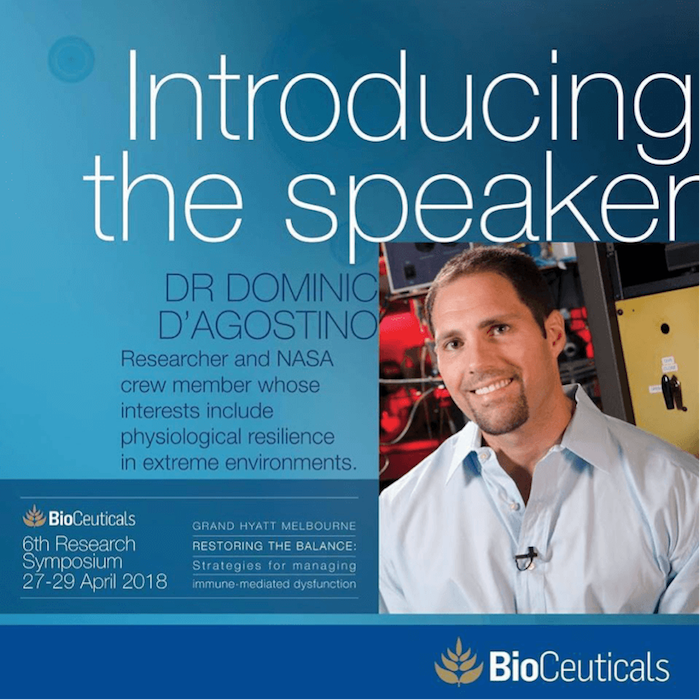
I had the pleasure of hearing Dominic D’Agostino, NASA crew member, researcher and Associate Professor at the University of South Florida present on “KetoNutrition: From Science to Emerging Applications and Practical Implementation” at the 6th BioCeuticals Research Symposium in Melbourne last weekend. His presentation was based on decades of evidence that supports the anticonvulsant and neuroprotective properties of nutritional ketosis. It was one of my favorite presentations and I’m thrilled to share some of the highlights with you here.

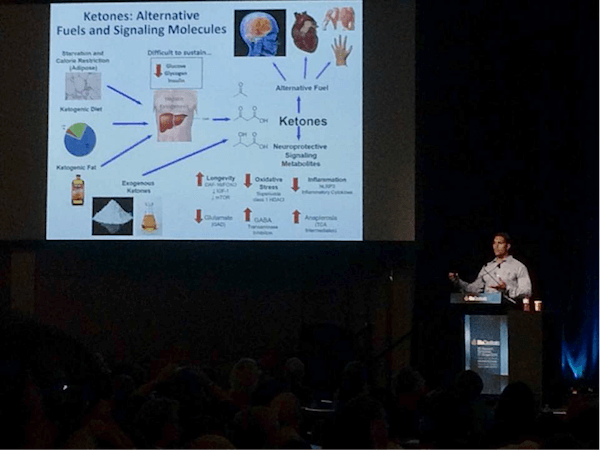
Ketones are alternative fuels and neuroprotective signaling metabolites – increasing longevity, lowering inflammation, dampening oxidative stress, lowering glutamate and raising GABA.

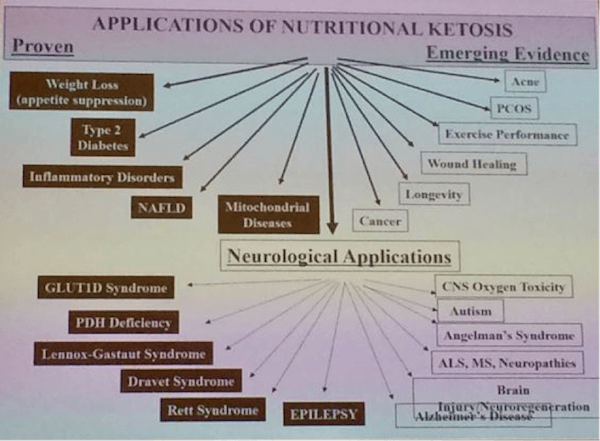
In this slide he shared how the proven applications of nutritional ketosis are extensive – including epilepsy, type 2 diabetes, weight loss, NAFLD, mitochondrial disease and inflammation, GLUTID Syndrome, PDH Deficiency, Lennox-Gastaut Syndrome, Dravet Syndrome and Rett Syndrome.

There is emerging evidence for acne, PCOS, exercise performance, wound healing, longevity, cancer, CNS Oxygen Toxicity, autism, Angelman’s Syndrome, ALS, MS, Neuropathies, Alzheimer’s disease, brain injury, neurodegeneration, anxiety, depression, bipolar and schizoaffective disorder.

Seizures, cancer and the ketogenic diet


In his TEDx talk from 2013 Dr. D’Agostino shares the benefits of a ketogenic diet for seizures and how while studying the effects of gasses on the brains of Navy Seal divers, he developed an approach for metabolically starving cancer cells through diet and compressed oxygen, replacing chemotherapy, surgery, or radiation.

He ends by saying this:

Future treatments and prevention of many diseases may fall back on the ancient wisdom of Hippocrates when he said “let food be thy medicine”

As you can see from the applications slide above, much more research has been done on the therapeutic benefits of a ketogenic diet since this 2013 TEDx talk.  And food truly is medicine!

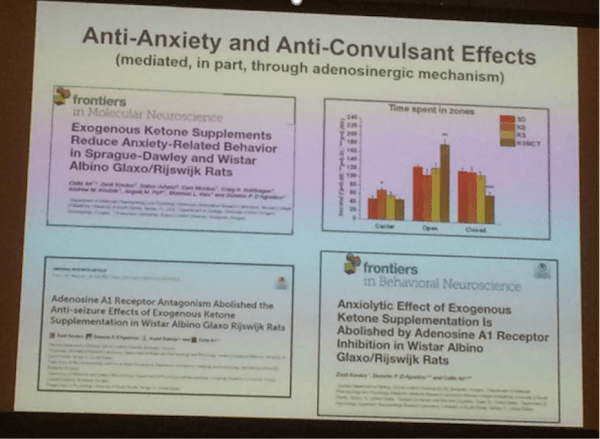
In one of his studies, the first paper above, ketone supplementation was found to have an anti-anxiety effect – Exogenous Ketone Supplements Reduce Anxiety-Related Behavior in Sprague-Dawley and Wistar Albino Glaxo/Rijswijk Rats:

We conclude that ketone supplementation may represent a promising anxiolytic strategy through a novel means of inducing nutritional ketosis.

Adenosine and the adenosinergic mechanism

He shared a number of studies that describe how the anti-anxiety and anti-convulsant effects of ketone supplementation are mediated, in part, through the adenosinergic mechanism. This was one of his papers – Anxiolytic Effect of Exogenous Ketone Supplementation Is Abolished by Adenosine A1 Receptor Inhibition in Wistar Albino Glaxo/Rijswijk Rats.

Adenosine is a neurochemical which many coffee-drinkers may be familiar with since: “Caffeine increases wakefulness [and often anxiety] by antagonizing adenosine receptors, and adenosine itself promotes sleepiness” and a feeling of calm.

Older research finds that there is the “involvement of adenosinergic receptor system in anxiety related behaviours.” More recent research describes adenosine as “a mediator with multisystemic effects”, and it is produced by almost all cells, playing a role in heart function, sleep, bone health, activation of the immune system and mediating the effect of various hormones. I expect we’ll be hearing a great deal more about adenosine in relation to ketogenic diets in the near future.

The microbiomes of astronauts sync up and so do their serotonin levels

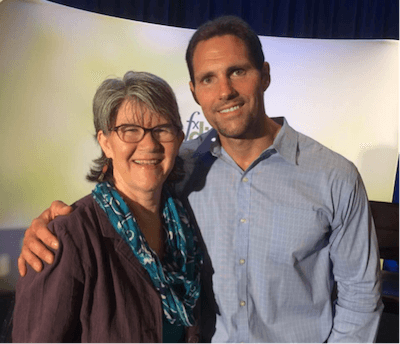
This was one of my favorite presentations at the BioCeuticals Symposium and it was really great to meet Dominic afterwards and learn more about future anxiety research. He shared that his lab has planned research on the benefits of ketosis for both anxiety and improved cognitive function.

It was also fascinating learning from someone who has been in space and hearing how the microbiomes of the astronauts sync up when they are all in space together. And so do their serotonin levels.

If the ketogenic diet is new for you or you want to see the latest research, check out Dominic’s work at Keto Nutrition. And if you want to learn more from Dominic and other keto experts, the Keto Edge Summit runs all of next week.

I also write about two schizoaffective case studies here and share questions and concerns I have about the ketogenic diet. It’s not a panacea for everyone in all instances. But the therapeutic benefits are profound when someone needs to adopt this dietary approach.

Feel free to ask questions and share you experiences with a ketogenic diet – in the comments below.

Filed Under: Anxiety, Bipolar disorder, Ketogenic diet Tagged With: adenosine, adenosinergic, anxiety, autism, cancer, depression, Dominic D'Agostino, keto, Ketogenic diet, ketosis, schizoaffective disorder, seizures, weight-loss

The Truth about *PET* Cancer docu-series – save the lives of your precious pets

March 22, 2018 By Trudy Scott 4 Comments

Cancer is ruthless and this disease is stealing the lives our beloved animals. It’s sad but true. Each year, over 6 million dogs and 6 million cats are diagnosed with cancer. And millions die as a devastating result.

The experts at The Truth about *PET* Cancer share this:

The rate of cancer in pets is exploding! Just 50 years ago, 1 in 100 dogs got cancer. Today it is a staggering 1 in 1.65 dogs. Dogs have the highest rate of cancer of any mammal on the planet, and cats aren’t far behind, with 1 in every 3 receiving a cancer diagnosis.

I was shocked by these rates so I reached out to the hosts and they kindly sent me an article by Carol Beuchat PhD, Scientific Director of the Institute of Canine Biology: Do dogs have more cancer than other mammals?:

We can truthfully say that cancer in pets is at the epidemic stage right now, and just like most oncologists, the vast majority of vets don’t know about the countless natural therapies and protocols available to heal and prevent pet cancer.

Cancer is a problem not just in a few dog breeds but in many. Cancer rates of 20% or 30% are taken as “normal” because they are so much lower than the levels in breeds that are notorious for cancer – the ones up at 50% and 60%. Clearly, however, what is considered normal for dogs is much higher than what we see in mammals in general, and cancer rates that are “abnormally high” in dogs are actually off the charts.

She also compares cancer in dogs with other mammals and the Tasmanian Devil:

rates of cancer in dogs are higher- spectacularly so, in fact – compared to those for mammals in general. Cancer rates in other mammals are largely less than 20%, while in dogs there are only a handful of breeds in that range, and there are none at all lower than about 15%, where most of the mammals are. In fact, the Tasmanian Devil with its contagious cancer [and 50% rate] is matched by the Flatcoated Retriever and even outdone by the Irish Water Spaniel, with a half dozen more breeds almost as high.

What if your dogs and cats are tragically dying from cancer, simply because you haven’t heard about treatments that can truly heal them? In this groundbreaking 7-episode docu-series, 30 world-renowned pet health experts will reveal better, safer and more affordable cancer healing treatment. And you’ll discover simple prevention therapies (your vet probably doesn’t even know about) that can save the lives of your precious pets.

Here is one cancer prevention topic that will be covered by one of the experts Rodney Habib: Are there potatoes in your bag of pet food or in your pet’s diet?

Alas, the conventional potato tests positive for 35 different pesticides — more pesticides by weight than any other vegetable, according to EWG [Environmental Working Group] 2014 Dirty Dozen List

Unless you are feeding organic potatoes to your family and pets, you may want to give this information some serious consideration seeing that today’s cancer and disease rates are soaring at an all-time high! It is estimated that 5% of cancer is genetic and 95% is a result of lifestyle and environmental factors. The fewer toxins we have in our systems, the fewer problems we have. Period.

The experts will talk about topics from the pet food industry, diets and specific treatment protocols to reverse cancer, water intake, vaccinations (needed vs. those that are likely to cause cancer), essential oil recipes in place of flea/tick collars and overall homeopathy for pets.

I’ve seen natural health work wonders with anxious pets – such as theanine, a gluten-free diet and Thunder shirts – so let’s use natural approaches for cancer prevention and treatment too! You’ll find out everything you need to know in this cutting-edge series that starts in a few weeks.  

You’ll also discover that many of these natural approaches help with both pet cancer and pet anxiety too – such as a gluten-free diet, organic food, essential oils, nutrients like curcumin, vitamin D and much more.

If you want to protect your family pet from cancer… or heal your pet’s cancer when the vet says there’s nothing more to be done… or you want to give your pet the healthiest food and environment possible so they will live a long and happy life, then I encourage you to register for The Truth About PET Cancer docu-series now.

CLICK HERE to watch the video trailer and then register to watch this special event.

And check out this quiz: Do you know your pet’s risk for cancer?


Keywords


Filed Under: Cancer, Events Tagged With: anxiety, anxious, cancer, cat, dog, pets, potatoes, Prevention, treatment, Truth about pet cancer

Lemongrass essential oil for cancer and anxiety: The Truth About Cancer livestream

October 2, 2017 By Trudy Scott 4 Comments

The Truth About Cancer live event which runs Oct 5-7 and the livestream broadcast starts on Thursday, October 5th at 9am Eastern. You can tune in and listen from home!

This event brings you the latest in natural cancer prevention, new therapies, cancer diets, toxins to avoid and much much more!

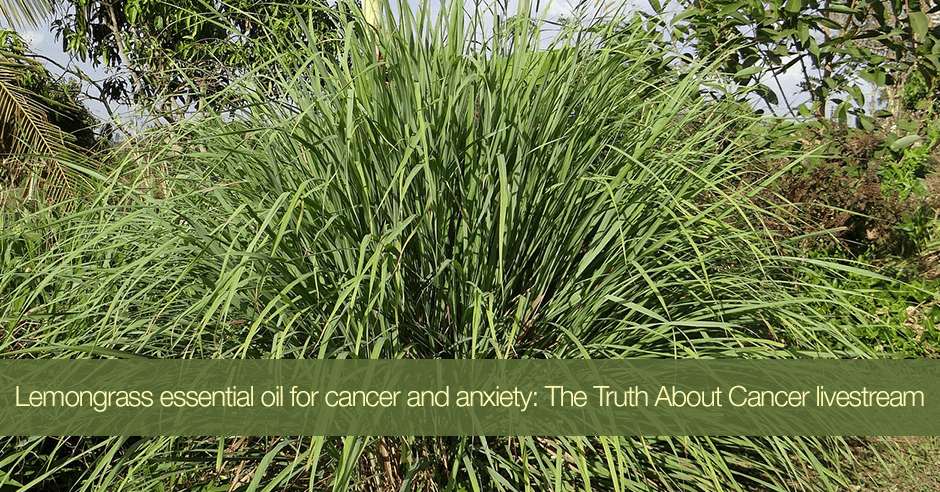
What’s so encouraging is that many of the natural treatments and approaches for cancer also help with reducing anxiety. One of these is the essential oil of lemongrass.

One of my favorite essential oil experts is Dr. Eric Zielinski and he is talking about Essential Oils, Aromatherapy, and Cancer. Dr. Z shares this about lemongrass essential oil and cancer:  

In 2009, an article was published that evaluated the essential oil of Cymbopogon flexuosus (a variety of lemongrass) for its in vitro cytotoxicity ability against 12 human cancer cell lines; as well as its anticancer effects on mice in vivo. The results were remarkable. Researchers discovered that the essential oil triggers a variety of mechanisms that kill cancer cells. “Our results indicate that the oil has a promising anticancer activity and causes loss in tumor cell viability by activating the apoptotic process as identified by electron microscopy.”

Research also shows that the GABAergic system contributes to the anxiety-reducing effect of essential oil from lemongrass (cymbopogon citratus).

A number of speakers are sharing the benefits of the ketogenic diet for cancer prevention and healing

  • Joseph Mercola – Ketogenic Diet and Cancer
  • Dr. Toni Bark – Ketogenic Diet and disease reversal and prevention
  • Cherie Calbom – Juice, Juice, and More Juice to Treat & Prevent Cancer: How Vegetable Juicing Complements a Ketogenic Diet

As you heard recently from Dr. David Jockers on the Mental Wellness Summit, the ketogenic diet helps with anxiety because it improves the ability of glutamate converting into GABA:

There is a relationship between glutamate, which is an excitatory neurotransmitter in the brain, and GABA, which is an inhibitory neurotransmitter. Glutamate naturally converts into GABA when certain nutrients are present – like magnesium and vitamin B6 – along with a properly working GAD enzyme.

Now, when we have ketones present, they have been shown to improve the ability to convert glutamate into GABA.

Dr. David Jockers is also a speaker at The Truth About Cancer and is covering The Sugar-Cancer Connection

The list of speakers is truly a Who’s Who of natural cancer therapies … and includes superstars like:

  • Patrick Quillin – Beating Cancer with Nutrition
  • Robert Scott Bell – Gut Health, the Microbiome, and Cancer
  • Rashid Buttar -The Cancer Conflict: Resolving the 5th Toxicity
  • Tony Jimenez – Treating Cancer with Sound and Light
  • Mike Adams – The importance of “ORGANIC”
  • Del Bigtree – Freedom of Choice in Medicine
  • Chris Wark – How “Chris Beat Cancer”
  • Sayer Ji – Epigenetics and Cancer
  • Dr. Darrell Wolfe – DETOX and the Lymphatic system
  • Jeffrey Smith – How GMOs have been linked to cancer
  • Doug Kaufman – The Fungal Link to Cancer
  • Pharmacist Ben Fuchs – Skin Health & Skin Cancer
  • Barbara Loe Fisher – Freedom of Choice in Medical Interventions
  • Dr. Stuart Nunnally – Biological Dentistry and Cancer Prevention
  • Dr. Ben Johnson – Stem Cells, Lasers, and Novel Approaches for Cancer
  • Dr. Marlene Siegel – Preventing and Treating Cancer in Pets

And many more!

It’s 3 days that could very well save your life or the life of someone you love.

You’re invited to watch it LIVE at no cost from the comfort of your own home.

Take a minute to get all the details right here. The broadcast starts Thursday, October 5th at 9am Eastern.

I don’t often share resources about cancer but I feel this is such an amazing opportunity to learn and feel empowered so you don’t have to feel anxious about cancer. These experts may just have the healing answers you’ve been looking for! Please share with your friends, family and anyone else you think could use this information!

Just like there is hope and solutions for anxiety, there is HOPE … and healing … and survival for cancer too.

To your health! See you on the livestream!

Filed Under: Cancer, Essential oils, Events Tagged With: anxiety, cancer, Dr. Eric Zielinski, essential oils, Ketogenic diet, lemongrass, The Truth About Cancer, Ty Bolinger

Never Fear a Cancer Diagnosis – Livestream of The Truth About Cancer event

September 26, 2017 By Trudy Scott 1 Comment

Hearing the words “you’ve got cancer” is not something anyone wants to hear but statistically, one in two people WILL hear these words.

That’s right. The odds are 50/50 that it could be you or someone you love.

Anxiety and cancer feed off each other

  • you’re anxious and fearful about your cancer diagnosis (or the diagnosis of a loved one) and
  • the cancer itself can make you anxious and depressed because of the inflammation, the effects on the immune system and the cancer treatments themselves

But just like there is hope and solutions for anxiety, there is HOPE … and healing … and survival for cancer too.

There’s a growing body of evidence and data from a group of forward-thinking scientists and researchers around the world suggesting there are real solutions out there to prevent, treat, and beat cancer naturally.

Ty and Charlene Bollinger and their wonderful team at The Truth About Cancer are working hard to bring you the latest in natural cancer prevention, new therapies, cancer diets, toxins to avoid and much much more. It is being shared live on stage at their upcoming event (and you can watch it all via livestreaming from your home)

Dr. Joseph Mercola is speaking on the Ketogenic Diet and Cancer. He shares:

many cancer patients have reportedly overcome cancer by adopting a ketogenic diet, which calls for eliminating carbohydrates, replacing them with healthy fats and protein”

Dr. Veronique Desaulniers addresses Breast Cancer and Early Warning Signs. She faced the diagnosis of breast cancer and shares this about her journey

I came to appreciate that cancer was a message of love – that my body was trying to communicate with me and get my attention. If you keep doing things you have always done, you are going to get the same results. So for me, it was time to change emotional patterns, manage my stress, set boundaries and learn to love myself with all my perfect imperfections.

One of my favorite essential oil experts is Dr. Eric Zielinski and he covers Essential Oils, Aromatherapy, and Cancer. Dr. Z shares this about essential oils and cancer:

First – the research suggests that oils can help prevent and treat cancer at the cellular level. Additionally, and oftentimes overlooked, essential oils have been shown to be exceptionally effective at managing the side effects related to cancer itself and the side effects people suffer at the hands of medical interventions.

Second – it is critical to recognize that this is not an all-or-nothing approach. Just because you’re taking chemo doesn’t mean that you can’t use oils. The same is true on the flip side of that coin. Far too many patients and healthcare practitioners dichotomize natural from allopathic therapies, and do not give enough emphasis on the practicality of using both together.

The list of speakers is truly a Who’s Who of natural cancer therapies … and includes superstars like:

  • Patrick Quillin – Beating Cancer with Nutrition
  • Robert Scott Bell – Gut Health, the Microbiome, and Cancer
  • Rashid Buttar -The Cancer Conflict: Resolving the 5th Toxicity
  • Tony Jimenez – Treating Cancer with Sound and Light
  • Mike Adams – The importance of “ORGANIC”
  • Del Bigtree – Freedom of Choice in Medicine
  • Chris Wark – How “Chris Beat Cancer”
  • Sayer Ji – Epigenetics and Cancer
  • Dr. Darrell Wolfe – DETOX and the Lymphatic system
  • Dr. Toni Bark – Ketogenic Diet and disease reversal and prevention
  • Jeffrey Smith – How GMOs have been linked to cancer
  • Doug Kaufman – The Fungal Link to Cancer
  • Pharmacist Ben Fuchs – Skin Health & Skin Cancer
  • Barbara Loe Fisher – Freedom of Choice in Medical Interventions
  • Dr. Stuart Nunnally – Biological Dentistry and Cancer Prevention
  • Cherie Calbom – Juice, Juice, and More Juice to Treat & Prevent Cancer: How Vegetable Juicing Complements a Ketogenic Diet
  • Dr. Ben Johnson – Stem Cells, Lasers, and Novel Approaches for Cancer
  • Dr. Marlene Siegel – Preventing and Treating Cancer in Pets
  • Dr. David Jockers – The Sugar-Cancer Connection

And many more!

It’s 3 days that could very well save your life or the life of someone you love

You’re invited to watch it LIVE at no cost from the comfort of your own home.

Take a minute to get all the details right here. The broadcast starts Thursday, October 5th at 9am Eastern.

I don’t often share resources about cancer but I feel this is such an amazing opportunity to learn and feel empowered so you don’t have to feel anxious about cancer. These experts may just have the healing answers you’ve been looking for! Please share with your friends, family and anyone else you think could use this information!

To your health! See you on the livestream!

Filed Under: Cancer Tagged With: anxiety, cancer, Dr. Eric Zielinski, Dr. Mercola, essential oils, fear, The Truth About Cancer, Ty Bolinger

  • Page 1
  • Page 2
  • Go to Next Page »

Primary Sidebar

NEW! GABA QuickStart Homestudy (with special intro pricing)

gaba quickstart homestudy

Free Report

9 Great Questions Women Ask about Food, Mood and their Health

You'll also receive a complimentary subscription to my ezine "Food, Mood and Gal Stuff"


Connect with me

Popular Posts

  • Amino Acids Mood Questionnaire from The Antianxiety Food Solution
  • The Antianxiety Food Solution Amino Acid and Pyroluria Supplements
  • Pyroluria Questionnaire from The Antianxiety Food Solution
  • Collagen and gelatin lower serotonin: does this increase your anxiety and depression?
  • Tryptophan for the worry-in-your-head and ruminating type of anxiety
  • GABA for the physical-tension and stiff-and-tense-muscles type of anxiety
  • The Antianxiety Food Solution by Trudy Scott
  • Seriphos Original Formula is back: the best product for anxiety and insomnia caused by high cortisol
  • Am I an anxious introvert because of low zinc and vitamin B6? My response to Huffington Post blog
  • Vagus nerve rehab with GABA, breathing, humming, gargling and key nutrients

Recent Posts

  • What do I use instead of Seriphos to help lower high cortisol that is affecting my sleep and making me anxious at night?
  • BeSerene™ GABA/theanine cream eases severe muscle tension in her neck/shoulders, prevents her bad headaches and quells her anxiety
  • How the correct approach, dose and sublingual use of GABA can be calming and not cause a flushed and itchy face and neck
  • The amino acid glutamine improves low mood by addressing gut health, and it has calming effects too
  • Flight anxiety with heightened breath, physical tension and also fearing the worst (the role of low GABA and low serotonin)

Categories

  • 5-HTP
  • AB575
  • Addiction
  • ADHD
  • Adrenals
  • Alcohol
  • Allergies
  • Alzheimer's disease
  • Amino Acids
  • Anger
  • Antianxiety
  • Antianxiety Food Solution
  • Antidepressants
  • Anxiety
  • Anxiety and panic
  • Autism
  • Autoimmunity
  • benzodiazapines
  • Bipolar disorder
  • Books
  • Caffeine
  • Cancer
  • Candida
  • Children/Teens
  • Collagen
  • Cooking equipment
  • Coronavirus/COVID-19
  • Cravings
  • Depression
  • Detoxification
  • Diabetes
  • Diet
  • DPA/DLPA
  • Drugs
  • EFT/Tapping
  • EMF
  • EMFs
  • Emotional Eating
  • Endorphins
  • Environment
  • Essential oils
  • Events
  • Exercise
  • Fear
  • Fear of public speaking
  • Fertility and Pregnancy
  • Fish
  • Food
  • Food and mood
  • Functional neurology
  • GABA
  • Gene polymorphisms
  • General Health
  • Giving
  • Giving back
  • Glutamine
  • Gluten
  • GMOs
  • Gratitude
  • Gut health
  • Heart health/hypertension
  • Histamine
  • Hormone
  • Hyperparathyroidism
  • Hypoglycemia
  • Immune system
  • Inflammation
  • Insomnia
  • Inspiration
  • Introversion
  • Joy and happiness
  • Ketogenic diet
  • Lithium orotate
  • Looking awesome
  • Lyme disease and co-infections
  • MCAS/histamine
  • Medication
  • Men's health
  • Mental health
  • Mercury
  • Migraine
  • Mold
  • Movie
  • MTHFR
  • Multiple sclerosis
  • Music
  • NANP
  • Nature
  • Nutritional Psychiatry
  • OCD
  • Osteoporosis
  • Oxalates
  • Oxytocin
  • Pain
  • Paleo
  • Parasites
  • Parkinson’s disease
  • PCOS
  • People
  • PMS
  • Postpartum
  • PTSD/Trauma
  • Pyroluria
  • Questionnaires
  • Real whole food
  • Recipes
  • Research
  • Schizophrenia
  • serotonin
  • SIBO
  • Sleep
  • Special diets
  • Sports nutrition
  • Stress
  • Sugar addiction
  • Sugar and mood
  • Supplements
  • Teens
  • Testimonials
  • Testing
  • The Anxiety Summit
  • The Anxiety Summit 2
  • The Anxiety Summit 3
  • The Anxiety Summit 4
  • The Anxiety Summit 5
  • The Anxiety Summit 6
  • Thyroid
  • Thyroid health
  • Toxins
  • Tryptophan
  • Tyrosine
  • Uncategorized
  • Vegan/vegetarian
  • Women's health
  • Yoga

Archives

  • October 2025
  • September 2025
  • August 2025
  • July 2025
  • June 2025
  • May 2025
  • April 2025
  • March 2025
  • February 2025
  • January 2025
  • November 2024
  • October 2024
  • September 2024
  • August 2024
  • July 2024
  • June 2024
  • May 2024
  • April 2024
  • March 2024
  • February 2024
  • January 2024
  • December 2023
  • November 2023
  • October 2023
  • September 2023
  • August 2023
  • July 2023
  • June 2023
  • May 2023
  • April 2023
  • March 2023
  • February 2023
  • January 2023
  • December 2022
  • November 2022
  • October 2022
  • September 2022
  • August 2022
  • July 2022
  • June 2022
  • May 2022
  • April 2022
  • March 2022
  • February 2022
  • January 2022
  • December 2021
  • November 2021
  • October 2021
  • September 2021
  • August 2021
  • July 2021
  • June 2021
  • May 2021
  • April 2021
  • March 2021
  • February 2021
  • January 2021
  • December 2020
  • November 2020
  • October 2020
  • September 2020
  • August 2020
  • July 2020
  • June 2020
  • May 2020
  • April 2020
  • March 2020
  • February 2020
  • January 2020
  • December 2019
  • November 2019
  • October 2019
  • September 2019
  • August 2019
  • July 2019
  • June 2019
  • May 2019
  • April 2019
  • March 2019
  • February 2019
  • January 2019
  • December 2018
  • November 2018
  • October 2018
  • September 2018
  • August 2018
  • July 2018
  • June 2018
  • May 2018
  • April 2018
  • March 2018
  • February 2018
  • January 2018
  • December 2017
  • November 2017
  • October 2017
  • September 2017
  • August 2017
  • July 2017
  • June 2017
  • May 2017
  • April 2017
  • March 2017
  • February 2017
  • January 2017
  • December 2016
  • November 2016
  • October 2016
  • September 2016
  • August 2016
  • July 2016
  • June 2016
  • May 2016
  • April 2016
  • March 2016
  • February 2016
  • January 2016
  • December 2015
  • November 2015
  • October 2015
  • September 2015
  • August 2015
  • July 2015
  • June 2015
  • May 2015
  • April 2015
  • March 2015
  • February 2015
  • January 2015
  • December 2014
  • November 2014
  • October 2014
  • September 2014
  • August 2014
  • July 2014
  • June 2014
  • May 2014
  • April 2014
  • March 2014
  • February 2014
  • January 2014
  • December 2013
  • November 2013
  • October 2013
  • September 2013
  • August 2013
  • July 2013
  • June 2013
  • May 2013
  • April 2013
  • March 2013
  • February 2013
  • January 2013
  • December 2012
  • November 2012
  • October 2012
  • August 2012
  • July 2012
  • June 2012
  • May 2012
  • April 2012
  • March 2012
  • February 2012
  • January 2012
  • December 2011
  • November 2011
  • October 2011
  • September 2011
  • August 2011
  • July 2011
  • June 2011
  • May 2011
  • April 2011
  • March 2011
  • February 2011
  • January 2011
  • December 2010
  • October 2010
  • September 2010
  • July 2010
  • May 2010
  • April 2010
  • March 2010
  • February 2010
  • January 2010
  • November 2009

Share the knowledge!

The above statements have not been evaluated by the Food and Drug Administration. Products listed in this website are not intended to diagnose, treat, cure or prevent any disease.

The information provided on this site is for informational and educational purposes only and is not intended as a substitute for advice from your physician or other health care professional. You should consult with a healthcare professional before starting or modifying any diet, exercise, or supplementation program, before taking or stopping any medication, or if you have or suspect you may have a health problem.


Copyright © 2026 Trudy Scott. All Rights Reserved. | Privacy | Terms and Conditions | Refund Policy | Medical Disclaimer

Free Report

9 Great Questions Women Ask about Food, Mood and their Health

You’ll also receive a complimentary subscription to my ezine “Food, Mood and Gal Stuff”