• Skip to primary navigation
  • Skip to main content
  • Skip to primary sidebar

everywomanover29 blog

Food, Mood and Women's Health – Be your healthiest, look and feel great!

  • Blog
  • About
  • Services
  • Store
  • Resources
  • Testimonials
  • The Book
  • Contact
  • Search this site

benzodiazepines

How high to go on GABA for sleep issues and what are the negative effects of too much tyrosine?

September 13, 2019 By Trudy Scott 12 Comments

gaba and sleep issues

How high to go on GABA for sleep issues and what are the negative effects of too much tyrosine?

Today I’m sharing a great question I received about sleep issues – how high to go on GABA and what are the negative effects of too much tyrosine – together with my feedback because it’s not always a simple answer.

Here is the question about sleep, GABA and tyrosine:

I find I need more than the 500mg of sublingual Gaba Calm for sleep even with 200mg theanine. What dose can I go up to. Took a while to work up to that dose. I want to get away from sleeping tablets. Also what are the negative effects of too much tyrosine that comes with this product?

GABA Calm contains both GABA (125mg) and tyrosine (25mg) and it’s one of my most recommended products for anxiety. It sometimes works for insomnia and sometimes it doesn’t.

GABA and feeling stiff and tense with insomnia and anxiety

As you may know, with sleep issues caused by low GABA levels you’ll often lie awake with feelings of physical tension and stiff muscles rather than the ruminating thoughts which is the low serotonin type of insomnia – although it’s not uncommon to experience both. You may also have the stiff-and-tense type of anxiety, panic attacks and the need to self-medicate to calm down, often with alcohol but sometimes with carbs and sugary foods. By using the amino acid GABA you can raise your GABA levels and ease many of these symptoms.

Tyrosine can be stimulating and can be calming

Tyrosine is a considered a stimulating amino acid that is the precursor for making catecholamines (one of the neurotransmitters) like dopamine, epinephrine and norepinephrine. Boosting these neurotransmitters provides focus, increased energy and more motivation, and can also alleviate some forms of “curl-up-in-bed” depression.

Conversely tyrosine can also provide a sort of calm focus for some folks.

How much GABA and how much tyrosine?

Keeping all the above in mind, here is my feedback: 500mg of GABA is a large dose when starting out and is typically too high for most people, causing a light-headed feeling and sometimes a niacin-like flush. For this reason, it was good to hear that she worked up to that dose of GABA, found in 4 of the GABA Calm tablets i.e. 125mg of GABA for each one.

When my clients get up to multiple GABA Calm tablets I will often have them switch to a GABA-only product or a GABA/theanine product (opened up onto the tongue and held there for 2 minutes or longer) as the tyrosine can be stimulating. Some folks do fine on a small amount of tyrosine in the evening so 1-2 GABA Calm may be fine but more than that and it can be too much and may need to be avoided.

Taking 4 x GABA Calm tablets also provide a hefty dose of sugar alcohols which could cause diarrhea.

As far as using higher amounts of GABA, I have clients increase as long as they are seeing added benefits. I have had some clients go up to 1000-2000mg but more than this is rare. Theanine can often also be increased up to around 1000mg.

Here are some clues to look out for:

  • too tired in the day → too much GABA or too much theanine?
  • too tired in the day → too little GABA or too little theanine causing disturbed sleep?
  • too tired in the day → not enough tyrosine?
  • not able to sleep well → too little GABA or theanine?
  • not able to sleep well → too much tyrosine (at night or even mid-afternoon)?
  • calm energy → just enough tyrosine
  • sleep well → just enough GABA and/or theanine

There is research supporting that a GABA/theanine combination can improve sleep and that a GABA/5-HTP combination can too. There is no research on GABA Calm and insomnia but in practice it works for some people at night and not for others.

I’m sure you can agree with me that it’s not always simple and there can never be one size fits all. This doesn’t work: “Since you have insomnia take 2 GABA Calm and I’ll see you in a month” or even “This 250mg GABA with 100mg theanine will sort out your sleep issues in no time.”

It’s always a matter of figuring out what your own unique needs are.

Looking for other root causes of your insomnia

If my clients are not seeing incremental benefits as they increase the GABA and/or theanine (and stop the tyrosine) they go back down to their lower dose and we start looking for other root causes for their insomnia.

These root causes can range from low serotonin to high cortisol, also gut issues like SIBO, parasites (which are more active at night) or gluten issues. Too much caffeine (even if consumed in the morning and even a single cup of coffee!) and low blood sugar must always be ruled out too. Some sleep medications can actually make sleep worse especially benzodiazepines. And side-effects of all medications need to be looked at and also the possible effects of EMFs/WiFi.

Have you found that using the trial method with GABA and/or theanine has enabled you to find the ideal amount to take for your insomnia or anxiety? Where did you start and how high did you need to go and how much did this approach help?

Did the removal of tyrosine make a difference or make you more tired in the day?

Were there other factors at play as root causes of your insomnia or anxiety?

As a practitioner, do you want to learn more about how to incorporate GABA and theanine and the other targeted individual amino acids, tryptophan/5-HTP, DPA, glutamine and tyrosine, into your work to help your clients/patients with sleep issues and anxiety? I invite you to check out my online practitioner training here: Balancing Neurotransmitters – The Fundamentals.
Filed Under: GABA, Sleep Tagged With: anxiety, benzodiazepines, caffeine, cortisol, GABA, insomnia, serotonin, sleep, theanine, trial method

IMMH highlights: mold, oxalates, anxiety, panic attacks and depersonalization

August 30, 2019 By Trudy Scott 3 Comments

IMMH highlights

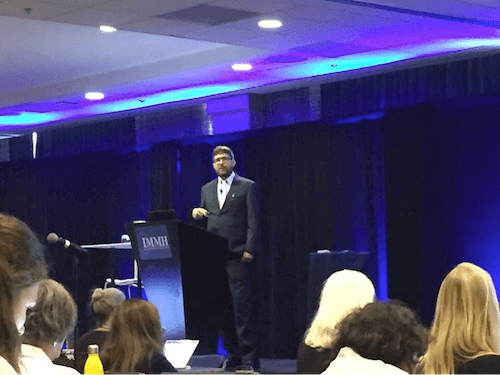
Today I’m sharing some highlights from three different presentations at the recent IMMH/Integrative Medicine for Mental Health Conference – on mold and the connection to oxalate issues, as well as a major trigger of anxiety, panic attacks, depression and depersonalization.

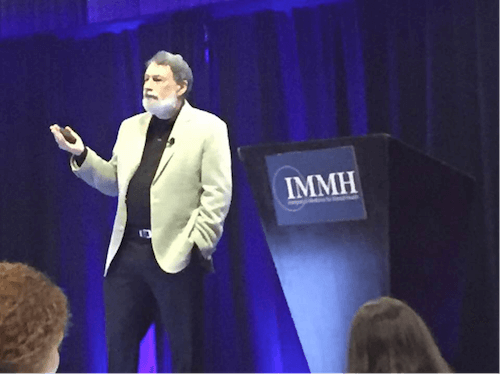
Matthew Pratt-Hyatt, PhD: “The Hidden Threats of Mycotoxins.”

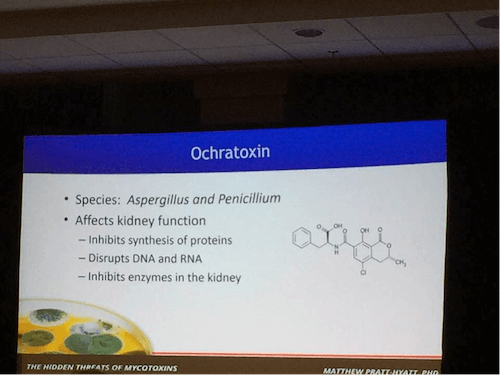
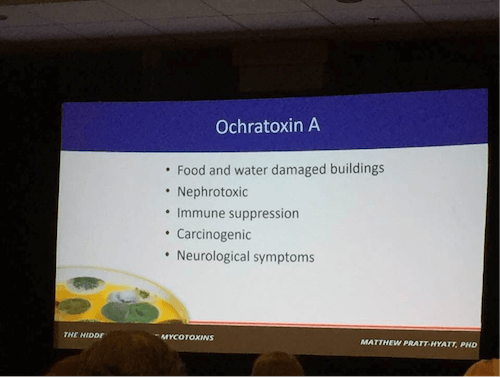
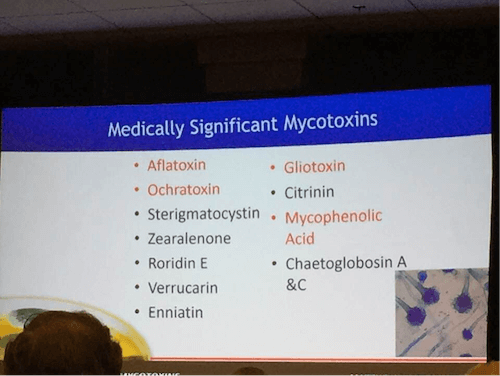
Matthew Pratt-Hyatt, PhD presented on “The Hidden Threats of Mycotoxins.” He shared medically significant mycotoxins and that ochratoxin affects the kidneys and my first thought was: “I wonder if this plays a role in oxalate issues?”

I asked Dr. Pratt-Hyatt after his presentation and he said yes, the mycotoxins produce oxalates and then dietary oxalates can be the tipping point. He wasn’t aware of any research on the mycotoxin-oxalate connection but sees the connection on the Great Plains MycoTOX lab test and Organic Acids test

Matthew Pratt-Hyatt

Matthew Pratt-Hyatt

Matthew Pratt-Hyatt

Matthew Pratt-Hyatt

Dr. Neil Nathan: “Mold Toxicity as an Unrecognized Cause of Mental Health issues.”

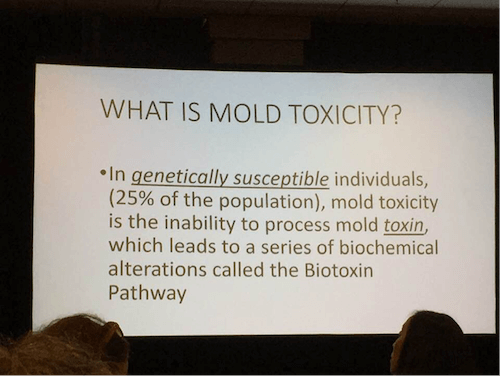
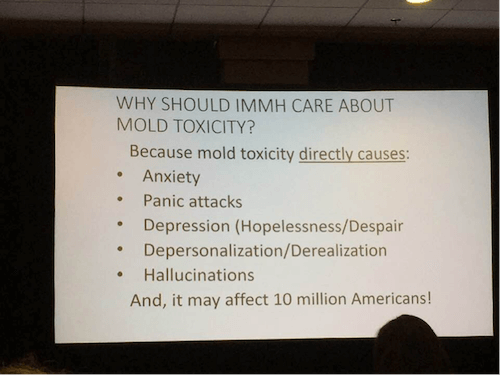
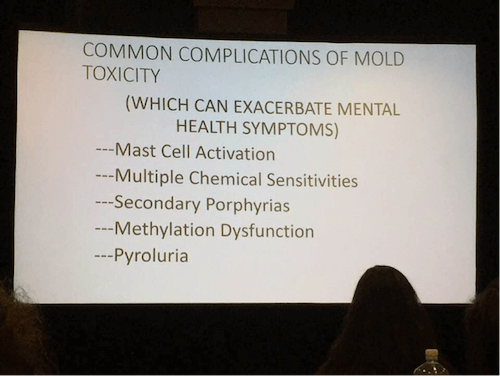
One of my favorite presentations was the one delivered by Dr. Neil Nathan on “Mold Toxicity.” He defines mold toxicity and how it can directly trigger anxiety, panic attacks, depression, depersonalization and hallucinations, as well as some of the common complications which can exacerbate mental health symptoms. These include mast cell activation, multiple chemical sensitivities, secondary porphyrias, methylation dysfunction and pyroluria.

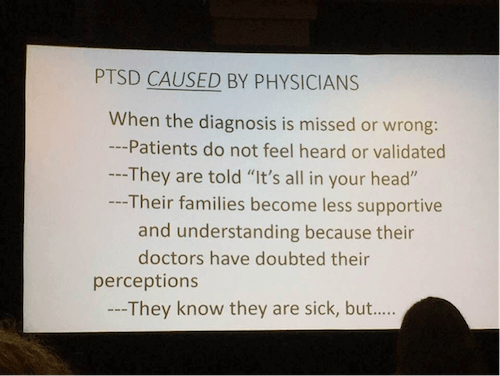
I do appreciate the fact that he addressed that there can be PTSD caused by physicians when someone knows they are sick – especially with mold toxicity – and yet they do not feel heard or validated. This can even lead to their families being less supportive.

Dr. Nathan is a brilliant and compassionate practitioner, and the author of the excellent book – Toxic: Heal Your Body from Mold Toxicity, Lyme Disease, Multiple Chemical Sensitivities, and Chronic Environmental Illness (my Amazon link)

Neil Nathan

Neil Nathan

Neil Nathan

Neil Nathan

Neil Nathan

Dr. Kurt Woeller: “Metabolic Products in Mental Health – How Fungal, Bacterial, Mitochondrial and Other Compounds Influence the Brain.”

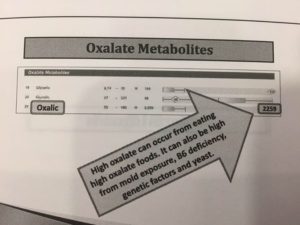
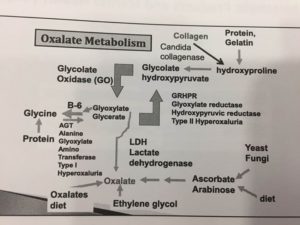
Dr. Kurt Woeller shared more about oxalates and mold in his presentation: “Metabolic Products in Mental Health.” I really like the Oxalate Metabolism diagram that shows the role of low vitamin B6, dietary oxalates including ascorbic acid, collagen and gelatin, mold, yeast and genetics in someone with high oxalates.

On a side note, low serotonin is often a factor with collagen and gelatin but it can be a source of oxalates.

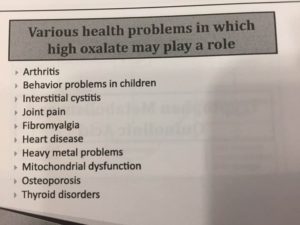
He mentions various health problems associated with high oxalates – pain issues are common and so is fatigue and behavioral issues. Dr. Woeller works primarily with children but I have seen anxiety and depression in adults with oxalate issues too.   If mold is one of the triggers then the mental health issues can be further impacted.


In case you missed the previous two IMMH blogs:

  • Last week I shared a few highlights from my IMMH presentation: “GABA for Anxiety, Insomnia, ADHD, Autism and Addictions: Research and Practical Applications” – benzodiazepines are not the solution, some new 2019 research on the far-reaching benefits of GABA, and the role of GABA in ADHD.
  • The previous week I wrote this blog post on one of the new studies in my presentation: how a combination of GABA and theanine improves sleep and reduces anxiety.

What wasn’t discussed were some of the other mechanisms that may be causing the increased anxiety – such as the impacts of toxic mold on neurotransmitters and low levels of zinc.

Have you been exposed to toxic mold and was this a trigger for your anxiety, panic attacks and other mood issues?

Did GABA, tryptophan and zinc (and other nutritional support approaches) help ease some of the anxiety symptoms while you were remediating your home and detoxing from the mold toxicity?

Do you have oxalate issues and have you ruled out the fact that toxic mold may be a trigger? I personally have oxalate issues (I share more about this here) and plan to do the MycoTOX test to learn more. I’ll keep you posted on what I find.

As a practitioner, do you want to learn more about how to incorporate GABA and the other targeted individual amino acids, tryptophan/5-HTP, DPA, glutamine and tyrosine, into your work to help your clients/patients with anxiety triggered by toxic mold? I invite you to check out my new online practitioner training here: Balancing Neurotransmitters – The Fundamentals. I’m extending the $100 discount offered at IMMH for a few weeks (use coupon code immh2019).

Filed Under: Anxiety, Depression, Environment, Events, GABA, Mold Tagged With: ADHD and addictions, anxiety, autism, benzodiazepines, depersonalization, depression, GABA, IMMH, insomnia, Integrative Medicine for Mental Health conference, mold, oxalates, panic attacks

IMMH highlights: GABA for anxiety, insomnia, ADHD, autism and addictions

August 23, 2019 By Trudy Scott 6 Comments

immh highlights

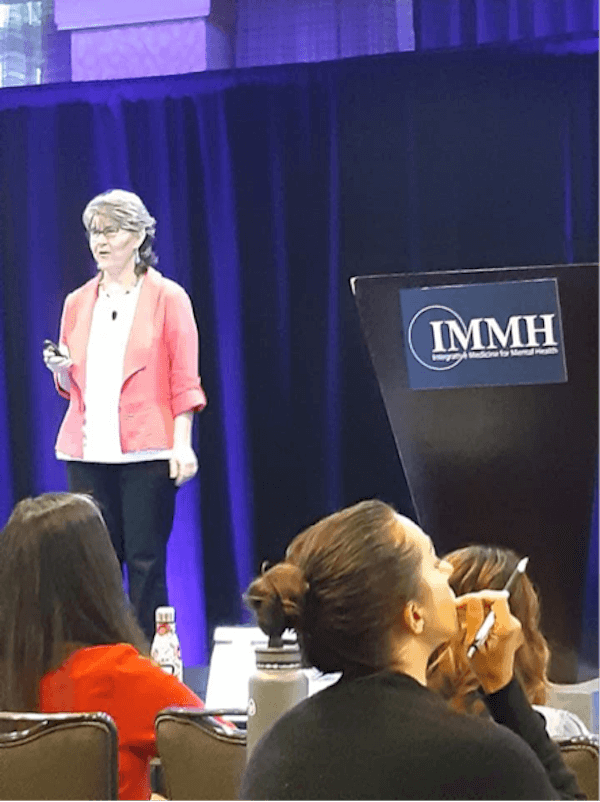
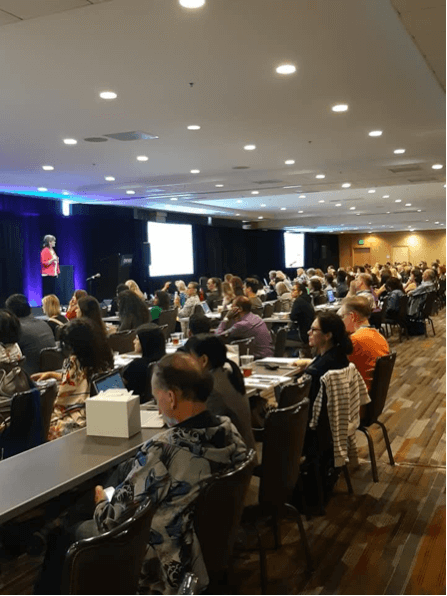
I’m back from 2 weeks in the USA, first attending the Mindshare Summit (a collaborative community of like-minded practitioners) and then speaking at the IMMH/Integrative Medicine for Mental Health Conference – my favorite mental health conference – on “GABA for Anxiety, Insomnia, ADHD, Autism and Addictions: Research and Practical Applications.”

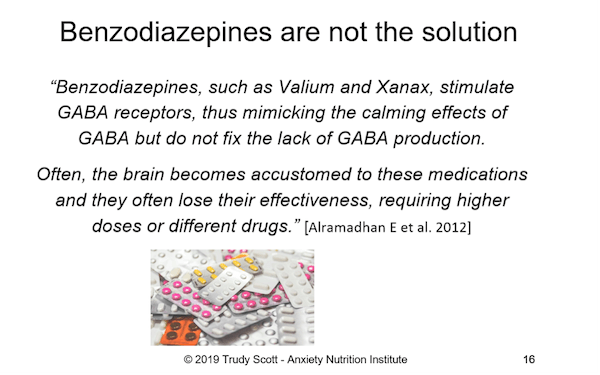
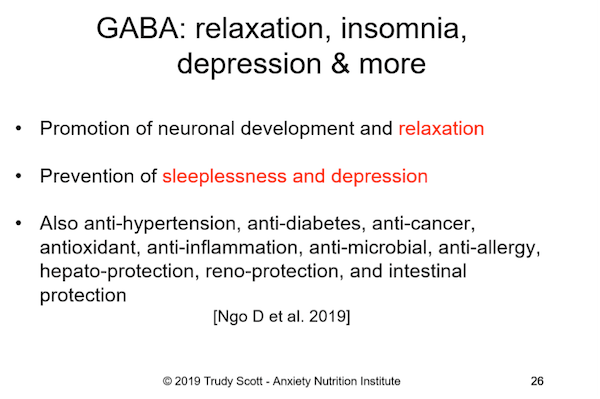
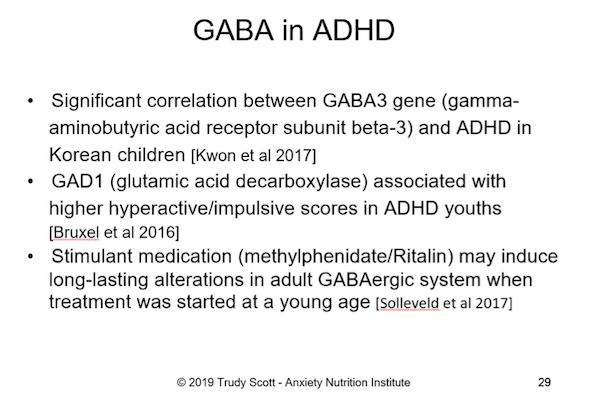
Last week I shared a blog on one of the new studies in my presentation: how a combination of GABA and theanine improves sleep and reduces anxiety. Today I’m sharing some other highlights from my presentation: benzodiazepines are not the solution, some new 2019 research on the far-reaching benefits of GABA, and the role of GABA in ADHD.

immh slide

immh slide

immh slide

It was great to meet so many of you from my community and to make new connections! I’m thrilled there is so much interest in using the individual amino acids for anxiety and insomnia, and for those with ADHD, autism and addictions.

trudy at immh
trudy at immh

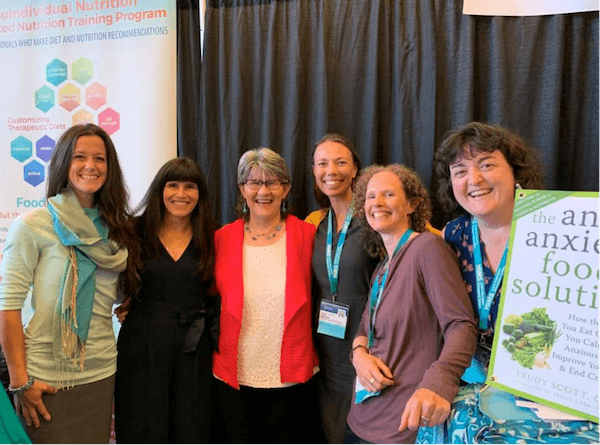
It was also wonderful to get the support of my colleagues at my booth, for my talk, and to hang out with them, laugh and eat good food. There was plenty of sardines, sauerkraut and grass-fed beef in the place we all shared!

immh booth

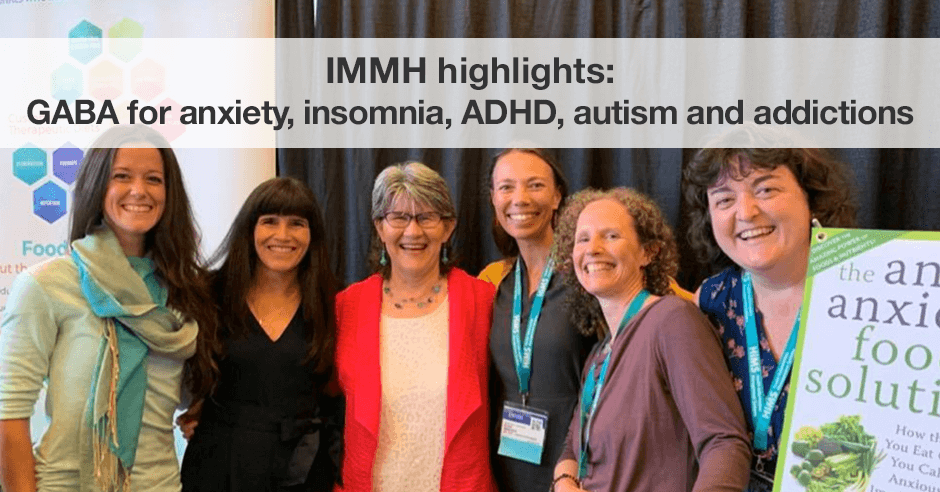
Pictured here, on the left is is Annie and Julie; on the right is Elissa, Jessica and Dr. Zendi

Let me share a little about these wonderful practitioners who are doing life-changing work:

  • Julie Matthews, is the author of Nourishing Hope for Autism (my Amazon link), co-author of a new study, Nutritional and Dietary Intervention for Autism Spectrum Disorder and creator/founder of the Bioindividual Nutrition Institute, offering practitioner training on special diets and bioindividual nutrition. Julie also presented at IMMH this year: “Effective Nutrition and Diet Intervention for Autism Spectrum Disorder: Newly Published Research.”
  • Elissa Arnheim is a health coach and a certified fermentationist. She is the creator of “Healthy Gut Happy Child”, “8 Days to Freedom from Picky Eating!” and the “Gut Health Mamas” group coaching programs.
  • Jessica Sherman’s work is all about raising resilient healthy kids and she teaches about nutrition for the brain, mood, behavior and better overall health. She is the author of Raising Resilience: Take the Stress out of Feeding Your Family and Love Your Life.
  • Zendi Molderhauer, works with children, adolescents and young adults, integrating her conventional medical background in pediatrics and psychiatry with more natural, holistic, and functional healing modalities.

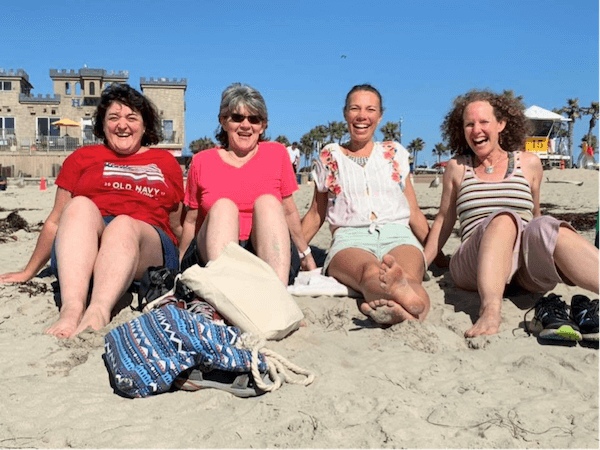
Once the conference was over, we also got to lie on the warm sand chatting about what we had just learned, walk along the beach, jump for joy and play, and even have a quick swim in the ocean (it was chilly but invigorating).

san diego beach

san diego beach

san diego beach

san diego beach

Has GABA helped you with your anxiety, insomnia or addictions (carbs or alcohol or even drugs)? Do you have a child with autism or ADHD and have they benefited from GABA?

Do you have questions about using GABA for anxiety, insomnia, autism, ADHD and addictions?

If you’re a practitioner and want to learn more about how to incorporate GABA and the other targeted individual amino acids (tryptophan/5-HTP, DPA, glutamine and tyrosine) into your work to help your clients/patients with anxiety/insomnia/addictions/ADHD/autism, I invite you to check out my online practitioner training here: Balancing Neurotransmitters – The Fundamentals.
And be sure to save the date for IMMH 2020:  August 20-23 in Chicago!

Filed Under: Events Tagged With: ADHD and addictions, anxiety, autism, benzodiazepines, GABA, IMMH, insomnia, Integrative Medicine for Mental Health conference

GABA, 5-HTP and melatonin isn’t working anymore for my insomnia and tryptophan gives me a migraine – what should I do?

May 11, 2018 By Trudy Scott 20 Comments

Today I’m addressing a great question I received on a recent tryptophan blog about insomnia and the use of the amino acids GABA and 5-HTP in a combination product together with melatonin, and what the next steps should be when you are not getting the expected results. And if continuing with tryptophan is a good idea when it seems to be causing a migraine and isn’t leading to a whole night’s sleep. Here is the question:

I have suffered from insomnia for most of my life. I just got your book and am loving it! Thank you for all that you do. My symptoms seem to be high for both low GABA and low serotonin [here is the questionnaire].

I also believe I have a blood sugar problem, so I’m starting to follow your suggestions for that.

I’ve been taking a supplement for sleep that has both GABA and 5-HTP in it, along with melatonin. It worked for a year, however it just recently stopped working.

I thought maybe I should try tryptophan. After taking only 220 mg per night, along with 5 mg of melatonin, I was able to sleep, but not through the entire night. However, the next day I woke up with a horrible headache/migraine. I know it was the tryptophan because I did a trial and tried a night without it and then again with it and the nights I took it, sure enough, the migraine would return.

I must add that I had bloodwork done and tested low for melatonin, which is why I was adding the melatonin into my protocol.

My question is: do I continue with a higher dose of GABA, 5-HTP and melatonin, since it worked for a year i.e. do I up the dosage of the supplement I’ve been taking? Or do I continue trying different doses of tryptophan?

I shared this response in my comment (with some additions for this blog post).

Always first address the nutritional foundational aspects

Firstly, I was glad to hear she is loving my book The Antianxiety Food Solution (my Amazon link) and implementing dietary changes. This is so foundational to any protocol for both anxiety and insomnia. Too often, someone hears me talking about the amazing amino acids and forgets the nutritional basics of real whole food, quality animal protein (like wild fish, pastured eggs and chicken, grass-fed red meat), organic veggies and fruit, healthy fats (like olive oil, coconut oil and butter), fermented foods and broths, and no gluten, caffeine or sugar.

I don’t ever have clients push through

With regards to her trial of tryptophan I shared that I don’t ever have clients push through on a product that is causing any adverse effects, and especially when it’s a migraine. She was smart and trialed the tryptophan twice to make sure it was the tryptophan that caused the migraine and not something else.

Capitalize on what has worked and increase one at a time

With regards to the GABA, 5-HTP and melatonin I shared that I always like to capitalize on what has worked in the past (or is currently working) and would rather increase the 5-HTP and/or melatonin and/or GABA one at a time.

Notice that I said increase these products one at a time. She is taking a combination product so it’s impossible for her to do this. Maybe her GABA levels are now good (because her progesterone levels have improved due to be on a regular zinc supplement or because she has been doing regular yoga sessions) and maybe she needs more serotonin support (because her estrogen levels are off because of recent exposure to xenoestrogens in plastics).

Even though is research showing that a combination product containing GABA and 5-HTP improved sleep and sleep duration more than the use of either of the two amino acids alone, based on her feedback, if we were working together I would have her do each of the GABA, 5-HTP and melatonin separately. This way it’s easy to mix and match and increase one and possibly lower the other, until the ideal combination is found for her unique needs at this time in her life.

She may even find she only needs GABA or only needs 5-HTP or only melatonin. She may also find she needs sublingual melatonin for helping her fall asleep and timed-release melatonin for helping her stay asleep.

She mentions the amino acid questionnaire so it sounds like she is clear on her symptoms: low GABA physical anxiety affecting her sleep and low serotonin mental worry-type of anxiety affecting her sleep. So as she trials the individual amino acids she can see how she does symptom-wise in order to find the ideal amount.

Other factors to consider with insomnia

It’s often straight-forward with the amino acids and the great thing is that one you have the correct combination you will see results in a few days to a few weeks. But There are other factors we may need to consider with insomnia:

  • Keep in mind that 5-HTP can raise cortisol and low blood sugar can indicate adrenal issues so looking at high cortisol as a factor in the sleep problems would be something to consider. A 4-collection saliva test will measure this and my favorite product for lowering high cortisol is Seriphos. Other nutrients for adrenal support may be needed too.
  • Just addressing low blood sugar can often improve insomnia. Eating to support blood sugar swings, early morning sunlight and no blue light after dark can make a world of difference.
  • Other sleep factors we always want to consider: sex hormone imbalances, parasites (they are more active at night and can keep you awake and play a role in high cortisol), accidental gluten exposure, SIBO (small intestinal bacterial overgrowth), candida, sleep apnea and mouth breathing, EMFs (WiFi in the home, commuting with the iphone on, a new cordless phone etc.) and medication side-effects (benzodiazepines are a common one).

I really appreciate questions like this being posted on the blog so others like you also get to benefit. This question also demonstrates just how our needs for certain nutrients can change over time and how we may to keep adjusting what we are doing.

In case you have questions about specific products that I use with clients, here is my supplements blog and more information on GABA for the physical type of anxiety and 5-HTP/tryptophan for the worry-type of anxiety.

Can you relate to this scenario? Feel free to ask your questions about sleep, GABA, 5-HTP, tryptophan and melatonin and share your experiences with these products and how they have helped you or if you’ve had issues with any of them.

Filed Under: Anxiety, GABA, Insomnia Tagged With: 5-HTP, anxiety, benzodiazepines, cortisol, GABA, insomnia, melatonin, migraine, sleep, tryptophan, worry

GABA oral rinse reduces burning mouth pain

March 2, 2018 By Trudy Scott 47 Comments

Burning Mouth Syndrome (BMS) is a chronic pain condition characterized by persistent burning in the mouth. It affects mostly females, especially postmenopausal women, and conventional approaches are often not very successful. You’ll often see articles and papers with the terms ‘refractory’ and ‘unknown etiology’/unknown causes.

Medications like SRNIs and benzodiazepines

Some studies report limited success with medications like venlafaxine/Effexor, an SRNI and topical and oral use of benzodiazepines such as clonazepam/Klonopin. In this paper, Refractory burning mouth syndrome: clinical and paraclinical evaluation, comorbidities, treatment and outcome, 8 participants saw their pain diminish by half within 3 months.

Another paper, The Effect of Clonazepam Mouthwash on the Symptomatology of Burning Mouth Syndrome: An Open Pilot Study, reports success with a benzodiazepine mouthwash in half the participants.

Other than the poor quality of life and having to continue to live with pain, the bigger concern is the side-effects of medications like these, plus concerns with tolerance and then issues with withdrawal.

New oral GABA research for burning mouth

It’s for this reason that I’m excited about the recent research, γ-Aminobutyric acid (GABA) oral rinse reduces capsaicin-induced burning mouth pain sensation: An experimental quantitative sensory testing study in healthy subjects, that finds that both and men and women experienced immediate benefits when using GABA for burning mouth pain.

The burning mouth pain was caused by the application of capsaicin to the tongues of thirty healthy males and females. Capsaicin is the compound that makes chili peppers hot. (I find it interesting that capsaicin was the compound used to cause the burning mouth sensation because this same compound is used in topical creams and patches to ease pain.)

The study concludes as follows:

Capsaicin-induced burning tongue pain and decreases in WDT (warm detection) and HPT (heat pain) can be ameliorated by rinsing the mouth with lidocaine and GABA solutions.

Rinsing the mouth with an oral GABA containing solution ameliorated burning pain and increased heat sensitivity produced by application of capsaicin to the tongue. This finding suggests that GABA can act as a local analgesic agent in the oral cavity.

Lidocaine, a numbing medication, was part of the GABA solution in this study, but because it has side-effects that may include anxiety, I recommend a trial of a GABA-only solution to ease the burning mouth pain.

Using a GABA-only oral solution

Using a GABA-only oral solution makes sense given that the likely mechanism of action of topical benzodiazepines in burning mouth pain is via local action on peripheral GABAA receptors found in the nerve fibers of the tongue.

This is also very feasible based on how effective GABA is for other pain such as proctalgia fugax/rectal spasms, and the visceral pain and muscle tension in your gut caused by the bloating symptoms of SIBO (small intestinal bacterial overgrowth) and muscular back pain after a fall.

How much GABA will help?

As with any use of GABA and the other amino acids, how much will help depends on each person’s unique biochemistry and needs at the time. In the same way I do a trial of GABA with my anxiety clients to determine how much would help, I do the same with burning mouth pain (and other pain situations).

I recommend a trial of a GABA-only product and starting low with 100 to 200mg of GABA swished held in the mouth with some water for a few minutes. This can be used three or four times a day in between meals and with the mg increased slowly based on results.  You can find the GABA supplements I recommend here.

GABA is an amino acid that is recognized for calming physical anxiety and tension and since anxiety (and depression) is very common in those with burning mouth pain, the GABA is going to provide calming benefits too.

As with any health condition, finding the underlying root causes using a comprehensive functional medicine approach is key. One such root cause may be low GABA and using oral GABA is going to address this one and provide some relief while other root causes are identified and addressed.

These other root causes can be very varied as explained in the paper Burning Mouth Syndrome. They can include: age-related reduction in estrogen and progesterone levels, lower cortisol, diabetes mellitus and hypothyroidism, allergic reactions to foods, additives and even metals in the mouth, autoimmune connective tissue disorders, nutritional deficiencies (B1, B2, B6, B12. folate, and/or zinc), smoking and candida, and medication side-effects as mentioned above.

Have you experienced burning mouth pain and seen relief with GABA or other nutritional approaches?

If you’re a practitioner, is burning mouth pain common in your postmenopausal clients or patients and what approaches have you found most successful? Have you found GABA to be helpful?

If you are still suffering with burning mouth please share the following when you comment:

  • Your age (it seems to be more prevalent in women 59 and older)
  • If you have anxiety and/or depression now and have been prone to either in the past
  • How you score on the low GABA questionnaire and which symptoms you relate to? This will provide a clue that low GABA may be an issue and the oral GABA rinse is more likely to help
  • How you score on the low serotonin questionnaire (same link as GABA questionnaire above) and which symptoms you relate to? SSRIs have been shown to help in some cases and we know tryptophan/5-HTP help with pain so serotonin support may help too. Perhaps a tryptophan or 5-HTP rinse is worth a trial too?
  • How long it’s been an issue, what approaches you’ve tried and which approaches have helped (even if they only helped a short while or helped the pain a little)
  • Current and past medications (burning mouth is caused by certain medications)

I’d love to gather a list of all this so we can help you and more women who suffer with these awful symptoms.

Filed Under: Amino Acids, Anxiety, benzodiazapines, GABA, Pain Tagged With: anxiety, benzodiazepines, burning mouth, burning mouth pain, burning mouth syndrome, depression, GABA, Klonopin, pain

Alzheimer’s disease: address the root cause to reverse symptoms (Microbiome summit)

May 7, 2017 By Trudy Scott 4 Comments

Dr. Jill Carnahan’s interview on the Microbiome Medicine Summit 2 covers cutting edge new information about Alzheimer’s disease, based on the work and research of Dr. Dale Bredesen. They start with the gut-brain connection and Dr. Carnahan shares this:

we used to think of early-onset cognitive decline and dementias and mood disorders as being in their own bucket. And so, we saw psychiatrists or neurological doctors or neurologists to treat those diseases. And now we’re finding as we knew for several years with functional medicine that, obviously, it’s all connected.

And the gut is especially important because this reservoir holds so many of our microbes and possibly pathogens and that speaks to the brain through the vagus nerve and through cytokines and through inflammatory molecules of all types.

And so, this conversation between our gut and our brain is very profound and has a huge impact on things like multiple sclerosis or dementia, Alzheimer’s, or even things like bipolar disorder, schizophrenia, depression, anxiety, and sleep disorders.

So what we’re finding is by addressing the immune system and the gut which are intricately connected, we can often get profound effects on areas in the body that are far from that, like the brain.

Dr. Kellman asks Dr. Carnahan to share a study that will be the slam dunk for really believing in this connection and she mentions a paper titled Microbes and Alzheimer’s Disease. It cites pathogens like herpes simplex virus type 1 (HSV1), Chlamydia pneumoniae, and several types of spirochaete which can affect the brain and play a role in Alzheimer’s disease.

Dr. Carnahan then covers Dr. Dale Bredesen’s subtypes of early-onset dementia which allows you to treat the root cause and actually reverse symptoms. She goes into it in great detail so I’m going to give you the summary version here:

Type #1 is inflammatory

  • This could be from inflammation or infections or other poor dietary habits. And that’s where the microbiome could play into that.
  • You might see elevated CRP, IL-6, TNF-alpha. You might see a low albumin to globulin ratio. You might see high homocysteine, hypothyroid, elevated cortisol

Type #1.5 is glycotoxic

  • The pure pre-diabetic, diabetic
  • That’s kind of the pure elevated insulin, elevated fasting blood sugar, elevated cortisol, low testosterone, high triglycerides, low HDL (and has an element of inflammation)

Type #2 is atrophic: So that’s someone who loses their trophic factor of support like estrogen, testosterone, insulin, and vitamin D3.

And often, these type 1s and type 2s actually have ApoE-4 double mutations which are higher risk for Alzheimer’s.

Type #3 is toxic:

  • Toxic mold exposure, biotoxins from Lyme disease, or heavy metals or other chemicals.
  • Often these chemicals will act on the tight junctions of the gut and increase permeability. And then that permeability leads to massive endotoxemia.
  • Younger onset of symptoms (like 40s and 50s) and reversible once you find and remove the root cause

Type #4 is vascular: inflammation of the blood vessels, high homocysteine

Type #5 is traumatic: wrestlers or boxers or football players that have had multiple head injuries or trauma.

By addressing the various root causes, Dr. Bredesen reports a reduction and in some instances reversal of dementia symptoms.

Of course, we know anxiety is common when it comes to Alzheimer’s and dementia. By addressing many of these above root causes we’re also able to reduce anxiety symptoms at the same time.

It was a fascinating interview and I hope you enjoy it as much as I did. I learned a great deal and find it very useful to group the symptoms into types.

There does seem to be one aspect that Dr. Carnahan didn’t address and I haven’t seen it covered in Dr. Bredesen’s papers: the impact of benzodiazepines on dementia and Alzheimer’s disease.  There is conflicting research on this but I feel there is enough research that does show a correlation – enough for us to be concerned.   Here is a recent paper looking at high-dose benzodiazepine use in Chinese patients , supporting an association.

This 2016 paper – Benzodiazepine Use and Risk of Dementia in the Elderly Population: A Systematic Review and Meta-Analysis states:

Our results suggest that benzodiazepine use is significantly associated with dementia risk. However, observational studies cannot clarify whether the observed epidemiologic association is a causal effect or the result of some unmeasured confounding variable. Therefore, more research is needed.

This may likely fall under type #3 (toxic).  I plan to reach out to them as a follow-up.

UPDATE: May 9, 2017.  I did hear back from Dr. Carnahan and she shared that she always discusses history and physical and lab testing, and history of benzodiazepine use or other neuroactive substances. 

And new research shows that it’s more than the benzodiazepines: SSRIs, SRNIs and atypical antipsychotics increase the risk of dementia in veterans with PTSD and even in those who don’t have PTSD. 

I hope you’ll join the host Dr. Raphael Kellman and all the great speakers on the Microbiome Medicine Summit 2, May 8-15, 2017 to learn more.

If you have questions or comments please feel free to share in the comments.


Filed Under: Alzheimer's disease, Events Tagged With: Alzheimer’s disease, anxiety, benzodiazepines, dementia, Dr. Dale Bredesen, Dr. Jill Carnahan, Dr. Kellman, gut-brain, microbiome, microbiome medicine summit, SRNI, SSRI

  • « Go to Previous Page
  • Page 1
  • Page 2
  • Page 3
  • Go to Next Page »

Primary Sidebar

NEW! GABA QuickStart Homestudy (with special intro pricing)

gaba quickstart homestudy

Free Report

9 Great Questions Women Ask about Food, Mood and their Health

You'll also receive a complimentary subscription to my ezine "Food, Mood and Gal Stuff"


Connect with me

Popular Posts

  • Amino Acids Mood Questionnaire from The Antianxiety Food Solution
  • The Antianxiety Food Solution Amino Acid and Pyroluria Supplements
  • Pyroluria Questionnaire from The Antianxiety Food Solution
  • Collagen and gelatin lower serotonin: does this increase your anxiety and depression?
  • Tryptophan for the worry-in-your-head and ruminating type of anxiety
  • GABA for the physical-tension and stiff-and-tense-muscles type of anxiety
  • The Antianxiety Food Solution by Trudy Scott
  • Seriphos Original Formula is back: the best product for anxiety and insomnia caused by high cortisol
  • Am I an anxious introvert because of low zinc and vitamin B6? My response to Huffington Post blog
  • Vagus nerve rehab with GABA, breathing, humming, gargling and key nutrients

Recent Posts

  • What do I use instead of Seriphos to help lower high cortisol that is affecting my sleep and making me anxious at night?
  • BeSerene™ GABA/theanine cream eases severe muscle tension in her neck/shoulders, prevents her bad headaches and quells her anxiety
  • How the correct approach, dose and sublingual use of GABA can be calming and not cause a flushed and itchy face and neck
  • The amino acid glutamine improves low mood by addressing gut health, and it has calming effects too
  • Flight anxiety with heightened breath, physical tension and also fearing the worst (the role of low GABA and low serotonin)

Categories

  • 5-HTP
  • AB575
  • Addiction
  • ADHD
  • Adrenals
  • Alcohol
  • Allergies
  • Alzheimer's disease
  • Amino Acids
  • Anger
  • Antianxiety
  • Antianxiety Food Solution
  • Antidepressants
  • Anxiety
  • Anxiety and panic
  • Autism
  • Autoimmunity
  • benzodiazapines
  • Bipolar disorder
  • Books
  • Caffeine
  • Cancer
  • Candida
  • Children/Teens
  • Collagen
  • Cooking equipment
  • Coronavirus/COVID-19
  • Cravings
  • Depression
  • Detoxification
  • Diabetes
  • Diet
  • DPA/DLPA
  • Drugs
  • EFT/Tapping
  • EMF
  • EMFs
  • Emotional Eating
  • Endorphins
  • Environment
  • Essential oils
  • Events
  • Exercise
  • Fear
  • Fear of public speaking
  • Fertility and Pregnancy
  • Fish
  • Food
  • Food and mood
  • Functional neurology
  • GABA
  • Gene polymorphisms
  • General Health
  • Giving
  • Giving back
  • Glutamine
  • Gluten
  • GMOs
  • Gratitude
  • Gut health
  • Heart health/hypertension
  • Histamine
  • Hormone
  • Hyperparathyroidism
  • Hypoglycemia
  • Immune system
  • Inflammation
  • Insomnia
  • Inspiration
  • Introversion
  • Joy and happiness
  • Ketogenic diet
  • Lithium orotate
  • Looking awesome
  • Lyme disease and co-infections
  • MCAS/histamine
  • Medication
  • Men's health
  • Mental health
  • Mercury
  • Migraine
  • Mold
  • Movie
  • MTHFR
  • Multiple sclerosis
  • Music
  • NANP
  • Nature
  • Nutritional Psychiatry
  • OCD
  • Osteoporosis
  • Oxalates
  • Oxytocin
  • Pain
  • Paleo
  • Parasites
  • Parkinson’s disease
  • PCOS
  • People
  • PMS
  • Postpartum
  • PTSD/Trauma
  • Pyroluria
  • Questionnaires
  • Real whole food
  • Recipes
  • Research
  • Schizophrenia
  • serotonin
  • SIBO
  • Sleep
  • Special diets
  • Sports nutrition
  • Stress
  • Sugar addiction
  • Sugar and mood
  • Supplements
  • Teens
  • Testimonials
  • Testing
  • The Anxiety Summit
  • The Anxiety Summit 2
  • The Anxiety Summit 3
  • The Anxiety Summit 4
  • The Anxiety Summit 5
  • The Anxiety Summit 6
  • Thyroid
  • Thyroid health
  • Toxins
  • Tryptophan
  • Tyrosine
  • Uncategorized
  • Vegan/vegetarian
  • Women's health
  • Yoga

Archives

  • October 2025
  • September 2025
  • August 2025
  • July 2025
  • June 2025
  • May 2025
  • April 2025
  • March 2025
  • February 2025
  • January 2025
  • November 2024
  • October 2024
  • September 2024
  • August 2024
  • July 2024
  • June 2024
  • May 2024
  • April 2024
  • March 2024
  • February 2024
  • January 2024
  • December 2023
  • November 2023
  • October 2023
  • September 2023
  • August 2023
  • July 2023
  • June 2023
  • May 2023
  • April 2023
  • March 2023
  • February 2023
  • January 2023
  • December 2022
  • November 2022
  • October 2022
  • September 2022
  • August 2022
  • July 2022
  • June 2022
  • May 2022
  • April 2022
  • March 2022
  • February 2022
  • January 2022
  • December 2021
  • November 2021
  • October 2021
  • September 2021
  • August 2021
  • July 2021
  • June 2021
  • May 2021
  • April 2021
  • March 2021
  • February 2021
  • January 2021
  • December 2020
  • November 2020
  • October 2020
  • September 2020
  • August 2020
  • July 2020
  • June 2020
  • May 2020
  • April 2020
  • March 2020
  • February 2020
  • January 2020
  • December 2019
  • November 2019
  • October 2019
  • September 2019
  • August 2019
  • July 2019
  • June 2019
  • May 2019
  • April 2019
  • March 2019
  • February 2019
  • January 2019
  • December 2018
  • November 2018
  • October 2018
  • September 2018
  • August 2018
  • July 2018
  • June 2018
  • May 2018
  • April 2018
  • March 2018
  • February 2018
  • January 2018
  • December 2017
  • November 2017
  • October 2017
  • September 2017
  • August 2017
  • July 2017
  • June 2017
  • May 2017
  • April 2017
  • March 2017
  • February 2017
  • January 2017
  • December 2016
  • November 2016
  • October 2016
  • September 2016
  • August 2016
  • July 2016
  • June 2016
  • May 2016
  • April 2016
  • March 2016
  • February 2016
  • January 2016
  • December 2015
  • November 2015
  • October 2015
  • September 2015
  • August 2015
  • July 2015
  • June 2015
  • May 2015
  • April 2015
  • March 2015
  • February 2015
  • January 2015
  • December 2014
  • November 2014
  • October 2014
  • September 2014
  • August 2014
  • July 2014
  • June 2014
  • May 2014
  • April 2014
  • March 2014
  • February 2014
  • January 2014
  • December 2013
  • November 2013
  • October 2013
  • September 2013
  • August 2013
  • July 2013
  • June 2013
  • May 2013
  • April 2013
  • March 2013
  • February 2013
  • January 2013
  • December 2012
  • November 2012
  • October 2012
  • August 2012
  • July 2012
  • June 2012
  • May 2012
  • April 2012
  • March 2012
  • February 2012
  • January 2012
  • December 2011
  • November 2011
  • October 2011
  • September 2011
  • August 2011
  • July 2011
  • June 2011
  • May 2011
  • April 2011
  • March 2011
  • February 2011
  • January 2011
  • December 2010
  • October 2010
  • September 2010
  • July 2010
  • May 2010
  • April 2010
  • March 2010
  • February 2010
  • January 2010
  • November 2009

Share the knowledge!

The above statements have not been evaluated by the Food and Drug Administration. Products listed in this website are not intended to diagnose, treat, cure or prevent any disease.

The information provided on this site is for informational and educational purposes only and is not intended as a substitute for advice from your physician or other health care professional. You should consult with a healthcare professional before starting or modifying any diet, exercise, or supplementation program, before taking or stopping any medication, or if you have or suspect you may have a health problem.


Copyright © 2026 Trudy Scott. All Rights Reserved. | Privacy | Terms and Conditions | Refund Policy | Medical Disclaimer

Free Report

9 Great Questions Women Ask about Food, Mood and their Health

You’ll also receive a complimentary subscription to my ezine “Food, Mood and Gal Stuff”