• Skip to primary navigation
  • Skip to main content
  • Skip to primary sidebar

everywomanover29 blog

Food, Mood and Women's Health – Be your healthiest, look and feel great!

  • Blog
  • About
  • Services
  • Store
  • Resources
  • Testimonials
  • The Book
  • Newsletter
  • Contact
  • Search this site

anxiety

A weighted blanket increases pre-sleep salivary concentrations of melatonin in young, healthy adults – a new study

October 28, 2022 By Trudy Scott 7 Comments

weighted blanket melatonin

A new paper published earlier this month, A weighted blanket increases pre-sleep salivary concentrations of melatonin in young, healthy adults provides yet another mechanism supporting the benefits of a weighted blanket for improving sleep and also reducing anxiety – an increase in melatonin. The authors share that “Weighted blankets have emerged as a potential non-pharmacological intervention to ease conditions such as insomnia and anxiety. Despite a lack of experimental evidence, these alleged effects are frequently attributed to a reduced activity of the endogenous stress systems and an increased release of hormones such as oxytocin and melatonin.”

Here are some of the details from the study:

  • It was a small in-laboratory crossover study and included 26 young and healthy participants (15 men and 11 women)
  • The heavier weighted blanket was about 12% of their body weight
  • The following were measured: “salivary concentrations of the stress hormone cortisol, salivary alpha-amylase activity (as an indicative metric of sympathetic nervous system activity), subjective sleepiness, and sleep duration.”

The only difference found was a 1 hour increase of salivary melatonin from 10pm to lights off at 11pm. It was about 32% higher when using the heavier weighted blanket.

No other differences were found in terms of subjective sleepiness and total sleep duration.

The study concludes as follows:

Our study is the first to suggest that using a weighted blanket may result in a more significant release of melatonin at bedtime. Future studies should investigate whether the stimulatory effect on melatonin secretion is observed on a nightly basis when frequently using a weighted blanket over weeks to months. It remains to be determined whether the observed increase in melatonin may be therapeutically relevant for the previously described effects of the weighted blanket on insomnia and anxiety.

The authors only identified an increase in pre-sleep melatonin in this study. But keep in mind these limitations of the study: participants did not have insomnia or anxiety, and they were young (and melatonin declines as we age). The authors didn’t find an improvement in subjective feedback on better sleep and they did not measure subjective changes in anxiety levels – which I don’t find surprising.

However, as you’ll read below, many individuals in my community responded favorably when I posted this new study on Facebook, sharing how using their weighted blankets does improve their sleep and reduce their anxiety.  I share some of the anecdotal feedback below.

Feedback from real people: improved sleep, calm body, soothing and less anxiety

Here is some of the feedback from folks in my Facebook community:

Krys shares this: Ever since I started using a weighted blanket my sleep has improved. I think I need a heavier one. I believe the one I have is only 12 lbs. I was born in Poland, and we always had very heavy covers. Usually feather filled comforters, which made me feel secure and helped with sleep. I have a lot of past trauma and did not notice the weighted  blanket to be confining.

Christine shares this “I love my weighted blanket and sleep much better with it. I definitely sleep more soundly…less waking up. I bought it about 3 months ago and plan to use it year round. It is a faux fur glass bead filled one….it is super flexible and I can tuck it in and around all the nooks and crannies around my body. I considered a flatter, more stiff one but preferred the tucking option.” Christine’s weighted blanket is 15lbs and she plans to use an electric blanket to warm it up in winter (and switch it off /unplug it, before getting into bed).

Courtney shares this: “I started with a 12lb, then 20lb, now I have a 25lb one lol. I absolutely love my weighted blanket and can not sleep without it…I use it year round, it’s not hot but yet keeps you warm. And I feel like the weight keeps you from tossing and turning as much. It feels like a hug lol.”  The hug comment makes me wonder if they provide endorphin support too.

MaryKatherine shares this: “Wow that is seriously amazing. They definitely help me. I love weighted blankets…I feel almost instant calm in my body when I use weighted blankets. It does take 10-15 min for full effect.”

Tana shares this: “I love  my weighted blanket. It helps me relax. I sleep so much better.”

And then she shared this: “After this post I thought I should let my teenage daughter try my weighted blanket . She has anxiety and poor sleep habits. She loved it. I will be ordering her one.”  How wonderful is this?

Brenda shares this: “Love mine… I find it helps my AM anxiety. I’m kind of a hot sleeper, so I can’t keep it on for long, but I pull it up in the early morning, and it just gives a nice feeling of safety almost. I know a guy who does this with his dog when he’s having PTSD anxiety attacks.”

Willow shares this: “I have a cooling weighted blanket that I use all year. It is completely magical. I bought it hoping to sleep better but I didn’t expect it to be so incredibly soothing. Mine is 100% organic bamboo with glass beads. I find the cooling cover perfect all year. I honestly LOVE this improvement in my life.”

Katie shares this: “I love mine! I got one for each of my kids too. For my son I got a lighter one for kids, though he prefers my heavier adult blanket. He has ADHD and anxiety and really loves the weight. We all sleep deeper and fall asleep faster. Sometimes I use mine during the day when anxiety is especially high and it helps to calm my nervous system.”

Many folks are going to need additional nutritional support for their anxiety and insomnia

One person shared this: “I love my weighted blankets but it took awhile to get used to the heaviness on me… It’s not a miracle particularly if my stress and anxiety is much higher but I’d rather have it then not. It’s more helpful if I’m calmer.”

I agree. Many folks are going to need additional nutritional support for their anxiety and insomnia. This is where my work with addressing low GABA and low serotonin comes into play. Also, we may need to consider high cortisol and always need to address gut health, diet, caffeine/sugar/gluten intake, parasites, EMFs and everything covered in my book “The Antianxiety Food Solution.”

Here are a few (of many) useful resources from the blog:

  • GABA and theanine mixture improves sleep and eases anxiety
  • Rage, anxiety, cravings & insomnia in 11-year old girl with RAD/reactive attachment disorder: chewable tryptophan turns things around
  • Lactium® (alpha-s1 casein hydrolysate/hydrolyzed casein) for lowering high cortisol, reducing anxiety and improving sleep

Feel free to use the search feature to find additional anxiety and sleep resources and success stories.

Resources if you are new to using GABA, tryptophan and other amino acids as supplements

If you are new to using any of the amino acids as supplements, here is the Amino Acids Mood Questionnaire from The Antianxiety Food Solution (you can see all the symptoms of neurotransmitter imbalances, including low GABA and low serotonin).

If you suspect low levels of any of the neurotransmitters and do not yet have my book, The Antianxiety Food Solution – How the Foods You Eat Can Help You Calm Your Anxious Mind, Improve Your Mood, and End Cravings, I highly recommend getting it and reading it before jumping in and using amino acids on your own so you are knowledgeable. And be sure to share it with the practitioner/health team you or your loved one is working with.

There is an entire chapter on the amino acids and they are discussed throughout the book in the sections on gut health, gluten, blood sugar control, sugar cravings, self-medicating with alcohol and more.

The book doesn’t include product names (per the publisher’s request) so this blog, The Antianxiety Food Solution Amino Acid and Pyroluria Supplements, lists the amino acids that I use with my individual clients and those in my group programs. You can find them all in my online store.

If, after reading this blog and my book, you don’t feel comfortable figuring things out on your own (i.e. doing the symptoms questionnaire and respective amino acids trials), a good place to get help is the GABA QuickStart Program (if you have low GABA symptoms). This is a paid online/virtual group program where you get my guidance and community support.

If you are a practitioner, join us in The Balancing Neurotransmitters: the Fundamentals program. This is also a paid online/virtual program with an opportunity to interact with me and other practitioners who are also using the amino acids.

Have you had success with a weighted blanket …for sleep issues and anxiety?

If you have seen these benefits with a weighted blanket:

  • I’m also curious if you’ve observed reductions in sugar cravings, less anger issues, less irritability, less PMS symptoms, less negativity and less worry and panic attacks? These are all symptoms of low serotonin. I suspect that if there is an increase in melatonin there may also be an increase in serotonin (which is used to make melatonin).
  • Have you noticed any other benefits?
  • Be sure to share which weighted blanket you have, what percentage of your weight it is, and how often you use it.
  • Have some of the nutritional approaches helped too?

If you have not seen benefits or didn’t like using one, please feel free to share your experiences.

If you’re a practitioner, do you recommend a weighted blanket to your clients/patients?

If you have questions please share them here too.
Filed Under: Anxiety, GABA, Insomnia, serotonin Tagged With: amino acids; the GABA Quickstart online program; Balancing Neurotransmitters: the Fundamentals program for practitioners, anxiety, calm body, calming, cortisol, GABA, healthy adults, insomnia, lactium, melatonin, oxytocin, pre-sleep salivary melatonin, sleep, sleep duration, sleepiness, soothing, theanine, tryptophan, weighted blanket, young

Lactium® (alpha-s1 casein hydrolysate/hydrolyzed casein) for lowering high cortisol, reducing anxiety and improving sleep

October 14, 2022 By Trudy Scott 29 Comments

lactium cortisol anxiety

Lactium® is my second choice for lowering high cortisol and reducing the type of anxiety that we see when cortisol is high i.e. anxiety that feels like an adrenaline-type surge.  It is especially helpful when cortisol is high as you wake up. This can be confirmed by a 4 collection saliva test. The reason why Lactium® is the best choice in a situation like this is because Seriphos (a phosphorylated serine product) is most effective for lowering high cortisol when it’s used 3 hours before the high cortisol measurement and you can’t do this when anxiety and adrenaline-type surges happen on waking in the morning. This is where Lactium® shines. It also helps to reduce anxiety at other times in the day and to improve sleep.

The Lactium® research

There is research supporting the use of Lactium® for improving sleep, reducing anxiety and lowering high cortisol. The number of Lactium® studies are not extensive but the results are very promising and correlate with what we see clinically. Here are a few of them:

  • Effects of a tryptic hydrolysate from bovine milk alphaS1-casein on hemodynamic responses in healthy human volunteers facing successive mental and physical stress situations

“The study subjects were (double blind) randomly allocated to ingest three times, 12 hours apart, two capsules containing either 200 mg of alphaS1-casein hydrolysate or bovine skimmed milk powder as a placebo.” They were then subjected to successive stress situations. There was a significant decrease of plasma cortisol concentrations and heart rate remained stable in the Lactium® group. The study conclusion is as follows: “On the basis of blood pressure and cortisol changes, these results suggest an anti stress profile of this alphaS1-casein hydrolysate in human subjects.”

  • A Double-Blind, Randomized, Placebo-Controlled Crossover Clinical Study of the Effects of Alpha-s1 Casein Hydrolysate on Sleep Disturbance

48 participants exhibited mild to moderate degree of sleep disturbance and after 4 weeks of Lactium® use, “overall perceived sleep profiles in sleep diaries were significantly improved … represented by increased total sleep time and sleep efficiency, as well as decreased sleep latency and wake after sleep onset.” It was concluded that Lactium® “was well tolerated and could improve sleep quality, with possible cumulative beneficial effects with long-term administration.”

  • Effect of Alpha-S1-Casein Tryptic Hydrolysate and L-Theanine on Poor Sleep Quality: A Double Blind, Randomized Placebo-Controlled Crossover Trial

39 subjects were given a supplement containing Lactium® and theanine for four weeks. The authors concluded that “given its beneficial effects without notable adverse events, it would be advantageous to use these nutraceutical ingredients to promote better sleep quality” (and in a larger study).

You’ll see Lactium® referred to as alpha-s1 casein hydrolysate, hydrolyzed casein concentrate, and tryptic hydrolysate from bovine milk alphaS1-casein.

INGREDIA of France manufactures Lactium and you will see some of the studies have been initiated and/or co-authored by them.

The product I use is called Biotics Research De-Stress. It contains 150mg Lactium® in one capsule. I’ve had clients use 1-2 capsules at a time, based on symptoms and the relief they feel.

Lactium® works on GABAA receptors

What is really interesting is an animal study that reports Lactium® works on the GABAA receptor: A tryptic hydrolysate from bovine milk αs1-casein enhances pentobarbital-induced sleep in mice via the GABAA receptor

It was found that Lactium® “enhanced the sleep induced by pentobarbital sodium in mice. It also promoted slow-wave (delta) EEG activity in rats; a pattern indicative of sleep or relaxation.” The authors state that the effects are “probably mediated through the GABAA receptor-chloride ion channel complex.”

As you may already know, GABA is one of the amino acids I use extensively with folks with low GABA physical anxiety and related sleep issues. There is also compelling research on the benefits of GABA and theanine for improving sleep and easing anxiety.

I have found that many of my clients do well on both GABA (when GABA levels are low) and Lactium® (when cortisol is high).  Lactium® can be used in the daytime and at night when cortisol is high (and so can Seriphos).

Seriphos and other ways to lower high cortisol

As I mentioned above, Seriphos is my first choice for lowering high cortisol and easing this type of anxiety, especially when cortisol is high during the night. Seriphos is a phosphorylated serine product and I find it much more effective than regular phosphatidylserine products.

If you’re new to Seriphos here is my blog post – Seriphos Original Formula is back: the best product for anxiety and insomnia caused by high cortisol

There are other ways to lower cortisol too:

  • Relora – Magnolia officinalis and Phellodendron amurense (Relora®) lowers cortisol and reduces stress and anxiety
  • Forest bathing – Anxiety, stress and high cortisol: forest bathing to the rescue
  • Reducing Wi-Fi exposure – Wi-Fi is an important threat to human health and may contribute to unresolved anxiety, SIBO, oxalate issues and high cortisol
  • Tapping – Tapping (or EFT) for reducing anxiety, depression, pain and cravings, plus physiological changes in cortisol, heart rate, blood pressure and SigA
  • Essential oils – Orange essential oil to alleviate PTSD, fear, stress and anxiety

Resources if you are new to using GABA and other amino acids as supplements

If you are new to using any of the amino acids as supplements, here is the Amino Acids Mood Questionnaire from The Antianxiety Food Solution (you can see all the symptoms of neurotransmitter imbalances, including low GABA).

If you suspect low levels of any of the neurotransmitters and do not yet have my book, The Antianxiety Food Solution – How the Foods You Eat Can Help You Calm Your Anxious Mind, Improve Your Mood, and End Cravings, I highly recommend getting it and reading it before jumping in and using amino acids on your own so you are knowledgeable. And be sure to share it with the practitioner/health team you or your loved one is working with.

There is an entire chapter on the amino acids and they are discussed throughout the book in the sections on gut health, gluten, blood sugar control, sugar cravings, self-medicating with alcohol and more.

The book doesn’t include product names (per the publisher’s request) so this blog, The Antianxiety Food Solution Amino Acid and Pyroluria Supplements, lists the amino acids that I use with my individual clients and those in my group programs. You can find them all in my online store.

You can also find Biotics Research De-Stress in my online store (see link above for how to set up an account and purchase).

If, after reading this blog and my book, you don’t feel comfortable figuring things out on your own (i.e. doing the symptoms questionnaire and respective amino acids trials), a good place to get help is the GABA QuickStart Program (if you have low GABA symptoms). This is a paid online/virtual group program where you get my guidance and community support.

If you are a practitioner, join us in The Balancing Neurotransmitters: the Fundamentals program. This is also a paid online/virtual program with an opportunity to interact with me and other practitioners who are also using the amino acids.

Have you used Lactium® for improving your sleep, reducing anxiety and/or lowering your high cortisol?

Have you also used any of the above approaches to lower cortisol or reduce anxiety too?

How quickly did each one help?

If you’re a practitioner do you use Lactium® with success?

If you have questions please share them here too.
Filed Under: Anxiety, Insomnia Tagged With: adrenaline-type surge, alpha-s1 casein hydrolysate, anxiety, Balancing Neurotransmitters: the Fundamentals program for practitioners, cortisol, GABA Quickstart program, high cortisol, hydrolyzed casein, insomnia, lactium, phosphorylated serine, saliva test, seriphos, sleep

Does 5-HTP (an amino acid) cause nightmares or does it help prevent nightmares (and also support low serotonin symptoms)?

October 7, 2022 By Trudy Scott 24 Comments

5-htp and nightmares

How do you do with using the amino acid 5-HTP for supporting your low serotonin symptoms of anxiety, worry, ruminating, fears, depression and insomnia?  Does it help or does it cause nightmares? On a recent Facebook thread someone shared that 5-HTP causes really bad nightmares, so she had to stop using it. A few others posted saying 5-HTP also caused them nightmares. I’ve not had any clients report nightmares, so I was surprised to hear this feedback.  However, most folks on the same Facebook thread shared that 5-HTP works very well for them and does not cause nightmares. There is also research that supports the use of 5-HTP for night terrors. I suspect it may have to do with low vitamin B6 and share more on that below.

Here is her experience with 5-HTP and nightmares and some of my feedback:

I don’t know how anyone takes 5-HTP. The horrific nightmares I got from taking it made me stop 50 mg. I tried 3 times thinking it was a fluke and it happened every time. Too scary for me.

My first try was suggested from my Naturopath, Metagenics SeroSyn. 200 mg. First morning waking up I had a nightmare so bad I can’t even share it. I also woke up feeling unable to wake up, drugged almost. So I waited, did more research and googled 5-HTP and nightmares just to see if there was a connection. I found it. I read to lower the dosage. So I went to Pure Encapsulations 50 mg. Same thing happened. I tried 2 more times, same thing happened. When I researched, I found so many people talking about “vivid dreams” and after my last attempt the dream was so real I thought my son was in my home when I woke up and had to process reality from my dream. That did it for me. Now I’m terrified of it. Just my own experience. I did get help from depression though! But I cannot go through one evil for another. Now I’m stuck looking for help and answers.

I thanked her for sharing and agreed it does help to do a few experiments to be sure it was the 5-HTP. I also shared that I would not consider the Metagenics SeroSyn a good 5-HTP to test because of all the other ingredients. But it also happened with Pure Encapsulations 50 mg 5-HTP – that was a good test to confirm.

I also shared that some folks do better on 5-HTP and some on tryptophan so if 5-HTP did help with low serotonin symptoms then I’d consider a trial of tryptophan especially since she did say using the 5-HTP helped with her depression.

We would also look for other ways to support serotonin – saffron, turmeric, St. John’s Wort, theanine (it supports GABA, serotonin and dopamine) and of course diet (real whole food, quality animal protein, no gluten/sugar/caffeine, fermented foods, organic vegetables and fruit, healthy fats etc), gut health and more.

I’d also look into and address low zinc and low vitamin B6 as both are needed to make serotonin and the other neurotransmitters. More on low vitamin B6, pyroluria and nightmares below.

Here is some of the feedback from other folks who also had issues with 5-HTP:

  • 5-HTP didn’t mix well with my body either. Taken at night, horrible dreams, and 50mg Pure Encapsulations formula in the morning made me feel so dark, spaced out and terrible nausea.
  • I appreciate this post. I had nightmares from a magnesium supplement that included 5-HTP! Now I know I’m not alone.

And here is some of the feedback from folks who do well with 5-HTP (the majority of those who responded):

  • I take 100 mg of 5-HTP in the morning (Natural Factors) and about 350 mg of tryptophan before bed (Lidtke). It works well for me. No nightmares although I do dream a lot. Mostly noticed improvement in mood and ruminating thoughts. Also taking Sam-e which also helps.
  • I take chewable natural factors Tranquil Sleep. It contains other ingredients (like theanine) as well but it’s really easy to dose. If I take 2 it’s too much. I get weird dreams and a headache. So 1 1/2 it is.
  • 5-htp helped me so much! But I had to take it in the morning. 250mg was perfect for me. I was using this for my debilitating anxiety which would keep me in flight or fight all day and I would ruminate. Really helped me along with therapy. I no longer need it.
  • I’ve just started taking 50mg 5-HTP at night. It’s a micronized version I buy from a compounding chemist in Australia. No negative side effects so far.
  • Grateful for the reminder … I did great on 5-htp myself. Have had all dose amounts, given at different times too. I deal with chronic pain and trauma/stress.
  • My sister gets anxiety on 5-HTP but it helps me so much! I have not tracked regular consumption compared to my sleep (I get too much REM without it and wake up exhausted). I also no longer need it as a daily and can take it as needed. I take 200mg, forget the brand but it’s a single ingredient.
  • I take 50 mg of 5-HTP from Seeking Health and do very well on it. It has helped me with depression, worry, fear, more energy and motivation and no nightmares.
  • I take the Now brand, 100mg at bedtime along with the same brand of L theanine. No nightmares and I’ve been doing this for about 5 years.
  • I use 50mg Seeking Health 5-HTP and I love it. It gives me energy and motivation, helps with intrusive thoughts and anxiety. I’ve used the Jarrow brand in the past without results. No nightmares. P5P, on the other hand, I cannot take. It gives me such clear, vivid nightmares I would wake up crying. Never again.

We are all unique and there is clearly no one-size fits all.

Low vitamin B6 can cause nightmares or poor dream recall

It’s well recognized that low vitamin B6 can cause nightmares or poor dream recall. In this study, Effects of Vitamin B6 (Pyridoxine) and a B Complex Preparation on Dreaming and Sleep (which was randomized, double-blind and placebo-controlled), 100 participants from across Australia were given 240 mg vitamin B6 (pyridoxine hydrochloride) before bed for five consecutive days. Other study participants were given a B complex. This is the outcome of the study:

  • vitamin B6 significantly increased the amount of dream content participants recalled but did not significantly affect dream vividness, bizarreness, or color, nor did it significantly affect other sleep-related variables
  • participants in the B complex group showed significantly lower self-rated sleep quality and significantly higher tiredness on waking

This vitamin B6/dream recall research is of particular interest to me because of my work with pyroluria, a social anxiety condition which responds really well to supplementation with zinc, vitamin B6 or P5P (pyridoxal-5-phosphate) or a combination of both, and a few other key nutrients.  Here is the pyroluria questionnaire.

One of the classic signs of pyroluria is poor dream recall, stressful or bizarre dreams, or nightmares, signs which the late Carl Pfeiffer, MD attributed to low vitamin B6 status. He suggested that your dreams and dream recall serve as a good indicator of your need for vitamin B6. You should dream every night and you should remember your dreams. They should be pleasant – the kind of dreams where you wake up and want to close your eyes and continue dreaming.

Could it be that folks who get nightmares with 5-HTP, happen to also have pyroluria? Or perhaps they simply have low vitamin B6 status? I have all my anxious clients supplement with vitamin B6 and/or P5P and this may be why nightmares with 5-HTP was news to me.

5-HTP can increase cortisol – does this affect nightmares?

There is research and clinical evidence supporting that, for some individuals, 5-HTP can raise cortisol. I’ve blogged about this here:

This is not always the case. Someone in the same Facebook thread shared this: “My cortisol measured above the reference range, but 5-HTP is the only thing I’ve found that’s helping me sleep recently.”

I’m not aware of a high cortisol-nightmare connection but it’s possible. In one study, nightmares triggered high cortisol the next morning, but I donut this has relevance in this situation.

5-HTP induces long-term improvement of sleep terrors in children

There clearly is a subset of folks who don’t do well with 5-HTP and yet there is evidence that it can actually improve sleep terrors. In a small open label clinical trial of 45 children, it was found that 5-HTP was able to “modulate the arousal level in children and to induce a long-term improvement of sleep terrors” (in the majority of children in the trial). There were 34 male and 11 female children ranging in age from 3.2-10.6 years.

After the first visit, L -5-HTP was administered (2 mg/kg per day) at bedtime to 31 randomly selected patients for a single period of 20 consecutive days. After 1 month of treatment, 29/31 (93.5%) of patients showed a positive response. In the comparison group without drug therapy, after 1 month, the episodes disappeared only in four children (28.6%) while ten children (71.4%) showed the persistence of episodes with the same frequency as before. After 6 months, 26/31 (83.9%) of children treated with L -5HTP were sleep terror-free, while in five children (16.1%) sleep terror episodes persisted. Of the children in the comparison group, ten (71.4%) continued to show sleep terrors at 6-month follow-up.

If we assume a 10-year-old weighs, 70lb or close to 32kg, they would have been given 60mg 5-HTP (i.e. 2 mg/kg).

Typical adult dosing of 5-HTP is 50mg twice a day, mid-afternoon and evening. For a 10-year-old we may start with a quarter of this dose i.e. 12.5mg or 25mg 5-HTP twice a day, for a total of 25mg or 50mg a day – which is close to what was used in this study.

You can read more about this in the paper here: L -5-Hydroxytryptophan treatment of sleep terrors in children

Resources if you are new to using 5-HTP and other amino acids as supplements

If you are new to using any of the amino acids as supplements, here is the Amino Acids Mood Questionnaire from The Antianxiety Food Solution (you can see all the symptoms of neurotransmitter imbalances, including low serotonin and low GABA).

If you suspect low levels of any of the neurotransmitters and do not yet have my book, The Antianxiety Food Solution – How the Foods You Eat Can Help You Calm Your Anxious Mind, Improve Your Mood, and End Cravings, I highly recommend getting it and reading it before jumping in and using amino acids on your own so you are knowledgeable. And be sure to share it with the practitioner/health team you or your loved one is working with.

There is an entire chapter on the amino acids and they are discussed throughout the book in the sections on gut health, gluten, blood sugar control, sugar cravings, self-medicating with alcohol and more.

The book doesn’t include product names (per the publisher’s request) so this blog, The Antianxiety Food Solution Amino Acid and Pyroluria Supplements, lists the amino acids that I use with my individual clients and those in my group programs. You can find them all in my online store.

If, after reading this blog and my book, you don’t feel comfortable figuring things out on your own (i.e. doing the symptoms questionnaire and respective amino acids trials), a good place to get help is the GABA QuickStart Program (if you have low GABA symptoms). This is a paid online/virtual group program where you get my guidance and community support.

If you are a practitioner, join us in The Balancing Neurotransmitters: the Fundamentals program. This is also a paid online/virtual program with an opportunity to interact with me and other practitioners who are also using the amino acids.

How do you do with 5-HTP for low mood, worry-type of low serotonin anxiety, cravings, PMS, negative self-talk, anger/rage/irritability, insomnia, ruminating thoughts, winter blues etc? Does it help?

Or does it give you nightmares that are bad enough that you have had to stop?

Please share how much you used? And if tryptophan or other serotonin support helped instead?

Did the addition of vitamin B6 or P5P help prevent the nightmares when using 5-HTP?

And do you have pyroluria or suspect you may have it? Do you have high cortisol?

If you’re a practitioner I’d love to hear your experiences with 5-HTP and nightmares.

If you have questions please share them here too.
Filed Under: 5-HTP, Anxiety, Insomnia Tagged With: 5-HTP, amino acid, anxiety, Balancing Neurotransmitters: the Fundamentals program for practitioners, cortisol, depression, fears, GABA Quickstart program, insomnia, low serotonin, night terrors, Nightmares, P5P, pyroluria, ruminating, sleep, vitamin B6, worry

Urinary neurotransmitter testing reports elevated GABA when it’s really low: using the low GABA symptoms and a trial of GABA is best

September 23, 2022 By Trudy Scott 4 Comments

elevated gaba when low

Francoise posted this feedback and her surprise about her elevated GABA levels – as reported on a urinary neurotransmitter test. She was justifiably confused because she had looked at the low GABA symptoms and resonated with them i.e. physical anxiety/tension, stiff and tense muscles, stress eating, self-medicating with alcohol, insomnia and intrusive thoughts etc:

I previously bought Gaba Calm after reading your blog since my symptoms seemed to match your description [of low GABA].

However, I recently did an exhaustive neurotransmitter test to realize that it was the exact opposite, having a significantly high level of GABA.

Unfortunately, I’ve looked all over the internet after talking to my doctor, and it seems that no one knows how to downregulate GABA.

Not sure what to do from there, but thought I should let you know that the situation exists despite not being common.

I posted this feedback for her:  I do not use urinary neurotransmitter testing as it’s not accurate. I use the low GABA symptoms questionnaire and we do a trial of GABA if low GABA symptoms are present.

She said it perfectly – “I previously bought Gaba Calm after reading your blog since my symptoms seemed to match your description” i.e. it’s very likely she does in fact have low GABA symptoms and if we were working together I’d have her do  trial of GABA.

I did ask her what her doctor and the lab recommended and to share the name of the lab/test and have yet to hear back. I will share when I do.

Someone else also had the neurotransmitter report high GABA so she stopped taking her GABA supplements

When I shared Francoise’s comment and my feedback on Facebook, I had someone share a very similar outcome. Kristin had already figured out that she had low GABA levels (based on the symptoms questionnaire), was already taking GABA with good results and was then told to stop taking GABA because the urinary neurotransmitter test reported elevated GABA levels!

This is what Kristin shared on Facebook:  “I just did the neurotransmitter test. It said I was high in GABA as well, so I stopped taking it.”

These were the questions I asked her: Why were you taking GABA at the time – was it because you had/have low GABA symptoms and was GABA helping to ease these symptoms? I also asked which lab did the test and what her practitioner recommended? She shared the following:

I was  taking GABA for anxiety. It was helping. .

My doctor recommended that I stop the GABA and use supplements to support the areas I was low in, which were: Dopamine, Norepinephrine, Epinephrine, and Serotonin (was VERY low).

Doctor’s Data is the company. And it wasn’t a cheap test.

I was surprised that even though GABA was helping Kristin, the doctor said to stop using it. What does also concern me too is that supporting dopamine, norepinephrine and epinephrine without supporting GABA can actually increase anxiety. I’ve seen this backfire a number of times.

After seeing my post and our Facebook back and forth she decided to start back on the GABA products she had been taking: GABA Calm 1-3 tablets a day and if  she is struggling terribly with morning anxiety, then 1/2 to 1 tablet as needed.  In the evening she takes 2 capsules of Neurocalm which has 100 mg of GABA (and some other ingredients).

Kristin confirmed that, once again, GABA was helping to ease her intrusive thoughts, anxiety and physical tension, all low GABA symptoms.

I said to Kristin that I’d reach out to Doctor’s Data and have done so. I shared all this and I am hoping to hear back from them. I’ll keep you posted when I do.

Kristin has offered to share this blog with her integrative doctor who prescribed this test. I’m hoping she does and you do too.

I appreciate both these women sharing their experiences so I can share with you.

Urinary neurotransmitter testing falls short and other practitioners weigh in too

I find many functional tests extremely useful and Doctor’s Data is well regarded in functional medicine. However, I do find it very unfortunate that so many practitioners continue to use and recommend this test when it’s not useful, doesn’t correlate with symptoms and so often causes confusion, like in these instances (which are just two of many similar cases). By the way, they are not the only lab offering urinary neurotransmitter testing.

Be sure to read this older blog: Urinary neurotransmitter testing falls short where I share more about why I’m not in favor of this testing.

This feedback from Nora Gedgaudas, author of Primal Body Primal Mind sums up what I often hear from other practitioners:

I have considered the urinary testing approach and was even enamored of the concept at first. Once I looked into the idea more closely, though, it just didn’t add up for me. I have been using amino acids now to address issues of mood, health and cognitive functioning for over 20 years. I have never used anything other than mood/symptomatic screening to guide amino acid supplementation. Results tend to be uniformly good to excellent. The sheer overwhelming complexity of amino acid/neurotransmitter activity in the human body/brain-and the compartmentalized nature of the biochemistry of each seems to best lend itself to a more functional and symptom-related evaluation. Lab testing simply falls short of the mark here.

A colleague and good friend of mine, Dr. Josh Friedman posted this in the comments section of the above blog post (back in 2014), further supporting what practitioners are reporting about this testing:

About a year ago I got excited about urinary neurotransmitter testing. I had been using Julia Ross’ pencil and paper neurotransmitter deficiency assessment for many years with good success. Over the past year I have done the neurotransmitter testing on about 10 people with very inconsistent results. With 2-3 we hit a home run, where the recommended supplements were just the right thing to diminish the presenting symptoms. More often than not the recommended supplements seemed to give little relief or even make the symptoms worse. Additionally the testing and supplements are quite expensive.

I have since given up on the testing and as I have found the pencil and paper NT deficiency sheet to be a more effective guide to treatment. When I am unable to make progress I will often turn to serum amino acid testing and the neurotransmitter markers on the Organic acid test offered by many functional medicine labs. In addition to information about neurotransmitter functioning, the Organic Acid Test provides information about other factors involved in mental health symptoms including levels of the yeast Candida, the bacterial infection Clostridia and others.

Of course, I wholeheartedly agree with both of them.

As you can see from these two cases (and the many others in my book and on this blog), using the low GABA symptoms and a trial of GABA is best. It’s the most effective way to determine if you need GABA initially and to monitor how it’s helping. It also doesn’t cost you anything more than your time and the GABA product/s.

Resources if you are new to using amino acids as supplements

If you are new to using any of the amino acids as supplements, here is the Amino Acids Mood Questionnaire from The Antianxiety Food Solution (you can see all the symptoms of neurotransmitter imbalances, including low serotonin and low GABA).

If you suspect low levels of any of the neurotransmitters and do not yet have my book, The Antianxiety Food Solution – How the Foods You Eat Can Help You Calm Your Anxious Mind, Improve Your Mood, and End Cravings, I highly recommend getting it and reading it before jumping in and using amino acids on your own so you are knowledgeable. And be sure to share it with the practitioner/health team you or your loved one is working with.

There is an entire chapter on the amino acids and they are discussed throughout the book in the sections on gut health, gluten, blood sugar control, sugar cravings, self-medicating with alcohol and more.

The book doesn’t include product names (per the publisher’s request) so this blog, The Antianxiety Food Solution Amino Acid and Pyroluria Supplements, lists the amino acids that I use with my individual clients and those in my group programs. You can find them all in my online store.

If, after reading this blog and my book, you don’t feel comfortable figuring things out on your own (i.e. doing the symptoms questionnaire and respective amino acids trials), a good place to get help is the GABA QuickStart Program (if you have low GABA symptoms). This is a paid online/virtual group program where you get my guidance and community support.

If you are a practitioner, join us in The Balancing Neurotransmitters: the Fundamentals program. This is also a paid online/virtual program with an opportunity to interact with me and other practitioners who are also using the amino acids.

Have you done urinary neurotransmitter testing and did any of it correlate with the neurotransmitter deficiency symptoms?

Have you been told to stop GABA that was helping to ease your symptoms – based on labs showing high GABA?

If you’re a practitioner I’d love to hear your experiences using the urinary neurotransmitter testing.

If you have questions please share them here too.
Filed Under: Anxiety, GABA, Testing Tagged With: anxiety, Balancing Neurotransmitters: the Fundamentals program for practitioners, GABA, GABA Calm, GABA Quickstart program, insomnia, intrusive thoughts, low GABA symptoms, neurotransmitter, physical anxiety, self-medicating with alcohol, stiff and tense muscles, stress-eating, symptoms questionnaire, tension, trial of GABA, urinary neurotransmitter testing

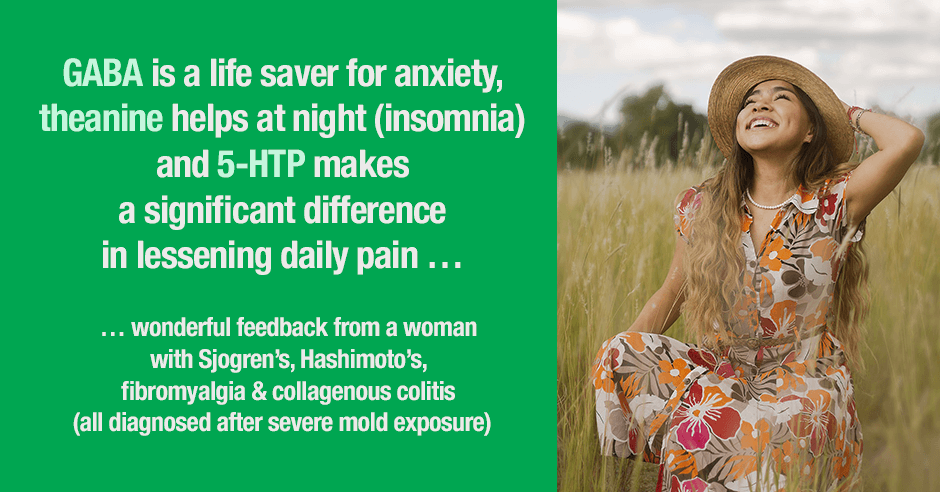
GABA is a life saver for anxiety, theanine helps at night (insomnia) and 5-HTP makes a significant difference in lessening daily pain

September 16, 2022 By Trudy Scott 16 Comments

aminos help

Joie has Sjogren’s, Hashimoto’s, fibromyalgia & collagenous colitis (all diagnosed after severe mold exposure) and shared how GABA is a life saver for her anxiety, how theanine helps at night with her insomnia and how 5-HTP makes a significant difference in lessening her daily pain. Here is her wonderful feedback in her own words (my feedback for her follows):

I was diagnosed with Sjogrens several years ago. I also have Hashimoto’s, Fibromyalgia & Collagenous Colitis. All of these happened after a severe mold exposure which destroyed my pituitary, and caused Exocrine Pancreatic Insufficiency (EPI). I have to take human growth hormone injections daily, as my pituitary isn’t working, digestive enzymes for the EPI, and have experienced the anxiety and depression you’ve written about.

The GABA has been a life saver for me (for my anxiety), and I share this with all I know who experience anxiety. I also use L-theanine at night because of insomnia. The 5-HTP has helped somewhat for sleep. L-tryptophan didn’t seem to make a difference. However the 5-HTP has made a significant difference in lessening my daily pain levels, which I am most grateful for.

Unfortunately, I am also taking Klonopin and Gabapentin, both of which I have tried to get off of but keep finding myself back on both in order to have greater than 5 hours of sleep at night. Even with these, I often awaken after 4-6 hours and take 1-2 chewable GABA which allows me to go back to sleep and get 2-4 more hours of sleep.

She shared this on the blog, Sjogren’s syndrome: tryptophan and GABA for anxiety, and moisturizing for dry skin and inflammation?, where I write about the prevalence of anxiety and depression in this autoimmune condition, and the fact that serotonin and GABA are often low.

I shared how sorry I was to hear how mold has impacted her but that it was wonderful to hear the GABA has been a lifesaver for you in terms of anxiety (and when waking in the night) and that theanine helps her sleep. It’s wonderful that 5-HTP helps ease her daily pain (here is fibromyalgia research on 5-HTP) and helps somewhat with her sleep issues.

Has she increased the amino acids to the optimal doses for her unique needs?

My question for her was this: “how much of each of these amino acids are you using and have you increased them to the optimal doses for your unique needs?” I asked this because many folks don’t do this and we always want to capitalize on what is working.

Here are some examples that relate to Joie:

  • When 5-HTP helps with pain relief we also do afternoon and bedtime trials to see if it can improve sleep further. And we always explore some of the reasons why serotonin may be low and address those too. You can read more on that here: what causes low serotonin

I shared that tryptophan doesn’t work for everyone and some do better with 5-HTP, but I do also consider melatonin when sleep is an issue, especially timed release to prevent waking in the night.

  • Since GABA is a lifesaver for her in terms of her anxiety and also helps when she wakes, trialing higher doses at bedtime may prevent the early morning waking. The same could be said for trialing a higher dose of theanine and using both GABA and theanine together at night (a 2019 study shows the combination decreases sleep latency and improves NREM sleep).

High cortisol, rebound sleep issues with meds and/or poor fat digestion?

If she has already done the above, I’d explore high cortisol and do a 5-collection an adrenal saliva test). When cortisol is high during the night, the use of Seriphos can be a game-changer for many.

Unfortunately both Klonopin and Gabapentin (especially the former) can cause rebound insomnia even when they seem to be helping in the short-term.

I also mentioned that my recent blog post many be helpful since she mentions exocrine pancreatic insufficiency, which could affect sleep by impacting her fat digestion – Waking in the night due to environmental toxins: impacts on the liver, gallbladder and fat digestion (making oxalate issues worse). This has relevance whether or not oxalates are an issue.

Autoimmune-Paleo (AIP) diet, pyroluria and moisturizing for reducing inflammation

It goes without saying that since Sjogren’s, Hashimoto’s and even Collagenous Colitis are autoimmune conditions, following an Autoimmune-Paleo (AIP) diet is key too. I have links to some AIP resources on the above Sjogren’s blog post.

In this blog I also mention pyroluria which may be relevant for someone with Collagenous Colitis and is crucial to address when there has been toxic mold exposure or other chronic issues like Lyme disease or MCAS. More on this here.

And you can also read about the value of moisturizing for reducing inflammation.

I thanked her and said I plan to share her results and my response as a new blog as I feel it will help others and give hope!

Resources if you are new to using amino acids as supplements

If you are new to using any of the amino acids as supplements, here is the Amino Acids Mood Questionnaire from The Antianxiety Food Solution (you can see all the symptoms of neurotransmitter imbalances, including low serotonin and low GABA).

If you suspect low levels of any of the neurotransmitters and do not yet have my book, The Antianxiety Food Solution – How the Foods You Eat Can Help You Calm Your Anxious Mind, Improve Your Mood, and End Cravings, I highly recommend getting it and reading it before jumping in and using amino acids on your own so you are knowledgeable. And be sure to share it with the practitioner/health team you or your loved one is working with.

There is an entire chapter on the amino acids and they are discussed throughout the book in the sections on gut health, gluten, blood sugar control, sugar cravings, self-medicating with alcohol and more.

The book doesn’t include product names (per the publisher’s request) so this blog, The Antianxiety Food Solution Amino Acid and Pyroluria Supplements, lists the amino acids that I use with my individual clients and those in my group programs. You can find them all in my online store.

If, after reading this blog and my book, you don’t feel comfortable figuring things out on your own (i.e. doing the symptoms questionnaire and respective amino acids trials), a good place to get help is the GABA QuickStart Program (if you have low GABA symptoms). This is a paid online/virtual group program where you get my guidance and community support. Another option is the budget-friendly GABA QuickStart Homestudy Program.

If you need serotonin support, the Serotonin QuickStart Program is a good place to get help. This is also a paid online/virtual group program where you get my guidance on using tryptophan and 5-HTP safely, and community support during 5 LIVE Q&A calls. You can sign up to be notified when the next live launch of this program is happening.

If you are a practitioner, join us in The Balancing Neurotransmitters: the Fundamentals program. This is also a paid online/virtual program with an opportunity to interact with me and other practitioners who are also using the amino acids.

Wrapping up and your feedback

I’d love to hear if GABA helped with your anxiety and insomnia? What about theanine? And 5-HTP for your pain? Or melatonin for sleep?

Have you used taurine with success for fat digestion? Or Seriphos for high cortisol?

What else has helped you with symptoms like these ones?

If you have questions please share them here too.
Filed Under: 5-HTP, Anxiety, GABA, Insomnia, Pain Tagged With: 5-HTP, anxiety, Balancing Neurotransmitters: the Fundamentals program for practitioners, collagenous colitis, depression, Exocrine Pancreatic Insufficiency, Fibromyalgia, GABA, GABA Quickstart program, gabapentin, hashimoto's, Inflammation, insomnia, Klonopin, lessening daily pain, moisturizing, mold exposure, pain, serotonin, Sjogren’s, sleep, theanine, tryptophan

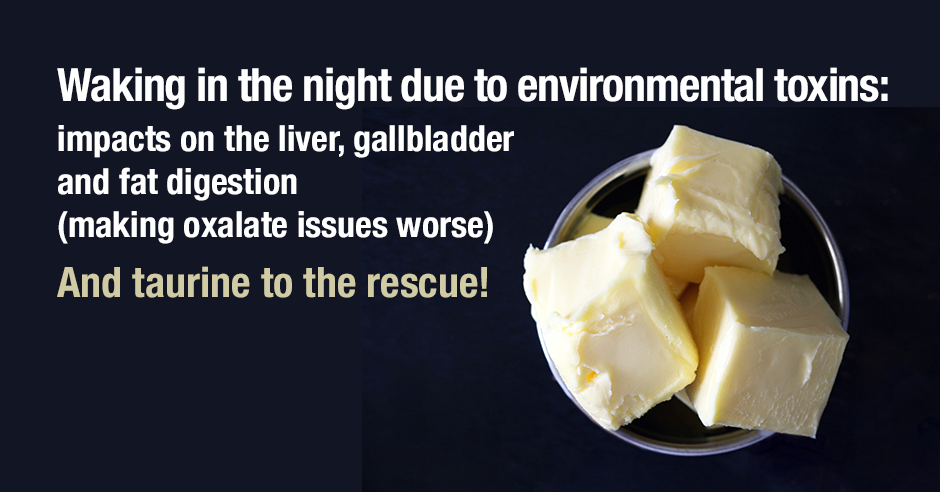
Waking in the night due to environmental toxins: impacts on the liver, gallbladder and fat digestion (making oxalate issues worse)

September 9, 2022 By Trudy Scott 37 Comments

night waking environmental toxins

Today I’m sharing how waking in the night may be caused by oxalate issues that are  made more severe because of home cleaning products, environmental toxins and fragrances/phthalates. It can happen because of the additional detoxification work required and adverse impacts on your liver and gallbladder. This can impact bile production so fat digestion is impaired. And when you have impaired fat digestion this can contribute to more severe oxalate issues because more oxalates are absorbed in the gut. This can lead to increased pain, worsening sleep and/or waking in the night, increased anxiety, fatigue, depression, more severe bladder symptoms, eye problems etc.

Using extra calcium citrate in the night can help in the short term. But improving fat digestion (with lipase, ox bile, taurine, a lipotropic formula, digestive bitters etc.) and supporting the liver/gallbladder is key because it gets to the root of the problem. And of course, avoid the chemical exposure. Sometimes this can’t be done – which is the case when you are traveling – so you have to do your best to reduce exposure.

This is actually my story. I’m traveling in South Africa at the moment and had a flare of my old oxalate issues, with increased foot pain at night, so much so that it was waking me at 3am in the morning. I’d be awake from 3-5am feeling agitated and restless and waiting for the extra calcium citrate to work. I’m a hot mess when I don’t get a solid 8-9 hours sleep so I had to figure out what the issue was and fix it quickly. It was a somewhat convoluted journey (more on that below) but eventually I landed on taurine as the solution and it’s been wonderful to get my solid sleep with no waking in the night!

I do eat a fair amount of fat – plenty of butter on my steamed veggies, olive oil, coconut oil, avocados, the fat from grass-fed meat, chicken skin, full fat cheese and eggs – and didn’t want to cut back.

So when taurine came to the rescue I was thrilled and still am!

I took 500mg before bed the first day and woke briefly twice but went right back to sleep. The second day I took 500mg taurine mid-morning, 500mg taurine mid-afternoon and 500mg before bed (all away from food). That night I woke briefly once and went right back to sleep. The third day I did the same and slept solidly through the night. My goal had been to increase to 3000mg per day but I’ll stick with 1500mg as long as this continues.

There were a few clues that indicated a need for liver-gallbladder support: the 3am waking is classic for liver issues; and my stool had become pale despite nothing else changing.

Impaired fat digestion leads to an increase in oxalate absorption

As mentioned above, when you have impaired fat digestion this can contribute to more severe oxalate issues because more oxalates are absorbed in the gut. This paper, Fat malabsorption induced by gastrointestinal lipase inhibitor leads to an increase in urinary oxalate excretion, summarizes the mechanism well:

Unabsorbed bile acids and fatty acids may react with calcium in the intestinal lumen, forming “soaps” that limit the amount of free calcium binding with oxalate, with a consequent increase in intestinal oxalate absorption leading to hyperoxaluria

In the above study, it’s orlistat (Xenical®), a gastrointestinal lipase inhibitor rather than environmental toxins and bile issues, that causes the increase in oxalates. I share it because it has a helpful explanation of the mechanism.

I share more about my issues with dietary oxalates here – Oxalate crystal disease, dietary oxalates and pain: the research & questions. My main issues in the past have been foot pain and eye pain, with downstream impacts on sleep. This blog has links to a number of other dietary oxalate blogs if this topic is new to you.

Bile production and detoxification

You may recall my wonderful interview with Ann Louise Gittleman on The Anxiety Summit 5: Gut-Brain Axis. The topic was: Why Bile is the Key to Anxiety & Hormone Havoc. I’ll add sleep to that too.

She covered the role of bile in PMS, estrogen imbalance and thyroid health; and importantly, how it’s involved in the removal of toxins from the body:

Bile is the dumping ground for hormones like estrogen. It’s the dumping ground for heavy metals that create anxiety like mercury, as well as too much aluminum and lead. And it’s the dumping ground, also, for a bunch of chemicals. So you got to keep the bile flowing. You have to keep it decongested. You have to thin it out.

She mentions simple tools to improve bile production: bitters (already part of my routine), lemon and water in the morning (also part of my daily routine), coffee (I can’t drink coffee as it makes me anxious), grapefruit and watercress. She also discusses key  nutrients for bile production and quality: choline, inositol, methionine and taurine.

I could not find any lipotropic formula with choline, inositol, methionine (they all had rice flour). And I could not find any products that contained only lipase or ox bile.

While I was looking for something to improve my bile production, I did try a milk thistle extract (for overall liver support) and a liver-gallbladder herbal tincture but both made things worse. So I did some reading on taurine, found a nice taurine only 500mg product and haven’t looked back. Read on for some of the mechanisms.

Taurine and bile acid conjugation and detoxification

Metabolic actions of the amino acid taurine include: “bile acid conjugation, detoxification, membrane stabilization, osmoregulation, and modulation of cellular calcium levels.”

This paper, The Continuing Importance of Bile Acids in Liver and Intestinal Disease, explains the significance of bile acid conjugation with taurine:

After biosynthesis from cholesterol and before excretion from the hepatocyte, bile acid molecules are conjugated with glycine or taurine, which converts a weak acid to a strong acid. As a result, conjugated bile acids are fully ionized at the range of pH values present in the small intestine.

Taurine works on GABA receptors and is a GABA alternative

What is really interesting is that taurine works on GABA receptors and has a synergistic effect with GABA. I suspect this played a role for me too.

In this editorial, Taurine and GABA neurotransmitter receptors, a relationship with therapeutic potential?, the authors share the following::

  • “Taurine exerts its neuronal inhibitory effect through the activation of GABAA receptors (GABAAR) but with less affinity than the specific agonists of each receptor.
  • GABA and taurine act synergistically in extra-synaptic GABA receptors.
  • Some experiments suggest that taurine activates GABAB receptors with high affinity”

In countries where over-the-counter GABA is not available (like the UK, Australia and New Zealand), I will recommend taurine as an option. I don’t find it to be as effective as GABA but it is slightly calming.

You may need to course-correct from time to time

I share this story to illustrate that things can be going well in terms of sleep, pain, anxiety, depression and so on, and then something can happen and you have to course-correct.

I also often hear from folks in my community saying: “GABA and/or tryptophan was working perfectly to help me sleep and all of a sudden it’s no longer working. What is going on?”  A situation like this shows how something else can change and it has nothing to do with the amino acids no longer working.

I do already use GABA, tryptophan (more on these below), melatonin and magnesium at bedtime and continued taking these supplements but I had to fix the root cause – the fat digestion issue.

I will add this: even if you don’t have dietary oxalate issues, this approach may be worth considering if you have no gallbladder, have fat digestion issues, are exposed to environmental toxins, have liver issues and wake in the night.

Resources if you are new to using amino acids as supplements

If you are new to using any of the amino acids as supplements, here is the Amino Acids Mood Questionnaire from The Antianxiety Food Solution (you can see all the symptoms of neurotransmitter imbalances, including low serotonin and low GABA).

If you suspect low levels of any of the neurotransmitters and do not yet have my book, The Antianxiety Food Solution – How the Foods You Eat Can Help You Calm Your Anxious Mind, Improve Your Mood, and End Cravings, I highly recommend getting it and reading it before jumping in and using amino acids on your own so you are knowledgeable. And be sure to share it with the practitioner/health team you or your loved one is working with.

There is an entire chapter on the amino acids and they are discussed throughout the book in the sections on gut health, gluten, blood sugar control, sugar cravings, self-medicating with alcohol and more.

The book doesn’t include product names (per the publisher’s request) so this blog, The Antianxiety Food Solution Amino Acid and Pyroluria Supplements, lists the amino acids that I use with my individual clients and those in my group programs. You can find them all in my online store.

If, after reading this blog and my book, you don’t feel comfortable figuring things out on your own (i.e. doing the symptoms questionnaire and respective amino acids trials), a good place to get help is the GABA QuickStart Program (if you have low GABA symptoms). This is a paid online/virtual group program where you get my guidance and community support.

If you are a practitioner, join us in The Balancing Neurotransmitters: the Fundamentals program. This is also a paid online/virtual program with an opportunity to interact with me and other practitioners who are also using the amino acids.

Have you experienced any adverse symptoms when exposed to environmental toxins? And has this made your oxalate issues worse or affected your fat digestion?

Have you used taurine with success? How much helps you?

Have other liver or gallbladder approaches also helped?

If you have questions please share them here too.

Read all posts in this series:

  • Coronavirus and vitamin C for immune support: new pain or more severe pain due to oxalate issues? (part 1)
  • Oxalate crystal disease, dietary oxalates and pain: the research & questions (part 2)
  • Vitamin C causes oxalate formation resulting in pain, anxiety, and insomnia (when there is a defect in ascorbic acid or oxalate metabolism)? (part 3)
  • Willow’s survival story: Easter Lilies cause acute renal failure in cats and Peace Lilies cause oxalate issues (part 4)
  • Waking in the night due to environmental toxins: impacts on the liver, gallbladder and fat digestion (making oxalate issues worse) (part 5)

Filed Under: GABA, Insomnia, Oxalates, Pain Tagged With: anxiety, Balancing Neurotransmitters: the Fundamentals program for practitioners, bile, bladder symptoms, calcium citrate, depression, detoxification, digestive bitters; GABA Quickstart program, environmental toxins, eye problems, fat digestion, fatigue, fragrances, gallbladder, home cleaning products, insomnia, lipase, lipotropic formula, liver, ox bile, oxalates, pain, phthalates, sleep, taurine, Waking in the night

  • « Go to Previous Page
  • Page 1
  • Interim pages omitted …
  • Page 10
  • Page 11
  • Page 12
  • Page 13
  • Page 14
  • Interim pages omitted …
  • Page 96
  • Go to Next Page »

Primary Sidebar

GABA QuickStart Homestudy

gaba quickstart homestudy

Free Report

9 Great Questions Women Ask about Food, Mood and their Health

You'll also receive a complimentary subscription to my ezine "Food, Mood and Gal Stuff"


Connect with me

Popular Posts

  • Amino Acids Mood Questionnaire from The Antianxiety Food Solution
  • The Antianxiety Food Solution Amino Acid and Pyroluria Supplements
  • Pyroluria Questionnaire from The Antianxiety Food Solution
  • Collagen and gelatin lower serotonin: does this increase your anxiety and depression?
  • Tryptophan for the worry-in-your-head and ruminating type of anxiety
  • GABA for the physical-tension and stiff-and-tense-muscles type of anxiety
  • The Antianxiety Food Solution by Trudy Scott
  • Seriphos Original Formula is back: the best product for anxiety and insomnia caused by high cortisol
  • Am I an anxious introvert because of low zinc and vitamin B6? My response to Huffington Post blog
  • Vagus nerve rehab with GABA, breathing, humming, gargling and key nutrients

Recent Posts

  • Her cravings for chips and peanut butter were triggered by stress: GABA ends cravings and reduces physical tension and fear of heights
  • It is truly miraculous to be able to move through life without crippling anxiety and panic
  • GABA and tryptophan combo provide immediate and noticeable relief for tremors and cervical dystonia in just 7 days
  • Red light therapy for back and neck pain, plantar fasciitis and low mood – a complement to the amino acids GABA, DPA and tryptophan
  • What do I use instead of Seriphos to help lower high cortisol that is affecting my sleep and making me anxious at night?

Categories

  • 5-HTP
  • AB575
  • Addiction
  • ADHD
  • Adrenals
  • Alcohol
  • Allergies
  • Alzheimer's disease
  • Amino Acids
  • Anger
  • Antianxiety
  • Antianxiety Food Solution
  • Antidepressants
  • Anxiety
  • Anxiety and panic
  • Autism
  • Autoimmunity
  • benzodiazapines
  • Bipolar disorder
  • Books
  • Caffeine
  • Cancer
  • Candida
  • Children/Teens
  • Collagen
  • Cooking equipment
  • Coronavirus/COVID-19
  • Cravings
  • Depression
  • Detoxification
  • Diabetes
  • Diet
  • DPA/DLPA
  • Drugs
  • EFT/Tapping
  • EMF
  • EMFs
  • Emotional Eating
  • Endorphins
  • Environment
  • Essential oils
  • Events
  • Exercise
  • Fear
  • Fear of public speaking
  • Fertility and Pregnancy
  • Fish
  • Food
  • Food and mood
  • Functional neurology
  • GABA
  • Gene polymorphisms
  • General Health
  • Giving
  • Giving back
  • Glutamine
  • Gluten
  • GMOs
  • Gratitude
  • Gut health
  • Heart health/hypertension
  • Histamine
  • Hormone
  • Hyperparathyroidism
  • Hypoglycemia
  • Immune system
  • Inflammation
  • Insomnia
  • Inspiration
  • Introversion
  • Joy and happiness
  • Ketogenic diet
  • Lithium orotate
  • Looking awesome
  • Lyme disease and co-infections
  • MCAS/histamine
  • Medication
  • Men's health
  • Mental health
  • Mercury
  • Migraine
  • Mold
  • Movie
  • MTHFR
  • Multiple sclerosis
  • Music
  • NANP
  • Nature
  • Nutritional Psychiatry
  • OCD
  • Osteoporosis
  • Oxalates
  • Oxytocin
  • Pain
  • Paleo
  • Parasites
  • Parkinson’s disease
  • PCOS
  • People
  • PMS
  • Postpartum
  • PTSD/Trauma
  • Pyroluria
  • Questionnaires
  • Real whole food
  • Recipes
  • Research
  • Schizophrenia
  • serotonin
  • SIBO
  • Sleep
  • Special diets
  • Sports nutrition
  • Stress
  • Sugar addiction
  • Sugar and mood
  • Supplements
  • Teens
  • Testimonials
  • Testing
  • The Anxiety Summit
  • The Anxiety Summit 2
  • The Anxiety Summit 3
  • The Anxiety Summit 4
  • The Anxiety Summit 5
  • The Anxiety Summit 6
  • Thyroid
  • Thyroid health
  • Toxins
  • Tryptophan
  • Tyrosine
  • Uncategorized
  • Vegan/vegetarian
  • Women's health
  • Yoga

Archives

  • May 2026
  • April 2026
  • October 2025
  • September 2025
  • August 2025
  • July 2025
  • June 2025
  • May 2025
  • April 2025
  • March 2025
  • February 2025
  • January 2025
  • November 2024
  • October 2024
  • September 2024
  • August 2024
  • July 2024
  • June 2024
  • May 2024
  • April 2024
  • March 2024
  • February 2024
  • January 2024
  • December 2023
  • November 2023
  • October 2023
  • September 2023
  • August 2023
  • July 2023
  • June 2023
  • May 2023
  • April 2023
  • March 2023
  • February 2023
  • January 2023
  • December 2022
  • November 2022
  • October 2022
  • September 2022
  • August 2022
  • July 2022
  • June 2022
  • May 2022
  • April 2022
  • March 2022
  • February 2022
  • January 2022
  • December 2021
  • November 2021
  • October 2021
  • September 2021
  • August 2021
  • July 2021
  • June 2021
  • May 2021
  • April 2021
  • March 2021
  • February 2021
  • January 2021
  • December 2020
  • November 2020
  • October 2020
  • September 2020
  • August 2020
  • July 2020
  • June 2020
  • May 2020
  • April 2020
  • March 2020
  • February 2020
  • January 2020
  • December 2019
  • November 2019
  • October 2019
  • September 2019
  • August 2019
  • July 2019
  • June 2019
  • May 2019
  • April 2019
  • March 2019
  • February 2019
  • January 2019
  • December 2018
  • November 2018
  • October 2018
  • September 2018
  • August 2018
  • July 2018
  • June 2018
  • May 2018
  • April 2018
  • March 2018
  • February 2018
  • January 2018
  • December 2017
  • November 2017
  • October 2017
  • September 2017
  • August 2017
  • July 2017
  • June 2017
  • May 2017
  • April 2017
  • March 2017
  • February 2017
  • January 2017
  • December 2016
  • November 2016
  • October 2016
  • September 2016
  • August 2016
  • July 2016
  • June 2016
  • May 2016
  • April 2016
  • March 2016
  • February 2016
  • January 2016
  • December 2015
  • November 2015
  • October 2015
  • September 2015
  • August 2015
  • July 2015
  • June 2015
  • May 2015
  • April 2015
  • March 2015
  • February 2015
  • January 2015
  • December 2014
  • November 2014
  • October 2014
  • September 2014
  • August 2014
  • July 2014
  • June 2014
  • May 2014
  • April 2014
  • March 2014
  • February 2014
  • January 2014
  • December 2013
  • November 2013
  • October 2013
  • September 2013
  • August 2013
  • July 2013
  • June 2013
  • May 2013
  • April 2013
  • March 2013
  • February 2013
  • January 2013
  • December 2012
  • November 2012
  • October 2012
  • August 2012
  • July 2012
  • June 2012
  • May 2012
  • April 2012
  • March 2012
  • February 2012
  • January 2012
  • December 2011
  • November 2011
  • October 2011
  • September 2011
  • August 2011
  • July 2011
  • June 2011
  • May 2011
  • April 2011
  • March 2011
  • February 2011
  • January 2011
  • December 2010
  • October 2010
  • September 2010
  • July 2010
  • May 2010
  • April 2010
  • March 2010
  • February 2010
  • January 2010
  • November 2009

Share the knowledge!

The above statements have not been evaluated by the Food and Drug Administration. Products listed in this website are not intended to diagnose, treat, cure or prevent any disease.

The information provided on this site is for informational and educational purposes only and is not intended as a substitute for advice from your physician or other health care professional. You should consult with a healthcare professional before starting or modifying any diet, exercise, or supplementation program, before taking or stopping any medication, or if you have or suspect you may have a health problem.


Copyright © 2026 Trudy Scott. All Rights Reserved. | Privacy | Terms and Conditions | Refund Policy | Medical Disclaimer

Free Report

9 Great Questions Women Ask about Food, Mood and their Health

You’ll also receive a complimentary subscription to my ezine “Food, Mood and Gal Stuff”