• Skip to primary navigation
  • Skip to main content
  • Skip to primary sidebar

everywomanover29 blog

Food, Mood and Women's Health – Be your healthiest, look and feel great!

  • Blog
  • About
  • Services
  • Store
  • Resources
  • Testimonials
  • The Book
  • Newsletter
  • Contact
  • Search this site

anxiety

GABA is not the same as gabapentin. GABA (gamma-aminobutyric acid) is an amino acid supplement; gabapentin is a prescription medication

December 23, 2022 By Trudy Scott 53 Comments

gaba and gabapentin

One common question I hear from folks who are new to my work is this: “is GABA the same as gabapentin?”  Quite frankly it has always surprised me to get this question since they are different words – why would you think they are the same? But I’d carefully explain the difference, educate the person and move on. A few months ago I shared a blog post on how the amino acid GABA was effective for an 11 year old with ADHD, irritability, anxiety and tantrums and someone asked this question again: “GABA sold at health store or prescription Gabapentin?”

I decided it was finally time to ask why she thought they may be the same thing. I first explained what GABA is (an amino acid supplement), shared some links to products and said “no, not prescription Gabapentin – I’m curious why you’d think that?”

She replied that “some people refer to GABA the same as Gabapentin” and thanked me for the clarification.

I appreciate her response but it did still concern me that the amino acid GABA is lumped together with prescription gabapentin. My next step was a facebook post sharing the above dialogue and asking my community there for feedback: “Have you heard GABA and gabapentin used interchangeably? Did you think they were the same thing at one stage?”

The response was enlightening, hence this blog post to provide clarification if you’re not sure either or if you know exactly what GABA is but have had confused conversations with your practitioner, family members, friends and/or colleagues. And to also get your feedback on this topic.

GABA is not the same as gabapentin. GABA (gamma-aminobutyric acid) is an amino acid supplement and neurotransmitter; gabapentin is a prescription medication. They are often used interchangeably (as you’ll read below) and should not be!

GABA and gabapentin is used interchangeably by a variety of practitioners

Here are some of the many responses showing how GABA and gabapentin is used interchangeably by a variety of practitioners:

Jennifer shared this: Yes in the vet world, gabapentin is often called gaba. Not surprising since western medicine likes to pretend that supplements don’t exist. I didn’t know GABA existed as a supplement for many years. I always explain what it is when I talk about it, to make sure there’s no confusion.

Val shared this: I was just at the dentist and I shared that I take Gaba to help me sleep. She said “Gabapentin?” I said “no I don’t take a synthetic medication, instead I take Gaba which is an amino acid.” It’s good to share with all who are willing to listen.

Katie shared this: I have never heard them used interchangeably but, whenever I talk about GABA, I say “GABA otc amino acid, not gabapentin the prescription” to be extra clear and educational.

Heather said: I was wondering this earlier in the week. My husband’s [nurse practitioner] suggested gabapentin temporarily for a back injury but she used the term “gaba”. I quickly got clarification. Hopefully she won’t do that again. But I understand it. Her field is all pain management.

Theresa shared this: Nurses who don’t know medicine often do that. I’ve found that [gaba] is listed in my med list when they don’t seem to know the difference.

Laura shared this: I always knew that they were different but I have had psychiatrists use them interchangeably. 

Bonnie shared this: I mentioned GABA to my dad’s nurse and she got all upset, thinking I meant Gabapentin. At the time I didn’t know it was two different things. Dad was in the hospital and I suggested gaba to calm him. She said, no, no, no! I didn’t realize we were speaking of two different things.

Lisa shared this: When I told my primary doctor [an MD] that I was taking Gaba instead of prescription drugs she asked “gabapentin?” I said “no, Gaba which is a supplement”. She looked confused.

Lindy shared this: It’s a common assumption. I think some GPs (general practitioners) shorten gapapentin to gaba.

Jane shared this: “Yes – I am very careful to say the “supplement GABA.” I mentioned it to an Anesthesiologist when I had surgery. I normally don’t tell the medical profession my supplements – they have no idea what they are. I do specify the “supplement GABA” to holistic providers – I don’t want any misunderstanding. I was on Gabapentin and Lyrica for a long time. Horrific medications with severe consequences

If you relate to any of this feedback, keep sharing in order to educate, explain the difference and clarify to make sure there is no confusion.

What is GABA?

If you are new to the amino acid GABA, it’s a supplement that is used to raise low GABA (the neurotransmitter) levels and ease the physical-tension and stiff-and-tense-muscles type of anxiety.

The other symptoms we see with low GABA are panic attacks, physical tension in certain settings like public speaking or driving, and the need to self-medicate to calm down, often with alcohol but sometimes with carbs and sugary foods. Insomnia can also be due to low GABA and you’ll experience physical tension (rather than the ruminating thoughts which is the low serotonin type of insomnia – although it’s not uncommon to experience both). GABA also helps with muscle spasms and pain relief when muscles are tight.

You can read this blog, GABA for the physical-tension and stiff-and-tense-muscles type of anxiety for my biggest takeaways for using GABA effectively.  I also share a number of GABA products and some feedback from folks who have experienced the benefits. One example is this:

I have used GABA (several brands, just open a capsule and sprinkle a small amount under the tongue) for years now, with calming results within minutes.

With regards to the question about GABA being available in health stores: there are amino acid supplements that are available over the counter at a health store and also via my online health store here (these are products I have vetted and use with clients).

Here is the blog I referred to above: GABA for children: ADHD, focus issues, irritability, anxiety and tantrums. My blog is a wealth of information when it comes to GABA so be sure to use the search feature.

What is gabapentin?

Per the Cleveland Clinic site:

Gabapentin is a prescription medication known as a gamma aminobutyric acid (GABA) analogue. GABA reduces the excitability of nerve cells (neurons) in the brain, which play a role in seizures and the transmission of pain signals. Gabapentin mirrors the effects of GABA calming excited neurons. Gabapentin is in a class of medications called anticonvulsants.

It’s been approved for seizures and nerve pain caused by shingles, however, off-label use is common when it comes to other types of pain, anxiety and depression. This  paper, Outpatient Off-Label Gabapentin Use for Psychiatric Indications Among U.S. Adults, 2011-2016 warns of

risks associated with gabapentin combined with central nervous system depressant (CNS-D) drugs, which are commonly prescribed in psychiatric treatment….Over 6 years, 58.4% of off-label gabapentin visits listed one or more concomitant CNS-D medications, most frequently antidepressants (24.3%), opioids (22.9%), and benzodiazepines (17.3%).

The above Cleveland Clinic site lists some brand names – Horizant®, Gralise® and Neurontin® – but it is known by many different names in other countries. You can look it up in your country here.

You’ll also see all the side effects and the fact that dependence and withdrawal is downplayed despite the growing evidence that these are very real issues. More on that below.

There are many issues with gabapentin dependence and withdrawal

This blog post is really about terminology and the interchangeable use of GABA and gabapentin, but if you’re new to gabapentin, it’s important to be aware that there are many issues with dependence and withdrawal (often similar to benzodiazepines):

  • Withdrawal symptoms after gabapentin discontinuation

On day 3 of hospitalization, she developed restlessness, disorientation, confusion, agitation, and anxiety. She was presumed to be suffering from ethanol withdrawal and was treated with benzodiazepines but had no improvement in symptoms. During days 4 and 5, the patient became increasingly confused, agitated, and anxious, with complaints of headache, light sensitivity, and increasing nervousness. On day 5, gabapentin was reinitiated, and the patient’s confusion and agitation improved that evening. The next morning, the patient was calm, alert, and cooperative.

  • Akathisia induced by gabapentin withdrawal

To our knowledge, this is the first reported cases of akathisia induced by gabapentin withdrawal. Available case reports suggest that gabapentin withdrawal can occur at doses ranging from 400-8000 mg/day. Patients experienced symptoms similar to those that develop with benzodiazepine withdrawal and were taking gabapentin for as little as 3 weeks to as long as 5 years.

  • Gabapentin dependence and withdrawal requiring an 18-month taper in a patient with alcohol use disorder: a case report

This case highlights the need for patient-centered slow tapers in patients with severe gabapentin dependence and withdrawal.

The withdrawal took 18 months.

There is one case report of macular edema after gabapentin use and gabapentinoid (pregabalin/Lyrica) more so than gabapentin/Neurontin) prescriptions increased risk of suicidal behavior and unintentional overdose.

This 2017 paper, Gabapentin and pregabalin: do the benefits outweigh the harms? summarizes as follows: “Prescribers should be aware of the very limited clinical evidence for use of gabapentin and pregabalin outside their licensed indications, as well as their capacity to do harm.”

The amino acid GABA has none of these issues.

Why it may be confusing for practitioners

Other than the fact that gabapentin is described as a GABA analogue, I can see why it may be confusing for practitioners who don’t yet know about my work and the amino acid GABA.

The fact that GABA is an amino acid supplement and also a neurotransmitter may also be contributing to some of the confusion.

The other fact that I believe is adding to the confusion is because of how gabapentin is often referred to in the research. Let’s take this 2020 paper as an example: γ-Aminobutyric Acid and Derivatives Reduce the Incidence of Acute Pain after Herpes Zoster – A Systematic Review and Meta-analysis

It has γ-aminobutyric acid and derivatives in the paper title and as part of the aim, is mentioned in the results and elsewhere too:

  • The aim of the present study was to investigate the effectiveness of GABA and its derivatives in reducing acute pain incidence in patients having HZ.
  • The results showed that the treatment with GABA and its derivatives significantly reduced the number of patients with acute zoster pain.
  • There is no guideline for using and dosing GABA and its derivatives to prevent acute HZ pain.

And elsewhere they refer to GABA-like compounds:

  • The optimal dosage of GABA-like compounds is still to be determined.
  • Nevertheless, the presently available data indicate that the application of GABA-like compounds in this respect is very promising.

The entire review is about gabapentin/neurontin and is not about the amino acid GABA at all, even though the search terms used for this paper included: gamma-aminobutyric acid and gaba.

This is just one example of many such papers. I know what the amino acid GABA is and I was initially confused when reading the title and abstract, and even when reading the full paper (initially hopeful the paper would also be discussing the amino acid GABA).

Resources if you are new to using GABA and other amino acids as supplements

If you are new to using GABA or any of the other amino acids as supplements, here is the Amino Acids Mood Questionnaire from The Antianxiety Food Solution (you can see all the symptoms of neurotransmitter imbalances, including low GABA and low serotonin).

If you suspect low levels of any of the neurotransmitters and do not yet have my book, The Antianxiety Food Solution – How the Foods You Eat Can Help You Calm Your Anxious Mind, Improve Your Mood, and End Cravings, I highly recommend getting it and reading it before jumping in and using amino acids on your own so you are knowledgeable. And be sure to share it with the practitioner/health team you or your loved one is working with.

There is an entire chapter on the amino acids and they are discussed throughout the book in the sections on gut health, gluten, blood sugar control, sugar cravings, self-medicating with alcohol and more.

The book doesn’t include product names (per the publisher’s request) so this blog, The Antianxiety Food Solution Amino Acid and Pyroluria Supplements, lists the amino acids that I use with my individual clients and those in my group programs. You can find them all in my online store.

If, after reading this blog and my book, you don’t feel comfortable figuring things out on your own (i.e. doing the symptoms questionnaire and respective amino acids trials), a good place to get help is the GABA QuickStart Program (if you have low GABA symptoms). This is a paid online/virtual group program where you get my guidance and community support.

If you are a practitioner, join us in The Balancing Neurotransmitters: the Fundamentals program. This is also a paid online/virtual program with an opportunity to interact with me and other practitioners who are also using the amino acids.

I appreciate these women for sharing their interactions with practitioners so we can all be enlightened.

Have you heard GABA and gabapentin used interchangeably? Did you think they were the same thing at one stage?

How do you refer to GABA and gabapentin in order to avoid confusion?

If you’ve been prescribed gabapentin what was/is it prescribed for? And did you/do you also have a prescription for an antidepressant, opioid or benzodiazepine?

Have you had/do you have any issues using gabapentin?

Have you had success using the amino acid GABA? If yes, what for?

Feel free to post your questions and feedback in the comments below.
Filed Under: Anxiety, GABA, Medication Tagged With: ADHD, amino acid, Antidepressants, anxiety, benzodiazepines, dependence, depression, GABA, GABA Quickstart online program; Balancing Neurotransmitters: the Fundamentals program for practitioners, gabapentin, gamma-aminobutyric acid, irritability, is GABA the same as gabapentin?, medication, off-label use, opioids, pain, prescription, some people refer to GABA the same as Gabapentin, supplement, withdrawal

GABA supplementation may offer a new approach for the prevention and treatment of asthma (and it helps anxiety, ADHD and insomnia)

December 16, 2022 By Trudy Scott 12 Comments

gaba and asthma

If you’re already taking the amino acid GABA for physical anxiety, have you noticed if it’s also helping to ease your asthma symptoms too? This may sound surprising but research shows GABA may reduce inflammation and spasms and help with asthma symptoms via these mechanisms. What’s encouraging is the fact that GABA supplementation also helps with anxiety, obesity, ADHD and insomnia which commonly occur with asthma and can be associated with inflammation too. It’s so important to be addressing the root causes of asthma because of the many neuropsychiatric side-effects of  asthma medications. This blog addresses all of these topics.

We’ll start with the research first. In this study, Effect of gamma-aminobutyric acid treatment on plasma substance P and calcitonin gene-related peptide levels in children with asthma, of 75 children with asthma, 36 children were in the GABA treatment group and received oral GABA (25-30 mg/kg per day) in addition to standard asthma medications.

The authors propose that airway inflammation may be a factor in asthma and GABA helps because it reduces SP (substance P) and CGRP (calcitonin gene-related peptide), easing neurogenic inflammation and tracheal spasms.

The conclusion of the study is that oral GABA:

can significantly decrease plasma levels of SP and CGRP in children suffering from acute asthma.

It may offer a new approach for the prevention and treatment of asthma.

(this is my best translation from the Chinese paper).

Dosing of GABA for asthma

The children in the study group received oral GABA of  25-30 mg/kg per day. For a 100 lb /45 kg child this would equate to 1125 mg -1350 mg of GABA per day.

As I always share, I don’t recommend using GABA based on the weight of the person and I consider this a high dose. For adults, 125 mg GABA is a good starting dose with 125 mg often used 2-4 times a day. For a child, ¼ to ⅓ this dose is typically good to start with. All that said, many adults and children with asthma and anxiety need higher doses than what they initially start with.

It’s also worth noting that the oral dose of GABA was swallowed so it’s possible (and very likely) that more was needed than if it was used sublingually or with the capsule opened or a powder or a liposomal form.

GABA is seldom recommended for asthma – more recent research supports this approach

This is not new research – the paper was published in 2013 – but I seldom see it discussed or hear about practitioners recommending GABA for asthma.

A more recent paper, Neuroimmune Pathophysiology in Asthma (published in 2021) supports this and discusses the role of neurotransmitters (including GABA and serotonin) and neuropeptides (including SP, CGRP and others) in asthma. The authors suggest “that regulating the effects of neurotransmitters and neuropeptides represents a potential novel approach for the treatment of asthma.”

Why we need to consider GABA – the neuropsychiatric side effects of asthma medications

Exploring the use of GABA and these approaches is especially important given the neuropsychiatric side effects of asthma medications. In this study (published in March this year), Neuropsychiatric adverse drug reactions induced by montelukast impair the quality of life in children with asthma

Neuropsychiatric ADRs (adverse drug reactions) were reported in 78 (62.4%) of 125 patients, who recovered when the drug was discontinued.

These were children of 3-18 years taking montelukast for the first time. The good news is that they recovered when the drug was stopped.

The bad news is there is no information on how many kids who have been prescribed this class of medication are subsequently prescribed psychiatric medications.

This concern needs to be considered for all asthma medications: there are similar adverse effects with antihistamine and inhaled corticosteroid medications.

GABA helps with other conditions where spasms are common

The study results are very encouraging and support what I see clinically with asthma and other conditions where spasms are common. These include

  • proctalgia fugax/rectal spasms
  • laryngospasms
  • vagus nerve issues with a chronic cough and throat spasms and
  • globus pharyngeus/ lump-in-the-throat

GABA helps with all of the above and the non-allergic comorbidities seen with asthma.

Asthma in children and non-allergic comorbidities (obesity, depression and anxiety, ADHD and insomnia)

As stated in this paper, Paediatric asthma and non-allergic comorbidities: A review of current risk and proposed mechanisms “It is increasingly recognized that children with asthma are at a higher risk of other non-allergic concurrent diseases than the non-asthma population.” These include obesity, depression and anxiety, neurodevelopmental disorders (such as ADHD), sleep disorders and autoimmune diseases.

This paper looks at mechanisms and inflammation is a common theme except when it comes to anxiety and depression. Given that this paper was published this year and all that we now know  about nutritional psychiatry and neuroinflammation and anxiety, it’s clearly lacking in this aspect.

Clinically, we see how GABA can help with obesity (and cravings or stress-eating), depression and anxiety, ADHD and insomnia, as illustrated by these case studies:

  • GABA for ending sugar cravings (and anxiety and insomnia)
  • GABA for easing physical anxiety and tension: some questions and answers
  • The seasonality of GABA: worsening anxiety, insomnia and intrusive thoughts in winter (and the need for increased GABA supplementation)
  • GABA for children: ADHD, focus issues, irritability, anxiety and tantrums

I see similar comorbidities (the occurrence of more than one disorder at the same time) in adults and GABA can be used safely with adults and children.

Asthma from a functional medicine approach

There is clearly more to asthma than only GABA. This this article on natural remedies for asthma covers diet (eat real good quality food and avoid junk food), nutrients like vitamin D, zinc and others, and allergens – and all this needs to be investigated and addressed with a functional medicine approach.

Dr. Axe does mention stress and anxiety being a trigger: “It’s well-known that stress increases the severity and frequency of asthmatic attacks because it hinders immune function and raises inflammation.” He mentions stress-reduction techniques and breathing. I say let’s add GABA to the mix too.

Resources if you are new to using GABA and other amino acids as supplements

If you are new to using GABA or any of the other amino acids as supplements, here is the Amino Acids Mood Questionnaire from The Antianxiety Food Solution (you can see all the symptoms of neurotransmitter imbalances, including low GABA and low serotonin).

If you suspect low levels of any of the neurotransmitters and do not yet have my book, The Antianxiety Food Solution – How the Foods You Eat Can Help You Calm Your Anxious Mind, Improve Your Mood, and End Cravings, I highly recommend getting it and reading it before jumping in and using amino acids on your own so you are knowledgeable. And be sure to share it with the practitioner/health team you or your loved one is working with.

There is an entire chapter on the amino acids and they are discussed throughout the book in the sections on gut health, gluten, blood sugar control, sugar cravings, self-medicating with alcohol and more.

The book doesn’t include product names (per the publisher’s request) so this blog, The Antianxiety Food Solution Amino Acid and Pyroluria Supplements, lists the amino acids that I use with my individual clients and those in my group programs. You can find them all in my online store.

If, after reading this blog and my book, you don’t feel comfortable figuring things out on your own (i.e. doing the symptoms questionnaire and respective amino acids trials), a good place to get help is the GABA QuickStart Program (if you have low GABA symptoms). This is a paid online/virtual group program where you get my guidance and community support.

If you are a practitioner, join us in The Balancing Neurotransmitters: the Fundamentals program. This is also a paid online/virtual program with an opportunity to interact with me and other practitioners who are also using the amino acids.

Has GABA helped ease your physical anxiety and asthma symptoms too?

What about obesity/cravings, ADHD and insomnia as well?

Have you or one of your children been adversely impacted by asthma medications? If yes please share which medications and what symptoms were experienced.

What functional medicine and nutritional approaches have helped your asthma symptoms?

Feel free to post your questions and feedback in the comments below.
Filed Under: ADHD, Anxiety, Cravings, GABA, Insomnia Tagged With: ADHD, ADHD and insomnia; GABA Quickstart online program; Balancing Neurotransmitters: the Fundamentals program for practitioners, anxiety, asthma, asthma medications, calcitonin gene-related peptide, children, cravings, depression, GABA, Inflammation, insomnia, neurogenic inflammation, neuropsychiatric, obesity, physical anxiety, side-effects, spasms, substance P, tracheal spasms

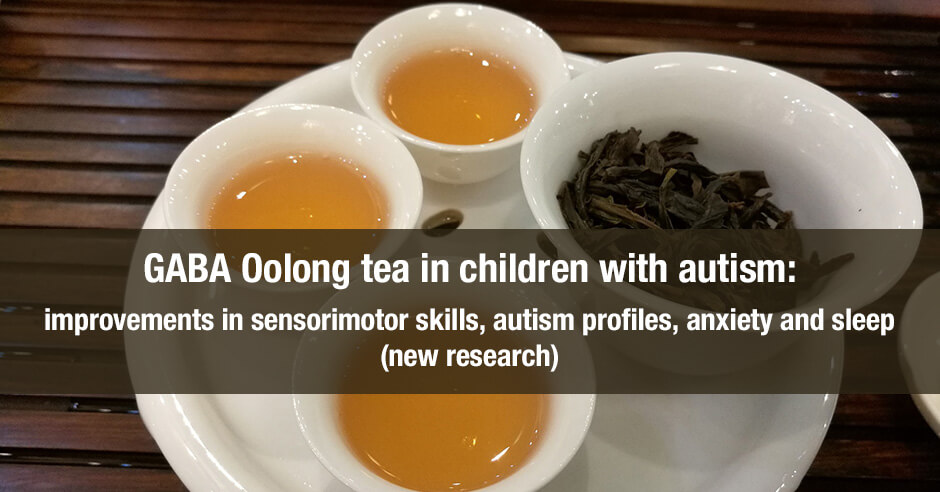
GABA Oolong tea in children with autism: improvements in sensorimotor skills, autism profiles, anxiety and sleep (new research)

December 2, 2022 By Trudy Scott 14 Comments

gaba woolong tea and autism

A small feasibility study, A double-blind, placebo-controlled, randomised-designed GABA tea study in children diagnosed with autism spectrum conditions, explored the effect of drinking GABA Oolong tea on sensorimotor skills, autism profiles, anxieties and sleep of children with autism.

It was a very small study with nine children (5 male and 4 female) but the results were very promising… “significant improvement in manual dexterity and some large individual improvements in balance, sensory responsivity, DSM-5 criteria and cortisol levels with GABA tea.”

In addition to reducing anxiety (in all but one participant – more on that below), the paper lists the following additional information related to sensory issues, cortisol levels and sleep:

  • Results also demonstrated that sensory responsivity improved in two-thirds of the participants and autism symptomology decreased in over half, with four of these individuals being positively re-classified on the DSM-5 scale
  • Differences between evening and morning cortisol levels, deemed the ‘carryover’ effect and cortisol awakening levels were also decreased in over two thirds of the participants, which we attribute to a reduction in stress response which may have helped to reduce sensorimotor responsivity in individuals with autism.
  • Contrary to our hypotheses, GABA Oolong tea did not appear to impact sleep, with no discernible differences noted in a range of sleep parameters compared with the placebo, despite parents’ subjective reports that their children appeared to sleep more deeply.

They conclude as follows … “These results suggest that sensorimotor abilities, anxiety levels and DSM-5 symptomology of children with autism can benefit from the administration of GABA in the form of Oolong tea.”

What is GABA Oolong tea?

When I shared this study and results on Facebook, I had a few people ask if they could simply add the amino acid GABA to their Oolong tea: “Is it just brewed tea with GABA powder added? Or does someone make a specific tea? I can totally add some GABA to my daily tea.”

It’s not regular oolong tea with GABA added, instead it’s specially fermented to increase GABA levels naturally. Amber GABA Oolong tea by Meileaf is the actual tea used in the study and they share this on the product page.

The farmers achieve this by alternating the leaves between air and a nitrogen rich environment (with no air) during the oxidation phase. This is done over a matter of hours and naturally increases the GABA levels in the tea leaves.

They also share this: “In order to be called GABA tea, the leaves must contain at least 150 mg of GABA per 100g (normal oolong has about 6 mg so that is 25 times higher).”

GABA Oolong tea does also contain theanine, caffeine and epigallocatechin gallate. There is a large part of the study dedicated to theanine so feel free to read that at your leisure.

How much GABA was ingested by study participants?

It was a surprisingly low dose of GABA! They were given 4 cups a day of the GABA Oolong tea and this provided a total of 39.2mg GABA for the day. The authors share this about the amount of daily GABA the study participants received:

With the GABA Oolong tea the dose would be approximately 280 mg per 100 g tea. Based on using 3.5 g per tea portion this equates to 9.8 mg of GABA; multiplied by 4 throughout the day, being 39.2 mg of GABA.

I’ve reached out to confirm which tea was used in the study since Meileaf mentions that this tea contains 205 mg of GABA per 100 g whereas the study states there was 280 mg GABA per 100 g tea. I see consistency with assessing GABA levels accurately being a possible issue (more on that below).

One of the first questions I had was how could such a small amount – 39.2 mg GABA for the day –  be so effective? I typically have clients start with 125 mg GABA and they may end up using this dose 3 or 4 x day (so 375 to 500 mg GABA total for the day.)

That said, we are all unique and as I’ve shared, there can be an extremely large variation in dosing.  In this blog I share how Syd gets sleep and body anxiety benefits with just 1.5 mg to 3 mg GABA and yet Christina’s agoraphobic client was able to leave the house with 3000 mg GABA.

My other questions: the placebo, caffeine, a histamine reaction, low cortisol and B1 depletion

With new research there are always many factors to consider and I have a number of other questions I’d love to see addressed:

  • Why did the placebo tea also contain GABA? It had 22.2 mg per day of GABA – about half that found in the GABA Oolong tea.
  • GABA Oolong tea does contain small amounts of caffeine and how would this affect susceptible individuals? One child was more anxious – was it due to caffeine or was it too much GABA for his needs or a histamine reaction due to the fermentation process (or something else)?
  • Do we need to be concerned about long term use and depletion of vitamin B1/thiamine which happens with regular tea.
  • And what about the effects if someone already has low cortisol levels?
  • Will there be standard levels and accurate measures of GABA in the various GABA Oolong teas that we can rely on? This applies to consumers and practitioners wanting to try this approach and for ongoing research.
  • How much of the effect was also due to addressing dehydration and helping with dietary oxalate issues which are known to be common in autism?

Hopefully new ongoing research with more participants will shed light on some of these questions.

I’d also love to see head to head research comparing GABA Oolong tea with supplementation of the amino acid GABA, and a study where both are used for possible synergistic effects.

I do appreciate that the authors attempt to address the GABA blood brain barrier (BBB) debate and how GABA could work, focusing on a permeable blood brain barrier in epilepsy and increased epilepsy in autism. This angle is new to me. I’ve addressed the leaky BBB at length here in my interview with Dr. Kharrazian (it’s a theory) and one of my interviews on a prior Anxiety Summit (there are many possible mechanisms and the peripheral effects).

If you’re new to symptoms of low GABA (and cases highlighting the calming effects of the amino acid GABA used as as a supplement)

GABA (gamma aminobutyric acid) is a calming neurotransmitter and the calming amino acid GABA used as a supplement can raise GABA levels. With low GABA levels you’ll feel a physical-tension and stiff-and-tense-muscles type of anxiety.

The other symptoms we see with low GABA are panic attacks, physical tension in certain settings like public speaking or driving, and the need to self-medicate to calm down, often with alcohol but sometimes with carbs and sugary foods. Insomnia can also be due to low GABA and you’ll experience physical tension (rather than the ruminating thoughts which is the low serotonin type of insomnia – although it’s not uncommon to experience both). GABA also helps with muscle spasms and pain relief when muscles are tight.

Here are are some case studies where you can read about the calming effects (and other benefits) of the amino acid GABA used as as a supplement:

  • GABA is a life saver for anxiety, theanine helps at night (insomnia) and 5-HTP makes a significant difference in lessening daily pain
  • Drastic reduction in intrusive thoughts, anxiety and fears (and better sleep) with GABA, tryptophan, 5-HTP and the pyroluria protocol
  • GABA, Heartmath and EFT ease Micki’s mold-induced anxiety and panic attacks
  • GABA, Rescue Remedy & essential oils for eliminating dental anxiety
  • GABA for children: ADHD, focus issues, irritability, anxiety and tantrums

Resources if you are new to using GABA and other amino acids as supplements

If you are new to using GABA or any of the other amino acids as supplements, here is the Amino Acids Mood Questionnaire from The Antianxiety Food Solution (you can see all the symptoms of neurotransmitter imbalances, including low GABA and low serotonin).

If you suspect low levels of any of the neurotransmitters and do not yet have my book, The Antianxiety Food Solution – How the Foods You Eat Can Help You Calm Your Anxious Mind, Improve Your Mood, and End Cravings, I highly recommend getting it and reading it before jumping in and using amino acids on your own so you are knowledgeable. And be sure to share it with the practitioner/health team you or your loved one is working with.

There is an entire chapter on the amino acids and they are discussed throughout the book in the sections on gut health, gluten, blood sugar control, sugar cravings, self-medicating with alcohol and more.

The book doesn’t include product names (per the publisher’s request) so this blog, The Antianxiety Food Solution Amino Acid and Pyroluria Supplements, lists the amino acids that I use with my individual clients and those in my group programs. You can find them all in my online store.

If, after reading this blog and my book, you don’t feel comfortable figuring things out on your own (i.e. doing the symptoms questionnaire and respective amino acids trials), a good place to get help is the GABA QuickStart Program (if you have low GABA symptoms). This is a paid online/virtual group program where you get my guidance and community support.

If you are a practitioner, join us in The Balancing Neurotransmitters: the Fundamentals program. This is also a paid online/virtual program with an opportunity to interact with me and other practitioners who are also using the amino acids.

Have you used GABA Oolong tea with clients/patients or personally? How much and what benefits have you seen?  Which product have you used?

If you’ve also used the amino acid GABA sublingually and with success, I’d love to hear how much (and which product) and how it compares with GABA Oolong tea for anxiety, insomnia, sensorimotor skills and/or autism symptoms (as applicable to you, your child or other family member and/or your client/patient)?

If you have questions please share them here too.

Filed Under: Anxiety, Autism, GABA, Insomnia Tagged With: amino acid, anxiety, autism, autism profiles, B1 depletion, balance, BBB, blood brain barrier, caffeine, calming, children, cortisol, GABA, GABA Oolong tea, GABA Quickstart online program; Balancing Neurotransmitters: the Fundamentals program for practitioners, histamine, insomnia, manual dexterity, research, sensorimotor skills, sensory responsivity, sleep, study

Low oxalate success stories: resolution of joint/body pain, insomnia, peripheral neuropathy and can walk without a cane

November 18, 2022 By Trudy Scott 18 Comments

low oxalate success stories

I’d love to hear how switching to a low oxalate way of eating helped you. And what motivated you to go down this path? Was it pain, weakness, low energy, anxiety, insomnia, bladder issues and/or restless legs and painful feet? (or something else?) How quickly did you see results when making the dietary changes? And what would you say to someone who can’t even imagine a better, easier and pain-free life, and really doesn’t want to give up so many foods?

I’ve seen incredible results personally and my painful feet and restless legs/insomnia (and also severe eye pain in one eye) was my motivation. I’m a nutritionist and understand the power of nutrition and know what is possible. But I know it’s tough to grasp for many individuals.

I’m asking for a dear family member who uses a walker and can’t imagine life without her walker and that dietary changes could make a difference.

I posted the above on Facebook and here are some of the few incredible responses I received. I hope they inspire and motivate you if you’re just beginning this low oxalate journey, or if you have a family member you’re trying to inspire, educate and help.

Beth shared how stopping high oxalate foods – beets, sweet potatoes, almonds, swiss chard, and chocolate – enabled her to stop using her cane in just 2 weeks:

I had to use cane by the time I was 28 and could barely hobble. The pain was like ground glass in my joints. To take a flight I had to get a wheelchair at the airport and had to use the electric carts at the grocery because I couldn’t walk or stand due to the excruciating pain. This went on for a few years.

When I learned about oxalates and stopped beets, sweet potatoes, almonds, swiss chard, and chocolate and went down to only medium oxalate foods or lower, I was off the cane in 2 weeks. I didn’t know about dumping, and I got lucky, but now if I eat too many oxalates the only problem I get is pain in my fingers and toes.

I can personally relate to the ground glass pain she describes – the pain in my feet felt like a mix of shards of glass and hot coals. It’s a common description I hear from clients.

You may be familiar with the wonderful work of Beth O’Hara, functional naturopath and founder of Mast Cell 360. She shares this too: “ I see a lot of mold toxicity underlying oxalate issues due to leaky gut, nutrient depletion, and a few other factors.” 

Quick results for insomnia, bloating, stomach pain, peripheral neuropathy, body pain, brain fog, weird rashes and more

Nicola shared these wonderful results and the fact that her symptoms started to resolve quickly:

I had extremely quick results – a couple of days for some symptoms. But the thrill of the slow realization that I wasn’t actually seriously ill and brewing up ever more and newer ways to suffer, was the biggest relief. Lower stress also equals lower pain.

Insomnia first, then bloating, stomach pain, peripheral neuropathy, chest pains, body pain, swollen lymph glands, brain fog, TMJ pains, weird rashes, arthritis type pains in hands/wrists, headaches. The list is too extensive to enumerate. Suffice to say I no longer feel in imminent danger of contracting lymphoma, heart problems, Alzheimer’s etc.

I am 66 years old and I’ve only been on this TLO (trying low oxalates) journey for about 8 months or so and all those issues have mostly been resolved. Kind of magical really. Still dumping oxalates regularly as I had a long way to come having been mostly Paleo for about 8 years previously.

I think we are too quick to resign ourselves to the ‘aging’ process. I find I am getting younger by the month, the longer I am lowering oxalates. I may not look any younger, but to be living without chronic pain is quite the unexpected boon.

I have to agree with Nicola. It is quite magical to get results like this and too often we take for granted that as we age chronic pain is inevitable. As you can see from these stories it is not inevitable and you have much more control than you may realize!

So desperate with pain that she thought she was going to have to quit work

Yvonne found out she had oxalate issues after having DNA testing done. She shares this about her journey and motivation:

I had extreme shoulder pain, grainy eyes and in the end, I couldn’t take my thyroid meds without the shoulder pain or some other pain. I found my way to the group through DNA testing which …suggested that I may have an oxalate problem. I slowly started eating low oxalate, suggested by the TLO group.

I had been primarily consuming high oxalate foods trying to be healthy but my diet wasn’t diverse enough. I was eating nuts, celery, spinach, kale, chocolate and sweet potatoes.

I was cautious after going low oxalate and having my problems relieved. Over time I’ve gone back to eating medium oxalate foods and done well. I do feel like making my own kombucha and drinking it daily has helped.

Dietary oxalate issues are often worse for women as they start to go through perimenopause and into menopause because of lower estradiol levels (more on that below). Yvonne was 65 at the time.

She shares what motivated her to make changes: “I was so desperate with pain that I thought I was going to have to quit work. That’s the reason I had the DNA testing done.”

Belly pain (maybe bladder), left leg pain, scalp itch, eye stinging and itching reduced immediately

Cristina shared what she observed when switching to a low oxalate diet:

Noticed belly pain (maybe bladder), left leg pain, scalp itch, eye stinging and itching reduced immediately. But might have taken a couple of years to really unload excess oxalates. I still get the exact same symptoms if I have high oxalates, particularly carrots, potatoes and nuts.

With much appreciation for these women for sharing their stories and giving me permission to share. I do hope this is inspiring and motivating for you if you are navigating dietary oxalates and can’t yet imagine that a diet change could lead to a better life and symptom-free existence.  I’ll be sharing all this wonderful feedback with my loved one too.

Additional reading about dietary oxalates

If you’re new to the concept of dietary oxalates here are some blog posts for additional reading:

  • Oxalate crystal disease, dietary oxalates and pain: the research & questions (this is a good one to start with if you’re new to dietary oxalates and the issues they can cause)
  • Vulvodynia: oxalates, GABA, tryptophan and physical therapy
  • Vitamin C causes oxalate formation resulting in pain, anxiety, and insomnia (when there is a defect in ascorbic acid or oxalate metabolism)?
  • Waking in the night due to environmental toxins: impacts on the liver, gallbladder and fat digestion (making oxalate issues worse)
  • Increased kidney stones in postmenopausal women with lower estradiol levels. What about increased dietary oxalate issues too?

I’d love to hear how switching to a low oxalate way of eating helped you and which high oxalate foods were you eating?

What motivated you to go down this path? Was it pain, weakness, low energy, anxiety, insomnia, bladder issues and/or restless legs and painful feet (or some other symptoms)?

How quickly did you see results when making the dietary changes?

And what would you say to someone who can’t even imagine a better, easier and pain-free life, and really doesn’t want to give up so many foods?

If you have questions please share them here too.

Filed Under: Insomnia, Oxalates, Pain Tagged With: anxiety, bladder pain, body pain, brain fog, eye pain, grainy eyes, ground glass, hot coals, insomnia, joint pain, low energy, Low oxalate, pain, pain-free, painful feet, peripheral neuropathy, restless legs, scalp itch, walk without a cane, weakness, weird rashes

GABA 500mg: high alert and increased anxiety; drugged and anxious with itchy red bumps the next day but slept better

November 11, 2022 By Trudy Scott 22 Comments

500mg gaba

Too much of the calming amino acid, GABA, can cause the opposite effect leading to increased anxiety and feeling too tired the following day, sometimes even feeling drugged. I have clients start with 125mg if they have low GABA physical type of anxiety so when I hear someone has had a bad reaction after using 500mg GABA, it’s unfortunate but not surprising. SM posted her reaction on the blog where I write about a niacin-type flush from using too much GABA. However her reaction was more severe than this. Here is her feedback and questions:

I took a single dose of GABA 500mg from NOW foods one night hoping it can help with anxiety and insomnia. I felt on high alert that night and increased anxiety that night. The next day I felt drugged and anxious, but strangely slept better [the next] night. I also had itchy red bumps.

I realized from your blog that 500mg was too much for me. I switched to NOW Foods True Calm which has 200 mg GABA and other nutrients, quite like a mini version of the Country Life GABA. I slept better but again have itchy red bumps now, so I’m afraid of using another capsule during the day.

I am also on 0.375mg of Clonotril which I take only at night but it does not help with constant anxiety all day. I managed to taper down to 0.375mg from 1mg after taking magnesium glycinate but unfortunately I had too much diarrhea from the magnesium. That’s how I came to know about GABA hoping it can help relieve the constant anxiety and heart palpitations.

After reading this article I realize it’s important to start GABA low. I tried to use Olly Goodbye Stress gummies which have 100 mg GABA and 50 mg theanine per 2 gummies but it was of no help.

I want to try the Source Naturals GABA Calm lozenges you recommended but I’m also feeling scared as I have been trying so many things without much success. Very grateful if you could offer me some advice. I came across your work when googling about GABA. Thank you for this opportunity to ask you questions.

This is my feedback for SM: too much GABA can have adverse effects the day it’s taken and feeling on high alert with increased anxiety that night is not unusual. It’s also not unusual to feel overly fatigued and even experience a drugged-type feeling and still continue to feel anxious.

With symptoms like this my first piece of advice is to start low at 125mg and always have 1000mg vitamin C on hand when trialing GABA (and any of the amino acids). It’s the antidote and works quickly to ease all the adverse effects and also any beneficial effects that are experienced.

Use a much lower dose of GABA and keep vitamin C on hand

We often trial GABA again – even with adverse symptoms like this – but always use a much lower dose.. We could use another product like Source Naturals GABA Calm lozenges or use 125mg of the 500mg NOW GABA product.

One big clue that she may actually need GABA is that she did sleep better the next night.

If it’s a niacin type flush, as described in the blog she commented on, Too much GABA causes a tingling niacin-like flush sensation (in the brain and body). It’s awful and very uncomfortable!, I would still recommend another trial of the lower dose (with vitamin C on hand).

Other product options to consider are theanine and/or pharmaGABA too.

A histamine reaction or MCAS /mast cell activation syndrome?

However if it’s not a flush but a real rash or hives then I’m more concerned and would not have them trial something new. With a rash that doesn’t resolve we also consider a histamine reaction or MCAS /mast cell activation syndrome.

GABA typically helps with MCAS/histamine issues but unfortunately things are not predictable when you have MCAS. She may need to address the histamine/MCAS reaction before she can start benefiting from GABA.

A phenol sensitivity or allergic reaction?

Phenols can trigger some strong emotional reactions that do include anxiety, hyperactivity, insomnia and meltdowns – and a feeling of being on high alert (which SM mentions).

Since she mentions the rash, I would also want to rule out a phenol reaction to the GABA. My colleague Julie Matthews shares this: “When phenols are not able to be broken-down and detoxified by a process called sulfation… they can cause these emotional symptoms and also red cheeks and ears.”

The benzodiazepine may be the confounding factor

One other confounding factor is the Clonotril. Benzodiazepines (using them and/or tapering) can cause many different issues. I do have clients use GABA to help while tapering but we only change one thing at a time and the benzo taper is super super slow. They also only start to taper (with the doctor’s approval and monitoring) once they are nutritionally stable. My book The Antianxiety Food Solution is a great resource for learning more about becoming nutritionally stable.

Serotonin support as well as GABA support?

SM mentions that she took GABA hoping it would help with anxiety and insomnia. These are also both symptoms of low serotonin so she may also see benefits with tryptophan, 5-HTP and melatonin.   You can read more about tryptophan here: Tryptophan for the worry-in-your-head and ruminating type of anxiety and melatonin here: Melatonin improves sleep quality and reduces anxiety after a TBI.

Resources if you are new to using GABA and other amino acids as supplements

If you are new to using any of the amino acids as supplements, here is the Amino Acids Mood Questionnaire from The Antianxiety Food Solution (you can see all the symptoms of neurotransmitter imbalances, including low GABA and low serotonin).

If you suspect low levels of any of the neurotransmitters and do not yet have my book, The Antianxiety Food Solution – How the Foods You Eat Can Help You Calm Your Anxious Mind, Improve Your Mood, and End Cravings, I highly recommend getting it and reading it before jumping in and using amino acids on your own so you are knowledgeable. And be sure to share it with the practitioner/health team you or your loved one is working with.

There is an entire chapter on the amino acids and they are discussed throughout the book in the sections on gut health, gluten, blood sugar control, sugar cravings, self-medicating with alcohol and more.

The book doesn’t include product names (per the publisher’s request) so this blog, The Antianxiety Food Solution Amino Acid and Pyroluria Supplements, lists the amino acids that I use with my individual clients and those in my group programs. You can find them all in my online store.

If, after reading this blog and my book, you don’t feel comfortable figuring things out on your own (i.e. doing the symptoms questionnaire and respective amino acids trials), a good place to get help is the GABA QuickStart Program (if you have low GABA symptoms). This is a paid online/virtual group program where you get my guidance and community support.

If you are a practitioner, join us in The Balancing Neurotransmitters: the Fundamentals program. This is also a paid online/virtual program with an opportunity to interact with me and other practitioners who are also using the amino acids.

Have you had an adverse reaction to taking a high dose of GABA? What dose, which product and what was your reaction?

What did you figure out was the ideal dose for you?

If you have questions please share them here too.

Filed Under: Anxiety, GABA, Insomnia Tagged With: 500mg GABA, amino acids; GABA Quickstart online program; and Balancing Neurotransmitters: the Fundamentals program for practitioners, anxiety, anxious, benzodiazepine, Clonotril, drugged, high alert, histamine reaction, increased anxiety, insomnia, itchy red bumps, MCAS, niacin-type flush, phenol reaction, rash, serotonin, slept, Source Naturals GABA Calm, tired, vitamin C

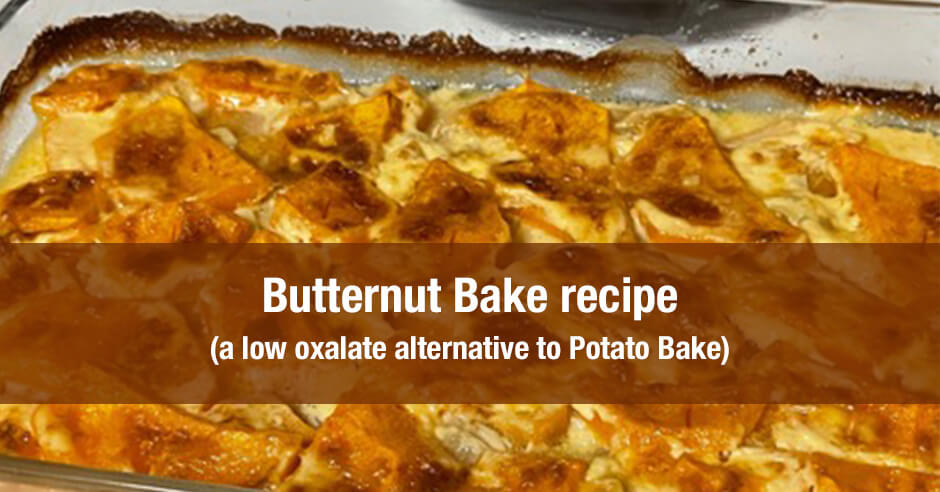
Butternut Bake recipe (a low oxalate alternative to Potato Bake)

November 4, 2022 By Trudy Scott 13 Comments

butternut bake recipe

Do you have dietary oxalate issues (pain, anxiety, insomnia, restless legs, hearing loss, eye issues, unresolved thyroid issues, bladder issues and more) and yet really miss potatoes and even sweet potatoes, both of which are very high oxalate?

I modified a family favorite recipe called Potato Bake (from Pips and my sister) to be a low oxalate option called Butternut Bake.

If you’re new to the dietary oxalate issues you can read more about this below. I’m finding it to be underappreciated as an issue especially in menopausal women when symptoms seems to be  more severe in susceptible individuals.

And if you don’t have dietary oxalate issues, you can certainly enjoy this recipe too.

Butternut Bake Recipe (a low oxalate alternative to potato bake)

Ingredients

1 large butternut peeled and sliced thinly
2 cups homemade stock (beef or chicken)
1 cup creme fraiche (or sour cream)
1 teaspoon butter
1 onion (grated)
6 large garlic cloves (grated or crushed in a garlic press)
Salt and pepper

Method

Peel the butternut and slice thinly (½ inch or 1 ¼  cm).

Butter a casserole dish (9×9 inches or 23 x 23 cm) and layer half the butternut slices in the dish.

Sprinkle with salt and pepper, and the grated onion and garlic – spreading it all evenly.

Layer the remaining butternut slices on top.

Bring the creme fraiche to boil and pour in the stock, boil for another minute.

Pour over the butternut.

Bake 180 deg C/350 deg F for 1.5 hours until the liquid has been absorbed by the butternut and the top is golden brown.

Enjoy as a side dish with a serving of quality/organic animal protein like grass-fed beef/lamb or pastured chicken or wild fish and some non-starchy low oxalate veggies such as cauliflower, zucchini  or asparagus.

Options

I have not tried it with coconut milk but I’m sure this could be substituted for the creme fraiche.

Low oxalate spices that could be experimented with include: chives, cilantro, basil, lemongrass, parsley, rosemary, ginger and sage.

If you know you don’t have dietary oxalate issues and decide to use potatoes instead, they do need to be cooked in the stock for 10 minutes before layering in the casserole dish. The original recipe calls for 3 large potatoes, sliced.

Some pictures to help as you make this butternut bake

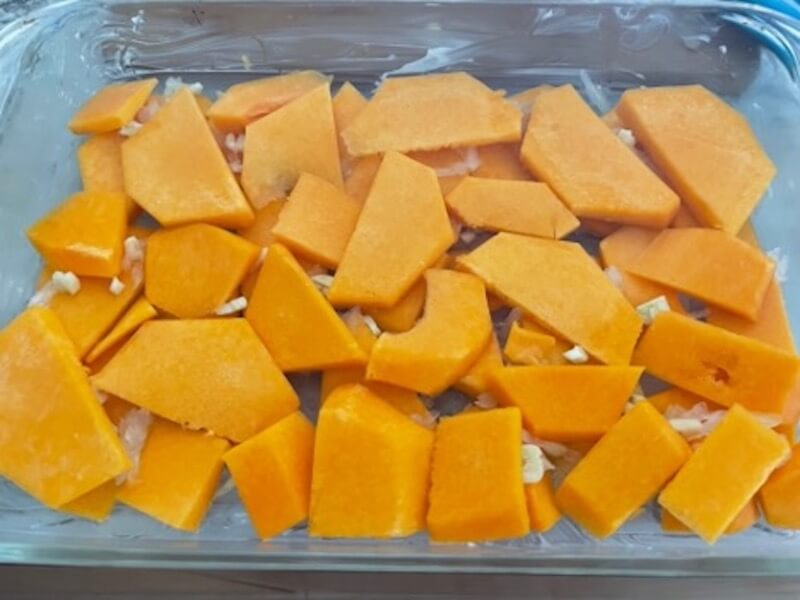
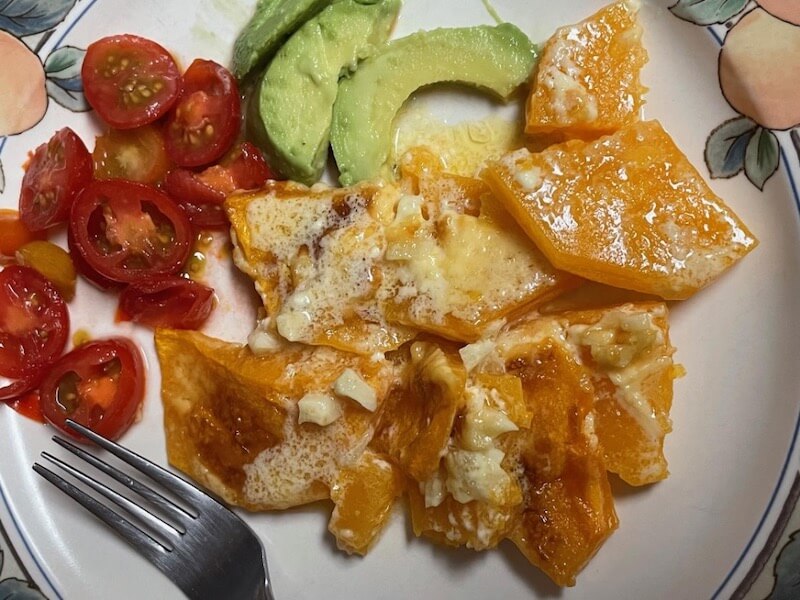
The top image shows the first layer of sliced butternut with grated onion and garlic. And the image below shows the second layer of butternut.

butternut bake

butternut bake

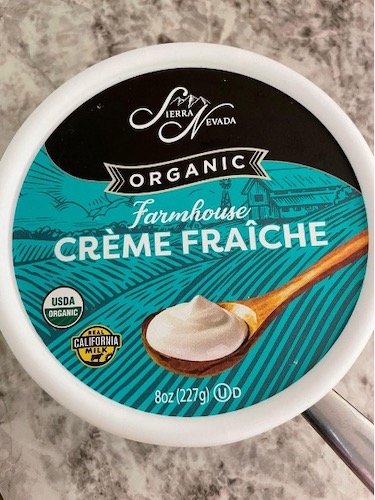
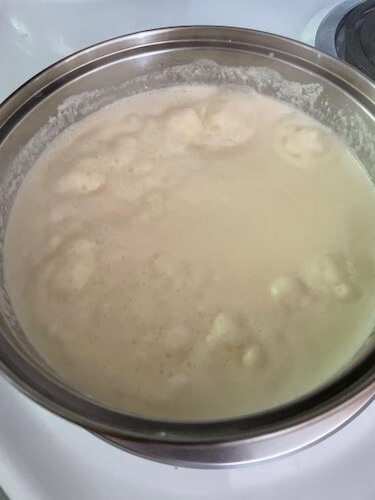
I was very pleased to find some very nice organic creme fraiche which has no added thickeners. The other image below shows the creme fraiche after it’s been boiled in the stock.

creme fraiche
creme fraiche sauce

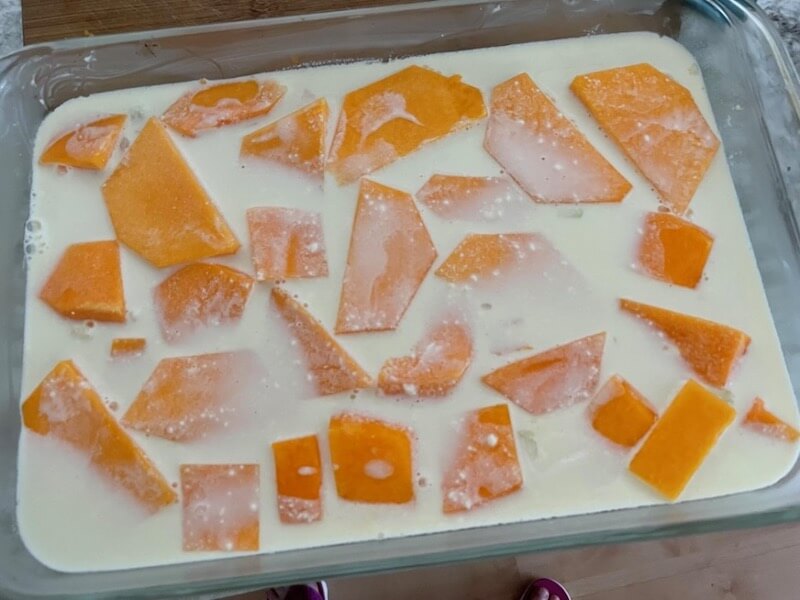
The next image shows what the layers of butternut and garlic/onion looks like covered with the creme fraiche/stock mixture i.e. it looks like it may be too much liquid but it really isn’t.

butternut bake

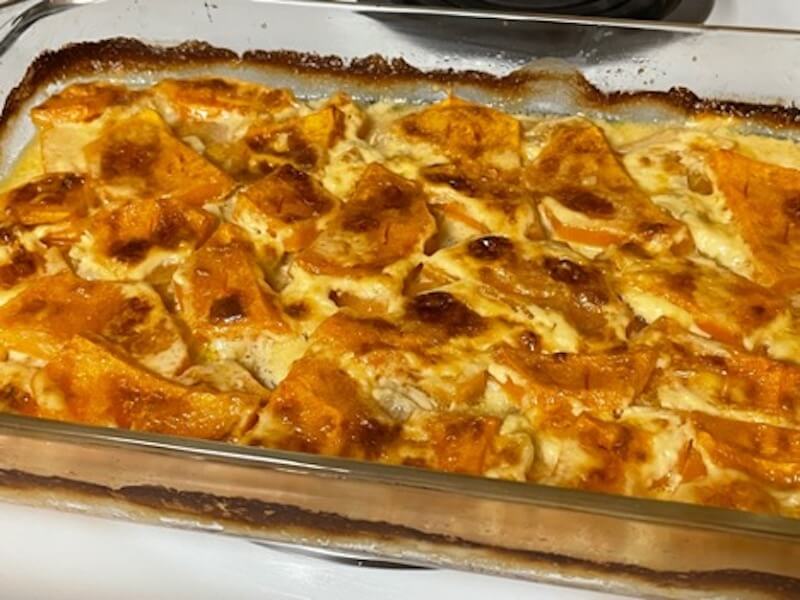
The bottom two images show what it looks like when the Butternut Bake is ready and comes out the oven, and then when it’s been served as a starter or side dish. There is a small amount of thick sauce.

butternut bake

butternut bake

Why consider dietary oxalates as a possible issue?

This blog post is a good one to start with if you’re new to dietary oxalates and the issues they can cause: Oxalate crystal disease, dietary oxalates and pain: the research & questions

These are the common medium-oxalate and high-oxalate foods that many folks have problems with: nuts, nut-butters and nut-flour (something to watch when eating Paleo or GAPS), wheat, chocolate, kiwi fruit (very high – see the raphides image on the above blog), star fruit (also very high), beets, potatoes, sweet potatoes, legumes, raspberries, spinach and soy.

In the above blog post, I share an overview of oxalates, my pain issues with dietary oxalates (severe foot pain and eye pain), and deeper dive into the condition called oxalate crystal disease (with some of my insights and questions).

The big take-aways are that calcium oxalate crystals are sharp and can cause far reaching harm beyond pain – such as unresolved anxiety, thyroid issues, neurological symptoms, eye issues, hearing loss, bladder issues, headaches, fatigue, insomnia, restless legs, autism symptoms and more; and you can have issues with dietary oxalates and not have kidney disease/kidney stones (although there is very little research supporting the latter).

You may find these oxalate blogs helpful too:

  • Waking in the night due to environmental toxins: impacts on the liver, gallbladder and fat digestion (making oxalate issues worse)
  • Increased kidney stones in postmenopausal women with lower estradiol levels. What about increased dietary oxalate issues too?

What dietary oxalates issues have you experienced and has a low oxalate diet helped you?

Do let us know if you make this recipe and enjoy it.

Feel free to share a favorite recipe of something you’ve adapted to be low or even medium oxalate.

If you have questions please share them here too.

Filed Under: Anxiety, Insomnia, Oxalates, Recipes Tagged With: anxiety, bladder issues, butternut, Butternut Bake recipe, dietary oxalate, estradiol, eye issues, hearing loss, high oxalate, insomnia, kidney disease, kidney stones, low oxalate alternative, menopausal women, oxalate, pain, potato, Potato Bake, restless legs, sweet potatoes, unresolved thyroid issues

  • « Go to Previous Page
  • Page 1
  • Interim pages omitted …
  • Page 9
  • Page 10
  • Page 11
  • Page 12
  • Page 13
  • Interim pages omitted …
  • Page 96
  • Go to Next Page »

Primary Sidebar

GABA QuickStart Homestudy

gaba quickstart homestudy

Free Report

9 Great Questions Women Ask about Food, Mood and their Health

You'll also receive a complimentary subscription to my ezine "Food, Mood and Gal Stuff"


Connect with me

Popular Posts

  • Amino Acids Mood Questionnaire from The Antianxiety Food Solution
  • The Antianxiety Food Solution Amino Acid and Pyroluria Supplements
  • Pyroluria Questionnaire from The Antianxiety Food Solution
  • Collagen and gelatin lower serotonin: does this increase your anxiety and depression?
  • Tryptophan for the worry-in-your-head and ruminating type of anxiety
  • GABA for the physical-tension and stiff-and-tense-muscles type of anxiety
  • The Antianxiety Food Solution by Trudy Scott
  • Seriphos Original Formula is back: the best product for anxiety and insomnia caused by high cortisol
  • Am I an anxious introvert because of low zinc and vitamin B6? My response to Huffington Post blog
  • Vagus nerve rehab with GABA, breathing, humming, gargling and key nutrients

Recent Posts

  • Her cravings for chips and peanut butter were triggered by stress: GABA ends cravings and reduces physical tension and fear of heights
  • It is truly miraculous to be able to move through life without crippling anxiety and panic
  • GABA and tryptophan combo provide immediate and noticeable relief for tremors and cervical dystonia in just 7 days
  • Red light therapy for back and neck pain, plantar fasciitis and low mood – a complement to the amino acids GABA, DPA and tryptophan
  • What do I use instead of Seriphos to help lower high cortisol that is affecting my sleep and making me anxious at night?

Categories

  • 5-HTP
  • AB575
  • Addiction
  • ADHD
  • Adrenals
  • Alcohol
  • Allergies
  • Alzheimer's disease
  • Amino Acids
  • Anger
  • Antianxiety
  • Antianxiety Food Solution
  • Antidepressants
  • Anxiety
  • Anxiety and panic
  • Autism
  • Autoimmunity
  • benzodiazapines
  • Bipolar disorder
  • Books
  • Caffeine
  • Cancer
  • Candida
  • Children/Teens
  • Collagen
  • Cooking equipment
  • Coronavirus/COVID-19
  • Cravings
  • Depression
  • Detoxification
  • Diabetes
  • Diet
  • DPA/DLPA
  • Drugs
  • EFT/Tapping
  • EMF
  • EMFs
  • Emotional Eating
  • Endorphins
  • Environment
  • Essential oils
  • Events
  • Exercise
  • Fear
  • Fear of public speaking
  • Fertility and Pregnancy
  • Fish
  • Food
  • Food and mood
  • Functional neurology
  • GABA
  • Gene polymorphisms
  • General Health
  • Giving
  • Giving back
  • Glutamine
  • Gluten
  • GMOs
  • Gratitude
  • Gut health
  • Heart health/hypertension
  • Histamine
  • Hormone
  • Hyperparathyroidism
  • Hypoglycemia
  • Immune system
  • Inflammation
  • Insomnia
  • Inspiration
  • Introversion
  • Joy and happiness
  • Ketogenic diet
  • Lithium orotate
  • Looking awesome
  • Lyme disease and co-infections
  • MCAS/histamine
  • Medication
  • Men's health
  • Mental health
  • Mercury
  • Migraine
  • Mold
  • Movie
  • MTHFR
  • Multiple sclerosis
  • Music
  • NANP
  • Nature
  • Nutritional Psychiatry
  • OCD
  • Osteoporosis
  • Oxalates
  • Oxytocin
  • Pain
  • Paleo
  • Parasites
  • Parkinson’s disease
  • PCOS
  • People
  • PMS
  • Postpartum
  • PTSD/Trauma
  • Pyroluria
  • Questionnaires
  • Real whole food
  • Recipes
  • Research
  • Schizophrenia
  • serotonin
  • SIBO
  • Sleep
  • Special diets
  • Sports nutrition
  • Stress
  • Sugar addiction
  • Sugar and mood
  • Supplements
  • Teens
  • Testimonials
  • Testing
  • The Anxiety Summit
  • The Anxiety Summit 2
  • The Anxiety Summit 3
  • The Anxiety Summit 4
  • The Anxiety Summit 5
  • The Anxiety Summit 6
  • Thyroid
  • Thyroid health
  • Toxins
  • Tryptophan
  • Tyrosine
  • Uncategorized
  • Vegan/vegetarian
  • Women's health
  • Yoga

Archives

  • May 2026
  • April 2026
  • October 2025
  • September 2025
  • August 2025
  • July 2025
  • June 2025
  • May 2025
  • April 2025
  • March 2025
  • February 2025
  • January 2025
  • November 2024
  • October 2024
  • September 2024
  • August 2024
  • July 2024
  • June 2024
  • May 2024
  • April 2024
  • March 2024
  • February 2024
  • January 2024
  • December 2023
  • November 2023
  • October 2023
  • September 2023
  • August 2023
  • July 2023
  • June 2023
  • May 2023
  • April 2023
  • March 2023
  • February 2023
  • January 2023
  • December 2022
  • November 2022
  • October 2022
  • September 2022
  • August 2022
  • July 2022
  • June 2022
  • May 2022
  • April 2022
  • March 2022
  • February 2022
  • January 2022
  • December 2021
  • November 2021
  • October 2021
  • September 2021
  • August 2021
  • July 2021
  • June 2021
  • May 2021
  • April 2021
  • March 2021
  • February 2021
  • January 2021
  • December 2020
  • November 2020
  • October 2020
  • September 2020
  • August 2020
  • July 2020
  • June 2020
  • May 2020
  • April 2020
  • March 2020
  • February 2020
  • January 2020
  • December 2019
  • November 2019
  • October 2019
  • September 2019
  • August 2019
  • July 2019
  • June 2019
  • May 2019
  • April 2019
  • March 2019
  • February 2019
  • January 2019
  • December 2018
  • November 2018
  • October 2018
  • September 2018
  • August 2018
  • July 2018
  • June 2018
  • May 2018
  • April 2018
  • March 2018
  • February 2018
  • January 2018
  • December 2017
  • November 2017
  • October 2017
  • September 2017
  • August 2017
  • July 2017
  • June 2017
  • May 2017
  • April 2017
  • March 2017
  • February 2017
  • January 2017
  • December 2016
  • November 2016
  • October 2016
  • September 2016
  • August 2016
  • July 2016
  • June 2016
  • May 2016
  • April 2016
  • March 2016
  • February 2016
  • January 2016
  • December 2015
  • November 2015
  • October 2015
  • September 2015
  • August 2015
  • July 2015
  • June 2015
  • May 2015
  • April 2015
  • March 2015
  • February 2015
  • January 2015
  • December 2014
  • November 2014
  • October 2014
  • September 2014
  • August 2014
  • July 2014
  • June 2014
  • May 2014
  • April 2014
  • March 2014
  • February 2014
  • January 2014
  • December 2013
  • November 2013
  • October 2013
  • September 2013
  • August 2013
  • July 2013
  • June 2013
  • May 2013
  • April 2013
  • March 2013
  • February 2013
  • January 2013
  • December 2012
  • November 2012
  • October 2012
  • August 2012
  • July 2012
  • June 2012
  • May 2012
  • April 2012
  • March 2012
  • February 2012
  • January 2012
  • December 2011
  • November 2011
  • October 2011
  • September 2011
  • August 2011
  • July 2011
  • June 2011
  • May 2011
  • April 2011
  • March 2011
  • February 2011
  • January 2011
  • December 2010
  • October 2010
  • September 2010
  • July 2010
  • May 2010
  • April 2010
  • March 2010
  • February 2010
  • January 2010
  • November 2009

Share the knowledge!

The above statements have not been evaluated by the Food and Drug Administration. Products listed in this website are not intended to diagnose, treat, cure or prevent any disease.

The information provided on this site is for informational and educational purposes only and is not intended as a substitute for advice from your physician or other health care professional. You should consult with a healthcare professional before starting or modifying any diet, exercise, or supplementation program, before taking or stopping any medication, or if you have or suspect you may have a health problem.


Copyright © 2026 Trudy Scott. All Rights Reserved. | Privacy | Terms and Conditions | Refund Policy | Medical Disclaimer

Free Report

9 Great Questions Women Ask about Food, Mood and their Health

You’ll also receive a complimentary subscription to my ezine “Food, Mood and Gal Stuff”