• Skip to primary navigation
  • Skip to main content
  • Skip to primary sidebar

everywomanover29 blog

Food, Mood and Women's Health – Be your healthiest, look and feel great!

  • Blog
  • About
  • Services
  • Store
  • Resources
  • Testimonials
  • The Book
  • Contact
  • Search this site

anger

PCOS (polycystic ovarian syndrome): GABA helped ease lifelong anxiety, wean off anxiety medication, ovulate each month and stop PCOS meds

May 19, 2023 By Trudy Scott 19 Comments

PCOS and GABA

I was diagnosed with PCOS (polycystic ovarian syndrome) when I was 27. (I’m currently 43 now). When diagnosed they immediately put me on birth control and metformin.

I also eventually went on anti-anxiety medication. I’ve been anxious my whole life, even as a kid, but my anxiety increased through my late 20s and peaked in my late 30s when panic attacks started taking over, even with anti-anxiety medication(Lexapro). It was debilitating.

I first heard about GABA/amino acids and how they can help with anxiety from a podcast you did with Wellness Mama about 3 years ago. I started to wean off my anxiety medication and I started taking GABA and noticed a huge difference [in my anxiety].

I eventually got off birth control and all medication for my PCOS and started regulating my cycle with diet, lifestyle changes and supplements, all while still taking GABA. Now I ovulate every month! Which I could never do on my own before.

Debbie shared this wonderful feedback on this blog: GABA eases anxiety and is protective against metabolic and reproductive disturbances in polycystic ovarian syndrome (PCOS)?

I love that GABA helped her so much with her anxiety and allowed her to get off her anxiety meds. And that GABA helped her resolve her PCOS, together with making diet, lifestyle changes and using other supplements too.

As you can read on the above blog, the study reports some very specific benefits of GABA being protective against metabolic and reproductive disturbances in PCOS. It’s an animal study but the results are profound: “the effects observed with GABA were comparable to that with metformin” with none of the side-effects (which can actually include anxiety, a racing heart, shakiness and depression).

If you’re new to PCOS, I share this in the above blog:

Research suggests that 5% to 10% of females 18 to 44 years of age are affected by PCOS, making it the most common endocrine abnormality among women of reproductive age in the U.S. Women seeking help from health care professionals to resolve issues of obesity, acne, amenorrhea, excessive hair growth, and infertility often receive a diagnosis of PCOS.

If you’re interested, here is the podcast where Debbie first learned about GABA – 105: Trudy Scott on How to Beat Anxiety & Resolve Panic Attacks

I commend her for taking control and making changes and then for seeking answers when her panic attacks returned.

Debbie started having panic attacks again – this time it was collagen causing low serotonin

Then about three and a half years ago, Debbie started having panic attacks again out of nowhere! She was very surprised and shared this:

I couldn’t understand why [I started having panic attacks again]. I wasn’t stressed. One attack even landed me in the ER (again). I was disappointed to be on this road again. Then I came across your interview talking about collagen and how it can lower your serotonin. I also have the MTHFR gene variant so I run low on serotonin already. I had started taking some collagen supplements not knowing that it was probably setting me into a panic attack mode.

As soon as I stopped taking collagen (and switched all my supplements that were in gelatin caps to veggie caps) I never had another episode again. Or if I felt one coming on, I know now to take Tryptophan to help counteract it.

Here is the interview she is referring to – Collagen Can Cause Anxiety and Insomnia with Trudy Scott: The Anxiety Summit 5

And here is the blog where I first wrote about this topic – Collagen and gelatin lower serotonin: does this increase your anxiety and depression?

Debbie mentions the MTHFR polymorphism and it’s impact on serotonin but another aspect is a predisposition to low serotonin in PCOS. This review paper, Neuroendocrine Determinants of Polycystic Ovary Syndrome, states that “different neurotransmitters (gamma-aminobutyric acid (GABA), glutamate, serotonin, dopamine, and acetylcholine) can also be involved in neuroendocrine etiopathogenesis [i.e. cause and development] of PCOS.” 

As you’ll read in the latter collagen blog, collagen affects a subset of susceptible individuals in this way. We can now add PCOS to that list.

Different root causes of anxiety (low GABA and then low serotonin) and different solutions

Debbie’s story illustrates that things can change and we need to figure out the root cause and course-correct if anxiety and panic attacks show up again. Earlier on, her anxiety and panic attacks were caused by low GABA, which also contributed to her PCOS symptoms.

Then later, the addition of collagen lowered her serotonin levels, because as someone with PCOS she was susceptible. What helped her was stopping the collagen and using tryptophan as needed. This was smart of her to connect the dots with her panic attacks and collagen, and use tryptophan as needed.

I will add that another option would have been to continue using collagen and use tryptophan at the same time. I’m also not sure how big an impact gelatin capsules would have been but switching them clearly gave her peace of mind.

Debbie’s oldest daughter asks for GABA, her “happy pills”

She also shared this lovely feedback when she commented on the blog:

My oldest daughter who is 9 has been showing early signs of developing PCOS and other of my issues. When her mood started changing and she was getting angry out of nowhere and very dark and moody, I started her on a small dose of GABA. Immediately both of us saw the difference in her mood. She now asks for her “happy pills” daily because she doesn’t want to feel those dark feelings anymore. I wish this information was around when I was young. It could’ve helped so much of what I had to struggle with for years.

What an amazing healing journey Debbie has had and she gets to help her daughter too!

She thanked Katie Wells and myself saying: “I want to thank you so much for both of those podcasts/interviews that I feel literally helped save my life.”

I never get tired of hearing this and thanked her for the kind words. I also appreciate her for sharing her wonderful results and said I’d share it as a blog post so you get to learn, be inspired and have hope.

And finally, all this illustrates that there is no one-size-fits-all and we often get unexpected side-benefits when using amino acids.

Resources if you are new to using amino acids as supplements

If you are new to using amino acids as supplements, here is the Amino Acids Mood Questionnaire from The Antianxiety Food Solution (you can see all the symptoms of neurotransmitter imbalances, including low GABA, low serotonin and low endorphins).

If you suspect low levels of any of the neurotransmitters and do not yet have my book, The Antianxiety Food Solution – How the Foods You Eat Can Help You Calm Your Anxious Mind, Improve Your Mood, and End Cravings, I highly recommend getting it and reading it before jumping in and using amino acids on your own so you are knowledgeable. And be sure to share it with the practitioner/health team you or your loved one is working with.

There is an entire chapter on the amino acids and they are discussed throughout the book in the sections on gut health, gluten, blood sugar control, sugar cravings, anxiety and mood issues.

The book doesn’t include product names (per the publisher’s request) so this blog, The Antianxiety Food Solution Amino Acid and Pyroluria Supplements, lists the amino acids that I use with my individual clients and those in my group programs. You can find them all in my online store.

If, after reading this blog and my book, you don’t feel comfortable figuring things out on your own (i.e. doing the symptoms questionnaire and respective amino acids trials), a good place to get help is the GABA QuickStart Program (if you have low GABA symptoms too). This is a paid online/virtual group program where you get my guidance and community support.

If you are a practitioner, join us in The Balancing Neurotransmitters: the Fundamentals program. This is also a paid online/virtual program with an opportunity to interact with me and other practitioners who are also using the amino acids.

Do you have PCOS and has GABA helped you or your loved one in any of these ways – easing anxiety and being able to quit anxiety meds, birth control and PCOS medications?

What other approaches have helped your PCOS?

Has collagen lowered your serotonin and does tryptophan or 5-HTP help?

What about low GABA and dark moods/anger – has GABA helped you or a loved one?

If you have questions and other feedback please share it here too.
Filed Under: Anxiety, GABA, PCOS, Women's health Tagged With: amino acids, anger, anxiety, anxiety medication, anxious, birth control, collagen serotonin, dark mood, diet, GABA, lifestyle, metabolic, metformin, ovulate, panic attacks, PCOS, polycystic ovarian syndrome, reproductive, tryptophan, “happy pills”; the GABA Quickstart online program; and Balancing Neurotransmitters: the Fundamentals program for practitioners

“I’m In An Abusive Relationship That I Will Never Walk Away From”: tryptophan, a gluten-free diet, lithium and other nutritional solutions

March 10, 2023 By Trudy Scott 16 Comments

abusive relationship - nutrition solutions

This mom’s story really struck a nerve for me… “I’m in an abusive relationship that I will never walk away from.” She shares this …

I can’t exactly pinpoint when I first felt the shift between our dynamic. One minute, things were as they always were. Before I could blink, though, I found myself engrossed in an alternate reality that resembled less and less of life as I knew it with each passing week. Trickles of rage and anger bubbled to the surface, threatening to break through until they could no longer be harnessed. I’ve been riding the waves ever since.

I currently exist in a heightened state of fear and anxiety, unsure of what each day will bring. When I wake each morning, I silently hope that today will be a “good” day; that he won’t be angry. That he won’t hurt me. Sometimes I’m lucky, and I get my person back. Other times, it feels like I’m living in a battle ground.

Her story really struck a nerve for me because of what she is going through but also because NO solutions are provided for her son. Stories like this help create awareness, make you feel less alone, create empathy and better understanding – which is important – but we want to offer nutritional solutions to families who are dealing with this.

(You can read her entire story on the ScaryMommy blog.)

Functional medicine and nutritional psychiatry as a solution

My heart goes out to this mom, this young man and the rest of the family. My hope is that this mom and all mom’s in similar situations are open to functional medicine, nutritional psychiatry and the power of food and nutrients to dramatically reduce and in many cases reverse behavioral issues like this in the child.

Sugar, caffeine and junk food must go and a gluten-free diet will very possibly make a difference. Having her son eat for blood sugar control is key too. It may also mean switching to a low-salicylate and/or, low-oxalate and low histamine diet. And addressing low lithium, low zinc, low vitamin D, low vitamin B12, high copper, low magnesium and/or low vitamin B6. Low serotonin and low GABA are common and this is where I would start with this young man (more on this below). They may also need to address his gut health/parasites, infections (like Lyme), PANS/PANDAS, mold toxicity, metals and environmental toxins etc.

I’ll highlight many of these in this blog and share links for further reading, plus the approaches I may consider. The important thing to recognize is that there is not one-size-fits-all.

Address low serotonin and low GABA

For a mom in the midst of all this, it can seem overwhelming and very daunting but when you start by addressing low serotonin and low GABA it becomes so much easier. Her son gets some relief very quickly and all the root causes can be figured out and addressed one by one. It also gives mom and the family a much-needed glimmer of hope. As I mentioned above, this is where I would start.

These are clues from her story as to why we’d want to look into and address low serotonin: her son’s explosive anger and rage, the physical and mental abuse, threats to hurt himself (self-harm) and his mother and siblings, and being argumentative.

You can see how the above fits into the list of low serotonin symptoms here. The amino acid that addresses low serotonin is tryptophan or 5-HTP and you can expect to see results in a few days.

I worked with an 11 year old girl with explosive rage issues (and anxiety, cravings & insomnia)  and chewable tryptophan started to turn things around very quickly. You can read more about this here.

If he has low GABA symptoms of physical tension and anxiety, we’d do a trial of GABA next.

A gluten-free diet and eating for blood sugar control

The next change I’d make is to have him start to make dietary changes, starting to switch to gluten-free eating and real whole food. As you can see from the above blog, a gluten-free diet and getting the 11 year old off the sugar made a big difference too. Tryptophan helped with this process, making it easy to break the addiction and not feel deprived.

Gluten issues (celiac disease and gluten sensitivity) are typically associated with gut issues but the psychiatric symptoms are less recognized. This 2023 paper, Psychiatric and Neurological Manifestations of Celiac Disease in Adults states that “Celiac disease is associated with mood disorders, such as manic-depressive disease, schizophrenia, and bipolar disorder, as well as other disorders such as depression and anxiety.”

In this blog I share how gluten was found to be the cause of a childhood case of obsessive-compulsive disorder. Symptoms resolved on a gluten-free diet.

Having him starting to eat for blood sugar stability may help with the irritability and mood swings, and may also help with his rageful outbursts.

Low dose lithium orotate for the rollercoaster of emotions

Next I’d likely explore the possibility of low dose lithium orotate as something that may help this young man too. The hallmark of low lithium is a rollercoaster of emotions and this mom shares how there are really good times amongst the really tough times.  I use this lithium questionnaire with clients. In addition to the ups and downs, these are clues that he may benefit: he’s rebellious, exhibits disruptive behavior and aggressiveness, is irritable, restless and engages in risky behavior.

Next steps: explore all the possible root causes and do nutritional testing

We’d want to explore all possible root causes and next steps would be decided based on his specific situation. Here is a list of 60+ root causes that I work through and the nutritional/functional testing that I do with my clients. You can replace anxiety with anger/rage in the blogs – for some people their symptoms show up as rage and for others it’s anxiety.

And here are some links for further reading:

  • Bartonella infection in mom and both sons: anxiety, panic attacks, insomnia, inconsolable crying, irritability, ADHD, rage and pain
  • Christmas tree phenols as a trigger for anger, meltdowns, anxiety, hyperactivity, insomnia, aggression, self-injury and autistic symptoms? (dietary salicylates – a type of phenol – can cause similar issues)
  • Sex and Aggression Characteristics in a Cohort of Patients with Pediatric Acute-Onset Neuropsychiatric Syndrome “Among patients with PANS, males exhibit more aggressive behavior when compared with females” (typically the clue it may be PANDAS/PANS is sudden onset of symptoms, although it’s not the case in all instances)
  • Neuropsychiatric Lyme Disease by Dr. Suruchi Chandra Lyme disease “can remain dormant for years and then later mimic a number of psychiatric illnesses, including anxiety disorders, mood disturbances, psychosis, and autism-like behaviors.”

This is not a conclusive list but a good start for seeing what the possibilities may be. Feel free to search the blog for more on some of the above and some of the other factors mentioned above and in the 60+ root causes blog.

As you can see above, we start with the simple changes – amino acids and a few simple dietary changes (all covered in my book) and lithium orotate – and then continue to dig deeper.

Mom and the other children need nutritional/trauma support too

This mom and the other children need support too – from family and community, from a therapist who specializes in trauma – and with GABA/tryptophan, adrenal support and B vitamins. You can read more about nutritional solutions for psychological stress here.

Resources if you are new to using tryptophan or GABA as supplements

If you are new to using tryptophan or GABA as supplements, here is the Amino Acids Mood Questionnaire from The Antianxiety Food Solution (you can see all the symptoms of neurotransmitter imbalances, including low GABA and low serotonin).

If you suspect low levels of any of the neurotransmitters and do not yet have my book, The Antianxiety Food Solution – How the Foods You Eat Can Help You Calm Your Anxious Mind, Improve Your Mood, and End Cravings, I highly recommend getting it and reading it before jumping in and using amino acids on your own so you are knowledgeable. And be sure to share it with the practitioner/health team you or your loved one is working with.

There is an entire chapter on the amino acids and they are discussed throughout the book in the sections on gut health, gluten, blood sugar control, sugar cravings, anxiety and mood issues (which include rage/anger/irritability/self-harm).

The book doesn’t include product names (per the publisher’s request) so this blog, The Antianxiety Food Solution Amino Acid and Pyroluria Supplements, lists the amino acids that I use with my individual clients and those in my group programs. You can find them all in my online store. The above oral lavender products are available in my online store too.

If, after reading this blog and my book, you don’t feel comfortable figuring things out on your own (i.e. doing the symptoms questionnaire and respective amino acids trials), a good place to get help is the GABA QuickStart Program (if you have low GABA symptoms). This is a paid online/virtual group program where you get my guidance and community support.

If you are a practitioner, join us in The Balancing Neurotransmitters: the Fundamentals program. This is also a paid online/virtual program with an opportunity to interact with me and other practitioners who are also using the amino acids.

Have you found tryptophan, GABA and/or lithium orotate to help in a situation like this?

What about a gluten-free diet and eating for blood sugar control?

What bigger root causes were found to be contributing factors too?

If you have questions and other feedback please share it here too.
Filed Under: Gluten, Lithium orotate, Nutritional Psychiatry, serotonin, Teens, Tryptophan Tagged With: abuse, abusive relationship, amino acids, anger, angry, anxiety, bartonella, blood sugar, emotions, fear, functional medicine, GABA Quickstart online program; and Balancing Neurotransmitters: the Fundamentals program for practitioners, gluten-free, irritability, lithium orotate, low GABA, low serotonin, Lyme Disease, nutritional psychiatry, nutritional solutions, PANS, Phenols, rage, rollercoaster, self-harm, Solutions, tryptophan

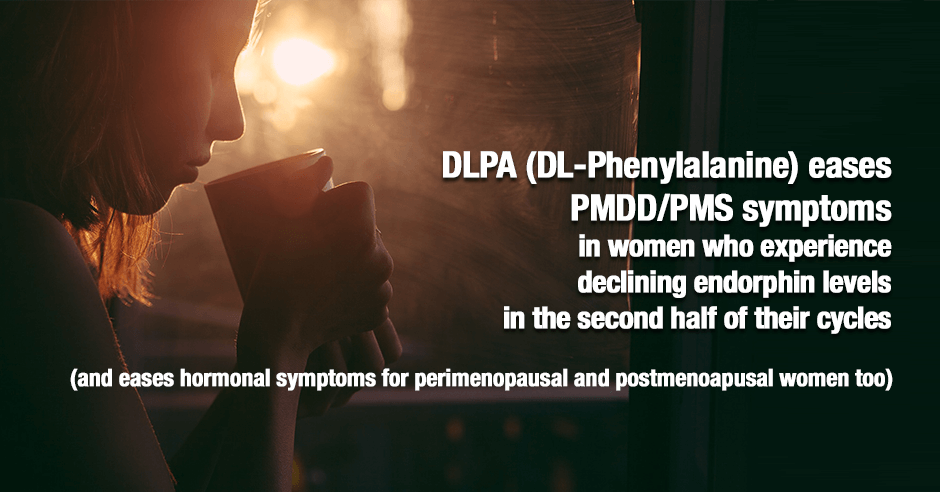
DLPA (DL-Phenylalanine) eases PMDD/PMS symptoms in women who experience declining endorphin levels in the second half of their cycles

March 18, 2022 By Trudy Scott 23 Comments

dlpa

Mood swings, intense sugar cravings, comfort/binge eating, sadness, anxiety, crying, cramps and increased pain, irritability, anger, fatigue, cognitive dysfunction, overwhelm, feelings of unease and dissatisfaction, aggression, heartache, and/or insomnia are common for many women during the second half of the menstrual cycle i.e. in the luteal phase. You may relate to all or some of these symptoms. And you may have been diagnosed with or may identify with PMS (premenstrual syndrome) or PMDD (premenstrual dysphoric disorder – similar to PMS but more serious).

Research shows improvements of these symptoms with the amino acids tryptophan (which provides serotonin support) and GABA (which supports GABA levels). Although there is no research that the pyroluria protocol improves symptoms it’s something I see clinically all the time. (I’ve written about this extensively and share more on this below)

A really interesting study published in 1989 identified low endorphins and low catecholamines as a probable cause for some women – Prevention of Late Luteal Phase Dysphoric Disorder Symptoms with DL-Phenylalanine in Women with Abrupt β-Endorphin Decline: A Pilot Study

I recently came across the above paper and prior to this, had not considered this as a primary root cause. Here is the excerpt from the abstract:

Twenty-two women with late luteal phase dysphoric disorder were treated with DL-phenylalanine during the 15 days prior to menses in a double-blind crossover study.

DL-Phenylalanine was shown to be more effective than placebo in attenuating many symptoms characteristic of luteal phase dysphoric disorder. This amino acid was chosen because of its hypothesized actions in attenuating the symptoms associated with the sharp decline in central β-endorphin levels during the late luteal phase in women with luteal phase dysphoric disorder.

Let’s review a few terms… Late luteal phase dysphoric disorder is a synonym for PMDD. The luteal phase is one stage of the menstrual cycle and occurs after ovulation and before your period. When you feel dysphoric you feel very unhappy, uneasy, or dissatisfied. With the downward endorphin shift at this time, period pain and other pain can be worse, and weepiness and emotional symptoms increase. The need for comfort or reward eating also increases. The study authors suggest these PMDD symptoms may “closely resemble those seen during morphine or heroin withdrawal.”

Based on my experience I do feel comfortable extrapolating these findings to PMS and even peri and post-menopausal women who experience some or all of these symptoms (other than actual periods and period issues in post-menopausal women).

Study participants, dosing and timing of DLPA and improvements

The participants in the study were white, middle-class, and between 24 and 29. Each woman took one 750 mg of DLPA at breakfast and lunch for the 15 days prior to the expected onset of their periods.

In the study groups, it was found that “initial improvement started at the end of the first month of DLPA therapy. Continued therapy brought increased relief from symptoms by the end of the second month. Interestingly, the greatest period of improvement occurred during the washout period” at the end of the third month possibly due to a delayed action of DL-phenylalanine.

The authors make the following conclusion:

DL-phenylalanine was found to be safe, well-accepted, and without significant side effects. The significant improvement it produced with many of the symptoms characteristic of Late Luteal Phase Dysphoric Disorder [PMDD] suggests that it may prove a useful addition to the therapeutic armamentarium for this syndrome.

Keep in mind that a typical starting dose of DLPA is 500mg used 2-3 x per day and it’s typically used between meals for best effects. Ideal is also to customize dosing to your unique needs. In this study, everyone received the same dose at the same time. For these reasons it’s even more impressive to see results like they did.

It makes sense but I have just not used DPLA alone and only in the second half of the cycle

It’s a very small pilot study but given my experience with the amino acids DLPA, DPA and tyrosine, and the vast number of women I have worked with who had symptoms like the above, it makes sense. Using the above three amino acids in combination with dietary changes, tryptophan, GABA and the pyroluria protocol, this approach has offered relief for many of my clients. I have just not used DPLA alone and only in the second half of the cycle.

In case you’re wondering why I mention the three amino acids DLPA, DPA and tyrosine above, it’s because:

  • DLPA (the amino acid used in this study) supports both endorphins and catecholamines (dopamine is one of them)
  • Or DPA (supports endorphins only) can be used with tyrosine (supports catecholamines only) instead of DLPA which does both

I blog about the differences between DLPA and DPA here, together with all the symptoms we look at when considering doing a trial.

In this study, they used DLPA which boosts endorphins and catecholamines. As I share in my DPA vs DLPA blog, I prefer DPA (d-phenylalanine) for endorphin support when symptoms are severe. But DPA is not always available so DLPA is a good alternative, assuming the person can handle the catecholamine support. Some people can’t and there are some contraindications too.

I’d love to see follow-on research covering the following:

  • A larger group of women using DLPA
  • Individualizing the dosing of DLPA to each person’s unique needs
  • Correlating results with the low endorphin and low catecholamine symptoms questionnaire
  • Comparing DLPA alone with a combination of DPA + tyrosine (with each individualized based on unique needs)

Serotonin and GABA support for PMS/PMDD, and the pyroluria protocol

In this paper, Premenstrual Dysphoric Disorder the authors share that PMDD

comprises emotional and physical symptoms and functional impairment that lie on the severe end of the continuum of premenstrual symptoms. Women with PMDD have a differential response to normal hormonal fluctuations.

It’s recognized that serotonin and GABA play a role:

This susceptibility may involve the serotonin system, altered sensitivity of the GABAA receptor to the neurosteroid allopregnanalone [a naturally occurring neurosteroid which is made from the hormone progesterone], and altered brain circuitry involving emotional and cognitive functions.

They share SSRIs that are considered as the first-line treatment. Second-line treatments include oral contraceptives, calcium, chasteberry, and cognitive-behavioral therapy.

However, as I share in this blog, research supports the use of tryptophan – Tryptophan for PMS: premenstrual dysphoria, mood swings, tension, and irritability

A study published in 1999, A placebo-controlled clinical trial of L-tryptophan in premenstrual dysphoria, tryptophan was found to reduce symptoms of PMS when used in the luteal phase or second half of the cycle (i.e. after ovulation).

I mention GABA in this blog and the fact that many anxious women I work with also have pyroluria or signs of low zinc and low vitamin B6 and adding these nutrients, together with evening primrose oil, provide additional hormonal and neurotransmitter support, and help with the social anxiety.

Resources if you are new to using DLPA (or other amino acids) as supplements

If you are new to using DLPA or the other amino acids as supplements, here is the Amino Acids Mood Questionnaire from The Antianxiety Food Solution (you can see the low endorphin and low catecholamine symptoms.)

If you suspect low levels of endorphins and/or low levels of catecholamine and do not yet have my book, The Antianxiety Food Solution – How the Foods You Eat Can Help You Calm Your Anxious Mind, Improve Your Mood, and End Cravings, I highly recommend getting it and reading it before jumping in and using amino acids on your own so you are knowledgeable. And be sure to share it with the team you or your loved one is working with. Blog posts like this are intended to add value to the chapter on amino acids, which contains detailed information on doses and time of the day for dosing.

The book doesn’t include product names (per the publisher’s request) so this blog, The Antianxiety Food Solution Amino Acid and Pyroluria Supplements, lists the amino acid products that I use with my individual clients and those in my group programs.

If you are a practitioner, join us in The Balancing Neurotransmitters: the Fundamentals program. It’s an opportunity to interact with me and other practitioners who are also using the amino acids.

Have you considered that there may be different types of PMS (premenstrual syndrome) or PMDD (premenstrual dysphoric disorder) i.e. a different combination of root causes and therefore different solutions?

And have you had success with DLPA alone (providing both endorphin and dopamine support) or by using a combination of DPA (endorphin support only) and tyrosine (catecholamine support only).

If you’re peri or post menopausal have you also seen success with any of these amino acids?

Have the other amino acids, tryptophan and GABA or the pyroluria protocol helped too?

If you’re a practitioner please share what you’ve seen with clients/patients.

Feel free to ask your questions here too.

Filed Under: Amino Acids, Anxiety, Hormone, PMS, Women's health Tagged With: aggression, anger, anxiety, catecholamines, Cognitive dysfunction, comfort/binge eating, cramps, crying, dissatisfaction, dl-phenylalanine, DLPA, endorphin, fatigue, feelings of unease, GABA, heartache, increased pain, insomnia, intense sugar cravings, irritability, luteal phase. premenstrual syndrome, menstrual cycle, mood swings, overwhelm, PMDD, PMS, premenstrual dysphoric disorder, pyroluria, sadness, second half of their cycles, serotonin, tryptophan

Increasing tryptophan or 5-HTP temporarily when a winter dip in serotonin causes more severe anxiety, OCD and/or the winter blues

December 24, 2021 By Trudy Scott 30 Comments

tryptophan and 5htp during winter

Don’t forget that serotonin takes a dip in winter when the days are shorter and there is less light. If you’re currently using tryptophan or 5-HTP to boost low serotonin and ease low serotonin symptoms – worry-type anxiety, panic attacks, insomnia, ruminations, PMS, irritability, negativity, perfectionism, obsessiveness, lack of confidence, anger/rage, afternoon/evening cravings – you may find you need to increase your dose for a few months.

This will especially be the case if you check off winter blues or more severe winter anxiety (yes it’s a thing and published in the research) on the low serotonin symptoms list.

I shared this on Facebook last week and the feedback ranged from surprised to curious to confirmatory.

In this blog I’m sharing some of the feedback and some of the supporting evidence, as well as other factors to consider.

The addition of 5-HTP in the morning and a light box

Kathy thanked me for the reminder and shared the changes she makes in the winter months:

Thanks for the reminder! I need to increase my dose this time of year… I can feel myself feeling “down”. I take 500 mg Tryptophan before bed and 100 mg 5-HTP in the morning before breakfast. I also use a light box in the morning while eating breakfast, which helps.

This is an increase from her typical dosing in the spring and summer when she only takes tryptophan at night before bed.

She also only uses her light box or SAD (seasonal affective disorder) lamp in winter. You can read more about SAD/full spectrum lamps here. They are also a wonderful way to boost serotonin and mood in the winter.

My daughter’s anxiety and OCD goes through the roof

Mark shared about his daughter’s anxiety and OCD (obsessive compulsive disorder):

Every year from October – March, my daughter’s anxiety and OCD goes through the roof. At first we thought it was the transition from summer to school, then the craziness of the winter holidays and suspected mold allergy. Now, based on this information, a winter/less light induced dip in serotonin may be an additional factor we hadn’t considered. We’ll try adjusting her 5-HTP dose and see if we gain some improvement. Thanks for the tip.

It’s really common for families to attribute the more severe anxiety and OCD to the stress and craziness of the winter holidays. And of course suspected mold issues do need to be looked into and addressed. But even then, the dip in serotonin can compound all these factors.

Planned tryptophan bump for Christmas sugar cravings and holiday family stress

Carol shared this about her plans to temporarily boost serotonin:

I am one of those light weights that was able to do one 500 mg pill a day of tryptophan. But I do think that it would help to bump it up to two a day to get me through the Christmas sugar cravings AND holiday family stressful get togethers! I’m all about taking the minimum effective dose but this is helpful to know that there could be a temporary boost just to get you through this time!

It’s wonderful that 500mg tryptophan is enough for her and I’m all for a minimum effective dose! However the winter dip in serotonin – and increased sugar cravings and family stress – is a common reason many folks bump up the dose for a month or more.

You may also find you made the change intuitively. Linda shared this: “I had made the adjustment. I just did not realize the reason why.”

A question about timing of 5-HTP and what to do in Spring

Suzanne shared that she uses a SAD light (also called a light box) and finds that it helps. She asks:

Can I just take the 5-HTP on days with no sun or is it better to have it build up in my system? When spring rolls around, do I taper off or can I just stop taking it?

This is my feedback: I haven’t had anyone just use 5-HTP on cloudy days but it’s worth a trial.  If you are noticing increased anxiety and mood changes only on cloudy days and using the SAD lamp on those days helps, then using 5-HTP on those days may be enough. If not, use 5-HTP consistently/daily through the winter months.

Amino acids do not need to be tapered but I find my clients do better when they are reduced over a few weeks. Some folks also choose to just stop taking them and do fine.

I appreciate all the feedback and the great questions. I’ll report back when I hear how Mark’s daughter does with the adjusted 5-HTP and how Carol does with the bump in tryptophan (and any other feedback I get from these folks).

Some of the research and possible mechanisms

There are many studies that support serotonin changes and seasonal variations in mood. Here are just two of them:

  • Effect of sunlight and season on serotonin turnover in the brain “Alterations in monoaminergic neurotransmission in the brain are thought to underlie seasonal variations in mood, behaviour, and affective disorders… turnover of serotonin by the brain was lowest in winter. Moreover, the rate of production of serotonin by the brain was directly related to the prevailing duration of bright sunlight… Our findings are further evidence for the notion that changes in release of serotonin by the brain underlie mood seasonality and seasonal affective disorder.”
  • Sunshine, Serotonin, and Skin: A Partial Explanation for Seasonal Patterns in Psychopathology? “one contributory facet may be the role of sunshine on human skin. Human skin has an inherent serotonergic system that appears capable of generating serotonin.”

Other factors to consider: low vitamin D, sugar, pyroluria and phenols

There are other low-serotonin related factors to consider too:

  • Low vitamin D is common in the winter and sufficient levels are needed for making serotonin. This paper, Vitamin D and the omega-3 fatty acids control serotonin synthesis and action, part 2: relevance for ADHD, bipolar disorder, schizophrenia, and impulsive behavior describes how“Brain serotonin is synthesized from tryptophan by tryptophan hydroxylase 2, which is transcriptionally activated by vitamin D hormone. Inadequate levels of vitamin D (∼70% of the population) and omega-3 fatty acids are common, suggesting that brain serotonin synthesis is not optimal.”
  • The increased consumption of sugar at this time can lead to reduced zinc, magnesium and B vitamins (like vitamin B6 and thiamine) and this can further reduce serotonin levels, which relies on these nutrients as cofactors for production. By boosting serotonin with additional tryptophan or 5-HTP you can actually reduce some of the cravings.
  • If you have the social anxiety condition called pyroluria, the added stress of family and holiday gatherings can also contribute to zinc and vitamin B6 being dumped, and further impacting serotonin production.
  • Christmas tree phenols can be a trigger for anger, meltdowns, anxiety, hyperactivity, insomnia, aggression, self-injury and autistic symptoms in susceptible individuals

Resources if you are new to using tryptophan and 5-HTP as supplements

If you are new to using the amino acids as supplements, here is the Amino Acids Mood Questionnaire from The Antianxiety Food Solution (you can see the low serotonin symptoms here) and a brief overview here, Anxiety and targeted individual amino acid supplements: a summary.

If you suspect low serotonin or low levels of any of the neurotransmitters and do not yet have my book, The Antianxiety Food Solution – How the Foods You Eat Can Help You Calm Your Anxious Mind, Improve Your Mood, and End Cravings, I highly recommend getting it and reading it before jumping in and using amino acids so you are knowledgeable. And be sure to share it with the team you or your loved one is working with.

The book doesn’t include product names (per the publisher’s request) so this blog, The Antianxiety Food Solution Amino Acid and Pyroluria Supplements, lists the amino acid products that I use with my individual clients and those in my group programs.

If, after reading this blog and my book, you don’t feel comfortable figuring things out on your own (i.e. doing the symptoms questionnaire and respective amino acids trials), a good place to get help is the GABA QuickStart Program (if you have low GABA symptoms). This is a paid online/virtual group program where you get my guidance and community support. 

Another option is the budget-friendly GABA QuickStart Homestudy program.

If you also need serotonin support, the Serotonin QuickStart Program is a good place to get help. This is also a paid online/virtual group program where you get my guidance on using tryptophan and 5-HTP safely, and community support during 5 LIVE Q&A calls. You can sign up to be notified when the next live launch of this program is happening.

If you are a practitioner, join us in The Balancing Neurotransmitters: the Fundamentals program. This is also a paid online/virtual program with an opportunity to interact with me and other practitioners who are also using the amino acids.

Wrapping up and your feedback

Have you noticed this winter dip in serotonin and made adjustments to your 5-HTP or tryptophan? And do you feel less anxious, less obsessive, not as low and with fewer sugar cravings?

Do you find that using a SAD lamp/full spectrum light at this time helps even further?

Were you aware that serotonin dipped in winter and could be playing a role for you? Or did you think it was just the stress and overwhelm of the holidays (and /or some of the emotional upheaval some of us face at this time)?

If you’re a practitioner, have you seen this with clients or patients?

Have you also noticed you need to adjust your GABA and other amino acids at this time too (both GABA and dopamine show seasonality)?

Feel free to ask your questions here too.

Filed Under: 5-HTP, Anxiety, Depression, serotonin, Tryptophan Tagged With: 5-HTP, anger, anxiety, dip in serotonin, holiday family stress, insomnia, irritability, lack of confidence, less light, light box, low vitamin D, negativity, obsessiveness, OCD, panic attacks, perfectionism, Phenols, PMS, pyroluria, rage, ruminations, serotonin, shorter days, skin, sugar, sugar cravings, tryptophan, winter, winter blues, worry-type anxiety

Christmas tree phenols as a trigger for anger, meltdowns, anxiety, hyperactivity, insomnia, aggression, self-injury and autistic symptoms?

December 18, 2020 By Trudy Scott 16 Comments

christmastree phenols and anxiety

Are you aware that the aromatic oils that give pine trees their wonderful smell are phenols and that these phenols may be a trigger for anger and meltdowns, anxiety, hyperactivity, irritability insomnia, self-injurious behavior, digestive issues and autistic symptoms (such as stimming, swinging and hand-flapping)? All this can be caused by an indoor Christmas tree in susceptible individuals.

My colleague Julie Matthews writes about this here: Avoiding Holiday Havoc: Healthy solutions to avoid meltdowns and keep the holidays happy

“When phenols are not able to be broken-down and detoxified by a process called sulfation, which is low in many children with autism and ADHD”, they can cause these symptoms and also red cheeks and ears. She shares that “phenolic compounds come in many forms including artificial petroleum-based food additives, and salicylates (a type of phenol) found in plants and foods like strawberries and spices, as well as pine trees.”

In the above blog, Julie shares this story about a client with a 10-year old son with autism. He severely regressed during the holidays and it was because of the Christmas tree. This is what the mom shared:

During the Holidays our son regressed severely.  He became anxious, aggressive, and self-abusive. He cried and had tantrums regularly throughout the day. He couldn’t sleep anymore and was up for hours at a time, night after night. He was hand-flapping like crazy.  We have a swing in the house for him and he now wanted to swing all day long, constantly, and do nothing else. He lost eye contact and he stopped responding to his name.

Once the Christmas tree was removed the improvements were dramatic:

The next day, he was much calmer. He seemed to have “exhaled.” Within 48 hours, our son was completely back to normal.

I shared Julie’s blog on my Facebook page and a father in my community shared a similar experience about his autistic son’s severe reactions to phenols:

Yes! My autistic son who is sensitive to phenols, would completely meltdown during the holidays. We thought it was just the change in routine and his environment, but quite by accident we discovered fragrances seemed to make him worse. We got rid of the fragrances and holiday tree/decor and the improvement in our son was dramatic! We now realize it was the phenols.

My son’s reaction to phenols/fragrances are bright red cheeks/ears, dark under eye circles, headaches, inappropriate manic laughter, aggression/self injurious behavior, marathon meltdowns/screaming, incontinence, insomnia/less than 3 hrs sleep a night, bumpy rashes, GI issues/diarrhea, excessive sensory stimming (hand flapping, lip licking, running around and body slamming into things.) During the holidays, the intensity of these reactions shot through the roof.

They found out by chance that it was the Christmas tree that was causing his son’s issues each year. It started when he was a toddler and they figured it was the stress and changes of the holidays that was the issue. One year they didn’t put up a tree and they could not believe the difference. It was then they made the connection and learned more about phenols and made the necessary changes.

By reducing phenols in his diet and environment, and giving him Epsom Salt baths and enzymes (No-Fenol), most of the above symptoms were significantly reduced.

I suspect there are many families who are seeing similar meltdowns and have no idea it could be the Christmas tree. Keep in mind that the reactions may not be as severe as these two cases I’ve shared here. If you are seeing any increase in anxiety, irritability, sleep problems, digestive issues or other unusual behavior changes in your child, keep an open mind that it may be more than just the holiday changes.

Julie’s advice is this:

  • Since so many children with autism and ADHD react to salicylates/phenols – in her nutrition practice she finds an overwhelming majority react negatively – she suggests a cautious approach to holiday decorating for all families of a child with autism or ADHD. Simply avoid the pine Christmas tree.
  • If you are unsure about their sensitivity to salicylates/phenols you might ask yourself if your child is often hyper, irritable, or has red cheeks, and other common salicylate symptoms, or whether they crave salicylate-rich foods such as berries, grapes, apples, and ketchup. If so, explore salicylates further.

I encourage you to read Julie’s blog to gain a better understanding of salicylates and phenols. If you are a practitioner and want to learn more about low salicylates/phenols and other special diets her practitioner training is excellent.

I appreciate this mom and dad for sharing their experiences with their sons so we can all learn and help other families. I also so appreciate Julie’s expertise in this area and really look forward to digging further into the research and picking her brain so I can share more.

Could your holiday anxiety and/or insomnia be phenol issues too?

Julie works with children with autism and ADHD but as someone who works primarily with adults with anxiety, I’m going to be exploring sensitivity to salicylates/phenols further. Julie recently shared this with me: “if you start looking you’ll probably see a lot of your clients with anxiety have phenol issues.”

If you also notice any increase in anxiety, anger, irritability, sleep problems, digestive issues or other unusual behavior changes, keep an open mind that it may be more than just the holiday stress or winter blues/winter anxiety. It may well be phenol issues too.

Serotonin connection to phenol issues

I’ll be blogging more about this and the fascinating serotonin connection to phenol issues. You may have noticed that many of the symptoms these 2 boys experienced sound a lot like either low serotonin or high serotonin (both of which can occur in autism).  Serotonin is an endogenous phenol compound and this phenol issue is likely causing high serotonin.

When I asked Julie about this she shared this with me: “Yes, serotonin and dopamine are phenolic. And sulfation is important for the inactivation of dopamine and serotonin. So poor sulfation can lead to neurotransmitter imbalances.”

Using collagen to lower high serotonin?

I’ve blogged about how collagen can lower serotonin in susceptible folks and increase anxiety. It is also used by some folks to lower their high serotonin and make them calm. Misty reports using collagen ‘therapeutically’:

I use it to reduce tryptophan because I have a tendency toward high serotonin. I have suffered my entire life with ADD, tics as a child, grinding teeth, general anxiety, lack of motivation and later, IBS. In my 53 years I’ve never been as calm as I am now.

I don’t know if Misty has a phenol issue but I’m going to be exploring if collagen or gelatin could possibly be used to help lower the high serotonin and ease some of these severe phenol reactions quickly, in conjunction with other approaches like avoiding the foods and environmental exposures, enzymes and other nutrients, and Epsom salt baths.

Christmas tree syndrome, mold issues and toxic plastic trees

I hate to spoil the Christmas fun but here are a few other things to consider:

  • Christmas tree syndrome is also a real issue for many individuals
  • My friend and Enviornmental Toxins expert Lara Adler shares how mold from a real tree made her and her cat really sick “Within a few days of getting the tree, I broke out in a full-body rash that required a 10-day run of prednisone. I didn’t think it was the tree at first (it could have been something else), but then my cat, who was already dealing with GI inflammation and a gut issue developed asthma! Out of nowhere! She also ended up on prednisone. I got rid of the tree and both our symptoms never came back.”
  • She also shares some issues with plastic trees: they are often made from toxic PVC (polyvinyl chloride) with “softeners like lead and/or phthalates”, and often treated with endocrine-disrupting flame retardant chemicals. More about this on Lara’s blog here.

Have you observed a salicylate/phenol reaction with your child or client/patient? What about a less severe reaction with your child or with you personally?

Have the following helped you: avoiding the foods and environmental exposures like a Christmas tree, using enzymes like No-Fenol and other nutrients, and Epsom salt baths? In the midst of a very severe reaction has collagen or gelatin helped reduce symptoms quickly?

What about mold issues or allergies with a Christmas tree?

Feel free to post your questions here on the blog too.

Filed Under: ADHD, Anxiety, Autism, Toxins Tagged With: ADHD, aggression, allergy, anger, anxiety, autism, autistic symptoms, Christmas tree, collagen, hyperactivity, insomnia, irritability, meltdowns, mold, Phenols, pine tree, plastic tree, salicylates, self-injury, serotonin

5-HTP can raise salivary cortisol: does this cause a “wired-tired” feeling?

August 14, 2020 By Trudy Scott 48 Comments

5-htp salivary

Are you aware that 5-HTP – an amino acid supplement that supports serotonin levels – can raise cortisol levels and leave you feeling “wired-tired”? You may be able to relate to this if you’ve ever used 5-HTP to help with anxiety and insomnia and ended up feeling more anxious and more wide-awake despite your exhaustion and need for sleep. You feel “wired-tired” and it’s not pleasant at all.

Both 5-HTP and tryptophan, used as supplements, help to boost serotonin levels so you can feel happy, calm, sleep well and not crave carbs in the afternoon/evening. They also help with panic attacks and phobias, lack of confidence, depression, negativity, imposter syndrome, PMS, irritability, anger issues, pain/fibromyalgia, TMJ and anger. I typically have my clients with low serotonin symptoms start with a trial of tryptophan because I see such excellent results with this amino acid. That being said, some people simply do better on one versus the other and you may do better with 5-HTP.

However there is one big caveat with 5-HTP. I don’t recommend 5-HTP when a client has elevated cortisol levels because we know that it can raise cortisol levels in certain individuals. This can leave you feeling agitated, cranky, as well as wired and yet tired at the same time.

In this 2002 study, L-5-hydroxytryptophan induced increase in salivary cortisol in panic disorder patients and healthy volunteers

Salivary cortisol levels were measured in 24 panic disorder patients and 24 healthy volunteers, following ingestion of 200 mg L-5-hydroxytryptophan or placebo.

The experiment was carried out in the afternoon, “when basal cortisol secretion is more stable.” The first saliva sample was obtained at 1pm and the subjects ingested the 200mg 5-HTP at 2pm. Additional saliva samples were obtained at 2:30pm, 3:00pm and 3:30pm.

They report the following:

A significant rise in cortisol was observed in both patients and controls following ingestion of L-5-hydroxytryptophan. No such effects were seen in the placebo condition.

Here are a few additional comments and my thoughts:

  • This study was done to find evidence for “serotonin receptor hypersensitivity in panic disorder” and not specifically to test for the effects of 5-HTP on cortisol levels but it serves this purpose rather nicely (and it’s one of many similar studies, some of which measure plasma cortisol levels)
  • Keep in mind 200mg of 5-HTP is a large starting dose. It’s typical to start with 50mg so may be a factor to consider
  • In this study they did not assess cortisol levels beyond the 1.5 hours from ingestion of the 5-HTP. It would have been useful to see when levels started to go down
  • We would want to consider the ramifications of using 5-HTP for weeks (whether it’s 50 or 200mg). What impact would that have on cortisol and the adrenals? (I am not aware of a study like this having been done)
  • I’m also not aware of a study being done with 50mg but if you feel worse and feel “wired-tired” with 5-HTP and switch to tryptophan (the equivalent starting dose is 500mg) and your anxiety and other low serotonin symptoms resolve then you have found your solution
  • You may be wondering: “could I use 5-HTP to raise my low cortisol levels”? Theoretically yes and possibly very short-term. But I would question the timing since 5-HTP and tryptophan are best dosed mid-afternoon and later. This is when we would expect our cortisol levels to be on the downward slope as we end our day. I’d also want to nourish the adrenals with B vitamins and herbal adaptogen and remove the trigger/s that are leading to low cortisol.

If you suspect low serotonin symptoms and are new to using the amino acids and do not have my book I highly recommend getting it and reading it before jumping in to taking supplements: The Antianxiety Food Solution – How the Foods You Eat Can Help You Calm Your Anxious Mind, Improve Your Mood, and End Cravings.

There is a complete chapter on the amino acids and one for pyroluria, plus information on real whole food, sugar and blood sugar, gluten, digestion and much more.  If you’re not a reader there is now also an audible version.

Here is the Amino Acids Mood Questionnaire from The Antianxiety Food Solution and additional information on Anxiety and targeted individual amino acid supplements: a summary

Please also read and follow these Amino Acid Precautions.

This lists The Antianxiety Food Solution Amino Acid and Pyroluria Supplements that I use with my individual clients and those in my group programs.

Have you used 5-HTP with success? Or have you used it and felt “wired-tired”? Have you correlated the success or failure of your 5-HTP use with your salivary cortisol levels?

If you switched from 5-HTP to tryptophan did you have success with that?

If you’re a practitioner is this something you see with your clients/patients and take into consideration?

Feel free to post your questions here too.

Filed Under: Antianxiety Tagged With: 5-HTP, adrenals, amino acid, anger, anger issues, calm, cortisol, depression, Fibromyalgia, happy, Imposter syndrome, irritability, L-5-hydroxytryptophan, negativity, pain, panic attacks, Panic disorder, phobias, PMS, serotonin, sleep, TMJ, tryptophan, wired-tired

  • « Go to Previous Page
  • Page 1
  • Page 2
  • Page 3
  • Go to Next Page »

Primary Sidebar

NEW! GABA QuickStart Homestudy (with special intro pricing)

gaba quickstart homestudy

Free Report

9 Great Questions Women Ask about Food, Mood and their Health

You'll also receive a complimentary subscription to my ezine "Food, Mood and Gal Stuff"


Connect with me

Popular Posts

  • Amino Acids Mood Questionnaire from The Antianxiety Food Solution
  • The Antianxiety Food Solution Amino Acid and Pyroluria Supplements
  • Pyroluria Questionnaire from The Antianxiety Food Solution
  • Collagen and gelatin lower serotonin: does this increase your anxiety and depression?
  • Tryptophan for the worry-in-your-head and ruminating type of anxiety
  • GABA for the physical-tension and stiff-and-tense-muscles type of anxiety
  • The Antianxiety Food Solution by Trudy Scott
  • Seriphos Original Formula is back: the best product for anxiety and insomnia caused by high cortisol
  • Am I an anxious introvert because of low zinc and vitamin B6? My response to Huffington Post blog
  • Vagus nerve rehab with GABA, breathing, humming, gargling and key nutrients

Recent Posts

  • What do I use instead of Seriphos to help lower high cortisol that is affecting my sleep and making me anxious at night?
  • BeSerene™ GABA/theanine cream eases severe muscle tension in her neck/shoulders, prevents her bad headaches and quells her anxiety
  • How the correct approach, dose and sublingual use of GABA can be calming and not cause a flushed and itchy face and neck
  • The amino acid glutamine improves low mood by addressing gut health, and it has calming effects too
  • Flight anxiety with heightened breath, physical tension and also fearing the worst (the role of low GABA and low serotonin)

Categories

  • 5-HTP
  • AB575
  • Addiction
  • ADHD
  • Adrenals
  • Alcohol
  • Allergies
  • Alzheimer's disease
  • Amino Acids
  • Anger
  • Antianxiety
  • Antianxiety Food Solution
  • Antidepressants
  • Anxiety
  • Anxiety and panic
  • Autism
  • Autoimmunity
  • benzodiazapines
  • Bipolar disorder
  • Books
  • Caffeine
  • Cancer
  • Candida
  • Children/Teens
  • Collagen
  • Cooking equipment
  • Coronavirus/COVID-19
  • Cravings
  • Depression
  • Detoxification
  • Diabetes
  • Diet
  • DPA/DLPA
  • Drugs
  • EFT/Tapping
  • EMF
  • EMFs
  • Emotional Eating
  • Endorphins
  • Environment
  • Essential oils
  • Events
  • Exercise
  • Fear
  • Fear of public speaking
  • Fertility and Pregnancy
  • Fish
  • Food
  • Food and mood
  • Functional neurology
  • GABA
  • Gene polymorphisms
  • General Health
  • Giving
  • Giving back
  • Glutamine
  • Gluten
  • GMOs
  • Gratitude
  • Gut health
  • Heart health/hypertension
  • Histamine
  • Hormone
  • Hyperparathyroidism
  • Hypoglycemia
  • Immune system
  • Inflammation
  • Insomnia
  • Inspiration
  • Introversion
  • Joy and happiness
  • Ketogenic diet
  • Lithium orotate
  • Looking awesome
  • Lyme disease and co-infections
  • MCAS/histamine
  • Medication
  • Men's health
  • Mental health
  • Mercury
  • Migraine
  • Mold
  • Movie
  • MTHFR
  • Multiple sclerosis
  • Music
  • NANP
  • Nature
  • Nutritional Psychiatry
  • OCD
  • Osteoporosis
  • Oxalates
  • Oxytocin
  • Pain
  • Paleo
  • Parasites
  • Parkinson’s disease
  • PCOS
  • People
  • PMS
  • Postpartum
  • PTSD/Trauma
  • Pyroluria
  • Questionnaires
  • Real whole food
  • Recipes
  • Research
  • Schizophrenia
  • serotonin
  • SIBO
  • Sleep
  • Special diets
  • Sports nutrition
  • Stress
  • Sugar addiction
  • Sugar and mood
  • Supplements
  • Teens
  • Testimonials
  • Testing
  • The Anxiety Summit
  • The Anxiety Summit 2
  • The Anxiety Summit 3
  • The Anxiety Summit 4
  • The Anxiety Summit 5
  • The Anxiety Summit 6
  • Thyroid
  • Thyroid health
  • Toxins
  • Tryptophan
  • Tyrosine
  • Uncategorized
  • Vegan/vegetarian
  • Women's health
  • Yoga

Archives

  • October 2025
  • September 2025
  • August 2025
  • July 2025
  • June 2025
  • May 2025
  • April 2025
  • March 2025
  • February 2025
  • January 2025
  • November 2024
  • October 2024
  • September 2024
  • August 2024
  • July 2024
  • June 2024
  • May 2024
  • April 2024
  • March 2024
  • February 2024
  • January 2024
  • December 2023
  • November 2023
  • October 2023
  • September 2023
  • August 2023
  • July 2023
  • June 2023
  • May 2023
  • April 2023
  • March 2023
  • February 2023
  • January 2023
  • December 2022
  • November 2022
  • October 2022
  • September 2022
  • August 2022
  • July 2022
  • June 2022
  • May 2022
  • April 2022
  • March 2022
  • February 2022
  • January 2022
  • December 2021
  • November 2021
  • October 2021
  • September 2021
  • August 2021
  • July 2021
  • June 2021
  • May 2021
  • April 2021
  • March 2021
  • February 2021
  • January 2021
  • December 2020
  • November 2020
  • October 2020
  • September 2020
  • August 2020
  • July 2020
  • June 2020
  • May 2020
  • April 2020
  • March 2020
  • February 2020
  • January 2020
  • December 2019
  • November 2019
  • October 2019
  • September 2019
  • August 2019
  • July 2019
  • June 2019
  • May 2019
  • April 2019
  • March 2019
  • February 2019
  • January 2019
  • December 2018
  • November 2018
  • October 2018
  • September 2018
  • August 2018
  • July 2018
  • June 2018
  • May 2018
  • April 2018
  • March 2018
  • February 2018
  • January 2018
  • December 2017
  • November 2017
  • October 2017
  • September 2017
  • August 2017
  • July 2017
  • June 2017
  • May 2017
  • April 2017
  • March 2017
  • February 2017
  • January 2017
  • December 2016
  • November 2016
  • October 2016
  • September 2016
  • August 2016
  • July 2016
  • June 2016
  • May 2016
  • April 2016
  • March 2016
  • February 2016
  • January 2016
  • December 2015
  • November 2015
  • October 2015
  • September 2015
  • August 2015
  • July 2015
  • June 2015
  • May 2015
  • April 2015
  • March 2015
  • February 2015
  • January 2015
  • December 2014
  • November 2014
  • October 2014
  • September 2014
  • August 2014
  • July 2014
  • June 2014
  • May 2014
  • April 2014
  • March 2014
  • February 2014
  • January 2014
  • December 2013
  • November 2013
  • October 2013
  • September 2013
  • August 2013
  • July 2013
  • June 2013
  • May 2013
  • April 2013
  • March 2013
  • February 2013
  • January 2013
  • December 2012
  • November 2012
  • October 2012
  • August 2012
  • July 2012
  • June 2012
  • May 2012
  • April 2012
  • March 2012
  • February 2012
  • January 2012
  • December 2011
  • November 2011
  • October 2011
  • September 2011
  • August 2011
  • July 2011
  • June 2011
  • May 2011
  • April 2011
  • March 2011
  • February 2011
  • January 2011
  • December 2010
  • October 2010
  • September 2010
  • July 2010
  • May 2010
  • April 2010
  • March 2010
  • February 2010
  • January 2010
  • November 2009

Share the knowledge!

The above statements have not been evaluated by the Food and Drug Administration. Products listed in this website are not intended to diagnose, treat, cure or prevent any disease.

The information provided on this site is for informational and educational purposes only and is not intended as a substitute for advice from your physician or other health care professional. You should consult with a healthcare professional before starting or modifying any diet, exercise, or supplementation program, before taking or stopping any medication, or if you have or suspect you may have a health problem.


Copyright © 2026 Trudy Scott. All Rights Reserved. | Privacy | Terms and Conditions | Refund Policy | Medical Disclaimer

Free Report

9 Great Questions Women Ask about Food, Mood and their Health

You’ll also receive a complimentary subscription to my ezine “Food, Mood and Gal Stuff”