• Skip to primary navigation
  • Skip to main content
  • Skip to primary sidebar

everywomanover29 blog

Food, Mood and Women's Health – Be your healthiest, look and feel great!

  • Blog
  • About
  • Services
  • Store
  • Resources
  • Testimonials
  • The Book
  • Newsletter
  • Contact
  • Search this site

amino acids

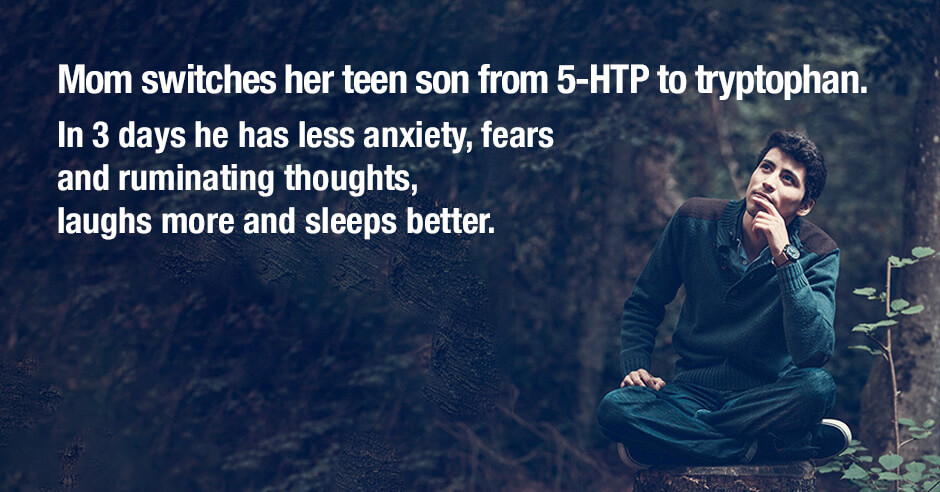
Mom switches her teen son from 5-HTP to tryptophan. In 3 days he has less anxiety, fears and ruminating thoughts, laughs more and sleeps better.

February 16, 2024 By Trudy Scott 40 Comments

5-HTP to Tryptophan

My son has autism and OCD. I took him off fluvoxamine in May and used cbd and some other things and he was doing fine up until this past winter. He began having irrational fears and ruminating thoughts/fears that would not stop! I started 5-HTP, theanine, B12, probiotics with him for the last month and did not see any improvement. I was ready to go back to the medication when I came across your blog and information.

I assumed 5-HTP would be better for OCD, but after reading your comments you mentioned that you just switch to tryptophan if the 5-HTP is not working. I had tryptophan at home already. That night I emptied half a capsule into a little stevia flavored water and had him hold it in his mouth for a minute.

He was a different kid after that!!!! This is just the 3rd day but even his teachers are telling me he is doing really well and is less anxious at school. I am so thankful! I am now giving him 500mg in the morning and early evening.

I bought some inositol and plan to try adding that in the afternoons to see if that will help as well. I believe that he has PANDAS. He is a hand washer, and spits a lot, and has lots of other quirks that I would love to see decrease.

I have hope again! I am buying your book so that I can get a good plan going for him. If you have any other suggestions for him please let me know!!

This wonderful feedback was posted in the comments of one of the tryptophan blogs. I’m so thrilled for this mom and young man (he’s almost 20). I thanked her for sharing all this on the blog and offered to share additional generic feedback via a new blog post. I also asked for additional feedback on exactly how the tryptophan helped (more on that below).

Read on to learn how tryptophan helped with his ruminating thoughts, fears, crying and improved his sleep. And my insights about the ideal timing of tryptophan, finding the optimal dose and why it may work when 5-HTP doesn’t. I also share some insights about inositol and  OCD (obsessive compulsive disorder).

Low serotonin symptoms and the questions I had about his symptoms

I do hope he continues to see these benefits. Seeing such amazing results in 3 days is always what we’re looking for and it’s not unexpected to get such profound results so quickly!

I had some additional questions so I could share some general feedback as to how I work in situations like this. I wanted to know his age and if the switch to tryptophan helped any of his OCD symptoms and if yes how many notches improvement?

And which of the classic low serotonin symptoms the tryptophan helped and by how much: anxiety? irrational fears? and ruminating thoughts/fears? anything else? (all the low serotonin symptoms here)

Knowing this helps me know if I’m on track with a client i.e. the tryptophan is helping with low serotonin symptoms. And it also helps me decide we should consider increasing the dose and possibly adjust the number of times to use tryptophan. I share more about this below.

Tryptophan helps reduce his ruminating thoughts, fear and anxiety. And he’s laughing more and sleeps better

She shared some specific examples as to how much the tryptophan helps reduce his ruminating thoughts, fear and anxiety. And he’s laughing more and it helps him sleep:

He would often call me or text me throughout the day with questions about his health, and he would come to me 10-15 times in the afternoons/evenings, for about 3 weeks or so, and ask me the same questions about a rare disease that he believed he had.

He would cry and shake with fear and anxiety at some point and I would need to reassure him over and over again that he did not have this disease, and that it was literally impossible for him to have it.

After starting the tryptophan supplements 2x500mg morning/early evening he did not come to me at all and seemed content the 1st day.

Yesterday, he didn’t get the 2nd tryptophan until 5pm so he did come to me with 1 question/concern. I reassured him and he seemed fine especially after his supplement. Then 1 more question later that night but he accepted my reassurance both times and let it go.

So that was a big difference compared to the last 4 weeks. He was also laughing at some cartoon he was watching which I had not seen him do for a month either. Anxiety is less. He is sleeping better too. So far he still seems to believe the irrational things.

Tryptophan is clearly helping so many of his symptoms but we have more opportunities for further gains with tryptophan.

Tryptophan for low serotonin: dosing and timing

As I share in my book and other blog posts, typically 500 mg tryptophan twice a day is a good starting dose, used away from protein mid-afternoon and evening. It’s used like this because serotonin starts to decline in the afternoon. We increase based on individual needs to find the ideal dose. We may also add tryptophan or 5-HTP earlier in the day.

In a situation like this, if we were working together, I’d consider the following:

  • Adding a mid-afternoon dose of tryptophan
  • A switch to just afternoon and evening dosing (unless the morning dose was used for a specific reason i.e. morning symptoms)
  • Adding a second dose of tryptophan each time (he is using Nature Stacks Serotonin Brain Food and I’d recommend Lidtke 500 mg tryptophan for the second dose each time because it contains only tryptophan)

With changes we do one thing at a time and track symptom improvements carefully.

Tryptophan vs 5-HTP?

I commend her for figuring out the switch from 5-HTP to tryptophan.

It’s a well known fact that some folks just do better on one vs the other and if 5-HTP isn’t working I’ll have clients switch to tryptophan and vice versa. I typically start with tryptophan because it seems to be better tolerated. The biggest issue that I see with 5-HTP is that it’s often not tolerated if you have high cortisol. It can also cause nightmares for some folks.

Precaution about serotonin syndrome with tryptophan/5-HTP

There are precautions when using certain amino acids and I always review them with all my clients. If they have been prescribed an SSRI, I have them discuss the use of tryptophan/5-HTP with their prescribing doctor so they can be monitored for serotonin syndrome. With careful monitoring and doctor approval I feel comfortable having my clients use tryptophan/5-HTP 6 hours away from their one and only SSRI.

If they are using more than one SSRI and/or a combination of psychiatric medications, the use of tryptophan/5-HTP is not advised.

None of the above applied in this situation but it’s important to be aware of.

Inositol and OCD: when to consider adding it?

OCD or even mildly obsessive behaviors or thoughts can be a sign of low serotonin. I will do a trial of tryptophan as above and for some folks it’s often enough. Sometimes tryptophan at least helps to some degree and when it’s not enough, adding inositol (a B vitamin) takes it to the next level.

For many folks 500 -1000 mg capsules are typically recommended but this is a really low dose for OCD. The powdered form is really effective because you can increase as needed. You can actually go as high as 18g. I start low, with 1-2g in kids and adults, and keep going up by 2g a week until the obsessive symptoms disappear. More on inositol and OCD here.

GABA, dopamine and endorphin support too

She mentions that her son “seems to be low serotonin, low GABA (1st 1/2 of the list), low endorphins and low catecholamines” so other amino acids are likely to be of benefit too.

As always we used the neurotransmitter symptoms questionnaire and do trials of each amino acid: GABA for low GABA symptoms, DPA for low endorphins and tyrosine for low dopamine. These trials of each one are done one at a time with careful tracking to find the ideal dose before layering in the next amino acid.

Using the amino acids so it’s easy to reduce sugar and go gluten-free

I also asked what dietary changes he has already made and she responded: “We are in the  process of reducing sugar and going back to gluten-free as much as possible but this will be hardest to stick to. Have done a keto-like and gluten-free-casein-free diet on and off since he was 4 years old.”

This is a great start and using the amino acids help reduce cravings and make it easy to reduce sugar and go gluten-free.

There is a sugar cravings aspect to all the neurotransmitter imbalances. The type of craving can be found on the above symptoms questionnaire. It’s not uncommon to need support in more than one area:

  • Low serotonin – tryptophan or 5-HTP for afternoon/evening cravings
  • Low endorphins – DPA for comfort/reward eating
  • Low catecholamines – tyrosine for low energy sugar cravings
  • Low GABA – GABA for stress eating

You can read more about this here: The individual amino acids glutamine, GABA, tryptophan (or 5-HTP), DPA and tyrosine are powerful for eliminating sugar cravings, often within 5 minutes

I’m glad she is getting a copy of my book The Antianxiety Food Solution. It has all the foundational dietary information, sections on cravings and a chapter on the amino acids.

It also has a chapter on pyroluria, which is very common in autism and something I help most of my clients address. Here is the pyroluria questionnaire.

Tryptophan and inositol product options
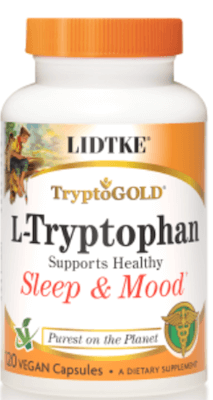
lydke l-tryptophan
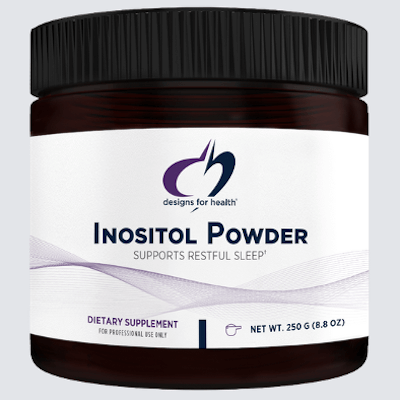
inositol powder

Products I recommend include Lidtke 500 mg Tryptophan and Designs for Health Inositol Powder.  You can purchase these from my online store (Fullscript – only available to US customers – use this link to set up an account).
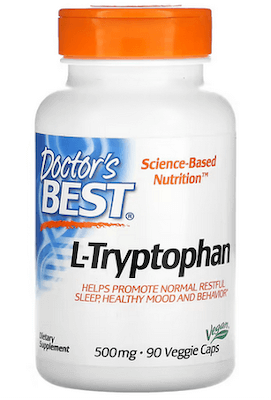
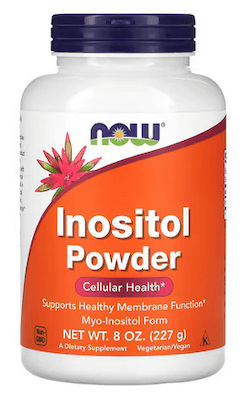
doctor's best l-tryptophan
now inositol powder

If you’re not in the US, Doctor’s Best L-Tryptophan 500mg and Now Inositol Powder are products I recommend on iherb (use this link to save 5%).

Additional resources when you are new to using tryptophan and other amino acids as supplements

We use the symptoms questionnaire to figure out if low serotonin or other neurotransmitter imbalances may be an issue for you.

If you suspect low levels of any of the neurotransmitters and do not yet have my book, The Antianxiety Food Solution – How the Foods You Eat Can Help You Calm Your Anxious Mind, Improve Your Mood, and End Cravings, I highly recommend getting it and reading it before jumping in and using amino acids on your own so you are knowledgeable. And be sure to share it with the practitioner/health team you or your loved one is working with.

There is an entire chapter on the amino acids and they are discussed throughout the book in the sections on gut health, gluten, blood sugar control (this is covered in an entire chapter too), sugar cravings, anxiety and mood issues. The importance of quality animal protein and healthy fats is also covered.

The book doesn’t include product names (per the publisher’s request) so this blog, The Antianxiety Food Solution Amino Acid and Pyroluria Supplements, lists the amino acids that I use with my individual clients and those in my group programs.

If, after reading this blog and my book, you don’t feel comfortable figuring things out on your own (i.e. doing the symptoms questionnaire and respective amino acids trials), if you need serotonin support, the Serotonin QuickStart Program is a good place to start. This is a paid online/virtual group program where you get my guidance on using tryptophan and 5-HTP safely, and community support during 5 LIVE Q&A calls. You can sign up to be notified when the next live launch of this program is happening. We take a deep dive into product options including Lidtke products and others if you’re not able to access Lidtke.

If you also have low GABA symptoms, the next step to get help is the GABA QuickStart Program. This is also a paid online/virtual group program where you get my guidance and community support. Another option is the budget-friendly GABA QuickStart Homestudy program.

If you are a practitioner, join us in The Balancing Neurotransmitters: the Fundamentals program. This is also a paid online/virtual program with an opportunity to interact with me and other practitioners who are also using the amino acids.

Now I’d like to hear from you

Have you had success with tryptophan for anxiety, fears, crying and ruminations? And has it also helped with sleep, how happy you feel and reduced cravings? Has it also helped with OCD?

Did you first trial 5-HTP and then found tryptophan worked better or vice versa?

If yes, what dose and when do you use it?

What about using inositol to further reduce OCD? And what dose helped?

If you’re a practitioner do you use tryptophan and/or inositol with clients/patients with these low serotonin symptoms?

And please let me know if it’s helpful that I’m now including product recommendations and where to get them?

Feel free to share and ask your questions below.
Filed Under: Anxiety and panic, Children/Teens, Cravings, OCD, Tryptophan Tagged With: 5-HTP, amino acids, anxiety, anxious, autism, crying, fears, GABA Quickstart; Balancing Neurotransmitters: the Fundamentals program for practitioners, inositol, laughs, neurotransmitters, obsessive compulsive disorder, OCD, ruminating thoughts, ruminations, sleeps, teen, tryptophan

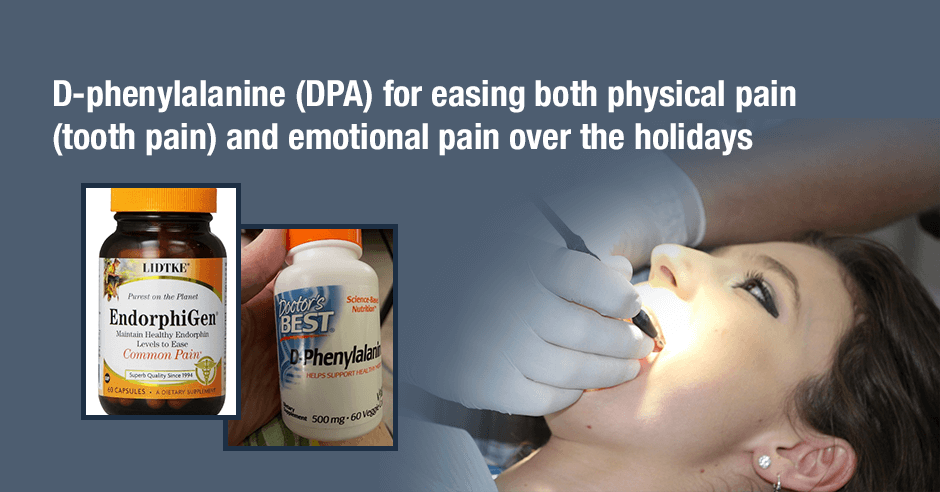
D-phenylalanine (DPA) for easing both physical pain (tooth pain) and emotional pain over the holidays

January 5, 2024 By Trudy Scott 33 Comments

dpa for pain

Today I share how the amino acid D-phenylalanine (DPA), used as a supplement multiple times a day, and opened on to my tongue, eased both the physical tooth pain I experienced for 14 days and the emotional pain I was feeling over the holidays.

In this blog I share more about DPA and endorphins when it comes to pain – both physical and emotional. I also share two DPA products I recommend, product label confusion and more about how DPA differs from DLPA (DL-phenylalanine). I am often asked this question and even long time users of DLPA are sometimes surprised to learn how different DPA is. As always, I like to share some research and other related blogs on the topic. Here is my recent and very positive personal experience with DPA, a firm favorite of mine:

I’m just back from the dentist – my crown was re-cemented and I’m a happy camper now. It popped off just before Christmas and I had to wait until now! There was a tiny cavity beneath the crown which is why I was having daily pain.

Thank goodness I always have DPA (the amino acid d-phenylananine) on hand. I gravitate to it for pain relief – sports injuries like muscle sprains, the rare headache and this time for tooth/jaw pain.

I opened a DPA onto my tongue as soon as I could feel the dull ache start and the pain relief lasted a few hours. It works by boosting endorphins to provide pain relief – kind of like acupuncture.  I call it “powdered acupuncture”.

Some days I used 3-4 and one day I needed 6. Taking one before bed was wonderful.

I also got bonus benefits for emotional well-being over the holidays. It’s the first Christmas without my darling mom and I really needed the endorphin boost to help with the emotional pain.

The DPA product I used was Doctor’s best (details below) and I opened up the 500 mg capsule onto my tongue each time I needed pain relief.

The number of capsules I needed seemed to vary by how much chewing I was doing (for example, I had more pain after a steak meal vs smoked salmon) and what I was eating or drinking (for example, I had more pain after drinking something cold). I simply used a DPA capsule when the dull pain started, making sure it was away from protein (not always but most of the time).

UPDATE: Sept 13, 2024
DPA has come to my rescue yet again and this time the tooth pain has been very severe. I initially suspected it was the crown again but when I got into the dentist an xray confirmed an abscess at the tip of one of the roots.

It’s a first for me and I’ve never experienced a toothache like this. The pain ramps up from zero to 10 (with 10 being most severe) in a matter of seconds. The only thing that helps right now is DPA. I’m opening a capsule every few hours and have even had to use it every 30 mins when it’s really severe like after drinking or eating something. It brings to pain down to a 3 in a matter of minutes.

I’ve figured out that using a straw to drink liquids helps a ton. I’m also  using a soft ice-pack a few times a day too. Strangely it’s worse just before bed, after I take my bedtime supplements. I need the DPA and ice-pack but fortunately I have no pain through the night.  Thank goodness for that!

I’m also using a herbal antibiotic and herbal mouth swish from my naturopath while I get a second opinion, learn about my options, and decide next steps.

All this has solidified DPA as my go-to supplement for pain relief.

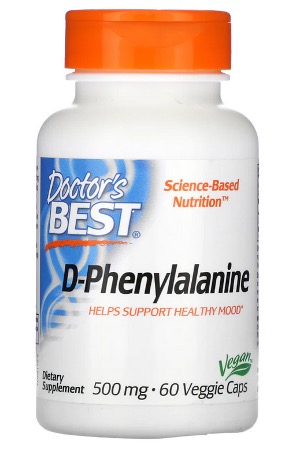
One of the DPA products I recommend: Doctor’s Best D-Phenylalanine

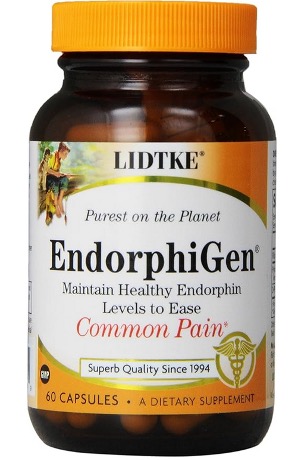
There are not many d-phenylalanine/DPA products available but of those I have two that I recommend: Doctor’s Best D-Phenylalanine and Lidtke Endorphigen. Both contain 500 mg DPA but the labels can be confusing at first – at least until you’re familiar with them.

Also, this amino acid, DPA, is not to be confused with docosapentaenoic acid (also abbreviated as DPA), an omega-3 fatty acid similar to eicosapentaenoic acid (EPA).

dr's best dpa

Here is the Doctor’s Best D-Phenylalanine description:

Doctor’s Best D-phenylalanine is a non-protein amino acid that acts as an inhibiting agent to enzymes that degrade enkephalins, naturally occurring peptides in the body that metabolize endorphins. Endorphins are neurotransmitters that play a key role in the function of the nervous system and are associated with feelings of pleasure. By limiting production of enzymes that break down endorphins, the supplement can help support a healthy mood and normal functioning of the nervous system.

  • Helps support healthy mood
  • Helps support endorphin metabolism
  • Help support neurotransmitter function

This is the actual product that I used over the past 2 weeks and have used it on and off as needed for a few years. It was one of the nutrients that helped when I sprained my ankle when visiting my brother in Las Vegas. More here

As you can see there is no mention of pain on the label or product description. I share more on the pain/endorphin connection below.

You can purchase this online from their website or from iherb. If you use my iherb link you’ll save 5%. This is a good option if you’re not in the USA and already use iherb for one-stop shopping of quality products.

The other DPA product I recommend: Lidtke Endorphigen

The other product I recommend is Lidtke Endorphigen which also contains 500 mg DPA and a small amount of vitamin B6 and riboflavin (vitamin B2). As you can see, this product does mention pain but not the emotional support/mood benefits on the front label.

lidke endorphigen

Here is the Lidtke Endorphigen description

Ease Minor Pain & Feel Good with Healthy Endorphin Level Maintenance

Endorphins are nature’s way to relieve common minor pain and promote a cheerful mood. Research shows that endorphins are released in response to pain and stress, bringing relief. The second wind and runner’s high during and after a vigorous run are results of endorphins. Acting as an analgesic and sedative, endorphins diminish our perception of pain…. But there is more.

Recovery centers report that endorphins promote recovery from a wide variety of unhealthy cravings.

Low endorphin symptoms and typical dosing of DPA

I use the symptoms questionnaire to help clients identify if they have low endorphin symptoms (you can see that here).

Typical dosing is 500 mg to 1000 mg DPA 3-4 x day between meals/away from protein. I do find having clients open the capsule onto their tongue to be more effective for quick pain relief – with results as quickly as 5-10 minutes.

DPA vs DLPA: they are quite different but have some overlaps

I am often asked if DPA and DLPA are the same – they are quite different but have some overlaps as outlined in this blog post on the topic: What is the difference between DPA and DLPA (amino acids) and which one do I use for weepiness, heart-ache, pain and energy?

The precautions are also not the same so I always review contraindications with all my clients and encourage you to do the same.

DPA for MS pain, weepiness, emotional pain and more

Here are a few blog posts illustrating the use of DPA in multiple sclerosis, weepiness, physical pain, emotional pain and resilience, cravings/emotional eating and even helping to wean off prescription pain medication:

  • Multiple sclerosis: low endorphin research and the amino acid DPA (d-phenylalanine) for pain, depression, comfort and trauma support “The endogenous opioid system is …well known to play a role in the development of chronic pain and negative affect [i.e. depression], both of which are common comorbidities in MS.”
  • DPA for weepiness, pain and comfort and reward eating
  • The individual amino acids glutamine, GABA, tryptophan (or 5-HTP), DPA and tyrosine are powerful for eliminating sugar cravings, often within 5 minutes
  • When using the amino acid DPA (d-phenylalanine) I have more resilience and more buffer in the caregiving work I do, and just the oops’s of life As I mentioned above, using DPA over these holidays also gave me more resilience and the endorphin boost I needed help with the emotional pain of losing my mom.
  • Wean off prescription pain medication, improve sleep and reduce emotional eating with DPA (an endorphin-boosting amino acid)

Be sure to use the search feature on the blog to find additional applications of DPA.

DPA research on pain and depression

The use of DPA is not new as you can read in this paper from 1982 – D-phenylalanine and other enkephalinase inhibitors as pharmacological agents: implications for some important therapeutic application

A number of compounds have been shown to inhibit the degradation of enkephalins. As expected, these compounds produce naloxone reversible analgesia and potentiate the analgesia produced by enkephalins and by acupuncture.

One of these, D-phenylalanine, is also anti-inflammatory.

D-phenylalanine has proven to be beneficial in many human patients with chronic, intractable pain. It is proposed the enkephalinase inhibitors may be effective in a number of human “endorphin deficiency diseases” such as depression, schizophrenia, convulsive disorders and arthritis.

Additional resources when you are new to using DPA and the other amino acids as supplements

We use the symptoms questionnaire to figure out if low endorphins or other neurotransmitter imbalances may be an issue for you.

If you suspect low levels of any of the neurotransmitters and do not yet have my book, The Antianxiety Food Solution – How the Foods You Eat Can Help You Calm Your Anxious Mind, Improve Your Mood, and End Cravings, I highly recommend getting it and reading it before jumping in and using amino acids on your own so you are knowledgeable. And be sure to share it with the practitioner/health team you or your loved one is working with.

There is an entire chapter on the amino acids and they are discussed throughout the book in the sections on gut health, gluten, blood sugar control, sugar cravings, anxiety and mood issues.

The book doesn’t include product names (per the publisher’s request) so this blog, The Antianxiety Food Solution Amino Acid and Pyroluria Supplements, lists the amino acids that I use with my individual clients and those in my group programs. You can find them all – including the Lidtke Endorphigen 500 mg that I mentioned above.

Also mentioned above is Doctor’s Best D-Phenylalanine which can be purchased on iherb.

If, after reading this blog and my book, you don’t feel comfortable figuring things out on your own (i.e. doing the symptoms questionnaire and respective amino acids trials), a good place to get help is the GABA QuickStart Program (if you have low GABA symptoms too). This is a paid online/virtual group program where you get my guidance and community support.

If you are a practitioner, join us in The Balancing Neurotransmitters: the Fundamentals program. This is also a paid online/virtual program with an opportunity to interact with me and other practitioners who are also using the amino acids.

Have you had success using DPA for toothache, dental abscess or your other pain issues – what kind of pain has it helped and how much has helped you?

Has DPA also helped with emotional pain and weepiness? And cravings/emotional eating?

If you’re a practitioner do you have success using DPA with your clients/patients?

Feel free to share and ask your questions below.
Filed Under: Depression, DPA/DLPA, Emotional Eating, Endorphins, Pain Tagged With: Acupuncture, amino acids, cavity, crown, d-phenylalanine, dentist, depression, dl-phenylalanine, DLPA, Doctor’s Best D-Phenylalanine, DPA, dull ache, emotional pain, emotional well-being, endorphins, GABA Quickstart; Balancing Neurotransmitters: the Fundamentals program for practitioners, headache, Lidtke Endorphigen, muscle sprains, physical pain, tooth pain, weepiness

Tryptophan 3x/day: OCD and ruminating thoughts are no longer ruling my grandson’s life and he has the most beautiful serene smile

December 15, 2023 By Trudy Scott 34 Comments

tryptophan 3 times a day

I recently received this wonderful feedback from a grandmother who is so happy about tryptophan helping her 17-year old grandson. He had been struggling with OCD (obsessive compulsive disorder) and ruminating thoughts for years:

We started with Lidtke L-Tryptophan Chewables. I was thrilled beyond my greatest hopes to see that it helped immediately! So, we went forward with having him chew a tryptophan when the thoughts started taking hold. This helped for a while, but the thoughts would return.

Finally I read one mother on your blog who gave her son tryptophan 3x/day. So we tried this. That was the magic bullet for my grandson. Getting the tryptophan in before the thoughts could take hold made the difference. And so we have stuck with this plan and have been so happy to see that OCD is no longer ruling my grandson’s life.

Last week I heard the most beautiful words I could imagine. “Hey grandma! The OCD is permanently gone!” Truly a miracle! That’s how it feels to him. As long as we continue to take the tryptophan 3x/day, there is no sign of OCD or ruminating thoughts!

We keep GABA Calm on hand as well and if a bothersome thought enters his mind, he chews a GABA and we don’t hear any more about it.

I honestly don’t even know how to tell you what a blessing your information has been to my grandson. He has the most beautiful, serene smile almost all the time now.

In all my reading and searching for all these years, you’re the only one I saw talking about this. Thank you, from the bottom of my heart, for guiding us to giving this kid his life back. I pray that all the good things you have done to help people come back to you tenfold, Trudy. You are a Godsend.

How much tryptophan helped him and why using it 3 x a day was key

The amino acid tryptophan, used as a supplement, supports low serotonin levels which can cause the worry type of anxiety, ruminating thoughts and OCD (behaviors and thoughts). You can see all the low serotonin symptoms here.

Each of the Lidtke L-Tryptophan Chewables provides 100 mg tryptophan which is often a great starting dose for children and teens. Because it’s chewable and tastes sweet it’s also a great format for children and teens (and “pixie dust” adults who need a very small amount). The bad aspect is that it does contain sugar and is quite sweet. Because you are continually consuming something sweet you may end up over-consuming them if sugar addiction is your issue.

As you can see 100 mg tryptophan did provide some relief in the moment but using the amino acids consistently throughout the day is what I always recommend for best results. In this instance 100 mg tryptophan 3x day worked perfectly for this young man.

Keep in mind there is no one-size fits all for dosing and 100 mg tryptophan x3 per day is considered quite low with many individuals needing 500-1000 mg tryptophan two or three times a day. Also some individuals do better on 5-HTP so this should always be considered too (10 mg 5-HTP is equivalent to 100 mg tryptophan).

Precaution about serotonin syndrome with tryptophan/5-HTP

There are precautions when using certain amino acids and I always review them with all my clients. If they have been prescribed an SSRI, I have them discuss the use of tryptophan/5-HTP with their prescribing doctor so they can be monitored for serotonin syndrome. With careful monitoring and doctor approval I feel comfortable having my clients use tryptophan/5-HTP 6 hours away from their one and only SSRI.

If they are using more than one SSRI and/or a combination of psychiatric medications, the use of tryptophan/5-HTP is not advised.

None of the above applied in this situation but it’s important to be aware of.

How GABA also helps and my recommendation about consistent use too

The amino acid GABA, used as a supplement, supports low GABA levels which can cause  physical anxiety and tension, and also an inability to stop intrusive thoughts. You can see all the low GABA symptoms here.

Each GABA Calm provides 125 mg GABA and he uses it as needed: “We keep GABA Calm on hand as well and if a bothersome thought enters his mind, he chews a GABA.”

My recommendation is to assess for low GABA symptoms and consider using GABA consistently throughout the day, typically 2-4 x day.

OCD research: glutamatergic and serotonergic pathway dysregulation

This 2011 paper, Nutraceuticals in the treatment of obsessive compulsive disorder (OCD): a review of mechanistic and clinical evidence, states the following:

Current preclinical research investigating nutraceuticals (natural products) for OCD, reveals encouraging novel activity in modulating key pathways suggested to be involved in the pathogenesis of OCD (glutamatergic and serotonergic pathway dysregulation).

With glutamatergic pathway dysregulation, we would expect GABA to help; and with serotonergic pathway dysregulation, we would expect tryptophan (or 5-HTP to help), as this young man found.

However there are no studies that have used tryptophan for OCD and the above paper concludes that “the serotonin precursor tryptophan is unlikely to be of use in treating OCD while 5-HTP may possibly be a more effective precursor strategy.” The authors state this about 5-HTP because it has been used with success for OCD in conjunction with medication (read the study here).

This lack of research on tryptophan for OCD is one of the reasons I feel compelled to share wonderful success stories like this. And until we have tryptophan research, we must use what we see works clinically and recognize that tryptophan and 5-HTP work in very similar ways.

Other nutrients when tryptophan or 5-HTP or GABA doesn’t help

The above paper does mention other nutrients that are tentatively supported by research and which modulate these pathways: N-acetylcysteine (NAC), myo-inositol, glycine, and milk thistle.

These nutrients could be considered when tryptophan or 5-HTP or GABA doesn’t help or doesn’t help enough. I’ve had much success with myo-inositol for OCD and have always used it in conjunction with tryptophan or 5-HTP. We start with tryptophan or 5-HTP and find a good base line and then add inositol, starting with 500 mg and working up to 18 g/day (as reported in the research).

As you can see, in one study, NAC was shown to be helpful for trichotillomania, a behavioral disorder characterized by the recurring or obsessive habit of pulling one’s hair, resulting in secondary alopecia. I blogged about this here.

They tried many approaches and it took 3 years before they used the amino acids

Patricia, the grandmother, also shared what other approaches they had tried from the age of 14-17 years before seeing success with tryptophan and GABA: therapy, tapping, breathing techniques, acupuncture, yoga and tai chi. None of this helped enough and they rejected pharmaceutical approaches.

It breaks my heart that it took 3 years for her grandson to find relief:

I have been reading your information on OCD for several years (in all my reading and searching for all these years, you’re the only one I saw talking about this) and though I thought it was the best hope I’d heard of for stopping OCD and ruminating thoughts, I was afraid to try the amino acids because I knew so little about them.

So I studied and studied and gained confidence by reading the published reports that seemed to back up what you said about amino acids.

Still, since I was hoping to help my grandson, who was 14 at the time, I was overly cautious. I’m not a medical professional and I’m aware that even really safe and effective treatments can change more than just the issue I was hoping to address.

So, more reading and searching ensued. Meanwhile my grandson’s life was deteriorating. He couldn’t function in many ways because he had no peace. Even sleep was difficult because the thoughts wouldn’t rest – the poor kid had no time at all when his mind wasn’t racing. It broke my heart to see him suffer so much.

Finally, I got the strength to trust my gut and try the amino acids.

I admire Patricia for reading, searching and studying and finally being well-informed enough to  help her grandson. And then sharing his story with me so I can share it here with you. She was inspired by one of my other blogs and hopefully you will be inspired and motivated by this wonderful success story.

My hope, with stories like this, is that the amino acids and nutritional approaches are considered first and not after all else has failed. 

Additional resources when you are new to using tryptophan, 5-HTP, GABA and the other amino acids as supplements

We use the symptoms questionnaire to figure out if low serotonin or low GABA may be an issue for you.

If you suspect low levels of any of the neurotransmitters and do not yet have my book, The Antianxiety Food Solution – How the Foods You Eat Can Help You Calm Your Anxious Mind, Improve Your Mood, and End Cravings, I highly recommend getting it and reading it before jumping in and using amino acids on your own so you are knowledgeable. And be sure to share it with the practitioner/health team you or your loved one is working with.

There is an entire chapter on the amino acids and they are discussed throughout the book in the sections on gut health, gluten, blood sugar control, sugar cravings, anxiety and mood issues.

The book doesn’t include product names (per the publisher’s request) so this blog, The Antianxiety Food Solution Amino Acid and Pyroluria Supplements, lists the amino acids that I use with my individual clients and those in my group programs. You can find them all – including the Lidtke Tryptophan Chewable product – in my online store.

If, after reading this blog and my book, you don’t feel comfortable figuring things out on your own (i.e. doing the symptoms questionnaire and respective amino acids trials), a good place to get help is the GABA QuickStart Program (if you have low GABA symptoms too). This is a paid online/virtual group program where you get my guidance and community support.

If you are a practitioner, join us in The Balancing Neurotransmitters: the Fundamentals program. This is also a paid online/virtual program with an opportunity to interact with me and other practitioners who are also using the amino acids.

Have you had success using tryptophan (or 5-HTP) and GABA this way for your OCD and ruminating thoughts or for a loved one? If yes, how much helps?

If you’re a practitioner do you have success using tryptophan (or 5-HTP) and GABA this way with your clients/patients who have OCD and ruminating thoughts?

Feel free to share and ask your questions below.
Filed Under: 5-HTP, Children/Teens, GABA, OCD, Tryptophan Tagged With: 5-HTP, amino acids, anxiety, GABA, GABA Calm, glutamatergic, inositol; GABA Quickstart; Balancing Neurotransmitters: the Fundamentals program for practitioners, Lidtke L-Tryptophan Chewables, NAC, obsessive compulsive disorder, OCD, ruminating thoughts, serene, serotonergic, serotonin, teen, tryptophan

Anxiety and vomit phobia in an 8-year-old: within a week of starting vitamin B6 she made a complete turnaround

December 1, 2023 By Trudy Scott 15 Comments

anxiety and vomit phobia

Debbie, a mom in the community, shared this wonderful feedback about how vitamin B6 helped her daughter with terrible anxiety and a phobia of vomit:

My youngest (who is 8 now) started exhibiting terrible anxiety about a year ago, specifically around the phobia of vomit. Her anxiety is mostly about other people throwing up. But her anxiety became so strong it was preventing her from going to school or even staying in her classroom, kept her from eating (because her anxiety hurt her tummy) and even from wanting to do extracurricular activities that she previously loved but now was afraid to attend in case a child might throw up there.

We started her on weekly therapy sessions, and I started her on GABA and tryptophan. While the amino acids helped a little, it wasn’t enough to calm the thoughts that plagued her all day at school and home. Most days I still couldn’t get her out of the car for school.

Through your website and some other research, I decided to try supplementing her with vitamin B6. Within a week of her starting B6 she made a complete turnaround. The anxiety would still come when a kid at school would say their tummy hurt, but she was able to calm herself down within minutes and talk through the worry.

We still have some low days (especially if we haven’t taken her supplements in a few days) but overall, she’s a new kid. Even the school asked what we are doing differently to get her to be calm again.

It’s wonderful to hear that within a week of starting vitamin B6 she made a complete turnaround.

This blog addresses some of the possible mechanisms (possible serotonin and GABA support, and addressing pyroluria), how much vitamin B6 she had her daughter use and optimal dosing, plus other factors like a good multi or B complex.

Some of the possible causes and mechanisms: serotonin and/or GABA support

According to the Child Mind Institute, “Emetophobia, or the severe fear of vomiting or seeing others vomit, is surprisingly common.  Kids who already tend to be anxious are more likely to develop it. It leads to fear of things they associate with vomiting. Often it starts with avoiding places where they (or someone else) threw up, or places that remind them of it.”

They discuss therapy and medications as solutions whereas I am discussing nutritional solutions that address the root causes. In this case: addressing low vitamin B6 and its impact on serotonin and/or GABA.

This letter, Vitamin B6: A new approach to lowering anxiety, and depression?, published in 2022, mention a few studies concluding that vitamin B6 supplements “significantly reduce feelings of stress, anxiety, and depression.” It does this via an impact on serotonin and GABA production and this results in  the calming of the nervous system.

This 2022 paper, High-dose Vitamin B6 supplementation reduces anxiety and strengthens visual surround suppression, also discusses a GABA mechanism: vitamin B6 supplementation “increases inhibitory GABAergic neural influences, which is consistent with its known role in the synthesis of GABA.” (100 mg/day of vitamin B6 was used by the adult participants)

In this blog post you can read about the role of low vitamin B6 and iron in low serotonin, leading to anxiety and panic attacks.

How much vitamin B6 to use and is pyroluria a factor?

Debbie was not sure how much vitamin B6 to give her daughter:

The struggle I still have is knowing how much to dose her. There’s conflicting info out there as to how much is too much for kids. Right now I’m giving her Carlson liquid B6. I give her between 2-3 drops, which, if I’m doing the math correctly, is about 4-6 mg. She seems to be doing alright on that as long as we don’t miss a day. When we do miss, her anxiety becomes immediately irrational again. If you have any insight on dosing, please let me know. Thanks for all you do!

I shared this feedback with her: With phobia of vomiting I immediately think of the social anxiety condition pyroluria and the additional need for zinc, vitamin B6 and evening primrose oil.

This supports the fact that vitamin B6 helps her daughter and that missed days and increased stress means the anxiety returns.

With kids anxiety can often show up as tummy issues and nausea. And “emetophobics are particularly vulnerable to somatic symptoms, especially gastrointestinal symptoms such as nausea.  Nausea, as an anxiety symptom, may be misinterpreted as an imminent episode of vomiting causing further symptoms in a vicious circle.” (from this paper about an 8 year old boy with emetophobia)

Debbie mentions her daughter gets a sore tummy when anxious. If she also feels nauseous on her bad days, that would be another clue to consider pyroluria. A common symptom is morning nausea and addressing pyroluria helps kids who experience this and also helps prevent vomiting. The nutrients for pyroluria are also key for neurotransmitter production (as mentioned above).

I shared that I’ve used 10 – 25mg of vitamin B6 in children this age who have pyroluria (plus the other pyroluria supplements and stress reduction).

Good dream recall with no nightmares is a good gauge of vitamin B6 status and a clue that enough is being used and easy enough to ask children and/or observe nightmares.

There are not many papers on the use of vitamin B6 in children. This study, Use of Nutritional Supplements Based on L-Theanine and Vitamin B6 in Children with Tourette Syndrome, with Anxiety Disorders: A Pilot Study used 2.8mg of vitamin B6 but they were also using theanine.

Supportive solutions: a child’s multi with B vitamins and other underlying factors

When an individual B vitamin like vitamin B6 is used, it’s always advised to use a B complex or a good multivitamin that contains all the B vitamins with sufficient amounts. For children I like a product like Klaire Labs Vitaspectrum ® Powder. This product may actually provide enough vitamin B6 in a situation like this – 1 scoop provides 15 mg of vitamin B6 – or it could be used with extra vitamin B6.

It goes without saying that all dietary and other nutritional factors, gut health, blood sugar handling, sleep, toxins, infections etc. may need to be addressed too.

I would also want to do further exploration into why vitamin B6 may be low, other than pyroluria – such as dysbiosis, inflammation, malabsorption, autoimmunity, low dietary intake, leaky gut, high sugar intake, gluten sensitivity or celiac disease and alcohol use disorder (in adults).

Why didn’t GABA or tryptophan help?

Debbie is well versed in amino acids, having used GABA for her PCOS (polycystic ovarian syndrome). It helped ease her lifelong anxiety, wean off anxiety medication, ovulate each month and stop her PCOS meds. She helped her older daughter with GABA too – she calls them her “happy pills.” And Debbie used tryptophan with success when collagen caused her to have panic attacks again. You can read her story on this blog.

I can’t be sure why GABA or tryptophan didn’t help her younger daughter. It’s where I would have started too, but we are all unique and what works for Debbie and her older daughter just didn’t work for her younger daughter.

It’s possible that a higher dose of GABA or tryptophan may have worked better, or other GABA or tryptophan products, or theanine or 5-HTP or inositol may have been an option.

It’s wonderful that vitamin B6 did work and I appreciate Debbie for sharing and allowing me to share as a blog. I love that the school also asked what they are doing differently to get her daughter to be calm again.

Additional resources when you are new to using amino acids or the pyroluria nutrients as supplements

We use the symptoms questionnaire to figure out if low GABA or low serotonin or low endorphins or low dopamine or low blood sugar may be an issue with vomit phobia.

If you suspect low levels of any of the neurotransmitters and do not yet have my book, The Antianxiety Food Solution – How the Foods You Eat Can Help You Calm Your Anxious Mind, Improve Your Mood, and End Cravings, I highly recommend getting it and reading it before jumping in and using amino acids on your own so you are knowledgeable. And be sure to share it with the practitioner/health team you or your loved one is working with.

There is an entire chapter on the amino acids and they are discussed throughout the book in the sections on gut health, gluten, blood sugar control, sugar cravings, anxiety and mood issues.

As mentioned above, I would start with GABA and tryptophan (like Debbie did) and then start looking for other approaches that may help.

There is also an entire chapter on pyroluria where vitamin B6, zinc and evening primrose oil is addressed in detail.

The book doesn’t include product names (per the publisher’s request) so this blog, The Antianxiety Food Solution Amino Acid and Pyroluria Supplements, lists the amino acids that I use with my individual clients and those in my group programs. You can find them all in my online store.

This includes the products mentioned in this blog: Carlson 100mg B6 and Klaire Labs Vitaspectrum® Powder.

If, after reading this blog and my book, you don’t feel comfortable figuring things out on your own (i.e. doing the symptoms questionnaire and respective amino acids trials), a good place to get help is the GABA QuickStart Program (if you have low GABA symptoms too). This is a paid online/virtual group program where you get my guidance and community support.

If you are a practitioner, join us in The Balancing Neurotransmitters: the Fundamentals program. This is also a paid online/virtual program with an opportunity to interact with me and other practitioners who are also using the amino acids.

Does any of this resonate with you?

If yes, has vitamin B6 helped your child (or you) with anxiety and vomit phobia?

And is pyroluria also a factor that is being addressed?

Have either tryptophan or GABA or Klaire Labs Vitaspectrum® Powder helped too (alone or in conjunction with vitamin B6)?

Feel free to share and ask your questions below.
Filed Under: Anxiety, Children/Teens, GABA, Pyroluria, Tryptophan Tagged With: amino acids, anxiety, Balancing Neurotransmitters: the Fundamentals program for practitioners, calm, child, emetophobia, GABA, GABA Quickstart, phobia of vomit, pyroluria, throwing up, tryptophan, tummy, vitamin B6, vomit phobia

Seasonal PMDD/PMS and hormonal binge eating, wine drinking and anxiety – symptoms ramp up from October

November 17, 2023 By Trudy Scott 3 Comments

seasonal PMDD/PMS

Someone in the community asked for help for the seasonal aspect of her PMDD symptoms i.e. more severe symptoms in winter  …

My PMDD symptoms massively increase around the beginning of October right through to March. Would love some advice.

The binge eating and wine drinking is becoming habitual

She specifically mentions binge eating and wine drinking but I assume her other PMDD symptoms – such as anxiety, tension, anger, irritability, depression, sadness, hopelessness, insomnia, overwhelm, low energy, breast tenderness, headaches, pain, bloating, and/ or weight gain –  are more severe at this time too.

As you can see, her symptoms are much more severe from October through March (winter in the Northern Hemisphere). If you live in the Southern Hemisphere you could expect more severe symptoms from May through September (or thereabouts).

There is a seasonal aspect to PMDD (premenstrual dysphoric disorder) and PMS (premenstrual syndrome and other hormonal imbalances.  It’s not well recognized despite the fact that it’s documented in the research and seen clinically.

My feedback for her is to look into and address low serotonin, low GABA and/or low endorphins with the respective amino acids (adjusting up and down based on the season and symptoms), using recognized SAD (seasonal affective disorder) approaches and addressing pyroluria if needed (the nutrients are cofactors for neurotransmitter production.) I share more about each of these approaches and the research below.

The research: patients with PMDD have substantial seasonal patterns in mood and premenstrual symptoms

Premenstrual dysphoric disorder (PMDD) “accounts for the most severe form of PMS with the greatest impairment of women’s functioning and perceived quality of life, often prompting them to seek treatment.”

This older paper from 1997, Seasonality of symptoms in women with late luteal phase dysphoric disorder

  • Out of 100 patients treated in a subspecialty clinic in a university teaching hospital, “a significantly higher rate of seasonal affective disorder (38% versus 8%) as determined by Seasonal Pattern Assessment Questionnaire criteria.”
  • Also, 25% of the patients with seasonal variations in their premenstrual symptoms, consider them marked or a severe problem

The authors conclude that:

These results suggest that patients with LLPDD [or PMDD] have substantial seasonal patterns in mood and premenstrual symptoms. These seasonal patterns have implications for the clinical assessment and treatment of LLPDD [or PMDD]. For example, light therapy may be beneficial for women with seasonal worsening of LLPDD [or PMDD].

As you look at the research keep in mind the fact that late luteal dysphoric disorder (LLDD),“is now known as premenstrual dysphoric disorder (PMDD)”, as mentioned in the above paper and other older studies.

Seasonal variations in serotonin and GABA

Seasonal variations in serotonin have long been documented with much research on the winter blues. This paper, The chronobiology and neurobiology of winter seasonal affective disorder describes winter seasonal affective disorder (SAD) as “a mood disorder characterized by the predictable onset of depression in the fall/winter months, with spontaneous remissions in the spring/summer period.” They also state that “The typical patient with SAD is a premenopausal woman who experiences carbohydrate craving, hypersomnia, and prominent fatigue during winter depressive episodes.”

There is less awareness about GABA seasonality but GABA levels may also be lower in the winter months. In this animal study, Effect of the pineal gland on 5-hydroxytryptamine and γ-aminobutyric acid secretion in the hippocampus of male rats during the summer and winter, it is reported that: “GABA secretion in the hippocampus of rats had a seasonal rhythm consisting of increased secretion in summer and decreased secretion in the winter.”  I share more about this and the seasonality of GABA here.

It makes sense that supporting these lower levels in winter is going to help with the more severe PMDD symptoms that correlate with each neurotransmitter imbalance.

One solution: address low levels of neurotransmitters with amino acids

As you can see the PMDD symptoms mentioned above could fall into the categories of low GABA, low serotonin and/or low endorphins (and possibly low dopamine/catecholamines and low blood sugar too: binge eating, wine drinking, anxiety, tension, anger, irritability, depression, sadness, hopelessness, insomnia, overwhelm, low energy, breast tenderness, headaches, pain, bloating, and/ or weight gain.

(You can read this StatPearls ebook for the full description of the above symptoms: Premenstrual Dysphoric Disorder)

It’s for this reason I always have clients with PMDD (and other hormonal issues) do the Amino Acids Mood Questionnaire and trials of the respective amino acids.

Using a food mood log and tracking what time of day you binge eat and drink wine (and  all the other symptoms) is a clue as to which amino acids may help most. I would expect tryptophan, GABA and DPA would be at the top of the list, and possibly tyrosine and glutamine too.

Because of the seasonality aspect, a higher dose is likely to be needed in the winter time so if you’re just starting your amino acid trails keep this in mind. If you are already using amino acids with success in summer, then bumping up the amounts during winter is going to help further. And then be sure to reduce amounts once winter is over.

Hopefully you’ve also been working on diet, gut health, liver health, adrenal function, toxin removal and other factors to reduce or eliminate PMDD/PMS so the amino acids are not needed long term.

How targeted individual amino acids may help – some examples

As you can see from one study, tryptophan can help with premenstrual dysphoria/sadness, mood swings, tension, and irritability.

Low endorphins and low dopamine may also be a factor. I share more on this blog: DLPA (DL-Phenylalanine) eases PMDD/PMS symptoms in women who experience declining endorphin levels in the second half of their cycles

Here are some specific amino acid cases around binge eating/cravings and excessive wine drinking:

  • Would using 5-HTP or tryptophan help when you crave sugar (as a sort of antidepressant) late afternoon/evening?
  • Tryptophan had the added benefit of turning me completely off alcohol when I took it to improve mood and sleep during perimenopause
  • GABA for ending sugar cravings (and anxiety and insomnia)

None of the above are specific to seasonal changes in symptoms but illustrate the use of amino acids.

Supportive solutions: a SAD lamp when serotonin is low and addressing pyroluria

The late luteal phase dysphoric disorder paper above doesn’t mention amino acids (which is unfortunate but not surprising)  but it does mention light therapy. I do recommend the use of a SAD lamp (full spectrum light) when there are low serotonin symptoms that get more severe in the winter.

With PMDD/PMS and other hormonal imbalances, we also always consider pyroluria and the use of higher amounts of zinc, vitamin B6 and evening primrose oil. The “stress” of winter and increased sugar consumption can deplete zinc and vitamin B6 for everyone but more so if you have pyroluria. These nutrients are also key for hormonal imbalances.

Additional resources when you are new to using amino acids as supplements

We use the symptoms questionnaire to figure out if low GABA or low serotonin or low endorphins or low dopamine or low blood sugar may be an issue with your seasonal PMDD/PMS.

If you suspect low levels of any of the neurotransmitters and do not yet have my book, The Antianxiety Food Solution – How the Foods You Eat Can Help You Calm Your Anxious Mind, Improve Your Mood, and End Cravings, I highly recommend getting it and reading it before jumping in and using amino acids on your own so you are knowledgeable. And be sure to share it with the practitioner/health team you or your loved one is working with.

There is an entire chapter on the amino acids and they are discussed throughout the book in the sections on gut health, gluten, blood sugar control, sugar cravings, anxiety and mood issues.

The book doesn’t include product names (per the publisher’s request) so this blog, The Antianxiety Food Solution Amino Acid and Pyroluria Supplements, lists the amino acids that I use with my individual clients and those in my group programs. You can find them all in my online store.

If, after reading this blog and my book, you don’t feel comfortable figuring things out on your own (i.e. doing the symptoms questionnaire and respective amino acids trials), a good place to get help is the GABA QuickStart Program (if you have low GABA symptoms too). This is a paid online/virtual group program where you get my guidance and community support.

Another option is the budget-friendly GABA QuickStart Homestudy program.

If you also need serotonin support, the Serotonin QuickStart Program is a good place to get help. This is also a paid online/virtual group program where you get my guidance on using tryptophan and 5-HTP safely, and community support during 5 LIVE Q&A calls. You can sign up to be notified when the next live launch of this program is happening.

If you are a practitioner, join us in The Balancing Neurotransmitters: the Fundamentals program. This is also a paid online/virtual program with an opportunity to interact with me and other practitioners who are also using the amino acids.

Now I’d like to hear from you

Does any of this resonate with you? If yes, has any of the above helped with the seasonal aspect of your PMDD, PMS or other hormonal issues?

Feel free to share and ask your questions below.
Filed Under: Anxiety, Cravings, GABA, Tryptophan, Women's health Tagged With: amino acids, anger, anxiety, Balancing Neurotransmitters: the Fundamentals program for practitioners, binge eating, depression, endorphins, GABA, GABA Quickstart, hopelessness, hormonal, insomnia, irritability, PMDD, PMS, premenstrual dysphoric disorder, premenstrual syndrome, sadness, seasonal affective disorder, seasonal PMDD, seasonal PMS, serotonin, tension, wine drinking, winter, winter blues

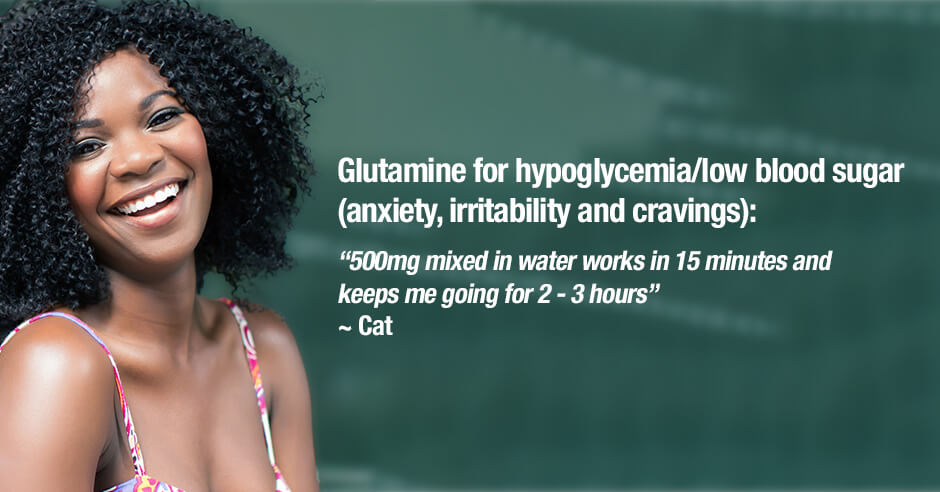
Glutamine for hypoglycemia/low blood sugar: “500mg mixed in water works in 15 minutes and keeps me going for 2 – 3 hours”

November 3, 2023 By Trudy Scott 27 Comments

glutamine and hypoglycemia

Cat shared this feedback about how effective just 500mg of glutamine is for her low blood sugar and how quickly it helps:

I recently followed one of your posts on GABA down the rabbit hole to a linked blog post and then to another post where I found a mention of using glutamine for hypoglycemia. This is the only reference that I have read on this in 35 years of research on the subject. I follow a low carb, higher protein, healthy fat diet, but still suffer low blood sugar issues consistently at one particular time of the day. After so many years of eating a second breakfast to prevent the lows, I was ready to give any other healthy option a try.

It works!!! I found a powder that I mix approximately 500 mg of with water. It works within about 15 minutes and keeps me going for about 2 – 3 hours — long enough to reach a reasonable time for lunch.

I’m thrilled to have this option as anytime that I travel, low blood sugar becomes a huge issue as I suffer from ketotic hypoglycemia and end up with massive headaches and vomiting for 6-8 hours.

You have freed me from a huge weight! Thank you and hugs!

(And thank you for researching and sharing the tremendously helpful information in your books, webinar presentations and blogs.)

Thank you Cat for sharing your success and you are most welcome! I’m sharing this as a blog post because you may also be new to this.

Glutamine dosing, using powder vs capsules and using it on the tongue

Cat finds 500 mg glutamine works well for her unique needs. This is a good starting dose. I see many folks start too high, like 5000 mg / 5 g and up multiple times a day, and it’s not necessary. However, we increase based on individual needs and you may find you do need to use 500 mg -1000 mg two to three times a day.

Using a glutamine powder is a great way to use it especially if you find you do need more than 500 mg each time.

One thing I mentioned to Cat is when you use glutamine powder directly on to the tongue (rather than mixed in water), the benefits are seen more quickly i.e. right away rather than having to wait 15 minutes.

If you do start with glutamine capsules, be sure to open the capsule on the tongue too, But watch for fillers which can be irritating to some folks. Powders are typically glutamine-only and don’t taste bad at all. But when traveling, capsules may be a better option (at least when on a plane).

Ketotic hypoglycemia, adrenal dysfunction and breakfast

Ketotic Hypoglycemia International defines ketotic hypoglycemia as “a condition characterized by low blood sugar (glucose) and elevated ketones, typically occurring after fasting, like sleeping overnight. Ketotic hypoglycemia (KH) is not a disease itself but rather a symptom or a clinical presentation that can occur as a result of various underlying conditions.” I’ve asked Cat if she is aware as to what is causing her ketotic hypoglycemia and I’ll report back.

I have also asked if she has had salivary cortisol testing done as adrenal dysfunction plays a role in all types of low blood sugar and will need to be addressed. This can take awhile to test and figure out nutritional support. Until then, glutamine is wonderful for preventing low blood sugar episodes.

I’m also curious what her breakfasts look like and will update the blog when I find out. Cat does mention that she follows “a low carb, higher protein, healthy fat diet” so I assume her first breakfast is a good one. But it’s always something to confirm.  As you can see on this blog, Anxiety and Hypoglycemia Symptoms Improve with Diet Modification, a healthy breakfast is key for blood sugar stability and preventing anxiety.

Low blood sugar symptoms and all the ways glutamine may help

This is the blog she commented on: Glutamine for calming, intense sugar cravings, gut healing and low blood sugar

I share all the symptoms we see with low blood sugar:

  • Crave sugar, starch or alcohol any time during the day
  • Irritable, shaky, headachey – especially if going too long between meals
  • Intense cravings for sweets
  • Lightheaded if meals are missed
  • Eating relieves fatigue
  • Agitated, easily upset
  • Nervous, anxious, panic attacks

As you can see, in addition to helping with low blood sugar symptoms, glutamine has calming properties (low blood sugar can also cause anxiety and panic attacks), helps reduce intense sugar cravings (sometimes described as a demonic urge to eat all things sweet and also helps with healing a leaky gut. Be sure to read these two blogs I’ve linked to above.

Glutamine has also been researched to help with addiction recovery. In this blog, An amino acid supplement with DLPA, glutamine and 5-HTP eases alcohol withdrawal symptoms at an inpatient detoxification program, glutamine is paired with two other amino acids.

Resources if you are new to using glutamine and other amino acids as supplements

We use the symptoms questionnaire to figure out if low blood sugar may be an issue for you.

If you suspect blood sugar or low levels of any of the neurotransmitters and do not yet have my book, The Antianxiety Food Solution – How the Foods You Eat Can Help You Calm Your Anxious Mind, Improve Your Mood, and End Cravings, I highly recommend getting it and reading it before jumping in and using amino acids on your own so you are knowledgeable. And be sure to share it with the practitioner/health team you or your loved one is working with.

There is an entire chapter on the amino acids and they are discussed throughout the book in the sections on gut health, gluten, blood sugar control (this topic has an entire chapter), sugar cravings, anxiety and mood issues.

The book doesn’t include product names (per the publisher’s request) so this blog, The Antianxiety Food Solution Amino Acid and Pyroluria Supplements, lists the amino acids that I use with my individual clients and those in my group programs. You can find them all in my online store.

If, after reading this blog and my book, you don’t feel comfortable figuring things out on your own (i.e. doing the symptoms questionnaire and respective amino acids trials), a good place to get help is the GABA QuickStart Program (if you have low GABA symptoms too). This is a paid online/virtual group program where you get my guidance and community support.

If you are a practitioner, join us in The Balancing Neurotransmitters: the Fundamentals program. This is also a paid online/virtual program with an opportunity to interact with me and other practitioners who are also using the amino acids.

I really appreciate Cat for sharing her story and giving me permission to share as a blog.

Has glutamine helped you with low blood sugar/hypoglycemia? If yes, in what way has it helped – reduced anxiety, less sugar cravings (or other addictions), and not as irritable and cranky/angry?

And how much helps and how quickly? Are you using it on the tongue?

Has glutamine  also helped with leaky gut?

If you’re a practitioner are you using glutamine this way with your clients/patients?

Feel free to share and ask your questions below.
Filed Under: Anger, Anxiety, Cravings, Glutamine, Hypoglycemia Tagged With: addictions, adrenal dysfunction, amino acids, anxiety, breakfast, capsules, cravings, GABA, GABA Quickstart; Balancing Neurotransmitters: the Fundamentals program for practitioners, glutamine, Headaches, Hypoglycemia, irritability, ketotic hypoglycemia, leaky gut, low blood sugar, low carb, on the tongue, powder, vomiting

  • « Go to Previous Page
  • Page 1
  • Page 2
  • Page 3
  • Page 4
  • Page 5
  • Page 6
  • Interim pages omitted …
  • Page 18
  • Go to Next Page »

Primary Sidebar

GABA QuickStart Homestudy

gaba quickstart homestudy

Free Report

9 Great Questions Women Ask about Food, Mood and their Health

You'll also receive a complimentary subscription to my ezine "Food, Mood and Gal Stuff"


Connect with me

Popular Posts

  • Amino Acids Mood Questionnaire from The Antianxiety Food Solution
  • The Antianxiety Food Solution Amino Acid and Pyroluria Supplements
  • Pyroluria Questionnaire from The Antianxiety Food Solution
  • Collagen and gelatin lower serotonin: does this increase your anxiety and depression?
  • Tryptophan for the worry-in-your-head and ruminating type of anxiety
  • GABA for the physical-tension and stiff-and-tense-muscles type of anxiety
  • The Antianxiety Food Solution by Trudy Scott
  • Seriphos Original Formula is back: the best product for anxiety and insomnia caused by high cortisol
  • Am I an anxious introvert because of low zinc and vitamin B6? My response to Huffington Post blog
  • Vagus nerve rehab with GABA, breathing, humming, gargling and key nutrients

Recent Posts

  • Her cravings for chips and peanut butter were triggered by stress: GABA ends cravings and reduces physical tension and fear of heights
  • It is truly miraculous to be able to move through life without crippling anxiety and panic
  • GABA and tryptophan combo provide immediate and noticeable relief for tremors and cervical dystonia in just 7 days
  • Red light therapy for back and neck pain, plantar fasciitis and low mood – a complement to the amino acids GABA, DPA and tryptophan
  • What do I use instead of Seriphos to help lower high cortisol that is affecting my sleep and making me anxious at night?

Categories

  • 5-HTP
  • AB575
  • Addiction
  • ADHD
  • Adrenals
  • Alcohol
  • Allergies
  • Alzheimer's disease
  • Amino Acids
  • Anger
  • Antianxiety
  • Antianxiety Food Solution
  • Antidepressants
  • Anxiety
  • Anxiety and panic
  • Autism
  • Autoimmunity
  • benzodiazapines
  • Bipolar disorder
  • Books
  • Caffeine
  • Cancer
  • Candida
  • Children/Teens
  • Collagen
  • Cooking equipment
  • Coronavirus/COVID-19
  • Cravings
  • Depression
  • Detoxification
  • Diabetes
  • Diet
  • DPA/DLPA
  • Drugs
  • EFT/Tapping
  • EMF
  • EMFs
  • Emotional Eating
  • Endorphins
  • Environment
  • Essential oils
  • Events
  • Exercise
  • Fear
  • Fear of public speaking
  • Fertility and Pregnancy
  • Fish
  • Food
  • Food and mood
  • Functional neurology
  • GABA
  • Gene polymorphisms
  • General Health
  • Giving
  • Giving back
  • Glutamine
  • Gluten
  • GMOs
  • Gratitude
  • Gut health
  • Heart health/hypertension
  • Histamine
  • Hormone
  • Hyperparathyroidism
  • Hypoglycemia
  • Immune system
  • Inflammation
  • Insomnia
  • Inspiration
  • Introversion
  • Joy and happiness
  • Ketogenic diet
  • Lithium orotate
  • Looking awesome
  • Lyme disease and co-infections
  • MCAS/histamine
  • Medication
  • Men's health
  • Mental health
  • Mercury
  • Migraine
  • Mold
  • Movie
  • MTHFR
  • Multiple sclerosis
  • Music
  • NANP
  • Nature
  • Nutritional Psychiatry
  • OCD
  • Osteoporosis
  • Oxalates
  • Oxytocin
  • Pain
  • Paleo
  • Parasites
  • Parkinson’s disease
  • PCOS
  • People
  • PMS
  • Postpartum
  • PTSD/Trauma
  • Pyroluria
  • Questionnaires
  • Real whole food
  • Recipes
  • Research
  • Schizophrenia
  • serotonin
  • SIBO
  • Sleep
  • Special diets
  • Sports nutrition
  • Stress
  • Sugar addiction
  • Sugar and mood
  • Supplements
  • Teens
  • Testimonials
  • Testing
  • The Anxiety Summit
  • The Anxiety Summit 2
  • The Anxiety Summit 3
  • The Anxiety Summit 4
  • The Anxiety Summit 5
  • The Anxiety Summit 6
  • Thyroid
  • Thyroid health
  • Toxins
  • Tryptophan
  • Tyrosine
  • Uncategorized
  • Vegan/vegetarian
  • Women's health
  • Yoga

Archives

  • May 2026
  • April 2026
  • October 2025
  • September 2025
  • August 2025
  • July 2025
  • June 2025
  • May 2025
  • April 2025
  • March 2025
  • February 2025
  • January 2025
  • November 2024
  • October 2024
  • September 2024
  • August 2024
  • July 2024
  • June 2024
  • May 2024
  • April 2024
  • March 2024
  • February 2024
  • January 2024
  • December 2023
  • November 2023
  • October 2023
  • September 2023
  • August 2023
  • July 2023
  • June 2023
  • May 2023
  • April 2023
  • March 2023
  • February 2023
  • January 2023
  • December 2022
  • November 2022
  • October 2022
  • September 2022
  • August 2022
  • July 2022
  • June 2022
  • May 2022
  • April 2022
  • March 2022
  • February 2022
  • January 2022
  • December 2021
  • November 2021
  • October 2021
  • September 2021
  • August 2021
  • July 2021
  • June 2021
  • May 2021
  • April 2021
  • March 2021
  • February 2021
  • January 2021
  • December 2020
  • November 2020
  • October 2020
  • September 2020
  • August 2020
  • July 2020
  • June 2020
  • May 2020
  • April 2020
  • March 2020
  • February 2020
  • January 2020
  • December 2019
  • November 2019
  • October 2019
  • September 2019
  • August 2019
  • July 2019
  • June 2019
  • May 2019
  • April 2019
  • March 2019
  • February 2019
  • January 2019
  • December 2018
  • November 2018
  • October 2018
  • September 2018
  • August 2018
  • July 2018
  • June 2018
  • May 2018
  • April 2018
  • March 2018
  • February 2018
  • January 2018
  • December 2017
  • November 2017
  • October 2017
  • September 2017
  • August 2017
  • July 2017
  • June 2017
  • May 2017
  • April 2017
  • March 2017
  • February 2017
  • January 2017
  • December 2016
  • November 2016
  • October 2016
  • September 2016
  • August 2016
  • July 2016
  • June 2016
  • May 2016
  • April 2016
  • March 2016
  • February 2016
  • January 2016
  • December 2015
  • November 2015
  • October 2015
  • September 2015
  • August 2015
  • July 2015
  • June 2015
  • May 2015
  • April 2015
  • March 2015
  • February 2015
  • January 2015
  • December 2014
  • November 2014
  • October 2014
  • September 2014
  • August 2014
  • July 2014
  • June 2014
  • May 2014
  • April 2014
  • March 2014
  • February 2014
  • January 2014
  • December 2013
  • November 2013
  • October 2013
  • September 2013
  • August 2013
  • July 2013
  • June 2013
  • May 2013
  • April 2013
  • March 2013
  • February 2013
  • January 2013
  • December 2012
  • November 2012
  • October 2012
  • August 2012
  • July 2012
  • June 2012
  • May 2012
  • April 2012
  • March 2012
  • February 2012
  • January 2012
  • December 2011
  • November 2011
  • October 2011
  • September 2011
  • August 2011
  • July 2011
  • June 2011
  • May 2011
  • April 2011
  • March 2011
  • February 2011
  • January 2011
  • December 2010
  • October 2010
  • September 2010
  • July 2010
  • May 2010
  • April 2010
  • March 2010
  • February 2010
  • January 2010
  • November 2009

Share the knowledge!

The above statements have not been evaluated by the Food and Drug Administration. Products listed in this website are not intended to diagnose, treat, cure or prevent any disease.

The information provided on this site is for informational and educational purposes only and is not intended as a substitute for advice from your physician or other health care professional. You should consult with a healthcare professional before starting or modifying any diet, exercise, or supplementation program, before taking or stopping any medication, or if you have or suspect you may have a health problem.


Copyright © 2026 Trudy Scott. All Rights Reserved. | Privacy | Terms and Conditions | Refund Policy | Medical Disclaimer

Free Report

9 Great Questions Women Ask about Food, Mood and their Health

You’ll also receive a complimentary subscription to my ezine “Food, Mood and Gal Stuff”