• Skip to primary navigation
  • Skip to main content
  • Skip to primary sidebar

everywomanover29 blog

Food, Mood and Women's Health – Be your healthiest, look and feel great!

  • Blog
  • About
  • Services
  • Store
  • Resources
  • Testimonials
  • The Book
  • Contact
  • Search this site

amino acids

Tryptophan and ascorbic acid for anxiety caused by lead toxicity

August 19, 2016 By Trudy Scott 18 Comments

lead-toxicity

Lead toxicity is a factor when it comes to anxiety, panic disorder, phobias and depression, even with low levels of lead exposure.

This 2010 paper, published in the Archives of General Psychiatry, Blood lead levels and major depressive disorder, panic disorder, and generalized anxiety disorder in U.S. young adults reports the following:

In this sample of young adults with low levels of lead exposure, higher blood lead was associated with increased odds of major depression and panic disorder. Exposure to lead at levels generally considered safe could result in adverse mental health outcomes.

The paper discusses a possible mechanism of action i.e. lead disruption of neurotransmitter production (of the catecholamines and serotonin):

If lead exposure contributes to the etiology of these disorders, the mechanism of action could involve perturbation of neurochemistry, such as brain monoamine neurotransmission.

Lead exposure is known to disrupt catecholaminergic systems, and depression and anxiety disorders are strongly associated with disturbances in these systems.

Studies in animals show that chronic lead exposure can decrease serotoninergic activity in several brain regions including the nucleus accumbens, frontal cortex, and brainstem.

It is surprising that generalized anxiety disorder was not associated with increased lead levels in this study but other research does find anxiety correlations:

  • bone lead (a biomarker of cumulative lead exposure) was associated with phobic anxiety and depression among older women who are premenopausal or who consistently take postmenopausal HRT
  • blood lead concentrations were associated with increased risk of behavioral problems and anxiety in Chinese preschool children
  • bone and blood lead levels were significantly associated with an increased risk of phobic anxiety in middle-aged to elderly men

Addressing lead and other heavy metal toxicity is not to be taken lightly and can often be quite a lengthy process. Finding a knowledgeable practitioner who understands chelation is important. We covered much of this in my interview with Dr. John Dempster on season 4 of the Anxiety Summit – Anxiety and heavy metals: chelation of mercury and lead

The good news is that while you are working on lead detoxification there is promising research that supports what I see in my clients: using the amino acid tryptophan reduces and often completely eliminates anxiety, panic attacks and depression while you are dealing with other underlying issues. In this instance it’s the lead toxicity but it could also be Lyme disease or gluten sensitivity or Hashimoto’s thyroiditis and many other conditions.

The animal study I’m referring to was published at University of Lagos paper in 2012: Neurobehavioural and neurotoxic effects of L-ascorbic acid and L-tryptophan in lead exposed rats and states that:

The sub-chronic exposure to lead decreased brain serotonin, while causing oxidative stress by decreasing reduced glutathione levels, antioxidant enzyme activity and increasing lipid peroxidation and brain protein contents.

Ascorbic acid attenuated [or reduced] both lead induced neuronal oxidative stress, and abnormalities in behaviour.

Tryptophan ameliorated [or improved] lead-altered neurobehaviour [such as anxiety and aggression].

Co-administration of ascorbic acid and tryptophan on lead exposed rats showed a reversal in all indices assessed towards the physiological state of control. This suggests that ascorbic and tryptophan can be used to compliment chelating therapy in lead neurotoxicity.

I don’t know if you can extrapolate the dosages from the rat to a human weight-wise but since I have a curious mind I did some calculations: it turns out that they used a rough equivalent of 2000mg of ascorbic acid and 1000mg of tryptophan for an adult human. The starting dose for tryptophan is typically 500mg, and less if you’re sensitive or a “pixie dust” person. I would start here and do an amino acid trial, increasing over a few weeks until anxiety symptoms start to resolve. You can read more about the amino acids process here

Have you used tryptophan (or other amino acids like GABA) to reduce or improve anxiety symptoms with success, while dealing with a bigger underlying issue such as lead toxicity?

If you’re a practitioner, have you helped your clients/patients with tryptophan while dealing with lead toxicity?

Filed Under: Anxiety and panic Tagged With: amino acids, anxiety, ascorbic acid, Lead toxicity, panic attacks, Panic disorder, serotonin, tryptophan, vitamin C

Anxiety and the amino acids: an overview

July 1, 2016 By Trudy Scott 31 Comments

Here is the Amino Acids Mood Questionnaire from The Antianxiety Food Solution and additional information on Anxiety and targeted individual amino acid supplements: a summary

Please read and follow these Amino Acid Precautions before using any of the amino acids.

The best way to figure out if you have a particular brain chemical imbalance and if you’ll benefit from a certain amino acid, is to do a trial.   This is something I do with all my clients with anxiety, when we’re working one-one-one and with those in group programs, and it works really well.

Because the effects of amino acids can be felt within a few minutes to a few days, it’s easy to confirm whether you do in fact have a deficiency in a certain area and whether you’ll benefit from supplementing with the associated amino acid.

Here is information on how to do a trial.

Here are the supplements I use with my clients.

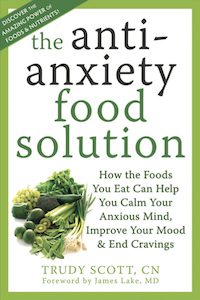
If you do not have my book I highly recommend getting it and reading it before jumping in to taking amino acids: The Antianxiety Food Solution – How the Foods You Eat Can Help You Calm Your Anxious Mind, Improve Your Mood, and End Cravings

antianxiety food solution

There is a complete chapter on the amino acids and one for pyroluria, plus information on real whole food, sugar and blood sugar, gluten, digestion and much more.

Once you have read it you can use these above blogs, and others on my site, as summaries. They do contain some additional information that is not in my book.

If all this sounds too overwhelming, check out the The Amazing Aminos for Anxiety homestudy program. This homestudy group program provides guidance with using each of the targeted individual amino acids and how to do a trial.

Filed Under: Amino Acids, Antianxiety Tagged With: Amazing amino acids for anxiety, Amino acid trial, amino acids, anxiety, the antianxiety food solution

Anxiety Summit season 4: the top six reasons to attend

June 3, 2016 By Trudy Scott 7 Comments

anxiety-summit-hope

We’re getting ready for the Anxiety Summit! It starts next week June 6th and runs through June 16th and I can’t wait to share all the amazing speakers and resources with you.

If you’ve already signed up for the summit these top six reasons will inspire you even further. If you haven’t yet signed up I hope to motivate you to join us and learn nutritional tools to overcome anxiety, social anxiety, panic attacks, OCD and even insomnia and stress eating.

(1) More and more children and adolescents have anxiety

Dr. Zendi Moldenhauer, integrative psychiatric NP, is one of the wonderful summit speakers. Her topic is Anxiety in children, adolescents and young adults: an integrative psychiatric approach, and she shares this:

Anxiety in children and adolescents is on the rise globally. The number of teens ages 13-18 who have been officially diagnosed with an anxiety disorder is only 8%, however our real-life experience shows it to be closer to 1 in 4 or 1 in 5.

Dr Zendi shares that many anxious children and adolescents actually have irritable bowel syndrome (IBS) and that by addressing gut health we can see anxiety symptoms disappear. The adrenals can be supported with theanine, an amino acid that promotes alert relaxation, and low GABA levels can be boosted with a calming amino acid such as GABA-Calm.

(2) American Psychiatric Association Lobbies FDA to Electroshock Children

This is the title of a recent article published on the CCHRINT website and here is what they are saying:

The American Psychiatric Association (APA) is aggressively lobbying the Food and Drug Administration (FDA) to allow it broader use of Electroshock (ECT) on patients, including children.

While the APA looks to seizure-inducing, brain-disabling, electricity as a form of ‘treatment,’ lobbying the FDA to make ECT available for children, no one in medicine, let alone psychiatry, has a clue how ECT machines ‘work’ or how passing large amounts of electricity into a child’s brain ‘treats’ the subjective mental disorder.

It’s unfathomable to me that with what we now know about nutritional psychiatry (see more on this below) that we could be considering something as awful as this.

We can control the size of our hippocampus by what we eat

(3) We can control the size of our hippocampus by what we eat

Dr. Drew Ramsey, M.D., psychiatrist, farmer and author of the new book Eat Complete, another wonderful summit speaker, covers Nutrients that Fuel Brain Power and Reduce Anxiety.

I love what Dr. Drew Ramsey says in our interview: “I eat for a bigger hippocampus.” The hippocampus is an area of your brain involved in emotional regulation and learning. Don’t you want a bigger hippocampus?

We talked about this in the context of the research published by Dr. Felice Jacka and her team: Western diet is associated with a smaller hippocampus: a longitudinal investigation. Here is the conclusion of the study:

Lower intakes of nutrient-dense foods and higher intakes of unhealthy foods are each independently associated with smaller left hippocampal volume. To our knowledge, this is the first human study to demonstrate associations between diet and hippocampal volume concordant with data previously observed in animal models.

The Anxiety Summit is “a bouquet of hope”

(4) Tryptophan and GABA give you hope and an immediate feeling of calm

The Anxiety Summit has been called a “bouquet of hope” and these calming and mood-boosting amino acids are my favorite nutrients for anxiety because they offer so much hope right away. They get much coverage this season.

Serotonin and anxiety: tryptophan, 5-HTP, serotonin syndrome and medication tapers, an interview with Dr. Peter Bongiorno, ND, author of Holistic Therapies for Anxiety and Depression:

Low levels of tryptophan contribute to generalized anxiety and panic attacks. Back in the early 1990s, a laboratory I was associated with at Yale University performed “tryptophan depletion studies” and which volunteers who were already prone to anxiety were put on a tryptophan-free diet. Within days, these people were extremely anxious, panicky and unstable – and they had lots of trouble staying asleep.

In my interview, GABA: Blood brain barrier controversy, concerns, best forms and how to do a trial for eliminating anxiety, I cover the research and practical steps on how to get the best results. But most importantly you’ll hear heartwarming success stories from people who use GABA, like this one:

It helps lower my overall anxious feeling all day (anxiety for no reason). I just started increasing the dose slightly and am beginning to take it a few times a day to help with social anxiety.

And this one:

It changed my life in minutes! Take it every day now. No more hopelessness!

If you have anxiety I want you to have hope that you will find an answer and I want to give you tools and resources to get there.

Tryptophan and GABA give you HOPE and relief right away while you are addressing some of the bigger underlying causes of your anxiety which may take longer to address. Some of these more complex causes may be leaky gut, mercury toxicity, gluten issues or Lyme disease and are also their own topics in the summit.

(5) Anxious individuals are actively looking for nutritional solutions

In a paper published earlier this year, Herbal medicine use behaviour in Australian adults who experience anxiety: a descriptive study, out of 400 anxious Australian adults in the study:

  • 47% were diagnosed with an anxiety disorder
  • 82% experienced anxiety symptoms in the previous 12 months
  • 3% had used prescribed pharmaceuticals for anxiety
  • 8% had used herbal medicines for anxiety

The authors of the study voice concerns about the dangers of self-prescribing saying this about the widespread use of herbal medicines:

Herbal medicines are being used by adults with anxiety and are commonly self-prescribed for anxiety symptoms. These behaviours are concerning as people may not be receiving the most suitable treatments, and their use of herbal medicines may even be dangerous. It is critical we develop a better understanding of why people are using these medicines.

Based on my practice and after interviewing over 100 experts on nutritional solutions for anxiety and seeing the research, this is my belief: more and more people who are not getting solutions from medications are being smart and are looking to address the root cause/s of their anxiety naturally and nutritionally. Are you one of them?

I’m all about self-empowerment and being informed and the summit delivers plenty of practical content and the research.

(6) Anxiety disorders are the most common psychiatric illness

Anxiety disorders are the most common psychiatric illness affecting children and adults. According to the Anxiety and Depression Association Of America, it’s estimated that 40 million American adults suffer with an anxiety disorder. These numbers are much higher because you may never get a diagnosis and be counted (just look at the Australian herbal study below). You may not even identify with the term anxiety because you have felt like for so long and just think ‘this is me, this is just how I am.’

It doesn’t have to be like this. We can change these stats. You can feel on top of the world again!

The summit offers hope and solutions, research and success stories!

Discover the connections between anxiety and brain food, why healthy fats and turmeric feed our brains, how grass-fed red meat helps with anxiety, the impact of coffee and gluten, the best gluten testing, GABA and the blood brain barrier, serotonin and tryptophan, best forms of GABA and tryptophan, anxiety in autism, MS and anxiety, Lyme disease and anxiety, mercury and lead detox, leaky gut and the SCD diet, low cholesterol and low oxytocin, the microbiome, stomach acid and zinc, fluroquinolones, methylation, pyroluria, the importance of community and much more.

Join us June 6-16th online – register here www.theanxietysummit.com

And please share widely!

Filed Under: Events, The Anxiety Summit 4 Tagged With: amino acids, anxiety, drew ramsey, GABA, GABA Calm, Hippocampus, Peter Bongiorno, the anxiety summit, Trudy Scott

Source Naturals GABA Calm™: Why I recommend it for anxiety

May 27, 2016 By Trudy Scott 185 Comments

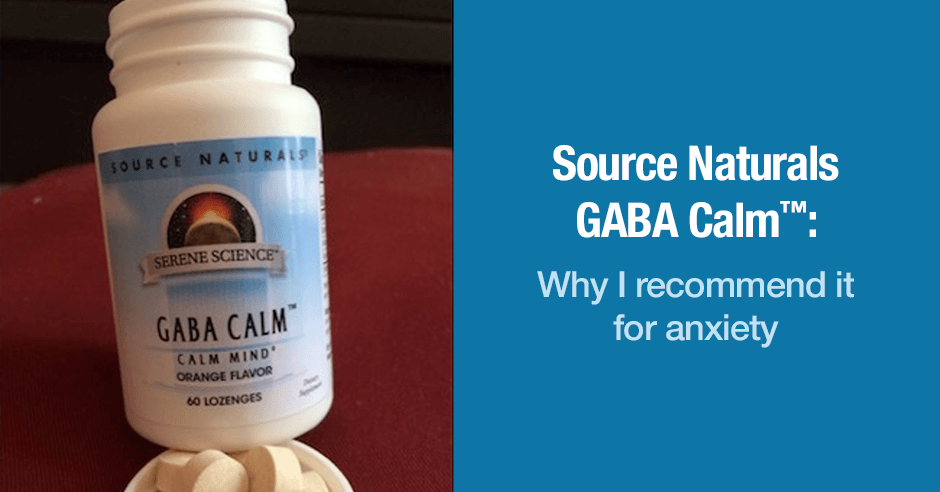
source naturals gaba calm

When you have low GABA levels you will have physical anxiety with stiff and tense muscles as well as feelings of stress, overwhelm and may even have panic attacks.

The amino acid GABA helps to raise GABA levels and ease these symptoms very quickly. I find that all GABA products are most effective when taken sublingually or opened on to the tongue. This is why I recommend the Source Naturals GABA Calm™ product.

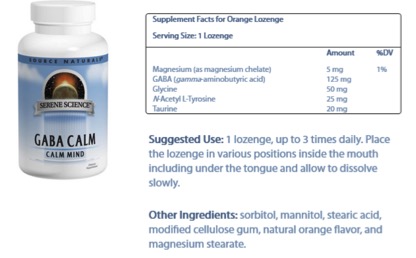
It is a pleasant-tasting sublingual product that you can buy at your local health-store and in my online supplement store. It is a lozenge that contains 125mg GABA, 5mg magnesium, 50mg glycine, 25mg tyrosine and 20 mg taurine.

[Note: this product is a lozenge with 125mg GABA and is not to be confused with the Source Naturals, GABA Calm Mind, 750 mg tablets]

This is my most popular and most effective form of GABA I use with my clients. Here is the product description from the Source Naturals site:

GABA Calm™ combines two of the main inhibitory neurotransmitters, GABA and glycine, with N-acetyl L-tyrosine, which is a precursor to the neurotransmitters dopamine and norepinephrine. In addition, taurine supports the calming effects of GABA. The lozenge form dissolves in the mouth for quick and convenient delivery.

gaba-calm-supplement-facts 

The GABA, glycine and taurine are calming and the N-acetyl L-tyrosine (which boosts the catecholamines and can be more stimulating) counters some of the calming effects so you have a nice balance.

A typical starting dose could look like this:

  • 1 x GABA Calm on waking
  • 1 x GABA Calm mid-morning
  • 1 x GABA Calm mid-afternoon

If this works well but you still have some anxiety, then you could try 2 each time and even 3 each time.

I have all my clients do an amino acid trial to determine what will work best for their own needs.

As with all of the amino acids we review the Amino Acid Precautions before starting GABA Calm. The only precaution for using GABA is low blood pressure. I have yet to see it be an issue but it’s something to watch.

Since GABA Calm does contain tyrosine please be aware of these precautions. I don’t have my clients use it in these instances:

  • Overactive thyroid/Grave’s disease
  • Melanoma
  • Phenylketonuria (PKU)
  • Bipolar disorder

The amount of tyrosine in GABA Calm is so low it’s typically not an issue but I have my clients monitor their use of GABA Calm if they have

  • High Blood pressure
  • Migraine headaches

Some of my clients do fine taking this product at night and it calms them and helps them sleep. Here is feedback I recently received from someone:

I’ve been getting good results with taking 2 x Source Naturals GABA Calm lozenges of late, especially at night if I can’t get to sleep. I have tried several GABA supplements but this one seems to be the only one that works for me

Others find it affects their sleep and can only use it for easing their anxiety in the day time.

When I was experiencing my anxiety and panic attacks I used to take GABA Calm™ during the day (1-3, 3 times day) and it completely stopped the panic attacks and eased my anxiety while I dug deeper looking for the other contributing factors (like gluten issues, low progesterone, heavy metals and more). I took 2 of the Country Life GABA Relaxer at night. This product contains GABA, glycine, taurine, inositol, vitamin B6 and niacinamide.

It’s a great product to use with children. Trish Soderstrom shared how she used this product with her daughter’s Lyme anxiety.

We’ve used Source Naturals GABA Calm sublinguals with good results. I learned about GABA helping anxiety and because I was treating my young daughter I purchased this because it was easy for her to take.

She’ll be sharing more during her interview on the Anxiety Summit: How We Used GABA for Lyme Anxiety.

Dr. Zendi Moldenhauer, PhD, NP, RN will also be talking about how she uses this product in her interview: Anxiety in children, adolescents and young adults: an integrative psychiatric approach.

I recently received this comment on another blog post where I mentioned GABA Calm™:

Checked out gaba calm. Sounded great until I looked at the ingredients: sorbitol and mannitol are listed as first ingredients. These fake sugars can wreak havoc on your system. Also natural orange flavor… Heaven knows what that is. Too bad, sounded great. Any other suggestions?

Here is my response to this: I agree we could do better but it’s still a very effective product since sublingual GABA is best for most people. Sorbitol and mannitol are not fake sugars but sugar alcohols that don’t affect blood sugar. Very large amounts of sugar alcohols can sometimes cause lose stool but none of my clients have reported this effect from GABA Calm since it contains a very small amount.

If you choose not to use this product, I list other GABA products here on my supplements blog. Opening the capsule seems to be the best way to take GABA.

We are all different and many people do well with other types of GABA products as you can read here – GABA, the calming amino acid: products and results.

The blood brain barrier question comes up at least once a week. In fact, I was just asked this question last week:

Does a GABA supplement have to cross the blood brain barrier to be effective? A nutrition seminar I have been to, said it does not and GABA supplements are ineffective.

This is a myth and I am on a mission to change this thinking about GABA. GABA supplements are very effective for many anxious individuals.

I’d love to hear if you’ve used GABA Calm™ for anxiety, panic attacks, sleep and/or stress eating and how it’s worked for you. How often do you take it and how much do you take?

If you use it with clients I’d love to hear from you too.

If you use GABA Calm™ during the day and another GABA product at night please share that info too.

I’m sharing this information in preparation for my Anxiety Summit interview on GABA and dispelling the blood brain barrier myth. I’ll be sharing what we do know about how GABA works, what we don’t yet know and what we hope to learn through further research.


Filed Under: Antianxiety, GABA Tagged With: amino acids, GABA, GABA Calm, panic, the anxiety summit

Heavy metal detox on Chronic Lyme Disease Summit – starts Monday

April 3, 2016 By Trudy Scott 4 Comments

Just a quick reminder that the Chronic Lyme Disease Summit starts tomorrow Monday April 4th and runs through April 11th.

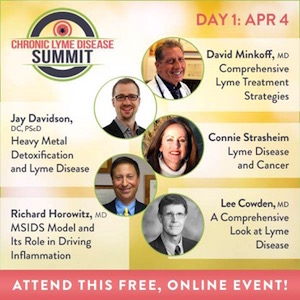
lyme-day1

Here are the speakers for day 1. And you can register here:
https://qt247.isrefer.com/go/LYME16reg/trudyscottcn

Dr. Jay Davidson is the fabulous host of the summit and he covers Heavy Metal Detoxification and Lyme Disease and why he is so passionate about this topic and getting the message out there. He shares the story of his wife’s Lyme disease and how she didn’t have the classic bulls eye rash and how they didn’t even find a tick. It was when his wife gave birth to their daughter that she got really sick and almost died.

He shares the role heavy metals (lead, mercury and aluminum) play and where they are found:

  • High fructose corn syrup contains mercury
  • Contact lenses cleaners in the 80s or even early 90s contained thimerosal
  • Red lipstick contains lead
  • And many more sources of these metals!

Dr. Davidson goes into great depth into heavy metal chelation in this interview:

I’m not really a big fan of the cilantro and the chlorella. Even though those are talked about a lot in the heavy metal world. It seems as if those stir things up more than they actually are able to pull things out.

For instance, when you’re looking at studies with chlorella and cilantro a lot of the studies will be in vitro or they’re looking at the chlorella binding to mercury, or the cilantro binding to mercury in a petri dish. But I think it’s a whole different set of circumstances in the science world. And you look at in vivo of in the body, being able to grab onto it in the body and pull it out.

He shares that he is a fan of glutathione:

I know there’s definitely a lot of disagreement in this world of “Well, should we raise glutathione or shouldn’t we? Are we causing other issues?” But I really love glutathione because glutathione is one of those things that helps to neutralize mercury in the body

Dr. Davidson goes into great depth on heavy metal detox and the hard lessons he has learned. It is an intense interview full of very specific information (probably the most detailed heavy metal interview I’ve listened to!) He ends with this connection to Lyme disease:

I don’t know if anybody can ever truly get well from Lyme disease if there’s mercury and lead in the body if you’re not detoxing that. Because essentially what happened with my wife is as we started detoxing the mercury and lead, which she was also high levels of mercury and lead in her body, toxic levels of it, it started releasing the biofilm, which allowed her body and her immune system to say “Hey, there’s bugs underneath these blankets of biofilms.”

Signing up for the event is worth it just for this interview!

Register here https://qt247.isrefer.com/go/LYME16reg/trudyscottcn

And a reminder that the price increases once the summit starts so make your purchase now if you are wanting to keep this valuable information for your learning library
https://qt247.isrefer.com/go/LYME16order/trudyscottcn/

Enjoy!

Filed Under: Events, Lyme disease and co-infections Tagged With: amino acids, anxiety, Dr. Jay Davidson, GABA, glutathione, heavy metals, Lyme Disease

Tryptophan 500mg or Tryptophan Complete (by Lidtke)?

February 19, 2016 By Trudy Scott 143 Comments

tryptogold-lidke
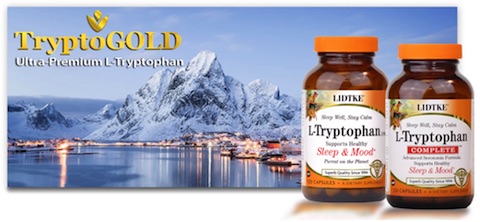
Lidtke Tryptophan 500mg and Lidtke Tryptophan Complete (credit: Lidtke)

If you’ve been following me and have read my book The Antianxiety Food Solution and heard me speak at conferences and on summits, you know I have been an avid fan of the Lidtke tryptophan 500mg for years and years because of the quality and because it works SO well for my anxious clients. The Lidtke brand is the ONLY tryptophan I recommend (and I’m not paid to say this) for boosting serotonin levels. You can find it and the other amino acids I use on the supplements blog.

This week I had a great conversation with Ron Sturtz, Owner and product formulator of the products at Lidtke Technologies. We discussed tryptophan in general and concerns about it not going down the serotonin pathway and instead converting to quinolinic acid.

We talked extensively about the Lidtke Tryptophan Complete and why they include vitamin C, niacinaminde, P5P (the active form of vitamin B6), curcumin, lysine, magnesium glycinate, magnesium taurinate and folate (from lemon peel) in the product. As a result of that discussion I now want to learn more about the Lidtke Tryptophan Complete product for you and for my clients.

I’ll be sharing more information with links to the research as to why these ingredients are important in the serotonin pathway but here is the short version: with these ingredients and co-factors less tryptophan is reportedly needed and there is less chance of it going down the wrong pathway to produce neurotoxic quinolinic acid instead of going down the pathway to make serotonin. We obviously want the latter to happen.

I’ve also decided I want to interview Ron on the next Anxiety Summit. The biochemistry is too important not to share. Hearing him say “we are fanatical about safety!” makes me even more of a fan of this company and their products!

Anyway, according to Ron, you should need less of the Lidtke Tryptophan Complete. He shared that 500mg Lidtke Tryptophan is approximately equivalent to 350mg Lidtke Tryptophan Complete, since it has all the co-factors.

I asked for feedback in some Facebook groups I host and got this:

I’ve used the Tryptophan Complete product and actually like it a lot better than the 500mg version. The Tryptophan Complete gave a much deeper state of relaxation and a way more solid sleep than the 500 mg version. I thought I would try the latter [the 500mg] and although it is good, once it is done, I’m going to go back to the Lidke Tryptophan Complete. For me, it seems that the addition of the other ingredients really worked well for my body chemistry, leaving me feeling grounded, focused and well rested. 🙂

With the Tryptophan Complete she needed just 1 tablet (350mg) an hour before bed and with the Tryptophan 500 mg, she took 2 tabs (1000mg) an hour before bed.

My concerns right now would be individual reactions to any or all the other ingredients, since we all have very individualized needs. Someone did share this on one of my Facebook posts:

Can’t do the p5p! Makes me agitated.

I’m not yet sure what my final recommendations will be but these are my initial thoughts (which may be revised in the future):

  • I like to have my clients do a trial of the amino acids so they can find the ideal dose for their needs and right now I still feel this would still be the best approach to take – using 500mg tryptophan. Once you have figured out you do well with tryptophan-only product and have your dose, then consider reducing it slightly after about 2-3 weeks and adding in additional Tryptophan Complete.
  • The other option is this: if you don’t get the expected results with Tryptophan 500mg, then try the Tryptophan Complete. You may need the other ingredients for it to work well for you.
  • Don’t use the Tryptophan Complete if you know you react to any of the other ingredients
  • If you do better with higher doses of tryptophan don’t use more than the recommended 3x Tryptophan Complete because you’ll end up with too much of the other ingredients. Rather make up the difference with extra capsules of the 500mg Tryptophan

So for now, since I’m in learning mode/discovery mode I’d love your feedback.

I’d love to hear if you’ve used the Lidtke Tryptophan Complete product (personally or with clients/patients)? And what you’ve observed? Better or worse?

Have you also tried the Lidtke 500mg tryptophan in the past and noticed any difference when using the Lidtke Tryptophan Complete?

And how much of each did you find you needed?

So is it Tryptophan 500mg or Tryptophan Complete or a combination for you?

Filed Under: Amino Acids, Antianxiety Food Solution, Anxiety and panic, Tryptophan Tagged With: amazing amino acids, amino acids, anxiety, lidke, supplements, the antianxiety food solution, tryptophan, tryptophan complete

  • « Go to Previous Page
  • Page 1
  • Interim pages omitted …
  • Page 11
  • Page 12
  • Page 13
  • Page 14
  • Page 15
  • Interim pages omitted …
  • Page 18
  • Go to Next Page »

Primary Sidebar

NEW! GABA QuickStart Homestudy (with special intro pricing)

gaba quickstart homestudy

Free Report

9 Great Questions Women Ask about Food, Mood and their Health

You'll also receive a complimentary subscription to my ezine "Food, Mood and Gal Stuff"


Connect with me

Popular Posts

  • Amino Acids Mood Questionnaire from The Antianxiety Food Solution
  • The Antianxiety Food Solution Amino Acid and Pyroluria Supplements
  • Pyroluria Questionnaire from The Antianxiety Food Solution
  • Collagen and gelatin lower serotonin: does this increase your anxiety and depression?
  • Tryptophan for the worry-in-your-head and ruminating type of anxiety
  • GABA for the physical-tension and stiff-and-tense-muscles type of anxiety
  • The Antianxiety Food Solution by Trudy Scott
  • Seriphos Original Formula is back: the best product for anxiety and insomnia caused by high cortisol
  • Am I an anxious introvert because of low zinc and vitamin B6? My response to Huffington Post blog
  • Vagus nerve rehab with GABA, breathing, humming, gargling and key nutrients

Recent Posts

  • What do I use instead of Seriphos to help lower high cortisol that is affecting my sleep and making me anxious at night?
  • BeSerene™ GABA/theanine cream eases severe muscle tension in her neck/shoulders, prevents her bad headaches and quells her anxiety
  • How the correct approach, dose and sublingual use of GABA can be calming and not cause a flushed and itchy face and neck
  • The amino acid glutamine improves low mood by addressing gut health, and it has calming effects too
  • Flight anxiety with heightened breath, physical tension and also fearing the worst (the role of low GABA and low serotonin)

Categories

  • 5-HTP
  • AB575
  • Addiction
  • ADHD
  • Adrenals
  • Alcohol
  • Allergies
  • Alzheimer's disease
  • Amino Acids
  • Anger
  • Antianxiety
  • Antianxiety Food Solution
  • Antidepressants
  • Anxiety
  • Anxiety and panic
  • Autism
  • Autoimmunity
  • benzodiazapines
  • Bipolar disorder
  • Books
  • Caffeine
  • Cancer
  • Candida
  • Children/Teens
  • Collagen
  • Cooking equipment
  • Coronavirus/COVID-19
  • Cravings
  • Depression
  • Detoxification
  • Diabetes
  • Diet
  • DPA/DLPA
  • Drugs
  • EFT/Tapping
  • EMF
  • EMFs
  • Emotional Eating
  • Endorphins
  • Environment
  • Essential oils
  • Events
  • Exercise
  • Fear
  • Fear of public speaking
  • Fertility and Pregnancy
  • Fish
  • Food
  • Food and mood
  • Functional neurology
  • GABA
  • Gene polymorphisms
  • General Health
  • Giving
  • Giving back
  • Glutamine
  • Gluten
  • GMOs
  • Gratitude
  • Gut health
  • Heart health/hypertension
  • Histamine
  • Hormone
  • Hyperparathyroidism
  • Hypoglycemia
  • Immune system
  • Inflammation
  • Insomnia
  • Inspiration
  • Introversion
  • Joy and happiness
  • Ketogenic diet
  • Lithium orotate
  • Looking awesome
  • Lyme disease and co-infections
  • MCAS/histamine
  • Medication
  • Men's health
  • Mental health
  • Mercury
  • Migraine
  • Mold
  • Movie
  • MTHFR
  • Multiple sclerosis
  • Music
  • NANP
  • Nature
  • Nutritional Psychiatry
  • OCD
  • Osteoporosis
  • Oxalates
  • Oxytocin
  • Pain
  • Paleo
  • Parasites
  • Parkinson’s disease
  • PCOS
  • People
  • PMS
  • Postpartum
  • PTSD/Trauma
  • Pyroluria
  • Questionnaires
  • Real whole food
  • Recipes
  • Research
  • Schizophrenia
  • serotonin
  • SIBO
  • Sleep
  • Special diets
  • Sports nutrition
  • Stress
  • Sugar addiction
  • Sugar and mood
  • Supplements
  • Teens
  • Testimonials
  • Testing
  • The Anxiety Summit
  • The Anxiety Summit 2
  • The Anxiety Summit 3
  • The Anxiety Summit 4
  • The Anxiety Summit 5
  • The Anxiety Summit 6
  • Thyroid
  • Thyroid health
  • Toxins
  • Tryptophan
  • Tyrosine
  • Uncategorized
  • Vegan/vegetarian
  • Women's health
  • Yoga

Archives

  • October 2025
  • September 2025
  • August 2025
  • July 2025
  • June 2025
  • May 2025
  • April 2025
  • March 2025
  • February 2025
  • January 2025
  • November 2024
  • October 2024
  • September 2024
  • August 2024
  • July 2024
  • June 2024
  • May 2024
  • April 2024
  • March 2024
  • February 2024
  • January 2024
  • December 2023
  • November 2023
  • October 2023
  • September 2023
  • August 2023
  • July 2023
  • June 2023
  • May 2023
  • April 2023
  • March 2023
  • February 2023
  • January 2023
  • December 2022
  • November 2022
  • October 2022
  • September 2022
  • August 2022
  • July 2022
  • June 2022
  • May 2022
  • April 2022
  • March 2022
  • February 2022
  • January 2022
  • December 2021
  • November 2021
  • October 2021
  • September 2021
  • August 2021
  • July 2021
  • June 2021
  • May 2021
  • April 2021
  • March 2021
  • February 2021
  • January 2021
  • December 2020
  • November 2020
  • October 2020
  • September 2020
  • August 2020
  • July 2020
  • June 2020
  • May 2020
  • April 2020
  • March 2020
  • February 2020
  • January 2020
  • December 2019
  • November 2019
  • October 2019
  • September 2019
  • August 2019
  • July 2019
  • June 2019
  • May 2019
  • April 2019
  • March 2019
  • February 2019
  • January 2019
  • December 2018
  • November 2018
  • October 2018
  • September 2018
  • August 2018
  • July 2018
  • June 2018
  • May 2018
  • April 2018
  • March 2018
  • February 2018
  • January 2018
  • December 2017
  • November 2017
  • October 2017
  • September 2017
  • August 2017
  • July 2017
  • June 2017
  • May 2017
  • April 2017
  • March 2017
  • February 2017
  • January 2017
  • December 2016
  • November 2016
  • October 2016
  • September 2016
  • August 2016
  • July 2016
  • June 2016
  • May 2016
  • April 2016
  • March 2016
  • February 2016
  • January 2016
  • December 2015
  • November 2015
  • October 2015
  • September 2015
  • August 2015
  • July 2015
  • June 2015
  • May 2015
  • April 2015
  • March 2015
  • February 2015
  • January 2015
  • December 2014
  • November 2014
  • October 2014
  • September 2014
  • August 2014
  • July 2014
  • June 2014
  • May 2014
  • April 2014
  • March 2014
  • February 2014
  • January 2014
  • December 2013
  • November 2013
  • October 2013
  • September 2013
  • August 2013
  • July 2013
  • June 2013
  • May 2013
  • April 2013
  • March 2013
  • February 2013
  • January 2013
  • December 2012
  • November 2012
  • October 2012
  • August 2012
  • July 2012
  • June 2012
  • May 2012
  • April 2012
  • March 2012
  • February 2012
  • January 2012
  • December 2011
  • November 2011
  • October 2011
  • September 2011
  • August 2011
  • July 2011
  • June 2011
  • May 2011
  • April 2011
  • March 2011
  • February 2011
  • January 2011
  • December 2010
  • October 2010
  • September 2010
  • July 2010
  • May 2010
  • April 2010
  • March 2010
  • February 2010
  • January 2010
  • November 2009

Share the knowledge!

The above statements have not been evaluated by the Food and Drug Administration. Products listed in this website are not intended to diagnose, treat, cure or prevent any disease.

The information provided on this site is for informational and educational purposes only and is not intended as a substitute for advice from your physician or other health care professional. You should consult with a healthcare professional before starting or modifying any diet, exercise, or supplementation program, before taking or stopping any medication, or if you have or suspect you may have a health problem.


Copyright © 2026 Trudy Scott. All Rights Reserved. | Privacy | Terms and Conditions | Refund Policy | Medical Disclaimer

Free Report

9 Great Questions Women Ask about Food, Mood and their Health

You’ll also receive a complimentary subscription to my ezine “Food, Mood and Gal Stuff”