• Skip to primary navigation
  • Skip to main content
  • Skip to primary sidebar

everywomanover29 blog

Food, Mood and Women's Health – Be your healthiest, look and feel great!

  • Blog
  • About
  • Services
  • Store
  • Resources
  • Testimonials
  • The Book
  • Newsletter
  • Contact
  • Search this site

Her cravings for chips and peanut butter were triggered by stress: GABA ends cravings and reduces physical tension and fear of heights

May 29, 2026 By Trudy Scott Leave a Comment

cravings and gaba

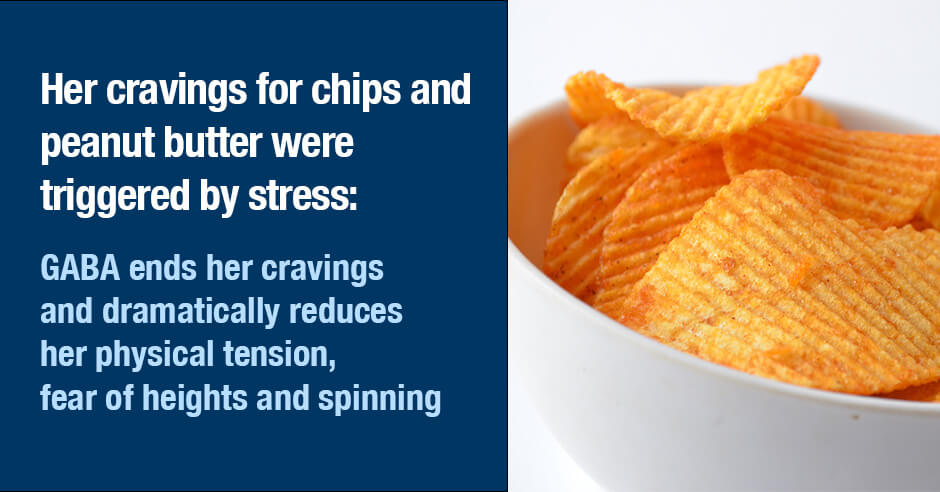
JLs cravings for chips and peanut butter were triggered by stress. When using a GABA product that works best for her needs and with the correct doses and timing, she had zero cravings, with less physical tension, less fear of heights & reduced spinning:

Over the course of 5 weeks of using GABA, my physical tension, fear of heights and spinning were all reduced dramatically (physical tension went from 10/10 to 6/10, fear of heights from 8/10 to 3/10 and spinning from 8/10 to 3/10).

I was very happy that my cravings were completely gone using GABA (from 10/10 to 1/10).

Stress triggers me searching for something to eat. I had been following a low sugar diet already but with GABA I no longer needed chips or peanut butter around 4pm and I feel less stressed. ~ JL

I never get tired of feedback like this and I’m thrilled for her!

Read on to learn why she joined the program and what supplement changes she made; and why the initial GABA trial, and tracking sheet with symptom rating is very empowering.  Discover more about using GABA to reduce/end stress-eating;  how a fear of heights due to low GABA levels (and sometimes low serotonin too); and using a GABA cream and other approaches to reduce back and neck tension. You’ll also find additional resources if you need guidance using amino acids like tryptophan/5-HTP and GABA/theanine (and more about the program this woman did to get results like this for herself).

Why did she join the program and what supplement changes did she make?

This woman had been using a GABA/theanine product with no success when she joined the GABA QuickStart program but she took action anyway:

I joined because I wanted to see if it could help ease the physical stress in my shoulders, upper back and neck.

With Trudy’s help I learned how to do a trial and I was happy to feel some effect during the initial trial.

Because she switched to a different GABA-only product, used as a powder, she had zero cravings, got relief for physical stress and these other amazing results – over the next 5 weeks! And she got these results by making various adjustments to her GABA timing and dosing.

I’m thrilled for her and everyone who gives up on GABA and then decides to learn how to effectively and safely use it …and then experiences results like this.

The initial GABA trial, and tracking sheet with symptom rating is very empowering

In case you’re curious, in the program I teach participants how to do an initial one off trial to determine if the GABA product they’ve decided to use is worth trialing to find the ideal dose for your needs. JL mentions that she did feel some benefits during the initial trial.

You’ll also notice she mentions numerical changes in her symptoms i.e. “fear of heights from 8/10 to 3/10” and cravings “from 10/10 to 1/10.” The low GABA symptoms on their tracking sheets are rated on a scale of 1/10 with 10 being more severe. For someone to see their daily and weekly progression improve so much is very empowering and motivating. And it makes it easy to stick with the protocol. It’s also something they can refer back to in the future if they need to add GABA back.

Keep in mind, participants often do more than one initial trial, depending on their results and how many different GABA products they may end up needing.

The blog could have had this in the title “the right GABA product ends her cravings.”

It’s not unusual for GABA to reduce/end stress-eating and cravings

A mom in the community, Calle, shared how GABA helped her teenage ASD son sleep for the first time in years and reduced his cravings:

Our son has also really noticed a difference in his carb cravings since doing GABA. He went to grandma’s house and was not tempted by 6 pies, tons of cookies, sweet rolls etc. We were both shocked. This is a kid who would mow through tons of cookies, rolls and pastries.

Keep in mind that each of the neurotransmitter imbalances can lead to cravings so it’s a matter of figuring out which one is the culprit. It can be more than one too, and doing the trial and tracking (based on symptoms) will confirm

We use this symptoms questionnaire as a starting point.

A fear of heights due to low GABA levels (and sometimes low serotonin too)

As you can see from the low GABA symptoms on the above symptoms questionnaire, a fear of heights can be caused by low GABA. If it is, you’d expect GABA to reduce the fear when the optimal dose and timing is found.

I share one particular study in this blog post: Pharma-GABA: study participants with an irrational fear of heights are relaxed and less anxious when crossing a swaying suspension bridge

This paper refers to a pharmaGABA product which is not the same product as JL used but explains the mechanisms well.

JL shared that GABA reduced her “fear of heights from 8/10 to 3/10.” In order to get even better results she may need to:

  • Increase the dose or timing of the GABA product she is using, possibly in the situation where she is exposed to heights (like going over a bridge) and/or
  • Layer in a different GABA product like pharmaGABA and/or
  • Explore if some of her residual fear is also driven by low serotonin (and that would be the next thing to address once GABA is optimized).

A GABA cream and other approaches to reduce back and neck tension

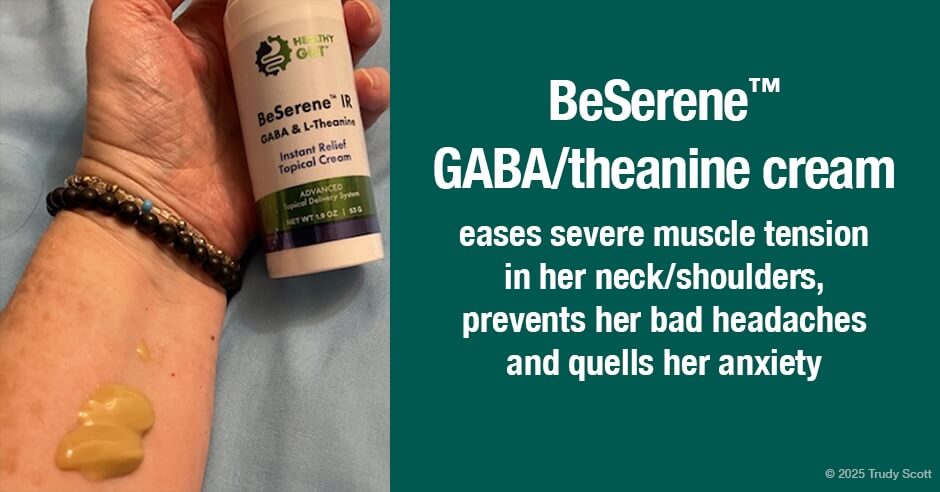
JL was looking to ease the physical stress in her shoulders, upper back and neck and reported that “physical tension went from 10/10 to 6/10.” This improvement is great and the addition of a GABA/theanine cream such as BeSerene, may be the next step for her.

I share more in this blog: BeSerene™ GABA/theanine cream eases severe muscle tension in her neck/shoulders, prevents her bad headaches and quells her anxiety

I love that Lisa shares this: “since the BeSerene™ cream works so efficiently on the muscle tension, it quells the anxiety that usually follows!” 

Looking into acupuncture, physical therapy, red light therapy, sauna and endorphin support with DPA (if there is also pain) are other approaches to consider.

Practical aspects of the GABA QuickStart program and the value

As shared by a GABA QuickStart participant a previous blog post:

The program is very well designed, very clear, and super easy to navigate and I loved the case studies. The tracking sheets are invaluable and the key to success with GABA!!

It can seem like a lot of money up front, but the gift of mental health is priceless!!

And honestly, Trudy has helped me and my daughter more than countless other practitioners, so in the end, it is actually very cost effective!!

(She also participated in the Serotonin QuickStart program and shared similar feedback).

Additional resources when you are new to using GABA or tryptophan as supplements

We use the symptoms questionnaire to figure out if low serotonin or low GABA or other neurotransmitter imbalances may be an issue for you.

If you suspect low levels of any of the neurotransmitters and do not yet have my book, The Antianxiety Food Solution – How the Foods You Eat Can Help You Calm Your Anxious Mind, Improve Your Mood, and End Cravings. I highly recommend getting it and reading it before jumping in and using amino acids on your own so you are knowledgeable. And be sure to share it with the practitioner/health team you or your loved one is working with.

There is an entire chapter on the amino acids and they are discussed throughout the book in the sections on gut health, gluten, blood sugar control (this is covered in an entire chapter too), sugar cravings, anxiety and mood issues. The importance of quality animal protein and healthy fats is also covered.

The book doesn’t include product names (per the publisher’s request) so this blog, The Antianxiety Food Solution Amino Acid and Pyroluria Supplements, lists the amino acids that I use with my individual clients and those in my group programs.

If, after reading this blog and my book, you don’t feel comfortable figuring things out on your own (i.e. doing the symptoms questionnaire and respective amino acids trials), a good place to get help is the GABA QuickStart Program (if you have low GABA symptoms). This is a paid online/virtual group program where you get my guidance and community support. Another option is the budget-friendly GABA QuickStart Homestudy Program.
Right now you can save $150 off the full price when you use promo/coupon code maymh150off. This 3 day special is for May Mental Health Awareness month and ends Monday June 1, 2026 at noon Pacific time. Click the image below to watch a GABA webinar and learn more.

If you need serotonin support, the Serotonin QuickStart Program is a good place to get help. This is also a paid online/virtual group program where you get my guidance on using tryptophan and 5-HTP safely, and community support during 5 LIVE Q&A calls. You can sign up to be notified when the next live launch of this program is happening.

If you are a practitioner, join us in The Balancing Neurotransmitters: the Fundamentals program. This is also a paid online/virtual program with an opportunity to interact with me and other practitioners who are also using the amino acids.

Wrapping up and your feedback

I’d love to hear how GABA has helped you …

Can you relate to seeing results like this with one of the many GABA products or even almost giving up and then getting relief?

Did adjusting the dose and timing make a big difference for you?

Has a topical GABA/theanine product helped you?

If you’ve completed the course material in the GABA Quickstart or Serotonin Quickstart programs feel free to share your results here so we can inspire others and give them hope.

Feel free to post your questions below.
Filed Under: Anxiety, Cravings, Fear, GABA Tagged With: amino acids, back tension, chips, cravings, fear of heights, GABA, GABA cream, GABA Quickstart, initial trial, less stressed, low GABA, low serotonin, neck tension, peanut butter, physical-tension, Serotonin Quickstart, spinning, stress, stress-eating, theanine, tracking sheet, triggered by stress

It is truly miraculous to be able to move through life without crippling anxiety and panic

May 22, 2026 By Trudy Scott 4 Comments

gaba for anxiety

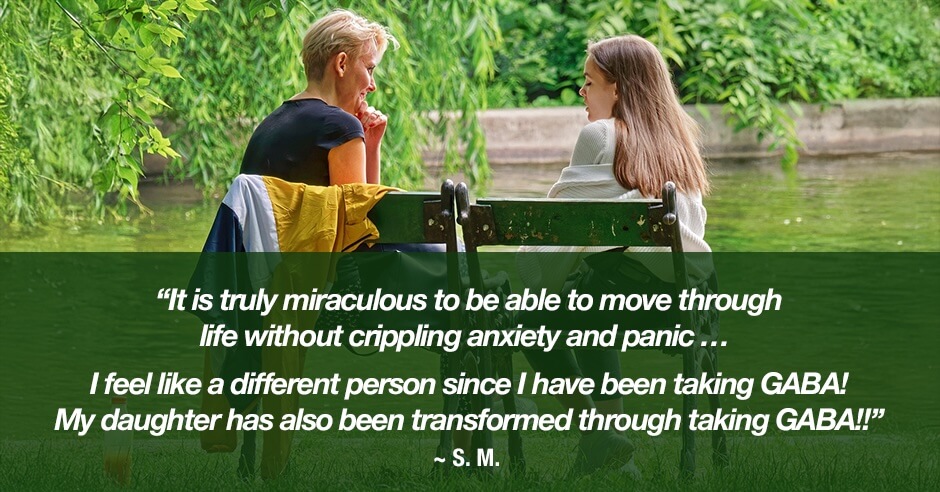
I feel like a different person since I have been taking GABA!  It is truly miraculous to be able to move through life without crippling anxiety and panic.

Last year at this time, before starting GABA, I was taking care of a dear friend with a serious medical condition.  I was filled with anxiety and panic all of the time as there were many 911 situations that happened. Now, a year later, my friend has once again been in a medical crisis, but this time I am taking GABA, so I am able to remain calm.

Before using GABA (and tryptophan) I had tried EMDR, meditation, acupuncture, homeopathy, etc.  Honestly, I thought that maybe I was just damaged from all of my childhood trauma, and I had to just live with intense anxiety.

I love hearing fabulous results like this from a recent GABA Quickstart program participant, and I am so happy for this woman and her daughter. I commend her for taking the time to really learn about how to safely and effectively use GABA for herself, then inspire her adult daughter and share her knowledge with her. She also proudly shares this:

My daughter has also been transformed through taking GABA!!  She has suffered from relentless anxiety since she was a teenager, and this is the first thing that has helped her, despite seeing every type of holistic practitioner that exists.

Read on to learn specifically how GABA helps her daughter feel calm and happy during a job interview and how it also helps reduce her symptoms of PMDD (premenstrual dysphoric disorder). I also share more about the GABA/progesterone and serotonin/estrogen connections in PMDD. And my insights on using GABA when caretaking, even when you think you’ve tried everything and have childhood trauma. You’ll also find additional resources if you need guidance using amino acids like tryptophan/5-HTP and GABA/theanine (and more about the program this woman did to get results like this for herself and her daughter).

Panic and anxiety in the interview to confident, calm, and joyful in her new job

This woman goes on to share just how much GABA has helped:

An amazing thing happened: She has been interviewing for a new job for quite a while now, but never getting them. However, at her first interview since being on GABA, she reported to me that instead of feeling filled with panic and anxiety during the interview, she felt calm and happy. I don’t think it’s a coincidence that she got the job!!

And thanks to GABA and tryptophan, she feels confident, calm, and joyful while learning her new role.

This is what every anxious job applicant needs and deserves, especially when relentless anxiety has been such a big part of her teens.

I will add that she didn’t start GABA and tryptophan at the same time. Her mom had her start with a tryptophan trial (for her worry and ruminations and other low serotonin symptoms) and find her ideal dose for her unique needs. And then trial GABA(for her physical tension and panic attacks) and find the ideal dose of GABA. It’s what I recommend and mom participated in both the Serotonin Quickstart and GABA Quickstart programs, and then she helped her daughter.

GABA and tryptophan help with hormonal imbalances, including PMDD

Mom shares more about the GABA benefits her daughter experienced:

GABA has also really helped her with severe PMDD (premenstrual dysphoric disorder).  She is now filled with joy and calmness, instead of crying endlessly and being filled with panic.

This is to be expected given the GABA/progesterone connection. This 2023 paper, GABA-ergic Modulators: New Therapeutic Approaches to Premenstrual Dysphoric Disorder, the authors describe PMDD as follows: “the predictable onset of mood and physical symptoms secondary to gonadal steroid fluctuation during the luteal phase of the menstrual cycle” i.e. symptoms in the second half of the cycle caused by sex hormone shifts.

The authors state that “the interaction between allopregnanolone, a neurosteroid derivative of progesterone, and the gamma-aminobutyric acid (GABA) system represents an important relationship underlying symptom genesis in reproductive-related mood disorders, including PMDD.”

The missing piece in the above paper is the recommendation to actually use GABA (the paper focuses on medications instead).

As mentioned above she was also using tryptophan which very likely contributed to her symptom relief given the serotonin/estrogen connection. I share a study and more about this in this blog post – Tryptophan for PMS: premenstrual dysphoria, mood swings, tension, and irritability

GABA is calming when caretaking, even when you’ve tried everything and have childhood trauma

I’d like to swing back and comment on S. M.’s results and acknowledge her for being proactive in taking care of her mental health right after the stress of being a carer for her dear friend. It worked out in the end for both of them too – she was much calmer when her dear friend was ill yet again.

She also really believed she had tried everything. I hear this all the time and it breaks my heart when anxious folks stop seeking a solution without learning about how to safely and effectively use GABA. Too many folks don’t know about it or use it incorrectly and then stop. This is one big reason I love to share success stories like this, and I appreciate S. M. for allowing me to share hers and her daughter’s success.

Finally, GABA even helps when there is other childhood trauma (or other trauma) and you never just have to live with intense anxiety. The research  supports this: “Dysregulation in GABA may be a neurobiological marker and/or potential treatment target for women with PTSD symptom profiles” and so do the clinical results.

I’m not suggesting to only use GABA, instead doing both the trauma work and addressing neurochemistry and other nutritional imbalances.

Practical aspects of the GABA Quickstart program and the value

As I mentioned above, S.M. is a past participant of the GABA Quickstart program and she shared these practical aspects and how valuable it was:

The program is very well designed, very clear, and super easy to navigate and I loved the case studies. The tracking sheets are invaluable and the key to success with GABA!!

It can seem like a lot of money up front, but the gift of mental health is priceless!!

And honestly, Trudy has helped me and my daughter more than countless other practitioners, so in the end, it is actually very cost effective!!

(She also participated in the Serotonin Quickstart program and shared similar feedback).

Additional resources when you are new to using GABA or tryptophan as supplements

We use the symptoms questionnaire to figure out if low serotonin or low GABA or other neurotransmitter imbalances may be an issue for you.

If you suspect low levels of any of the neurotransmitters and do not yet have my book, The Antianxiety Food Solution – How the Foods You Eat Can Help You Calm Your Anxious Mind, Improve Your Mood, and End Cravings. I highly recommend getting it and reading it before jumping in and using amino acids on your own so you are knowledgeable. And be sure to share it with the practitioner/health team you or your loved one is working with.

There is an entire chapter on the amino acids and they are discussed throughout the book in the sections on gut health, gluten, blood sugar control (this is covered in an entire chapter too), sugar cravings, anxiety and mood issues. The importance of quality animal protein and healthy fats is also covered.

The book doesn’t include product names (per the publisher’s request) so this blog, The Antianxiety Food Solution Amino Acid and Pyroluria Supplements, lists the amino acids that I use with my individual clients and those in my group programs.

If, after reading this blog and my book, you don’t feel comfortable figuring things out on your own (i.e. doing the symptoms questionnaire and respective amino acids trials), a good place to get help is the GABA QuickStart Program (if you have low GABA symptoms). This is a paid online/virtual group program where you get my guidance and community support. Another option is the budget-friendly GABA QuickStart Homestudy Program.

If you need serotonin support, the Serotonin QuickStart Program is a good place to get help. This is also a paid online/virtual group program where you get my guidance on using tryptophan and 5-HTP safely, and community support during 5 LIVE Q&A calls. You can sign up to be notified when the next live launch of this program is happening.

If you are a practitioner, join us in The Balancing Neurotransmitters: the Fundamentals program. This is also a paid online/virtual program with an opportunity to interact with me and other practitioners who are also using the amino acids.

Wrapping up and your feedback

I’d love to hear how GABA has helped you and if your success has motivated and inspired a loved one such as an adult daughter or son to use it too?

Has GABA helped you or a loved one do well in a job interview and the first job?

What about tryptophan or 5-HTP?

Had you tried everything with no success and expected to just live with intense anxiety?

Were you aware of the GABA connections to PMDD and trauma?

Finally, if you’ve completed the course material in the GABA Quickstart or Serotonin Quickstart programs feel free to share your results here so we can inspire others and give them hope.

Feel free to post your questions below.
Filed Under: GABA, PTSD/Trauma, Tryptophan, Women's health Tagged With: amino acids, anxiety, calm, childhood trauma, crippling anxiety, daughter, estrogen, GABA, GABA Quickstart, happy, joy, low serotonin, panic, PMDD, premenstrual dysphoric disorder, progesterone, PTSD, relentless anxiety, Serotonin Quickstart, teenager, tried everything, tryptophan

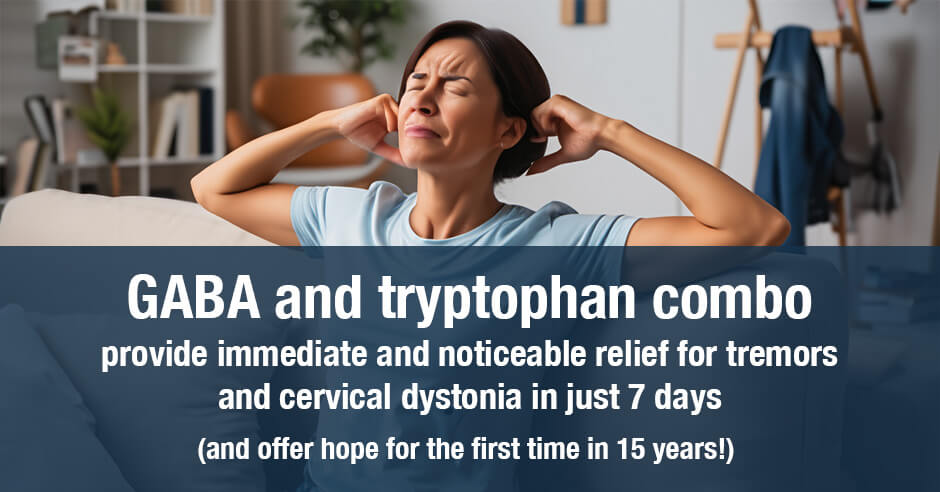
GABA and tryptophan combo provide immediate and noticeable relief for tremors and cervical dystonia in just 7 days

April 17, 2026 By Trudy Scott 13 Comments

gaba tryptophan combo

I recently discovered your work and felt a sense of hope regarding an amino acid trial. I was diagnosed with Cervical Dystonia and Essential Tremor 15 years ago. I have tried Botox injections and various prescriptions (Bacolfen, Propranolol, Trihexyphenidyl, Gabapentin), with no success. Because alcohol is the only thing that currently provides relief for my spasms and head tremor, I’ve developed a habit of 2–3 glasses of wine nightly.

My neurologist recently suggested Deep Brain Stimulation (DBS), but I want to exhaust all natural options first.

After listening to some of your podcasts, I am ready to try a nutritional approach. I purchased your book today and am eager to start with GABA and potentially Tryptophan, but I need guidance on where to begin safely. I look forward to learning from you and your community.

Lisa shared this recently on a GABA blog post on the site. I responded saying how glad I am that she has found my site and work, and now has my book, “The Antianxiety Food Solution”. I also shared that if alcohol provides relief for her neck spasms and head tremors it’s a good clue that low GABA is an issue. It’s one of a number of possible issues including low serotonin, as she concluded, and these are the amino acids I would recommend starting with, ideally one at a time.

A week later she thanked me for my response and shared her initial wonderful results:

I began with a GABA trial and noticed subtle relief, but after adding 500 mg of L-Tryptophan a few days later, all I can say is WOW. The combination provided immediate, noticeable relief for my tremors. For the first time, I am truly hopeful about managing these dystonic tremors.

Read on to learn more about pyroluria and dystonia connection; tryptophan and tremors; my feedback about Lisa finding her optimal dose of amino acids and ideally using one amino acid at a time; more on alcohol and low thiamine, and GABA for healing a leaky gut; and additional resources if you need guidance using amino acids like GABA and tryptophan.

Pyroluria and dystonia connection

In my initial response to Lisa, I had also encouraged her to search the blog for dystonia and essential tremor as I have blogged about both. With regards to dystonia and pyroluria, I’ve had a number of wonderful success stories, even though mainstream sites like Mayo Clinic will tell you: “There is no cure for cervical dystonia. The disorder sometimes resolves without treatment, but sustained remissions are uncommon.”.

Lisa searched the blog and is very motivated despite her lack of success with Botox and various medications:

While I hadn’t researched pyroluria before, I completed your questionnaire and scored very high.

My next steps are to implement your pyroluria protocol, gradually find my optimal amino acid dosages, and pursue genetic testing.

Your book and expertise have been a turning point for me. I can’t thank you enough for opening this door to healing. I am truly humbled by your guidance.

I’m guessing she found both of these blogs – they are well worth a read:

  • Pyroluria and focal musician’s dystonia or musician’s cramp and the
  • Essential tremor, dystonia, anxiety and cravings – diet, GABA, tryptophan, zinc and vitamin B6

There is an entire chapter on pyroluria in my book and she’ll be using zinc and vitamin B6 and other key nutrients like a B complex and evening primrose oil, all of which help pyroluria, help ease dystonia symptoms and help with neurotransmitter production.

I’m not surprised she has hope for the first time in 15 years! I also never get tired of feedback like this and look forward to sharing her ongoing improvements. I really do hope she shares all this with her neurologist too.

Finding her optimal dose of amino acids

I’m really glad to hear Lisa has grasped this key aspect of using amino acids such as GABA and tryptophan (and others like DPA for pain relief, another one she may benefit from in the future): finding her optimal dose.

We always start low during the initial one-off trial, track the response and then slowly but surely increase, continuing to track improvements. And drop back to a previous dose if there is an adverse effect.

I see too many folks give up too soon when they simply try one dose and then stop, or try only one product and stop or try tryptophan and stop when it doesn’t help (some folks do better on 5-HTP so both may be worth trialing). The same logic applies with GABA and theanine and sometimes a combination is better than one or the other.

Lisa was fortunate in finding an initial combination that works for her very quickly, although she does plan to optimize further. For others it can take longer with a number of permutations. But once you find your unique protocol, immediate and noticeable relief is what we expect.

My recommendation is to use one amino acid at a time

I will add that my advice is to trial one amino acid at a time and find the optimal dose and then move on to the next amino acid – it makes it so much easier to know which amino acid is helping. Lisa didn’t do this so I just want to point this out. Going forwards, it’ll be better if she just adjusts one at a time.

I did also mention the Serotonin QuickStart Program and GABA QuickStart Homestudy Program in case she hits a wall and needs additional help fine-tuning (more on these programs below).

Alcohol and low thiamine, and GABA for healing a leaky gut

Because of Lisa’s daily wine intake, it would also be prudent to consider and address low levels of thiamine, a common deficiency with excessive alcohol consumption. I write more about classic signs of thiamine deficiency here. Assessing for and addressing other possible nutritional deficiencies would be key too, because of leaky gut caused by alcohol intake.

The good news is that both GABA and tryptophan (and glutamine too) helps to heal leaky gut and also help break the addictive aspect of wine and other alcoholic beverages so it’s easier to quit. Feel free to search the blog for additional information on these topics.

Additional resources when you are new to using tryptophan or GABA and other amino acids as supplements

We use the symptoms questionnaire to figure out if low serotonin or low GABA or other neurotransmitter imbalances may be an issue for you.

If you suspect low levels of any of the neurotransmitters and do not yet have my book, The Antianxiety Food Solution – How the Foods You Eat Can Help You Calm Your Anxious Mind, Improve Your Mood, and End Cravings. I highly recommend getting it and reading it before jumping in and using amino acids on your own so you are knowledgeable. And be sure to share it with the practitioner/health team you or your loved one is working with.

There is an entire chapter on the amino acids and they are discussed throughout the book in the sections on gut health, gluten, blood sugar control (this is covered in an entire chapter too), sugar cravings, anxiety and mood issues. The importance of quality animal protein and healthy fats is also covered.

The book doesn’t include product names (per the publisher’s request) so this blog, The Antianxiety Food Solution Amino Acid and Pyroluria Supplements, lists the amino acids that I use with my individual clients and those in my group programs.

If, after reading this blog and my book, you don’t feel comfortable figuring things out on your own (i.e. doing the symptoms questionnaire and respective amino acids trials), a good place to get help is the GABA QuickStart Program (if you have low GABA symptoms). This is a paid online/virtual group program where you get my guidance and community support. Another option is the budget-friendly GABA QuickStart Homestudy Program.

If you need serotonin support, the Serotonin QuickStart Program is a good place to get help. This is also a paid online/virtual group program where you get my guidance on using tryptophan and 5-HTP safely, and community support during 5 LIVE Q&A calls. You can sign up to be notified when the next live launch of this program is happening.

If you are a practitioner, join us in The Balancing Neurotransmitters: the Fundamentals program. This is also a paid online/virtual program with an opportunity to interact with me and other practitioners who are also using the amino acids.

Wrapping up and your feedback

Thanks to Lisa for asking these questions and sharing her feedback.

Now I’d love to hear from you – have you had success using GABA or tryptophan for tremors or cervical dystonia (or other types of dystonia)?

What about the pyroluria protocol for cervical dystonia (or other types of dystonia)?

Feel free to post your questions below.
Filed Under: GABA, Pyroluria, Tryptophan Tagged With: alcohol, amino acids, Botox, cervical dystonia, dystonia, dystonic tremors, GABA, head tremor, hope, leaky gut, low serotonin, nutritional approach, prescriptions, pyroluria, relief, spasms, Thiamine, tremors, tryptophan, vitamin B6, wine, zinc

Red light therapy for back and neck pain, plantar fasciitis and low mood – a complement to the amino acids GABA, DPA and tryptophan

April 3, 2026 By Trudy Scott Leave a Comment

red light therapy

I had to share this with you about my experience with red light therapy. I do not have a Lumebox but purchased a larger device (Red Rush 400) over a year ago from Red Therapy Company after reading a recommendation from Ari Whitten. At the time, I had very painful plantar fasciitis with a heel spur on my left foot that did not respond to an injection.

Because I walk 3-5 miles every day, it was breaking my heart not to be able to walk and I was desperate to find a solution. I placed the bottom of my feet 4-6 inches from the device 10 minutes a day. To my absolute amazement, I noticed the difference in just the first week of using the device and within 2 weeks I was back walking 3-5 miles!

Because we sold our house and moved to Texas recently and are currently living in our 5th wheel RV (hoping to do some traveling) I had not been using my red light device. I developed a very bad pain in my neck and upper back recently (I have degenerative discs) that wouldn’t respond to NSAIDs for 2 weeks.

So I got out my Red Rush 400 and after the first day I started noticing relief which would last about 2 hours. Encouraged, I kept it up 10 minutes a day on each side (front and back) twice a day and within a week the pain was gone. I am sooo amazed how well this works. I’m so grateful to have found this therapy.

Thank you for all you do.

Katherine, a 72 year old woman in the community, sent me this wonderful red light feedback after one of my emails about the Lumebox red light device, and gave me permission to share her success story.

Read on to learn about the research supporting red light therapy for pain, low mood and plantar fasciitis; the two red light devices I own and how I use them, plus the pros and cons of each; amino acids for pain relief and low mood: GABA, tryptophan and DPA; and additional resources if you need guidance using the amino acids.

Red light therapy for pain relief

In case you’re new to red light therapy (or RLT), it’s also known as photobiomodulation (or PBM) or low level laser therapy (LLLT).

This 2021 paper, Low-intensity LASER and LED (photobiomodulation therapy) for pain control of the most common musculoskeletal conditions reports that

There is evidence that photobiomodulation therapy reduces pain intensity in non-specific knee pain, osteoarthritis, pain post-total hip arthroplasty, fibromyalgia, temporomandibular diseases, neck pain, and low back pain.

In this updated paper they confirmed the benefits of red light therapy reporting:

profound biological effects on tissue including increased cell proliferation, accelerating the healing process, promoting tissue regeneration, preventing cell death, anti-inflammatory activity and relief of pain

They also provide good reasons for using opioids at the “lowest effective dose for the shortest period possible”, i.e. adverse effects that include: “poor coordination, sedation, mood swings, depression, and anxiety combined with a dependence on the drugs.”

Red light therapy for low back pain and a mood improvement

In a small study published in 2018, A case control series for the effect of photobiomodulation in patients with low back pain and concurrent depression, the authors report that the participants saw a mood improvement while using red light therapy while doing physical therapy:

This preliminary investigation suggests that an antidepressant effect may result from photobiomodulation (PBM) to the back and thighs in patients with low back pain and concurrent depression.

The authors mention a possible mechanism – NIR and red light used on “large areas of the skin” (like the back and the back of the thighs) “might significantly affect systemic processes such as a slow metabolism, inflammation, and oxidative stress.”

The paper also includes this statement about photobiomodulation being “an FDA-approved treatment for somatic pain …based on the boosting of ATP production by near infra-red (NIR) or red light…” due to mitochondrial support. They also share that “depression has been linked to a decreased level of mitochondrial respiration in blood platelets.”

The authors do acknowledge this was a preliminary finding but what is fascinating is that photobiomodulation may improve mood even when it’s not used directly on the skull.

They also call this a multi-modal approach for pain and low mood, which I fully support i.e. the use of red light therapy in conjunction with dietary changes, exercise, physical therapy, acupuncture and amino acids such as GABA, tryptophan, tyrosine and d-phenylalanine. They don’t mention the amino acids but I share more about these below.

Red light therapy for plantar fasciitis

A meta-analysis presents evidence that red light/photobiomodulation therapy “is an effective treatment modality to reduce pain and improvement of foot function in adults with plantar fasciitis.” They do state that there is a broad discrepancy in the way studies are done for this condition – so you will also see some studies that state it doesn’t help and that it may help pain but other approaches are needed too (which makes sense).

My experience with the Red Rush 400 (panel)

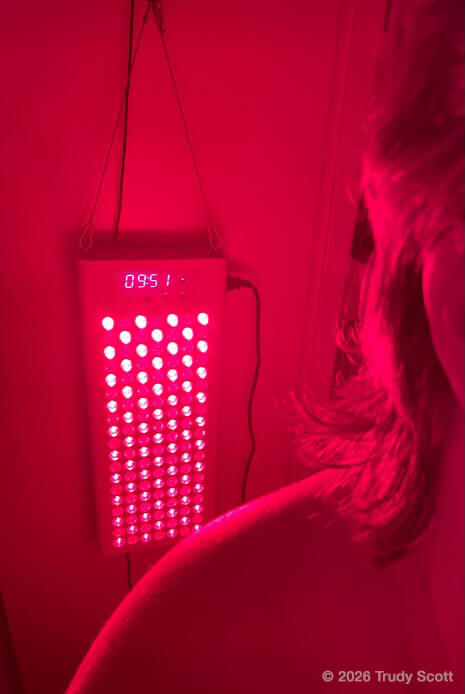
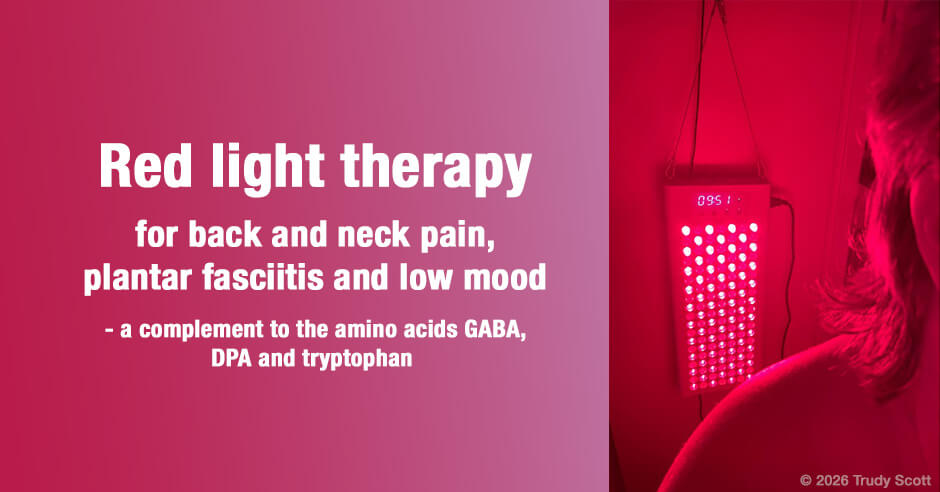
I own the same red light panel – the Red Rush 400 – that Katherine used with success, and I love it. I use it primarily for back and neck pain too – I do 10 minutes at a time when I’m having an issue and also after a weight session at the gym. I’m also learning about the value of doing a daily session at least once a day for better skin health, energy improvement and better sleep.

red light therapy

What I love about this device:

  • it covers a large area i.e. from my neck down to my lower back
  • it’s very easy to use
  • it uses EMF Blocking Cage Technology and has an automatic timer

The negatives are:

  • the price (it costs more than the Lumebox)
  • it’s very heavy – it hangs on a door but can be easily winched higher or lower as needed
  • it’s not portable

If you are wanting to purchase this red light panel, I do have an affiliate account with Red Therapy Co and have arranged $100 off each order if you use the code TRUDYREDTHERAPY at checkout.

Purchase the Red Rush 400

I’m sharing about this panel and the Lumebox (below) because I have vetted the products and have first-hand experience with them. I’ve also started receiving other wonderful feedback from my community and will continue to share as more success stories come in.

My experience with the Lumebox device (handheld)

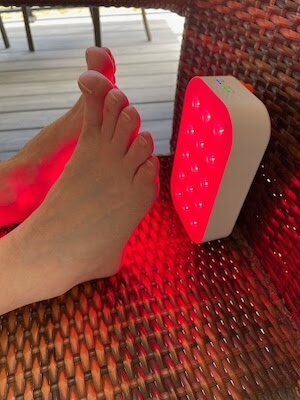
I also own a handheld Lumebox red light device and I love it.

I use it daily, often instead of the panel because it’s so versatile. It comes with us on all our trips and I use it on my feet after a hike or when my restless feet are affecting my sleep (my oxalate issues means I have fickle and tender feet!). I also used it recently on my low back after sitting on bad chairs at a wedding. I’m amazed with the pain relief after just one 10 minute session!

It worked wonders for recovery after a recent fall on my knee – fortunately no broken bones, just bruising and a soft tissue injury. I did use arnica, RICE and amino acids too (GABA and DPA) and saw a physical therapist, but was surprised by how quickly it healed

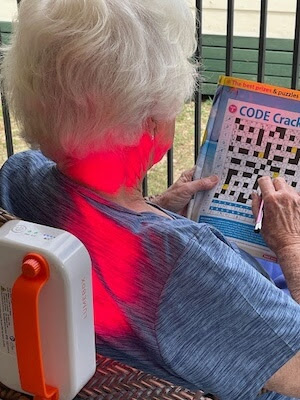
My hubby uses it more and more and my mom-in-law uses it often on her neck and wrist for osteoarthritic pain.

lumebox
lumebox

What I love about this device:

  • it’s portable and versatile (and can be used on targeted areas – like on my knee, my feet, neck, jaw etc)
  • it’s very easy to use and can be recharged relatively quickly
  • it’s low EMF too and also has an automatic timer
  • it’s very affordable for what you get

There is only one negative I can think of:

  • waiting for it to recharge (only an issue when hubby, mom-in-law are queued up to use it after me)

I also have an affiliate account with Lumebox where you can save $260 off each order when you use my partner link below. No code is necessary and there are other bigger discounts during special sales throughout the year.

Purchase the Lumebox

I do want to mention that the Red Rush 400 panel and Lumebox handheld device were not actually used in the above studies but participants were exposed to both NIR and red wavelength light, at the same levels that are found in these devices (NIR 850nm and red 660nm).

Amino acids for pain relief and low mood: GABA, tryptophan and DPA

I support a multimodal approach to pain relief and the amino acids are the perfect complement to red light therapy

  • GABA helps with pain relief when there are spasms and muscle tension (caused by low GABA levels). GABA and GABA/theanine cream can be especially helpful at times.
  • Tryptophan helps with pain relief (and low mood) that is caused by low serotonin levels
  • DPA (d-phenylalanine) helps with pain relief that is caused by low endorphins. With low endorphins you may also experience emotional pain and weepiness

I’ve blogged extensively about the amino acids and pain so be sure to search the blog with ‘GABA pain’, ‘tryptophan pain’, ‘5-HTP pain’ and ‘DPA pain’ for more about this if you’re new to this aspect. You’ll read many of my own stories about using amino acids for an ankle sprain, rectal spasms/pain, IBS belly pain/spasms and more.

Additional resources when you are new to using amino acids as supplements

As always, I use the symptoms questionnaire to figure out if low GABA or low serotonin or low endorphins and other neurotransmitter imbalances may be an issue.

If you suspect low levels of any of the neurotransmitters and do not yet have my book, The Antianxiety Food Solution – How the Foods You Eat Can Help You Calm Your Anxious Mind, Improve Your Mood, and End Cravings, I highly recommend getting it and reading it before jumping in and using amino acids on your own so you are knowledgeable. And be sure to share it with the practitioner/health team you or your loved one is working with.

There is an entire chapter on the amino acids and they are discussed throughout the book in the sections on gut health, gluten, blood sugar control (this is covered in an entire chapter too), sugar cravings, anxiety and mood issues.

The book doesn’t include product names (per the publisher’s request) so this blog, The Antianxiety Food Solution Amino Acid and Pyroluria Supplements, lists the amino acids that I use with my individual clients and those in my group programs.

If, after reading this blog and my book, you don’t feel comfortable figuring things out on your own (i.e. doing the symptoms questionnaire and respective amino acids trials), if you need serotonin support, the Serotonin QuickStart Program is a good place to start. This is a paid online/virtual group program where you get my guidance on using tryptophan and 5-HTP safely, and community support during 5 LIVE Q&A calls. You can sign up to be notified when the next live launch of this program is happening. We take a deep dive into product options including Lidtke products and others if you’re not able to access Lidtke.

Low GABA can cause physical tension and overwhelm, affect sleep and cause stress eating. If you also have low GABA symptoms, the next step to get help is the GABA QuickStart Program. This is also a paid online/virtual group program where you get my guidance and community support. Another option is the budget-friendly GABA QuickStart Homestudy Program.

Wrapping up and your feedback

I’m thrilled Katherine saw these benefits with red light therapy and I always appreciate feedback from the community and being able to share it on the blog.

Now I’d love to hear from you

Have you used red light therapy with success and which device do you have? How often do you use it?

Have you seen an improved mood with red light therapy too?

And have you used any of the above amino acids to help with pain relief too?

If you’re a practitioner do you recommend red light and amino acids for pain relief? Have you had clients report an improved mood with red light therapy too?

Filed Under: Depression, GABA, Pain Tagged With: amino acids, back pain, depression, DPA, GABA, low mood, neck pain, pain, photobiomodulation, plantar fasciitis, red light, tryptophan

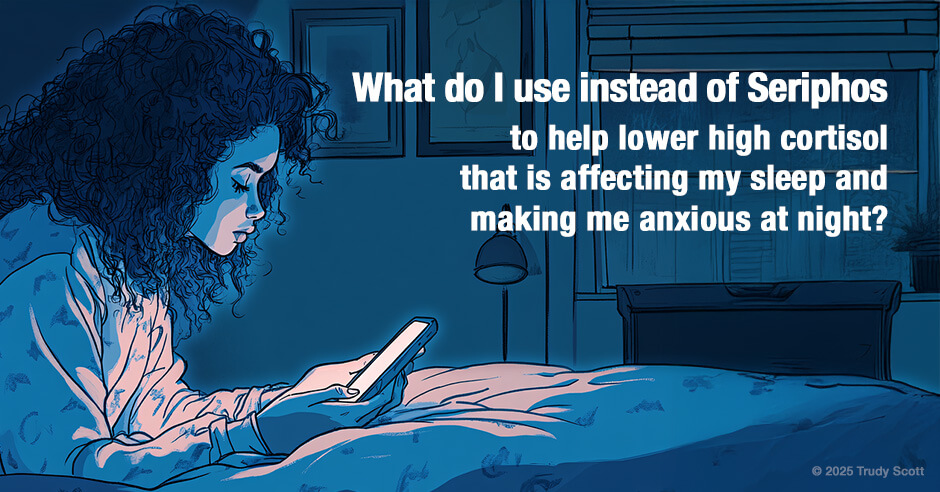
What do I use instead of Seriphos to help lower high cortisol that is affecting my sleep and making me anxious at night?

October 31, 2025 By Trudy Scott 29 Comments

seriphos alternative

Seriphos, a phosphorylated serine supplement that I rate highly and have personally used with success, is not available right now. I’ve had a number of people reaching out frantically asking for help:

What do I use instead of Seriphos to help lower high cortisol that is affecting my sleep and making me anxious at night?

It’s my top product for addressing high cortisol at night and I’ve been recommending it for years for this purpose (as did one of my mentors, Julia Ross). It’s extremely effective when used a few hours before high cortisol (as measured on a salivary cortisol test).  It also starts to work within about a week for most individuals.

Unfortunately Seriphos has been unavailable for a number of months. The company has no information on when it will be available again but have assured me via email that the formulation will be the same. This is really good news after a previous debacle when the formulation changed in 2016/2017.

Until then, there are some other options that may be an effective alternative. And even if you still have some Seriphos in your calming/sleep stash I encourage you to pay attention as it’s important to have a backup plan for situations like this!

Read on below for information on phosphatidylserine, the cortisol/stress research and how it compares to phosphorylated serine; which phosphatidylserine products to consider instead of Seriphos; other options for lowering high cortisol levels (such as Cortisol Manager, Relora® lactium and bergamot); the amino acid theanine for neurotransmitter support and high cortisol; and additional resources when you are new to amino acids.

What is phosphatidylserine and how does it compare to phosphorylated serine?

From this 2023 paper, Phosphatidylserine: An overview on functionality, processing techniques, patents, and prospects

Phosphatidylserine is the part of cell structure in the body and has many beneficial functions especially in brain-related aging diseases.

Supplementation has been reported to show improved memory and cognition (including ADHD and Alzheimer’ s disease), and also better exercise performance. The research also shows benefits when it comes to lowering cortisol levels and feeling less stressed:

  • One study reported 300 mg/day for 1 month was “associated with feeling less stressed and having better mood in a sub-group of healthy young males.”
  • And another study using a moderate dose of 600 mg/day promoted “a desired hormonal balance for athletes by blunting increases in cortisol levels”, suggesting that phosphatidylserine “partly counteracts the stress-induced activation of the hypothalamopituitary-adrenal axis.”
  • One additional study reported that 800 mg/day for 10 days lowered “plasma cortisol concentrations in healthy inactive males”

As you can see the range of doses varies (which makes sense since we are all unique) but it has been established as a “safe oral supplement capable of attenuating the serum cortisol and creatine kinase responses to acute exercise stress.”

“Lower daily doses (<500 mg/day) for longer duration” are recommended for ongoing cognitive benefits. One study reported improvements in “behavioral and cognitive functions in a group of geriatric patients with cognitive impairment” who used 300 mg/day for 6 months.

Seriphos is unique in that it is a phosphorylated serine product – this is where the magic happens when it comes to lowering cortisol so well. It is similar to phosphatidylserine but as far as I am aware, there is no actual research on phosphorylated serine. They quote studies on phosphatidylserine on their site.

Which phosphatidylserine products to consider instead of Seriphos?

Here are two excellent professional grade phosphatidylserine products to consider. It may be a matter of trial and error to find what works well for your needs, plus adjusting the dose up as necessary.

  • Designs for Health PS 150 – Phosphatidylserine 150 mg: non-soy, sunflower sourced phosphatidyl serine with one capsule providing 150mg, so using a higher dose may be more effective:
    • Feedback from a colleague: “We have equally good results with phosphatidyl serine, but the dose usually needs to be in the 300-500mg range, to equate to what 1 or 2 Seriphos capsules could do.”
    • Feedback from another colleague: “We started using PS150 from DFH and love it.” He often uses this in conjunction with another Designs for Health product called Catecholacalm.
  • Designs for Health Phosphatidylserine Powder 200mg: One quarter teaspoon provides 200mg phosphatidylserine in a powder form.
    • This one is made from soy (GMO-free) but may be easier to use to get higher doses. Per their site the powder is an “excellent delivery system for children and the elderly who may have difficulty swallowing capsules; it has virtually no taste and will dissolve into applesauce or any food.”

Other options for lowering high cortisol levels: Cortisol Manager, Relora® lactium and bergamot

  • Cortisol Manager by Integrative Therapeutics – 2 capsules contain a proprietary blend of: ashwagandha (Sensoril®), L-Theanine, plus a blend of Magnolia (Magnolia officinalis) and 100mg of phosphatidylserine (soy free). I have seen mixed results with this product:
    • A colleague shared this: “Cortisol Manager can be dosed up to 2-3 tablets per day and used with or without additional phosphatidyl serine which can easily go as high as 600 mg.” He has seen salivary cortisol levels shift with this approach and shared: “Interestingly, I never saw those changes with Seriphos despite being a heavy user between 2009 and 2011 so I thought it was just hype.”
    • Feedback from someone on my blog: “Cortisol Manager was too stimulating with the Ashwagandha”
    • Feedback from a practitioner who first used Cortisol Manager personally and then switched to Seriphos at my recommendation: “Cortisol Manager did nothing for me. I dosed it high enough and took it for a month – but I felt nothing. Seriphos, on the other hand, worked the same night, within an hour or two.”
  • Relora®, a proprietary blend of Magnolia officinalis bark extract and Phellodendron amurense bark extract
    • This 2013 study, Effect of Magnolia officinalis and Phellodendron amurense (Relora®) on cortisol and psychological mood state in moderately stressed subjects, found that after 4 weeks of supplementation (500 mg /day, with 250 mg at breakfast and 250mg at dinner) these were the results seen in the Relora® group (compared to the placebo group):
      • salivary cortisol exposure was significantly lower (18%)
      • lower overall stress (11%)
      • lower tension (13%)
      • less depression (20%)
      • less anger (42%)
      • less fatigue (31%),
      • less confusion (27%)
      • and significantly better mood state parameters (11%) and vigor (18%)
  • Biotics Research De-stress, contains Lactium®, also known as hydrolyzed casein.
    • I have used this product with clients with good results and based on the research it lowers high cortisol. It’s also calming because it works on the GABAA receptor.
    • You’ll also see Lactium® referred to as alpha-s1 casein hydrolysate, hydrolyzed casein concentrate, and tryptic hydrolysate from bovine milk alphaS1-casein. More on this blog
  • There is very promising research on essential oils lowering cortisol levels – such as bergamot. In this blog I share an animal study that shows very promising results: Acute effects of bergamot oil on anxiety-related behaviour and corticosterone level in rats

both bergamot essential oil and diazepam exhibited anxiolytic-like behaviours and attenuated HPA axis activity by reducing the corticosterone response to stress

The amino acid theanine for neurotransmitter support and high cortisol

Theanine is a calming amino acid that supports low GABA, low serotonin and low dopamine, and has been shown to help with stress levels when salivary cortisol is high.

A 2021 study, A Randomized, Triple-Blind, Placebo-Controlled, Crossover Study to Investigate the Efficacy of a Single Dose of AlphaWave® l-Theanine on Stress in a Healthy Adult Population, 200 mg of AlphaWave® l-Theanine was shown reduce “salivary cortisol in healthy, moderately stressed adults” and increase frontal region alpha wave activity.This was “indicative of relaxation in the brain and suggest a calming response.”

The authors conclude as follows:

Four weeks of supplementation with 200 mg of l-theanine has been shown to improve trait anxiety scores, suggesting that continued supplementation with AlphaWave® l-Theanine may have positive effects on trait anxiety as well, which may be an important application in longer-term stress management.

As you may already know, I am a proponent of long-term stress management with individual amino acids such as GABA, theanine and tryptophan/5-HTP. And the more I learn about the benefits and mechanisms of theanine the more excited I get!

Additional resources when you are new to using theanine, GABA or other amino acids as supplements

We use the symptoms questionnaire to figure out if low GABA (indicating a possible need for GABA or theanine) or low serotonin (indicating a need for tryptophan or 5-HTP) or low endorphins (indicating a possible need for DPA) or low dopamine (a need for tyrosine) other neurotransmitter imbalances may be an issue for you.

If you suspect low levels of any of the neurotransmitters and do not yet have my book, The Antianxiety Food Solution – How the Foods You Eat Can Help You Calm Your Anxious Mind, Improve Your Mood, and End Cravings. I highly recommend getting it and reading it before jumping in and using amino acids on your own so you are knowledgeable. And be sure to share it with the practitioner/health team you or your loved one is working with.

There is an entire chapter on the amino acids and they are discussed throughout the book in the sections on gut health, gluten, blood sugar control, sugar cravings, anxiety and mood issues. The importance of quality animal protein and healthy fats is also covered.

The book doesn’t include product names (per the publisher’s request) so this blog, The Antianxiety Food Solution Amino Acid and Pyroluria Supplements, lists the amino acids that I use with my individual clients and those in my group programs.

If, after reading this blog and my book, you don’t feel comfortable figuring things out on your own (i.e. doing the symptoms questionnaire and respective amino acids trials), a good place to get help is the GABA QuickStart Program (if you have low GABA symptoms). This is a paid online/virtual group program where you get my guidance and community support. We’ll be launching a budget-friendly homestudy version in a few weeks – sign up for the wait list here (the live version with Q&A is offered only a few times a year). The amino acids GABA and theanine are covered.

If you also need serotonin support, the Serotonin QuickStart Program is a good place to get help. This is also a paid online/virtual group program where you get my guidance on using tryptophan and 5-HTP safely, and community support during 5 LIVE Q&A calls. You can sign up to be notified when the next live launch of this program is happening.

If you are a practitioner, join us in The Balancing Neurotransmitters: the Fundamentals program. This is also a paid online/virtual program with an opportunity to interact with me and other practitioners who are also using the amino acids.

Now I’d love to hear from you …

Have you used Seriphos with success in the past for lowering high cortisol and helping with sleep and middle of the night surges or adrenalin-type anxiety and panic?

Have you had success with any of the Designs For Health or other phosphatidylserine products? How much did you need to use to get results?

What about Cortisol Manager, essential oils, Relora or lactium? Or something else?

Do you also use theanine with success? And if yes, how much helps you?

Feel free to post your questions here too.

Filed Under: Adrenals, Anxiety, Insomnia, Stress Tagged With: amino acids, anxious, at night, Bergamot, Cortisol Manager, Designs for Health, GABA, GABA Quickstart, high cortisol, neurotransmitter, phosphatidylserine, phosphorylated serine, Relora® lactium, salivary cortisol, seriphos, sleep, theanine

BeSerene™ GABA/theanine cream eases severe muscle tension in her neck/shoulders, prevents her bad headaches and quells her anxiety

October 24, 2025 By Trudy Scott 9 Comments

beserene

Hi there… I wanted to add my ‘two cents’ to the discussion about the BeSerene™ GABA/theanine product that you recommend. I LOVE it! I suffer from low GABA levels, which result in my having severe muscle tension in my neck and shoulders. Often, that resulted in bad muscle tension headaches, for which I couldn’t find anything to bring relief. The BeSerene™ GABA/theanine cream has been a real game changer.

If I wake up with one of those headaches in the middle of the night or in the morning, I use two pumps and rub it on my tight neck and shoulder muscles and within 15 minutes, I can feel the tension melting away! It literally goes away! I have  even been able to prevent a headache from occurring by using it on my neck muscles before I go to bed at night.

Insofar as anxiety, I get relief from that as well, because generally I start to get anxiety once the headaches start, as I never know if it is going to be manageable with just an ibuprofen or two, or if it is going to be one of ‘those’ headaches, i.e. a migraine that lasts for a day or more! Unfortunately, once the anxiety starts, it makes the muscle tension headache worse, which makes the anxiety worse, and it’s just a horrible vicious cycle!

So, since the BeSerene™ cream works so efficiently on the muscle tension, it quells the anxiety that usually follows!

It has changed my life, and I don’t know of any other product I can say that about. I can honestly say that I will not allow myself to ever be without it now!

Thank you so much Trudy, for recommending this product!

Lisa is a woman in the community who reached out to me via email with this message raving about how life-changing this cream has been for her. I am thrilled for her and never get tired of hearing results like this. I’m not surprised either and love to share these kinds of results! She kindly gave me permission to share, saying “I want others to experience what I have with this product!”

Read on below for more about why she gravitated towards using a cream, other benefits you may expect to see (like a reduction in stress-eating and/or drinking too much wine), my insights into when to consider using a GABA/theanine cream like this and how to use it, where to purchase this exact cream and additional resources if you are new to using GABA.

Why did Lisa gravitate to using a GABA/theanine cream?

Lisa shared that she just couldn’t seem to tolerate the sublingual or oral GABA:

I have tried sublingual GABA products but haven’t had much success, as I haven’t been able to find any without alcohol sugars (xylitol, sorbitol, etc.) Those ingredients give me a terrible taste in my mouth and I just can’t tolerate them. (Why can’t they make one with just real sugar from nature?)

Plus, I haven’t had a lot of success with the oral products as they just take too long to work on the headaches/muscle tension.

I’m really glad she recognized her symptoms were due to low GABA – muscle tension and pain, in conjunction with feeling physically anxious are common. And that she didn’t give up on GABA and persevered until she found what works for her symptoms.

What about other forms of GABA?

However, my advice for someone in Lisa’s situation is not to give up on other GABA products if she finds she needs additional support in the future or finds herself without the cream. With regards to taste and time to work, I recommend a GABA-only (or GABA/theanine) capsule opened on to the tongue or a GABA (and/or theanine) powder – both held on the tongue for 1-2 minutes for quick results.

Stress-eating and self-medication with wine are classic signs of low GABA

Interestingly, stress eating is not an issue for her but wine may be:

I’ve never really had any issues with stress-eating. In fact, I usually have no appetite when I’m stressed out! (That’s where the wine comes in…lol!)

We may self-medicate with wine when GABA is low because it relaxes us physically, helps us fit in socially and feels calming and pleasant. It’s mistakenly used to try and improve sleep but typically makes things worse.

Alcohol consumption damages the gut, depletes B vitamins (especially thiamine/vitamin B1) and zinc – and it’s addicting.

GABA can stop that addiction in its tracks so there are no feelings of deprivation. The reasons we are drawn to GABA are addressed too. And amazingly there is research that GABA may actually heal the gut after alcohol consumption.

Bumping up the GABA/theanine cream may help or considering one of the other GABA products mentioned above may be better.

Low GABA symptoms

As a reminder, if you are new to GABA, it’s an amino acid that helps to address low GABA levels and the associated symptoms: physical tension and feeling anxious, feeling worried or fearful, panic attacks, stiff or tense muscles, insomnia, feeling stressed and burned-out, craving carbs/alcohol for relaxation and calming, intrusive thoughts, spinning/poor focus, fear of heights, rectal spasms, burning mouth, and visceral pain/belly pain with IBS. See the most current list of low GABA symptoms here.

When to consider using a GABA/theanine cream like this?

These are some of the applications I consider

  • When other GABA products haven’t worked (like in Lisa’s situation)
  • When looking for something in addition to other GABA products, for example, GABA powder in the day while at work or play, and GABA/theanine cream at night for tension and sleep issues
  • When there is a specific need for a topical application – like with neck and shoulder tension or belly pain or period pain or leg spasms etc
  • For an aging parent with Alzheimer’s disease (and sundowning agitation/anxiety)
  • For a person with ARFID (avoidant-restrictive food intake disorder)
  • For a person with anorexia or other eating disorder
  • When a child or young adult has autism (with anxiety and sensorimotor issues), a child/adult who struggles with taking supplements and other special needs children/adults
  • For someone with multiple sclerosis (for anxiety and muscle spasms/spasticity)
  • When a person has severe digestive issues and prefers a cream
  • When someone just wants to take a break from sublingual/oral/powder GABA
  • For presurgery anxiety since supplements are typically not permitted (even though there is research showing both help)

Where to purchase BeSerene™ IR GABA and theanine cream and how to use it?

This cream can be purchased online with this link (this has my 15% discount built in – you’ll see the discount applied on the checkout page after you add it to the cart).

Purchase BeSerene™ IR

They recommend applying 1-2 pumps to your temples or wrists.

You could also use 1-2 pumps/squirts on your neck and shoulder (like Lisa did), the forearm or inner thigh (before bed for helping improve sleep), and/or belly (especially if belly pain or IBS/SIBO or PMS pain keeps you awake at night). It can also easily be applied if you wake in the night.

Personally, it’s a product I love at bedtime. I apply 2 pumps on my forearm and then rub my belly with any that is left over. It’s calming, improves my sleep and helps with belly pain at night.

I’m sure you can tell by now that this is a product I endorse. I recommend it to clients and to participants in my GABA Quickstart program. In fact, it’s one of the top ten GABA products I recommend and it’s even included in the training materials/handouts of the program!

Additional resources when you are new to using GABA or other amino acids as supplements

We use the symptoms questionnaire to figure out if low GABA (indicating a possible need for GABA or theanine) or low serotonin (indicating a need for tryptophan or 5-HTP) or low endorphins (indicating a possible need for DPA) or other neurotransmitter imbalances may be an issue for you.

If you suspect low levels of any of the neurotransmitters and do not yet have my book, The Antianxiety Food Solution – How the Foods You Eat Can Help You Calm Your Anxious Mind, Improve Your Mood, and End Cravings. I highly recommend getting it and reading it before jumping in and using amino acids on your own so you are knowledgeable. And be sure to share it with the practitioner/health team you or your loved one is working with.

There is an entire chapter on the amino acids and they are discussed throughout the book in the sections on gut health, gluten, blood sugar control, sugar cravings, anxiety and mood issues. The importance of quality animal protein and healthy fats is also covered.

The book doesn’t include product names (per the publisher’s request) so this blog, The Antianxiety Food Solution Amino Acid and Pyroluria Supplements, lists the amino acids that I use with my individual clients and those in my group programs.

If, after reading this blog and my book, you don’t feel comfortable figuring things out on your own (i.e. doing the symptoms questionnaire and respective amino acids trials), a good place to get help is the GABA QuickStart Program (if you have low GABA symptoms). This is a paid online/virtual group program where you get my guidance and community support. We’ll be launching a budget-friendly homestudy version in a few weeks – sign up for the wait list here (the live version with Q&A is offered only a few times a year).

If you also need serotonin support, the Serotonin QuickStart Program is a good place to get help. This is also a paid online/virtual group program where you get my guidance on using tryptophan and 5-HTP safely, and community support during 5 LIVE Q&A calls. You can sign up to be notified when the next live launch of this program is happening.

If you are a practitioner, join us in The Balancing Neurotransmitters: the Fundamentals program. This is also a paid online/virtual program with an opportunity to interact with me and other practitioners who are also using the amino acids.

Now I’d love to hear from you…

I appreciate Lisa’s willingness to share her wonderful results. Now I’d love to hear from you.

Have you used BeSerene™ GABA and theanine cream and how has it helped you?

How does using a GABA/theanine cream compare with other GABA products you have used (feel free to share specific brands and how you used them – sublingual, capsule-opened, liposomal or powder or even another brand of GABA cream)?

As  I shared above, some folks prefer a cream only and many use a combination of cream and sublingual.

Feel free to post your questions here too.

Filed Under: Anxiety, GABA, Pain, Stress Tagged With: anxiety, anxious, BeSerene, BeSerene™ GABA/theanine cream, cream, GABA, GABA cream, GABA Quickstart, Headaches, how to use a GABA cream, low GABA, migraine, muscle tension, neck, pain, shoulders, sleep issues, stress, stress-eating, wine

  • Page 1
  • Page 2
  • Page 3
  • Interim pages omitted …
  • Page 160
  • Go to Next Page »

Primary Sidebar

GABA QuickStart Homestudy

gaba quickstart homestudy

Free Report

9 Great Questions Women Ask about Food, Mood and their Health

You'll also receive a complimentary subscription to my ezine "Food, Mood and Gal Stuff"


Connect with me

Popular Posts

  • Amino Acids Mood Questionnaire from The Antianxiety Food Solution
  • The Antianxiety Food Solution Amino Acid and Pyroluria Supplements
  • Pyroluria Questionnaire from The Antianxiety Food Solution
  • Collagen and gelatin lower serotonin: does this increase your anxiety and depression?
  • Tryptophan for the worry-in-your-head and ruminating type of anxiety
  • GABA for the physical-tension and stiff-and-tense-muscles type of anxiety
  • The Antianxiety Food Solution by Trudy Scott
  • Seriphos Original Formula is back: the best product for anxiety and insomnia caused by high cortisol
  • Am I an anxious introvert because of low zinc and vitamin B6? My response to Huffington Post blog
  • Vagus nerve rehab with GABA, breathing, humming, gargling and key nutrients

Recent Posts

  • Her cravings for chips and peanut butter were triggered by stress: GABA ends cravings and reduces physical tension and fear of heights
  • It is truly miraculous to be able to move through life without crippling anxiety and panic
  • GABA and tryptophan combo provide immediate and noticeable relief for tremors and cervical dystonia in just 7 days
  • Red light therapy for back and neck pain, plantar fasciitis and low mood – a complement to the amino acids GABA, DPA and tryptophan
  • What do I use instead of Seriphos to help lower high cortisol that is affecting my sleep and making me anxious at night?

Categories

  • 5-HTP
  • AB575
  • Addiction
  • ADHD
  • Adrenals
  • Alcohol
  • Allergies
  • Alzheimer's disease
  • Amino Acids
  • Anger
  • Antianxiety
  • Antianxiety Food Solution
  • Antidepressants
  • Anxiety
  • Anxiety and panic
  • Autism
  • Autoimmunity
  • benzodiazapines
  • Bipolar disorder
  • Books
  • Caffeine
  • Cancer
  • Candida
  • Children/Teens
  • Collagen
  • Cooking equipment
  • Coronavirus/COVID-19
  • Cravings
  • Depression
  • Detoxification
  • Diabetes
  • Diet
  • DPA/DLPA
  • Drugs
  • EFT/Tapping
  • EMF
  • EMFs
  • Emotional Eating
  • Endorphins
  • Environment
  • Essential oils
  • Events
  • Exercise
  • Fear
  • Fear of public speaking
  • Fertility and Pregnancy
  • Fish
  • Food
  • Food and mood
  • Functional neurology
  • GABA
  • Gene polymorphisms
  • General Health
  • Giving
  • Giving back
  • Glutamine
  • Gluten
  • GMOs
  • Gratitude
  • Gut health
  • Heart health/hypertension
  • Histamine
  • Hormone
  • Hyperparathyroidism
  • Hypoglycemia
  • Immune system
  • Inflammation
  • Insomnia
  • Inspiration
  • Introversion
  • Joy and happiness
  • Ketogenic diet
  • Lithium orotate
  • Looking awesome
  • Lyme disease and co-infections
  • MCAS/histamine
  • Medication
  • Men's health
  • Mental health
  • Mercury
  • Migraine
  • Mold
  • Movie
  • MTHFR
  • Multiple sclerosis
  • Music
  • NANP
  • Nature
  • Nutritional Psychiatry
  • OCD
  • Osteoporosis
  • Oxalates
  • Oxytocin
  • Pain
  • Paleo
  • Parasites
  • Parkinson’s disease
  • PCOS
  • People
  • PMS
  • Postpartum
  • PTSD/Trauma
  • Pyroluria
  • Questionnaires
  • Real whole food
  • Recipes
  • Research
  • Schizophrenia
  • serotonin
  • SIBO
  • Sleep
  • Special diets
  • Sports nutrition
  • Stress
  • Sugar addiction
  • Sugar and mood
  • Supplements
  • Teens
  • Testimonials
  • Testing
  • The Anxiety Summit
  • The Anxiety Summit 2
  • The Anxiety Summit 3
  • The Anxiety Summit 4
  • The Anxiety Summit 5
  • The Anxiety Summit 6
  • Thyroid
  • Thyroid health
  • Toxins
  • Tryptophan
  • Tyrosine
  • Uncategorized
  • Vegan/vegetarian
  • Women's health
  • Yoga

Archives

  • May 2026
  • April 2026
  • October 2025
  • September 2025
  • August 2025
  • July 2025
  • June 2025
  • May 2025
  • April 2025
  • March 2025
  • February 2025
  • January 2025
  • November 2024
  • October 2024
  • September 2024
  • August 2024
  • July 2024
  • June 2024
  • May 2024
  • April 2024
  • March 2024
  • February 2024
  • January 2024
  • December 2023
  • November 2023
  • October 2023
  • September 2023
  • August 2023
  • July 2023
  • June 2023
  • May 2023
  • April 2023
  • March 2023
  • February 2023
  • January 2023
  • December 2022
  • November 2022
  • October 2022
  • September 2022
  • August 2022
  • July 2022
  • June 2022
  • May 2022
  • April 2022
  • March 2022
  • February 2022
  • January 2022
  • December 2021
  • November 2021
  • October 2021
  • September 2021
  • August 2021
  • July 2021
  • June 2021
  • May 2021
  • April 2021
  • March 2021
  • February 2021
  • January 2021
  • December 2020
  • November 2020
  • October 2020
  • September 2020
  • August 2020
  • July 2020
  • June 2020
  • May 2020
  • April 2020
  • March 2020
  • February 2020
  • January 2020
  • December 2019
  • November 2019
  • October 2019
  • September 2019
  • August 2019
  • July 2019
  • June 2019
  • May 2019
  • April 2019
  • March 2019
  • February 2019
  • January 2019
  • December 2018
  • November 2018
  • October 2018
  • September 2018
  • August 2018
  • July 2018
  • June 2018
  • May 2018
  • April 2018
  • March 2018
  • February 2018
  • January 2018
  • December 2017
  • November 2017
  • October 2017
  • September 2017
  • August 2017
  • July 2017
  • June 2017
  • May 2017
  • April 2017
  • March 2017
  • February 2017
  • January 2017
  • December 2016
  • November 2016
  • October 2016
  • September 2016
  • August 2016
  • July 2016
  • June 2016
  • May 2016
  • April 2016
  • March 2016
  • February 2016
  • January 2016
  • December 2015
  • November 2015
  • October 2015
  • September 2015
  • August 2015
  • July 2015
  • June 2015
  • May 2015
  • April 2015
  • March 2015
  • February 2015
  • January 2015
  • December 2014
  • November 2014
  • October 2014
  • September 2014
  • August 2014
  • July 2014
  • June 2014
  • May 2014
  • April 2014
  • March 2014
  • February 2014
  • January 2014
  • December 2013
  • November 2013
  • October 2013
  • September 2013
  • August 2013
  • July 2013
  • June 2013
  • May 2013
  • April 2013
  • March 2013
  • February 2013
  • January 2013
  • December 2012
  • November 2012
  • October 2012
  • August 2012
  • July 2012
  • June 2012
  • May 2012
  • April 2012
  • March 2012
  • February 2012
  • January 2012
  • December 2011
  • November 2011
  • October 2011
  • September 2011
  • August 2011
  • July 2011
  • June 2011
  • May 2011
  • April 2011
  • March 2011
  • February 2011
  • January 2011
  • December 2010
  • October 2010
  • September 2010
  • July 2010
  • May 2010
  • April 2010
  • March 2010
  • February 2010
  • January 2010
  • November 2009

Share the knowledge!

The above statements have not been evaluated by the Food and Drug Administration. Products listed in this website are not intended to diagnose, treat, cure or prevent any disease.

The information provided on this site is for informational and educational purposes only and is not intended as a substitute for advice from your physician or other health care professional. You should consult with a healthcare professional before starting or modifying any diet, exercise, or supplementation program, before taking or stopping any medication, or if you have or suspect you may have a health problem.


Copyright © 2026 Trudy Scott. All Rights Reserved. | Privacy | Terms and Conditions | Refund Policy | Medical Disclaimer

Free Report

9 Great Questions Women Ask about Food, Mood and their Health

You’ll also receive a complimentary subscription to my ezine “Food, Mood and Gal Stuff”