• Skip to primary navigation
  • Skip to main content
  • Skip to primary sidebar

everywomanover29 blog

Food, Mood and Women's Health – Be your healthiest, look and feel great!

  • Blog
  • About
  • Services
  • Store
  • Resources
  • Testimonials
  • The Book
  • Contact
  • Search this site

zinc

My kids and I used GABA to get through Hurricane Helene – I recommend it for everyone’s 72-hr kit now

July 15, 2025 By Trudy Scott 2 Comments

gaba in hurricane

My kids and I used GABA to get through Hurricane Helene. Freeways broken in 3 directions, no comms, no gas, no power, etc. GABA noticeably kept us calmer even as the days went by. It helped us stay calm enough to think about our escape plan and jump on opportunities to find gas and water.

So grateful we learned about it [from you years ago] and had it on hand… I recommend it for everyone’s 72-hr [emergency preparedness] kit now.

Alecia shared her wonderful results with GABA on a Facebook post. I’m sorry they went through this but I am so happy GABA helped. I also wish everyone had GABA on hand for situations like this.

She now also uses a manual device for vagus nerve stimulation (VNS) and feels a combination of “GABA and VNS would have been incredible.” I’m a big fan of a B complex too and zinc and extra B6 if you have pyroluria because the added stress depletes these nutrients and makes things worse. And serotonin and endorphin support can often be helpful too. More on all this below and details about the GABA product she used and what dose helped her.

Which GABA product helped her and her family and how much did she use?

I asked Alecia to share how much GABA helped during and after the hurricane and which product worked for her? And if she had been using it before for day-to-day low GABA symptoms of feeling anxious, stressed, overwhelmed with physical tension and sleep issues.

We use the pharmaGABA by Natural Factors. I usually only need 100 – 200 mg in my regular life. During the hurricane I needed 300 mg pharmaGABA a couple of times a day. And more when waiting in a gas line. Such intense stress. GABA really took the edge off.

It’s always helpful to know your baseline dose i.e. what you use on a day-to-day basis. And to expect that dose to increase in times of the added stress in the midst of the hurricane and the immediate aftermath – as it did for Alecia. She needed a higher dose and used it more frequently.

You may often find you need to continue with the higher dose for a few weeks to months after the disaster, especially during the clean-up and rebuilding period.

One other factor to consider is the form of GABA. She used pharmaGABA with much success and many do very well on this form but I find more folks do better with GABA. GABA works best when used sublingually, capsule-opened, powder (all held on the tongue 1-2 mins) or cream, and a low starting dose is used, and increased to find the optimal dose.

Vagus nerve stimulation (VNS) as an added benefit

Alecia now also uses a manual device for vagus nerve stimulation (VNS). She had it during Hurricane Helene but had not yet used it:

A combo of GABA and VNS would have been incredible. I found out my mom was diagnosed with stage 4 cancer the next week and finally started using both GABA and VNS. Game changer combo.

She has the Hoolest veRelief Prime device and says this:

I love the Hoolest VNS. It helps with anxiety, sleep, digestion, and higher performance. I like level 4 but my kids prefer level 1.

I used it daily for about 4-6 months and then I started to heal deeply. Now I only need it once every week or two.

(I did hear that her mom’s treatments are working)

Vagus nerve stimulation, anxiety, GABA and the potential with VNS devices

This paper, Vagus nerve stimulation: a physical therapy with promising potential for central nervous system disorders, discusses how “vagus nerve stimulation influences the central nervous system through the GABA system” and the fact that “VNS has been shown to alleviate anxiety symptoms”, depression, obsessive-compulsive disorder (OCD), panic disorder, and post-traumatic stress disorder (PTSD). Much of the research has been done with implantable vagus nerve stimulation (iVNS) but the potential with non-invasive vagus nerve stimulation devices is really exciting.

What is so interesting is that “Vagus nerve stimulation influences the central nervous system through the GABA system” and it’s “speculated that part of VNS’s therapeutic effects …might involve the GABA system.”

VNS benefits are also seen via impacts on serotonin and dopamine, BDNF (brain-derived neurotrophic factor), by reducing inflammation and the secretion of inflammatory cytokines and promoting neuroprotection.

You can read more about vagus nerve support on this blog: Vagus nerve rehab with GABA, breathing, humming, gargling and key nutrients. I share my vagus nerve/throat issue and how manual vagus nerve support exercises and GABA helped me.

Using a good B complex and the pyroluria protocol too

I told Alecia that I’m a big fan of a good B complex and the pyroluria protocol too. I share more in this blog – Nutrition solutions for psychological stress after a natural disaster.

If this is all that can be managed it would be my first choice for everyone. In fact, if you live in an area prone to hurricanes, floods, fires etc. I’d recommend being on a B complex all the time.

My colleagues Bonnie Kaplin and Julia Rucklidge published this paper in 2015: A randomised trial of nutrient supplements to minimise psychological stress after a natural disaster. Those consuming a B-Complex and a broad-spectrum mineral/vitamin formula showed significantly greater improvement in stress and anxiety than study participants consuming a vitamin D supplement.

It is well known that pyroluria symptoms are made worse in times of heightened stress. If you are on protocol for pyroluria, additional zinc and vitamin B6/P5P is likely going to be needed short-term too.

In addition to GABA I also mention serotonin and endorphin support:

  • Serotonin support with tryptophan or 5-HTP, especially if you’re feeling sad, worried, imagining the worst, feeling fearful and having problems sleeping. More on tryptophan products.
  • Endorphin support with Lidtke DPA if you’re feeling especially emotional and weepy and grieving the loss of your home and community. More on endorphins here.

And I also include some resources for disaster preparedness and things to consider after the fangers have passed (like mold toxicity).

Additional resources when you are new to using GABA and other amino acids as supplements

As always, I use the symptoms questionnaire to figure out if low GABA or low serotonin or other neurotransmitter imbalances may be an issue.

If you suspect low levels of any of the neurotransmitters and do not yet have my book, The Antianxiety Food Solution – How the Foods You Eat Can Help You Calm Your Anxious Mind, Improve Your Mood, and End Cravings, I highly recommend getting it and reading it before jumping in and using amino acids on your own so you are knowledgeable. And be sure to share it with the practitioner/health team you or your loved one is working with.

There is an entire chapter on the amino acids and they are discussed throughout the book in the sections on gut health, gluten, blood sugar control (this is covered in an entire chapter too), sugar cravings, anxiety and mood issues.

The book doesn’t include product names (per the publisher’s request) so this blog,The Antianxiety Food Solution Amino Acid and Pyroluria Supplements, lists the amino acids that I use with my individual clients and those in my group programs.

If, after reading this blog and my book, you don’t feel comfortable figuring things out on your own (i.e. doing the symptoms questionnaire and respective amino acids trials), a good place to get help is the GABA QuickStart Program (if you have low GABA symptoms). This is a paid online/virtual group program where you get my guidance and community support. You can sign up to be notified when the next live launch is happening.

If you need serotonin support, the Serotonin QuickStart Program is a good place to get help. This is also a paid online/virtual group program where you get my guidance on using tryptophan and 5-HTP safely, and community support during 5 LIVE Q&A calls. You can sign up to be notified when the next live launch of this program is happening.

If you are a practitioner, join us in The Balancing Neurotransmitters: the Fundamentals program. This is also a paid online/virtual program with an opportunity to interact with me and other practitioners who are also using the amino acids.

Wrapping up and your feedback

I appreciate Alecia for sharing her story and giving me permission to share on the blog.

Do you have GABA on hand all the time and include them in your 72-hr emergency preparedness kit?

Have you found vagus nerve stimulation (VNS) to be helpful – either manual exercises (which ones help you) or using a device (which one helps you)?

What about B vitamins and the pyroluria protocol – do they help too?

If you’re a practitioner do you recommend GABA, VNS, B vitamins and the pyroluria protocol?

Feel free to share and ask your questions below.
Filed Under: Anxiety, Fear, GABA Tagged With: 72-hr kit, B-complex, B6, calm, calmer, disaster, dopamine, emergency, endorphin, GABA, GABA Quickstart, Hurricane Helene, pharmaGABA, pyroluria, serotonin, Serotonin Quickstart, stress, vagus, vagus nerve stimulation, VNS, zinc

Side stitch when running or exercising: the anxiety/stress connection (and the pyroluria protocol of zinc and vitamin B6 as a solution?)

August 4, 2023 By Trudy Scott 21 Comments

side stitch and anxiety

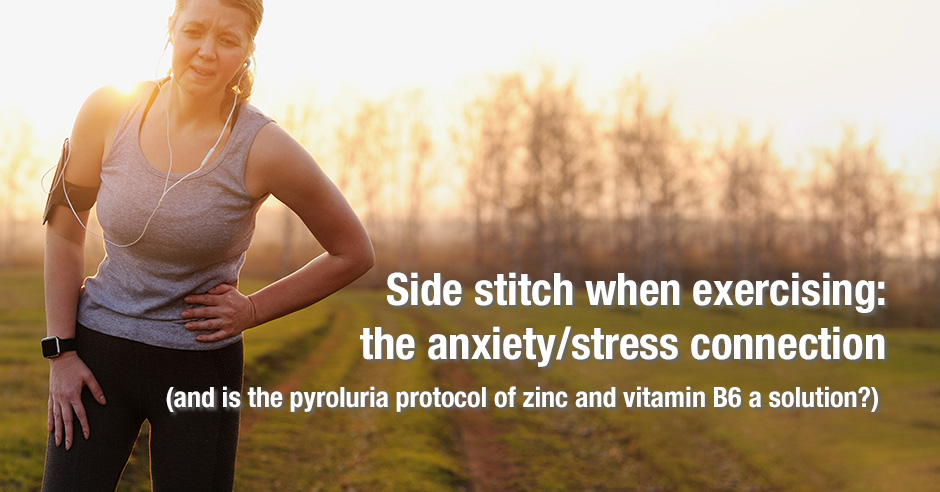
If you get a painful side stitch when running or doing other exercise or experienced a side stitch  when you were a kid, you may be as intrigued as I was to learn there is new research that points to an anxiety/stress connection. This cross-sectional observational study was done involving an anonymous survey of one hundred sixty-eight male and female adults who were running at least 10 miles/16 km per week.

The conclusion of this study, Thorn in Your Side or Thorn in Your Head? Anxiety and Stress as Correlates of Exercise-Related Transient Abdominal Pain, is as follows: “anxiety and stress are associated with the presence of ETAP.” A runner’s side stitch is referred to as ETAP i.e. exercise-related transient abdominal pain. The authors mention the fact that this is the first study to reveal this anxiety/stress connection. This is relevant given the numerous recent studies looking for a cause and no definitive solutions.

This research is also really intriguing to me given what Dr. Carl Pfeiffer MD, PhD, identified 50+ years ago in the 1970s i.e. side stitches are common in those with pyroluria/social anxiety. What’s important is the fact that the pyroluria nutrient protocol eases social anxiety and prevents side stitches in my clients. You’ll read feedback from individuals in the community who resonate with this research and the pyroluria connections. I share more about pyroluria below in case it’s new to you and a possible cause of the side stitch pain.

My feedback and feedback from others in the community

I have pyroluria and always got a left side stitch as a kid, in my teens when running and playing squash and in my 20s/30s when running. And then they stopped (and the social anxiety and related symptoms resolved) when I addressed my pyroluria with zinc, B6 and EPO, and a copper-free multi that contains manganese. I see these kinds of results with my clients all the time so a light-bulb went off when I read this new research .

I shared this research and the anxiety/stress/pyroluria connection on Facebook and asked: did you/do you get side stitches when running/exercising? Here is some of the feedback I received, where the pyroluria protocol did help.

Kameka shared this: “I had side stitches as a kid and as an adult. Running was the main exercise that caused it and it was usually the left side. Now that you mention it, I haven’t had them since I started supplementing for pyroluria. Also, my social anxiety is sooo much better as well!”

She did the symptoms questionnaire and the pyroluria urine test (which can give false negative results) and confirmed she takes vitamin B6, zinc, magnesium, and primrose oil.

Bec shared this: “I hated PE at high school for that reason. While everyone was running, I was suffering from side stitches (I think it was my right side) and having breaks. I have pyroluria with lots of symptoms. I do well with zinc and P5P.”

Not everyone reported an improvement with the protocol but many folks resonated with the side stitch/pyroluria connections:

Megan said: “Couldn’t run as a kid. A stitch every time. I can’t recall which side, never really paid too much attention. Looking at the pyroluria symptoms, I think I may have always had it.”

Janie exclaimed: “Oh, boy, did I!” (while distance running). She finds it hard to remember but thinks it may have been on her right side. She also shared that “tests for zinc come back normal, but I have many of the [pyroluria] symptoms, especially the less common ones. I scored high. I always want breakfast but all the other questions fit me like a glove, like pieces of a puzzle with my photo on the box.

My lack of dream recall is another sign. I take 25 mg of methylated B6, but still no dreams. The question regarding being seated in the middle of a restaurant…THAT IS ME!! My throat will feel like it’s closing up, so much tension.”

I explained that most zinc testing is not accurate and that we increase until we get symptom resolution. I also referred her to the pyroluria chapter in my book.

Susie shared this: “Yes I always got side stitches so I gave up running. I suspected pyroluria but not sure if I have it.”

Leah said “I’d say my daughter and I both [had side stitches] more when we were younger. Both socially anxious and pyroluria. Less exercising now too.”

Information if you’re new to pyroluria

Pyroluria is frequently associated with a type of anxiety characterized by social anxiety, avoidance of crowds, a feeling of inner tension, and bouts of depression. People with this problem experience varying degrees of anxiety or fear, often starting in childhood, but they usually manage to cover it up and push through. They tend to build their life around one person, become more of a loner over time, have difficulty handling stress or change, and have heightened anxiety symptoms when under more stress.

Also on the list of symptoms is this one: “Upper abdominal pain on your left side under the ribs or, as a child, having a stitch in your side as you ran.”

Addressing low levels of the mineral zinc and vitamin B6, together with some other nutrients and stress management, are key to addressing these symptoms.

Here is the complete symptoms questionnaire on the blog. This questionnaire can also be found in the pyroluria chapter in my book, The Antianxiety Food Solution. You’ll find the detailed supplement protocol and additional information on how to assess for low zinc and low vitamin B6 in this chapter too.

You can read more about the prevalence and associated conditions here. It’s most often considered a genetic condition but is possibly environmentally triggered too.

There are many pyroluria blog posts where I cover various aspects such as the importance of addressing pyroluria for recovery from MCAS and Lyme, pyroluria and Ehlers Danlos Syndrome, pyroluria and intrusive thoughts and many more. I encourage you to use the search feature on the blog.

A possible cause of the side stitch in pyroluria

Here is an excerpt from a paper published in 1974 by Dr. Pfeiffer and colleagues, Treatment of Pyroluric Schizophrenia Malvaria With Large Doses of Pyridoxine and zinc, describing why the side pain probably occurs:

This 15-year-old upper middle-class patient (now 19 after studying for four years) represents a case of nutrient deficiency in which vitamins (specifically B6) and the trace minerals manganese and zinc were inadequate for the development of normal knee joints and normal brain function.

The deficiency was sufficiently severe at its peak to cause prolonged psychosis, atypical seizures, arthritis, amenorrhea, constipation, and splenic pain. The pain is probably due to hemolytic crisis in which red cell fragments engorge the Kupfer cells of the spleen and liver, extend the capsule, and cause pain. The double deficiency is produced by the formation of KP [kryptopyrroles] which combines with pyridoxal and zinc.

Based on the above and other publications by Dr. Pfeiffer, when the stitch happens on the left side, my understanding is that the pain is in the spleen. And when it happens on the right side, the pain is in the liver area. Most individuals with pyroluria say they felt/feel their side stitch on the left side. Either way it appears to be caused by low zinc, low vitamin B6 and the other nutrients needed by those with pyroluria. And resolved when on the pyroluria protocol.

I would love to see these ETAP researchers take their anxiety/stress research one step further and identify how common pyroluria is in runners who get side stitches and if the pyroluria protocol prevents the side stitches.

My book as a resource and pyroluria supplements

As mentioned above, there is an entire chapter on pyroluria in my book, The Antianxiety Food Solution – How the Foods You Eat Can Help You Calm Your Anxious Mind, Improve Your Mood, and End Cravings, I highly recommend getting it and reading it before jumping in and addressing these deficiencies. And be sure to share it with the practitioner/health team you or your loved one is working with.

Keep in mind that these nutrients are cofactors for making neurotransmitters and are a key part of my protocol when working with individual amino acids.

The book doesn’t include product names (per the publisher’s request) so this blog, The Antianxiety Food Solution Amino Acid and Pyroluria Supplements, lists the pyroluria supplements and amino acids that I use with my individual clients and those in my group programs. You can find them all in my online store.

If you are a practitioner, join us in The Balancing Neurotransmitters: the Fundamentals program. This is also a paid online/virtual program with an opportunity to interact with me and other practitioners who are also using the amino acids and pyroluria protocol.

Thanks to everyone who contributed to the discussion on Facebook. Now I would love to hear from you so I can approach the authors with their feedback and yours too.

Did you get a side stitch as a kid and did it affect your ability to take part in school sports?

Do you still get a side stitch when running or doing other exercises? If yes, does it hold you back and with which exercise?

Did/does the side stitch occur on the left or right side?

And do you have pyroluria? (based on the symptoms questionnaire and/or pyroluria urine test)?

Does the pyroluria protocol prevent your painful side stitches? And had you made the connection to pyroluria/anxiety/stress?

Are you seeing a similar pattern with your kid/s? (pyroluria, side stitch and the protocol helps them too)

If you have questions and feedback please share them here too.

Filed Under: Anxiety, Exercise, Pyroluria Tagged With: anxiety, Carl Pfeiffer, ETAP, exercise, exercise-related transient abdominal pain, exercising, liver, painful side stitch, pyroluria, running, side stitch, social anxiety, spleen, stress, vitamin B6, zinc

“A catatonic woman awakened after 20 years. Her story may change psychiatry.” (Her schizophrenia was an untreated autoimmune disease)

June 16, 2023 By Trudy Scott 8 Comments

catatonic woman

Today I’m sharing some highlights from a recent eye-opening article in the Washington Post: A catatonic woman awakened after 20 years. Her story may change psychiatry

Before she became a patient, April had been an outgoing, straight-A student majoring in accounting at the University of Maryland Eastern Shore. But after a traumatic event when she was 21, April suddenly developed psychosis and became lost in a constant state of visual and auditory hallucinations. The former high school valedictorian could no longer communicate, bathe or take care of herself.

April was diagnosed with a severe form of schizophrenia

April was hospitalized, medicated and eventually institutionalized. It got to the point where she no longer recognized her family and she became catatonic, “unmoving, unblinking and unknowing of where or who she was.”

Twenty years after April’s original diagnosis it was discovered that she has an autoimmune condition. Dr. Sander Markx is director of precision psychiatry at Columbia University and I have so much admiration for his dedication to the field and the fact that he facilitated this testing and discovery so long after meeting April, when he was a student:

Markx and his colleagues discovered that although April’s illness was clinically indistinguishable from schizophrenia, she also had lupus, an underlying and treatable autoimmune condition that was attacking her brain.

After months of targeted treatments – and more than two decades trapped in her mind – April woke up.

April’s transformation is truly heartwarming and it’s wonderful that the doctors plan to do similar testing and offer similar treatments for others living with schizophrenia who are in mental health institutions in New York State.

Researchers in other countries are making similar connections and it’s really exciting to read that they are recognizing that “underlying autoimmune and inflammatory processes may be more common in patients with a variety of psychiatric syndromes than previously believed.”

We can and should be doing better when looking for root causes

I believe we can and should be doing better when it comes to looking for root causes. Many individuals may have an autoimmune/inflammatory condition and many may have other root cause/s. If I was on an advisory panel these would be my recommendations:

  • Use this powerful outcome to really turn psychiatry on its head and screen for lupus and other autoimmune conditions in every single person with schizophrenia. Dr. Markx “believes highly sensitive and inexpensive blood tests to detect different antibodies should become part of the standard screening protocol for psychosis.”
  • Do the same for every single person with mental illnesses and illnesses with a behavioral aspect – including anxiety, depression, bipolar, OCD/obsessive compulsive disorder. ADD/ADHD, autism/ASD (autism spectrum disorders), developmental disorders and neurological disorders.
  • Go beyond autoimmune screening and do a comprehensive functional medicine and nutritional deficiency assessment for every single person, including low serotonin, low GABA, low vitamin D, low zinc, low vitamin B6, hormone imbalances (sex hormones, adrenals, thyroid health), gut health, liver health etc. This includes testing for infections (such as Lyme and strep), looking at toxin exposure (phthalates, mold, heavy metals) and medication side effects.

If you’re new to the concept of root causes and functional medicine/nutritional testing these two blogs will be helpful. They are specific to anxiety because I work with anxious individuals but much of it can also be applied to other mental health and even physical health conditions (like rheumatoid arthritis and say multiple sclerosis):

  • Nutritional testing for figuring out the root cause/s of your anxiety
  • 60+ Nutritional & Biochemical Causes of Anxiety

Functional medicine and nutrition for maintaining symptom resolution in the long term

As you read in the article, April received “short, but powerful “pulses” of intravenous steroids for five days, plus a single dose of cyclophosphamide, a heavy-duty immunosuppressive drug typically used in chemotherapy and borrowed from the field of oncology. She was also treated with rituximab, a drug initially developed for lymphoma.”

Incredibly, she recovered completely and was eventually discharged from the psychiatric hospital and has been living in a rehab center for 3 years. Unfortunately “she has recently regressed because she was not receiving adequate maintenance care.”

I see the next step for April and others like her, is maintaining resolution of symptoms in the long term. This is where functional medicine and nutrition shines.

The ISNPR shared this about Nutritional psychiatry in 2015 in a letter published in World Psychiatry, the official journal of the World Psychiatric Association:

In addition to dietary modification, we recognize that nutrient-based (nutraceutical) prescription has the potential to assist in the management of mental disorders at the individual and population level.

In other words, diet and nutrient-based approaches need to be included for mental health treatment and for prevention. One of many examples is the ketogenic diet which has been shown to reduce auditory hallucinations and delusions in those with schizophrenia. Another is the low carb diet helping to reduce bizarre intrusive thoughts. And the SMILES trial was the first randomized controlled trial to show that dietary improvement can actually treat depression.

Specific nutrients can be very powerful too. One example is a case where a woman in my community experienced a drastic reduction in intrusive thoughts, anxiety and fears (and better sleep) with GABA, tryptophan, 5-HTP and the pyroluria protocol (zinc, vitamin B6 and evening primrose oil). More on the blog. Intrusive thoughts can be alleviated with a similar combination of nutrients and by addressing hormonal imbalances too.

These blogs/research illustrate a few of the many root causes of schizophrenia and psychosis other than lupus:

  • Case Study: Bartonella and Sudden-Onset Adolescent Schizophrenia
  • Toxoplasma gondii: schizophrenia, bipolar disorder, OCD and unresolved anxiety?
  • Gluten sensitivity and relationship to psychiatric symptoms in people with schizophrenia

  • Late-Onset Psychotic Symptoms Associated With Vitamin B12 Deficiency in a Patient With Celiac Disease

When it comes to autoimmunity in general I refer you to the work of Dr. Tom O’Bryan, Dr. Izabella Wentz, Dr. Terry Wahls, Dr. Amy Myers and others who teach about using functional medicine and diet for reversing a number of different autoimmune conditions.

The above approaches can all be explored and used when individuals are initially diagnosed too. But keep in mind that there is no one size fits all and it’s a matter of finding the root causes for each person.

We are moving in the right direction and there is hope but…

We are moving in this direction, awareness is growing and there is hope. But I know we can get there sooner.

What Dr. Markx and his colleagues have discovered and shared with the world will hopefully help us get there much more quickly.

(You can read the whole story here and a similar transformation experienced by Devine Cruz.)

I’m thrilled for April and Devine and their families, and appreciate them sharing these stories with the world. Let’s hope their stories do change psychiatry!

Resources if you are new to using amino acids as supplements

If you are new to using amino acids as supplements, here is the Amino Acids Mood Questionnaire from The Antianxiety Food Solution (you can see all the symptoms of neurotransmitter imbalances, including low GABA, low serotonin and low endorphins).

If you suspect low levels of any of the neurotransmitters and do not yet have my book, The Antianxiety Food Solution – How the Foods You Eat Can Help You Calm Your Anxious Mind, Improve Your Mood, and End Cravings, I highly recommend getting it and reading it before jumping in and using amino acids on your own so you are knowledgeable. And be sure to share it with the practitioner/health team you or your loved one is working with.

There is an entire chapter on the amino acids and they are discussed throughout the book in the sections on gut health, gluten, blood sugar control, sugar cravings, anxiety and mood issues.

The book doesn’t include product names (per the publisher’s request) so this blog, The Antianxiety Food Solution Amino Acid and Pyroluria Supplements, lists the amino acids that I use with my individual clients and those in my group programs. You can find them all in my online store.

If, after reading this blog and my book, you don’t feel comfortable figuring things out on your own (i.e. doing the symptoms questionnaire and respective amino acids trials), a good place to get help is the GABA QuickStart Program (if you have low GABA symptoms too). This is a paid online/virtual group program where you get my guidance and community support.

If you are a practitioner, join us in The Balancing Neurotransmitters: the Fundamentals program. This is also a paid online/virtual program with an opportunity to interact with me and other practitioners who are also using the amino acids.

Does this heartwarming story give you hope for psychiatry?

What do you feel we should be doing to advance nutritional psychiatry even more quickly?

Can you or a family member relate to this and what did you discover in terms of testing and nutritional support/functional medicine?

Feel free to post your feedback and questions here in the comments.

Filed Under: Anxiety, Autism, Autoimmunity, Depression, Nutritional Psychiatry, Schizophrenia Tagged With: amino acids, auditory hallucinations, autoimmune disease, brain, catatonic, functional medicine, GABA, intrusive thoughts, lupus, nutrition, nutritional psychiatry, psychiatry, psychosis, root causes, schizophrenia, the GABA Quickstart online program; and Balancing Neurotransmitters: the Fundamentals program for practitioners, tryptophan, visual hallucinations, vitamin B6, zinc

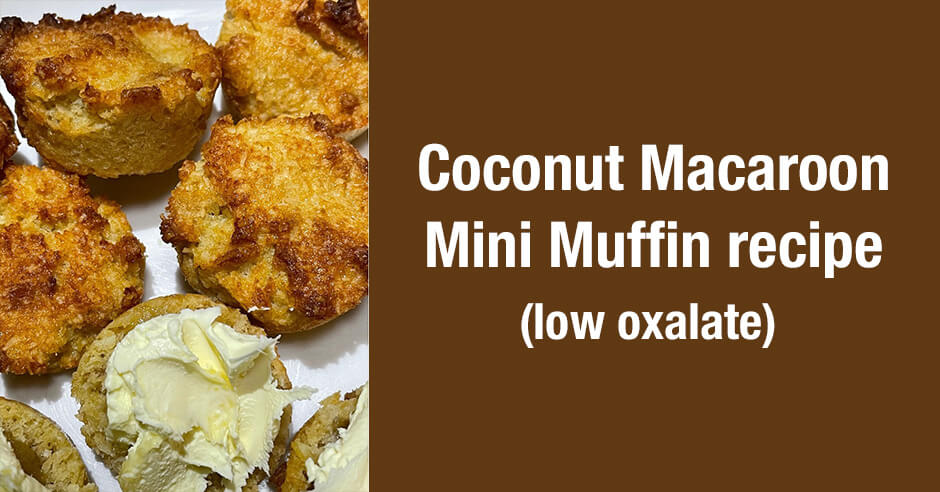
Coconut Macaroon Mini Muffin recipe (low oxalate)

January 20, 2023 By Trudy Scott 18 Comments

coconut macaroon mini muffin

If you have dietary oxalate issues (pain, anxiety, insomnia, restless legs, hearing loss, eye issues, unresolved thyroid issues, bladder issues and more) and yet really miss the occasional muffin this Coconut Macaroon Mini Muffin recipe is a delicious low oxalate option. I see way too many so-called healthy gluten-free recipes that use almond flour and it’s concerning given that almonds are high oxalate foods. If you’re new to the dietary oxalate issues you can read more about this below. I’m finding it to be underappreciated as an issue especially in menopausal women when symptoms seem to be more severe in susceptible individuals. I have also found that using almond flour in baking affects your zinc/copper balance, increasing copper and hence causing more anxiety and even panic attacks.

If you don’t have dietary oxalate issues, you can certainly enjoy this recipe too. The addition of flaked coconut does make it similar to macaroons.

Coconut Macaroon Mini Muffin recipe (a low oxalate option)

Ingredients

1/2 cup melted butter
1/2 cup coconut sugar
4 eggs
1/2 teaspoon vanilla
1/2 cup sifted coconut flour
2 cups coconut flakes

Method

Melt the butter over low heat and add the coconut sugar. Once it’s cooled add the eggs and vanilla. Stir in the coconut flour and coconut flakes.

Spoon the mixture into a greased mini muffin pan. Bake at 375 degrees F/ 190 degrees C for 18 – 20 minutes. The muffins don’t rise at all but will start to turn golden brown. Remove and cool on a cooking rack. Makes 12 mini muffins.

Eat warm or when cooled. Serve with butter and/or cream and/or coconut butter. For a little added sweetness a small amount of raw honey can be spread on a muffin too.

coconut macaroon muffins

I adapted this recipe from the Coconut Butter Cookies recipe in “Cooking with Coconut Flour” by Bruce Fife ND. I pretty much always do this when I cook – adapt recipes to my needs and likes – and always reduce the sugar. In this instance, I halved the sugar and used coconut sugar.

The original recipe does have a reduced sugar option suggesting using ½ cup of sugar and adding ¼ teaspoon stevia. I’d find this too sweet.

I decided to cook them in mini muffin pans instead of making cookies on a baking tray but you could always try this option. Use the same temperature and cooking time per the original recipe.

They were a little dry (next time I’ll use a little extra butter in the recipe) but eating them with butter and/or cream made them delicious. I tried both – I always like to include some healthy fats. If dairy isn’t tolerated, coconut cream could be substituted. I suspect coconut oil could be substituted for the melted butter but have not tried it.

cooking with coconut flour

Here is “Cooking with Coconut Flour” by Bruce Fife ND. You can find it on Amazon here (my link). I’ve baked a number of recipes from this book and I’m impressed. I really appreciate that it’s all coconut flour recipes with no almond flour or other gluten-free flours used.

It’s ideal to keep baked goods – especially the ones shown on the cover of this book – to a minimum. But for an occasional treat this recipe book is excellent.

If you’re new to dietary oxalates as a possible issue

This blog post is a helpful one to start with if you’re new to dietary oxalates and the issues they can cause: Oxalate crystal disease, dietary oxalates and pain: the research & questions

These are the common medium-oxalate and high-oxalate foods that many folks have problems with: nuts, nut-butters and nut-flour (especially baking with almond flour and something to watch when eating Paleo or GAPS), wheat, chocolate, kiwi fruit (very high – see the raphides image on the above blog), star fruit (also very high), beets, potatoes, sweet potatoes, legumes, raspberries, spinach and soy.

In the above blog post, I share an overview of oxalates, my pain issues with dietary oxalates (severe foot pain and eye pain), and deeper dive into the condition called oxalate crystal disease (with some of my insights and questions).

The big take-aways are that calcium oxalate crystals are sharp and can cause far reaching harm beyond pain – such as unresolved anxiety, thyroid issues, neurological symptoms, eye issues, hearing loss, bladder issues, headaches, fatigue, insomnia, restless legs, autism symptoms and more. You can have issues with dietary oxalates and not have kidney disease/kidney stones, although there is very little research supporting the latter.

You may find these oxalate blogs helpful too:

  • Increased kidney stones in postmenopausal women with lower estradiol levels. What about increased dietary oxalate issues too?
  • Waking in the night due to environmental toxins: impacts on the liver, gallbladder and fat digestion (making oxalate issues worse)
  • Butternut Bake recipe (a low oxalate alternative to Potato Bake)

What dietary oxalates issues have you experienced and has a low oxalate diet helped you?

Do let us know if you make this recipe and enjoy it.

Feel free to share a favorite recipe of something you’ve adapted to be low or even medium oxalate.

If you have questions and feedback please share them here too.

Filed Under: Anxiety, Oxalates, Recipes Tagged With: almond flour, anxiety, bladder issues, coconut, coconut flour, Coconut Macaroon Mini Muffin recipe, copper, dietary oxalate issues, eye issues, gluten-free recipes, hearing loss, insomnia, Low oxalate, menopausal, oxalate, pain, panic attacks, restless legs, unresolved thyroid issues, zinc

The importance of addressing pyroluria with chronic Lyme disease (and co-infections), MCAS (Mast Cell Activation Syndrome) and other chronic illnesses

August 5, 2022 By Trudy Scott 27 Comments

addressing pyroluria

Pyroluria is a social anxiety condition that responds well to zinc, vitamin B6, evening primrose oil and a few other key nutrients, typically resulting in resolution of social anxiety symptoms within a few weeks with the correct combination and dosing. However there is much more to pyroluria than meets the eye. Addressing this biochemical imbalance is crucial for recovery from chronic Lyme disease (and co-infections), MCAS (Mast Cell Activation Syndrome) and other chronic illnesses caused by heavy metal toxicity, mold toxicity, multiple chemical sensitivities and Ehlers Danlos syndrome (amongst others).

Dr. Neil Nathan, MD, author of Toxic: Heal Your Body from Mold Toxicity, Lyme Disease, Multiple Chemical Sensitivities, and Chronic Environmental Illness (2018), shares this about pyroluria and chronic illness:

This biochemical imbalance is surprisingly common in chronically ill patients, and missing this diagnosis (by neglecting to test for and treat it) also denies us the opportunity to provide a simple, benign treatment that can help quiet down patients’ already overstimulated nervous systems.

(Here is my Amazon link to his book, which is excellent)

For over 15 years Dr. Dietrich Klinghardt has been saying you won’t see success with Lyme disease without also addressing pyroluria. He has seen a correlation with all his patients with chronic illness and pyroluria.

Let me quote from an article by Scott Forsgren, FDN-P and Dr. Dietrich Klinghardt, MD PhD: Kryptopyrroluria (aka Hemopyrrollactamuria): A Major Piece of the Puzzle in Overcoming Chronic Lyme Disease (a Townsend letter article published in 2017):

Based on testing with a lab in Holland, Klinghardt has found the incidence of KPU [Kryptopyrroluria or pyroluria] in Lyme disease to be 80% or higher; incidence of KPU over 75% in patients with heavy metal toxicity (lead, mercury, aluminum, cadmium, and others) and in children with autism over 80%.

These are very significant percentages of the patient population with chronic illness that may benefit from a treatment program that addresses KPU.

They also state what has long been known when it comes to pyroluria: symptoms are made worse by stress and “chronic infections, such as Lyme disease, may themselves serve as a trigger for the condition (of pyroluria).”

When it comes to MCAS, an updated version of this same article states that:

Klinghardt has worked with biochemists in Germany that are beginning to link KPU with mastocytosis or mast cell activation syndrome (MCAS).

They have observed that KPU treatment repairs the heme molecule, which notably stabilizes the mast cells and lowers the response to these relative rises in histamine.

I use the term pyroluria in this article, throughout my blog and in my book. It was coined by Carl Pfeiffer, MD PhD in the 1970s (after its discovery by Abram Hoffer in 1958). You’ll see these other terms used in various articles and in some of the older research: kryptopyrroluria (KPU), hemopyrrollactamuria (HPU), pyrrole disorder, mauve factor and sometimes malvaria.

As I shared in my interview with Dr. Kelly MCann on the summit, The Many Manifestations of Mast Cell Activation, it would be wonderful to get the terminology standardized and to get some case studies published. This would allow it to gain more acceptance in the mainstream and in functional medicine.

These papers, Discerning the Mauve Factor, Part 1 and 2, highlight some of the mechanisms as to why addressing pyroluria is so important:

  • “Treatment with nutrients – particularly vitamin B6 and zinc – reduces urinary excretion of HPL and improves diverse neurobehavioral symptoms in subjects with elevated urinary HPL.
  • Heightened HPL excretion classically associates with emotional stress, which in turn is known to associate with oxidative stress.
  • HPL correlated inversely with plasma glutathione
  • HPL is a promising biomarker for oxidative stress. HPL is known to cause non-erythroid heme depression, which lowers zinc, increases nitric oxide, and increases oxidative stress.”

The Forsgren/Klinghardt article above, covers additional mechanisms. With regards to MCAS specifically, the pyroluria supplements – zinc, vitamin B and evening primrose oil – all play a role in reducing histamine, providing immune support and reducing inflammation. And they provide nutritional support for the anxiety and mental health aspects of the condition – directly for pyroluria and indirectly via neurotransmitter support (since they are necessary cofactors for making serotonin and GABA).

Here is some of the research I gathered on some of the ways zinc, vitamin B6 and evening primrose oil (EPO) may help when it comes to MCAS:

  • This paper, Role of Zinc Signaling in the Regulation of Mast Cell-, Basophil-, and T Cell-Mediated Allergic Responses, states that “zinc signaling dysregulation is a leading health problem in inflammatory disease and allergy…. These findings may lead to future therapeutic applications for suppressing inflammatory or allergic responses.”
  • In this paper, Effect of pyridoxine on histamine liberation and degranulation of rat mast cells, the authors share that vitamin B6 “significantly inhibited rat mast cell degranulation and histamine release induced by egg albumin allergen.” This paper also discusses the lack of toxicity of vitamin B6 and “the possibility that other mechanisms of action may be involved, such as the improvement in tryptophan metabolism.”
  • This paper, Alterations of mast cell mediator production and release by gamma-linolenic and docosahexaenoic acid/DHA, was looking at mastocytoma (a type of mastocytosis) using a cell line as a model for canine atopic dermatitis (cells were incubated with the wasp venom peptide.) They found that “GLA decreased histamine release …and DHA diminished prostaglandin production.” Evening primrose oil is a source of GLA and fish oil is a source of DHA.

If you’re new to MCAS, Dr. Jill Carnahan has an excellent overview here: Mast Cell Activation Syndrome: Here’s What You Need to Know When Histamine Goes Haywire and I’ve blogged about PharmaGABA often being an issue and making anxiety worse when you have MCAS or histamine issues.

The ramifications of this biochemical imbalance are far-reaching

Here is the pyroluria questionnaire / symptoms list (from my book, The Antianxiety Food Solution). It has been updated with recently with additional conditions. You can read about pyroluria prevalence and associated conditions here.

Here are some of my pyroluria blog posts you may find useful (click each of the linked articles to read further). As you will see the ramifications of this biochemical imbalance are far-reaching:

  • Alice in Wonderland Syndrome – is there a pyroluria connection?
  • I was called a vulture for preying on sensitive people in a social anxiety group – because I mentioned pyroluria and a nutritional solution
  • Intrusive thoughts are a thing with anxiety: low GABA, low serotonin, pyroluria (low zinc & vitamin B6) and hormone imbalances as possible causes
  • Increased sociability improves vagus nerve function: the role of social anxiety, pyroluria and low zinc
  • Joint hypermobility / Ehlers-Danlos Syndrome and pyroluria?

Feel free to use the search feature on the blog to find additional information about pyroluria. I have written about it extensively. I have it myself and it’s really common – I see it in about 80% of my community – so I am pretty passionate about the topic.

Resources if you are new to pyroluria

If you are new to pyroluria, there is an entire chapter on the topic in my book, The Antianxiety Food Solution – How the Foods You Eat Can Help You Calm Your Anxious Mind, Improve Your Mood, and End Cravings. I highly recommend getting it and reading it before jumping in and using the pyroluria supplements on your own. And be sure to share it with the practitioner/health team you or your loved one is working with. We need the wider practitioner community to be aware of this condition and the importance of addressing it.

I use individual amino acids such as GABA and tryptophan with all my anxious clients and we always layer in the pyroluria protocol. There is also an entire chapter on the amino acids and they are discussed throughout the book in the sections on gut health, gluten, blood sugar control, sugar cravings, self-medicating with alcohol and more.

The book doesn’t include product names (per the publisher’s request) so this blog, The Antianxiety Food Solution Amino Acid and Pyroluria Supplements, lists the amino acids and pyroluria supplements that I use with my individual clients and those in my group programs.

If you are a practitioner, join us in The Balancing Neurotransmitters: the Fundamentals program. This is a paid online/virtual program with an opportunity to interact with me and other practitioners who are also using the amino acids and pyroluria protocol with success with their clients/patients.

Have you used the pyroluria protocol as part of your recovery from chronic Lyme disease or MCAS (or another chronic illness)?

Did you learn about this from your practitioner or elsewhere? (please share where)

If you’re a practitioner, is the pyroluria protocol part of your  plan for clients and patients? And has it been a game-changer for them?

If you have questions please share them here too.

Filed Under: Lyme disease and co-infections, MCAS/histamine, Pyroluria Tagged With: Alice in Wonderland Syndrome, Balancing Neurotransmitters: the Fundamentals program for practitioners, chronic illnesses, chronic Lyme disease, Dr. Dietrich Klinghardt Kryptopyrroluria, Ehlers-Danlos Syndrome, evening primrose oil, heavy metal toxicity, Hemopyrrollactamuria, intrusive thoughts, KPU, lyme, mast cell activation syndrome, MCAS, mold toxicity, multiple chemical sensitivities, pyroluria, social anxiety, vagus, vitamin B6, zinc

Phthalates (found in soft plastics and fragrances) are the new BPA and cause anxiety. Is this why the amino acid GABA is so often needed long-term?

June 10, 2022 By Trudy Scott 11 Comments

phthalates and gaba

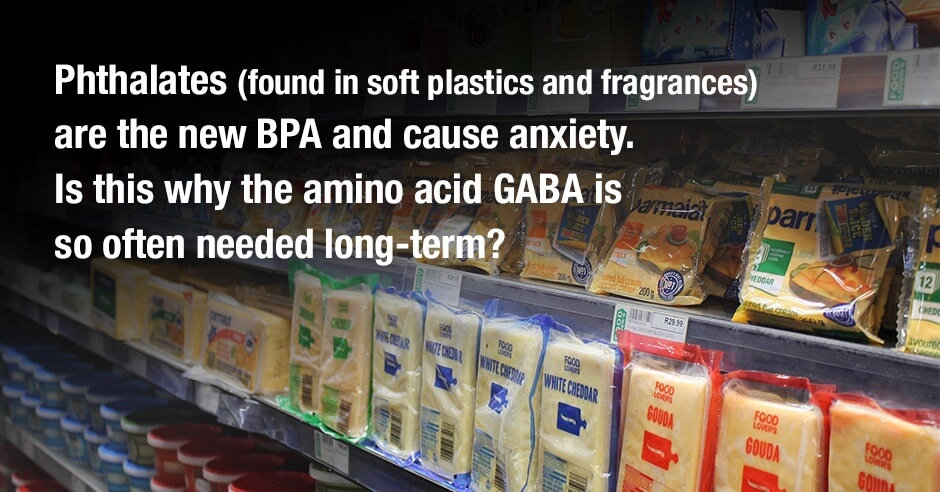
Using the amino acid GABA (as a supplement) for anxiety (the physical tension type of anxiety) should ideally be short-term to address your low levels of GABA (gamma-amino butyric acid). Why then do many folks only find relief when using GABA long-term? What is depleting their GABA levels on an ongoing basis? One reason is that anxiety is caused with ongoing exposure to phthalates (found in soft plastics and fragrances). Ongoing exposure can continue to deplete GABA levels so supplementation is needed long-term. This blog reviews sources of phthalates and the supporting (and growing) research. And also the fact that we’re being told that phthalates are safe.

The awareness and concern about BPA (bisphenol A), an industrial chemical found in hard plastics (and a contributing factor when it comes to anxiety), is being surpassed by an awareness and concern about phthalates (pronounced “thalates”).

I believe “Phthalates are the new BPA!” and “Fragrance is the new smoking!” and I suspect we’ll be seeing more and more research on the adverse health impacts (including anxiety and other conditions – more on that below) and hopefully more and more awareness too.

Here is a brief summary:

  • They act as binding agents and make plastics flexible….and are found in plastics in the kitchen, vinyl toys (it makes them soft), shower curtains, paint and nail polish.
  • They are also found in anything with a fragrance – like air-fresheners and most commercial house-cleaning products, and cosmetics such as shampoos, moisturizers, sun cream and of course perfumes, deodorants and after-shave products. I cringe every time I see the beautiful perfume ads on TV and when I walk past someone with loads of after-shave wafting behind them

My assumption is that you’ve heard of phthalates and know they are harmful. They are well-recognized as being an endocrine disruptor but less is known about the effects on GABA levels and increasing anxiety (more on that below).

If you are new to phthalates, the organization called Safer Chemicals Healthy Family, has an excellent overview. They share that

Food is the leading source of exposure. Phthalates have been found in dairy products, meats, fish, oils & fats, baked goods, infant formula, processed foods, and fast foods. Phthalates are not intentionally added ingredients but rather “indirect” food additives. They easily escape from food processing equipment, food packaging, and food preparation materials, and contaminate food at points all along the supply chain.

They list the many health impacts (with links to studies): Endocrine disruption (i.e. affecting your hormones); abnormalities in the male reproductive system; reduced testosterone levels and altered thyroid hormone production; neurodevelopmental effects in infants or children (ADHD-like behaviors, aggression, depression, a lower IQ, and autism); liver and kidney toxicity; cancer; and asthma.

This article also addresses the fact that we’re being told that phthalates are safe when they are not.

Phthalates are associated with emotional symptoms (depression, anxiety and stress) in male and female students

In addition to the above health impacts, phthalates play a role in causing anxiety too. This 2020 paper, Association of Urinary Phthalates Metabolites Concentration With Emotional Symptoms in Chinese University Students, reports the results of a school-based cross-sectional survey that was carried out among 990 university students aged 17-24 years:

  • the concentration of six phthalate metabolites in urine was measured (with a detection rate of 79.6% to 99.7%)
  • The positive rates of depressive symptoms, anxiety symptoms, and stress were 17.4%, 24.8%, and 9.5%, respectively
  • One type of phthalates affected the males more severely and another type affected the females more

The authors concluded that:

Our study demonstrates that Chinese university students are widely exposed to phthalates; and high- and low-molecular weight phthalates are associated with emotional symptoms in males and females, respectively.

It’s seldom one cause that is contributing to anxiety and emotional symptoms, as illustrated by this study: Association Between Screen Time, Fast Foods, Sugar-Sweetened Beverages and Depressive Symptoms in Chinese Adolescents. We need to address all factors. And here it’s a combination of screen time, as well as junk food and sugar, and the plastic containers and soda bottles that are a source of phthalates.

As you can see, fast foods are a huge source – Phthalate and novel plasticizer concentrations in food items from U.S. fast food chains: a preliminary analysis. This paper was published in May 2022 and already we’re seeing “certain ortho-phthalates (i.e., di-n-butyl phthalate (DnBP) and di(2-ethylhexyl) phthalate (DEHP)) have been phased out and replaced with other plasticizers (e.g., dioctyl terephthalate (DEHT))”. This mirrors what we saw with BPA being replaced with BPS and BPF, which are concerning.

The anxiety-inducing effects caused by phthalates could be alleviated by GABA

What is very encouraging is the fact that the amino acid GABA can alleviate the anxiety caused by phthalates. In this 2018 animal study, Intervention Effect of Gamma Aminobutyric Acid on Anxiety Behavior Induced by Phthalate (2-ethylhexyl Ester) in Rats. This is the conclusion:

  • DEHP [phthalate] exposure induced anxiety in rats, which may be achieved through elevating nitric oxide and nitric oxide synthase levels in the prefrontal cortex of rats.
  • The [anxiety-inducing] effects caused by DEHP could be alleviated by GABA.

This study was looking at Di(2-ethylhexyl) phthalate (DEHP), and the authors shared that “it is one of the most widely used phthalate esters.” As you can see from the 2022 paper I shared above, it’s now being replaced with other plasticizers.

This 2019 paper, Effect of di(2-ethylhexyl) phthalate on the neuroendocrine regulation of reproduction in adult male rats and its relationship to anxiogenic behavior: Participation of GABAergic system didn’t use the amino acid GABA but do report a “decrease in hypothalamic gamma-aminobutyric acid (GABA) concentration” and the authors “suggest that GABA could participate in the modulation of reproductive and behavioral DEHP effects.”

Long-term use of GABA because of phthalates: using GABA should ideally be short-term

We clearly need human studies to confirm all this but until then we can use what we know about GABA and supplement with the amino acid GABA (as a supplement) when there are low GABA symptoms of physical anxiety, tension, stiff and tense muscles, intrusive thoughts, insomnia, and self-medicating with alcohol or sugar.

As mentioned above, using GABA should ideally be short-term – 3 to 12 months – to address your low levels of GABA. I propose that many folks only find relief when using GABA long-term and it’s partly due to phthalates (and other chemicals) depleting their GABA levels on an ongoing basis.

I’m in favor of long-term use of GABA supplementation as long as GABA levels continue to be low and GABA supplementation offers relief.

But you also need to be addressing your exposure to these chemicals and doing ongoing detoxification. And also addressing diet, gut-health, infections, low zinc, low vitamin B6, low serotonin etc. (on an as-needed basis).

Addressing exposure and ongoing detoxification

As far as addressing our exposure to these chemicals, reduction and ideally avoidance is ideal. The Safer Chemicals Healthy Family overview includes plenty of practical steps.

As far as ongoing detoxification and nutritional support I encourage regular infrared sauna (my personal favorite is the portable Therasage sauna), rebounding, dry skin brushing, optimizing lymph drainage and exercise.

The research on NAC alone and a combination of zinc and NAC is encouraging even if it’s not specific to anxiety. Also, research shows that rosmarinic acid, a natural polyphenol “confers protection against DEHP-induced thyroid inflammation.”

You can read about other more general detox approaches on this pesticide spill blog: rooibos tea, castor oil packs, vitamin D (it’s often lower in those exposed to phthalates), epsom salts baths, apple cider vinegar and broccoli sprouts (as a source of sulforaphane).

Resources if you are new to using GABA as a supplement

If you are new to using GABA as a supplement, here is the Amino Acids Mood Questionnaire from The Antianxiety Food Solution (you can see all the low GABA symptoms).

If you suspect low levels of GABA or any of the neurotransmitters and do not yet have my book, The Antianxiety Food Solution – How the Foods You Eat Can Help You Calm Your Anxious Mind, Improve Your Mood, and End Cravings, I highly recommend getting it and reading it before jumping in and using amino acids on your own so you are knowledgeable. And be sure to share it with the team you or your loved one is working with.

There is an entire chapter on the amino acids and they are discussed throughout the book in the sections on gut health, blood sugar control, sugar cravings, self-medicating with alcohol and more.

The book doesn’t include product names (per the publisher’s request) so this blog, The Antianxiety Food Solution Amino Acid and Pyroluria Supplements, lists the amino acids that I use with my individual clients and those in my group programs.

If, after reading this blog and my book, you don’t feel comfortable figuring things out on your own (i.e. doing the symptoms questionnaire and respective amino acids trials), a good place to get help is the GABA Quickstart Program. This is a paid online/virtual group program where you get my guidance and community support. There are many moms in the program who are having much success with their kids.

If you are a practitioner, join us in The Balancing Neurotransmitters: the Fundamentals program. This is also a paid online/virtual program with an opportunity to interact with me and other practitioners who are also using the amino acids.

Have you been using GABA for longer than 3-12 months? (please share how long and how it’s helping)

Do you think phthalates could be a factor in keeping your GABA levels low?

What have you done to reduce or eliminate phthalates from your life? (please share which sources and how)

If you have questions please share them here too.

Filed Under: Anxiety, Detoxification, GABA, Toxins Tagged With: anxiety, Balancing Neurotransmitters: the Fundamentals. NAC, BPA, depression, detoxification, emotional symptoms, endocrine disruptor, fast foods, fragrances, GABA, GABA Quickstart program, long-term, phthalates, physical-tension, rosmarinic acid, sauna, short-term, soda, soft plastics, sulforaphane, vitamin D, zinc

  • Page 1
  • Page 2
  • Page 3
  • Interim pages omitted …
  • Page 8
  • Go to Next Page »

Primary Sidebar

NEW! GABA QuickStart Homestudy (with special intro pricing)

gaba quickstart homestudy

Free Report

9 Great Questions Women Ask about Food, Mood and their Health

You'll also receive a complimentary subscription to my ezine "Food, Mood and Gal Stuff"


Connect with me

Popular Posts

  • Amino Acids Mood Questionnaire from The Antianxiety Food Solution
  • The Antianxiety Food Solution Amino Acid and Pyroluria Supplements
  • Pyroluria Questionnaire from The Antianxiety Food Solution
  • Collagen and gelatin lower serotonin: does this increase your anxiety and depression?
  • Tryptophan for the worry-in-your-head and ruminating type of anxiety
  • GABA for the physical-tension and stiff-and-tense-muscles type of anxiety
  • The Antianxiety Food Solution by Trudy Scott
  • Seriphos Original Formula is back: the best product for anxiety and insomnia caused by high cortisol
  • Am I an anxious introvert because of low zinc and vitamin B6? My response to Huffington Post blog
  • Vagus nerve rehab with GABA, breathing, humming, gargling and key nutrients

Recent Posts

  • What do I use instead of Seriphos to help lower high cortisol that is affecting my sleep and making me anxious at night?
  • BeSerene™ GABA/theanine cream eases severe muscle tension in her neck/shoulders, prevents her bad headaches and quells her anxiety
  • How the correct approach, dose and sublingual use of GABA can be calming and not cause a flushed and itchy face and neck
  • The amino acid glutamine improves low mood by addressing gut health, and it has calming effects too
  • Flight anxiety with heightened breath, physical tension and also fearing the worst (the role of low GABA and low serotonin)

Categories

  • 5-HTP
  • AB575
  • Addiction
  • ADHD
  • Adrenals
  • Alcohol
  • Allergies
  • Alzheimer's disease
  • Amino Acids
  • Anger
  • Antianxiety
  • Antianxiety Food Solution
  • Antidepressants
  • Anxiety
  • Anxiety and panic
  • Autism
  • Autoimmunity
  • benzodiazapines
  • Bipolar disorder
  • Books
  • Caffeine
  • Cancer
  • Candida
  • Children/Teens
  • Collagen
  • Cooking equipment
  • Coronavirus/COVID-19
  • Cravings
  • Depression
  • Detoxification
  • Diabetes
  • Diet
  • DPA/DLPA
  • Drugs
  • EFT/Tapping
  • EMF
  • EMFs
  • Emotional Eating
  • Endorphins
  • Environment
  • Essential oils
  • Events
  • Exercise
  • Fear
  • Fear of public speaking
  • Fertility and Pregnancy
  • Fish
  • Food
  • Food and mood
  • Functional neurology
  • GABA
  • Gene polymorphisms
  • General Health
  • Giving
  • Giving back
  • Glutamine
  • Gluten
  • GMOs
  • Gratitude
  • Gut health
  • Heart health/hypertension
  • Histamine
  • Hormone
  • Hyperparathyroidism
  • Hypoglycemia
  • Immune system
  • Inflammation
  • Insomnia
  • Inspiration
  • Introversion
  • Joy and happiness
  • Ketogenic diet
  • Lithium orotate
  • Looking awesome
  • Lyme disease and co-infections
  • MCAS/histamine
  • Medication
  • Men's health
  • Mental health
  • Mercury
  • Migraine
  • Mold
  • Movie
  • MTHFR
  • Multiple sclerosis
  • Music
  • NANP
  • Nature
  • Nutritional Psychiatry
  • OCD
  • Osteoporosis
  • Oxalates
  • Oxytocin
  • Pain
  • Paleo
  • Parasites
  • Parkinson’s disease
  • PCOS
  • People
  • PMS
  • Postpartum
  • PTSD/Trauma
  • Pyroluria
  • Questionnaires
  • Real whole food
  • Recipes
  • Research
  • Schizophrenia
  • serotonin
  • SIBO
  • Sleep
  • Special diets
  • Sports nutrition
  • Stress
  • Sugar addiction
  • Sugar and mood
  • Supplements
  • Teens
  • Testimonials
  • Testing
  • The Anxiety Summit
  • The Anxiety Summit 2
  • The Anxiety Summit 3
  • The Anxiety Summit 4
  • The Anxiety Summit 5
  • The Anxiety Summit 6
  • Thyroid
  • Thyroid health
  • Toxins
  • Tryptophan
  • Tyrosine
  • Uncategorized
  • Vegan/vegetarian
  • Women's health
  • Yoga

Archives

  • October 2025
  • September 2025
  • August 2025
  • July 2025
  • June 2025
  • May 2025
  • April 2025
  • March 2025
  • February 2025
  • January 2025
  • November 2024
  • October 2024
  • September 2024
  • August 2024
  • July 2024
  • June 2024
  • May 2024
  • April 2024
  • March 2024
  • February 2024
  • January 2024
  • December 2023
  • November 2023
  • October 2023
  • September 2023
  • August 2023
  • July 2023
  • June 2023
  • May 2023
  • April 2023
  • March 2023
  • February 2023
  • January 2023
  • December 2022
  • November 2022
  • October 2022
  • September 2022
  • August 2022
  • July 2022
  • June 2022
  • May 2022
  • April 2022
  • March 2022
  • February 2022
  • January 2022
  • December 2021
  • November 2021
  • October 2021
  • September 2021
  • August 2021
  • July 2021
  • June 2021
  • May 2021
  • April 2021
  • March 2021
  • February 2021
  • January 2021
  • December 2020
  • November 2020
  • October 2020
  • September 2020
  • August 2020
  • July 2020
  • June 2020
  • May 2020
  • April 2020
  • March 2020
  • February 2020
  • January 2020
  • December 2019
  • November 2019
  • October 2019
  • September 2019
  • August 2019
  • July 2019
  • June 2019
  • May 2019
  • April 2019
  • March 2019
  • February 2019
  • January 2019
  • December 2018
  • November 2018
  • October 2018
  • September 2018
  • August 2018
  • July 2018
  • June 2018
  • May 2018
  • April 2018
  • March 2018
  • February 2018
  • January 2018
  • December 2017
  • November 2017
  • October 2017
  • September 2017
  • August 2017
  • July 2017
  • June 2017
  • May 2017
  • April 2017
  • March 2017
  • February 2017
  • January 2017
  • December 2016
  • November 2016
  • October 2016
  • September 2016
  • August 2016
  • July 2016
  • June 2016
  • May 2016
  • April 2016
  • March 2016
  • February 2016
  • January 2016
  • December 2015
  • November 2015
  • October 2015
  • September 2015
  • August 2015
  • July 2015
  • June 2015
  • May 2015
  • April 2015
  • March 2015
  • February 2015
  • January 2015
  • December 2014
  • November 2014
  • October 2014
  • September 2014
  • August 2014
  • July 2014
  • June 2014
  • May 2014
  • April 2014
  • March 2014
  • February 2014
  • January 2014
  • December 2013
  • November 2013
  • October 2013
  • September 2013
  • August 2013
  • July 2013
  • June 2013
  • May 2013
  • April 2013
  • March 2013
  • February 2013
  • January 2013
  • December 2012
  • November 2012
  • October 2012
  • August 2012
  • July 2012
  • June 2012
  • May 2012
  • April 2012
  • March 2012
  • February 2012
  • January 2012
  • December 2011
  • November 2011
  • October 2011
  • September 2011
  • August 2011
  • July 2011
  • June 2011
  • May 2011
  • April 2011
  • March 2011
  • February 2011
  • January 2011
  • December 2010
  • October 2010
  • September 2010
  • July 2010
  • May 2010
  • April 2010
  • March 2010
  • February 2010
  • January 2010
  • November 2009

Share the knowledge!

The above statements have not been evaluated by the Food and Drug Administration. Products listed in this website are not intended to diagnose, treat, cure or prevent any disease.

The information provided on this site is for informational and educational purposes only and is not intended as a substitute for advice from your physician or other health care professional. You should consult with a healthcare professional before starting or modifying any diet, exercise, or supplementation program, before taking or stopping any medication, or if you have or suspect you may have a health problem.


Copyright © 2026 Trudy Scott. All Rights Reserved. | Privacy | Terms and Conditions | Refund Policy | Medical Disclaimer

Free Report

9 Great Questions Women Ask about Food, Mood and their Health

You’ll also receive a complimentary subscription to my ezine “Food, Mood and Gal Stuff”