• Skip to primary navigation
  • Skip to main content
  • Skip to primary sidebar

everywomanover29 blog

Food, Mood and Women's Health – Be your healthiest, look and feel great!

  • Blog
  • About
  • Services
  • Store
  • Resources
  • Testimonials
  • The Book
  • Newsletter
  • Contact
  • Search this site

tryptophan

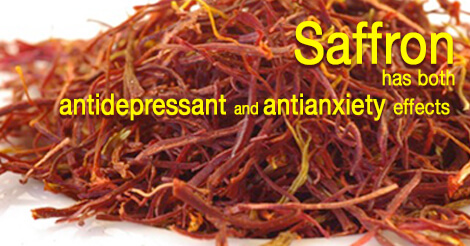
Saffron has both antidepressant and antianxiety effects

December 30, 2016 By Trudy Scott 71 Comments

In a new study published in Pharmacopsychiatry, Crocus sativus L. versus citalopram in the treatment of major depressive disorder with anxious distress: a double-blind, controlled clinical trial, saffron (Crocus sativus L.) has been shown to have both antidepressant and antianxiety effects. It’s also anti-inflammatory and an antioxidant.

In this study patients received either saffron or an SSRI called citalopram/Celexa:

66 patients with major depressive disorder accompanied by anxious distress were randomly assigned to receive either saffron (30 mg/day) or citalopram (40 mg/day) for 6 weeks.

The Hamilton Rating Scale for Depression (HAM-D) and Hamilton Rating Scale for Anxiety (HAM-A) were used to assess the effectiveness of the treatment during the study.

60 participants finished the study and they all showed significant improvement in depression and anxiety scores, with no significant difference in effectiveness or side effects from either the saffron or citalopram.

The authors make this conclusion:

The present study indicates saffron as a potential efficacious and tolerable treatment for major depressive disorder with anxious distress.

A 2014 systematic review of clinical studies and examination of underlying antidepressant mechanisms of action of saffron found that:

saffron’s antidepressant effects potentially are due to its serotonergic, antioxidant, anti-inflammatory, neuro-endocrine and neuroprotective effects

This means that saffron could potentially be used in place tryptophan or 5-HTP if you score high on the low serotonin section of the amino acid questionnaire (anxiety, worry-in-the head, obsessiveness, negativity and depression, irritability, PMS, afternoon and evening cravings and insomnia) and yet do not seem to benefit from either of these two amino acids.

And you’ll be getting the added antioxidant, anti-inflammatory, neuro-endocrine and neuroprotective effects.

If you do well with tryptophan and/or 5-HTP, I suspect that using a small amount of saffron together with these amino acids could enhance the effects.

Saffron: GABA is one of the mechanisms of action

Update: Dec 20, 2024

I’m adding this section about GABA as a result of saffron coming up in a question in the GABA Quickstart 2.0 program this week. One of the participants asked me this question: “I’m seeing a lot of new Saffron supplements stating that it helps with GABA. Your thoughts on this?” 

According this this 2022 paper, Saffron (Crocus sativus L.): A Source of Nutrients for Health and for the Treatment of Neuropsychiatric and Age-Related Diseases

Investigations have shown that aqueous saffron extracts and its constituent safranal exert anxiolytic effects similar to that of diazepam, probably through their interaction with the benzodiazepine binding site at the GABAA receptor.

In addition, studies have demonstrated that crocins alleviated the obsessive compulsive behavior in rats through an antagonistic action at the 5-HT2C receptor site.

This is a subtype of the 5-HT2 serotonin receptor site and further supports the impacts saffron has on serotonin.

Another paper, also published in 2022, lists GABA as one of the mechanisms of action, in addition to its effects on monoamines (serotonin and dopamine) and N-methyl-d-aspartate (NMDA).

Additional resources when you are new to using GABA and other amino acids as supplements

As always, I use the symptoms questionnaire to figure out if low serotonin or low GABA or other neurotransmitter imbalances may be an issue.

If you suspect low levels of any of the neurotransmitters and do not yet have my book, The Antianxiety Food Solution – How the Foods You Eat Can Help You Calm Your Anxious Mind, Improve Your Mood, and End Cravings, I highly recommend getting it and reading it before jumping in and using amino acids on your own so you are knowledgeable. And be sure to share it with the practitioner/health team you or your loved one is working with.

There is an entire chapter on the amino acids and they are discussed throughout the book in the sections on gut health, gluten, blood sugar control (this is covered in an entire chapter too), sugar cravings, anxiety and mood issues.

The book doesn’t include product names (per the publisher’s request) so this blog, The Antianxiety Food Solution Amino Acid and Pyroluria Supplements, lists the amino acids that I use with my individual clients and those in my group programs.

If, after reading this blog and my book, you don’t feel comfortable figuring things out on your own (i.e. doing the symptoms questionnaire and respective amino acids trials), a good place to get help is the GABA QuickStart Program (if you have low GABA symptoms). This is a paid online/virtual group program where you get my guidance and community support.

If you are a practitioner, join us in The Balancing Neurotransmitters: the Fundamentals program. This is also a paid online/virtual program with an opportunity to interact with me and other practitioners who are also using the amino acids.

Wrapping up and your feedback

I have yet to use saffron with my clients so I’d love to hear from you (so we all can benefit and learn from each other):

  • Have you used saffron and found it to be effective for your anxiety and/or depression?
  • If you’re a practitioner, have you used it with patients or clients?
  • Have you found 30 mg a day to be the most effective dose and how quickly have you noticed benefits? What symptoms have improved the most?
  • Have you combined saffron with tryptophan or 5-HTP?
  • Have you combined saffron with GABA?

Feel free to post your questions below too.
Filed Under: Antianxiety Tagged With: 5-HTP, saffron, tryptophan

I am on 5-HTP for anxiety and I am wondering about trying tryptophan instead

December 16, 2016 By Trudy Scott 74 Comments

Both 5-HTP and tryptophan help to boost serotonin levels so you can feel happy, calm, sleep well and not crave carbs. I typically have my clients who have low serotonin symptoms start with a trial of tryptophan because it I see such excellent results with this amino acid. That being said, some people simply do better on one versus the other and you may do better with 5-HTP. If you have low serotonin symptoms and are using either of these amino acids and not getting the expected results, it’s worth considering a change.

Here is a question I recently received on the blog. It’s something I’m commonly asked about and something I deal with often when working one-on-one with clients:

I am on 5-HTP (400 mg) [for anxiety]. I am wondering about trying tryptophan instead. What is the best (safest) way to make the switch? What is the starting dose you usually suggest? I am tapering off SSRIs so I know my serotonin reserves are low.

Here are some of the reasons you may want to consider switching and doing a trial of tryptophan

  • the 5-HTP is not working as you would expect for your anxiety or depression, or other low serotonin symptoms like PMS, insomnia, afternoon and evening carb cravings, negative self-talk, perfectionism, worry in the head and ruminations, and even anger issues or irritability (here is the complete questionnaire)
  • the 5-HTP is causing digestive issues
  • you have done an adrenal saliva test and discovered you have high cortisol. If you feel wired-tired I like to use tryptophan because 5-HTP has been shown to raise cortisol levels

Depending on how severe your symptoms are I would have you slowly replace one with the other, keeping in mind that 50mg 5-HTP is roughly equivalent to 500mg tryptophan.

In this particular case she was taking 400 mg 5-HTP and was surprised to hear that she may now need 2000 mg tryptophan, saying “that seems like a lot!”

Here is my feedback:

2000mg tryptophan isn’t too much if you have low serotonin symptoms and need it. If we were working together I would have her start with a trial of 500mg which is the typical starting amount and increase based on her response. If 500mg helps some symptoms but doesn’t give complete resolution of symptoms then I’d have her try 1000mg and monitor symptoms, and then go up to 1500mg and even 2000mg.

She may respond better to tryptophan and may only need 500mg or 1000mg or she may in fact need the full 2000mg.

She is currently taking an SSRI, so I would assume her doctor already knows she has been using 5-HTP and knows her plans to switch, giving approval and monitoring for possible serotonin syndrome. She would also take the tryptophan at least 6 hours from the SSRI.

Here is additional information on SSRI tapering while using amino acids.

Obviously a similar approach could be used to switch from tryptophan to 5-HTP.

I also only ever recommend the Lidtke brand of tryptophan. You can find this and the other amino acids I use with my clients here.

Have you switched from 5-HTP to tryptophan and seen added benefits?

Have you switched from tryptophan to 5-HTP and seen added benefits?

If you’re a practitioner please share if you’ve used this approach successfully.

Filed Under: Tryptophan Tagged With: 5-HTP, tryptophan

How do I taper from my antidepressant with tryptophan and can I safely use the other amino acids?

November 18, 2016 By Trudy Scott 121 Comments

antidepressant-tapering

Today’s article is based on a question I am seeing more and more on the blog: How do I taper from my antidepressant with tryptophan and can I safely use the other amino acids?

I find my clients do better when tapering off an antidepressant (which is often prescribed for anxiety and panic attacks) when their nutritional status is solid. Incorporating diet changes and adding amino acids and other nutrients first can result in a more successful taper with less side-effects. This would mean starting with the basics – eating real whole food, incorporating quality animal protein, eating to balance blood sugar, and removing gluten, caffeine and sugar.

If needed and based on testing results, it’s important to address any other nutritional deficiencies such as low iron, low vitamin D, low stomach acid, low total cholesterol, low B12 (and whatever else is an issue), plus support the adrenals/sex hormones/thyroid if needed and addressing gut health like leaky gut and dysbiosis.

Adding a good copper free multivitamin and often the addition of zinc and vitamin B6, evening primrose oil and possibly fish oil – the latter based on each person’s unique needs.

With antidepressants such as selective serotonin-reuptake inhibitors (SSRIs), I have my clients work with their prescribing doctor and get the approval to add tryptophan (or 5-HTP) 6 hours apart from the SSRI. If they are taking the medication at night they get the approval from their doctor to switch it to the morning, and will take tryptophan (or 5-HTP) at least 6 hours later, mid-afternoon and evening.

If they decide to do both the medication and tryptophan (or 5-HTP), they get a protocol for the SSRI taper for the future. This is important. If you are in too big a rush to start right away, it often causes more issues. It’s also important to make sure you get a very slow taper protocol from your doctor. Some antidepressants are harder to taper (Paxil is notoriously difficult) and they all should be tapered really slowly.

The plan is to start to taper the SSRI once you have been using the tryptophan (or 5-HTP) for at least 4 to 8 weeks and are seeing real benefits by using it. This translates to much much less or none of the following symptoms: anxiety, depression, insomnia, rumination, worry, negative-self-talk, perfectionism, afternoon and evening carbohydrate cravings, PMS, rage or anger.

For some of my clients it’s 3 months before they feel they are ready to taper. This may be because of feedback they have provided based on prior taper attempts and how they are feeling this time. It may also be based on what else is going on in their lives like a stressful work situation. It may also be based on the time of the year: winter is generally not a good time to taper and definitely not if you suffer from increased depression or anxiety in winter.

The tryptophan (or 5-HTP) is adjusted up as needed while continuing to taper the SSRI.

The doctor is always kept informed and monitors for the possibility of serotonin syndrome. I learned about the potential concerns about serotonin syndrome when using tryptophan or 5-HTP with an SSRI from Julia Ross, author of The Mood Cure, and so I continue to caution my clients about this.

When I interviewed Dr. Peter Bongiorno in season 4 of the Anxiety Summit (Serotonin and anxiety: tryptophan, 5-HTP, serotonin syndrome and medication tapers), he shared that he is not concerned about serotonin syndrome being an issue with tryptophan or 5-HTP dosed with an SSRI, even if taken at the same time. He cited research that found the combination of tryptophan and SSRI did not result in serotonin syndrome in any of the participants.

Dr. Bongiorno also uses the same approach to address the basics:

the most important thing is that we really establish all the basics and that they’re in the healthiest place possible.  Because if those aren’t there, if a patient just gets off the medication and we haven’t really done anything to change the underlying reasons why they got to the place where they had the mood issue, in most cases they’re going to go back there again.

Some people need amino acid support in more than just the low serotonin area so we review the amino acid questionnaire and consider trials of GABA and other amino acids too. All this only applies for SSRIs and tryptophan or 5-HTP. The other amino acids can safely be used with SSRIs, and it’s not uncommon to also have low GABA, low endorphins, low catecholamines and low blood sugar and need them all, but it’s still best to discuss them with the prescribing doctor.

We also review all the amino acid precautions.

Some people choose to work with their doctor to taper the SSRI and then add the tryptophan (or 5-HTP) once they have quit the medication. I have found that this makes it much harder to do and more side-effects are seen. With the amino acids you start to get some relief right away and have hope on the first day! They also make it so much easier to quit the sugar, gluten and caffeine without having to use will-power.

In summary, these are my recommendations for doing an SSRI taper with amino acids:

  • doctor’s approval to taper the SSRI and use amino acids
  • address diet and nutritional deficiencies first – before starting to taper
  • work with someone knowledgeable in amino acid use
  • OR educate yourself by
    • reading my book The Antianxiety Food Solution , Julia’s book The Mood Cure and Dr. Kelly Brogan’s new book A Mind of Your Own
    • listening to the Anxiety Summit interviews

(please don’t simply read one or two blogs and jump in to this)

  • use the amino acids from day one to start addressing low levels of all the brain chemicals
  • use the tryptophan or 5-HTP at least 6 hours away from the SSRI

I would like to add that Dr. Brogan shares that coffee enemas help her patients who are doing medication tapers.

If you are a practitioner, join us in The Balancing Neurotransmitters: the Fundamentals program. It’s an opportunity to interact with me and other practitioners who are also using the amino acids and helping their clients/patients to taper from antidepressants (always working with the prescribing doctor).

Have you used a similar SSRI taper protocol? And how did it work for you? What would you have done differently? And what advice would you give someone contemplating an SSRI taper?

Have you found that coffee enemas have helped?

If you are a practitioner, has the above approach been helpful for your clients/patients?

Filed Under: Antidepressants Tagged With: 5-HTP, amino acids, antidepressant, anxiety, depression, serotonin, SSRI, taper, tryptophan

Anxiety and the adrenals: low zinc and high copper

October 31, 2016 By Trudy Scott 23 Comments

two-girls

Anxiety, feelings of constant overwhelm and fatigue, plus insomnia, sugar cravings, the inability to control blood sugar, lack of mental clarity… these symptoms can be due to adrenal issues and this condition is brutally disruptive. And yes, you can suffer from all of the above at once!

In just a few weeks, from November 7-12, my colleague and good friend, NY Times bestselling author Dr. Alan Christianson will be hosting The Adrenal Reset Summit. It’s co-hosted by nutritionist Evan Brand.

I cover the Adrenals and Anxiety in my interview with Dr. Christianson and a few of the aspects we cover are low zinc and high copper.  

Here is a snippet from me about zinc:

zinc is very underrated as being a nutrient that is commonly deficient and certainly when it comes to anxiety, it’s a huge factor. We have the zinc-copper imbalance and when we’ve got very high copper levels and low zinc levels, we may feel more anxious. But zinc is really, really important for so many things. I just mentioned serotonin, it’s really important as a cofactor for making serotonin and the other neurotransmitters like GABA which is a calming neurotransmitter.

It’s really, really important for adrenal function as well. There was actually a really nice paper that was published in December 2015 [Effects of Physical Activity on Trace Elements and Depression Related Biomarkers in Children and Adolescents], looking at children and adolescents and found that children and adolescents with lower levels of zinc also had low serotonin, they had high copper levels, and they also had lower cortisol levels, and sometimes, they had high cortisol levels. So, it varies but they definitely have issues with their cortisol levels and that’s obviously going to be a big factor when it comes to how they’re able to handle stress, what their mood levels are going to be like, what their cognitive function is going to be like, and everything else. So, zinc is a really important thing. It’s not talked about a lot and it’s something that is definitely a big factor.

I didn’t share this specific information during the interview but here are some of the results from the above study:

Older children, especially girls, had higher levels of depression. Participants with moderate and severe depression had significantly lower physical activity, serotonin, and zinc levels, zinc/copper ratios, and significantly higher copper and cortisol levels.

Physically active boys showed significantly lower depressive scores and improvement in cortisol, serotonin, copper, and zinc concentrations compared to girls of sedentary life style.

A little later in the interview Dr. Christianson shares what happened to him when he was inadvertently exposed to high levels of copper:

This is a brief insight I won’t go too far into but there was a period of time I was studying with a Vedic practitioner and there were these various rituals that I had to do. One of them was involving putting liquids in these containers and drinking and doing [some of these] meditations. The historical vessels [that] were used were copper-based and I got pretty toxic at one point. I had these horrible leg cramps. I really lost my capacity for exercise. It was very dramatic. I had a hard time climbing stairs and odd mood changes and odd twitches and what not. I finally realized that was the culprit and yeah, I did mega doses of zinc which I normally would not have tolerated well but I did fine with during that time and recovered from that. So, those are a real thing! (laughs)

adrenal-reset-summit

I hope you can join us for the summit! The line-up is excellent. Here are a few of the many excellent speakers and their topics:

  • Chris Kresser, M.S., L.Ac – Is Adrenal Fatigue Real?
  • Steph Gadreau, CHNP – Perfectionism and Adrenals
  • Aviva Romm, MD – Adrenal Adaptogens
  • Ben Lynch, ND – Adrenals and Methylation
  • Wendy Myers, FDN, CHHC – Heavy Metal Toxicity
  • Dan Kalish, DC – Adrenal Neurotransmitter Connection
  • JJ Virgin, CNS, CHFS – Preventing Adrenal Burnout
  • Julia Ross, MA – Neurotransmitters and the Food Mood Connection

You can register here https://uo178.isrefer.com/go/arsScott/trudyscottcn/

Filed Under: Adrenals, Events Tagged With: anxiety, breast cancer, DCIS, detoxification, endocrine disruptors, estrogen dominance, fear, GABA, glutathione, liver support, Prevention, Thermography, toxins, tryptophan

Breast cancer: DCIS, thermography, estrogen, toxins, glutathione and anxiety

October 28, 2016 By Trudy Scott 5 Comments

breast-exam

October is Breast Cancer Awareness month so I’ve gathered some wonderful information and resources for you about DCIS, thermography, prevention by addressing estrogen dominance, avoiding endocrine disruptors and environmental pollutants and finally how to boost glutathione for detoxification support.  

Ductal carcinoma in situ/DCIS: many don’t even consider this cancer

My good friend and fellow nutritionist Robin Nielsen recently posted about this on Facebook and because it was so beautifully said, I asked if I could share it:    

A neighbor just told me this morning that she had a double mastectomy in early August due to cancer, stage 0. And then she told me it was “Ductal carcinoma in situ”. I know many women who have reversed this by changing their diet and lifestyle. This is a touchy subject for many, but it breaks my heart to see women removing their breasts when there’s a chance they don’t have to.

If you are in the thick of this right now, trying to decide what to do, do your research. Get lots of opinions from integrative practitioners. Many don’t even consider this cancer.

And if you’ve had this done yourself, you made the right choice. Because whatever we decide for ourselves is right. Sending love out to all women who have had to make this decision.

I asked Robin to share one of her articles and here it is: What You Need to Know About Your Beautiful Breasts and Breast Cancer. These factors have a big impact on our beautiful breasts:

  • The food you eat: inflammatory vs. anti-inflammatory
  • The quality and quantity of sleep
  • The toxins you’re exposed to: environmental, body care and household products, poor quality foods, toxic people, toxic habits and more
  • Your perception of stress and our ability to manage the stress in our lives
  • Your thoughts
  • And other lifestyle factors like exercise, relationships, your sense of community, etc.
  • How you deal with your emotions – your ability to express yourself
  • Your body’s nutrient status – especially Vitamin D3
  • Your ability to restore, nourish and love yourself, i.e. learning how to receive
  • The bras you wear – studies have shown that wearing a bra that’s too tight can restrict vital blood flow and can contribute to toxin build-up in your lymphatic system

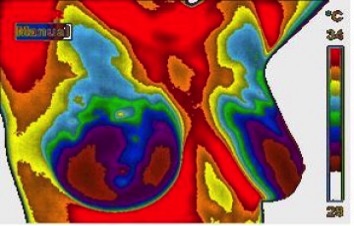
Thermography for early detection and accurate test results

A thermogram image (from http://earlybreastscreen.com/)

Here are The Best Breast Cancer Screening Tests – 6 Reasons Why I Recommend Thermography from Dr. Christiane Northrup, M.D.’s blog:

  1. Good for young, dense breasts and implants. Younger breasts tend to be denser. Thermography doesn’t identify fibrocystic tissue, breast implants, or scars as needing further investigation.
  2.  Detect cell changes in arm pit area. The arm pit area is an area that mammography isn’t always good at screening.
  3.  Great additional test. Thermography can be used as an additional test to help women and their care teams make more informed treatment decisions.
  4.  It Doesn’t Hurt. The pressure of a mammogram machine is equivalent to putting a 50-pound weight on your breast, which can be quite painful for most women.
  5.  No radiation. Another reason the United States Preventative Services Task Force reversed its aggressive mammogram guidelines was because of the exposure to radiation. It’s well known that excessive doses of radiation can increase your risk of cancer. It’s ironic that the test women are using for prevention may be causing the very problem they’re trying to avoid in the first place! And this doesn’t even touch on the harm done to the body from unnecessary biopsies, lumpectomies, mastectomies, chemotherapy, radiation treatment, and so forth.
  6. Thermography is very safe. Thermography is even safe for pregnant and nursing women! It’s merely an image of the heat of your body.

Estrogen dominance as a cause of breast cancer and how to prevent it by eating for hormonal balance

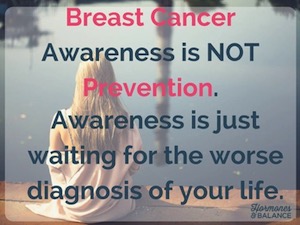
breast-cancer-prevention

Magdalena Wszelaki, founder of Hormones Balance, shares some signs of estrogen dominance as the leading cause of breast cancer: Breast Lumps? Thyroid Nodules? Horrendous PMS? Endometriosis? In her wonderful article: The Breast Cancer and Estrogen Link | 15 Ways to Prevent and Manage Breast Cancer Naturally, she covers how to move from fear to empowerment and prevention by eating for hormonal balance. The article covers estrogen dominance in detail addressing:

  • Most Breast Cancers are not Genetic
  • How Breast Cancer Forms and Multiplies
  • How Estrogen Feeds Cancer
  • Signs of Estrogen Dominance (ED)
  • Not All Estrogens Are Bad

But the big takeaway is that as Magdalena says:

You have more power over your risk of breast cancer than you think. There are many steps you can take to protect yourself. Each one of them has other positive domino effects for your hormonal balance and overall health.

She shares how to rotate seeds into your diet to balance hormone levels, how to increase cruciferous vegetables like kale, broccoli, cauliflower and cabbage and how to love your liver. Here are some of Magdalena’s tips for supporting your liver which she calls the “Estrogen Detox Ally”:

A sluggish liver does not carry out its important job of filtering toxins, chemical byproducts and hormonal metabolites from your body. This can leave you with high circulating levels of the dangerous estrogen metabolites. For Breast Protection:

  • Add bitters in the form of dandelion leaves and root, burdock, chicory root, parsley, radicchio or bitters in tincture form. They stimulate bile production which then helps “flush out” estrogen and other steroid hormones.
  • Add fiber, my favorite being 2 tablespoons of freshly ground golden flax seed. Fiber promotes good bowel movement which is essential in carrying out the toxic estrogens. Chronic constipation can contribute to the re-absorption of antagonistic estrogens back to the blood stream.
  • Add one tablespoon of apple cider vinegar or half a lemon to a glass of warm water and drink it before breakfast in the morning. This helps stimulate the gallbladder to release the bile which is instrumental in “flushing out” estrogen.

Be sure to read the entire article here to read more about gut health, red meat, wine, toxins, inflammation, exercise, smoking, the birth control pill (I also covered this and FAM in a recent blog on the connection to subsequent SSRI use), sleep and finally stress and cuddling!

If you want to learn more I encourage you to check out Magdalena’s no-cost “How to Use Food To Rebalance Your Hormones” Online Workshop.

cooking-for-balance

Avoiding endocrine disruptors and environmental pollutants

My friend and colleague Dr. Heather Paulson is the author of the soon to be released Textbook of Naturopathic Oncology. She is board certified in naturopathic oncology providing expert cancer care while creating a plan that restores health. She integrates her specialization in cancer and her love of nutrition, herbs, homeopathy, counseling, traditional healing, and current research to support you during your cancer journey and for cancer prevention. Dr. Paulson shares this about avoiding endocrine disruptors and environmental pollutants:

Endocrine disruptors are things in our environment that influence our hormonal system. You have probably heard about how plastics have been causing young boys to have feminine breasts. This plastic phenomenon is due to plastic disrupting the endocrine (or hormonal) system in boys. But the endocrine effects of environmental pollutants impacts both men and women. Some of the most common endocrine disruptors you are coming on contact with include plastic, pesticides, fragrances, beauty products, and cleaning products. Eliminating these from your personal environment is a critical piece of cancer prevention that is often missed.

She created this quiz How Toxic Is Your Home to help you see how well you are doing with endocrine disruptors. You can also find several checklists on her website to help you eliminate the necessary chemicals from your kitchen, yard, bedroom, and bathroom.

Boost glutathione levels to support the body’s detoxification channels

green-asparagus


And finally, my friend and colleague (and fellow South African) Kirsten Nussgruber shares the importance of reducing the toxic burden. When faced with the biggest challenge of her life – being diagnosed with aggressive breast cancer twice within a short three year period – Kirsten was forced to completely reevaluate what she believed was already a healthy lifestyle and now advocate for:

  • Eating clean and real food
  • Applying clean cosmetics and skin care products
  • And supporting the body’s detoxification channels

Kirsten shares the role of glutathione and ways to support body’s detoxification channels by boosting glutathione levels, often called your master detoxifier.

In its role as detoxifier it plays a crucial role in helping the body bind and get rid of many environmental toxins such as herbicides, pesticides, fungicides, insecticides, solvents, dyes, plastics, detergents and nitrosamines often found in processed foods.

Glutathione is also known to be cancer-preventing and has been found deficient in cancer patients. It can strengthen natural killer cells, a part of your immune system you want to have ready for action at all times!

In her blog post, she covers glutathione supplementation and shares a list of whole foods that boost glutathione production:
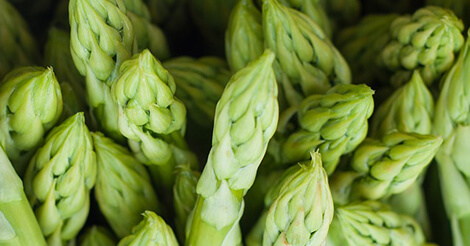
asparagus, acornsquash, avocados, broccoli, cabbage, cantaloupe, garlic, grapefruit, leeks, okra, onions, oranges, peaches, potatoes, spinach, strawberries, tomatoes, walnuts, watermelon, and zucchini.

Don’t be driven by fear and anxiety

As I said in my 2013 Breast Cancer Awareness blog: don’t be driven by fear and anxiety, instead use these wonderful resources as tools so you can be proactive and prevent breast cancer.

If you do get to a place where the anxiety and fear becomes overwhelming, don’t forget about the targeted individual amino acids like GABA and tryptophan for eliminating the anxiety and worry, obsessive thinking, negative self-talk, insomnia and overwhelm.

Here’s to beautiful healthy breasts for you and every woman!

Filed Under: Women's health Tagged With: anxiety, breast cancer, DCIS, detoxification, endocrine disruptors, estrogen dominance, fear, GABA, glutathione, liver support, Prevention, Thermography, toxins, tryptophan

DPA to end comfort-eating, end weepiness and boost endorphins

September 10, 2016 By Trudy Scott 83 Comments

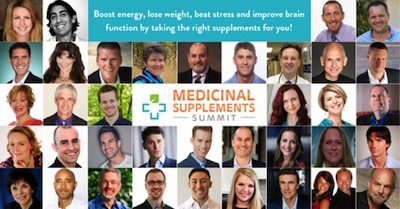
medicinal-supplements-summit-speakers

The Medicinal Supplements Summit runs September 12 -19 and is dedicated to helping you learn the latest in supplement customization to boost energy, lose weight, beat stress, improve brain function and heal your body! 

My interview addresses amino acids for both anxiety and depression – I talk about GABA, tryptophan, 5-HTP (and when not to use it), DPA, glutamine and tyrosine.

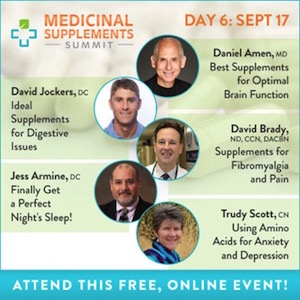
medicinal-supplements-summit-day6

Wendy asks me to share more about DPA for the low endorphins kind of depression, comfort eating, emotional pain, weepiness and physical pain. Here are some snippets on this topic from my interview:

DPA is D-phenylalanine. It’s an amino acid that actually destroys the enzyme that breaks down endorphins. Endorphins are feel-good chemicals that we may relate to when you hear about getting an endorphin rush, when you go for a run or when someone gives you a big hug or when you do something nice for someone or someone does something nice for you, you get that nice sort of feel good feeling, like you’ve got this big hug kind of feeling. So taking this amino acid, DPA, helps, in essence, to raise your endorphins.

There are different kinds of depression. I mentioned the low serotonin depression, which is more the anxiety kind of depression. With the low endorphin kind of depression, you’re very weepy. You may be overly emotional. So if you watched a TV ad or you watched a really sad movie, you may be more prone to crying than the average person. As well as being sensitive to emotional pain, which is the crying and the weepiness, you also tend to be sensitive to physical pain.

So we know that doing acupuncture raises your endorphin levels. And in that way it helps with pain. So taking this amino acid will help with that emotional sadness that you often feel when you’ve got low endorphins. And it is very, very helpful for physical pain as well. I find a number of clients with physical pain that is related to low endorphins. Pain can be related to low oxalates or nightshades, something physical, or even osteoarthritis. So you’ve got some kind of physical issue. But if it’s related to low endorphins you’ll actually see a really nice pain reduction effect from it.

Now, the big thing with low endorphins is this comfort eating. So I mentioned earlier with low serotonin you have the anxiety and the depression and the afternoon and the evening cravings. With low endorphins, as well as this emotional aspect and the pain aspect, the cravings part is very much a comfort kind of craving.

It’s like, “This is my reward. This is my treat. I deserve it.” And when you consume those carbohydrates, that bowl of ice cream, that bowl of cereal, that chocolate chip cookie, you feel like this is my reward. I deserve it. So a lot of people will resonate with the low endorphins kind of emotional eating. And when they get on DPA their mood improves, and this comfort eating goes away.

Tune in to hear my entire interview and all the other great speakers!

You can use this link to register for access: https://qt247.isrefer.com/go/SUPP16reg/trudyscottcn/

And use this link to purchase at pre-summit special prices:
https://qt247.isrefer.com/go/SUPP16order/trudyscottcn/

Filed Under: Events, GABA Tagged With: 5-HTP, aminos for anxiety, comfort eating, depression, DPA, emotional, GABA, glutamine, Medicinal supplements summit, tryptophan, tyrosine

  • « Go to Previous Page
  • Page 1
  • Interim pages omitted …
  • Page 24
  • Page 25
  • Page 26
  • Page 27
  • Page 28
  • Interim pages omitted …
  • Page 31
  • Go to Next Page »

Primary Sidebar

GABA QuickStart Homestudy

gaba quickstart homestudy

Free Report

9 Great Questions Women Ask about Food, Mood and their Health

You'll also receive a complimentary subscription to my ezine "Food, Mood and Gal Stuff"


Connect with me

Popular Posts

  • Amino Acids Mood Questionnaire from The Antianxiety Food Solution
  • The Antianxiety Food Solution Amino Acid and Pyroluria Supplements
  • Pyroluria Questionnaire from The Antianxiety Food Solution
  • Collagen and gelatin lower serotonin: does this increase your anxiety and depression?
  • Tryptophan for the worry-in-your-head and ruminating type of anxiety
  • GABA for the physical-tension and stiff-and-tense-muscles type of anxiety
  • The Antianxiety Food Solution by Trudy Scott
  • Seriphos Original Formula is back: the best product for anxiety and insomnia caused by high cortisol
  • Am I an anxious introvert because of low zinc and vitamin B6? My response to Huffington Post blog
  • Vagus nerve rehab with GABA, breathing, humming, gargling and key nutrients

Recent Posts

  • Her cravings for chips and peanut butter were triggered by stress: GABA ends cravings and reduces physical tension and fear of heights
  • It is truly miraculous to be able to move through life without crippling anxiety and panic
  • GABA and tryptophan combo provide immediate and noticeable relief for tremors and cervical dystonia in just 7 days
  • Red light therapy for back and neck pain, plantar fasciitis and low mood – a complement to the amino acids GABA, DPA and tryptophan
  • What do I use instead of Seriphos to help lower high cortisol that is affecting my sleep and making me anxious at night?

Categories

  • 5-HTP
  • AB575
  • Addiction
  • ADHD
  • Adrenals
  • Alcohol
  • Allergies
  • Alzheimer's disease
  • Amino Acids
  • Anger
  • Antianxiety
  • Antianxiety Food Solution
  • Antidepressants
  • Anxiety
  • Anxiety and panic
  • Autism
  • Autoimmunity
  • benzodiazapines
  • Bipolar disorder
  • Books
  • Caffeine
  • Cancer
  • Candida
  • Children/Teens
  • Collagen
  • Cooking equipment
  • Coronavirus/COVID-19
  • Cravings
  • Depression
  • Detoxification
  • Diabetes
  • Diet
  • DPA/DLPA
  • Drugs
  • EFT/Tapping
  • EMF
  • EMFs
  • Emotional Eating
  • Endorphins
  • Environment
  • Essential oils
  • Events
  • Exercise
  • Fear
  • Fear of public speaking
  • Fertility and Pregnancy
  • Fish
  • Food
  • Food and mood
  • Functional neurology
  • GABA
  • Gene polymorphisms
  • General Health
  • Giving
  • Giving back
  • Glutamine
  • Gluten
  • GMOs
  • Gratitude
  • Gut health
  • Heart health/hypertension
  • Histamine
  • Hormone
  • Hyperparathyroidism
  • Hypoglycemia
  • Immune system
  • Inflammation
  • Insomnia
  • Inspiration
  • Introversion
  • Joy and happiness
  • Ketogenic diet
  • Lithium orotate
  • Looking awesome
  • Lyme disease and co-infections
  • MCAS/histamine
  • Medication
  • Men's health
  • Mental health
  • Mercury
  • Migraine
  • Mold
  • Movie
  • MTHFR
  • Multiple sclerosis
  • Music
  • NANP
  • Nature
  • Nutritional Psychiatry
  • OCD
  • Osteoporosis
  • Oxalates
  • Oxytocin
  • Pain
  • Paleo
  • Parasites
  • Parkinson’s disease
  • PCOS
  • People
  • PMS
  • Postpartum
  • PTSD/Trauma
  • Pyroluria
  • Questionnaires
  • Real whole food
  • Recipes
  • Research
  • Schizophrenia
  • serotonin
  • SIBO
  • Sleep
  • Special diets
  • Sports nutrition
  • Stress
  • Sugar addiction
  • Sugar and mood
  • Supplements
  • Teens
  • Testimonials
  • Testing
  • The Anxiety Summit
  • The Anxiety Summit 2
  • The Anxiety Summit 3
  • The Anxiety Summit 4
  • The Anxiety Summit 5
  • The Anxiety Summit 6
  • Thyroid
  • Thyroid health
  • Toxins
  • Tryptophan
  • Tyrosine
  • Uncategorized
  • Vegan/vegetarian
  • Women's health
  • Yoga

Archives

  • May 2026
  • April 2026
  • October 2025
  • September 2025
  • August 2025
  • July 2025
  • June 2025
  • May 2025
  • April 2025
  • March 2025
  • February 2025
  • January 2025
  • November 2024
  • October 2024
  • September 2024
  • August 2024
  • July 2024
  • June 2024
  • May 2024
  • April 2024
  • March 2024
  • February 2024
  • January 2024
  • December 2023
  • November 2023
  • October 2023
  • September 2023
  • August 2023
  • July 2023
  • June 2023
  • May 2023
  • April 2023
  • March 2023
  • February 2023
  • January 2023
  • December 2022
  • November 2022
  • October 2022
  • September 2022
  • August 2022
  • July 2022
  • June 2022
  • May 2022
  • April 2022
  • March 2022
  • February 2022
  • January 2022
  • December 2021
  • November 2021
  • October 2021
  • September 2021
  • August 2021
  • July 2021
  • June 2021
  • May 2021
  • April 2021
  • March 2021
  • February 2021
  • January 2021
  • December 2020
  • November 2020
  • October 2020
  • September 2020
  • August 2020
  • July 2020
  • June 2020
  • May 2020
  • April 2020
  • March 2020
  • February 2020
  • January 2020
  • December 2019
  • November 2019
  • October 2019
  • September 2019
  • August 2019
  • July 2019
  • June 2019
  • May 2019
  • April 2019
  • March 2019
  • February 2019
  • January 2019
  • December 2018
  • November 2018
  • October 2018
  • September 2018
  • August 2018
  • July 2018
  • June 2018
  • May 2018
  • April 2018
  • March 2018
  • February 2018
  • January 2018
  • December 2017
  • November 2017
  • October 2017
  • September 2017
  • August 2017
  • July 2017
  • June 2017
  • May 2017
  • April 2017
  • March 2017
  • February 2017
  • January 2017
  • December 2016
  • November 2016
  • October 2016
  • September 2016
  • August 2016
  • July 2016
  • June 2016
  • May 2016
  • April 2016
  • March 2016
  • February 2016
  • January 2016
  • December 2015
  • November 2015
  • October 2015
  • September 2015
  • August 2015
  • July 2015
  • June 2015
  • May 2015
  • April 2015
  • March 2015
  • February 2015
  • January 2015
  • December 2014
  • November 2014
  • October 2014
  • September 2014
  • August 2014
  • July 2014
  • June 2014
  • May 2014
  • April 2014
  • March 2014
  • February 2014
  • January 2014
  • December 2013
  • November 2013
  • October 2013
  • September 2013
  • August 2013
  • July 2013
  • June 2013
  • May 2013
  • April 2013
  • March 2013
  • February 2013
  • January 2013
  • December 2012
  • November 2012
  • October 2012
  • August 2012
  • July 2012
  • June 2012
  • May 2012
  • April 2012
  • March 2012
  • February 2012
  • January 2012
  • December 2011
  • November 2011
  • October 2011
  • September 2011
  • August 2011
  • July 2011
  • June 2011
  • May 2011
  • April 2011
  • March 2011
  • February 2011
  • January 2011
  • December 2010
  • October 2010
  • September 2010
  • July 2010
  • May 2010
  • April 2010
  • March 2010
  • February 2010
  • January 2010
  • November 2009

Share the knowledge!

The above statements have not been evaluated by the Food and Drug Administration. Products listed in this website are not intended to diagnose, treat, cure or prevent any disease.

The information provided on this site is for informational and educational purposes only and is not intended as a substitute for advice from your physician or other health care professional. You should consult with a healthcare professional before starting or modifying any diet, exercise, or supplementation program, before taking or stopping any medication, or if you have or suspect you may have a health problem.


Copyright © 2026 Trudy Scott. All Rights Reserved. | Privacy | Terms and Conditions | Refund Policy | Medical Disclaimer

Free Report

9 Great Questions Women Ask about Food, Mood and their Health

You’ll also receive a complimentary subscription to my ezine “Food, Mood and Gal Stuff”