• Skip to primary navigation
  • Skip to main content
  • Skip to primary sidebar

everywomanover29 blog

Food, Mood and Women's Health – Be your healthiest, look and feel great!

  • Blog
  • About
  • Services
  • Store
  • Resources
  • Testimonials
  • The Book
  • Contact
  • Search this site

physical anxiety

Tryptophan and GABA for relaxation, jaw pain, sleep, anger and mood symptoms

June 13, 2025 By Trudy Scott 10 Comments

tryptophan gaba relaxation

I typically start clients on tryptophan if they have signs of low serotonin: stressed, overwhelmed worry, fears, obsessing, feeling anxious, ruminations, low mood, anger issues/rage, sleep problems, pain issues, PMS, low self-esteem, imposter syndrome, and afternoon/evening carb cravings etc. If we don’t get expected results we switch to 5-HTP as some people do better on one vs the other.

With signs of low GABA – a more physical kind of anxiety, with some overwhelm, intrusive thoughts, tension, sleep issues (often lying awake tense), stress-eating and/or drinking and pain – I typically recommend a GABA only product (as a powder or capsule opened) or GABA Calm (a sublingual). In some cases we may consider theanine and pharmaGABA.

The best way to assess low GABA and low serotonin is the symptoms questionnaire and a trial of the respective amino acids – one at a time. But the key is to find the ideal amount for the unique needs of each person. We do that by methodically and systematically increasing the amino acid slowly and tracking improvements for each increase.

In this blog you can read some success stories from women who used tryptophan and GABA for relaxation, jaw pain, sleep, anger and mood symptoms, and my commentary with some additional insights.

Tryptophan and GABA (as powders) – for her stress and pain

Amy uses both tryptophan and GABA for relaxation and jaw pain:

I use both tryptophan and GABA, I just take them separately. When my jaw was really bad the tryptophan really helped. I also do vagus nerve stimulating exercises that make me yawn and it stretches and releases the jaw.

As for the GABA …when I’m very stressed, I need extra to feel the effects. I use a pinch between the fingers of the Now powder and let it dissolve on my tongue. I feel my body relax in about 30 seconds. If nothing then I take a second pinch. Most days 1 pinch is enough.

I also let tryptophan dissolve in my mouth and most days I feel the same physical relaxation after a few moments. It’s not always obvious with the tryptophan though. I use 1/4 tsp of powder but you can use capsules. I mix the powder with pudding powder because it’s very bitter.

Both tryptophan and GABA can help with pain, and also feeling anxious and stressed.

The benefits are via different mechanisms – tryptophan boosts low serotonin and it’s typically more of a mental type of relaxation. This blog illustrates the use of tryptophan for TMJ (temporomandibular joint) – Tryptophan ends TMJ pain, headaches and worry, and improves mood and sleep: a success story.

The amino acid GABA boots low GABA levels and it provides more of a physical type of relaxation and also helps with pain relief.

I like that Amy is using both amino acids as powder and I’m happy for her. GABA powder tastes pleasant and is much more effective used this way (or capsule opened or sublingual).

Tryptophan can be swallowed but many find it more effective as a powder or capsule opened. As Amy says, it’s very bitter as a powder.

Tryptophan or 5-HTP and different forms of GABA – for sleep, anger and mood symptoms

Kerry tried 5-HTP and pharmaGABA but did better with tryptophan and GABA Calm:

My naturopath had me on 5-HTP but I never felt a benefit, and pharmaGaba was a histamine trigger. After reading your book I tried tryptophan and spent many months on 2 x 500mg at bedtime. This helped with sleep and definitely stopped the surges of anger that happened often.

I read a lady say her staple was 2 x Gaba Calm at bedtime and on rising, so I tried this and it helped.

I now take both tryptophan and Gaba Calm only if I feel niggly mood symptoms.

My previous diet was standard vegetarian, then vegan for several years. I now have lots of protein in the form of beef liver capsules, eggs and protein powder. I don’t like meat.

Kerry shared all this in a recent blog comment, describing how tryptophan and GABA Calm were big game-changers for her, in addition to “a long slow mold detox …addressing nutritional deficiencies and implementing dietary changes.”

Mycotoxins caused by mold, nutritional deficiencies and a poor quality diet can impact neurotransmitter production. The good news is that when you find the right combination of amino acids – in this case tryptophan and GABA Calm – you can get relief  right away while the other factors are being addressed. It reduces the overwhelm, stress and fears too.

Kerry’s approach of consistent use of both amino acids is the best way to go and I’m so happy for her. And once levels are sufficient they can be used as needed, provided other underlying causes (like toxins, diet etc) are being addressed.

I will add that some individuals do better on 5-HTP and some do better on tryptophan so it’s often a matter of doing a trial of both. I typically recommend tryptophan to start because 5-HTP can be an issue if cortisol is high.

I also always recommend starting with some forms of GABA because of the potential histamine issues with pharmaGABA. That said, some individuals do tolerate pharamGABA so it’s worth doing a trial of both. And we may also consider theanine when we want to support low GABA, low serotonin and low dopamine.

Theanine and tryptophan and diet/lifestyle changes – and feeling her best!

Luna worked with a health practitioner to taper off Prozac (very slowly) and used amino acids during the taper and afterwards:

As someone who took Prozac for years and eventually came off, please pay special attention to Trudy’s advice to come off it SLOWLY. I’d say do it so slowly it may seem ridiculous.

I tried three times to get off Prozac and it was only with the help of an ND/PharmD did I finally get the info needed to come off it without *awful* side effects. To do it well, the process takes MONTHS – not weeks as many doctors recommend.

These days, I take L-Theanine and L-Tryptophan. And I’m preparing to add some GABA soon. Combined with daily 45 minute walks outside, and a low-sugar/low-gluten diet, I’m doing the best I have in my adult life.

A comprehensive approach that includes amino acids, dietary changes, and getting out in nature can make a world of difference. I love it when I hear feedback like this.

Additional resources when you are new to using tryptophan and GABA and other amino acids as supplements

As always, I use the symptoms questionnaire to figure out if low serotonin or low GABA or other neurotransmitter imbalances may be an issue.

If you suspect low levels of any of the neurotransmitters and do not yet have my book, The Antianxiety Food Solution – How the Foods You Eat Can Help You Calm Your Anxious Mind, Improve Your Mood, and End Cravings, I highly recommend getting it and reading it before jumping in and using amino acids on your own so you are knowledgeable. And be sure to share it with the practitioner/health team you or your loved one is working with.

There is an entire chapter on the amino acids and they are discussed throughout the book in the sections on gut health, gluten, blood sugar control (this is covered in an entire chapter too), sugar cravings, anxiety and mood issues.

The book doesn’t include product names (per the publisher’s request) so this blog, The Antianxiety Food Solution Amino Acid and Pyroluria Supplements, lists the amino acids that I use with my individual clients and those in my group programs.

If, after reading this blog and my book, you don’t feel comfortable figuring things out on your own (i.e. doing the symptoms questionnaire and respective amino acids trials), a good place to get help is the GABA QuickStart Program (if you have low GABA symptoms). This is a paid online/virtual group program where you get my guidance and community support.

If you are a practitioner, join us in The Balancing Neurotransmitters: the Fundamentals program. This is also a paid online/virtual program with an opportunity to interact with me and other practitioners who are also using the amino acids.

Wrapping up and your feedback

Now I’d love to hear from you – how has tryptophan and GABA helped you or a loved one?

If you’d like to get on the notification list for the next Serotonin Quickstart Program (a paid online/virtual group program where you get my guidance and community support during 5 LIVE Q&A calls), please do so here.

If you’re a practitioner do you use tryptophan and GABA with your clients/patients?

Feel free to share and ask your questions below.
Filed Under: Anxiety, Cravings, GABA, Pain, serotonin, Tryptophan Tagged With: 5-HTP, afternoon/evening carb cravings, anger, fears, feeling anxious, GABA, GABA Calm, Imposter syndrome, intrusive thoughts, jaw pain, low mood, low self-esteem, low serotonin, mood symptoms, obsessing, overwhelmed, pharmaGABA, physical anxiety, PMS, rage, relaxation, ruminations, Serotonin Quickstart, sleep, stress-eating and/or drinking and pain, stressed, tension, theanine, tryptophan, worry

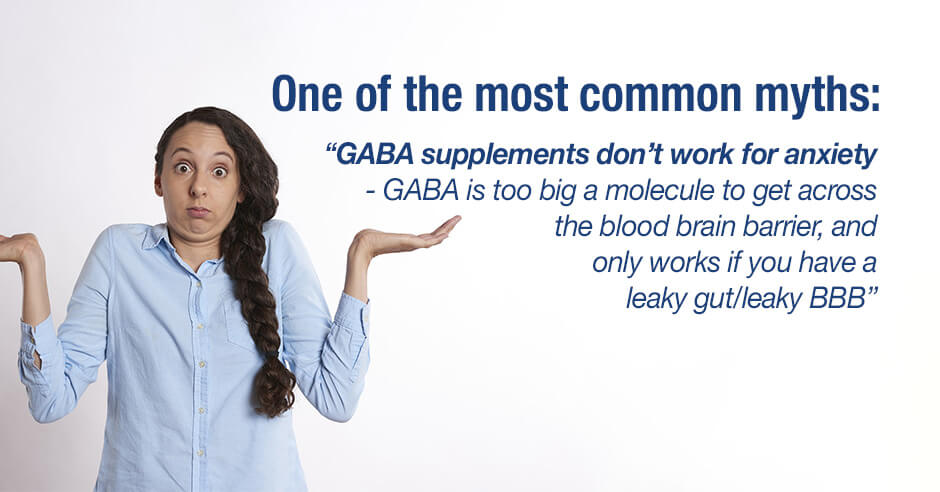
One of the most common myths: “GABA supplements don’t work – GABA is too big a molecule to get across the blood brain barrier”

December 8, 2023 By Trudy Scott 30 Comments

gaba myth

GABA supplements don’t work – GABA is too big a molecule to get across the blood brain barrier. They don’t typically work unless you have a leaky gut which means you have a leaky brain” (also referred to as leaky blood brain barrier/BBB).

This is one of the most common myths I hear about GABA. Neither of the above statements are true. I stand by my recommendations of GABA Calm and other GABA products as an effective way to boost GABA levels that are low, and ease physical anxiety symptoms and the other symptoms you can experience with low GABA levels.

A few weeks ago, Suzanne asked a question on the blog after hearing a doctor state the above about GABA supplements not working for anxiety. She was justifiably confused and concerned:

I stumbled across this video on Youtube and am seeking your thoughts on it please. In my quest to achieve a state of calm as naturally as possible, I research a lot of stuff. I have always taken on board the knowledge you share about GABA.

The video, made by a quite well known fitness trainer, focuses on GABA. Your team suggested I time stamp the part of the video of interest, but frankly, there are poignant points made throughout.

I would be really appreciative if you have time to watch it, as now I’m unsure that the GABA Calm I have purchased, and yet to take, is in fact, going to be effective.

The video she had watched was a very recent Youtube video where a well-known fitness trainer interviews an integrative medical doctor. It’s the doctor who said: “GABA supplements don’t work.”

I reassured Suzanne and provided her with some additional reading (more on that below). This topic has been discussed by me before but it’s time for another blog post that gathers the information into one place. Hopefully it offers you confidence if you are also uncertain and can be a resource for you to share with the naysayers or those who just don’t yet know that GABA supplements really do work (when used in a specific way)!

The effects of GABA supplements may be exerted through BBB passage or indirectly, via an effect on the enteric nervous system (but we don’t really know)

I first discussed GABA and the blood brain barrier controversy during one of my interviews during The Anxiety Summit in 2016. I shared this October 2015 paper, Neurotransmitters as food supplements: the effects of GABA on brain and behavior, which states that we don’t really know how GABA supplements work:

There is some evidence in favor of a calming effect of GABA food supplements, but most of this evidence was reported by researchers with a potential conflict of interest. We suggest that any veridical effects of GABA food supplements on brain and cognition might be exerted through BBB passage or, more indirectly, via an effect on the enteric nervous system. We conclude that the mechanism of action of GABA food supplements is far from clear, and that further work is needed to establish the behavioral effects of GABA.

I also discuss the fact that GABA’s relaxing effect may be due to peripheral effects rather than the effect on/in the brain. Here is an excerpt from this paper: GABA-receptors in peripheral tissues

GABA and its receptors are found in a wide range of peripheral tissues, including parts of the peripheral nervous system, endocrine, and non-neural tissues such as smooth muscle and the female reproductive system.

Feel free to read more about this here

Valuable feedback about GABA’s effectiveness from other practitioners

Dr. Josh Friedman, integrative psychotherapist uses amino acids and other nutritional approaches in his practice:

[GABA] is definitely something I use. I am not a biochemist, so I actually don’t really know whether it crosses the blood/brain barrier, nor do I care actually. The first question should be, is it harmful? Are any of these things going to cause harm? And the answer with all the amino acids is no, they’re not going to cause harm, especially when compared to psychiatric medicines. The second question is, does it work? Is it helpful for our patients that we see in our practice? Yes it is.

Jonathan Prousky, ND, MSc, editor of the Journal of Orthomolecular Medicine and author of Anxiety: Orthomolecular Diagnosis and Treatment shared this in our season 2 interview: Tapering off psychiatric drugs so they do not ruin your life

I have found GABA to be invariably helpful and I don’t really know exactly how GABA works but I know it to be very, very safe and, to me, that is fundamentally important. It’s not associated with any withdrawal, with any tolerance, with any habituation, so people can try it without a lot of concern.

I feel the same way – GABA supplementation works, it is safe and it doesn’t really matter how it works.

Dr. Kharrazian’s GABA Challenge for a leaky blood brain barrier is a theory

In addition to sharing the above with Suzanne, I also shared this blog with her: Dr. Datis Kharrazian’s GABA Challenge for a leaky blood brain barrier is a theory and we still have much to learn.

I had the pleasure of interviewing him late in 2019 and we talked about his GABA challenge for testing for a leaky blood brain barrier. Read the above blog to learn how Dr. Kharrazian came up with the GABA Challenge and the fact that it’s just a theory.

GABA case studies/success stories if you’re still unsure

If you’re still unsure I encourage you to read the many case studies published in my book “The Antianxiety Food Solution” and on this blog. Here are some of them:

  • My 6 year old was having panic attacks getting out of the car for Kindergarten: GABA has completely relieved him of his fears
  • GABA Calm is a game changer for husband’s sound and tactile hypersensitivity, significant coordination problems and his anxiety
  • GABA lessens anxiety, agitation and defiance in 98 year old mother who has been “sundowning” for a couple of years
  • Her mum just passed away and although she is sad, GABA allows her to sit with a feeling of peace and calm most of the time
  • PCOS (polycystic ovarian syndrome): GABA helped ease lifelong anxiety, wean off anxiety medication, ovulate each month and stop PCOS meds
  • GABA helps ease symptoms of anger, rage, and dark moods (symptoms we typically associate with low serotonin)
  • GABA worked amazingly for 18-year-old during a MCAS/histamine flare, helping with OCD, anxiety, rage and skin issues

Do a trial of GABA and use it in a specific way

Doing a trial of GABA is another way to find out how effective it is. Keep in mind GABA will only work if you have the low GABA type of physical anxiety, stiff and tense muscles, insomnia caused by low GABA, overwhelm and panic attacks, and other low GABA symptoms. You can see all the low GABA symptoms here.

Also, GABA needs to be used in a specific way. It is most effective provided it’s used as a sublingual, liposomal, a powder or capsules opened on to the tongue or rubbed inside the cheek, or as a GABA cream (as you’ll read in the case studies above). It’s best to start low – at 125mg – and increase from there based on your own unique needs. I believe many practitioners are not on board because they have clients and patients swallow GABA capsules, and often use high dose GABA capsules.

I appreciate Suzanne for asking this question and I’m hoping my feedback gave you and her confidence.

It also helps me to know what is still being taught so I can offer educational resources – for both the consumer like Suzanne and practitioners – and hopefully further the field.

Am I surprised to hear that this myth is still being shared? Not really. So I’ll continue to share what I know and the wonderful GABA success stories so this message gets out there.

Additional resources when you are new to using GABA and the other amino acids as supplements

We use the symptoms questionnaire to figure out if low GABA or low serotonin or low endorphins or low dopamine or low blood sugar may be an issue for you.

If you suspect low levels of any of the neurotransmitters and do not yet have my book, The Antianxiety Food Solution – How the Foods You Eat Can Help You Calm Your Anxious Mind, Improve Your Mood, and End Cravings, I highly recommend getting it and reading it before jumping in and using amino acids on your own so you are knowledgeable. And be sure to share it with the practitioner/health team you or your loved one is working with.

There is an entire chapter on the amino acids and they are discussed throughout the book in the sections on gut health, gluten, blood sugar control, sugar cravings, anxiety and mood issues.

The book doesn’t include product names (per the publisher’s request) so this blog, The Antianxiety Food Solution Amino Acid and Pyroluria Supplements, lists the amino acids that I use with my individual clients and those in my group programs. You can find them all in my online store.

If, after reading this blog and my book, you don’t feel comfortable figuring things out on your own (i.e. doing the symptoms questionnaire and respective amino acids trials), a good place to get help is the GABA QuickStart Program (if you have low GABA symptoms too). This is a paid online/virtual group program where you get my guidance and community support.

If you are a practitioner, join us in The Balancing Neurotransmitters: the Fundamentals program. This is also a paid online/virtual program with an opportunity to interact with me and other practitioners who are also using the amino acids.

How many times have you heard this myth about GABA not working? How long ago and where from?

Has GABA helped you? If yes, I’m thrilled for you. Please do share how it’s helped, how much helps and how you use GABA (as a sublingual, liposomal, a powder or capsules opened on to the tongue or inside the cheek, or as a GABA cream)?

If you’re a practitioner do you have success using GABA this way with your clients/patients? And were you also taught – in the past – that GABA supplements don’t work or taught the GABA leaky BBB theory?

Feel free to share and ask your questions below.
Filed Under: Anxiety, GABA Tagged With: anxiety, BBB, blood brain barrier, calm, Dr. Kharrazian, enteric nervous system, GABA, GABA Calm, GABA Challenge, GABA Quickstart; Balancing Neurotransmitters: the Fundamentals program for practitioners, GABA supplements, leaky BBB, leaky gut, physical anxiety, too big a molecule

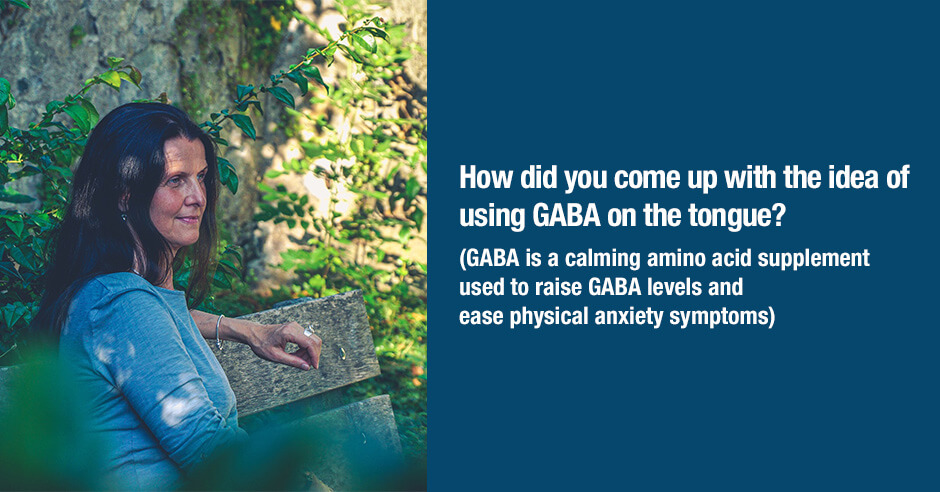
How did you come up with the idea of using GABA on the tongue? (GABA is a calming amino acid supplement used to ease physical anxiety symptoms)

May 5, 2023 By Trudy Scott 27 Comments

gaba on tongue

Today I’m answering this question that has been asked of me a number of times: How did you come up with the idea of using GABA on the tongue? Since there is so much controversy about GABA and the blood brain barrier and whether GABA actually works, it’s time to address this question via a blog post. Using GABA on the tongue, under the tongue and/or on the inside cheek approach is also the most effective way to use GABA and when it’s not used in one of these ways many individuals end up saying GABA didn’t help ease their anxiety and other low GABA symptoms. I also define sublingual – the term I use when discussing this approach – and how this method is broader than just being sublingual. And I share a case study. More on all this below.

So how did I come up with the idea of using GABA on the tongue?

I’ve always had clients use a GABA capsule opened on to their tongue for the initial trial, based on them having low GABA symptoms of physical anxiety, stiff and tense muscles, tension, stress eating, insomnia, laryngospasms, intrusive thoughts and self-medicating with alcohol. Doing it this way means we get results right away (for example within 5 minutes they can say their physical anxiety has improved from 9/10 to say 6/10) and we know how to proceed in terms of dosing.

Then I’d have clients go home and swallow the GABA capsules. However not everyone continued to get the same benefits they experienced in the one-off trial so I’d suggest a higher dose, also swallowed.

Then I decided to have clients just continue to use GABA capsules opened or as powder or a liposomal product (more on these below) after the initial one-off trial. Having clients use GABA this way resulted in consistent and superior results and it’s what I continue to recommend.

The many benefits of this approach

There are many benefits to using this approach of using GABA on the tongue:

  • Seeing better results and in some cases getting results (fullstop!)when you were not seeing any benefits swallowing a GABA capsule
  • Better results when you have digestive and/or liver issues because GABA bypasses the liver and digestive system.
  • Quicker/almost immediate results (in 5-10 minutes and often quicker) which is more encouraging and gives you hope right away.
  • You need less GABA so it’s money-saving too.

I now have folks use all the amino acids this way and it’s working very well.

Defining sublingual, buccal and roof of the mouth and which is best

I use the term sublingual very broadly – under the tongue, in the cheek or on the tongue – for at least 2 minutes and not washed down with water or food right away.

It’s easier but technically sublingual means using GABA under the tongue. This way it is absorbed directly into the bloodstream for immediate use, bypassing the liver and digestive system.

When I talk and write about using GABA on the tongue or sublingually, I’m often asked: How is on tongue vs under tongue different or is it?

This paper, Sublingual Mucosa as a Route for Systemic Drug Delivery summarizes the benefits of sublingual delivery and which area of the mouth provides better results (for drug delivery)

Drug delivery via the oral mucous membrane is considered to be a promising alternative to the oral route. Sublingual route is useful when rapid onset of action is desired with better patient compliance than orally ingested tablets.

In terms of permeability, the sublingual area of the oral cavity (i.e. the floor of the mouth) is more permeable than the buccal (cheek) area, which in turn is more permeable than the palatal (roof of the mouth) area.

The portion of drug absorbed through the sublingual blood vessels bypasses the hepatic first‐pass metabolic processes giving acceptable bioavailability.

I find that either way works (under and on the tongue) and so does using it rubbed on the inside of the cheek/buccal area. I share more on that here – Paroxysmal laryngospasm with low GABA physical-tension-type-anxiety: Is GABA powder rubbed on the inside of the cheek a solution?

One way you could hedge your bets is to use a GABA powder (with some water) or lozenge or liposomal and swish it in the mouth, making sure it gets under the tongue, onto the cheek areas and on top of the tongue. Swish it for about 2 minutes before swallowing.  And don’t wash it down with water or food right away.

Amanda’s feedback on GABA calm vs GABA capsules

When I shared some of this on Facebook, Amanda shared her positive feedback:

Sublingual is more effective and faster. I’ve been taking capsules at night and noticed improvement with sleep. Last week we decided to sell our house and I was soooo stressed with prepping and dealing with people.

I had a bottle of GABA Calm I ordered from your recommendation (I didn’t mean to order because I had lots of gaba capsules). I was so thankful because I took two of those and about 15 minutes later I was much more relaxed. They are so helpful!!

A common question I get is this: is GABA Calm better than plain GABA powder? Some folks prefer GABA Calm and others the powder. Either way we do increase to find the ideal dose and using powder allows us to go higher more easily.

But we are all unique and it’s a matter of finding what works best for your needs. Amanda also shared why she feels GABA Calm is so helpful:

GABA Calm also has tyrosine, magnesium, and taurine. It seems for me the combination of the magnesium and taurine with the GABA takes it from helpful to stellar. I know I have a history of low taurine so perhaps that’s why for me.

All this and the fact that it’s a lozenge that is dissolved in your mouth and absorbed quickly makes it so effective for her and so many of my clients.

Resources if you are new to using amino acids as supplements

If you are new to using amino acids as supplements, here is the Amino Acids Mood Questionnaire from The Antianxiety Food Solution (you can see all the symptoms of neurotransmitter imbalances, including low GABA, low serotonin and low endorphins).

If you suspect low levels of any of the neurotransmitters and do not yet have my book, The Antianxiety Food Solution – How the Foods You Eat Can Help You Calm Your Anxious Mind, Improve Your Mood, and End Cravings, I highly recommend getting it and reading it before jumping in and using amino acids on your own so you are knowledgeable. And be sure to share it with the practitioner/health team you or your loved one is working with.

There is an entire chapter on the amino acids and they are discussed throughout the book in the sections on gut health, gluten, blood sugar control, sugar cravings, anxiety and mood issues.

The book doesn’t include product names (per the publisher’s request) so this blog, The Antianxiety Food Solution Amino Acid and Pyroluria Supplements, lists the amino acids that I use with my individual clients and those in my group programs. You can find them all in my online store.

If, after reading this blog and my book, you don’t feel comfortable figuring things out on your own (i.e. doing the symptoms questionnaire and respective amino acids trials), a good place to get help is the GABA QuickStart Program (if you have low GABA symptoms too). This is a paid online/virtual group program where you get my guidance and community support.

If you are a practitioner, join us in The Balancing Neurotransmitters: the Fundamentals program. This is also a paid online/virtual program with an opportunity to interact with me and other practitioners who are also using the amino acids.

What have you found, is GABA opened/sublingual more effective than a GABA capsule swallowed?

What works best for your unique needs – a powder, a chewable or a liposomal product?

And do you find it more effective under the tongue/sublingual, in the cheek/buccal or on the tongue? Or have you not noticed or perhaps find similar benefits with all three ways?

If you have questions and other feedback please share it here too.

Filed Under: Amino Acids, Anxiety, GABA Tagged With: amino acid, anxiety, buccal, calming, GABA, GABA capsules, GABA on the tongue, GABA Quickstart online program; Balancing Neurotransmitters: the Fundamentals program for practitioners, inside cheek, insomnia, intrusive thoughts, laryngospasms, liposomal, lozenge, on the tongue, physical anxiety, powder, roof of mouth, self-medicating with alcohol, stiff muscles, stress-eating, sublingual, swallowed, tension, under the tongue

Multiple sclerosis: low GABA research and the amino acid GABA for anxiety, muscle stiffness, swallowing/voice issues and pain

April 14, 2023 By Trudy Scott 12 Comments

Multiple sclerosis and low GABA

I’m excited about the GABA research – an older paper and some new studies – on multiple sclerosis (MS). This means there is the potential for using GABA supplementation in similar ways it’s used with other conditions where anxiety, insomnia and pain are issues. This can include the typical low GABA-type physical anxiety, stiff and tense muscles, insomnia and pain, and also MS-specific issues such as spasticity, laryngospasms, balance issues, swallowing and speaking/voice issues and sensorimotor problems.

Anxiety is common in MS and benzodiazepines are commonly prescribed. The ideal is to use the amino acid that supports GABA, instead of needing to use benzodiazepines. I share some of the GABA/MS research and specific applications for using GABA below.

Prevalence of anxiety/depression in MS and the use of benzodiazepines

Anxiety and depression is common in multiple sclerosis. This paper, The incidence and prevalence of psychiatric disorders in multiple sclerosis: A systematic Review, included 118 studies and found that:

Among population-based studies, the prevalence of anxiety was 21.9% (and up to 35.0% in some papers), 23.7% for depression, 14.8% for alcohol abuse, 5.83% for bipolar disorder, 4.3% for psychosis and 2.5% for substance abuse.

psychiatric comorbidity remains understudied.

What is concerning is that benzodiazepines such as Ativan, Valium and Xanax are commonly prescribed for MS patients for their anxiety, insomnia, spasticity and pain. Recent research, Use of Benzodiazepines and Z-Drugs in Multiple Sclerosis found that benzodiazepine use is more “more common in people with MS than in general population controls, and use of these agents is in persons with MS is often chronic” i.e. for longer than 6 months.

This is problematic given that anything over 2 weeks can cause dependence, tolerance and withdrawal. They can cause balance issues and can actually cause anxiety and insomnia. Someone in my community was totally disabled for over 3 years with “locked shoulder muscles, neck, jaw …internal vibrations… bad headaches, jelly legs, distorted vision like floaters and squiggles and fireworks …cortisol rushes through the body.. And tortured every day.” Read more about her horror story and benzos here.

The ideal is to use the amino acid that supports GABA, instead of needing to use benzodiazepines.

Low GABA plays a role in multiple sclerosis: the research

Low GABA (gamma-aminobutyric acid) plays a role in multiple sclerosis. This paper, Reduced gamma-aminobutyric acid concentration is associated with physical disability in progressive multiple sclerosis states that there are

reduced GABA levels in the hippocampus and sensorimotor cortex of patients, and show that reduced GABA in the sensorimotor cortex is associated with increased motor impairment. Changes in GABA may be a marker of neurodegeneration.

This study supports the idea that modulation of gamma-aminobutyric acid neurotransmission may be an important target for neuroprotection in multiple sclerosis.

Of course, the authors don’t mention using the calming amino acid GABA, but we extrapolate and use what we see clinically in other conditions like autism (more on that below).

Two other papers support the GABA connections. This 2021 paper, Altered Plasma Metabolic Profiles in Chinese Patients With Multiple Sclerosis, observed “a great increase in the levels of L-glutamic acid” in patients with MS. Increased glutamate typically means low GABA levels.

Guanidinoacetic acid (GAA) is an experimental nutrient that is new to me, but the GABA effects and mechanisms are encouraging. In this 2022 paper, Guanidinoacetic Acid as a Nutritional Adjuvant to Multiple Sclerosis Therapy the author states that GAA may benefit MS patients via “modulation of gamma-aminobutyric acid (GABA)ergic neurotransmission and brain oxidant-antioxidant status, or a reduction of glutamate neurotoxicity.’

The author also shares that “demyelination is often characterized by various neurochemical abnormalities in GABA-glutamate metabolism.” 

In case you’re new to MS and demyelination, this Mayo Clinic article describes them as follows:

A demyelinating disease is any condition that causes damage to the protective covering (myelin sheath) that surrounds nerve fibers in your brain, the nerves leading to the eyes (optic nerves) and spinal cord. When the myelin sheath is damaged, nerve impulses slow or even stop, causing neurological problems.

Multiple sclerosis is the most common demyelinating disease of the central nervous system. In this disorder, your immune system attacks the myelin sheath or the cells that produce and maintain it.

This attack causes inflammation and injury to the nerve sheath and ultimately to the nerve fibers that it surrounds. The process can result in multiple areas of scarring (sclerosis).

I gathered some of this research while preparing for an interview with the wonderful Dr. Terry Wahls, MD and author of “The Wahls Protocol.” We were both pleasantly surprised to see these GABA/MS connections.

Using GABA for easing anxiety, overwhelm and insomnia in multiple sclerosis

There is no research that I am aware of that has studied the use of GABA supplementation in MS. We can, however, extrapolate from other conditions and use GABA for easing various MS symptoms based on what we see clinically.

As mentioned above, anxiety is common in MS and if you have the low GABA type of physical anxiety, GABA is worth a trial for easing typical low GABA symptoms of physical anxiety, feelings of overwhelm and intrusive thoughts, stress eating, using alcohol to relax or fit in socially and insomnia. You can read more about GABA for physical anxiety here and see all the low GABA symptoms here.

And here are a few examples/case studies:

  • GABA is a life saver for anxiety, theanine helps at night (insomnia) and 5-HTP makes a significant difference in lessening daily pain
  • GABA is the answer after 40 years of a lump-in-the-throat sensation, nervousness and muscle tension at work

Using GABA to help with balance, and sensorimotor and coordination issues in multiple sclerosis

These case studies illustrate an application for GABA being used for balance, sensorimotor and coordination issues that are common in MS (they are not folks with MS):

  • Half a crushed GABA Calm for my autistic child: sleep, anxiety and sensorimotor skills (writing, horse riding and swimming) improve
  • GABA Calm is a game changer for husband’s sound and tactile hypersensitivity, significant coordination problems and his anxiety

Much of the research in this area has been done with  autism, as illustrated by this GABA Oolong tea study tea in children with autism. They saw improvements in sensorimotor skills, autism profiles, anxiety and sleep.

Using GABA to help with stiff and tense muscles, spasticity, voice issues, laryngospasms and difficulty swallowing in multiple sclerosis

GABA helps to ease stiff and tense muscles in those with physical anxiety. In a similar way we see GABA help with these common MS symptoms: muscle spasms, spasticity, voice issues, laryngospasms and swallowing difficulties (dysphagia affects about a third of folks with MS).

These case studies illustrate an application for GABA being used for some of above issues that are common in MS (they are not folks with MS):

  • Keep GABA powder handy for choking episodes, stridor and panic (and find the ideal dose and be consistent for prevention/easing anxiety)
  • Paroxysmal laryngospasm with low GABA physical-tension-type-anxiety: Is GABA powder rubbed on the inside of the cheek a solution?
  • GABA mixed in water and swished in his mouth before a meal prevents esophageal spasms /choking/vomiting, and allows him to swallow

Again, there is no research that I am aware of specifically with MS, but clinically I see GABA helping all of the above symptoms related to spasms and muscle tension, often with anxiety and pain as an underlying factor too.

Other MS symptoms that may also be supported by addressing low GABA levels: bowel issues and rectal spasms, bladder issues/spasms, tremor and problems with memory/thinking, and possibly even vision issues.

I really look forward to seeing future research on the use of the amino acid GABA in MS. And I’d love to be involved in some studies if you are associated with a research facility or do research.

Low serotonin and low endorphins are common in multiple sclerosis too

Low GABA is just the tip of the iceberg when it comes to the underlying neurotransmitter imbalances in MS.

The amino acid DPA/d-phenylalanine may help ease some of the low endorphin pain symptoms, weepy kind of depression, and alcohol addiction. You can read about this here.

Tryptophan and/or 5-HTP may help ease some of the low serotonin worry-type of anxiety, fear, panic attacks, obsessing, low mood and MS-specific pain issues and insomnia. I’ll write more about this and the supporting research in a follow-up blog.

If you do have more than one imbalance (which is not unusual), you need to figure out which imbalance you have and address that with the relevant amino acids, one at a time. I have clients pick the area that is more problematic for them and start there.

Resources if you are new to using GABA and the other amino acids as supplements

If you are new to using GABA and the other amino acids as supplements, here is the Amino Acids Mood Questionnaire from The Antianxiety Food Solution (you can see all the symptoms of neurotransmitter imbalances, including low GABA, low serotonin and low endorphins).

If you suspect low levels of any of the neurotransmitters and do not yet have my book, The Antianxiety Food Solution – How the Foods You Eat Can Help You Calm Your Anxious Mind, Improve Your Mood, and End Cravings, I highly recommend getting it and reading it before jumping in and using amino acids on your own so you are knowledgeable. And be sure to share it with the practitioner/health team you or your loved one is working with.

There is an entire chapter on the amino acids and they are discussed throughout the book in the sections on gut health, gluten, blood sugar control, sugar cravings, anxiety and mood issues.

The book doesn’t include product names (per the publisher’s request) so this blog, The Antianxiety Food Solution Amino Acid and Pyroluria Supplements, lists the amino acids that I use with my individual clients and those in my group programs. You can find them all in my online store.

If, after reading this blog and my book, you don’t feel comfortable figuring things out on your own (i.e. doing the symptoms questionnaire and respective amino acids trials), a good place to get help is the GABA QuickStart Program (if you have low GABA symptoms). This is a paid online/virtual group program where you get my guidance and community support.

If you are a practitioner, join us in The Balancing Neurotransmitters: the Fundamentals program. This is also a paid online/virtual program with an opportunity to interact with me and other practitioners who are also using the amino acids.

Do you have multiple sclerosis and has the amino acid GABA helped with your anxiety and fears; muscle stiffness and spasticity; swallowing, laryngospasms and voice problems; balance and sensorimotor issues, insomnia and pain?)

How much has helped and which product do you use?

Do you find sublingual, powder or an opened capsule helps more than swallowing the GABA capsule?

Were you surprised that GABA would help so much?

What else has helped your multiple sclerosis symptoms? And have you also addressed low serotonin and low endorphins with amino acids tryptophan and DPA?

If you have questions and other feedback please share it here too.

Filed Under: Amino Acids, GABA, Multiple sclerosis Tagged With: amino acids, anxiety, balance issues, benzodiazepines, demyelination, GABA, GABA Quickstart online program; Balancing Neurotransmitters: the Fundamentals program for practitioners, insomnia, laryngospasms, multiple sclerosis, muscle stiffness, pain, physical anxiety, sensorimotor issues, spasticity, speaking issues, stiff and tense muscles, swallowing issues, voice issues, voice issues and sensorimotor issues

GABA supplementation may offer a new approach for the prevention and treatment of asthma (and it helps anxiety, ADHD and insomnia)

December 16, 2022 By Trudy Scott 12 Comments

gaba and asthma

If you’re already taking the amino acid GABA for physical anxiety, have you noticed if it’s also helping to ease your asthma symptoms too? This may sound surprising but research shows GABA may reduce inflammation and spasms and help with asthma symptoms via these mechanisms. What’s encouraging is the fact that GABA supplementation also helps with anxiety, obesity, ADHD and insomnia which commonly occur with asthma and can be associated with inflammation too. It’s so important to be addressing the root causes of asthma because of the many neuropsychiatric side-effects of  asthma medications. This blog addresses all of these topics.

We’ll start with the research first. In this study, Effect of gamma-aminobutyric acid treatment on plasma substance P and calcitonin gene-related peptide levels in children with asthma, of 75 children with asthma, 36 children were in the GABA treatment group and received oral GABA (25-30 mg/kg per day) in addition to standard asthma medications.

The authors propose that airway inflammation may be a factor in asthma and GABA helps because it reduces SP (substance P) and CGRP (calcitonin gene-related peptide), easing neurogenic inflammation and tracheal spasms.

The conclusion of the study is that oral GABA:

can significantly decrease plasma levels of SP and CGRP in children suffering from acute asthma.

It may offer a new approach for the prevention and treatment of asthma.

(this is my best translation from the Chinese paper).

Dosing of GABA for asthma

The children in the study group received oral GABA of  25-30 mg/kg per day. For a 100 lb /45 kg child this would equate to 1125 mg -1350 mg of GABA per day.

As I always share, I don’t recommend using GABA based on the weight of the person and I consider this a high dose. For adults, 125 mg GABA is a good starting dose with 125 mg often used 2-4 times a day. For a child, ¼ to ⅓ this dose is typically good to start with. All that said, many adults and children with asthma and anxiety need higher doses than what they initially start with.

It’s also worth noting that the oral dose of GABA was swallowed so it’s possible (and very likely) that more was needed than if it was used sublingually or with the capsule opened or a powder or a liposomal form.

GABA is seldom recommended for asthma – more recent research supports this approach

This is not new research – the paper was published in 2013 – but I seldom see it discussed or hear about practitioners recommending GABA for asthma.

A more recent paper, Neuroimmune Pathophysiology in Asthma (published in 2021) supports this and discusses the role of neurotransmitters (including GABA and serotonin) and neuropeptides (including SP, CGRP and others) in asthma. The authors suggest “that regulating the effects of neurotransmitters and neuropeptides represents a potential novel approach for the treatment of asthma.”

Why we need to consider GABA – the neuropsychiatric side effects of asthma medications

Exploring the use of GABA and these approaches is especially important given the neuropsychiatric side effects of asthma medications. In this study (published in March this year), Neuropsychiatric adverse drug reactions induced by montelukast impair the quality of life in children with asthma

Neuropsychiatric ADRs (adverse drug reactions) were reported in 78 (62.4%) of 125 patients, who recovered when the drug was discontinued.

These were children of 3-18 years taking montelukast for the first time. The good news is that they recovered when the drug was stopped.

The bad news is there is no information on how many kids who have been prescribed this class of medication are subsequently prescribed psychiatric medications.

This concern needs to be considered for all asthma medications: there are similar adverse effects with antihistamine and inhaled corticosteroid medications.

GABA helps with other conditions where spasms are common

The study results are very encouraging and support what I see clinically with asthma and other conditions where spasms are common. These include

  • proctalgia fugax/rectal spasms
  • laryngospasms
  • vagus nerve issues with a chronic cough and throat spasms and
  • globus pharyngeus/ lump-in-the-throat

GABA helps with all of the above and the non-allergic comorbidities seen with asthma.

Asthma in children and non-allergic comorbidities (obesity, depression and anxiety, ADHD and insomnia)

As stated in this paper, Paediatric asthma and non-allergic comorbidities: A review of current risk and proposed mechanisms “It is increasingly recognized that children with asthma are at a higher risk of other non-allergic concurrent diseases than the non-asthma population.” These include obesity, depression and anxiety, neurodevelopmental disorders (such as ADHD), sleep disorders and autoimmune diseases.

This paper looks at mechanisms and inflammation is a common theme except when it comes to anxiety and depression. Given that this paper was published this year and all that we now know  about nutritional psychiatry and neuroinflammation and anxiety, it’s clearly lacking in this aspect.

Clinically, we see how GABA can help with obesity (and cravings or stress-eating), depression and anxiety, ADHD and insomnia, as illustrated by these case studies:

  • GABA for ending sugar cravings (and anxiety and insomnia)
  • GABA for easing physical anxiety and tension: some questions and answers
  • The seasonality of GABA: worsening anxiety, insomnia and intrusive thoughts in winter (and the need for increased GABA supplementation)
  • GABA for children: ADHD, focus issues, irritability, anxiety and tantrums

I see similar comorbidities (the occurrence of more than one disorder at the same time) in adults and GABA can be used safely with adults and children.

Asthma from a functional medicine approach

There is clearly more to asthma than only GABA. This this article on natural remedies for asthma covers diet (eat real good quality food and avoid junk food), nutrients like vitamin D, zinc and others, and allergens – and all this needs to be investigated and addressed with a functional medicine approach.

Dr. Axe does mention stress and anxiety being a trigger: “It’s well-known that stress increases the severity and frequency of asthmatic attacks because it hinders immune function and raises inflammation.” He mentions stress-reduction techniques and breathing. I say let’s add GABA to the mix too.

Resources if you are new to using GABA and other amino acids as supplements

If you are new to using GABA or any of the other amino acids as supplements, here is the Amino Acids Mood Questionnaire from The Antianxiety Food Solution (you can see all the symptoms of neurotransmitter imbalances, including low GABA and low serotonin).

If you suspect low levels of any of the neurotransmitters and do not yet have my book, The Antianxiety Food Solution – How the Foods You Eat Can Help You Calm Your Anxious Mind, Improve Your Mood, and End Cravings, I highly recommend getting it and reading it before jumping in and using amino acids on your own so you are knowledgeable. And be sure to share it with the practitioner/health team you or your loved one is working with.

There is an entire chapter on the amino acids and they are discussed throughout the book in the sections on gut health, gluten, blood sugar control, sugar cravings, self-medicating with alcohol and more.

The book doesn’t include product names (per the publisher’s request) so this blog, The Antianxiety Food Solution Amino Acid and Pyroluria Supplements, lists the amino acids that I use with my individual clients and those in my group programs. You can find them all in my online store.

If, after reading this blog and my book, you don’t feel comfortable figuring things out on your own (i.e. doing the symptoms questionnaire and respective amino acids trials), a good place to get help is the GABA QuickStart Program (if you have low GABA symptoms). This is a paid online/virtual group program where you get my guidance and community support.

If you are a practitioner, join us in The Balancing Neurotransmitters: the Fundamentals program. This is also a paid online/virtual program with an opportunity to interact with me and other practitioners who are also using the amino acids.

Has GABA helped ease your physical anxiety and asthma symptoms too?

What about obesity/cravings, ADHD and insomnia as well?

Have you or one of your children been adversely impacted by asthma medications? If yes please share which medications and what symptoms were experienced.

What functional medicine and nutritional approaches have helped your asthma symptoms?

Feel free to post your questions and feedback in the comments below.

Filed Under: ADHD, Anxiety, Cravings, GABA, Insomnia Tagged With: ADHD, ADHD and insomnia; GABA Quickstart online program; Balancing Neurotransmitters: the Fundamentals program for practitioners, anxiety, asthma, asthma medications, calcitonin gene-related peptide, children, cravings, depression, GABA, Inflammation, insomnia, neurogenic inflammation, neuropsychiatric, obesity, physical anxiety, side-effects, spasms, substance P, tracheal spasms

Urinary neurotransmitter testing reports elevated GABA when it’s really low: using the low GABA symptoms and a trial of GABA is best

September 23, 2022 By Trudy Scott 4 Comments

elevated gaba when low

Francoise posted this feedback and her surprise about her elevated GABA levels – as reported on a urinary neurotransmitter test. She was justifiably confused because she had looked at the low GABA symptoms and resonated with them i.e. physical anxiety/tension, stiff and tense muscles, stress eating, self-medicating with alcohol, insomnia and intrusive thoughts etc:

I previously bought Gaba Calm after reading your blog since my symptoms seemed to match your description [of low GABA].

However, I recently did an exhaustive neurotransmitter test to realize that it was the exact opposite, having a significantly high level of GABA.

Unfortunately, I’ve looked all over the internet after talking to my doctor, and it seems that no one knows how to downregulate GABA.

Not sure what to do from there, but thought I should let you know that the situation exists despite not being common.

I posted this feedback for her:  I do not use urinary neurotransmitter testing as it’s not accurate. I use the low GABA symptoms questionnaire and we do a trial of GABA if low GABA symptoms are present.

She said it perfectly – “I previously bought Gaba Calm after reading your blog since my symptoms seemed to match your description” i.e. it’s very likely she does in fact have low GABA symptoms and if we were working together I’d have her do  trial of GABA.

I did ask her what her doctor and the lab recommended and to share the name of the lab/test and have yet to hear back. I will share when I do.

Someone else also had the neurotransmitter report high GABA so she stopped taking her GABA supplements

When I shared Francoise’s comment and my feedback on Facebook, I had someone share a very similar outcome. Kristin had already figured out that she had low GABA levels (based on the symptoms questionnaire), was already taking GABA with good results and was then told to stop taking GABA because the urinary neurotransmitter test reported elevated GABA levels!

This is what Kristin shared on Facebook:  “I just did the neurotransmitter test. It said I was high in GABA as well, so I stopped taking it.”

These were the questions I asked her: Why were you taking GABA at the time – was it because you had/have low GABA symptoms and was GABA helping to ease these symptoms? I also asked which lab did the test and what her practitioner recommended? She shared the following:

I was  taking GABA for anxiety. It was helping. .

My doctor recommended that I stop the GABA and use supplements to support the areas I was low in, which were: Dopamine, Norepinephrine, Epinephrine, and Serotonin (was VERY low).

Doctor’s Data is the company. And it wasn’t a cheap test.

I was surprised that even though GABA was helping Kristin, the doctor said to stop using it. What does also concern me too is that supporting dopamine, norepinephrine and epinephrine without supporting GABA can actually increase anxiety. I’ve seen this backfire a number of times.

After seeing my post and our Facebook back and forth she decided to start back on the GABA products she had been taking: GABA Calm 1-3 tablets a day and if  she is struggling terribly with morning anxiety, then 1/2 to 1 tablet as needed.  In the evening she takes 2 capsules of Neurocalm which has 100 mg of GABA (and some other ingredients).

Kristin confirmed that, once again, GABA was helping to ease her intrusive thoughts, anxiety and physical tension, all low GABA symptoms.

I said to Kristin that I’d reach out to Doctor’s Data and have done so. I shared all this and I am hoping to hear back from them. I’ll keep you posted when I do.

Kristin has offered to share this blog with her integrative doctor who prescribed this test. I’m hoping she does and you do too.

I appreciate both these women sharing their experiences so I can share with you.

Urinary neurotransmitter testing falls short and other practitioners weigh in too

I find many functional tests extremely useful and Doctor’s Data is well regarded in functional medicine. However, I do find it very unfortunate that so many practitioners continue to use and recommend this test when it’s not useful, doesn’t correlate with symptoms and so often causes confusion, like in these instances (which are just two of many similar cases). By the way, they are not the only lab offering urinary neurotransmitter testing.

Be sure to read this older blog: Urinary neurotransmitter testing falls short where I share more about why I’m not in favor of this testing.

This feedback from Nora Gedgaudas, author of Primal Body Primal Mind sums up what I often hear from other practitioners:

I have considered the urinary testing approach and was even enamored of the concept at first. Once I looked into the idea more closely, though, it just didn’t add up for me. I have been using amino acids now to address issues of mood, health and cognitive functioning for over 20 years. I have never used anything other than mood/symptomatic screening to guide amino acid supplementation. Results tend to be uniformly good to excellent. The sheer overwhelming complexity of amino acid/neurotransmitter activity in the human body/brain-and the compartmentalized nature of the biochemistry of each seems to best lend itself to a more functional and symptom-related evaluation. Lab testing simply falls short of the mark here.

A colleague and good friend of mine, Dr. Josh Friedman posted this in the comments section of the above blog post (back in 2014), further supporting what practitioners are reporting about this testing:

About a year ago I got excited about urinary neurotransmitter testing. I had been using Julia Ross’ pencil and paper neurotransmitter deficiency assessment for many years with good success. Over the past year I have done the neurotransmitter testing on about 10 people with very inconsistent results. With 2-3 we hit a home run, where the recommended supplements were just the right thing to diminish the presenting symptoms. More often than not the recommended supplements seemed to give little relief or even make the symptoms worse. Additionally the testing and supplements are quite expensive.

I have since given up on the testing and as I have found the pencil and paper NT deficiency sheet to be a more effective guide to treatment. When I am unable to make progress I will often turn to serum amino acid testing and the neurotransmitter markers on the Organic acid test offered by many functional medicine labs. In addition to information about neurotransmitter functioning, the Organic Acid Test provides information about other factors involved in mental health symptoms including levels of the yeast Candida, the bacterial infection Clostridia and others.

Of course, I wholeheartedly agree with both of them.

As you can see from these two cases (and the many others in my book and on this blog), using the low GABA symptoms and a trial of GABA is best. It’s the most effective way to determine if you need GABA initially and to monitor how it’s helping. It also doesn’t cost you anything more than your time and the GABA product/s.

Resources if you are new to using amino acids as supplements

If you are new to using any of the amino acids as supplements, here is the Amino Acids Mood Questionnaire from The Antianxiety Food Solution (you can see all the symptoms of neurotransmitter imbalances, including low serotonin and low GABA).

If you suspect low levels of any of the neurotransmitters and do not yet have my book, The Antianxiety Food Solution – How the Foods You Eat Can Help You Calm Your Anxious Mind, Improve Your Mood, and End Cravings, I highly recommend getting it and reading it before jumping in and using amino acids on your own so you are knowledgeable. And be sure to share it with the practitioner/health team you or your loved one is working with.

There is an entire chapter on the amino acids and they are discussed throughout the book in the sections on gut health, gluten, blood sugar control, sugar cravings, self-medicating with alcohol and more.

The book doesn’t include product names (per the publisher’s request) so this blog, The Antianxiety Food Solution Amino Acid and Pyroluria Supplements, lists the amino acids that I use with my individual clients and those in my group programs. You can find them all in my online store.

If, after reading this blog and my book, you don’t feel comfortable figuring things out on your own (i.e. doing the symptoms questionnaire and respective amino acids trials), a good place to get help is the GABA QuickStart Program (if you have low GABA symptoms). This is a paid online/virtual group program where you get my guidance and community support.

If you are a practitioner, join us in The Balancing Neurotransmitters: the Fundamentals program. This is also a paid online/virtual program with an opportunity to interact with me and other practitioners who are also using the amino acids.

Have you done urinary neurotransmitter testing and did any of it correlate with the neurotransmitter deficiency symptoms?

Have you been told to stop GABA that was helping to ease your symptoms – based on labs showing high GABA?

If you’re a practitioner I’d love to hear your experiences using the urinary neurotransmitter testing.

If you have questions please share them here too.

Filed Under: Anxiety, GABA, Testing Tagged With: anxiety, Balancing Neurotransmitters: the Fundamentals program for practitioners, GABA, GABA Calm, GABA Quickstart program, insomnia, intrusive thoughts, low GABA symptoms, neurotransmitter, physical anxiety, self-medicating with alcohol, stiff and tense muscles, stress-eating, symptoms questionnaire, tension, trial of GABA, urinary neurotransmitter testing

  • Page 1
  • Page 2
  • Go to Next Page »

Primary Sidebar

NEW! GABA QuickStart Homestudy (with special intro pricing)

gaba quickstart homestudy

Free Report

9 Great Questions Women Ask about Food, Mood and their Health

You'll also receive a complimentary subscription to my ezine "Food, Mood and Gal Stuff"


Connect with me

Popular Posts

  • Amino Acids Mood Questionnaire from The Antianxiety Food Solution
  • The Antianxiety Food Solution Amino Acid and Pyroluria Supplements
  • Pyroluria Questionnaire from The Antianxiety Food Solution
  • Collagen and gelatin lower serotonin: does this increase your anxiety and depression?
  • Tryptophan for the worry-in-your-head and ruminating type of anxiety
  • GABA for the physical-tension and stiff-and-tense-muscles type of anxiety
  • The Antianxiety Food Solution by Trudy Scott
  • Seriphos Original Formula is back: the best product for anxiety and insomnia caused by high cortisol
  • Am I an anxious introvert because of low zinc and vitamin B6? My response to Huffington Post blog
  • Vagus nerve rehab with GABA, breathing, humming, gargling and key nutrients

Recent Posts

  • What do I use instead of Seriphos to help lower high cortisol that is affecting my sleep and making me anxious at night?
  • BeSerene™ GABA/theanine cream eases severe muscle tension in her neck/shoulders, prevents her bad headaches and quells her anxiety
  • How the correct approach, dose and sublingual use of GABA can be calming and not cause a flushed and itchy face and neck
  • The amino acid glutamine improves low mood by addressing gut health, and it has calming effects too
  • Flight anxiety with heightened breath, physical tension and also fearing the worst (the role of low GABA and low serotonin)

Categories

  • 5-HTP
  • AB575
  • Addiction
  • ADHD
  • Adrenals
  • Alcohol
  • Allergies
  • Alzheimer's disease
  • Amino Acids
  • Anger
  • Antianxiety
  • Antianxiety Food Solution
  • Antidepressants
  • Anxiety
  • Anxiety and panic
  • Autism
  • Autoimmunity
  • benzodiazapines
  • Bipolar disorder
  • Books
  • Caffeine
  • Cancer
  • Candida
  • Children/Teens
  • Collagen
  • Cooking equipment
  • Coronavirus/COVID-19
  • Cravings
  • Depression
  • Detoxification
  • Diabetes
  • Diet
  • DPA/DLPA
  • Drugs
  • EFT/Tapping
  • EMF
  • EMFs
  • Emotional Eating
  • Endorphins
  • Environment
  • Essential oils
  • Events
  • Exercise
  • Fear
  • Fear of public speaking
  • Fertility and Pregnancy
  • Fish
  • Food
  • Food and mood
  • Functional neurology
  • GABA
  • Gene polymorphisms
  • General Health
  • Giving
  • Giving back
  • Glutamine
  • Gluten
  • GMOs
  • Gratitude
  • Gut health
  • Heart health/hypertension
  • Histamine
  • Hormone
  • Hyperparathyroidism
  • Hypoglycemia
  • Immune system
  • Inflammation
  • Insomnia
  • Inspiration
  • Introversion
  • Joy and happiness
  • Ketogenic diet
  • Lithium orotate
  • Looking awesome
  • Lyme disease and co-infections
  • MCAS/histamine
  • Medication
  • Men's health
  • Mental health
  • Mercury
  • Migraine
  • Mold
  • Movie
  • MTHFR
  • Multiple sclerosis
  • Music
  • NANP
  • Nature
  • Nutritional Psychiatry
  • OCD
  • Osteoporosis
  • Oxalates
  • Oxytocin
  • Pain
  • Paleo
  • Parasites
  • Parkinson’s disease
  • PCOS
  • People
  • PMS
  • Postpartum
  • PTSD/Trauma
  • Pyroluria
  • Questionnaires
  • Real whole food
  • Recipes
  • Research
  • Schizophrenia
  • serotonin
  • SIBO
  • Sleep
  • Special diets
  • Sports nutrition
  • Stress
  • Sugar addiction
  • Sugar and mood
  • Supplements
  • Teens
  • Testimonials
  • Testing
  • The Anxiety Summit
  • The Anxiety Summit 2
  • The Anxiety Summit 3
  • The Anxiety Summit 4
  • The Anxiety Summit 5
  • The Anxiety Summit 6
  • Thyroid
  • Thyroid health
  • Toxins
  • Tryptophan
  • Tyrosine
  • Uncategorized
  • Vegan/vegetarian
  • Women's health
  • Yoga

Archives

  • October 2025
  • September 2025
  • August 2025
  • July 2025
  • June 2025
  • May 2025
  • April 2025
  • March 2025
  • February 2025
  • January 2025
  • November 2024
  • October 2024
  • September 2024
  • August 2024
  • July 2024
  • June 2024
  • May 2024
  • April 2024
  • March 2024
  • February 2024
  • January 2024
  • December 2023
  • November 2023
  • October 2023
  • September 2023
  • August 2023
  • July 2023
  • June 2023
  • May 2023
  • April 2023
  • March 2023
  • February 2023
  • January 2023
  • December 2022
  • November 2022
  • October 2022
  • September 2022
  • August 2022
  • July 2022
  • June 2022
  • May 2022
  • April 2022
  • March 2022
  • February 2022
  • January 2022
  • December 2021
  • November 2021
  • October 2021
  • September 2021
  • August 2021
  • July 2021
  • June 2021
  • May 2021
  • April 2021
  • March 2021
  • February 2021
  • January 2021
  • December 2020
  • November 2020
  • October 2020
  • September 2020
  • August 2020
  • July 2020
  • June 2020
  • May 2020
  • April 2020
  • March 2020
  • February 2020
  • January 2020
  • December 2019
  • November 2019
  • October 2019
  • September 2019
  • August 2019
  • July 2019
  • June 2019
  • May 2019
  • April 2019
  • March 2019
  • February 2019
  • January 2019
  • December 2018
  • November 2018
  • October 2018
  • September 2018
  • August 2018
  • July 2018
  • June 2018
  • May 2018
  • April 2018
  • March 2018
  • February 2018
  • January 2018
  • December 2017
  • November 2017
  • October 2017
  • September 2017
  • August 2017
  • July 2017
  • June 2017
  • May 2017
  • April 2017
  • March 2017
  • February 2017
  • January 2017
  • December 2016
  • November 2016
  • October 2016
  • September 2016
  • August 2016
  • July 2016
  • June 2016
  • May 2016
  • April 2016
  • March 2016
  • February 2016
  • January 2016
  • December 2015
  • November 2015
  • October 2015
  • September 2015
  • August 2015
  • July 2015
  • June 2015
  • May 2015
  • April 2015
  • March 2015
  • February 2015
  • January 2015
  • December 2014
  • November 2014
  • October 2014
  • September 2014
  • August 2014
  • July 2014
  • June 2014
  • May 2014
  • April 2014
  • March 2014
  • February 2014
  • January 2014
  • December 2013
  • November 2013
  • October 2013
  • September 2013
  • August 2013
  • July 2013
  • June 2013
  • May 2013
  • April 2013
  • March 2013
  • February 2013
  • January 2013
  • December 2012
  • November 2012
  • October 2012
  • August 2012
  • July 2012
  • June 2012
  • May 2012
  • April 2012
  • March 2012
  • February 2012
  • January 2012
  • December 2011
  • November 2011
  • October 2011
  • September 2011
  • August 2011
  • July 2011
  • June 2011
  • May 2011
  • April 2011
  • March 2011
  • February 2011
  • January 2011
  • December 2010
  • October 2010
  • September 2010
  • July 2010
  • May 2010
  • April 2010
  • March 2010
  • February 2010
  • January 2010
  • November 2009

Share the knowledge!

The above statements have not been evaluated by the Food and Drug Administration. Products listed in this website are not intended to diagnose, treat, cure or prevent any disease.

The information provided on this site is for informational and educational purposes only and is not intended as a substitute for advice from your physician or other health care professional. You should consult with a healthcare professional before starting or modifying any diet, exercise, or supplementation program, before taking or stopping any medication, or if you have or suspect you may have a health problem.


Copyright © 2026 Trudy Scott. All Rights Reserved. | Privacy | Terms and Conditions | Refund Policy | Medical Disclaimer

Free Report

9 Great Questions Women Ask about Food, Mood and their Health

You’ll also receive a complimentary subscription to my ezine “Food, Mood and Gal Stuff”