• Skip to primary navigation
  • Skip to main content
  • Skip to primary sidebar

everywomanover29 blog

Food, Mood and Women's Health – Be your healthiest, look and feel great!

  • Blog
  • About
  • Services
  • Store
  • Resources
  • Testimonials
  • The Book
  • Contact
  • Search this site

Parkinson's disease

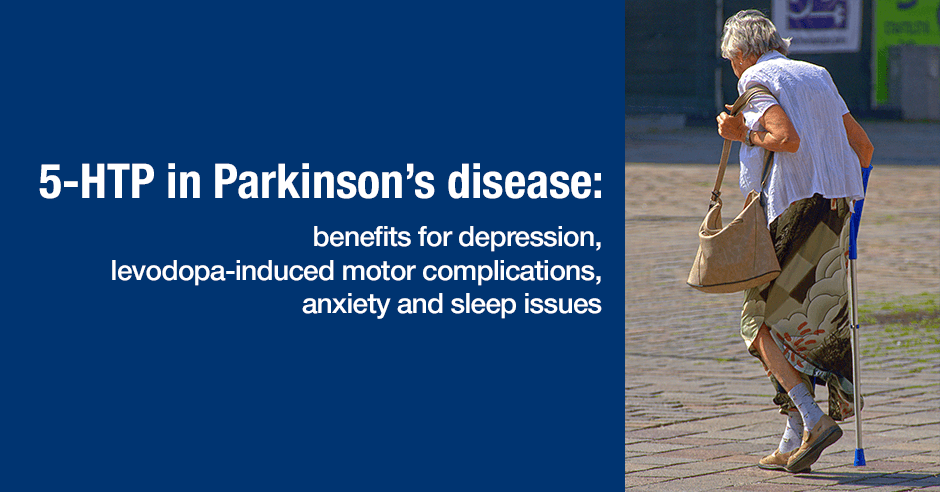
5-HTP in Parkinson’s disease: benefits for depression, levodopa-induced motor complications, anxiety and sleep issues

March 19, 2021 By Trudy Scott 37 Comments

5-HTP and Parkinson's Disease

Research shows that the amino acid 5-HTP (5-hydroxytryptophan), the intermediate metabolite of tryptophan in the production of serotonin, offers benefits for Parkinson’s disease patients. It has been reported to ease depression and to reduce levodopa-induced motor complications. This was reported in two separate studies by the same research team at the University of Cagliari, Cagliari, Italy. They were small studies and considered preliminary. However, given what I know about the effectiveness of 5-HTP (for depression, anxiety and insomnia), I consider it a major step forward for Parkinson’s disease patients.

In this study, Efficacy and safety of 5-hydroxytryptophan on depression and apathy in Parkinson’s disease: a preliminary finding, 25 individuals with Parkinson’s disease were enrolled and “patients received placebo or 50 mg of 5-HTP daily over a period of 4 weeks”

The findings were as follows:

a significant improvement of depressive symptoms during the 50-mg 5-HTP treatment compared with placebo.

In this study 5-HTP was not shown to reduce apathy symptoms. This is not surprising to me, given that we typically see the amino acid tyrosine help with apathy symptoms associated with low catecholamines, rather than low serotonin.

In this study, Efficacy and safety of 5-Hydroxytryptophan on levodopa-induced motor complications in Parkinson’s disease: A preliminary finding, 12 Parkinson’s patients who were diagnosed with levodopa-induced dyskinesias (involuntary, erratic, writhing movements of the face, arms, legs or trunk) and motor fluctuations were included. Patients received placebo or 50 mg of 5-HTP daily over 4 weeks.

The findings were as follows:

a significant improvement of levodopa-induced dyskinesias during the 50 mg 5-HTP treatment.

The study authors make the serotonin-dyskinesias connection, stating that “Several studies have indicated that altered serotonergic neurotransmission may contribute to the motor features commonly associated with Parkinson’s disease drug treatment such as levodopa-induced dyskinesias.”

Both studies were single-center, randomized, double-blind placebo-controlled cross-over trials, and both recommend larger studies, longer treatment duration and different doses in order to corroborate these early findings.

Sleep disorders, gastrointestinal dysfunction, and anxiety in Parkinson’s disease

As reported in this paper, Spectrum of Non-Motor Symptoms in Parkinson’s Disease

Despite their significant clinical importance, the awareness of non-motor symptoms is quite negligible. Sleep disorders, gastrointestinal dysfunction, olfactory disturbances, anxiety, and depressive episodes are some of the most common non-motor presentations.

5-HTP helps with depression, anxiety, sleep issues (more here: Sleep promoting effects of combined GABA and 5-HTP)  and digestive issues.

Given what I know about the effectiveness of 5-HTP in my clients with anxiety, low mood and sleep issues, I consider this research a major step forward for Parkinson’s disease patients who may also experience anxiety, depression and sleep issues.

5-HTP also improves focus and when to switch to tryptophan

I was surprised to read that it has been hypothesized that ADHD and Parkinson’s disease share “several overlapping anatomical and neurochemical changes.”

As you can see from these blog posts, in addition to boosting mood, 5-HTP also improves focus and ADHD symptoms:

  • 5-HTP benefits both adopted daughters who had prenatal exposure to alcohol: they are happier, more focused and can stay on task
  • ADHD: 5-HTP melts have been a miracle for one of my adopted kids

One caution with 5-HTP is that it can raise salivary cortisol and cause a “wired-tired” feeling. When this happens we switch to tryptophan, always starting with a trial in order to figure out the ideal dose.

Typical dosing of 5-HTP for low serotonin-type anxiety

I find that using 50 mg of 5-HTP 1-3 times a day is a typical starting dose for my adult clients who have the low serotonin-type of anxiety (mental anxiety, worry, panic attacks, ruminations), low mood, insomnia, sugar cravings, irritability, PMS, anger issues and TMJ.

Keep in mind that in these 2 studies, 50 mg of 5-HTP was used only once a day, and everyone was given the same dose. There is never a one-size fits all approach with the amino acids and we adjust up or down based on symptoms, using a trial approach. I’d love to see this approach used with follow-up studies.

If you are new to the concept of low serotonin and the use of tryptophan or 5-HTP you will find this blog helpful.

Parkinson’s disease and GABA, flavonoids in parsley and insecticides

Here are some other useful blogs on Parkinson’s disease:

  • GABA and tryptophan for pain and anxiety in Parkinson’s disease?
  • Apigenin, a flavonoid in parsley increases brain connections, reduces anxiety
  • Fipronil insecticide: GABA/glutamate and anxiety, aggressive behavior, memory and Alzheimer’s disease in humans?

Have you or a family member with Parkinson’s disease used 5-HTP (or tryptophan) for easing depression and improving levodopa-induced motor complications?

Have you seen reduced anxiety, improved sleep, better digestion and better focus too?

If you’re a practitioner working with Parkinson’s patients have you used 5-HTP or tryptophan with success?

Feel free to post your questions and feedback in the comments below.
Filed Under: 5-HTP, Anxiety, Depression, Parkinson’s disease Tagged With: 5-HTP, anxiety, apathy, depression, dyskinesias, flavonoids, focus, GABA, gastrointestinal dysfunction, insecticides, levodopa-induced motor complications, Parkinson's disease, serotonin, sleep, tryptophan, tyrosine

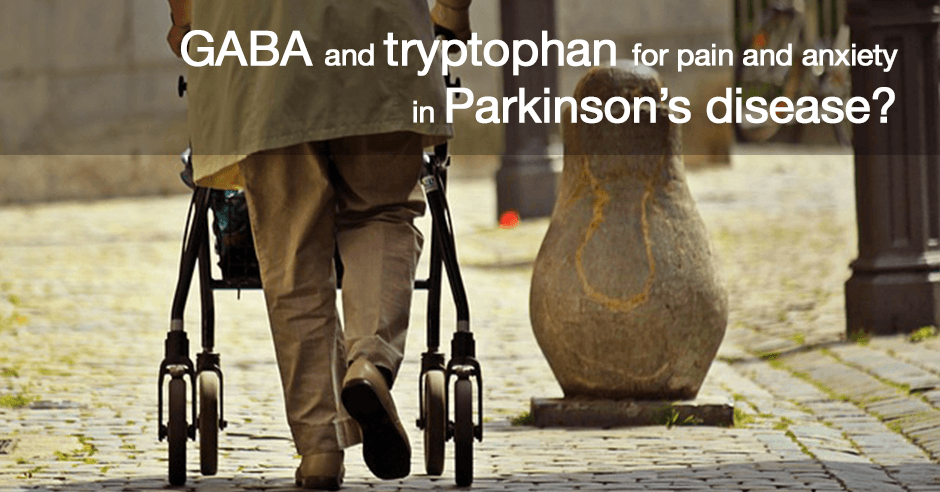
GABA and tryptophan for pain and anxiety in Parkinson’s disease?

August 25, 2017 By Trudy Scott 12 Comments

Last week I blogged about my recent back injury and how acupuncture boosts GABA to reduce back pain and how oral GABA further reduces the pain. Both these interventions have helped me so much and I’m doing so much better.

I love the feedback I receive in the blog comments and the great questions – which get to help the person asking the question and everyone else reading the blog and comments. So thank you if you comment!

I received this lovely feedback about GABA and anxiety, and a question about Parkinson’s disease (on the above blog) and want to share it and my response here so you and families with a loved one with Parkinson’s disease will also have access to this information:

I have loved reading your articles for a long time and listen to you whenever you are on a summit. I have learned a lot. GABA definitely helps me to relax, reduce my monkey mind and sleep better.

My mom has Parkinson’s disease and is very stiff and tight. She hurts often, especially her back. She also has afternoon anxiety, some call it “sundowners”. Can she take GABA with carbidopa-levidopa and blood pressure meds? She needs some kind of help!

Thank you in advance for any suggestions you might have to give her any quality of life as right now it is not good and the doctors offer no suggestions beyond possibly more prescriptions.

I responded saying how glad I was to hear GABA helps her to relax, reduces her monkey mind and also helps her to sleep better and how sorry I was to hear about her mom’s stiffness, pain and anxiety.

I posted this regarding the stiffness and back pain: share this paper with your doctor and get his/her approval to do a trial of GABA – Parkinson’s Disease and Neurodegeneration: GABA-Collapse Hypothesis:

the original description of Parkinson’s disease (PD) as due to the selective damage of dopaminergic neurons in the mesencephalon should be updated into the concept of a severe multisystemic neurodegenerative disorder of the nervous system, whose clinical symptoms reflect the localization and progression of the most advanced GABA pathology. A future and more complete therapeutic approach to PD should be aimed first at slowing (or stopping) the progression of Ca(2+)/GABA functional decline.

I have worked with a few people with Parkinson’s disease and GABA has been very helpful for the stiffness and pain, the physical anxiety, easing some of their tremors and helping with insomnia. I always do a trial so we know how much the individual will need.

For someone on blood pressure medication I’d start with a GABA-only product or GABA-theanine product rather than GABA Calm which does contain tyrosine.

I posted this regarding the “sundowners” question: I’d share this with your doctor and get the approval to do a trial of tryptophan – Sundown Syndrome in Persons with Dementia: An Update

sundown syndrome is characterized by the emergence or increment of neuropsychiatric symptoms such as agitation, confusion, anxiety, and aggressiveness in late afternoon, in the evening, or at night.

Although this paper refers to dementia, these symptoms also happen to be classic low serotonin symptoms that typically respond really well to tryptophan. The paper mentions melatonin as an intervention but since tryptophan converts to melatonin I’d start with tryptophan (based on doing a trial) and then consider adding melatonin too if needed.

I shared a few more resources on Parkinson’s disease:

  • Chris Kresser has an excellent blog post called New Research and Treatments for Parkinson’s Disease where he writes about the microbiome, constipation, SIBO, gluten, the HPA axis, low-dose naltrexone (LDN) and the possible autoimmune aspect, iron overload and the benefits of curcumin, a ketogenic diet and glutathione.
  • The Wahls Protocol for MS (some versions of which are ketogenic diets) shows promise for many neurodegenerative diseases and is also being researched for Parkinson’s disease

I also shared this amazing and inspiring video created by physical therapist Anicea Gunlock, on how using music while gait training can be beneficial for those suffering from Parkinsons’s disease

You read more about this music approach Anicea Gunlock used with her patient here.

The amino acids GABA and tryptophan can often be used in conjunction with all of the above approaches and often provide immediate relief for anxiety, pain, agitation and insomnia while some of the other root causes are being addressed.

I’ve recently updated the Antianxiety Food Solution Amino Acid and Pyroluria Supplements blog with some of my favorite GABA and tryptophan products mentioned above. You’ll also see the amino acid questionnaire and amino acid precautions on this blog.

Instead of only considering the amino acids for someone whose primary issue is anxiety, I’d like you to start thinking about using the amino acids for anyone who has a medical diagnosis – such as autism, cancer, ALS, Parkinson’s disease, MS, Alzheimer’s disease or anything else – and who also happens to suffer from anxiety.

Have you used GABA or tryptophan to ease stiff and tense muscles and pain in your Parksinson’s disease, for a family member or for a patient/client?

And have you used tryptophan for the low serotonin worry-type of anxiety, agitation and insomnia?

Filed Under: Anxiety, GABA, serotonin Tagged With: agitation, anxiety, autism, GABA, MS, pain, Parkinson's disease, serotonin, stiff and tense muscles, sundowners, tryptophan

Research opportunity: Parkinson’s disease and Multiple Sclerosis – participate in diet research

January 13, 2017 By Trudy Scott 4 Comments

We know that anxiety is very common in both Multiple Sclerosis/MS and Parkinson’s disease so I’m sharing this diet research opportunity in case you or someone you know can benefit.

Dr. Terry Wahls, author of The Wahls Protocol: A Radical New Way to Treat All Chronic Autoimmune Conditions Using Paleo Principles (and past speaker on the Anxiety Summit) shared this diet research opportunity via her newsletter: Dr. Laurie Mischley, ND is recruiting patients for this world-wide research opportunity i.e. you can live anywhere.

Dr. Mischley was so impressed with what she had observed [in her MS diet research] that she added the Wahls Diet as one of the dietary variables to her ongoing Parkinson’s study. If any of you have family or friends with Parkinson’s or MS, please encourage them to participate in one of these studies. Dr. Mischley’s studies are unique. Her team at Bastyr University is studying patients with chronic disease and assessing several variables to see if there is a common theme among those who had the best outcomes and the slowest disease progression.

The effort is minimal–you can participate from anywhere in the world by simply completing online surveys. The surveys are given every six months and include questions about medications, diet, herbal supplements, exercise, meditation, and an array of other factors.

This information will give Dr. Mischley’s team an ever-growing data set to analyze, searching for common traits among those who have the best health and function despite having Parkinson’s or MS. Your participation would be a tremendous gift to society because it would help us better understand the impact of dietary and lifestyle factors on health outcomes and functional status for those with Parkinson’s disease or MS.

We are seeing so much promising research on diet and mental health so it makes total sense to be looking at diet for Parkinson’s and MS. Here is some of the research on diet and mental health: anxiety and hypoglycemia and the Western diet and anxiety.

Without published research, clinical practice won’t change. With published research, more clinicians will be willing to utilize diet and lifestyle therapy, restoring health to more patients around the world.

Here is the link for more on the MS study and more on the Parkinson’s study.


Filed Under: Research Tagged With: anxiety, Dr. Laurie Mischley, Dr. Terry Wahls, mental health, multiple sclerosis, ND, Parkinson's disease, wahls protocol

Primary Sidebar

NEW! GABA QuickStart Homestudy (with special intro pricing)

gaba quickstart homestudy

Free Report

9 Great Questions Women Ask about Food, Mood and their Health

You'll also receive a complimentary subscription to my ezine "Food, Mood and Gal Stuff"


Connect with me

Popular Posts

  • Amino Acids Mood Questionnaire from The Antianxiety Food Solution
  • The Antianxiety Food Solution Amino Acid and Pyroluria Supplements
  • Pyroluria Questionnaire from The Antianxiety Food Solution
  • Collagen and gelatin lower serotonin: does this increase your anxiety and depression?
  • Tryptophan for the worry-in-your-head and ruminating type of anxiety
  • GABA for the physical-tension and stiff-and-tense-muscles type of anxiety
  • The Antianxiety Food Solution by Trudy Scott
  • Seriphos Original Formula is back: the best product for anxiety and insomnia caused by high cortisol
  • Am I an anxious introvert because of low zinc and vitamin B6? My response to Huffington Post blog
  • Vagus nerve rehab with GABA, breathing, humming, gargling and key nutrients

Recent Posts

  • What do I use instead of Seriphos to help lower high cortisol that is affecting my sleep and making me anxious at night?
  • BeSerene™ GABA/theanine cream eases severe muscle tension in her neck/shoulders, prevents her bad headaches and quells her anxiety
  • How the correct approach, dose and sublingual use of GABA can be calming and not cause a flushed and itchy face and neck
  • The amino acid glutamine improves low mood by addressing gut health, and it has calming effects too
  • Flight anxiety with heightened breath, physical tension and also fearing the worst (the role of low GABA and low serotonin)

Categories

  • 5-HTP
  • AB575
  • Addiction
  • ADHD
  • Adrenals
  • Alcohol
  • Allergies
  • Alzheimer's disease
  • Amino Acids
  • Anger
  • Antianxiety
  • Antianxiety Food Solution
  • Antidepressants
  • Anxiety
  • Anxiety and panic
  • Autism
  • Autoimmunity
  • benzodiazapines
  • Bipolar disorder
  • Books
  • Caffeine
  • Cancer
  • Candida
  • Children/Teens
  • Collagen
  • Cooking equipment
  • Coronavirus/COVID-19
  • Cravings
  • Depression
  • Detoxification
  • Diabetes
  • Diet
  • DPA/DLPA
  • Drugs
  • EFT/Tapping
  • EMF
  • EMFs
  • Emotional Eating
  • Endorphins
  • Environment
  • Essential oils
  • Events
  • Exercise
  • Fear
  • Fear of public speaking
  • Fertility and Pregnancy
  • Fish
  • Food
  • Food and mood
  • Functional neurology
  • GABA
  • Gene polymorphisms
  • General Health
  • Giving
  • Giving back
  • Glutamine
  • Gluten
  • GMOs
  • Gratitude
  • Gut health
  • Heart health/hypertension
  • Histamine
  • Hormone
  • Hyperparathyroidism
  • Hypoglycemia
  • Immune system
  • Inflammation
  • Insomnia
  • Inspiration
  • Introversion
  • Joy and happiness
  • Ketogenic diet
  • Lithium orotate
  • Looking awesome
  • Lyme disease and co-infections
  • MCAS/histamine
  • Medication
  • Men's health
  • Mental health
  • Mercury
  • Migraine
  • Mold
  • Movie
  • MTHFR
  • Multiple sclerosis
  • Music
  • NANP
  • Nature
  • Nutritional Psychiatry
  • OCD
  • Osteoporosis
  • Oxalates
  • Oxytocin
  • Pain
  • Paleo
  • Parasites
  • Parkinson’s disease
  • PCOS
  • People
  • PMS
  • Postpartum
  • PTSD/Trauma
  • Pyroluria
  • Questionnaires
  • Real whole food
  • Recipes
  • Research
  • Schizophrenia
  • serotonin
  • SIBO
  • Sleep
  • Special diets
  • Sports nutrition
  • Stress
  • Sugar addiction
  • Sugar and mood
  • Supplements
  • Teens
  • Testimonials
  • Testing
  • The Anxiety Summit
  • The Anxiety Summit 2
  • The Anxiety Summit 3
  • The Anxiety Summit 4
  • The Anxiety Summit 5
  • The Anxiety Summit 6
  • Thyroid
  • Thyroid health
  • Toxins
  • Tryptophan
  • Tyrosine
  • Uncategorized
  • Vegan/vegetarian
  • Women's health
  • Yoga

Archives

  • October 2025
  • September 2025
  • August 2025
  • July 2025
  • June 2025
  • May 2025
  • April 2025
  • March 2025
  • February 2025
  • January 2025
  • November 2024
  • October 2024
  • September 2024
  • August 2024
  • July 2024
  • June 2024
  • May 2024
  • April 2024
  • March 2024
  • February 2024
  • January 2024
  • December 2023
  • November 2023
  • October 2023
  • September 2023
  • August 2023
  • July 2023
  • June 2023
  • May 2023
  • April 2023
  • March 2023
  • February 2023
  • January 2023
  • December 2022
  • November 2022
  • October 2022
  • September 2022
  • August 2022
  • July 2022
  • June 2022
  • May 2022
  • April 2022
  • March 2022
  • February 2022
  • January 2022
  • December 2021
  • November 2021
  • October 2021
  • September 2021
  • August 2021
  • July 2021
  • June 2021
  • May 2021
  • April 2021
  • March 2021
  • February 2021
  • January 2021
  • December 2020
  • November 2020
  • October 2020
  • September 2020
  • August 2020
  • July 2020
  • June 2020
  • May 2020
  • April 2020
  • March 2020
  • February 2020
  • January 2020
  • December 2019
  • November 2019
  • October 2019
  • September 2019
  • August 2019
  • July 2019
  • June 2019
  • May 2019
  • April 2019
  • March 2019
  • February 2019
  • January 2019
  • December 2018
  • November 2018
  • October 2018
  • September 2018
  • August 2018
  • July 2018
  • June 2018
  • May 2018
  • April 2018
  • March 2018
  • February 2018
  • January 2018
  • December 2017
  • November 2017
  • October 2017
  • September 2017
  • August 2017
  • July 2017
  • June 2017
  • May 2017
  • April 2017
  • March 2017
  • February 2017
  • January 2017
  • December 2016
  • November 2016
  • October 2016
  • September 2016
  • August 2016
  • July 2016
  • June 2016
  • May 2016
  • April 2016
  • March 2016
  • February 2016
  • January 2016
  • December 2015
  • November 2015
  • October 2015
  • September 2015
  • August 2015
  • July 2015
  • June 2015
  • May 2015
  • April 2015
  • March 2015
  • February 2015
  • January 2015
  • December 2014
  • November 2014
  • October 2014
  • September 2014
  • August 2014
  • July 2014
  • June 2014
  • May 2014
  • April 2014
  • March 2014
  • February 2014
  • January 2014
  • December 2013
  • November 2013
  • October 2013
  • September 2013
  • August 2013
  • July 2013
  • June 2013
  • May 2013
  • April 2013
  • March 2013
  • February 2013
  • January 2013
  • December 2012
  • November 2012
  • October 2012
  • August 2012
  • July 2012
  • June 2012
  • May 2012
  • April 2012
  • March 2012
  • February 2012
  • January 2012
  • December 2011
  • November 2011
  • October 2011
  • September 2011
  • August 2011
  • July 2011
  • June 2011
  • May 2011
  • April 2011
  • March 2011
  • February 2011
  • January 2011
  • December 2010
  • October 2010
  • September 2010
  • July 2010
  • May 2010
  • April 2010
  • March 2010
  • February 2010
  • January 2010
  • November 2009

Share the knowledge!

The above statements have not been evaluated by the Food and Drug Administration. Products listed in this website are not intended to diagnose, treat, cure or prevent any disease.

The information provided on this site is for informational and educational purposes only and is not intended as a substitute for advice from your physician or other health care professional. You should consult with a healthcare professional before starting or modifying any diet, exercise, or supplementation program, before taking or stopping any medication, or if you have or suspect you may have a health problem.


Copyright © 2026 Trudy Scott. All Rights Reserved. | Privacy | Terms and Conditions | Refund Policy | Medical Disclaimer

Free Report

9 Great Questions Women Ask about Food, Mood and their Health

You’ll also receive a complimentary subscription to my ezine “Food, Mood and Gal Stuff”