• Skip to primary navigation
  • Skip to main content
  • Skip to primary sidebar

everywomanover29 blog

Food, Mood and Women's Health – Be your healthiest, look and feel great!

  • Blog
  • About
  • Services
  • Store
  • Resources
  • Testimonials
  • The Book
  • Contact
  • Search this site

pain

Low oxalate success stories: resolution of joint/body pain, insomnia, peripheral neuropathy and can walk without a cane

November 18, 2022 By Trudy Scott 18 Comments

low oxalate success stories

I’d love to hear how switching to a low oxalate way of eating helped you. And what motivated you to go down this path? Was it pain, weakness, low energy, anxiety, insomnia, bladder issues and/or restless legs and painful feet? (or something else?) How quickly did you see results when making the dietary changes? And what would you say to someone who can’t even imagine a better, easier and pain-free life, and really doesn’t want to give up so many foods?

I’ve seen incredible results personally and my painful feet and restless legs/insomnia (and also severe eye pain in one eye) was my motivation. I’m a nutritionist and understand the power of nutrition and know what is possible. But I know it’s tough to grasp for many individuals.

I’m asking for a dear family member who uses a walker and can’t imagine life without her walker and that dietary changes could make a difference.

I posted the above on Facebook and here are some of the few incredible responses I received. I hope they inspire and motivate you if you’re just beginning this low oxalate journey, or if you have a family member you’re trying to inspire, educate and help.

Beth shared how stopping high oxalate foods – beets, sweet potatoes, almonds, swiss chard, and chocolate – enabled her to stop using her cane in just 2 weeks:

I had to use cane by the time I was 28 and could barely hobble. The pain was like ground glass in my joints. To take a flight I had to get a wheelchair at the airport and had to use the electric carts at the grocery because I couldn’t walk or stand due to the excruciating pain. This went on for a few years.

When I learned about oxalates and stopped beets, sweet potatoes, almonds, swiss chard, and chocolate and went down to only medium oxalate foods or lower, I was off the cane in 2 weeks. I didn’t know about dumping, and I got lucky, but now if I eat too many oxalates the only problem I get is pain in my fingers and toes.

I can personally relate to the ground glass pain she describes – the pain in my feet felt like a mix of shards of glass and hot coals. It’s a common description I hear from clients.

You may be familiar with the wonderful work of Beth O’Hara, functional naturopath and founder of Mast Cell 360. She shares this too: “ I see a lot of mold toxicity underlying oxalate issues due to leaky gut, nutrient depletion, and a few other factors.” 

Quick results for insomnia, bloating, stomach pain, peripheral neuropathy, body pain, brain fog, weird rashes and more

Nicola shared these wonderful results and the fact that her symptoms started to resolve quickly:

I had extremely quick results – a couple of days for some symptoms. But the thrill of the slow realization that I wasn’t actually seriously ill and brewing up ever more and newer ways to suffer, was the biggest relief. Lower stress also equals lower pain.

Insomnia first, then bloating, stomach pain, peripheral neuropathy, chest pains, body pain, swollen lymph glands, brain fog, TMJ pains, weird rashes, arthritis type pains in hands/wrists, headaches. The list is too extensive to enumerate. Suffice to say I no longer feel in imminent danger of contracting lymphoma, heart problems, Alzheimer’s etc.

I am 66 years old and I’ve only been on this TLO (trying low oxalates) journey for about 8 months or so and all those issues have mostly been resolved. Kind of magical really. Still dumping oxalates regularly as I had a long way to come having been mostly Paleo for about 8 years previously.

I think we are too quick to resign ourselves to the ‘aging’ process. I find I am getting younger by the month, the longer I am lowering oxalates. I may not look any younger, but to be living without chronic pain is quite the unexpected boon.

I have to agree with Nicola. It is quite magical to get results like this and too often we take for granted that as we age chronic pain is inevitable. As you can see from these stories it is not inevitable and you have much more control than you may realize!

So desperate with pain that she thought she was going to have to quit work

Yvonne found out she had oxalate issues after having DNA testing done. She shares this about her journey and motivation:

I had extreme shoulder pain, grainy eyes and in the end, I couldn’t take my thyroid meds without the shoulder pain or some other pain. I found my way to the group through DNA testing which …suggested that I may have an oxalate problem. I slowly started eating low oxalate, suggested by the TLO group.

I had been primarily consuming high oxalate foods trying to be healthy but my diet wasn’t diverse enough. I was eating nuts, celery, spinach, kale, chocolate and sweet potatoes.

I was cautious after going low oxalate and having my problems relieved. Over time I’ve gone back to eating medium oxalate foods and done well. I do feel like making my own kombucha and drinking it daily has helped.

Dietary oxalate issues are often worse for women as they start to go through perimenopause and into menopause because of lower estradiol levels (more on that below). Yvonne was 65 at the time.

She shares what motivated her to make changes: “I was so desperate with pain that I thought I was going to have to quit work. That’s the reason I had the DNA testing done.”

Belly pain (maybe bladder), left leg pain, scalp itch, eye stinging and itching reduced immediately

Cristina shared what she observed when switching to a low oxalate diet:

Noticed belly pain (maybe bladder), left leg pain, scalp itch, eye stinging and itching reduced immediately. But might have taken a couple of years to really unload excess oxalates. I still get the exact same symptoms if I have high oxalates, particularly carrots, potatoes and nuts.

With much appreciation for these women for sharing their stories and giving me permission to share. I do hope this is inspiring and motivating for you if you are navigating dietary oxalates and can’t yet imagine that a diet change could lead to a better life and symptom-free existence.  I’ll be sharing all this wonderful feedback with my loved one too.

Additional reading about dietary oxalates

If you’re new to the concept of dietary oxalates here are some blog posts for additional reading:

  • Oxalate crystal disease, dietary oxalates and pain: the research & questions (this is a good one to start with if you’re new to dietary oxalates and the issues they can cause)
  • Vulvodynia: oxalates, GABA, tryptophan and physical therapy
  • Vitamin C causes oxalate formation resulting in pain, anxiety, and insomnia (when there is a defect in ascorbic acid or oxalate metabolism)?
  • Waking in the night due to environmental toxins: impacts on the liver, gallbladder and fat digestion (making oxalate issues worse)
  • Increased kidney stones in postmenopausal women with lower estradiol levels. What about increased dietary oxalate issues too?

I’d love to hear how switching to a low oxalate way of eating helped you and which high oxalate foods were you eating?

What motivated you to go down this path? Was it pain, weakness, low energy, anxiety, insomnia, bladder issues and/or restless legs and painful feet (or some other symptoms)?

How quickly did you see results when making the dietary changes?

And what would you say to someone who can’t even imagine a better, easier and pain-free life, and really doesn’t want to give up so many foods?

If you have questions please share them here too.
Filed Under: Insomnia, Oxalates, Pain Tagged With: anxiety, bladder pain, body pain, brain fog, eye pain, grainy eyes, ground glass, hot coals, insomnia, joint pain, low energy, Low oxalate, pain, pain-free, painful feet, peripheral neuropathy, restless legs, scalp itch, walk without a cane, weakness, weird rashes

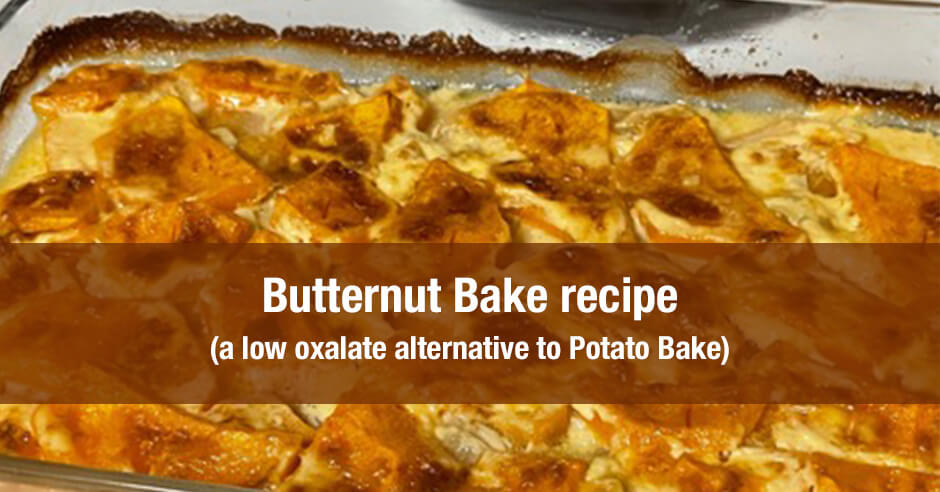
Butternut Bake recipe (a low oxalate alternative to Potato Bake)

November 4, 2022 By Trudy Scott 12 Comments

butternut bake recipe

Do you have dietary oxalate issues (pain, anxiety, insomnia, restless legs, hearing loss, eye issues, unresolved thyroid issues, bladder issues and more) and yet really miss potatoes and even sweet potatoes, both of which are very high oxalate?

I modified a family favorite recipe called Potato Bake (from Pips and my sister) to be a low oxalate option called Butternut Bake.

If you’re new to the dietary oxalate issues you can read more about this below. I’m finding it to be underappreciated as an issue especially in menopausal women when symptoms seems to be  more severe in susceptible individuals.

And if you don’t have dietary oxalate issues, you can certainly enjoy this recipe too.

Butternut Bake Recipe (a low oxalate alternative to potato bake)

Ingredients

1 large butternut peeled and sliced thinly
2 cups homemade stock (beef or chicken)
1 cup creme fraiche (or sour cream)
1 teaspoon butter
1 onion (grated)
6 large garlic cloves (grated or crushed in a garlic press)
Salt and pepper

Method

Peel the butternut and slice thinly (½ inch or 1 ¼  cm).

Butter a casserole dish (9×9 inches or 23 x 23 cm) and layer half the butternut slices in the dish.

Sprinkle with salt and pepper, and the grated onion and garlic – spreading it all evenly.

Layer the remaining butternut slices on top.

Bring the creme fraiche to boil and pour in the stock, boil for another minute.

Pour over the butternut.

Bake 180 deg C/350 deg F for 1.5 hours until the liquid has been absorbed by the butternut and the top is golden brown.

Enjoy as a side dish with a serving of quality/organic animal protein like grass-fed beef/lamb or pastured chicken or wild fish and some non-starchy low oxalate veggies such as cauliflower, zucchini  or asparagus.

Options

I have not tried it with coconut milk but I’m sure this could be substituted for the creme fraiche.

Low oxalate spices that could be experimented with include: chives, cilantro, basil, lemongrass, parsley, rosemary, ginger and sage.

If you know you don’t have dietary oxalate issues and decide to use potatoes instead, they do need to be cooked in the stock for 10 minutes before layering in the casserole dish. The original recipe calls for 3 large potatoes, sliced.

Some pictures to help as you make this butternut bake

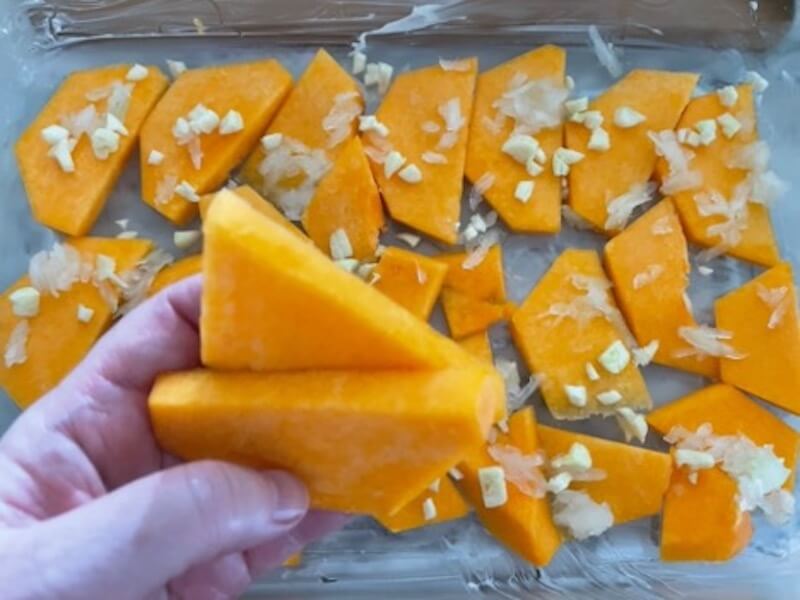
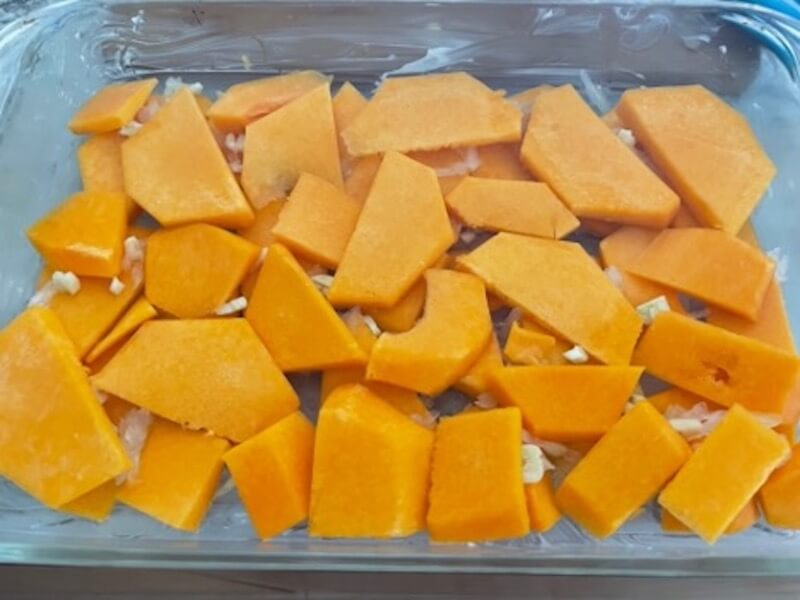
The top image shows the first layer of sliced butternut with grated onion and garlic. And the image below shows the second layer of butternut.

butternut bake

butternut bake

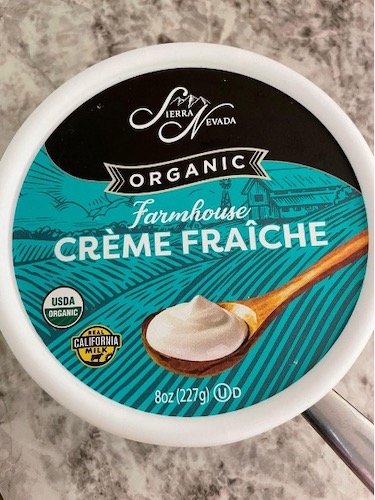
I was very pleased to find some very nice organic creme fraiche which has no added thickeners. The other image below shows the creme fraiche after it’s been boiled in the stock.

creme fraiche
creme fraiche sauce

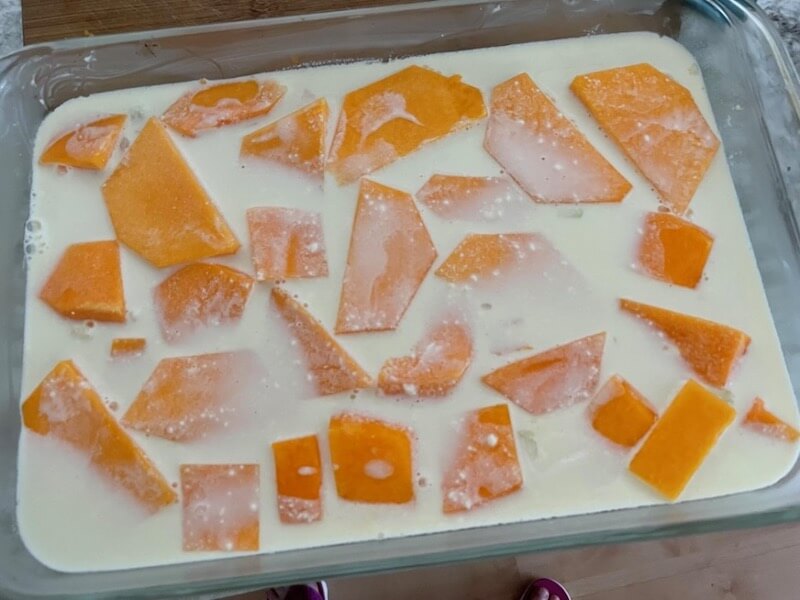
The next image shows what the layers of butternut and garlic/onion looks like covered with the creme fraiche/stock mixture i.e. it looks like it may be too much liquid but it really isn’t.

butternut bake

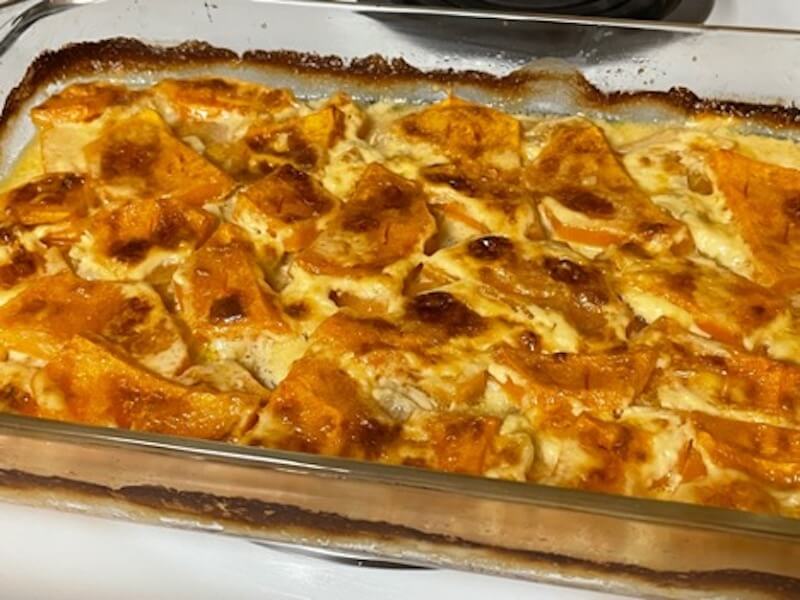
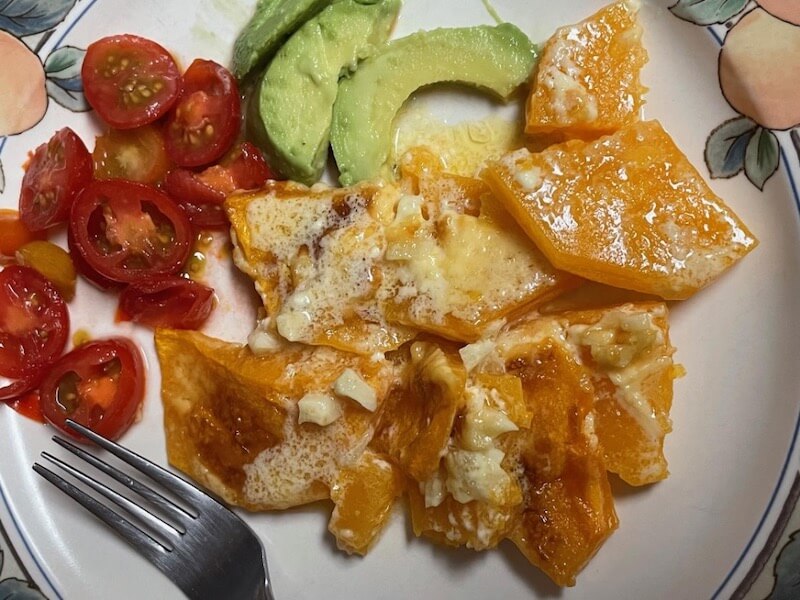
The bottom two images show what it looks like when the Butternut Bake is ready and comes out the oven, and then when it’s been served as a starter or side dish. There is a small amount of thick sauce.

butternut bake

butternut bake

Why consider dietary oxalates as a possible issue?

This blog post is a good one to start with if you’re new to dietary oxalates and the issues they can cause: Oxalate crystal disease, dietary oxalates and pain: the research & questions

These are the common medium-oxalate and high-oxalate foods that many folks have problems with: nuts, nut-butters and nut-flour (something to watch when eating Paleo or GAPS), wheat, chocolate, kiwi fruit (very high – see the raphides image on the above blog), star fruit (also very high), beets, potatoes, sweet potatoes, legumes, raspberries, spinach and soy.

In the above blog post, I share an overview of oxalates, my pain issues with dietary oxalates (severe foot pain and eye pain), and deeper dive into the condition called oxalate crystal disease (with some of my insights and questions).

The big take-aways are that calcium oxalate crystals are sharp and can cause far reaching harm beyond pain – such as unresolved anxiety, thyroid issues, neurological symptoms, eye issues, hearing loss, bladder issues, headaches, fatigue, insomnia, restless legs, autism symptoms and more; and you can have issues with dietary oxalates and not have kidney disease/kidney stones (although there is very little research supporting the latter).

You may find these oxalate blogs helpful too:

  • Waking in the night due to environmental toxins: impacts on the liver, gallbladder and fat digestion (making oxalate issues worse)
  • Increased kidney stones in postmenopausal women with lower estradiol levels. What about increased dietary oxalate issues too?

What dietary oxalates issues have you experienced and has a low oxalate diet helped you?

Do let us know if you make this recipe and enjoy it.

Feel free to share a favorite recipe of something you’ve adapted to be low or even medium oxalate.

If you have questions please share them here too.
Filed Under: Anxiety, Insomnia, Oxalates, Recipes Tagged With: anxiety, bladder issues, butternut, Butternut Bake recipe, dietary oxalate, estradiol, eye issues, hearing loss, high oxalate, insomnia, kidney disease, kidney stones, low oxalate alternative, menopausal women, oxalate, pain, potato, Potato Bake, restless legs, sweet potatoes, unresolved thyroid issues

GABA is a life saver for anxiety, theanine helps at night (insomnia) and 5-HTP makes a significant difference in lessening daily pain

September 16, 2022 By Trudy Scott 16 Comments

aminos help

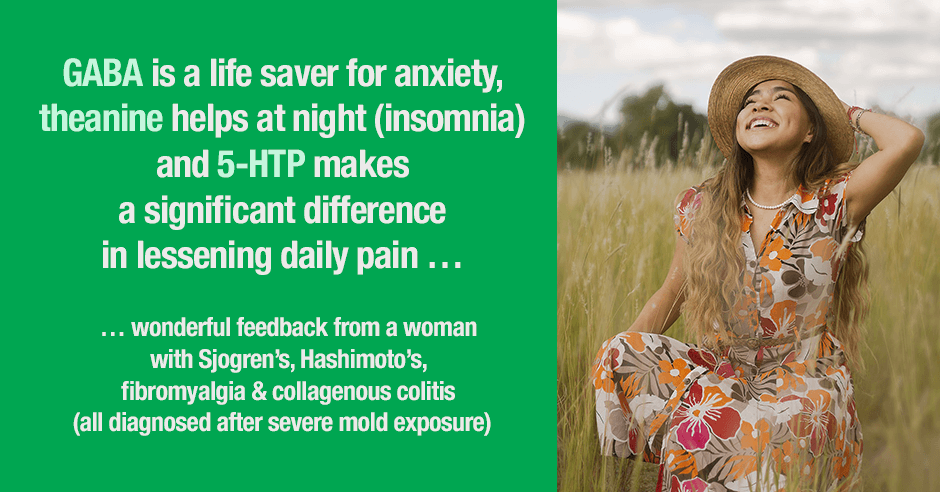
Joie has Sjogren’s, Hashimoto’s, fibromyalgia & collagenous colitis (all diagnosed after severe mold exposure) and shared how GABA is a life saver for her anxiety, how theanine helps at night with her insomnia and how 5-HTP makes a significant difference in lessening her daily pain. Here is her wonderful feedback in her own words (my feedback for her follows):

I was diagnosed with Sjogrens several years ago. I also have Hashimoto’s, Fibromyalgia & Collagenous Colitis. All of these happened after a severe mold exposure which destroyed my pituitary, and caused Exocrine Pancreatic Insufficiency (EPI). I have to take human growth hormone injections daily, as my pituitary isn’t working, digestive enzymes for the EPI, and have experienced the anxiety and depression you’ve written about.

The GABA has been a life saver for me (for my anxiety), and I share this with all I know who experience anxiety. I also use L-theanine at night because of insomnia. The 5-HTP has helped somewhat for sleep. L-tryptophan didn’t seem to make a difference. However the 5-HTP has made a significant difference in lessening my daily pain levels, which I am most grateful for.

Unfortunately, I am also taking Klonopin and Gabapentin, both of which I have tried to get off of but keep finding myself back on both in order to have greater than 5 hours of sleep at night. Even with these, I often awaken after 4-6 hours and take 1-2 chewable GABA which allows me to go back to sleep and get 2-4 more hours of sleep.

She shared this on the blog, Sjogren’s syndrome: tryptophan and GABA for anxiety, and moisturizing for dry skin and inflammation?, where I write about the prevalence of anxiety and depression in this autoimmune condition, and the fact that serotonin and GABA are often low.

I shared how sorry I was to hear how mold has impacted her but that it was wonderful to hear the GABA has been a lifesaver for you in terms of anxiety (and when waking in the night) and that theanine helps her sleep. It’s wonderful that 5-HTP helps ease her daily pain (here is fibromyalgia research on 5-HTP) and helps somewhat with her sleep issues.

Has she increased the amino acids to the optimal doses for her unique needs?

My question for her was this: “how much of each of these amino acids are you using and have you increased them to the optimal doses for your unique needs?” I asked this because many folks don’t do this and we always want to capitalize on what is working.

Here are some examples that relate to Joie:

  • When 5-HTP helps with pain relief we also do afternoon and bedtime trials to see if it can improve sleep further. And we always explore some of the reasons why serotonin may be low and address those too. You can read more on that here: what causes low serotonin

I shared that tryptophan doesn’t work for everyone and some do better with 5-HTP, but I do also consider melatonin when sleep is an issue, especially timed release to prevent waking in the night.

  • Since GABA is a lifesaver for her in terms of her anxiety and also helps when she wakes, trialing higher doses at bedtime may prevent the early morning waking. The same could be said for trialing a higher dose of theanine and using both GABA and theanine together at night (a 2019 study shows the combination decreases sleep latency and improves NREM sleep).

High cortisol, rebound sleep issues with meds and/or poor fat digestion?

If she has already done the above, I’d explore high cortisol and do a 5-collection an adrenal saliva test). When cortisol is high during the night, the use of Seriphos can be a game-changer for many.

Unfortunately both Klonopin and Gabapentin (especially the former) can cause rebound insomnia even when they seem to be helping in the short-term.

I also mentioned that my recent blog post many be helpful since she mentions exocrine pancreatic insufficiency, which could affect sleep by impacting her fat digestion – Waking in the night due to environmental toxins: impacts on the liver, gallbladder and fat digestion (making oxalate issues worse). This has relevance whether or not oxalates are an issue.

Autoimmune-Paleo (AIP) diet, pyroluria and moisturizing for reducing inflammation

It goes without saying that since Sjogren’s, Hashimoto’s and even Collagenous Colitis are autoimmune conditions, following an Autoimmune-Paleo (AIP) diet is key too. I have links to some AIP resources on the above Sjogren’s blog post.

In this blog I also mention pyroluria which may be relevant for someone with Collagenous Colitis and is crucial to address when there has been toxic mold exposure or other chronic issues like Lyme disease or MCAS. More on this here.

And you can also read about the value of moisturizing for reducing inflammation.

I thanked her and said I plan to share her results and my response as a new blog as I feel it will help others and give hope!

Resources if you are new to using amino acids as supplements

If you are new to using any of the amino acids as supplements, here is the Amino Acids Mood Questionnaire from The Antianxiety Food Solution (you can see all the symptoms of neurotransmitter imbalances, including low serotonin and low GABA).

If you suspect low levels of any of the neurotransmitters and do not yet have my book, The Antianxiety Food Solution – How the Foods You Eat Can Help You Calm Your Anxious Mind, Improve Your Mood, and End Cravings, I highly recommend getting it and reading it before jumping in and using amino acids on your own so you are knowledgeable. And be sure to share it with the practitioner/health team you or your loved one is working with.

There is an entire chapter on the amino acids and they are discussed throughout the book in the sections on gut health, gluten, blood sugar control, sugar cravings, self-medicating with alcohol and more.

The book doesn’t include product names (per the publisher’s request) so this blog, The Antianxiety Food Solution Amino Acid and Pyroluria Supplements, lists the amino acids that I use with my individual clients and those in my group programs. You can find them all in my online store.

If, after reading this blog and my book, you don’t feel comfortable figuring things out on your own (i.e. doing the symptoms questionnaire and respective amino acids trials), a good place to get help is the GABA QuickStart Program (if you have low GABA symptoms). This is a paid online/virtual group program where you get my guidance and community support.

If you are a practitioner, join us in The Balancing Neurotransmitters: the Fundamentals program. This is also a paid online/virtual program with an opportunity to interact with me and other practitioners who are also using the amino acids.

Has GABA helped with your anxiety and insomnia? What about theanine? And 5-HTP for your pain? Or melatonin for sleep?

Have you used taurine with success for fat digestion? Or Seriphos for high cortisol?

What else has helped you with symptoms like these ones?

If you have questions please share them here too.
Filed Under: 5-HTP, Anxiety, GABA, Insomnia, Pain Tagged With: 5-HTP, anxiety, Balancing Neurotransmitters: the Fundamentals program for practitioners, collagenous colitis, depression, Exocrine Pancreatic Insufficiency, Fibromyalgia, GABA, GABA Quickstart program, gabapentin, hashimoto's, Inflammation, insomnia, Klonopin, lessening daily pain, moisturizing, mold exposure, pain, serotonin, Sjogren’s, sleep, theanine, tryptophan

Waking in the night due to environmental toxins: impacts on the liver, gallbladder and fat digestion (making oxalate issues worse)

September 9, 2022 By Trudy Scott 37 Comments

night waking environmental toxins

Today I’m sharing how waking in the night may be caused by oxalate issues that are  made more severe because of home cleaning products, environmental toxins and fragrances/phthalates. It can happen because of the additional detoxification work required and adverse impacts on your liver and gallbladder. This can impact bile production so fat digestion is impaired. And when you have impaired fat digestion this can contribute to more severe oxalate issues because more oxalates are absorbed in the gut. This can lead to increased pain, worsening sleep and/or waking in the night, increased anxiety, fatigue, depression, more severe bladder symptoms, eye problems etc.

Using extra calcium citrate in the night can help in the short term. But improving fat digestion (with lipase, ox bile, taurine, a lipotropic formula, digestive bitters etc.) and supporting the liver/gallbladder is key because it gets to the root of the problem. And of course, avoid the chemical exposure. Sometimes this can’t be done – which is the case when you are traveling – so you have to do your best to reduce exposure.

This is actually my story. I’m traveling in South Africa at the moment and had a flare of my old oxalate issues, with increased foot pain at night, so much so that it was waking me at 3am in the morning. I’d be awake from 3-5am feeling agitated and restless and waiting for the extra calcium citrate to work. I’m a hot mess when I don’t get a solid 8-9 hours sleep so I had to figure out what the issue was and fix it quickly. It was a somewhat convoluted journey (more on that below) but eventually I landed on taurine as the solution and it’s been wonderful to get my solid sleep with no waking in the night!

I do eat a fair amount of fat – plenty of butter on my steamed veggies, olive oil, coconut oil, avocados, the fat from grass-fed meat, chicken skin, full fat cheese and eggs – and didn’t want to cut back.

So when taurine came to the rescue I was thrilled and still am!

I took 500mg before bed the first day and woke briefly twice but went right back to sleep. The second day I took 500mg taurine mid-morning, 500mg taurine mid-afternoon and 500mg before bed (all away from food). That night I woke briefly once and went right back to sleep. The third day I did the same and slept solidly through the night. My goal had been to increase to 3000mg per day but I’ll stick with 1500mg as long as this continues.

There were a few clues that indicated a need for liver-gallbladder support: the 3am waking is classic for liver issues; and my stool had become pale despite nothing else changing.

Impaired fat digestion leads to an increase in oxalate absorption

As mentioned above, when you have impaired fat digestion this can contribute to more severe oxalate issues because more oxalates are absorbed in the gut. This paper, Fat malabsorption induced by gastrointestinal lipase inhibitor leads to an increase in urinary oxalate excretion, summarizes the mechanism well:

Unabsorbed bile acids and fatty acids may react with calcium in the intestinal lumen, forming “soaps” that limit the amount of free calcium binding with oxalate, with a consequent increase in intestinal oxalate absorption leading to hyperoxaluria

In the above study, it’s orlistat (Xenical®), a gastrointestinal lipase inhibitor rather than environmental toxins and bile issues, that causes the increase in oxalates. I share it because it has a helpful explanation of the mechanism.

I share more about my issues with dietary oxalates here – Oxalate crystal disease, dietary oxalates and pain: the research & questions. My main issues in the past have been foot pain and eye pain, with downstream impacts on sleep. This blog has links to a number of other dietary oxalate blogs if this topic is new to you.

Bile production and detoxification

You may recall my wonderful interview with Ann Louise Gittleman on The Anxiety Summit 5: Gut-Brain Axis. The topic was: Why Bile is the Key to Anxiety & Hormone Havoc. I’ll add sleep to that too.

She covered the role of bile in PMS, estrogen imbalance and thyroid health; and importantly, how it’s involved in the removal of toxins from the body:

Bile is the dumping ground for hormones like estrogen. It’s the dumping ground for heavy metals that create anxiety like mercury, as well as too much aluminum and lead. And it’s the dumping ground, also, for a bunch of chemicals. So you got to keep the bile flowing. You have to keep it decongested. You have to thin it out.

She mentions simple tools to improve bile production: bitters (already part of my routine), lemon and water in the morning (also part of my daily routine), coffee (I can’t drink coffee as it makes me anxious), grapefruit and watercress. She also discusses key  nutrients for bile production and quality: choline, inositol, methionine and taurine.

I could not find any lipotropic formula with choline, inositol, methionine (they all had rice flour). And I could not find any products that contained only lipase or ox bile.

While I was looking for something to improve my bile production, I did try a milk thistle extract (for overall liver support) and a liver-gallbladder herbal tincture but both made things worse. So I did some reading on taurine, found a nice taurine only 500mg product and haven’t looked back. Read on for some of the mechanisms.

Taurine and bile acid conjugation and detoxification

Metabolic actions of the amino acid taurine include: “bile acid conjugation, detoxification, membrane stabilization, osmoregulation, and modulation of cellular calcium levels.”

This paper, The Continuing Importance of Bile Acids in Liver and Intestinal Disease, explains the significance of bile acid conjugation with taurine:

After biosynthesis from cholesterol and before excretion from the hepatocyte, bile acid molecules are conjugated with glycine or taurine, which converts a weak acid to a strong acid. As a result, conjugated bile acids are fully ionized at the range of pH values present in the small intestine.

Taurine works on GABA receptors and is a GABA alternative

What is really interesting is that taurine works on GABA receptors and has a synergistic effect with GABA. I suspect this played a role for me too.

In this editorial, Taurine and GABA neurotransmitter receptors, a relationship with therapeutic potential?, the authors share the following::

  • “Taurine exerts its neuronal inhibitory effect through the activation of GABAA receptors (GABAAR) but with less affinity than the specific agonists of each receptor.
  • GABA and taurine act synergistically in extra-synaptic GABA receptors.
  • Some experiments suggest that taurine activates GABAB receptors with high affinity”

In countries where over-the-counter GABA is not available (like the UK, Australia and New Zealand), I will recommend taurine as an option. I don’t find it to be as effective as GABA but it is slightly calming.

You may need to course-correct from time to time

I share this story to illustrate that things can be going well in terms of sleep, pain, anxiety, depression and so on, and then something can happen and you have to course-correct.

I also often hear from folks in my community saying: “GABA and/or tryptophan was working perfectly to help me sleep and all of a sudden it’s no longer working. What is going on?”  A situation like this shows how something else can change and it has nothing to do with the amino acids no longer working.

I do already use GABA, tryptophan (more on these below), melatonin and magnesium at bedtime and continued taking these supplements but I had to fix the root cause – the fat digestion issue.

I will add this: even if you don’t have dietary oxalate issues, this approach may be worth considering if you have no gallbladder, have fat digestion issues, are exposed to environmental toxins, have liver issues and wake in the night.

Resources if you are new to using amino acids as supplements

If you are new to using any of the amino acids as supplements, here is the Amino Acids Mood Questionnaire from The Antianxiety Food Solution (you can see all the symptoms of neurotransmitter imbalances, including low serotonin and low GABA).

If you suspect low levels of any of the neurotransmitters and do not yet have my book, The Antianxiety Food Solution – How the Foods You Eat Can Help You Calm Your Anxious Mind, Improve Your Mood, and End Cravings, I highly recommend getting it and reading it before jumping in and using amino acids on your own so you are knowledgeable. And be sure to share it with the practitioner/health team you or your loved one is working with.

There is an entire chapter on the amino acids and they are discussed throughout the book in the sections on gut health, gluten, blood sugar control, sugar cravings, self-medicating with alcohol and more.

The book doesn’t include product names (per the publisher’s request) so this blog, The Antianxiety Food Solution Amino Acid and Pyroluria Supplements, lists the amino acids that I use with my individual clients and those in my group programs. You can find them all in my online store.

If, after reading this blog and my book, you don’t feel comfortable figuring things out on your own (i.e. doing the symptoms questionnaire and respective amino acids trials), a good place to get help is the GABA QuickStart Program (if you have low GABA symptoms). This is a paid online/virtual group program where you get my guidance and community support.

If you are a practitioner, join us in The Balancing Neurotransmitters: the Fundamentals program. This is also a paid online/virtual program with an opportunity to interact with me and other practitioners who are also using the amino acids.

Have you experienced any adverse symptoms when exposed to environmental toxins? And has this made your oxalate issues worse or affected your fat digestion?

Have you used taurine with success? How much helps you?

Have other liver or gallbladder approaches also helped?

If you have questions please share them here too.
Read all posts in this series:

  • Coronavirus and vitamin C for immune support: new pain or more severe pain due to oxalate issues? (part 1)
  • Oxalate crystal disease, dietary oxalates and pain: the research & questions (part 2)
  • Vitamin C causes oxalate formation resulting in pain, anxiety, and insomnia (when there is a defect in ascorbic acid or oxalate metabolism)? (part 3)
  • Willow’s survival story: Easter Lilies cause acute renal failure in cats and Peace Lilies cause oxalate issues (part 4)
  • Waking in the night due to environmental toxins: impacts on the liver, gallbladder and fat digestion (making oxalate issues worse) (part 5)

Filed Under: GABA, Insomnia, Oxalates, Pain Tagged With: anxiety, Balancing Neurotransmitters: the Fundamentals program for practitioners, bile, bladder symptoms, calcium citrate, depression, detoxification, digestive bitters; GABA Quickstart program, environmental toxins, eye problems, fat digestion, fatigue, fragrances, gallbladder, home cleaning products, insomnia, lipase, lipotropic formula, liver, ox bile, oxalates, pain, phthalates, sleep, taurine, Waking in the night

Increased kidney stones in postmenopausal women with lower estradiol levels. What about increased dietary oxalate issues too?

June 3, 2022 By Trudy Scott 20 Comments

oxalate menopause

Epidemiological data reveal that the overall risk for kidney stones disease is lower for women compared to age-matched men. However, the beneficial effect for the female sex is lost upon menopause, a time corresponding to the onset of fall in estrogen levels.

The above is from a 2013 paper, Serum estradiol and testosterone levels in kidney stones disease with and without calcium oxalate components in naturally postmenopausal women.

The aim of this study was to look at serum estradiol and testosterone levels of naturally postmenopausal women who had kidney stones.

It was a small study with 113 naturally postmenopausal women with newly diagnosed kidney stones (some with calcium oxalate stones and some with non-calcium oxalate stones) and 84 controls, all around 52 to 62 years of age.

The results were as follows:

  • Serum estradiol (E2) was significantly lower in kidney stones patients compared to controls (21.1 vs. 31.1 pg/ml)
  • Serum testosterone (T) levels did not significantly differ among the groups.

The authors came to the conclusion that “Naturally postmenopausal women with higher remaining estradiol levels appear less likely to suffer from kidney calcium oxalate stones.

These findings support the hypothesis that higher postmenopausal endogenous [produced by the body] estrogens may protect against kidney stones with ageing.”

This is very encouraging research because it means we can do something about it (more on that below).

My question is this: What about increased dietary oxalate issues in this age group? And can there be similar issues in perimenopausal women too? This study only looked at kidney stones but I propose that there is a connection and that declining estradiol is the common factor. I also propose that providing estrogen support may help to counter both issues – kidney stones and/or dietary oxalate issues with no kidney stones, especially with the clinical observations and feedback I have had (more on that below).

Now this may not be the case for all women and is clearly not the only factor when it comes to kidney stones and dietary oxalate issues. But I do feel it needs to be part of the discussion. In menopause, osteoporosis and heart disease are on our radar but kidney stones and dietary oxalate issues are not.

Dr. Felice Gersch talks about estrogen and calcium in bone health and osteoporosis

I really thought I was onto something after hearing Dr. Felice Gersh, MD (a integrative gynecologist who focuses on women’s health and menopause) talk about estrogen and calcium in bone health/osteoporosis on The Osteoporosis Summit earlier this year. This is some of what she shared:

Estrogen affects everything! So estrogen is involved in the development of bone, but it’s even more complex. For example, estrogen allows the proper absorption of calcium, so that you get proper absorption of calcium from food in the gastrointestinal tract. That involves having proper estrogen levels. And having proper estrogen levels allows the reabsorption of calcium in the kidneys so that you don’t excrete a lot of calcium that you shouldn’t be excreting.

As soon as I heard calcium and the kidneys, the light bulbs went off and I started looking for some research. I didn’t expect there to be much because a higher incidence of kidney stones in menopause and the estrogen connection is not something I’ve heard discussed by menopause experts. However, the above study was one of many. Here are a few more studies that support this connection:

  • Estrogen replacement increased the citrate and calcium excretion rates in postmenopausal women with recurrent urolithiasis (urolithiasis is kidney stone disease)
  • Etiological role of estrogen status in renal stone formation

Interestingly this 2021 paper, Association between sex hormones and kidney stones: analysis of the National Health and Nutrition Examination Survey, reports that there is “no independent association between sex hormones (testosterone and estradiol) and history of kidney stones in either males or females.”  This conclusion may be related to the fact that there are fewer studies that include women. I look forward to future research in this area and until then we use the other research and what we see clinically.

How common are dietary oxalate issues in my community of perimenopausal and menopausal women?

I posted the 2013 study and this question on Facebook to see how common an issue it is:

If you have dietary oxalate issues (with or without kidney stones) I’m curious if there is a hormonal connection and specifically if things got worse for you in perimenopause, and got really bad in menopause (as estrogen declines even further). This has certainly been the case for me.

Here is some of the feedback I’ve received on this post and related posts:

Cynthia shared this: “Really interesting! I definitely had oxalate issues (perimenopause) provoked by ruptured appendix/SBO/abscesses and fistula formation (13 day hospitalization)….I had to remove all oxalates and go full carnivore for 9 months….I’m still oxalate sensitive and had not been before…. I will definitely be sharing this with my communities….there are SO many middle aged women with oxalate issues”

Kirsten shared this: “Interesting to know. At the age of 49 (I am now 51), for the first time in my life I developed kidney stones – probably the most painful experience of my life. I eliminated vitamin C supplements and some oxalates (I had a daily dose of “green juice” that I was consuming as well that I no longer take) however I never understood the relationship between estrogen and their development. I am not post menopausal as of yet -but definitely experiencing symptoms common in peri-menopause… Perimenopausal symptoms include – anxiety (the worrying type) which is at its worst around the time I menstruate (taking 5-HTP which helps but doesn’t completely resolve), night sweats, hypoglycemia, HPA dysfunction (which could be a result of perimeno as well as its own issue – or both). If I don’t keep my stress levels in check, everything becomes exacerbated – meditation helps too.”

Leah shared this: I developed oxalate issues after menopause (I’m in my 60s) and didn’t realize what is was until I read your post about it during the early days of the pandemic when people were overdosing on vitamin C (at least you were trying to figure out if there was a connection at the time). With more research, I discovered a product called Kidney Cop that I still take (though I never get stones, only skin issues on my face). I also switched to liposomal vitamin C and amla and cut back on the offensive [high oxalate] foods for me. I do also experience a similar effect when I use collagen powder with peptides (skin issues). When I switched to a powder that didn’t contain peptides but has collagen types 1-5 in it, I had no issues. I don’t know if this is oxalate-related or not, but the skin issue is the same (clear fluid-filled bumps around my mouth and chin only).”

A number of women in the Facebook group Trying Low Oxlaates have shared comments like this: “I was never bothered by oxalate issues before menopause” and “I can tell you that my oxalate problems became far worse – along with everything else, pyroluria, copper toxicity etc – in perimenopause.”

Personally, my severe dietary oxalate issues started in 2012, when I was 52, and it manifested as excruciating foot pain. It was a combination of hot-burning-coals-pain and shards-of-glass-pain. Later it affected my left eye and more recently it impacted my sleep in a big way. I eat low oxalate and use vitamin B6 and calcium citrate (carefully timed) to keep symptoms away. My next plan is to see if addressing my low estrogen will help even more (more on that below).

Approaches to support declining estrogen levels in perimenopause and menopause

Briefly, here is a summary for supporting declining estrogen levels in perimenopause and menopause:

  • Diet and lifestyle including exercise and stress-reduction
  • Amino acid support as needed (GABA supports progesterone and tryptophan supports estrogen) and the pyroluria protocol of zinc, vitamin B6 and evening primrose oil (more on this here)
  • Adrenal support
  • Essential oils such as geranium and rose otto and clary sage and other oils to help with anxiety and stress
  • Liver and kidney support
  • Avoiding environmental toxins, especially xenoestrogens (plastics, fragrances, pesticides etc) which bind to estrogen receptor sites
  • Maca – the research on Femmenessence Maca-Pause for bone and cardio health is very encouraging and I suspect there may be benefits for dietary oxalate issues and kidney stones too (when there is a low estrogen trigger). I will be trying this approach and I’ll report back on what I find.
  • Other herbal approaches for hormonal support: Black cohosh, red clover, dong quai (which, interestingly, are reno-protective too)
  • Bioidentical hormone replacement therapy

This section deserves an entire blog post and is important to address over and above the mood issues, increased anxiety, compromised sleep, low libido, vaginal issues and hot flashes – because of the impacts for heart health, cognitive decline and bone health.

Kidney stones and dietary oxalate issues in men

This 2016 paper addresses kidney stones in males and makes the testosterone connection for men under 60 years of age: Possible role of elevated serum testosterone in pathogenesis of renal stone formation

Urolithiasis [kidney stones] occurs with greater frequency in males with incidences three times higher compared to females indicating some role played by androgens. Stone formation in renal tissues before puberty is similar between males and females, whereas greater frequency is seen in the third to the fourth decade of life when the levels of serum testosterone are also the highest in males.

With advancing age, the probability for stone formation also decreases as consistent with the decline in serum testosterone levels with more than 20% of healthy men over 60 years of age presenting with serum levels of hormone below the range for young men.

This paper does also support the menopausal estrogen connection I’ve mentioned above: “With females, the frequency for stone formation is considered more compared with premenopausal postulated mainly due to low estrogen levels.”

There is so mention of dietary oxalate issues but we do see this clinically.

My other resources on oxalates if this is new to you

This blog, Oxalate crystal disease, dietary oxalates and pain: the research & questions, came out of my quest for finding a medical explanation/term for my own pain caused by dietary oxalates and a desire to gain a better understanding for my clients who experience similar pain.

You can read an overview of oxalates, my pain issues with dietary oxalates, a deeper dive into the condition called oxalate crystal disease (with some of my insights and questions), and the autism and atherosclerosis research.

As I mentioned above, my severe dietary oxalate issues started in 2012 (when I was 52) and it manifested as excruciating foot pain. It was a combination of hot-burning-coals-pain and shards-of-glass-pain. Later it affected my left eye.

You can also read how oxalates can contribute to anxiety, sleep issues (this has been a more recent issue for me), headaches, fatigue and other symptoms.

When I did the research for this older blog I didn’t come across any studies related to menopause and estrogen levels.

I published this blog, Coronavirus and vitamin C for immune support: new pain or more severe pain due to oxalate issues?, to help folks identify the increase in different types of pain they were seeing as a result of using high dose vitamin C. This could be joint pain, eye pain, foot pain, vulvodynia, bladder issues, insomnia, gut pain, kidney pain, changes in thyroid health/labs, bone pain etc.

This blog, Vitamin C causes oxalate formation resulting in pain, anxiety, and insomnia (when there is a defect in ascorbic acid or oxalate metabolism)? is part 2 and reviews some of the research on vitamin C/ascorbic acid being a possible trigger for the formation of oxalates in certain instances.

I do mention the big disconnect that we see in this research is always the mention of kidney stones. The missing piece – in the research and in many articles – is that you can have issues with dietary oxalates when there is no kidney disease/no kidney stones. I propose similar logic for dietary oxalate issues in perimenopause and menopause with declining estrogen levels i.e. dietary oxalate issues with or without kidney stones.

If you’re in perimenopause or menopause have approaches for supporting estrogen (estradiol) made your dietary oxalate issues and/or kidney stones less severe? Please share what has helped and if you have both – dietary oxalate issues and kidney stones/kidney disease.

If you’re a younger woman and have dietary oxalate issues and kidney stones/kidney disease, have you noticed any hormonal connections?

If this doesn’t affect you personally, have you seen the benefits of supporting estrogen with your perimenopausal/menopausal female clients/patients who have dietary oxalate issues and kidney stones/kidney disease?

If you’re male and have had dietary oxalate issues and/or kidney stones have you found they get less severe as you get older and testosterone declines?

If you have questions please share them here too.
Filed Under: Oxalates, Women's health Tagged With: anxiety, bone health, calcium, calcium oxalate, cognitive decline, dietary oxalate issues, Dr. Felice Gersch, estrogen, heart health, hot-flashes, insomnia, kidney stones, libido, lower estradiol levels, men, mood issues, osteoporosis, oxalate menopause, pain, perimenopausal, perimenopause, postmenopausal women, postmenopause, sleep, testosterone, vaginal, vitamin C

What is the difference between DPA and DLPA (amino acids) and which one do I use for weepiness, heart-ache, pain and energy?

March 11, 2022 By Trudy Scott 75 Comments

dpa and dlpa

Today we address a very common question I get: “What is the difference between DPA and DLPA?” The follow-up question is this: “And what symptoms do they help with?” These are both amino acids that help to boost certain feel-good neurotransmitters. DPA (d-phenylalanine) supports endorphins, whereas DLPA (dl-phenylalanine) supports both endorphins (to a lesser extent than DPA) and catecholamines (to a lesser extent than tyrosine).

Depending on your imbalances and symptoms, they could help with weepiness, heart-ache, comfort eating, emotional support, pain relief, better focus and energy, and even improved motivation.  

I mostly recommend DPA (which I call a-hug-in-a-bottle) and share the reasons why below, but some people do really well with DLPA. It’s a matter of figuring out the best one and dose for your unique needs.

DPA for low endorphin symptoms

DPA (d-phenylalanine) is an amino acid that destroys the enzyme that breaks down endorphins. Endorphins are feel-good chemicals that you experience with an endorphin rush when you go for a run or when someone gives you a big hug, when you show kindness to someone or an individual does something nice for you.

Taking the amino acid, DPA, as a supplement helps to raise your endorphins and helps when you feel weepy and overly emotional and reduces the need to self-medicate with treats as a reward or for comfort.

This amino acid is a favorite with so many of my clients and community because it makes them feel so lovely … a warm and fuzzy feeling. I often call it a-hug-in-a-bottle!

Here are the low endorphin symptoms I have my clients rate if they are considering a trial of DPA:

  • Heightened sensitivity to emotional pain
  • Heightened sensitivity to physical pain
  • Crying or tearing up easily
  • Eating to soothe your mood, or comfort eating
  • Really, really loving certain foods, behaviors, drugs, or alcohol
  • Craving a reward or numbing treat

Tyrosine for low catecholamine symptoms

Tyrosine is the amino acid that boosts catecholamines and helps with focus, motivation, energy (especially when you crave carbs for energy) and the blah kind of depression. It’s wonderful for helping you easily quit coffee/caffeine (when you are using it to “self-medicate” due to low catecholamines). It also provides support for the thyroid.

Here are the low catecholamine symptoms I have my clients rate if they are considering a trial of the amino acid tyrosine:

  • Depression and apathy
  • Easily bored
  • Lack of energy
  • Lack of focus
  • Lack of drive and low motivation
  • Attention deficit disorder
  • Procrastination and indecisiveness
  • Craving carbs, alcohol, caffeine, or drugs for energy

DLPA for both low endorphin and low catecholamine symptoms

If someone has both low endorphin and low catecholamine symptoms, a trial of DLPA could be considered.  DLPA supports both endorphins (to a lesser extent than DPA alone) and also catecholamines (to a lesser extent than tyrosine used alone). You could think of it as doing half and half of each.

Low endorphin symptoms:

  • Heightened sensitivity to emotional pain
  • Heightened sensitivity to physical pain
  • Crying or tearing up easily
  • Eating to soothe your mood, or comfort eating
  • Really, really loving certain foods, behaviors, drugs, or alcohol
  • Craving a reward or numbing treat

And low catecholamine symptoms:

  • Depression and apathy
  • Easily bored
  • Lack of energy
  • Lack of focus
  • Lack of drive and low motivation
  • Attention deficit disorder
  • Procrastination and indecisiveness
  • Craving carbs, alcohol, caffeine, or drugs for energy

Why I prefer my clients use DPA and tyrosine, rather than DLPA

Many people do well with DLPA (you can read one example below) but over the years I have streamlined my amino acid recommendations and seldom suggest DLPA. Here are the reasons why I prefer DPA:

  • DPA is not stimulating and doesn’t affect sleep. However, DLPA can be stimulating for anxious folks (and the majority of my clients have anxiety). For this reason, DLPA can not be used later than 3pm as it can affect sleep and for some folks with really bad sleep issues it can’t be tolerated later than mid-morning (in a similar way to tyrosine).
  • I like to have clients use DPA alone so we can clearly identify the benefits they are experiencing for their low endorphin symptoms and then use tyrosine alone so we can clearly identify their low catecholamine benefits.
  • There are no precautions or contraindications with DPA. However, DLPA has the same precautions as tyrosine. This limits using it for endorphin support. These are the precautions:
    • Overactive thyroid/Grave’s disease: tyrosine, DLPA (avoid)
    • Phenylketonuria (PKU): tyrosine, DLPA (avoid)
    • Melanoma: tyrosine, DLPA (avoid)
    • High Blood pressure: tyrosine, DLPA (watch)
    • Migraine headaches: tyrosine, DLPA (watch)
    • Bipolar disorder: tyrosine, DLPA, glutamine (watch)
  • The women I work with who do have low endorphin symptoms have reported superior benefits from DPA compared to DLPA, especially for emotional pain and emotional eating.
  • Some folks can’t tolerate tyrosine and these same folks have a hard time with DLPA.

The one disadvantage with DPA is that it’s not as widely and readily available as DLPA. It often needs to be purchased online (I list some brands below).

Here is some feedback from folks to give you an idea how these amino acids have helped them.

As you’ll see, there are some individuals who do well with DLPA so it’s really a matter of looking at the symptoms and doing a trial.

DPA helps Missy with weepiness and a deep heart-ache (and tastes like dark chocolate)

Missy shares how DPA helped her deep heart-ache sort of feeling:

I have found I was using this product incorrectly. If you are feeling fine, you do not feel much of anything from it. But today I was weepy and felt that deep, heart-ache sort of feeling. I chewed 1000 mgs (2 capsules) and it DID help lift that awful feeling within 15 minutes.

Notice that she said if you’re feeling fine you don’t feel much at all. This is true of all the amino acids – they only make a difference when you need them.

Missy said that she chewed the capsule, however around 2019, the gelatin capsule was replaced with a cellulose capsule. It’s much more palatable when it’s opened up into the mouth. I blog more about opening the capsule here.

She also reported what about half my clients say:

Tastes like slightly bitter dark chocolate 🙂

The remainder of my clients don’t like the taste at all, although many say the taste grows on them. I’ve always been in the dark chocolate camp and find it quite pleasant tasting.

DLPA helps Toby with energy and pain relief (he has CFS and fibromyalgia)

Toby has a diagnosis of CFS (chronic fatigue syndrome) and fibromyalgia and shared how DLPA helps him:

I’ve played around with (I think) all variations of these aminos and have found unequivocally (in the sense of definite and fast observable changes as opposed to none) that DLPA is the one that works for me. I have wondered what that means. I am male, 45, diagnosed with CFS and fibromyalgia and have speculated that in lay terms the DLPA gives me a bit of energy and pain relief (endorphins). Is that a logical conclusion?

He posted an image of the DLPA product he used and said this:

After putting it on my tongue, very quickly I get an agreeable boost in energy and pain relief. I have not experienced this with DPA or tyrosine.

Based on what I’ve covered above with the symptoms you can see that Toby has made a very logical conclusion. He is getting both endorphin support (the pain relief) and catecholamine support (the energy).

Resources if you are new to using DPA or DLPA as supplements

If you are new to using the amino acids DPA or DLPA as supplements, here is the Amino Acids Mood Questionnaire from The Antianxiety Food Solution (you can see the low endorphin and low catecholamine symptoms.)

If you suspect low levels of endorphins and/or low levels of catecholamine and do not yet have my book, The Antianxiety Food Solution – How the Foods You Eat Can Help You Calm Your Anxious Mind, Improve Your Mood, and End Cravings, I highly recommend getting it and reading it before jumping in and using amino acids on your own so you are knowledgeable. And be sure to share it with the team you or your loved one is working with. Blog posts like this are intended to add value to the chapter on amino acids, which contains detailed information on doses and time of the day for dosing.

The book doesn’t include product names (per the publisher’s request) so this blog, The Antianxiety Food Solution Amino Acid and Pyroluria Supplements, lists the DPA and DLPA products that I use with my individual clients and those in my group programs.

For DPA I have used the Lidtke Endorphigen product for years and it’s a firm favorite with my clients (and I’ve used it myself).

I recently purchased  a bottle of Doctor’s Best D-Phenylalanine to test and it works just as well as the Lidtke product.

If you are a practitioner, join us in The Balancing Neurotransmitters: the Fundamentals program. It’s an opportunity to interact with me and other practitioners who are also using the amino acids.

Do you have any of the low endorphin and/or low catecholamine symptoms and have you seen benefit with DPA, DLPA and/or tyrosine?  If yes, please share what benefits.

Has this blog provided clarification on DPA vs DLPA, and will you be changing how you use these amino acids going forward?

If you’re a practitioner please share what you use with clients/patients.

Feel free to ask your questions here too.

Filed Under: Amino Acids, Emotional Eating, Pain, Women's health Tagged With: amino acids, anxiety, anxious, catecholamines, cfs, comfort eating, d-phenylalanine, Dark chocolate, dl-phenylalanine, DLPA, DPA, emotional support, endorphins, energy, Fibromyalgia, focus, heart-ache, hug, insomnia, motivation, neurotransmitters, pain, symptoms, tyrosine, weepiness, What is the difference between DPA and DLPA

  • « Go to Previous Page
  • Page 1
  • Page 2
  • Page 3
  • Page 4
  • Page 5
  • Page 6
  • Interim pages omitted …
  • Page 9
  • Go to Next Page »

Primary Sidebar

NEW! GABA QuickStart Homestudy (with special intro pricing)

gaba quickstart homestudy

Free Report

9 Great Questions Women Ask about Food, Mood and their Health

You'll also receive a complimentary subscription to my ezine "Food, Mood and Gal Stuff"


Connect with me

Popular Posts

  • Amino Acids Mood Questionnaire from The Antianxiety Food Solution
  • The Antianxiety Food Solution Amino Acid and Pyroluria Supplements
  • Pyroluria Questionnaire from The Antianxiety Food Solution
  • Collagen and gelatin lower serotonin: does this increase your anxiety and depression?
  • Tryptophan for the worry-in-your-head and ruminating type of anxiety
  • GABA for the physical-tension and stiff-and-tense-muscles type of anxiety
  • The Antianxiety Food Solution by Trudy Scott
  • Seriphos Original Formula is back: the best product for anxiety and insomnia caused by high cortisol
  • Am I an anxious introvert because of low zinc and vitamin B6? My response to Huffington Post blog
  • Vagus nerve rehab with GABA, breathing, humming, gargling and key nutrients

Recent Posts

  • What do I use instead of Seriphos to help lower high cortisol that is affecting my sleep and making me anxious at night?
  • BeSerene™ GABA/theanine cream eases severe muscle tension in her neck/shoulders, prevents her bad headaches and quells her anxiety
  • How the correct approach, dose and sublingual use of GABA can be calming and not cause a flushed and itchy face and neck
  • The amino acid glutamine improves low mood by addressing gut health, and it has calming effects too
  • Flight anxiety with heightened breath, physical tension and also fearing the worst (the role of low GABA and low serotonin)

Categories

  • 5-HTP
  • AB575
  • Addiction
  • ADHD
  • Adrenals
  • Alcohol
  • Allergies
  • Alzheimer's disease
  • Amino Acids
  • Anger
  • Antianxiety
  • Antianxiety Food Solution
  • Antidepressants
  • Anxiety
  • Anxiety and panic
  • Autism
  • Autoimmunity
  • benzodiazapines
  • Bipolar disorder
  • Books
  • Caffeine
  • Cancer
  • Candida
  • Children/Teens
  • Collagen
  • Cooking equipment
  • Coronavirus/COVID-19
  • Cravings
  • Depression
  • Detoxification
  • Diabetes
  • Diet
  • DPA/DLPA
  • Drugs
  • EFT/Tapping
  • EMF
  • EMFs
  • Emotional Eating
  • Endorphins
  • Environment
  • Essential oils
  • Events
  • Exercise
  • Fear
  • Fear of public speaking
  • Fertility and Pregnancy
  • Fish
  • Food
  • Food and mood
  • Functional neurology
  • GABA
  • Gene polymorphisms
  • General Health
  • Giving
  • Giving back
  • Glutamine
  • Gluten
  • GMOs
  • Gratitude
  • Gut health
  • Heart health/hypertension
  • Histamine
  • Hormone
  • Hyperparathyroidism
  • Hypoglycemia
  • Immune system
  • Inflammation
  • Insomnia
  • Inspiration
  • Introversion
  • Joy and happiness
  • Ketogenic diet
  • Lithium orotate
  • Looking awesome
  • Lyme disease and co-infections
  • MCAS/histamine
  • Medication
  • Men's health
  • Mental health
  • Mercury
  • Migraine
  • Mold
  • Movie
  • MTHFR
  • Multiple sclerosis
  • Music
  • NANP
  • Nature
  • Nutritional Psychiatry
  • OCD
  • Osteoporosis
  • Oxalates
  • Oxytocin
  • Pain
  • Paleo
  • Parasites
  • Parkinson’s disease
  • PCOS
  • People
  • PMS
  • Postpartum
  • PTSD/Trauma
  • Pyroluria
  • Questionnaires
  • Real whole food
  • Recipes
  • Research
  • Schizophrenia
  • serotonin
  • SIBO
  • Sleep
  • Special diets
  • Sports nutrition
  • Stress
  • Sugar addiction
  • Sugar and mood
  • Supplements
  • Teens
  • Testimonials
  • Testing
  • The Anxiety Summit
  • The Anxiety Summit 2
  • The Anxiety Summit 3
  • The Anxiety Summit 4
  • The Anxiety Summit 5
  • The Anxiety Summit 6
  • Thyroid
  • Thyroid health
  • Toxins
  • Tryptophan
  • Tyrosine
  • Uncategorized
  • Vegan/vegetarian
  • Women's health
  • Yoga

Archives

  • October 2025
  • September 2025
  • August 2025
  • July 2025
  • June 2025
  • May 2025
  • April 2025
  • March 2025
  • February 2025
  • January 2025
  • November 2024
  • October 2024
  • September 2024
  • August 2024
  • July 2024
  • June 2024
  • May 2024
  • April 2024
  • March 2024
  • February 2024
  • January 2024
  • December 2023
  • November 2023
  • October 2023
  • September 2023
  • August 2023
  • July 2023
  • June 2023
  • May 2023
  • April 2023
  • March 2023
  • February 2023
  • January 2023
  • December 2022
  • November 2022
  • October 2022
  • September 2022
  • August 2022
  • July 2022
  • June 2022
  • May 2022
  • April 2022
  • March 2022
  • February 2022
  • January 2022
  • December 2021
  • November 2021
  • October 2021
  • September 2021
  • August 2021
  • July 2021
  • June 2021
  • May 2021
  • April 2021
  • March 2021
  • February 2021
  • January 2021
  • December 2020
  • November 2020
  • October 2020
  • September 2020
  • August 2020
  • July 2020
  • June 2020
  • May 2020
  • April 2020
  • March 2020
  • February 2020
  • January 2020
  • December 2019
  • November 2019
  • October 2019
  • September 2019
  • August 2019
  • July 2019
  • June 2019
  • May 2019
  • April 2019
  • March 2019
  • February 2019
  • January 2019
  • December 2018
  • November 2018
  • October 2018
  • September 2018
  • August 2018
  • July 2018
  • June 2018
  • May 2018
  • April 2018
  • March 2018
  • February 2018
  • January 2018
  • December 2017
  • November 2017
  • October 2017
  • September 2017
  • August 2017
  • July 2017
  • June 2017
  • May 2017
  • April 2017
  • March 2017
  • February 2017
  • January 2017
  • December 2016
  • November 2016
  • October 2016
  • September 2016
  • August 2016
  • July 2016
  • June 2016
  • May 2016
  • April 2016
  • March 2016
  • February 2016
  • January 2016
  • December 2015
  • November 2015
  • October 2015
  • September 2015
  • August 2015
  • July 2015
  • June 2015
  • May 2015
  • April 2015
  • March 2015
  • February 2015
  • January 2015
  • December 2014
  • November 2014
  • October 2014
  • September 2014
  • August 2014
  • July 2014
  • June 2014
  • May 2014
  • April 2014
  • March 2014
  • February 2014
  • January 2014
  • December 2013
  • November 2013
  • October 2013
  • September 2013
  • August 2013
  • July 2013
  • June 2013
  • May 2013
  • April 2013
  • March 2013
  • February 2013
  • January 2013
  • December 2012
  • November 2012
  • October 2012
  • August 2012
  • July 2012
  • June 2012
  • May 2012
  • April 2012
  • March 2012
  • February 2012
  • January 2012
  • December 2011
  • November 2011
  • October 2011
  • September 2011
  • August 2011
  • July 2011
  • June 2011
  • May 2011
  • April 2011
  • March 2011
  • February 2011
  • January 2011
  • December 2010
  • October 2010
  • September 2010
  • July 2010
  • May 2010
  • April 2010
  • March 2010
  • February 2010
  • January 2010
  • November 2009

Share the knowledge!

The above statements have not been evaluated by the Food and Drug Administration. Products listed in this website are not intended to diagnose, treat, cure or prevent any disease.

The information provided on this site is for informational and educational purposes only and is not intended as a substitute for advice from your physician or other health care professional. You should consult with a healthcare professional before starting or modifying any diet, exercise, or supplementation program, before taking or stopping any medication, or if you have or suspect you may have a health problem.


Copyright © 2026 Trudy Scott. All Rights Reserved. | Privacy | Terms and Conditions | Refund Policy | Medical Disclaimer

Free Report

9 Great Questions Women Ask about Food, Mood and their Health

You’ll also receive a complimentary subscription to my ezine “Food, Mood and Gal Stuff”