• Skip to primary navigation
  • Skip to main content
  • Skip to primary sidebar

everywomanover29 blog

Food, Mood and Women's Health – Be your healthiest, look and feel great!

  • Blog
  • About
  • Services
  • Store
  • Resources
  • Testimonials
  • The Book
  • Contact
  • Search this site

oxytocin

The Anxiety Summit: wise words on MS, oxytocin, red meat, marijuana, mercury

June 10, 2016 By Trudy Scott 10 Comments

fb_red_Anxiety4

We’re in the midst of season 4 of The Anxiety Summit www.theanxietysummit.com and here are wise words of wisdom from some of our amazing speakers on MS, oxytocin, red meat, marijuana, mercury and more.

If you have joined the summit and are loving it, this serves as a nice recap, a reminder if you missed a talk and inspiration to stay tuned in for some of the later interviews. And making sure you know that each speaker has a blog with snippets and many additional resources.

And if you’ve recently joined my community for the summit a VERY big welcome!

If you have not yet signed up I hope these wise words inspire you to join us!

Here are some snippets from some of the interviews.

Multiple sclerosis and anxiety: The Wahls Protocol

Dr. Terry Wahls shares how her MS was a gift:

And it all needs to happen this way Trudy.  I had to get that disabled.  I had to be on the verge of utter catastrophe to begin to feel the effects of cognitive decline to do all this work and then feel the effects of all this healing that happens when you provide a healthy habitat for the human ecosystem and all this repair happens.  If this hadn’t of have happened I’d still be a conventional medicine doc thinking the latest drugs out of the New England Journal of Medicine were the way to go as opposed to seeing the gospel of food and sleep and movement and stress reduction.

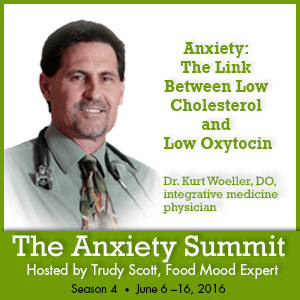
The Link Between Low Cholesterol and Low Oxytocin

The Pitocin/synthetic discussion oxytocin with Dr. Kurt Woeller was fascinating:

And there’s a theory … that the Pitocin, which is synthetic oxytocin, which is given to women who are not naturally going into labor, it’s meant to action speed labor up. Pitocin being synthetic oxytocin may short circuit in some susceptible kids the natural production of oxytocin, therefore slowing down or turning off those areas in the brain that are normally being developed at that time, with regards to socialization.

Gluten and anxiety: the testing conundrum solution

Dr. Tom O’Bryan’s explanation of the limited gluten sensitivity testing that most people have done:

what happens when people have one of those peptides that the immune system is fighting that’s not the 33 [alpha-gliadin] and you do a blood test for gluten sensitivity.  If your doctor orders the common blood test for gluten sensitivity and it looks for alpha-gliadin and it comes back negative and your doctors says you’re fine eating wheat.  See, here’s the blood test.  Well you can get a false negative meaning it says there’s no problem when there really is because your body’s fighting other peptides of wheat.

Nutrients that Fuel Brain Power and Reduce Anxiety

Dr. Drew Ramsey talks about zinc and animal protein:

Zinc is a mineral and minerals tend to be more absorbable in animal forms.  I think a lot of people are very confused about meat and seafood and often intimidated and scared.  And then we’ve had this message to go plant based and even vegan which is not a diet that is healthy for the brain.

Dr. Hyla Cass, integrative psychiatrist covers marijuana and anxiety later in the summit:

very often people who have been smoking marijuana for a while – when they go off it they go through serious withdrawal – anxiety, insomnia, feeling really very bad. Very much like we see in movies – we understand what it’s like getting off heroin when people go through withdrawal. Very similar, it really looks similar in appearance. Not everyone does that but common enough.

Dr. John Dempster, co-host of the Mental Wellness Summit discusses mercury as a neurotoxin in his interview later in the summit

So I kind of want to shed some light on some of these areas and how it can affect anxiety directly. One of the big areas is mercury itself is a neurotoxin. So how does that impact our biochemistry and our physiology? Well what it’s going to do it’s going to start to disrupt on an endocrine and a neurotransmitter level some of our pathways. And one of the big pathways is actually the glutamate connection and the glutamate pathway. And glutamate is something that’s known as an excitatory neurotransmitter and this is something that if we have too much of it or it’s not being reuptake properly in our synapses we start to exhibit different types of symptoms of anxiety. And of course that’s just one possible trigger for anxiety.

You can see a list of all the speakers and topics here on the master speaker blog.

You can sign up here: season 4 of The Anxiety Summit www.theanxietysummit.com

If you missed any, not to worry, we’ve decided to do an encore day with ALL the speakers. We don’t want you feeling stressed or anxious about missing out – not on a summit on anxiety!

Filed Under: Events, The Anxiety Summit 4 Tagged With: anxiety, brain health, cholesterol, drew ramsey, gluten, Hyla Cass, John Dempster, Kurt Woeller, marijuana, mercury, multiple sclerosis, oxytocin, terry wahls, the anxiety summit, tom o’bryan, Trudy Scott

The Anxiety Summit – Anxiety: The Link Between Low Cholesterol and Low Oxytocin

June 8, 2016 By Trudy Scott 33 Comments

Kurt Woeller_Anxiety4

Dr. Kurt Woeller, DO, integrative medicine physician, was interviewed on the Anxiety Summit by host of the Anxiety Summit, Trudy Scott, Food Mood Expert and Nutritionist, author of The Antianxiety Food Solution.

Anxiety: The Link Between Low Cholesterol and Low Oxytocin

  • The functions of cholesterol and some of the many health consequences of low cholesterol
  • Fat malabsorption, and other causes of low cholesterol
  • Oxytocin: bonding, trust and social anxiety and why it can be low
  • The relationship between oxytocin and cholesterol and anxiety/depression
  • How to naturally raise low cholesterol and low oxytocin

Here are some gems from our interview:

As I mentioned in my practice, most of the kids that I test are anywhere between 110 to 120.  Now to give you a reference point, the National Institutes of Health states that levels less than 160, with regards to cholesterol, increases the rate of cancer, increases the rate of mental health disorders and even early death in some studies.  So that target zone we’re typically using is to try to get those total cholesterol levels at least above 160.  I usually shoot for around 170/175 if possible.  So in some of the kids the cholesterol levels come up with the Sonic Cholesterol, but not all.  What was interesting when I first started using the Sonic Cholesterol in practice sometimes within a week to two weeks I would get reports back by parents of autistic kids that their kids were calmer; they were more focused; they were happier; and what was most interesting to me was that they actually had improved eye contact and many of them were just appearing to be more social.  Now as you know in autism the social component is a big problem. 

The Pitocin/synthetic oxytocin discussion was fascinating:

And there’s a theory Trudy, I don’t know if you’ve heard this that the Pitocin, which is synthetic oxytocin, which is given to women who are not naturally going into labor, it’s meant to action speed labor up. Pitocin being synthetic oxytocin may short circuit in some susceptible kids the natural production of oxytocin, therefore slowing down or turning off those areas in the brain that are normally being developed at that time, with regards to socialization.  So essentially those nerve cells don’t reach their full potential in those areas of the brain.  That’s at least a theory, but it seems to hold true if you look at the biochemistry.  So one of the other effects then of oxytocin in all of us is what they call the love hormone or the bonding hormone is that it increases feelings of trust and harmony and pleasure in that it’s in involved in our ability to make connections with people on a one-on-one basis, not only through touch but facial expression recognition, voice emotional recognition. 

Here is one of the studies: A link between oxytocin and serotonin in humans: supporting evidence from peripheral markers

Given the several activities mediated by both OT [oxytocin] and 5-HT [serotonin] , such a relationship might provide new perspectives and insights into psychiatric disorders and/or social relationship disturbances, as well as novel treatment strategies overcoming and/or integrating the serotonergic paradigm.

Here is information on the Sonic Cholesterol product, dosing and other relevant information.

Here are some of my blog posts on oxytocin, pyroluria, anxiety and depression: 

  • Oxytocin and variations in the OXTR gene: postpartum depression and anxiety
  • Oxytocin, social anxiety, pyroluria and autism
  • Oxytocin and social anxiety, pyroluria and depression?

Dr. Woeller offers extensive training programs for health professionals: Adrenal Mastery, GI Mastery and Autism Mastery.

I mentioned that we’ll both be presenting at IMMH/ Integrative Medicine for Mental Health in Washington DC in September – here are the details

If you are not already registered for the Anxiety Summit you can get live access to the speakers of the day here: www.theAnxietySummit.com

Missed this interview or can’t listen live? Or want this and the other great interviews for your learning library? Purchase the MP3s or MP3s + transcripts and listen when it suits you.

You can find your purchasing options here.: Anxiety Summit Season 1, Anxiety Summit Season 2, Anxiety Summit Season 3, and Anxiety Summit Season 4.

Filed Under: Events, The Anxiety Summit 4 Tagged With: anxiety, anxiety summit, cholesterol, Kurt Woeller, oxytocin, Trudy Scott

Oxytocin and variations in the OXTR gene: postpartum depression and anxiety

July 31, 2015 By Trudy Scott 22 Comments

newborn

Research published in 2014 shows that:

genetic variation in the oxytocin receptor gene (OXTR) has been implicated in anxiety, depression and related stress phenotypes

You can read more about this and other research on oxytocin, social anxiety and depression in this blog post: Oxytocin and social anxiety, pyroluria and depression?

New research published in the current issue of the journal Frontiers in Genetics now shows that a marker in the blood can identify women who might be at particular risk for postpartum depression (and presumably postpartum anxiety too). This is a genetic variation in the oxytocin receptor gene (OXTR).

Here are some excerpts from the study:

Postpartum depression (PPD) affects up to 19% of women, negatively impacting maternal and infant health.

Reductions in plasma oxytocin levels have been associated with [postpartum depression] /PPD and heritability studies have established a genetic contribution. Epigenetic regulation of the oxytocin receptor gene (OXTR) has been demonstrated and we hypothesized that individual epigenetic variability at OXTR may impact the development of [postpartum depression] /PPD and that such variability may be central to predicting risk.

These data indicate that epigenetic variation that decreases expression of OXTR in a susceptible genotype may play a contributory role in the etiology of PPD.

You can read the complete study abstract here: Interaction between oxytocin receptor DNA methylation and genotype is associated with risk of postpartum depression in women without depression in pregnancy and the full paper here

Here is an extract from the press release:

We can greatly improve the outcome of this disorder with the identification of markers, biological or otherwise, that can identify women who may be at risk for its development,” said Jessica Connelly, an assistant professor of psychology at University of Virginia, who is the senior author of the study. “We know that women who have experienced depression before pregnancy are at higher risk of developing depression in the postpartum period. However, women who have never experienced depression also develop postpartum depression. These markers we identified may help to identify them, in advance.

You can read the full press release from the University of Virginia here: Researchers uncover blood markers to identify women at risk for postpartum depression

The oxytocinergic system is important for both the mother and her child. From a research paper published last month in Anxiety and Depression:

Maternal postpartum depression carries long-term detrimental effects on children’s well-being

when maternal [oxytocin] / OT was medium or low, child [oxytocin] / OT response was negatively impacted by maternal depression

when maternal [oxytocin] / OT was high, child [oxytocin] / OT was unaffected, suggesting that maternal [oxytocin] / OT functionality buffers the effects of depression on the child

You can read the abstract here: Maternal Depression and Child Oxytocin Response; Moderation by Maternal Oxytocin and Relational Behavior

It would be wonderful to see oxytocin levels and OXTR gene testing being done in women planning to have children, especially if they have a history of depression and anxiety, or if there is a family history of depression and anxiety (postpartum or otherwise).

If you’ve had either tested please share in the comments.


Filed Under: Hormone, Postpartum Tagged With: OXTR gene, oxytocin, postpartum depression

The Anxiety Summit – Serotonin and Anxiety, Happiness, Digestion and our Hormones

May 14, 2015 By Trudy Scott 43 Comments


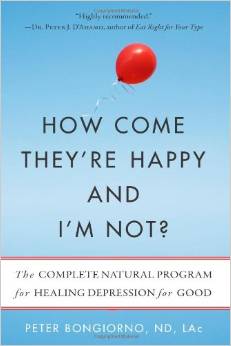
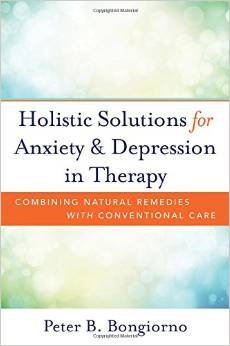
Dr. Peter Bongiorno ND, author of Holistic Therapies for Anxiety and Depression is interviewed by host of the Anxiety Summit, Trudy Scott, Food Mood Expert and Nutritionist, author of The Antianxiety Food Solution.

Serotonin and Anxiety, Happiness, Digestion and our Hormones

  • What is serotonin and why is it often considered the molecule of happiness
  • The role of serotonin when it comes to anxiety?
  • How serotonin was first discovered and the 5-HT1A receptor/oxytocin connection
  • Serotonin’s strong relationship to the digestive tract
  • The connection between inflammation and serotonin
  • How to naturopathically support serotonin and the overall neurotransmitter system for optimal mood support: 5-HTP, L-tryptophan and its vitamin co-factors
  • Serotonin’s effects on our hormones, other neurotransmitters and whole body

Here are some snippets from our interview:

In modern medicine we tend to focus on one thing and tend to work it to death, almost to the point that we believe we are doing things that will be helpful. Many studies have shown that antidepressants are not working any better than placebos in most people and yet we’re still treating it [depression/anxiety] the same way

In naturopathy we look at things from all angles. There can be multiple factors involved and why someone has anxiety. How you’re going to work through these factors successfully is going to be very different for each person.

Here is the 2010 JAMA paper: The Antidepressant Drug Effects and Depression Severity A Patient-Level Meta-analysis

The magnitude of benefit of antidepressant medication compared with placebo increases with severity of depression symptoms and may be minimal or nonexistent, on average, in patients with mild or moderate symptoms. For patients with very severe depression, the benefit of medications over placebo is substantial.

Dr. Bongiorno shares how using 5-HTP and tryptophan leads to quicker results for his patients, and unlike drugs you don’t get side-effects. He likes to use acupuncture for this too.

He discusses the co-factors that are needed for making neurotransmitters: the B vitamins like riboflavin, niacinamide and vitamin B6, plus the need for a good multivitamin.   Here is a recent Psychology Today article: Multiple Vitamins for Anxiety

Here are Dr. Bongiorno’s two books:

How Come They’re Happy and I’m Not – The Complete Natural Program for Healing Depression for Good

peter bongiorno how come they're happy and I'm not

Holistic Solutions for Anxiety & Depression in Therapy: Combining Natural Remedies with Conventional Care

peter bongiorno holistic solutions for anxiety and depression

You can download his free gift here: 10 Ways to Boost Serotonin Naturally.  Once you sign up you’re taken to a page that has the free ebook about serotonin.

If you are not already registered for the Anxiety Summit you can get live access to the speakers of the day here: www.theAnxietySummit.com

Missed this interview or can’t listen live? Or want this and the other great interviews for your learning library? Purchase the MP3s or MP3s + transcripts and listen when it suits you.

You can find your purchasing options here: Anxiety Summit Season 1, Anxiety Summit Season 2, and Anxiety Summit Season 3.

Filed Under: Amino Acids, Antianxiety, Anxiety and panic, Depression, The Anxiety Summit 3 Tagged With: 5-HTP, anxiety, digestion, happiness, oxytocin, Peter Bongiorno, serotonin, the anxiety summit, Trudy Scott, tryptophan

The Anxiety Summit – How to Heal Anxiety with Nature and the Body, not just with the Mind

April 30, 2015 By Trudy Scott 6 Comments


Dr. Eva Selhub MD, author of Your Health Destiny and Your Brain on Nature, is interviewed by host of the Anxiety Summit, Trudy Scott, Food Mood Expert and Nutritionist, author of The Antianxiety Food Solution.

How to Heal Anxiety with Nature and the Body, not just with the Mind

  • Why the “the body whispers before it screams”
  • What stress has to do with anxiety
  • Mind/body interventions and why they help
  • Why nature is so important for reducing anxiety and even improving cognition
  • What love has to do with any of this
  • The role of our genes in anxiety and depression
  • Why sleep is so important?


Here are some gems from our interview:

Listen to your body’s whispers before they become screams

We are always looking for a state of balance or relief

We develop coping skills to manage bad feelings

Adaptive coping: we’re hungry so we eat

Maladaptive coping: we’re anxious so we eat

Oxytocin, the trust molecule, is necessary for survival of the species

Here is my oxytocin blog I mentioned: Oxytocin and social anxiety, pyroluria and depression?

We know that low serotonin can cause anxiety, worry and depression and research shows there are interactions between oxytocin and serotonin levels.

I loved the discussion about getting out in nature. This 2011 study titled: Effect of forest environments on human natural killer (NK) activity found that visiting forest parks found:

enhanced human natural killer (NK) activity, increased anti-cancer proteins, such as perforin, granzymes A and B, and granulysin in NK cells, and reduced the level of stress hormones in both male and female subjects

this effect lasted for more than 30 days after the trips, suggesting that visiting a forest park once a month is beneficial

Here is another paper we mentioned: Is love of nature in the US becoming love of electronic media? 16-year downtrend in national park visits explained by watching movies, playing video games, internet use, and oil prices.

This advice was smart: if you’re working and can’t out in nature, get a plant for your office or use a tool like Calm.com, a very cool online tool I recently discovered.  It’s not nature but may help until you can get into nature.  You can pick what nature scene you like and then pick the meditation duration.  I love it!

calm dot com image

Here are the books we mentioned:

Your Brain on Nature: The Science of Nature’s Influence on Your Health, Happiness and Vitality (with Alan Logan)

eva selhub your brain on nature


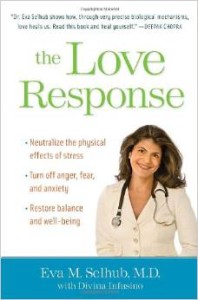
The Love Response: Your Prescription to Turn Off Fear, Anger, and Anxiety to Achieve Vibrant Health and Transform Your Life

 eva selhub the love response


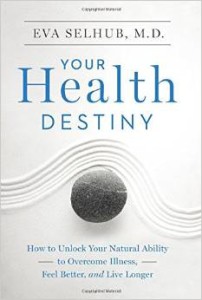
Your Health Destiny: How to Unlock Your Natural Ability to Overcome Illness, Feel Better, and Live Longer

eva selhub your health destiny


Get sample preview chapters from Your Health Destiny 

If you are not already registered for the Anxiety Summit you can get live access to the speakers of the day here: www.theAnxietySummit.com

Missed this interview or can’t listen live? Or want this and the other great interviews for your learning library? Purchase the MP3s or MP3s + transcripts and listen when it suits you.

You can find your purchasing options here: Anxiety Summit Season 1, Anxiety Summit Season 2, and Anxiety Summit Season 3.

Filed Under: Antianxiety, The Anxiety Summit 3 Tagged With: calm, Eva Selhub, nature, oxytocin, the anxiety summit, The Love Response, Trudy Scott, Your Brain on Nature, Your Health Destiny

Oxytocin and social anxiety, pyroluria and depression?

March 27, 2015 By Trudy Scott 66 Comments

A 2014 paper published in the Journal of Psychiatric Research looked at how variations in the oxytocin receptor gene is associated with increased risk for anxiety, stress and depression in individuals with a history of exposure to early life stress. Here are some excerpts from this paper:

Oxytocin is a neuropeptide that is involved in the regulation of mood, anxiety and social biology.

Genetic variation in the oxytocin receptor gene (OXTR) has been implicated in anxiety, depression and related stress phenotypes.

In this study, we examined genotypes in 653 individuals and tested whether SNP variation in OXTR correlates with severity of features of self-reported experience on the Depression Anxiety and Stress Scale (DASS), and whether this correlation is enhanced when early life trauma is taken into account.

The study found a significant effect of several oxytocin receptor genes (OXTR genotypes) on anxiety, stress and depression scores. They concluded that:

These results support the hypothesis that the oxytocin system plays a role in the pathophysiology of mood and anxiety disorders.

In this 2015 paper published in Neuropsychopharmacology, they looked at “Oxytocin modulation of amygdala functional connectivity to fearful faces in generalized social anxiety disorder” and found that oxytocin lessened anxiety by dampening amygdala reactivity to threat in individuals with generalized social anxiety disorder.

Results indicated that in individuals with generalized social anxiety disorder:

Oxytocin enhanced functional connectivity between the amygdala and the bilateral insula and middle cingulate/dorsal anterior cingulate gyrus during the processing of fearful faces

These findings suggest that [oxytocin] may have broad pro-social implications such as enhancing the integration and modulation of social responses.

We know that low serotonin can cause anxiety, worry and depression and research shows there are interactions between oxytocin and serotonin levels. So if you don’t respond to serotonin support (tryptophan or 5-HTP or light therapy), maybe boosting oxytocin is a possible solution?  Or maybe supporting serotonin will boost oxytocin? 

What is also really interesting to me is that zinc is needed for binding oxytocin to its receptor so I wonder about the oxytocin connection to pyroluria, a social anxiety condition where higher amounts of zinc and vitamin B6 are needed. I wonder if adding oxytocin to the mix or boosting it would help even more?  Or if optimizing zinc use and absorption would help promote oxytocin?

Have you had your oxytocin levels tested? Have you used oxytocin with good results and did it help your social anxiety/pyroluria and/or depression?  Have you done anything else to boost your oxytocin levels?


Filed Under: Amino Acids, Antianxiety, Depression, Pyroluria Tagged With: depression, oxytocin, pyroluria, serotonin, social anxiety, zinc

  • « Go to Previous Page
  • Page 1
  • Page 2

Primary Sidebar

NEW! GABA QuickStart Homestudy (with special intro pricing)

gaba quickstart homestudy

Free Report

9 Great Questions Women Ask about Food, Mood and their Health

You'll also receive a complimentary subscription to my ezine "Food, Mood and Gal Stuff"


Connect with me

Popular Posts

  • Amino Acids Mood Questionnaire from The Antianxiety Food Solution
  • The Antianxiety Food Solution Amino Acid and Pyroluria Supplements
  • Pyroluria Questionnaire from The Antianxiety Food Solution
  • Collagen and gelatin lower serotonin: does this increase your anxiety and depression?
  • Tryptophan for the worry-in-your-head and ruminating type of anxiety
  • GABA for the physical-tension and stiff-and-tense-muscles type of anxiety
  • The Antianxiety Food Solution by Trudy Scott
  • Seriphos Original Formula is back: the best product for anxiety and insomnia caused by high cortisol
  • Am I an anxious introvert because of low zinc and vitamin B6? My response to Huffington Post blog
  • Vagus nerve rehab with GABA, breathing, humming, gargling and key nutrients

Recent Posts

  • What do I use instead of Seriphos to help lower high cortisol that is affecting my sleep and making me anxious at night?
  • BeSerene™ GABA/theanine cream eases severe muscle tension in her neck/shoulders, prevents her bad headaches and quells her anxiety
  • How the correct approach, dose and sublingual use of GABA can be calming and not cause a flushed and itchy face and neck
  • The amino acid glutamine improves low mood by addressing gut health, and it has calming effects too
  • Flight anxiety with heightened breath, physical tension and also fearing the worst (the role of low GABA and low serotonin)

Categories

  • 5-HTP
  • AB575
  • Addiction
  • ADHD
  • Adrenals
  • Alcohol
  • Allergies
  • Alzheimer's disease
  • Amino Acids
  • Anger
  • Antianxiety
  • Antianxiety Food Solution
  • Antidepressants
  • Anxiety
  • Anxiety and panic
  • Autism
  • Autoimmunity
  • benzodiazapines
  • Bipolar disorder
  • Books
  • Caffeine
  • Cancer
  • Candida
  • Children/Teens
  • Collagen
  • Cooking equipment
  • Coronavirus/COVID-19
  • Cravings
  • Depression
  • Detoxification
  • Diabetes
  • Diet
  • DPA/DLPA
  • Drugs
  • EFT/Tapping
  • EMF
  • EMFs
  • Emotional Eating
  • Endorphins
  • Environment
  • Essential oils
  • Events
  • Exercise
  • Fear
  • Fear of public speaking
  • Fertility and Pregnancy
  • Fish
  • Food
  • Food and mood
  • Functional neurology
  • GABA
  • Gene polymorphisms
  • General Health
  • Giving
  • Giving back
  • Glutamine
  • Gluten
  • GMOs
  • Gratitude
  • Gut health
  • Heart health/hypertension
  • Histamine
  • Hormone
  • Hyperparathyroidism
  • Hypoglycemia
  • Immune system
  • Inflammation
  • Insomnia
  • Inspiration
  • Introversion
  • Joy and happiness
  • Ketogenic diet
  • Lithium orotate
  • Looking awesome
  • Lyme disease and co-infections
  • MCAS/histamine
  • Medication
  • Men's health
  • Mental health
  • Mercury
  • Migraine
  • Mold
  • Movie
  • MTHFR
  • Multiple sclerosis
  • Music
  • NANP
  • Nature
  • Nutritional Psychiatry
  • OCD
  • Osteoporosis
  • Oxalates
  • Oxytocin
  • Pain
  • Paleo
  • Parasites
  • Parkinson’s disease
  • PCOS
  • People
  • PMS
  • Postpartum
  • PTSD/Trauma
  • Pyroluria
  • Questionnaires
  • Real whole food
  • Recipes
  • Research
  • Schizophrenia
  • serotonin
  • SIBO
  • Sleep
  • Special diets
  • Sports nutrition
  • Stress
  • Sugar addiction
  • Sugar and mood
  • Supplements
  • Teens
  • Testimonials
  • Testing
  • The Anxiety Summit
  • The Anxiety Summit 2
  • The Anxiety Summit 3
  • The Anxiety Summit 4
  • The Anxiety Summit 5
  • The Anxiety Summit 6
  • Thyroid
  • Thyroid health
  • Toxins
  • Tryptophan
  • Tyrosine
  • Uncategorized
  • Vegan/vegetarian
  • Women's health
  • Yoga

Archives

  • October 2025
  • September 2025
  • August 2025
  • July 2025
  • June 2025
  • May 2025
  • April 2025
  • March 2025
  • February 2025
  • January 2025
  • November 2024
  • October 2024
  • September 2024
  • August 2024
  • July 2024
  • June 2024
  • May 2024
  • April 2024
  • March 2024
  • February 2024
  • January 2024
  • December 2023
  • November 2023
  • October 2023
  • September 2023
  • August 2023
  • July 2023
  • June 2023
  • May 2023
  • April 2023
  • March 2023
  • February 2023
  • January 2023
  • December 2022
  • November 2022
  • October 2022
  • September 2022
  • August 2022
  • July 2022
  • June 2022
  • May 2022
  • April 2022
  • March 2022
  • February 2022
  • January 2022
  • December 2021
  • November 2021
  • October 2021
  • September 2021
  • August 2021
  • July 2021
  • June 2021
  • May 2021
  • April 2021
  • March 2021
  • February 2021
  • January 2021
  • December 2020
  • November 2020
  • October 2020
  • September 2020
  • August 2020
  • July 2020
  • June 2020
  • May 2020
  • April 2020
  • March 2020
  • February 2020
  • January 2020
  • December 2019
  • November 2019
  • October 2019
  • September 2019
  • August 2019
  • July 2019
  • June 2019
  • May 2019
  • April 2019
  • March 2019
  • February 2019
  • January 2019
  • December 2018
  • November 2018
  • October 2018
  • September 2018
  • August 2018
  • July 2018
  • June 2018
  • May 2018
  • April 2018
  • March 2018
  • February 2018
  • January 2018
  • December 2017
  • November 2017
  • October 2017
  • September 2017
  • August 2017
  • July 2017
  • June 2017
  • May 2017
  • April 2017
  • March 2017
  • February 2017
  • January 2017
  • December 2016
  • November 2016
  • October 2016
  • September 2016
  • August 2016
  • July 2016
  • June 2016
  • May 2016
  • April 2016
  • March 2016
  • February 2016
  • January 2016
  • December 2015
  • November 2015
  • October 2015
  • September 2015
  • August 2015
  • July 2015
  • June 2015
  • May 2015
  • April 2015
  • March 2015
  • February 2015
  • January 2015
  • December 2014
  • November 2014
  • October 2014
  • September 2014
  • August 2014
  • July 2014
  • June 2014
  • May 2014
  • April 2014
  • March 2014
  • February 2014
  • January 2014
  • December 2013
  • November 2013
  • October 2013
  • September 2013
  • August 2013
  • July 2013
  • June 2013
  • May 2013
  • April 2013
  • March 2013
  • February 2013
  • January 2013
  • December 2012
  • November 2012
  • October 2012
  • August 2012
  • July 2012
  • June 2012
  • May 2012
  • April 2012
  • March 2012
  • February 2012
  • January 2012
  • December 2011
  • November 2011
  • October 2011
  • September 2011
  • August 2011
  • July 2011
  • June 2011
  • May 2011
  • April 2011
  • March 2011
  • February 2011
  • January 2011
  • December 2010
  • October 2010
  • September 2010
  • July 2010
  • May 2010
  • April 2010
  • March 2010
  • February 2010
  • January 2010
  • November 2009

Share the knowledge!

The above statements have not been evaluated by the Food and Drug Administration. Products listed in this website are not intended to diagnose, treat, cure or prevent any disease.

The information provided on this site is for informational and educational purposes only and is not intended as a substitute for advice from your physician or other health care professional. You should consult with a healthcare professional before starting or modifying any diet, exercise, or supplementation program, before taking or stopping any medication, or if you have or suspect you may have a health problem.


Copyright © 2026 Trudy Scott. All Rights Reserved. | Privacy | Terms and Conditions | Refund Policy | Medical Disclaimer

Free Report

9 Great Questions Women Ask about Food, Mood and their Health

You’ll also receive a complimentary subscription to my ezine “Food, Mood and Gal Stuff”