• Skip to primary navigation
  • Skip to main content
  • Skip to primary sidebar

everywomanover29 blog

Food, Mood and Women's Health – Be your healthiest, look and feel great!

  • Blog
  • About
  • Services
  • Store
  • Resources
  • Testimonials
  • The Book
  • Contact
  • Search this site

Julia Rucklidge

Could yeast infections impair recovery from mental illness?

April 13, 2018 By Trudy Scott 3 Comments

Julia Rucklidge, PhD, is an associate professor in the Department of Psychology, University of Canterbury, Christchurch, New Zealand and has published a number of studies looking at “micronutrients to treat psychiatric disorders including attention-deficit/hyperactivity disorder (ADHD), mood disorders, stress, and anxiety,” where benefits were reported. “Despite the positive benefits associated with micronutrients, some factors may limit a positive response, one of which may be the overgrowth of intestinal Candida.”

In this 2013 paper, Could yeast infections impair recovery from mental illness? A case study using micronutrients and olive leaf extract for the treatment of ADHD and depression the authors discuss the impact of candida on gut health and response to supplementation:

a number of factors influence optimal response and absorption of nutrients, including the health of the gut, particularly the presence of yeast infections, such as Candida.

As part of a wider investigation into the impact of micronutrients on psychiatric symptoms, many participants who experienced a yeast infection during their treatment showed a diminished response to the micronutrients.

One particular female client was followed for a 3-year period:

Kate (an alias) is a 24-year-old female of European descent who had participated in the 2010 trial by Rucklidge et al using micronutrients for the treatment of ADHD. In the past, she had been prescribed methylphenidate [Ritalin] by a psychiatrist but could not tolerate the side effects.

For just over 2 years, while using the micronutrient, she had no ADHD or mood symptoms, other than a mild increase around her period.

About 2.5 years participating in the trial, Kate started to feel increasingly unwell and reported the following:

(1) a chronic sore throat; (2) a constant runny nose; (3) cramps; (4) itchy toes, anus, and vagina; (5) rashes on her legs and groin area; and (6) an overall flu-like feeling. Concomitantly, all her psychiatric symptoms had returned… She was moody, anhedonic (unable to experience pleasure), and chronically irritable and was having cravings for sugary and starchy foods. Kate visited her family physician, who diagnosed Kate with a vaginal yeast infection

Over the next year, it was found that her psychiatric symptoms (ADHD and mood) got worse when she was infected with Candida and then her ADHD and mood symptoms improved once she was successfully treated with olive leaf extract and probiotics.

The study makes this conclusion about the role of inflammation, gut health and nutrient absorption:

This case outlines that micronutrient treatment might be severely compromised by infections such as Candida and may highlight the importance of gut health when treating psychiatric disorders with nutrients.

Given the role that inflammation can play in absorption of nutrients, it was hypothesized that the infection was impairing absorption of the micronutrients.

The authors also mention the growing body of literature on the gut-brain connection and how

the gut microbiota can influence brain function and subsequent psychiatric functioning.

Candida is always considered as one of many possible root causes with my anxious clients – it can contribute to anxiety as well as ADHD and depression, and out-of-control-sugar and intense carb cravings.

Olive leaf extract is one of many approaches for eliminating candida is more commonly used in Australia and New Zealand.

Another approach is to use garlic and oregano to kill the candida. I have great success with these products from Designs for Health:

  • Allicillin – a garlic product that contains Garlicillin®, a blend of garlic oil and parsley oil with specified levels of garlic sulfides and ajoene, the most bioactive compound formed from garlic and
  • Oil of Oregano – which has powerful antioxidant and intestinal cleansing benefits. It also helps to maintain a healthy microbial balance. This product is standardized for carvacrol and thymol, the principal phenolic compounds in oregano

Probiotics are also part of the protocol, as are dietary changes. Fresh garlic, onion, daikon, olive oil, coconut oil, lemon, apple cider vinegar, fermented vegetables and coconut oil are all therapeutic foods on an anti-candida diet.

In addition to killing the candida and restoring the good bacteria with probiotics, I also use targeted individual amino acids to help reduce the sugar and carb cravings, making it easier to quit the bread, sugar, cookies, cakes and fruit. These amino acids can also help to alleviate some of the anxiety, mood and ADHD symptoms from day one, offering relief and hope right away since eliminating candida is not a quick process:

  • tryptophan for afternoon cravings and mental worry (tryptophan also has some direct anti-candida effects – more to come on this in the future blog)
  • GABA for stress-related cravings and physical anxiety
  • glutamine for intense sugar cravings and low blood sugar
  • DPA for reward eating and weepiness
  • tyrosine for cravings due to low energy and low motivation
[all of the above supplements, including Allicillin, Oil of Oregano, various probiotics and an olive leaf product, called Olivirex Combination, can be ordered via my online store – details for creating an account on my supplements page. The category once you login is candida/dysbiosis]

Have you experienced anxiety, depression, panic attacks, ADHD and cravings with candida?

Have supplements that worked in the past stop working while you’re dealing with the candida?

Have you found the amino acids to help with anxiety and cravings while you’re addressing your candida?
Filed Under: Candida Tagged With: ADHD, allicillin, anxiety, candida, depression, Julia Rucklidge, olive leaf, oregano, probiotics, sugar cravings, yeast infection

Julia Rucklidge: Keep access to nutrients with therapeutic benefits

January 8, 2016 By Trudy Scott 5 Comments

vitamins

I’m just passing on this petition via micronutrient researcher Professor Julia Rucklidge:

Something very concerning is developing in New Zealand. It is not unique to NZ – it has already happened in Australia, has been happening in Europe, and it will likely happen in the U.S. and Canada. Under the guise of regulating Natural Health Products (NHPs) to ensure their safety, the NHPs are actually being severely restricted.

In NZ, the government is passing legislation called the Natural Health and Supplementary Products Bill that will limit access to minerals and vitamins.

The work done in the field of nutritional psychiatry by researchers such as Julia is so valuable and limiting access to nutrients with therapeutic benefits and a good safety record will impact many lives.

You may recall our excellent Anxiety Summit interview on micronutrients to treat anxiety and depression and her very inspiring TEDx talk: The surprisingly dramatic role of nutrition in mental health: Julia Rucklidge at TEDx

I signed it, left a comment and am sharing it because:

1) I believe we all have the right to choose what we consume in the way of nutrients

2) I support the work of Dr. Julia Rucklidge and other researchers focused on the growing and valuable field of nutritional psychiatry

3) My clients who have anxiety and panic attacks, and suffer from social anxiety successfully use vitamins/minerals/fatty acids (together with dietary and lifestyle changes) to eliminate their anxiety and should not be denied access to these powerful solutions that address root causes

4) I personally found resolution for my own anxiety and panic attacks with the use of key nutrients and continue to use many to stay in optimal health. I would not want to be denied this choice

This could have worldwide impacts and it’s important that we take a stand. We’d love you to join in and sign the petition and/or leave a comment if it feels like a fit for you, and if you’ve benefited from taking supplements and want continued access to them.

Go here to read more about these valuable nutrients and the petition (and to sign it/comment)

Be sure to check out all the great feedback from people like you who are seeing benefits with vitamins and minerals.

We appreciate signatures, comments and/or shares! Thanks!

Filed Under: Uncategorized Tagged With: Julia Rucklidge, legislation, nutrients, vitamins

The Anxiety Summit – What if… Nutrition could Treat Anxiety and Depression?

May 6, 2015 By Trudy Scott 18 Comments


Julia Rucklidge PhD, Professor of Clinical Psychology in the Department of Psychology at the University of Canterbury, Christchurch, New Zealand, was interviewed on the Anxiety Summit by host of the Anxiety Summit, Trudy Scott, Food Mood Expert and Nutritionist, author of The Antianxiety Food Solution.

Julia has over 75 peer-reviewed studies and is passionate about helping people find alternative treatments to medications for their psychiatric symptoms. Her current research interests can be found at the University of Canterbury site here.

What if… Nutrition could Treat Anxiety and Depression?

  • The increasing prevalence of mental health problems and medication side-effects
  • Why diet is so important when it comes to mental health (anxiety, depression, ADHD and even schizophrenia)
  • Nutritional medicine as mainstream in psychiatry and ISNPR (International Society for Nutritional Psychiatry Research)
  • The problems with food: pesticides, soil quality, Roundup
  • Micronutrient research for ADHD, anxiety, bipolar and PTSD
  • The emerging field of nutritional mental health: Inflammation, the microbiome, oxidative stress, and mitochondrial function

Here are some snippets from our interview:

Why is nutrition important? As a scientist I can just say because the data says it’s important. So if we start with the wonderful work that has really been spearheaded from Felice Jacka and there are other people in Spain and in Japan who have published similar studies showing that the more you eat a processed, western type of diet, the higher your risk for mental illness. They’ve published data on depression and anxiety, but also other mental illness as well. And the more you eat what we call, a prudent or a healthier Mediterranean type of diet, the lower your risk for depression and anxiety.

How long is it going to take our society to pay attention to the research that shows that suboptimal nutrition is contributing to the epidemic of mental illness? Are we just going to sit around and ignore this evidence to our peril? Or are we going to start paying attention and start to invest in the really important research that needs to happen?

Here is an earlier blog post I did on Dr. Rucklidge’s excellent TEDX talk: The surprisingly dramatic role of nutrition in mental health

Here is part of the recent paper titled “What if nutrients could treat mental illness?”

We are at a tipping point in psychiatry.

The growing body of literature on the effect of nutrients on mental health is compelling enough and consistent enough for us to pay attention. It is time to revisit the role of diet and supplementary nutrients in the treatment of mental illness and to invest in this line of research.

Here is the smoking and cannabis study we talked about: Use of micronutrients attenuates cannabis and nicotine abuse as evidenced from a reversal design: a case study.

This case adds to a growing body of research supporting the use of micronutrients in the treatment of psychiatric symptoms and suggests it may extend to substance dependence. Micronutrients, by assisting with mood regulation and reductions in anxiety, may assist with successful cessation of drug use.

We discussed this earthquake paper, a favorite of hers: Shaken but unstirred? Effects of micronutrients on stress and trauma after an earthquake: RCT evidence comparing formulas and doses.

This study supports micronutrients as an inexpensive and practical treatment for acute stress following a natural disaster with a slight advantage to higher doses

If you are not already registered for the Anxiety Summit you can get live access to the speakers of the day here: www.theAnxietySummit.com

Missed this interview or can’t listen live? Or want this and the other great interviews for your learning library? Purchase the MP3s or MP3s + transcripts and listen when it suits you.

You can find your purchasing options here: Anxiety Summit Season 1, Anxiety Summit Season 2, and Anxiety Summit Season 3.

Filed Under: Antianxiety, Food and mood, PTSD/Trauma, Research, The Anxiety Summit 3 Tagged With: ADHD, anxiety, depression, Julia Rucklidge, nutrition, Nutritional medicine, psychiatry, the anxiety summit, Trudy Scott

End anxiety, fears, social anxiety – the Anxiety Summit starts next week!

April 29, 2015 By Trudy Scott 2 Comments

 small_group2015V2_sml

End anxiety, social anxiety, panic attacks, fears and overwhelm! Find nutritional solutions!

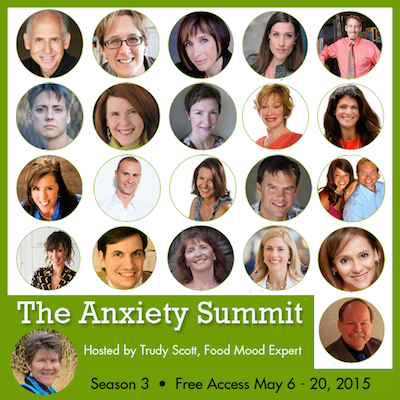
The Anxiety Summit (a virtual/online event) kicks off on Wednesday May 6 at 9am PDT. It will run thru May 20 with 2 speakers per day available for viewing at no charge. AND WE HAVE ALL NEW TOPICS!

Topics cover latest food mood research, troubleshooting the aminos and pyroluria, 60+ biochemical causes/solutions for anxiety, why real whole food, micronutrients, brain food like sardines, sauerkraut, corn gluten, vegetarianism, broths and soy, SIBO, parasites, nature, mold, pain, hormone balancing, methylfolate, histamine and mood, serotonin and tryptophan, case studies, mindbody medicine, gluten and zinc/high histamine, my recommended supplements… and lots more!

Here are some snippets from a few interviews to get you excited if you are already signed up and to get you inspired if you are not already signed up!

Julia Rucklidge PhD, Professor of Clinical Psychology in the Department of Psychology at the University of Canterbury, Christchurch, New Zealand, said this during our interview titled: “What if… Nutrition could Treat Anxiety and Depression?”

How long is it going to take our society to pay attention to the research that shows that suboptimal nutrition is contributing to the epidemic of mental illness? Are we just going to sit around and ignore this evidence to our peril? Or are we going to start paying attention and start to invest in the really important research that needs to happen?

Dr. Peter Osborne DC, author of Glutenology, said this during our interview titled “Grainflammation – How Grain Consumption Contributes to Anxiety and other Mood Disorders”

A lot of people don’t realize that corn has a form of gluten – the one that has been the most studied is called zein. This is very disturbing to me as there are several studies that show that corn gluten causes inflammation in patients with celiac disease…and can actually cause villous atrophy. These studies are largely ignored.

You can now see all the incredible speakers and topics at www.theAnxietySummit.com. This will be over 25 hours of top-notch anxiety nutritional solutions from people I have hand-picked! Plus 3 talks I will be doing on new research, amino acid and pyroluria troubleshooting, 60+ nutritional causes of anxiety and the supplements I recommend. ALL NEW TOPICS!

If you have any questions about how any of this works feel free to ask here:
https://www.everywomanover29.com/blog/anxiety-summit-season-3-speakers-topics

“See you” on the summit! I’m looking forward to all your great questions and feedback!

Please share if you know someone who has anxiety or if you know someone who works with anxious individuals: www.theanxietysummit.com


Filed Under: Anxiety and panic, Events, The Anxiety Summit 3 Tagged With: Julia Rucklidge, peter osborne

The surprisingly dramatic role of nutrition in mental health: Julia Rucklidge at TEDx

November 16, 2014 By Trudy Scott 29 Comments

Julia Rucklidge

Julia Rucklidge, PhD, researcher from New Zealand, recently did this amazing TEDx talk called: The surprisingly dramatic role of nutrition in mental health

I love how she opens with:

what I’m going to share today may sound as radical as hand-washing sounded to a mid-19th century doctor and yet it is equally scientific. It is the simple idea that optimizing nutrition is a safe and viable way to avoid, treat or lessen mental illness. Nutrition matters. Poor nutrition is a significant and modifiable risk factor for the development of mental illness

Here are some real gems from her talk:

A well-nourished body and brain is better able to withstand ongoing stress

When people get well they get well in all areas: improved sleep, mood stabilization, reduction in anxiety and less need for cigarettes/cannabis/alcohol.


My research and other research from around the world show 60-70% of people respond to micronutrients – this shows just how powerful this intervention is


We should focus on food and lifestyle changes and exercise first, then therapy and save medications for when these approaches don’t work

I’d like to share the ending of Julia Rucklidge’s talk. She shares the story of how limes on ships in the 1600s eliminated deaths from scurvy but that it took 264 years for the British government to mandate the use of citrus on ships. She closes with this profound question and challenge:

How long will it take us to recognize that that sub-optimal nutrition is contributing to the epidemic of mental illness? Nutrition matters!

Bravo Julia! And thank you for all the great research you’re doing! We appreciate you!

UPDATE: June 8, 2018

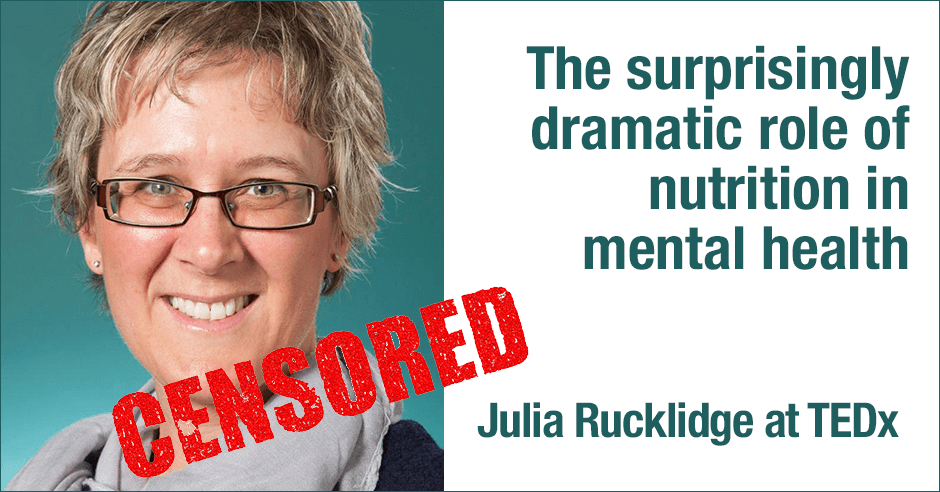
I have decided to update the blog and share it again because Professor Rucklidge is sharing powerful research-based evidence about food-as-medicine for mental health and her talk is being flagged/censored by TEDx and this is not acceptable!

Professor Bonnie J. Kaplan, PhD, from the University of Calgary shared this information with me via an email:

There have been almost 900,000 views of Julia Rucklidge’s TEDx talk on nutrition and mental health, with many complimentary comments. Last week, however, the TED organization inexplicably “flagged” the video with the following comment:

“NOTE FROM TED: We’ve flagged this talk, which was filmed at a TEDx event, because it appears to fall outside TEDx’s curatorial guidelines. There is limited evidence to support the claims made by this speaker.”

Julia has attempted to educate the TED people regarding the fact that over 35 peer-reviewed publications could hardly be described as “limited evidence,” and that her interpretations do not go beyond the data. But they are not interested in her evidence.

The whole thing seems so strange: isn’t TED supposed to be all about innovation? But clearly, some lobbyist has convinced them that a non-pharmaceutical treatment should not be respected.

I’m sharing it again and updating the blog so you can watch it again or watch it for the first time and be inspired and have hope!

We’d like to ask for your help in please sharing too. Let us support her work and all the nutritional psychiatry researchers at ISNPR and around the world!

  • Even if you have already watched it, please click on it again and watch again (click on the video link above or use this link)
  • Share the youtube video and/or this blog with others, through Facebook or email or twitter or word of mouth (or all of the above)
  • Comment below the youtube video and/or comment on this blog of mine
  • Ask your friends, family and colleagues to do the same

More about Professor Rucklidge’s research interests

Professor Rucklidge’s research interests are centered on the role of nutrition in the expression and treatment of mental illness, from ADHD to depression to stress following natural disasters. Research methodologies include single case research designs, open label trials and randomized controlled trials.

  • ADHD
  • Child and adolescent clinical psychology
  • Clinical psychology
  • Learning disabilities
  • Young Offending
  • Earthquake research
  • Nutritional interventions
  • Mood Disorders

Some of her publications on micronutrients

  • Database Analysis of Depression and Anxiety in a Community Sample-Response to Micronutrient Intervention

Overall, people from the general population who suffer from mood and anxiety problems may benefit from improved nutritional status achieved with nutritional supplements.

  • Vitamin-mineral treatment improves aggression and emotional regulation in children with ADHD: a fully blinded, randomized, placebo-controlled trial

Micronutrients improved overall function, reduced impairment and improved inattention, emotional regulation and aggression, but not hyperactive/impulsive symptoms, in this sample of children with ADHD. Although direct benefit for core ADHD symptoms was modest, with mixed findings across raters, the low rate of adverse effects and the benefits reported across multiple areas of functioning indicate micronutrients may be a favourable option for some children, particularly those with both ADHD and emotional dysregulation.

  • A randomised trial of nutrient supplements to minimise psychological stress after a natural disaster. This study was co-authored with Professor Kaplan, and adds to the body of evidence showing that nutrient formulas with multiple minerals and/or vitamins (such as a B-complex) minimise/minimize stress associated with natural disasters such as earthquakes, fires and floods. I blogged about this after Hurricane Harvey in Houston.


  • Could yeast infections impair recovery from mental illness? A case study using micronutrients and olive leaf extract for the treatment of ADHD and depression. This case study reports that infections like candida can contribute to poor gut health and inflammation, leading to nutrient absorption issues and deterioration in psychiatric symptoms. The yeast overgrowth has to be addressed in order for the micronutrients to be effective. I blog about this here also sharing the candida-serotonin connection.

 Nutritional medicine as mainstream in psychiatry

Professor Rucklidge is also a contributing author to Nutritional medicine as mainstream in psychiatry which I blog about here

Psychiatry is at an important juncture, with the current pharmacologically focused model having achieved modest benefits in addressing the burden of poor mental health worldwide. Although the determinants of mental health are complex, the emerging and compelling evidence for nutrition as a crucial factor in the high prevalence and incidence of mental disorders suggests that diet is as important to psychiatry as it is to cardiology, endocrinology, and gastroenterology. Evidence is steadily growing for the relation between dietary quality (and potential nutritional deficiencies) and mental health, and for the select use of nutrient-based supplements to address deficiencies, or as monotherapies or augmentation therapies.

As you can tell I’m a big fan of her research work and what an honor it was for me to interview her on one of the Anxiety Summits: What if… Nutrition could Treat Anxiety and Depression? She shared wise words then than seem very relevant to this censorship of her TEDx talk:

How long is it going to take our society to pay attention to the research that shows that suboptimal nutrition is contributing to the epidemic of mental illness? Are we just going to sit around and ignore this evidence to our peril? Or are we going to start paying attention and start to invest in the really important research that needs to happen?

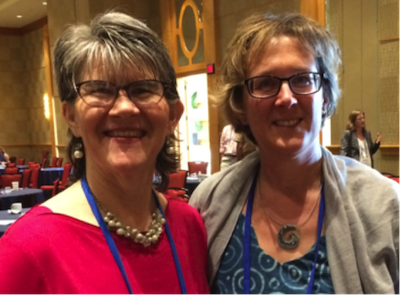
It was a thrill to then finally meet her in person last year at the ISNPR conference.

Julia Rucklidge and Trudy Scott
Meeting Julia Rucklidge at the ISNPR conference

This nutritional psychiatry work is widely supported by many practitioners

This nutritional psychiatry work is widely supported by many practitioners. Last year I interviewed Dr. Mark Hyman MD, creator of the Broken Brain series and author of What the Heck Should I Eat? In our interview he talks about somatopsychic medicine i.e. mental health symptoms caused by bodily illness and shares this about when he started to make this connection years ago:

I was just treating people’s physical systems, fixing their gut, helping their immune system, cleaning up their diet, optimizing their nutritional status, balancing their hormones, and all their mental problems would get better.

Their anxiety would get better, their depression would get better, and I wasn’t actually treating the depression or anxiety. Autism, ADD, memory issues, dementia, all these things would start to get better

And I began to realize that the body was driving a lot of this brain dysfunction, and that if you fix the body, a lot of the brain disorders would get better, that it wasn’t a primarily a mental problem, but it was a physical problem.

Dr. Nicole Beurkens, clinical psychologist and board-certified nutrition specialist, shares this about the talk:

This is an extremely important evidence-based talk on a topic that is moving the field of mental health forward. As a clinical psychologist and board-certified nutrition specialist, I see daily the positive impact that nutrition can have on mental health for children and adults. More than medication and talk therapy is needed to reduce symptoms for many people with these challenges, and nutrition is an accessible research-based option. I often recommend this video to patients and their families.

Dr. Beurkens is also speaker on a prior Anxiety Summit. It’s now in it’s fourth season and I’ve the wonderful opportunity to interview and share the nutritional psychiatry wisdom from over 70 practitioners, researchers, mental advocates and clients.

So much wonderful feedback from study participants

There is so much wonderful feedback in the comments below the youtube video. I love this comment from a study participant from New Zealand, Deidre Fraser:

I’m a pretty ordinary Kiwi, not particularly alternative. I don’t have a big appetite for risk. But I have participated in one of Julia Rucklidge’s studies and my family has benefited hugely from the introduction to, and continued use of micronutrients. Could we have achieved the same result using a pharmaceutical medicine? Some behaviours would have likely been addressed, but and it is a big BUT, one of the side effects (unexpected) would NOT have been improved happiness and self-worth, which resulted in better friendships – pretty basic things we all want from life!

We also got increased focus and the noticeably different academic performance that we thought we wanted (We just hadn’t realised that should be the secondary objective).

I don’t really understand the science behind it all, but the empirical research and published journals are there to support micronutrients as a valid option with verifiable research outcomes.

And SP Hancock shares these compelling results:

I’m so grateful for this presentation. It compelled me to find a medical doctor who looks at symptoms of mental illness from a perspective other than traditional psychiatry. He helped me heal my gut so that I can get the micronutrients I need from my food choices. 2 years ago I was using the micronutrient supplement Dr. Rucklidge had diligently researched for more than a decade. Today, I no longer need supplementation because my gut can absorb micronutrients from my food. I have been off medications for three years now–completely stable using only food after having lived for nearly two decades with acute symptoms of refractory schizoaffective disorder bipolar type with catatonia. Thank you Dr. Rucklidge for your structured, independently funded studies. Your hard work and sound research methodology gave me the courage to find a doctor willing to look at my symptoms from a fresh perspective. Keep up the exceptional work!

I hope this has inspired you to keep seeking a solution if you are still on your healing journey or and even if you have found your solution. Either way we’d love your help in getting this message out to more people so please share share and share!

Professor Bonnie Kaplan says: “Let’s see if we can quadruple the views to 5 million or so.” I’m sure we can! Thank you!

Filed Under: Food and mood Tagged With: ADHD, anxiety, depression, Julia Rucklidge, mental health, mental illness, micronutrients, natural disaster, nutrition, nutritional psychiatry, stress, TEDx

Primary Sidebar

NEW! GABA QuickStart Homestudy (with special intro pricing)

gaba quickstart homestudy

Free Report

9 Great Questions Women Ask about Food, Mood and their Health

You'll also receive a complimentary subscription to my ezine "Food, Mood and Gal Stuff"


Connect with me

Popular Posts

  • Amino Acids Mood Questionnaire from The Antianxiety Food Solution
  • The Antianxiety Food Solution Amino Acid and Pyroluria Supplements
  • Pyroluria Questionnaire from The Antianxiety Food Solution
  • Collagen and gelatin lower serotonin: does this increase your anxiety and depression?
  • Tryptophan for the worry-in-your-head and ruminating type of anxiety
  • GABA for the physical-tension and stiff-and-tense-muscles type of anxiety
  • The Antianxiety Food Solution by Trudy Scott
  • Seriphos Original Formula is back: the best product for anxiety and insomnia caused by high cortisol
  • Am I an anxious introvert because of low zinc and vitamin B6? My response to Huffington Post blog
  • Vagus nerve rehab with GABA, breathing, humming, gargling and key nutrients

Recent Posts

  • What do I use instead of Seriphos to help lower high cortisol that is affecting my sleep and making me anxious at night?
  • BeSerene™ GABA/theanine cream eases severe muscle tension in her neck/shoulders, prevents her bad headaches and quells her anxiety
  • How the correct approach, dose and sublingual use of GABA can be calming and not cause a flushed and itchy face and neck
  • The amino acid glutamine improves low mood by addressing gut health, and it has calming effects too
  • Flight anxiety with heightened breath, physical tension and also fearing the worst (the role of low GABA and low serotonin)

Categories

  • 5-HTP
  • AB575
  • Addiction
  • ADHD
  • Adrenals
  • Alcohol
  • Allergies
  • Alzheimer's disease
  • Amino Acids
  • Anger
  • Antianxiety
  • Antianxiety Food Solution
  • Antidepressants
  • Anxiety
  • Anxiety and panic
  • Autism
  • Autoimmunity
  • benzodiazapines
  • Bipolar disorder
  • Books
  • Caffeine
  • Cancer
  • Candida
  • Children/Teens
  • Collagen
  • Cooking equipment
  • Coronavirus/COVID-19
  • Cravings
  • Depression
  • Detoxification
  • Diabetes
  • Diet
  • DPA/DLPA
  • Drugs
  • EFT/Tapping
  • EMF
  • EMFs
  • Emotional Eating
  • Endorphins
  • Environment
  • Essential oils
  • Events
  • Exercise
  • Fear
  • Fear of public speaking
  • Fertility and Pregnancy
  • Fish
  • Food
  • Food and mood
  • Functional neurology
  • GABA
  • Gene polymorphisms
  • General Health
  • Giving
  • Giving back
  • Glutamine
  • Gluten
  • GMOs
  • Gratitude
  • Gut health
  • Heart health/hypertension
  • Histamine
  • Hormone
  • Hyperparathyroidism
  • Hypoglycemia
  • Immune system
  • Inflammation
  • Insomnia
  • Inspiration
  • Introversion
  • Joy and happiness
  • Ketogenic diet
  • Lithium orotate
  • Looking awesome
  • Lyme disease and co-infections
  • MCAS/histamine
  • Medication
  • Men's health
  • Mental health
  • Mercury
  • Migraine
  • Mold
  • Movie
  • MTHFR
  • Multiple sclerosis
  • Music
  • NANP
  • Nature
  • Nutritional Psychiatry
  • OCD
  • Osteoporosis
  • Oxalates
  • Oxytocin
  • Pain
  • Paleo
  • Parasites
  • Parkinson’s disease
  • PCOS
  • People
  • PMS
  • Postpartum
  • PTSD/Trauma
  • Pyroluria
  • Questionnaires
  • Real whole food
  • Recipes
  • Research
  • Schizophrenia
  • serotonin
  • SIBO
  • Sleep
  • Special diets
  • Sports nutrition
  • Stress
  • Sugar addiction
  • Sugar and mood
  • Supplements
  • Teens
  • Testimonials
  • Testing
  • The Anxiety Summit
  • The Anxiety Summit 2
  • The Anxiety Summit 3
  • The Anxiety Summit 4
  • The Anxiety Summit 5
  • The Anxiety Summit 6
  • Thyroid
  • Thyroid health
  • Toxins
  • Tryptophan
  • Tyrosine
  • Uncategorized
  • Vegan/vegetarian
  • Women's health
  • Yoga

Archives

  • October 2025
  • September 2025
  • August 2025
  • July 2025
  • June 2025
  • May 2025
  • April 2025
  • March 2025
  • February 2025
  • January 2025
  • November 2024
  • October 2024
  • September 2024
  • August 2024
  • July 2024
  • June 2024
  • May 2024
  • April 2024
  • March 2024
  • February 2024
  • January 2024
  • December 2023
  • November 2023
  • October 2023
  • September 2023
  • August 2023
  • July 2023
  • June 2023
  • May 2023
  • April 2023
  • March 2023
  • February 2023
  • January 2023
  • December 2022
  • November 2022
  • October 2022
  • September 2022
  • August 2022
  • July 2022
  • June 2022
  • May 2022
  • April 2022
  • March 2022
  • February 2022
  • January 2022
  • December 2021
  • November 2021
  • October 2021
  • September 2021
  • August 2021
  • July 2021
  • June 2021
  • May 2021
  • April 2021
  • March 2021
  • February 2021
  • January 2021
  • December 2020
  • November 2020
  • October 2020
  • September 2020
  • August 2020
  • July 2020
  • June 2020
  • May 2020
  • April 2020
  • March 2020
  • February 2020
  • January 2020
  • December 2019
  • November 2019
  • October 2019
  • September 2019
  • August 2019
  • July 2019
  • June 2019
  • May 2019
  • April 2019
  • March 2019
  • February 2019
  • January 2019
  • December 2018
  • November 2018
  • October 2018
  • September 2018
  • August 2018
  • July 2018
  • June 2018
  • May 2018
  • April 2018
  • March 2018
  • February 2018
  • January 2018
  • December 2017
  • November 2017
  • October 2017
  • September 2017
  • August 2017
  • July 2017
  • June 2017
  • May 2017
  • April 2017
  • March 2017
  • February 2017
  • January 2017
  • December 2016
  • November 2016
  • October 2016
  • September 2016
  • August 2016
  • July 2016
  • June 2016
  • May 2016
  • April 2016
  • March 2016
  • February 2016
  • January 2016
  • December 2015
  • November 2015
  • October 2015
  • September 2015
  • August 2015
  • July 2015
  • June 2015
  • May 2015
  • April 2015
  • March 2015
  • February 2015
  • January 2015
  • December 2014
  • November 2014
  • October 2014
  • September 2014
  • August 2014
  • July 2014
  • June 2014
  • May 2014
  • April 2014
  • March 2014
  • February 2014
  • January 2014
  • December 2013
  • November 2013
  • October 2013
  • September 2013
  • August 2013
  • July 2013
  • June 2013
  • May 2013
  • April 2013
  • March 2013
  • February 2013
  • January 2013
  • December 2012
  • November 2012
  • October 2012
  • August 2012
  • July 2012
  • June 2012
  • May 2012
  • April 2012
  • March 2012
  • February 2012
  • January 2012
  • December 2011
  • November 2011
  • October 2011
  • September 2011
  • August 2011
  • July 2011
  • June 2011
  • May 2011
  • April 2011
  • March 2011
  • February 2011
  • January 2011
  • December 2010
  • October 2010
  • September 2010
  • July 2010
  • May 2010
  • April 2010
  • March 2010
  • February 2010
  • January 2010
  • November 2009

Share the knowledge!

The above statements have not been evaluated by the Food and Drug Administration. Products listed in this website are not intended to diagnose, treat, cure or prevent any disease.

The information provided on this site is for informational and educational purposes only and is not intended as a substitute for advice from your physician or other health care professional. You should consult with a healthcare professional before starting or modifying any diet, exercise, or supplementation program, before taking or stopping any medication, or if you have or suspect you may have a health problem.


Copyright © 2026 Trudy Scott. All Rights Reserved. | Privacy | Terms and Conditions | Refund Policy | Medical Disclaimer

Free Report

9 Great Questions Women Ask about Food, Mood and their Health

You’ll also receive a complimentary subscription to my ezine “Food, Mood and Gal Stuff”