• Skip to primary navigation
  • Skip to main content
  • Skip to primary sidebar

everywomanover29 blog

Food, Mood and Women's Health – Be your healthiest, look and feel great!

  • Blog
  • About
  • Services
  • Store
  • Resources
  • Testimonials
  • The Book
  • Contact
  • Search this site

exercise

GABA Supplementation Increased Heart-Rate Variability, Emotional Response, Sleep Efficiency and Reduced Depression in Sedentary Overweight Women

March 29, 2024 By Trudy Scott 17 Comments

gaba supplementation trial

In a new GABA study published earlier this year, the authors report that supplementation with the calming amino acid, GABA (gamma-aminobutyric acid), helped to reduce stress and depression, and improved emotional response and sleep in overweight women. The intervention group was given 200 mg GABA per day for 90 days. Here is the study abstract:

Gamma-aminobutyric acid (GABA) serves as a pivotal neurotransmitter implicated in the pathogenesis of stress, anxiety, sleep-related disorders, and heart rate (HR) reactions.

Heart-rate variability (HRV), modulated by the sympathetic and parasympathetic branches of the autonomic nervous system (ANS), offers insights into cardiac autonomic control and cardiovascular well-being.

The present study aimed to explore the impact of GABA supplementation on emotional metrics, sleep quality, and HRV in sedentary women with overweight or obesity partaking in physical exercise.

A randomized, double-blind, placebo-controlled clinical trial was undertaken involving 30 sedentary women with overweight or obesity. Volunteers were assigned randomly to two groups: the intervention group receiving GABA (200 mg) once daily for a total of 90 supplementation doses, and the placebo group. Both groups engaged in physical exercise, while the supplementation regimen spanned 90 days.

Assessments were conducted at three intervals: baseline (T0), midway through the study (T45), and study culmination (T90).

Following 90 days of GABA supplementation, the intervention group demonstrated enhancements in habitual sleep efficiency, as indicated by reductions in Pittsburgh Sleep Quality Index (PSQI) scores. Moreover, an improved emotional response was observed, characterized by diminished negative affect. GABA supplementation yielded ameliorations in depression scores as per the Depression, Anxiety, and Stress Scale (DASS-21). Notably, an augmented HRV was noted, attributed to heightened parasympathetic autonomic nervous system predominance.

GABA supplementation elicited noteworthy enhancements in heart rate variability, emotional response, depression mitigation, and sleep efficiency following a 90-day supplementation.

I received a full copy of the paper, GABA Supplementation, Increased Heart-Rate Variability, Emotional Response, Sleep Efficiency and Reduced Depression in Sedentary Overweight Women Undergoing Physical Exercise: Placebo-Controlled, Randomized Clinical Trial. I thanked them for doing this research and shared my clinical insights and the fact that I do use GABA a little differently. More on that below.

The type of GABA, how it was used, the timing and fillers

The study participants were given GABA and not pharmaGABA, it was swallowed and it was used before bed.

Both the GABA and placebo contained starch and talc. The starch may be an issue with someone with SIBO (small intestinal bacterial overgrowth) or an IgG reaction to whatever the starch is made from, such as corn (used in this study) or rice or wheat.

Talc is simply not necessary in any supplements. With so many of my clients being very sensitive to excipients, ideally we want to be using fewer fillers and using a clean supplement just like when it comes to eating real whole good quality food.

My feedback on the 200 mg GABA dose used in the study

Given that many studies use much higher doses it’s wonderful that they used just 200 mg GABA.

They used the same dose for everyone for 90 days at night only.

This illustrates how effective GABA can be when used in the same manner for all study participants. It is, however, very possible that the fact they were exercising and just being part of a study also contributed to many of their improvements:

While both study groups engaged in physical exercise, it is plausible to surmise that the act of participating in physical activities may have contributed to the improved stress, anxiety, and depression profiles in the placebo group. Furthermore, study participation alone can instill a positive effect, potentially fostering volunteers’ motivation to embrace healthier lifestyle habits and enhance overall well-being.

My approach for using GABA is personalized

The study provides a great foundation for future research and clinical use.

My approach is personalized dosing based on symptoms and increased to find the optimal dose. I typically have clients start on 125 mg GABA used sublingually, which is a nice low starting dose for most folks. I have clients use GABA 1-5 times a day, including the night, based on their unique needs and only if they have low GABA type of physical/tension anxiety). I have clients rate 1 or 2 symptoms on a scale of 1-10 with 10 being worst, do an initial one-off trial of GABA and rate the symptoms again right afterwards (in the next 2 to 30 minutes). Based on this we decide if we’ll continue with GABA and how much to use.

I speculate there would likely be even better outcomes with a GABA only powder used on the tongue and held in the mouth for up to 2 minutes. And of course, dosing according to each person’s needs is ideal but impractical in a study.

Feedback illustrates how GABA use (and the benefits) can differ per person

When I shared the research on Facebook I received this feedback from Doula Michelle Jackson:

25 mg GABA twice a day has done wonders for me. I used to take 750 mg of GABA Calm Mind at night and it made me very weepy. Lower dosing works best for me. It helps with sleep, anxiety and depression.

(The 750 mg GABA Calm Mind is a hard tablet and is not the same as the 125mg GABA Calm sublingual product I recommend. The product that works for her is Kal GABA 25mg.)

Carrie shared this: “I always put GABA under the tongue myself.”

Tara said: “GABA is the one thing I can rely on to get a good night’s rest. I open a 420 mg cap about 45 minutes before bed.”

Patrice said: “I take GABA about 30 minutes before bedtime. I open a capsule and use about 100-200 mg in water. It helps to calm my mind and stop ruminating. I think I sleep better.”

Elmas shared this about her son’s results: “GABA can be a game changer. We just started last week and can see it improves my boy’s tics and stimming. Thanks to Trudy’s recommendation on Mind Body and vagus nerve connection summit, we started only 100mg (Superior Sources sublingual) in water. And increased to approx 1/8 tsp about 380mg (Sources Naturals GABA powder) yesterday.”

Both Sue and her husband benefit from GABA:“Trudy posted once about GABA helping with pain in the colon so I tried it and was so amazed at how quickly it worked. I use 200 mg and take the capsule whole, not opening the caps and it works in 15 minutes for me. I have found it also helps me with times that I get anxiety, crabbiness, restless legs and the blues. This is such a blessing for me.

Even my husband will take 200 mg when he’s feeling grouchy with the customers and within 15 to 20 minutes, he’s a different person. It’s a wonder supplement. I tell EVERYBODY about it.”

As you can see from the above, it really is different strokes for different folks and a personalized approach to using GABA.

A few GABA product options  – a sublingual and a powder
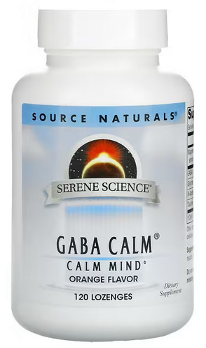
gaba calm
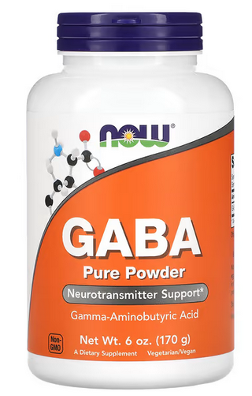
gaba pure poder

Products I recommend include Source Naturals GABA Calm lozenges and Now GABA Powder.  You can purchase these from my online store (Fullscript – only available to US customers – use this link to set up an account).

If you’re not in the US, these same products are available via iherb (use this link to save 5%).

Additional resources when you are new to using GABA and other amino acids as supplements

As I mentioned above, I use the symptoms questionnaire to figure out if low GABA or other neurotransmitter imbalances may be an issue for you.

If you suspect low levels of any of the neurotransmitters and do not yet have my book, The Antianxiety Food Solution – How the Foods You Eat Can Help You Calm Your Anxious Mind, Improve Your Mood, and End Cravings, I highly recommend getting it and reading it before jumping in and using amino acids on your own so you are knowledgeable. And be sure to share it with the practitioner/health team you or your loved one is working with.

There is an entire chapter on the amino acids and they are discussed throughout the book in the sections on gut health, gluten, blood sugar control (this is covered in an entire chapter too), sugar cravings, anxiety and mood issues.

The book doesn’t include product names (per the publisher’s request) so this blog, The Antianxiety Food Solution Amino Acid and Pyroluria Supplements, lists the amino acids that I use with my individual clients and those in my group programs (over and above the few I mentioned above).

If, after reading this blog and my book, you don’t feel comfortable figuring things out on your own (i.e. doing the symptoms questionnaire and respective amino acids trials), a good place to get help is the GABA QuickStart Program (if you have low GABA symptoms too). This is a paid online/virtual group program where you get my guidance and community support.

If you are a practitioner, join us in The Balancing Neurotransmitters: the Fundamentals program. This is also a paid online/virtual program with an opportunity to interact with me and other practitioners who are also using the amino acids.

Wrapping up and your feedback

I do appreciate the researchers and do hope my clinical insights and community feedback help with further research. The team has plans to do similar research with men and older individuals, and I look forward to these outcomes. I’ll be sure to share these at a later date.

I’ll end here with this statement from the conclusion:

Consequently, GABA supplementation emerges as a promising avenue for augmenting both cardiovascular and emotional well-being among individuals actively participating in physical exercise.

How has GABA helped your emotions, depression, stress and sleep? And what doses work best for you?

Have you tweaked your dosing to find the ideal doses for your needs?

If yes, which products have helped and do you find sublingual or swallowed is more effective?

If you’re a practitioner do you use GABA with clients/patients and how do you use it?

And please let me know if it’s helpful that I’m now including product recommendations and where to get them?

Feel free to share and ask your questions below.
Filed Under: Depression, Exercise, GABA, Sleep, Supplements Tagged With: clinical trial, exercise, GABA, overweight

Side stitch when running or exercising: the anxiety/stress connection (and the pyroluria protocol of zinc and vitamin B6 as a solution?)

August 4, 2023 By Trudy Scott 21 Comments

side stitch and anxiety

If you get a painful side stitch when running or doing other exercise or experienced a side stitch  when you were a kid, you may be as intrigued as I was to learn there is new research that points to an anxiety/stress connection. This cross-sectional observational study was done involving an anonymous survey of one hundred sixty-eight male and female adults who were running at least 10 miles/16 km per week.

The conclusion of this study, Thorn in Your Side or Thorn in Your Head? Anxiety and Stress as Correlates of Exercise-Related Transient Abdominal Pain, is as follows: “anxiety and stress are associated with the presence of ETAP.” A runner’s side stitch is referred to as ETAP i.e. exercise-related transient abdominal pain. The authors mention the fact that this is the first study to reveal this anxiety/stress connection. This is relevant given the numerous recent studies looking for a cause and no definitive solutions.

This research is also really intriguing to me given what Dr. Carl Pfeiffer MD, PhD, identified 50+ years ago in the 1970s i.e. side stitches are common in those with pyroluria/social anxiety. What’s important is the fact that the pyroluria nutrient protocol eases social anxiety and prevents side stitches in my clients. You’ll read feedback from individuals in the community who resonate with this research and the pyroluria connections. I share more about pyroluria below in case it’s new to you and a possible cause of the side stitch pain.

My feedback and feedback from others in the community

I have pyroluria and always got a left side stitch as a kid, in my teens when running and playing squash and in my 20s/30s when running. And then they stopped (and the social anxiety and related symptoms resolved) when I addressed my pyroluria with zinc, B6 and EPO, and a copper-free multi that contains manganese. I see these kinds of results with my clients all the time so a light-bulb went off when I read this new research .

I shared this research and the anxiety/stress/pyroluria connection on Facebook and asked: did you/do you get side stitches when running/exercising? Here is some of the feedback I received, where the pyroluria protocol did help.

Kameka shared this: “I had side stitches as a kid and as an adult. Running was the main exercise that caused it and it was usually the left side. Now that you mention it, I haven’t had them since I started supplementing for pyroluria. Also, my social anxiety is sooo much better as well!”

She did the symptoms questionnaire and the pyroluria urine test (which can give false negative results) and confirmed she takes vitamin B6, zinc, magnesium, and primrose oil.

Bec shared this: “I hated PE at high school for that reason. While everyone was running, I was suffering from side stitches (I think it was my right side) and having breaks. I have pyroluria with lots of symptoms. I do well with zinc and P5P.”

Not everyone reported an improvement with the protocol but many folks resonated with the side stitch/pyroluria connections:

Megan said: “Couldn’t run as a kid. A stitch every time. I can’t recall which side, never really paid too much attention. Looking at the pyroluria symptoms, I think I may have always had it.”

Janie exclaimed: “Oh, boy, did I!” (while distance running). She finds it hard to remember but thinks it may have been on her right side. She also shared that “tests for zinc come back normal, but I have many of the [pyroluria] symptoms, especially the less common ones. I scored high. I always want breakfast but all the other questions fit me like a glove, like pieces of a puzzle with my photo on the box.

My lack of dream recall is another sign. I take 25 mg of methylated B6, but still no dreams. The question regarding being seated in the middle of a restaurant…THAT IS ME!! My throat will feel like it’s closing up, so much tension.”

I explained that most zinc testing is not accurate and that we increase until we get symptom resolution. I also referred her to the pyroluria chapter in my book.

Susie shared this: “Yes I always got side stitches so I gave up running. I suspected pyroluria but not sure if I have it.”

Leah said “I’d say my daughter and I both [had side stitches] more when we were younger. Both socially anxious and pyroluria. Less exercising now too.”

Information if you’re new to pyroluria

Pyroluria is frequently associated with a type of anxiety characterized by social anxiety, avoidance of crowds, a feeling of inner tension, and bouts of depression. People with this problem experience varying degrees of anxiety or fear, often starting in childhood, but they usually manage to cover it up and push through. They tend to build their life around one person, become more of a loner over time, have difficulty handling stress or change, and have heightened anxiety symptoms when under more stress.

Also on the list of symptoms is this one: “Upper abdominal pain on your left side under the ribs or, as a child, having a stitch in your side as you ran.”

Addressing low levels of the mineral zinc and vitamin B6, together with some other nutrients and stress management, are key to addressing these symptoms.

Here is the complete symptoms questionnaire on the blog. This questionnaire can also be found in the pyroluria chapter in my book, The Antianxiety Food Solution. You’ll find the detailed supplement protocol and additional information on how to assess for low zinc and low vitamin B6 in this chapter too.

You can read more about the prevalence and associated conditions here. It’s most often considered a genetic condition but is possibly environmentally triggered too.

There are many pyroluria blog posts where I cover various aspects such as the importance of addressing pyroluria for recovery from MCAS and Lyme, pyroluria and Ehlers Danlos Syndrome, pyroluria and intrusive thoughts and many more. I encourage you to use the search feature on the blog.

A possible cause of the side stitch in pyroluria

Here is an excerpt from a paper published in 1974 by Dr. Pfeiffer and colleagues, Treatment of Pyroluric Schizophrenia Malvaria With Large Doses of Pyridoxine and zinc, describing why the side pain probably occurs:

This 15-year-old upper middle-class patient (now 19 after studying for four years) represents a case of nutrient deficiency in which vitamins (specifically B6) and the trace minerals manganese and zinc were inadequate for the development of normal knee joints and normal brain function.

The deficiency was sufficiently severe at its peak to cause prolonged psychosis, atypical seizures, arthritis, amenorrhea, constipation, and splenic pain. The pain is probably due to hemolytic crisis in which red cell fragments engorge the Kupfer cells of the spleen and liver, extend the capsule, and cause pain. The double deficiency is produced by the formation of KP [kryptopyrroles] which combines with pyridoxal and zinc.

Based on the above and other publications by Dr. Pfeiffer, when the stitch happens on the left side, my understanding is that the pain is in the spleen. And when it happens on the right side, the pain is in the liver area. Most individuals with pyroluria say they felt/feel their side stitch on the left side. Either way it appears to be caused by low zinc, low vitamin B6 and the other nutrients needed by those with pyroluria. And resolved when on the pyroluria protocol.

I would love to see these ETAP researchers take their anxiety/stress research one step further and identify how common pyroluria is in runners who get side stitches and if the pyroluria protocol prevents the side stitches.

My book as a resource and pyroluria supplements

As mentioned above, there is an entire chapter on pyroluria in my book, The Antianxiety Food Solution – How the Foods You Eat Can Help You Calm Your Anxious Mind, Improve Your Mood, and End Cravings, I highly recommend getting it and reading it before jumping in and addressing these deficiencies. And be sure to share it with the practitioner/health team you or your loved one is working with.

Keep in mind that these nutrients are cofactors for making neurotransmitters and are a key part of my protocol when working with individual amino acids.

The book doesn’t include product names (per the publisher’s request) so this blog, The Antianxiety Food Solution Amino Acid and Pyroluria Supplements, lists the pyroluria supplements and amino acids that I use with my individual clients and those in my group programs. You can find them all in my online store.

If you are a practitioner, join us in The Balancing Neurotransmitters: the Fundamentals program. This is also a paid online/virtual program with an opportunity to interact with me and other practitioners who are also using the amino acids and pyroluria protocol.

Thanks to everyone who contributed to the discussion on Facebook. Now I would love to hear from you so I can approach the authors with their feedback and yours too.

Did you get a side stitch as a kid and did it affect your ability to take part in school sports?

Do you still get a side stitch when running or doing other exercises? If yes, does it hold you back and with which exercise?

Did/does the side stitch occur on the left or right side?

And do you have pyroluria? (based on the symptoms questionnaire and/or pyroluria urine test)?

Does the pyroluria protocol prevent your painful side stitches? And had you made the connection to pyroluria/anxiety/stress?

Are you seeing a similar pattern with your kid/s? (pyroluria, side stitch and the protocol helps them too)

If you have questions and feedback please share them here too.

Filed Under: Anxiety, Exercise, Pyroluria Tagged With: anxiety, Carl Pfeiffer, ETAP, exercise, exercise-related transient abdominal pain, exercising, liver, painful side stitch, pyroluria, running, side stitch, social anxiety, spleen, stress, vitamin B6, zinc

What if rewarding, comforting, numbing or distracting behaviors (caused by low endorphins) are causing low motivation, instead of low dopamine?

June 17, 2022 By Trudy Scott 21 Comments

behaviors and low motivation

One of the first things that comes to mind when someone is stuck and not able to get things done is low motivation caused by low catecholamines/low dopamine. But what if numbing, rewarding, comforting and/or distracting behaviors (caused by low endorphins) are holding you back and preventing you from getting things done instead? It may be low endorphins only or may be in conjunction with other neurotransmitter imbalances. The following question and stories from women in the community (and my insights and some of the research) may help you figure it out if any of this applies to you.

I posted a question to this effect on Facebook and there was a great deal of interest. Many folks shared examples of what their distractions are and how they fit into being rewarding and comforting for them. Here is what I posted:

I’m digging into the research connecting low endorphins and low motivation i.e. not being able to get stuff done! We associate low endorphins with physical pain, emotional pain and comfort/reward eating. But in a similar way that emotional eating /comfort food is used to numb us out and reward and comfort us, certain behaviors can do this too. Here are some examples you may relate to:

  • mindless scrolling through Facebook or other social media platforms instead of working on your new project
  • binge watching hours of Netflix shows instead of getting to bed early so you’re productive and motivated (and not distracted)
  • playing video games for days (and not going outdoors, eating proper meals and even bathing)

All of these are also an addiction and we know low endorphins are a factor when it comes to addictions too. There is also an endorphin/dopamine connection hence the motivation aspect I’m looking into.

Can you relate to any of this and has endorphin support (with the amino acid DPA/d-phenylalanine as a supplement) or exercise or LDN (low dose naltrexone) helped with your low endorphin symptoms, your lack of motivation and the distractions you almost create for yourself?

I’d expect the amino acid DLPA (dl-phenylalanine) to help since it works on boosting both low endorphins and low dopamine. I am really curious about DPA because some folks can’t tolerate DLPA or it’s contraindicated.

What are some examples of your distractions and what has helped you?

Sarah: finds looking for split ends and cutting them off very rewarding. Is this a low endorphin behavior?

Omgosh this is so me. I often wonder what the heck is wrong with me. I look around at everything that needs to be done but just get overwhelmed and have no motivation to get it done. I don’t know where to start and then get anxious about it. I will immerse myself looking for split ends in my hair instead, I can spend easily over an hour at a time just sitting there looking for split ends and cutting them off. I find it very rewarding and it’s become such a habit now that if I’m out publicly and see a pesky split end l can’t ignore it and as Í don’t typically carry scissors with me (because that would be weird right?!) so I bite them off. I often think I must look like a nutter! I am always thinking what is wrong with me???!!

Sarah describes a rewarding activity perfectly and I’d suspect endorphin support – using the amino acid DPA (d-phenylalanine) – will likely help her. This behavior is her distraction from getting things done. It’s such a distraction that she cannot ignore it even when in public.

Since she also mentions overwhelm and anxiety I’d also want to explore low GABA physical-type anxiety and low serotonin worry-type anxiety and consider trials of both GABA and tryptophan (or 5-HTP).

There may also be an obsessive element to her distracting behavior and serotonin support (with the above, inositol and possibly NAC) has been shown to help with trichotillomania (recurring habit of pulling one’s hair).

Bonnie: low motivation almost feels physical or like something is missing in my brain. Low endorphins and low dopamine?

I relate to this very much – low motivation almost feels physical or like something is missing in my brain, also an almost inability to focus or organize how to do something or get through the day. I have low motivation with poor focus … but I am also constantly craving reward, comfort, or some kind of boost in energy or pleasure to motivate or energize me – this used to be things like sweets or chocolate but I have been lowering sugar/attempting to quit.

I haven’t tried any supplements mentioned but I’m very interested to learn more as this significantly affects my life.

She says her low motivation feels physical or like something is missing. It’s great she has that awareness and she is spot on – she is missing the specific action of certain neurotransmitters (which can be resolved with amino acid supplementation).

We address neurotransmitter imbalances, one at a time:

  • DPA for low endorphin support to help with the comfort/distraction/reward
  • And tyrosine for dopamine support to help with the inability to focus and needing something to energize her
  • Her inability to focus or organize could be due to the spinning we see with the low GABA type of physical anxiety too

She also shares that she has “feelings of anxiety, hopelessness and self judgment” so low serotonin worry-type anxiety is also likely in the mix.

As always it’s best to trial one at a time and find the ideal dose before trialing the next one. I recommend trialing in the area that causes the most distress. What is great is that addressing all this will make quitting sweets and chocolate easy and with no feelings of deprivation.

Jennifer: video games are hard to break free of / switches to learning languages. Could it be low GABA and an inability to prioritize?

All of the above but video games are especially hard to break free from. Luckily I decided to use those dopamine hits to my advantage and am closing in on a 1000 day Duolingo streak, having made it to the end of the French, Norwegian, and Japanese courses.  Yes I neglect other things, but it’s better than wasting time on video games. I do worry a bit that I would lose interest if my chemistry was fully balanced, but then again there are more important things that I could be doing.

I congratulated her on her language learning and shared that it’s common to switch one addiction for another. For example alcoholics quit drinking and then get addicted to sugar or caffeine unless they address their neurotransmitter imbalances.

Jennifer has been using GABA without much success yet and once she finds the ideal dose it may be the solution or part of the solution for her spinning and inability to prioritize (which she “chalked up to ADHD, but also only became a problem when I got sick.”

Initially I would focus on GABA support (for physical anxiety) more than endorphin support, because she shares she also has all these other low GABA symptoms:

  • acrophobia (which started when she got sick)
  • proctalgia fugax/rectal spasms (recently developed
  • and burning mouth (which was a big part of her mold symptoms)

Keep in mind mold can deplete GABA and other brain chemicals so this does need to be addressed (home/office remediation and healing from the mycotoxin effects), in addition to using amino acid support.

She does check all the boxes on the symptoms questionnaire and it’ll be interesting to see which other amino acids help her with this gaming/language learning challenge. There may well be a low endorphin distraction and reward aspect too.

As always it’s best to trial one amino acid at a time and find the ideal dose before moving on to the next one.

Some of the research

I actually went looking for the research to support what I was seeing in terms of these struggles folks are experiencing i.e. another type of low motivation that is driven by low endorphins and has a numbing, rewarding and addiction aspect.

As mentioned above there is an endorphin/dopamine connection. This paper, Opioids for hedonic experience and dopamine to get ready for it, summarizes it well:

Brain dopamine has been suggested to rather code for the preparatory aspects of behavior, while brain opioids [endorphins] seem to mediate the perception of the hedonic [or pleasant] properties of rewards.

There is an addiction/cravings aspect with each of the neurotransmitter imbalances, including low endorphins.  As mentioned above, these distracting behaviors can also be addicting. And we know low endorphins are a factor when it comes to addictions to drugs, carbs/sweets and behaviors.

DPA destroys the enzyme that breaks down/inhibits endorphins and in essence raises endorphin levels, This paper discusses beta-endorphins and the reward mechanism and how they can induce euphoria, reduce pain and ease addictions and distress: “Long known for its analgesic effect, the opioid beta-endorphin is now shown to induce euphoria, and to have rewarding and reinforcing properties.” You can read more about DPA here.

With regards to DLPA (which supports low endorphins and low dopamine), a really interesting study identified low endorphins and low catecholamines as a probable cause of PMS (premenstrual syndrome) or PMDD (premenstrual dysphoric disorder) in some women. I blogged about this study and the use of DLPA here.

When it comes to exercise, this study, Opioid Release after High-Intensity Interval Training in Healthy Human Subjects, highlights the effects of different exercise intensities on opioid release, with moderate-intensity exercise being more beneficial for endorphin support. You can read about the impacts of exercise on pain, reward, and emotional processing and “the most commonly adopted theory on physical exercise induced euphoria …the ‘endorphin hypothesis’.”

LDN (low dose naltrexone) is often used in autoimmune conditions and to help with inflammation. This article, The Uses of Low-Dose Naltrexone in Clinical Practice, provides a good overview, and states that “unlike higher doses of naltrexone, LDN acts on β-endorphin receptors to stimulate the release of endorphins in the body.”  I’m not advocating the use of LDN instead of DPA or DLPA, but if you’ve been prescribed LDN you may have observed the endorphin boosting effects.

Brain chemical imbalances to consider when you experience low motivation and can’t get things done

Here is a short summary of brain chemical/neurotransmitter imbalances to consider when you have low motivation and can’t get things done:

  • Low endorphins – the less recognized low endorphin/comfort/distraction type as discussed in this blog
  • Low dopamine/low catecholamines – this is what we think of as the classic low motivation trigger where there is also poor focus, low energy and sometimes curl-up-in bed kind of depression
  • Low serotonin is another less recognized kind of low motivation I’ve blogged about: What if overthinking, fear, anxiety and worry (caused by low serotonin) is holding you back instead of low motivation/low dopamine?
  • Low GABA is also not recognized as a trigger of low motivation but since anxiety can cause inability to prioritize and spinning, this could be a factor too
  • Low blood sugar could also be a factor since it affects focus and energy

Resources if you are new to using the amino acids as supplements

If you are new to using any of the amino acids as supplements, here is the Amino Acids Mood Questionnaire from The Antianxiety Food Solution (you can see all the symptoms of neurotransmitter imbalances).

If you suspect low levels of any of the neurotransmitters and do not yet have my book, The Antianxiety Food Solution – How the Foods You Eat Can Help You Calm Your Anxious Mind, Improve Your Mood, and End Cravings, I highly recommend getting it and reading it before jumping in and using amino acids on your own so you are knowledgeable. And be sure to share it with the practitioner/health team you or your loved one is working with.

There is an entire chapter on the amino acids and they are discussed throughout the book in the sections on gut health, blood sugar control, sugar cravings, self-medicating with alcohol and more.

The book doesn’t include product names (per the publisher’s request) so this blog, The Antianxiety Food Solution Amino Acid and Pyroluria Supplements, lists the amino acids that I use with my individual clients and those in my group programs.

If, after reading this blog and my book, you don’t feel comfortable figuring things out on your own (i.e. doing the symptoms questionnaire and respective amino acids trials), a good place to get help is the GABA Quickstart Program (if you have low GABA symptoms). This is a paid online/virtual group program where you get my guidance and community support. There are many moms in the program who are having much success with their kids.

If you are a practitioner, join us in The Balancing Neurotransmitters: the Fundamentals program. This is also a paid online/virtual program with an opportunity to interact with me and other practitioners who are also using the amino acids.

With much appreciation for these women for sharing their stories and allowing me to provide my insights for them and you. We all have much to learn from each other.

Can you relate to any of this and has endorphin support with the amino acid DPA (d-phenylalanine) used as a supplement) helped?

What about exercise or LDN (low dose naltrexone) or DLPA (dl-phenylalanine)?

What are some examples of your distractions or rewarding/comforting/numbing behaviors?

And do you have a mix of neurotransmitter imbalances to address? Which is the most troubling area for you?

If you have questions please share them here too.

Filed Under: Anxiety, Endorphins, GABA, serotonin Tagged With: addiction, binge watching Netflix, catecholamines, comforting, d-phenylalanine, distracting behaviors, dl-phenylalanine, DLPA, DPA, exercise, LDN, low dopamine, low dose naltrexone, low endorphins, low motivation, mindless scrolling, neurotransmitter imbalances, numbing, playing video games, rewarding

Around my period I definitely feel the need for extra tryptophan if I’ve had some extra heavy emotional stuff come up that I need to process

December 10, 2021 By Trudy Scott 6 Comments

period and extra tryptophan

Many women find that they need additional nutritional support i.e. tryptophan for serotonin support (and often GABA too) around their periods. Today’s case study highlights the hormonal shifts that may lead to a situation where it appears tryptophan doesn’t work, then it does work, and then sometimes it doesn’t work as expected. The variable results and the need to switch between lower and higher doses on an ongoing basis can occur with PMS (premenstrual syndrome) PMDD (premenstrual dysphoric disorder, a severe, sometimes disabling extension of premenstrual syndrome). The variable results can also be more pronounced while recovering from trauma.

This case study is a follow-on from a blog I recently published: Tryptophan doesn’t work, then it does and then it doesn’t: could it be hormonal shifts, dietary factors and/or parasites?

Here is Kimberley’s feedback on the Facebook post that discussed these variable results. She shared how her hormonal shifts led to a need for additional tryptophan and 5-HTP:

Around my period I definitely feel the need for extra tryptophan. My PMDD symptoms have decreased since I started using tryptophan/5-HTP, but sometimes I need a bit more if I’ve had some extra heavy emotional stuff come up that I need to process (since that always happens with my period!).

I thanked her for sharing and said how happy I was for her. I also asked what symptoms have decreased and how much? I also asked how much tryptophan and 5-HTP she uses before her period and then around her period?

I was also curious if she just experimented with different doses until she figured it out or had she heard me talk about the PMDD tryptophan study: A placebo-controlled clinical trial of L-tryptophan in premenstrual dysphoria. In this study tryptophan was found to reduce symptoms of PMS when used in the luteal phase or second half of the cycle (i.e. after ovulation).

Her low serotonin symptoms have decreased as much as 75-80 percent

Kimberley confirmed that she had read the above study and related blog post – Tryptophan for PMS: premenstrual dysphoria, mood swings, tension, and irritability – and more about her symptoms:

I had read the blog you referenced, which is one of the reasons I tried tryptophan in the first place.

I was experiencing a lot of emotional distress, feelings of downright despair that left me miserable both during my period and ovulation (half the month, every month, which was truly awful). Those have definitely decreased, sometimes as much as 75-80 percent, other times they’re worse and I feel like I need more support.

I usually take 1x Lidtke 5-HTP (50mg) mid-afternoon and 1x Lidtke Tryptophan (500mg) at bedtime, but yesterday I increased to 2x Lidtke Tryptophan and do feel an improvement in my mood this morning.

I experimented to get the right dose of both amino acids, initially increasing to the maximum you recommend, and then slowly decreasing to what I’m taking now when I found I didn’t feel well when I took too much.

I just reread the blog you linked above and realized I should be using GABA every day to support progesterone (instead of just as needed for anxiety). Thanks for the reminder!

I love that after reading the blog she was inspired and motivated to experiment with different doses when she is/was feeling so bad. I encouraged her to continue trialing different doses at various times of the month especially in the second half of the month. I also reminded her that some folks do better with tryptophan and some do better with 5-HTP when it comes to low serotonin symptoms. And to continue to look at why serotonin is low and address that. Low GABA (related to low progesterone) can cause increased anxiety at this time and is a common issue with PMS/PMDD.

(You can see the entire list of low serotonin and low GABA symptoms here.)

She plans to continue experimenting with tryptophan and 5-HTP and may also try switching over to just 5-HTP and see if that changes anything. It’s unlikely that she would benefit from much higher doses of either as she shared “I don’t seem to be able to take more than 2 caps of either one without getting uncomfortable symptoms, though.”

Exercise and yoga for her low serotonin and PMDD

She did share how much exercise helps her mood, why she isn’t able to exercise as much:

The biggest thing I know to do to address low serotonin is add more exercise into my life, but this has been hard lately because I’ve had a couple of different viruses recently that left my exercise intolerance worse than it had been. I’m trying to support my mitochondria right now and add light exercise back in slowly.

Exercise is a wonderful way to raise serotonin levels and aerobic exercise has been shown to reduce the symptoms of PMS too. Yoga may be an option while she is recovering. In one study, yoga was found to be beneficial for PMS: “Alpha-brain waves production due to regular yoga practice are directly related with state of peace, creativity, mood elevation, relaxation, and release of serotonin, thus leading yoga practitioners feel more relaxed.”

Trauma: cortisol, serotonin, dopamine and estradiol

Kimberley also shared how how trauma plays into her situation:

I think some of the reasons for my health issues, low neurotransmitters, etc., are trauma related and I’ve been working through Dr. Aimie Apigian’s programs for that. But that’s another story.

I respect Dr. Aimie Apigian’s work in trauma and somatic experiencing and acknowledge this aspect must be addressed too. I love that Dr. Aimie brings this together with a functional medicine approach, looking at biology/biochemistry too. Recent trauma research confirms that there are major biochemical mechanisms involved in PTSD (post-traumatic stress disorder). These can include impacts to cortisol, serotonin and dopamine levels. And women are more vulnerable to these effects.

A 2021 paper, Estradiol, stress reactivity, and daily affective experiences in trauma-exposed women discusses high cortisol and more severe symptoms around their periods when estradiol (one of the estrogens) is low. As I mentioned above, estrogen and serotonin are closely related. The authors state this:“For women who are cycling, it may be useful to understand how the menstrual cycle affects their symptoms. When you can explain what’s happening biologically, it often becomes less threatening.”

Yoga may provide added psychological benefits as she works through her past trauma too.

Kimberly gave me permission to share her story and this is always something I appreciate so others in my community can learn from these types of experiences. If needed, I hope this her story gives you confidence to experiment with different doses and combinations around your period.

She also benefits from the comments from others on Facebook and the comments here on the blog, our back and forth, and this blog post.

She promised to keep me posted on how she goes and I’ll be sure to share when I hear back from her.

Resources if you are new to using tryptophan, 5-HTP and GABA and the amino acids as supplements

If you are new to using the amino acids as supplements, here is the Amino Acids Mood Questionnaire from The Antianxiety Food Solution (you can see the low GABA symptoms here) and a brief overview here, Anxiety and targeted individual amino acid supplements: a summary.

If you suspect low GABA or low levels of any of the neurotransmitters and do not yet have my book, The Antianxiety Food Solution – How the Foods You Eat Can Help You Calm Your Anxious Mind, Improve Your Mood, and End Cravings, I highly recommend getting it and reading it before jumping in and using amino acids so you are knowledgeable. And be sure to share it with the team you or your loved one is working with.

The book doesn’t include product names (per the publisher’s request) so this blog, The Antianxiety Food Solution Amino Acid and Pyroluria Supplements, lists the amino acid products that I use with my individual clients and those in my group programs.

Have you found you need additional tryptophan/5-HTP or GABA around your period? How have you experimented and how does it help you?

If you’re a practitioner, have you seen this with clients or patients?

Do you also feel better with exercise and/or yoga?

And are/were your variable results more pronounced while recovering from trauma?

Feel free to ask your questions here too.

Filed Under: Anxiety, GABA, PMS, PTSD/Trauma, serotonin, Women's health Tagged With: 5-HTP, anxiety, biochemical, cortisol, despair, dopamine, emotional distress, emotional stuff, estradiol, estrogen, exercise, GABA, hormonal shifts, miserable, my period, PMDD, PMS premenstrual syndrome, premenstrual dysphoric disorder, PTSD, serotonin, stress, trauma, tryptophan, yoga

The psychological trauma of coronavirus – nutritional support for doctors, nurses and their loved ones

April 3, 2020 By Trudy Scott 13 Comments

psychological trauma coronavirus

If you are a nurse or doctor or providing support in any capacity in hospitals and other essential services during this coronavirus pandemic you need nutritional support.  You may be feeling on edge and anxious, worried about the future, concerned and angry about the lack of personal protective equipment (PPE), fearful for your safety and terrified about bringing the virus back to your family, exhausted and yet not able to sleep, feeling overly emotional and weepy about your patients (and decisions you are making or you anticipate having to make), and starting to have nightmares.

I’m not downplaying the enormity of the stress and trauma you are already facing and will continue to face, but we must not forget that nutrients (and nature and exercise) have a role to play in PTSD and trauma. They help to make you more resilient and mitigate some of the effects of trauma, and they also support healing and recovery.

When you feel calmer and you sleep better, you indirectly support your immune function too. There is also research that directly supports the role that GABA plays in improving immune function (more on this below).

B-complex and a multi-vitamin for everyone

If this is all that can be managed, a B-complex and a good multi-vitamin would be my first choice for everyone. I wrote this blog during Hurricane Harvey: Nutrition solutions for psychological stress after a natural disaster. It’s equally applicable now. Simply replace “after a natural disaster” with “during the coronavirus pandemic.”

My colleagues Bonnie Kaplin and Julia Rucklidge published this paper in 2015: A randomised trial of nutrient supplements to minimise psychological stress after a natural disaster. They found that folks traumatised after New Zealand earthquakes and floods in southern Alberta, Canada, showed significantly greater improvement in stress and anxiety when consuming a B-Complex and/or broad-spectrum mineral/vitamin formula.

In a newly published article in the Calgary Herald, Dr. Kaplan explains how these nutrients act as co-factors for making serotonin, GABA and dopamine and that “we should all consider a B-complex and/or a broad-spectrum nutrient formula on a daily basis to strengthen our mental resilience.”

My second recommendation is GABA and/or theanine

Supporting low levels of GABA, the calming neurotransmitter, eases your anxiety, improves your sleep and supports your immunity. When you feel calmer and you sleep better, you indirectly support your immune function too:

the physiological response to psychological stressors can dramatically impact the functioning of the immune system (from this paper)

We also have research that directly supports the role that GABA plays when it comes to improving immune function.

We want you to stay emotionally and physically strong and so does your family!

I write more about this here: GABA and theanine for easing anxiety, improving sleep and supporting immunity.  I share advice if you’re currently using GABA/theanine or have used it in the past, and a summary if you’re new to low GABA anxiety symptoms and using GABA/theanine.

Melatonin and serotonin support

I have my clients use a sublingual melatonin for going to sleep and a timed-release melatonin for staying asleep, and it’s another recommendation I’m making.

Melatonin improves sleep, helps ease anxiety and fear and may help with PTSD:

  • A double-blind, placebo-controlled crossover trial concludes that “melatonin may be an effective treatment for shift work nurses with difficulty falling asleep.”
  • Low levels of melatonin are common in military-related PTSD.
  • Melatonin modulates fear and “may serve as an agent for the treatment of PTSD”.

This in press and pre-proof paper reports on melatonin: COVID-19: Melatonin as a potential adjuvant treatment:

Melatonin, a well-known anti-inflammatory and anti-oxidative molecule, is protective against ALI/ARDS [acute lung injury/acute respiratory distress syndrome] caused by viral and other pathogens. Melatonin is effective in critical care patients by reducing vessel permeability, anxiety, sedation use, and improving sleeping quality, which might also be beneficial for better clinical outcomes for COVID-19 patients. Notably, melatonin has a high safety profile.

This is very promising for offering added protection if you are working on the front-line and for  your patients too.

Serotonin is the precursor to melatonin and the amino acid tryptophan is one of the raw materials for making serotonin. I would also include tryptophan or 5-HTP for supporting serotonin levels to help with the worry and anxiety in the head, lying awake ruminating, feelings of fear, anger, depression, worry and negative thinking.

Try to get into nature for the pure joy of it and to lower your cortisol

Do your absolute best to try and get some nature. I share some simple options in this blog:

  • Get out into nature at least one day a week i.e. do some “forest bathing”
  • Take a short detour and drive to work via a tree-lined street
  • Look at some images of nature: sit and stare at a giant poster or even watch a show on National Geographic

Beyond the pure joy of spending time in nature, there is research supporting all of the above in playing a role in reducing anxiety, feeling more positive and calm, reducing cortisol levels and helping with recovery from stressful situations.

tree-lined street

Do this workout a few times a week for mood support

Here is a great workout from Dr. Zach Bush, MD. He recommends doing it 3 x day and starting with 10 reps of each of the 4 exercises and building up to 20 reps of each one:

The Four Minute Workout is a new concept of exercise that revolves around the body’s ability to use Nitric Oxide for muscle growth. This is an efficient anaerobic workout that can be done multiple times per day. The more frequently you do it, the better your results.

In this blog, I write how signals from our large leg muscles alter our brain and nervous system and improve mood.

If it’s your loved-one on the front-lines be sure to take care of yourself too

All of this nutritional support is also important if you are the mother or husband or wife or sister or brother etc. who is anxious and worrying about your loved one. You need to be strong for them so be sure to take care of you too.

Even if you are not working on the front-line or don’t know anyone doing so, if you are experiencing any of the above emotions, you need nutritional support too.

The New York Times article

It was reading this very somber and eye-opening article in the New York Times that promoted me to write this blog: The Psychological Trauma That Awaits Our Doctors and Nurses

The angst that clinicians may experience when asked to withdraw ventilators for reasons not related to the welfare of their patients should not be underestimated,” warn the authors of the article in The New England Journal of Medicine.“It may lead to debilitating and disabling distress.

We look at veterans and thank them for their service, never being able to fully comprehend what they’ve been through. The same may soon be true of some of our health care professionals. We may think we know. But we don’t.

No-one should have to make these choices and our hearts break for you and the families who are being impacted.

Louisiana article conveys the gravity of the situation like no other

Unfortunately it is happening already. This article conveys the gravity of the situation like no other and I’ve been pouring through everything – an account from a respiratory therapist in a Louisiana hospital (published two weeks ago.) We have been hearing similar stories from Italy for over a month now. Be warned – it’s horrifying!

It does include this statement… “The medical details in this story were vetted by an infectious disease doctor, a cardiologist and an internist at three different hospitals. All of the information about ARDS, the condition that the respiratory therapist describes, was fact-checked against peer-reviewed articles and UpToDate, a resource for physicians to check current standards in care, clinical features, and expected complications and outcomes.”

Because but I’m not familiar with this publication, I also checked with colleagues who are doctors and this is medically accurate.

While we don’t want to create panic I want to understand what doctors and nurses are facing so I can help. I do also believe we all deserve to know the facts, so we can truly support our doctors and nurses, and so we take this very seriously and stay home!

My biggest wish

It is my biggest wish that we can prevent much of this heart-ache and trauma going forwards, by preventing the spread of this virus and preventing the need for ventilators by helping sick individuals recover more quickly or prevent folks getting sick in the first place.

I do know of many incredible functional medicine practitioners who are creating task forces and working behind the scenes putting together proposals to present to governors, governments and mainstream medicine.

The products I mention and eating real whole food

The products I recommend to my clients are Designs for Health B Supreme and Designs for Health Twice Daily Multi.

You can find the GABA, theanine, tryptophan and 5-HTP on the supplements blog here.

If you are working in a hospital or medical setting or essential services

  • Please reach out if you need help with any of this – how to implement these recommendation or where to get the products
  • If you’re already doing this please share so we can encourage others to support themselves

And if your loved ones or friends in healthcare need support

  • Please share this blog with them and help them get access to these nutrients
  • I also encourage you to read my book – The Antianxiety Food Solution – How the Foods You Eat Can Help You Calm Your Anxious Mind, Improve Your Mood, and End Cravings – and give them the highlights about eating real whole food, quality animal protein, organic veggies and fruits, fermented foods, healthy fats, avoiding caffeine and sugar, eating for blood sugar control etc.
  • Please share if you know ways we can get this information (and nutrients) into the hands of more of our front-line workers
  • My focus is nutrition and nutrients but they also need someone to talk to so give them a call and be a listening ear. Also, help them find an online therapy service if they feel they need it. It’s encouraging to see more and more of this being made available.

One final comment – these are the bare essentials. In an ideal world, with more time, it would be best to work with a functional medicine practitioner and nutritionist and figure out your exact nutritional needs.

Filed Under: Anxiety Tagged With: B-complex, cortisol, doctors, exercise, GABA, hope, hospital, melatonin, multi-vitamin, nature, nurses, psychological trauma, PTSD, serotonin, tryptophan

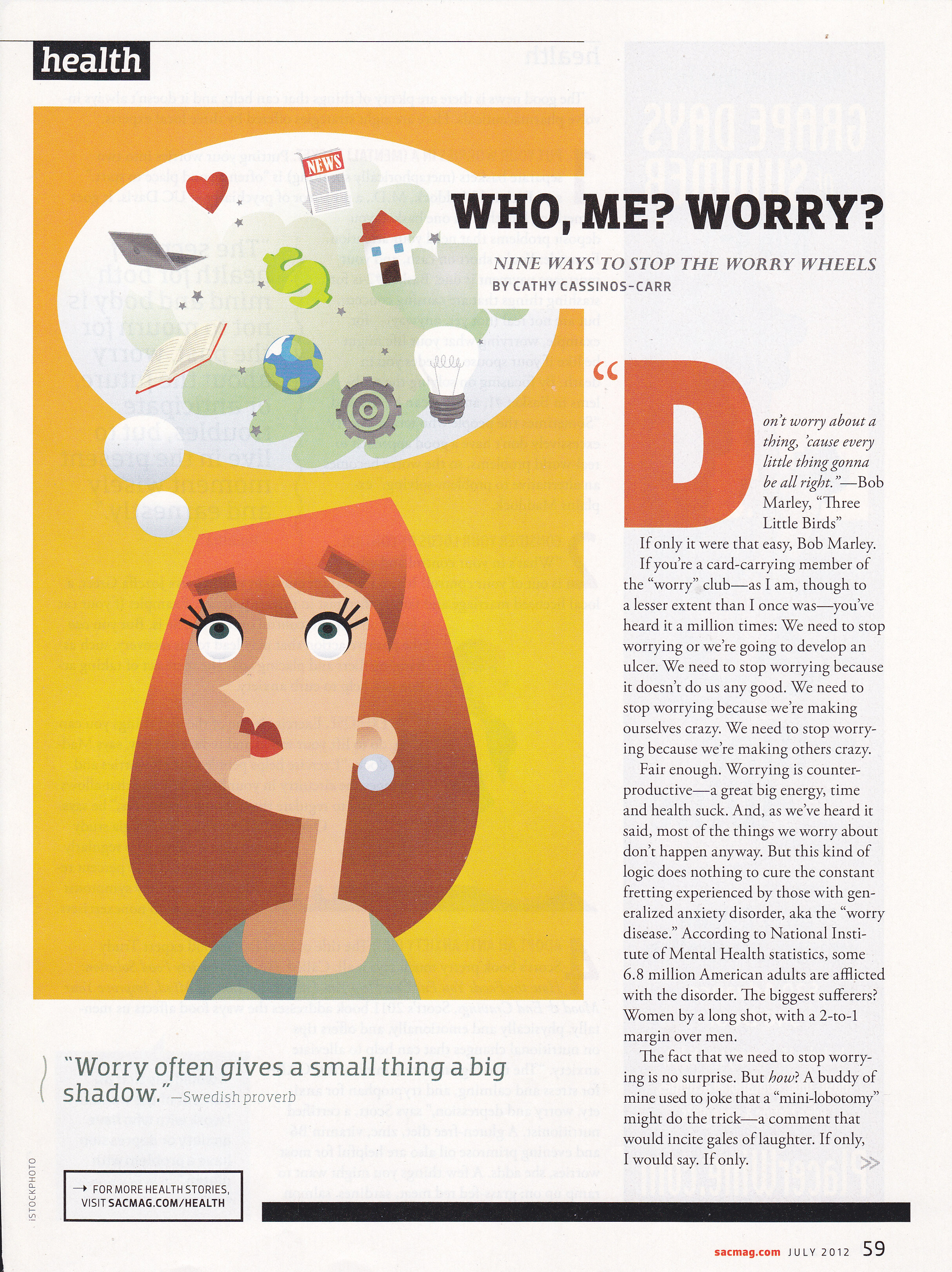
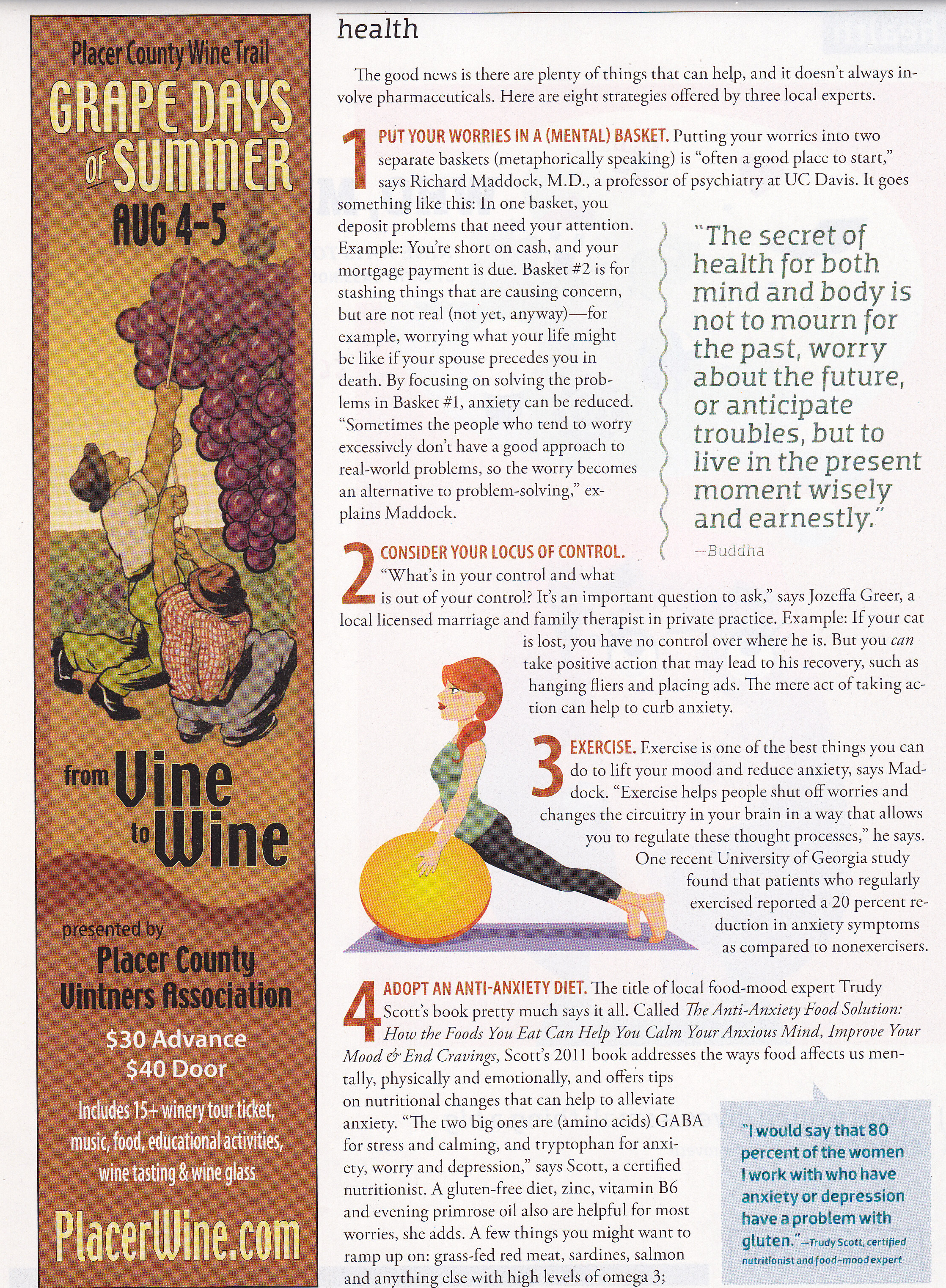
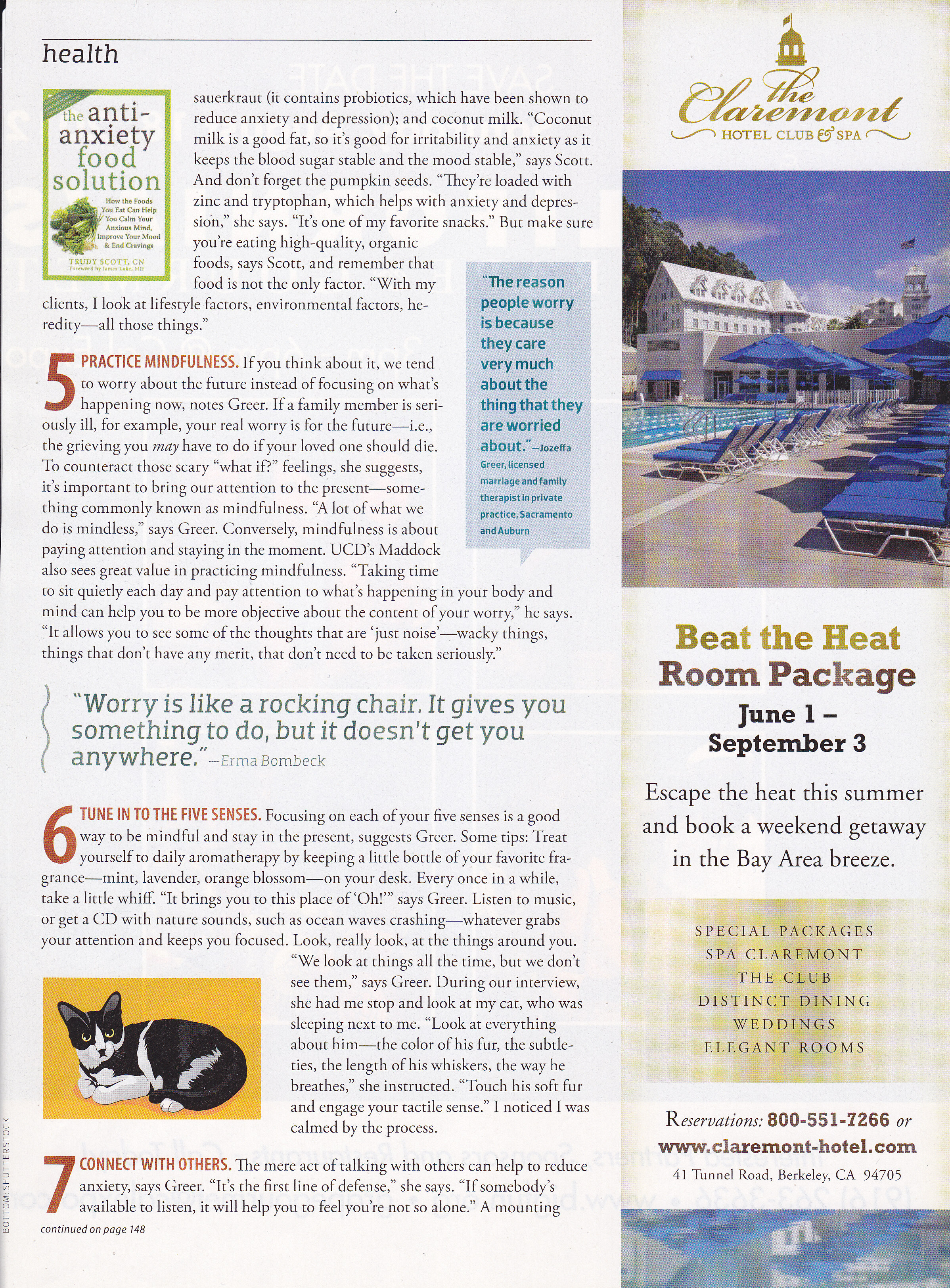
Nine Ways to Stop the Worry Wheels in the Sacramento Magazine

October 3, 2012 By Trudy Scott 10 Comments

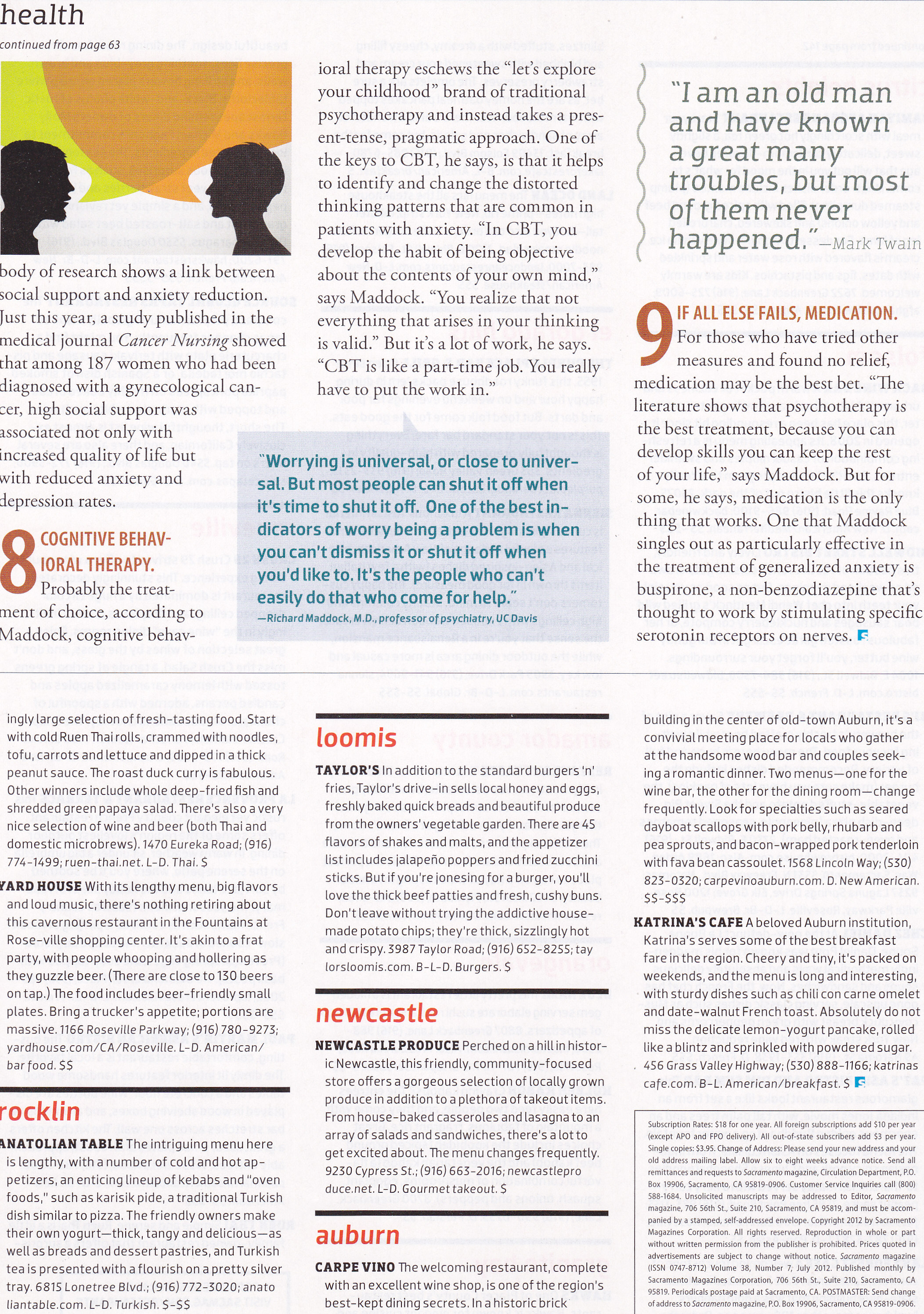
Here are Nine Ways to Stop the Worry Wheels. These were featured in the July edition of the Sacramento Magazine. I’m thrilled to have contributed to this super article and I am happy to share it with you here! I hope you enjoy it and find these nine ways helpful for stopping your worry wheels and anxiety.

  1. Put your worries in a (mental) basket
  2. Consider your locus of control
  3. Exercise
  4. Adopt an antianxiety diet
  5. Practice mindfulness
  6. Tune in to the five senses
  7. Connect with others
  8. Cognitive behavioral therapy
  9. If all else fails, medication

I really like that this fits in perfectly with the holistic approach that Richard and C.R. Zwolinki advocate on their Therapy Soup blog on Psychcentral

(Click on each image below to enlarge.)

Yet again, writer Cathy Cassinos-Carr has done an excellent job with this article. You can read another of her great articles here: Sweet Misery: Seven spoonfuls of wisdom about sugar

If you’d like more information on the antianxiety diet, a great resource is my book The Antianxiety Food Solution: How the Foods You Eat Can Help You Calm Your Anxious Mind, Improve Your Mood and End Cravings, available in major books stores, at Amazon and via www.antianxietyfoodsolution.com

Filed Under: Antianxiety Food Solution, Anxiety and panic, Food and mood, Joy and happiness, Real whole food Tagged With: antianxiety diet, anxiety, exercise, Sacramento magazine, worry

  • Page 1
  • Page 2
  • Go to Next Page »

Primary Sidebar

NEW! GABA QuickStart Homestudy (with special intro pricing)

gaba quickstart homestudy

Free Report

9 Great Questions Women Ask about Food, Mood and their Health

You'll also receive a complimentary subscription to my ezine "Food, Mood and Gal Stuff"


Connect with me

Popular Posts

  • Amino Acids Mood Questionnaire from The Antianxiety Food Solution
  • The Antianxiety Food Solution Amino Acid and Pyroluria Supplements
  • Pyroluria Questionnaire from The Antianxiety Food Solution
  • Collagen and gelatin lower serotonin: does this increase your anxiety and depression?
  • Tryptophan for the worry-in-your-head and ruminating type of anxiety
  • GABA for the physical-tension and stiff-and-tense-muscles type of anxiety
  • The Antianxiety Food Solution by Trudy Scott
  • Seriphos Original Formula is back: the best product for anxiety and insomnia caused by high cortisol
  • Am I an anxious introvert because of low zinc and vitamin B6? My response to Huffington Post blog
  • Vagus nerve rehab with GABA, breathing, humming, gargling and key nutrients

Recent Posts

  • What do I use instead of Seriphos to help lower high cortisol that is affecting my sleep and making me anxious at night?
  • BeSerene™ GABA/theanine cream eases severe muscle tension in her neck/shoulders, prevents her bad headaches and quells her anxiety
  • How the correct approach, dose and sublingual use of GABA can be calming and not cause a flushed and itchy face and neck
  • The amino acid glutamine improves low mood by addressing gut health, and it has calming effects too
  • Flight anxiety with heightened breath, physical tension and also fearing the worst (the role of low GABA and low serotonin)

Categories

  • 5-HTP
  • AB575
  • Addiction
  • ADHD
  • Adrenals
  • Alcohol
  • Allergies
  • Alzheimer's disease
  • Amino Acids
  • Anger
  • Antianxiety
  • Antianxiety Food Solution
  • Antidepressants
  • Anxiety
  • Anxiety and panic
  • Autism
  • Autoimmunity
  • benzodiazapines
  • Bipolar disorder
  • Books
  • Caffeine
  • Cancer
  • Candida
  • Children/Teens
  • Collagen
  • Cooking equipment
  • Coronavirus/COVID-19
  • Cravings
  • Depression
  • Detoxification
  • Diabetes
  • Diet
  • DPA/DLPA
  • Drugs
  • EFT/Tapping
  • EMF
  • EMFs
  • Emotional Eating
  • Endorphins
  • Environment
  • Essential oils
  • Events
  • Exercise
  • Fear
  • Fear of public speaking
  • Fertility and Pregnancy
  • Fish
  • Food
  • Food and mood
  • Functional neurology
  • GABA
  • Gene polymorphisms
  • General Health
  • Giving
  • Giving back
  • Glutamine
  • Gluten
  • GMOs
  • Gratitude
  • Gut health
  • Heart health/hypertension
  • Histamine
  • Hormone
  • Hyperparathyroidism
  • Hypoglycemia
  • Immune system
  • Inflammation
  • Insomnia
  • Inspiration
  • Introversion
  • Joy and happiness
  • Ketogenic diet
  • Lithium orotate
  • Looking awesome
  • Lyme disease and co-infections
  • MCAS/histamine
  • Medication
  • Men's health
  • Mental health
  • Mercury
  • Migraine
  • Mold
  • Movie
  • MTHFR
  • Multiple sclerosis
  • Music
  • NANP
  • Nature
  • Nutritional Psychiatry
  • OCD
  • Osteoporosis
  • Oxalates
  • Oxytocin
  • Pain
  • Paleo
  • Parasites
  • Parkinson’s disease
  • PCOS
  • People
  • PMS
  • Postpartum
  • PTSD/Trauma
  • Pyroluria
  • Questionnaires
  • Real whole food
  • Recipes
  • Research
  • Schizophrenia
  • serotonin
  • SIBO
  • Sleep
  • Special diets
  • Sports nutrition
  • Stress
  • Sugar addiction
  • Sugar and mood
  • Supplements
  • Teens
  • Testimonials
  • Testing
  • The Anxiety Summit
  • The Anxiety Summit 2
  • The Anxiety Summit 3
  • The Anxiety Summit 4
  • The Anxiety Summit 5
  • The Anxiety Summit 6
  • Thyroid
  • Thyroid health
  • Toxins
  • Tryptophan
  • Tyrosine
  • Uncategorized
  • Vegan/vegetarian
  • Women's health
  • Yoga

Archives

  • October 2025
  • September 2025
  • August 2025
  • July 2025
  • June 2025
  • May 2025
  • April 2025
  • March 2025
  • February 2025
  • January 2025
  • November 2024
  • October 2024
  • September 2024
  • August 2024
  • July 2024
  • June 2024
  • May 2024
  • April 2024
  • March 2024
  • February 2024
  • January 2024
  • December 2023
  • November 2023
  • October 2023
  • September 2023
  • August 2023
  • July 2023
  • June 2023
  • May 2023
  • April 2023
  • March 2023
  • February 2023
  • January 2023
  • December 2022
  • November 2022
  • October 2022
  • September 2022
  • August 2022
  • July 2022
  • June 2022
  • May 2022
  • April 2022
  • March 2022
  • February 2022
  • January 2022
  • December 2021
  • November 2021
  • October 2021
  • September 2021
  • August 2021
  • July 2021
  • June 2021
  • May 2021
  • April 2021
  • March 2021
  • February 2021
  • January 2021
  • December 2020
  • November 2020
  • October 2020
  • September 2020
  • August 2020
  • July 2020
  • June 2020
  • May 2020
  • April 2020
  • March 2020
  • February 2020
  • January 2020
  • December 2019
  • November 2019
  • October 2019
  • September 2019
  • August 2019
  • July 2019
  • June 2019
  • May 2019
  • April 2019
  • March 2019
  • February 2019
  • January 2019
  • December 2018
  • November 2018
  • October 2018
  • September 2018
  • August 2018
  • July 2018
  • June 2018
  • May 2018
  • April 2018
  • March 2018
  • February 2018
  • January 2018
  • December 2017
  • November 2017
  • October 2017
  • September 2017
  • August 2017
  • July 2017
  • June 2017
  • May 2017
  • April 2017
  • March 2017
  • February 2017
  • January 2017
  • December 2016
  • November 2016
  • October 2016
  • September 2016
  • August 2016
  • July 2016
  • June 2016
  • May 2016
  • April 2016
  • March 2016
  • February 2016
  • January 2016
  • December 2015
  • November 2015
  • October 2015
  • September 2015
  • August 2015
  • July 2015
  • June 2015
  • May 2015
  • April 2015
  • March 2015
  • February 2015
  • January 2015
  • December 2014
  • November 2014
  • October 2014
  • September 2014
  • August 2014
  • July 2014
  • June 2014
  • May 2014
  • April 2014
  • March 2014
  • February 2014
  • January 2014
  • December 2013
  • November 2013
  • October 2013
  • September 2013
  • August 2013
  • July 2013
  • June 2013
  • May 2013
  • April 2013
  • March 2013
  • February 2013
  • January 2013
  • December 2012
  • November 2012
  • October 2012
  • August 2012
  • July 2012
  • June 2012
  • May 2012
  • April 2012
  • March 2012
  • February 2012
  • January 2012
  • December 2011
  • November 2011
  • October 2011
  • September 2011
  • August 2011
  • July 2011
  • June 2011
  • May 2011
  • April 2011
  • March 2011
  • February 2011
  • January 2011
  • December 2010
  • October 2010
  • September 2010
  • July 2010
  • May 2010
  • April 2010
  • March 2010
  • February 2010
  • January 2010
  • November 2009

Share the knowledge!

The above statements have not been evaluated by the Food and Drug Administration. Products listed in this website are not intended to diagnose, treat, cure or prevent any disease.

The information provided on this site is for informational and educational purposes only and is not intended as a substitute for advice from your physician or other health care professional. You should consult with a healthcare professional before starting or modifying any diet, exercise, or supplementation program, before taking or stopping any medication, or if you have or suspect you may have a health problem.


Copyright © 2026 Trudy Scott. All Rights Reserved. | Privacy | Terms and Conditions | Refund Policy | Medical Disclaimer

Free Report

9 Great Questions Women Ask about Food, Mood and their Health

You’ll also receive a complimentary subscription to my ezine “Food, Mood and Gal Stuff”